Balkans, Anatolia, Caucasus, Levant and other Middle East, Iran, Afghanistan, South Asia, occasional forays into southern Italy, Spain or eastern Europe, minorities, the nation-state and nationalism — and whatever other quirks or obsessions lurk inside my head.
Sorry, nothing as naughty as all that. Just Epiphany in my village of Derviçani (and here), Dropoli, Albania. Cantor on the right-hand of deacon is Giannes Bakos, village’s great ecclesiastic voice and, of course, soï of mine.
Winters on the Castilian plateau are notoriously harshbut it sounds like this storm has caught Madrileños completely off-guard, or just unequipped to handle this much snowfall. That said, and without ignoring the hardship caused to so many, I generally find Madrid in winter delightful: the weather is usually bright and crisp and matches the leaden foods and wines better…and the indomitable spirit of Madrileños knows how to have fun no matter what the challenges.
“Well…Solzhenitsyn estimated the deaths in terms of repression inside the Soviet Union at something approximating 60 million between 1919 and 1959. Now that doesn’t count the death toll in the Second World War by the way. He also estimated that the same kind of internal repression in Maoist China cost a 100 million lives. One of the things that is really surprising to me and that I think is absolutely reprehensible, absolutely reprehensible, is the fact that this is not widespread knowledge among students in the West, any of this, and it’s because your historical education, if you started to describe it as appalling you would barely scratch the surface. These are probably the most important events of the 20th century and they’re barely covered at all in standard historical curricula. …my experience with students is that none of them know of anything that happened as a consequence of the repression of the radical left in the 20th century and I believe that the reason for that is that the communist system had extensive networks of admirers in the West, especially among intellectuals and still, in fact, does, which is also equally reprehensible and I believe that one of the consequences of that is that this element of history has been…underexamined… And that there’s absolutely no excuse for that. It was the worst thing that happened in the 20th century and that’s really saying something because the twentieth century was as bad as it gets and the fact that these deaths on a massive scale occurred and the fact that we don’t know that deep inside our bones is a testament to the absolute rot of our education system.”
I bought it a thousand years ago in Toulouse — you have to believe me. It survived the drips and crumbs of countless French dinners, successfully cammoed wine stains for years, held up to Russian washing machines, the Attic sun and the hard water of Athens. And I really like it. And now I can’t wear it because of the fucking Proud Boys fachos.
I also loved it because black and yellow are, by complete coincidence, the colors of my favorite Greek soccer team AEK. That doesn’t mean I know anything about Greek soccer or care. But when asked or when I get thumbs-upped on the street when I wear it, it’s for AEK, because the acronym stands for the Athletic Union of Constantinople, which was founded in Athens in 1924 by Greeks from Istanbul, and is the institutional descendant of theTatavla (a.k.a. Kurtuluş) Sports Club:
Kurtuluş S.K. was founded in 1896 under the name Hercules (Greek: Ηρακλής, Turkish: İraklis Jimnastik Kulübü) by local Greeks in 1896. It was the first club in Istanbul exclusively dedicated to sports activities. Later in 1934 it was forced to change its name to Turkish, Kurtuluş.
It was one of the major Greek sports clubs in Istanbul, while from 1910 to 1922 it was one of the clubs that undertook the organization of the Pan-Constantinopolitan games (Games organized among the Greek clubs of the city).
In 1906 two athletes of the club, the brothers Georgios and Nikolaos Alimbrandis won gold medals in the Intercalated Olympic Games in Athens, in horizontal bar and rope climbing respectively.
During the 1930s, the club intensified the efforts in the field of sports with the foundation of basketball, volleyball, cycling, athletics and other sports departments. Competent athletes from these departments were distinguished in local and international sports events. The club played in the Turkish Basketball League between 1966 and 1968.
The Tatavla Sports Club was the first athletic club in Turkey and was obviously created by non-Muslims because baring your knees is haram, I guess, and the Ottoman ulema had a particular problem with the soccer British troops in the City were making popular in Allied-occupiedİstanbul because it was too evocative of the victors playing with Huseyn‘s head after his death at Karbala.
And it’s not like I can keep wearing it as long as I’m still in Greece, because even if Greeks didn’t know about the Proud Boys and their sartorial choices before, after last week they do. And they’re very unforgiving when they know they have one on you — malicious Romeic glee is boundless and an undying spring — and haydi explain yourself. I don’t know what the universe is trying to prove to me, but I’m vexed!
Thank God Carhartt is cool in Greece and has no American far-right nut-job associations yet, ’cause otherwise my dungarees would have to go next…
This is a question, or comes as part of misguided well-wishing that I get at this time of the year when people find out I’m Orthodox. “Your Christmas is January 6th, right?” “Epiphany? What’s Epiphany?” “That’s right! Three Kings’ Day?!” “But Russian Christmas is January 6th, right?” “Is that what they call ‘little Christmas’?” And the thing is that this is one of those questions that people aren’t really interested in hearing the entire answer to because it’s so complicated, and you see their eyes start glazing over just as you’ve started to explain, so I usually mumble “uh-huh” or something and change the topic. So let this post be my official statement on the issue that people can refer to when they want to know what the deal is, or on those nights when the Stillnox or Ambien isn’t working.
Once upon a time, Julius Caesar created a calendar. Well, even if it wasn’t Caesar himself but his astronomers, it was known as the Julian calendar and it was what the entire Christian world used until the sixteenth century. That’s when Western astronomers, during the reign of Pope Gregory XIII — who were smarter than Caesar’s astronomers — realized that the calendar we were all using was off, vis-à-vis certain fixed astronomical events like solstices and equinoxes, and especially the all-important Vernal Equinox* by which the date of Easter is calculated: that it had drifted back some ten days over the centuries, meaning the day that was actually March 20th, let’s say, had slipped back to the day we were calling March 10th at the time. So they came up with a new calendar that was more accurate, called Gregorian, like the Pope. They just skipped the errant ten days. And one fine evening of March 10th, let’s say, Christians the world over went to bed and when they woke up it wasn’t March 11th but March 21st. With me so far?
After some fuss, Western Christians accepted the new calendar. The hyper-traditional Russian Orthodox Church and the rest of the Orthodox Churches, which were mostly part of Muslim states at the time, kept the Old/Julian Calendar, till the early twentieth-century when the Greek and Romanian and Bulgarian Churches adopted the New/Gregorian Calendar, while the other ones (and the monastic communities of Mount Athos) continued and continue using the Julian Calendar. One of several critical points: since the sixteenth-century change the discrepancy has grown so that the Julian Calendar is now thirteen days behind the astronomically correct Gregorian Calendar.
So, Christmas? Well, Russians celebrate Christmas on what the West calls January 7th. Mind you, their church calendars say December 25th when ours say January 7th, so they don’t really celebrate it on January 7th. It’s just January 7th to us. Though, actually, if you ask a Serb or a Russian when, for example, St. Nicholas’ Day is, they’ll say December 19th — meaning on our current, modern Gregorian calendar — though on their church books it’s still December 6th, when the West and Greeks celebrate it. I really don’t know what a Serb, for example, thinks when he says that January 7th is the “real” date of Christmas. Because the date of Serbian Christmas is not January 7th. It’s December 25th; the calendar used is the only difference. Anyway: the key point is that on the Old/Julian Calendar everything is thirteen days later.
Pope Gregory XIII (click)
I generally find this calendar difference to be a nuisance, one of the negatives of the decentralized structure of the Orthodox Church, mostly because you get vacation at all the wrong times and have to ask for days off, but also because, despite the often scathing condescension I feel for most of Western Christianity, I am an œcumenist at heart. And it’s unpleasant to celebrate Christmas on a different day than other Orthodox Christians or even to celebrate Easter on a different date than the West. On the other hand, sometimes it’s nice. It’s nice to celebrate Easter without the cheap plastic crap of Easter Bunnies and parades all around. And it’s nice to get to drop into church in early January when the late December craziness of Christmas in this country — no matter how hard one has tried to stay out of it — has made it impossible for you to even light a simple candle for the holiday; or, if I can’t get to a Greek church on August 15th, for example, for the Dormition of the Virgin, (or here) I can always go to a Russian one on August 28th. But generally, I think it’s the dumbest kind of traditionalism to stick to the Old Calendar. I mean, even if we’re so literal-minded as to think that we know when Christ was born — or even so literal-minded as to think He actually existed — we now know, scientifically, that the day we were calling December 25th is not December 25th. So what’s the problem? Russians, of course, make off like bandits with this deal. Communism made New Year the most important holiday of the year, but even then everyone still celebrated Old New Year on January 13th. Now festivities in post-communist Russia start around Western Christmas, go through New Year’s, celebrate Russian Christmas proper on January 7th, and still celebrate Old New Year on January 13th — a month of more than the usual everybody-being-plastered.
Easter? Oh, Easter. Why do Greeks celebrate Christmas with the West but Easter with other Orthodox Churches? Again, a result of the decentralized structure of Orthodoxy. The Greek Church switched to the Gregorian calendar for everything else, but, due to the fundamental centrality of Easter and the Easter cycle (Lent-Easter-Pentecost) to the faith (something the West has quite seriously lost sight of), it was decided that Greeks and Romanians would continue to calculate the date of Easter according to the Julian Calendar in order to stay in step with the others and maintain Orthodox solidarity.
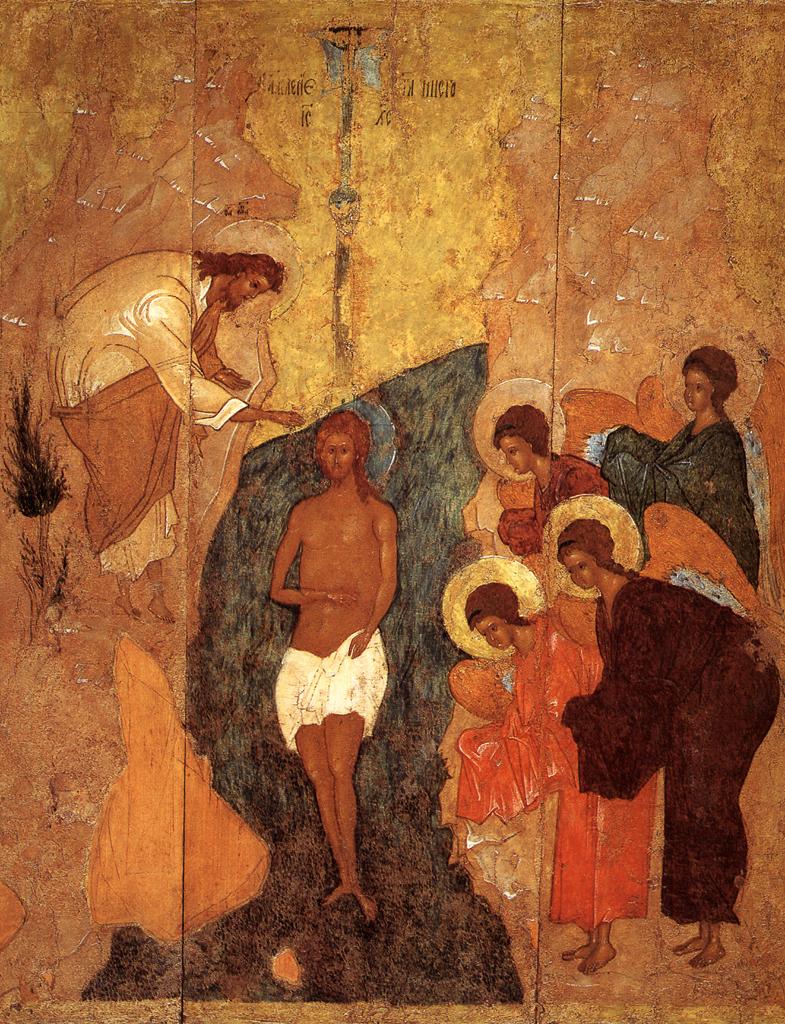
“But what about January 6th then??!!” you ask, desperately seeking Christian truth. January 6th is the Feast of the Epiphany. I repeat: January 6th is the Feast of the Epiphany. The Богоявление in Church Slavonic, Bogojavljenje — The “God Revelation,” literally, or also colloquially called Jordaninden in some South Slav languages: “Jordan Day.” Er, like the river, right? That’s right. It’s the day Jesus Christ was baptized in the river Jordan by his cousin John the Baptist and the beginning of Christ’s ministry. But this happened when Christ was 30.He was baptized on January 6th, thus the Twelve Days of Christmas, but it was January 6th thirty years later; it’s purely coincidental that they come so close to each other, but understandable that Christian observance would lump them together into one holiday season.** But Epiphany is not a holiday thematically related to Christmas or Christ’s birth; it’s not part of the first few weeks of His life. It’s also purely coincidental that Epiphany comes twelve days after Christmas and that the Old and New Calendars diverge by thirteen days. But that’s the reason people have heard of something about January 6th and think “Russian Christmas” is January 6th. It’s not. It’s the 7th. January 6th is Russian Christmas Eve. And that means Russian Epiphany is…..? Have you been paying attention? Very good. January 19th. Thirteen days later. Though, again, Russian and Serbian Churches are celebrating it on what — for them — is January 6th.
The Epiphany is one of the Great Feasts of the Church and of great theological significance, which is really why I get so worked up about this issue. It’s not just the day Christ was baptized in the Jordan by his cousin John the Baptist. At the moment of His baptism, the Holy Spirit descended from heaven in the form of a dove, and the voice of the Father was heard saying: “Οὗτός ἐστιν ὁ υἱός μου ὁ ἀγαπητός, ἐν ᾧ εὐδόκησα.” “This is my Son, in whom I am well pleased.” Thus, it’s the first time that the Trinity was revealed to mankind in all three of its forms at once. That’s what Epiphany, or Theophany, as it’s also known, (Επιφάνεια or Θεοφάνεια) mean: the “showing” or “revelation” of God — in all His forms. It was also my father’s nameday (“Fotios,” like “photo” for light — the day is often colloquially known as “The Lights” in Greek) and an important holiday in his village.
Russian icon of the Epiphany, the baptism of Jesus Christ (click)
And the Three Kings? Three Kings’ Day is an abomination whose prohibition I will begin to work towards as soon as I am appointed to the College of Cardinals. Honestly, sorry to be so churlish and ruin the fun of hundreds of millions of little Hispanic kids, but I genuinely find the observance to be more than mildly offensive. I don’t care that it doesn’t make any sense textually – that the gospels are clear that within days of His birth Mary and Joseph had whisked Christ off to safety in Egypt and that they weren’t sitting around in the cold for almost two weeks waiting for these “kings” to come. (Though it’s cool that these “kings” were likely Zoroastrian priests from Iran — searching for something they had heard would happen towards the West around the Winter Solstice — Yalda). I just think it’s the Catholic Church at its cheapest, most propagandistic worst to let a holiday of such theological importance degenerate into a by-product of Franciscan Christ-Child piety (like most of Christmas in the West anyway) and to officially condone this sentimental tripe about frankincense and myrrh, while the real meaning of the holiday is completely forgotten, as if believers are incapable of understanding the real theology behind the day. It’s the Catholic Church at its Grand Inquisitor worst, actually — and there I’m with Dostoyevsky: give ’em a show and a nice little parade and a cute baby, and keep their loyalty and submission; they’re too stupid to get the deep stuff anyway and you’ll only risk confusing them and then, enraged, they’ll turn on you: “Ecco homo….Ἰδοὺ ὁ ἄνθρωπος.” It’s one of the many ways that Rome still seems to be incapable of finding a way between the most ruthless authoritarianism and the cheapest populism. Though that, of course, was exactly Dostoyevsky’s point: that the two work hand-in-hand.
Which is why, aside from its incredible power as a scene in and of itself, I find the segment from Twelve Years a Slave I posted at top to be immensely gratifying; a slave at least knew that “John” and “baptism in the Jordan” had something to do with “Three” — and not three kings…
In seaside parts of Greece, the “blessing of the waters” is performed, where the priest throws a cross into the sea and young men dive in to retrieve it.
A few years ago, the Turkish government permitted Greeks in İstanbul to perform the rite again, though for the Patriarch to do so at the Fanari on the Golden Horn, they generally have to call out Turkish commandos to protect the participants from the Çarşamba*** crazies from up the hill.
Oh, and just to add to the confusion, early Christians actually did celebrate the Nativity of Christ on January 6th, but the Church moved it to the 25th of December at some point so they could get a piece of the Saturnalia and Mithra-Birthday celebration market.
* Easter is the first Sunday after the first Full Moon after the Vernal Equinox, thus, the first Sunday after the first Full Moon, 14-15 of Nissan — the first night of Passover — in the Jewish Calendar…I think. In short, the first Sunday after the first night of Passover, one more indication that the New calendar is the more correct way to calculate and number things.
** On the Old Julian Calendar Easter often came so early that Carnival began in late January, thus Epiphany, or Twelfth Night, was considered the beginning of Carnival — one long winter festival season from Christmas to Ash Wednesday. This is why Shakespeare’s play, which has nothing to do with the Epiphany, was called Twelfth Night — because it was a comedy commissioned for the beginning of Carnival. For some reason, in the more Slavic, — yes, I said it: S-L-A-V-I-C — parts of northwestern Greece, like Lerin or Kostur, serious Carnival time is early January, and includes elements much like what we know of the Roman Saturnalia, and not the pre-Lenten season that it is elsewhere. And he have evidence that the Byzantines celebrated a similar, Roman-Saturnalia-derived extended festive time throughout the winter.
Oh… But what’s Carnival? And Lent? Ash Wednesday? Oooofff….other posts…
*** Çarşamba is a hyper-religious — yes, I’ll just call it fundamentalist — mahalla, up the hill from the Fanari, the once entirely Greek neighborhood on the northern shore of the Old City where the Patriarchate is located. It’s the only part of İstanbul that I, and not a few İstanbullus themselves, genuinely feel uncomfortable being in or walking through, and occasional bits of fun like Molotovs tossed into the Patriarchal compound usually come from these lovely black-clad, bearded neighbors of ours.
A huge loss for Bengal, Indian film and world cinema.
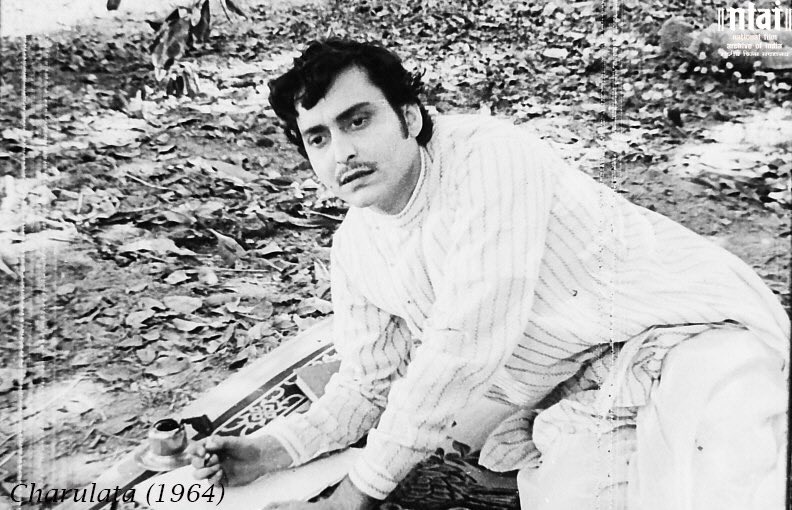
These photos of Chatterjee are from what I think is his most rivetting and sexy performance, as Amal in Satyajit Ray‘s Charulata. The relationship between an older brother’s bride and the immediate younger brother is traditionally a very intimate one in India; apparently she becomes a kind of a big sister or younger vice-mom to him. Intimate, but of course not that intimate, which makes the whole idea strange to begin with because why should intimacy be encouraged in such a potentially transgressive situation at all. But, well, I guess that’s India: full of totally weird things whose genius takes time to reveal itself. And, weird or not, in this film Amal and his sister-in-law Charulata (the great Madhabi Mukherjee) do become intimate in very, very subtle but ultimately convulsive ways.
And here’s the whole film. It’s from a beautiful print and it has easy to read subtitles. Watch it with whiskey and some butter-toasted cashews tonight instead of wasting your time and money doing dumb shit. It’s captivating, from the first frame.
The odd κουνιάδο-νύφη relationship, with its tricky boundaries, is also why Janardhan Jakhar “Jordan” (the Ranbir Kapoor character) in Imtiaz Ali‘s 2011 mega-hit film Rockstar, is thrown out of his family home in the story’s opening.
Balkans, Anatolia, Caucasus, Levant and rest of ME, Iran, South Asia
Me, I'm Nicholas Bakos, a.k.a. "NikoBako." I'm Greek (Roman really, but when I say that in English some five people in the world today understand what I'm talking about, so I use "Greek" for shorthand). I'm from New York. I live all over the place these days. The rest should become obvious from the blog.













 Jadde: from Bosnia to Bengal