Rama Cannot be Venerated by Those Who Transgress Dharma, Kill Innocents — “There is no difference between those Hindu extremists and the fundamentalist clergy of semitic religions.”

13 Aug

Note: This article, originally written and published immediately after the Gujarat riots of 2002 when Narendra Modi was chief minister, is being republished in the aftermath of Modi, as prime minister, laying the foundation stone for a Ram temple in Ayodhya on August 5, 2020.

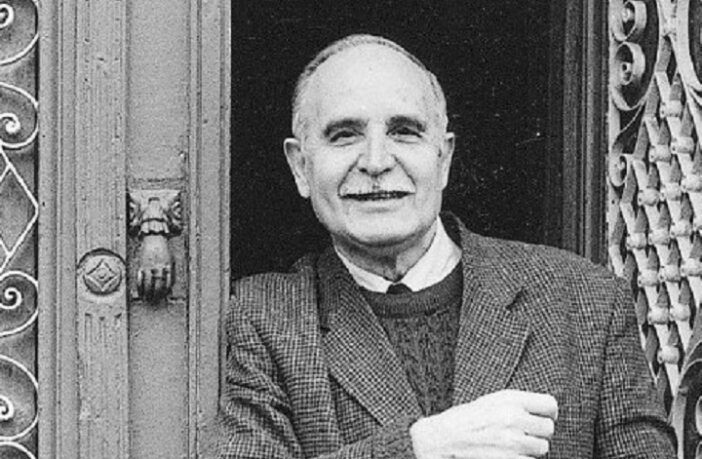
It is written by K. Subrahmanyam, a former head of the Institute for Defence Studies and Analysis and one of India’s pre-eminent strategic thinkers. He died in 2011. His son, S. Jaishankar, is external affairs minister in Narendra Modi’s government.

Though the term Hindu is not of indigenous origin, I am proud to consider myself a Hindu. That pride has been deeply hurt by what others using that label have done in Gujarat. What they did was typically un-Hindu, even anti-Hindu. What distinguishes the Hindu culture, philosophy and outlook on life, from all other religions, faiths and civilisational  traditions? In Hinduism alone you are able to say ‘Brahmasmi (I am God)  and to your neighbour, ‘Tattvamasi‘ (You are the truth).

How can people who stabbed, burnt and killed their neighbours call themselves Hindus? Alienated from the Hindu tradition, and rejecting its finest thoughts, harbouring a deep sense of inferiority towards the Semitic religions, attempting to imitate and organise themselves on dogmatic structures, giving up the free and inquiring ways of Hindu philosophy and thought, these detractors have launched a campaign to destroy the spirit of the Hindu way of life  These anti-Hindus call themselves Hindus but in spirit and thought they belong to the dogmas of the dark ages.

Hindu tradition is based not on acceptance of particular gods, dogmas, revelations and religious structures but on reverence for Dharma which is the rule of law and the ethics of the age. In the Hindu way of life there are no God- or Prophet-given laws. Dharma is not immutable but is liable to change to be in consonance with changing times – hence, the concept of yuga dharma. Today’s ethics, formulated by the constitution, is secularism – that is the yuga dharma. Violators of it cannot be considered Hindus; they can only be looked upon as enemies of the Hindu way of life.

The true Hindu way of life is in danger today but not from those who follow other religions. It is threatened by those who want to imitate others and abandon its essence, because they have misinterpreted it through the prism of dogmatic faiths. For those who assert ‘Brahmasmi” and ‘Tattvamasi”, it does not matter if the temple at the birthplace of Rama comes up a few years or a few decades later, if it comes up at all.

Why is Rama the most popular of all the nine avatars? Because he was a maryada purusha, who gave Ram rajya (good governance) and defended Dharma (rule of law). Rama cannot be venerated by those who transgress Dharma by killing innocents. A way of life which highlights the birth and death cycle, allows one the freedom to worship God in any form or not to worship at all, proclaims the cosmic universality with its Advaita cannot be reconciled with the killing of innocents.

Dharma was killed in Gujarat. The administrators who failed to protect the innocent citizens are guilty of adharma and if Rama had been alive he would have used his bow against the ‘asura’ rulers of Gujarat.
The Hindu way of life will survive because it is the natural, free, inquiring way. The reverence for life, which is the essence of birth and death cycle, the worship of Ishta devatas and the ability to see God in all things living and non-living has to be restored.

The temptation to imitate others by trying to straitjacket the free Hindu way of life into structural frameworks must be resisted. Dharma – the rule of law – must be restored. Ram Rajya – good governance – should be established and nourished. The Hindu way of life is not the same as accepting an organised religion. Therefore, this way of life can be propagated, cherished and practised without having to come into conflict with other religions. Comparing the Hindu way of life with other religions is like comparing apples and oranges. The Hindu way of life is the essence of secularism. Its thought processes and philosophical reflections are meant to be observed privately; in public, Dharma, the rule of law, has to be respected.

Recently, the prime minister (Atal Bihari Vajpayee) referred to two kinds of Hinduism – one of Vivekananda and the other of the self-styled “Hindu” extremists. The latter is in the same class as the extremist clergy of religions. There is no difference between those Hindu extremists and the fundamentalist clergy of semitic religions. [My emphasis] Part of the problem is that the Hindu way of life has not been explained to our children as a secular way of life and that it is not the practising of a religion as understood elsewhere in the world.
Beirut: Listening to Umm Kulthum’s Al Atlal

12 Aug

Felt appropriate.

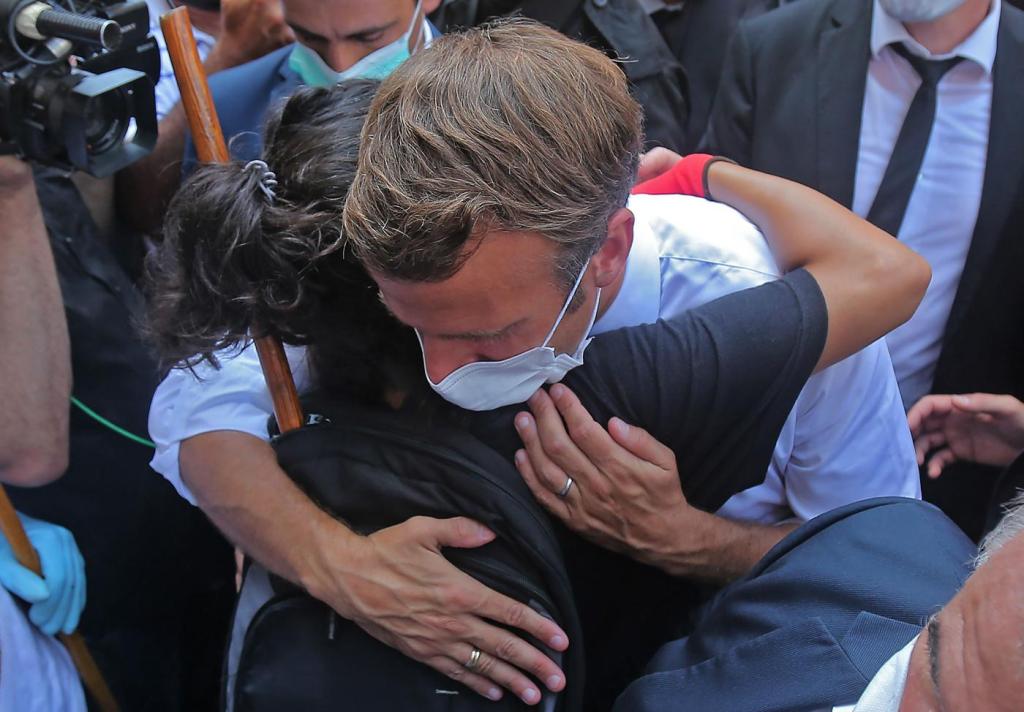
Lebanon and Macron — Hmmm… There’s an idea.

12 Aug

““I don’t want France to send money to these corrupt people,” said Khalil Honein, sitting outside his damaged auto parts store near where Mr. Macron had walked. “Let him take all these politicians with him, or let him be our president!” [my emphasis]

See article. And here.

Turkey doesn’t suffer from Sèvresphobia — it suffers from Lausannitis

12 Aug

…and the second treaty is the cornerstone of the Turkish Republic’s arrogant, bullying, ugly winner personality, plus the reason for displacing millions of people.

(And because the solution to the bad divorce that is Greek-Turkish relations is honesty, I have to say that as a Turk, I would be proud of the War of Independence and Lausanne; when no one else in the region could, they kicked butt with the colonial powers and preserved a viable state for themselves, even at the cost to us, Greeks and Armenians and Assyrians. Most Westerners put Kurds on this list, but they don’t count because at the time they were acting as loyal Ottomans/Muslims who did most of the Christian-massacring in eastern Anatolia — and not only — but in Istanbul, right in the now chock-full-of-giddy-tourists Istiklâl.)

But read more if you’re clueless about the processes in the Washington Post:A century-old treaty haunts the Mediterranean It’s an excellent article with several links to other cool articles.

************************************************************************

Write us: with comments or observations, or to be put on our mailing list or to be taken off our mailing list, contact us at nikobakos@gmail.com.

Oruç Reis’ father was Albanian and his mother was Greek

12 Aug

You have to hand it to the Ottomans: they knew how to exploit the talents of their subject peoples.

************************************************************************

Write us: with comments or observations, or to be put on our mailing list or to be taken off our mailing list, contact us at nikobakos@gmail.com.

Dinos Christianopoulos 1931 – 2020, RIP

12 Aug

…and “Αἰωνία ἡ μνήμη” — though he probably wouldn’t have been moved by the Christian sentiment.

“You tried to bury me as deeply as you could, but you forgot that I was a seed.”

Read more: Non-conformist poet Dinos Christianopoulos passes away at 89

************************************************************************

Write us: with comments or observations, or to be put on our mailing list or to be taken off our mailing list, contact us at nikobakos@gmail.com.

“Understanding-Turks” lesson from 2016 “coup”

12 Aug

“You can’t topple our DEMOCRATICALLY elected DICTATOR!”

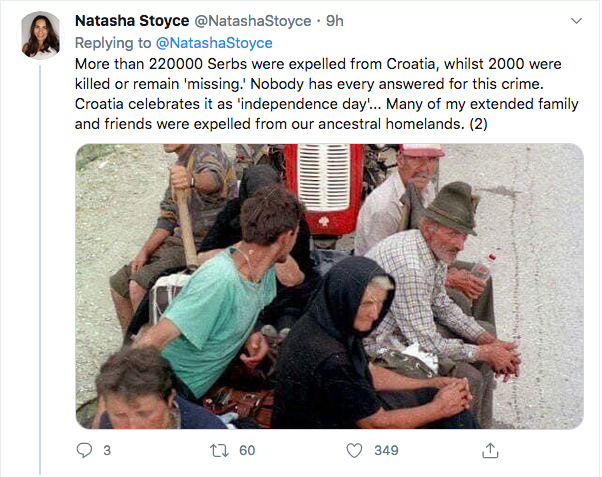
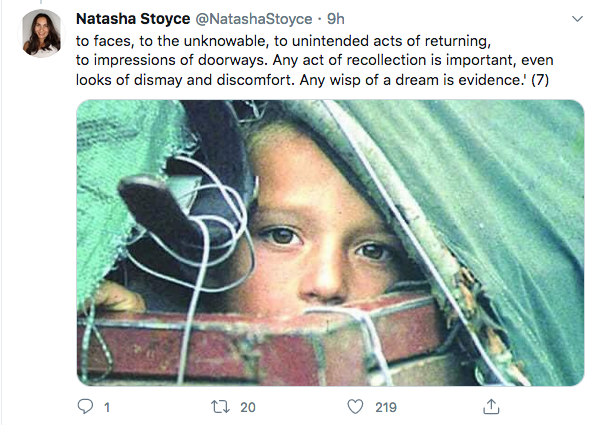
Krajina ethnic cleansing, the largest in the former Yugoslavia

4 Aug

************************************************************************

2016: “so-called coup” — I could have told you this — in FACT was telling you — back as soon as it was happening

22 Jul

One of the largest, best-armed, highly trained, unsqueamish militaries on earth would never have made such an amateur attempt at a coup.

From Ekathimerini:

DAVID L. PHILLIPS

The so-called coup in Turkey

COMMENT 17:15

turkey_coup_anniversary_cropped

Turkey’s armed forces are known for their efficiency. However, officers bungled the “coup” so badly that many question whether it was staged. Critics describe the events of July 15, 2016 as a “self-coup” organized by Turkey’s President Recep Tayyip Erdogan to justify consolidating his grip on power. According to former US Secretary of State John Kerry, “It does not seem to have been a very brilliantly planned or executed event.”

We have learned from experience the best practices to conduct a coup:

– Kill or capture the head of government

– Seize control of the media

– Rally public support

– Present someone from among the ranks of coup plotters to reassure the public

Renegade Turkish troops did not follow the script on July 15. When putschists arrived at Erdogan’s hotel in Marmaris, he was gone. They missed his check-out time. Erdogan’s presidential plane was allowed to take off from the Dalaman airport. F-16s failed to shoot it down. CNN Turk and TRT, two of the least watched news channels, were taken off the air. However, other channels were allowed to broadcast. Social media – Twitter, Facebook and YouTube – continued to operate. The military did not present someone as the face of the rebellion to assure the public that order was maintained. And while pro-Erdogan imams used muezzins to rally popular support, the putschists instructed people to stay indoors.

Erdogan claimed that the Turkish Grand National Assembly was bombed by war planes. However, crater analysis showed that explosions came from within parliament. Upon returning to Istanbul on July 16 at 3 a.m., Erdogan stood atop a bus in Istanbul surrounded by adoring supporters who were waving Turkish flags and chanting his name. It was a made-for-television moment. “The attempted coup is a gift from heaven,” he proclaimed.

Within hours, law enforcement started arresting political opponents. Erdogan declared an open-ended state of emergency, allowing rule by decree. More than 40,000 people were detained or arrested in the immediate aftermath of the so-called coup. More than 100,000 members of the military, police and judiciary were dismissed.

The education sector, a bastion of Kemalist secularism, was targeted. More than 1,500 university deans were forced to resign and about 21,000 teachers were suspended or fired.

Erdogan also targeted the judiciary, dismissing 2,754 judges, including members of the High Council of Judges and Prosecutors, and charging a member of the constitutional court with collusion. Detainees were denied legal counsel for up to 90 days.

Pro-Kurdish HDP parliamentarians and Kurdish community leaders were held under bogus terrorism charges. At least 30 governors were fired. Article 301 of the Criminal Code, which makes “denigrating Turkishness” a felony, was used to silence dissent.

Erdogan turned Turkey into a gulag domestically and a pariah internationally. The World Justice Index ranked Turkey 99th out of 113 countries behind Iran and Myanmar.

He also took steps to dramatically redefine Turkey’s international relations, distancing Turkey from the United States. He accused the US of plotting the coup and helping to carry it out. Erdogan singled out General Joseph Votel, head of the US Central Command for “siding with coup plotters.” His incendiary remarks fueled anti-Americanism, risking the safety of US citizens in Turkey.

Erdogan raged against the US for prosecuting state-owned Halkbank, which was charged with violating US sanctions on Iran. According to Erdogan, “those who could not succeed in the military coup attempt in Turkey on July 15, are now making a different attempt against our country.”

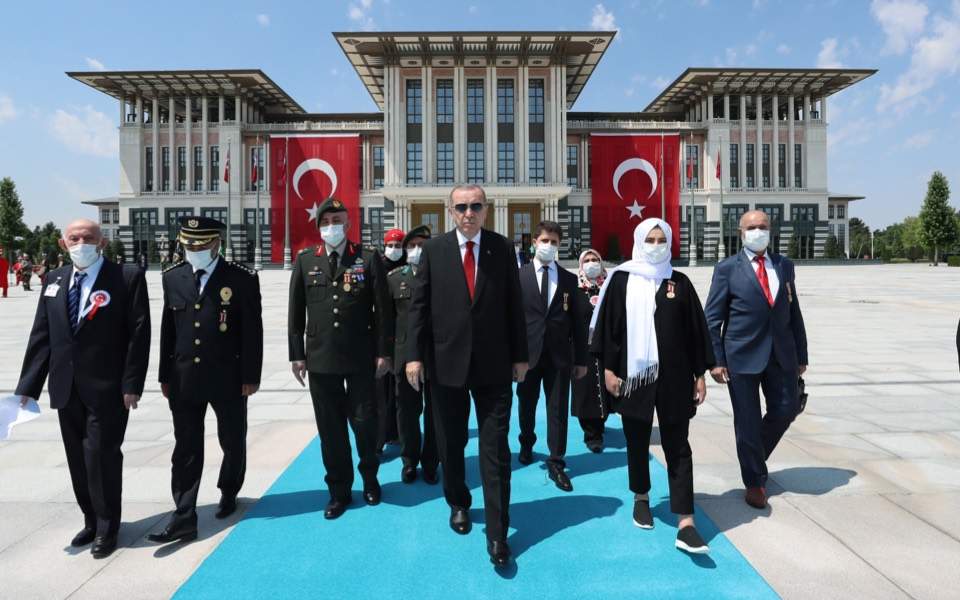
After the “coup,” Erdogan intensified an expansionist foreign policy, sending troops to Syria, Iraq and Libya. He repeatedly questioned the Lausanne Treaty for its demarcation of Turkey’s borders. Mock dogfights with Greek air force planes and maritime confrontation in the Eastern Mediterranean have become routine.

Did Erdogan stage the “coup” to advance political goals? It’s hard to envision a hoax of such magnitude, especially when the incident resulted in 300 deaths and more than 2,000 injured. More likely, the coup was uncovered; Erdogan let it proceed so it seemed credible, then shut it down.

Erdogan proclaimed that defeating the coup was a victory for democracy. It proved, however, to be a pretext for consolidating dictatorship and purging reformers in civil society.

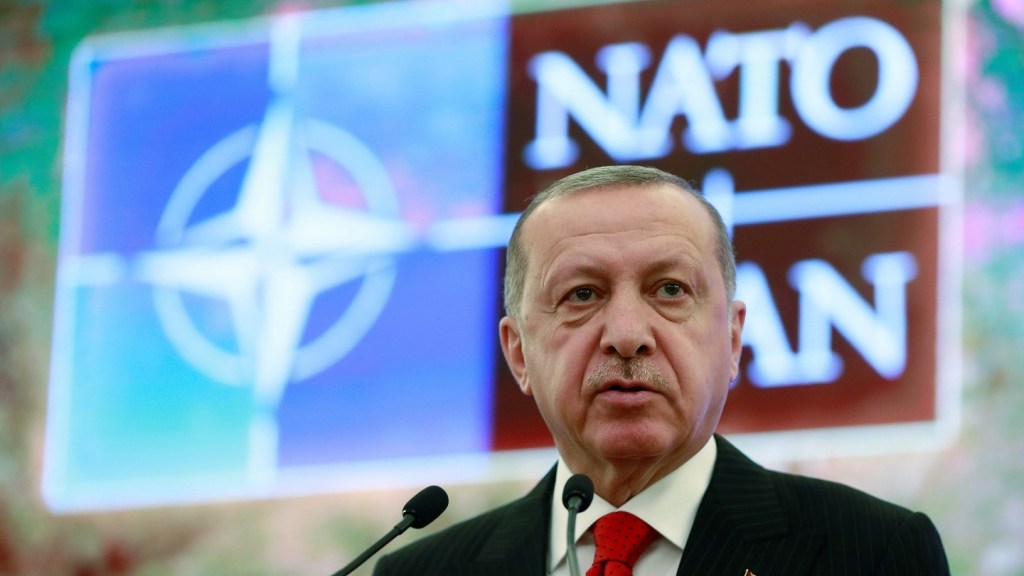
In 2018, Erdogan called snap presidential and parliamentary elections, leading to constitutional reform that institutionalized sweeping executive powers. Under Erdogan’s dictatorship, Turkey is inexorably declining. Its democracy is in shambles; the economy has cratered. Turkey has become an outlier in Europe and a pariah state in NATO.

A military coup or outside interference cannot bring reform. To rein in or remove Erdogan, the international community should support Turks who aspire to a peaceful political transition.


David L. Phillips is director of the Program on Peace-building and Rights at Columbia University. He served as a senior adviser and foreign affairs expert on US-Turkey relations during the Clinton and Obama administrations. He is author of several books about Turkey, including “An Uncertain Ally: Turkey Under Erdogan’s Dictatorship.”

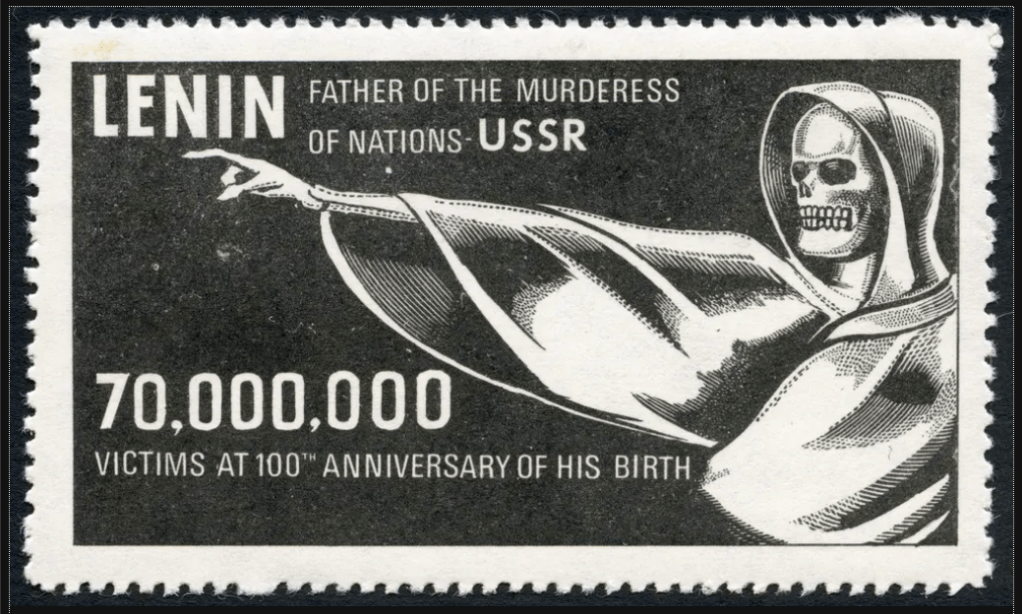
Ukrainian new anti-Soviet stamps — Lenin

20 Jul

In Guardian: Stamps celebrating Ukrainian resistance – in pictures