
M. from Novi Sad: “The Building of Skadar”
27 JanSo interesting… the building-people-into-buildings is also a famous motif in Yugoslav epics — like in one of the most iconic poems, “The Building of Skadar,”* in which a vila (mountain nymph?) repeatedly destroys a fortress until a young prince builds his wife into its walls. The really tragic and poetic twist in this version is that the prince’s wife has an infant son — so when she is finally built into the wall, she asks to have a small window made for her eyes and breasts to be able to see and feed her baby. [my emphasis] (I wonder where this motif originated from?)

Oy. Who knows? Maybe, as per Jung, motifs don’t “originate” anywhere. They’re just innately inscribed on our collective imaginations. The spectrum of human sacrifice, let’s not forget, runs from the Aztecs to Abraham and Isaac and Jesus Christ and the communion bread and wine. For a long time I was fascinated by Meso-American civilizations precisely because of the courage they showed in the face of the necessity of giving up up human life. Because the courage enacted in, say, Spielberg’s Saving Private Ryan, in the first shot on the Normandy beach where, before the launch craft gate has even opened completely, the first two rows of infantrymen fall, shot, into the sand and tide, which they must have known would happen to them, leaves me quivering for the maybe two times I’ve been able to watch it. There’s some knowledge or wisdom there that’s beyond our immediate comprehension as humans.
The really “tragic” and “poetic” twist in your Serbian myth (is it in Karadžić’ collections?) is that female nurturing, and motherhood generally, resist and persist — and must do so for humanity to survive — against the aggression (the wall again, the fortress, the bridge) of male quest for power.
************************************************************************
- “Skadar” is the Serbian for the Albanian “Shkodra” or “Shkodër” or Italo-Adriatic “Scutari”. It’s a city in northern Albania, one of the country’s largest, situated on a lake of the same name, divided between Albania and Montenegro.

–
Comment: nikobakos@gmail.com
–


Conversion Tweet #3
26 JanThe Levantine Byzantine@ByzBastard·Replying to @ByzBastard and @jaddeyekabir The Rum is still in use widely today. [My emphasis] For example, the full name of the Church Many of us belong to the “The Greek Orthodox Church of Antioch” for brevity everyone in the region calls us Rum, or Rum Orthodox / Rum Catholic to differentiate from Greek Catholics..
–
The Levantine Byzantine@ByzBastard·Replying to @ByzBastard and @jaddeyekabir Within the empire, the Chalcedonians would be known as Melkites -Completely different from today’s usage of the term, where since 1724 it only applies to Greek Catholic Uniates. Chalcedonian usage, Melkite means Imperial, so Christians who took the Empire’s ruling on the Council
–
The Levantine Byzantine@ByzBastard·Replying to @jaddeyekabirThe Arabs identified them as Rum – Romans. They would’ve self Identify as Rum or Rhomaios (for the Greek Speakers). The other thing to note is the Conquering Arabs Used the term Roman, Greek and Christian interchangeably…
–
The Levantine Byzantine@ByzBastard·Replying to @ByzBastard and @jaddeyekabirAlso here is a message from Metropolitan George Khodr of Mount Lebanon http://araborthodoxy.blogspot.com/2015/03/met-georges-khodr-on-being-arab.html?m=1 Here is a brief thread I made on the topic:Quote Tweet

–
The Levantine Byzantine@ByzBastard·Replying to @jaddeyekabirMost general history books on the region are brief on this if at all: one day the ME is Christian next it’s Muslim. Luckily a more recent book seeks to rectify the gaps: The Orthodox Church in the Arab World, 700-1700: An Anthology of Sources https://amazon.ca/dp/0875807011/
From Ajam MC: Another loss to the process of Manhattan sterilization: Taste of Persia NYC closes
26 Jan
“If you’ve never tasted the ash reshteh from Saeed Pourkay’s pocket shop — a steam table operation lodged in the corner of a nondescript 18th Street pizza joint — run, don’t walk. Pourkay has said the restaurant-within-a-restaurant will remain open through January. Beyond then, he plans to return with a restaurant space all his own, but who knows what will happen.
“On a visit to Taste of Persia a few months back, the food was just as good as when Pourkay debuted at the Union Square Holiday Market back in 2012. I remember my bewildered delight at tasting his ash reshteh for the first time at that market. It was a dish I’d only eaten in the kitchens of Persian friends on Long Island, and it was nourishing and exciting to see outside someone’s home.
“Traditional Iranian cooking is layered, intricate, and labor-intensive: Pourkay’s ash reshteh involves five kinds of beans simmered to creamy compliance with two forms of caramelized onions (immersed in the stew, and fried as a topping), a tangle of herbs, broken splinters of noodles, and invigorating doses of cardamom and ginger. Pourkay’s fesenjan evokes home cooking no matter where you grew up: braised chicken, walnuts, and pomegranate molasses meld into a tangy, voluptuous gravy that could sustain you through the worst snowstorm or subway debacle. For $12, you get two homestyle dishes like these on a bed of rice packed into a plastic takeout container, which Pourkay anoints with a golden drizzle of saffron water.”
(Continued…)
My new header image and the “conversion” twitter thread: when I feel the need to express my philosophical or aesthetic apprehensions about Islam I do so loud and clear…
26 Jan
My choice for new header image and the pasting of the two garbled twitter threads on conversion to Islam in the Levant are not related. Their appearance together are pure coincidence; Twitter decided on its own to use the image on my Twitter page and I don’t know how to change it. The warrior/king represented is simply a very beautiful image of a beautiful –and yes, obviously Christian — man from a beautiful film, Sergey Paradzhanov’s The Legend of Suram Fortress (he had an insanely sharp eye for the male beauty of Anatolia and the Caucasus — see whole film here). He is not meant to be an image of a crusader or Christian knight or anything; at least that’s not why I used it.
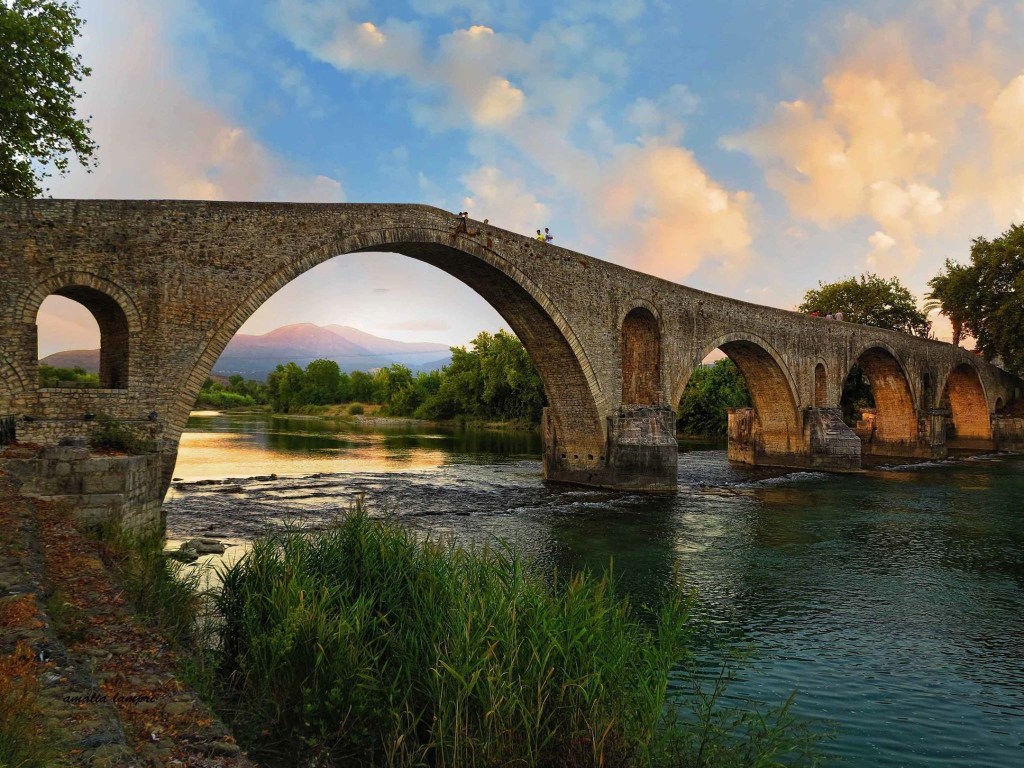
Suram Fortress is one of many deeply archetypal myths found throughout the Balkans, Anatolia and the Caucasus, like the bridge of Arta — the lovely town in southern Epiros that was capital of the Despotate of Epiros for most of its history and is perhaps Greece’s most densely packed with Byzantine monuments city — about a fortress or wall or bridge that requires a human sacrifice in order to be built. The builders and architects try but — in the common refrain of the legend — “what was built by day, collapsed by night.” Finally a virgin, or, in the Suram tale, a blue-eyed young man, is found who either voluntarily offers himself, or, as in the Arta version, is tricked, and is buried alive in the structure’s foundations which then finally hold. Traditionally — until recently — a rooster had its throat cut over the foundation stone of a house so that it would hold and “take root” solidly.
The Arta version is particularly cruel: the young blue-eyed Georgian warrior’s sacrifice is at least voluntary. In Arta, the master builder’s wife comes to bring him his meal at the construction site; he has already been told the prophecy that a human being needs to be buried in the foundations. The builder acts despondent. She asks what’s wrong. He says my wedding band slid off and fell into the river. She says: “I’ll dive in and get it for you, my love.” And as soon as she does, the builders start laying the stones on top of her. As she’s being immured alive, she curses the bridge and asks that anyone who crosses it be blown off like an autumn leaf and drown in the river. The builders remind her though, that she has a brother in “xeniteia” (an emigrant — again the theme of emigration, separation and loss in Epirotiko culture) and “when he comes home you don’t want him to drown as he tries to cross the bridge, do you?” She says, basically, “oh yeah, that’s right”, rescinds her curse and the bridge stands and travellers use it safely.
Just needed to get that out there, because I got the usual “Islamophobe” emails about the conversion posts which I’m going to edit for legibility.
Please don’t worry: when I feel the need to express my philosophical or aesthetic apprehensions about Islam I do so loud and clear and don’t hide behind images or metaphors or other people’s tweets, believe me.
–
Comment: nikobakos@gmail.com
–
Iran — The Return of the King?
26 JanThis is too dang wacky to be possible. Θα μου πεις, stranger things have happened. And “King”, the way we understand it — as a semi-divine being — is essentially a product of Iranian civilization, passed from Iran into the Roman concept of “Emperor”. From the SundayTimes:
The end could be near for the regime in Tehran, says the peacock prince
The son of Iran’s deposed Shah says the nation’s current leadership may be falling apart as marchers demand his return Josh Glancy, Washington
January 26 2020, 12:01am, The Sunday Times

During the recent unrest in Iran, as furious protesters risked their lives to criticise the regime, one name kept ringing out: Pahlavi. The dynasty of the last shah, who was deposed in 1979, has not been forgotten.
“O Shah of Iran, return to Iran,” some marchers chanted. For Reza Pahlavi, the former crown prince of Iran and heir apparent to the Peacock Throne, this nostalgia is a sign that the Islamic regime that has controlled Iran since the dissolution of the monarchy may be falling apart.
“The cracking from within of the system is getting more and more obvious,” he told The Sunday Times last week.
“When you look at the circumstances in Iran today, put yourselves in the shoes of the worst-off — how long…
–
Comment: nikobakos@gmail.com
–
Another much more coherent thread about Islam and conversion
26 JanΒασίλειος@Ciaran61215770· 1/9 It’s saddening that the majority of conversions from Christianity to Islam in the early 8th century to late 10th century was purely activated by economic & farmland basis, not intellectual theological rigor. Christians were subject to the choice of paying the Jizyah
–
Βασίλειος@Ciaran61215770 2/9 karag (land tax) & accepting the status of dimmi, or conversion to Islam & exemption from all tax. Indeed, the reformed Jizyah (under the Umayyad caliph Abd al-Malik ibn Marwan 685-705AD represented a four hundred percent increase on city dwellers & a shift from a tax -11:18 AM · Jan 25, 2020·
–
LikesΒασίλειος@Ciaran61215770· Replying to @Ciaran61215770 3/9 in produce to money for those in the countryside. Further, now the land itself, & not produce, was taxed based on its distance from city markets. For non-Muslims the tax burden forced one of three choices. A landowner could continue to pay Jizyah & the Karag to the best
–
Βασίλειος@Ciaran61215770· 4/9 of his ability. He could also choose to abandon his land & emigrate to a city, thus becoming free of the karag but still subject to the Jizyah. Initially, it appears that most Christians chose the latter option. Both of these entailed accepting dimmi status as “protected”
–
Βασίλειος@Ciaran61215770· 5/9 citizens of the empire. However, as time went on and increasing social, political and religious restrictions were added to the tax burden, the third option became more and more attractive: conversion to Islam. Through conversion a person was automatically exempted from
–
Βασίλειος@Ciaran61215770· 6/9 both the Jizyah & the karaj, & thus could continue to possess property while being required to pay only the moderate zakat (alms tax) imposed by the Sari’ah. The Abbasid caliphs began to open society to Arabs & non-Arabs alike, extending the benefits to adherents of
–
Βασίλειος@Ciaran61215770· 7/9 Judaism, Christianity, & Persian religions who converted to Islam to also recieve high positional careers. This stepped up an effort to encourage conversion already begun by the Umayyad caliph Umar ibn Abd al-Azez 717-720AD, a few decades earlier. The consequence of his
–
Βασίλειος@Ciaran61215770· 8/9 program was a slow but steady rise in the numbers of those turning to the ‘new religion’. By the middle of the eighth century, these benefits(maintain a freedom adhering to our religious beliefs, judged in accordance to our own law, & lastly, free from Zakat), were being
–
Βασίλειος@Ciaran61215770· 9/9 diminished by restrictions on public displays of religion, limitations on property ownership, & the requirement of distinctive signs & dress for all non-Muslims. This situation continued throughout the first decades of the Abbasid caliphate until Haran ar-Rasid 786-809).
Conversion in the Levant: a long twitter thread with, nevertheless, some interesting questions
25 JanThe Levantine Byzantine@ByzBastard People always talk about the gradual Arabization of the Levant after the Islamic conquest – and it’s true. But few people ever talk about our “Byzantinization” of the Arabs.4:48 AM · Jan 24, 2020·
–
The Levantine Byzantine@ByzBastard· Replying to @ByzBastardRoman Syria / Roman Damascus, was the Arabs first contact with a sophisticated, wealthy, high Civilization, Roman city. It was through us that they would have Civilization, and through that Civilization they would be propelled into to their Islamic Golden age
–
Rami39@Rami397· Replying to @ByzBastardI heard Amine Gemayel on a tv show saying that his people originally came from Arabia.
–
The Levantine Byzantine@ByzBastard· Yes, many of us have. There was always migration of tribes from Arabia predating Islam. Most notably the Ghassanids who many Christians are descended from, also the Ma’in. BUT many these groups were Romanized/Byzantinized by the time of the Islamic conquest
–
Bob Esfanji@Amphiarause· Replying to @ByzBastard I’d rather call it hellenization * also no one talks about it Bc ….. you’re gonna think I’m reading but it’s bc of islamophobia
–
The Levantine Byzantine@ByzBastard· Hellenization is the wrong term. The Arabs were not Greekifed, they did not pick up the language. They were politically and culturally influenced by the civilization that was here which was Roman, politically, but has Greek and Aramaic elements….
–
The Levantine Byzantine@ByzBastard·… Not Islamophobia, in the same way it’s not “byzantophopia” or “chrostanophbia” to say we were Arabized (I’m happy to call myself an Arab). Please keep western sensitivities in the West and stop applying them for our culture, where they just don’t make sense
–
Bob Esfanji@Amphiarause· I’m talking about people who don’t bat an eye about the plunders of the Roman Empire in levant but keep lamenting over how the levant was Arabized
–
J@tripoli187· Yeah and how bad they Eastern Romans taxed their fellow Christians in the Levant. People always talk about “jizyah” but forget how high the taxes were under the eastern romans. Hence why In a lot of areas the eastern romans fell easy, some of the people didn’t like them.
–
The Levantine Byzantine@ByzBastard· I mean I don’t know if it would go that far. If tax was an issue it would have been a lower priority. The 2 biggest issue for the people living in the region was more than ~30 years of war with the Sassanians, which ruined the cities and exhausted the population…
–
The Levantine Byzantine@ByzBastard· The Levant was basically under Persian occupation for 30 years before the Byz got it back. The 2nd major issue was the schism between Chalcedonian and Non-Chalcedonian versions of Christians, where the NC were deemed as heretical by the Empire & some small scale civil strife…
–
The Levantine Byzantine@ByzBastard· was occurring. As a result the NC may have been less resistant to the Islamic conquest because under Islam they were viewed as just Christians instead of heretics. And the rest of the population was just tired of war.
–
J@tripoli187· Yes I also read that, that many of the Christian sects of Levant were viewed as heretics by the Byzantine/roman Greek Orthodox
–
The Levantine Byzantine@ByzBastard· Yes, this was the biggest cause for division. It stems from the Council of Chalcedon in 451. You can still see the division today, where the Greek Orthodox (Roum) are Chalcedonians and Non-Chalcedonians the Syriac Orthodox and Coptic Orthodox in Egypt.
–
Nicholas Bakos@jaddeyekabir · 39mAnd this last question I’ve always wondered about: did those “Semites” who remained Orthodox/Chalcedonian/Melkites use RUM as an enodnym for themselves and was it an exonym applied to them by others? Is the term still in use? Did its use survive into modernity as with Greeks?
Nicholas Bakos@jaddeyekabir·2m So just to make sure, a Greek Orthodox Syrian or Palestinian still uses term “Rum” for himself and is called that by his non-Orthodox neighbors? I mean today? still?
The Levantine Byzantine@ByzBastard Yes. It is still in use.
 Jadde: from Bosnia to Bengal