Worst case scenario for one-state?

11 Dec

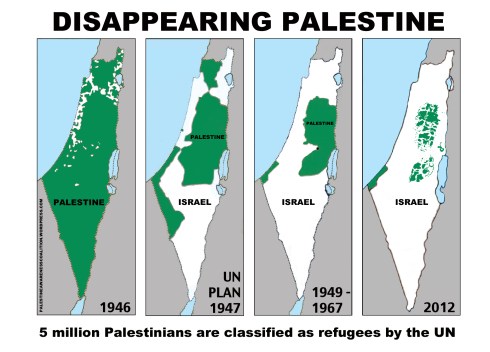
The math: 7.5 million Jews, 2 million Arabs in Israel, 3.75 million in West Bank, 2 million in Gaza. That leaves an entity that — if united — already has 250,000 more Arabs than Jews; lets say 50%-50%. What are Israel’s plans for this demographic inconvenience?

The visuals — sometimes you just have to see it — are mind-blowing:

palestine-israel-map

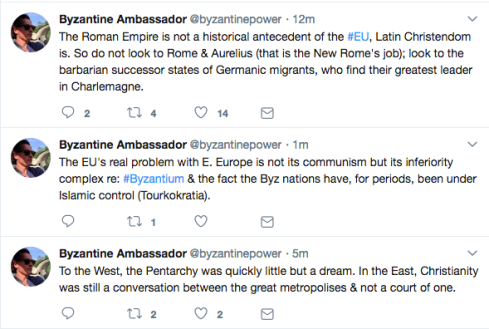
“In the East, Christianity was still a conversation between the great metropolises & not a court of one.”

11 Dec

“…and not a court of one.”  What the Catholic Church still doesn’t get — and it seems like Catholics don’t want to sometimes either.

See:

, in three tweets, practically summarizes half if not more of the “thesis” of this blog.  Mind-blowing.

Screen Shot 2017-12-11 at 7.44.25 PM.png

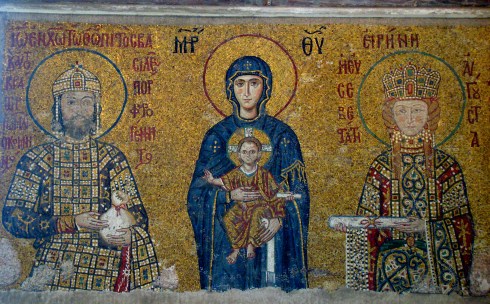
Istanbul_2009_Comnenus_Mosaics.JPG

Byzantine Ambassador: you are now a culture hero of first order for me

11 Dec

, in three tweets, practically summarizes half if not more of the “thesis” of this blog.  Mind-blowing.

Screen Shot 2017-12-11 at 7.44.25 PM.png

Istanbul_2009_Comnenus_Mosaics.JPG

Palestinians can’t consume and resist at the same time — Raja Shehadeh, NY Times

11 Dec

I though this was espically frustrating:

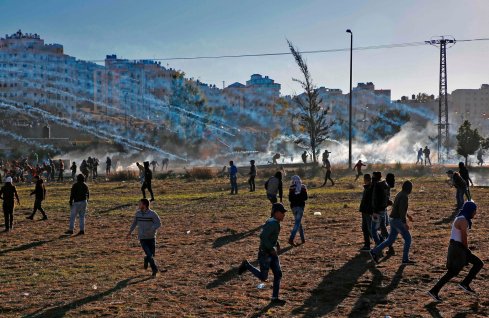
On the way over, the taxi driver told me that he felt let down by the Palestinian response to the news. I asked him about the call of the Hamas leader, Ismail Haniya, for another intifada. “What intifada, when we are all burdened by loans?” he answered. “Thirty years ago I never thought twice about taking part in every strike that was announced, but now if I don’t make money I will not be able to pay back the bank loan on this car. How then will I survive without it?”

From Spain and Portugal to Greece, to Palestine even, it seems (without drawing facile comparisons): keep them in debt and keep them silent.  Give them something to lose, even if its the chains of credit and they’ll be afraid to do anything but pipe down; it’ll make ’em more docile then an uzi.

And this too…so much for the liberating hopes of social media: watch the revolution — this one will be televized — on your phone and it’ll be just like being there:

I asked around to see if anyone knew the plan for the day. I’m a stranger to social media and thought I could have missed an announcement. Ramzi, a musician I have known for many years, had also come intending to take part in a demonstration. He said he kept obsessively checking Facebook and found nothing.

“There were no mobile phones during the first intifada when I was a boy of 10 in the Amari refugee camp, yet I remember that people knew when to assemble and what to do,” he said.

He noted the scarcity of young participants at the gathering. “Some people,” he said, “feel they can stay home and yet consider that they’re taking part; they think they can have virtual participation.”

Photo: my dentist’s office in Athens :)

7 Dec

IMG_1943

And all those Egyptians, Sumerians, Babylonians, Assyrians, Jews, Phoenicians, polytheist and Christian Greeks, polytheist and Christian Romans, Achaemenid, Parthian, Sassanid Iranians of the entire Irano-Central-Asian plateau, Aryan peoples of the Hindus valley and north India, Christian North Africans, Sicilian Catholics and Greeks, Franks and Normans, Iberian Visigoths, Flemings, Provençals, Occitans, Venetians, Florentines…..all waiting around millenia, the poor savages, for the Light of the Hejaz to shine on them in the darkness.

Comment: nikobakos@gmail.com

Image

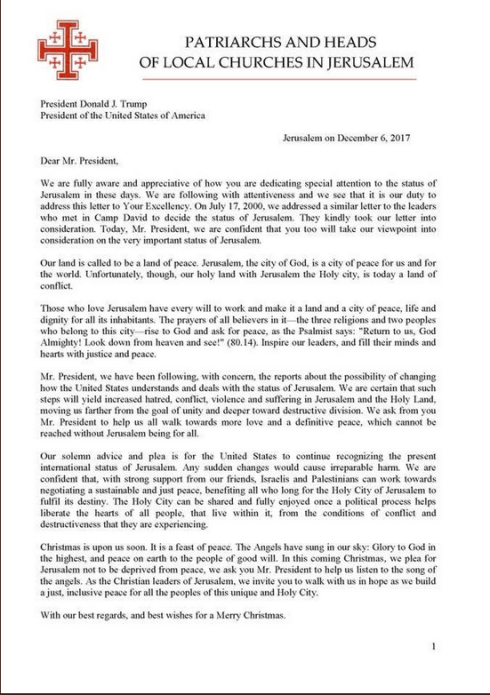
Christian Patriarchs and Heads of Local Churches in Jerusalem plead with Trump not to move the US embassy to Jerusalem in a new letter signed today (thanks again to Alex Shams‏ @seyyedreza)

6 Dec

Screen Shot 2017-12-06 at 6.58.53 PM.png

“They’re human beings” — December 6th

6 Dec

Screen Shot 2017-12-06 at 1.19.40 PM

Screen Shot 2017-12-06 at 1.27.26 PM

Screen Shot 2017-12-06 at 1.23.06 PMScreen Shot 2017-12-06 at 1.24.16 PM

**************************************************************************************

Niko was never a name I was nuts about, though it was that of a grandfather I’m proud of.  And I never had a massive crush on St. Nicholas the way I do on St. Demetrius or St. Stephen or Nestor…or my Kanha…

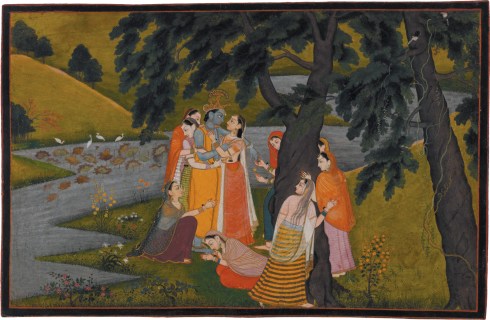
‘Krishna and the Gopis on the Bank of the Yamuna River’; miniature painting from the ‘Tehri Garwhal’ <i>Gita Govinda</i>, circa 1775–1780

But I do remember a sermon on December 6th ages ago, an unusually enlightened and intelligent one for a Greek-American priest, and an older one at that, at my parish in Whitestone.  I can only paraphrase it now:

St. Nicholas was not one of our great warrior saints like St. Demetrius or St. George.  He wasn’t one of our intellectual, theologian saints like the Cappadocians.  He was simply a saint who made sure that, to the best of his abilities, everyone under his care had a place to sleep and food to eat.

Then he went on to the part that I’ll really never forget:

When someone comes to you in need, the first and only thing you’re to think of is the vulnerable and potentially humiliating position this human being has put himself in by needing and asking for your help.  You’re not to think of how much you can give or how much he needs.  Or if “he’s gonna spend it on drugs.”  You’re to keep him from feeling humiliated with whatever you can.  That’s all.

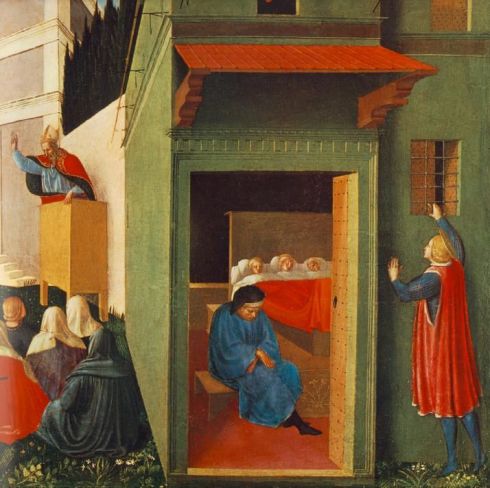
My favorite St. Nicholas story — and probably the one that Santa Claus has its roots in — is how he went secretly to the home of the three daughters of a poor man at night and left them three bags of gold through the window so that they would have dowries and be able to marry.  He didn’t rail against the dowry system; he didn’t get off on his ideological correctness, like those anti-tipping assholes in New York who leave their waiter a little card explaining that tipping in the restaurant industry is exploitative, drafting the hapless kid into their cause by depriving him of income and not leaving him anything except the little card.  He simply gave three poor sisters what they needed so that they could survive in the world.  And we can talk ideology and exploitation later.

St. Nicholas Fra AngelicoFra Angelico

Comment: nikobakos@gmail.com

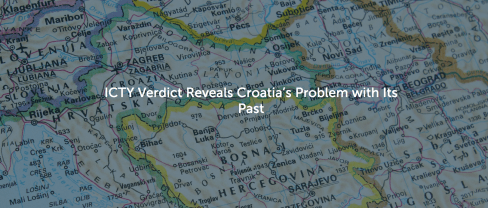
“ICTY Verdict Reveals Croatia’s Problem with Its Past” — someone calls Croatia on its shit

5 Dec

Screen Shot 2017-12-05 at 7.10.43 PM

December 5th, 2017

The Croatian government’s reaction to the recent sentencing and suicide of Bosnian Croat war criminal Slobodan Praljak reveals Croatia’s ongoing problems with nationalism and inability to address its past crimes.On November 28, 2017, Praljak and five other Bosnian Croats were sentenced for crimes against humanity by the International Criminal Tribunal for the former Yugoslavia (ICTY) in the Hague (Netherlands). According to the ICTY, the men were “key participants in a joint criminal enterprise to ethnically cleanse Bosnian Muslims” during the Yugoslav wars (1991-1995).

After his twenty-year prison sentence was announced, Praljak committed suicide by drinking poison in the court room and exclaiming: “I, Slobodan Praljak, reject the verdict. I’m not a war criminal.” The verdict was broadcast live on TV. Praljak was brought to a hospital, where he died within hours.

The case against Praljak and his entourage highlights Croatia’s often forgotten role as an imperial aggressor that violated the sovereignty of Bosnia and Herzegovina and committed ethnically and religiously motivated violence during the Yugoslav wars.

For most of the war, Croatians, Bosnian Croats, and Bosnian Muslims were allies. Having been targeted by Serbs in their efforts to create a “Greater Serbia” by occupying and ethnically cleansing Bosnia and Herzegovina and parts of Croatia, Bosnian Croats and Muslims shared a common victim and refugee experience. But, as Croatian forces were establishing the Croatian Republic of Herzeg-Bosnia in southwestern Bosnia and Herzegovina, they also began waging war against the local Bosnian Muslim population in 1992.

Violence against Muslims in Bosnia and Herzegovina was supported by the country’s then-President Franjo Tuđman (Croatian Democratic Union, HDZ), who governed the country as an authoritarian from 1990 until 1999. Of course, not all Croats supported the violence and, indeed, many Bosnian Croats opposed Croatia’s nationalist policies toward Bosnia and Herzegovina.

Still, since the war’s end, there has been little discussion in Croatia about the country’s war crimes. To the contrary, Croatia has depicted itself as a heroic actor during the war. In fact, immediately after the ICTY verdict, the Republic of Croatia (headed by the nationalist HDZ) issued an official statement, reiterating the country’s so-called “positive” war credentials. According to the text, Bosnia and Herzegovina would not have become independent had Bosnian Croats not supported its independence from Yugoslavia in a 1992 referendum. The statement also claims that, with U.S. support, Croatian forces worked with the army of Bosnia and Herzegovina to liberate the latter’s territory from Bosnian Serb military occupation in 1995, and to prevent the Bosnian Serb military from conducting another Srebrenica-like genocide.

While the statement expresses the Croatian government’s condolences to all the war’s victims, at its core, it perpetuates a distorted view of Croatia’s role in the conflict. In memorializing the government’s opposition to the ICTY verdict, the statement claims that it “did not take into account the historical truth and facts,” describing the allegations against the accused as “unfounded and politically unacceptable” and saying the government “would consider all legal and political mechanisms available to contest [the verdict].”

On November 29, 2017, Croatia’s prime minister, Andrej Plenković (HDZ), called the verdicts an injustice and gave his condolences to the family of Praljak, who he referred to using the honorific “general.” Similarly, in a speech on November 30, 2017, Croatia’s president, Kolinda Grabar Kitarović (HDZ), expressed her condolences to the family of “general” Praljak. While she admitted that some Croatians committed crimes in Bosnia and Herzegovina, Grabar Kitarović stressed Croatia’s positive role in the war. She also rejected the ICTY verdict as an attack against the Croatian people, claiming that “no one, not even the Hague tribunal, will write our history. We will fight with all legal and political means for truth and justice.”

Since his death, Praljak has been widely celebrated as a hero and martyr in Croatia and parts of Bosnia and Herzegovina. Croatian-speaking media has also used his suicide as an occasion to promote patriotism. These reactions are not, however, simply about the death of one man. They reveal Croatia’s fear of dealing with its past.

The country sees itself as a victim of the Yugoslav wars. When legislators, state representatives, and the media speak of “truth,” they imagine an alternative past, in which Croatian politicians and military personnel acted legally and with moral responsibility. But this is not an accurate rendering of the past. While Croatia was attacked by Serb forces and fighting for its independence, the country committed war crimes through its individual officials. This reality remains obscured, however, by the current surge in nationalism, which effectively glorifies war crimes and criminals in Croatia.


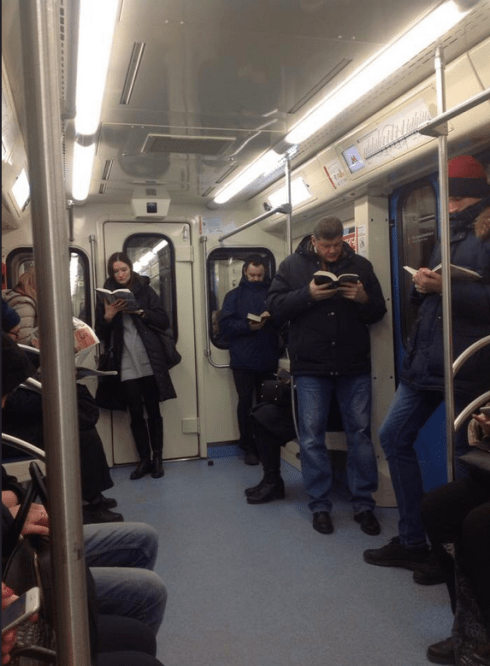
Moscow metro

4 Dec

Screen Shot 2017-12-04 at 7.45.33 PMScreen Shot 2017-12-04 at 7.47.43 PM

The strange literary, culturedness of Russia in the midst of its barbarity.

Guardian: No more döner?

1 Dec

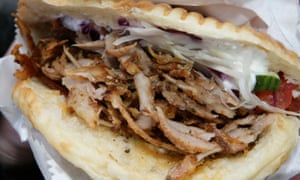
For pitta’s sake: EU kebab meat move could make doner a goner

European parliament phosphates ban would sound death knell for nightclubber’s favoured snack, industry warns

An estimated 1.3m doner kebabs are sold every day in the UK from overmore than 20,000 outlets.
An estimated 1.3m doner kebabs are sold every day in the UK from more than 20,000 outlets. Photograph: Peter Steffen/AP
in Brussels
December 1, 2017

It’s the news that none of Europe’s late-night revellers want to hear: the end of the doner kebab could be nigh.

A move by the European parliament to ban the phosphates necessary to keep seasoned kebab meat moist and flavoursome, even after the most arduous periods on a spit, is said to pose a direct threat to the future of the high street delicacy.

An estimated 1.3m doner kebabs are sold every day in the UK from more than 20,000 outlets. The Labour leader, Jeremy Corbyn, was even guest of honour last year at the British kebab awards. Across the whole of Europe, some 200,000 people work in the industry.

In Germany, where the doner kebab is by far and away the most popular fast food, consternation at the development has prompted some apocalyptic visions.

“If the European parliament gets its way, this would be the death sentence for the entire doner kebab industry in the European Union,” said Kenan Koyuncu of the German association of doner kebab producers.

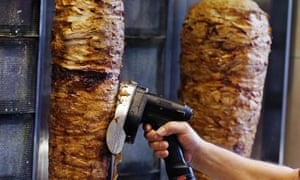
A man slices cuts of meat from a doner spit in Frankfurt, Germany.
A man slices cuts of meat from a doner spit in Frankfurt, Germany. Photograph: Michael Probst/AP

Renate Sommer, a member of the German chancellor, Angela Merkel’s Christian Democrat party in the European parliament, wrote on Facebook that “a ban of the phosphate addition would be the end of doner production and would lead to the loss of thousands of jobs”.

A scientific review in 2012 suggested a possible link between phosphates, when used as food additives, and heart disease, although the evidence remains inconclusive.

EU rules normally prohibit the use of phosphate additives in meat preparation, where they are used to protect flavour and retain water, but there are exceptions, and the law is currently silent on their use in frozen kebab meat.

The European parliament’s health committee this week voted down a proposal from the European commission that would have allowed the use of phosphoric acid, phosphates and polyphosphates in kebab meat made of mutton, lamb, veal, beef or poultry.

The full European parliament is now due to vote on the issue when it sits in Strasbourg in two weeks time. If it is rejected by the parliament, that would send the proposal back to the commission, leaving the future of the doner in limbo.

The European parliament’s Socialist and Democrats (S&D) and Greens/European Free Alliance groups have drafted a resolution to veto a proposal to authorise the use of phosphates in “frozen vertical spit meat” because they argue that there is no proven technological need.

But Baris Donmez, the owner of a 24-hour kebab shop in Berlin’s Mitte district told the Associated Press that he believed the doner’s popularity would shield it from a ban.

“Germans love doner,” he said. “Nobody’s going to take away it away from them.”

**************************************************************************************

They tried this with kokoreç a few years ago too and either they gave up trying or people all over the EU are simply ignoring them.  See my very early: “Chitterlings…and mageiritsa” and  all my Anthony Bourdain  and France posts.