

The Greek side is technically correct in my opinion, but I’m not even going to dignify the issue by going into it. The two rocks have a name as well — in both Greek and Turkish — but I won’t dignify the rocks with actual names.
Τα παιδία παίζει.
The Greek side is technically correct in my opinion, but I’m not even going to dignify the issue by going into it. The two rocks have a name as well — in both Greek and Turkish — but I won’t dignify the rocks with actual names.
Τα παιδία παίζει.
Καθίκια… He probably got better grades than your kid; was that the problem? Several statistical sources find children of immigrants in Greece outperform children of natives on both secondary and university levels.

Unknown assailants have attacked the home of the family of the 11-year-old Afghan boy who had not been allowed by his school in the Athens suburb of Dafni to carry the Greek flag during the October 28 parade.
According to police, the assailants threw stones at the boy’s home at dawn on Friday
Amir, a refugee and a fifth-year primary school pupil, had been selected to carry the Greek flag during the parade to commemorate the 1940 anniversary of Greece’s refusal to ally with the Axis powers in World War II, known as “Ochi Day.”
He was picked by lot under new rules introduced by the leftist-led government earlier this year that scrapped selection on the basis of academic performance
However, he was not allowed to carry the flag and eventually paraded holding the school’s sign.
Earlier story: “Probe as refugee pupil denied flag role“
God knows what else this kid has been through. Who deserves to have this memory, as innocuous as it might seem, seared into their minds?
Two people before have asked me what “kathiki” (kαθίκι) means in Greek when I used it in some other post.
I think it literally means “potty” — like “Shit already or get off the…” Except in Greek it’s an insult without any of the cute childlike or Victorian connotations of potty. “Scumbag” is the closest English term I can think of, in terms of power it packs as an insult and with similar hues of both indifferent cruelty and absolute moral vapidity.
Now you know — for when it turns up next.
–
Comment: nikobakos@gmail.com
–
Succinct, summarizing conversation, Varoufakis discusses his most recent book, The Adults in the Room: https://www.pscp.tv/w/1yoJMMnkkoRJQ


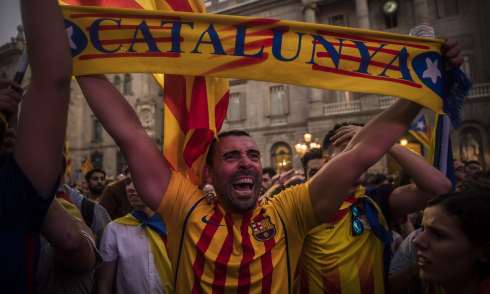
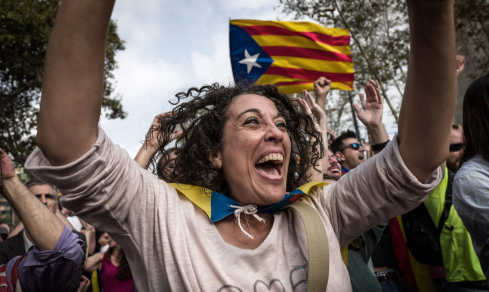
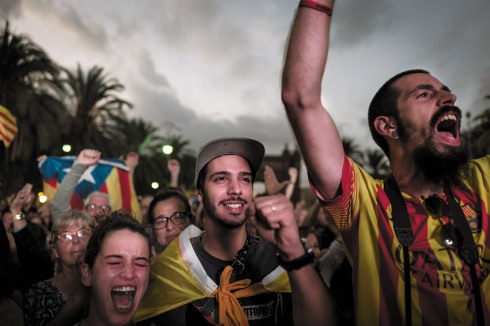
Supporters of Catalan independence outside the Catalan parliament in Barcelona during a speech by Premier Carles Puigdemont on whether he would declare independence from Spain, October 10, 2017
These are photos of a jubilance that one imagines accompanied the Emancipation Proclamation or sees in images of the Liberation of Paris or of the Greek flag being raised over the Acropolis in 1944 or of V-J Day or the Fall of the Berlin Wall.
Instead, they’re photos of a sociopathic hysteria: of a people with one of the highest living standards in the world, with their language and culture (a word I’ve come to hate) fully un-threatened, living in a region with the absolutely highest level of autonomy than perhaps any region of any other state in Europe, or even the world, cumming in the streets because of an absolutely meaningless independence they think they’ve won in an increasingly interdependent world. Meanwhile their “leaders” are having their moules frites in Brussels.
Really, they scare me. The affect is so off, the affect level so incommensurate to the stimulus, that it suggests the haunting spectre that even people in one of the most liberal, progressive of human societies can be convinced they’re victims of something. And like the convert, beware the victim.
There’s a name to that spectre and the victim narrative that is now haunting not only Catalonia and Spain and Europe and American democracy, but the entire world: identity politics. As Mark Lilla has already said — please read the piece — the main problem with identity politics is that they don’t do politics: “Mark Lilla’s “The Once and Future Liberal: After Identity Politics”“. It’s nonsense. It’s a waste of all of our time, something even more precious than our energy and our resources and brain cells. It’s a lame Fifth Avenue parade that’s supposed to actually express the soul of a particular segment of human civilization. It’s an adolescent acting out of culture in a Mardi Gras costume in a deadly serious arena of politics that can quickly get dangerous. And cultures that deserve to survive, will, by definition, do so on their own and don’t need constant “Pride” parades and manifestos and events and pointless — and dangerous — referenda. (It’s bad enough to give the demos something complicated to think about; giving them an easy yes-no question is potentially fatal to any polity.)
Andrew Sullivan did a really good job in his “I Used to Be a Human Being” for New York magazine last year, describing how being hooked up to a screen and keyboard all our lives makes our brains oatmeal, and how blogging all the years he did for his Daily Dish started to have physical health consequences for him, physical consequences that he could only deal with through treatment of his mind and soul.
I’m not in danger of that — usually. One, I’m too lazy. Two, I don’t “cover” running stories like Sullivan used to do on his Dish, in what really was a border-line manic-obsessive fashion. Rather, I jump here and there, back and forth, with now and then ruminations that are all kind of “evergreens”, to use journalist sprache.
But as the child of a family that suffered terribly as an ethnic minority under a Stalinist regime, as a member of an ethnic group that was once spread all over the eastern Mediterranean and was then locked up in the pigsty of a nation-state, as an ethnic-American who always felt the world outside his window was sort of a foreign country, I’m acutely sensitive to issues of pluralism and how they should be negotiated and they strike incredibly powerful chords in me. And they’ve made me a defender of minority rights but an even more intense critic of self-determination. It’s not pluralist for every two-bit tribe of Balko-somethings to have their own country; you’re destroying pluralism that way — and the “way” always involves violence of some sort. WHICH IS WHY I STILL GET SO FREAKED OUT ABOUT YUGOSLAVIA.
That’s also why a story like Catalonia can consume me for weeks if I let it. And this post was actually meant to declare that I will not myself be writing or quoting or even linking to anything that has to do with the issue — at least until something substantive happens — which may be tomorrow… I still have some identity politics/multi-culti-bashing pieces knocking around inside my head, but they’ll be dealing with other parts of the world.
Because Catalonia — which infuriates me — and Spain — which I love — are two players that can completely eat me alive if I let them. For other gold-and-red semiotics, see my “Bodegas“.
–
Comment: nikobakos@gmail.com
–
By the family workshop of Ghulam Ali Khan, Delhi c1810. From William Dalrymple @DalrympleWill

–
Comment: nikobakos@gmail.com
–
 Some members of India’s ruling Hindu rightwing party claim the Taj Mahal does not reflect Indian culture. Photograph: Pawan Sharma/AP
From the Guardian: “Hardline Hindu nationalists step up campaign against Taj Mahal.”
“Taj Mahal should have no place in Indian history,” he said, claiming Shah Jahan, the emperor who built the mausoleum for his deceased wife, had “wanted to wipe out Hindus”.
“If these people are part of our history, then it is very sad and we will change this history,” he added.
And a cool mad-wacky history narrative almost as funny as that of the Turkish Republic:
Fuelling the controversy are the writings of a fringe historian, PN Oak, whose works were dismissed for decades but are enjoying new prominence among Hindu hardliners.
Oak claims that much of the world was once ruled by an ancient Hindu empire, that the English language is a dialect of Sanskrit, and that Westminster Abbey is, in reality, a temple to the deity Shiva.
The Taj too, he argued, was originally a Shiva temple built by the maharajah of Jaipur, and initially named the “Tejo Mahalaya”.
His theory has been cited by several BJP legislators this month to cast doubt on the provenance of the monument. A dozen students were arrested at the Taj last week for offering prayers to Shiva on its grounds.
Frustrating to me though, that whenever anybody steps up to the plate to take on the myth of “tolerant Islam” it’s always dopes and freaks like these.
–
Comment: nikobakos@gmail.com
–
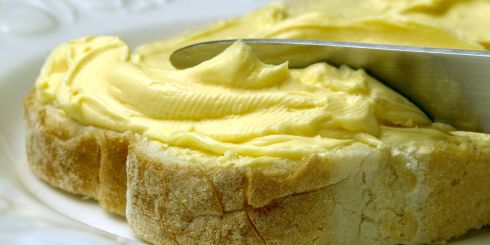
Now, unlike Confederate statues, or the children in Barcelona playing Risk, this is a real tragedy unfolding. Butter shortages in France: “France, Land of Croissants, Finds Butter Vanishing From Shelves“:
Could they make do with cheaper substitutes, like margarine? Don’t even think about it.
“There’s no comparison,” Mr. Labbé said. “If you want to preserve the quality of our products, you have to use butter — you can’t do anything else.”
Much of the attention over the shortages has focused on France’s butter bastion: Brittany, famous for its crepes and salted-butter caramel. A satirical short film released earlier this month by a collective of local artists imagined, almost presciently, what would happen if the butter ran out.
Most gratifying is that more and more people are understanding that butter — and fat generally — is not unhealthy:
Meanwhile, as butter has shed some of its unhealthy image, demand has risen worldwide, especially in the United States — where the fast-food chain McDonald’s promised to put butter back in its recipes last year — and in China.
Kind of surreal we’d be thanking McDonald’s for its ingredient choices; my kudos will only come when it starts making its fries in beef fat again, like it used to.
I’m engaged in a little mini-culture-war with many people here. Most neurotic American malakies come here with a significant delay, and I’m running around saying repeatedly: “Americans, who taught you that butter is bad, are now past that stage; get over it quicker.” Hard going, especially when the supposed “Mediterranean diet”, one of those clichéd distortions of a culture by the West that then gets sold back to that culture, has everyone convinced that Greeks never cooked any-thing with butter. “Ladera,” (λαδερά) or what Turks call zeytinyağlı dishes, comes from “zeytin” — olive — and “yağ” — fat or butter. They refer to the essentially vegan dishes that are prepared with only olive oil; for Greeks the term has a religious connotation too, as these were foods appropriate for Lent and fast days; dunno if the Turkish categorization of such dishes into their own genre is a Christian-to-Muslim crossover. It also means dishes that you can serve cold or at room temperature. (To add to the general confusion, Turks are coming around to olive oil again, after decades of cooking with disgusting sunflower seed oil, which always reminds me of poor folks’ Soviet food. Even Turks I know with sophisticated palates used to tell me that an eggplant dish like, say, imambayıldı, would be too “heavy” if it were cooked with real olive oil.) They all were, are and should be made with only olive oil.
–
But every-thing else was cooked with butter. (And not the hellish slop, Fytine…) All stewed-meat type dishes and of course, börek and yufka-baked pastries. (The only reason phyllo-based pastries in Greece are all so awful when compared to Turkey is that Greeks — at least commercial bakeries — make them with margarine!) Everyone I say this to looks at me like I can’t be serious; actually scary how a public relations campaign re-packages your culture and gives it back to you, erasing your own memories. But once again, the French come to the defense of real civilization on the things that matter.
–
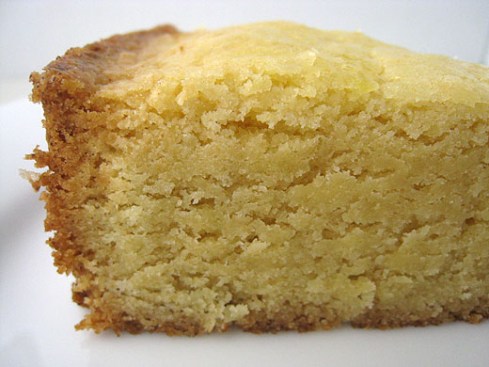
Below, a gâteau breton, basically a couple of pounds of butter held together with some flour. It’s richness is often overpowering, but when you cut into it your whole house smells delicious.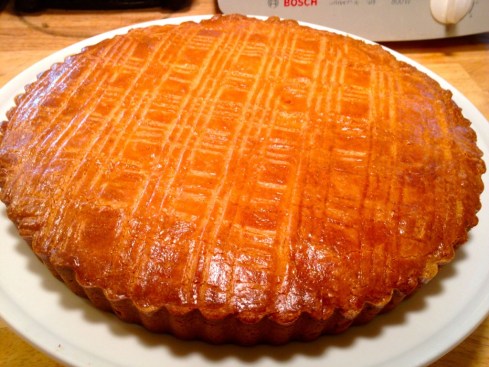
 –
–
Comment: nikobakos@gmail.com
–

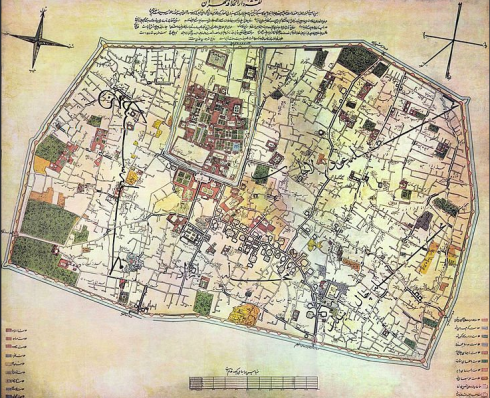

 Jadde: from Bosnia to Bengal