
People are reading the names of victims of Soviet repressions at KGB HQ in Moscow for 12 hrs today. Livestream here https://youtu.be/tI3TYjwfrh8
People are reading the names of victims of Soviet repressions at KGB HQ in Moscow for 12 hrs today. Livestream here https://youtu.be/tI3TYjwfrh8
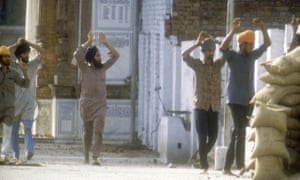
The government has been accused of covering up the full extent of the UK’s support for India’s bloody crackdown on Sikhs in 1984.
A new report calls for a full inquiry into the role played by Margaret Thatcher’s government in the events leading up to a massacre in which hundreds, possibly thousands, of Sikhs and Indian soldiers died.
In 2014 David Cameron ordered a review after the accidental release of secret documents revealed that a British SAS officer had been drafted in to advise the Indian authorities on removing armed Sikh militants from the Golden Temple at Amritsar, Sikhism’s holiest shrine.
The documents said the plan, known as Operation Blue Star, was carried out with the full knowledge of the Thatcher government.
A report, Sacrificing Sikhs, published by the Sikh Federation UK, described Cameron’s review, conducted by Sir Jeremy Heywood, as a “whitewash”.
It claims that attempts to expose the full facts have been thwarted by government secrecy rules and conflicts of interest. More than half of the Foreign Office’s files on India from 1984 have been censored in whole or in part.
Some documents suggest the Foreign Office was aware of what was at stake when the Indian authorities approached the UK for help.
A week before the Golden Temple assault, Bruce Cleghorn, a diplomat, wrote that “it would be dangerous” for the UK government “to be identified” with “any attempt to storm the Golden Temple in Amritsar”. He was also named in correspondence discussing possible SAS assistance to India immediately after the massacre.
In 2015, Cleghorn became a Foreign Office “sensitivity reviewer” whose job involved censoring documents about the Amritsar massacre before they were released to the National Archives.
Sir John Ramsden, a member of the Advisory Council on National Records and Archives, which adjudicates on government censorship applications, was a member of the Foreign Office’s south Asia department in 1984. Ramsden wrote a letter advocating further SAS assistance for India immediately after Operation Blue Star and also argued in favour of equipping India’s paramilitary forces.
The role of the SAS officer in the days before Operation Blue Star are shrouded in secrecy as are the full extent of the fatalities. The Indian government puts the figure at about 400. Sikh groups say it was in the thousands.
According to the Sikh Federation’s report, immediately after the SAS officer carried out his reconnaissance with an Indian special forces unit, the Sikhs pulled out of peace talks believing they had seen a commando unit move into the city. The negotiations never recovered and eventually the Indian army stormed the temple in June 1984. Four months later, India’s prime minister Indira Gandhi was assassinated by one of her Sikh bodyguards, prompting reprisals that led to the deaths of more than 3,000 Sikhs.
The report suggests the UK was keen to help India because the country was one of its biggest purchasers of military equipment between 1981 and 1990. It also claims that repressive measures against Sikhs were carried out in the UK to appease the Indian government and secure arms deals.
“The government needs to finally come clean about Thatcher’s role in the Amritsar massacre and India’s crackdown on Sikhs,” said the report’s author, Phil Miller. “Whitehall censorship of historical files is like an old boys’ club that prevents the public from ever knowing how taxpayers’ money was spent. This culture of secrecy around Britain’s special forces and intelligence agencies is undemocratic and unsustainable.”
Bhai Amrik Singh, chair of the Sikh Federation (UK) said: “This report casts serious doubts on the adequacy and integrity of the inhouse Heywood review commissioned by Cameron. There has been a massive cover-up and parliament and the public have been disturbingly misled. An independent public inquiry to get to the truth is the only way forward.”
**************************************************************************************
See: “Jallianwala Bagh massacre“ and “Operation Blue Star“.
–
Comment: nikobakos@gmail.com
–
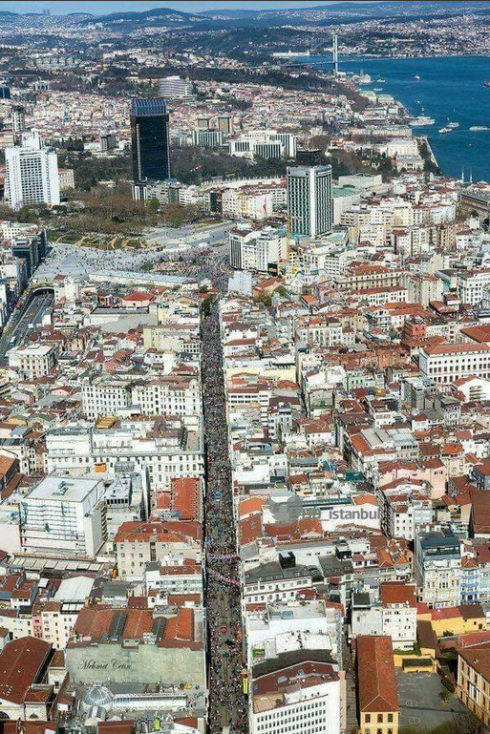
The Jadde on a sunny, autumn day. Why Greeks called it “Ho Isios Dromos” — the Straight Street — along with “He Megale Hodos”. See: “The name of this blog“
Knowing nothing, when I first saw headline I was eager to see if new leader of new party had a mustache — prophecy being that Turkey will be saved when it next has a leader without a mustache. Turns out he’s a she. Does anybody have any more info on her than what the pretty laconic Al Jazeera article provides? Is she an attempt to resurrect the CHP?
 Meral Aksener, a prominent right-wing political figure and a former interior minister, announced the founding of her Good Party in a gathering in Ankara [Reuters]
“Turkey will be good”? whooooohhh… That’s some pretty heavy language. And embarrassing in its naivité and probable counter-productiveness.
And guys…forgive my snark on anything Turkey-related these days…it’s the only reaction I can summon.
–
Comment: nikobakos@gmail.com
–
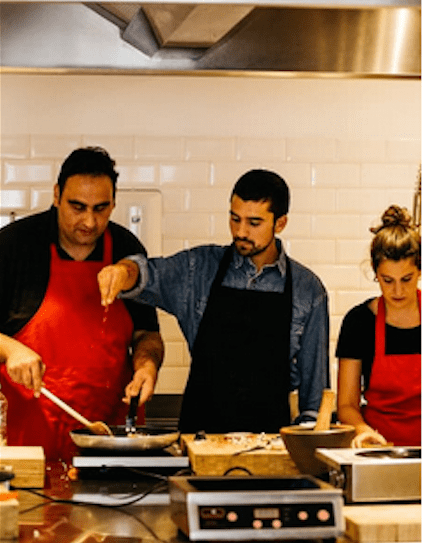
No, I’m not getting a cut from Airbnb:
What I’ll provide:
Dinner
Comment: nikobakos@gmail.com
–
…a reposting of one of my oldest posts, with one of the most devastatingly lyrical pieces of his opus.
**************************************************************************************
 The Martyrs’ Cemetery, Srinagar (click)
——————————————————————————————————————————————————————————————————————————————————————-
Now and in time to be,
Wherever green is worn…
A terrible beauty is born.
— W. B. Yeats
1
One must wear jeweled ice in dry plains
to will the distant mountains to glass.
The city from where no news can come
Is now so visible in its curfewed nights
that the worst is precise:
From Zero Bridge
a shadow chased by searchlights is running
away to find its body. On the edge
of the Cantonment, where Gupkar Road ends,
it shrinks almost into nothing, is
nothing by Interrogation gates
so it can slip, unseen, into the cells:
Drippings from a suspended burning tire
Are falling on the back of a prisoner,
the naked boy screaming, “I know nothing.”
2
The shadow slips out, beckons Console Me,
and somehow there, across five hundred miles,
I’m sheened in moonlight, in emptied Srinagar,
but without any assurance for him.
On Residency Road, by Mir Pan House,
unheard we speak: “I know those words by heart
(you once said them by chance): In autumn
when the wind blows sheer ice, the chinar leaves
fall in clusters –
one by one, otherwise.”
“Rizwan, it’s you, Rizwan, it’s you,” I cry out
as he steps closer, the sleeves of his phiren torn.
“Each night put Kashmir in your dreams,” he says,
then touches me, his hands crusted with snow,
whispers, “I have been cold a long, long time.”
3
“Don’t tell my father I have died,” he says,
and I follow him through blood on the road
and hundreds of pairs of shoes the mourners
left behind, as they ran from the funeral,
victims of the firing. From windows we hear
grieving mothers, and snow begins to fall
on us, like ash. Black on edges of flames,
it cannot extinguish the neighborhoods,
the homes set ablaze by midnight soldiers.
Kashmir is burning:
By that dazzling light
we see men removing statues from temples.
We beg them, “Who will protect us if you leave?”
They don’t answer, they just disappear
on the roads to the plains, clutching the gods.
4
I won’t tell your father you have died, Rizwan,
but where has your shadow fallen, like cloth
on the tomb of which saint, or the body
of which unburied boy in the mountains,
bullet-torn, like you, his blood sheer rubies
on Himalayan snow?
I’ve tied a knot
with green thread at Shah Hamdan, to be
untied only when the atrocities
are stunned by your jeweled return, but no news
escapes the curfew, nothing of your shadow,
and I’m back, five hundred miles, taking off
my ice, the mountains granite again as I see
men coming from those Abodes of Snow
with gods asleep like children in their arms.
(for Molvi Abdul Hai)
(See whole post “India’s Blood-stained Democracy…” by Mirza Waheed)
*******************************************************************************************************************************************************************************
* “Don’t tell my mother / my beloved brother / my sister….I’m dead” is also a common stock phrase in Balkan epic poetry of guerrilla fighters, kleftes, haiduci.
* “By that dazzling light we see men removing statues from temples”…”Who will protect us if you leave?”…”men coming from those Abodes of Snow with gods asleep like children in their arms.”
Shahid Ali’s universalist soul was as hurt by the exodus of Kashmiri Hindus (Pandits) from the region as he was by the brutality of the Indian Army against its innocent Muslim majority. I can only assume that the men with the gods asleep in their arms is a reference to this exodus. Shahid suffered from a recurrent nightmare, in fact, that the last Hindu had left Kashmir, and he fought that haunting image through the curious fashion of reproducing their distinctive cuisine as meticulously and often as possible — he was an excellent cook; there are now hardly any Hindus left in the tormented region. “Who will protect us if you leave?,” directed to the departing Hindu murti, is a line that always breaks my heart, and could only come from a poet of as sophisticated a background and from as beautifully Sufi-syncretic a region as Kashmir.

“I See Kashmir from New Delhi at Night” reprinted from The Veiled Suite: The Collected Poems by Agha Shahid Ali. English translation copyright © 2009 by Daniel Hall. With the permission of the publisher, W.W. Norton & Company, Inc.
Comment: nikobakos@gmail.com
“He’d leave and I’d die, he’d return and kill me.”
“Έφευγε και πέθαινα, ερχόταν και με σκότωνε.”

–
Comment: nikobakos@gmail.com
–

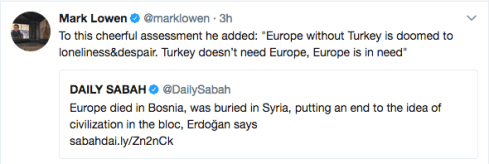
Lausannitis? See here: “Turks don’t suffer from Sèvrophobia; they suffer from Lausannitis.“
Turkey doesn’t need Europe? Cool. Ok. Tamam. Haydi, ciao. No problem here. Totally up front: only thought Turkey in the EU was a good idea as long as I thought that it was better to keep the wolf in the fold where you can keep an eye on it.
But this is an animal out of control. Nothing we can do from the outside. We’ll just have to wait for Turks themselves to get fired up enough by the damage he’s doing their country domestically and internationally to take some sort of action themselves — like the “unity” my White Turk friend dreams of: “Memo to: a certain generation of “progressive” Turks“.
Some NikoBako advice: don’t wait up…
–
Comment: nikobakos@gmail.com
–
Some meanwhile-Kashmir p.s. articles…
From today’s Guardian: “India to open talks with all parties in disputed Jammu and Kashmir: Former intelligence chief given unrestricted mandate, indicating that even separatist leaders will be consulted.”
And a “long read” by Mirza Waheed from last fall that’s still worth reading, on a conflict we often forget about, despite its up-and-down escalating ugliness: “India’s crackdown in Kashmir: is this the world’s first mass blinding?“:
“How did India get here? How is it all right for a constitutionally democratic and secular, modern nation to blind scores of civilians in a region it controls? Not an authoritarian state, not a crackpot dictatorship, not a rogue nation or warlord outside of legal and ethical commitments to international statutes, but a democratic country, a member of the comity of nations. How are India’s leaders, thinkers and its thundering televised custodians of public and private morality, all untroubled by the sight of a child whose heart has been penetrated by metal pellets? This is the kind of cruelty we expect from Assad’s Syria, not the world’s largest democracy…
“Two-and-a-half decades of rebellion in Kashmir have hardened the indifference of India’s political and intellectual classes to the human cost of the country’s repressive tactics in the valley.”
See “more on this story” articles at bottom of Waheed piece.
And a reality check: does India, with its world’s largest democracy rhetoric and “marigold p.r.,” get away with shit we would freak about — or at least make some nominal fuss — if it were Pakistan?
 Victims of police shooting who have been blinded in one or both eyes in hospital in Srinagar. Photograph: Yawar Nazir/Getty Images
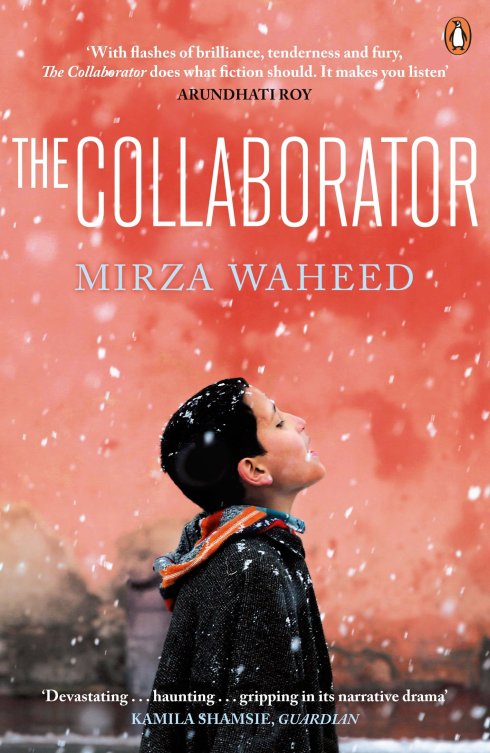
 Waheed is author of the best, most disturbing piece of Kashmir fiction I know of: “The Collaborator“. Check it out.
A follower of William Dalrymple’s suggests he’s in Kashmir doing research on new book. Anybody have any leads or other knowledge on such project?
–
Comment: nikobakos@gmail.com
–
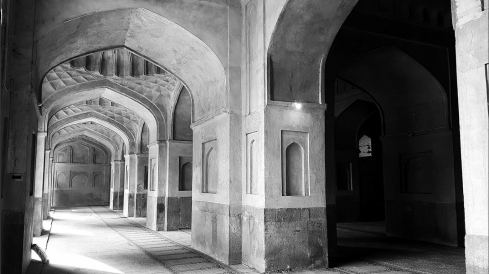 The recently restored Pattar Masjid Srinagar, 1623 Built by Nur Jahan for Jahangir
William Dalrymple (@DalrympleWill ) is apparently on vacation in Kashmir, and loading his Twitter account with gorgeous photos. Check them out.

Shah-e-Hamedan Srinagar From the Jhelum waterfront

Nishat Bagh Srinagar October light
–
Comment: nikobakos@gmail.com
–
 Jadde: from Bosnia to Bengal