Tag Archives: Bosnia

The Classical Liberals: “On the Balkans, the Former Yugoslavia, and the Unity of Spaces”

4 Jan

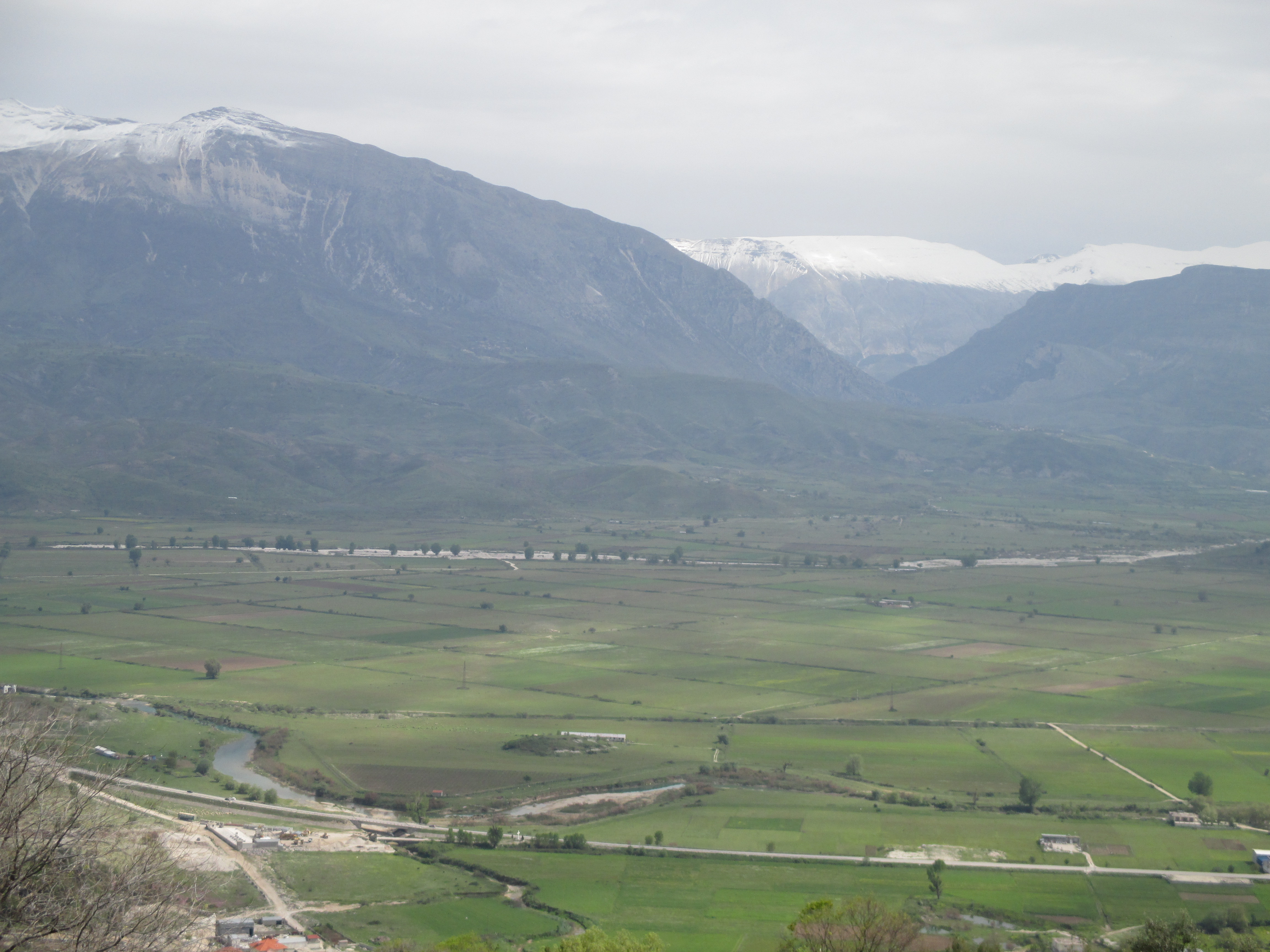
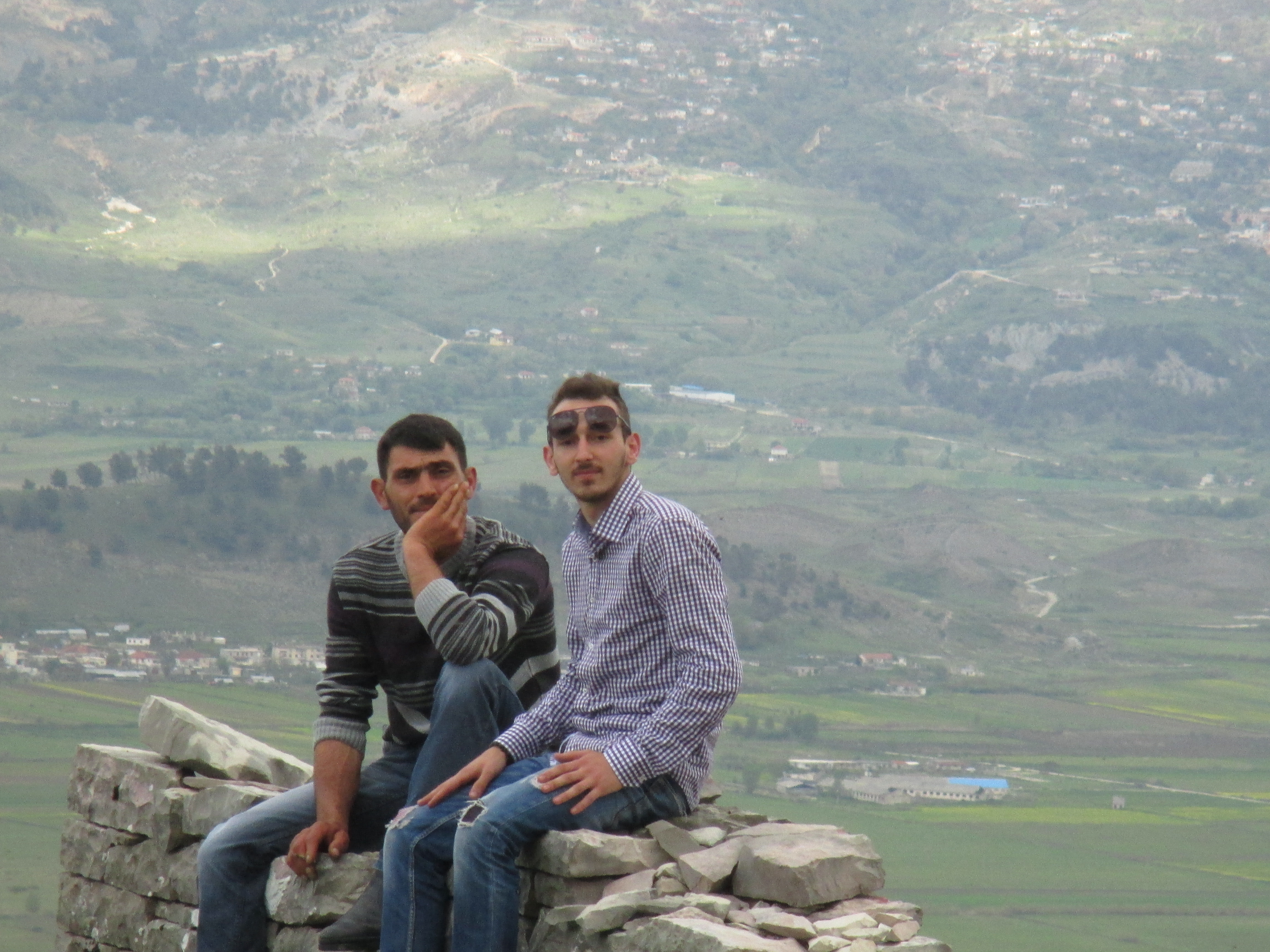
dropoliThe Valley of Dropoli, the pass up to the Pogoni plateau near Libochovo, and in the distance, the snowcapped peaks of Nemerčka, from the Monastery of the Taxiarches in my father’s village of Derviçani, Easter 2014 (click)

I’m honored by the fact that this really intelligent blog quotes extensively from the Jadde’s mission statement in a recent post: Jadde — Starting off — the Mission.

Check them out: The Classical Liberals: At least, most of the time  Smart, perceptive, interesting stuff.

The author of the post below and the person I suspect is largely behind the editing of the blog is one Eoin Power, not just a fellow Balkan-freak along the lines of me or Rebecca West, but also a fellow Epirote.  He demurs a bit — though not very convincingly — at being called an Epirote, because his lineage is multiple and complicated and the connection to Epiros is fairly distant historically.  But he’s from one of the most archetypically and ancient Epirotiko villages — where they still own their patriko — in one of the most archetypically Epirotiko regions of Epiros and he carries himself with the requisite Epirotiko dignity and soft-spokeness and if I, NikoBakos, have conferred the title on you, it’s ’cause you deserve it.

***************************************************************************************************************************************************************************

On the Balkans, the Former Yugoslavia, and the Unity of Spaces

The other day, as she is wont to do, my mother sent me a link to something on the Internet; this time it was to Nicholas Bakos’ blog, which you can find here. If you’re reading this blog, we’re probably friends in real life (thanks for reading!), and so it’s probably obvious why something like that would be of interest to the both of us. I have admittedly only skimmed sections of his posting so far, but in his introductory one, it was especially gratifying to read this:

This blog is about “our parts.”  It’s about that zone, from Bosnia to Bengal that, whatever its cultural complexity and variety, constitutes an undeniable unit for me.  Now, I understand how the reader in Bihać, other than the resident Muslim fundamentalists, would be perplexed by someone asserting his connection to Bengal.  I can also hear the offended screeching of the Neo-Greek in Athens, who, despite the experiences of the past few years, or the past two centuries, not only still feels he’s unproblematically a part of Europe, but still doesn’t understand why everyone else doesn’t see that he’s the gurgling fount of origin and center of Europe.

But set aside for one moment Freud’s “narcissism of petty differences,” if we have the generosity and strength to, and take this step by step.  Granted there’s a dividing line running through the Balkans between the meze-and-rakia culture and the beer-and-sausage culture (hats off to S.B. for that one), but I think there’s no controversy in treating them as a unit for most purposes; outsiders certainly have and almost without exception negatively.  And the Balkans, like it or not, include Greece.  And Greece, even more inextricably, means Turkey, the two being, as they are, ‘veined with one another,’ to paraphrase the beautiful words of Patricia Storace.  Heading south into the Levant and Egypt, we move into the Arab heartland that shares with us the same Greek, Roman-Byzantine, Ottoman experiences, and was always a part of the same cultural and commercial networks as the rest of us.  East out of Anatolia or up out of Mesopotamia I challenge anyone to tell me where the exact dividing line between the Turkic and Iranian worlds are, from the Caucasus, clear across the Iranian Plateau into Afghanistan and Central Asia.

Bakos suggests that for people of “those parts” displaced to another environment (e.g. grad school in the West), this kind of geographical unity came, at least in a social context, fairly naturally, so perhaps I shouldn’t be all that surprised and delighted at seeing it reconstituted in blog form. But in fact I think the basic unity of the geographical zone outlined here often gets lost in the way these places are understood by outsiders and, ironically enough, in no small part due to the vehement insistence from each of the zone’s component peoples that they could not possibly be compared with those uncultured idiots with whom they share a border.*

Explaining the rationale for delineating “his parts” the way he does, Bakos writes:

But to step into Buddhist Burma is somehow truly a leap for me, which maybe I would take if I knew more. And in the other direction, I stop in Bosnia only because for the moment I’d like to leave Croatia to Europe – mit schlag – if only out of respect for the, er, vehemence with which it has always insisted that it belongs there.  Yes, I guess this is Hodgson’s “Islamicate” world, since one unifying element is the experience of Islam in one form or another, but I think it’s most essential connections pre-date the advent of Islam.  I’ll also probably be accused, among other things, of Huntingtonian border drawing, but I think those borders were always meant to be heuristic in function and not as hard-drawn as his critics used to accuse him of, and that’s the case here as well.

Ultimately what unites us more singularly than anything else, and more than any other one part of the world, is that the Western idea of the ethnic nation-state took a hold of our imaginations – or crushed them – when we all still lived in complex, multi-ethnic states.  What binds us most tightly is the bloody stupidity of chilling words like Population Exchange, Partition, Ethnic Cleansing – the idea that political units cannot function till all their peoples are given a rigid identity first (a crucial reification process without which the operation can’t continue), then separated into little boxes like forks after Easter when you’ve had to use both sets – and the horrendous violence and destruction that idea caused, causes and may still do in “our parts” in the future.

Having not, at least north of the equator, yet made it further east than Istanbul, I am in no position to question Bakos’ perception of the fundamental apartness of Buddhist Burma. But the loose border he posits to the north and west is one I’ve crossed many times, and it’s one that is both deeply present and functionally invisible.**

At the very least it is present in people’s minds; I can vouch for the vehemence (to use Bakos’ word again) with which Slovenes and Croats will insist that their countries are European, and not Balkan. It’s also pretty visually observable – you could mistake Zagreb or Ljubljana for a city in Austria or Germany in a way you simply can’t for, say, Sarajevo or Belgrade. And on one frantic trip from Dubrovnik back to Ljubljana (the ferry which I’d intended to take from Dubrovnik to Ancona decided not to arrive from Split, leaving me nothing to do but beat a hasty retreat back north) you could, if you were looking for it, see an actual tangible difference in the way things were done in the world – bus tickets in Mostar and train tickets in Sarajevo had to be paid in cash and a conductor on the train north from Sarajevo let me pay in a mix of Croatian kuna, Bosnian marks,  and euros. In Zagreb I could pay with a credit card, the train station had working and appealing amenities, and you couldn’t smoke in the train. This is a terribly squishy thing to write, but it did feel more “European-y”.

On the other hand, if the relatively old Huntingtonian dividing line between formerly Orthodox and Ottoman lands to the south, and formerly Catholic Hapsburg lands to the north is visually (and, at least in terms of credit card viability in 2009, functionally) discernible, the comparatively recent unifying experience of Yugoslavia is also unavoidable. Here, too, the first signs are in architecture and appearance; Soviet-style architecture and the legacy of 1950s industrialization has left the same physical scars on cities from Nova Gorica to Skopje. But they run deeper than that – the protestations of linguistic nationalists notwithstanding, Slovene, Bosnian, Croatian, Serbian, Montenegrin, Macedonian (hell, even Bulgarian a bit) all exist along a spectrum of of mutual intelligibility; state apparatuses, all having those of the former Yugoslavia as their common predecessors, share similar characteristics. Indeed, to me as a foreigner, the similarities often seem more salient than the differences.

Just on the basis of whether or not there “is” a usefully differentiating border to be drawn where Croatia meets Bosnia, it seems you can argue fairly fruitfully either way, depending on whether your sympathies lie with a sort of longue duree emphasis on deep civilizational splits or a faith in the primacy of modern political experiences. But by Bakos’ own ultimate criteria, it seems a bit odd to leave the northernmost bits of the former Yugoslavia out of things (though there is a nice alliterative symmetry to covering “from Bosnia to Bengal”) . If you’re going on the basis of, “the bloody stupidity of chilling words like Population Exchange, Partition, Ethnic Cleansing,” surely things like Jasenovac or the Istrian exodus argue for the inclusion of all of the former Yugoslavia?

Of course, any exercise in boundary-izing is a bit arbitrary, and in this case there are good reasons to put one in between Croatia and Bosnia and not, say, in between Slovenia and Austria (two countries for which there also exist plenty of historical reasons to consider them as part of a unified space). So if all of this does anything, it is perhaps to show how much more liminal are most places than we or their inhabitants often care to admit; whether or not you see a border somewhere often depends as much on your level of zoom as anything else.

*Or at least their nationalist politicians – many average people (whatever that means) in Bosnia and Serbia, for example, will quickly stress to you the fundamental similarities between the two countries and their inhabitants
**People sometimes marvel at my overstuffed passport but really something like 40% of the stamps come from the Dobova and Dobrljin border posts.

**************************************************************************************************************************************************************************

Again, check these guys out; you won’t regret it: The Classical Liberals

Comment: nikobakos@gmail.com

From the New York Times: “And Novak all fired up now goes, ‘Serbia! Serbia!’ ”

27 May
DjokParisCITY-CLAREY-superJumboDjokovic defeated Joao Sousa in straight sets Monday, 6-1, 6-2, 6-4. Credit Gonzalo Fuentes/Reuters (click)


Djokovic’s Greatest Motivation Isn’t on Court By CHRISTOPHER CLAREY    MAY 26, 2014

PARIS — Novak Djokovic was safe and dry after his first-round victory at the French Open on Monday, and it was noted that he often seems to play his best when he is playing for a cause higher than tennis.

“You’re right; you’re right,” he said. “It’s an interesting observation. I did also feel this at times when I had the last couple of years certain kinds of situations in life, good and bad, that were a lesson in a way for me. I noticed that I found that extra motivation to perform well on the court and to go far.”

But can he go all the way here over the next two weeks and join an exclusive seven-member men’s club by winning the only Grand Slam singles title he is missing?
Playing for Serbia has been a powerful motor for Djokovic. An emotional run to the 2010 Davis Cup title, Serbia’s first, helped him make the leap from serial Grand Slam contender to serial Grand Slam winner in 2011.
Wojtek Fibak, the former Polish star who advised Djokovic at last year’s United States Open, said he used that for fuel again when Djokovic was upset after his semifinal with Stan Wawrinka was scheduled first during the day after he had played primarily night matches.

Fibak said Djokovic had “the worst warm-up” and was in “a horrible mood” so he tried his best to get him back to the essential. “I said, ‘Remember your parents, remember your father had to sell his car for you to play tennis,’ ” Fibak said. “I kept bringing it up, and Novak’s eyes were big, and I said: ‘Do you know why they did it? So you could play the U.S. Open, and now you are in the semis of the U.S. Open and you don’t want to fight and you’re not happy just because of the time? I said do it for your father, your mother, for Serbia.’ And Novak all fired up now goes, ‘Serbia! Serbia!’ ”

He went on to beat Wawrinka in five sets before losing to Nadal in the final.

Now, as he returns to the tournament he wants to win more than any other, Serbia is again at the forefront of his thoughts. He has been seriously involved in raising money and awareness for relief efforts after this month’s floods in southeastern Europe, primarily in Serbia and Bosnia and Herzegovina, that killed dozens and forced hundreds of thousands from their homes.
Djokovic has donated his prize money — listed at 549,000 euros, or $750,000 — from winning the Masters 1000 event in Rome.

“I’ve seen the images and followed the news every single day, and it was something I’ve done because I felt like that was the right thing, and that’s it,” Djokovic said. “The second thing I thought about was that it was going to attract more of the donors from the international world to see that the situation is as serious as the prize money I donated. We’re talking about billions of dollars needed.”
Several players from the region took part with Djokovic in an on-court show of solidarity during an exhibition day at Roland Garros before the tournament. It was a small yet deeply symbolic gesture. Croatia, Serbia and Bosnia were all part of Yugoslavia before war broke the country apart in the 1990s. But Djokovic said that if there were any upside to this, it would be that former antagonists were now cooperating.

“To be honest there is something that I did not predict, did not expect,” Djokovic said. “And that is the solidarity of the people of the three countries that were in conflict only 15 years ago. That’s something that was incredibly moving and very encouraging for the relationship for the future of these people, because maybe we cannot be the same country again. Maybe people are thinking that’s not a good idea, but there is definitely a lot more room for improvement of the respect and solidarity between the people.”

When he is serious, Djokovic speaks in long paragraphs. He makes less eye contact than in his earlier days, but what remains remarkable is his ability to shift tone in a hurry. On Monday, marooned on a bench on a changeover during a second-set rain delay at Roland Garros, he invited the ball boy holding his umbrella to join him on the bench for a chat. He then finished off Joao Sousa, 6-1, 6-2, 6-4.
In a news conference, he doubled over with laughter and put his head on the desk when an Italian journalist asked Djokovic, who eats a gluten-free diet, if adopting the same regimen would help him improve his writing.  Moments later he was discussing the floods again and then, moments after that, answering a query about Boris Becker, the former champion who is coaching Djokovic this year along with his longtime coach Marian Vajda.

Becker won every Grand Slam tournament except the French Open and never won a professional clay-court title, which makes him an intriguing choice of mentor. What kind of advice might Becker be giving him for the French Open?

“He doesn’t tell me to serve and volley, that’s for sure,” Djokovic cracked. “But you know on a serious note, he is still one of the most successful players to play the game even though he hasn’t won Roland Garros.”  For Djokovic, Becker’s experience in big matches and big events is precious cargo even if he failed to win the Australian Open with him in his camp and has had most of his big victories this year with only Vajda in attendance. But the whole team was together in Rome.

“I feel that we understand each other much better already since Rome,” Djokovic said of Becker.

For now, Djokovic remains, with Becker, one of the best men’s players never to win the French Open, a list that includes John Newcombe, Jimmy Connors, John McEnroe, Stefan Edberg and Pete Sampras. But in light of Djokovic’s excellence on the surface, he may now be the best men’s clay-court player in the Open era never to win it.

Djokovic has won Rome three times and Monte Carlo and Madrid once. At Roland Garros, it took Roger Federer in full flight to stop Djokovic in the semifinals in 2011. It took Nadal in full fight to stop him in a rain-interrupted final in 2012 and then again in last year’s classic five-set semifinal.

Beating Nadal at Roland Garros remains the toughest task in tennis, and Djokovic said that the death of his grandfather inspired him in 2012, just as the death of his childhood coach Jelena Gencic in the midst of last year’s tournament inspired him before he fell just short, losing by 9-7 in the fifth.

“I cannot say that the images and memories of these people were not in my head while I was playing but I tried to channel this energy and information in the positive direction,” he said. “And I knew both of these people who were very supportive of my career would like me to play and win for them, so that’s
something I had in the back of my mind.” There is much more for the back of the mind this year. There are Serbia and
its neighbors. There is his coming marriage to Jelena Ristic and the birth of their first child later this year.

“It’s true; I have plenty of causes right now,” he said with the second round on the horizon.

Comment: nikobakos@gmail.com

Even if he’s a Serb…

23 May

…is the subtext of this article from AP and Canadian Press about Djokovic donating his full check from the Rome Masters to relief aid for Serbia and Bosnia  A nice guy, even though…

Nolegb148-512-2013-162604-high-jpg(AP Photo / Gregorio Borgia — click)

Novak Djokovic unites old enemies for flood relief effort

Serbian brings together former Balkan wartime foes

After winning the Masters tournament in Rome on May 18, tennis player Novak Djokovic donated all the prize money, about $500,000 US, to the flood victims in Serbia, Bosnia and Croatia.

Novak Djokovic has served many match-winning aces on the tennis court, but now he has fired a major one in the flood-hit Balkans.

The world’s No. 2 tennis player has achieved what no politician has managed since the bloody Balkan wars in the 1990s: to at least temporarily reunite former bitter wartime foes as they jointly struggle against the region’s worst flooding in more than a century.

Djokovic has sparked worldwide financial and media support for victims of the massive river water surge that has killed at least 45 people and left hundreds of thousands homeless in Serbia, Bosnia and Croatia.

The Serb has in the past triggered fury in the other former Yugoslav republics for what people considered nationalistic gestures, such as celebrating his victories with a three-finger victory sign that was used by Serb soldiers during their wartime campaigns in Croatia and Bosnia.

‘My heart is breaking when I see that so many people were evacuated and endangered in Bosnia. … Help will come from the world.’– Tweet from Serbian tennis star Novak Djokovic

What has set Djokovic’s flood salvage campaign apart is that he didn’t just seek international support for Serbia. He also did it for Bosnia and Croatia which were at war with Serbia. All three states are still harbouring a deep mutual hatred and distrust, 20 years after the wars ended and the former Yugoslavia split up into seven different countries.

“My heart is breaking when I see that so many people were evacuated and endangered in Bosnia! More than 950,000!!! Hold on brothers … help will come from the world,” Djokovic wrote on Twitter. “I also see that the east of Croatia is hit by floods … I sincerely hope that it will not hit you like Serbia and Bosnia. Keep safe.”

“Long live the people of former Yugoslavia. Let God be with you,” he wrote, adding a map of the former Yugoslavia with the flags of now different countries.

The floods have triggered unprecedented regional solidarity in the Balkans, with the former Yugoslav countries sending rescue teams and humanitarian aid to each other over their borders.

$500,000 US donation

After beating top-ranked Rafael Nadal in the final of the Masters tournament in Rome on Sunday, Djokovic donated all the prize money — about $500,000 — to the flood victims. His charity foundation collected another $600,000.

“There have not been floods like this in the existence of our people,” Djokovic said. “It is a total catastrophe of biblical proportions. I don’t really know how to describe it.”

Djokovic’s gestures triggered mostly positive public support in both Croatia and Bosnia.

“I’m not Djokovic’s supporter or like tennis,” said Davor Buric, a university student in Zagreb, Croatian capital. “It is nice that he mentioned not only Serbia, but also Croatia and Bosnia. Djokovic has nothing to do with the war, and I have never heard him saying anything against other nationalities.”

In Bosnia, national football team coach Safet Susic said Djokovic had won “the support of the whole of Bosnia” with his campaign, and promised to support him in the upcoming Grand Slam tournaments — the French Open and Wimbledon. Djokovic replied by saying he will support Bosnia at the World Cup in Brazil.

Such sentiments in Bosnia and Croatia have prompted some commentators to nickname him “Marshal Djokovic” after Marshal Josip Broz Tito, the post World War II Yugoslav communist leader who managed to keep Yugoslavia united with iron fist. With his death in 1980, the country started unraveling along ethnic lines.

“This water … has destroyed what we have been building for the past 20 years,” wrote prominent Croatian columnist and writer Vedrana Rudan in an ironic commentary on her web page.

“Djokovic has sketched the map of Yugoslavia, he greets both our and his people … the slaughter has separated us, the drowning has reunited us.”

© The Canadian Press, 2014

*************************************************************************************************************************************************************************************************************

This is the three-finger gesture they’re talking about, along with a temporary tattoo Djokovic got at some point of the Serbian national crest (with “Born in Serbia and ‘something’ in Monaco” added), and generally looking a little bit like a Belgrade club bouncer:

djokovic-tattoo-novak-djokovic-15906276-500-735

But it’s not a nationalist victory gesture “used by Serb soldiers during their wartime campaigns in Croatia and Bosnia.”  Those are the three fingers Orthodox Christians make the sign of the cross with and, according to my sources (granted, all Serbian), did not become a Serbian symbol or gesture of any kind until WWII, when members of the Nazi-collaborationist Ustaša regime of Croatia and those Bosnian Muslims who worked with them (for reasons I’ve never understood) made a habit of cutting those fingers off both corpses and the living.  It then became a symbol of resistance.  The Ustaša’s plan for the Serbs that fell under their control during the war was the “thirds” plan: kill one third, expel one third, convert the last third to Catholicism (good luck with that last one…)  See my post on genocide from last November.  Also yesterday’s After the Flood, Unity and Compasion…yeah.

You wanna casually throw some history around in lazy, half-informed North American style, at least look back a little further than twenty years.

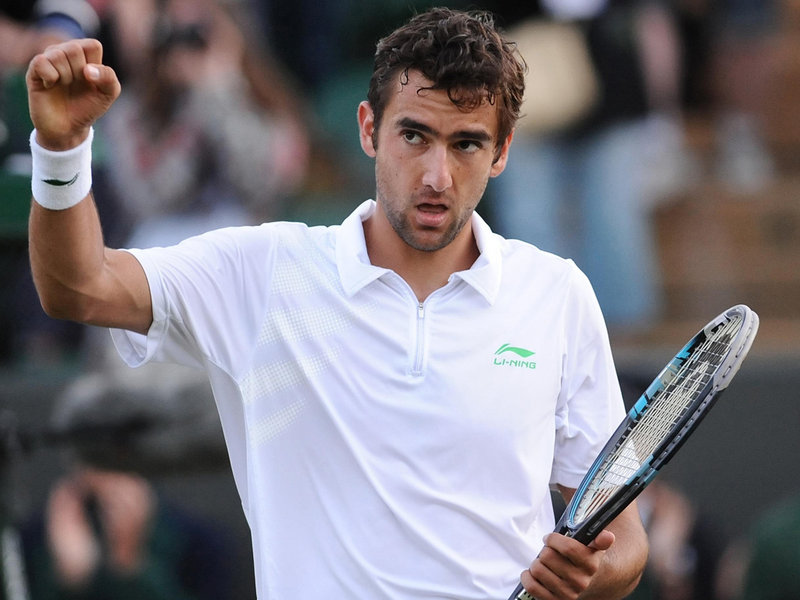
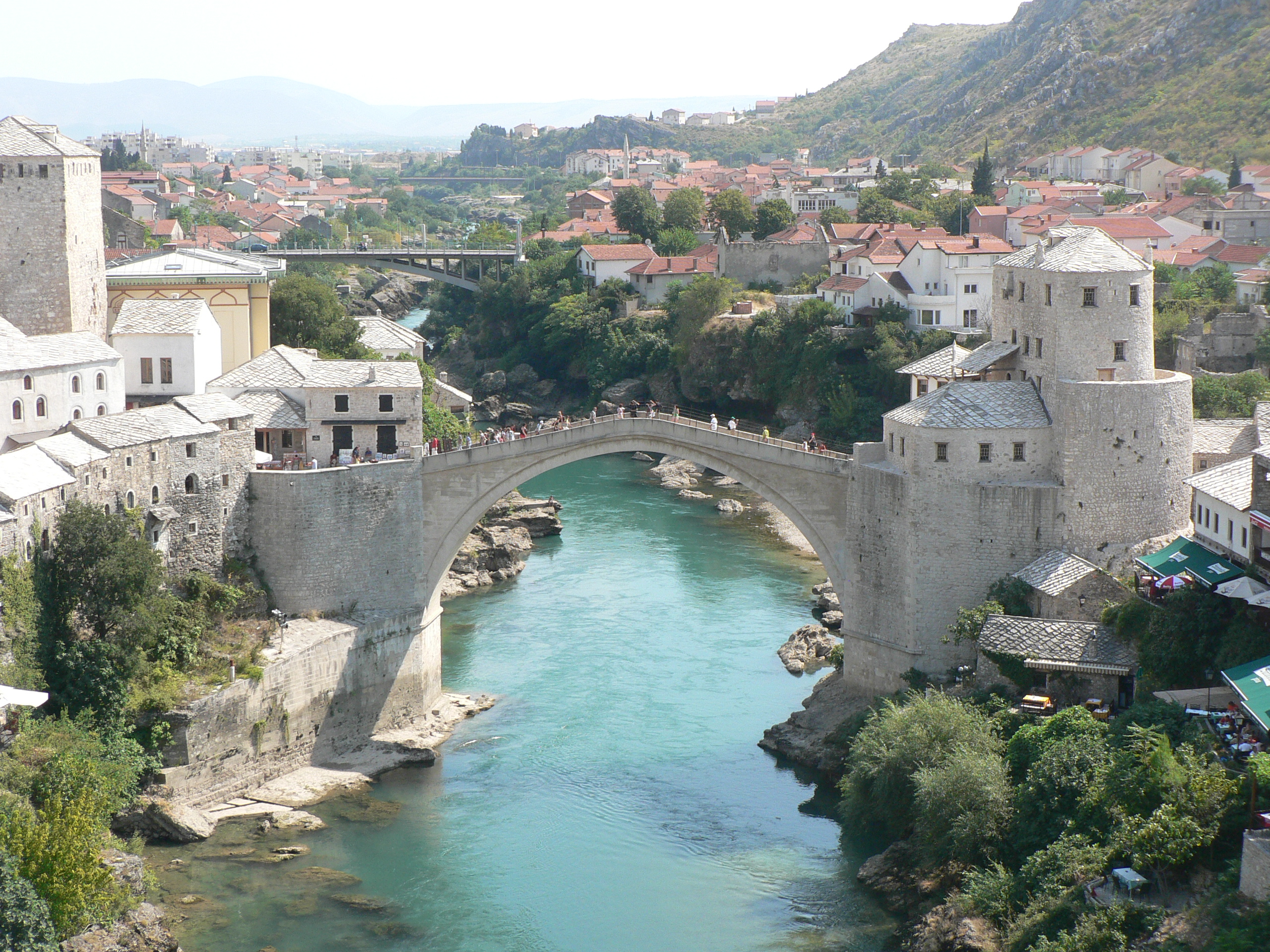
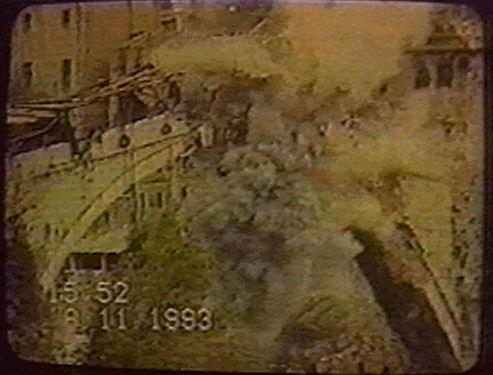
Marin Čilić is never ‘the tennis player from the country that created one of the ugliest, most homicidal Fascist regimes of twentieth-century Europe,’ is he?  Or ‘from the country that committed as many if not more atrocities in Bosnia during the wars of the nineties, and ethnically cleansed larger parts of the areas under its control of both Muslims and Serbs, and more thoroughly as well’ is he?  Or that ‘still holds on to a huge part of occupied Bosnia where Muslims suffer worse than they do in the Serb-held parts,’ is he?  Or, ‘that blew up the famous Ottoman bridge of Mostar?’ is he?   Nor should he be…considered anything other than an exceptional tennis player and a great athlete.

Marin-Cilic-celeb_2788159

Marin Čilić (click)

Yet Nole is constantly having to prove he’s not the “ugly Serb.”  Why can’t this just be the story of a deeply Christian kid, which is essentially what Novak is — and very genuinely so — who wants to help his neighbors?  Why is he held responsible for “fixing” damage he didn’t do?  And his people still responsible for a war they didn’t start?

He’s certainly far more  above all of it than I am, and God bless him.

Comment: nikobakos@gmail.com

2-jpg

 The Bridge of Mostar, now rebuilt (click)mostar

mostar5a(click)

(AP Photo/Gregorio Borgia)

Off to ex-Yugoland

25 Apr

IMG_0217

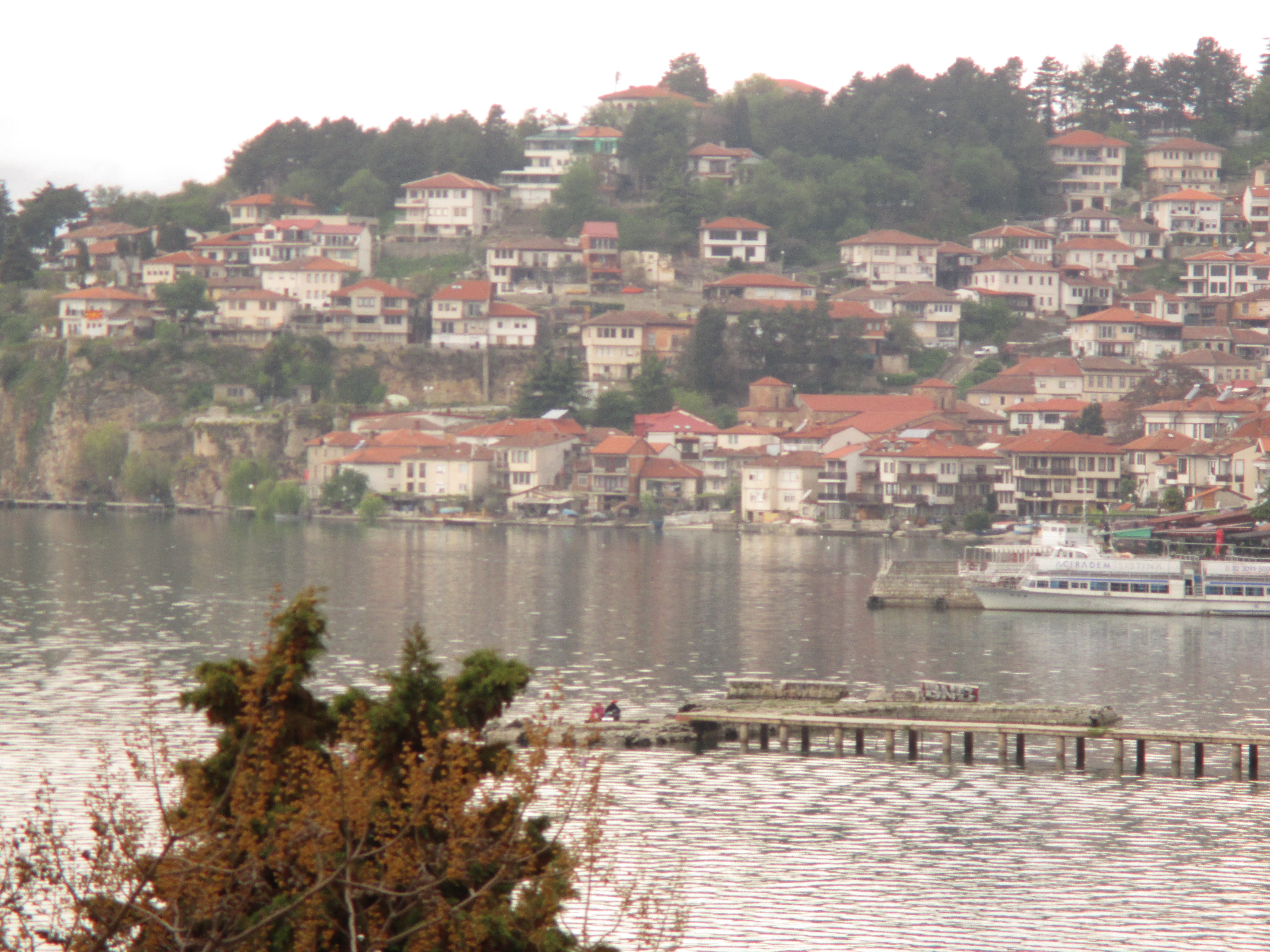
Ochrid, Macedonia

This was the summer that I would finally do it.  Me and a friend are off for a two-week tour through Macedonia, Kosovo and Montenegro.  (And yes, we’re calling it Macedonia and if anybody has a problem with that….emmm…tough shit; don’t read this blog.)  This is effectively the second leg of my journey; the first part was a visit to the monastery of Hilandar on Athos.  If I have the time and money I may do a Sarajevo to Belgrade run later in July.

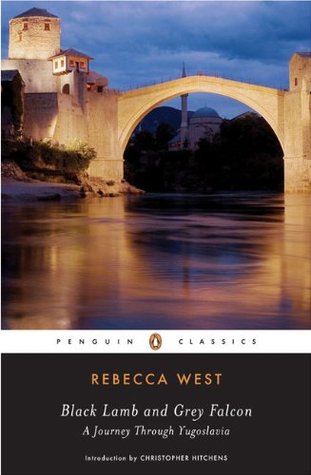
I think you have to understand the degree to which I’ve saturated myself in everything about this part of the world for twenty-five years to understand my excitement.  When we crossed the border into Macedonia last night I nearly pissed on myself.  If you want to come with me on this trip in spirit you’ll get your hands on Rebecca West’s Black Lamb, Grey Falcon, a book written about her trips through Yugoslavia in the 1930s that is so by far the best, most perceptive, most loving book ever written by a Westerner about the Balkans that it might as well be the only book ever written by a Westerner about the Balkans.  Everybody I know in New York rushed out and bought it in the nineties because it was getting touted everywhere as the thing to read in order to understand the Yugoslav wars, and then dropped it about a quarter — if that far — of the way through because they decided it was too pro-Serbian — Western liberals generally liking to have their preconceived notions about places they don’t know shit about validated for them.  The reason I’ve inhaled all 1,100 pages of this book about four times is best expressed in Christopher Hitchens’ brilliant introduction to the 2007 re-edition, Hitchens being one of the only intellectuals of our time to understand the brilliance of West’s mind, and the complexity and depth of her thought about not just Yugoslavia or the Balkans, but about masculinity and gender, war and pacifism, nationalism, fascism, anti–semitism, and just about all else:

“She never chances to employ the word, but Serbo-Croat speech has an expression that depends for its effect not on the sex lives of humans, but of animals. A “vukojebina” – employed to describe a remote or barren or arduous place – literally a “wolf-fuck,” or more exactly the sort of place where wolves retire to copulate. This combination of a noble and fearless creature with an essential activity might well have appealed to her. The term – which could easily have been invented to summarize Milovan Djilas’s harsh and loving portrayal of his native Montenegro, Land Without Justice – is easily adapted to encapsulate a place that is generally, so to say, fucked up. This is the commonest impression of the Balkans now, as it was then, and West considered it her task to uncover and to praise the nobility and culture that contradicted this patronizing impression.

BlackLamb

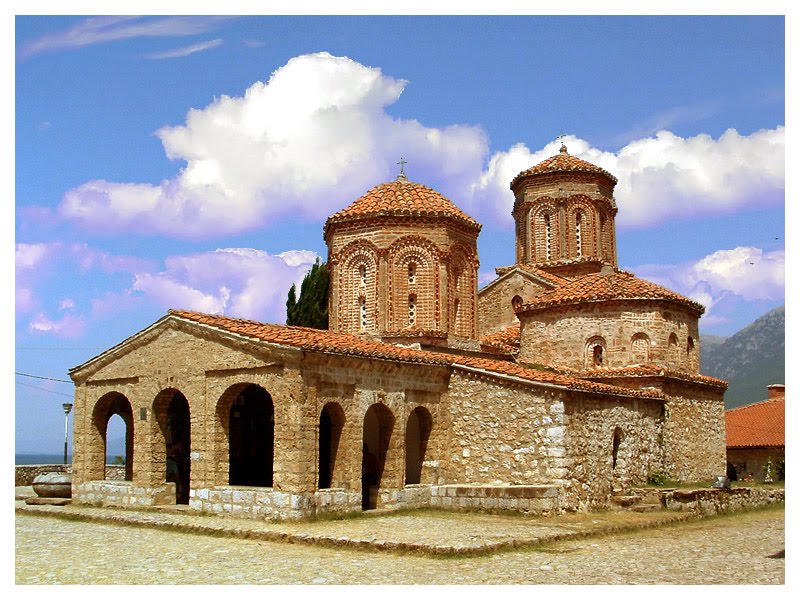
Sveti Naum39628346Sveti Naum, Ochrid (click)

(You’ll also find yourself a copy of Djilas’ stirring, disconcertingly moving book as well.)

Land without Justice

I’m getting a good connection almost everywhere, but I may not have time to write a lot in the next few days — you’ll probably get some photos with quotes from West — because we’ll be on the road a lot.  But next week we’re anchoring for five days on Durmitor in Montenegro, near a town called Žabljak, apparently the highest inhabited village in the Balkans, and then I’ll probably have time to write some.  Till then…

Ochrid, Easter Friday 2014

IMG_0150(click)

Comment: nikobakos@gmail.com

Andrew Sullivan: “Syria is not a country” — addendum

18 Feb

A New York Times piece a reader sent me from last month makes the same point about Yugoslavia and Syria and fostering sectarianism instead of controlling it that I tried to make in my Sullivan on Syria post: “Bosnia’s Lessons for Syria”:

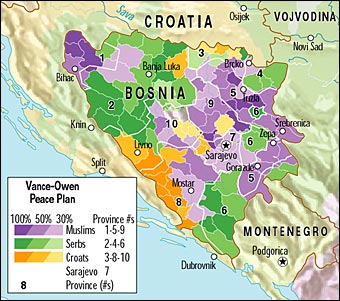
“Equally crucial is that we ask how our own efforts may interfere with conflict. In Bosnia in 1993, the effect of the unsuccessful Vance-Owen Peace Plan, which proposed new political entities divided along ethnic lines, was to intensify campaigns of ethnic cleansing as warring groups tried to strengthen their positions ahead of partition. We should expect plans discussed in Switzerland to have a similar impact in Syria. This may be unavoidable, but we may be able to predict how the pattern of violence will evolve and allocate resources better to meet humanitarian needs.”

The Vance-Owen plan; like this was ever going to work:

peace_plan_vo_small

“Screamers:” Genocide: what is it and why do we need the term?

7 Nov

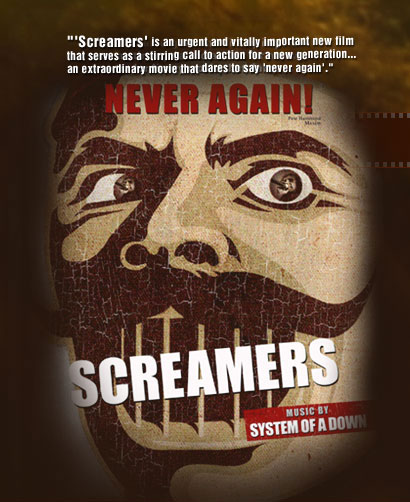
Screamers

I watched “Screamers”* the other night, a 2006 documentary by Carla Garapedian about an Armenian-American synthpunk group based in California, who go around, among other things, “screaming” about the Armenian massacres of the early twentieth century and issues of genocide recognition generally.  They’re shown on tour, comparing Armenian experiences to those of Rwandans, Cambodians — Jews conspicuously less so — soliciting the support of U.S. congressmen, interviewing British aristocrats, Harvard professors and their own great-aunts and grandfathers telling their own story of the events they describe as the Armenian Genocide, all in an effort of course to get the Turkish government to acknowledge the “Genocide” as such.  And it left me with the usual thoughts I have on this issue: that this word – “genocide” – which is supposed to name an evil particular to our time and by naming it hopefully eradicate it, has come to be so overused as to be meaningless, was vague from its beginnings and has come to obscure more than it reveals about the phenomenon, if there is such.

Raphael Lemkin, the Polish Jewish Holocaust survivor who originated the term, described it as such:

By ‘genocide’ we mean the destruction of an ethnic group . . . . Generally speaking, genocide does not necessarily mean the immediate destruction of a nation, except when accomplished by mass killings of all members of a nation. It is intended rather to signify a coordinated plan of different actions aiming at the destruction of essential foundations of the life of national groups, with the aim of annihilating the groups themselves. The objectives of such a plan would be disintegration of the political and social institutions, of culture, language, national feelings, religion, and the economic existence of national groups, and the destruction of the personal security, liberty, health, dignity, and even the lives of the individuals belonging to such groups . . ..

T. Marcus Funk in Victims’ Rights and Advocacy at the International Criminal Court says genocide is “the deliberate and systematic destruction, in whole or in part of an ethnic, racial, caste or religious, or national group.” 

“…in whole or in part…” is controversially vague enough.  Then, how “deliberate and systematic” does it have to be to qualify?  And if its victims are members of any “ethnic, racial, caste, or religious, or national group,” is that not so all-encompassing as to include most of humanity?  What sets genocide apart then from any mass killing?  That it’s done to a socially or ethnically identifiable group?  Mass killing – apart from shootings in American shopping malls or movie theaters – is usually committed on such a group.  And by emphasizing that a “group,” usually an ethnic or minority group, is the object, it creates the unspoken assumption of irrationality, though most of the events we call genocides have and had a very rational end and, to be effective, must have used fairly rational means.  And thus I wonder if the word mystifies and, more importantly, decontextualizes to a point that ultimately may do more harm than good.

Obviously, our region gives us a variety of useful examples to look at.  Now, I often get emails here — most simply rants that I don’t bother publishing — in which I’m told that I am defeating the stated purpose of this blog by favoring one group over another or being so obviously preferential in some of my affections or animosities.  I’m told that I’m panderingly philosemitic; I don’t know about the “pandering” part, but otherwise, yes.  I’m accused of being both pro-Israeli and anti-Israeli, and anti-Palestinian and possessed of a blind good faith in Palestinian intentions and an enabler of their “tactics,” whatever that means; I guess if I can be all those things at once I may be doing something right.  I’m accused of being anti-Croatian: let’s leave that one to the side for a moment.  But mostly I’m accused of two things: that I’m pro-Turkish — this usually by angry Greeks — and that I’m a shameless apologist for Serbian criminality.

And here there is some truth: the two peoples may not much appreciate being linked in my heart, but one of the many reasons that I may have a special affection for Turks, or at least find myself defending them so often, is also one of the many reasons I have a special affection for Serbs: I think the two have historically been the most unfairly maligned groups in the region.  And that brings us back to the larger genocide discussion obviously.

It has always irritated me that critics of Serbia, both in the nineties and to this day, dutifully rehearse the main highlights of the “Serbian myth”: traumatic defeat at Kosovo; continued resistance to the Ottomans; among first to struggle for independence in the Balkans; a sincere if often faulty and undemocratic attempt to actually go through with the noble experiment of South Slav unity, only to have those attempts undermined from the get-go by a Croatia that was always a member of that union in bad faith; always supporters of Western causes only to be stabbed in the back after; further traumatic WWII memories – and then just blow them off as if none are legitimate, that they’re just the “mythical” or fictional building blocks of a national pathology that explains Serbs’ vicious behavior during the breakdown of Yugoslavia.

Nobody is denying the unscrupulous manipulation of the Serbian group ‘psyche,’ starting in the late eighties, by some of the most criminally opportunistic, thuggish politicians to emerge out of post-Cold War Europe.  Nobody denies the horrible war crimes of Serbs and Serbian paramilitaries, especially in the great victims of the Yugoslav wars, Bosnia and Kosovo.  But the simple fact is: Serbs had absolutely no reason to feel secure about their future in the states that emerged from the break up of Yugoslavia, especially not in Croatia, the West’s darling.  During WWII, the NDH, the Independent State of Croatia, the Ustaša, had a greater percentage of its population—Serbs, Jews and Gypsies — slated for elimination than any other of the Nazi’s puppet states in Eastern Europe.  The plan for the Serbs specifically was the famous “thirds” plan: kill one third, expel one third, convert the other third to Catholicism (the Ustaša was also fanatically Catholic and its support by the Vatican is one of the Catholic Church’s ugliest twentieth century moral “lapses”).  The numbers are uncertain, as always in these cases, but several hundred thousand Serbs were killed by the Croatian regime and – unfortunately – its Bosnian collaborators during the war.  Ustaša Croatia was the only one of the Nazi puppet states whose tactics even the Germans found excessive, and had to be told by Berlin to “tone it down” a little, because their viciousness was giving undue impetus to a Serbian resistance movement that was becoming increasingly difficult for the Germans to keep under control.  The reasons that post-Yugoslav Serbs might have felt insecure in independent Croatia or even an independent Bosnia are not simple “myths,” pathological obsessions with historical wrongs – especially when Tudjman’s Croatia started making all kinds of fascist noises again as soon as it gained recognition from its German buddies.

Turkey.  It’s maddening that what happened in early twentieth-century Turkey is never put into the broader historical context of the previous two centuries by groups like the Screamers or others who are bent on forcing Turkey to acknowledge the events as genocide.  You can talk and talk and argue and explain and then you come across a passage somewhere that condenses and puts it all into perspective.  The following is from Karen Barkey’s Empire of Difference: The Ottomans in Comparative Perspective.  Towards the end of a chapter where she’s discussing the deterioration of interethnic relations in the nineteenth-century empire, the penetration of European economic influence and the benefits that that created for Ottoman Christians and from which Muslims were excluded, she writes:

“If major misgivings regarding ethnic and religious difference and disparity were already well-rooted in the empire, competition and communal strife only got worse as Muslim refugees from the Balkans, the Caucasus, and the Crimea were settled in Anatolia.  Between 5 and 7 million refugees, mostly Muslims, were settled by the Ottoman government throughout the nineteenth century, mostly in Anatolia.  Kemal Karpat argues that between 1856 and 1876 at least 500,000 Crimean Tatars and 2.5 million Muslim immigrants from the Caucasus were settled in Anatolia, the Balkans, northern Syria and Iraq.  Not long after, in 1877-1878, the Caucasian population that had been settled in the Balkans was resettled in Anatolia together with a million others, mostly Muslims from the Balkans.  Another 2 million took refuge in Anatolia until 1914.  By the time of World War I, the immigrant [refugee] population of Anatolia represented nearly 40% of the total population. Such immigration, originating in the nationalist movements and independence politics of the Balkans, the Russian Wars, and the Ottoman defeats, brought in another element of Muslim discontent that not only altered the demographic balance of the empire, but also exacerbated social and economic tensions.”  [emphases mine]

Do we understand that?  Charles Simic has written: “Nationalists everywhere are unmoved by the suffering of people they hurt.”  But are the above figures enough to penetrate the armor-plated narcissism of the nationalist or even dent it?  Might some clubbing over the head be in order?  Let’s repeat them and see: in 1914, the year we’re supposed to think that Turks suddenly had a collective psychotic episode and just started massacring millions of people for no reason, 40% — forty percent – of the population of Anatolia, roughly the territory of contemporary Turkey, consisted of Muslims who had escaped from the various parts of the shrinking empire, usually under conditions that could be clearly labeled “genocidal” or definitely characterized as “ethnic cleansing” though for some reason they are not, and often, as Barkey alludes to, after having been brutally displaced twice in one or two generations: like the Bosnians who had settled in Salonica after 1878 and again in 1908, in such numbers that they gave their name to a neighborhood in that city, only to have to move once more to Anatolia in 1913; or the millions of Circassians, driven en masse out of their Black Sea homeland by Russia in the 1860’s and settled in the Balkans only to have to move on to Anatolia after Bulgarian independence.  Forty percent!  That is almost twice the percentage of incoming refugee population that Greece staggered under in the 1920s after the Population Exchange, and in an Empire that had dragged itself into a World War it was woefully unprepared to fight.

And here’s where we get to the question that every ethically honest Greek or Armenian has to ask himself: what did we expect Turks to do at that point?  Give up even what they had left?  Pack it up?  Go back to the Red Apple Tree?**  To expect that at some point Ottoman Muslims/Turks were not going to fight back in order to hold on to something, a state and territory of their own, is delusional in ways that only as totalizing an ideological structure as nationalism can produce.

51kGIPmTZdL

(what was a really fascinating, eye-opening book for me — highly recommended…)

At no point during the long blood-soaked mess of the past two centuries have Serbs or Turks been guilty of anything that everybody else wasn’t also doing.  Thus, one of my primary objections to the use of “genocide” as a term is that it becomes part of a tool in a chronology of preference, a political expedient for stigmatizing the bad guy of the moment.  In the late nineteenth and early twentieth centuries, when European powers were obsessing with how they were going to divide the crumbling Ottoman Empire among them, there were only Muslim perpetrators of massacre in the region, never Christian ones, only the “unspeakable Turk.”  Only a tiny group of more objective observers at the time of Gladstone’s hysterical campaign asked themselves how “speakably” the Bulgarians and their Russian supporters behaved toward the Muslim population of Bulgaria in the 1870s; only Trotsky had the intelligence and conscience to report the truth about the degree and intensity of Russian/Bulgarian atrocities against the Muslim population of those lands in the 1870’s and nearly resigned from his assignment as a reporter of a Kiev newspaper as a result — he could no longer stand to physically be around the sickening violence (See Bulgarian historian Maria Todorova‘s excellent: “War and Memory: Trotsky’s War Correspondence from the Balkan Wars”  for an excellent account of Trotsky’s reporting and, through it, his brilliant and morally courageous mind; how that mind and its obvious compassion became so twistedly cruel when he turned it on his own people and country a few decades later is one of the mysteries of Bolshevik perversity.)

Later in the century, after the Cold War gave Turkey a kind of favored nation status in the Muslim eastern Mediterranean, Turkey could and still essentially can do no wrong, even if it does conduct, like in Cyprus, campaigns of what elsewhere would be called ethnic cleansing or violates the human rights of its minorities and majorities on a systematic basis.

At the beginning of the twentieth century, Serbia was “gallant little Serbia” standing up to the Austrians, beating back two massive assaults by Austria-Hungary, almost crossing the Danube into Austrian territory itself; only when Germany came to its aid was Serbia successfully defeated, and even then while putting up some of the most suicidal and vicious resistance in military history.  Serbia was a staunch supporter of the Allies in both World Wars – essentially the liberators of the Balkans in the First World War especially.  But by the end of the same century, when Serbs refused to play along with the West’s plan for what the New Balkans would look like, they were turned into pathological savages, and locked into a pariah status from which they have still not been allowed to fully emerge.

(To switch regions and periods for a moment, and examine the selective use of terminology, we never speak of the “genocide” of urban Germans or Japanese, do we, though they were a civilian population subjected to barbaric, mass, incendiary murder on a staggering scale and of questionable strategic uses and motivations other than punitive ones.)

But perhaps my most important objection to the word “genocide” should have become obvious from the above: mass murder and expulsion is what happens during nation-state formation and labeling this kind of mass murder and expulsion with some rare-orchid terminology obscures that fact.  As long as the legitimizing principle of the modern state is ethnic/tribal identity there will be groups who by their very cultural and/or religious character cannot uphold that legitimacy and will be oppressed by it.  And the time will come when they will have to be dealt with in some way or other, either through acculturation or removal, especially if their status leads them to separatist desires.  There is no such thing ultimately as genocide.  To observe the former Ottoman sphere, which is as good as any for our purposes, the rules are: form a state by grabbing as much land as you can and keep it by eliminating those who would be opposed to being part of your state.  It’s painful to say, because Bosnians got semi-trapped and stumbled into declaring independence by their two ravenous neighbors and suffered more than any in the Yugoslav conflict: but there was no Bosnian genocide, no attempt to eliminate the cultural/ethnic group that Bosnian Muslims were from the face of the earth.  There was the brutal, systematic, cruel ethnic cleansing of Muslims from parts of Bosnia that Serbia — and, of course, Croatia — wanted to hold on to because those Bosnians wanted to be part of a separate state of their own.  There was no genocide of Anatolian or Pontic Greeks, as many Greeks have lately started referring to the events of the nineteen tens and twenties.  There were decades of chronic, inter-communal violence, a war by an invading state, and the elimination of those that supported that invasion, and mostly not even through violence or by force, but by mandatory fiat agreed upon by the leaders of the countries in question.***  It’s painful to say – they’re a familiar people, one I admire, like, am close to — but as extensive as it was, as systematic and vicious in ways that set a terrible precedent for the rest of the century, it’s hard for me to call what happened to Armenians in the early twentieth century genocide. The CUP — the Young Turks — have always seemed to me to have been a bunch of loose cannons: a nefarious, often eccentric, make-it-up-as-you-go-along group of giant egos who seemed to be talking past each other most of the time and did their best in essentially ending the Ottoman Empire in the messiest way possible; and the Armenians were their single greatest victims.  But the fact remains: a people (Armenians), in a state (the Ottoman Empire) that was being torn in a million different directions, tried to form an ethnically separate state of their own (though they constituted a majority in no single region of the territory in question), and yes, often did so through violence, armed means and with outside military help.  And they were stopped.  That it was horrifying and its dimensions staggering would be obscene to deny.  That it’s some “special” form of violence — qualitatively and not just quantitatively different — and not just an extreme example of what fundamentally happens during nation-state formation is simply unsustainable as a theory for me.  I had an Armenian-American friend, and we obviously didn’t see eye to eye on these issues.  I remember him once being incensed by what he called the “macho” insensitivity of a Turkish guy who had been arguing with him and who had said: “If we hadn’t done it to you, you would have done it to us.”  Well, it’s sad, but that’s probably the truth.

No one in Screamers, not the experts or the humanitarians, not the musicians themselves, link what they want to call ‘genocide’ to the dominant political state formation of our time.  No one sees it as inevitable that if an “ethnic, racial, caste or religious, or national group” serves as the principle legitimizing force of state organization, that then some other “group” will have to be removed.  And the Helsinki Agreement’s contradictory support of both “minority rights” and “the right to self-determination” has, needless to say, been of no help in sorting out issues of this kind; Yugoslavia was the best proof of the amateurish, do-gooder thinking behind such ideas.

In fact one wonders if it was a Jew who invented the term because he and his were really the only one victims of the irrational beast we want to call genocide and are now using rather indiscriminately all over the place.  Because I can think of only one case in history where a people were not engaged in war with another country, nor in armed or any other kind of civil conflict with the surrounding population, who did not have a separatist agenda within the states they lived in or irredentist designs on parts of neighboring states, who did not constitute any kind of threat – at least real threat – to the society around them (were, quite the opposite, in fact, among those societies’ most productive and talented members), and yet became the object of a villainizing myth of incomprehensible irrationality  that marked them for complete extermination anywhere in the world they were to be found — and that is the case of the Jews.  And since we have “Holocaust” or “Shoah” for that singular episode of human horror, do we need  “genocide” at all?

I hope I haven’t insulted — worse — hurt anyone.  I hope this is the beginning of a bigger discussion.

************************************************************************************************************************************************************************************************

* Check out the film’s Wiki site; one slightly unethical thing it does is to link the great Hrant Dink’s assassination in 2007 with the the fact that he appeared in the film the year before.  There’s also some slight misrepresentation in a scene where they show Turkish nationalists trashing a fifty-year commemorative exhibit here in Istanbul of the anti-Greek pogrom of 1955 and call it an “Armenian and Greek exhibit.”

** I have no idea of the origin of this myth, or whether it developed in late Byzantine or Ottoman times, but in Greek folklore the homeland of the Turks is a place in some distant indeterminate East called the Red Apple Tree, He Kokkine Melia, and in traditional messianic thought, when the City and Romania (what the Byzantines called their polity) were brought back under Christian rule, the Turks would go back to “the Red Apple Tree.”  Ironically, Constantinople itself was known to Muslims as the Red Apple, the prize conquest, in the centuries before the fall.  I have no idea if the two myths grew out of each other or are some kind of bizarre mirror images that paradoxically developed in opposition to each other.

*** And let us all here be disabused at once of the idea that the Population Exchange agreed to at Lausanne was something that Venizelos and his government reluctantly agreed to because circumstances had made any other solution impossible.  Lefterake, our Cretan levente, was enamoured of population exchanges and similar plans far before Lausanne or even 1919.  He thought that the section of the Aegean coast that the Allies gave Greece at Paris in 1919 was eventually going to be Hellenized through exactly such a voluntary departure of its majority Muslim population, thus giving a kind of tacit approval to the atrocities committed during those years by the occupying Greek army, and, always the careerist and opportunist, one of his earlier strategies at the Paris Peace Conference had been to promise Bulgaria eastern Macedonia (Kavalla, Drama), and move its Greek population into western Macedonia where they would offset the Slavic majority of those regions, in order to coax the allies into giving him Ionia — he was a twentieth-century nationalist social engineer of the crudest kind from the beginning.  For the definitive placing of responsibility for the disastrous Asia Minor campaign on Venizelos’ shoulders, plus an extremely competent analysis of the destructive consequences of his egotistical, polarizing political style on twentieth-century Greek political life, see Michael Llewellyn Smith’s Ionian Vision: Greece in Asia Minor, 1919-1922 — an excellent account of the entire period and a great place to start if, like me, you have embarked on a minor ideological mission to dismantle the entire Venizelos myth.

Comment: nikobakos@gmail.com

Ionian Vision

Eid Mubarak, Iyi Bayramlar, Bajram Baracula

19 Aug

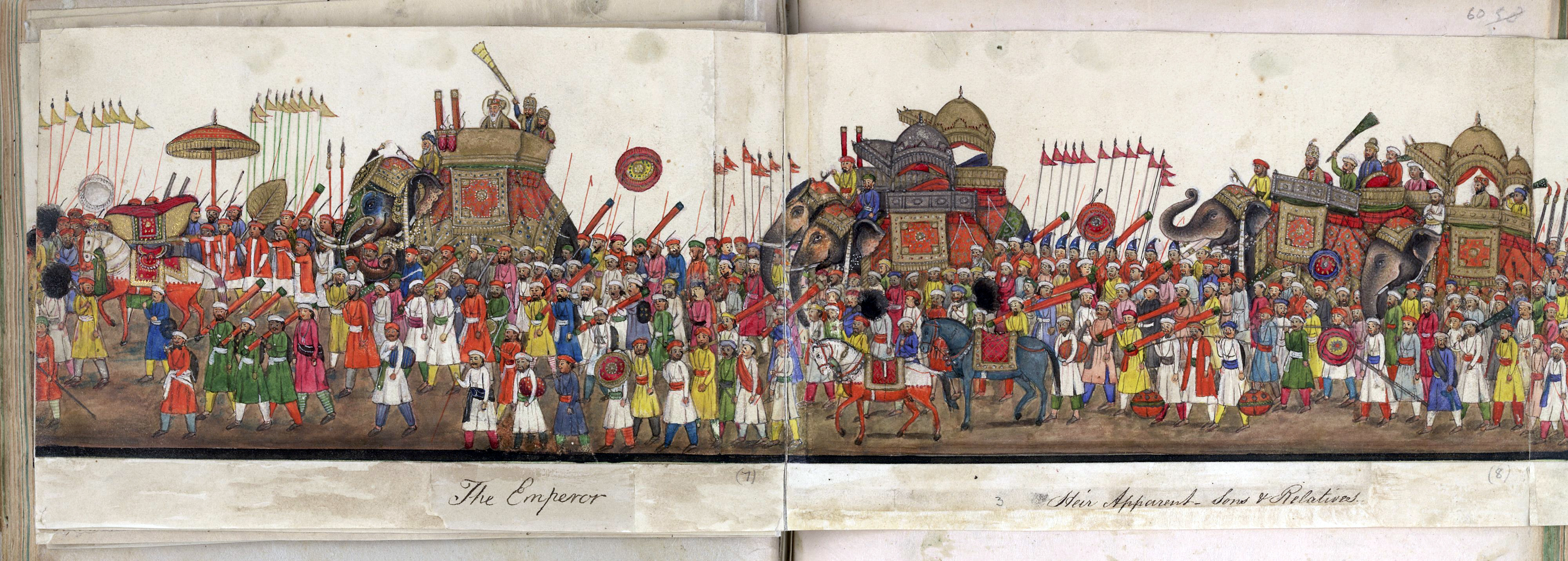
Bahadur Shah Zafar, last of the Mughal Emperors (see “Destruction of Delhi’) in Eid procession, 1843 (please click)

Today is the first day of Eid al Fitr, (usually called Bayram in Turkey and the Balkans) the three-day feast that marks the end of Ramazan.

Below is a photo of Bayram Namazi in the Blue or Sultan Ahmet mosque in Istanbul (thanks to Aykut for that; I couldn’t tell which mosque was) the morning prayer which is the official beginning of the holiday. (click)

And an impressive video of Eid Namaz at the Jama Masjid in Delhi, which we almost lost.  See the Destruction of Delhi series from Dalrymple’s The Last Mughal here, here and here.

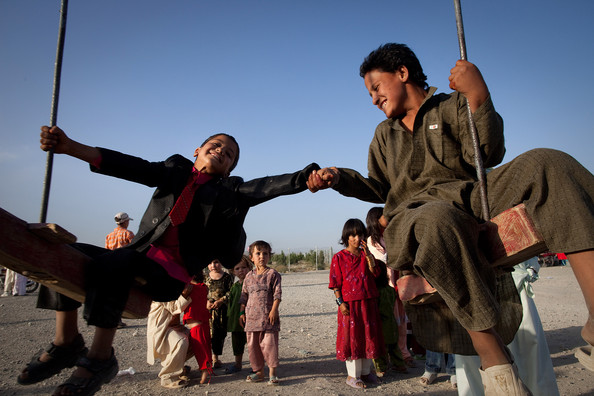
In Bosnia (click)

In Afghanistan

In Syria

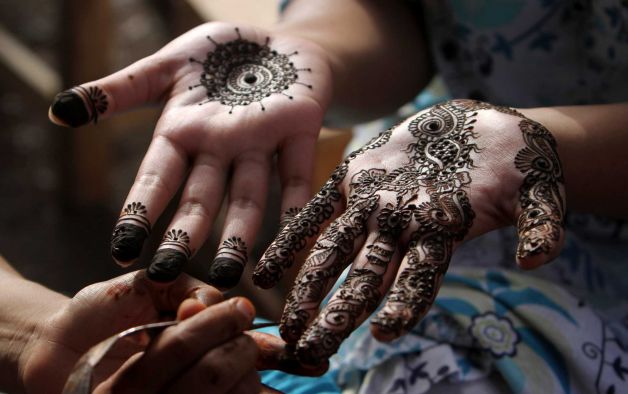
In Pakistan, where women have their hands henna-ed for the celebration (I’m assuming Indian Muslims too?)

In New York


Comment: nikobakos@gmail.com

Un Verano en Nueva York*

13 Jul

Queensborough Bridge (photo: Matt Lawson)

I don’t often get the chance to aimlessly stroll around the City much anymore – I mean Manhattan, not that City – but especially in the summertime, when New York is hot like it is today but not unbearably so, so many of it’s sensory delights, especially its human ones, are on display everywhere that if I get the chance, I can’t stop walking, eating, drinking things, and checking people out — the perfect tourist in my own city.

My shrink was unusually cute today and I had a really good time with him and that only added to my kefia and energy.  I walk straight down 5th to St. Patrick’s to give my saludos to St. Anthony, since he’s my most best beloved in the Catholic pantheon, and then turn off 5th to Madison because I can’t deal with any tourists but myself, though I’ve been finding European tourists to be significantly less obnoxious recently – and significantly less, generally — now that they don’t have any money either.

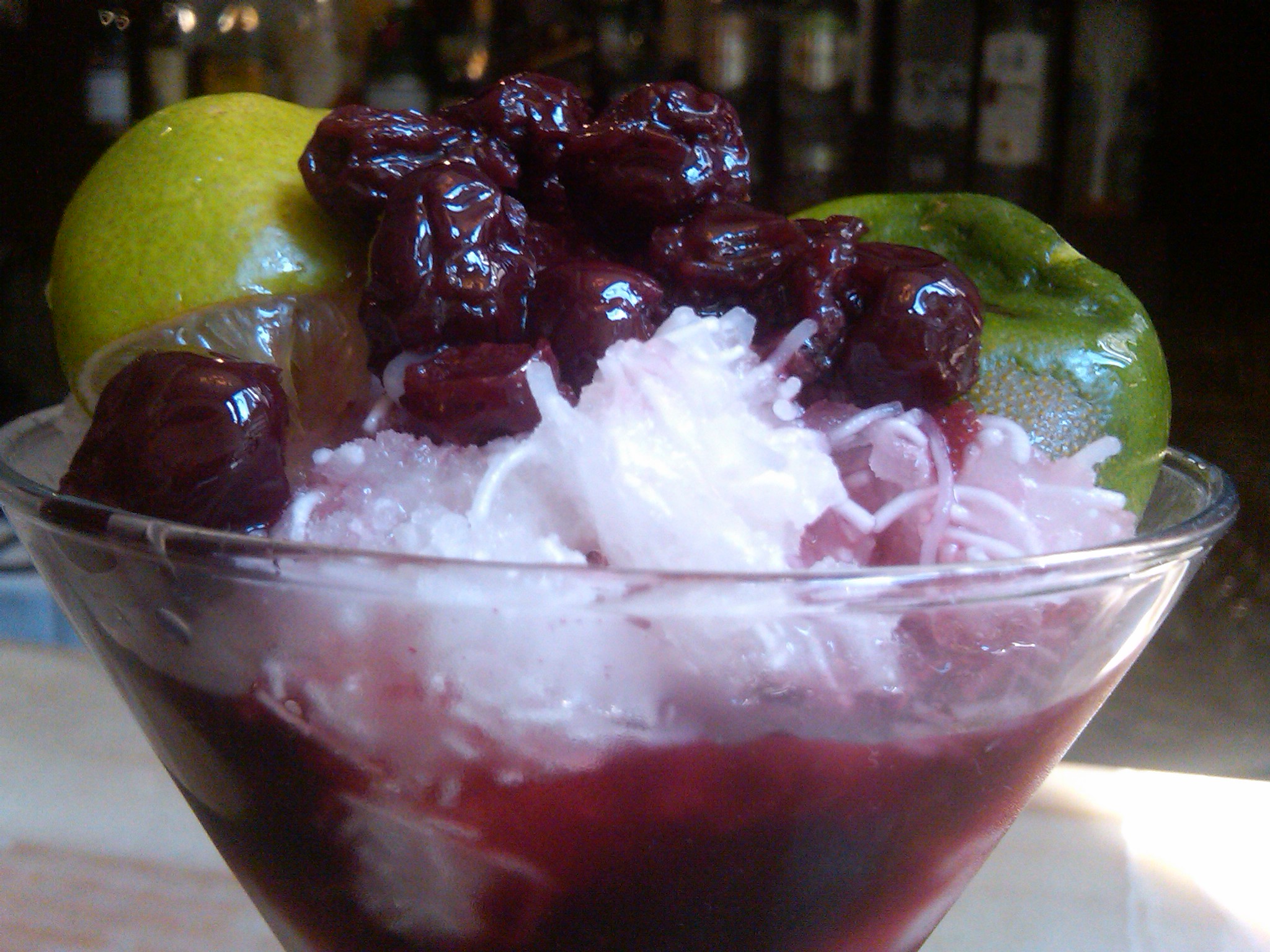
I know where I’m going anyway – at least for starts.  I’m making a bee-line for faloodeh.  Don’t ask me wtf…  I must have been dreaming about it last night and sleep-walking (which I did a lot of as a kid) when I posted that piece about faloodeh:  “This is what I want in this heat: Faloodeh”,  because it was posted at 7:00 a.m., which is the middle of the night for me, and when I got up at my usual time I didn’t even remember having put it up.  But I have faloodeh on the brain right now, man, and am heading straight for the only place in New York where I know I can get it, an Iranian restaurant on 30th St. called Ravagh.

It’s better than the fantasy had been, which usually can’t be said about almost anything in life.  Look at it; it even looks beautiful.  It’s got that perfect color palette that everything Persian does, always pushing the limits of saturation but never becoming gaudy or tacky.

Faloodeh (click)

Ravagh is a pretty good place, at least in the opinion of this non-Iranian.  The appetizers are nothing to get hopped up about, but the kebabs are great, as are the khoresh and the great pomegranate and walnut fesenjun, but I’m also a sucker for any food with fruit and nuts in it, not only taste-wise but ‘cause I’m also historically stimulated by it.  In Persian food we find tastes and combinations that have, certainly, disappeared from Greek tastes (?) (a Neo-Greek can vomit if he finds so much as one raisin in his dolma) but from increasingly flattened and simplified Turkish tastes too.  Iranians, however, are still geniuses, as I said in my trance this morning, at subtle sweet-and-sour combos, at using spices without having to overwhelm you with an indigestible quantity of onion-garlic-ginger canvass on which to use them, like a lot of Indian food does, and for appreciating the taste and aroma of every herb and green thing that this earth can give us.

(It’s also the work-place of one of the most attentive waitresses and the most beautiful Uzbek woman in the world; no exaggeration, this is one of the most gorgeous women in New York, the female equivalent of one of Hafez’ dangerously beautiful young Turkish men: “Zabaan-e-yaar-e-man torki wa man torki nami daanam,”  “The language of my friend is Turkish, but I know no Turkish.”  Ok, that’s not Hafez; it’s Amir Khusrau, but I can’t think of any Hafez right now…)

I head downtown after that to the East Village to see my favorite Hanuman in the city.  Midtown’s blank Wasps, smart-looking Jewish guys and buff borough boys in tight dress shirts and ties start giving way to sweet, ethnically unidentifiable guys with lots of tattoos and scrawny beards.  I pass Mono on the way and see its beautiful, sweaty ham sitting in the window and think: ok, maybe later.

I’m irritated again my Daddy Bloomberg’s traffic lights that tell you how many seconds you have to get across a street before you’re flattened by a flock of taxi cabs.

I see New Yorkers running, frantic, across the street; New Yorkers, as long as I’ve known them, waited till they formed a critical mass on any street corner and simply marched together into the middle of the street, stopping traffic at will.  Now he’s got us running.  I wish again he would just go back to Boston.  It’s already the city that he wants to turn New York into; why is he bothering with us?  They’ll love him there.  Give him a fourth and even fifth term, make him Czar of Massachusetts Bay colony.  Just go.  Go away.

“They save lives!”  Ok.  I don’t know if they do.  But even if they do, a civilization where the saving of life is of consistent and constant greater concern than its quality, where not only do lives need to be saved but all risk — germs in bathrooms, kids getting their knees scuffed — needs to be legislated out of them, a world where, as James Hillman put it: “quantity of life is at all costs more important than quality…” is a civilization we’re not going to be very happy to have lived so long to see.

Anyway, I adore this particular Hanuman that I’m on the way to see because it’s a gigantic brass murti and he’s in his kneeling pose, which I love, because it shows off his big thighs and his great forearms holding his mace over his shoulder and the huge chest he has to have to hold that heart so enormous that God himself and everyone He loves can fit into it.  They never dress him there either, because it’s a difficult pose to dress, so whenever you go he’s always there gleaming in all his bare muscled glory, ready to go to war for Ram and his Kingdom, or for anyone who loves Ramji the way he does.
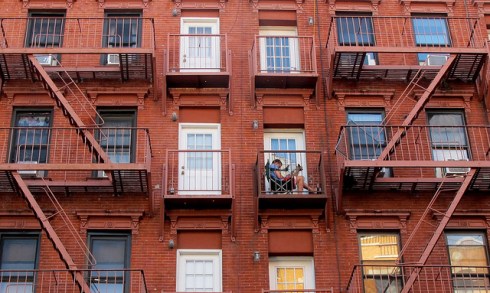
The problem is that this temple is in the East Village and its whole community is white people, which means it’s really not a Hindu temple or mandir at all but an East Village center for non-stop yoga classes or kundalini workshops, so you’re almost never allowed in for a little bit of darshan and peace and quiet with your god.  I’ve tried to suggest in the past that maybe there should be some more “open” time for someone like me.  But you can’t complain there either because these white “Hindus” have gotten modern Hinduism so frighteningly mixed up in their heads with Buddhism and any other New Age stuff they think they believe in, that if you complain and look even remotely irritated, they look at you sadly like you’re accumulating bad karma and they have no way of helping you.  On top of that, there’s only flower offerings permitted, because – I swear – laddoo and peda and other mithai have “lots of refined sugar and saturated fat” in them, so you can’t even walk away from aarti there (yes, they have aarti every evening at least) with a good piece of prasad and its gratifying sweetness in your mouth.  I really want to ask these people what it is they’re saving their bodies for sometimes; they ever heard of that whole dust to dust bit?

Again, I don’t get to see my Hanuman.
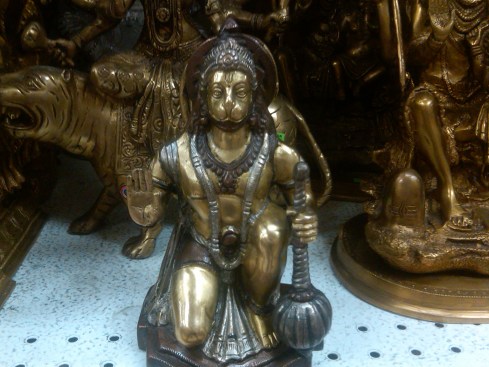
This is the pose of Hanumanji I love most, a little one at a Jackson Heights shop.  Now imagine him nine feet tall and all gleaming brass, like he is at that temple. (click)

I remember the ham at Mono though.

Casa Mono is the restaurant really; it’s part of the Batalli empire but it’s actually a very intimate place with hands down the best Spanish food in New York, and I think as good as anything I’ve ever had in Spain as well.  I always wait, no matter how long it takes, for a seat at the bar by the open kitchen because you get to see the mens’ performance there and it’s good to see men sweat and handle knives and fire and and meat and heat (the night there’s a woman behind there I won’t return, I swear; I’ll just suffer without Mono for the rest of my life**).  You also get to watch the growing status, knowledge and confidence of New York’s Mexican workers there too, their steady rise to the top, the same trajectory we followed decades before, and the way that — not only Mexican hard work — but Mexican wit and playfulness, which almost everyone now understands some of, have become the esprit de corps glue that holds together so many excellent New York restaurants like this one.  There’s often a Mexican or Ecuadorian trainee behind the counter, and a guy who I think is the line’s number two, a sexy tatooed-up Ed Norton look-alike that I really love.  But if you’re especially lucky you’ll get to see head chef Anthony Sasso back there cooking, a guy with a body that looks like he used to be an Olympic diver, who never sweats, and who cooks with such ease and elegance and what Patricia Storace (in her description of turn of the twentieth-century Greek politician Ion Dragoumis) calls “…that most erotic of qualities in a man: the capacity for sustained concentration…,” that it’s hard to take your eyes off of him, and that I, at least, only manage to do so for fear of making a total ass of myself and because I want to let the guy do his job.
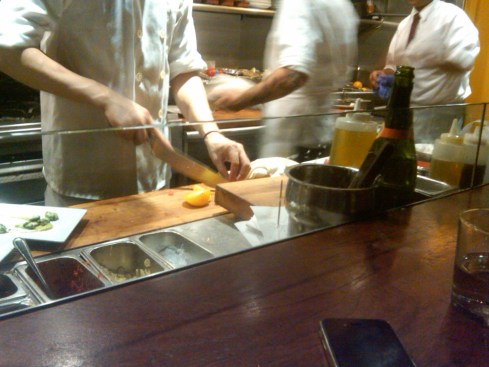
But Mono is for a really good dinner when you’re feeling rich and want to drop a lot of money on good wine that Ashley, the least pretentious and most generous sommeliere in the city, will help you out with.  Today I just drop by at their annex next door, Bar Jamon, a place I also love, though if you don’t catch it at the beginning or end of the shift it’s always torturously crowded.

(It’s enough I haven’t given these places aliases; I’m not telling where they are on top of it; not everyone deserves to know.)

Jose is there today.  Great!  A Spaniard.  After being sweetly told to go away at the gringo ashram because they were cleaning their chakras or something, I need an aggressive welcome and from a people who aren’t afraid of a little aggression.  Jose always makes me happy because he’s a super-majo kid from Zaragoza in Aragon.  Majeza is a very Spanish term that encompasses such a complex of qualities that it’s difficult to explain, especially in English, which is tragically lacking in a comparable term, as its speakers (aside from the Irish) are in most of its qualities.  It means openness and frankness and humour and swagger; it means being hospitable without being in anyway servile; it means being able to put away copious amounts of wine and pig meat; being friendly and spirited and generous while always maintaining a kind of stylish dignity and flair; it partakes of some of the qualities of Greek and Turkish leventeia in that sense; in fact, it’s a word with a certain undoubtable Balkanness about it.  Soon after the term appeared in, I think, the late eighteenth-century, working-class barrios of Madrid, it almost immediately became associated during the Napoleonic Wars with the city’s street kids, who terrified the French with their suicidal bravery, so it probably originally implied a quickness to pull a knife too and no squeamishness about seeing a little bit of your own blood shed as well.  That doesn’t apply anymore, though the ferocity into which demonstrations in Madrid have descended these days makes you think twice about that; I’m proud of the angry tenacity of Spanish protests, mashallah; don’t know what they’ll accomplish but it’s good to know Spaniards can still be scary; that anger has become such a stigmatized, pathologized emotion in our civilization (“You know…I think you have a lot of anger…”) is partly what’s let banks and governments get away with what they have over the past few decades and generally has brought us to the civilizational crisis we find ourselves in.  No, it’s not the other way around.  In any event, courage is still certainly an implied element of being majo.  There’s a great, chapter-long analysis of majeza in Timothy Mitchell’s Blood Sport: A Social History of Spanish Bullfighting, if you’re interested and can get your hands on it.
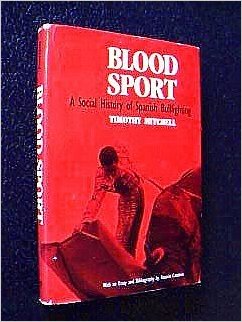
blood

Jose’s bearing, humour and way of talking are the epitome of majete; I’m glad to see him, I’m hot, my feet hurt (“erkekler…pabucim sikiyor…”) and I ask him for a glass of anything cold and white.  He immediately comes up with a great Albarino, a Galician wine I usually don’t like but this particular one is beautiful.  I think of a gorgeous woman I was in love with a few years ago with blue-emerald eyes so intense they looked fake (actually her parents were Canarian – she just grew up in Santiago — so those eyes were probably Berber and certainly not Galician); she was beautiful, a good kid, and a little nuts – but beautiful.

“So a Greek and a Spaniard get together,” the joke goes — and of course these days they compare notes on how fucked up their respective countries have become.  I tell Jose that I think Spain is salvageable but that Greece seems in danger of just slipping off of the face of the earth at some point soon.  He’s not so confident.  He says people in Spain are “learning to be poor again,” getting used to a life with “un plato de alubias” — a plate of beans — a proverbial Spanish expression for just-bare-subsistence poverty.  He’s probably around thirty and he says bluntly that his generation in Spain is destroyed; that they’re going to hit their late thirties and early forties without any job experience and that unless you’ve got family money, your only option is emigration, like “old-time Gallegos” we both say in sync.  (Galicians in Spain are like Epirotes in Greece, the archetypically emigrating region, so much so that in much of Latin America all Spaniards used to be collectively referred to as “Gallegos.”)

My heart goes out to him and I respect his straight-eyed stoicism and I think he’ll be ok because he seems strong.  As hard as I try, though, my heart doesn’t go out to Greeks of his generation nor do I respect them.  I think they’re cry-babies who would be scared shitless – or worse, think it beneath them — to work in a bar in New York the way Jose does and that they deserve – richly — to relearn the cultural lessons of emigration and being poor again.  Three decades of illusory prosperity created an unbearable type of human being in Greece, a nouveau-riche culture of entitled provincials, cold, petty snobs who are snobs the way only the truly provincial can be – and I’m talking about Athens more than the provinces.  (Athens is a city I genuinely love, but it probably ranks first in the world in thinking itself more sophisticated than it really is.)  (Plus — I’m always confused a little by Cypriots, who arguably enjoyed a more solid prosperity for a longer time but never became so insufferable, and who all Athenians are always mercilessly condescending towards: incessantly mocking their clannishness, their still healthy respect for Church tradition, the beautiful musicality of Cypriot dialect.)  I’m pained by the genuinely poor and the old and the sick and the heroin addicts who are suffering and dying in Greece, and murderously angry at Frau Merkel (“murderously”…you can quote me; I think she’s a criminal and should be gone after), who needs to pay banks back and dresses it up as one of her daddy’s Lutheran sermons.  But that urban, middle-to-upper-middle-class, twenty-five to forty-five-year-old demographic in Greece…they can just go back to washing dishes in Chicago again like our grandfathers did as far as I care.  Let ‘em start from scratch; see what kind of culture they can come up with this time.

(As I listen to Jose I remember that the terrifying Catalan Company, who are still a by-word for monsters and boogey-men in parts of the Balkans — “…like Catalani and the Devil,” Albanians say….Albanians — weren’t actually Catalanes at all, but savage Aragones highlanders: Jose’s ancestors. 
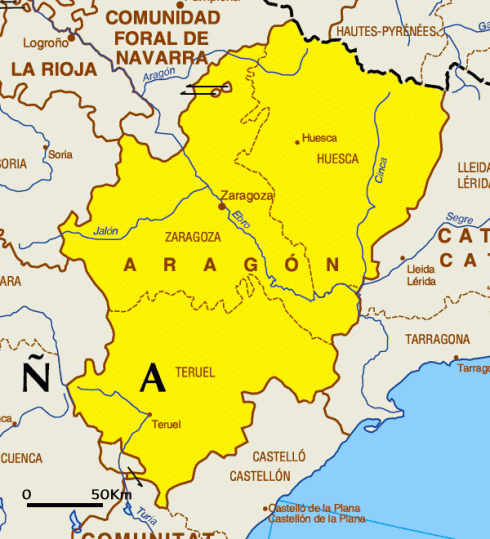
The “Companyia Catalana d’Orient,” were a bunch of murderous, mercenary nut-jobs, the Blackwater of their day (I forget what Blackwater is called today) that had started off fighting in the Reconquista in Spain.  But like the Greek-Arab Akritai-Ghazi of the Anatolian frontier, they were a mixed bag, originally mostly Arab-speaking Almogavars, an Arab word meaning “scout,” the “Muslims” eating pork and downing wine like good Iberians, the “Christians” proud that they raped nuns, looted monasteries and occasionally threatened the Pope.  The only things these guys were loyal to were killing, looting and each other, in that order.  This is their hymn:

    Aur! Aur! Desperta ferro!

    Deus aia!

    Veyentnos sols venir, los pobles ja flamejen:

    veyentnos sols passar, son bech los corbs netejen.

    La guerra y lo saqueig, no hi ha mellors plahers.

    Avant, almugavers! Que avisin als fossers!

    La veu del somatent nos crida ja a la guerra.

    Fadigues, plujes, neus, calors resistirem,

    y si’ns abat la sòn, pendrèra per llit la terra,

    y si’ns rendeix la fam carn crua menjarem!

        Desperta ferro! Avant! Depressa com lo llamp

        cayèm sobre son camp!

        Almugavers, avant! Anem allí a fer carn!

        Les feres tenen fam!

Listen! listen! Wake up, O iron! Help us God!…Just seeing us coming the villages are already ablaze. Just seeing us passing the crows are wiping their beaks. War and plunder, there are no greater pleasures. Forward Almogavars! Let them call the gravediggers! The voice of the somatent is calling us to war. Weariness, rains, snow and heat we shall endure. And if sleep overtakes us, we will use the earth as our bed. And if we get hungry, we shall eat raw meat. Wake up, O iron! Forward! Fast as the lightning let us fall over their camp! Forward Almogavars! Let us go there to make flesh, the wild beasts are hungry!

Boy, people don’t like war like they used to, do they?  Even Marine chants aren’t this hard-core.  Or do they?  And it’s just shape-shifted into something else?

I think they were actually involved in one of the Crusades and then at one point one of our last moronic emperors had the brilliant idea of inviting them as mercenaries to help fight off the Ottomans.  What scheming idiots, except for poor, tragic Constantine, the Palaiologoi were — and poor Kyr Gianne Cantacouzino, so beloved by Cavafy, trying to hold together the mess they created.  And they weren’t even good schemers, which is one thing Greeks usually do well. Even Constantine tried to interfere in the succession of Mehmet II in a pathetic way that had worked before but by that point the Turks were on to them already.  He sent a delegation to Edirne to remind the new Sultan’s vezir that they held Mehmet’s brother Orhan as a guest in Constantinople, a veiled threat of provoking another succession civil war among the Ottomans, which wasn’t hard to do given the brutally absolutist methods Ottoman succession practices involved.  I always loved the balling-out the Greek diplomats got from Halil, Mehmet’s vizier:

“You stupid Greeks, I have had enough of your devious ways.  The late Sultan was a lenient and conscientious friend to you.  The present Sultan is not of the same mind.  If Constantine eludes his bold and imperious grasp, it will be only because God continues to overlook your cunning and wicked schemes.  You are fools to think you frighten us with your fantasies, and that when the ink on our treaty is barely dry.  We are not children without strength or reason.  If you think you can start something, do so… All that you will achieve is to lose what little you still have.”

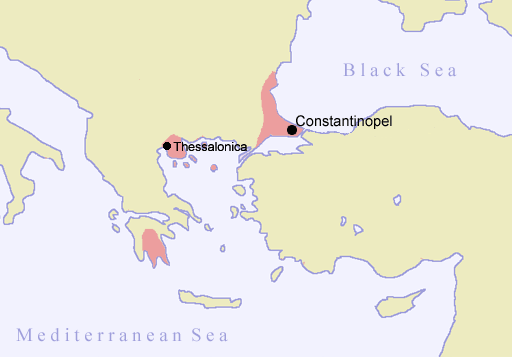
This is what they were left with in 1400.  At the time of the above event, which was fifty years later, they had lost Salonica too and almost all of the Thracian hinterlands of C-town itself.  But it was still “The Empire of the Romans.”

As for the Aragoneses the century before, they succeeded in inflicting some damage on the Ottomans at first, but had soon attracted Turkic and Greek freelancers into their ranks and of course went on a decade-long plundering spree in both Byzantine and Ottoman lands, including Mount Athos, where no Catalan was allowed to enter until recently, and only upon payment of reparations by the government of Catalonia; those monks have Byzantine memories, man.  After devastating the countryside of what remained of the Byzantine empire, they established a Duchy for themselves at Athens by taking it from some other Frangoi, which was eventually absorbed by the Ottomans, of course, though the King of Spain still carries the title, “Duke of Athens,” which the Spanish Crown inherited through the Kingdom of Aragon.)

I snap out of my historic daydreaming and pay for my Albarino and my incredibly expensive plate of ham, which was totally worth it.  It was Iberico ham from pata negra pigs from Extremadura that eat free-range, mostly acorns, so the meat is grained with a velvety fat that has an incredibly nutty taste to it and a texture unlike any other kind of pork fat.  It wasn’t allowed into the U.S. until recently because the F.D.A. or whoever had concerns about the health standards under which the pigs were raised, like they’re worried about raw milk cheeses and I don’t know what else.  I think of how irritated I get when I have to fill out an American customs form when I’m coming to the U.S. and I get to that question about whether I have any agricultural products on me.  I’m like: “Are you serious, United States of America?  Are you really asking me this question?  You?  The origin of all the plastic, poisonous, carcinogenic garbage food on the planet?  You’re really worried about two lemons from a family orchard or some sausages I might have with me and the havoc they’re going to wreak on America’s ecosystem and agriculture?  Really?”
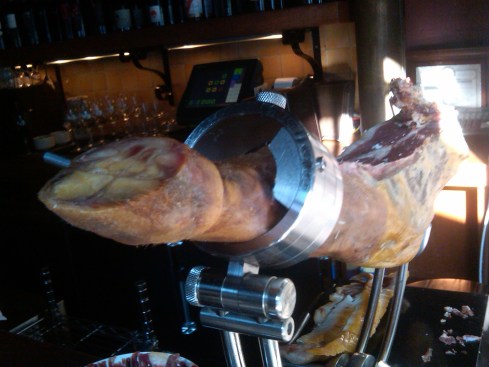
Jamon Iberico at Mono (click)

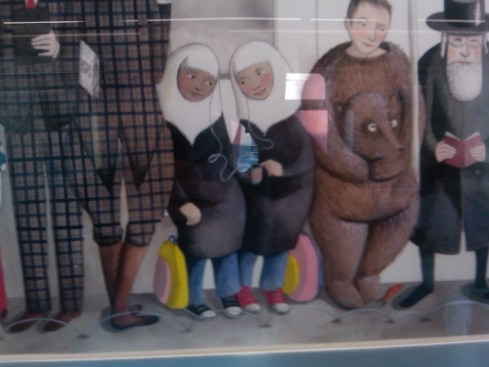
I wish Jose well, hope to have enough money to see him again soon because I’m broke these days, and head for the N back to Queens.  I expect more stimulation on the subway and am not disappointed.  But the first thing I notice is a great drawing, by an artist whose name I’m too stupid to note, that covers the entire ad space above the bench opposite me.  It’s a Bemelman-like drawing of New Yorkers on a subway bench, like the one we’re all sitting on and they’ve got it posted on both sides of the car, in fact.

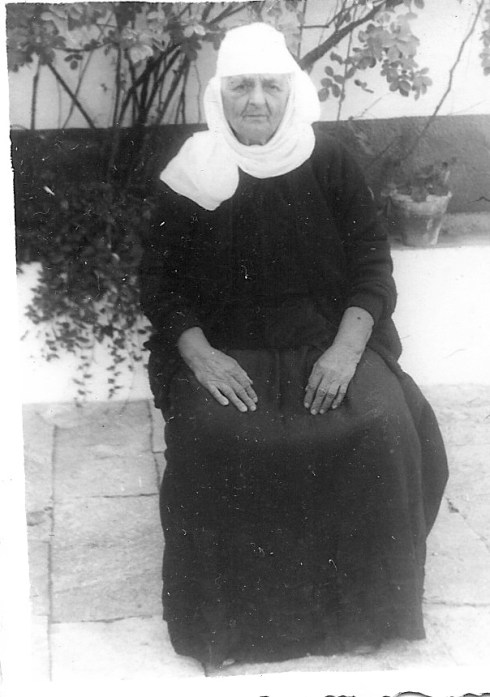
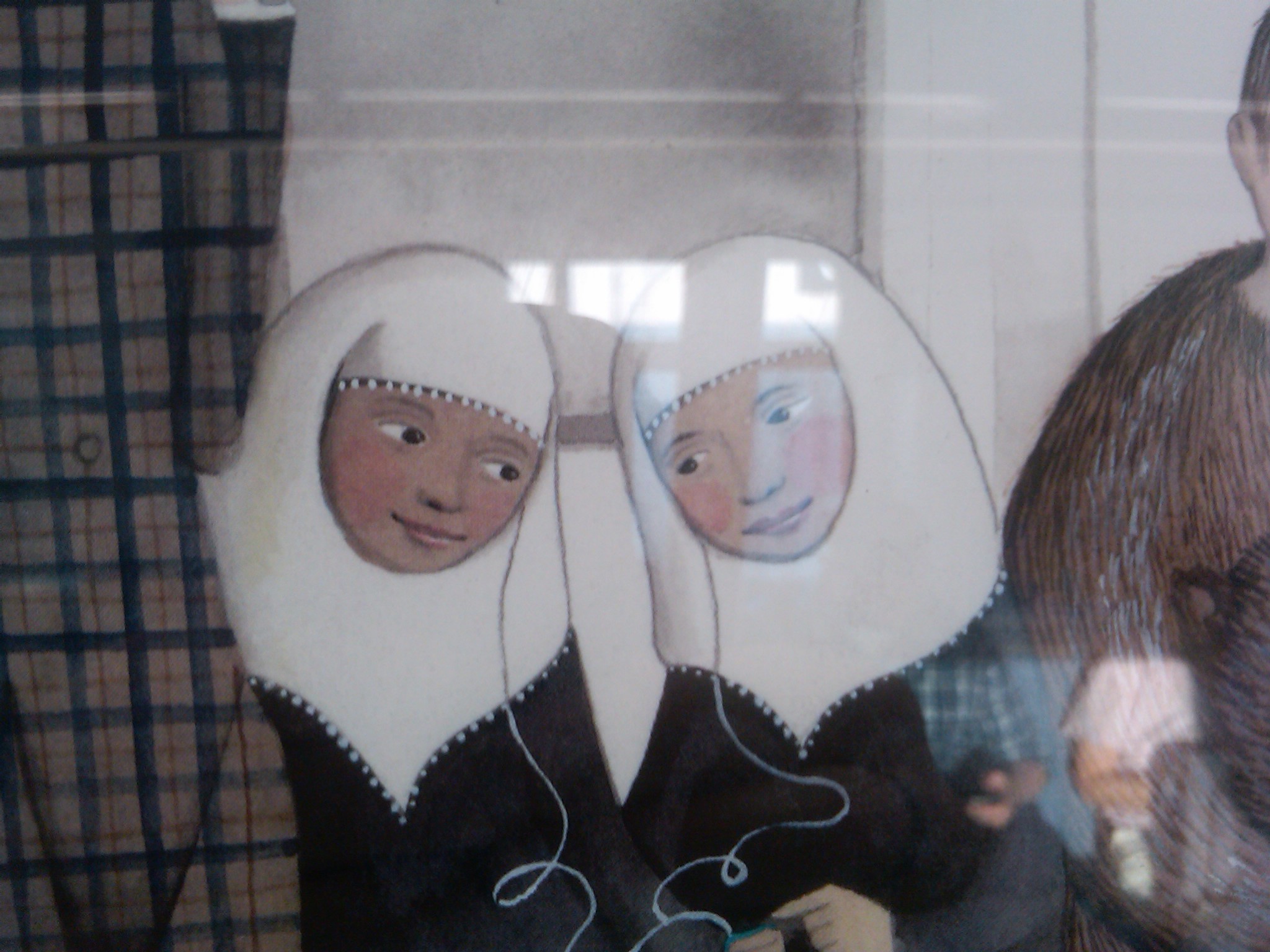
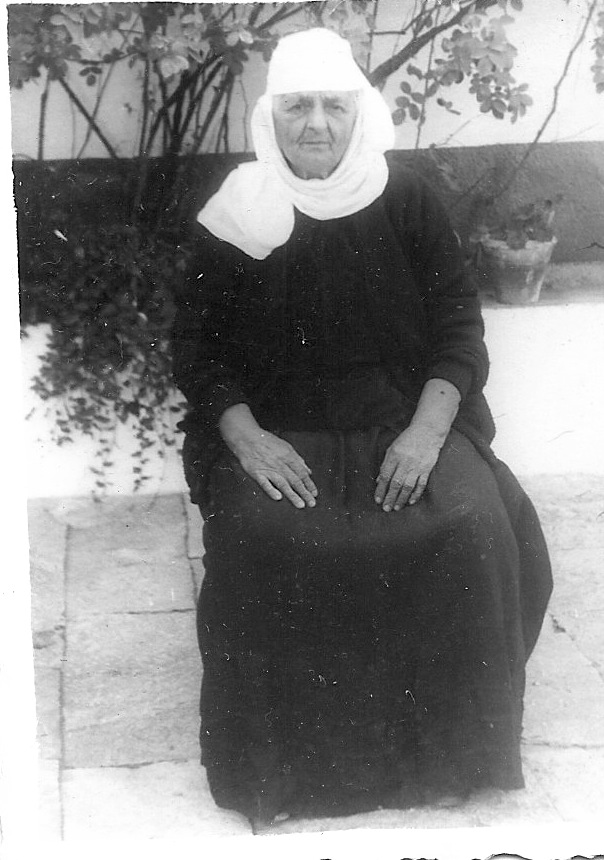
I immediately do a double-take because it looks like two of the characters in the drawing are two little Dropolitisses, women from my father’s villages in southern Albania, with their distinctive white headdresses, like my grandmother here in the last photo we have of her.  (click on all)

Then I look closer and notice their sneakers and schoolbags and realize they’re two Muslim high school girls sharing an IPad.  I smile, because the implications of and reasons for confusing the two are so obviously telling.
On the bench below the drawing are two big, sun-burnt Irish construction workers, in cut-off jeans and work-boots, t-shirts with dried sweat stains on them, who are so exhausted that they are falling asleep on each other.  Somehow, though, I know they’re gonna go for a pint when they get off the train, no matter how exhausted.  At the other end are three lanky, Bosnian giants, who have to keep their legs doubled up against their midsections practically to keep them from stretching across the whole subway car.  I stare at them with a dumb unconscious stare, listening to the subtle tonality of Serbo-Croatian (or “Bosnian”), as they goof around with each other, and I think they’d be fun to drink with – if they drink (they probably drink…).  Then suddenly the image of all that manhood and youth decomposing and scattered around the ground in pieces flashes before my eyes (I’ve had Srebrenica on the brain for the past few days too, not just faloodeh), and I snap out of it.


In the middle of these two bunches of heavy-weights is a super-elegant Pakistani kid, with a white-stitched topi on his head, with the v-shaped opening that Sindhi topis have though I don’t know where he’s from, and a carefully trimmed beard that’s always a sign of observant-but-not-nuts to me.  He’s got cool blue suede Adidas on and perfectly ripped jeans so you can see the hair against the color of his skin on his thighs and shins.  He’s got a worn wooden tespih wound around his left wrist along with a thick leather wrist-band and about half a dozen multi-color, tie-on bracelets that could’ve been bought on the beach in Cancun on his right.  But on top of it all he’s wearing a stunningly beautiful, blindingly white, short-length kurta, completely unbuttoned down to the middle of his chest, with a dense white-on-white chikan-like embroidery around the collar and button panels that even from across the subway car I can tell is exquisite (my mom taught me to recognize good needlework; she was a very skilled embroiderer herself).  I know this simple summer kurta and its kind of embroidery can cost as much as a good sherwani, and I wonder where he’s going or coming from to be wearing such an expensive piece of clothing.  He’s also got his sunglasses balanced behind the back of his head, and they don’t slide off during the whole subway ride.  This is Desi majeza.  He’s a sight.  I wonder if they’ve found a suitable girl for him yet, or if he’s even going to tolerate family choices in that kind of thing; see, that’s the thing; his whole get-up and attitude make it impossible to gauge exactly how “traditional” he is, a frequent dilemma in a city where the cultural self is so malleable, and which – aside from how handsome he is – is what makes him so fascinating to look at.  He could be the perfect obedient Muslim son; he could be a D.J. somewhere or a dancer regular at Bhangra Basement at S.O.B.’s or an ecstasy dealer, or all or any combination of those.  I bet he drinks.  I bet he fasts for Ramazan though.  I then start wondering what Whitman, who loved the men of New York so deeply: “manners free and superbopen voices–hospitalitythe most courageous and friendly young men…” would have done with the material New York would have to offer him these days.  He wrote with such passion of a totally white city; he might’ve been overwhelmed by this one.

I like betting to myself where people are going to get off the subway based on sociological info, and, of course, the Irish guys and the Pakistani get off at Queensborough Plaza to take the 7 train, the Irish guys to Sunnyside or Woodside, the cool Pakistani kid to Jackson Heights or Elmhurst.  And sure enough the Bosnians follow me to Astoria.  I think to myself that I should get a camera and a business card for this blog so I look semi-professional and not like a freak asking people if I can take their picture with my lame Blackberry.
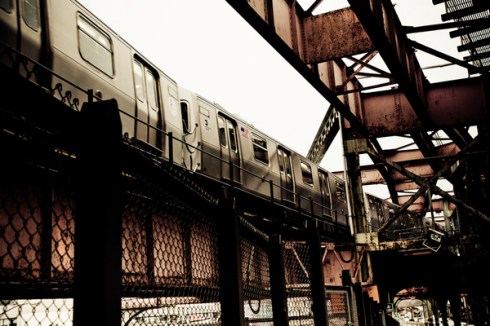
The N train (photo: Matt Lawson)

In Astoria I catch the end of vespers at Hagia Eirene.  This is a church that used to be the territory of fundamentalist, Old Calendar, separatist crazies but has rejoined the flock on the condition that it was granted monastic status (and I have no idea what that means).  But it has somehow got its hands on a great bunch of cantors and priests who really know what they’re doing.  I’m impressed.  I brought friends here for the Resurrection this year and for the first time I wasn’t embarrassed.  If I hadn’t invited them back home afterwards I would have stayed for the Canon.  Only one cantor now at vespers but he’s marvelous and the lighting is right and the priest’s bearing appropriately imperial.  It’s incredibly heartening to see our civilization’s greatest achievement — which is not what the Frangoi taught us about Sophocles or Pericles or some half-baked knowledge of Plato or a dumb hard-on about the Elgin marbles or the word “Macedonia,” but this, the rite and music and poetry and theatre of the Church – performed with the elegance and dignity that it deserves.

From the wall paintings at Hagia Eirene: St. Demetrius above, my patron saint, and his best army buddy, St. Nestor, below, executed together by the Emperor Maximian in Salonica in 306 A.D., because Nestor, with Dimitri’s blessing, killed the Emperor’s favorite gladiator in the arena.  Nestor was beheaded; Dimitri run through with lances — a story.  (Click)

I end up back in Sunnyside, which has become a heavily Turkish neighborhood in recent years.  The amazing thing is what a complete range of Turkish society the community consists of.  Every kind of Turk: from gorgeous young Istanbullu girls (who have disconcertingly started to destroy their beautiful faces with bad nose jobs, like Iranian girls), to old women in flowered salvar squatting outside on the steps of the neighborhood’s Art Deco apartment buildings, picking through lentils in a big sini.  On the corners are Turkish guys hanging out or you pass one every few yards as you walk down the street (“…icim sikiliyor”) and once again I curse the fact that “man torki na midaanam.”

Ah, here’s some Hafez:

“I am the slave of the eyes of that Turk who, in his sweet drunken sleep,

Has a canopy of musky eyebrows over the adorned rose-bed of his face.”

(Sorry I don’t know the Farsi.)

 Of course these guys don’t look like Hafez’ Turk would have, don’t have the eyes he would have, nor do they look like the Uzbek beauty that served me my faloodeh earlier in the afternoon.  These are “our Turks” and though quite a few do, the majority don’t bear much resemblance to their Turkic forebears anymore.  I said that once in a conversation with some Greeks – “our Turks” – to distinguish the inhabitants of Turkey from Central Asian peoples (I don’t know what we were talking about that making that distinction would have been necessary) and I got a blank stare from everybody.  But after a brief pause I realized that it felt good to say, that it was heart-warming to say: “our Turks.”  Plus, anything like that I might say that pisses off Greeks gives me a thrill that can’t be described.

I was once so mad for a Turkish guy from Sunnyside years ago that I learned how to write: “___________, you’re beautiful” in Ottoman script and graffitied it all over the neighborhood.  I thought it would be like a coded love-letter from his ancestral past and that somehow, some day, God would see to it that it were decoded for him.  Thank God that I don’t think He ever did because today I’m mortified to even remember that I did something like that — not that it’s exactly out of character.  I have much to be mortified over; and it takes much longer than you think to convert humiliating regrets into “ah-youth” nostalgia.  And I wasn’t so young either.  It’s just this guy was a knock-out.  He’d walk into a bar and my knees would get shaky; I’d have to be trashed to talk to him without stuttering.  I had to let it out somehow or I would’ve died.

I drop into my favorite Irish pub on Queens Boulevard, for a beer and to wait for a friend and, sure enough, it’s full of dusty, sweaty construction workers who couldn’t go home without a pint.  Despite the influx of Turks and Greeks and Roumanians and Armenians (it’s one of the mysteries of New York immigration that peoples who can’t stand each other back home choose to settle in the same neighborhoods when they get here), Sunnyside is still one of the city’s hard-core Irish neighborhoods, with a population of both old-time Irish-Americans and young Irish kids.  These last had stopped coming for a while, but now have sadly started again, afflicted by the eternal curse of this beautiful, heroic people.  But they, for sure, are tough enough for anything.  When you talk to them about things in Ireland, they’re attitude is basically: “Ah…young folks leaving again…things were good for a while, ya know, and now we’re back to the same old….cheers…”
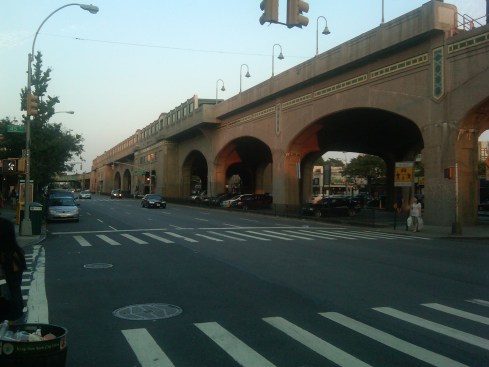
The 7 train in Sunnyside.  The only attempt ever made in New York to make an elevated train attractive.  (click)

There was a genre of Ottoman literature known as the “shehrengiz,” the “shehrashub” in its Farsi prototype, which was basically a tour of a particular city cataloguing in detail all its beautiful people: men and women, but mostly young men — echoes of Whitman again.  Walter Andrews and Mehmet Kalpakli in their fascinating and highly idiosyncratic The Age of Beloveds: Love and the Beloved in Early Modern Ottoman and European Culture and Society translate the term as “city-thriller” or “city-disturber.”  One of the longest extant ones is about Gumulcine oddly enough (Komotene), ironic because the only thing that distinguishes modern Gumulcine from any miserable northern Greek city and makes it interesting and quite beautiful is its Turkish population.  People have called this corner of Greece the last remaining part of the Ottoman Empire and it truly feels that way.  The Turkish marketplace there is particularly fascinating, because of its abundance of coffeehouses and borekcidika, but also because of the beautiful traditional jewelry that’s still made in the city and sold in its numerous shops.  This isn’t the mass-produced crap of Jiannena; this is stuff of real artistry.  Wonder what the boys who worked in its sixteenth-century jewelry workshops looked like; they were obviously of high poetic caliber.

(Once when I was in Komotene I had spent the morning in the Turkish market neighborhood and later on, for some reason, walked back through its streets during siesta time, when all the shops were shuttered.  I saw that the iron gate of every single shop in the marketplace had “1955” graffitied on it, the year of the anti-Greek riots in Istanbul – see one of my first posts “The Name of this Blog”.  I thought it was the creepiest, most cowardly kind of nationalist intimidation that I’d ever seen; it still turns my stomach to remember it.)

Gumulcine

One more beer as it starts getting dark.  Today I lived my own New York shehrengiz.  Sorry for the rambling length of this post, or if any part of it was embarrassingly personal; feel for me.  I felt compelled to write it — my prose shehrengiz.  It started with the faloodeh.  It’s what a hot summer day in New York can do to you.

I am he that aches with amorous love;

Does the earth gravitate? does not all matter, aching,

         attract all matter?

So the body of me to all I meet or know.

— Walt Whitman

**********************************************************************************************************************************************************************************************

*The name of this entry is the name of one of the all-time greatest hits of the legendary Puerto Rican salsa band, El Gran Combo, “Un Verano en Nueva York” , “A Summer in New York:”  “If you want to have fun, full of enchantment and delight, all you have to do is live a summer in New York.”  Of course, given how hellish summer in New York can be, especially for inner-city residents, especially back in 1970, I always had this weird suspicion that this song was some kind of sick joke…

**Of course as fate would have it — or I must’ve insulted some goddess, Artemis, or Durga Ma probably — a couple of months after I wrote this there was suddenly a woman behind the kitchen bar at Mono and of course she’s great and of course I keep going.

Comment: nikobakos@gmail.com

New burial of Srebrenica victims – no comment

11 Jul

The forensics’ teams of the International Commission of Missing Persons considers this one of their most challenging cases ever, since the original mass grave, which they now think may have contained up to 9,000 bodies and not the original rough estimate of 7,000, was dug up with bulldozers for Serbian fear of its being found (of all things, this is what they decided they were going to get retroactive cold feet about?) and the bodies reburied in smaller pits all over Bosnia, damaging evidence, obviously, and leaving one individual’s body parts in a potential multitude of sites.  Some of the ICMP people have identified bodies that they say may have been buried, dug up and reburied up to three or four times and fewer than six thousand have been identified, subjecting Bosnians to this incessant wound re-gashing as the process continues and newly identified remains are buried in mass funerals.  It almost makes you wonder whether modern forensics and DNA technology are such a great thing.


“In the Land of Blood and Honey”

20 May

A lot of us probably had our doubts about this one – in retrospect, unfair doubts and probably (not a little bit) sexist ones.  La Jolie has made a film about us Balkanians…  How could she possibly understand our mystery, our inscrutable savagery, the complexity of our past?  A Hollywood vanity project, for sure.

It turns out this is a great film.  It’s beautiful as a film: beautifully written, shot, acted (some tragic editing errors or omissions though).  And it’s beautiful and intelligent as ethnography and history as well.  She’s modest about her descriptions of her work, but whatever corner of the collective unconscious belongs to our fucked up little part of the world, she was channeling it.

The film recently “premiered” in Belgrade.  A few dozen people showed up and half of those left after the first few scenes, which tells you how much progress we’re making on the Serbian front.  But it struck me really hard that Jolie didn’t attend either.  I thought it was cowardly and, after the love and intelligence she’s obviously put into the project, just plain stupid on her part. Granted, some of the actors, all Bosnian, meaning Serb and Muslim, have been threatened, had their car windows smashed but, you know, all great art has always provoked…

No really, why was she not there?  I clearly, for whatever historical or cultural or mostly emotional reasons, have a special love for Serbs.  I understand they often come across as — or are even – unruly, contrarian, inat-driven, loose cannons (this word, “inat,” deserves an entry of its own and can’t be wrapped up in a footnote).  But I know that more than anything they want to hear and be heard; they crave a healthy confrontation.  That the nineties continue to be simplistically narrated as the story of their villainy rightly pisses them off to no end and they want the chance, at least, to present another narrative; if they pretend that they don’t give a shit what the world thinks it’s just hurt pride or they’ve just given up trying.  Without wanting to add to the reams of crap written about what macho lunatics they are, Serbs are guys – by which I mean the women too – and if Jolie had gone it would’ve gained her instant balls and street cred’ in their eyes and led to all kinds of productive discussion and exchange; I’m not kidding one bit.  If she had truly wanted to say something about the Balkans or the Yugoslav wars and not just about women, she undid more than half the good she could’ve done.

Jolie with extras

One thing that makes you furious about the isolation that was the result of that pointless separating into dumb little countries is that we don’t otherwise know these actors; we got a near fatal dose of Kusturica while Bosnia was on our screens and then it disappeared.  (See below for some extra photos of all.)  Their performances are flawless and their technical competence is proven, if by nothing else, than by the fact that they pulled off the amazing feat of shooting the entire film in both languages.  Not dubbing or anything.  They shot the entire film twice: once in SerboCroatoBosnoHerzegovinoMontenegrin (to be scrupulously correct but which I’ll just call Serbian from here on) and once in English.  Jolie and her team had something to do with how well this came off too.  They let the actors speak the English they speak, which is literally perfect but has the tiny idiosyncrasies that a non-native speaker’s naturally has.  This is the opposite of what Hollywood usually does, which is write a role for, say, Penelope Cruz, in an absolutely impeccable American English which someone with her incomprehensible accent couldn’t possibly speak and which makes her even more incomprehensible and cripples what might otherwise be a decent performance.  But beyond that, they’re all great.  If this one Sarajevo can produce all these actors it makes you want to live there just to go to the theatre or wait for someone to make their next film.

Of course the two you can’t take your eyes off and can’t get out of your head afterwards are the two leads: the painfully sexy Goran Kostić as Danijel, the Serbian cop thrust into the role of Bosnian Serb army captain, and Žana Marjanović as the inscrutable Ajla, the Muslim woman he falls for, one of those close to six-foot Dinaric beauties that make you hate all ex-Yugos; she goes out in one of the opening sequences in heels, a blue dress and a traditional silverwork belt and makes you want to cry, for all kinds of reasons.  I say inscrutable partly because a South American friend who saw the film described her as “parca,” which means dry or stiff or cold — the same root as “parched” maybe – and I had to explain that that attitude implies nobility in our parts, a posture that Ajla doesn’t slip from even for one moment, despite the hell she’s put through; in fact she clings to it even more desperately throughout, her dignity the only thing she has left, her only weapon against male power.  (“Archontia” is another word I need to give a full entry to at some point.)

Goran Kostić (Danijel) and Žana Marjanović (Ajla)

They meet, fall in love just before the war — he in a spellbound way that would be unbelievable if Kostić’s performance didn’t make it so naively magical that you buy it — and then, under circumstances which also strain belief a tiny bit but which you forgive, she ends up in his “custody” as a female POW, for lack of a better word.  Jolie says some trite stuff in the “Making of…” about a “love story that could’ve ended up in happiness, in marriage and children and what war does to that” but, whether she knows it or not, she’s made a film about something so much more complex and true.  Ajla (Marjanović) is both terrified and in the grips of the acute, aching desires of Stockholm Syndrome, but though Danijel is constantly groping around blindly in her heart, he never knows whether she’s there because she “wants” to be with him or not.  Kostić plays the perfect good soldier and officer — the way perfect good soldiers have always been perfect: he’s brave, tough, loves his men, is completely scared to death the whole time and never finds the slightest relief from the tormenting doubts of what he’s doing.

This is a film about anything but a love story — or it’s about a real love story, since these two are in love not in spite of, but because of, war.  It’s a story about the fear that women feel in the presence of potential male violence, something that no man will ever, ever understand in his gut, and Marjanović, like the painter her character Ajla is, gives you a hundred different shades of that fear; it’s about how men will never stop feeling the temptations of that violence; it’s about how sex and love are always about fear and violence.  It’s about how your tribal affiliations are not the product of the Western media but will burst out of you under the slightest pressure in what you had thought was a forgotten and buried language of hatred; it inverts the traditional Muslim-Christian power structure of the region’s sexual captivity narratives; it confronts your loyalties and asks what they’re worth to you; it throws your capacity for betrayal in your face and challenges you to deny it.  Serbian viewers might have been slightly flattered by the discursive lip service given to the Serbian position in the conflict.  But if the film has any real compassion for that position it’s in how the two lovers end up, a subtle and powerful metaphor for the two societies.*  Ajla is battered to no end — and a horrible one; it leaves you feeling crushed in ways that I am unable to describe and, as a man, wouldn’t try to.  But she achieves a kind of heroic closure ultimately that Danijel never can.  He’s the film’s true tragic figure, driven by a child’s insatiable thirst to be loved that’s impossible to quench and that ultimately destroys him in ways that she’s spared.

(* The absent Croats in this metaphor are that species of bad driver who never gets into any accidents himself but causes them all around him — just a calculating version.)

Get the Blu-Ray if you can.  It gives you a choice between the English or Serbian.  On either DVD or Blu-Ray, watch the “Making of…” segment and definitely see the “Deleted Scenes” because I don’t know what they were thinking when they cut these segments out of the final film.  If it was to fit Hollywood commercial length expectations it was particularly dumb because that audience is just not going to see this film anyway.  There are several segments in there that help you understand the sado-masochistic intensity of Danijel and Ajla’s relationship and how they get to that point.  And there’s one scene of priceless beauty where Ermin Bravo (Mehmet), sings what I think is a “sevdalinka,” a Bosnian love song, to his beloved, Vanesa Glodjo (Lejla) — see both below – a scene that breaks your heart with the realization that even another’s most exquisite tenderness will only relieve the agony of a tragic loss for a brief moment.  Every soul is on its own.

Some of the rest of cast:

Vanesa Glodjo (Lejla)

Ermin Bravo (Mehmet)

Boris Ler (Tarik)

And with Jolie

Ler and Bravo in a great shot (from another, unknown stage production) — again, this city must have great theatre… (photo: Irfan Redzović)

Comment: nikobakos@gmail.com