Tag Archives: Catalonia

Castille and Catalonia: a kulturkampf much older and psychologically complex than we think

14 Oct

Miguel_de_Unamuno_Meurisse_c_1925

The Spanish — and/or/together, autonomously together, autonomously independent but dialectically related — Basque philosopher Miguel de Unamuno, one of my highest-ranking intellectual heroes, wrote in 1905:

“Los ensayos que constituyen mi libro En torno al casticismo […] son un ensayo de estudio del alma castellana, me fueron dictados por la honda disparidad que sentía entre mi espíritu y el espirítu castellano.  Y esta disapridad es la que media entre el espíritu del pueblo vasco, del que nací y en el que me crié, y el espíritu castellano, en el que, a partir de mis veintiséis años, ha madurado mi espíritu.  Entonces creía, como creen hoy no poco paisanos míos y muchos catalanes, que tales disparidades son inconciliables e irreductibles; hoy no creo lo mismo.”

“The essays that make up my book Regarding Casticismo […] are an attempt at a study of the Castillian soul, essays I felt obligated to write due to the profound disparity between my own soul and that of Castille.  Yet this disparity is what mediates between the spirit of the Basque people, into which I was born and raised, and that of Castille, in which, since my twenty-six years of age, my own spirit began to mature.  At the time I believed, as do not a few of my compatriots and many Catalans, that these disparities were irreducible and irreconcilable: today I no longer believe so.” [my translation]

I’ve chosen to leave “casticismo” untranslated, and not take Amazon’s suggestion that it means “purity”, precisely because it means so much more than that and has a much more complex, nearly untranslatable meaning.  I mean, it’s explainable, just not with one word.  But a good explanation, to the best of my instinct, since I’m not Basque or Castillian or Spanish at all, is what I need to give readers.

I have to go back to Unamuno’s essays, which are unfortunately not available in English, to do so, however.  Just posting this as a coming attraction and to get my own head working on the issue.

Later…

Comment: nikobakos@gmail.com


Bodegas

10 Oct

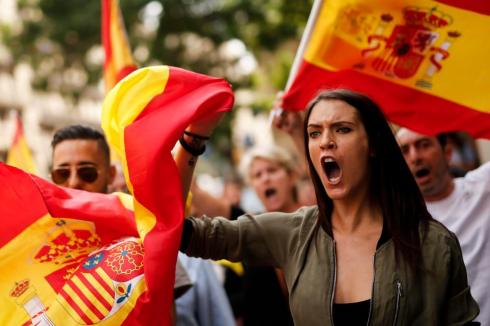
Spanish flag demonstrators

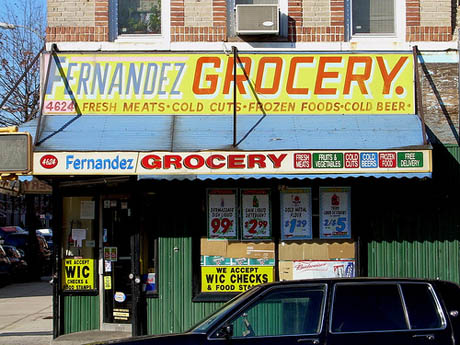
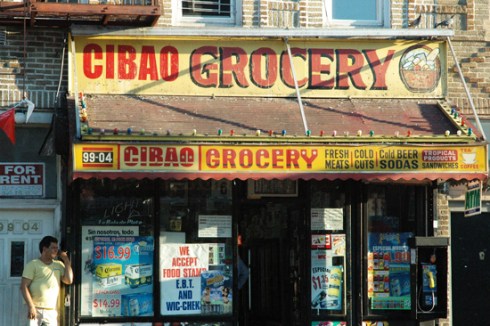
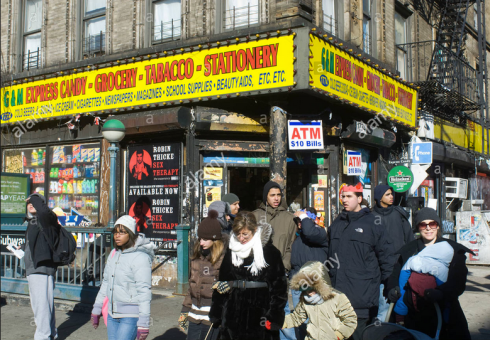
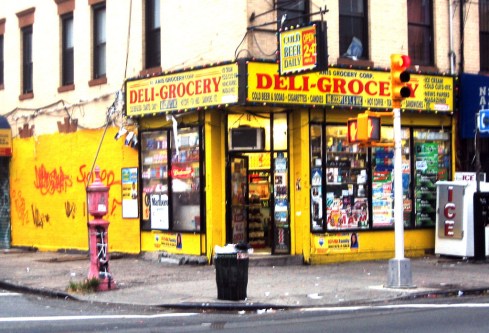
I’ve been color-numbed by the red and yellow of both Spanish and Catalan flags recently.  As a consequence though, a theory I once had that the color scheme of New York bodegas comes from the colors of the Spanish flag has resurfaced in my consciousness.
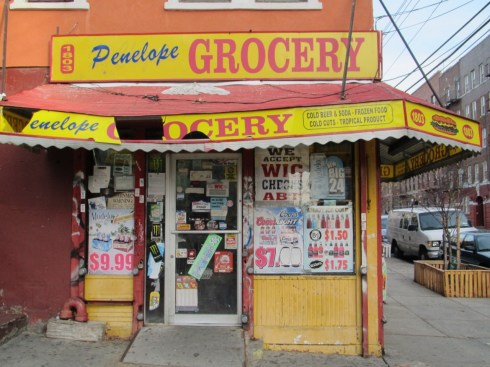
bodega 3.jpg-shot4 Philly or NYC

It’s not that far-fetched an idea.  The first large group of Spanish-speaking immigrants to New York originally came from mostly Galicia and Asturias in northwestern Spain in the late nineteenth century and settled in what are now the streets north and south of West 14th Street and in the meat-packing district.  That’s why there are still so many mediocre Spanish restaurants in the far West Village and Chelsea and there’s also the still spectacularly good El Cid on West 15th.

Unfortunately Riomar — on the corner of Greenwich Street and Little West 12th, one of the most ambient-blessed bars that this city has ever seen: a real dive, with horrible food, stale potato tortilla and sweaty chunks of bad chorizo tapas and Goya jarred red peppers you ate with toothpicks, dirt on the floor, a dismal wine list and great jukebox, the feel of a real sailors’ bar in Almería with a “manchado mostrador” out of a Concha Piquer copla, where you went to have an after-dinner argument with your girlfriend which no one paid attention to because everybody else was having their own vicious spats, interrupted only by a good merengue or when Don Can’t-Remember-His-Name from Burgos, chef and owner of El Cid, pulled out his guitar — left this world about fifteen years ago.

Riomar was one of those bars that got busy with after-shift restaurant workers (including those of El Cid) who needed a post-combat drink and the scene would really pick up after around midnight or 1:00 a.m. when the kitchens let out, and if you hung out long enough, the Nuyorican meat workers would come by for a caña before work (guess like Sheryl Crow, they liked “a good beer-buzz early in the morning”), and then you went for breakfast with the other meat-workers and the drag queens at the much-loved Florent around the corner on Gansevoort Street (three over easy on a roll for the butchers, eggs benedict for the gay dudes; this old diner managed to cater brilliantly to both its clienteles for decades), also now gone.  Infuriatingly, Riomar was replaced by some over-priced piece of mediocrity called Serafina Meatpacking with the gallingly named Gansevoort Meatpacking NYC Hotel across the street (“trendy hotel with a rooftop bar & pool, wi-fi, 259” says Google Maps).  Actually, have you seen the size of the rooms in most of these ’boutique’ hotels? “Meatpacking” might actually be the most accurate term.

Florent has been replaced by something called Bubby’s High Line.

(Grrrrrrrr….  Why did I let myself go there?  Now I’m pissed.  Does anybody even want to live in this sterile Manhattan that’s replaced that one anymore?)
Vanishing New York Jeremiah Moss

Ok, bodegas.  A lot of the Galician and Asturian immigrants who settled in that neighborhood often came through a generation’s or less immigrant experience in Cuba or Puerto Rico, Spain’s last Caribbean colonies; if you know Havana (saludos to my pana Yusuf who does) you know two of the most imposing buildings in the city’s center are the Centro Gallego and the Centro Asturiano.  One of the innumerable fascinating things about Cuba is that while it has perhaps the richest and most vibrant Afro culture of any society in the Americas, it also has some of the closest, organic ties to Spain of any Latin American country as well.

They bring the red-and-yellow color scheme?  Why?

The only place in the Spanish-speaking world where “bodega” means a cruddy, smelly grocery store that you can’t live without is New York.  Why?

And what you call the dank grocery is the same word as the word on the label of your $300 bottle of Rioja.  Why?

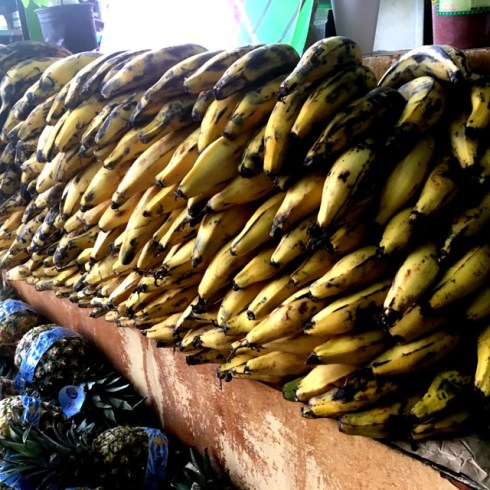
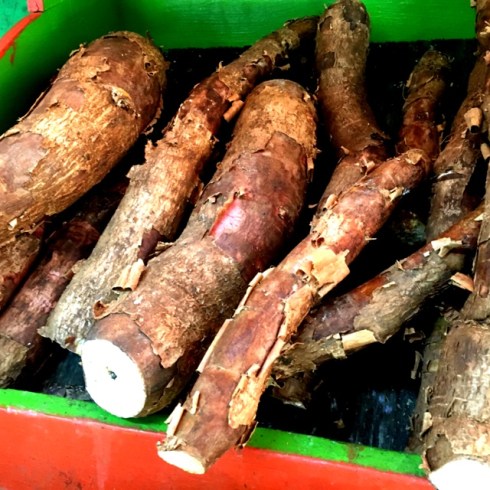
Because “Bodega” in Spanish simply means warehouse or cellar.  That’s why your wine, sherries especially, comes from “bodegas” in Spain.  But in Cuba and Puerto Rico, the sugar plantation or ingenio/refinery company store, where first slaves collected, and then indentured workers later bought, their basic food stuffs, was the company’s warehouse — the bodega.  And take a sec even today to look at the merchandise in your corner bodega, other than the beer, cigarettes and soft drinks, that really moves: plantains, yuca, yautía, malanga and other tubers, the bags of rice, beans, lard, and if it has more than just grocery pretensions, pig feet and salt pork in the counter fridge.  Slave food.

So when the guajiro plantation overseer or the Cuban-Galician neighborhood businessman came to New York in 1910, he called the little store he set up that sold Cuban food staples a bodega, and I’m guessing figured the best colors for it were Spain’s red and yellow.  And then it stuck.  And then became tradition practically.  You look for the bodega’s red and yellow lights in the streets in New York at night when you need a smoke, or a seltzer to rehydrate after drinking too much, and when you remember there’s no coffee in the house for tomorrow morning; just like you look for the flashing green pharmacy cross in a European city at night after drinking too much and when you remember there’s no ibuprofen in the house for tomorrow morning.  And though the economy that produced the term has disappeared in the islands, and if you tell anyone today in Cuba or Puerto Rico or the D.R. who hasn’t visited relatives here in the city to go down to the “bodega” and buy some milk he won’t even know what you’re talking about, it survives in New York, our huge φτωχομάνα and warehouse of the world’s darkness and exile that run a constant lament under the city’s exuberance and energy and often forced-feeling hedonism.
Bodega 10

bodega 1

Bodega 2.jpg gkjarvis

Bodega 4

Bodega 5

Bodega 6

Bodega 7

Bodega 8

platanos

Yuca

img_8353

Comment: nikobakos@gmail.com

Ha… Catalonia is finally getting the West to rethink what it did to YUGOSLAVIA!

10 Oct

Sapnish flag demonstrationProtesters hold a giant Spanish flag during a demonstration to support the unity of Spain on 8 October in Barcelona. Photograph: Lluis Gene/AFP/Getty Images
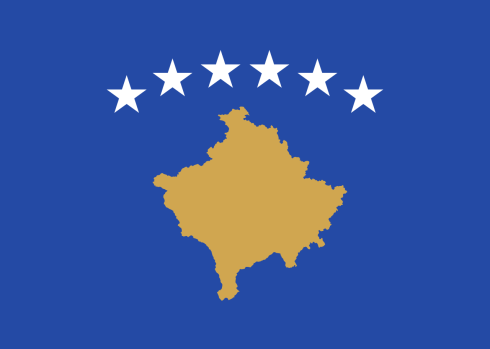
The Guardian has an interesting take on things in Spain: A dangerous time for Catalonia, Spain and the rest of Europe that is original in that it brings together commentators from different parts of Europe who each have their own particular p.o.v. on what’s going on in terms of secession and identity politics.  They’re each interesting in their way — though I expected Gerry Adams to have something more compelling to say and sort of can’t tell if he’s being ironic (David Cameron?).  The most important one for me, though, is the comment on Kosovo (though it also angers you because it took so long for someone to say this):

“Since Nato illegally bombed Serbia in 1999 to wrest control of Kosovo from the Balkan nation, we have witnessed a significant increase in the number of secessionist efforts around the world as borders have unravelled in Ukraine and elsewhere (Catalan president vows to press on with independence, 5 October). Western leaders should be ashamed at having encouraged the hopes of terrorists worldwide that borders can be changed and national sovereignty and international laws are meaningless if they can get Nato to support their cause. Get ready for a lot more trouble ahead.”

Dr Michael Pravica
Henderson, Nevada, USA

1280px-Flag_of_Kosovo.svg

Comment: nikobakos@gmail.com

Times: ‘I Am Spanish’

8 Oct

Thousands rallied in Barcelona, Spain, on Sunday in support of a united Spanish state and against agitators for independence. Credit Pau Barrena/Agence France-Presse — Getty Images

BARCELONA, Spain — Catalonia’s silent supporters of Spanish unity found their voice on Sunday, thronging into the center of Barcelona as part of a huge rally that reverberated with chants in support of a united Spanish state and against agitators for independence.

They demonstrated solidarity with the vilified national police and proudly waved a red-and-yellow national flag that for decades had carried the stigma of a taboo nationalism.

“Catalonia is not all for independence,” said José Manuel Alaminos, a 64-year-old lawyer. He said that Carles Puigdemont, the regional president who has led the independence movement, “is supposed to represent all of us.”

The separatist push has brought about one of Spain’s worst constitutional crises since the end of the Franco dictatorship nearly 43 years ago.

“But we are Catalonians too! The world doesn’t know the truth,” Mr. Alaminos said, pointing to the enormous crowd. “This is the truth.”

Prime Minister Mariano Rajoy echoed that sentiment in an interview with the Spanish newspaper El País published late Saturday, in which he said flatly that the secession of Catalonia “won’t happen” and that he was “not ruling out anything” to maintain Spain’s integrity, including a constitutional article that allows him to disband the regional leadership and assume its powers.

“We are talking about our nation’s unity,” he said.

Mr. Puigdemont is expected to address the regional Parliament on Tuesday, when Catalan leaders could declare independence, citing the results of a referendum that the national government and the courts had said was illegal and ordered suspended.

The rally also served as a coming-out party of sorts for the national flag, which has long been associated with nostalgia for the Franco dictatorship. Credit David Ramos/Getty Images

The rally on Sunday was organized to show that the referendum, which attracted international attention for a police crackdown that left hundreds injured, did not represent all Catalans. They are, in fact, deeply split over independence.

Drivers flying Spanish flags from their windows blasted staccato beeps of their horns in support of people wearing Spanish flags over their shoulders like capes. As helicopters hovered overhead, a river of supporters of Spanish unity snaked from Urquinaona Square down Via Laietana and past the city’s cathedral to its historic train station, where politicians read manifestoes in favor of a united Spain.

Along the way, thousands chanted, “Long Live Spain, Long Live Catalonia,” “I am Spanish, I am Spanish,” and “Puigdemont to Prison.” They waved Spanish, Catalan and European Union flags and wore stickers of all three on their chests.

The rally — estimated by the police at 350,000 people, though organizers said it was twice that — also served as a coming-out party of sorts for the national flag, which for decades has carried a stigma associated with the far-right groups nostalgic for the Franco dictatorship.

“Everyone thinks waving the Spanish flag means we are right wing or fascists,” said Alfredo Matías, 47, who held one edge of an oversize Spanish flag. “But we are not. We are just patriotic. It should be like the flag in America. And this is a big opportunity to make that happen.”

Mr. Rajoy, in his interview, also suggested that the time had come for the flag’s stigma to be lifted.

“People have the right to say, I’m Spanish, I’m proud of it and proud of my Constitution,” he said, adding that everyone in the country had a right to defend “your symbols, your flag, your hymn.”

He said his message to Spaniards was that “they have a government who will defend, as it is its obligation, the national unity and sovereignty.”

Many demonstrators wore flags over their shoulders like capes. Credit Manu Fernandez/Associated Press

Nadia Borrallo, a 31-year-old pharmacist from nearby Sant Boi de Llobregat, said the independence movement had tried to convince the world that all of Catalonia was on its side. “This is the reality,” she said, a Spanish flag draped over her shoulders. “Look around: I see a united people.”

As she approached a Spanish flag carpeting the street in front of a paella restaurant, she said that it looked as if Spain’s soccer team had won the World Cup.

“When Spain wins, they chant, ‘I am Spanish, I am Spanish,’ ” she said. “Now they say, ‘I don’t feel Spanish, I want my independence.’ It’s nonsense.”

As demonstrators jeered at balconies hanging pro-independence flags, organizers and security forces cleared paths for politicians and celebrity supporters of Spanish unity who had lined up at the front of the rally.

“I feel very enthusiastic and optimistic,” said Mario Vargas Llosa, the Nobel Prize-winning author who became a Spanish citizen in the 1990s and has spoken out in favor of conservative Spanish causes.

They followed a flatbed truck loaded with four speakers blasting the voices of organizers who heralded demonstrators as “the silent majority.”

Until now, supporters of independence have been the most vocal, especially after the violence on the day of the referendum gave momentum to their cause. Supports of Spanish unity complained that the regional police force, the Mossos D’Esquadra, appeared to refuse a national order to block the referendum.

Supporters of independence had thrown flowers at their feet, but the demonstrators on Sunday cursed their name. The Catalan police force — the leader of which is facing sedition charges in Madrid — was almost nowhere to be seen along the rally’s route.

The rally on Sunday was organized to show that the results of the independence referendum did not represent all Catalans. Credit Pau Barrena/Agence France-Presse — Getty Images

Instead, the officers standing outside the National Police Headquarters bathed in the adoration of demonstrators. Officers posed for selfies, received hugs and heartfelt handshakes and smiled broadly as the demonstrators chanted, “You are not alone” and “This is our police.”

“The referendum was illegal, and these police followed their instructions,” said Danile Basteller, 51, from Barcelona. He said the police had been treated shabbily: “We are here to show them they are not alone.”

Jose Luis Rencé, a retired soldier clad in his fatigues, agreed. “The law has to be followed,” he said. “With the law, everything. Without the law, nothing.”

In front of the seat of the regional government, Manuel Perales Álvarez, a 54-year-old garbage collector, shouted at the stone-face Mossos officers standing guard.

“With what authority will you present yourself,” he screamed. “You have no shame.”

Lucas Fernández, 66, from Barcelona, stood next to him, holding a Spanish flag and yelling, “Long live Spain” toward Mr. Puigdemont’s office.

“He clearly is going to receive the message, but he is pretending he is deaf to us,” Mr. Fernández said of the Catalan president. “He doesn’t listen to the people — only to the supporters of independence around him.”

Sergi Miquel, a lawmaker from Mr. Puigdemont’s party, saw little to worry about. “The demonstrations are fine,” he said. “But I don’t think anything changes, because the referendum and the Catalan elections had clear results.”

Mr. Fernández worried that the die had already been cast for a declaration of independence. He said he wished that the supporters of Spanish unity had raised their voices sooner. “It’s a little late,” he said. “It should have been done earlier.”

October 4th: “San Francisco de Asis Orante,” Diego Velázquez and Zurbarán

4 Oct

San Francisco de Asís Orante Diego Velásquez“San Francisco de Asis Orante” — Diego Velázquez
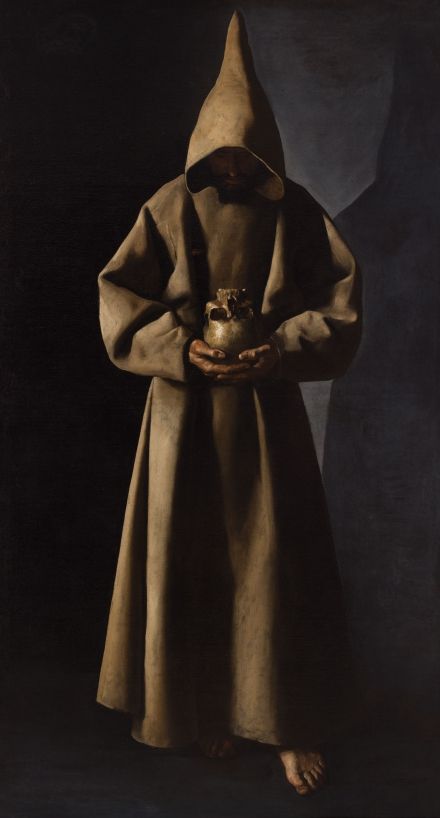
One — I always loved San Francisco among Catholic saints, and the affective weight of the name triples in tonnage through, two — a deeply loved, truly, sweet, saintly Neapolitan friend that goes as Francesco — or Franceschì to me, and, three — the other F. who was the terrifying amour fou of my life who got away and left me like a piece of roadkill.  Look out for him in the videos I’m posting soon…among all the other beautiful Mexican faces.

I thought of posting the usual airy-fairy Giotto images of Saint Francis, the bright early Renaissance pastels of Francis preaching to the birds, images that are more a spoon-full-of-sugar and palatable for the New-Age squeamishness we call religion.

But after this past Sunday’s “CATALAN PRIDE” celebrations, I’ve been in a Counter-Reformation mood: dark, High Catholic, mysterious Spanish, Castilian and Andalusian…and am kinda immersing myself in paintings of the above and below type, with skulls and crosses and not enough blood as I would’ve wanted.

Zurbarán - San Francisco

“San Francisco” — Francisco de Zurbarán

Comment: nikobakos@gmail.com

From Politico: “Brussels says Catalan referendum was ‘not legal’” — thank God

2 Oct

I was getting this knot in my stomach that this was going the way of Yugoslavia, but maybe Europe (or the Germans, at least, who are the most responsible for the Yugoslav disaster, but are still so focused on the other little misdemeanors in their history that they haven’t yet begun to face their complicity in the Balkans) has learned something.

SPAIN-EU-VOTE-CIUA boy holding a European flag waits for the start of the Catalan Convergence and Unity party (CiU) rally marking the last day of the European Parliament elections campaign in Barcelona on May 23, 2014 | Josep Lago/AFP via Getty Images

Brussels says Catalan referendum was ‘not legal’

The EU repeats its position that Catalan independence is ‘an internal matter.’

Sunday’s Catalan independence referendum was “not legal,” European Commission chief spokesman Margaritis Schinas said Monday.

Schinas also repeated the EU’s line that if Catalonia does become independent, it will be “outside the European Union.”

Catalan regional President Carles Puigdemont appealed directly to the EU last night after the results of the disputed referendum, which were overwhelmingly in favor of independence. Puigdemont said the EU “can no longer continue looking the other way.” But Schinas stuck to the Commission’s line on the dispute, repeating that it was “an internal matter.”

The spokesman batted away criticism that the Commission responded to the issue too late, saying: “We react at the time when all the elements of the event are in place.”

Schinas also said that Spanish Prime Minister Mariano Rajoy is scheduled to speak with Commission President Jean-Claude Juncker on the phone later today.

Referring to the more than 800 civilians injured on Sunday, Schinas said “violence can never be an instrument in politics,” without attributing responsibility.

He also called on “all relevant players to now move very swiftly from confrontation to dialogue.”

Asked if the police actions were proportionate, Schinas declined to answer, repeating the line that “violence can never be an instrument of politics.”


Repost: Catalonia: “Nationalism effaces the individual…”

1 Oct

…fuels imaginary grievances and rejects solidarity. It divides and discriminates. And it defies the essence of democracy: respect for diversity. Complex identities are a key feature of modern society. [my emphasis] Spain is no exception.”

A brilliant op-ed piece from the Times today by Mario Vargas LLosa, among others, that exposes all the petty narcissism and destructiveness of the orgy of separatist movements that Europe has seen come to the fore in the past few decades: A Threat to Spanish Democracy .”

Catalunya+Prov+EnglishOther money quotes:

“In their attempt to undermine the workings of the constitutional government, Catalan separatists have displayed a remarkable indifference to historical truth. Catalonia was never an independent state. It was never subjected to conquest. And it is not the victim of an authoritarian regime. As a part of the crown of Aragon and later in its own right, Catalonia contributed decisively to making Spain what it has been for over three centuries: an impressive attempt to reconcile unity and diversity — a pioneering effort to integrate different cultures, languages and traditions into a single viable political community.

“Compared with the crises occasioned by the collapse of dictatorships in many European states, Spain’s transition to democracy, following the 1975 death of Francisco Franco, was exemplary, resulting in a democratic constitution granting broad powers to Spain’s autonomous regions. Yet Catalan separatists have glossed over the positive aspects of the transition.”

and:

“But the advent of democracy brought official recognition to Spain’s distinctive cultures, and set the foundations for the autonomy the Catalans enjoy today. Catalonia has its own official language, its own government, its own police force. Catalans endorsed the Constitution overwhelmingly: 90 percent of them voted yes in the referendum of Dec. 6, 1978. The millions of tourists who flock to Barcelona every year, drawn by the beguiling blend of Gothic and Gaudí, attest to the vigor of Catalonia’s culture. The claim that Catalonia’s personality is being stifled and its freedoms oppressed is simply untrue.”

The piece pretty much says it all: the bogus democraticness of separatist rights and the supposed right to self-determination completely debunked as nothing more than “little” nationalisms, which as Vassily Grossman points out in this post …the nationalism of little nations,” can be just as dangerous and certainly as small-minded as that of “bigger” nationalisms.  Ditto this op-ed for Abkhazia, South Ossetia, Ukraine (both sides), for Belgium, Scotland and, of course, for the most nightmarish manifestation of these tendencies in our time, the tragic break-up of Yugoslavia.  And that’s without even going as far back as the Partition of India, or the Greco-Turkish Population Exchange of the 1920s.

“Complex identities are a key feature of modern society.”  No, no and no…  Complex identities are not just a key feature of modern society, but humanity period, a feature of pre-modern society since the beginning of time.  The roughly two centuries of modernity or “the modern,” which we can probably date from the French Revolution on, is the only period in history when the ethnicity-based nation-state and its brutal, levelling, anti-humanist attempt to “de-complicate” human identity held sway as the predominant form of sociopolitical organization.  It’s just a blip on the screen of history and will soon come to be seen as such.  Multiple cultural identities and stable state political organization can co-exist easily.  Thinking otherwise is an idea whose burial is long overdue.

So, what irritates me most about separatist movements like that of the Catalans is that they’re really retrograde ideologies disguised as liberation movements.  Since the Barcelona Olympics of 1992, when the autonomous Catalan government had the impudence, I remember, to plaster New York City subway cars with ads that read “Catalonia is a country in Spain,” (???) Catalans have been engaged in a massive public relations campaign to project an image of sophistication, liberalism, bogus hipness, and artistic innovation (including culinary — if you can actually call the molecular nonsense Ferran Adrià put out food…) all meant to be juxtaposed against a clichéd, “Black Legend” stereotype of Spain — under whose repression Catalonia suffers — that’s just plain racist. Catalan nationalism rests mostly on the laurels of its Republican-ness and struggle against the forces of Spanish reaction in the 1930s — Hemmingway and Orwell’s “Homage.”  But the attitude of today’s average Catalan nationalist more resembles that of the average member of Italy’s Northern League, a far-right if not quite fascist but certainly racist bunch of jerks: the same smug sense of superiority towards their co-citizens and the same petit bourgeois self-righteousness about how their wealth and resources get sucked up by the parasitic rest of the country.

There is no convincing evidence that Catalan society is any more liberal or open or sophisticated than the rest of Spain.  See González Iñárritus film “Biutiful” (if you can bear to watch it; I couldn’t make it though a second viewing…but it’s the perfect antidote to Woody Allen’s nauseating “Vicky, Cristina, Barcelona”), for how much better Catalonia treats its immigrants, for example, including those from poorer parts of Spain, than any other part of Europe, or do some reading up on the discrimination Castillian-speakers in Catalonia suffer.  Catalan independence is not a liberal or liberatory idea; it’s exclusionary and elitist to the core.  The problem is that most of the world falls for the discourses of these movements –the way the West did with Croatia in the 90s — because they’re so good at playing victim.

The finger-flipping at the impressive democratic achievements of Spanish society since 1975 is particularly galling.

See also my Leader of Catalonia Calls for Independence Vote (September 27th).  And  More on Alevis and Alawites…or Alevis and Kurds…or Iraqi Kurds…or…Christian Kurds…or Assyrians…or… (September 27th)

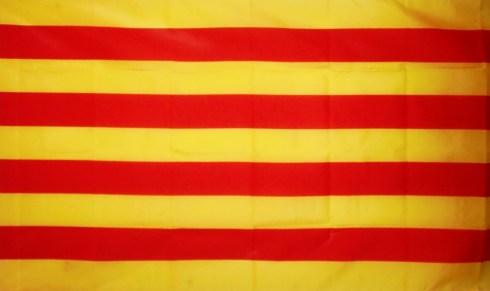
catalonia-5-x-3-flag-3475-p

Comment: nikobakos@gmail.com

#CatalanReferendum: As a foil for your own nationalist narcissism, you made up the myth of an intolerant, fascist Spain …and you got it.

1 Oct

We can go on about projection, or Jung and the Shadow, but I really can’t be bothered to say anything else right now.  Check Catalonia on my tags, or go to my one post that sort of says it all re: Vargas Llosa piece in TimesCatalonia: “Nationalism effaces the individual…”  I’ll re-post it.

But for all you millenial nitwits whose hearts are now bleeding for poor Catalonia, this is the end-game of the identity politics that have become your playground.  When you “stop taking pictures of your food” as Fran Lebowitz said, or gushing about an Emmy because it’s gone to an African-American or a South Asian and not to a great actor, or worrying about stupid Confederate monuments and instead try real, organized, intelligent political action, you’ll see the difference.

Comment: nikobakos@gmail.com

“When in the Course of human events it becomes necessary for one people to dissolve the political bands which have connected them with another…”

22 Sep

“…and to assume among the powers of the earth, the separate and equal station to which the Laws of Nature and of Nature’s God entitle them, a decent respect to the opinions of mankind requires that they should declare the causes which impel them to the separation.”

  • Are Catalan nationalists like Carles Puigdemont Founding Fathers or Confederate separatists?
  • I’m not convinced by the “causes which impel” Catalans to separation.  Are you?
  • I’m hoping Catalans don’t goad Madrid and Rajoy into doing something stupid.
  • Read .  But especially scroll through the comments; the scariest ones that should give you more pause and where the dangers of Catalan separatism become clearest should jump out at you.  There you’ll see the racist self-righteousness of “little nation” nationalism in all its smug, bourgeois glory.
  • Whenever a Catalan uses or writes “Castille” that means reactionary, Catholic, Black Legend Spain where — as one comment gallingly states — “things haven’t changed much since Franco.”  Andalucía is cool and Moorish.  The Basque Country is wealthy, enterprising and progressive like us, even if they’re a little too Catholic for our tastes.  Galicia is the sweet, melancholy home of Celtic troubadours.  It’s Castille and Aragon — oh, and Asturias, which gave birth to the ugly ideology of the Reconquista — the kingdoms of the barbarous “Reyes Católicos”, that are oppressing us.
  • Substitute “Serbia” for “Castille” and you’ll get an amazing repro of Croatian gripes.  We’re European and forward-looking — even if kinna the kings of post-Hapsburg noxious fascism; don’t leave us to the mercy of obscurantist, Orthodox, Serb savages.
  • Read Vasily Grossman in …the nationalism of little nations on Armenians and what the nationalist is really about.
  • Read Vargas Llosa about how …Nationalism effaces the individual…“.
  • Where’s Almodóvar, the face of the Madrileña “movida” from La Mancha, where “nothing has changed much since Franco” to give us his opinion?  I’m sure he has one.

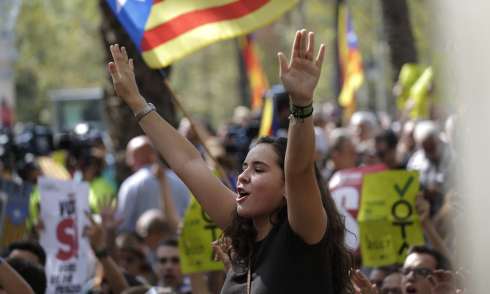
Catalan independence protestor

Comment: nikobakos@gmail.com

Spain and Catalan domino effect and Barca: has the European Union encouraged orgy of separatism and regionalism?

21 Sep

Screen Shot 2017-09-21 at 1.28.07 PM

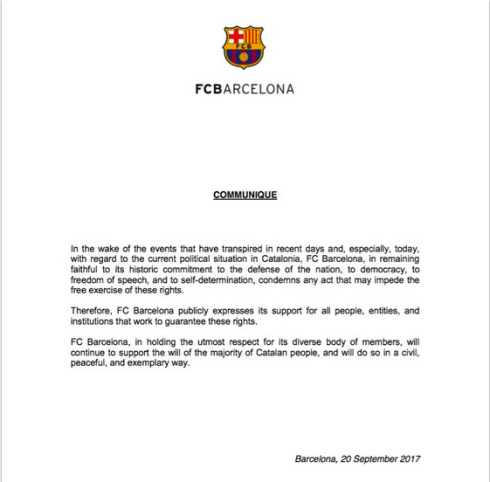
The most thuggish, corrupt sport on the planet chimes in on Catalan independence.  Bloody everybody’s got an opinion.

Apparently there were rallies for a Basque referendum all over the Vascongadas in recent weeks as well, and soon the pendejito of Spanish regionalism, Galicia, will want independence too.

Is there anyone out there who knows of any studies of how European Union ideology and policy have supported regionalism and separatism in the past decades?  That a German “go-ahead” on Slovenian and Croatian independence lit the fuse on the Yugoslav bomb has, I think, become a commonly accepted view in recent years, even for the most anti-Serb-minded Westerners.  But is it the EU’s promise of support — meaning funds — what feeds these movements?  i.e., is the idea: “If I have a direct line to Brussels then I don’t need Belgrade or London or Madrid” at the root of most of it?  That would mean that Catalans are really not separatists but a form of closet centrists (which certainly proved true of Croatia); that they think they don’t need a tie to this parasitic peripheral center — Madrid — when they themselves can be parasites on a more central center, Brussels.  Any thoughts?

And Brussels, of course, is not doing what it should be doing: telling Catalans that if they want out of the borders of a EU country then they’re out of the EU entirely, which is also the secret message that the West refused to send to Croatia in the 80s, sending it on its merry path with the consequences we all know of.

Something for all you enablers of Catalan delusions of grandeur who supported them with your tourist dollars over the past couple of decades to think about.

See Ryan Heath’s Josep Borrell warns of Catalan ‘domino effect’ in Politico (“The veteran Spanish Socialist politician — himself a Catalan — says that the independence argument is based on a myth.”)

Screen Shot 2017-09-21 at 2.27.09 PM

Comment: nikobakos@gmail.com