Tag Archives: Greece

Life as an Illegal Immigrant in Greece — from VICE

16 Sep

Or what the Messenger would call my “aiding and abetting the enemies of our Fatherland.”

A great video piece done this past spring by that increasingly brilliant outlet, Vice.

Felt proud, though, at the number of intelligent, articulate, compassionate Greeks who appear in the video taking a stand against this deplorable situation and not indulging in the usual apologetics that have unfortunately become the Neo-Greek man-on-the-street’s default discourse: “We can’t afford to have these people here …Golden Dawn helps the people, etc.”  Or this one from the Messenger: “If that percentage of immigrants had descended on the United States all of a sudden, wouldn’t the Ku Klux Klan be voted into office the next day?”  Errr…no.  It wouldn’t.  A classic piece of simplistic knee-jerk anti-Americanism touched with his own brand of fascism-lite.

 “Greece has always been a gateway for immigrants searching for what they assumed would be a better life in Europe. But many of those who have crossed illegally into Greece have found that they have traded one bad situation for another. Refugees from war-torn countries like Syria and Afghanistan are finding themselves stuck in a country that is not only battling an economic crisis but is witnessing a rise in anti-immigrant violence—exemplified by the a nationalist political party known as the Golden Dawn.

VICE News’ Alex Miller travelled from Athens to the western port of Patras to find out what it is like to be trapped in a country you never wanted to be in in the first place.”

Comment: nikobakos@gmail.com

Upon escaping from Greece…

7 Sep

cp-cavafy2

How do you go through the work of the poet whose opus consists of the sharpest and most accurate analysis of Modern Greek identity, and find the poem that displays perhaps the most razor-sharp understanding of all of them? I’ve always known that poet was Cavafy, but I wasn’t looking for that one poem or anything, when, just leafing through his stuff a few days before I left Greece this past July, I came upon one of my favorites, the following. Please have a look first:

Going Back Home from Greece (an unbelievably clumsy translation of the Greek title)

Well, we’re nearly there, Hermippos.
Day after tomorrow, it seems—that’s what the captain said.
At least we’re sailing our seas,
the waters of Cyprus, Syria, and Egypt,
the beloved waters of our home countries.
Why so silent? Ask your heart:
didn’t you too feel happier
the farther we got from Greece?
What’s the point of fooling ourselves?
That would hardly be properly Greek. 
 
It’s time we admitted the truth:
we are Greeks also—what else are we?—
but with Asiatic affections and feelings,
affections and feelings
sometimes alien to Hellenism. 
 
It isn’t right, Hermippos, for us philosophers
to be like some of our petty kings
(remember how we laughed at them
when they used to come to our lectures?)
who through their showy Hellenified exteriors,
Macedonian exteriors (naturally),
let a bit of Arabia peep out now and then,
a bit of Media they can’t keep back.
And to what laughable lengths the fools went
trying to cover it up! 
 
No, that’s not at all right for us.
For Greeks like us that kind of pettiness won’t do.
We must not be ashamed
of the Syrian and Egyptian blood in our veins;
we should really honor it, take pride in it.

— Translated by Edmund Keeley/Philip Sherrard

Επάνοδος από την Ελλάδα

Ώστε κοντεύουμε να φθάσουμ’, Έρμιππε.
Μεθαύριο, θαρρώ· έτσ’ είπε ο πλοίαρχος.
Τουλάχιστον στην θάλασσά μας πλέουμε·
νερά της Κύπρου, της Συρίας, και της Aιγύπτου,
αγαπημένα των πατρίδων μας νερά.
Γιατί έτσι σιωπηλός; Pώτησε την καρδιά σου,
όσο που απ’ την Ελλάδα μακρυνόμεθαν
δεν χαίροσουν και συ; Aξίζει να γελιούμαστε; —
αυτό δεν θα ’ταν βέβαια ελληνοπρεπές. Aς την παραδεχθούμε την αλήθεια πια·
είμεθα Έλληνες κ’ εμείς — τι άλλο είμεθα; —
αλλά με αγάπες και με συγκινήσεις της Aσίας,
αλλά με αγάπες και με συγκινήσεις
που κάποτε ξενίζουν τον Ελληνισμό. Δεν μας ταιριάζει, Έρμιππε, εμάς τους φιλοσόφους
να μοιάζουμε σαν κάτι μικροβασιλείς μας
(θυμάσαι πώς γελούσαμε με δαύτους
σαν επισκέπτονταν τα σπουδαστήριά μας)
που κάτω απ’ το εξωτερικό τους το επιδεικτικά
ελληνοποιημένο, και (τι λόγος!) μακεδονικό,
καμιά Aραβία ξεμυτίζει κάθε τόσο
καμιά Μηδία που δεν περιμαζεύεται,
και με τι κωμικά τεχνάσματα οι καημένοι
πασχίζουν να μη παρατηρηθεί. A όχι δεν ταιριάζουνε σ’ εμάς αυτά.
Σ’ Έλληνας σαν κ’ εμάς δεν κάνουν τέτοιες μικροπρέπειες.
Το αίμα της Συρίας και της Aιγύπτου
που ρέει μες στες φλέβες μας να μη ντραπούμε,
να το τιμήσουμε και να το καυχηθούμε.

What gives this poem such pride of place as an analysis of Greek identity? For me, it starts with the simple joy both passengers feel as they’re arriving home – not approaching Greece, but leaving it. “Upon Escaping from Greece” would be my choice for the title’s English translation, because it’s clearly an experience of suffocation that the two friends have experienced that has started to lighten up for them as they cruise east through the breezy waters of the Mediterranean.

Cavafy has become an object of a resurgent cult in Greece, partly due to last year’s 150-year celebration (he was born in 1863), that’s a kind of an “emperor’s-new-clothes” phenomenon for me; not because his new clothes aren’t real, but I feel that few Greeks actually know what it is they’re suppose to be liking so much. I much prefer people who just say up front that they don’t like him. He’s “childish” they say, in response to his prose-like, early modernist experiments. These are the people who like their poetry with a capital “P”; they want it to rhyme: “φεγγαράκι μου λαμπρό…” and they want it to have epic scale heroics and ‘the thousands dead under the axles’ and ‘the living giving their blood’ in the heroic deed of ‘making the sun turn,’ along with some myrtle and oleander and jasmine thrown in for Aegean effect. (What if you’re from Epiros and you don’t know from oleander and jasmine, just tsouknida and pournari?) Others only like a very emphatically stressed “some” of his poems: these are the ones turned off by his sexuality, but who feel they can’t say so openly in 2014 – or to me. (And the degree to which that whole part of his work, a good half, was ignored by the official festivities – they wanted only “Ithaka” or “Waiting for the Barbarians” or “The City” — was amazing.*) The Messenger for example, found a publisher for his paternal grandfather’s, my great-grand-uncle on my mother’s side, fascinating memoirs, which span the whole period from the late nineteenth century and the end of Ottoman rule to WWII. Except his grandfather met a Jewish guy who screwed him over when he was a young immigrant in New York in the 20s and he included the unfortunate phrase: “Hitler was right for doing what he did to them.”**  The publisher thought maybe that line should be cut. But the Messenger stuck to his cast-iron principles and insisted it be left as is, because it would be “censorship” to remove it.  Hardly an upholder of the most liberal sentiments on issues of that kind, I have a feeling that if the comment hadn’t been about Jews, he wouldn’t have minded the censorship so much. Just a few months earlier, for example, he hadn’t thought it was “censorship” to cut a slightly too homoerotic line from a Cavafy poem he read at his father’s funeral, for fear that our landsmen, our chorianoi, would be scandalized.

These elements and others: that Cavafy preferred the tragic dénouement to the epic climax; the unconsummated to the fulfilled; that he preferred the coded to the open and disclosed, and not out of choice; but learning to love what fate had made him, he learned to love the beauty of code – its poetry — the furtive touch over some cheap handkerchiefs; that he loved the ethnically and culturally and religiously mixed margins of Greek history and the poignancy of characters who had to straddle those margins and did not write a single poem about its Attic glory days (who are all these half-breed Egyptians and Parthians and Jews and other exotic anatolites he’s always making us read about anyway? Where’s Pericles and Aristotle?); that he understood life and humanity as fundamentally amoral, and morality as a convenient weapon to be used against the unfortunate few or often just a bad joke. All this did not do much to endear him to his contemporaries, along with the fact that he famously disliked Greece and especially Athens (the latter kind of unfair in my opinion: Athens at that time must’ve been at its most beautiful and charming), and the straight, homophobic white boys of the Generation of the ‘30s in particular, despite Seferis’ famous eulogy, had no time for him. The most vehement, Theotokas (unfortunately, one of my favorite Greek writers otherwise) scathingly declared Cavafy, in his Free Spirit, a “dead end” (a common trope, whether conscious or not: the gay man begets no issue and is thus fundamentally allied with death); that his modernism was an experiment that had been taken to its logical conclusion and that the Alexandrian was now a decadent (same difference), a point of departure for what Greek letters should move on from next and not a road open for them to continue down.

That right there is the grand and egregious error. Because Greek culture and identity – in a way that makes any sense to who we are today – simply didn’t exist until the Hellenistic (and then Roman/Byzantine) periods that Cavafy chose, almost exclusively, to write about in his historical poems. The conglomeration of Indo-European tribal units who all spoke dialects of similar languages and had started coalescing into larger city-state forms of political organization by the mid-first millennium B.C. have nothing to do with us. They may have started calling themselves “Hellenes,” but let’s not forget that the Iliad does not contain one, single, blessed mention of that holy word, and was compiled only a century-and-a- half or so before the Golden Periclean Age we’re so obsessed with.

It was because he was fascinated with the true origins of Greek identity, the cauldron of cultural mixture that Alexander created that later became condensed into a more distilled Greek-speaking, Orthodox idea, that Cavafy wrote about those periods so widely and studied them so deeply. And being from such deep aristocratic Constantinopolitan roots and an Alexandrian, how could he not have felt that basic idea on a gut level.

This is another reason the mention of the words “Macedonia” and “Alexander” makes my hair stand on end. The Macedonians (by which I mean Slav Macedonians) are ridiculous in their attempt to appropriate Alexander as a phenomenon of their own culture, though many observers have written about how this conscious policy of “antikvatsiya” (“antiquization”) on the Macedonian government’s part is, partly, a response to Greek intransigence on every other grounds. But you can see from how Greeks respond to Macedonian moves that Greeks don’t get Alexander either. Alexander is not a culminating point of Hellenic history, where the great hero brought Hellenic civilization to the “borders of India.” Alexander is not even a Greek herohe very early in his career quickly became déraciné, as Mary Renault keenly observed. Alexander is where Greek history starts. It’s all really the other way around. Alexander is what brought the East, and its incomparably greater and older civilizational achievements, to us. He drove us deep into contact with that wider world, cementing what had always been our bonds to those lands and those peoples he grew to love so much, and giving us as much in return, actually more, than what we gave them. He created the great creolized cultural space that a universal, cosmopolitan Greek identity was first born in and that later – when the name for “universal, cosmopolitan identity” changed, due to political circumstances, from “Greek” to “Roman,” – changed along with it, but which left the Helladic peninsula — or “the Hellenic” generally — behind permanently as a focus of any kind. Until the twentieth century.

Alexander Renault

Hermippos and his friend, Greeks going home to Antioch in Syria or Seleucia in Mesopotamia, can’t be Greek in Greece. It suffocates them. They don’t fit into that nonsense, antiquarian straightjacket. It’s “beneath” them, as Greeks, to reject the wider world that they’ve long been an intimate and inseparable part of. Greek means cosmopolitan to them and they can’t be Greeks without that quality. It would be the most provincial thing for them to do, to act like provincials who try to hide their “easterness”:

“…like some of our petty kings
(remember how we laughed at them
when they used to come to our lectures?)
who through their showy Hellenified exteriors,
Macedonian exteriors (naturally),
let a bit of Arabia peep out now and then,
a bit of Media they can’t keep back.
And to what laughable lengths the fools went
trying to cover it up!”

Eastern Mediterranean(click)

The nation-state is bound up inseparably with provincialness. And narrowed tribalism. And provincials hide. Not true Greek men. Cavafy’s “petty kings” are the Neo-Greek bourgeoisie, from the statelet’s origins down to our day, with their still immovable disdain for the East, who don their ancient fineries and try to make the world call them Hellenes and have no clue how ridiculous they’re being. Provincials dissimulate – not true Greek men — and that dissimulation has been the main thread of Neo-Greek culture since the late eighteenth century, so much so that all perspective has been lost. Hermippos and his buddy aren’t provincials. They’re Greek alright – from some of the richest, most sophisticated and Greekest cities in the world; but they understand the larger cultural context they’re a part of, and they’re too supremely secure in their Greekness to put down the Egypt and Syria that ‘flow in their veins.’ Greece tries to take that away from them. I imagine the Athens they had to go study at as a kind of tired old Cambridge, MA, still resting on its now dried-up laurels. But they’re too Greek to let Greece do that to them. Sorry to get repetitive. It’s an attempt to make the paradox – a wholly healthy and natural one – sink in.

Greece still tries to do that to you. And in the crisis mode it’s in today, it tries even harder because its sad inhabitants’ perspectives have become narrower and narrower to the point where they see nothing of the rest of the world and there’s simply very little language left you can share with them. “Η φτώχεια φέρνει γκρίνια,” the Greek says – “poverty makes for kvetching” — and though many people I know have faced the current crisis with the best kind of Greek dignity and humor in the face of adversity, too many others have lapsed back into ideological craziness, or just a frustrated lashing-out bitterness, or were always there but kept it hidden and now think that it’s more okay to express things openly; it’s hard to tell which.

One friend or relative has become a Golden Dawn apologist if not supporter: “What’s a young man who loves his country supposed to do?” I dunno; but half of Dostoevsky is about what to do with the unguided idealism of strong young men and phenomena like Golden Dawn wasn’t one of his answers; he strictly warned us against them, in fact. Another wants to take a DNA test to make sure he has no Albanian genes: actually believes such a thing exists – a chromosome for Albanian-ness and a test that will detect it. And this is one of those uncomfortable situations we’ve all been in where this is coming from the spouse of a good friend, so you have to keep your silence and you can’t just say: “That’s nice _______, Hitler and the Nazis were into that kind of thing too.” If I could I would’ve also asked if he wanted to see my DNA chart too, which is probably chock full of “Albanian-ness” and if he would then feel the need to maybe keep me away from his daughters. Another is still obsessing, as we go on twenty-five years since the break-up of Yugoslavia, on the “Macedonian issue.”*** And after hours of mind-bogglingly pointless conversation – “It is useless to attempt to reason a man out of a thing he was never reasoned into,” said Jonathan Swift — you take a step back and realize that that’s all that’s ever mattered to this guy. The hundreds of thousands dead produced by the Yugoslav disaster, the millions displaced, the destruction of the last part of the former Ottoman sphere where there was still some hope of survival for a multi-ethnic society, the greatest bloodletting in Europe since WWII, right on our doorstep…  He doesn’t give two shits, nor has he let one blessed thought or idea on that series of calamities occupy even one of his brain cells for a second. All he cares about is the “Macedonian Issue.” Twenty-five f*cking years later. And he doesn’t find such narcissism the least bit obscene.  “The world is burning, και το μ**νί της Χάιδως χτενίζεται.”  I won’t translate.

Whether or not they’re becoming more extreme or just showing their true colors more, it’s certain that I’ve become more radical – not in my ideological positions, which are what they always were – but in my inability to tolerate their stupidity and growing narrow-mindedness. I’m always ready to leave Greece when the time comes, but this time it had become truly unbearable. There were just too many people that it had become too uncomfortable to even be around. And stumbling on this half-forgotten Cavafy poem was no accident I feel.

And so I took that great big breath of relief that Hermippos and his friend took on the deck of their boat as the shores of Cyprus came into view when I myself left for Serbia back in July. I had to get out of this place – and disassociate myself from it and its inhabitants — if the fact that I’m Greek was going to continue to be to at all tolerable to me. I’ll always love arriving; with the new flight path south over the Attic midlands passing right over the town and beach — over the very apartment building — where I spent my childhood summers, I’ll always choke up a little at the sight of the brown hills of Attica. But when I’m ready to leave, I gotta go – and fast – and this year more urgently than any other.

And I can see myself spending more and more of my future time in “Greece” in Albania with my relatives – “deep” Greeks who don’t have the ball-and-chain of a nation-state tied around their ankles; in Istanbul – with smart young Greek and Turkish kids who are trying to do something intelligent and productive about our relationship; maybe in Cyprus – which Kosmas Polites called the last surviving remnant of his beloved lost Ionia and where I have friends to whom I owe long over-due visits; or just here in Queens — where every block and street corner and subway stop and church bears a piece of my Roman-ness.

Because Greece, man… Greece just cramps my Greekness.

Egypte, Alexandrie, le front de merAlexandria (click)

******************************************************************************************************************************************************************************************************************

* And the thing is, if you ignore his erotic poems, I find it hard to believe that most people can even understand, much less really appreciate, the rest — the historical poems.  Who understands the religious and cultural sociology of fourth-century Alexandria enough to have the proper context to apprehend all of “Myres: Alexandria, AD 340”?  Who the hell knows where Commagene is?  Or who Alexander Jannaios was?  Or what a handsome Jewish prince is doing with the name Aristovoulos?  Or why he was murdered and “those sluts Kypros and Salome” are now gloating in private?

** It’s amazing.  And disturbing.  Anti-semitism and the extent of its popularization and the accessibility of its language.  Not only can one accusation of unethicalness — and from a Greek at that! — be used to tar a whole people, but Jews are the only people with whom that one charge leads straight to the gas chambers so easily, in people’s minds and on people’s tongues.  Not “what a sleazebag.”  Or “what a nation of sleazebags.”  But straight to “Hitler was right…”

*** Yes.  Believe it or not.  The “Macedonian” “issue.”  More on that to come.

Comment: nikobakos@gmail.com

“Too often we enjoy the comfort of opinion without the discomfort of thought.” — John F. Kennedy

30 May

Or just basic facts.  Or as Guatemalan singer Ricardo Arjona says: “Le sobran opiniones y le faltan argumentos.”  “He suffers from an excess of opinions and a lack of arguments.”  Which Greeks might want to put on their flag in gold embroidery across one of the horizontal white bars.

I write on May 19th: “…how I’ve been wasting my time engaged in a running war with everyone in Athens to prove basic things like the fact that Albanians are a tall, extremely attractive people.”

And a reader writes back:

“I know, why is that?  I had the same experience in Greece.  I worked for an NGO in Kosovo for a year and then hitchhiked through Albania to Greece and found Albanians in both places to be very good-looking I thought.  When I would say that in Greece people would laugh at me.  I guess politics just gets in the way.”

No, they’re just idiots.

And I have to apologize to readers if this blog has taken on an increasingly polemic or nasty tone in regards to certain issues.  But I wrote in an early post: “In the 1990′s, when Albanians flooded Greece and Greeks were faced with the horrifying realization that their northern border hadn’t really been with Austria all that time, many of them predictably behaved like racist jerks…” and nothing has changed, that’s all, and my trip to several Balkan countries has opened this toxic can of worms from all sides that I should probably just ignore, but can’t.  Whenever almost anyone has asked me where I’ve been — if they know enough to ask about these places, their neighbors — the question always has that snickering Athenian sub-tone, that smart-ass “ξέρω εγώ…” half-grin that expects tales of backwardsness or καφροσίνη or just unspoken baseline disbelief that I went and that I found it fascinating and I can’t abide it.  Others are just angry.  Because…like…why should you go there?  Aren’t they the enemy?

It’s not politics.  If anything it’s purer socio-economics and what that does to perceptions of the Other in a monocultural world, or rather one where the Other is just invisible.  And I mean social economics on two levels: one, where you really don’t see, because you’re not trained to see or to care, the real effects that economic conditions have on the physical body of a human being — Hoxha’s Albania was the only country in late twentieth-century Europe, where, like the Kims’ North Korea till this day, people suffered from literal, physical, stunting malnutriton — and two, that once that perception or non-perception is established, it becomes frozen.

kitchen-doors

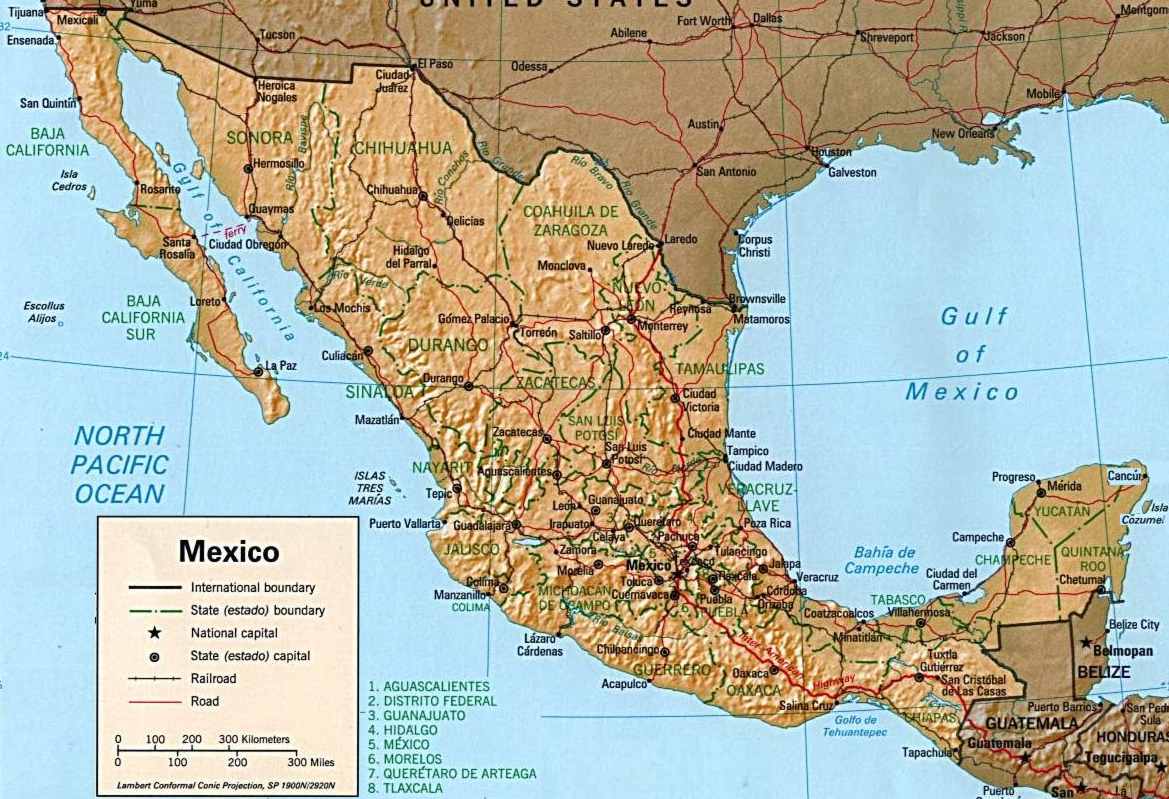
How many people in New York, especially people like me who have worked in the restaurant industry a lot and get chummy with owners and managers, have not had this experience?  You’re sitting at the bar and through the kitchen door you can see a young Mexican kid who’s just started.  And the poor kid looks like hell.  He’s probably new here, so he’s probably just risked his life several times to get to New York in ways in which we would not consider risking ours even once.  He works at least six days a week for probably over twelve hours and for shit money.  He lives in a studio that’s an hour-and-a-half subway ride from where he works, with three or four other guys like him, and to escape both the claustrophobia and loneliness of his life he probably goes out a few nights a week and, with whatever money he doesn’t send home to his family, gets drunk, so lots of days he comes in hungover.  But he always does his job anyway, not only diligently and efficiently, but with a certain perverse pride that he probably needs to maintain to keep himself from feeling like an animal.  He rarely speaks and if for any reason he needs to it’s always with unfailing courtesy and politeness.

“Γλυκοχαράζουν τα βουνά, και οι όμορφες κοιμούνται, τα παλληκάρια τα καλά στα ξένα τυρανιούντε.  Tους τρώει η λέρα το κορμί και η ψείρα το κεφάλι. Ανάθεμά σε ξενιτιά, κ’εσύ και τα καλά σου.”

“Dawn breaks along the peaks, with the young beauties still asleep, and our best boys are off suffering in a stranger’s land.  Their bodies covered in filth, their heads full of lice.  May you be damned foreign lands, you and all your riches.”

an Epirotiko folk song

But he’s smart, this Mexican kid, like our grandparents were before him.  And he watches and he asks questions and he learns about the restaurant’s wines and foods and about New Yorkers and their often insufferable particularities, and what they like and what they don’t like.  And the owner notices and makes him a busboy, and then a runner, and then a waiter.  And he gets a few days off.  AND HE GETS TO SLEEP.  And he’s making a little bit more money, so he buys himself some clothes and can afford to take a girl out on his night off.  And he’s completely transformed.  And one night you say to the owner: “Who’s that hot Mexican kid you put out on the floor?”

Κι’έτσι προκόβουν τα ‘παλληκάρια τα καλά’ της Πουέμπλας και της Çoλούλας…

mexico_rilievi97

This is not a possible scenario in Greece.  Or one that the average Athenian is capable of noticing.  For one, Greeks have forgotten that just until two generations ago hundreds of thousands of their own went off to live initially hellish lives in other parts of the world like this Mexican kid does — or the Albanian migrant worker anywhere in Europe today does.  Two, the Greek is not trained to watch others or care, the way every New Yorker is an amateur anthropologist.  So the change occurs right before his eyes and he doesn’t even see it.  Because other than the parts of the world that can confer some kind of ersatz glamour on him — Europe or certain  limited aspects and places of the United States — the rest of the planet is just not on the average Neo-Greek’s radar.  I can’t put it any clearer than that.  To know the reputation that we, Greeks, have as an ethnic group in New York: that we’re open, friendly, curious, eager to learn about others and their countries, learn at least some pidgin form of others’ languages faster than they can learn English, are willing to try any food or any drink, will invite their Mexican waiter to their kids’ christenings — and then to come to Greece and see this completely shut-off from the world society, is startling.

When I came to Greece in 2010 I hadn’t been there in eight years and the gruff middle-aged waiters or relatives of the owners that served in most restaurants and tavernas had been replaced by these nice-looking polite kids and I asked who they were, since it seemed strange to me that usually cossetted Athenians kids had suddenly condescended to wait tables.  And I was told: “Oh, they’re Albanians.”  These same people now laugh if I say anything positive about those same Albanians.  Even my own people, relatives, Greeks in Albania, said to me on several occasions: Όχι, είναι ωραίος λαός…   “They’re a good-looking people.”  Like, let’s tell the truth where we should.  And then come to Athens and have people stare at you incredulously…

I don’t know why this particular issue has ticked me off so badly.

A lot of Americans once thought that all Blacks were ugly too.  I guess I’ll leave it at that.

AlbaniansOutsideAlbania

And Philopomeon adds:

“We always need to put ourselves in a status-race with others… we can’t be as good as the Frangoi, but surely we are more advanced/richer/better looking/more cultured than the Alvanoi.

“To add to that, as you know, the Albanians were noted as “poor dressers” when they crossed the border in the 90’s. They had to take hand-me downs from charity, hence the Greek insult to a poor dresser ” You look Albanian.”

“But I agree, in general, Albanians are good-looking folk. Especially Kosovar girls.. hehe.”


Kosovaroi — of both genders — were real stunners, P., you’re right.  They have even gently nudged Afghans out of their first place position for me — no mean accomplishment.  I really couldn’t believe it when I was there; you didn’t know where to proto-look. (click)

Kosovo6970F0EF-C07B-4081-AB8D-B389D162E9DC_w640_r1_s

besa_luci_main1

MINOLTA DIGITAL CAMERA

And what I should’ve done from the beginning is put these pictures together with all the pictures of the young Derviçiotes I have in photos and videos and asked a random group of thirty-something  Athenian Concrete-Cave-dwellers to tell me which ones are the Greeks and which the “ugly” Albanians.  And see the results…

Comment: nikobakos@gmail.com

Philopomeon writes: “Easter in Derviçani”

30 May

To this April 25th’s post on Easter in my village,  Easter in Derviçani,” Philopomeon writes:

“Beautiful. It’s rare that we get a look of what is going on among Greeks in Albania without having to hear about ‘Vorio Ipiros’ and ‘Chameria’ back and forth.”

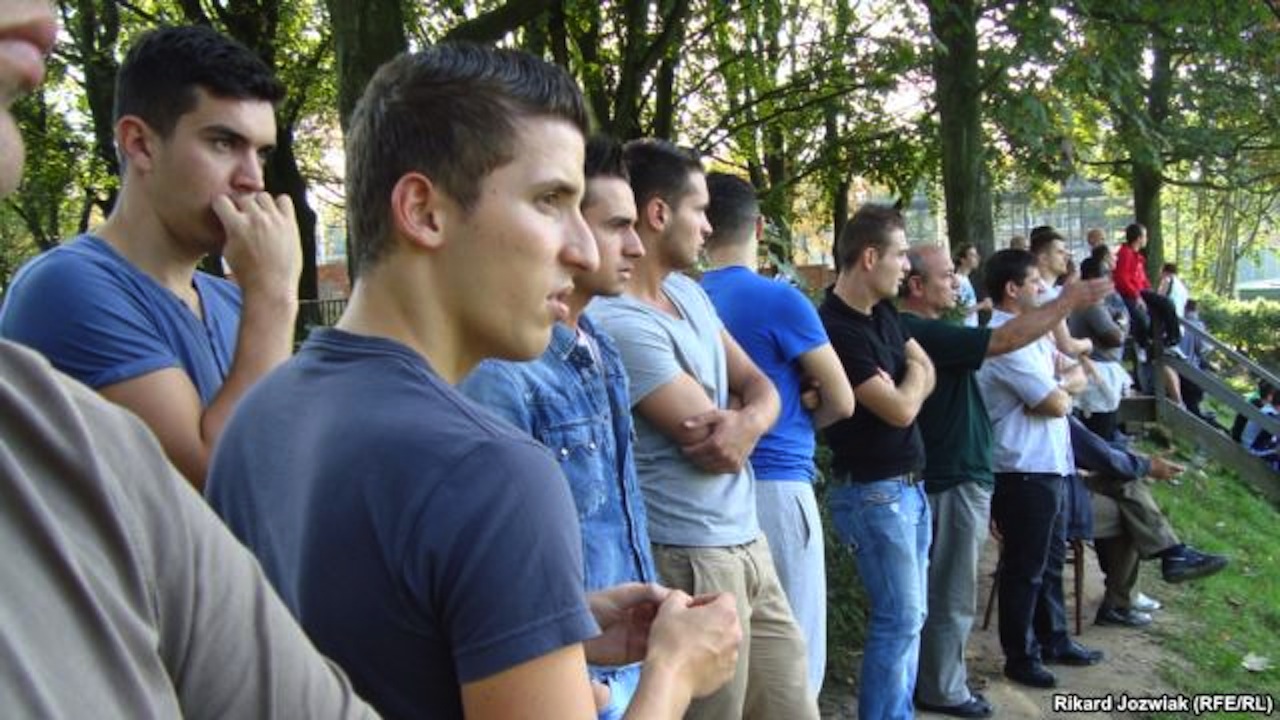
Yeah P., except for a few real old die-hards, that stuff is pretty much over, and most people, young and old, have very maturely and intelligently, gone on with their lives and accepted things as are.  The most striking example of that is that there are youth associations from each of the Greek villages in the region, with members in Jiannena or Athens or all over the rest of Greece or Albania or the States or Australia, but the old pan-Voreio-Epirotiko associations like MABH, with their irredentist discourses have pretty much dissolved.  The hate is gone too, which was the most heartening thing to feel: the on-going, still often fatal feud with the neighboring Albanian Muslim village of Lezarates is mostly personal at this point and not an issue of religion or ethnicity.  I know more infantile little fascistakia in Athens, with no relation whatsoever to our villages, who are more preoccupied with those old causes — and feel like they have a right to shoot their mouths off about them as well — than anybody in Derviçani is today and who probably are greatly disheartened by our indifference to our “national issues.”  You’ve never wanted to lose it on someone so bad as I do when your family has been through what mine has (see: Easter Eggs…”) and then have some snot-nosed Kollegiopaido  think he can lecture you on how you don’t live up to them and lack their “national feelings” and other such bull-shit.

The young people of my village, particularly, are a marvel, a youth that any society would — or should — pray to have.  They are fanatically in love with their village; they return every chance they get — dozens come from Jiannena on just a regular weekend.  They’ve organized a new panegyri (village festival on the village saint’s day) on August 15th, when the village’s population is the highest.  This has happened all over Greece; since most people go on vacation in August, depopulated villages that only fill up with returnees at that time often organize a second “unofficial” panegyri in August, along with the traditional one which could be at any time of year, to take advantage of the greater presence of chorianoiDerviçani, however, has never really had this problem, because this is a village with such a gigantic ego that no mere saint would serve; its traditional panegyri was Easter itself! culminating on Easter Friday — της Ζωοδόχου Πηγής — and always packed, then and now…   But, what can I say, it’s a party town.  The youth association pays for this summer festival out of its own pocket; they’ve put a stop to the stupid drunken brawling that used to go on, even though they themselves can pack it away for sure.  They do tons of volunteer work for the village: roads, squares, little beautification projects, football fields and basketball courts.  Natally bilingual, interacting with the “other” and crossing borders both figurative and literal all their lives, they have that innate cosmopolitanism and perceptiveness of the wider world that can’t be learned in any school and that no Northern Suburb çoğlani could buy himself with all the millions in the world or a thousand trips to Europe or New York.  They’re strong, attractive, smart, open, friendly, generous and whether they’re busting their backs at the hardest manual work in Greece or other parts of Albania, or acing it at universities in Greece or in Europe, they’ve built active, productive lives for themselves out of nothing.  I’m not ashamed to say they put me to shame in almost every way.

The most satisfying feeling and identification I shared with them though was the sense that they knew who they were: Derviçiotes, Dropolites, Epirotes, and Greeks  — and that they have absolutely no need for the Neo-Greek nation-state as a reference point to bolster those identities.  Greece never did anything for them anyway except make their lives difficult when they got there in the nineties or provide leftist intellectuals to tell them that life in communist Albania wasn’t that bad or little Athenian pricks to mock them as “Albanians.”  (As opposed to the Church of Greece, however, which I’ve always found to be an abominably reactionary institution, but has really helped a lot of Greek kids from our parts find their way in life and adjust: learn trades, increase their Greek literacy skills, get them into universities, etc. — recognition should be granted when it’s due.)  They get tired of explaining to Neo-Greeks that they’re not Albanian, but ultimately they don’t give too much of a shit: one, because they don’t think being Albanian is an insult and, two, they know they’re Greek — in fact, they know they’re Greeker.  Their generational cohort in Greece would not want to hear their opinion of most of them.

They love their Church, they love their music and they love their dancing.  Here are two videos of the early twenty-somethings, “Manastiri 1” and “Manastiri 2” (age groups and families take their turns) dancing up at the Monastery over the village on Easter Monday. My camera work on my brand-new little pocket Cannon is atrocious, but their spirit will come through.  I was astonished by how down-packed and completely internalized they had the traditional gestures and body language of the regional dance tradition — though I think dancing with open beer bottles is a new innovation and by the second video you can see they’re getting kind of sloppy.  There’s this one kid, FotoDretso, with the cartoon cowboy t-shirt, at the head of the line in the first video with the beautiful statuesque girl in the white sweater that no one can identify (“maybe she’s from another village…” the phantom beauty who showed up at our panegyri…), who is the son of GianneDretso, a village character out of Djilas’ Land Without Justice  with a fearsome reputation for leaping across borders and mountain tops like some cougar — a good rep to have around there.  Foto is also shown turning his spitted lamb in the Easter in Derviçani” post.  He seems to be something of a village youth leader, but the reason I couldn’t get enough video of him that day is, not just that he has my father’s name, but he dances exactly like my father did.  At times it was chilling.  Watch in that first video at around 1:35 when he takes lead of the dance.

IMG_0093FotoDretso, buddy and animal at the Monastery, Easter Monday 2014 (click)

In one of Misha Glenny’s books on Kosovo, Glenny asks a female Albanian politician in Tetovo, the unoffical capital of Macedonia’s some twenty to twenty-five percent Albanian minority: “Do you still dream of a Greater Albania? Where all Albanians can live in one state?”  And he got nearly the identical answer from her that I got from an Albanian guy I was talking to in the restaurant of our hotel in Tetovo: “Well…of course.  I guess we all do.  But those years are over.  The point now is not changing borders.  The point is making the borders not count.”

This is what most of my chorianoi — my “landsmen,” for New Yorkers, the rest of you can use your context clues, as we used to say in ESL — young and old seem to feel these days.  They live productive, happy as possible lives, where the border is practically a technicality and only promises to become more so as the years go on and the general integration of the region continues — a process that I see being halted only by those ideologues who get hard-ons at the thoughts of borders and nation-states and playing with little tin soldiers and tanks to defend them with.  But they’re a dying breed, unlikely to ever again reach a critical mass with which they could make a difference, whether they know or like it or not.  And the sooner the better.  So we can all get on with our lives.

Below are the kids dancing from my crappy footage.  But I have FINALLY found THE documentary video that captures the ethos of the whole music and dance tradition of Epiros as perfectly and deeply as possible but I’m thinking of the right way to set it up for readers.  In the meantime, enjoy.

This third video, ΔΕΡΒΙΤΣΑΝΗ 2013 ΧΟΡΟΣ Ι.ΜΠΑΡΟΥΤΑ,” is taken at the August dance, all generations participating.  The woman dancing at the head, Agathe Baruta — what relation to my Barutaioi I don’t know — is a stunning dancer (and a beautiful woman), and displays the precise, stylized seriousness that’s considered both beautiful dancing and proper elegant comportment for a woman.  (The kerchief is a remnant from a time when a man and a woman never touched publicly, even if related; the tall, handsome man she’s dancing with is her husband and is a member of the Greek Presidential Guard.  But some things are traditional formalities while the realities, obviously, change; one song from the new repertoire says: “Join the dance later and hand me a note with your cell number on it.”)  You’ll get a better sense of the communal joy this simple to-and-fro incites in people from this video because it’s more ordered than the kids’ dances above.  What you see here goes on, literally, for hours, till it induces an almost trance-like state; it starts at around eight in the evening and goes till dawn — for three nights in a row.  Unfortunately, I wasn’t able to capture in my videos above — nor is there a point here — a moment where the musicians slow down the tempo and the dancers get even more excited.  (At the end you get a fast number that really reminds you of how Balkan and Klezmer traditions are often connected.)  If you can, give it some time, because it needs time to build, time that we all have so little of; this whole tradition is the antithesis of the quick high and fake fun that characterizes our civilization: “Play it sweetly boys, sweet and slow, to heal the sickness I have in my heart”:

IMG_0182Meanwhile, back at Easter, some of the adolescents, watching the dance respectfully till it’s their turn.  (click)

IMG_0185The older guys, below, on dance break (click).

IMG_0196

IMG_0198

Some nephews of mine being bozos; every time I lifted the camera at them they would put their hunk of meat down and pose, so I asked them to be natural and this is what I got. (click)

IMG_0112

Comment: nikobakos@gmail.com

Macedonia: Sveti Jovan Bigorski

4 May


Бигорский_монастырь

(click)

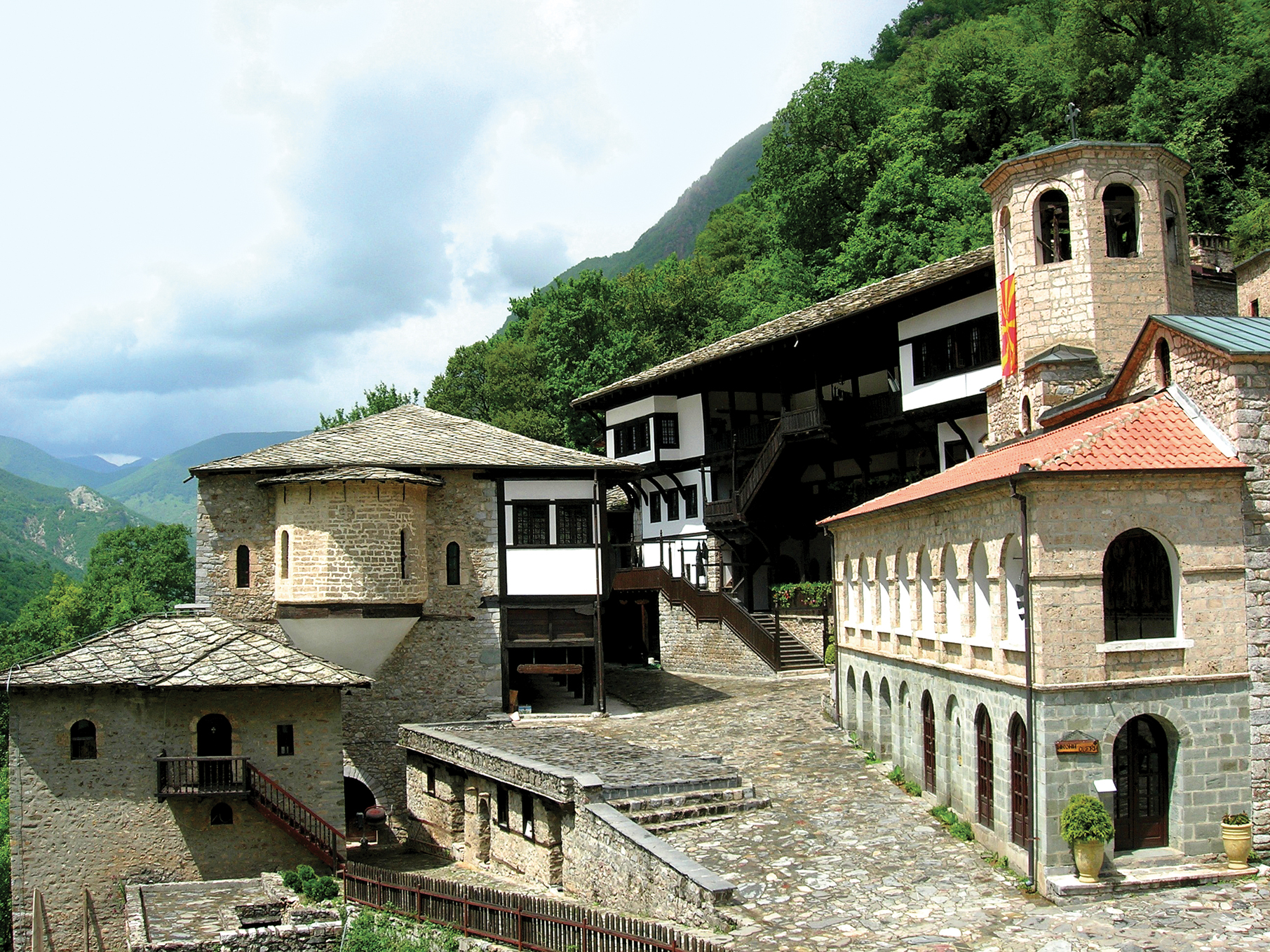
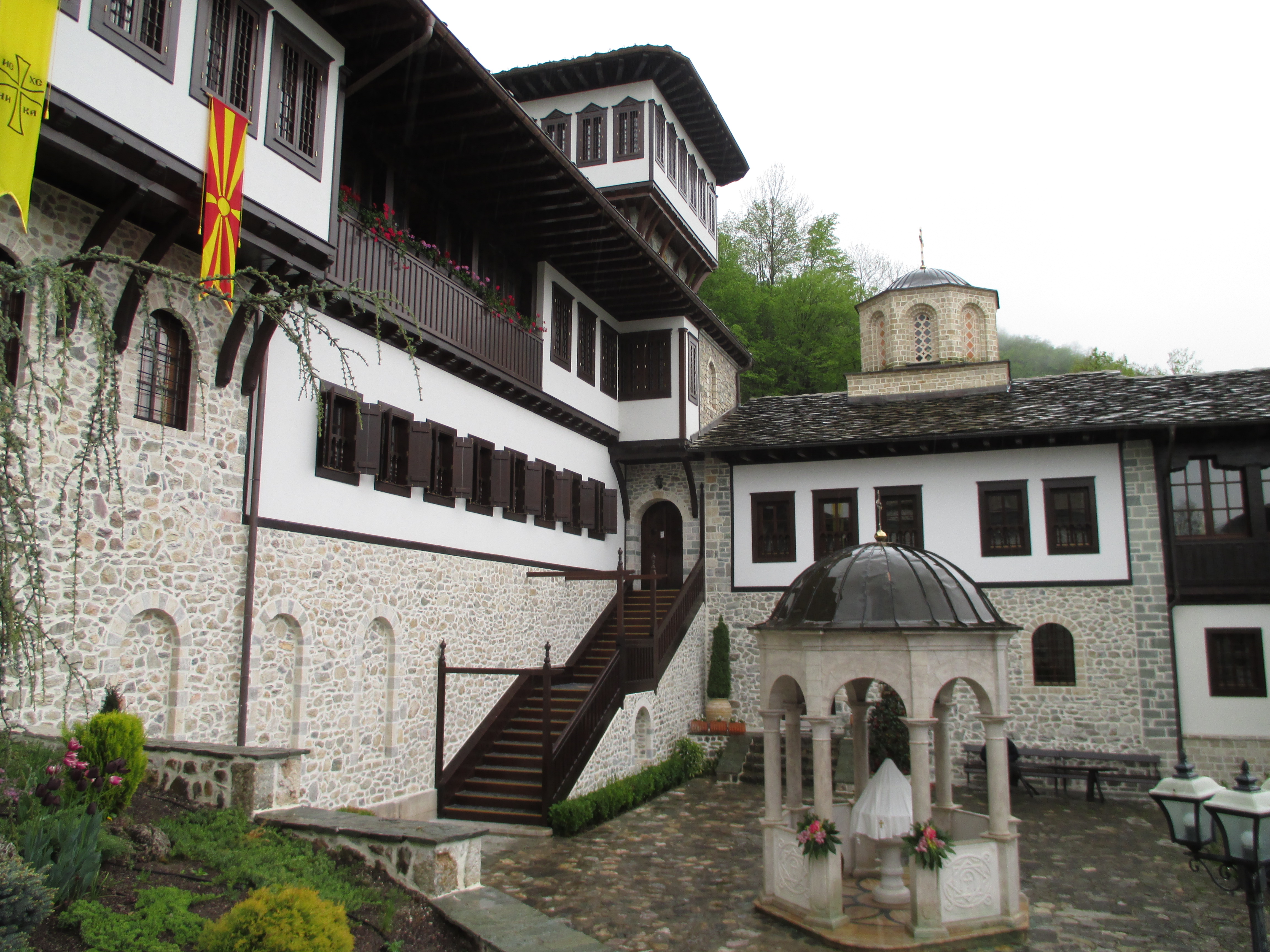
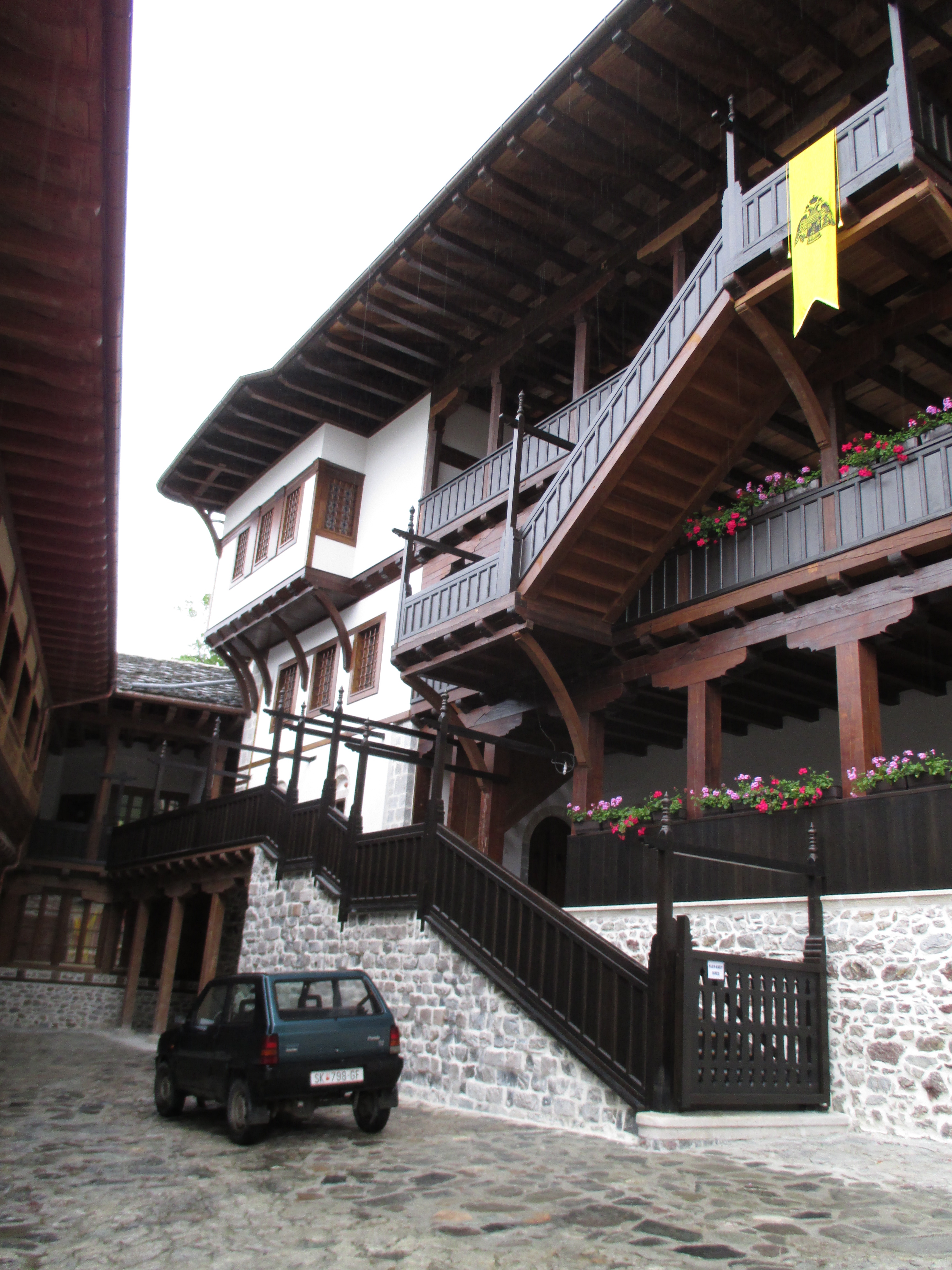
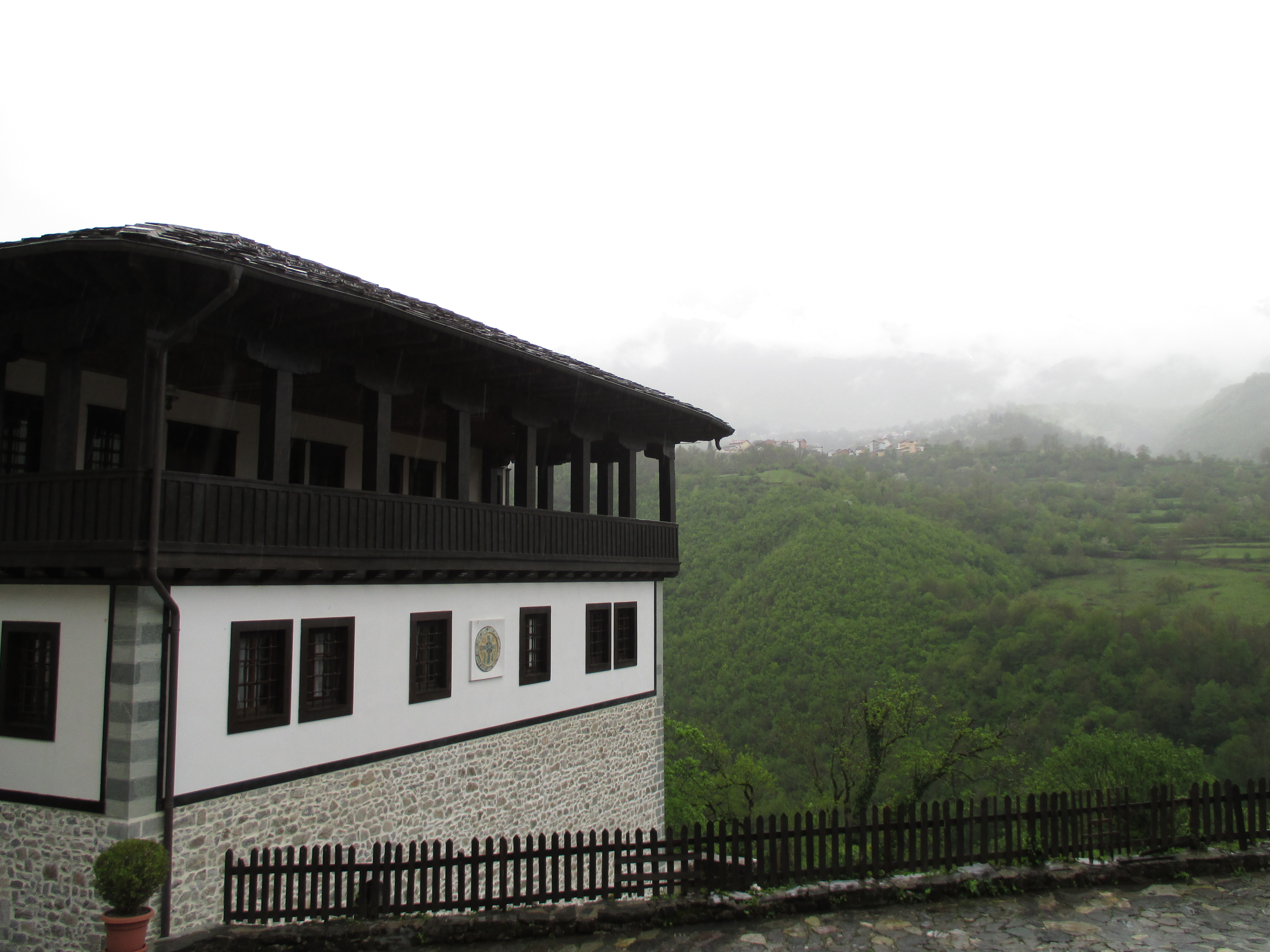
The Monastery of Sveti Jovan Bigorski, high up in a pass in the Šar Mountains that separate western Macedonia from Albania, was on our road from Ochrid to Tetovo in the northern plains of Macedonia.  This is really the way to drive through the country if you want mountain scenery as gorgeous as any in the Balkans, as opposed to down the central Vardar valley.  The monastery is dedicated to St. John the Baptist and though the Macedonian Orthodox Church is led by the Archbishop of the church-glutted lakeside town of Ochrid and has its seat in Skopje, this monastery is so important that it’s sort of the heart of Orthodox Macedonia.  Unfortunately, we arrived just as vespers were starting, so we couldn’t talk to anybody about the monastery, and our schedule didn’t allow us to stay through vespers, which is also unfortunate because the interior of the main church is stunning as well.  No pictures allowed though.

If looking at the pictures below, it appears that the monastery complex is in super good condition, that’s because it is.  Most of the complex, except for the church itself, burnt down in 2009 and has since been rebuilt (like the administrative buildings of the Patriarchate in Istanbul, which burnt down in the 40s and for which permission to rebuild was only granted by the Turkish Republic in the 1990s).  This is a kind of Ottoman tradition: build in wood, suffer repeated fires like the kind that wiped out whole districts of Istanbul throughout its history and killed tens of thousands.  Then rebuild in wood again.  It’s not known who said that the definition of neurosis is repeating the same action over and over and expecting a different result, but it also might be the definition of stupidity.  Only after a fire destroyed two thirds of Pera in 1870 in just six hours did people in those predominantly Christian and Jewish areas start building in masonry, which is why those neighborhoods are architecturally far older today than those of the now ugly two-thousand-year-old city on the original peninsula, where there is almost no old domestic architecture left (except, again, in former minority neighborhoods, for some reason, like Fanari or Balata or Samatya).  The fires also did create the famous Istanbul tradition of the tulumbacı (the “tube” or “hose” men? like the name of the dessert?) volunteer firefighters who were supposedly the great pallikaria of their mahallades, but just as often engaged in looting and robbing while doing their heroic duty.  NONE of this is a swipe at the Ottomans, Turks or Muslims.  Apparently the late Byzantines built domestic structures in wood as well — as did and do the Japanese, a culture I’d have no reason to mock.

And speaking of the Japanese…  The thought occurred to me at Sveti Jovan that just rebuilding things when they get too shabby or structurally rotted and dangerous is not such a bad thing.  The Japanese, for example, have a completely different concept of authenticity than we do.  If the Katsura, the Imperial Villa complex in Kyoto (below) seems to be in great shape even though it dates from the seventeenth century, it’s because, as with other ancient structures in Japan, the Japanese have no problem with just replacing old or rotting wooden structures with new ones piece by piece as necessary.  So the Katsura is — materially speaking or in our terms — really not that old at all; parts of it might be what we would consider brand new, in fact.

katsura_imperial_palace5katsura_imperial_palaceKatsuraShokin-teiKatsuradsc03371s(click on bottom two)

So what’s wrong with rebuilding the monastery structures of a complex like Sveti Jovan?  The stone is usually immune.  And if the rest is just wood and çatma and plaster anyway, why not replace it when it starts to go?

Back to Macedonia…  Sveti Jovan is the most impressive Orthodox monastery I’ve been in outside of Athos.  Nothing in Greece, Kosovo, or even Russia compares.  In fact, I would say that if any Orthodox — or any — woman wants to get an impression of what the great, sprawling monastic palace-fortresses of the Holy Mountain are like, then a visit to Sveti Jovan is mandatory.  Here are some pics; the last two of the church’s famous iconostasis were lifted from on-line.  (Click on all.)

IMG_0230IMG_0229IMG_0232IMG_0234IMG_0228Monastery_Sveti_Jovan_Bigorski,_Macedonia_(10)Monastery_Sveti_Jovan_Bigorski,_Macedonia_(9)

Comment: nikobakos@gmail.com


The Djok’s in Greece

25 Apr

That said….meaning, I wasn’t gonna write for a while: news too cool to not report.  Djoković is in Greece, fiancée Jelena Ristić is pregnant, and though he lost his Monte Carlo Crown, he made it to semi-finals, and at least it was to Federer and not to the Catalan or anybody.  All in all, not a bad Easter week for Nole.

NoleGreece

(click)

Comment: nikobakos@gmail.com

Toulouse: “Who ever lov’d who lov’d not at first sight?”

20 Jan

Toulouse Old_brick_wall

“Who ever lov’d who lov’d not at first sight?”  Those who know that line know it’s Shakespeare from “As You Like It” – but actually it’s Shakespeare quoting Marlowe, a little homage to his more accomplished contemporary; interesting, particularly, because in my opinion Marlowe was a keener analyst of desire than Shakespeare, though I have only instinct and no textual support to back that up.  The important thing is that it’s true.  There’s now even science to support it; in “Narcissism Guides Mate Selection,” published in Evolutionary Psychology 2 (2004) Liliana Alvarez and Klaus Jaffe (?) write:

“Research has shown two bases for love at first sight. The first is that the attractiveness of a person can be very quickly determined, with the average time in one study being 0.13 seconds. The second is that the first few minutes of a relationship have shown to be predictive of the relationship’s future success, more so than what two people have in common or whether they like each other.”

And so it was with me and Toulouse.  My first morning here I walked out onto the street at dawn, as the sun started coating the walls of the slightly pinkish brick that the whole city is built with and that was it.  I think it actually took 0.9 seconds in my case.  But I was finished.  It was all over.  I was lost, tumbling into that so familiar abyss.  I had never fallen for a city so hard and so fast in my entire life.

Why?  Well, “you can’t really say why you love somebody,” Stella says in Streetcar… but you try anyway, only because the temptations of let-me-count-the-ways and the attempt to grasp the ungraspable are so powerful.

To start with the most banal and obvious, it’s beautiful.  Not a stunner, a Paris or a Florence or a Venice, but even more loveable because it’s not so perfect.  Who wants every city to be Paris anyway?  The medieval quarters are amazingly well-preserved and in the nineteenth-century neighborhoods it’s interesting to see the classic Haussmanian idiom of French cities translated into the local brick.  But that’s not really it.

There’s the immediacy and availability of pleasure in all forms, somehow even slightly more than in the rest of France.  Here, I’m reminded of Istanbul actually, because I think Turks might also have that same keen sense of “the brevity of time and the immediacy of pleasure” as the French do and even in Istanbul’s current hali, you feel, like in France, that you’re in the presence of a very ancient tradition of the production and consumption of luxury.  New York tempts you at every turn as well, except New York makes you struggle so much to reach the promised gratification that it in the end it feels as if you’ve had it pulled through your nose, as the Greek expression has it. 

The food: though these things are eaten all over the country, this is the home turf of foie gras and pork belly and duck confit and restaurants that proudly assure their customers that their french fries are made in goose fat, the way McDonald’s promises you there are no trans-fats in anything.  The wines are thick and rough and tannic and delicious; the only place where there’s no need to worry about ordering: whatever house red comes by the carafe is always perfect.  The streets are filled with always-full bars and cafes and the disconcerting sound of talking, of discussion, I mean of people really conversing.  Then it’s a university town, so it’s full of beautiful young people trying to fix all of their above oral fixations: talking and drinking and smoking and making out in public all over the place just like they should be.  And it’s not just the young; that magical ability the French have to make it seem like they have more available leisure time than people in any other industrialized country is even more visible here than in Paris, to the point where even someone as anti-work as me sometimes wants to ask: “Does anybody here work?”  And it’s not Italy, where everything is so homebound — all so tied to mamma’s apron strings — that most life happens domestically and out of view.  Here, more like Spain, it’s out on the street, even in January; it’s public, like in the natural polis.  It makes all the difference.  You can feel people needing interaction hungrily, like Greece in better days, craving the stimulation of others.

(This is a characteristic of the French everywhere — this love, this need for language and the exchange of ideas, sometimes what seems like nothing but a deep gratifying pleasure taken in the sheer enunciating.  It’s why — if you don’t speak any French at all and have no clue what people are talking about — every conversation you hear seems to have this tone of desperate urgency about it.  That the French are rude or cold or unfriendly is patent bull-shit; they are absolutely none of those things — quite the opposite; but if interaction or closeness is sometimes a little difficult to achieve if your French isn’t at least very good, it’s the importance of language again that explains it.  Sorry — I think they feel — but life is too short and there’s too much to talk about for me to help you with your halting French right now.)

And then there’s St. Sernin, the spectacular Romanesque basilica named after the patron saint of the city, which has become a major obsession of mine and in which I’m finding myself unable to keep from spending at least an hour every day.  This may not be the most beautiful church in Europe but it’s certainly the most beautiful Romanesque church in Europe, and for me, therefore, the most beautiful, since I have what’s almost – no, what’s clearly — a powerful erotic attraction to the style.  Knowing the renovation history of European ecclesiastic architecture, its interior is almost suspiciously austere, so I’m pretty sure it was re-Romanesqued or de-Baroqued, or however you want to see it, at some point.  This happened a lot in the nineteenth century, when Romanticism made the mediaeval more attractive to people than anything that had to do with the seventeenth or eighteenth centuries: it generally involved stripping later decorative accretions from older churches and restoring their “purity.”  Especially in southern Italy one finds this having been done fairly often, with mixed results: some before and after images I’ve seen of Sicily’s Byzantine churches seem successful; with the famous convent church of song and legend, Santa Chiara in Naples, they didn’t have a choice, since the Baroque church had been bombed by the Allies into a burnt shell and they rebuilt according to the original Gothic plan; others, like the practically made-up design of that silly Moorish cathedral in Amalfi, are clearly failures.  But whatever distractions they removed from St. Sernin I’m all for: nothing should impede the soaring, muscled athleticism of this structure and the space it embraces so powerfully.  It has to be seen — and felt, like flesh — to be believed.

St. Sernin is god-like; the building itself overwhelming the idea of whatever deity is supposed to be honored there.  The city’s other churches are more human and all quirky in the extreme.  There’s the Jacobins, named after some father monastery dedicated to St. Jacques and not those Jacobins; but still kind of jarring — like Our Lady of the Bolsheviks or something.  Only in France.  This church is described as having two naves, but only has one nave really, with a towering row of palm-like columns running right down the dead center (?) like the rope at a Hasidic wedding, so that the view of the apse and altar are obstructed from almost everywhere, so much so that mass is said at an altar set up against one of the side walls because if you’re further than even ten feet from the real altar you can only see it by peeking from around these, granted, beautiful columns.  Then there’s the city’s cathedral church, St. Etienne.  This was begun as an unusually low-arced and unusually wide Romanesque church, but that idea was apparently scrapped as not grand enough, so they continued the rest of the church in a higher Gothic style.  The thing is it wasn’t continued on the same axis.  So you enter the older Romanesque part, which now almost feels like an exonarthex in an Orthodox church, then the building’s axis makes a left turn, for about 50 feet, then a sharp right, then continues down the central nave.  Later they pasted a Renaissance — but it being France, still slightly Gothicky — belfry onto the northwest corner of the façade, and at some point a shorter little clock tower in front of that, so that, as disconcerting as the interior is, the exterior looks like it was put together from leftover pieces of different Lego sets.  And yet it works.  Works the way that French girl in the bar can put on an orange sweater and purple scarf and make it work.  And, like her, St. Etienne is quite elegant and well-loved by all, in fact.  And almost every other church in the city is that kind of pastiche; they must’ve been some art historian, early post-modernist’s wet dream back in the eighties.

“History is a personal emotion for you” a good friend once told me, and all these buildings are obvious signs of a weighty, turbulent past.  Is that why I fall in love? Because someone has a complicated past?  What we used to call “baggage”?  You don’t have to be too long immersed in Toulouse’s diffuse and slightly transgressive air of sexiness (a national poll apparently voted the local accent the hottest in France), or venture too far out into the surrounding countryside, which even in the dead of winter looks so lush and cultivatable that you half expect figs and quinces or roasted partridges from somewhere to fall into your lap, to believe that what we recognize as Europe’s first love poetry and, in fact, the West’s entire concept of Romantic love, as perverse and ridiculous as it seems to the rest of the world (and is: “Wait, you mean you’re supposed to not get what you want?”  Yep. “And just pine and suffer forever?” Uh huh…)  all come from this little corner of southwestern France.*  In fact, so much of what’s considered quintessentially mediaeval in the popular mind took some consummate form in this region.  And that includes the fact that so many of the skylofrangoi Crusaders that effed us over in 1204 came from around here.  But that no longer matters, you see.  Because while the Pope’s apology for the sack of Constantinople in 2004 left me cold, Toulouse and love have taught me to forgive.

That brings us to the crusade which brought an end to all that love and poetry.  If they think you know no history, which the French automatically assume about anyone who speaks American English, people here will talk to you about the Albigensian Crusade like it happened last week.  The ostensible purpose of this “crusade” was to eliminate a group of heretics that were probably never such a large percentage of the population of southern France; I think a popular Dan-Brown-type interest in “alternative” Christianities has perhaps exaggerated the importance of the Cathars, who were actually weirder than any mediaeval Mormons one could imagine.  But it was the perfect excuse, with the blessing if not egging on of the Always and Eternally Holy See, for the kingdom of France and its northern dependents, to go on a conquering rampage throughout the independent duchies and counties of the south, decimating and depopulating whole swaths of the most urbanized, prosperous and sophisticated part of Europe and ending, as well, Europe’s first vernacular literature by destroying the court culture that supported it and reducing its language, Occitan or Provencal, to a despised folk dialect.  This strikes all the chords in my personality that are peculiarly sensitive to the marginalized, the subjected, the memory abandoned, the tradition vanished, the lost, the forgotten — “all those things you know and tell me of, things that are long dead,” as the lyrics of a favorite Greek song testify.

(It’s why I love the Italian South as well.  And it would maybe be why I’d love the American South too, if there weren’t so much else so ugly about it.)

So does that explain it?  I don’t know.  Who did you fall in love with Stella?  Obviously someone completely in love with himself.  That’s a powerful draw, isn’t it?  Self-confidence.  Probably goes for France as a whole.  We think they’re all that because they’re so obviously convinced of it themselves, and that’s fine with me: “Great souls are always loyally submissive,” Carlyle said, “reverent to what is over them: only small mean souls are otherwise.”  But even for France, I have never come across a city or a population so cocksure confident of their specialness than Toulouse and the Toulousains.  Remember, we’re not far from D’Artagnan’s hometown here, and actually, if there’s any truth in the exaggerated cliché that Toulouse is a little bit of Spain in France (when it’s really Barcelona that delusionally thinks it’s a little bit of France in Spain), it’s that people’s comportment here has a definite element of swaggering, almost Spanish majeza** to it; and add that to the already elaborate culture of French flirtiness and you get a heady mix for sure.  And it’s the only city in France where rugby is more wildly popular than soccer and that tells you something too.  St. Sernin, come to think of it, is built like a rugby player.

So is that it?  I dunno.  A mix of all that?  Self-confidence bordering on the sweetest kind of arrogance?  Sophistication with a definite rough edge?  A behind the scenes complexity you don’t see all of, not at first at least, if ever?  Something quirky and slightly off: “There is no excellent beauty that hath not some strangeness in the proportion” as another Brit said?  I don’t know.  And probably don’t really care.  I just know how it feels.  And for those of you who have made it this far, sorry, I have no images of the Beloved to share — just the bricks.  He’s all mine.

For G., Toulouse, January 2014

Comment: nikobakos@gmail.com

**********************************************************************************************************************************************************************************************

* The most powerful, searing contemporary treatment of Romantic or Courtly love in all its cancerous beauty is Kaija Saariaho’s 2002 opera, L’amour de loin (Love from Afar) with a libretto by Lebanese writer Amin Maalouf.  It’s based on the real, historical figure of Jaufre Rudel, a 12th century Aquitanian prince and poet who fell in love with a Toulousainne princess married to the Count of the Crusader state of Tripoli in Syria (makes Maalouf’s collaboration even more interesting) without having ever seen her.  The music and poetry are beautiful and the opera’s psychological insights are razor-sharp — disturbingly so.  The end leaves you in pieces on the floor — me at least.  You’ll never come closer to the soul of Majnun in the desert than this.

It’s a shame only one aria is in Occitan; it would’ve been a real coup and homage if the whole libretto were.  Get the DVD; Dawn Upshaw has to be seen and not just heard.

**Majeza,n., or majo, adj.: you can read the whole post where the meaning of this word appears previously: “Un Verano en Nueva York”, but if not, here’s the quote from it:

Majeza is a very Spanish term that encompasses such a complex of qualities that it’s difficult to explain, especially in English, which is tragically lacking in a comparable term, as its speakers (aside from the Irish) are in most of its qualities.  It means openness and frankness and humour and swagger; it means being hospitable without being in anyway servile; it means being able to put away copious amounts of wine and pig meat; being friendly and spirited and generous while always maintaining a kind of stylish dignity and flair; it partakes of some of the qualities of Greek and Turkish leventeia in that sense; in fact, it’s a word with a certain undoubtable Balkanness about it.  Soon after the term appeared in, I think, the late eighteenth-century, working-class barrios of Madrid, it almost immediately became associated during the Napoleonic Wars with the city’s street kids, who terrified the French with their suicidal bravery, so it probably originally implied a quickness to pull a knife too and no squeamishness about seeing a little bit of your own blood shed as well.  That doesn’t apply anymore, though the ferocity into which demonstrations in Madrid have descended these days makes you think twice about that; I’m proud of the angry tenacity of the Spanish protests; don’t know what they’ll accomplish but it’s good to know Spaniards can still be scary; that anger has become such a stigmatized, pathologized emotion in our civilization (“You know…I think you have a lot of anger…”) is partly what’s let banks and governments get away with what they have over the past few decades and generally has brought us to the civilizational crisis we find ourselves in.  No, it’s not the other way around.  In any event, courage is still certainly an implied element of being majo.  There’s a great, chapter-long analysis of majeza in Timothy Mitchell’s Blood Sport: A Social History of Spanish Bullfighting, if you’re interested and can get your hands on it.”

Bulgaria’s own “Golden Dawn” gathers momentum

16 Dec

From Saturday’s Times: Far Right in Eastern Europe Makes Gains as Syrians Arrive”

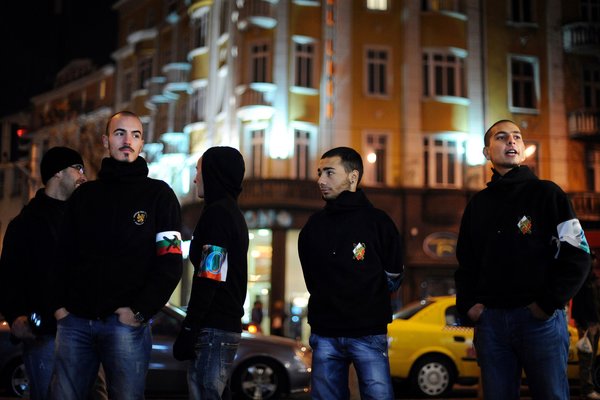
“SVILENGRAD, Bulgaria — After spreading turmoil and desperate refugees across the Middle East, Syria’s brutal civil war has now leaked misery into Europe’s eastern fringe — and put a spring in the step of Angel Bozhinov, a nationalist activist in this Bulgarian border town next to Turkey.

“The local leader of Ataka, a pugnacious, far-right party, Mr. Bozhinov lost his seat in the town council at the last municipal elections in 2011 but now sees his fortunes rising thanks to public alarm over an influx of Syrian refugees across the nearby frontier.

“Membership of the local branch of Ataka, he said, had surged in recent weeks as “people come up to me in the street and tell me that our party was right.” Ataka, which means attack, champions “Bulgaria for Bulgarians” and has denounced Syrian refugees as terrorists whom Bulgaria, the European Union’s poorest nation, must expel. An Ataka member of Parliament has reviled them as “terrible, despicable primates.”

The ability of these groups to focus in on the most wretched-of-the-earth group of the moment is astounding.

BULGARIA-articleLargeNikolay Doychinov/Agence France-Presse — Getty Images

Members of Bulgarian nationalist groups patrolled Sofia, Bulgaria’s capital, last month, an example of “civil patrols” by nationalists in immigrant regions.

And perhaps the article also potentially exaggerates the extent to which the Greek government has cracked down on Golden Dawn:

“The party was more comparable to the neo-fascist Golden Dawn movement in Greece, he said, but conceded, “Ataka’s strategy works.” Yet while Greece’s government has cracked down on Golden Dawn, in Bulgaria, Ataka is in effect a government ally.”

Several Golden Dawn MPs in Greece had their immunity withdrawn due to violent crimes committed, but though not Ataka may be “a government ally” in Bulgaria, Golden Dawn is still a sitting part of Greece’s parliament, the party has certainly been proven to be an ally of the Greek police (even to the extent of sharing training camps with them) and no one has cracked down on that connection or those on the police side involved in it at all.

comment: nikobakos@gmail.com

“Screamers:” Genocide: what is it and why do we need the term?

7 Nov

Screamers

I watched “Screamers”* the other night, a 2006 documentary by Carla Garapedian about an Armenian-American synthpunk group based in California, who go around, among other things, “screaming” about the Armenian massacres of the early twentieth century and issues of genocide recognition generally.  They’re shown on tour, comparing Armenian experiences to those of Rwandans, Cambodians — Jews conspicuously less so — soliciting the support of U.S. congressmen, interviewing British aristocrats, Harvard professors and their own great-aunts and grandfathers telling their own story of the events they describe as the Armenian Genocide, all in an effort of course to get the Turkish government to acknowledge the “Genocide” as such.  And it left me with the usual thoughts I have on this issue: that this word – “genocide” – which is supposed to name an evil particular to our time and by naming it hopefully eradicate it, has come to be so overused as to be meaningless, was vague from its beginnings and has come to obscure more than it reveals about the phenomenon, if there is such.

Raphael Lemkin, the Polish Jewish Holocaust survivor who originated the term, described it as such:

By ‘genocide’ we mean the destruction of an ethnic group . . . . Generally speaking, genocide does not necessarily mean the immediate destruction of a nation, except when accomplished by mass killings of all members of a nation. It is intended rather to signify a coordinated plan of different actions aiming at the destruction of essential foundations of the life of national groups, with the aim of annihilating the groups themselves. The objectives of such a plan would be disintegration of the political and social institutions, of culture, language, national feelings, religion, and the economic existence of national groups, and the destruction of the personal security, liberty, health, dignity, and even the lives of the individuals belonging to such groups . . ..

T. Marcus Funk in Victims’ Rights and Advocacy at the International Criminal Court says genocide is “the deliberate and systematic destruction, in whole or in part of an ethnic, racial, caste or religious, or national group.” 

“…in whole or in part…” is controversially vague enough.  Then, how “deliberate and systematic” does it have to be to qualify?  And if its victims are members of any “ethnic, racial, caste, or religious, or national group,” is that not so all-encompassing as to include most of humanity?  What sets genocide apart then from any mass killing?  That it’s done to a socially or ethnically identifiable group?  Mass killing – apart from shootings in American shopping malls or movie theaters – is usually committed on such a group.  And by emphasizing that a “group,” usually an ethnic or minority group, is the object, it creates the unspoken assumption of irrationality, though most of the events we call genocides have and had a very rational end and, to be effective, must have used fairly rational means.  And thus I wonder if the word mystifies and, more importantly, decontextualizes to a point that ultimately may do more harm than good.

Obviously, our region gives us a variety of useful examples to look at.  Now, I often get emails here — most simply rants that I don’t bother publishing — in which I’m told that I am defeating the stated purpose of this blog by favoring one group over another or being so obviously preferential in some of my affections or animosities.  I’m told that I’m panderingly philosemitic; I don’t know about the “pandering” part, but otherwise, yes.  I’m accused of being both pro-Israeli and anti-Israeli, and anti-Palestinian and possessed of a blind good faith in Palestinian intentions and an enabler of their “tactics,” whatever that means; I guess if I can be all those things at once I may be doing something right.  I’m accused of being anti-Croatian: let’s leave that one to the side for a moment.  But mostly I’m accused of two things: that I’m pro-Turkish — this usually by angry Greeks — and that I’m a shameless apologist for Serbian criminality.

And here there is some truth: the two peoples may not much appreciate being linked in my heart, but one of the many reasons that I may have a special affection for Turks, or at least find myself defending them so often, is also one of the many reasons I have a special affection for Serbs: I think the two have historically been the most unfairly maligned groups in the region.  And that brings us back to the larger genocide discussion obviously.

It has always irritated me that critics of Serbia, both in the nineties and to this day, dutifully rehearse the main highlights of the “Serbian myth”: traumatic defeat at Kosovo; continued resistance to the Ottomans; among first to struggle for independence in the Balkans; a sincere if often faulty and undemocratic attempt to actually go through with the noble experiment of South Slav unity, only to have those attempts undermined from the get-go by a Croatia that was always a member of that union in bad faith; always supporters of Western causes only to be stabbed in the back after; further traumatic WWII memories – and then just blow them off as if none are legitimate, that they’re just the “mythical” or fictional building blocks of a national pathology that explains Serbs’ vicious behavior during the breakdown of Yugoslavia.

Nobody is denying the unscrupulous manipulation of the Serbian group ‘psyche,’ starting in the late eighties, by some of the most criminally opportunistic, thuggish politicians to emerge out of post-Cold War Europe.  Nobody denies the horrible war crimes of Serbs and Serbian paramilitaries, especially in the great victims of the Yugoslav wars, Bosnia and Kosovo.  But the simple fact is: Serbs had absolutely no reason to feel secure about their future in the states that emerged from the break up of Yugoslavia, especially not in Croatia, the West’s darling.  During WWII, the NDH, the Independent State of Croatia, the Ustaša, had a greater percentage of its population—Serbs, Jews and Gypsies — slated for elimination than any other of the Nazi’s puppet states in Eastern Europe.  The plan for the Serbs specifically was the famous “thirds” plan: kill one third, expel one third, convert the other third to Catholicism (the Ustaša was also fanatically Catholic and its support by the Vatican is one of the Catholic Church’s ugliest twentieth century moral “lapses”).  The numbers are uncertain, as always in these cases, but several hundred thousand Serbs were killed by the Croatian regime and – unfortunately – its Bosnian collaborators during the war.  Ustaša Croatia was the only one of the Nazi puppet states whose tactics even the Germans found excessive, and had to be told by Berlin to “tone it down” a little, because their viciousness was giving undue impetus to a Serbian resistance movement that was becoming increasingly difficult for the Germans to keep under control.  The reasons that post-Yugoslav Serbs might have felt insecure in independent Croatia or even an independent Bosnia are not simple “myths,” pathological obsessions with historical wrongs – especially when Tudjman’s Croatia started making all kinds of fascist noises again as soon as it gained recognition from its German buddies.

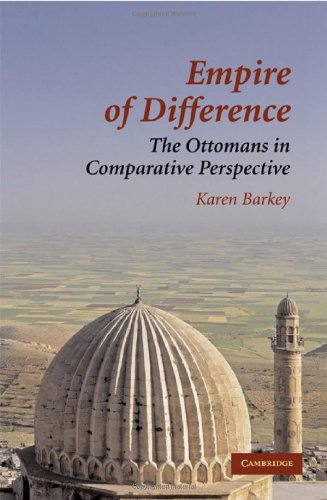
Turkey.  It’s maddening that what happened in early twentieth-century Turkey is never put into the broader historical context of the previous two centuries by groups like the Screamers or others who are bent on forcing Turkey to acknowledge the events as genocide.  You can talk and talk and argue and explain and then you come across a passage somewhere that condenses and puts it all into perspective.  The following is from Karen Barkey’s Empire of Difference: The Ottomans in Comparative Perspective.  Towards the end of a chapter where she’s discussing the deterioration of interethnic relations in the nineteenth-century empire, the penetration of European economic influence and the benefits that that created for Ottoman Christians and from which Muslims were excluded, she writes:

“If major misgivings regarding ethnic and religious difference and disparity were already well-rooted in the empire, competition and communal strife only got worse as Muslim refugees from the Balkans, the Caucasus, and the Crimea were settled in Anatolia.  Between 5 and 7 million refugees, mostly Muslims, were settled by the Ottoman government throughout the nineteenth century, mostly in Anatolia.  Kemal Karpat argues that between 1856 and 1876 at least 500,000 Crimean Tatars and 2.5 million Muslim immigrants from the Caucasus were settled in Anatolia, the Balkans, northern Syria and Iraq.  Not long after, in 1877-1878, the Caucasian population that had been settled in the Balkans was resettled in Anatolia together with a million others, mostly Muslims from the Balkans.  Another 2 million took refuge in Anatolia until 1914.  By the time of World War I, the immigrant [refugee] population of Anatolia represented nearly 40% of the total population. Such immigration, originating in the nationalist movements and independence politics of the Balkans, the Russian Wars, and the Ottoman defeats, brought in another element of Muslim discontent that not only altered the demographic balance of the empire, but also exacerbated social and economic tensions.”  [emphases mine]

Do we understand that?  Charles Simic has written: “Nationalists everywhere are unmoved by the suffering of people they hurt.”  But are the above figures enough to penetrate the armor-plated narcissism of the nationalist or even dent it?  Might some clubbing over the head be in order?  Let’s repeat them and see: in 1914, the year we’re supposed to think that Turks suddenly had a collective psychotic episode and just started massacring millions of people for no reason, 40% — forty percent – of the population of Anatolia, roughly the territory of contemporary Turkey, consisted of Muslims who had escaped from the various parts of the shrinking empire, usually under conditions that could be clearly labeled “genocidal” or definitely characterized as “ethnic cleansing” though for some reason they are not, and often, as Barkey alludes to, after having been brutally displaced twice in one or two generations: like the Bosnians who had settled in Salonica after 1878 and again in 1908, in such numbers that they gave their name to a neighborhood in that city, only to have to move once more to Anatolia in 1913; or the millions of Circassians, driven en masse out of their Black Sea homeland by Russia in the 1860’s and settled in the Balkans only to have to move on to Anatolia after Bulgarian independence.  Forty percent!  That is almost twice the percentage of incoming refugee population that Greece staggered under in the 1920s after the Population Exchange, and in an Empire that had dragged itself into a World War it was woefully unprepared to fight.

And here’s where we get to the question that every ethically honest Greek or Armenian has to ask himself: what did we expect Turks to do at that point?  Give up even what they had left?  Pack it up?  Go back to the Red Apple Tree?**  To expect that at some point Ottoman Muslims/Turks were not going to fight back in order to hold on to something, a state and territory of their own, is delusional in ways that only as totalizing an ideological structure as nationalism can produce.
51kGIPmTZdL

(what was a really fascinating, eye-opening book for me — highly recommended…)

At no point during the long blood-soaked mess of the past two centuries have Serbs or Turks been guilty of anything that everybody else wasn’t also doing.  Thus, one of my primary objections to the use of “genocide” as a term is that it becomes part of a tool in a chronology of preference, a political expedient for stigmatizing the bad guy of the moment.  In the late nineteenth and early twentieth centuries, when European powers were obsessing with how they were going to divide the crumbling Ottoman Empire among them, there were only Muslim perpetrators of massacre in the region, never Christian ones, only the “unspeakable Turk.”  Only a tiny group of more objective observers at the time of Gladstone’s hysterical campaign asked themselves how “speakably” the Bulgarians and their Russian supporters behaved toward the Muslim population of Bulgaria in the 1870s; only Trotsky had the intelligence and conscience to report the truth about the degree and intensity of Russian/Bulgarian atrocities against the Muslim population of those lands in the 1870’s and nearly resigned from his assignment as a reporter of a Kiev newspaper as a result — he could no longer stand to physically be around the sickening violence (See Bulgarian historian Maria Todorova‘s excellent: “War and Memory: Trotsky’s War Correspondence from the Balkan Wars”  for an excellent account of Trotsky’s reporting and, through it, his brilliant and morally courageous mind; how that mind and its obvious compassion became so twistedly cruel when he turned it on his own people and country a few decades later is one of the mysteries of Bolshevik perversity.)

Later in the century, after the Cold War gave Turkey a kind of favored nation status in the Muslim eastern Mediterranean, Turkey could and still essentially can do no wrong, even if it does conduct, like in Cyprus, campaigns of what elsewhere would be called ethnic cleansing or violates the human rights of its minorities and majorities on a systematic basis.

At the beginning of the twentieth century, Serbia was “gallant little Serbia” standing up to the Austrians, beating back two massive assaults by Austria-Hungary, almost crossing the Danube into Austrian territory itself; only when Germany came to its aid was Serbia successfully defeated, and even then while putting up some of the most suicidal and vicious resistance in military history.  Serbia was a staunch supporter of the Allies in both World Wars – essentially the liberators of the Balkans in the First World War especially.  But by the end of the same century, when Serbs refused to play along with the West’s plan for what the New Balkans would look like, they were turned into pathological savages, and locked into a pariah status from which they have still not been allowed to fully emerge.

(To switch regions and periods for a moment, and examine the selective use of terminology, we never speak of the “genocide” of urban Germans or Japanese, do we, though they were a civilian population subjected to barbaric, mass, incendiary murder on a staggering scale and of questionable strategic uses and motivations other than punitive ones.)

But perhaps my most important objection to the word “genocide” should have become obvious from the above: mass murder and expulsion is what happens during nation-state formation and labeling this kind of mass murder and expulsion with some rare-orchid terminology obscures that fact.  As long as the legitimizing principle of the modern state is ethnic/tribal identity there will be groups who by their very cultural and/or religious character cannot uphold that legitimacy and will be oppressed by it.  And the time will come when they will have to be dealt with in some way or other, either through acculturation or removal, especially if their status leads them to separatist desires.  There is no such thing ultimately as genocide.  To observe the former Ottoman sphere, which is as good as any for our purposes, the rules are: form a state by grabbing as much land as you can and keep it by eliminating those who would be opposed to being part of your state.  It’s painful to say, because Bosnians got semi-trapped and stumbled into declaring independence by their two ravenous neighbors and suffered more than any in the Yugoslav conflict: but there was no Bosnian genocide, no attempt to eliminate the cultural/ethnic group that Bosnian Muslims were from the face of the earth.  There was the brutal, systematic, cruel ethnic cleansing of Muslims from parts of Bosnia that Serbia — and, of course, Croatia — wanted to hold on to because those Bosnians wanted to be part of a separate state of their own.  There was no genocide of Anatolian or Pontic Greeks, as many Greeks have lately started referring to the events of the nineteen tens and twenties.  There were decades of chronic, inter-communal violence, a war by an invading state, and the elimination of those that supported that invasion, and mostly not even through violence or by force, but by mandatory fiat agreed upon by the leaders of the countries in question.***  It’s painful to say – they’re a familiar people, one I admire, like, am close to — but as extensive as it was, as systematic and vicious in ways that set a terrible precedent for the rest of the century, it’s hard for me to call what happened to Armenians in the early twentieth century genocide. The CUP — the Young Turks — have always seemed to me to have been a bunch of loose cannons: a nefarious, often eccentric, make-it-up-as-you-go-along group of giant egos who seemed to be talking past each other most of the time and did their best in essentially ending the Ottoman Empire in the messiest way possible; and the Armenians were their single greatest victims.  But the fact remains: a people (Armenians), in a state (the Ottoman Empire) that was being torn in a million different directions, tried to form an ethnically separate state of their own (though they constituted a majority in no single region of the territory in question), and yes, often did so through violence, armed means and with outside military help.  And they were stopped.  That it was horrifying and its dimensions staggering would be obscene to deny.  That it’s some “special” form of violence — qualitatively and not just quantitatively different — and not just an extreme example of what fundamentally happens during nation-state formation is simply unsustainable as a theory for me.  I had an Armenian-American friend, and we obviously didn’t see eye to eye on these issues.  I remember him once being incensed by what he called the “macho” insensitivity of a Turkish guy who had been arguing with him and who had said: “If we hadn’t done it to you, you would have done it to us.”  Well, it’s sad, but that’s probably the truth.

No one in Screamers, not the experts or the humanitarians, not the musicians themselves, link what they want to call ‘genocide’ to the dominant political state formation of our time.  No one sees it as inevitable that if an “ethnic, racial, caste or religious, or national group” serves as the principle legitimizing force of state organization, that then some other “group” will have to be removed.  And the Helsinki Agreement’s contradictory support of both “minority rights” and “the right to self-determination” has, needless to say, been of no help in sorting out issues of this kind; Yugoslavia was the best proof of the amateurish, do-gooder thinking behind such ideas.

In fact one wonders if it was a Jew who invented the term because he and his were really the only one victims of the irrational beast we want to call genocide and are now using rather indiscriminately all over the place.  Because I can think of only one case in history where a people were not engaged in war with another country, nor in armed or any other kind of civil conflict with the surrounding population, who did not have a separatist agenda within the states they lived in or irredentist designs on parts of neighboring states, who did not constitute any kind of threat – at least real threat – to the society around them (were, quite the opposite, in fact, among those societies’ most productive and talented members), and yet became the object of a villainizing myth of incomprehensible irrationality  that marked them for complete extermination anywhere in the world they were to be found — and that is the case of the Jews.  And since we have “Holocaust” or “Shoah” for that singular episode of human horror, do we need  “genocide” at all?

I hope I haven’t insulted — worse — hurt anyone.  I hope this is the beginning of a bigger discussion.

************************************************************************************************************************************************************************************************

* Check out the film’s Wiki site; one slightly unethical thing it does is to link the great Hrant Dink’s assassination in 2007 with the the fact that he appeared in the film the year before.  There’s also some slight misrepresentation in a scene where they show Turkish nationalists trashing a fifty-year commemorative exhibit here in Istanbul of the anti-Greek pogrom of 1955 and call it an “Armenian and Greek exhibit.”

** I have no idea of the origin of this myth, or whether it developed in late Byzantine or Ottoman times, but in Greek folklore the homeland of the Turks is a place in some distant indeterminate East called the Red Apple Tree, He Kokkine Melia, and in traditional messianic thought, when the City and Romania (what the Byzantines called their polity) were brought back under Christian rule, the Turks would go back to “the Red Apple Tree.”  Ironically, Constantinople itself was known to Muslims as the Red Apple, the prize conquest, in the centuries before the fall.  I have no idea if the two myths grew out of each other or are some kind of bizarre mirror images that paradoxically developed in opposition to each other.

*** And let us all here be disabused at once of the idea that the Population Exchange agreed to at Lausanne was something that Venizelos and his government reluctantly agreed to because circumstances had made any other solution impossible.  Lefterake, our Cretan levente, was enamoured of population exchanges and similar plans far before Lausanne or even 1919.  He thought that the section of the Aegean coast that the Allies gave Greece at Paris in 1919 was eventually going to be Hellenized through exactly such a voluntary departure of its majority Muslim population, thus giving a kind of tacit approval to the atrocities committed during those years by the occupying Greek army, and, always the careerist and opportunist, one of his earlier strategies at the Paris Peace Conference had been to promise Bulgaria eastern Macedonia (Kavalla, Drama), and move its Greek population into western Macedonia where they would offset the Slavic majority of those regions, in order to coax the allies into giving him Ionia — he was a twentieth-century nationalist social engineer of the crudest kind from the beginning.  For the definitive placing of responsibility for the disastrous Asia Minor campaign on Venizelos’ shoulders, plus an extremely competent analysis of the destructive consequences of his egotistical, polarizing political style on twentieth-century Greek political life, see Michael Llewellyn Smith’s Ionian Vision: Greece in Asia Minor, 1919-1922 — an excellent account of the entire period and a great place to start if, like me, you have embarked on a minor ideological mission to dismantle the entire Venizelos myth.

Comment: nikobakos@gmail.com
Ionian Vision

What I managed to put away in a day-and-a-half in Paris and some thoughts on the “crise;” or, “…the brevity of time and the immediacy of pleasure.”

1 Nov

…not all in one sitting of course.

A ‘tarte tatin’ au boudin — a take on the traditional tatin upside-down fruit torte, with the boudin (spiced and coagulated pig’s blood) over the flakiest, probably lard-based, crisp puff pastry underneath, and a thin layer of apple and some of the most expertly caramelized onions — almost honeyed, that’s what’s seen dripping almost like syrup under the boudin — in between:

tarte tatin au boudin

(click)

A pig’s foot, braised, then breaded and fried, for the first time served with a bearnaise sauce (essentially tarragon-flavored egg yolks and butter), which was almost a bit too much even for me:

Pied de cochon pané

(click)

And andouillette, large pig intestine (colon) stuffed with small pig intestine and grilled, kind of like a chit’lin-loaf or mageiritsa sausage, usually served with a mustard sauce or mustard of some kind because it needs something to balance the heady fecal aroma (like the dill in mageiritsa) and really bring out its subtlety:

andouilletebalzar

(click)

And now everyone who keeps telling me that people only ate this stuff because they were so poor they had no choice must cease and desist in this absurd and ignorant argument. (See last year’s post: Chitterlings…and mageiritsa: “Then I have to listen to the anthropology tes poutsas about how people only used to eat that stuff because they were poor and they had to eat everything available, like eating intestines were the equivalent of the dirt-eating that tragically occurs in third world countries under famine conditions.”)  No.  They eat this shit ’cause it’s good.  Proof were the happy groups of Parisians all around me — even young, skinny ones — digging into the same stuff I was, who apparently hadn’t gotten the “evolution” memo from Brussels yet that now that they live in one of history’s most prosperous societies they can stop eating pig guts.

And speaking of prosperity…  Everyone I know in Paris talks incessantly of the “crise” but eventually ends up admitting things are ok for the most part, which makes me wonder that the French crisis is not an outsiders’ invention, or just a fruit of the fact that the French like to think about things and talk about them — imagine….  Ever since Adam Gopnik heroically defended French civilization (“the most beautiful daily culture ever created…lemons on trays and windows like doors everywhere you looked…”) in his Paris to the Moon, ever since the eighties Thatcher/Reagan years actually, there has been a constant schadenfreud-ish gloat-fest in what the French love to call the “Anglo-Saxon” world about how France is over: politically irrelevant, its cultural traditions either fading or ossifying, and how its economic model is simply unsustainable.  This “end of France” commentary in the English-speaking press has practically become a genre of its own; Maureen Dowd gave a classic example of this type of screed in the Times this summer, “Goodbye Old World, Bonjour Tristesse” about how depressed the French now are that France has seemingly lost in place in the world (great photo though):

07DOWD-articleLarge

Ferdinando Scianna/Magnum Photos (Paris, 1989)

and then just these past few months, Steven Erlanger produced these two models of the genre “A Proud Nation Ponders How to Halt Its Slow Decline” and “Reflections on a Paris Left Behind”, sad reflections on how… boring and sterile Paris has become, and repeating the tiringly repeated observation on how London has taken its place; London a city I still find to be trying a little too hard to make up for centuries of un-coolness, vis-a-vis Paris mostly.

Yet, they’re doing something right.  The London Review of Books had a fascinating and comprehensive review of the European Union crisis in its August 29th issue by Susan Watkins: “Vanity and Venality” where she comments on France’s seeming disappearance from the European political landscape (which it seems to be trying to make-up for by flexing military muscle elsewhere) but how it seems to be functioning fairly well internally:

“There is something anomalous about the neutralisation of France as an actor on the European stage and the brittle character of German hegemony must stem in part from it. The conventional explanation is that the French economy is too weighed down by its statist legacies for the Elysée’s word to carry much authority, but the figures don’t bear this out. France has now overtaken the UK, after a swifter recovery from the crisis .  [Could that be because it didn’t opt for Nasredin’s Donkey austerity economics as much as Britain did?]  Its public debt, including bank rescues, is lower than Britain’s and its manufacturing sector is in better shape. Unemployment is worse, but average household income is higher, inequality lower and infrastructure and healthcare in another league.”

(Also read the Watkins article for some dismal analyses of a Greek economy that has shrunk by twenty-percent and the scandalous closing of ERT, Greek Radio Television by PM Samaras)

So France and the French, it seems, keep soldiering on, and well and socially securely at that.  And it seems that some Protestant sourpuss will always be incensed that they seem to be doing it so pleasurably on top of it all, adapting to the new state of things and still enjoying themselves.  Let them bitch and judge.  I know the small part of Paris I see when I’m there is only an equally small part of French society, but if for some reason I were banished from New York tomorrow, it’d still be my first choice to seek refuge in.

PalaisRoyal

One of those single, condensing phrases that teach you so much about a thing, in this case me about the French: the writer Michèle Fitoussi hits the nail on the head when she said that her compatriots “have a keen sense of the brevity of time and the immediacy of pleasure.”

Comments: nikobakos@gmail.com

Also see the full post: Chitterlings…and mageiritsa for my general food musings, campaigns, philosophies and tirades