Balkans, Anatolia, Caucasus, Levant and other Middle East, Iran, Afghanistan, South Asia, occasional forays into southern Italy, Spain or eastern Europe, minorities, the nation-state and nationalism — and whatever other quirks or obsessions lurk inside my head.
Check out this cute video from sehr-cute Jewish boy, Nathaniel Drew (kind of goyische-sounding last name? Yeah, I thought so too) who talks to his polyglot grandma about the languages she speaks and how she acquired them.
Money moment at 3:25:
Nate: “We could say you’re a sponge for languages?
Grandma: “Yes” (chuckles)
Nate: “Do you know why you have this ability?”
Grandma: “I love languages. I love learning. I love to know.”
Translation: “I come from a very ancient tradition of Mediterranean and MENA urbanism and cosmopolitanism which was destroyed by the modern ethnic nation-state and its ridiculous ideas about cultural uniformity”
Or…
Translation: “I’m Jewish.”
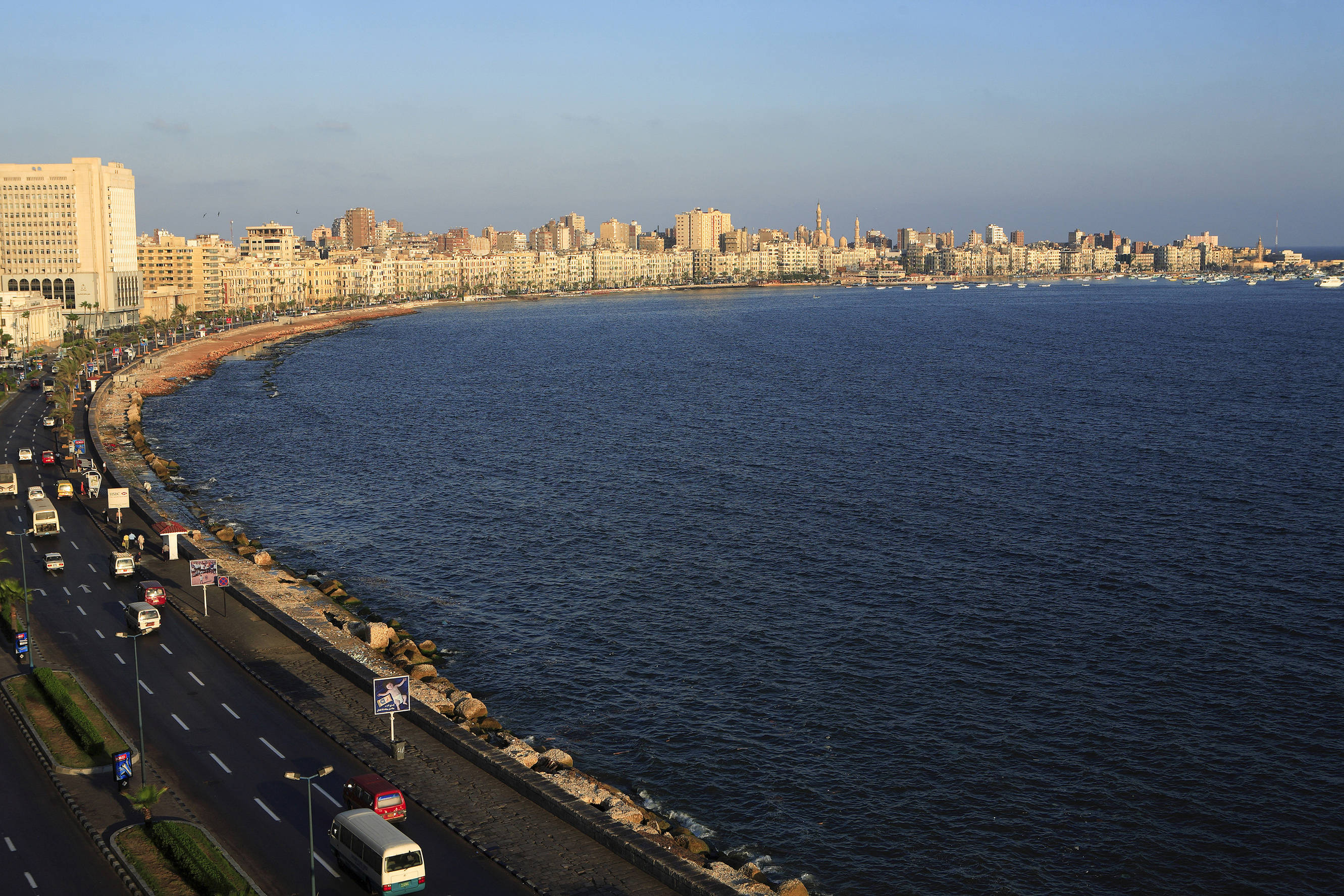
Readers who want to remember the pre-Nasser Alexandria this woman was born in might want to revisit “The Other Homeland” documentary by Yorgos Augeropoulos for Al Jazeera.
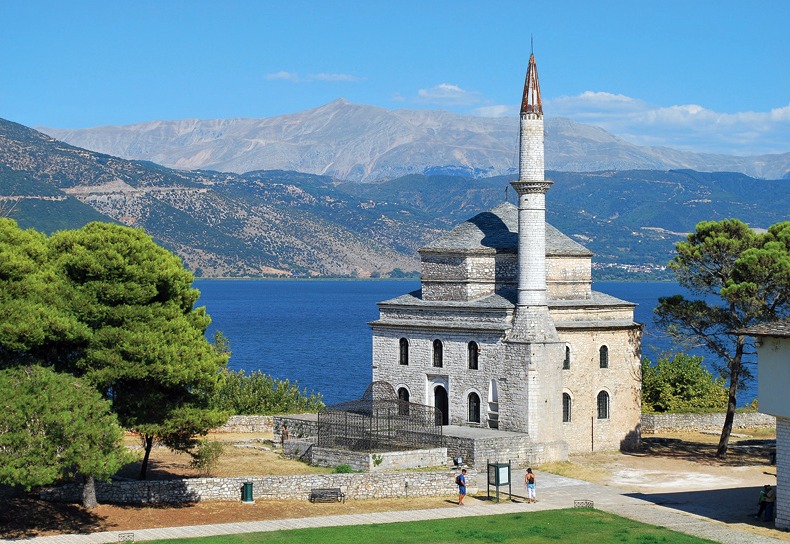
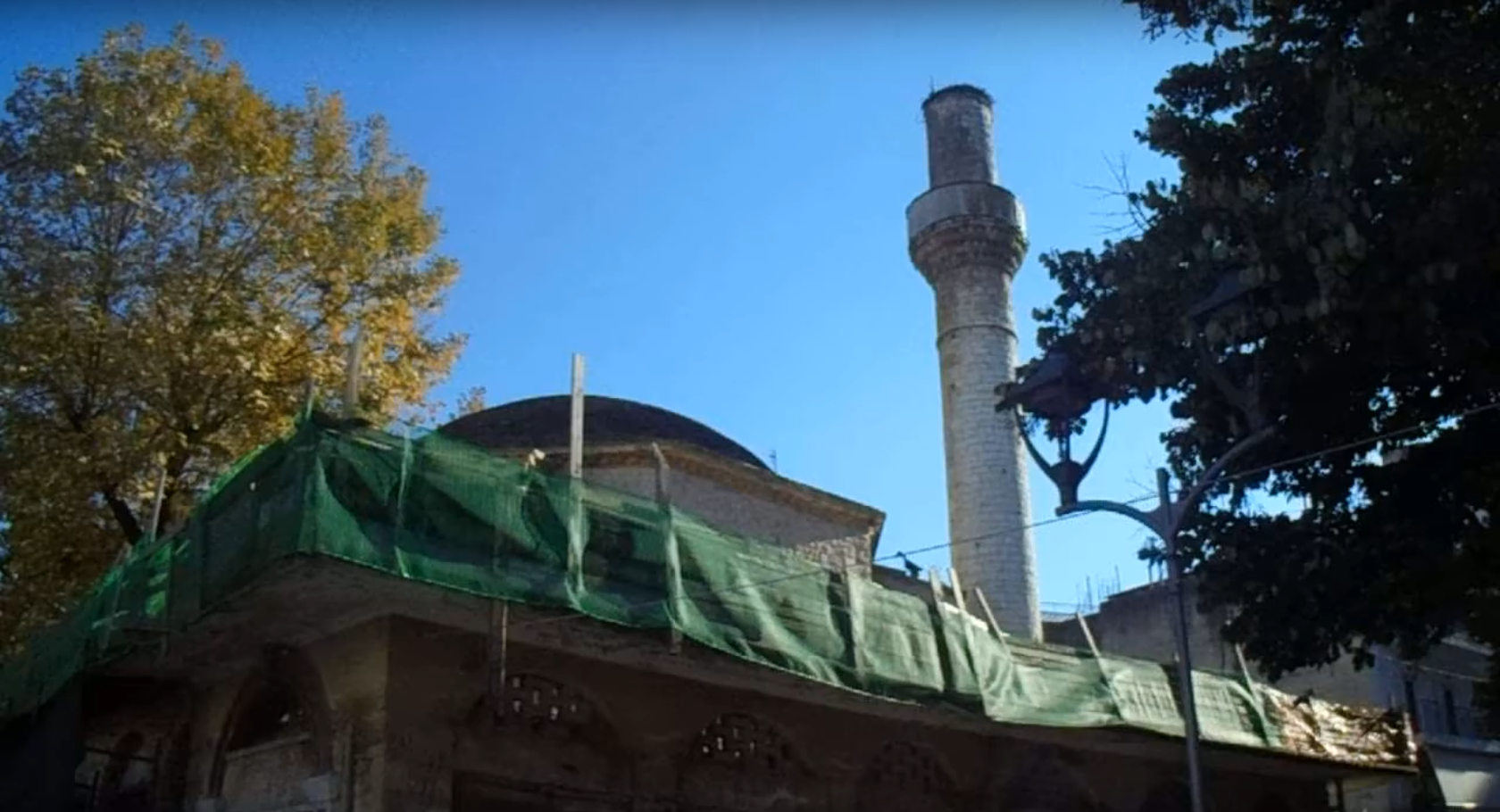
But before we start feeling all outraged and superior, the fate of Ottoman mosques in the Balkans has not been much better. How the few — like Jiannena’s — that survived did so is a miracle. And even in Jiannena we have two perfectly preserved mosques, thankfully, and one in a bad state, and a fourth that is not even recognizable unless you know it’s there; this out of a total of 18 mosques before the 1920s.
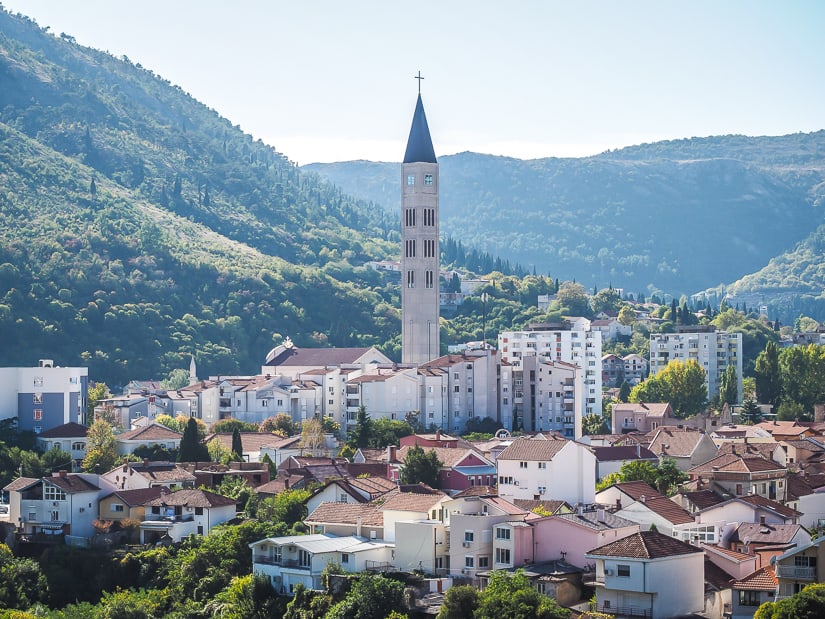
Plus while we’re on phalluses and hard-ons, it’s become the thing for both Serbian Orthodox and Croatian Catholic churches in Bosnia to build ridiculously high bell-towers, under the unspoken order that they be conspicuously higher than any neighboring minarets.
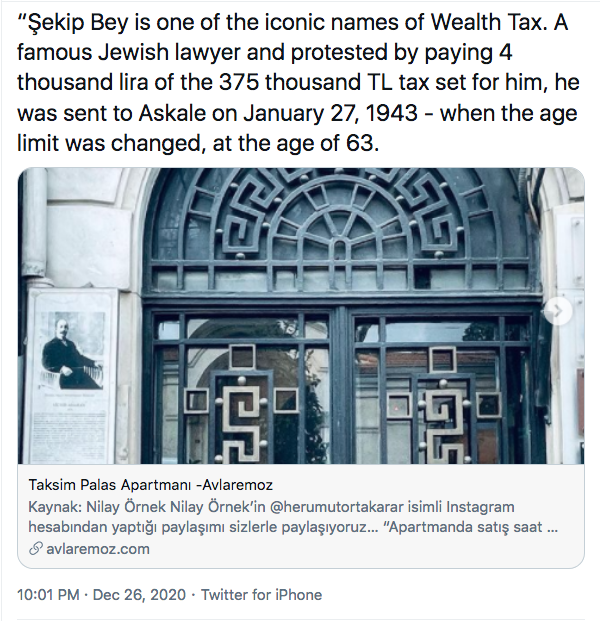
Next time a Turk or Turkey/Islam apologist tells you that progressive, tolerant, cosmopolitan Turkey gave refuge to Jewish intellectuals and scientists persecuted by the Nazis during the 1930s, remind them that a few years later the Turkish Republic imposed an over 100% estate tax — the Varlık Vergisi, also imposed on Greeks and Armenians — on its own Jews, which ruined most and saw many sent to lethal work camps in Anatolia as punishment, where many died.
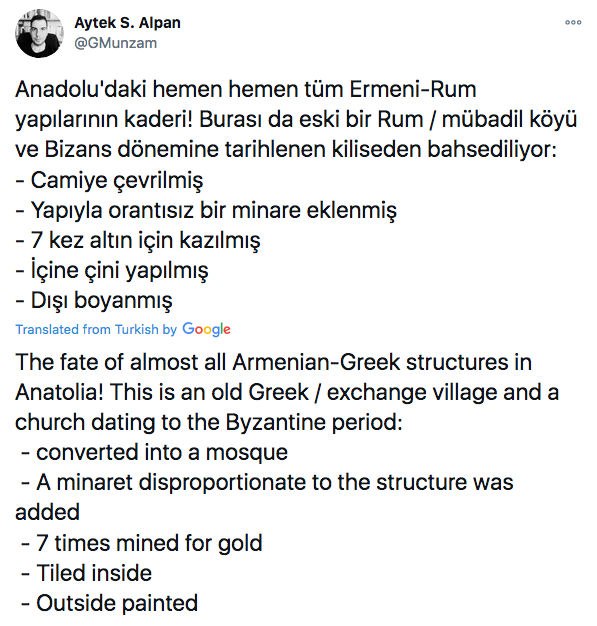
One voice of protest:
Context: from the massacres of the late 19th and early 20th centuries, the Lausanne Population Exchange, the various rulings and legal restrictions placed on non-Turkish speakers and non-Muslims following the founding of the Republic, the 1934 Thrace Pogrom against Jews, the estate tax (above), the anti-Greek Pogrom of 1955, the Deportations of Greeks in 1964-65 and the general climate of fear and violence and harassment non-Muslims still live under in contemporary Turkey — the Varlık Vergisi represents just one episode in a process of a massive transfer of capital from non-Muslim to Muslim hands in the 20th century – a transfer which laid the groundwork for late 20th and early 21st century Turkey’s booming (or now not-so-booming) economy.
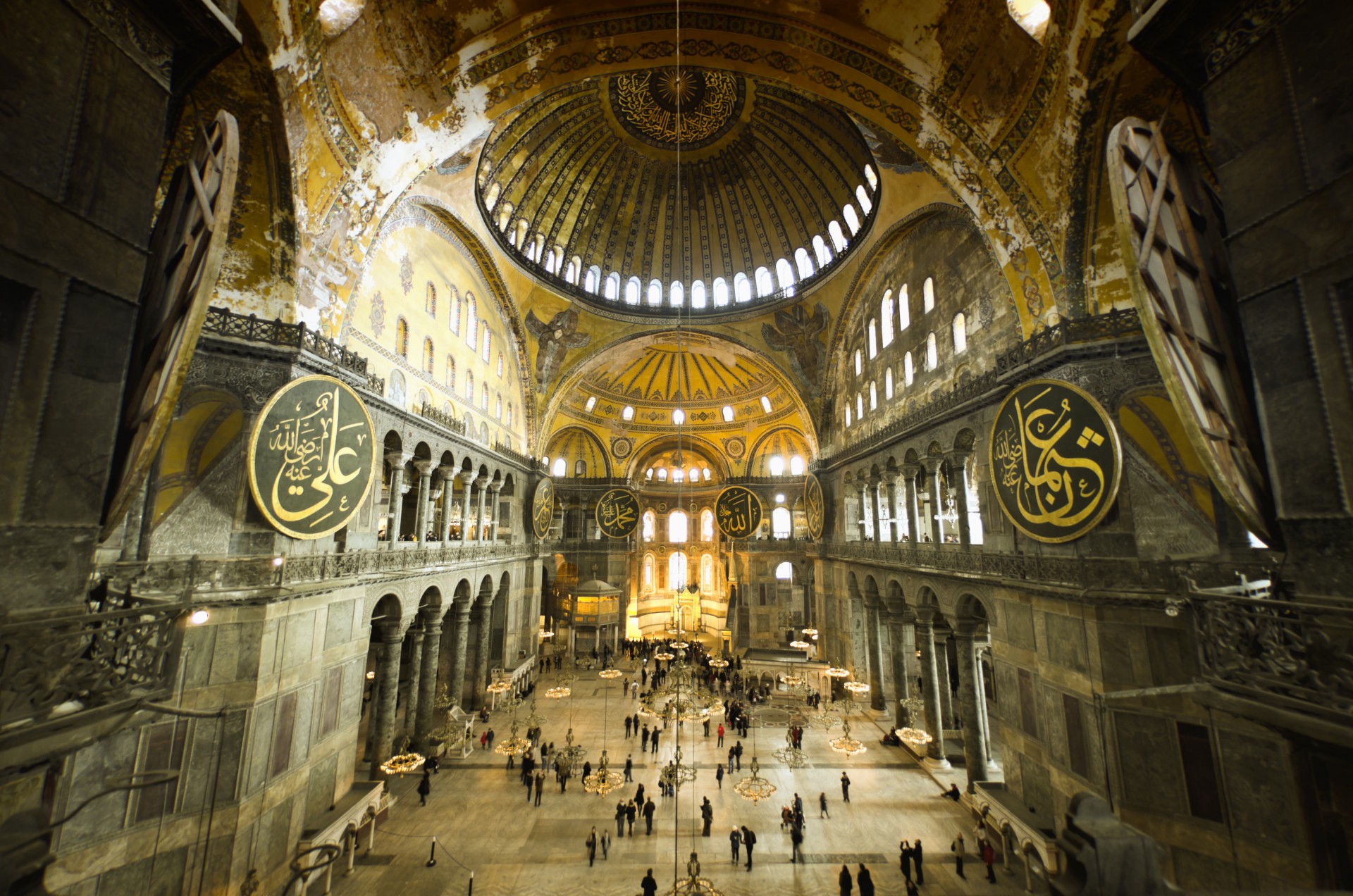
I once got into an argument with a Turkish art historian friend of mine after I referred to the eight round canvasses with the first caliphs’ names on them (I think) in Hagia Sophia as “the hideous green billboards”. She, of course, thought they were “cool” or “pastiche-y” or “palimpsest-y”. I thought, and think, that they not only mar the space by covering the joints between the massive square space and the massive dome which are perhaps the most ingenious aspect of this miracle of Roman engineering, but that they were meant to send a clear message of who was now in charge. Hers is a typical “woke” take on these things. In the article below, Axel Çorlu highlights the dangers of such gleefully amoral, post-modern celebrations of funky “conjunctures” and how they essentially elide the historical facts of violence, persecution and appropriation from our picture of the past, and how — in the particular case of Hagia Sophia — these academics end up feeding the discourse of both Ottoman/Muslim triumphalism and the oppression and displacement of religious minorities by the nationalism of the Turkish Republic.
In short, you may want to get past “conquest narratives”; Erdoğan — who justified the reconversion by the “right of conquest” — doesn’t.
My money quotes:
They [Patricia Blessing and Ali Yaycıoğlu, titled “Beyond Conquest Narratives: Hagia Sophia, Past and Present”] conclude this section with the heart of their essay: “…in this essay, we would like to divert the conversation and discuss how the conquest narrative, which is shared by those who oppose and support the decision, does not do justice to Hagia Sophia and its architecturally, spiritually, and emotionally charged history.” This sort of interjection, very appealing to the academic mind, nonetheless includes ominous terminology such as “doing justice” to the Hagia Sophia and its “…emotionally charged history.”
This narrative at once establishes the issue of “justice,” not in the sense of the expropriation and destruction of Christian and/or minority populations and the appropriation of their cultural heritage, but as in, “Let us not be unfair to the Ottomans or the Turkish Republic…” and the fact that those who respond to the Hagia Sophia issue might be affected by the same “emotionally charged” aspects. In other words, the authors are guiding us to focus on “justice,” as long as it is to protect the powerful who do not need any protection –there appears to be no need to consider the concept of justice for the dispossessed, whom the Hagia Sophia also symbolizes. […]
While the republican regime was indeed interested in recasting the Ottoman past (usually not in a very bright light, as it also distanced itself from many of its aspects and dictated a highly selective version of its history) and kept busy trying to prove that “Turks” had existed in Anatolia for millennia through the Hittites and other ancient peoples with an eclectic mix of the racial theories and pseudo-science of the time (including the infamous obsession with the morphology and measurements of skulls), it hardly made an effort to understand, teach, or preserve its Byzantine past, let alone “making a claim” to it, if what we mean by “making a claim” is anything more than a possessive but not inclusive approach.
Indeed, the Byzantine past of Turkey remained either buried, neglected, or carefully molded in the public imagination, as nothing more than the “other” that had happened to be there before.At no point did the republic genuinely try to make a direct connection to the Byzantines beyond their role as the adversary in history textbooks, the adversary that had been vanquished, the adversary that had nothing to do with the ethnicity or cultural heritage of the people in Turkey. […]
Beyond its [the conversion of Hagia Sophia into a museum] practical use as described, it was neither part of a grand historical or intellectual vision, nor a noble gesture of “tolerance” by a regime that did its very best to eliminate the remaining diversity of cultures and religions in its lands for decades to come through acts ranging from the population exchange with Greece, to the Izmir Economics Congress of 1923 where the elimination of “foreign” bourgeoisie and its replacement with a “national” one was planned, to the Varlik Vergisi (Capital Tax) of 1942, among many other examples. Such a regime surely could not care less about multiculturalism, inclusivity, or the Byzantine past as the authors suggest. […]
This idea also worked very well for the urban Kemalist elite and their newly created middle class throughout the 20th century, because it did not require them to symbolically come to terms with the vast destruction visited upon the minorities of the land, from whom they had acquired significant aspects of their material and cultural wealth via direct or indirect appropriation…
I agree that a narrative that “equates Ottoman approaches to Hagia Sophia with iconophobia and iconoclasm is incorrect” but I do not think it is necessarily “marked by Islamophobia and Orientalism” given the fact that Byzantine art and architecture suffered tremendous degradation and damage, sometimes in the name of Islam, and other times at the hands of unscrupulous republican bureaucrats, treasure hunters, or the common public in more recent times. Any scholar, casual observer, or visitor of Byzantine, Armenian, or Syriac heritage sites in Turkey will be more than cognizant of the intentional damage done to frescoes, mosaics, and other elements of Christian architecture. The damage was done over a period of centuries under different conditions, the perpetrators were/are not a homogeneous group, and the practice ranges from officially undertaken projects to “simply” neglected sites. This is an undeniable fact, and it would be disingenuous to suggest that the few token examples in the Ottoman era, republican era or today somehow represent a “preservationist” or “tolerant” attitude when in the vast majority of locations they were covered at best and destroyed at worst. …..Today, the Turkish state uses sites such as the restored Aghtamar Cathedral of the Holy Cross or the Sumela Monastery as tokens of its hollow “multiculturalism” and “tolerance.” As scholars, we have a grave responsibility to challenge this narrative. This multiculturalism narrative and tokenism of Turkey is a propaganda tool designed to cover the simultaneous appropriation and destruction of the past and the present, motivated to a significant extent by the conquest narrative. The conquest narrative was a real factor in history, and it is a real factor today. Ignoring it, reducing it to merely an “incorrect” historical interpretation, or diminishing it to an ahistorical approach is dangerous. […]
The reconversion of the Hagia Sophia is about power; in a world where power relations past and present influence the lives of millions of people, and history is weaponized for various agendas, we do not have the luxury of pretending to “stay above it” in a noncommittal manner.
The interior of Hagia Sophia with the eight “hideous green billboards”. Getty Images.
Dangers of Convenient Universalism: Power Relations and Responsibility of Scholars on the Hagia Sophia
2020-08-08
By Axel B. Çorlu, Ph.D.
The recent reconversion of the Hagia Sophia into a mosque by the (Turkish President Recep Tayyip) Erdogan regime generated heated debates among scholars, politicians, and the public. A recent article by Patricia Blessing and Ali Yaycioglu, titled “Beyond Conquest Narratives: Hagia Sophia, Past and Present” offers sophisticated but ultimately convenient universalism, where both the past and the present are presented from a distorted lens, with strategic omissions.[1]
According to Blessing and Yaycioglu, there is a binary “conquest narrative” that both the supporters and opponents of the Hagia Sophia reconversion utilize, and that in essence this simplistic view does not reflect the “complex history of Ottoman Hagia Sophia.” The authors go on to label the concerns about the protection of the structure, especially regarding the issue of the mosaics as ahistorical “disinformation,” and offer a “correct” version of history.
I will follow their text in the same order, and point out the multiple issues… (see below)
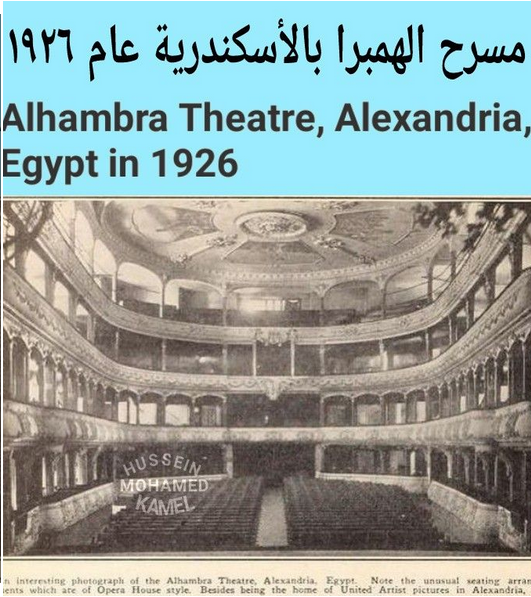
A testament to the funky cosmopolitanism of the Mediterranean “Cities We Lost“ (see Facebook page) and to the strength of Italian regional language cultures — a great juxtaposition of wordliness and provincialism, or the provincial in the cosmopolitan — the Alhambra Theater in Alexandria, one of the city’s first, hosts a travelling theater troupe staging productions in Sicilian dialect:
Thessaloniki’s Jewish cemetery as it was before it was destroyed in 1942, during the German occupation of Greece. The cemetery was established in ancient times and on the eve of the Second World War counted approximately 500,000 graves in an area of 350,000 square meters, making it probably the largest Jewish cemetery in Europe and maybe the world.
Seventy-five years ago today, during the German occupation of Greece, began the destruction of the historic Jewish cemetery of Thessaloniki, Greece’s second largest city. The cemetery was established in ancient times and on the eve of the Second World War counted approximately 500,000 graves in an area of 350,000 square meters, making it probably the largest Jewish cemetery in Europe and maybe the world. Within a few weeks, wrote an eyewitness, “the vast necropolis, scattered with fragments of stone and rubble, resembled a city that had been bombed, or destroyed by a volcanic eruption.” According to a report by the US consul in Istanbul, “recently buried dead were thrown to the dogs.”
This act was not a purely German initiative. Besides, one can visit Jewish cemeteries today in the center of Berlin. The initiative came from the local authorities, which for a long time had tried to remove the cemetery from its location, close to the city center. “And this damned German occupation had to come, when, with the collaboration of an ironic fate, this old unsolvable problem of Thessaloniki found its dramatic solution,” in the words of Thessaloniki intellectual Georgios Vafopoulos. In its place today is the Aristotle University of Thessaloniki.
Its destruction traumatized the Jewish community, which at the time constituted 25 percent of the city’s population. It removed the symbolic roots of the Jewish residents from their native city. They were eyewitnesses of the sacrilegious flattening of the tombs of their ancestors. This destruction solidified the convergence of interests between the German and the local authorities, to the degree that it was described as the “harbinger of the soon total destruction of the whole Jewish Community of Thessaloniki, the most numerous center of the Jewry of the Orient.” In fact, a few months later commenced the transport of the vast majority of the Jewish population of the city, some 46,000 souls, to the extermination camp of Auschwitz-Birkenau.
In 2014, during the inauguration of the monument for the destroyed Jewish necropolis on the grounds of the university, Thessaloniki Mayor Yiannis Boutaris stated that the city “is ashamed of this unjust and guilty silence” and the stance of the city authorities at the time. The late vice rector of the university, Ioannis Pantis, stressed that, “today, however, the Aristotle University, free from guilt syndromes, regards this past, the history and loss of the Jews of Thessaloniki, as part of its own history as well.” Indeed, in recent years, a lot of progress has been made in the context of Jewish memory in the city, as shown by the planned creation of a Holocaust Museum, the re-establishment of the university chair of Jewish studies, the multilevel educational initiatives at Greek schools and the integration of this history into the school curriculum, the annual march of memory and the placement of memory stones.
Nevertheless, there are still issues that remain open: With the destruction of the cemetery, the place became a huge quarry and its materials were used for construction purposes. In Thessaloniki’s Cathedral of Saint Demetrius, one of at least 17 churches in the city for whose construction materials from the cemetery were used, one can still find marbles with Jewish inscriptions, from the “500 pieces of marble” which those then responsible had requested in October 1943 for the “reconstruction of the temple.”
The Royal Theater of Thessaloniki was laid in 1943 with “250 square meters of plaques 50 x 50 cm from marble from the former Jewish cemeteries,” according to the tender of the municipality, which can still be seen today. Vafopoulos narrates that German officer Max Merten “was jumping on them with his boots, saying that he could hear the squeaks from the bones of the Jews.”
The university’s medical school, established in 1943, used tombstones as anatomy tables, “constructed three troughs made of concrete and took bodies from the cemetery which were put inside for the practice of the students.” Unfortunately, notwithstanding how macabre all these facts may be, such examples in the city are many and visible to this day.
This sacrilege was legitimized by the widespread use of the materials by so many city institutions and the deafening silence that followed. The mayor and the university authorities made an important first step – admittedly with a grand delay. Seventy-five years later, in the name of historical memory and in a spirit of respect, brotherhood and humanity, the other institutions have the responsibility to expose this history and the origin of the materials with which they were built.
[My emphases]
* Leon Saltiel holds a PhD in contemporary Greek history from the University of Macedonia and is a postdoctoral fellow at the Graduate Institute of International and Development Studies in Geneva with more than 15 years’ experience on human rights issues around the world, the majority of which was working with the United Nations institutions in Geneva.
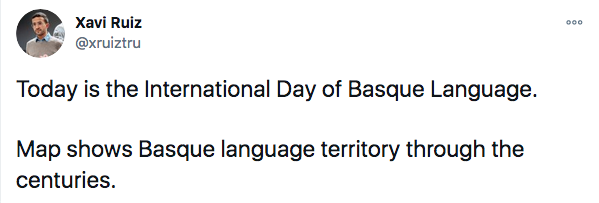
Yesterday was “The International Day of Persons with Disabilities”. Soon it’s going to be like the Orthodox Church calendar and there’ll be a long list of “International” days on each and every one of the year’s 365, all commemorating identity till the point where all identity just “melts into air”.
I’ve been unfriendly to Basques in the past, not for any reason particular to Basques but because I’m against the wild reification of any social or cultural group’s self-perception (“identity”) and the pointless violence and other costs that leads to.
These are some of my money quotes:
And then there are the Basques. Do you know how many inhabitants of the Basque regions of Spain who identify as Basque actually speak the language? Some 18%! And yet, this practically identity-less identity has been the motivation for decades of violence and terror. There’s no more twisted example of post-modern identity foolishness than I can think of. A violent political struggle to save a museum culture. When 50% of you have bothered to actually learn the devilishly difficult language you’re so proud of, then go ahead and engage in any kind of separatist resistance — violent or non — that you feel like.
And…
There are more dangerous and toxic manifestations of that kind of localized-identity nationalism as well, most noticeably the Basques. Less than 25% of the people who claim that they are Basques ethnically in Spain can actually speak the language at all — at all. I once caught a hysterical comedy skit on Spanish television where a man in San Sebastian was trying to pull off a bank robbery in Basque — on principle. And it wasn’t working because the teller couldn’t understand him. Then the neighboring teller chimes in about the robber’s grammar and that it’s incorrect according to the teacher at the night-school Basque classes she goes to and the other customers on line start arguing with him and the tellers about noun declensions and whether his use of the subjunctive is correct or not. And the robber starts to scream, frustrated: “I’m in Donostia (San Sebastian in Basque) goddammit! Not Burgos! And I can’t even hold up a bank in my own language!” Finally, the cops arrive and instead of apprehending him, they get caught up in the one-upmanship of the group of barely Basque-speaking Basques’ grammar arguments and the robber, frustrated, makes his escape. It was hilarious and it was on YouTube for a while but I haven’t been able to find it again. But that’s not all a joke. People killed each other in the hundreds for decades for an identity with only the most fragile of real footing and a language that none of them spoke; and in post-Franco Spain, one of the most liberal, progressive on social issues nations in Europe, where you’re free to learn any language you want and maintain any kind of culture you like. So, at the risk of sounding glib, make the effort to learn the language first — BE a Basque first — before you start killing people.
And a quote where I lump Basques and Catalan together with the twentieth century’s most vicious and destructive separatists, Croatians; I’ve often referred to Croats as Balkan Catalans, and referred to Catalans as Iberian Croatians:
I have a serious repellent reflex towards Catalans. This is largely because I love Spain so much, and their anti-Spanishness really gets my goat. I find their Gallic delusions that they’re so much more European and Mediterranean and civilized than the rest of Spain to be insufferable. (And some day I’ll get around to dismantling the cult of “Mediterranean-ness” itself that’s grown since the 1980s and that I find a completely false and fabricated pop-multi-culti identity that grew out of tourist literature, the public relations campaigns of olive oil companies and a popular sprinkling of Braudel, and nothing else. When even Turks start acting and feeling like they’re “Mediterraneans,” you know that a discourse is b.s. and needs to be taken apart; the extremeness of the hype surrounding Barcelona is part of this, and is why I love the gravitas and even crudeness of Madrid and Castille so much more deeply.) I find Catalans’ ‘noli me tangere’ squeamishness about how they shouldn’t have to suffer by being a part of this barbaric country of monarcho-fascists and Catholics and gypsies and bull-torturers to be racist pure and simple. They’re Iberian Croatians, in short. There are plenty out there who will get the analogy, I believe.
And more:
All of us on the periphery, and yes you can include Spain, struggle to define ourselves and maintain an identity against the enormous centripetal power of the center. So when one of us — Catalans, Croatians, Neo-Greeks — latches onto something — usually some totally imaginary construct — that they think puts them a notch above their neighbors on the periphery and will get them a privileged relationship to the center, I find it pandering and irritating and in many cases, “racist pure and simple.” It’s a kind of Uncle-Tom-ism that damages the rest of us: damages our chances to define ourselves independent of the center, and damages a healthy, balanced understanding of our self culturally and historically and ideologically and spiritually…
Spain — in part because it’s felt it had to compensate for the darker elements of its past — has transformed itself in just a few decades, and in a way I find extremely moving and mature, into perhaps one of the most progressive countries in Europe on a whole range of moral and social issues and especially in being open to regional autonomy and regional, cultural rights. There is no way you can’t be happily and solidly Catalan, and maintain your culture and language to the fullest degree, within the Spanish state. Objections are nonsense.
But they had already lost me when they banned bullfighting.
But soon, I think, the European Union got wind, no pun intended, of what most of the Balkans had already known for years and a huge police operation moved in, burst into every family’s compound and burned everything they had growing to ashes – “even their basil,” said one cousin of mine from Derviçani with glee. And her glee was made even greater because Lezarates’ humiliation was augmented by the fact that the police operation had entered the village through the upper mahalladhes of Derviçani (see map above), and — don’t quote me, what the fuck do I know — but I’m pretty sure with info from Derviçiotes who had been doing business – of some sort – with them for quite some time.
Balkans, Anatolia, Caucasus, Levant and rest of ME, Iran, South Asia
Me, I'm Nicholas Bakos, a.k.a. "NikoBako." I'm Greek (Roman really, but when I say that in English some five people in the world today understand what I'm talking about, so I use "Greek" for shorthand). I'm from New York. I live all over the place these days. The rest should become obvious from the blog.











 Jadde: from Bosnia to Bengal