Tag Archives: Greeks

Me and the Stormfront bros, post VI — A reader writes: nonsense born of fear

4 Nov

“This is…really something. Like, “and it’s no coincidence that 9 our of 10 examples here on how Greeks are supposed to belong to a supposed zone from Balkans to south Asia, are examples of Greeks who either lived in Northern regions near Balkans and Turkey and wasted time under ottomans until late 1913 and from early 15th century or Anatolian Greeks or even Romani Greek people. The majority of Greeks, who come from regions with deep and long contacts with Southwest and sometimes central Europe, like Southern Greeks or Greek islanders are almost ignored.”

[See full text of Giannis’ 1,562 – word email here: A Greek (sorry, Hellenic?) White Pride reader says: “you’re wrong, NB” — post I or reposted below.]

“What?! What Greeks are these, exactly, who experienced most of the 400 years before 1913 outside of the Ottoman Empire and in close contact with southwest and central Europe? And why don’t the Anatolian or Balkan Greeks count? (I mean, I know why they don’t count, his racist argument only works if you exclude people who don’t fit the narrative).

“It’s really astonishing how ultimately defensive and afraid this kind of nonsense is. They’re so terrified by the idea that, gasp, cultures and peoples mix over time, they have to construct these completely a-historical versions of the past to comfort themselves.” [my emphases]

**************************************************************************************

See also: Stormfront​ I​: Just so we know what we’re dealing with in Giannis and — probably — Kristos,​Me and the Stormfront bros, post II: Yavrum, ηρέμησε…, Me and the Stormfront bros, III: Gianni calls me by my Albanian name, Me and the Stromfront bros, IV. A reader, my podruzhka M, from Novi Sad, says:, Me and the Stromfront bros, V. A reader, C. from Italy, says:Me and the Stormfront bros, VII: Kristos, how I’m wrong and Carly Simon: “I bet you think this song is about you…”

Comment: nikobakos@gmail.com

P.S. Armenians & Kurds — “Atoning for a Genocide”

30 Oct

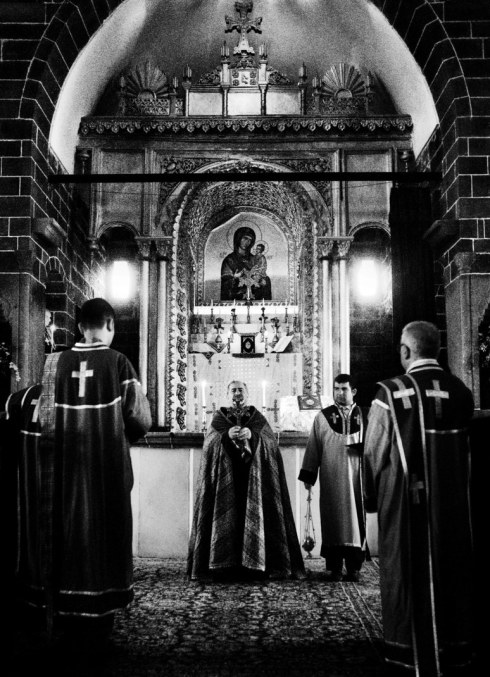
150105_r25970 armenian churchEaster Mass in Sourp Giragos in Diyarbakır, 2014. Because the church still has no priest assigned to it, a priest flies in from Istanbul. Pari Dukovic

From A Century of Silence: A family survives the Armenian genocide and its long aftermath.:

“As the villagers fled to Diyarbakir from the surrounding areas, it became a Kurdish city. In time, the Diyarbakir Kurds began to recognize that their role in the genocide was a kind of original sin in their modern political history. “I remember this one Armenian priest,” Demirbaş told me. “A Kurd was insulting him, and this priest told him, ‘We were the breakfast for them, you will be the lunch. Don’t forget.’ And that was important for me.'””  [My emphasis]

While we’re on Armenians, at a time when Syria plunges more deeply into hell than we had ever thought possible, when the West abandons the Kurds to Erdoğan and Assad, proving again that the U.S. is Turkey’s hamali, or that Turkey’s tail wags the dog, if you prefer, a historical reality check might be called for.

The American and almost every other media might be too superficial or too impatient to dig so deep historically because they’d lose their audience, but there is one, and one big thing that disproves Donald Trump’s assertion that Turks and Kurds have been fighting each other for centuries and are “natural enemies (see video below).  And that is the fact that perhaps the greater portion of the massacres of Armenians and other Christians in eastern Anatolia during the last decades of the 19th c. and first two and a half decades of the 20th c. were conducted by Kurds.* Not by the Ottoman military, but by Kurdish para/irregular forces or just Kurdish tribal chieftains craving more land and authority and wealth, and conducting/justifying their campaigns of mass murder with the rippling green banner of Islam, under which Turks and Kurds were just brothers in defense of the faith.  Only when the forces of modern nationalism started displacing the older bonds of religion and empire, did Kurds arguably start to feel themselves a separate entity from Turkish Muslims, and did the power of clan loyalties shift from semi-feudal to Kurdish nationalist ones; it’s even arguable that Republican Turkey’s anti-ağa, anti-religious and Turkification campaigns stoked the fires of the new Kurdish nationalism more than anything else.  (Somewhat of a similar process occurs between the Ottomans and Muslim Albanians in the early 20th c., and Orthodox Greeks and Orthodox non-Greeks: Bulgarians, Macedonians, Vlachs, Albanian Christians — as the latter groups discovered/invented new identities to replace the old religious-institutional bonds.)

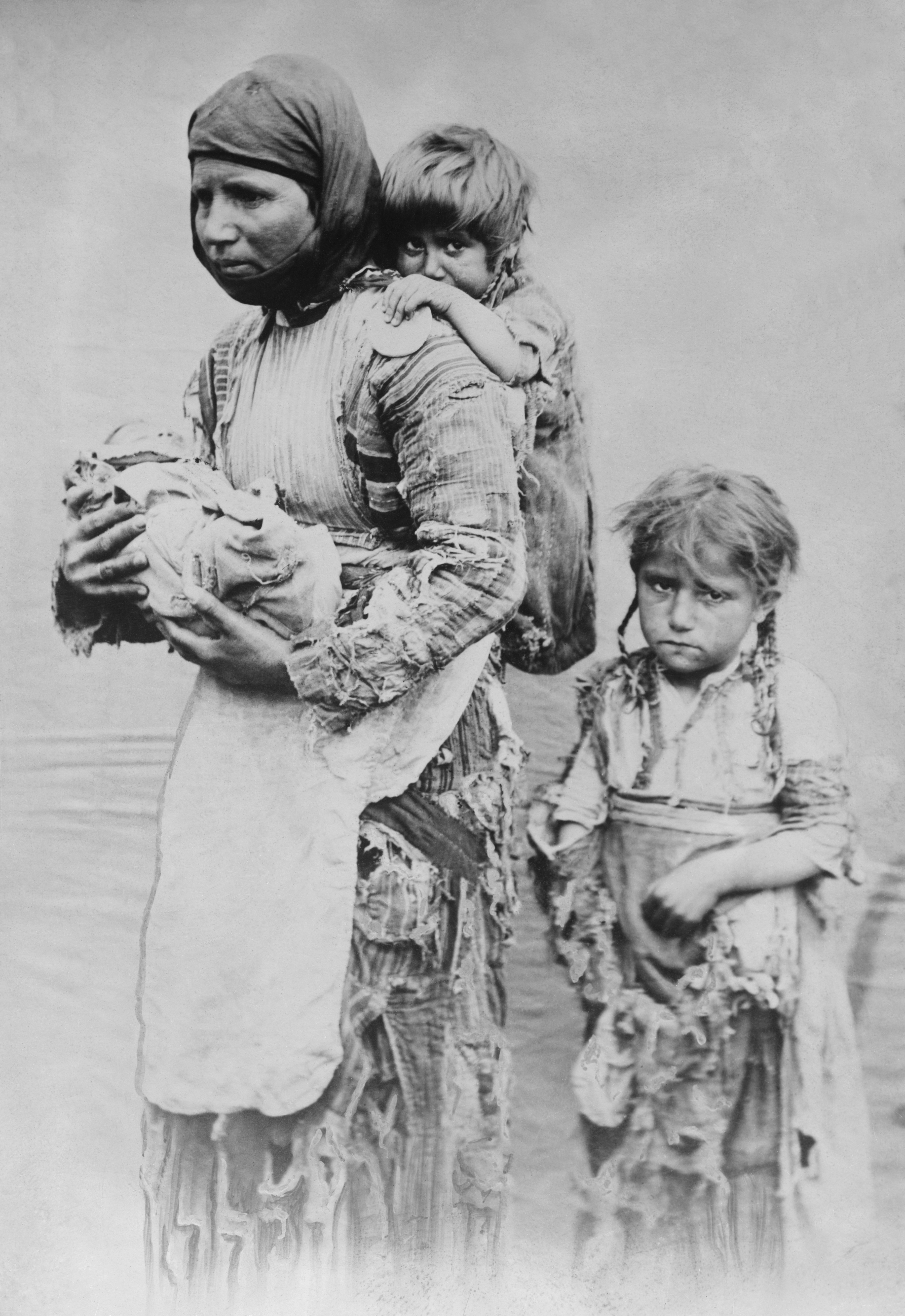
Armenian_woman_and_her_children_from_Geghi,_1899_(edit).jpgAn Armenian woman and her children who were refugees of the massacres and sought help from missionaries by walking far distances.  Photo unknown provenance.

So I’m sorry that couldn’t counter Trump’s claims of eternal Turkish-Kurdish enmity with something pretty about how — on the contrary — eternally well they have gotten along but rather by implicating both parties in coordinated mass murder.  And forgive me the occasional snicker at Greek pro-Kurdish poses and the general sanctification of Kurds that we’ve witnessed in the past couple of decades.

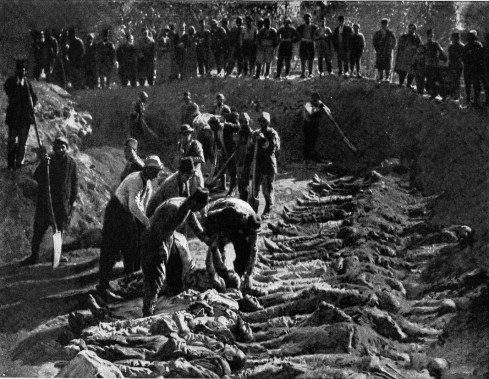
Armenia22hamidianArmenian victims of the massacres being buried in a mass grave at Erzerum cemetery.  Photo unknown provenance.

* From Wiki:

(“In 1890-91, at a time when the empire was either too weak and disorganized or reluctant to halt them, Sultan Abdul Hamid gave semi-official status to the Kurdish bandits. Made up mainly of Kurdish tribes, but also of Turks, Yöruk, Arabs, Turkmens and Circassians, and armed by the state, they came to be called the Hamidiye Alaylari (“Hamidian Regiments“).[16] The Hamidiye and Kurdish brigands were given free rein to attack Armenians, confiscating stores of grain, foodstuffs, and driving off livestock, and confident of escaping punishment as they were subjects of military courts only.) [my emphasis]

And not just eastern Anatolia.  Istanbul’s Kurdish population played a major role in the 1896 Hamidian Armenian massacres in the City, where hundreds were killed right there in Pera, in ab-fab Beyoğlu, in the middle of the elegant, Beaux Arts, now garish and overlit Istiklâl.  Referred to this before and to how brilliantly these events are handled in the “Duck with Okra” chapter in Maria Iordanidou’s Loxandra.

Only fair, however, that I include a reference to this 2015 article from The New YorkerA Century of Silence: A family survives the Armenian genocide and its long aftermath. by Raffi Khatchadourian, in which the then mayors of Diyarbakır and the separate municipality of the Old City, Osman Baydemir and Abdullah Demirbaş respectively, apologize for the Kurdish role in the Armenian massacres and rebuild and restore the city’s main Armenian church, Sourp Giragos (Hagios Kyriakos in Greek) and allow it to function (see photo above) for the handful of Armenians left in the city.   Khatchadourian‘s article has some beautiful photos too by Pari Dukovic.

“We Kurds, in the name of our ancestors, apologize for the massacres and deportations of the Armenians and Assyrians in 1915. We will continue our struggle to secure atonement and compensation for them.”

150105_r25971

Comment: nikobakos@gmail.com

Photo: more Iason Athanasiadis, I

30 Oct

See more of his work here:  The phenomenal photography of Iason Athanasiadis .

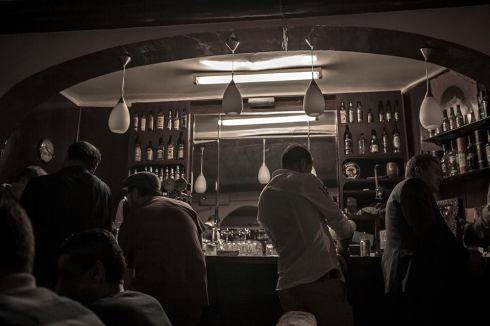
Iason Athanasiades bar sceneLocals jostle at the bar of the Swiss Hotel in Algiers. Despite – or perhaps because of – being situated opposite a police station, the bar is a hangout for journalists, who have often been targeted in the past in Algeria by non-government forces.

Comment: nikobakos@gmail.com

NYT: Armenian Genocide — “For too long, Turkey bullied America into silence. Not anymore.” — Samantha Power

30 Oct

Not 100% sure how I feel about this; see “Screamers: Genocide: what is it and why do we need the term?.  I voice my major apprehensions there.

But “bully” is such an apt term for the Turkish Republic and the Turkish body politic (“thug” also comes to mind), that I think anything that puts Turkey in its place is a positive development.

29Power-sub-superJumboCredit…Mario Tama/Getty Images

Power’s money quotes:

Although Turkish officials may see the vote as retaliation for Turkey’s recent forced displacement of Syrian Kurds, that operation — as well as President Recep Tayyip Erdogan’s sweeping human rights crackdown in Turkey and his purchase (over American and NATO protests) of a Russian air defense system — simply reduced the impact of Turkish blackmail.

……..

First, as a baseline rule, for the sake of overall American credibility and for that of our diplomats, Washington officials must be empowered to tell the truth.

Over many years, because of the fear of alienating Turkey, diplomats have been told to avoid mentioning the well-documented genocide. In 2005, when John Evans, the American ambassador to Armenia, said that “the Armenian genocide was the first genocide of the 20th century,” he was recalled and forced into early retirement. Stating the truth was seen as an act of subordination.

When I became ambassador to the United Nations in 2013, I worried that I would be asked about the Armenian genocide and that when I affirmed the historical facts, I could cause a diplomatic rupture.

Second, when bullies feel their tactics are working, they generally bully more — a lesson worth bearing in mind in responding to threats from China and Saudi Arabia. The Turkish government devotes millions of dollars annually to lobbying American officials and lawmakers: more than $12 million during the Obama administration, and almost as much during the first two years of the Trump presidency. Turkish officials have threatened to respond to genocide recognition by suspending lucrative financial ties with American companies, reducing security cooperation and even preventing resupply of our troops in Iraq.

On Friday, the Turkish ambassador warned that passage of the “biased” House resolution would “poison” American-Turkish relations, and implied that it would jeopardize Turkish investment in the United States which provides jobs for a “considerable number of American citizens.”

It is easy to understand why any commander in chief would be leery of damaging ties with Turkey, an important ally in a turbulent neighborhood. But Turkey has far more to lose than the United States in the relationship. The United States helped build up Turkey’s military, brought it into NATO and led the coalition that defeated the Islamic State, which carried out dozens of attacks on Turkish soil. Over the past five years, American companies have invested some $20 billion in Turkey.

If Mr. Erdogan turns further away from a relationship that has been immensely beneficial for Turkey in favor of deepening ties with Russia or China, it will not be because the House voted to recognize the Armenian genocide. It will be because his own repressive tactics are coming to resemble those of the Russian and Chinese leaders. [my emphases]

Comment: nikobakos@gmail.com

Me and the Stromfront bros, V. A reader, C. from Italy, says:

22 Oct

Dear Niko, yesterday I found Jadde-ye-kabir and your email, and here I am. I was so happy to read what you think of Hellenism!!!!! It’s exactly what I think. In my latest book I quoted Ion Dragumis when he wrote that Hellenism is a far larger place than Greece.

I studied ancient Greek at school ages ago, and I’ve been going to Greece as often as I can. It’s the mother-country of my choice! I have also studied modern Greek which I can read and write, which doesn’t make a tourist of me, but a traveller. I wrote a book about the (Losanna) population exchange, which implied travelling in the North of Greece and in Anatolia: a wonderful  journey. But I’ve found Greece, or better Hellenism, in Alexandria (looking for Penelope Delta among other things), and in Crimea, and I’m looking forward to going to Pakistan in the footsteps of Alexander. I’m in a hurry now, but I’d like to talk with you longer. Where do you live?

I do like what you write and I completely agree with you! Let’s keep in touch! Have a nice day, Claudia from Verona (I’m going to Bari in a few days to present my book on Greece and I’ll use some ideas in your blog. Thanks!!). Ciao, as we say

Thanks Claudì!  Keep reading!  And yes, stay in touch.

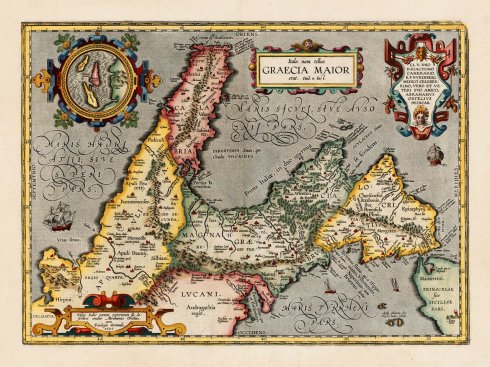
magna_graecia_1595_old_map1__30062.1439923980.1280.1280.jpg

See alsoStormfront​ I​: Just so we know what we’re dealing with in Giannis and — probably — Kristos,​Me and the Stormfront bros, post II: Yavrum, ηρέμησε…, Me and the Stormfront bros, III: Gianni calls me by my Albanian name, Me and the Stromfront bros, IV. A reader, my podruzhka M, from Novi Sad, says:, Me and the Stormfront bros, post VI — A reader writes: nonsense born of fearMe and the Stormfront bros, VII: Kristos, how I’m wrong and Carly Simon: “I bet you think this song is about you…”

Comment: nikobakos@gmail.com


Me and the Stromfront bros, IV. A reader, my podruzhka M, from Novi Sad, says:

22 Oct

Novi Sad 1.jpg

It’s so terribly sad, how pervasive white nationalism is becoming in Eastern Europe (and now the Balkans). It’s just another example of these nations trying to be “good Europeans” by adopting the worst of Europe. (Hungary and Poland at even seem to be doing it better than the west itself.)

Although I guess Greece is an exception within Eastern Europe and a self-fulfilling prophecy. Of course Greece is western-looking; of course it had a democracy instead of a communist regime. It was engineered that way by Churchill, who traded the Czech Republic to Stalin for Greece, because Greece’s “immortal glories” or whatever were too valuable to fall into Stalin’s hands. So it’s cyclical: the west sees ancient Greco-Roman history as its own history, it forces the modern Greek nation-state to side with it in the Cold War, and then in today’s world it seems to everyone that Greece is just so much more Western than it’s neighbors. Self-fulfilling prophecy…

And like you mentioned it’s also terrifying how educated these people are. It reminds me of talking to an old family friend (Vojvodina Hungarian who now lives in Budapest…). We had these lovely conversations on linguistics and Persian and Arabic grammar, and then he would suddenly turn these conversation into tirades about how “the migrants” were taking over Europe, how they would outbreed the Europeans and impose sharia law.

I hope you manage to deal with these loonies without too many problems. Also please let us all know if you have any pointers about how one should deal with white supremacists/racists/etc without loosing one’s mind lol

[my emphases]

Yes, “or whatever…”

Thanks, M!

See alsoStormfront​ I​: Just so we know what we’re dealing with in Giannis and — probably — Kristos,​Me and the Stormfront bros, post II: Yavrum, ηρέμησε…, Me and the Stormfront bros, III: Gianni calls me by my Albanian name, Me and the Stromfront bros, V. A reader, C. from Italy, says:,   Me and the Stormfront bros, post VI — A reader writes: nonsense born of fearMe and the Stormfront bros, VII: Kristos, how I’m wrong and Carly Simon: “I bet you think this song is about you…”

Comment: nikobakos@gmail.com

Me and the Stormfront bros, III: Gianni calls me by my Albanian name

22 Oct

Screen Shot 2019-10-21 at 8.07.35 PM

Gianni calls me an Albanian:

what exactly “obstructed” you from approving my answer, Nikollë Bako?

I approved your answer and posted it in its entirety.

Thanks, though.  I didn’t know that the Albanian for Nikolaos was Nikollë.  I like the Russian Nikolay or Kolya, or the Serbian Nikola better, but Nikollë is fine.  As is Bako, which as you correctly point out is an Albanian family name, except without the male nominative “s” that Greeks would add to it.

And what exactly obstructed me?

Well, dude, you’re a Nazi and a Ku Klux Klan member, once removed — if even that.  As polite and educated as you might be, most of humanity finds you repulsive.  I don’t know what else to say.

But I’ll keep giving you the benefit of the doubt until we’ve both said what we have to say.

Για χαρά!

See alsoStormfront​ I​: Just so we know what we’re dealing with in Giannis and — probably — Kristos,​Me and the Stormfront bros, post II: Yavrum, ηρέμησε…, Me and the Stromfront bros, IV. A reader, my podruzhka M, from Novi Sad, says:, Me and the Stromfront bros, V. A reader, C. from Italy, says:,   Me and the Stormfront bros, post VI — A reader writes: nonsense born of fearMe and the Stormfront bros, VII: Kristos, how I’m wrong and Carly Simon: “I bet you think this song is about you…”


Me and the Stormfront bros, post II: Yavrum, ηρέμησε…

22 Oct

Screen Shot 2019-10-21 at 8.07.35 PM

Gianni is bothered by the fact that I didn’t approve his first comment.  Here, he expresses his dismay:

“I got a sudden spike in hits on my homepage: Jadde — Starting off — the Mission, and was wondering why, when I received the longest comment that I’ve gotten on this blog since I started it in 2012”, and, let me add in this part, an answer with no single insult against the owner of the blog or any country/group in the world, no insult against anything at all, which anyone who will visit your blog can easily distinguish, yet an answer that never got approval, no matters if no term was violated.. what exactly “obstructed” you from approving my answer, Nikollë Bako?

Was it the content which definitely is oppose to your views? That shouldn’t be a problem to you, you have already dealt with the fact reality is equally oppose to your views.. Don’t worry, as long as you are not going to approve my comments i am not going to comment in your page again, enjoy the 85 people worldwide who in the last 7-8 years read your articles and took them seriously enough to like your page

Yavrum, Ηρέμησε…  I didn’t approve of your first comment because I just brushed it off initially and then later couldn’t find it.  Instead, when I did find it, I posted the whole comment, in its entirety, where many more readers will see it, here:

A Greek (sorry, Hellenic?) White Pride reader says: “you’re wrong, NB” — post I

And just to prove that I’m dealing with you guys in good faith, I’ll post your first comment again, in its entirety:

A Greek (sorry, Hellenic?) White Pride reader says: “you’re wrong, NB” — post I

21 Oct

I got a sudden spike in hits on my homepage: Jadde — Starting off — the Mission, and was wondering why, when I received the longest comment that I’ve gotten on this blog since I started it in 2012 (I think….).  In three successive missives.

It’s from a certain “Giannis” (whom I applaud on the transliteration but who should consider making the second “i” an “e”) who had an extended and not unintelligent critique of the Jadde’s and mine (NikoBako’s) general assumptions and ideological direction.  I looked up a website that was attached to his comments and found this:

Stormfront.org and some screenshots of their homepage:

Screen Shot 2019-10-21 at 8.07.35 PM

Screen Shot 2019-10-21 at 10.09.35 PM

The truth is “hate” to those who hate the truth!

We are a community of racial realists and idealists. Black, Hispanic, Asian and Jewish Nationalists openly support their racial interests, with American taxpayers even required to support the Jewish ethnostate of Israel. We are White Nationalists who support true diversity and a homeland for all peoples, including ours. We are the voice of the new, embattled White minority!

Screen Shot 2019-10-21 at 8.14.02 PM

(For those who don’t know who David Duke is, here’s the Wiki-page opening description:

David Ernest Duke (born July 1, 1950) is an American neo-Nazi, anti-semitic conspiracy theorist, far-right politician, convicted felon, and former Grand Wizard of the Ku Klux Klan. Duke is a Holocaust denier, and espouses conspiracy theories about Jewish control of academia, the press, and the financial system.[3][4] Duke has been described by the Anti-Defamation League as “perhaps America’s most well-known racist and anti-Semite”.[5]  )

Now, what do you do to a commentary like this?  Because it’s extensive, well-educated, literate and completely wacked.  No joke.  I remember Adam Gopnik’s article in the New Yorker back in the 90s where he wrote a piece about reading the Ken Starr report on Clinton and his major constitutional crime of getting a blow job in the Oval Office, that it was like (a total paraphrase):

“…reading an extended passage from an early Gothic, eighteenth-century novel, where a most articulate writer goes on and on in a treatise about an egregious evil that needs to be vanquished, until you slowly realize that it’s the writer himself who is insane.”

Gianni himself is clearly not insane.  Which makes him all the more unsettling to have to deal with.  I mean, he goes as Brennus Dux Gallorum on-line, but that might just be a cool fantasy of his like my Rome-Gladiator-Russell Crowe obsession (“Rome is the Light.”)  I’m posting his three comments to me today, so that readers all have a chance to go through them if they’re interested.

I can’t possibly take them on as a whole, so over the next few weeks I’ll be posting responses to separate passages of his.  In any event, it’s gratifying to know that the right kind of people disagree with you.

Ready?  Here we go!

**************************************************************************************

One:

I think that “Heretic” views like this one of this blogger, usually come from the combination of generalizations (for example, “my father’s experience in a specific region in a specific period (epirus of early 20th century) is generalized to all of modern Greece etc) as well as misconceptions, distortions and misinterpretations of historical entities, facts etc. The greatest distortion (which is not a “lie”, i mean the author of the blog is not
aware of his “mistake”) is where and with whom he associates Byzantine empire: Byzantine empire, is technically perceived by him as an Asian/West Asian entity like ottoman empire or Arabic states are, for a combination of two reasons: Its geographical location into the same area that Ottomans built their empire later, and the fact that it was not Roman-Catholic.

Geography is just geography, USA is built on the same lands that native Americans once used to live, but it hardly has anything to do with native Americans. Europe, as it is perceived technically after 7th century, is a combination of the three criteria
that Paul Vallery mentioned: Christianity, Roman law and Greko-Roman heritage. From this aspect yes, there were great differences between Charlemagne’s empire/its succesors and Byzantines, but in the end, what was Byzantine empire if not the Christian Roman empire, and what was Charlemagne’s Europe if not another Christian Roman succesor?
The basic criteria of Paul Valery that i talked about before. Yes Orthodox differ from Catholics, and Catholics differ from Lutherans. But in the end, all of them are equally Christian, and distant from muslims.

Were the Ottomans and Arabs “Christian Roman succesors”? The answer is JUST NO, and no further details are needed about that. As for the rest that he says, it has to do with personal experiences of the author, which sometimes are regional rather than “panhellenic”, and it’s no coincidence that 9 our of 10 examples here on how Greeks are supposed to belong to a supposed zone from Balkans to south Asia, are examples of Greeks who either lived in Northern regions near Balkans and Turkey and wasted time under ottomans until late 1913 and from early 15th century or Anatolian Greeks or even Romani Greek people. The majority of Greeks, who come from regions with deep and long contacts with Southwest and sometimes central Europe, like Southern Greeks or Greek islanders are almost ignored.

I have met Greek-Americans who according to themselves “partied better” with Irish, or with African Americans. The only sure is that both my personal experience, and if i am not mistaken according to what polls have shown, Americans of South Italian and
Portuguese ancestry are those who interact with Greek Americans more than anyone else. Not Turks (who aren’t even numerous in America, to start with, so the way the author had so many experiences with Balkan and Turkish people is a mystery) not Balkan-Americans. In my family i have not even one (Greek) American person married or related to any Turkish or Balkan American, I rather have relatives married to Italians,Irish and in one case ulster Scot American, and interactions are not limited to marriage of course.

Add to this the fact that Americans of Arabic and Turkish descent were far closer to Americans of any ancestry (from Black to Scandinavian and of course Greeks included) than their original countrymen are to people from other countries
in the world (because of Americanization of middle easterners in America, it’s obvious), and you can see how distortions are created. In Fact, Greeks in Smyrna and even in Istanbul who are stereotyped as more “oriental influenced” than other Greeks, had more reactions and intermarriages with other European communities of these cities than with Turks.

As a conclusion, if people today, and to a lower degree back then, do not consider Greece as “less European” than they consider Sweden, instead of considering it anything like Arabic nations, this has to do with what people see, that Greeks live
like Europeans, act behave like Europeans, have European attitudes, that Greeks in the end are Europeans. The fact that Greeks were oppressed by Ottomans 200 years ago (it’s not me saying that, it was Greeks themselves, who revolted for almost
150 cases before the 1821’s revolution) will not make Greeks “non-European”, let alone modern Greeks. 200 years ago, we didn’t belong to a world “from Bosnia to Bengal”, we were OPPRESSED to join this world, and we revolted 150 times to join the world to which we felt closer to, the world to which you put Croatia, the “damned” Western world. Today, 200 years later, we clearly belong to this world, there is no common consiousness
with people from “parts of the world in question”. In the case of Greeks from South and the islands there was no common consciousness back then,
you can’t expect from people even from multi-ethnic Istanbul (greek community) or Salonica or Ioannina to have common consciousness with these countries today

not to mention that your thinking isn’t even Huntingtonian: Huntington never even thought of such a “zone” and putting Orthodox Christians among muslims, he rather separated Orthodox countries from Catholic and Protestant, (in constrast to most of Authors who consider orthodox Europeans as part of modern west)

As for Greece being Balkans or not, that’s something more complicated, and many authors give different answers and for different aspects

In my opinion, the answer which is closer to reality is that of encyclopedia Britanica: ” Greece, because its northern regions of Epirus and Macedonia are often considered parts of the Balkans, also appears on many lists of Balkan states, but it is arguably better characterized as primarily a Mediterranean country.” https://www.britannica.com/place/Balkans

We can not ignore Slavic invasions, neither the Ottoman rule in Greece, or the influences that these events left. But Equally we can’t ignore communism in Balkans vs capitalism in Greece most of 20th century, the medieval Frankish, Venetian etc influence in Greece, when most of Balkans (and northern Greece) were ruled by Balkan principalities, like Serbian and Bulgarian empire, the Bavarian and later Danish rule since early 1800’s at the same time that most of neighboring Balkan countries didn’t gain independence before 1912 etc and the influences that these events brought to Greece

Greece is not a pure balkan country, neither a pure “southwestern” European country, it’s a country intermediate to Christian countries of Balkan Europe and Southwest European countries. Some regions, especially northern regions, are closer to Balkans,
other regions closer to SouthWest. We can’t ignore Metsovo in Epirus and its architecture which is Ottoman and very similar to the equally Ottoman architecture of Berat, but we can’t also ignore Anapli (Nafplio) or Corfu and their Italian looking architecture. We can’t
ignore Dolmas, but we can’t ignore Pasticcio, or Strapatsada (from italian uovo strapatsate) or Makarounes. Nevertheless, it’s safe to say that today Christian countries of Balkans belong to the Western world, meanwhile muslim countries of Balkans or muslim minorities or even Romani minorities do not. This is something that I experience every day (in terms of Romani, as in my birthplace there’s no muslim minority, but only muslim immigrants)

Now let me make a guess: As you said, you are not a nationalist, i respect that, but tell us honestly, are you a non-nationalist because of being a “humanist” or because nationalism is an anti-imperial product of European enlightenment, which (enlightenment)
fully affected Greek society through education and arts, gave an end to Greek-Ottoman “co-existence”, an end to the ottoman empire itself and many other west asian entities and made Greece European?

In any case, enlightenment is part of Greek civilization, and we are not going to give up our heritage, as much as Spain has no reason to return to any “moorish” status

Sincerely yours
Giannis

Two:

And one more thing, this time about “And Greece, even more inextricably, means Turkey, the two being, as they are, ‘veined with one another,’ to paraphrase the beautiful words of Patricia Storace.”. You can’t accuse “nationalism” and enlightenment, as this is where the “interconnection” between these two countries come from, and let me explain what i mean:

I guess the “link” between Greece and Turkey, which makes the two countries “veined with one another” are the “Orthodox Greek speakers” of Turkey who, without enlightnement and the idea of “nation” which is a product of enlightenment, wouldn’t considered themselves the same nation as Greeks from, let’s say Peloponnese or Cyclades, they didn’t have so many things in common with them to do. In case that I wrongly guessed and the link between Greeks and Turks in your opinion is mainland Greeks themselves then i am sorry, but not only you are wrong, but, with all Turkish influences in mainland Greeks, mainland Greeks are less Ottoman influenced than people from other Southern Balkan countries, due to a smaller period of Ottoman rule in Greece (northern regions excluded) than Southern Balkans.

There is no other link between Greece and Turkey, than people who lived as east as Cappadokia and started thinking that they are the same nation with Orthodox Greek speakers of Greece only after enlightenment’s influence and the idea of nation this influence brought.

Three:

I can’t speak about rural life in 1912’s ottoman empire, including some of its parts which nowadays belong to Greece.

But in the kingdom of Greece, my great-grandparents got married at 28.

See alsoStormfront​ I​: Just so we know what we’re dealing with in Giannis and — probably — Kristos, Me and the Stormfront bros, III: Gianni calls me by my Albanian name, Me and the Stromfront bros, IV. A reader, my podruzhka M, from Novi Sad, says:, Me and the Stromfront bros, V. A reader, C. from Italy, says:,   Me and the Stormfront bros, post VI — A reader writes: nonsense born of fearMe and the Stormfront bros, VII: Kristos, how I’m wrong and Carly Simon: “I bet you think this song is about you…”

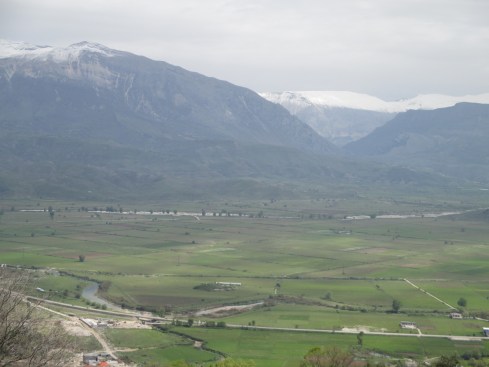
dropoli.jpg

The Valley of Dropoli, the pass up to the Pogoni plateau near Libochovo, and in the distance, the snowcapped peaks of Nemerčka, from the Monastery of the Taxiarches in Derviçani, Easter 2014

Comment: nikobakos@gmail.com


“Bad Hombre” Moskos, a landsman of mine, objects, I think, to Greek Gypsy love — “She’s 13”

20 Oct

Screen Shot 2019-10-21 at 12.02.38 AM

“She’s 13” refers to my previous post: Greek Gypsy love“.

Screen Shot 2019-10-21 at 12.08.21 AM.png

Yes, she’s 13.  And?  I respect your opinion because from what I know you are or were the best kinna New York cop who understands that his position entails a fair amount of social work along with the criminology and justice and every other kind of training you had to go through or exercise on the job.  But what should we think or think we should do exactly?  Have someone from some city or government agency intrude on this society and find a way to separate them?  Nobody forced them, so it wasn’t any kind of semi-pimping by their parents or dowry-greed; in fact, what they did was an expression of free will that — to some extent — disregarded and stood up to the strictures of their culture’s elders.  They just wanted to sleep in the same bed.

I have to explain this a lot, but the generations in my family are long, if you know what I mean.  Both my parents were last or only children, and both my parents were in their early forties when they had me.  All four of my grandparents were born Ottoman subjects.  I was raised, then, with a much greater intimacy and familiarity — even if second-hand — with pre-WWII Balkan rural life than most Greeks or Greek-Americans my age, 55, would understand.  Late teens or early 20s was considered prime age for marriage, and for my father’s clan in Albania still is.  Late 20s was already over the hill.

Romeo and Juliet were roughly the same age, 15 and 13, when they found love and the only reason that turned out badly is older people’s morality.  Are these kids doing something wrong?  Or are we just too cynical to think that our first love should be our only love, or maybe just too molly-coddled to take on the responsibility of marriage and children till we’re 35 and then run around panicked, trying to have kids at 40-something?

And as opposed to inner-city urban teenagers in America, this girl obviously lives in a society where she’ll have an extensive matriarchal support system to help her with having and raising children.

I have to admit it was a little weird to have this broadcast on Greek TV.  But what’s the problem exactly?

Comment: nikobakos@gmail.com

Byzantine Ambassador’s website — check it out

18 Oct

Screen Shot 2019-10-18 at 5.34.47 PM

“Join us on our adventure to explore the forgotten world of BYZANTIUM. The word conjures up images of scheming eunuchs and mad monks but it was so much more – it was the very Roman empire itself! Greek-speaking, with its capital in Constantinople, and an influence that extended from England to Ethiopia – but they still called themselves Romans. Theirs was an empire of fabulous riches and mighty epics, buried by the jealous powers of the Islamic and the Western empires. Now we will go beyond the myths to rediscover how BYZANTIUM changed the world – and why it is still important today.”

You can follow Byzantine Ambassador at @byzantinepower but I just discovered his website today and it drops the quirky tone of his tweets and instead offers a sizeable amount of material on Byzantium and its place in the Mediterranean world and history.  Incredible erudition, interesting articles, videos and book suggestions, it’s like doing a major in Byzantine history.  And despite his obvious polemic position, his fully inclusive — I guess might be the right word — analyses paints a both broader and more detailed picture of the Eastern Roman Empire’s interaction with neighboring civilizations and its position in the wider world than you usually get.  If you’re even slightly interested, please, check it out.

Final comment and one I feel the need to point out whenever I get the chance is an extension of Byz’s front page blurb:

“Greek-speaking, with its capital in Constantinople, and an influence that extended from England to Ethiopia – but they still called themselves Romans”

Yes, they still called themselves Romans.  And we, modern Greeks, continued to call ourselves Romans until my grandparents’ generation and well into the 20th c.  Which is why I state, on the homepage of the Jadde that …” I’m Greek (Roman really, but like five people today understand what I’m talking about when I say that, so I use “Greek” for shorthand).”  I’m going to have to sit and compose some kind of full treatise on the issue at some time.

Comment: nikobakos@gmail.com