Tag Archives: Serbia

X. doesn’t like my post on “The insufferable entitledness of bikers” — or lots of other things I’ve written

12 Nov

…or, how does one react to the tiring self-righteousness of certain left-dudes.
bikes

X. (I want to respect anonymity) is a journalist who I generally like personally, whose work I respect, and whose opinions and judgements about the Middle East I value and find extremely useful; he’s my go-to guy, especially about Lebanon, a country I find particularly fascinating.  But he’s called me a few times too many on what are supposedly my biases, which generally consist — sorry to be crude — of my not being “brown enough”, in a way I find not just a little offensive.

I call it “not-brown-enough” because though his criticisms seem to indicate that he believes I’m on the right side where the oppressed are concerned, he also seems to think that I’m not on the side of those he considers the really and truly oppressed.

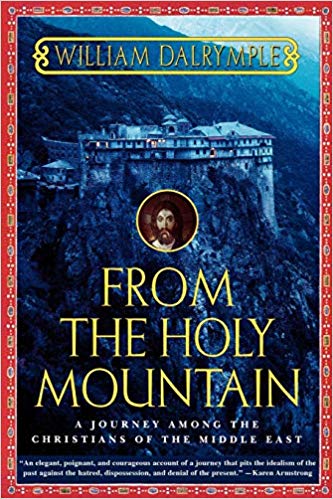
For one, he’s patently impatient and irritated by my concern for Middle Eastern Christians — though that’s par for the course when dealing with post-Christian Western intellectuals who, at best, have only traumatic memories of growing up Catholic or Lutheran and see any defense of Christianity as a racist and irrelevant leftover piece of creepy reaction. So for X., someone worrying about the survival of Eastern Christianity seems to be tantamount to being Pat Robertson.  For my part, I don’t think that, being Greek Orthodox, I should have to apologize for caring about the losing battle that eastern Mediterranean Christians are fighting.  (I would take a guess and assume X.’s unspoken attitude basically consists of: “Oh, so many millions are truly suffering and displaced and dying and you’re worried about 60 old Greek ladies in Istanbul”; well, yeah, somebody has to worry about those old Greek ladies in Istanbul too, ok?  No apology).  Nor do I think that I should have to apologize for believing that that battle for survival is real — or apologize for believing that it’s an ancient battle that dates back to the glorious entry of Arabs and Islam into the Greco-Roman-Christian and Sasanian worlds — or apologize for believing that that “entry” was anything but an unalloyed good — or apologize for believing that sectarianism in the region has a long and bloody history way before any blood-letting was caused or provoked by Western colonial powers.  I should probably send him a copy of one of Walter Dalrymple’s early and brilliant books: From the Holy Mountain: A Journey among the Christians of the Middle East.

Holy Mountain

But in an exchange about this issue, he had the gall to refer once to what he calls “elite minority supremacism”.  Remember that phrase; it’ll come back to haunt us all.  This means that it’s racist, on some level, and politically incorrect of me, to care about the rights of minorities — Orthodox Christians, Maronites, Jews, Copts, Armenians, the Alawites of Syria, the Shiites of southern Lebanon and the Bekka — when it’s really the Sunni majority of the Levant and Iraq that are the true victims.

Sorry.  The Sunni Muslim majority of the region were the politically, socially and economically privileged majority group until the late nineteenth century and specifically 1918 — that tragic year when Turkey capitulated and the Ummah and Caliphate were humiliated by the boot of the kaffir West.  That tragic humiliation is what left us with the likes of Sayyid Qutb and Osama bin Laden and Mohamed Atta, all so enraged and humiliated and boiling over with rancid testosterone.

Granted, not much sympathy from me there.  And the fact that the non-Sunni or non-Muslim minorities of the region might have found that “humiliation” to have been a liberation of sorts, after centuries of discrimination by said Sunnis, seems perfectly natural to me.  There’s a reason Maronites and Syrian Christians turned to France in the mid-nineteenth century and especially after 1860.  There’s a reason Syrian Alawites became the French Mandate’s mercenary force.  There’s a reason Serbs looked — somewhat ambiguously, with their typical wariness and sense that they don’t really need or think they should trust anybody else’s help — to Austria, and that Bulgarians and Armenians looked to an Orthodox Russia for most of the last two centuries of Ottoman rule in the Balkans and Anatolia.  They took a route that they believed, rightly or not, would give them protection from the ethnic and religious groups that had systematically marginalized and persecuted them.  So the result is that the 20th century and modernity come around and Syrian Alawites become the dominant military and therefore political force in that country.  The 20th century and modernity come around and most Maronites and other Christians in Lebanon are generally better educated, more connected to the outside world and better-off economically than most Lebanese Muslims.  And there’s a whole set of reasons that the 20th century came around and Ottoman Greeks, Armenians and Jews were also generally better educated, more connected to the outside world and better-off economically than most Ottoman Muslims except for a small elite.  Is the colonizing West entirely to blame for that too?

What fantasy world do intellectuals and journalists like X. live in, where everyone in the Near East loved each other and lived in harmony until the evil West and its divide-and-conquer policies showed up?  I would love to believe that but it’s just not supported by the historical record.  It’s a common academic trope of intellectuals from the region because it jibes with leftist anti-colonial discourse and it absolves regional players of any responsibility.  (See Ussama Makdisi‘s Aeon article Cosmopolitan Ottomans: European colonisation put an abrupt end to political experiments towards a more equal, diverse and ecumenical Arab worldor Ottoman Cosmopolitanism and the Myth of the Sectarian Middle East, or any of his other work for classic examples of this fictional genre; it’s his forte; he’s made a career of the argument.)
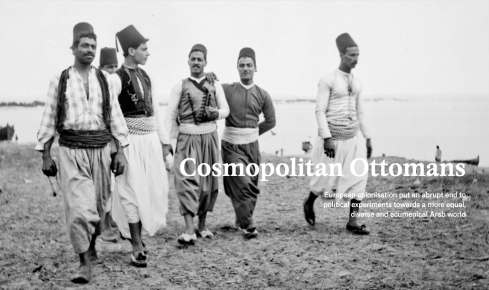
Screen Shot 2019-11-12 at 7.35.58 AM“European colonisation put an abrupt end to political experiments towards a more equal, diverse and ecumenical Arab world”

And wait a minute; let’s backtrack: you discriminate against a minority group; you bar it from conventional access to power and wealth; you confine it to the interstices and margins of your society, and in those interstitial niches they develop the skills and the talent that enable them to survive, and not only to survive, but to come out on top once they’re emancipated — and then that only makes you hate them even more — I’m sorry, but is that not the fucking textbook definition of anti-semitism??!!  Call it “elite minority supremacism” if you like.  It’s the same thing.  And just as nasty, racist and toxic.

Then there was a persnickety exchange about minorities — again — in Turkey this time.  X. disagreed with an eccentric but actually quite informed and smart Byzantinist Brit on Twitter, because he tweeted that “the state of minorities in Turkey is not a good advertisement for dhimmitude”.  “Dhimmi” in Arabic, or “Zimmi” in Turkish and Farsi pronunciation, is a term that specifically — and very specifically — means the non-Muslim subjects of an Islamic state.  X. thought that it was “epistemologically sloppy” of him to refer to the now practically vanished Christian and Jewish minorities of Turkey and ignore the intra-Muslim (for lack of a better word) minorities, like Kurds, Alevis, Zaza-speakers, or the Arabs of the south-east and Antakya (X. calls it Hatay, but I refuse to use the place-names of Turkish science-fiction nationalism).  Again, the Byzantinist Brit was supposedly being biased because he lamented the fate of Turkey’s non-Muslims and ignored its persecuted and more deserving of pity Muslim “minorities”.  But that’s his right to do and feel — and mine.  And, in fact, there was absolutely nothing “epistemologically sloppy” about his analysis.  By simple virtue of the fact that he used the word “dhimmi”, he made it unequivocally clear that he’s talking about Turkey’s non-Muslim minorities; he’s not using a “dog-whistle to mean Christians,” as X accused him of in one tweet.  He’s stating it very loud and clear that that’s what he’s concerned with.  But for X. that makes him biased and probably an Islamophobe, while all that he — and I — were doing was simply pointing out the fact that there was/is a qualitative and taxonomical difference between the status of non-Muslims in Turkey and sub-groups within the Muslim majority in Turkey.  And proof of that qualitative difference is born out precisely by the fact that the Christian and Jewish groups have practically vanished; “elite minority supremacism” apparently didn’t save them.  Tell me what X.’s objection was, because I can’t make heads or tails of it — talking about “epistemologically sloppy”.

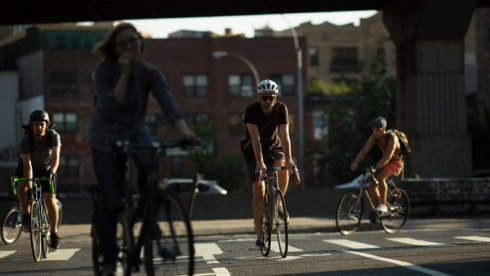
Then we go to New York.  I post this piece: The insufferable entitledness of bikers :

“The National Transportation Safety Board has recommended that helmets be required for all bicyclists in the U.S., but some advocacy groups say putting the recommendation into law can have unintended consequences.”
[Me]: How ’bout we let them crack their heads open, and then maybe they’ll think about how biking — in a city like New York at least, not Copenhagen — is a deeply ANTI-URBAN, elitist, yuppy phenomenon that makes our cities’ centers more and more inaccessible to borough dwellers who can’t afford to live there, to street vendors, to truckers, to commercial traffic, to theater-goers and to everything that makes New York New York and not Bruges, all dressed up in the pedantic Uber-Green self-righteousness of a bunch of rich vegan kids from Michigan?
Walt Whitman would be turning in his grave.
Blows me away that more people don’t see that.
I immediately get a response from X., because he’s one of those people who always has a pre-printed ravasaki in his breastpocket with an analysis and a supporting, supposedly proof/text for almost any political issue.  You’re concerned with Christians in Syria?  X. is right there on the barricades to call you an elite minority supremacist.  You suggest there seems to have been a shortage in the Arab world of leaders able to successfully create a solid civil society and functioning democracy, X. immediately has a long list of names for you, even if that list includes more than a few murderous dictators.  You wonder what suddenly caused Syrian Sunnis to stand up to the despicable Assad regime, X. tells you part of the issue is agriculture and water supply.  You accept the fact that environmental conditions might have been what literally and figuratively sparked the civil war, and then X. tells you water and drought have nothing to do with it.  You articulate an opinion on the mating habits of homosexual penguins in Antarctica and…well, you get the point.
Hey, maybe that’s what makes a good journalist, but it also leads to dizzying instant analyses and superficial opinions, without a single “well…” or “maybe…” or “Shit…I never thought of that” or any even remotely multi-facetted take on things.  Sorry to be channeling Sarah Palin — never thought it would come to this — but so many exchanges with X. immediately degenerate into “gotcha” discourse.
So, he responds, with lightning speed:
Actually most bicyclists are low-income immigrants. Which is why upscale white people love to shit on them.
Not everyone can afford first-world privileges like taking taxis. Even riding public transportation is too expensive for a lot of folks.
With an informative link attached:
Except, I don’t know any upscale white people who shit on bikers.  As far as New York is concerned, I don’t have statistics, but my visual gut observation is not that there are multitudes of immigrants riding bikes around, but almost exclusively young white guys — the “upscale white people” who supposedly shit on bikers.  ?
And here I think it’s important to point out that it’s a bit disingenuous of X. — if not just a total misrepresentation of facts — or maybe even a teeny-weeny bit of what we used to call lying — to send this particular article because it refers almost exclusively to Houston and totally exclusively to Sun-belt cities and southern California: all cities that are of radically lower density than New York, which is the city the discussion was about, and that, incidentally, have kinder weather.  Bikes there may not cause a problem or may be mostly for lower-income city-dwellers.  But in New York they’re a nuisance.  And I see and know very few poor people using them.
I wrote back:
“Very possibly low-income immigrants, ok, but do we have and how exactly do we get statistics about that?  [As it turns out we don’t; we only have statistics from Houston]  But even if that’s true, they don’t demand that a modern, industrial city, built and designed to be a modern, industrial city, change itself and cater to a mode of transportation that such a high-density city [like New York and unlike Houston] is not designed to accommodate.
“And as for taking taxis, or even the subway, I am and have always been a borough-boy, who couldn’t and can’t afford to take a taxi to get into Manhattan, nor could I tolerate a commute to and from a two-fare zone, which is what we used to call neighborhoods where you had to ride the subway line to the end and then pay a second fare to take a bus, like Whitestone, where I spent my teens and twenties.  I used to drive into Manhattan (20 minutes instead of 2 hours on public transport) and parking was easy to find even on a Saturday night in the East Village.  And while we’re on the subject of poor immigrants, have you asked a Sikh cab-driver how he feels about the pedestrianization of Times or Herald or Madison or Union Squares?  Or — while we’re weeping for the working class — have you asked a truck driver who has to negotiate backing his truck up into Macy’s loading platform with Herald Square blocked off and 35th street narrowed by a biking lane how he feels about that?
A superfluous number of pedestrianized zones, biking lanes, Citibank bike stops, farmers’ markets, happy piazzas for office workers to eat their $15 prosciutto sandwiches from Eataly, Bloomberg’s unsuccessful plan to put tolls on East River bridges — a flagrant fucking attempt to keep the non-rich out of Manhattan — because his constituency wanted less traffic and less noise in their neighborhoods, have all contributed to making Manhattan less accessible for me, because I, like your immigrants, can’t afford to live there.
“And even if there are more Mexicans delivering Chinese food on their bikes than there are entitled pricks from Indiana using bicycles, the Mexicans don’t give me attitude about how I’m not respecting their hobby.  They’re too busy working.  Plus it’s hard for me to imagine that taking care, storing, maintaining and protecting your bike from theft or vandalism in New York is cheaper than taking the train.
“You know that long passage between the E train at 42nd Street that connects to the 7 train?  Would you, at rush hour, let a toddler free there?  Obviously not.  Because you wouldn’t let a being of radically different size and speed go free in a space where he’s more likely than not to get trampled.
“Nor could you possibly ask NYers rushing to work to watch out for that toddler.”
Again, I’m progressive but not quite progressive enough for X.  Poor, brown immigrants should be entitled to ride their bikes anywhere at any time, though that’s a sociological type that barely exists in New York.  But a white, working-class, ethnic-American kid from outer Queens like me can go fuck himself (the implication that I was ever rich enough to take a cab into the city on a regular basis is infuriating) and I can be denied access to the pleasures and resources of Manhattan, even as Manhattan becomes a sterile playground for the rich on one end and and hip enough to let hipsters and X.’s poor immigrants ride their bikes supposedly on the other end.  No room for me, who falls in the middle of that spectrum.
Density, up-close, claustrophobic even; maddening; density is the essence of a city like New York.  If you’re from there you know that; if you’re not, it might make you a little nuts and you might long for parks and greenery and bike-lanes.  And it’s almost always non-New-Yorkers who are clamoring for these pleasantries that will remind them of Madison, WI.  Density; it means cars and street traffic too — and noise — things that give access to the maximum amount of people, cities you can get to easily and that let you in.  Not obnoxious, exclusive enclaves like Georgetown or Cambridge, MA, where you need to prove you’re a resident to even park on one of its streets.  Look at what pedestrianization has done to Istanbul, where Erdoğan has transformed Taksim, Tâlimhane and the upper Cumhurriyet into a concrete wasteland with all the charm of a Soviet plaza in a city like, let’s say, Perm’. 
A city needs to breathe, even in its crowded chaos.  That’s why I posted the Whitman poem in my response to X.:

City of the sea! city of hurried and glittering tides!

City whose gleeful tides continually rush or recede,
whirling in and out, with eddies and foam!

City of wharves and stores! city of tall façades of mar-
ble and iron!

Proud and passionate city! mettlesome, mad, extrava-
gant city!

“Mettlesome, mad, extravagant…” 

More later — maybe.  This gets exhausting.
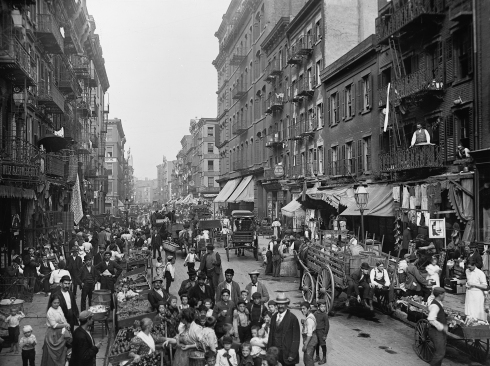
4a08193u.jpgMulberry street, c. 1900 — “Density, up-close, claustrophobic even; maddening; density is the essence of a city like New York.”

Comment: nikobakos@gmail.com

My buddy M. from Novi Sad writes: “You clueless Frangoi with your Pierre-Loti infatuation with Istanbul…”

12 Nov

“I would love to see these people try and live somewhere like Pendik or Küçükçekmece, and commute to work for 4 hours total/per day in crowded public transport for 3,000 TL/month… like most of Istanbul… and then see what they have to say.

“At least these people aren’t as terrible as the (appallingly numerous) Westerners who think Dubai is a lovely holiday destination.”

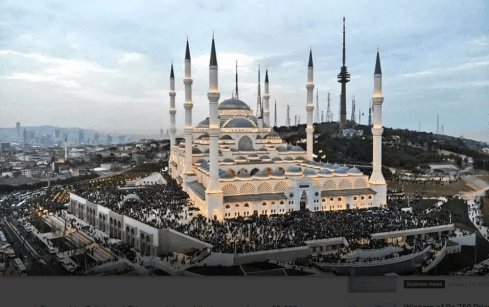
Dubai?  Who needs Dubai when Erdoğan builds hideous and hubristically six-minaretted mosque monstrosities like this:

Çamlica mosqueScreen Shot 2019-11-12 at 1.18.37 AM

For 2,676 years, the Megaran Greeks who founded the city, the Romans, meaning the  the Italian ones and us, and the Ottomans only built things that added to the beauty of Istanbul.  Only Erdoğan had the arrogance to build something so hideous on a site so conspicuous that it mars the entire sea-landscape, horizon and view of the City.

Comment: nikobakos@gmail.com

You clueless Frangoi with your Pierre-Loti infatuation with Istanbul…

10 Nov

…are so blissfully ignorant of how much ugliness and violence went into creating the questionably “beautiful” city you see today.  Your type probably wept in the 90s (if you’re even that old), along with Susan Sontag and Angelina Jolie, for the violent segregation and ethnic cleansing that evil Serbs inflicted on poor Sarajevo.  But there’s apparently a statute of limitations on such crimes where Istanbul is concerned.  And if, like most ex-pats, your existence is pretty much limited to the axis between Karaköy to Bebek — maybe some 0.5% of the territory of the city — with an occasional foray to the islands or to Kadıköy to go eat at AKP Çiya, and you’ve ingested enough Turkish tourist propaganda, then you’ll believe anything.

You know nothing about Istanbul.  You know nothing of the violence, massacre, pogroms, property destruction and confiscation, discriminatory taxation and imprisonment, expulsions and deportations that created the wonderful East-West playground you love so much.  You know nothing of the genuine Mediterranean worldliness that’s been displaced by rural Anatolian puritanism.  You know nothing of the last muhallebici in Pera that’s been replaced by another kitschy restaurant with women in salwar and headscarves kneading flatbreads in the window.  You know nothing of the subtlety and sophistication of the City’s cuisine that’s been totally replaced by the monotony of kebab/köfte joints that you think are authentic and cool.

Yes, it still has a modicum of its old charms.  And it’s hard to beat its stunning physical location, though the Padishah’s monster kitschario-mosque has managed to mar even that.  But mostly, Istanbul today is a Baudrillardian simulacrum of the city that it was for centuries.  And you buy it up.  It’s a massive — and aside from the axis mentioned above — hideous monstropolis of 15 million, 99.9% of whom are Turkish or Kurdish Muslims, and yet still manages to sell itself as multicultural.

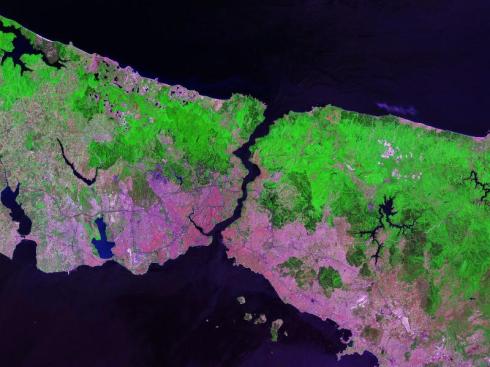
Look at what a tiny bit of the actual city you really have any relation to:

bosphorus-satelitte

And how ignorant you are of even the neighborhoods that you do move about in.   How clueless you are about who used to live there. (see below)*  About who was displaced to house you and your Turkish yuppy friends.  The zoning corruption that’s destroyed neighborhood after neighborhood and the woodlands and wetlands of the City’s environs and replaced them with massive high-rise developments that make the Queensbridge Houses in New York look like the Place des Vosges.  The megalomaniacal mega-mosques disfiguring Taksim or Çamlica, that are more Riyadh or Dubai than Istanbul. The cheezy, glitzy Gulfie shopping malls…

And now the new zoning law that will take the Bosporus away from the authority of the Istanbul municipality and give imperial rights to development there directly to Erdoğan and his Divan — punishment because Istanbul (and Ankara) booted him and the AKP in one election and then a recount…double slap in the face.  So they’ll be able to build Allah-knows what kind of monstrosities along what remains of that waterway’s beauty.

Plus, how glibly non-concerned you seem to be about political developments…Islamist dictatorship…more imprisoned journalists than any other country in the world…whatever..  It’s exhausting to even talk to you.

This “DAMN” city is right.

Enjoy your Turkish Life.

Screen Shot 2019-11-11 at 1.19.00 AM

Oh, that’s the Sülemaniye on the right, isn’t it?  and the Yeni Camii in the distant left?

**************************************************************************************

* From my 2013 Nobody really cares about Gezi Park: Greek thoughts on the protests of 2013:

“All – I thought a lot about whether I should use “almost all” in this sentence and decided against it –because all the hippest, funkiest, most attractive, gentrified neighborhoods in the historic parts of İstanbul are neighborhoods that were significantly, if not largely, minority-inhabited until well into the twentieth century: not just Pera and Galata, but Cihangir and Tarlabaşı, and even Kurtuluş — of course — and up and down the western shores of the Bosphorus and much of its eastern towns too, and central Kadiköy and Moda and the Islands.  (And if serious gentrifying ever begins in the old city it’ll be in Samatya and Kumkapı and Fener and Balat; I wouldn’t put any big money into Çarşamba just yet.)  If young Turks are fighting to preserve the cosmopolitan character of areas made cosmopolitan by a Greek presence, among others, is it a recognition of that presence, however vestigial, that I want?  Yes.  Is it because some recognition might assuage some of the bitterness of the displacement?  Perhaps.  Is the feeling proprietary then?  Does the particular “cool” quality of these neighborhoods that protesters have been fighting to protect register for me as a form of appropriated “coolness?”  I’m afraid that yes, sometimes it does.  In darker moments this spring and summer, these Occupy Gezi kids annoyed me: “What’s wrong mes p’tits?  The Big Daddy State threatening to break up your funky Beyoğlu party?  Do you know the Big Daddy State made life so intolerable for the dudes who made Beyoğlu funky that they not only had to break the party up, but shut down shop altogether and set up elsewhere?  That your own daddies and granddaddies probably stood by and watched, approved even?  Do you know that now?  Do you care?”

Some pics: The morning of September 7, 1955. a bad Beyoğlu hangover

COJ55JkUkAAwrda

COJ53hDUsAIZxc8

Devastation-Pogrom-1955-568x420

Septembriana_1955-1-790x400

istanbul-1


Comment: nikobakos@gmail.com

Image

Rezili — Greek volunteer thugs in 1990s Bosnia

10 Nov

A stain on the Greek conscience, an obscene manipulation of Orthodox identity and brotherhood, an affront to the suicidal bravery of Greek and Serbian resistance against Nazism during WWII (in its German, Hungarian and especially its Croatian variants), and a gross mockery on what for me is the still moving idea of a long, historical Greco-Serbian bromance.

Screen Shot 2019-11-10 at 6.49.51 PM

What did you 380 morons about this tweet?

Comment: nikobakos@gmail.com

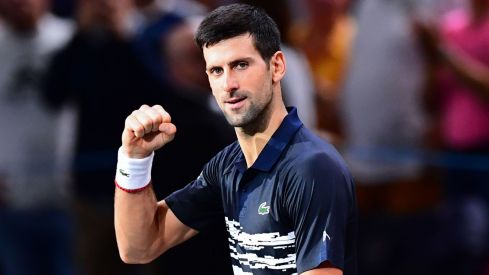
Novak Djokovic piles pressure on Rafael Nadal at ATP Finals

10 Nov

He’s not a man.  He’s a phenomenon.

See article.

skysports-novak-djokovic-tennis_4823090

Serbian_cross

Comment: nikobakos@gmail.com

NYT: Armenian Genocide — “For too long, Turkey bullied America into silence. Not anymore.” — Samantha Power

30 Oct

Not 100% sure how I feel about this; see “Screamers: Genocide: what is it and why do we need the term?.  I voice my major apprehensions there.

But “bully” is such an apt term for the Turkish Republic and the Turkish body politic (“thug” also comes to mind), that I think anything that puts Turkey in its place is a positive development.

29Power-sub-superJumboCredit…Mario Tama/Getty Images

Power’s money quotes:

Although Turkish officials may see the vote as retaliation for Turkey’s recent forced displacement of Syrian Kurds, that operation — as well as President Recep Tayyip Erdogan’s sweeping human rights crackdown in Turkey and his purchase (over American and NATO protests) of a Russian air defense system — simply reduced the impact of Turkish blackmail.

……..

First, as a baseline rule, for the sake of overall American credibility and for that of our diplomats, Washington officials must be empowered to tell the truth.

Over many years, because of the fear of alienating Turkey, diplomats have been told to avoid mentioning the well-documented genocide. In 2005, when John Evans, the American ambassador to Armenia, said that “the Armenian genocide was the first genocide of the 20th century,” he was recalled and forced into early retirement. Stating the truth was seen as an act of subordination.

When I became ambassador to the United Nations in 2013, I worried that I would be asked about the Armenian genocide and that when I affirmed the historical facts, I could cause a diplomatic rupture.

Second, when bullies feel their tactics are working, they generally bully more — a lesson worth bearing in mind in responding to threats from China and Saudi Arabia. The Turkish government devotes millions of dollars annually to lobbying American officials and lawmakers: more than $12 million during the Obama administration, and almost as much during the first two years of the Trump presidency. Turkish officials have threatened to respond to genocide recognition by suspending lucrative financial ties with American companies, reducing security cooperation and even preventing resupply of our troops in Iraq.

On Friday, the Turkish ambassador warned that passage of the “biased” House resolution would “poison” American-Turkish relations, and implied that it would jeopardize Turkish investment in the United States which provides jobs for a “considerable number of American citizens.”

It is easy to understand why any commander in chief would be leery of damaging ties with Turkey, an important ally in a turbulent neighborhood. But Turkey has far more to lose than the United States in the relationship. The United States helped build up Turkey’s military, brought it into NATO and led the coalition that defeated the Islamic State, which carried out dozens of attacks on Turkish soil. Over the past five years, American companies have invested some $20 billion in Turkey.

If Mr. Erdogan turns further away from a relationship that has been immensely beneficial for Turkey in favor of deepening ties with Russia or China, it will not be because the House voted to recognize the Armenian genocide. It will be because his own repressive tactics are coming to resemble those of the Russian and Chinese leaders. [my emphases]

Comment: nikobakos@gmail.com

Me and the Stromfront bros, V. A reader, C. from Italy, says:

22 Oct

Dear Niko, yesterday I found Jadde-ye-kabir and your email, and here I am. I was so happy to read what you think of Hellenism!!!!! It’s exactly what I think. In my latest book I quoted Ion Dragumis when he wrote that Hellenism is a far larger place than Greece.

I studied ancient Greek at school ages ago, and I’ve been going to Greece as often as I can. It’s the mother-country of my choice! I have also studied modern Greek which I can read and write, which doesn’t make a tourist of me, but a traveller. I wrote a book about the (Losanna) population exchange, which implied travelling in the North of Greece and in Anatolia: a wonderful  journey. But I’ve found Greece, or better Hellenism, in Alexandria (looking for Penelope Delta among other things), and in Crimea, and I’m looking forward to going to Pakistan in the footsteps of Alexander. I’m in a hurry now, but I’d like to talk with you longer. Where do you live?

I do like what you write and I completely agree with you! Let’s keep in touch! Have a nice day, Claudia from Verona (I’m going to Bari in a few days to present my book on Greece and I’ll use some ideas in your blog. Thanks!!). Ciao, as we say

Thanks Claudì!  Keep reading!  And yes, stay in touch.

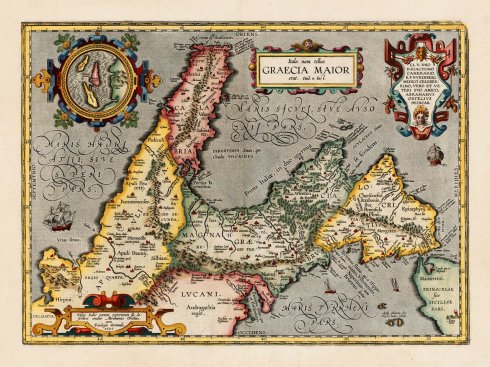
magna_graecia_1595_old_map1__30062.1439923980.1280.1280.jpg

See alsoStormfront​ I​: Just so we know what we’re dealing with in Giannis and — probably — Kristos,​Me and the Stormfront bros, post II: Yavrum, ηρέμησε…, Me and the Stormfront bros, III: Gianni calls me by my Albanian name, Me and the Stromfront bros, IV. A reader, my podruzhka M, from Novi Sad, says:, Me and the Stormfront bros, post VI — A reader writes: nonsense born of fearMe and the Stormfront bros, VII: Kristos, how I’m wrong and Carly Simon: “I bet you think this song is about you…”

Comment: nikobakos@gmail.com


Me and the Stromfront bros, IV. A reader, my podruzhka M, from Novi Sad, says:

22 Oct

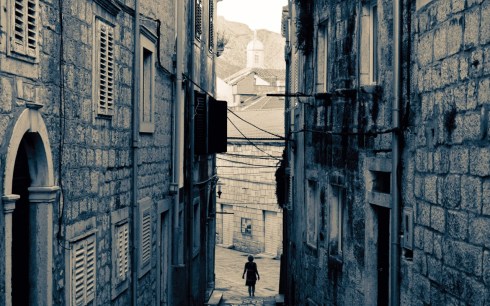
Novi Sad 1.jpg

It’s so terribly sad, how pervasive white nationalism is becoming in Eastern Europe (and now the Balkans). It’s just another example of these nations trying to be “good Europeans” by adopting the worst of Europe. (Hungary and Poland at even seem to be doing it better than the west itself.)

Although I guess Greece is an exception within Eastern Europe and a self-fulfilling prophecy. Of course Greece is western-looking; of course it had a democracy instead of a communist regime. It was engineered that way by Churchill, who traded the Czech Republic to Stalin for Greece, because Greece’s “immortal glories” or whatever were too valuable to fall into Stalin’s hands. So it’s cyclical: the west sees ancient Greco-Roman history as its own history, it forces the modern Greek nation-state to side with it in the Cold War, and then in today’s world it seems to everyone that Greece is just so much more Western than it’s neighbors. Self-fulfilling prophecy…

And like you mentioned it’s also terrifying how educated these people are. It reminds me of talking to an old family friend (Vojvodina Hungarian who now lives in Budapest…). We had these lovely conversations on linguistics and Persian and Arabic grammar, and then he would suddenly turn these conversation into tirades about how “the migrants” were taking over Europe, how they would outbreed the Europeans and impose sharia law.

I hope you manage to deal with these loonies without too many problems. Also please let us all know if you have any pointers about how one should deal with white supremacists/racists/etc without loosing one’s mind lol

[my emphases]

Yes, “or whatever…”

Thanks, M!

See alsoStormfront​ I​: Just so we know what we’re dealing with in Giannis and — probably — Kristos,​Me and the Stormfront bros, post II: Yavrum, ηρέμησε…, Me and the Stormfront bros, III: Gianni calls me by my Albanian name, Me and the Stromfront bros, V. A reader, C. from Italy, says:,   Me and the Stormfront bros, post VI — A reader writes: nonsense born of fearMe and the Stormfront bros, VII: Kristos, how I’m wrong and Carly Simon: “I bet you think this song is about you…”

Comment: nikobakos@gmail.com

Times: “Top Secret Russian Unit Seeks to Destabilize Europe, Security Officials Say”

8 Oct

No kidding.  Is this a surprise to anybody? 

Someone I know in the Greek foreign service once said to me that he thinks Western policy towards Russia is not even leftover post-Cold War, but that it’s perhaps even an unconscious but very persistent and irrational remnant of Great Game mentality left over in the Anglo-Saxon world/mind that influences the rest of the West.  And if you know a bit, that’s a smart analysis.

But even if you start from there you immediately have to turn to the chicken-or-the-egg dynamic that’s happening here and that has obtained in the world’s policy towards  Russia and vice-versa for almost forever.  You can’t always treat Russia like the big, drunken thug that needs to kept out of the club by the bouncers and not expect them to react with a defensive — and offended — stance.

It seems impossible to get out of the West’s mind the sense that Russia is an inherent enemy that needs to constantly and aggressively be watched and contained instead of accepted, and expect it to not be actively aggressive in return.  What “accepting” Russia would mean exactly is tricky and needs to be thought out — but needs to be given a chance in terms of policy.  We might get our rocks off by saying that Putin is a bad, strong-man who’s unacceptable in x amount of ways, undemocratic blah blah.  But some thoughtful expressions of good will towards Russians might eventually be the precisely the “soft power” that prods Russians on to getting rid of Putin themselves — and all the other huge flood of positive changes that might, and will, come in his eventual disappearance from the scene.

I’ve said before, in “Syria, Russia, ISIS and what to do about everything” :

“First and foremost and again: let Russia in. ENGAGE RUSSIA. We all have everything to gain and nothing to lose if we stop treating Russia like a pariah nation. Russian power is not a threat and can instead prove massively useful to the world if we bring Russia into the fold instead of trying to desperately keep her out of everywhere and even foolishly try and fence her in. It may be a little more complicated than a simplistic “more flies with honey” theory but whatever it is we choose to describe as Russian aggression, Russia sees as defensive and that may not be an irrational response from a powerful nation that sees itself treated as an amoral being that is constantly excluded from all the West’s major moves.

“And I’m talking about radical engagement: not just lifting sanctions and trade blocks and visa requirements. I’m talking about making Russia a part of the European family of nations, as laughably dysfunctional as that family may be looking right now. Why are Montenegro or Georgia on the list of candidates for NATO membership — Montenegro probably as some sleazy old promise offered to it if it seceded from Serbia; and Georgia, one of the oldest polities in the Russians’ sphere of influence (for better or worse and partly of its own initiative at the start) and with a complicated love-hate relationship between them – while Russia itself is not?  Too big to absorb. Well, yes, but my point is to stop thinking of her as an entity to control and absorb and start thinking of her as a political and especially military power that’s just too enormous to not have as an ally in the current struggle we’re engaged in.

“ISIS (and Turkey to some degree) ticked off the Russians bad and they have already done more to weaken the “caliphate” in the past few weeks than all other Western actions combined. Is it escalating the conflict? There is no escalating this conflict: when your enemy is sworn to escalate it to the maximum, and there’s no reason to think they’re bluffing, you’re already there. Yes, there’s reason to fear that Russia – which uses Powell-Doctrine-type “overwhelming force” more than the United States ever has – will go too far and turn central Syria and Raqqa into a Chechnya and Grozny, but the best way to limit those kinds of excesses are to enter into some coordinated action with Russia and not just allow her to act alone. Because we’re going to need Russia when the air campaign needs to stop, when at some point it will. And that’s when I predict that Russia will also be willing to send in men on the ground and I don’t mean just a few special operations groups. While they’re certainly not eager to send their young men off to die in another Afghanistan or Chechnya, this has already – again, for better or worse – become a sort of Holy War for Russians and they will be far less squeamish about sending in troops than any other European society or even the United States at this point. And working with them on such an operation will not only increase its efficacy but limit the risks and excesses.

“In the end bringing Russia in from the outside will also change it from the inside; as the nation itself feels less like it has to be on the constant defensive, then so will the Russian government adopt a more open and progressive attitude to its own internal political life.   This is what we saw happening in Turkey in the early 2000s when European Union accession was still a negotiable reality; much of what Turkey and Erdoğan have turned into since are a result of those cards being taken off the table. Do it for everyone then, for us and for them. Engage Russia; it’s a win-win proposition.

And in The first two of my cents on Ukraine and Russia…“:

“So treating Russia like a pariah will only play into Putin’s hand.  That’s, in fact, what has happened; the whole country has fallen in line behind him and anything like the РОССИЯ БЕЗ ПУТИНА — “Russia without Putin” — protests of two years ago would be considered, in a spontaneous act of socially unanimous censoring, pure treason these days with no one even daring to publicly air such opinions in the current heady climate of nationalist excitement.”

“History, climate, geography have always conspired to isolate Russia.  And, in a sense, the pathos that drives Russian history and is the force behind her brilliant civilizational achievements (and, yes, her imperialism too), is  that of a constant, heroic struggle to break out of that isolation and find her place in the larger world.  Yacking on, like Snyder, about how Ukraine is somehow “essential” and central to the very idea of Europe (when, ironically, it’s very name means “the edge”…the edge of what? of Russia/Poland…the EDGE of Europe…what an elevation of status Snyder grants Podunk…), while treating Russia as dispensable or as a dangerous threat that needs to be hemmed around and contained — isolated again — is criminally unfair to Russians (if not to Putin and his cronies) and will end up backfiring on the West in ways it hasn’t even begun to anticipate.  Russia is not dispensable.  Nor is she to be ignored or patronized.  We think of her in those terms and the results will just get uglier and messier.”

Comment: nikobakos@gmail.com


Wow! Someone dares at least a couple of paragraphs of truth on Croatia — I can barely believe it

7 Oct

From New Statesman — Croatia: the fragile heart of the Balkans

“The consensual view of the war of the 1990s, which Croatians call the homeland war, is that the Serbian clique around Slobodan Miloševic was overwhelmingly to blame but that there were also Croatian atrocities (the best short account I know is in Tony Judt’s 2005 masterwork, Postwar). Not all of these are yet fully accounted for, mainly because the Croats – as both victims and victors – have not had the reckoning that comes with defeat.

“Yet that is not the only war in living memory. In what Britain still calls “the last war”, Croatia was under direct Nazi rule from the local variant, the Ustaše, led by Ante Pavelic, who may have been second only to Hitler as a genocidal maniac. [my emphases] Again the reckoning was incomplete: even Pavelic died in bed, in Franco-era Spain. Croatia is a place where there are secrets and lies, a sense of unfinished business, of an unconfronted past. A loud country, where some subjects have to be discussed in whispers.”

I’m starting to verge on the manic with this, I know.  But they’ve gotten away with it every single time.  And while you can find Serbs who know and admit what they did or what was done in their name and are horrified and wouldn’t even think of justifying any of it to you, I’ve never met a Croat who doesn’t bow up on you the second you mention their questionable political past.  And that takes how unlikable they otherwise already are to the second power.

Below is the pic from the article, an illustration, as the piece mentions, of the Mediterranean and Viennese masquerade Croatia ceaselessly tries to draw cultural capital from.  A leader “who may have been second only to Hitler as a genocidal maniac.” couldn’t possibly come from such a civilized country.  In fact, “second only” to the Nazis is not quite accurate, since Berlin told the Ustaše to chill out, that the degree of its atrocities was so extreme it was giving impetus to a Serbian resistance movement that was becoming a greater challenge to control than the Nazis could deal with at the time.  So Pavelić and his crew might have been “second” to the Nazis, but that’s only cause Adolf himself got on the phone and told them to cool it.

Nor is it ever mentioned that the only peoples in eastern Europe who did have a real resistance to the Nazis and didn’t collaborate are us, Poles…and Serbs.

comment: nikobakos@gmail.com

2018_06_croatia