Careful what you wish for…Erdoğan and Ottoman Turkish

5 Jan

Screen Shot 2015-01-03 at 4.21.54 PM(click)

I always thought that the switch to Latin script was one of Atatürk’s most needless changes, and one that was most pettily symbolic and purposeless.  Yeah, no vowels are a pain, but only for non-native learners, and I also despise nationalist manipulation and deep reform of language in any situation: the Sanskritization of Urdu, for example, in India.  Closer to home, the “purification” of Greek in the nineteenth century and its reverse “demoticization” starting in the 1970s, has made it so that at this point we have no idea what a Greek that was an organic development of Byzantine and Ottoman Greek would have been like and how much richer a medium for our modern literature and speech it could have been before the ideologues got involved.

I was vehemently opposed to the dropping of classical Greek from the curriculum in Greek schools in the heady stupidity of the “Metapoliteuse.”*  You were cutting off Greek kids from the bulk of their literary tradition.  But those were two thousand-year-old texts.  The change in script and the de-Persianization and de-Arabization of modern Turkish** were so radical that by the nineteen-forties, I believe, a young Turk couldn’t read the Turkish of his own nineteenth-century literature.  I don’t think reintroducing the study of Ottoman Turkish is a bad idea and had always said so.  Of course, now — given where it’s coming from — there are Turkish friends who detest me for it.

But “Cometh the hour, cometh the man,” I guess.  And ιδού (“bak”) the hero who comes to fix it all…  ERDOĞAN, malaka…  Trying to introduce Ottoman Turkish into the curriculum, but not so young Turks can read the political and ideological thoughts of their nineteenth-century ancestors and their heroic struggle to try and turn what was left of empire into a modern state, much less for the beautiful mystic and erotic poetry that the Ottoman canon consists of…  But probably so that they’re ready to read the Quran and other Arabic texts when the time comes.

I actually have to admit I was caught off guard by this one.  I mean, I knew as far back as the nineteen-eighties that “Ottomanostalgia” could go both ways.  It could turn into a means for young Turks to understand not just their own heritage, but most crucially for the region, a way of understanding their intimate, organic connection to their neighbors in the former Ottoman sphere, and take them out of that strange identity vacuum that the ethnicity-based nation-state creates: where the perception obtains that where your borders end, an entirely new universe inhabited by completely different species begins, and not — as is the historical truth — that the border is an arbitrary marker between a continuum of cultural landscapes and people/s who lived, again, organically intertwined with each other for most of their history.  And to a great degree, as an interest in the Ottoman past has spread out from a nucleus of C-town intellectuals to a broader and more broad-minded, educated middle class, that is what has happened — and to a degree that is simply incomparable to any such growth processes of consciousness in any other contemporary Ottoman successor society.

Or…  It could’ve turned into a new longing for a newly empowered Turkey for expansionist, regional influence and general bullying under a new guise.

What I didn’t expect is that it would come in the form of religious reaction.

Like I said: watch what you wish for.

Comment: nikobakos@gmail.com

**************************************************************************************************************************************************************************

* The Μεταπολίτευση: the “repoliticizing” or “re-polis-izing” (in the classical Greek sense of “polis”) — the reanimating, or re-establishing, essentially — of Greek political life in 1974 after the damage done by one of the most tragicomically ridiculous right-wing dictatorships in post-war Europe or Latin America.  It was a time of reaction to things “right” that produced some of the most embarrassingly “lefty” cultural phenomena and attitudes — phenomena and attitudes that have proven remarkably long-lived — among Greeks, and I don’t see a near future in which we’ll recover from those attitudes or be able to strike a mature balance between the poles.  I’ll have to tackle the term a little better in another post of its own.

** I think the Farsi influence on Ottoman Turkish consisted more of analytic, Indo-European structures that had crept into the language and that the “polluting” vocabulary was mostly Arabic.  I remember when I was studying Turkish, I think, wanting to start a relative clause with the relative pronoun “ki” or wanting to make it easy on myself by starting a subordinate clause with the Farsi “çünkü” (“because”) — which everyone does — and being told by my teachers that “That’s not Turkish” and being made to construct some fifteen-syllable “-için” or “-ından” clause instead, which was more “purely” agglutinatively Turkish.  Of course, like all dystopian, totalitarian, social re-engineering projects, this purification of Turkish never got nearly as far as its original orthodox intent, partly because to have done so would’ve been the equivalent of expunging Modern English of every word of Greco-Latin-Norman-French origin in this paragraph, for example highlighted in red — and creating Anglo-Saxon-derived neologisms for all of them.

To the Messenger and Co. — An Isaac Bashevis Singer story…

5 Jan

…full of the pain they don’t know and the humor they’re lacking…
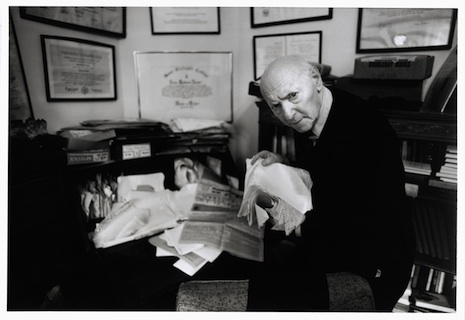
DAB1975002W0000X-XXC.jpg

The New Yorker last week published a story of Isaac Bashevis Singer’s: “Job–to anyone who wants to read it because they haven’t hidden it from non-subscribers.  Mostly I want to dedicate it to the Messenger and his parea.  It’s a tale told to Singer by someone — I dunno if it’s a fictive character or not — in the 1970s.  It was written by Singer at the time, but was not translated from Yiddish to English until March-July, 2012 by David Stromberg.  Much like Vassily Grossman’s Life and Fate (which I touch on briefly here), it deals with the suffering of a twentieth-century Jewish everyman, sandwiched between the nightmare of Nazism and Stalinism, with bitter, caustic humor completely intact (which Grossman couldn’t really do).

Why do I dedicate this to the Messenger?

Because I remember distinctly in one late-night email battle-session, when he wrote me: “And why is it so wrong for bourgeois guys — like the both of us [his emphasis] — to have an ideology or an ideological schema?”  It’s a slightly tricky question to be asked in Greek and to have to answer from a Greek-speaker but native English-speaker’s perspective, because the word “αστικό” in Greek means urban and urbane and bourgeois, in its socio-political sense, all at once, so it’s difficult to separate.  But I quickly clarified the difference between my ethnic-American, working-class New York borough background and his petit bourgeois Athenian upbringing.  And yet I couldn’t put into words — or rather — couldn’t, at the time, find an example or definition to support the difference I was trying to establish.

But we can sort of close in on what I meant…  Someone — Simone Weil, Kafka, Solzhenitsyn, Rebecca West, Walter Benjamin, the great Hitchens, historian Timothy Snyder…I’m embarrassed that I can’t remember — said: “The twentieth century is when ordinary people realized that bookish young men who read big books full of big ideas could have a total and devastating effect on their lives.”

Or in the words of Singer’s Job: “Our young little Stalinists, the onetime yeshiva boys and simple idlers, hounded me to the point that I started longing to go back to Russia.”

And that’s where it lays.  It’s Singer’s Job that makes the knock-out realization:

“I’ve realized one thing: the worst people are those who want to save the world. Among simple folk—merchants, skilled workers, the so-called little man—one can still find decent people. But among those who want to bring about the coming of the Red Messiah there is no truth, no compassion. What’s easier than torturing in the name of an ideal?”

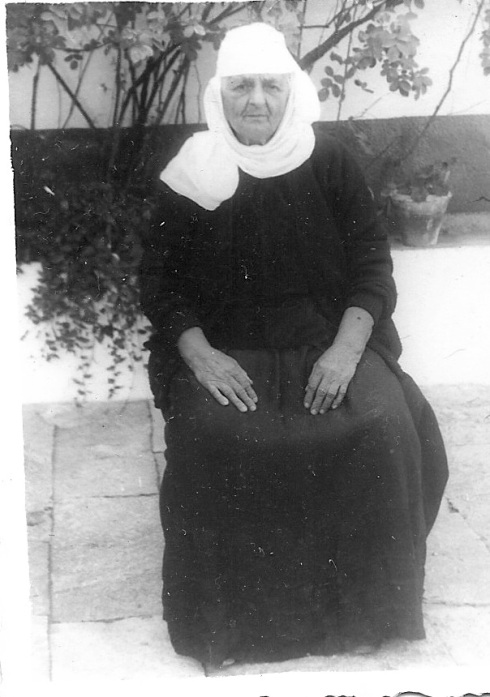
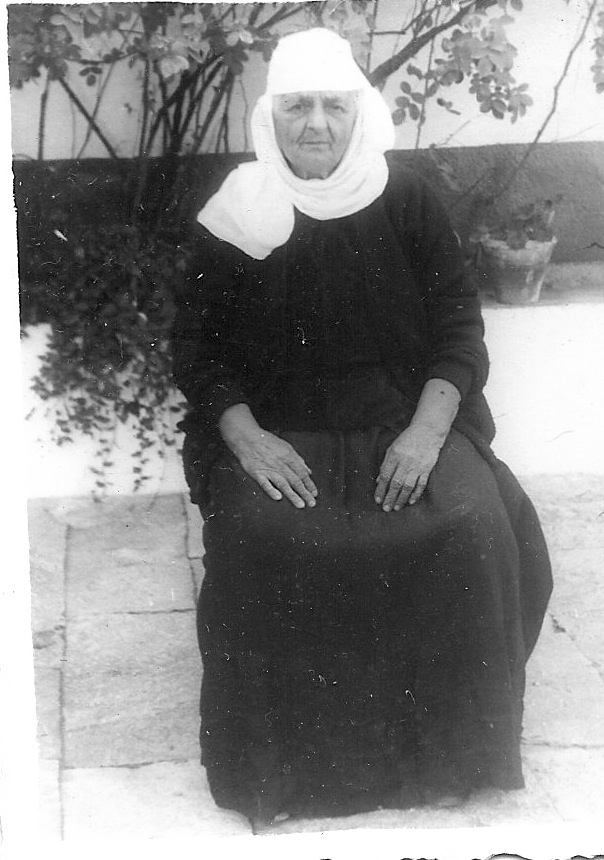
Of course your messianic vision doesn’t have to be Red; the Messenger’s is vehemently non-Red.  But that’s one thing that he never understood.  That that hue doesn’t matter.  That after a certain point he — he and his nationalism and his cronies’ nationalism — became the enemy for me.  The “worst people” are the ideologues.  After liberating him from the petit bourgeois prejudices he had been raised with, and becoming a model of “Roman-ness” for him, I didn’t realize that I had created a Frankenstein.  And he has never realized that he’s the enemy to me.  The people who tortured innocent women in our family like our aunt A. and killed heroic young men like our uncle S. and others, who looted and burnt down my mother’s paternal home, who imprisoned and persecuted and exiled my maternal uncle L. for decades, the people who tormented my father and his family and his extended clan for decades, who threw my grandfather into a prison camp in Albania and then into a mass grave somewhere, who isolated my grandmother in one room of the house her husband had built for her, who separated her forever from her only child, who created the pall of depression and unspoken sadness that hung over my family all my life…  Those people weren’t Albanians to me.  Or Muslims or communists or fascists or Turks or anything else or anyone else that the Messenger loves to hate.  They were petty little ideologues like him: bookish nerds who feel empowered by imposing their ideological hard-ons on innocent people, and making them suffer intolerable suffering in the name of their grand ideological vision.  “What’s easier than torturing in the name of an ideal?”  He’s the enemy.  But he doesn’t get it.  Y de allí his shock when I lay into him.

The other money quote from the Singer story:

“…I’d arrived at a certain philosophy: We can’t live openly in this world. We have to smuggle ourselves through. People, like animals, must constantly hide themselves. If the enemy’s on the right, you go left. It goes left, you crawl right. This very philosophy—you can call it cowardice, it doesn’t bother me—has helped me. I knew where the informers were and I avoided them. A lot of leftists—half-leftists and converted leftists, so to speak—went to Vilna or Kovno, but I went on to Russia, not to the big cities but to little towns, villages, collective farms. There I found a different kind of Russian: generous, ready to help. There they laughed at communism.”

Laugh at these people.  Russians’ and especially Jews’ saving strength.  That’s all there is to do.  Until they knock on your door.

Comment: nikobakos@gmail.com

giagoulaMy grandmother (click)


And the whole article, since The New Yorker is being so unusually generous about it:

August 13, 2012
Job
By Isaac Bashevis Singer

Translated by David Stromberg

Editors’ Note: This story, by Isaac Bashevis Singer (1902-1991), was first published in Yiddish in 1970, and is appearing here in English translation for the first time. (See the translator’s note below about how it came to light.) Singer published more than sixty stories in The New Yorker, beginning in 1967; we’re grateful for this chance to present his work once again.

****

Being a writer for a Yiddish newspaper means wasting half the workday on people who come to request advice or simply to argue. The manager, Mr. Raskin, tried several times to bring this custom to an end but failed repeatedly. Readers had each time broken in by force. Others warned that they would picket the editorial office. Hundreds of protest letters arrived in the mail.

In one case, the person in question didn’t even knock. He threw open the door and before me I saw a tiny man wearing a black coat that was too long and too wide, a pair of loose-hanging gray pants that seemed ready to fall off at any moment, a shirt with an open collar and no tie, and a small black spot-stained hat poised high over his brow. Patches of black and white hair sprouted over his sunken cheeks, crawling all the way down to the bottom of his neck. His protruding eyes—a mixture of brown and yellow—looked at me with open mockery. He spoke with the singsong of Torah study:

“Just like this? Without a beard? With bared head? Considering your scribbling, I thought that you sit here covered in prayer shawl and phylacteries like the Vilna Gaon—forgive the comparison—and that between each sentence you immerse yourself in a ritual bath. Oh, I know, I know, for you little writers religion is just a fashion. One has to give the ignorant readers what they truly desire.”

A wise guy, I thought. Aloud I said, “Please, sit down.”

“And what good will it do me to sit? Let me first get a good look at you. Right here is where you write? Right here, next to this little table, is where the goods are fabricated? This is where your holy spirit, so to speak, makes its appearance? Well, it is what it is. And, anyway, how do people write all these lies? With simple pen and ink. Paper is patient. You can even write that there’s a festival in Heaven.”

“What’s your name?” I asked.

“My name is Koppel Stein, but you can call me Job, because I’ve suffered as much as Job, and possibly even a little more. Job had three friends who came to console him, and in the end God took it upon Himself to offer a word of comfort. Then He repaid him twice over: more donkeys, prettier daughters, and who knows what else. I haven’t been comforted by anyone, and the Almighty remains silent, as if nothing had happened. I’m Job squared, if one can put it this way. Do you have a match? I’ve forgotten my matches.”

I went out and brought him matches. He lit a cigarette and blew the smoke right in my face.

“Forgive me for speaking to you this way,” he continued. “As they say, it’s my troubles speaking. You know it down to the last letter: ‘blame not a man in his hour of sorrow.’ The other day you complained in your write-up about a reader who’d held you up for six straight hours. I’ll keep it short, though how can one shorten a story that’s already lasted more than forty years? I’ll give you just the bare facts and if you’re no fool it’ll be as they say: ‘a word to the wise is enough.’ I’m one of those crazy people—this, it seems, is what you called them—who want to save the world, to institute justice, and other things of that kind.

“With me it started when I was still a little kid. Our neighbor Tevel the Shoemaker worked straight from the first rays of the sun until late into the night. In the winter I heard him banging on nails when it was still dark outside. He lived in a tiny room. He had everything there: the kitchen, the bedroom, the workshop. That was where his wife, Necha, gave birth every nine or ten months, and there the infants died. My father wasn’t much richer. He was a teacher. We also lived in a single room and had so little to eat that we might as well have deposited our teeth in the bank.

“Early on I began to ask: how is this possible? My father answered that this was God’s will. And I came to despise—with a thorough hate—the very same God Almighty who sat eternally in his seventh heaven, showered with respect and greatness, while his creatures suffered and died. I won’t get into details—I know from your work that you’re familiar with these details and even with the so-called psychology of such things.

“In short, I was about fifteen when I went astray. We had a political group in town where we read Karl Marx and Karl Kautsky and even got our hands on a brochure by Lenin—in Russian, not in Yiddish. In 1917, when the Revolution broke out, I was a Russian conscript. I managed to catch some lead near Przemysl and was laid up in a military hospital. What I went through in the barracks and on the front you probably know yourself. No, you know nothing, because my greatest sorrows came from my own mouth. I told everyone the truth. I spoke against the officers. To this day I don’t understand why they didn’t have me court-martialled and shot. They must have needed cannon fodder.

“Kerensky called for further fighting and I became a Bolshevik. I ended up in Poltava, and there we went through the October Revolution. Mobs set upon us and we were chased away. Who wasn’t there? Denikin, Petliura, others. I was eventually wounded and discharged from the Red Army. I got stuck in a little town where there was a pogrom against the Jews. With my own eyes I saw how they slaughtered children. I lay in the hospital and got gangrene in one foot. I’ll never understand why, out of everyone, I came out alive. Around me people died from typhoid fever and all kinds of other diseases. For me, death was an everyday thing. But despite all this my faith in man’s progress became stronger, not weaker. Who started wars? Capitalists. Who incited pogroms? Also they. I’d seen plenty of wickedness, stupidity, and pettiness among my own comrades, but I answered myself ten times a day with the same refrain: we are products of the capitalist system. Socialism will produce a new man—and so on and so forth. Meanwhile, my parents died in Poland, my father from hunger and my mother from typhoid fever. Though possibly also from hunger.

“After the mobs were driven out and things subsided into some kind of order, so to speak, I decided to become a laborer, despite the fact that I could have taken a government post or even become a commissar. By that time I was already in Moscow. I’d studied carpentry in our little town, so I entered a furniture factory. Lenin was still alive. For the masses, the big holiday still held sway. Even the New Economic Policy didn’t disappoint us. How do the Hassidim put it? ‘Descent for the sake of ascent.’ To stand and hear Lenin speak was a compensation for all the suffering and humiliation. Yes, suffering and humiliation. Because in the factory where I worked they cursed me and called me a ‘dirty Yid’ and mocked me no less than they had in the barracks.

“I was constantly hounded—and by whom? Party members, fellow-workers, Communists. They took every chance to tell me to go to Palestine. Of course, I could have complained. You heard of cases in which workers were put behind bars for anti-Semitic acts. But I soon realized that these were not isolated incidents. The entire factory was saturated with hatred for Jews—and not only Jews. A Tartar was no less inferior than a Jew, and when the Russians felt like it they made mincemeat of Ukrainians, Belarusians, Poles. Try sweeping away a trash can. I saw with sorrow that the Revolution had not changed all the drunkenness, debauchery, intrigues, theft, sabotage. A doubt stole into my heart, but I kept it silent with all my powers. After all, this was still just the beginning.

“I promised you to be short and this is what I’ll do. Lenin died. Stalin took over. Then came the plot against Trotsky—who for me was a god. Suddenly I heard he was nothing but a spy, a lackey of Pilsudski’s, Leon Blum’s, McDonald’s, Rockefeller’s. There are hearts that burst from the least worries, and there are also hearts as solid as a rock. It seems I have a stone there on my left side. What I’ve put up with, I only wish upon Hitler, if it’s true that he’s still alive somewhere, and that someone is hiding him in Spain or Argentina. I shared a room—actually a cell—with two other workers: drunks and scoundrels. The language they used—the smut! They stole from my pockets. At the factory, they called me Trotsky more than once and pronounced the ‘r’ with a Yiddish accent. Then came the arrests and the purges. People I knew—idealists—were taken away to prison and either got sent off to Siberia or rotted in jail. I began to realize, to my horror, that Trotsky was right: the Revolution had been betrayed.

“But what is a person to do concretely? Could Russia endure a new revolution, or even a permanent revolution? Can a sick body stand one operation after another? As my mother, peace be upon her, used to say: If a dog licked my blood, it would poison itself….

“So the years passed. Permanent revolution is impossible, but there is such a thing as permanent despair. I went to sleep in despair and awoke in despair. I was drained of all hope. Yet Trotskyist circles sprang up regardless of the persecution. The old conspiracies from the Tsarist times repeated themselves. The Revolution had fallen with a thud, but humankind doesn’t resign itself. This is its misfortune.”

II

“In 1928, I came back to Poland. So to speak. I smuggled myself across the border, helped by my fellow-Trotskyists. Each step involved the worst of dangers. I forgot to tell you that while still in Russia I’d been held at Lubyanka for seven months precisely under the suspicion that I was a Trotskyist. There wasn’t a single night in which I wasn’t beaten. Do you see this crippled fingernail? This is where a Chekist stuck a glowing rod into me. I had my teeth knocked out and those who did it were my fellow-proletarians, a curse upon humankind. What was done in prison can’t be put into words. People were physically and spiritually degraded. The stench of piss pots made you crazy. In a prison you can find all sorts of people. There was homosexuality as well as outright rape. Yes, be that all as it may, I smuggled myself into Poland and came to Nieswiez—perhaps you’ve heard of this little town? As soon as I crossed the border, the Poles arrested me. They later let me out, but then I was put behind bars again.

“This was in 1930. I’d been given a contact among the Trotskyists in Warsaw, but they ended up being just a few poor youths, workers. The Stalinists considered it a good deed to denounce Trotskyists to the authorities, and most of them were imprisoned in Pawiak or Wronki—a terrible prison. In Warsaw, I tried to tell them about what was going on in Russia, and don’t ask what I had to put up with! Our young little Stalinists, the onetime yeshiva boys and simple idlers, hounded me to the point that I started longing to go back to Russia. I was beaten, spat on, and called nothing but a renegade, fascist, traitor. A few times I tried to speak to an audience, but thugs from Krochmalna Street and Smocza Street came to shut me up. Once, I was stabbed with a knife. There is no worse lowlife than a Jewish Chekist, Yevsektsia member, or plain Communist. They spit on the truth. They’re ready to kill and torture over the least suspicion. I already understood that there was no difference between Communists and Nazis, but I still believed that Trotskyism was better. Something had to be good! Not everyone could be evil.

“Up until now I haven’t mentioned my personal life, because in Russia I hadn’t had any personal life. Even if I could have sinned, there was nowhere it could be done. With several men living in a single room, you’d have to be an exhibitionist. I witnessed both sexes in their utmost shame and misery, and I, as they say, lost my appetite. Hundreds of thousands of illegitimate children were brought forth—the homeless—who in turn became Russia’s curse and peril. When a woman went to buy bread, they fell upon her and stole it from her. Very often they raped her too. There was no lack of downright thieves, murderers, drunks. The Revolution should’ve brought an end to prostitution, but whores loitered all around the very Kremlin. In Warsaw, I met a Trotskyist woman. She was hunchbacked, but for me a physical defect was no defect at all. She was clever, intelligent, idealistic. She had a pair of black eyes and from them all the sadness and wisdom of the world peered out—though where in the world is there wisdom? We became close. Neither of us thought much of the idea of going to a rabbi. We rented an attic room on Smocza Street, where we started living together. That’s also where we had our daughter, Rosa—naturally, after Rosa Luxemburg.

“My wife, Sonia, was a nurse by trade—a medic and a compassionate caregiver. She spent her nights with the ill. We seldom had a night together. I couldn’t find any work in the Polish factories and earned a little by repairing poor people’s furniture—a closet, a table, a bed. I earned peanuts. As long as there wasn’t any child, it was still bearable. But when Sonia was in her later months it became difficult. In the middle of all this I was arrested. I’d been denounced by my Jewish and proletarian brothers, who’d invented a false accusation against me and actually planted illicit literature. What do you know about what people are capable of doing? Some of them later fell in Spain—they were killed by their own comrades. Others perished in the purges or simply in Comrade Stalin’s labor camps.

“The entire trial against me was a wild invention. Everyone knew this: the investigator, the prosecutor, the judge. They put me together with people whose faces I’d never seen and said that we’d planned a conspiracy against the Polish Republic. The policemen—guardians of the law —gave false testimony and swore to lies. In prison, the Stalinists hounded me so much that each day was hell. They didn’t take me into their circle. Among the civilians there were rich people, especially women, who brought political prisoners food, cigarettes, other such things. They even provided lawyers free of charge. But since I didn’t believe in Comrade Stalin, I was as good as excommunicated. They played dirty tricks on me. They tore my books, threw dirt into my food, they literally spat on me a hundred times a day.

“I stopped talking altogether and went silent. It got to the point that I became like a mute. In order not to hear their abuse and curses, I used to stuff my ears with soft bread or cotton from my coat. They even persecuted me at night, all in the name of Socialism: a bright future, a better tomorrow, and all their other slogans. The tortured themselves became torturers. Don’t think that I have any illusions about the Trotskyists. I’ve realized one thing: the worst people are those who want to save the world. Among simple folk—merchants, skilled workers, the so-called little man—one can still find decent people. But among those who want to bring about the coming of the Red Messiah there is no truth, no compassion. What’s easier than torturing in the name of an ideal?

“It got to the point that the Polish prison guards began to stand up for me and demanded that I be left alone. I started asking them to put me among the criminal offenders, and when they at last obliged me the comrades exploited it and organized a protest demonstration opposing a political prisoner being put among criminals. In other words, they wanted me nearby to torture. This is how they behaved—those who ostensibly sat in jail for the sake of justice.

“Sitting among the thieves, pimps, and murderers was hardly a delight. They eyed me with suspicion. There prevailed an old hatred between the underworld and the politicals—ever since the times of 1905. But, compared with what I endured from the Stalinists, this was paradise. They stole my cigarettes and made off with portions of the packages that Sonia sent me, but they let me read my books in peace. Instead of ‘fascist,’ they called me ‘idiot’ and ‘good-for-nothing,’ which did less damage. It even happened sometimes that a thief or a pimp would pass me a piece of sausage or a cigarette from his own stash. What was there to do in the cell? Either you play cards—a marked and greasy pack—or you talk. From the stories I heard there, one could write ten books. And their Yiddish! The politicals babbled in the Yiddish of their pamphlets. It was not a language but some kind of jargon. The thieves spoke the real mother tongue. I heard them use words that astounded me. It’s a shame I didn’t write them down. And their thoughts about the world! They have a whole philosophy. At the time I went to prison, I still believed in revolution, in Karl Marx. I had all kinds of political illusions. Back outside I was completely cured.

“While I sat in jail, there developed in Poland a growing disappointment in Stalin. It swelled to the point that the Polish Communist Party was thrown out of the Comintern. Many of my persecutors had taken off for the ‘land of socialism’—where they were liquidated. I was told about one sucker who, having crossed the border, threw himself down and started kissing the ground of the Soviet Union, as Jews of yore used to do when arriving in the Land of Israel. Just as he lay down and kissed the red mud, two border guards approached and arrested him. They sent him to dig for gold in the north, where the strongest of men didn’t last more than a year. This was how the Communist Party treated those who had sacrificed themselves on its behalf.

“Then a new curse wriggled its way in: Nazism. It was Communism’s rightful heir. Hitler had learned everything from the Reds: the concentration camps, the liquidations, the mass murders. When I got out of jail, in 1934, and told Sonia what I thought about our little world and those who wanted to save it, she attacked me like the worst of them. The fact is that while I sat behind bars I’d become a kind of martyr or hero for the Trotskyists. I could have played the role of a great leader. But I told them: dear children, there is no cure for the human race. It was not the ‘system’ that was guilty but Homo sapiens itself, in the flesh. When they heard such heresy, they shivered with rage. Sonia informed me that she couldn’t live with a renegade. I’d had the luck of becoming a renegade twice over. It was a separate issue that, while I sat behind bars, she had lived with someone else. Hunchbacks are hot-blooded. There’s always a volunteer handy. He was a simple youth from the provinces, I think he was a barber. Little Rosa called him Daddy…”

III

“Don’t look so afraid! I won’t keep you here until tomorrow. You went away to America in 1935, if I’m not mistaken, and you know nothing about what happened later in Poland. What took place was an absolute breakdown. Stalinists became Trotskyists, while Trotskyists went into the Polish Socialist Party or the Bund. Others became Zionists. I myself tried to turn to religion. I went to a study house and sat myself down to learn the gemara, but for this one must have faith. Otherwise it’s just nostalgia.

“The anarchists raised their heads again—some of them still stood by Kropotkin, others became Stirnerists. We had guests in Poland. Ridz-Szmigli had invited the Nazis to hunt in the Białowieza Forest. Then came the Stalin-Hitler pact and the war. When they started to bomb Warsaw, those who were strong enough ran over the Praga Bridge and set out for Russia. Some had illusions, but I knew where I was going. Yet staying among the Nazis was not an option for me. I came to say goodbye to Sonia and found her in bed with the barber. Little Rosa started crying, ‘Papa, take me with you!’ These same cries follow me still. They torment me at night. They all perished. No one remained.

“I was in Bialystok when a number of Yiddish writers from Poland all at once became ardent Stalinists. Some lost no time and began denouncing their colleagues. People knew me as a Trotskyist and I was heading for certain death, but by then I’d arrived at a certain philosophy: We can’t live openly in this world. We have to smuggle ourselves through. People, like animals, must constantly hide themselves. If the enemy’s on the right, you go left. It goes left, you crawl right. This very philosophy—you can call it cowardice, it doesn’t bother me—has helped me. I knew where the informers were and I avoided them. A lot of leftists—half-leftists and converted leftists, so to speak—went to Vilna or Kovno, but I went on to Russia, not to the big cities but to little towns, villages, collective farms. There I found a different kind of Russian: generous, ready to help. There they laughed at communism.

“Until 1941, people got by somehow. When the war arrived, a famine broke out. Refugees on foot arrived by the millions. Others were brought in freight trains. Millions of Russians went to the front. I starved, slept in train stations, passed through all seven circles of Hell, but I avoided one thing: prison. I kept my mouth shut and played the role of a simple person, someone half-illiterate. I worked wherever possible. On collective farms and in factories I witnessed the thing called the communist economy. They simply destroyed the machinery. They ruined raw materials. It couldn’t even be called sabotage. It was a simple beastly indifference to anything that didn’t directly relate to them. The whole system was such that either you stole or you were dead. I entered a factory and the accountant, a fellow from Warsaw, conducted his accounting on books by Chekhov, Gogol, Tolstoy. He scribbled his numbers—obviously false—on the margins and above the printed type. You couldn’t get any blank paper there. People lived on stolen goods sold on the black market. You can’t grasp it unless you’ve seen it with your own eyes. If not for America—and had the Nazis not been such ferocious murderers—Hitler would have got as far as Vladivostok.

“I didn’t live—I smuggled myself through life. I became a worm that crawled from here to there. As long as it wasn’t trampled, it crept on. I was astonished to realize that the whole country was like this. We became like the lice that infested us. Until I arrived in Russia for the second time, I’d still had something in me that could be called romanticism or sexual morality. But with time I lost this, too. Millions of men lay scattered on the fronts and millions of wives lived with anyone who would take them. I slept with women whose names I didn’t even know. In the night I had females whose faces I hadn’t seen. I once lay with a woman on a bale of hay. She gave herself over to me and cried. I asked her, ‘Why are you crying?’ And she wailed, ‘If Grishenka only knew! Where is he, my little eagle? What have I made of him!’ Then she nestled up to me, crying. She professed, ‘To me you’re not a man but a candle for masturbation.’ She suddenly took to kissing me and wetting me with her tears. ‘What do I have against you? You’ve probably also left someone behind. A curse on fascism!…’

“In Tashkent, I got typhoid fever, which was later complicated by pneumonia. I lay in the hospital and around me people were constantly dying. Some Pole spoke to me and started telling me about all his plans. All at once he went silent. I answered him and he didn’t respond. The nurse came in and it turned out that he’d died. Just like that, in the middle of speaking. He suffered from scurvy or beriberi, and with these diseases people died, so to speak, without a preface. I became indifferent to death. I never believed this would be possible.

“You shouldn’t think that I came here just to get into your hair and tell you my life story. The fact is that I’m here and this means that I smuggled myself through everything—hunger, epidemics, murder, destruction, borders. Now I’m in your United States. I already have my papers. I’ve already been mugged in your America, and have already had a revolver held to my heart, too. A survivor with whom I crossed here on the ship has already worked his way up and owns hotels in New York. He took straight to business, forgot all the dead, all the killing. I recently found him in a cafeteria and he complained to me about his falling stocks. He married a woman who’d lost her husband and children, but she already has new children with him. I talk about smuggling myself and he’s a born smuggler. He’d already started smuggling in the German DP camps, where he waited for an American visa.… Yes, why did I come to you? I came with an idea. I beg you, don’t laugh at me.”

“What’s this idea?”

He waited a moment and lit another cigarette.

“You’ll think I’m crazy,” he said. “The idea is for all decent people to commit suicide.”

“Is that so!”

“You laugh, eh? It’s no laughing matter. I’m not the only one disappointed in the human race. There are millions of others like me. As soon as there is no longer any hope—what’s the point of hanging around to suffer fruitlessly and in vain? I read your writing back in Warsaw. I read you here. You are, as far as I know, the only writer who has absolutely no hope for mankind. You’ve lately taken to praising religion, but your religion is a religion of despair. You reduce everything to one point: this is God’s will. Perhaps God wants humankind to put an end to itself? I beg you, don’t interrupt me! There are scores of movements, who knows how many religions and sects—why shouldn’t there be a movement that preaches suicide? How long can you smuggle yourself only to be crushed in the end? My feeling is that millions of people are ready to end it all, but they lack the courage—the last push, so to speak. If millions of idiots are ready to die for Hitler and Stalin and all kinds of other scourges, why shouldn’t people want to perish as a protest? We should frankly throw back at God this gift of His: this despicable struggle for existence, which in any case ends in defeat. First of all, people must stop having children, bringing into the world new victims. Let the scumbags hope, let them fight for bread, sex, prestige, for the fatherland, for Communism, and for all kinds of other isms. If there remains among the human race a remnant of common sense, it should come to the conclusion that all this filth isn’t worthwhile.”

“My dear friend,” I said, “suicide can never be a mass movement.”

“How can you be so sure? What was the Battle of Verdun if not mass suicide?”

“People there hoped for victory.”

“What victory? They stationed a hundred thousand men and were left with sixty thousand graves.”

“Some survived. Some received medals.”

“Perhaps we should create a suicide medal?”

“You’ve remained a world-saver,” I said. “Suicide is committed alone, not with partners.”

“I read somewhere that in America there are suicide clubs.”

“For the rich, not for the poor.”

He laughed and exposed a toothless grin. He spat out his cigarette butt and stepped on it.

“So what should I do?” he asked. “Become rich? Perhaps I should. It would, actually, be like Job.”

****

Translator’s note:

Beginning in his early years in the United States, Isaac Bashevis Singer earned his living churning out texts for the Yiddish-language daily Forverts—an assortment of fiction, essays, journalism, advice, and memoir, often published in a hurry, under several pseudonyms. Later in his writing life, Singer worked on translating into English those stories he considered worthy of republication, editing and correcting them in the process.

When, in the course of my doctoral research, I came across the story “Job” (“Iyov”)—first published in Forverts in 1970, and later included by the late scholar Khone Shmeruk in a Yiddish collection titled “Der Shpigl” (“The Mirror”; Hebrew University, 1975)—I was convinced I’d find the story in English translation. Its themes of political disillusionment coupled with an inextinguishable search for salvation were tied to Singer’s larger body of work, and the story’s artistic accomplishment was confirmed by its inclusion in the Yiddish collection. The biblical title also indicated its potential significance. But I found nothing: not in any of Singer’s English-language collections, not among his uncollected or posthumously published stories, and not in the Isaac Bashevis Singer papers at the Ransom Center in Austin, Texas. It seemed I’d have to read “Job” in the original.

I’d studied Yiddish, but my vocabulary was still relatively limited. To understand anything beyond the main premise, I had to look up words in the dictionary. As I began writing them down, I realized I was on my way to translating the story. I shared my translation of “Job” with a few colleagues in Jerusalem, and reviewed it with Eliezer Niborski, a young Yiddish teacher and native speaker. We were all struck by the story—especially its sharp yet compassionate final exchange—and surprised that it had yet to be published in English.

I decided to take another look at the list of the Singer papers in Texas. Knowing now what the story was about, I noticed a folder entry among Singer’s unidentified works that caught my eye. I ordered a facsimile of this typescript fragment and, as I suspected, found that Singer, together with Dorothea Straus, had indeed translated “Job”—but that the translation was not complete. The fragment of Singer’s translation attested to his distinct and idiosyncratic mastery of English, which I felt compelled to acknowledge in my rendition of the story. I ultimately decided to introduce the author’s hand by incorporating some of Singer’s own word choices—while also aiming to avoid mimicking or impersonating his singular English style.

Arrangements were made to publish my translation of the story. I showed it to Robert Lescher, the literary agent for Singer’s estate, who gave me some insight into Singer’s publication process. Mr. Lescher said that, after they’d begun working together, in 1970, Singer would bring his stories into the office. Mr. Lescher would comment on them, sometimes Singer would make changes, and only then would they be submitted to various editors for publication. At The New Yorker, Singer worked with the fiction editor Rachel MacKenzie to get a story into its final shape.

Mr. Lescher had minor reservations about a few lines in my translation where he felt the language didn’t flow. Based on his suggestions, I made a handful of adjustments that required my straying very slightly from the literal text. We were wary of editing a great writer who was no longer with us, but felt we could fine-tune the translation: ultimately, the responsibility falls to the translator to make decisions based on the original Yiddish text, whose publication Singer had approved.

A couple of days before the story was set to appear, I found myself again working with the folder list of the Singer papers at the Ransom Center. Looking for something else altogether, I came upon yet another entry among the unidentified works that caught my attention. I realized that it contained more, though still not all, of Singer’s translation of “Job.” The rest of the manuscript had apparently not been lost—it had merely been separated from the other parts and stuffed into a different slot.

The publication of “Job” had turned into a literary experience reminiscent of a chaotic Singerian universe—where coveted objects are misplaced, or purposely hidden by imps, only to reappear just before it’s too late. I used the additional pages to reconstruct some of my initial translation solutions—though again avoiding the temptation to replicate Singer’s signature linguistic choices in English. With the help of Arcadia Falcone of the Ransom Center, I am working to locate and reunite the missing pages of Singer’s translation of “Job.” And as in a Singer story, the story of this translation is yet to be continued…

— David Stromberg, Jerusalem, March-July, 2012

Photograph of Isaac Bashevis Singer by Bruce Davidson/Magnum.

The Classical Liberals: “On the Balkans, the Former Yugoslavia, and the Unity of Spaces”

4 Jan

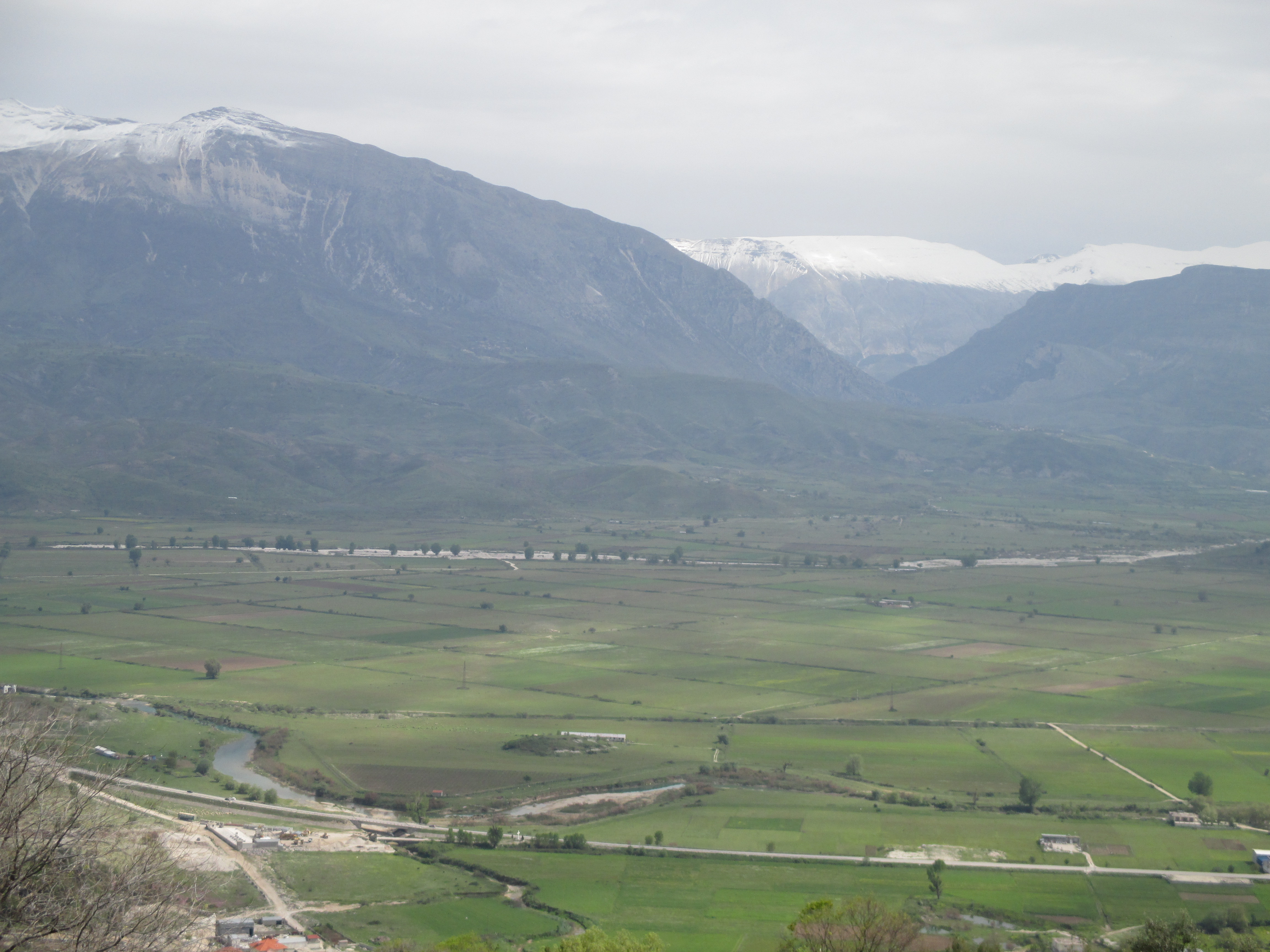
dropoliThe Valley of Dropoli, the pass up to the Pogoni plateau near Libochovo, and in the distance, the snowcapped peaks of Nemerčka, from the Monastery of the Taxiarches in my father’s village of Derviçani, Easter 2014 (click)

I’m honored by the fact that this really intelligent blog quotes extensively from the Jadde’s mission statement in a recent post: Jadde — Starting off — the Mission.

Check them out: The Classical Liberals: At least, most of the time  Smart, perceptive, interesting stuff.

The author of the post below and the person I suspect is largely behind the editing of the blog is one Eoin Power, not just a fellow Balkan-freak along the lines of me or Rebecca West, but also a fellow Epirote.  He demurs a bit — though not very convincingly — at being called an Epirote, because his lineage is multiple and complicated and the connection to Epiros is fairly distant historically.  But he’s from one of the most archetypically and ancient Epirotiko villages — where they still own their patriko — in one of the most archetypically Epirotiko regions of Epiros and he carries himself with the requisite Epirotiko dignity and soft-spokeness and if I, NikoBakos, have conferred the title on you, it’s ’cause you deserve it.

***************************************************************************************************************************************************************************

On the Balkans, the Former Yugoslavia, and the Unity of Spaces

The other day, as she is wont to do, my mother sent me a link to something on the Internet; this time it was to Nicholas Bakos’ blog, which you can find here. If you’re reading this blog, we’re probably friends in real life (thanks for reading!), and so it’s probably obvious why something like that would be of interest to the both of us. I have admittedly only skimmed sections of his posting so far, but in his introductory one, it was especially gratifying to read this:

This blog is about “our parts.”  It’s about that zone, from Bosnia to Bengal that, whatever its cultural complexity and variety, constitutes an undeniable unit for me.  Now, I understand how the reader in Bihać, other than the resident Muslim fundamentalists, would be perplexed by someone asserting his connection to Bengal.  I can also hear the offended screeching of the Neo-Greek in Athens, who, despite the experiences of the past few years, or the past two centuries, not only still feels he’s unproblematically a part of Europe, but still doesn’t understand why everyone else doesn’t see that he’s the gurgling fount of origin and center of Europe.

But set aside for one moment Freud’s “narcissism of petty differences,” if we have the generosity and strength to, and take this step by step.  Granted there’s a dividing line running through the Balkans between the meze-and-rakia culture and the beer-and-sausage culture (hats off to S.B. for that one), but I think there’s no controversy in treating them as a unit for most purposes; outsiders certainly have and almost without exception negatively.  And the Balkans, like it or not, include Greece.  And Greece, even more inextricably, means Turkey, the two being, as they are, ‘veined with one another,’ to paraphrase the beautiful words of Patricia Storace.  Heading south into the Levant and Egypt, we move into the Arab heartland that shares with us the same Greek, Roman-Byzantine, Ottoman experiences, and was always a part of the same cultural and commercial networks as the rest of us.  East out of Anatolia or up out of Mesopotamia I challenge anyone to tell me where the exact dividing line between the Turkic and Iranian worlds are, from the Caucasus, clear across the Iranian Plateau into Afghanistan and Central Asia.

Bakos suggests that for people of “those parts” displaced to another environment (e.g. grad school in the West), this kind of geographical unity came, at least in a social context, fairly naturally, so perhaps I shouldn’t be all that surprised and delighted at seeing it reconstituted in blog form. But in fact I think the basic unity of the geographical zone outlined here often gets lost in the way these places are understood by outsiders and, ironically enough, in no small part due to the vehement insistence from each of the zone’s component peoples that they could not possibly be compared with those uncultured idiots with whom they share a border.*

Explaining the rationale for delineating “his parts” the way he does, Bakos writes:

But to step into Buddhist Burma is somehow truly a leap for me, which maybe I would take if I knew more. And in the other direction, I stop in Bosnia only because for the moment I’d like to leave Croatia to Europe – mit schlag – if only out of respect for the, er, vehemence with which it has always insisted that it belongs there.  Yes, I guess this is Hodgson’s “Islamicate” world, since one unifying element is the experience of Islam in one form or another, but I think it’s most essential connections pre-date the advent of Islam.  I’ll also probably be accused, among other things, of Huntingtonian border drawing, but I think those borders were always meant to be heuristic in function and not as hard-drawn as his critics used to accuse him of, and that’s the case here as well.

Ultimately what unites us more singularly than anything else, and more than any other one part of the world, is that the Western idea of the ethnic nation-state took a hold of our imaginations – or crushed them – when we all still lived in complex, multi-ethnic states.  What binds us most tightly is the bloody stupidity of chilling words like Population Exchange, Partition, Ethnic Cleansing – the idea that political units cannot function till all their peoples are given a rigid identity first (a crucial reification process without which the operation can’t continue), then separated into little boxes like forks after Easter when you’ve had to use both sets – and the horrendous violence and destruction that idea caused, causes and may still do in “our parts” in the future.

Having not, at least north of the equator, yet made it further east than Istanbul, I am in no position to question Bakos’ perception of the fundamental apartness of Buddhist Burma. But the loose border he posits to the north and west is one I’ve crossed many times, and it’s one that is both deeply present and functionally invisible.**

At the very least it is present in people’s minds; I can vouch for the vehemence (to use Bakos’ word again) with which Slovenes and Croats will insist that their countries are European, and not Balkan. It’s also pretty visually observable – you could mistake Zagreb or Ljubljana for a city in Austria or Germany in a way you simply can’t for, say, Sarajevo or Belgrade. And on one frantic trip from Dubrovnik back to Ljubljana (the ferry which I’d intended to take from Dubrovnik to Ancona decided not to arrive from Split, leaving me nothing to do but beat a hasty retreat back north) you could, if you were looking for it, see an actual tangible difference in the way things were done in the world – bus tickets in Mostar and train tickets in Sarajevo had to be paid in cash and a conductor on the train north from Sarajevo let me pay in a mix of Croatian kuna, Bosnian marks,  and euros. In Zagreb I could pay with a credit card, the train station had working and appealing amenities, and you couldn’t smoke in the train. This is a terribly squishy thing to write, but it did feel more “European-y”.

On the other hand, if the relatively old Huntingtonian dividing line between formerly Orthodox and Ottoman lands to the south, and formerly Catholic Hapsburg lands to the north is visually (and, at least in terms of credit card viability in 2009, functionally) discernible, the comparatively recent unifying experience of Yugoslavia is also unavoidable. Here, too, the first signs are in architecture and appearance; Soviet-style architecture and the legacy of 1950s industrialization has left the same physical scars on cities from Nova Gorica to Skopje. But they run deeper than that – the protestations of linguistic nationalists notwithstanding, Slovene, Bosnian, Croatian, Serbian, Montenegrin, Macedonian (hell, even Bulgarian a bit) all exist along a spectrum of of mutual intelligibility; state apparatuses, all having those of the former Yugoslavia as their common predecessors, share similar characteristics. Indeed, to me as a foreigner, the similarities often seem more salient than the differences.

Just on the basis of whether or not there “is” a usefully differentiating border to be drawn where Croatia meets Bosnia, it seems you can argue fairly fruitfully either way, depending on whether your sympathies lie with a sort of longue duree emphasis on deep civilizational splits or a faith in the primacy of modern political experiences. But by Bakos’ own ultimate criteria, it seems a bit odd to leave the northernmost bits of the former Yugoslavia out of things (though there is a nice alliterative symmetry to covering “from Bosnia to Bengal”) . If you’re going on the basis of, “the bloody stupidity of chilling words like Population Exchange, Partition, Ethnic Cleansing,” surely things like Jasenovac or the Istrian exodus argue for the inclusion of all of the former Yugoslavia?

Of course, any exercise in boundary-izing is a bit arbitrary, and in this case there are good reasons to put one in between Croatia and Bosnia and not, say, in between Slovenia and Austria (two countries for which there also exist plenty of historical reasons to consider them as part of a unified space). So if all of this does anything, it is perhaps to show how much more liminal are most places than we or their inhabitants often care to admit; whether or not you see a border somewhere often depends as much on your level of zoom as anything else.

*Or at least their nationalist politicians – many average people (whatever that means) in Bosnia and Serbia, for example, will quickly stress to you the fundamental similarities between the two countries and their inhabitants
**People sometimes marvel at my overstuffed passport but really something like 40% of the stamps come from the Dobova and Dobrljin border posts.

**************************************************************************************************************************************************************************

Again, check these guys out; you won’t regret it: The Classical Liberals

Comment: nikobakos@gmail.com

Blogging of a hero of mine: Alexey Naval’niy

4 Jan

Navalny on Putin, Being Bugged and Revolution

“Those of us who love Naples…”

4 Jan

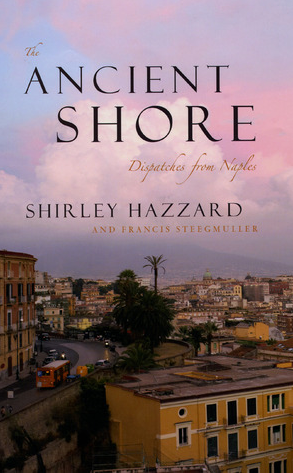
“…are constantly called upon to defend her…” writes Shirley Hazzard in her  The Ancient Shore: Dispatches from Naples.

Screen Shot 2015-01-03 at 7.36.15 PM

And yet how can you not?  That’s what I thought when the Times came out with this article a few days before Christmas:In Naples, Gift of Coffee to Strangers Never Seenabout the Neapolitan tradition of buying two coffees at an espresso bar and only drinking one, leaving behind the paid receipt on the second one for someone who can’t afford it — “sospeso,” suspended — to enjoy.

Screen Shot 2015-01-03 at 7.40.33 PMThe Storico Gran Caffè Gambrinus, which honors the Neapolitan tradition of the “suspended coffee.” The practice, which boomed during World War II, has found a revival in recent years. Gianni Cipriano for The New York Times (click)

There may not be anything particularly Neapolitan about such a tradition of anonymous generosity — except perhaps the poverty it was born from.  But there is something distinctly Italian about the idea that even the poorest person deserves a moment of luxury and pleasure.  You could leave old shoes or clothes too.  Or donate money to someone.  But an aromatic stretto is a gift of a different order because it confers another order of dignity on the recipient: a moment of rich joy at a beautiful place like Gambrinus (shown in pic).

Surfeit and excess has always been the mark of sacrifice and offering.  I remember going to the Virgin of Guadalupe on Fourteenth Street here in New York once on December 12th, her feast day.  And young Mexican guys bringing massive flower arrangements — massive, layered, wedding-like affairs — in her honor; bouquets that easily could have cost these guys a night’s restaurant pay or more.  But, in some sense, sacrifice is about being free, if just for that day and that moment, of necessity.  “My cup runneth over.”  I’m not bound by the material limitations of my existence.  Not today.  I expand and give.  Like the Christmas carol: “A child shivers in the cold, let us bring Him silver and gold.”  Not blankets, or food for His mom, or pampers.  Luxury.  Opulence.

I don’t get a chance to write about Naples as often as I want to.  Here’s a piece from an old post about a favorite film:

“[Garrone’s] Gomorrah is a must, must see film.  The trailer kind of stupidly makes it sound like a mob film — albeit an ‘unromantic’ one — but it’s really about a hundred deeper things: the loss of the profound Italian love for the land and its fruits; the destruction of centuries of Italian craftsmanship; the beauty of the language of one of the world’s most ancient and unfairly maligned cities; the environmental degradation that comes from moral degradation; and the fraying of the social bonds and ties that once made life for the poor bearable.  SEE it.  You’ll never look at a peach the same way again.  It’ll break your heart.”

Comment: nikobakos@gmail.com


The rehabilitation of schmaltz

4 Jan

I mean, once butter and then lard had not only been declared non-lethal, but had become foodie cult items, you had to know it was coming.

Screen Shot 2015-01-03 at 7.02.39 PMSchmaltz, rendered poultry fat, and gribenes, the crispy, crackling-like byproduct that comes from bits of chicken skin. Andrew Scrivani for The New York Times (click)

Schmaltz!  Rendered chicken fat.  The cooking medium used by observant Jews to make meat dishes where they can’t use butter due to the strict milchig/fleishig (dairy/meat) separation of kosher dietary laws.  See the Times article: Schmaltz Finds a New, Younger Audience.”  Yeah…  I dunno that I’d be putting any heavy investment cash into the product just yet.  I remember — (I’m dating myself…I referred to one of our professors’ sense of humor as “Borscht Belt” the other day and got a blank stare from the whole class…including the professor) — when kosher delis in New York still had a little dispenser, just like and next to the one with the mustard, of semi-coagulated chicken fat on the tables.  And I can’t say it made a pastrami sandwich taste any much better.  When used in cooking, I dunno…

scmaltz_0003But from the shtetl to haute cuisine — a little-known fact…  Though the forced fattening of geese and ducks has been recorded since Egyptian times (and it doesn’t hurt, they don’t have a gag reflex like we do; plus, it’s a duck), and the words for liver: “fegato” in Italian or “higado” in Spanish or “foie” in French, come from the Latin “ficus,” fig, on which they were fattened…it’s most likely that in mediaeval Europe foie gras was an accidental, delicious by-product of Jews force-fattening their geese for schmaltz.  So there you go…

sauteed-foie-gras(click)

(cl(cl(

Comment: nikobakos@gmail.com

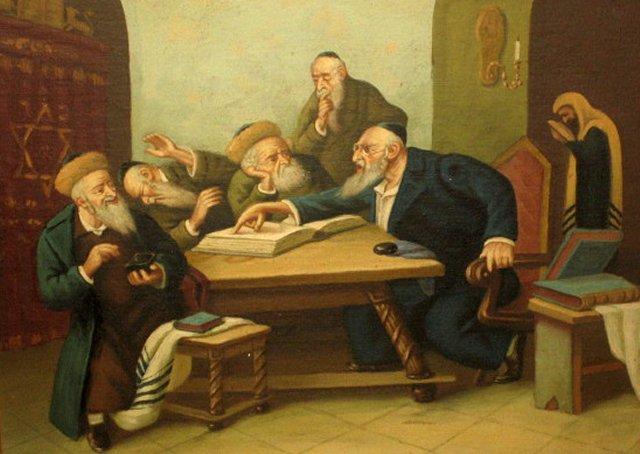
“The Tradition Of The Argumentative Jew”

4 Jan

Re-blogged from Andrew Sullivan’s Daily Dish:

Rabbis8629854_2

Dec 14 2014 @ 9:13am

Leon Wieseltier praises it:

“Learning to live with disagreement … is a way of learning to live with each other. Etymologically, the term machloket refers to separation and division, but the culture of machloket is not in itself separatist and divisive. This is in part because all the parties to any particular disagreement share certain metaphysical and historical assumptions about the foundations of their identity. But beyond those general axioms, the really remarkable feature of the Jewish tradition of machloket is that it is itself a basis for community.

“The community of contention, the contentious community, is not as paradoxical as it may seem.

“The parties to a disagreement are members of the disagreement; they belong to the group that wrestles together with the same perplexity, and they wrestle together for the sake of the larger community to which they all belong, the community that needs to know how Jews should behave and live. A quarrel is evidence of coexistence. The rabbinical tradition is full of rival authorities and rival schools—it owes a lot of its excitement to those grand and even bitter altercations—but the rivalries play themselves out within the unified framework of the shared search. There is dissent without dissension, and yet things change. Intellectual discord, if it is practiced with methodological integrity, is compatible with social peace.

“The absence of the God’s-eye view of an issue, and the consequent recognition of the limitations of all individual perspectives, has a humbling effect. A universe of controversy is a universe of tolerance. Machloket is not schism, and the difference is crucial. Though disagreement may lead to sectarianism, most disagreement in the history of this ever-thinking people has been contained, and has been brilliantly developed, on this side of sectarianism. I do not mean to exaggerate the loveliness of the system: There has been heresy and there has been heterodoxy, and Jews have persecuted other Jews for their opinions. Intellectual integrity is always a risk to community, because some minds may think themselves, rightly or wrongly, beyond the limits. But the tradition of Jewish debate, especially legal debate, is striking for how rich it remains within the limits. Whether or not heresy and heterodoxy are forms of heroism, it is important to acknowledge that fidelity, and the internal growth of a tradition inside its carefully examined boundaries, may also be heroic.”

Comment: nikobakos@gmail.com

Israel: know hope?

3 Jan

F141210ZZ42-e1418239874516Labor leader Isaac Herzog and Hatnua leader Tzipi Livni (click)

from Al Jazeera:

Two Israeli parties unite against Netanyahu

Last updated: 11 December 2014
 

Opposition Labour party and HaTnuah join forces in bid to unseat PM Benjamin Netenyahu in March snap election.

 “Israel’s Labour party leader has joined forces with the former justice minister in a bid to unseat Prime Minister Benjamin Netanyahu in the country’s snap election in March.

Opposition Labour party leader Isaac Hertzog and centrist Tzipi Livni of the HaTnuah party on Wednesday announced their alliance at a televised news conference featuring the slogan “Together We Win”.

“When we receive the mandate… I shall serve as prime minister for the first two years and Tzipi Livni will serve as prime minister for the second half” of the four-year term, Hertzog said.

“Today the Zionist centre has risen against the parties of the extreme right,” said Livni, formerly Israel’s chief negotiator with the Palestinians, who was fired from government last week by Netanyahu, who accused her of working against his right-leaning coalition from within.

The joint list of candidates is expected to run on a platform emphasising the peace process with the Palestinians and greater economic equality.

Opinion polls give the Herzog-Livni alliance about 24 seats in the 120-seat parliament which is slightly more than their current total.

That is two or three more seats than polls give Netanyahu’s free-market, settler-friendly Likud. 

Likud ‘extremists’

Livni began her political career in Likud before following the late Ariel Sharon when he founded the Kadima party, then setting up her own HaTnuah before the last election.

She said that today’s Likud has been taken over by the far-right.

“The extremists… are turning our country into an isolated state, closed and alienated from its own citizens.”

Likud said the new alliance, if it took power, would make sweeping concessions in talks with Palestinian leader Mahmoud Abbas.

“There is no doubt what he could expect from such a radical left-wing government; dangerous concessions in Jerusalem and throughout our homeland,” Likud said in a statement.

Netanyahu fired Livni and Finance Minister Yair Lapid, head of the centrist Yesh Atid party, before calling an early election, which parliament set for March 17.

Livni said that HaTnuah and Labour would field a joint list of candidates and that she expected unnamed other parties to enter the alliance.

The same tactic was used in the 2013 election when Likud and Foreign Minister Avigdor Lieberman’s Israel Beitenu ran on a joint ticket, taking 31 seats.”

Comment: nikobakos@gmail.com

Why the Elgin Marbles and not the loot of 1204?

3 Jan

Another tempest in a teapot about how one statue from the British Museum‘s collection was lent to the Hermitage: Greek Statue Travels Again, but Not to Greece by Steven Erlanger.

In 1811, a lone Scottish gentleman, with or without permission of the Ottoman authorities, took some of the major sculptures from the Parthenon frieze down — admitted…stunners — and shipped them back to Britain, where they’re displayed to this day.

In 1204, a motley crew of Western/Catholic armies sacked Constantinople, our capital city, destroyed more of the art and learning of the classical world in a shorter space of time than had ever been destroyed before, carried off the City’s most precious objects, and left both the City and Romania, the Empire of the Romans, one of the most long-lived states in human history, a shattered shell, which, even though the new roots of an artistic renaissance in Byzantine art and architecture were pushing forwards, not even Greek ingenuity and political prowess were ever able to put together as a viable state again.  It was the most bafflingly mindless destruction of the greatest city in the world and, by far, the most violent, and to-the-root assault our civilization has ever experienced.

An yet no one asks Italy for the return of even one piece of the looted objects, which are just sitting there, most gathering dust in the treasury of San Marco in Venice.  Are none of these items of any interest to us as Greeks?  Are none of them as beautiful as the Elgin Marbles?

Pala_D'OroII(double click)

BenQ Digital Camera(click)

Screen Shot 2015-01-03 at 5.52.57 PM(click)

Screen Shot 2015-01-03 at 5.54.30 PM(click)

BYZANTIUM_Key-68(click)

File-Horses of Basilica San Marco bright(click)

The-Tetrarchs(click)

Are they less Greek?  Why no fuss?  Why don’t we care?  I don’t support the repatriation of art works and I wouldn’t support the transfer of the objects in the San Marco treasury to Greece either.  But it should make you think.  Why?  Because we’re so effed in the head by Western Classicism, and two millenia of our history is ignored as we obsess about fifty years of the art of one city-state…out of our entire cultural experience!

And here’s an individual who thinks he’s doing us a favor — and the politically correct thing — by supporting the Neo-Greek statelet in its demands to have the Elgin Marbles returned:

‘The Parthenon Marbles: Refuting the Arguments’

– by Dr. Tom Flynn
[Dr. Flynn can be contacted at tomflynn@btinternet.com and @artnose on Twitter.
This document can be read as a .pdf in the Documents & Articles section. It can also be found on the website of the British Committee for the Reunification of the Parthenon Marbles.]

The pressure on Western encyclopedic or ‘universal’ museums to address the repatriation of cultural objects unethically removed from their countries of origin during the age of imperialism is growing ever stronger. The museums, in their efforts to resist, continue to cleave to the argument that return of even one significant object or set of objects would inevitably “open the floodgates” leading to the wholesale denuding of the world’s great museum collections.

This argument is fallacious since it implies that the majority of  museum collections were unethically acquired, which is not the case. It succeeds, however, in deflecting attention away from the dubious circumstances in which certain objects were removed from their rightful homes. Few cases are more significant in this respect than the Parthenon Marbles in London. For this reason they are of pivotal importance for the future of international cultural diplomacy.

In its effort to counter mounting public pressure to return the Parthenon Marbles to Athens, the British Museum has used a range of arguments over the years, all of which can be refuted. This perhaps explains why majority public opinion continues to favour the reunification of the Marbles as the right thing to do. Through its continuing resistance, the British Museum is failing to honour the public trust.

Outlined below are the main arguments used by the British Museum to keep the Marbles in London and the counter-arguments which support the calls for return.

1. Lord Elgin “rescued” the Marbles by removing them to safety in Britain
An argument consistently promoted by the British Museum and supported by Julien Anfruns, Director-General of the International Council of Museums (ICOM). Despite ICOM’s supposed impartiality in matters of delicate cultural diplomacy, Anfruns told the Spanish journal La Nueva España: “Had the transfer never happened, who knows if we would be able to see these pieces today at all.” In fact, the Marbles that Lord Elgin did not “transfer” to Britain and which remained in Athens, survived remarkably well and have benefited from responsible cleaning by Greek conservators using state of the art laser technology. In contrast, the Marbles retained by the British Museum were scrubbed with wire brushes in the 1930s by British Museum staff in a misguided attempt to make them whiter.

2. Lord Elgin “legally” acquired the Marbles and Britain subsequently “legally” acquired them from him for the British Museum
In the absence of unequivocal documentary proof of the actual circumstances under which Lord Elgin removed the Marbles, the legality of Britain’s acquisition of them will always be in doubt. More importantly, the fact that permission to remove them was granted not by the Greeks but by the Ottoman forces occupying Greece at that time undermines the legitimacy of Elgin’s actions and thus by extension Britain’s ownership.

3. Lord Elgin’s removal of the Marbles was archaeologically motivated
Lord Elgin’s expressed intention was always to transport the Marbles to his ancestral seat in Scotland where they would be displayed as trophies in the tradition established by aristocratic collectors returning from the Grand Tour. Nobody with genuine archaeological interest in ancient Greek sculpture would ever have countenanced the disfiguring of such a beautiful and important ancient monument in the way Lord Elgin did. For archaeologists, an object’s original context is paramount. It is telling that Lord Elgin’s son, James Bruce, 8th Earl of Elgin, was responsible for ordering the destruction of the Old Summer Palace in Beijing during the Second Opium War of 1860. Philistine disregard for the world’s cultural monuments seems to run in the family.

4. The Greeks are unable to look after the Parthenon Marbles properly
The New Acropolis Museum in Athens is a world-class museum with first-rate conservation and curatorial expertise. It is the most appropriate place in the world in which to display the Parthenon Marbles. Its proximity to the ancient monument — and the masterful disposition of the New Acropolis Museum’s Parthenon Galleries on the same architectural axis as the Parthenon itself — would return to the Marbles some measure of their architectural significance. While they remain in London, this aspect of their importance is steadily being erased from the cultural memory.

5. It is impossible to restore the Parthenon and thus the aspiration towards ‘reunification’ is a false one
Restoration of the structural fabric of Parthenon temple continues apace. However, the aspiration has never been to return the frieze, pediment and metopes to the original building but rather to reunify them within the New Acropolis Museum where they can be properly appreciated and understood in the context of the original building, and preserved for posterity. In London they are willfully decontextualised and misleadingly displayed with no relation to Greek artistic or cultural history.

6. The Marbles are better off in London where they can be seen in the context of other world cultures
Research on museum visitors has concluded that the average visitor does not make meaningful connections between the randomly acquired objects held and displayed by encyclopedic museums. Indeed, when given the choice between viewing the Parthenon Marbles within the artificial environment applied to them by British Museum curators and experiencing them in the city of Athens from which they originate, polls consistently demonstrate that the majority of the public would prefer to see them returned to Athens.

7. The Marbles belong to “the world”, to all of us, and should therefore be left where “everyone” can enjoy them
Now that Athens has a world-class, state-of-the-art museum in which to house the Marbles, there is no longer any justification for assuming that London is the best place for the people of the world to enjoy them. Since its opening, the New Acropolis Museum has enjoyed huge visitor numbers. It is therefore reasonable to assume that visitor numbers would increase still further were the Parthenon Marbles to be reunited in the New Acropolis Museum. Moreover, Greece is in dire need of a boost to its cultural tourism, which the return of the Marbles would help it to achieve. Anyone comparing the New Acropolis Museum, bathed as it is in Attic light, with the gloomy Duveen Galleries in the British Museum would reasonably conclude that “enjoyment” of the Marbles would be immeasurably enhanced were they returned to Athens.

8. If the British Museum agreed to return the Marbles to Athens, it would set a dangerous precedent that would “open the floodgates”, leading to the denuding of the world’s encyclopedic museums
For European and North American museums to suggest that they would be denuded is tantamount to admitting that the majority of their collections were dubiously acquired, which is not the case. It is therefore nonsense to suggest that museums would be emptied. Every request for repatriation should be treated on its own merits. The great encyclopedic or ‘universal’ museums in London, Paris, Berlin, New York and elsewhere are all subject to the laws laid down within internationally agreed legal instruments such as the 1970 UNESCO Convention on the safeguarding of cultural property. Refusing to return the Marbles sends the wrong message at a time when a more ethical approach is required over disputed cultural objects.

9. The Marbles are too important a part of the British Museum collection to allow them to be given up
The most important part of the British Museum’s work in the future will be the fostering of creative cultural partnerships with other nations. These can lead to groundbreaking exhibitions such as the Terracotta Army from China and Moctezuma from Mexico. Returning the Parthenon Marbles would open a new chapter in cooperative relations with Greece and enable visitors to the British Museum to see new objects loaned by Greek museums. Refusal to return the Marbles is hampering this process. The Parthenon Marbles display in the Duveen Galleries at the British Museum could be reconfigured using high-quality casts, properly lit. The decision to return the Marbles to Athens would be seen as the British Museum leading the way in enlightened cultural diplomacy, the benefits of which would be diverse, long-term, and far-reaching.

10. The Marbles can only be “loaned” to Athens if the Greeks agree to concede Britain’s legal ownership of the sculptures
Attaching such a precondition to a dispute over cultural property has been widely viewed as insulting and condescending and reminiscent of colonialist approaches to international relations. Seemingly intractable cultural disputes require both parties to adopt a spirit of open-minded generosity and to enter into discussions on equal terms and with no preconditions.

11. “The Elgin Marbles are no longer part of the story of the Parthenon. They are now part of another story.” (Neil MacGregor, Director, British Museum)
It is not the role of museums to rewrite history to further their own nationalistic ends. As their correct name makes clear, the Parthenon Marbles are, and will always be, integral to the story of the Parthenon, one of the finest cultural achievements bequeathed to humankind by the ancient Greeks.

Have we missed anything? Ah, yes, the sun shines more frequently in Athens. Case closed.

And here I am, not even realizing that I had written a response to this piece a while ago:

“This might be good or even be a strong case but I refuse to encourage Greeks’ obsession with these issues in ANY way.  This stuff is crack for the Neo-Greek soul.  It’s pathological and is part of the DEEP cultural fuck up of Modern Greek identity.   It’s distracting, false consciousness; it’s to Greeks what soccer is to Brazilians: cheap bread-and-circus pride.  Flynn is being far more colonialist or post-colonialist or whatever than those he so freely levels those accusations at in ignoring the ways that Western Classicism has damaged the Modern Greek spirit and made a coherent identity impossible.  Does he know that down to my grandparents’ generation the most frequent term of self-designation we used was “Romios” — Roman, because a holistic connection to antiquity, early, middle and late was a given.  But in no other part of the “colonized” world was the “colonized’s” supposed history so fundamental to the “colonizer’s” own origin myth, so the post-Enlightenment-cum-Romantic Westerners show up and we have to be who they want us to be.  Does he know what the granting of selective blessing on one small part of our historical experience, while the whole rest is disregarded as a mediaeval or Ottoman dark age, does to a people’s own interpretation of their past?  Is he even remotely aware of what — the state and ideological violence — it took to to turn Byzantines/Ottoman Greeks into Neo-Hellenes obsessed with proving their connections to a past that the West planted in their heads?  He’s unaware that the obsession with these issues approaches the level of a psychosis among Modern Greeks that has caused them deep psychological and cultural trauma that will probably never heal until the next historical revolution in Greek consciousness occurs.  In doing so, he’s being as WOEFULLY ignorant, condescending, racist, etc., about Greeks and Modern Greece as he thinks the British Museum is.”

Plus, any one who, in 2014, writes the words “bathed…in the Attic light” should be prohibited from publishing anything ever again.

My solution?  Flynn points to one: “The Parthenon Marbles display in the Duveen Galleries at the British Museum could be reconfigured using high-quality casts, properly lit.

Great.  So make two perfectly “reconfigured” models of the originals, one for the British Museum and one for the New Acropolis Museum in Athens — and light them properly.  Then take the originals and crush them into fine gravel and spread it over the driveways of Sandringham and Balmoral and let’s be done with the issue and let the conscience-ridden Flynns and other Frangoi of the world be tormented by their post-colonial guilt and leave us in peace with our neuroses — please

Comment: nikobakos@gmail.com


Why is no one worried about Modi and the BJP?

3 Jan

…and that obnoxious Bollywood spectacular that was staged for him this fall at Madison Square Garden…or anyone except for a few lone voices…  If his party had been a Muslim party, we would have found a military to remove him already.  How much of this “no-alarm” attitude is a product of New-Agey, Western ideas about Hinduism’s “meek-and-mildness.”  Lots of saffron, namastes and marigolds all around, so things are cool.

narendra-modi-at-madison-square-garden5From The New York Times:

“During the last days of its winter session ending on Tuesday, Parliament was unable to deal with important legislative business because of repeated adjournments and an uproar over attempts by Hindu groups to convert Christians and Muslims. The issue has come to a head following a “homecoming” campaign by the Rashtriya Swayamsevak Sangh and the Vishwa Hindu Parishad — groups dedicated to transforming India’s secular democracy into a Hindu state — to “reconvert” Christians and Muslims to Hinduism.

“In recent weeks, Hindu militants have engineered conversions of Muslims and Christians in Agra and in the states of Gujarat and Kerala. Police are investigating accusations that people have been induced to participate in mass conversion meetings by a combination of intimidation and bribery, including the promise of food ration cards. Attacks on Christians and their places of worship have intensified in recent weeks. One of New Delhi’s biggest churches burned down on Dec. 1 — arson is being blamed — and Christmas carolers were attacked on their way home in the city of Hyderabad on Dec. 12.”

Comment: nikobakos@gmail.com