Balkans, Anatolia, Caucasus, Levant and other Middle East, Iran, Afghanistan, South Asia, occasional forays into southern Italy, Spain or eastern Europe, minorities, the nation-state and nationalism — and whatever other quirks or obsessions lurk inside my head.
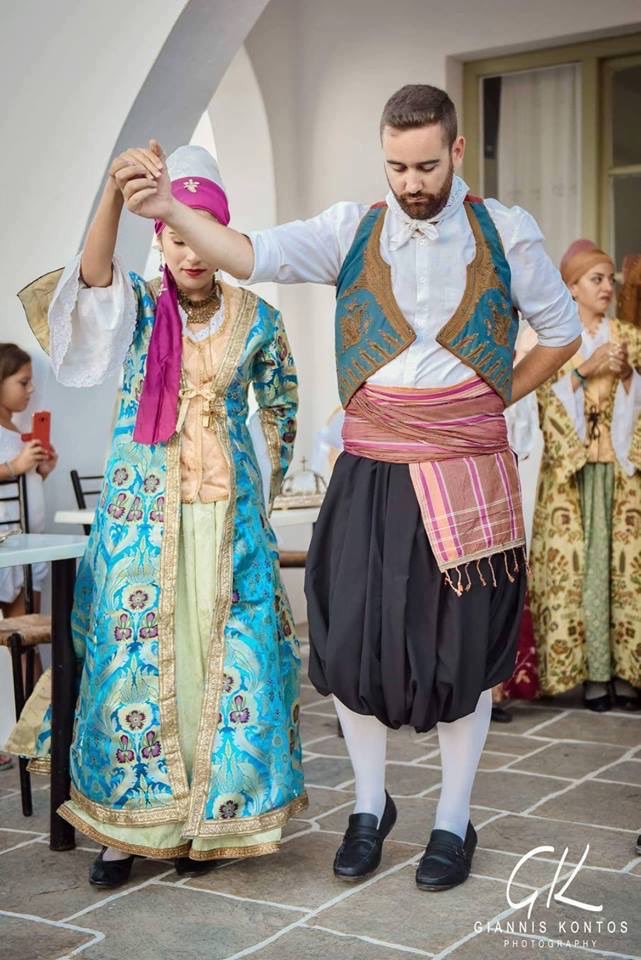
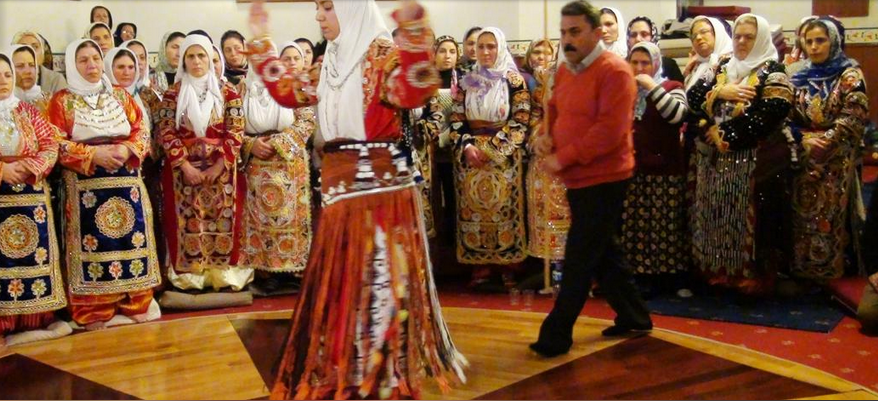
A couple in traditional dress, probably for a wedding, that people still wear in certain parts of Greece.
I’m always really jealous of South Asians, who still get to wear beautiful clothes in the 21st century, even if it’s only for special occasions (See: “Eid on Steinway Street, Astoria, 1433 (2012)“), while the rest of us are all permanently trapped in the blacks and greys of nineteenth-century bourgeois guilt.
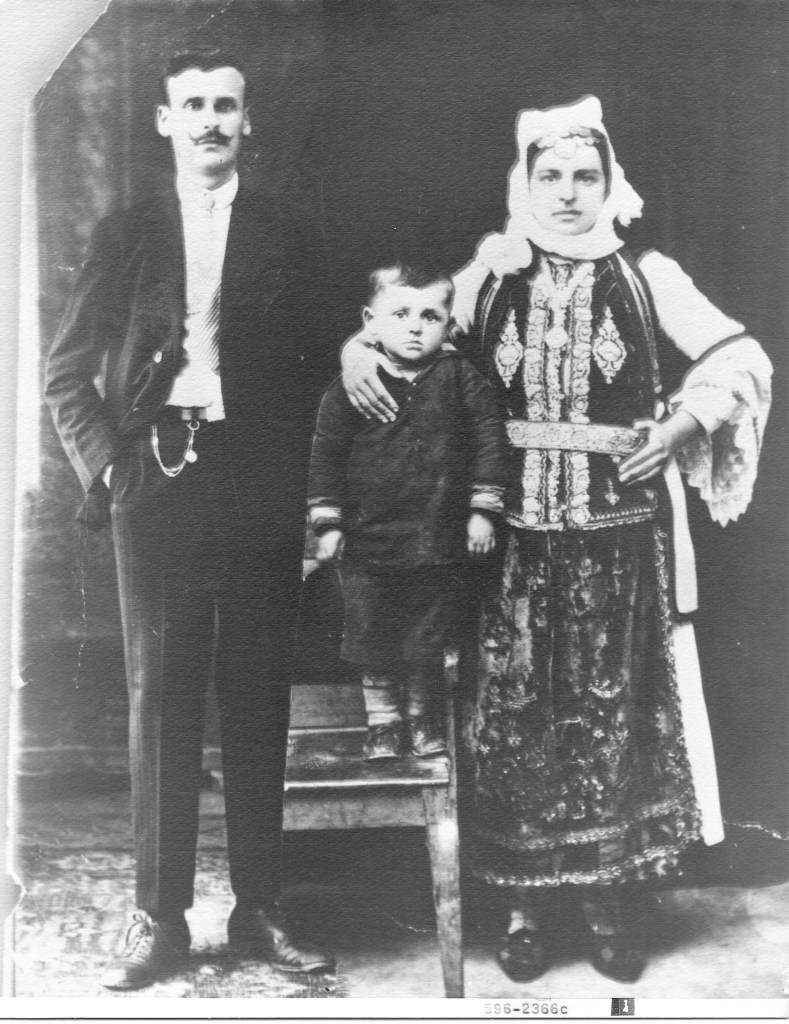
I mean check out my grandmother in her full dress kit. When will any woman I know ever get to wear something so lavish and glamorous? all velvet and gold thread? And in a poor Balkan village…
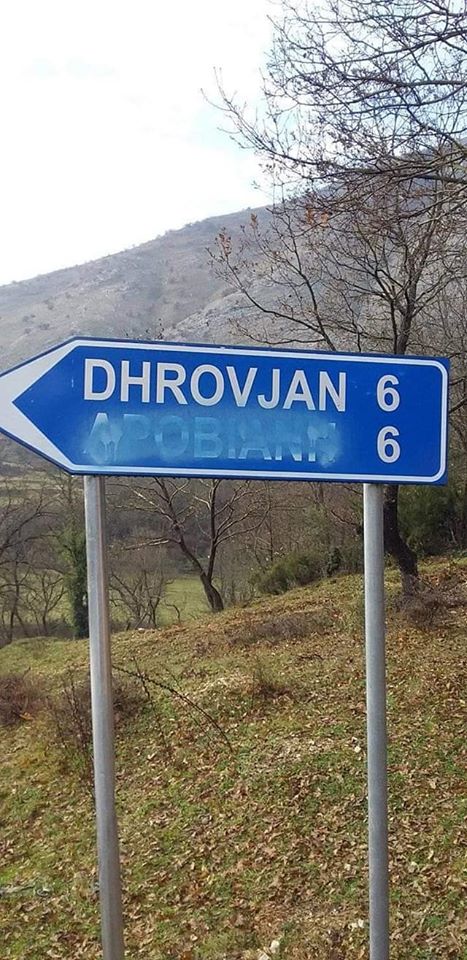
Albanians have taken to spray painting over the Greek names on signs in southern Albania’s Greek villages like my father’s.
I’m not sure what’s going on and it’s a little worrisome that this article should appear just now. This has been going on for an eternity. Because you can be sure that soon some Greek guys will come out one night and spray paint over the Albanian name of the village too. Then they change the signs. Then the same thing happens.
I would be a little more glib about it in the past than I am now, but tensions and violence between Albanians and Albania’s Greek minority have started to low-key increase in the past couple of years and it has made people a little more wary, whereas before it was considered part of the regular dodge-ball order of things. Macron’s recent Western Balkans policy disappointed me, despite my adulation of him, not because I give such a shit about the political economics of Albania and Macedonia, but because I want minority rights to be protected everywhere and I want my landsmen*, who’ve suffered enough, to live in peace and prosperity.
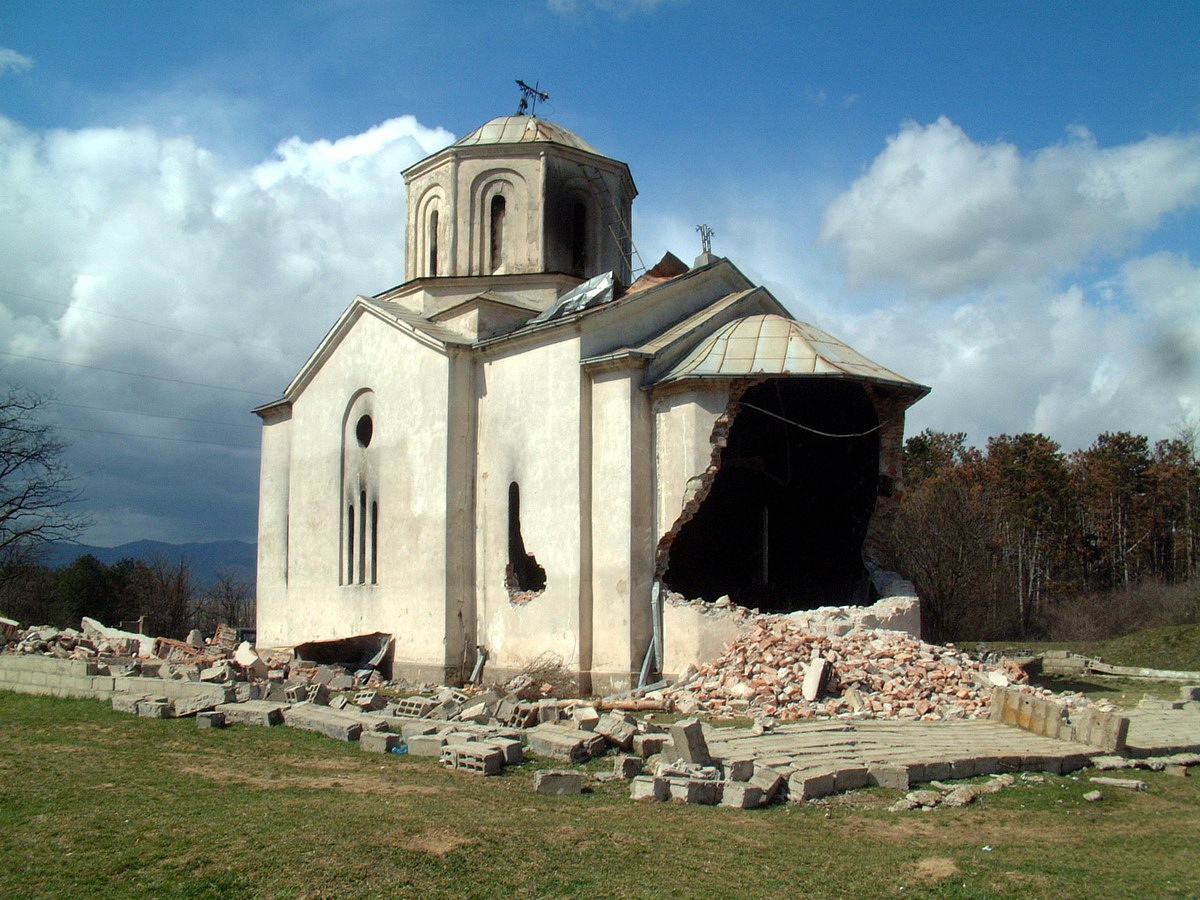
It might be no surprise that the height of this kind of vandalism is Kosovo, where almost every sign has been defaced. I was a teeny bit nervous going into Kosovo with a friend, but there were only a couple of occasions where we were the objects of even the slightest negativity, and that’s even with the Serbian cross I’ve got tattooed on my forearm. People are brusque and unsmiling, but that’s par for the course since Albanians don’t really do smiling. We got stared at a little when I got out of the car to take a photo of a demolished Serbian church. Otherwise nothing much.
And there was even some joking. When I was in Naples last (one of my great city-romances for those who don’t know), I said to a friend that it’s clear Naples is the first Middle Eastern city you encounter coming from the West because it’s the first city where there are so many groups of twenty-something young men standing around in the street doing nothing; not by any means a judgement; in fact it’s a stark testimony to endemic unemployment and poverty that angers me. You see tons of buddy-groups like that in Kosovo. At one point we were looking for the Serbian village of Djakovica — a fairly large town actually; it’s hard to not know where it is, that should have been my clue — on our way to see the monastery of Dečani. We pulled up to just such a bunch of guys who were hanging out by the side of the road: Gheg Albanians, all of them already 6’2″ and with that top-spike haircut that makes them look even more like roosters (“cock” might be more accurate), standing in the contraposto that means manliness in the Balkans. We asked them how to go to Djakovica. They all threw their heads back like they didn’t know. (One serious bond across Jadde land is that the facial gesture for “no” looks like “yes”). “Djakovica? Nope. Sorry.” Noticed a repressed slight grin on one of their faces, but “no… no Djakovica.”
Then I remembered that Djakovica in Albanian is Gjakovë. And I said: “Gjakovë”? And in perfect unison they all smiled, threw their heads back and let out a big baritone: “Ah! Gjakovë!” Now we’re talking! And they walked up to the car to show us exactly where to go on the map and saw my American passport on the dashboard, said “Clinton good”, pointed us on our way, patted the roof of the car, we exchanged mutually smiling “fuck-yous” and off we went to Djako… sorry…Gjakovë.
There was only one more such incident and it was cuter more than anything else. We stopped so I could take this photo, where all the Serbian place-names had been blotted out; we were on our way to Peć, the site of the Serbian Patriarchate (Pejë in Albanian) and in front of the sign was a ten-year-old boy sitting selling strawberries, who flipped me the finger.
Lord, let that be the worst that things in the Balkans ever get again.
* “Landsmen”, if it’s not obvious enough for you etymologically, is Yiddish for someone from the same village or nearby town or general region that you’re from — my “homeboy” — but it’s almost always used only when one or usually both of the two parties are away from that common hometown and it usually has a tone of nostalgia and longing attached to it. In that sense it has the same emotional feel of Greek ξενιτειά(xeniteia), you’ll see the prefix “xe-“ which has connotations of foreign and other and away and departed. So landsman is like πατριώτης or χωριανός or κοντοχωριανός for a Greek. As one of Greece’s perhaps premier emmigrating regions, I’d say one out of three of Epiros’ regional folk song repertoire deals with ξενιτειά(xeniteia), being away from your homeland and village and family. Rocky, barren, difficult to access, what little arable land available, like my father’s region of the Dropoli valley, worked for Muslim landowners by Christian serfs — or maybe sharecroppers is a better word — it’s easy to see why. It was pretty much expected that after marriage and a first child, an able-bodied young man would go off to more prosperous regions of the Empire or even beyond and do migrant work or engage in some other kind of enterprise.
Why can’t Christians open a legally recognized place of worship? Why are Alevi cemevis not recognized by the State? Why are historical churches and monasteries owned by the State rather than by religious communities? Why must a State regulation be issued before a handful of non-Muslims can elect administrators for their foundations? Why can’t these minorities choose foundation directors in any manner they wish? Why does the government interfere in patriarchal elections when these should be, at every step, an internal matter for the religious community? Why is Turkey’s legal framework for religious minorities confined to the Lausanne Agreement and a few Ottoman Era regulations? Why does hate speech targeting religious minorities go unpunished? Why have there never been any non-Muslim government officials? Why can’t religious minority groups commemorate their members who have been killed in massacres?
…since I went on that whole Habsburg/Wittlesbach tangent (below) of crazy Germans a couple of posts ago. THIS is the best, most comprehensive, can’t-put-it-down book written about a much written about topic: turn of twentieth century Viennese art and cultural life, the civilization’s love of beauty, psychoanalytic perspective on life, and philosophizing and intellectualizing of art without sterilizing it away. What a fevered period of artistic fermentation it covers. It’s a book given to me by a good friend when we were in grad school and shared an obsession with the same period. Thanks B. Much love.
…otherwise known in Astoria as Heavy Metal Chris, out of my thank you list, when he provided me with the interview on which the whole piece is structured. SORRY, buddy!
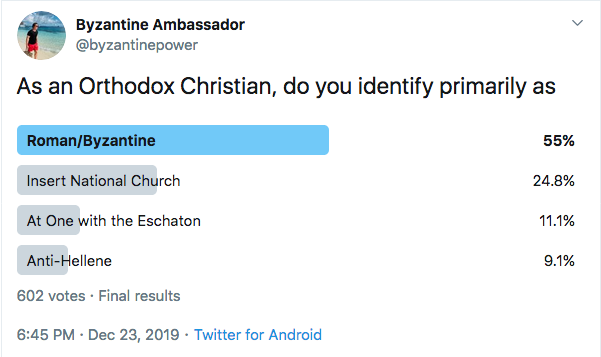
This is kind of a silly question, but if I think about it, parts of me belong to all of these, and part of Orthodoxy’s beauty comes from being able to be all of these at once. “Roman/Byzantine” takes precedence by far; it’s pretty much one of the most important theses of this blog, and if people understood what I meant if I said “Roman” or didn’t just think I was crazy, I would call myself a Roman for sure, just as my ancestors did down to my grandparents, or the tiny remnant Greek minority of Istanbul still does.
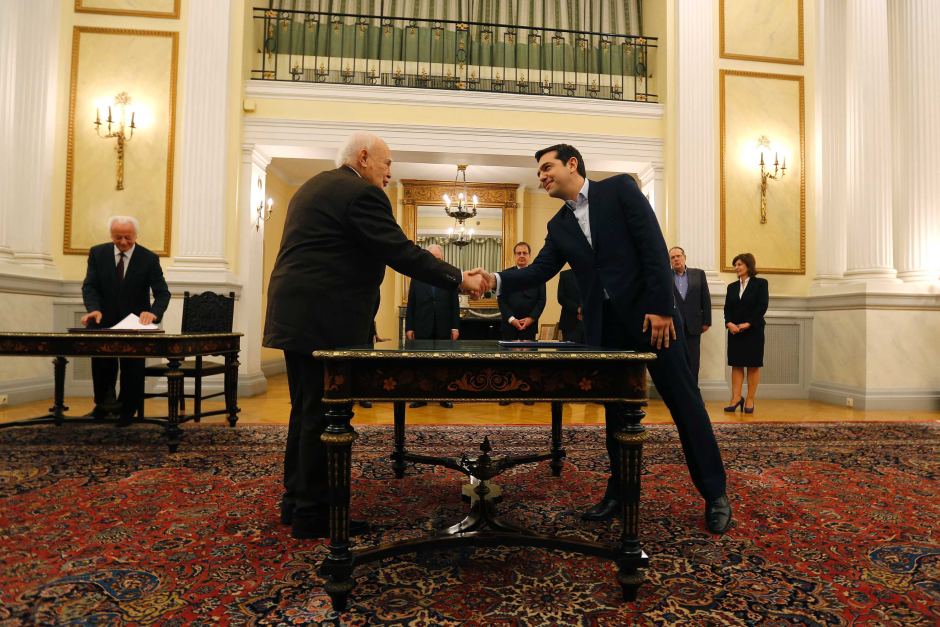
“National Church?” Clearly I’m more attached to the rites, imagery and music of the Greek Church through the sheer fact of being brought up in that space, even though Russians are far more professional in their production values than we are and that does affect my mood (just how much textual illiteracy, vocal feedback and mediocrity can one bear at key moments in an office?) Otherwise, though I may feel some honorary precedence for the Patriarch of Constantinople — and yes, even the Pope — no one Church takes priority over another for me. And I think it’s of utmost, urgent importance that the national Churches stay out of political life everywhere. The first cool thing Tsipras did when he was sworn in as Prime Minister (when I was still super-hopeful about him and Syriza) was to have no clergy present at the ceremony. The Church needs to know its place: in church.
At one with the “Eschaton”(ἔσχατον) bre koumbare?! the Infinite, the Ultimate, that Beyond beyond which there is no Beyond?! Aren’t you asking a bit much of us with that one? :) To keep things short and in keeping with Orthodoxy’s traditional apophatic theology, I have to say that I wouldn’t know if I were at one with the Eschaton, even if I were.
I may have written this before — can’t remember — but if I could have somehow been a conscient embryo who could choose what religious tradition to be born into, it would be Hinduism, because it functions on the most sophisticated dialectic spectrum between unity and plurality than any other religious tradition, though we can see these days in Modi’s India how questionable it is to romanticize polytheism — as I have in the past — as inherently tolerant and open-ended. You can have one God that’s an insufferable prick like that of the Abrahamic trio and a thousand gods that are just as much insufferable pricks, though there’s a tiny bit more wiggle-room with the latter.
So, if you ask me about my religious affiliation, I guess I’ll tell you I’m Greek Orthodox — which I guess I am. If you ask me what I really “believe” — though I’m not sure what that word means precisely — I’ll have to tell you I’m a Jungian (I know, it’s the cop out of every Jungian: I don’t know what ‘believe’ means really). And that’s as close to a religious identity and the Eschaton I think I’ll ever consciously get to.
* I never knew that Otto was so handsome. Look up the Wittelsbach; they’re a fascinating cast of characters that would make The Sopranos or Breaking Bad seem like The Brady Bunch; the family that produced Elizabeth of Wittelsbach, consort to Kaiser-und-König Franz Josef, their son Crown Prince Rudolph Habsburg, who committed suicide with his lover at Mayerling, and that produced Ludwig II of Bavaria, the nephew of our Otto and the great patron of Wagner throughout his career, who were cousins with Elizabeth through the Wittlesbach line and most intimate best friends till his assassination; they adored each other. He probably gay; she on planet Wittelsbach, but with an intense fascination for Hungarians, who she romanticized as wild and sexy (chuckle to myself because that kinda sounds like me and Serbs), and as a foil against the stuffy court at Vienna. The only Habsburg who ever bothered to learn Magyar, she made herself queen of Hungary and even the most anti-Habsburg Hungarians loved her back and it’s probably not an exaggeration to say that she was a major factor in keeping German-Hungarian animosity from tearing the empire apart for as long as it did.
Sorry for the mangled and probably confusing historic summary there.
Plus, the Bavarians gave us an Athens that’s still beautiful despite all the destruction inflicted on it.
I always had a genuine affection for Otto and his consort Amalia.They were crazy German Romantic Philhellenes of their time in the purist sense so you can imagine how he felt upon being crowned King of Greece. They adored their new kingdom and its people and didn’t treat it as their personal çiftlik, expending instead much effort in creating a new Euro-Greek social and political culture that would match their times. But in what was essentially a Balkan Afghanistan, run by Albanian warlords, that proved too much of an obstruction. They were ousted and shipped back to Bavaria in 1862.
SeeElizabeth von Habsburg of Austria née Wittlesbach, for an account of Elizabeth’s tragic life and assassination. –
Probably the most famous image we have of Elizabeth (below), a great beauty, most famous for her long wavy chestnut hair, though you can imagine that she rarely got to wear it this way at the Hofburg.
Rudolf, Crown Prince of Austria, the son of Franz Josef and Elizabeth, who committed suicide with his lover Baroness Mary Vetsera, below:
Ludwig II of Bavaria, major patron of Wagner
Glamorous, elegant and crazy as a loon every one of them. You can see in late 19c. Vienna, the slow growth of the Teutonic dementia that would eventually wreck Europe twice, though a united pan-German constitutional monarchy under the Habsburgs or Wittlesbachs and not the Prussian Hohenzollerns might have kept the forces of nationalism and militarism that led to later fascism at bay. But Vienna was just too psychologically tired to try for that too hard at that point. See Arthur Schnitzler’s haunting short novel, Traumnovelle,(Dream Novel) made into an unfortunate film by Stanley Kubrick in 1999, (Eyes Wide Shut), with Nicole Kidman and Tom Cruise of all actors — he overlooked Ben Stiller. Or read any of the poetry or the librettos Hugo von Hoffmanstahl wrote for Richard Strauss‘ operas — Elektra, Salomé, Der Rosenkavalier, Ariadne auf Naxos…
Or remember von Hoffmanstahl’s perhaps most famous — and Piscean — quote: ‘Reality lies in the greatest enchantment you have ever experienced.’ This was not a culture with the spirit or force to hold a disintegrating Europe together. A curious foil to the the Serbs.
Back to Greece. What’s really curious to me is the intensity of Greek anti-monarchical sentiment towards the Danish Glücksburgs, who were installed as kings by the European powers after the outing of Otto and the Wittlesbachs. They seem, from my perspective, at least, like a bunch of innocuous nebeches — certainly without the nutty flair of the Habsburgs — more passive than anything else as kings of Greece, and making everything worse when they did take an active political role — or try to — in things. I probably don’t know enough.
“What I hope this blog accomplishes, then, is to create even the tiniest amount of common consciousness among readers from the parts of the world in question. A very tall order, I understand, maybe even grandiose. Time will tell if it all ends up an unfocussed mess and I end up talking to myself; it’s very likely.”
I’ve gone in this one post from whether I’m Orthodox or not and Orthodox Church rankings to Rudolph II of the Habsburgs and the double suicides at Mayerling. I hope I’ve succeeded in the kind of tall order I’ve set for myself in making connections for people that they didn’t know existed. Maybe for others it’s just another weird NikoBako Piscean stream of consciousness türlü. But maybe even for them there’s an unconscious level on which things hook up with one another on some other road through the universe.
But I bet you didn’t know that the connection between “Στου Όθωνα τα χρόνια” — “In the time of Otto” — by Stavros Xarhakos and Richard Wagner ran through Munich, did you?
An odd poem/document to the struggle to establish order and form a new Greek state. I don’t know why the English translation given here says “cruel guards” when in Greek it’s “Bavarian guards”.
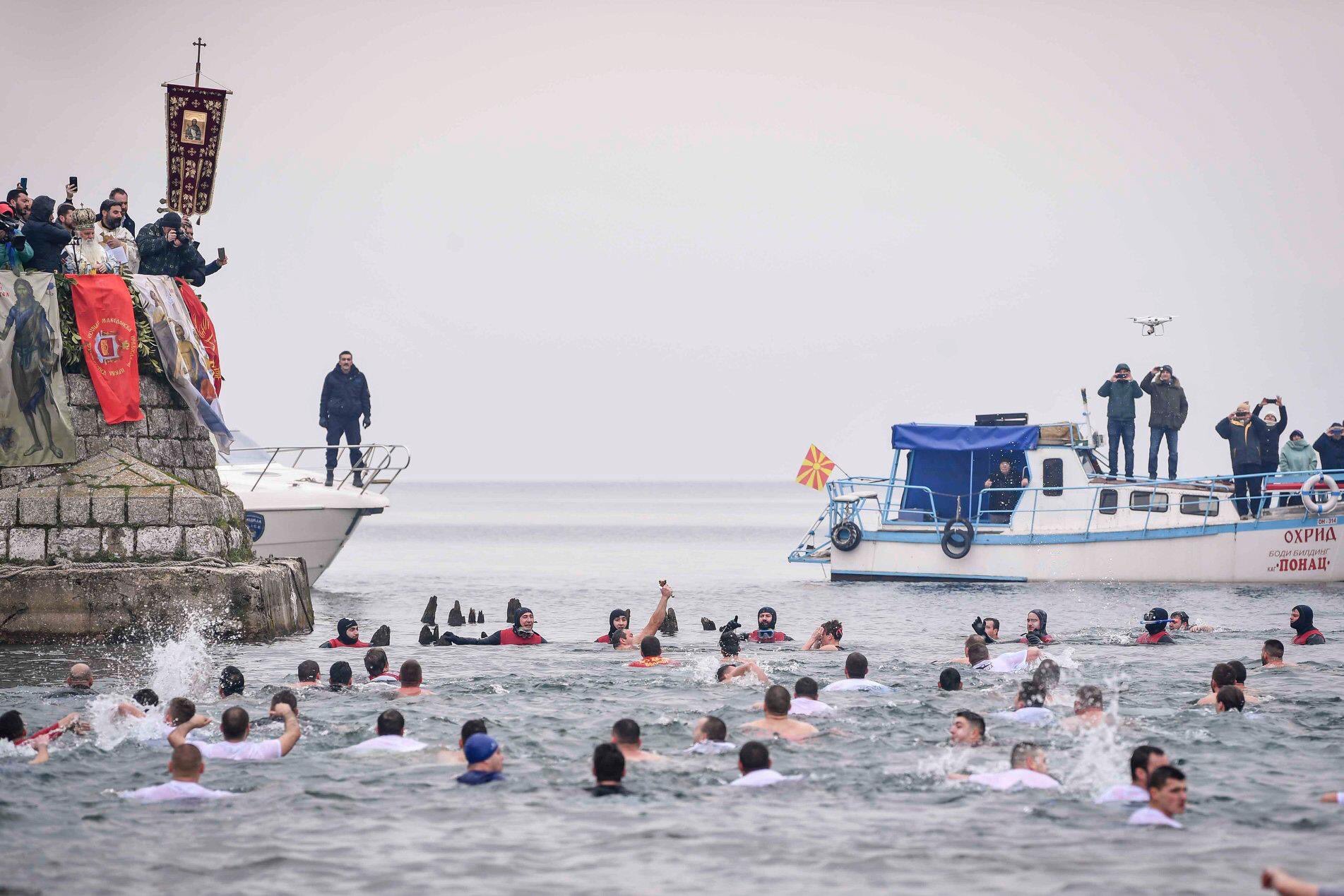
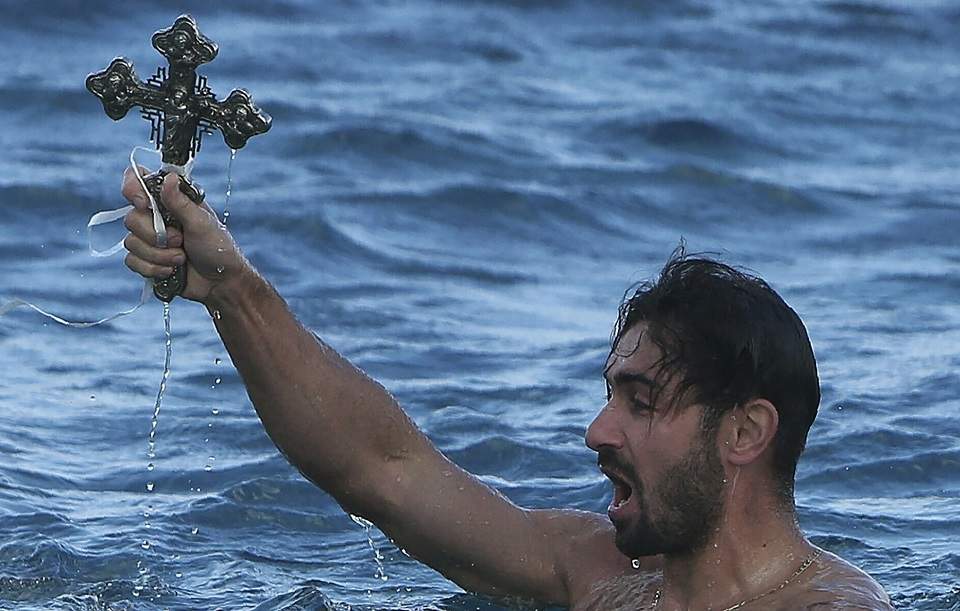
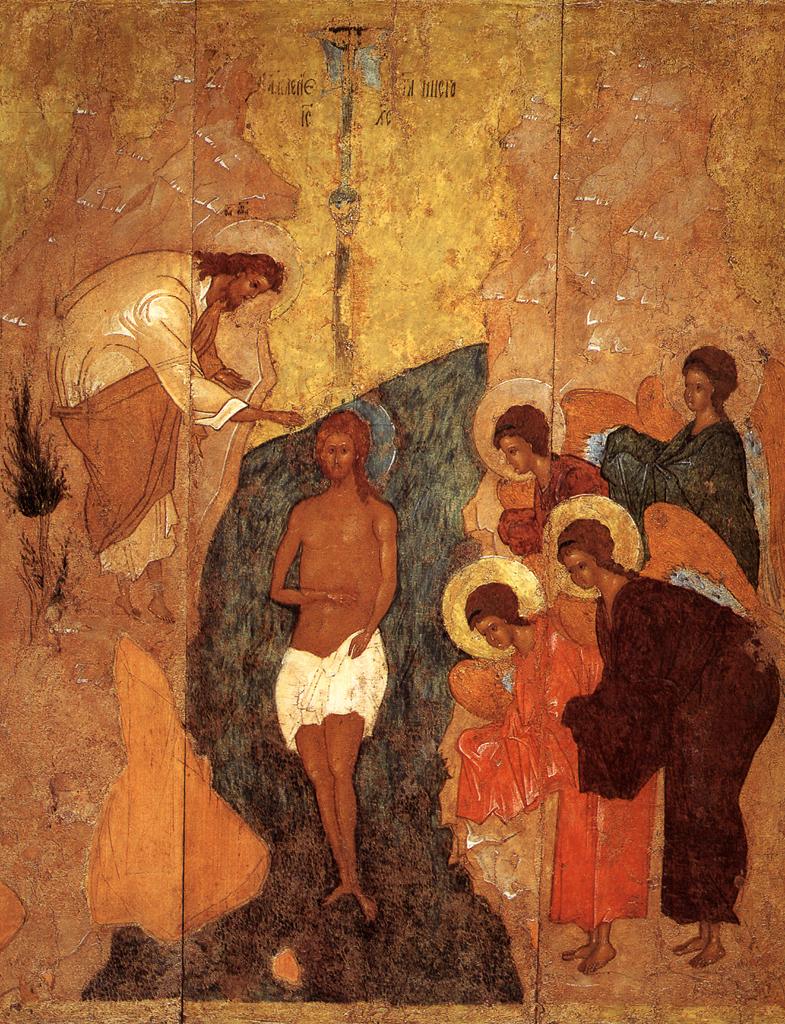
And here’s a random Russian image/icon of the Epiphany that brings up a question I’ve always had: how do Russians achieve that brilliant whiteness they use in icons and murals? It’s almost as if no one else knew the secret. It’s such an intense “non”-color that it serves as a foil to the saturated colors of the rest of the surface. It’s actually a saturated white, which should be an oxymoron. It’s beautiful.
Just random post of Durga dance from 2002 Bolly blockbuster Devdas. Since Durga Maa came up in previous post. Madhuri Dixit, the world’s most incontestably beautiful woman for me, was 5 months pregnant when they shot this scene.
And she looks it too in same film. Especially below, this time, carrying a costume that weighed like 20 kilos and the obvious sexy chicho slightly bulging over her ghagra. Kathak purists will obviously object to this number, but it knocks me out every time.
Balkans, Anatolia, Caucasus, Levant and rest of ME, Iran, South Asia
Me, I'm Nicholas Bakos, a.k.a. "NikoBako." I'm Greek (Roman really, but when I say that in English some five people in the world today understand what I'm talking about, so I use "Greek" for shorthand). I'm from New York. I live all over the place these days. The rest should become obvious from the blog.

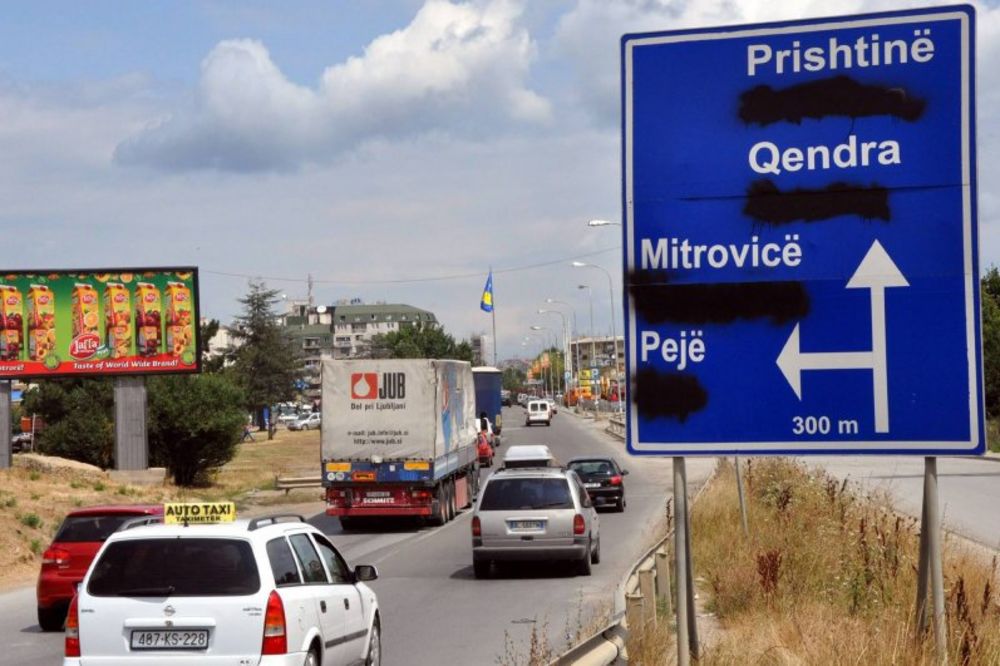 There was only one more such incident and it was cuter more than anything else. We stopped so I could take this photo, where all the Serbian place-names had been blotted out; we were on our way to Peć, the site of the Serbian Patriarchate (Pejë in Albanian) and in front of the sign was a ten-year-old boy sitting selling strawberries, who flipped me the finger.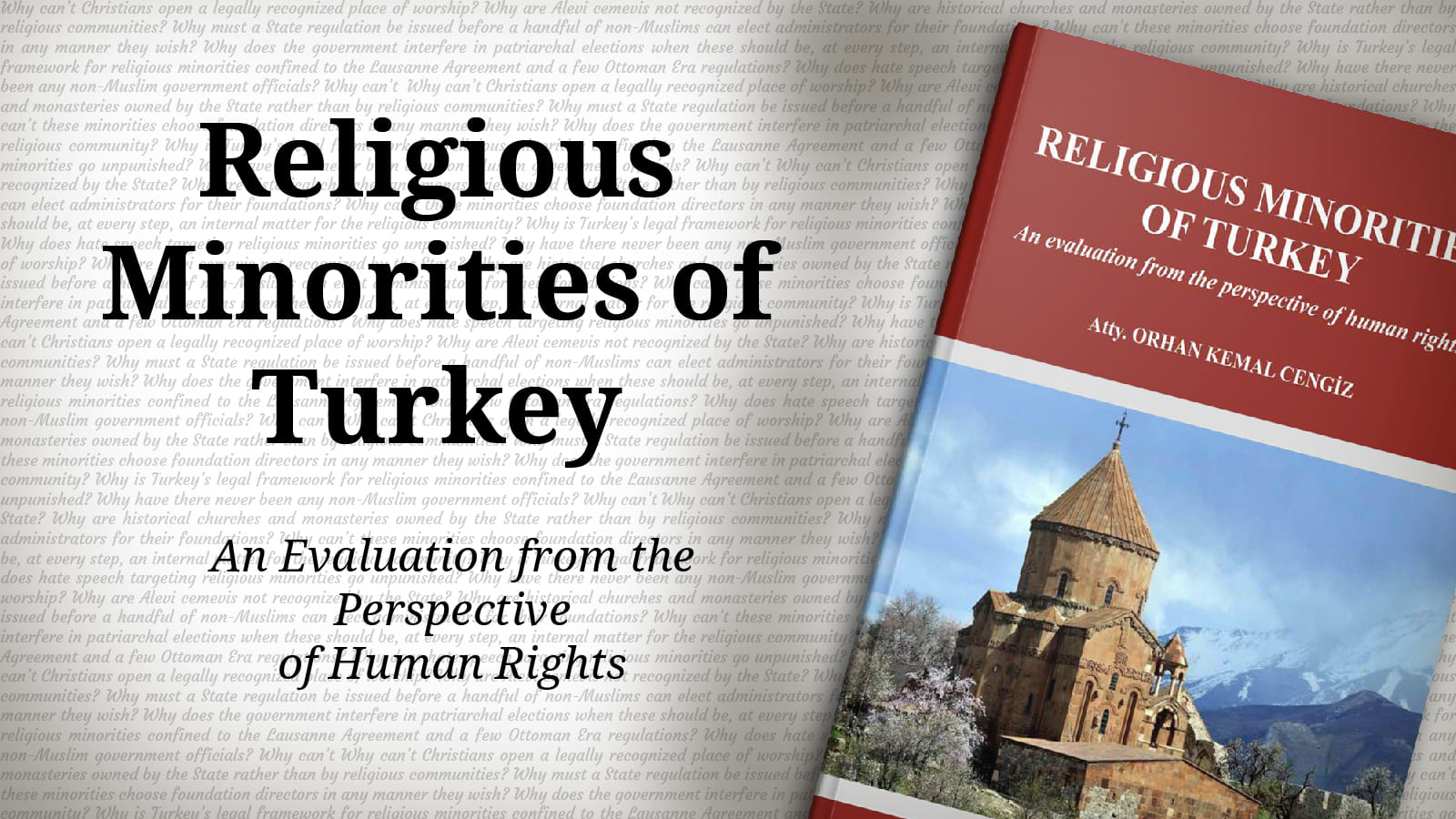
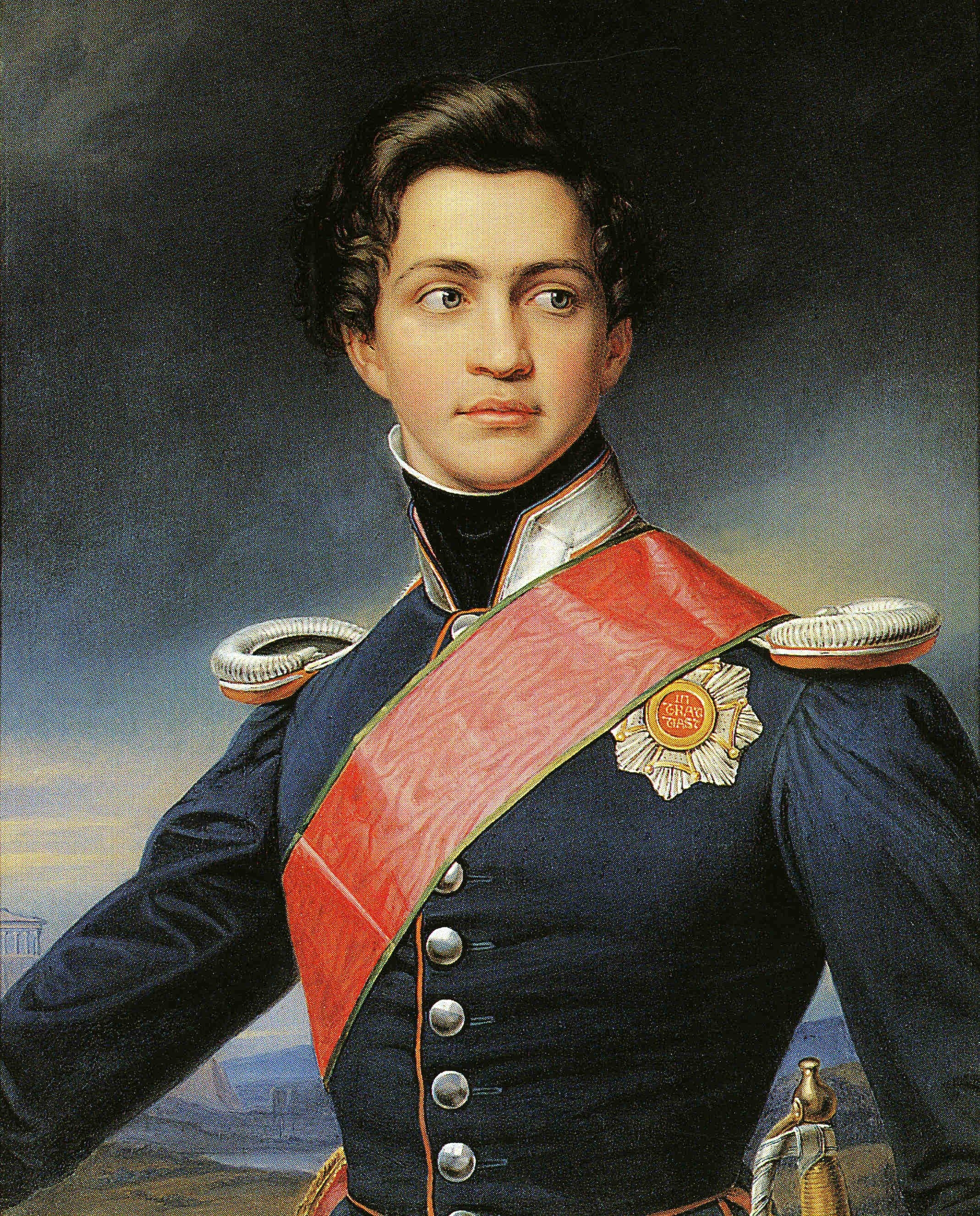 I always had a genuine affection for Otto and his consort
 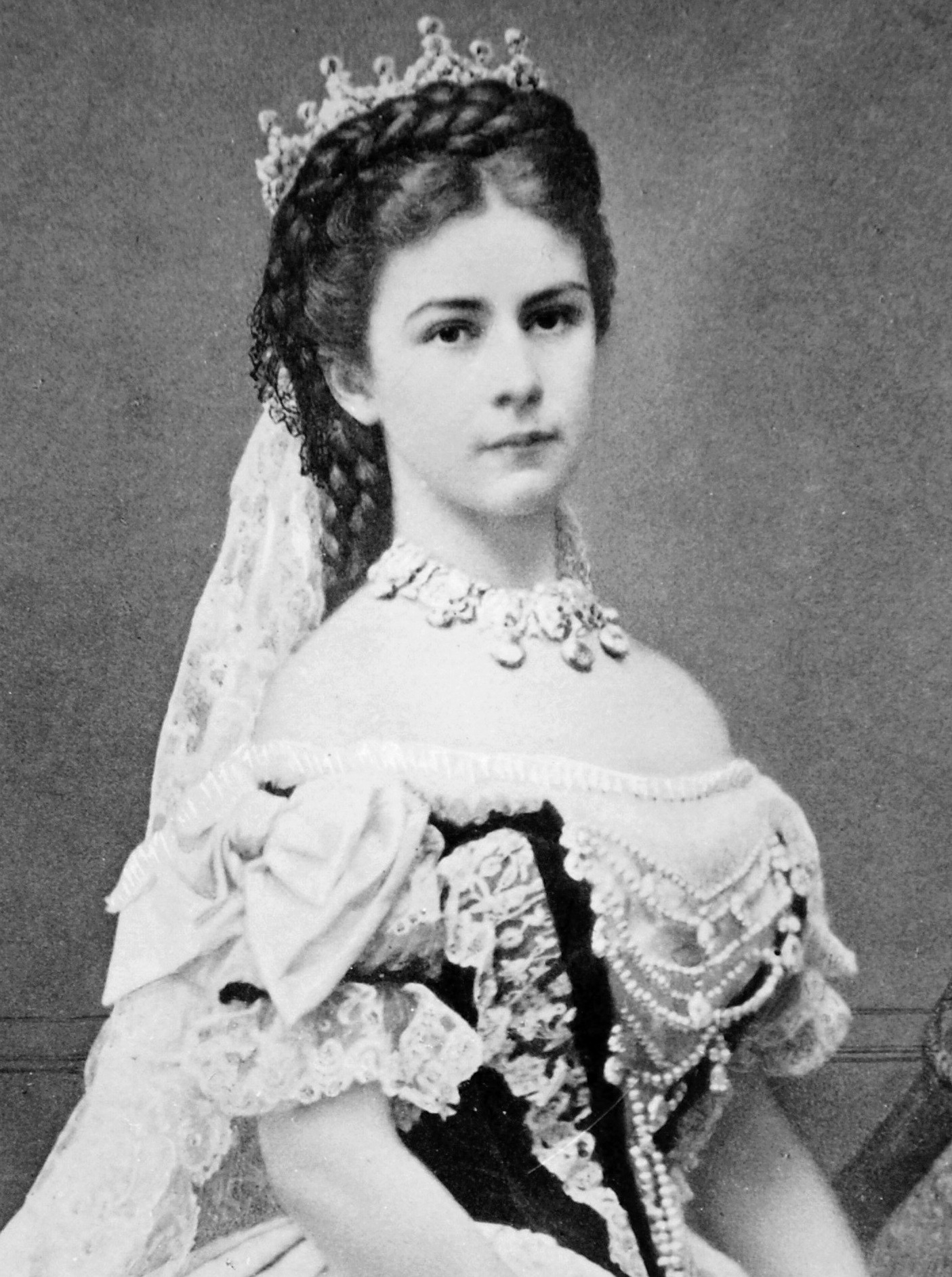 See
See 
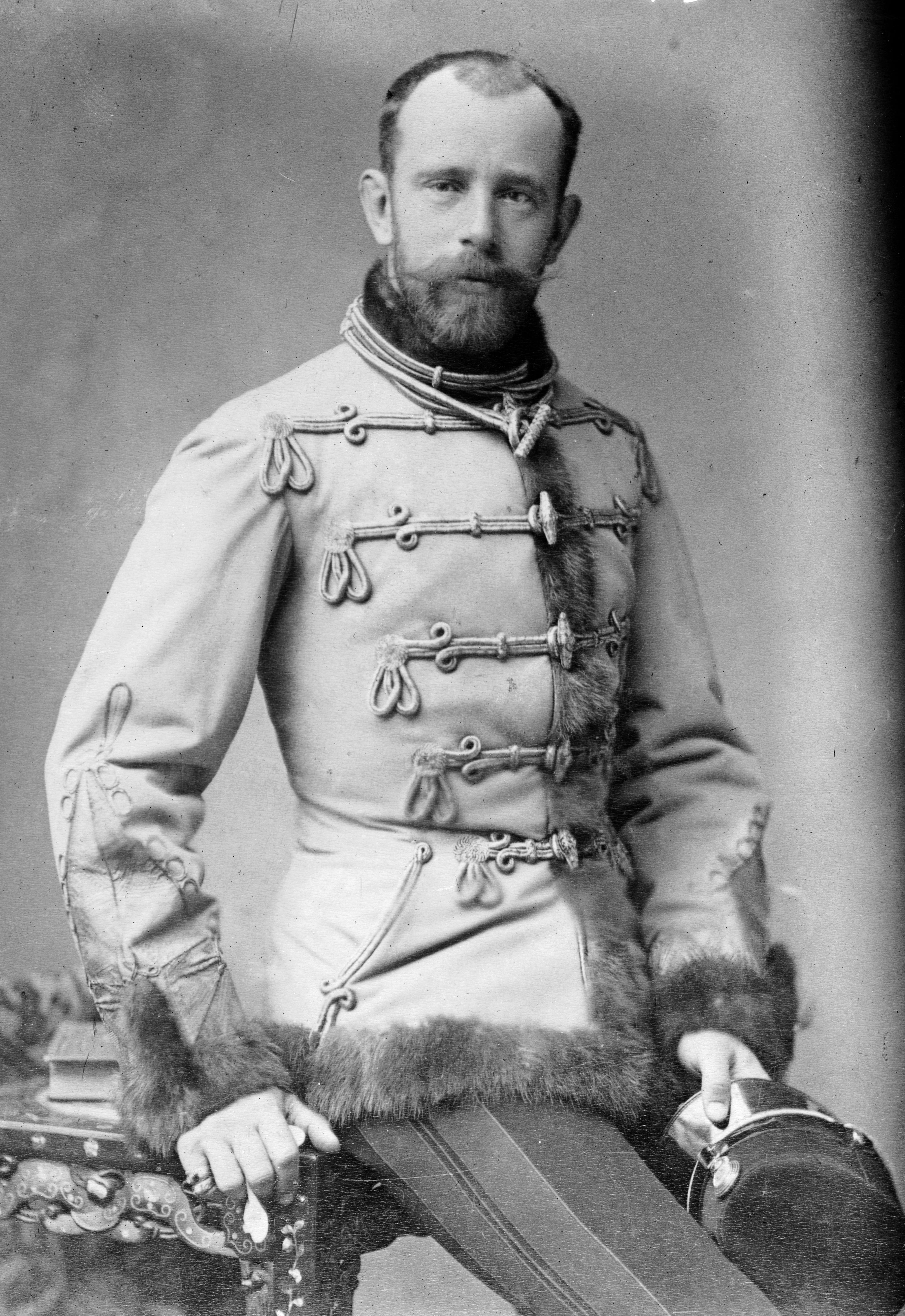 Rudolf, Crown Prince of Austria, the son of Franz Josef and Elizabeth, who committed suicide with his lover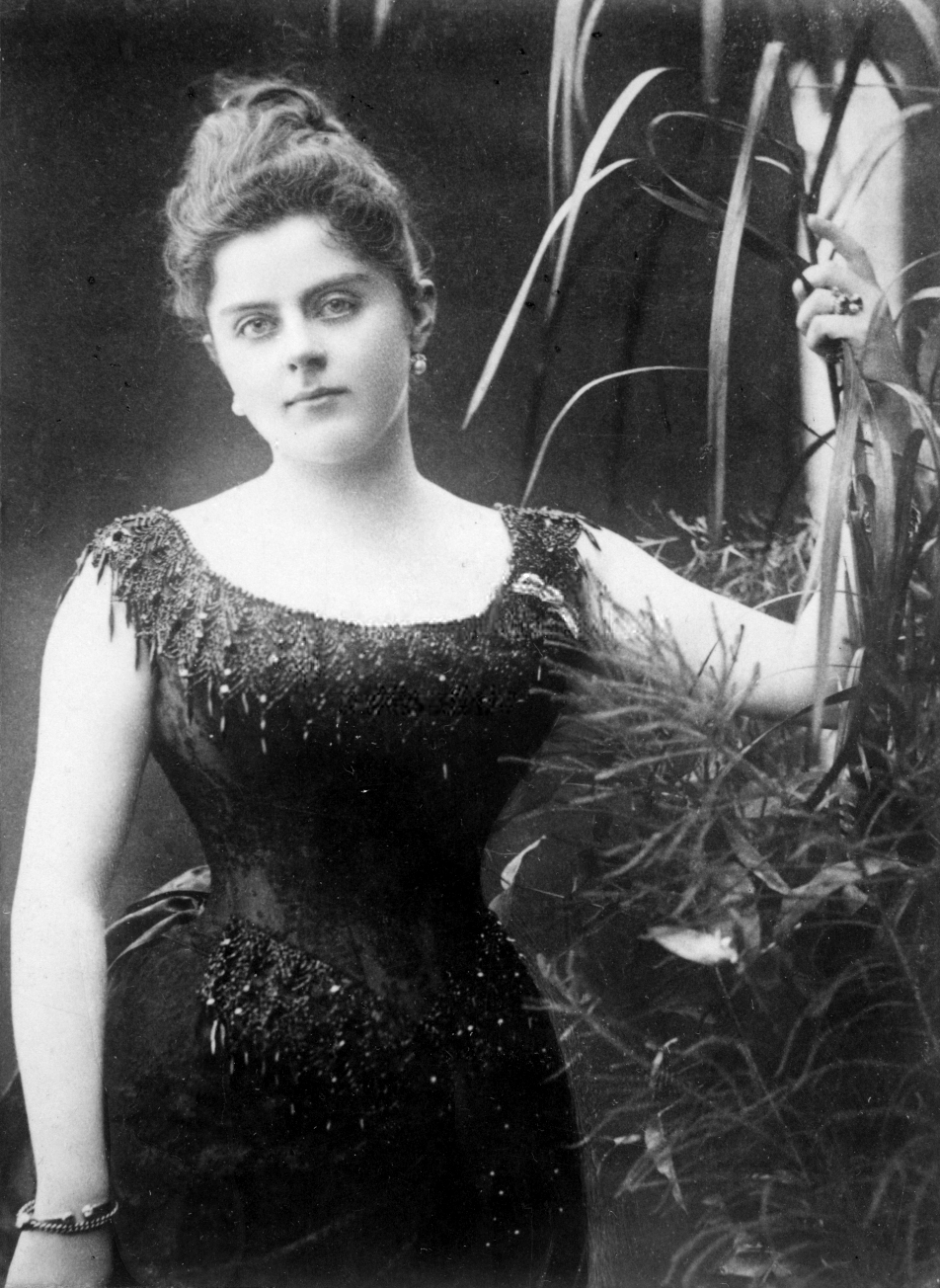
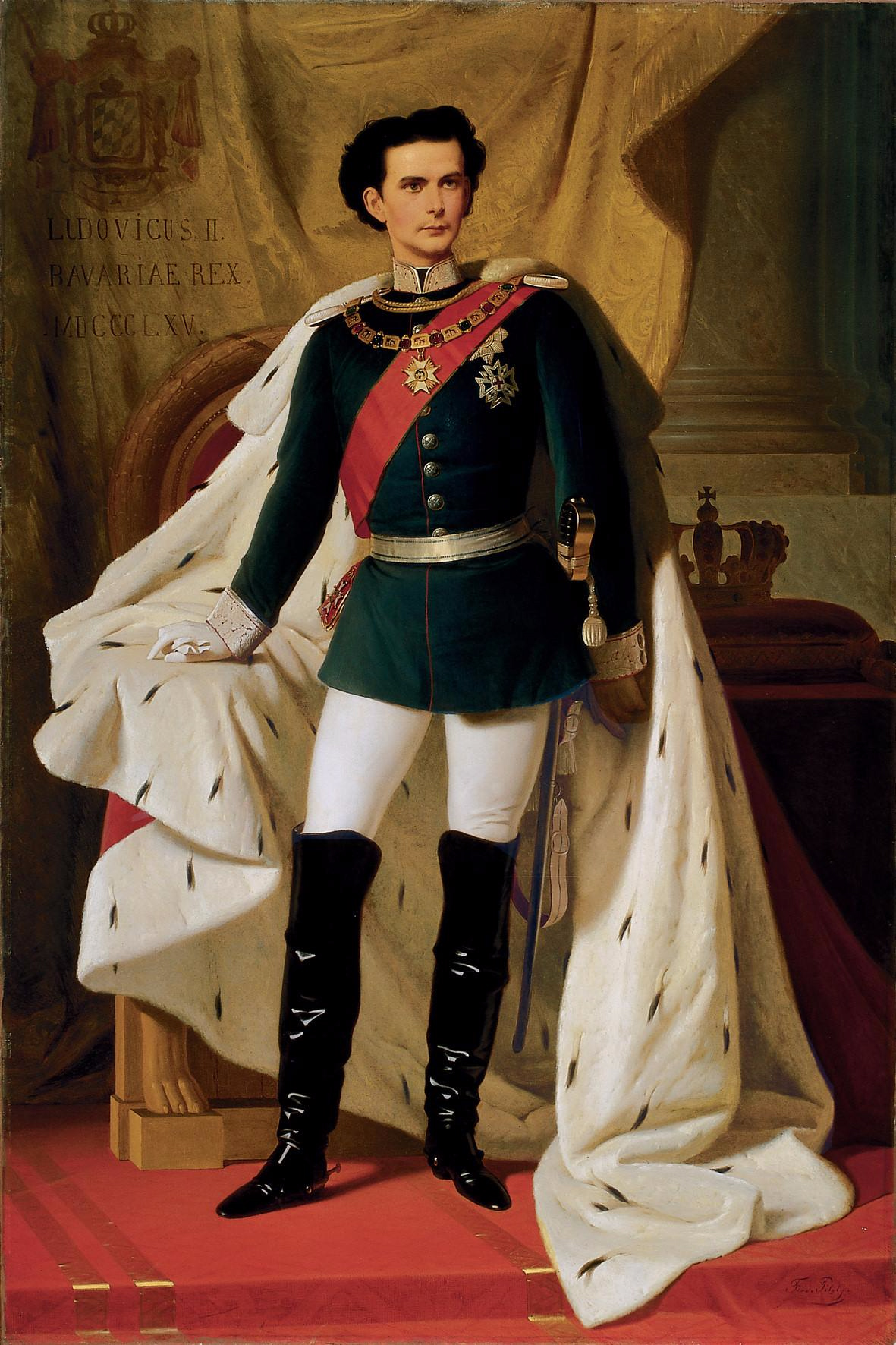 Ludwig II of Bavaria, major patron of Wagner
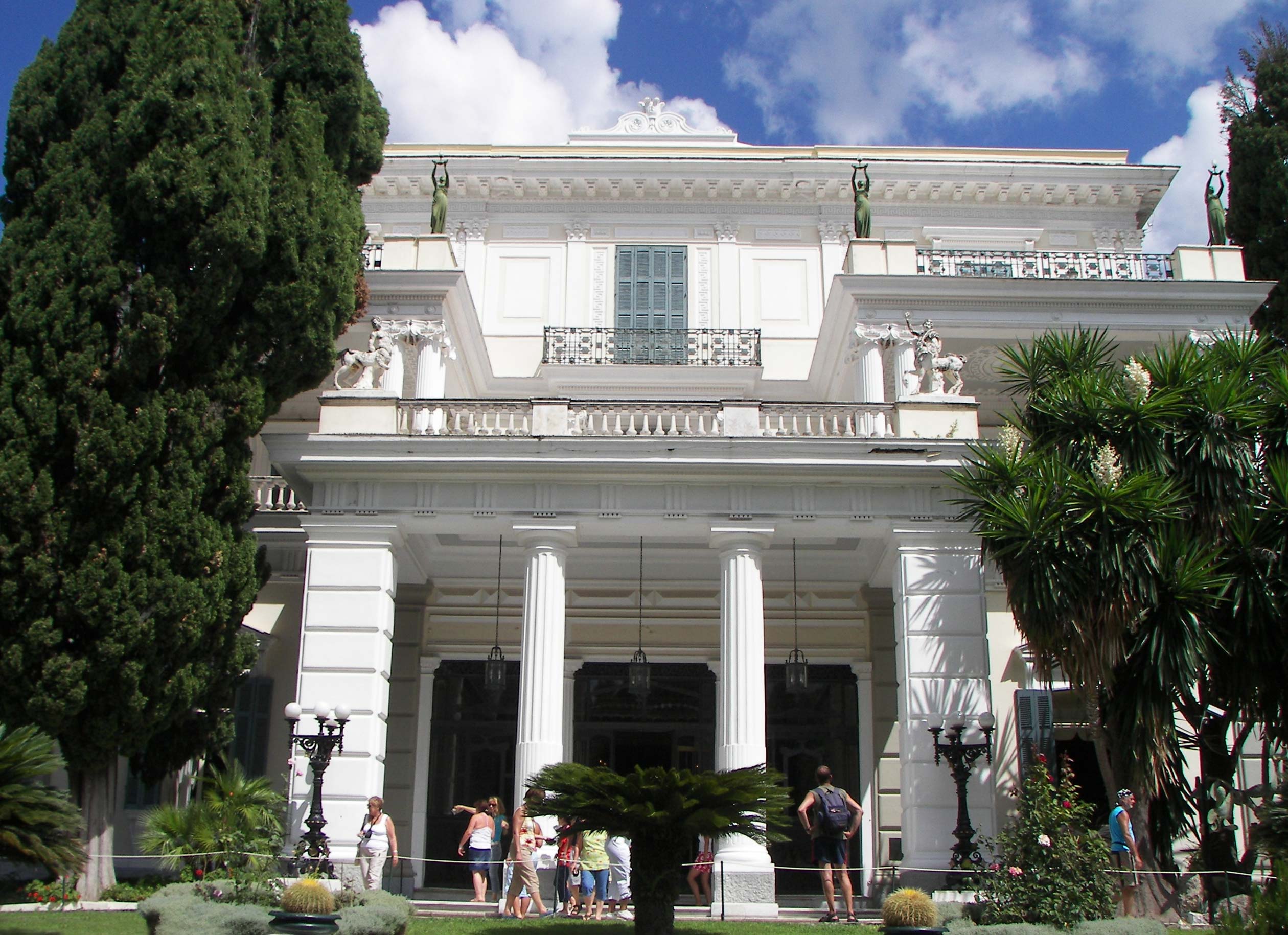 Elizabeth’s Corfu palace, the
 Jadde: from Bosnia to Bengal