
I dunno man, I think at the end of the day, the Windsors are pretty funny about themselves. That’s probably what saves them in Brits’ eyes. Oh, but that’s when Brits had a sense of humor.
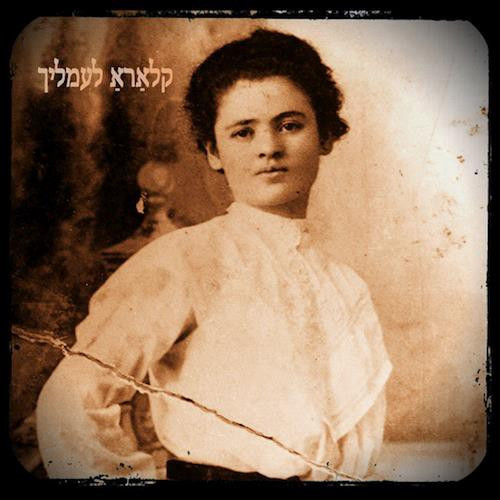
Finally, a picture of Clara Lemlich
9 OctAlways heard so much; had never seen her.
In post “Ok… Thank yous to A. — pointing out my major embarrassment bad — Williamson & Warren — well, Happy New Yearat least…” I write:
Then the event chimes in, in a more than initially obvious way, with my deep intellectual and emotional engagement with Judaism. The victims were obviously not all Jews. And the women garment workers that had gone on strike less than two years before the fire to demand better working conditions were also not all Jewish. But the harshness and persecutions of life in Eastern Europe, the progressive impulses Jews had collectively developed in response to that harshness and injustice, the dislocation of immigration, and an America — but especially a New York — that was a receptive vehicle for that whole psychological complex, made them disproportionately important in the movement and the whole series of events.
The proposal for a general strike for all garment workers in 1909 at the main hall of Cooper Union was made by a frail, twenty-three-year-old seamstress, Clara Lemlich — in Yiddish**, and a response from the crowd was a little slow in coming because it first had to be translated into Italian and English. They were koritsakia, malaka; most had just come; they hadn’t even learned English yet. There’s a women’s organization — I dunno who — that goes around the East Village and Lower East Side on March 25th and writes the names of the victims in chalk on the sidewalks in front of the houses where they lived: on the same block, next door to each other some of them. The neighborhood must’ve felt its heart ripped out.
But when the response to Lemlich’s proposal was delivered, it was a resounding “YES!”. And Jews need to remember and be proud of the fact that they’ve been over-represented ever since in every progressive movement that made America — but especially New York — what it became in the 20th century.
** This is just one thing that makes Yiddish, along with Neapolitan and Caribbean Spanish, one of New York’s three sacred languages.
From the Forward — yes, it’s still published — Bernie Sanders’ Jewishness
9 OctSince launching his first campaign for the candidacy for the Democratic nomination, there’s been no shortage of ink spilled debating Bernie Sanders’s Jewishness. Scrutiny — often unfair — hinging on Sanders’s criticism of Israel, disinterest in synagogue, and non-Jewish spouse — has turned into an exercise in exclusion.
Yet elsewhere, the senator has been seized as a symbol for the Jewish Labor Bund. Articles have abounded in both Jewish and non-Jewish press linking him with the Bund and the Yiddish socialism it espoused.
This is no surprise; with his outspoken belief in Democratic Socialism and Midwood roots, Sanders seems a natural symbol of the Bundist tradition and the Jewish identity it provides.
The Bund emerged from the Marxist movement sweeping through Russia at the turn of the century. Accordingly, it sought to unite Jewish workers with neighboring proletariats to build a socialist order. However, circumstances in Russia, where Jews faced discrimination and violence not unlike that of African-Americans, convinced the Bund that class-based organization was not enough: If Jewish workers were liberated as workers but oppressed as Jews, then they would not be free.
Rather, in an early articulation of what we today call intersectionality, the Bund sought to combine the revolutionary struggle of the working class with the Jewish struggle against anti-Semitism. It was this understanding that in many ways defines Bundism, from contemporary Melbourne, where a chapter continues today, to nineteenth-century Russia.
Yet it is also exactly these politics that Sanders has shied away from. While his thinking has evolved on the matter, his skepticism toward intersectional politics is no secret, and he continues to prefer organizing on the basis of class above other factors. There is something particularly Jewish about his politics, but it is not the Jewishness of the Bund. To find it, we must look elsewhere.
The Bund was only one of the socialist movements popular among Jews in Russia at the turn of the century. Alongside it was the Russian Social Democratic Labor Party (RSDLP), which the Bund was for a time a part of.
After the Bund left the RSDLP in 1903 due to disagreements about its emphasis on Jewish politics, the RSDLP split into two factions. The first, the Bolsheviks (Majoritists), are well-known as the eventual rulers of Russia and builders of the Soviet Union. The second, the Mensheviks (Minoritists, so-called because once the Bund — who supported them — left the party, they were the smaller faction), faded into history after the Bolshevik victory in 1917.
Though radical by today’s standards, the Mensheviks had a reputation for moderation, especially in comparison to the militant radicalism of the Bolsheviks. In many ways they embodied much of what we today think of as Democratic Socialism. Firmly dedicated to improving the legal status and working conditions of Russia’s laborers, they looked positively on the democratic process and remained committed to a regime of civil liberties. Notably, they remained skeptical of efforts to organize on the basis of nationality, complicating their relationship with the Bund.
In her article Jewish History beyond the Jewish PeopleLila Corwin Berman suggested that instead of asking “who is a Jew,” we ask how Jewish identity manifests in a given space. The Mensheviks were not a Jewish party, yet they claimed a number of Jewish members. Notably including Julius Martov, Pavel Akselrod, Fyodor Dan, and others, the Jewish Mensheviks were part of the same political awakening in Russia as the Bund and Zionists, an awakening that unfolded among Jews along the full spectrum of possibility, between the particular and the cosmopolitan.
For Jewish Mensheviks, the Bund’s politics of class and nation were frightening. Disdaining the Jewish autonomy sought by the Bund as little more than a new ghetto, they feared that formally sanctioning national division contradicted the international solidarity they saw necessary to building a better world.
Their politics did not manifest in an explicitly Jewish organization. But there is something specifically Jewish about the concerns driving Jewish Mensheviks in that direction.
The Mensheviks are hardly the only occasion where Jews have followed particular concerns in a universalist direction, but they are the group most closely associated with the Bund, and by extension, with Sanders. In the United States, for example, Anna Strunsky Walling was inspired by the Kishinev Pogrom to begin organizing the NAACP. Fifty years later, the descendants of German-Jewish refugees followed a similar path, as memories of their own families’ experiences with anti-Semitism inspired them to play a conspicuous role in the activism of the 1960s. But so long as Eastern Europe remains the default model for authentic Judaism, it is the Mensheviks who best resemble Sanders’s politics.
Sanders’s Jewishness clearly matters to him; anyone who has heard him speak of his family or youth can see that. The scrutiny Sanders has faced regarding his Jewish identity reflects a perverse form of gatekeeping, one that seeks to diminish the Jewish people.
His politics simply reflect a different tradition than that of the Bund, an aspect of Jewish heritage that spun off in the universalist direction. His Jewishness is not unlike that of Martov — or for that matter, Rosa Luxemburg or Emma Goldman — and his politics hinge on the assumption that the best way to fight persecution — whether of Jews, or for that matter, any people — is through the use of class as the great equalizer, an organization that tolerates no division on the basis of race, ethnicity, religion, or gender.
Whether these politics will serve Sanders well — either as a candidate or, potentially, as a president — remains to be seen. The Mensheviks probably were wrong in their time, that no union based on class could overcome the anti-Semitism of the late Russian Empire. However, America is not Russia, and ultimately, time will tell.
Yet as far as the Jewishness of Sanders’s politics is concerned, there can be no doubt. Even Sanders’s hesitance to discuss his Jewish identity — long a target of criticism — should be best understood not as a denial of identity, but a practice of it, an assertion the best way to fight persecution is for all oppressed groups to work together, and that the best way to work together is to focus on what unites across society’s fault lines, and not on what divides.
Jewish politics have been and continue to be a mixed multitude of ideas, reflecting the vastness of the Jewish experience. The revival of interest in the Bund, and the effort of neo-Bundists today, is wonderful.
The desire to create a progressive space in which Jewish concerns are not merely accepted but seen as inherently necessary to the progressive cause is a welcome development. There is much to like about a political belief that treats the diaspora as a vibrant and valuable space in the Jewish world and not as a problem to be solved.
But these are not the politics of Sanders. To shoehorn him into a Bundist tradition that he does not fit lessens our ability to understand the full vibrance and possibility of our Jewish community.
Joshua Meyers is a Harry Starr Fellow at Harvard University specializing in the history of modern Jewish politics. He can be reached via twitter @DrJoshMeyers1.
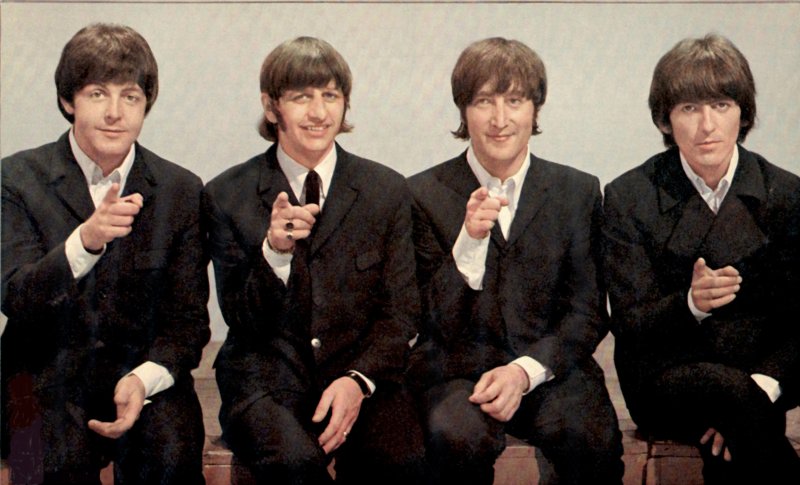
P.S. The Beatles
9 OctHow did this wry, funny, artistically open, quirkily elegant England become the obnoxious Boris Johnson show?
–
#MeToos forgot to shame the Beatles
9 OctFor “I saw her standing there”:
“Well, she was just 17, you know what I mean…” with its clear implication of an older man making inappropriate advances on an underage and socially powerless girl, and the yecky boy’s club chumminess of “you know what I mean…” wink, wink…
All that toxic male desire.
(Plus video promotes smoking and irresponsible drinking.)
For “A Hard Day’s Night”:
“You know I work all day to get you money to buy you things…”, lyrics that limit a woman’s social position to domesticity — barefoot in the kitchen and, ideally, pregnant — and the “buy you things” part which casts an unattractive, insensitive mercenary aspect to the relationship, emphasizing the male’s socioeconomic power while belittling the female’s emotional, spousal integrity.
And “Run for your life”:
“Well, I’d rather see you dead little girl than to be with another man… Catch you with another man, and that’s the enduh, little girl!” What more an acceptance of male violence than that and the shameless license granted to male emotional and physical terror of: “Well, you know that I’m a wicked guy and I was born with a jealous mind…” Like, that’s just how men are, get used to it.
So get to work. There’s probably more out there than we think.
Christ, they were all so cute when they were young.
Oh shit, did I just objectify them?
–
Comment: nikobakos@gmail.com
–
A reader writes: “Wonderful work on your blog” – Tarlabaşı series
8 OctHey, Niko – I stumbled on your blogposts about Tarlambasi, Beyoglu (Tarlabaşı I, Tarlabaşı II: Elif Batuman, Beşiktaş, Kuzguncuk and “diversity”, Tarlabaşı III: Kyra Smaro, the Kurdish taxi-driver and Orhan Pamuk
. Just wanted to write you to say excellent work. Great style, very learned. The quip about Smaragdo the “almost cliché” Politissa was poignant. Is there anywhere else online I can follow your stuff? Are you a journalist or scholar? Myself, I’m a 1st-gen American. Colombian-Polish Queens, NY native who now lives in Greenpoint with the other effete millennial hipsters, clutching onto my shitty rent stabilized unit. As such, I felt very at home in Istanbul…that one time I was able to visit for a week in Cihangir. Heh. That must sound stupidly trite. I apologize preemptively. But I can’t be the first to remark on the psychogeographic parallels of the two cities, with the harbor setting and the throngs and how all the intimate and fine-grained urban areas are being gobbled up by gentrification. But I guess that’s everywhere/nowhere now.
Regards,
Steve
Kol Nidre
8 OctBoth renditions by Moishe Oysher the legendary cantor (and sorry on such a day to be glib, but also a major cutie) who sang in shul and made an acting career for himself as well.
A live cut from “Overture to Glory.”
And a full semi-remastered recording that gives a good explanation of the prayer/hymn:
Old post:
Yom Kippur, Kol Nidre, Moishe Oysher and the First Roumanian
And a light fast to everyone.
–
Comment: nikobakos@gmail.com
–
Ashkenazim, First Roumanian Shul, Jews, Judaism, Kol Nidre, Moishe Oysher, Sephardim, Yom Kippur
Litvaks and Galizianers II
8 OctIn an old post I try to give gentiles — or non-New-Yorkers, or New-Yorkers under 50 — a sense of the cultural divide among Yiddish-speaking Jews between “Litvaks” (from Lithuania) and “Galizianers” (from western Ukraine and south-eastern Poland). I lumped Warsaw Jews into Litvaks and an astute reader told me that that was a mistake: that Vilna (Lithuanian) Yiddish was the high standard form of the language and that “Poylish” was considered a bit more common.
Stand corrected. By reader and by this cute Jewish guy in video:
–
Comment: nikobakos@gmail.com
–

Times: “Top Secret Russian Unit Seeks to Destabilize Europe, Security Officials Say”
8 OctNo kidding. Is this a surprise to anybody?
Someone I know in the Greek foreign service once said to me that he thinks Western policy towards Russia is not even leftover post-Cold War, but that it’s perhaps even an unconscious but very persistent and irrational remnant of Great Game mentality left over in the Anglo-Saxon world/mind that influences the rest of the West. And if you know a bit, that’s a smart analysis.
But even if you start from there you immediately have to turn to the chicken-or-the-egg dynamic that’s happening here and that has obtained in the world’s policy towards Russia and vice-versa for almost forever. You can’t always treat Russia like the big, drunken thug that needs to kept out of the club by the bouncers and not expect them to react with a defensive — and offended — stance.
It seems impossible to get out of the West’s mind the sense that Russia is an inherent enemy that needs to constantly and aggressively be watched and contained instead of accepted, and expect it to not be actively aggressive in return. What “accepting” Russia would mean exactly is tricky and needs to be thought out — but needs to be given a chance in terms of policy. We might get our rocks off by saying that Putin is a bad, strong-man who’s unacceptable in x amount of ways, undemocratic blah blah. But some thoughtful expressions of good will towards Russians might eventually be the precisely the “soft power” that prods Russians on to getting rid of Putin themselves — and all the other huge flood of positive changes that might, and will, come in his eventual disappearance from the scene.
I’ve said before, in “Syria, Russia, ISIS and what to do about everything” :
“First and foremost and again: let Russia in. ENGAGE RUSSIA. We all have everything to gain and nothing to lose if we stop treating Russia like a pariah nation. Russian power is not a threat and can instead prove massively useful to the world if we bring Russia into the fold instead of trying to desperately keep her out of everywhere and even foolishly try and fence her in. It may be a little more complicated than a simplistic “more flies with honey” theory but whatever it is we choose to describe as Russian aggression, Russia sees as defensive and that may not be an irrational response from a powerful nation that sees itself treated as an amoral being that is constantly excluded from all the West’s major moves.
“And I’m talking about radical engagement: not just lifting sanctions and trade blocks and visa requirements. I’m talking about making Russia a part of the European family of nations, as laughably dysfunctional as that family may be looking right now. Why are Montenegro or Georgia on the list of candidates for NATO membership — Montenegro probably as some sleazy old promise offered to it if it seceded from Serbia; and Georgia, one of the oldest polities in the Russians’ sphere of influence (for better or worse and partly of its own initiative at the start) and with a complicated love-hate relationship between them – while Russia itself is not? Too big to absorb. Well, yes, but my point is to stop thinking of her as an entity to control and absorb and start thinking of her as a political and especially military power that’s just too enormous to not have as an ally in the current struggle we’re engaged in.
“ISIS (and Turkey to some degree) ticked off the Russians bad and they have already done more to weaken the “caliphate” in the past few weeks than all other Western actions combined. Is it escalating the conflict? There is no escalating this conflict: when your enemy is sworn to escalate it to the maximum, and there’s no reason to think they’re bluffing, you’re already there. Yes, there’s reason to fear that Russia – which uses Powell-Doctrine-type “overwhelming force” more than the United States ever has – will go too far and turn central Syria and Raqqa into a Chechnya and Grozny, but the best way to limit those kinds of excesses are to enter into some coordinated action with Russia and not just allow her to act alone. Because we’re going to need Russia when the air campaign needs to stop, when at some point it will. And that’s when I predict that Russia will also be willing to send in men on the ground and I don’t mean just a few special operations groups. While they’re certainly not eager to send their young men off to die in another Afghanistan or Chechnya, this has already – again, for better or worse – become a sort of Holy War for Russians and they will be far less squeamish about sending in troops than any other European society or even the United States at this point. And working with them on such an operation will not only increase its efficacy but limit the risks and excesses.
“In the end bringing Russia in from the outside will also change it from the inside; as the nation itself feels less like it has to be on the constant defensive, then so will the Russian government adopt a more open and progressive attitude to its own internal political life. This is what we saw happening in Turkey in the early 2000s when European Union accession was still a negotiable reality; much of what Turkey and Erdoğan have turned into since are a result of those cards being taken off the table. Do it for everyone then, for us and for them. Engage Russia; it’s a win-win proposition.
And in “The first two of my cents on Ukraine and Russia…“:
“So treating Russia like a pariah will only play into Putin’s hand. That’s, in fact, what has happened; the whole country has fallen in line behind him and anything like the РОССИЯ БЕЗ ПУТИНА — “Russia without Putin” — protests of two years ago would be considered, in a spontaneous act of socially unanimous censoring, pure treason these days with no one even daring to publicly air such opinions in the current heady climate of nationalist excitement.”
…
“History, climate, geography have always conspired to isolate Russia. And, in a sense, the pathos that drives Russian history and is the force behind her brilliant civilizational achievements (and, yes, her imperialism too), is that of a constant, heroic struggle to break out of that isolation and find her place in the larger world. Yacking on, like Snyder, about how Ukraine is somehow “essential” and central to the very idea of Europe (when, ironically, it’s very name means “the edge”…the edge of what? of Russia/Poland…the EDGE of Europe…what an elevation of status Snyder grants Podunk…), while treating Russia as dispensable or as a dangerous threat that needs to be hemmed around and contained — isolated again — is criminally unfair to Russians (if not to Putin and his cronies) and will end up backfiring on the West in ways it hasn’t even begun to anticipate. Russia is not dispensable. Nor is she to be ignored or patronized. We think of her in those terms and the results will just get uglier and messier.”
–
Comment: nikobakos@gmail.com
–
 Jadde: from Bosnia to Bengal