Balkans, Anatolia, Caucasus, Levant and other Middle East, Iran, Afghanistan, South Asia, occasional forays into southern Italy, Spain or eastern Europe, minorities, the nation-state and nationalism — and whatever other quirks or obsessions lurk inside my head.
See Map Porn (large) for more details. And the way some natural topography seems to color anything you build over it…cool locations more or less still tangible in contemporary city, though I don’t know if all Byzantinists would agree:
* Enormous expanse of Imperial Palace. with its layout adjacent to the Hippodrome similar to that of Domus Aurea and Circus Maximus in “Old” Rome below.
* Shipyards on southern Marmara coast of Constantinople peninsula over which Erdoğan built his massive rally area — Yenikapı — despite warnings and hand-wringing of archaeologists?
* The Jadde, where it meets the Yeni Çarşı Caddesi and the Meşrutiyet Caddesi at the gates of Galatasaray Lycée and entrance to the Balık Pazarı, what Greeks call the “Stavrodromi” — the Crossroads.
* The Sıraselviler Caddesi, as it winds its way downhill through Cihangir at an angle from Taksim to Tophane.
* How much of far western city along the walls was rural, this in 1200 and even before the depopulation of the final centuries.
See below. And see Map Porn; it’s a trip; and for someone with my urban map fetish, a very apt name.
(WordPress used to have a way to click on images inserted by bloggers to show their full size, but a couple of years ago, in the way web people just have of suddenly making something user-friendly unfriendly for reasons known only to them, they changed that, so, like here at top, I usually have to add a link to the address of larger image.)
At the end of 2015 I wrote this piece: “Syria, Russia, ISIS and what to do about everything“ where I expressed my hopes that Iraqi Kurds not declare de jure independence, since that would destabilize the region even further:
“The Kurds: ‘I have a dream,’ as they say, for Kurds: that they will recognize the fact that Iraqi Kurdistan with a capital at Erbil is already a de facto independent stateand not complicate things in the neighborhood by please resisting the urge to declare de jure independence.
Kurdish-inhabited regions of the Middle East and Caucasus, according to tribal break-down.
“This centrally located political entity can serve as the hub of a wheel of still-to-be-worked-for, autonomous, Kurdish regions encircling it, and by not insisting on independence and union, they will be able to put more resources and energy into developing what they have and not fighting to defend it forever. I don’t know; maybe the future of the world will involve the devolving of nation-states into affiliated groups of semi-autonomous units with perhaps overlapping or varying degrees of jurisdiction – Holy Roman Empire style – and the Kurds may be the first to experience this as a people and benefit from it: that is, to see diaspora (if that word really applies to a non-migrating group), or political ‘multiplicity,’ as a finger in every pie and not as separation, and be able to reap the advantages of that.”
And my what-to-do suggestions:
“The Kurds: Give the Kurds EVERYTHING they need. They’re creating a society, both in Iraqi Kurdistan and in the internal socio-political life of Turkish Kurds that is nothing short of revolutionary in its civic-mindedness, democratic tendencies and secular steadfastness. Yes, nothing’s perfect there either but it’s by far the best we have. And the loose confederation of Kurdish regions that I spoke of earlier may have perhaps an even more strategically valuable position to offer the rest of the world than Turkey does. Beg Turkish Kurds to swear to abide by ceasefire terms despite all provocations by the Turkish state; insist that Iraqi Kurdistan not declare independence. And then give them everything they need, even if it means billions in aid. Because, along with the Russians, they’re the ones who’ll probably have to do even more of the ground fighting when the airstrikes campaign reaches its inevitable limits – and starts harming civilians, which it unfortunately already has — even though they now insist that they’re not spilling any more of their own blood for anything outside of Kurdish-inhabited regions.”
Well, it looks like “Hope” as Poles say, “is the mother of stupidity” and nobody cares about my wish-list.
The above was written before the relationship between Turkish Kurds and the Turkish government went to hell again and descended into crazy violence, before supposed anti-Erdoğan coup, massive purges, HDP’s Demirtaş’ imprisonment, and all the other fun stuff that’s happened in Turkey since. I hate, more than anybody, to look like I’m catering to Erdoğan’s peeves, but an Iraqi Kurdish referendum on independence just at this time is a provocation for him that may turn out to be disastrous. Erdoğan is already massing troops on Turkey’s southern borders, and though I doubt he’ll have the balls to invade what’s pretty much an American satellite, Iraqi Kurdistan, I don’t put it beyond him to send troops into the Idlib region in Syria — maybe even hold a “referendum” and annex it like the Turkish Republic did to the neighboring region of Antiocheia in the 1930s. A friend in C-town thinks that the third and newest Bosporus bridge is named after Sultan Selim 1st (“the Grim”) not just to stick it to Alevis (he was the ruler who committed widespread massacres of them during his reign, 1512 – 1520) but to emphasize Selim’s wresting of Mesopotamia from the hated Safavid Shia of Iran and the Levant from the Mamluks of Egypt and underline Erdoğan Turkey’s role in the region. His Neo-Ottomanism may yet find its perfect expression in post-ISIS Iraq/Syria.
This is one of those photos that shore up all literary descriptions you’ve ever read of Lebanon as the land of milk and honey.
Because only that sort of blessed (but unfortunately cursed too) land could produce Lebanese food. More than the landscape, the mountains, my personal emotional response to a still functioning society of Arab Christians, the post-nightmare joy that even a partly-Resurrected Beirut must offer, and more, even, than the boys — it’s the food that makes Lebanon one of the top entries on my list of must-visits. The boldness of the Lebanese culinary imagination reflects such care for both the sensuality and sanctity of food that I can’t helped being moved by just reading descriptions of it. China, India and France (mmm…yeah, ok, Iran too) are the only places that can compete, I think, with this tiny little corner of the Mediterranean in sheer kitchen creativity.
Mansoufe (below), for example: made of pumpkin-and-bulgur balls, cooked with caramelized onions and flavored with sour grape juice. Where else would people even think of this? (Though I think “dumplings” or something might have been a better word; “balls” makes it sound like pumpkins have testicles.)
But just like there’s not really any French food without the produce of France itself, and like I’ve come to believe what most South Asian friends think: that there’s no good regional Indian food outside of India, just Punjabi versions of dumb-downed Doabi-Mughlai food cooked by Sylhetis (though I know two good Bengali places in New York, one in Sunnyside, where you have to convince them you want the real stuff, and one in the Bronx, and an even better secret, a great Sindhi vegetarian place in Jackson Heights…Indian vegetarian is the only vegetarian food I’ll eat, actually the only vegetarian food I’ll honor by calling “food”), so, it seems, that if you want something other than stale felafel or inedible tabbouleh made by a dude who had too many lemons he needed to get rid of and who needs to be told that parsley isn’t a vegetable, then you need to go to Lebanon.
In steps the Food Heritage Foundation to help you get your bearings food-wise once you’ve gotten yourself to Lebanon: a great resource for anything you might want to know about Lebanese cuisine. Yesterday they posted photos of the Ein Zebde (the Shouf village with the peach orchards at top) celebration of the Feast of the Holy Cross, and the annual potato-kibbe-making event the women there have held for the past twenty-four years. Check out the page for captions on the pics below:
Yesterday I tweeted my kudos to the Food Heritage Foundation (above). But actually it would have been impossible to hide the fact this is a Maronite community even had they wanted to. Even if they felt they didn’t have to explain why the women were doing this, the women’s hair and bare arms would have been a giveaway.
Still, I’m just saying this because if certain people like Mlle I___m de M_____i had their way both the entire staff of the Food Heritage Foundation and I would’ve been thrown in jail for fomenting sectarianism, publicly shamed for being Islamophobic and made to wear a Green “I”, and the Ein Zebde post would have had to be mysteriously cleansed of its Christianess.
The feast of the Holy Cross — I doubt any Catholics remember or even know — commemorates the discovery by the Empress Mother Helen of the Holy Cross on which Christ was crucified, of which Mark Twain famously said there were so many splinters of everywhere that it was apparently a Holy Forest. She was the mother of Constantine, the emperor who moved the capital of the Roman Empire from Rome to the city on the Bosporus called Byzantion, renamed Constantinople (that’s İstanbul for those that don’t know), and who, like a good mother-ridden Greek boy (though he was really from what’s now Niš in in what’s now southern Serbia), unfortunately made what-a-monotheist-drag Christianity the official religion of the Empire to make her happy; though also like a good Greek boy he passive-aggressively wasn’t himself baptized till he was on his death-bed. The discovery of the Cross and the feast of Sts. Constantine and Helen, “the Equal-to-the-Apostles”, on May 21st, when Athens is paralyzed by traffic for three days because a quarter of the city is named Kosta or Helene and another half is going to visit them for their name-day, is usually commemorated in the Orthodox Church by the same image:
India’s ruling party has defended Narendra Modi’s use of Twitter after a number of users followed by the Indian prime minister appeared to celebrate the fatal shooting of a journalist this week.
Leaders from across Indian politics have condemned the murder of Gauri Lankesh, who was shot dead outside her home in Bengaluru on Tuesday, but a number of Modi supporters appeared to attempt to justify the killing.
One commented: “You reap what you sow.” Another wrote in Hindi: “A bitch died a dog’s death and all of her litter is crying in the same voice.”
Modi, who operates his own Twitter account and follows 1,779 others, has been criticised for continuing to follow accounts that have levelled abuse at Lankesh. He has yet to comment on the killing.
The head of his BJP party’s information unit, Amit Malviya, said the prime minister followed “normal people” and described the controversy as “mischievous and contorted”.
“PM following someone is not a character certificate of a person and is not in any way a guarantee of how a person would conduct himself,” he said in a statement. “[Modi] follows normal people and frequently interacts with them on various issues. He is a rare leader who truly believes in freedom of speech and has never blocked or unfollowed anyone on Twitter.”
Modi is regularly criticised for following users who post offensive content. In July 2015 he invited 150 social media users to his residence for a meet-and-greet, among them Twitter users who had used sexual slurs and levelled other abuse against women.
Malviya said Modi was frequently attacked for the actions of his supporters while abuse by backers of opposition political leaders was ignored. “This debate is not only farcical and fake, but also an exhibit of selective right to freedom of expression,” he said.
India’s information technology minister, Ravi Shankar Prasad, condemned the online abuse of Lankesh, tweeting that he “deplore[d] the messages on social media expressing happiness on the dastardly murder”.
Separately, Delhi police have filed a case against a Facebook user who published a “hit list” of journalists, activists and authors including the Man Booker prize-winner Arundhati Roy.
Police have sought the IP details of the user, who identified himself as Vikramaditya Rana, after he made a series of posts including one saying Lankesh’s killing “serves her and her kind right for the damages these so-called journos have caused our nation”.
Lankesh, whose murder is being examined by a specially appointed investigative team, had previously voiced concern about the “rabid hate” that she was subjected to online.
In her speeches and writing, Lankesh, 55, frequently criticised the Hindu nationalist ideology associated with the BJP and worked to rehabilitate guerrillas involved in the country’s five-decade-long Maoist insurgency.
Though police have not commented on the motive for her killing, friends, lawyers and colleagues of the journalist as well as some members of the BJP have speculated that it was in retribution for her work.
On Thursday the hashtag #BlockNarendraModi was used as part of a campaign to block the leader’s account and highlight the abuse that many prominent Indians, particularly women, say has become endemic online.
One prominent journalist, Barkha Dutt, wrote in the Hindustan Times this year that trolling “has become part of my daily life”. “I don’t even notice it any more; that’s how dangerously inured I have become to the gross innuendo and violent and sexually explicit abuse that is heaped on so many women,” she said.
One reader’s comment that delves deeper into the book’s subject matter, repeats some of my thoughts and questions, especially that Spanish Christianity developed its militance and triumphalism in almost a millenium of constant warfare “in a society organized for war” against what for me is arguably a militant and triumphalist religion primarily organized for war, etc.; emphases are mine:
In ‘Al-Andalus au Miroir du Multiculturalisme; Le Mythe de la Convivencia dans quelques Essais Nord-Américains Récents’, the Arabist Bruna Soravia has reflected about the total absence of references to recent studies in books and articles published in the USA about Muslim Spain, including the important advances in essential fields such as archaeology, numismatic or epigraphy, as well as the lack of any work published in Spanish, French or Portuguese in the bibliographies of these American authors. Outside the United States, nobody doubts that the essential investigations in this subject are published in those languages, but the multiculturalism apologists obviously scorn any advance that proceed from their Spanish or French colleagues; they have paradoxically converted in a epitome and paradigm of intellectual endogamy.
The myth of that paradise of peaceful coexistence and cultural enlightenment had its origin in the long shadow that Américo Castro left in the United States (always copied, rarely cited), something obvious due the repetitive use of the Spanish word ‘convivencia’. A term created by Castro that gives the false impression that it was actually used in Spain during the Middle Ages. Today, there is no specialist who takes seriously the ideas of Castro, a Spanish scholar specialized in medieval literature that wasn’t actually a historian and openly admitted his lack of interest in the scientific methodology.
Darío Fernández-Morena not only demonstrates a remarkable knowledge about the modern European investigations in this subject but also a great knowledge of the primary sources. This is a well-written book that destroys, one by one, almost all the myths about al-Andalus repeated by those who pretend to refute the ideas of Samuel Huntington and his followers just modifying the history in a declared desire to extract a pre-established moral.
‘The Myth of the Andalusian Paradise’ follows the path of Serafín Fanjul’s works and present some similarities with ‘Al-Andalus y la Cruz’ by Rafael Sánchez Saus, also published this year, although independently. Both books reach the same conclusions, something that is not strange as both have the virtue of proving something that any Spanish historian has learnt in the first year at the university. I would say Fernández-Morera has done a better work, and his book has a great importance because it is an opportunity for the English readers to get the historical information that use to be conveniently omitted by the mainstream publications.
Fernández-Morena wrote a courageous introduction citing ‘political incorrect’ but true facts, as the financial dependence of many Western historians to foundations controlled by the governments of some Arab countries, the millionaire donations to American and British universities from Saudi and Muslim sources, the censorship that exists in the Muslim academic world and the risk that any investigator has to be labeled as ‘islamophobic’ if his publications refute the idyllic narrative about the medieval Islamic world. As happened with the academic lynching of Sylvain Gouguenheim, after the publication of his excellent ‘Aristote au Mont Saint-Michel’ in 2008.
Just to summarize, during the High Middle Ages the Iberian Peninsula was the most militarized territory of all Europe and the Islamic world, where it was actually known as Dar Djihad, ‘the house (land) of the jihad’. The Christian kingdoms were involved in an almost constant war with the emirs and caliphs of Córdoba, that organized annual military expeditions to the north to get prisoners and looting; something that Roger Collins has defined as ‘an economy based in institutionalized banditry’ (‘Caliphs and Kings: Spain, 796-1031’). Just during the government of Al-Mansur (977-1002), the hajib of the caliph Hisham II (controlled by him as a puppet ruler), were organized 56 military raids, and only in the campaign towards Barcelona of 985, according to the Arab sources, 75,000 prisoners were made, mainly women sold in Córdoba as sexual slaves.
Maybe Fernánez-Morera should focus this chapter in the socio-economical and institutional implications of this state of constant war that created, using the words of James F. Powers and Elena Laurie, ‘a society organized for war’. The records in the Muslim and Christian textual sources about the great amount of severed heads are true anyway. The first thing any traveler saw when he visited Córdoba crossing the Roman bridge was hundreds of severed heads decorating the Azuda gates of the alcázar, the fortress of the caliph situated 100 meters from the great mosque. The textual sources even describe muezzins calling to oration over a mound of severed heads after the raid of Ubayd Allah to Bacelona in 811, or after the Battle of Uclés (1108).
Regarding the domestic policy, Christians and Jews of Al-Andalus lived into an authentic apartheid. The Dhimma implied the legal interiority of the ‘protected peoples’, their judicial defenseless against any Muslim, their fiscal exploitation and their constant humiliation; something that forced the conversions and the mass emigration of the Mozarabic population to the Northern Christian kingdoms. The Muslims become majority during the Umayyad caliphate (929-1031) and soon the mass killings began, as the slaughter of 4,000 Jews in Granada in 1066. During the period of North African domination, the conditions for the ‘peoples of the book’ were even worse and ended with the mass deportation of the Christians to the Magreb in 1126. Since the middle of the 12th century, there are no Christians or Jews in al-Andalus.
As Fernández-Morena pointed out, Andalusian society was a theocratic state (or ‘states’, during the Taifa period) dominated by the ulema of the Maliki school of jurisprudence, the most strict of all after the Hanbali (now used in Saudi Arabia), that controlled every aspect of the daily life. It’s really hard to understand why any historian with a basic knowledge of the primary sources can ignore these facts that have so many implications in all the aspects of the Andalusian society, politics, economy and culture, and instead prefers to focus his research in the ‘spirit’ of the poetry and literature created in (and for) a courtesan context.
Finally, another important myth that maybe Fernández-Morena should consider deeper is the transmission of the ancient knowledge through the Arabic translations, that supposedly were the foundations of the European Renaissance. Anyway, as I have said, this book is essential for any English reader who wants to know the reality of the Medieval Islamic Spain.
Just saw it on Amazon. Is it serious or “yellow” history? Obviously haven’t read it. If anyone has please share.
The comments/review quotes seem to be from fairly “serious” sources:
“Shows in meticulous detail . . . that intolerance, segregation, formal inequality, and brutality were the order of the day [in Islamic Spain].” —The New Criterion
“[Fernández-Morera] must be commended for daring to wade into this hazardous arena. He has come well-armed: his The Myth of the Andalusian Paradise has 95 pages of notes, and the lionisers of political correctness will not find it easy to penetrate chinks in his bibliographical armour of primary and secondary sources, many not published in English. In an exhilarating and unput-downable read, Fernández-Morera debunks the fashionable myth that Muslims, Christians, and Jews lived together (convivencia) under ‘tolerant’ Muslim rule. . . . World-class academics—hailing from Yale, Harvard, Chicago, Princeton, London, Oxford—look like fools in their apologetics for jihad.” —Standpoint
“Numerous books propagandize for Islam by calling Muslim rule in Spain during the Middle Ages a golden age of tolerance. Darío Fernández-Morera’s The Myth of the Andalusian Paradise: Muslims, Christians, and Jews Under Islamic Rule in Medieval Spain (ISI Books) cuts against PR for Islam by giving specific examples of rulers cutting off heads or applying burning candles to the faces of sexual slaves.” —World magazine, naming The Myth of the Andalusian Paradise a finalist for Book of the Year
“Often a work of historical revisionism is a dubious exercise in discovering trendy, hidden agendas with little bearing on the actual record of the past. The Myth of the Andalusian Paradise is decidedly not such a study and is instead a bracing remedy to a good deal of the academic pabulum that passes for scholarship on Jewish-Christian-Muslim relations.” —Middle East Quarterly
“A first-rate work of scholarship that demolishes the fabrication of the multiethnic, multiconfessional convivencia in Spain under Muslim rule. The book is also an exposé of the endemic problems of contemporary Western academe. . . . Space does not allow us to list all of the fables—some bizarre, others laughable, most of them infuriating—that Fernández-Morera dispatches with unassailable logic and ruthless efficiency.” —Chronicles
“I am in awe of The Myth of the Andalusian Paradise. . . . This book is an intellectual boxing match. The author shreds not just one opponent, but a series of intellectual bigots, prostitutes, and manipulators of the common man. . . . He uses research and objective facts to make his case. Nothing could be more transgressive in academia today.” —FrontPage Magazine
“The Myth of the Andalusian Paradise prompts readers to rethink their traditional notion of Islamic Spain. Fernández-Morera shows that it was not a harmonious locus of tolerance. Paying special attention to primary sources, he documents how Islamic Spain was in fact dominated by cultural repression and marginalization. The Myth of the Andalusian Paradise is essential reading. It will soon find its place on the shelves of premier academic institutions and in the syllabi of pioneering scholars.” —Antonio Carreño, W. Duncan McMillan Family Professor in the Humanities, Emeritus, Brown University
“I could not put this book down. The Myth of the Andalusian Paradise constitutes a watershed in scholarship. Throughan unbiased and open-minded reading of the primary sources, Fernández-Morera brilliantly debunks the myths that for so long have dominated Islamic historiography and conventional wisdom. We were waiting for this great breakthrough to come to light, and Fernández-Morera has done it. Bravo!” —Raphael Israeli, Professor Emeritus of Middle Eastern, Islamic, and Chinese History, Hebrew University of Jerusalem
“Fernández-Morera examines the underside of Islamic Spain, a civilization usually considered a model of dynamism and vigor. Through the study of primary sources, he questions the historiographic and intellectual view of the superiority of that civilization. This is an intelligent reinterpretation of a supposed paradise of convivencia.” —Julia Pavón Benito, Professor of Medieval Spanish History, University of Navarra
“Desperately, desperately needed as a counter to the mythology that pervades academia on this subject. This book sheds much-needed light on current debates about the relationship between the West and Islam. It displays rare good sense and a willingness to face truth that is all too often absent in discussions of this era.” —Paul F. Crawford, Professor of Ancient and Medieval History, California University of Pennsylvania
“A splendid book. This sober and hard-hitting reassessment demolishes the myths of religious tolerance and multiculturalism that have hopelessly romanticized the precarious coexistence and harsh realities of medieval Spain under Muslim rule. Well documented and persuasively argued, this book is must-reading as a window into the lessons of the past.” —Noël Valis, Professor, Department of Spanish and Portuguese, Yale University
“Fernández-Morera takes on the long-overdue topic of assessing medieval Muslim Spain’s reputation for ethnic pluralism, religious tolerance, and cultural secularism. Finding this view based on a ‘culture of forgetting,’ he documents the reign of strict sharia in Andalusia, with its attendant discrimination against non-Muslims and subjugation of women. So much for the charming fantasy of open-mindedness and mutual respect.” —Daniel Pipes, historian of Islam and publisher of the Middle East Quarterly
“Brilliant . . . A thorough and entertaining study, as masterful as it is pointed.” —Catholic Culture
“Reveals the awesome and awful truth camouflaged by many in the West who have written apologies for Muslim-ruled Andalusia . . . More than 90 pages of footnotes to contemporary sources in their original languages make his thesis unassailable.” —New English Review
About the Author:
Darío Fernández-Morera is Associate Professor in the Department of Spanish and Portuguese at Northwestern University. A former member of the National Council on the Humanities, he holds a BA from Stanford University, an MA from the University of Pennsylvania, and a PhD from Harvard University. He has published several books and many articles on cultural, literary, historical, and methodological issues in Spain, Latin America, and the United States.
OK…I’ve bitten off more than I can chew I think, so let me resort to bullet points. Some Al-Andalus and Crusades fun bubbles I’d like to pop:
* The happy Muslim Iberia of convivencia — co-existence — only lasted for at most two centuries, as long as the Umayyad Caliphate with its capital at Córdoba lasted. That caliphate was replaced by new and much more religiously orthodox and intolerant Berber kingdoms from North Africa under which Spain devolved into small Muslim emirates — the taifa — in which conditions for Spanish non-Muslims came to resemble those of dhimmi elsewhere in the Muslim world. (See also rayah: “…both in contemporaneous and in modern usage, it refers to non-Muslim subjects in particular, also called zimmi.” The “dh” sound of Arabic is usually replaced by a “z” sound in Irano-Turkic usage, as in Ramadhan and Ramazan.)
The taifa of the Iberian peninsula in 1031. (By 1248, when Seville fell to Christian siege, the only other major city left in Muslim hands was Granada.
It’s a cruddy, badly written and amateurish book (but, you know…”Out of the mouths of babes…” Psalms 8:2 and Matthew 21:16; you can’t expect an academically serious historian to write something like this, as he’d lose all funding and probably his job), but it asks a serious question: why have we in the modern West come to consider the Crusades the beginning of aggressive Western imperialism, a kind of proto-colonialism, and not, as Stark asks, a perfectly predictable response to the aggression of Islam/Arabs? I mean, sorry, it’s a question I’ve always been afraid to articulate: but who conquered two thirds of the Roman Christian world and the whole of the Sassanian world in less than a century to being with?
Next:
* That the Crusades have remained a traumatic memory seared in the collective consciousness of Arabs everywhere, that Syrian mothers still scare their children into obedience by telling them that Richard the Lionheart is coming to kidnap them, is an urban myth. Arabs didn’t remember the Crusades any more than we (Greeks) collectively remembered the Fourth Crusade that dealt the fatal blow to the Eastern Roman Empire (the Ottomans really just mopped up what was left). Arabs only “remembered” the “trauma” of the Crusades when the West and the above mentioned guilty Western intelligentsia “reminded” them
* On to another inconvenient truth that follows on the above: the Byzantines recovered fairly quickly from the loss of the Levant and Egypt to the Arabs in the 7th century, and in fact, may have emerged stronger as a more compact, ethnically and linguistically Greek polity. Then, under the early Comnenoi in the 12th century (Alexios, Ioannes and Manuel), they showed their resilience again as they reconsolidated their rule over the Balkans and, taking advantage of the crumbling of the Seljuks caused by the appearance of new Turks in Asia Minor, reconquered a large part of western Anatolia, despite facing renewed aggression from the Italian/Sicilian Normans to the West and from these newer Turkic states on the East; with the First Crusade’s help, they even recaptured Antioch and the surrounding region for a brief period. The Fourth Crusade’s conquest and sack of Constantinople in 1204, though, was an event it was impossible to recover from. Several Greek successor states that emerged then reunited into an empire under the leadership of the Palaeologoi out of Nicaea and retook Constantinople in 1261, but from then on this remnant Roman Empire was, despite a new cultural and artistic flourishing, a political and military sitting duck. Add to these facts that Levantine Christians and Armenians who ended up in the reconquered Crusader states — at the time of the Crusades the regions we’re talking about were, by some estimates, still almost 50% Christian — were subjected to violent reprisals by their newly returned Muslim overlords that diminished their numbers through flight and conversion and we come to the inevitable conclusion: in the long run, the greatest victims of the Crusades were eastern Christians.
* For Jews, whose horrific experiences with the Christian Westjust went from bad to worse over two millenia, culminating in the Holocaust, and for whom it seems to have been particularly tempting to see the historical lands of Islam as the “Goldene Medina” where Jews lived in peace and acceptance, it wouldn’t hurt to keep in mind that the biggest pogrom in mediaeval Europe in terms of numbers slain occurred in 1066 in Muslim Granada. This was when a Jew-cum-uppity-nigger, Joseph ha-Nagid, became too powerful as the vizier at the emir’s court in Granada — that city whose languid beauty and graciousness is the Fetish-in-the-Crown of pro-Moorish apologists. He was crucified and, by some estimates (many consider them discredited, but you have to ask why), 4,000 Jews were killed. I don’t know if crucifixion was supposed to have some kind of retaliatory significance given he was Jewish. But, according to Bernard Lewis, the Berber Muslim mob that carried out this pogrom were egged on by a poem of a certain Muslim, Abu Ishaq:
Bernard Lewis writes:
“Particularly instructive in this respect is an ancient anti-Semitic poem of Abu Ishaq, written in Granada in 1066. This poem, which is said to be instrumental in provoking the anti-Jewish outbreak of that year, contains these specific lines:
Do not consider it a breach of faith to kill them, the breach of faith would be to let them carry on.
They have violated our covenant with them, so how can you be held guilty against the violators?
How can they have any pact when we are obscure and they are prominent?
Now we are humble, beside them, as if we were wrong and they were right!
[my emphases]”
–
“My emphases” are obviously meant to highlight the zero-sum game that is monotheism and particularly Islam: “obscure/prominent” and “wrong/right”. No sense that there’s room for both or many as in polytheism or Hinduism (let’s not get into whether Hinduism is really polytheism right now). Just “right” and “wrong”. If you’re wrong you’ll be tolerated as long as you don’t get too big for your britches. And: “why am I obscure when they’re prominent?” sounds like the battle cry of curdled ressentiment we’ve heard from Sayyid Qutb to Mohammed Atta and his buddies and back to Abu Ishaq if not to the very beginnings and to Ishmael himself, the rejected illegitimate son of Abraham and of the slave Hagar.
Lewis adds though: “Diatribes such as Abu Ishaq’s and massacres such as that in Granada in 1066 are of rare occurrence in Islamic history.”
Well, ok then…
*Spanish Catholicism has been (Yes – “Nobody expects the Spanish Inquisition…”) for great periods of our common history, terrifying, especially for the Jews and Muslims the Arabs left behind in Spain and for the subjected-to-close-to-genocide inhabitants of the New World. I admit to having played around with Santiago imagery in the past, but the connotations became too hard to stomach (see this interesting article: “The Transference of ‘Reconquista’ Iconography to the New World: From Santiago Matamoros to Santiago Mataindios“). The Spanish Catholicism of the Reconquista and the Counter-Reformation is easily the most abominable form Christianity has ever taken — along with the Puritans, of course, and Luther and his Taliban, of course, and American Evangelists, of course, etc. etc. But, still, you have to ask: the legitimacy of force and conquest in the spreading of the faith; massacre or forced conversion as legitimate proselytizing methods, enslavement of the defeated enemy — where did Spanish Catholicism get those ideas from? They’re not in the Gospels. And forced conversion is not present in Judaism either, which — remember — is not interested in converting you, my little goy. Maybe — just maybe — after 800 years you start to resemble your enemy. Even the Spanish concept of limpieza de sangre — blood purity — that you have no Muslim or Jewish ancestors, probably unfeasible to impossible in Iberia — seems to mirror the chauvinism of early peninsular Arabs, and the apart-ness status they lived under in early Islam. Any ideas?
Santiago Matamoros
I’ve had quite some fun with the response to this; like I said, I should get Part II posted in a couple of days or so.
…finally gets something of the riot act read to him by the Times:
“Prime Minister Narendra Modi has let a climate of mob rule flourish in India, with his right-wing Hindu supporters vilifying “secularists.” The venom that reactionary social media trolls direct at journalists, or “presstitutes” as they call them, is especially vicious, but not entirely new. At least 27 Indian journalists have been killed since 1992 “in direct retaliation for their work,” according to the Committee to Protect Journalists. Only one of the killers has been convicted.”
People protesting and mourning the killing of the Indian journalist Gauri Lankesh in New Delhi, on Wednesday.Credit Tsering Topgyal/Associated Press
And yet even the Times, even in an editorial against the increasing violence of Hindutva nationalism, kowtows and calls it Bengaluru instead of Bangalore. I think this is the first time I’ve seen that in print.
“The most unfortunate and vulgar change of all is “Mumbai,” but almost no one knows or cares about how that change happened. It was once generally accepted that Bombay comes from the Portuguese “bom bahim,” or good little harbour, just north as it is from Portugal’s long-time colony of Goa. But even if that etymology is bogus, it was under the name Bombay that it flourished and grew under the British into the most important and cosmopolitan city in South Asia.
Bombay
“But in 1995, the Shiv Sena party (the Army of Shiva…) won control of the state government of Maharashtra, of which Bombay is a part, though it’s so different in social and ethnic make-up from the rest of that state that it deserves a separate federal district type status like Delhi has, or Mexico City, or D.C. Shiv Sena, being a party whose power base is rural Maharashtra and poor migrant Marathis who feel they deserve more power in the city, is actively hostile to Bombay’s dizzying diversity and especially its large Muslim population. It’s essentially a Marathi branch of the BJP, only worse (and they haven’t been getting along lately): a virulently Hindutva bunch that have not only been found to be involved in Bombay’s drug, prostitution and extortion circles, but ordered and even carried out much of the more vicious anti-Muslim attacks during the Bombay riots of 1992-93: the kerosene-dousing and burning of individuals and the burning tire around the victims’s neck were a couple of their trademarks.
“When, despite all that, Shiv Sena were voted into state office in Maharashtra, their response to the poverty, massive infrastructural challenges, crime and destitution of this barely manageable city of more than twenty million was to change its name to Mumbai. This was based on the supposed fact that there was (or is, or if there hadn’t been, I’m sure there now is) a temple of a Marathi goddess of that name on the site before the colonial city rose up, which may or may not be true, but, given the fact that every square yard of India contains at least one shrine or temple to someone or something, doesn’t mean very much.
“And yet the whole world fell in line. Thinking that, like Myanmar, if it’s coming from there it must have some sort of indigenous, authentic root, filled with post-colonial guilt and worried about offending what we thought were Indian sensibilities, we all dutifully started calling it Mumbai. Fearing that using the old name would immediately make others imagine us to be jodhpur-clad gin-swillers, we let a bunch of criminal thugs and violent nationalists change the name Bombay — the name by which this great, open-to-the-sea-and-the-world, mercantile, diverse, cosmopolitan, sexy metropolis, a microcosm of India itself and its modern face to the world, was known for almost three centuries – and nobody asked why or breathed a word of resistance.
Bombay — Marine Drive — Queen’s Necklace
“So as for C-town, you choose which is more “nationalist.” Calling the city the name by which it was known to most of humanity for more than sixteen centuries? Calling it an also venerable name that the nationalist, anti-cosmopolitan, Turkification project of a military dictatorship whose attitude to the City, its legacy, history and population was actually hostile for much of the time decided the world should call it? Or just calling it both?
Or how ‘bout who cares? As long as we know which city we’re talking about.
A Spanish flag at half-mast in front of Cibeles Palace in Madrid. Photograph: Gabriel Bouys/AFP/Getty
A lot of Greeks here have asked me “Why Spain?” When the 2004 attacks on the Madrid commuter trains which killed 192 people were carried out, Spain still had troops in Iraq, which then new Prime Minister José Luis Rodríguez Zapatero shamefully withdrew as soon as he could after defeating José María Alfredo Aznar López, who got Spain into Iraq in the first place. Involvement in Iraq had been unpopular with the Spanish electorate from the beginning, and pressure had already been mounting on Aznar to withdraw troops after seven Spanish intelligent agents were killed by Iraqi insurgents in November of 2003, but the Madrid bombings were planned by Al Qaeda to occur just three days before Spanish elections. I was not an Aznar man by any stretch of the imagination, but for Spaniards to cave in to Al Qaeda terror like that and elect a Prime Minister whose first act, essentially, was to withdraw the country’s troops from Iraq, was a show of collective cowardice from a people whose ballsiness I’ve always admired that seriously dismayed me. But since Spain is no longer a nation with troops in Muslim lands, what’s the problem.
Although most are thought to have been radicalised by the war in Syria, some jihadis find Spain a peculiarly atavistic target because of the country’s 700-year period of Moorish occupation. Islamic State was quick to look to the past and claim credit for the Barcelona attack, trumpeting: “Terror is filling the crusaders’ hearts in the Land of Andalusia.” [my emphasis]
See the New York Times’ video: “The Islamic State’s Claim to Spain”
OK…I’ve bitten off more than I can chew I think, so let me resort to bullet points. Some Al-Andalus and Crusades fun bubbles I’d like to pop:
* The happy Muslim Iberia of convivencia — co-existence — only lasted for at most two centuries, as long as the Umayyad Caliphate with its capital at Córdoba lasted. That caliphate was replaced by new and much more religiously orthodox and intolerant Berber kingdoms from North Africa under which Spain devolved into small Muslim emirates — the taifa — in which conditions for Spanish non-Muslims came to resemble those of dhimmi elsewhere in the Muslim world. (See also rayah: “…both in contemporaneous and in modern usage, it refers to non-Muslim subjects in particular, also called zimmi.” The “dh” sound of Arabic is usually replaced by a “z” sound in Irano-Turkic usage, as in Ramadhan and Ramazan.)
The taifa of the Iberian peninsula in 1031. (By 1248, when Seville fell to Christian siege, the only other major city left in Muslim hands was Granada.
It’s a cruddy, badly written and amateurish book (but, you know…”Out of the mouths of babes…” Psalms 8:2 and Matthew 21:16; you can’t expect an academically serious historian to write something like this, as he’d lose all funding and probably his job), but it asks a serious question: why have we in the modern West come to consider the Crusades the beginning of aggressive Western imperialism, a kind of proto-colonialism, and not, as Stark asks, a perfectly predictable response to the aggression of Islam/Arabs? I mean, sorry, it’s a question I’ve always been afraid to articulate: but who conquered two thirds of the Roman Christian world and the whole of the Sassanian world in less than a century to being with?
Next:
* That the Crusades have remained a traumatic memory seared in the collective consciousness of Arabs everywhere, that Syrian mothers still scare their children into obedience by telling them that Richard the Lionheart is coming to kidnap them, is an urban myth. Arabs didn’t remember the Crusades any more than we (Greeks) collectively remembered the Fourth Crusade that dealt the fatal blow to the Eastern Roman Empire (the Ottomans really just mopped up what was left). Arabs only “remembered” the “trauma” of the Crusades when the West and the above mentioned guilty Western intelligentsia “reminded” them
* On to another inconvenient truth that follows on the above: the Byzantines recovered fairly quickly from the loss of the Levant and Egypt to the Arabs in the 7th century, and in fact, may have emerged stronger as a more compact, ethnically and linguistically Greek polity. Then, under the early Comnenoi in the 12th century (Alexios, Ioannes and Manuel), they showed their resilience again as they reconsolidated their rule over the Balkans and, taking advantage of the crumbling of the Seljuks caused by the appearance of new Turks in Asia Minor, reconquered a large part of western Anatolia, despite facing renewed aggression from the Italian/Sicilian Normans to the West and from these newer Turkic states on the East; with the First Crusade’s help, they even recaptured Antioch and the surrounding region for a brief period. The Fourth Crusade’s conquest and sack of Constantinople in 1204, though, was an event it was impossible to recover from. Several Greek successor states that emerged then reunited into an empire under the leadership of the Palaeologoi out of Nicaea and retook Constantinople in 1261, but from then on this remnant Roman Empire was, despite a new cultural and artistic flourishing, a political and military sitting duck. Add to these facts that Levantine Christians and Armenians who ended up in the reconquered Crusader states — at the time of the Crusades the regions we’re talking about were, by some estimates, still almost 50% Christian — were subjected to violent reprisals by their newly returned Muslim overlords that diminished their numbers through flight and conversion and we come to the inevitable conclusion: in the long run, the greatest victims of the Crusades were eastern Christians.
* For Jews, whose horrific experiences with the Christian Westjust went from bad to worse over two millenia, culminating in the Holocaust, and for whom it seems to have been particularly tempting to see the historical lands of Islam as the “Goldene Medina” where Jews lived in peace and acceptance, it wouldn’t hurt to keep in mind that the biggest pogrom in mediaeval Europe in terms of numbers slain occurred in 1066 in Muslim Granada. This was when a Jew-cum-uppity-nigger, Joseph ha-Nagid, became too powerful as the vizier at the emir’s court in Granada — that city whose languid beauty and graciousness is the Fetish-in-the-Crown of pro-Moorish apologists. He was crucified and, by some estimates (many consider them discredited, but you have to ask why), 4,000 Jews were killed. I don’t know if crucifixion was supposed to have some kind of retaliatory significance given he was Jewish. But, according to Bernard Lewis, the Berber Muslim mob that carried out this pogrom were egged on by a poem of a certain Muslim, Abu Ishaq:
Bernard Lewis writes:
“Particularly instructive in this respect is an ancient anti-Semitic poem of Abu Ishaq, written in Granada in 1066. This poem, which is said to be instrumental in provoking the anti-Jewish outbreak of that year, contains these specific lines:
Do not consider it a breach of faith to kill them, the breach of faith would be to let them carry on.
They have violated our covenant with them, so how can you be held guilty against the violators?
How can they have any pact when we are obscure and they are prominent?
Now we are humble, beside them, as if we were wrong and they were right!
[my emphases]”
–
“My emphases” are obviously meant to highlight the zero-sum game that is monotheism and particularly Islam: “obscure/prominent” and “wrong/right”. No sense that there’s room for both or many as in polytheism or Hinduism (let’s not get into whether Hinduism is really polytheism right now). Just “right” and “wrong”. If you’re wrong you’ll be tolerated as long as you don’t get too big for your britches. And: “why am I obscure when they’re prominent?” sounds like the battle cry of curdled ressentiment we’ve heard from Sayyid Qutb to Mohammed Atta and his buddies and back to Abu Ishaq if not to the very beginnings and to Ishmael himself, the rejected illegitimate son of Abraham and of the slave Hagar.
Lewis adds though: “Diatribes such as Abu Ishaq’s and massacres such as that in Granada in 1066 are of rare occurrence in Islamic history.”
Detail from miniature painting The Prophet, Ali, and the Companions at the Massacre of the Prisoners of the Jewish Tribe of Beni Qurayzah, illustration of a 19th-century text by Muhammad Rafi Bazil. Manuscript now in the British Library.
(At least, as far a I know, no Western descendant of the Crusaders celebrates either the fall of Jerusalem or the 1204 Sack of Constantinople with this kind of clownishness:
“…the fifth annual Conquest Cup, an archery competition that celebrates the anniversary of the conquest of Constantinople in 1453.” [my link] the Times writes, oblivious to the fact that this celebration commemorates an event which to some might mean a history of death and enslavement. And they just cheerily put it in the sports section, when it’s as easy to find this offensive as it is to find a Confederate soldier or Robert E. Lee monument offensive. But imagine the Times just putting Southern Civil War battle reenacters in the sports section as a wacky, cool, exotic event; there’d be a screeching riot of anger they’d have to deal with that they would never forget. Let’s re-enact some slave auctioning too then. I mean, whatever, Turks can have their fun. I’m not going to turn into one of the jerks who kvetches until the Helmsley building takes down its Cross lighting display during Christmas. But then drop the religion-of-peace argument.)
* I am so sick of the clichéd accusation of “cherry-picking” so beloved by the insufferable Mehdi Hassan (see below) and his like, but let’s take the term as textually literal and see. If I took a basket and starting looking through Muslim scripture and history for legitimized violence and intolerance, I think I’d end up with a pretty hefty basket-load of cherries; c’est-à-dire, if something is “cherry-picked” it doesn’t mean that the cherries are actually light on the tree and we’ve picked the very few that there are this year, for whatever reason, or that they don’t taste like what we think they taste like. And let’s rethink the word “tolerant.” “To tolerate” is a word that in contexts other than Western liberals’ defense of Islam is offensive; it means, I’ll be merciful and compassionate, if you accept your second-class status. Needless to say — it pisses me off to have to add this caveat — the Old Testament is just as loaded, if not more, with cherries ripe for the picking, as is the New Testament aside from the Gospels and Acts; pain-in-the-assPaul’s re-Judaizing of the Gospels’ message with his moralism and legalism and chauvinistic zeal, is nasty and, worse, boring (like I said, always watch out for the convert), and the psychotic vengeance-poem of Revelations (Apocalypse in Greek) sends chills up my spine — and not chills of repentance, just disgust — whenever I’m exposed to it.
*Spanish Catholicism has been (Yes – “Nobody expects the Spanish Inquisition…”) for great periods of our common history, terrifying, especially for the Jews and Muslims the Arabs left behind in Spain and for the subjected-to-genocide inhabitants of the New World. I admit to having played around with Santiago imagery in the past, but the connotations became too hard to stomach (see this interesting article: “The Transference of ‘Reconquista’ Iconography to the New World: From Santiago Matamoros to Santiago Mataindios“). The Spanish Catholicism of the Reconquista and the Counter-Reformation is easily the most abominable form Christianity has ever taken — along with the Puritans, of course, and Luther and his Taliban, of course, and American Evangelists, of course, etc. etc. — but, still, you have to ask: the legitimacy of force and conquest in the spreading of the faith; massacre or forced conversion as legitimate proselytizing methods, enslavement of the defeated enemy — where did Spanish Catholicism get those ideas from? They’re not in the Gospels. And forced conversion is not present in Judaism either, which — remember — is not interested in converting you. Maybe — just maybe — after 800 years you start to resemble your enemy. Even the Spanish concept of limpieza de sangre — blood purity — that you have no Muslim or Jewish ancestors, probably unfeasible to impossible in Iberia — seems to mirror the chauvinism of early peninsular Arabs, and the apart-ness status they lived under in early Islam. Any ideas?
Santiago Matamoros
* And the insufferable Mehdi Hassan below. I loved him as host of Al Jazeera’s The Café. Then he appointed himself the ummah’s defender against the likes of Sam Harris or Richard Dawkins or Christopher Hitchens and became as annoying as hell. He seems to think that speaking a mile a minute in an Oxbridge accent with just enough working-class twang to suggest a Bradford boy done good will win him arguments…snide, cliché-ridden, “super-cherry-picking,” an accusation he likes to throw at others. Exhausting, but you have to admire his energy I guess. I don’t know if you’re the best “ambassador” of Islam, though, when you yourself have started to develop strange physical ticks in an attempt to monitor your own rage.
Comments, questions, answers, corrections, tirades, please send to:
White nationalists and neo-Nazis demonstrated in Charlottesville, Va., on Saturday.Credit: Edu Bayer for The New York Times
“This bigotocracy overlooks fundamental facts about slavery in this country: that blacks were stolen from their African homeland to toil for no wages in American dirt. When black folk and others point that out, white bigots are aggrieved. They are especially offended when it is argued that slavery changed clothes during Reconstruction and got dressed up as freedom, only to keep menacing black folk as it did during Jim Crow. The bigotocracy is angry that slavery is seen as this nation’s original sin. And yet they remain depressingly and purposefully ignorant of what slavery was, how it happened, what it did to us, how it shaped race and the air and space between white and black folk, and the life and arc of white and black cultures.
“They [white supremacists] cling to a faded Southern aristocracy whose benefits — of alleged white superiority, and moral and intellectual supremacy — trickled down to ordinary whites. If they couldn’t drink from the cup of economic advantage that white elites tasted, at least they could sip what was left of a hateful ideology: at least they weren’t black. [my emphasis] The renowned scholar W.E.B. Du Bois called this alleged sense of superiority the psychic wages of whiteness. President Lyndon Baines Johnson once argued, “If you can convince the lowest white man he’s better than the best colored man, he won’t notice you’re picking his pocket. Hell, give him somebody to look down on, and he’ll empty his pockets for you.””
“But everybody has to be better than somebody, or else you’re nobody. So, just like Catalans have to think they’re really Mare-Nostrum-Provençal Iberians (3 ***) and not part of reactionary Black Legend Spain; or Neo-Greeks have to think that they’re better than their Balkan neighbors (especially Albanian “Turks”) because they think they’re the descendants of those Greeks; or the largely lower-middle class, Low Church or Presbyterian or Methodist Brits who fled their socioeconomic status back home and went out to India in the nineteenth century in order to be somebody, had to destroy the modus vivendi that had existed there between Company white-folk and Indians, creating an apartheid and religiously intolerant social system that laid the groundwork for the unbelievable blood-letting of the Indian Rebellion of 1857; or, perhaps history’s greatest example, poor whites in the American South (many, ironically, of Northern Irish Protestant origin) that had to terrorize Black freedmen back into their “place” because the one thing they had over them in the old South’s socioeconomic order, that they weren’t slaves, had been snatched away (and one swift look at the contemporary American political scene shows clear as day indications that they’re, essentially, STILL angry at that demotion in status); or French Algerians couldn’t stomach the idea of living in an independent Algeria where they would be on equal footing with Arab or Berber Algerians. So Protestant Ulstermen couldn’t tolerate being part of an independent state with these Catholic savages.”
But since we’re talking about the dangerous, delusional myths people need to believe, I might as well take this moment and take one tiny issue with one point in Dyson’s piece:
“This bigotocracy overlooks fundamental facts about slavery in this country: that blacks were stolen from their African homeland to toil for no wages in American dirt.”
People might not like me saying this, or at least think it’s the wrong time. Oh well… Of course African slaves were made “to toil for no wages in American dirt.”But they were not “stolen” from their African homeland; they were bought from other Africans.
Am I blaming the victim? No. But if that’s what it seems like, like a lot of people think I’m anti-semitically blaming the victim if I say that the idea that there’s only one God and everybody else’s is false, and on top of it that one God loves you more than anybody else, is bound to get you kinna disliked by those around you sooner or later, then that’s cool. (Another favorite idea of mine: if Christianity makes Jews so uncomfortable, they shouldn’t have invented it.)
I wrote my M.A. thesis in Latin American Studies on Cuba, particularly on abolition, and the complex interaction between the Cuban wars of independence from Spain, a vicious struggle that lasted three decades from 1868 to 1898 when the United States stepped in and annexed all of Spain’s remaining colonies, and the abolitionist struggle to end both the slave trade and slavery itself (the Spanish slave trade ended in 1868, and slavery itself wasn’t abolished, and then only gradually, until 1886). In brief, and with clear echoes in the American South, a creole class in Cuba was ambivalent about independence because they were afraid of being over-run by the Black Cuban majority, while a bourgeois pro-independence class didn’t think Cuba could be a democratic republic while so many Cubans were enslaved. In the end they did what most ex-slave societies did: free the salves and import indentured workers from the English-speaking Caribbean and immigrants from Galicia, marginalizing native Black Cubans, so that all groups together could be kept in a state of seasonal semi-employment which kept wages depressed and created enmity between the ethnic groups that should have felt some socioeconomic solidarity. Let’s not forget that the “Danza de los millones” — “the Dance of the Millions” — when sugar generated unprecedented wealth for Cuban planters, surpassing anything the nineteenth-century slave economy could produce, and made Cuba one of the richest countries in Latin America, when the beautiful Havana we now see was largely constructed — happened in the 1910s and 20s, decades after abolition.
My thesis involved a heavy dose from my advisor of reading in West African history. So any one who knows something about that history knows that almost none to absolutely none of the Africans brought to the Western Hemisphere during the slave trade — by some estimates 12 million human beings — were hunted down by slave-hunters Kunta-Kinte-style; it would have been logistically impossible to carry so many people across the Atlantic by that method. African slaves were bought in huge numbers, in en masse cargo-loads by European slave traders, from West African kingdoms who had enslaved them in the course of warfare between those kingdoms. There’s a legitimate argument to be made that the European slave trade made warfare between those kingdoms so profitable that conflict between West African states became endemic. Doesn’t absolve anybody though, not Africans, not Yankee do-gooders, who didn’t need slaves anymore because they had already gotten rich off the trade (as that great song from the musical “1776” points out: “Hail Boston! Hail Charleston! Who stinketh the most?” — see below) and could afford to get moral on the rest of us, not Protestants or Catholics or any Christians, or Muslims for that matter.
Here’s some other un-fun truths:
* Black slavery in the Muslim world never and nowhere reached the scale that it did in the Christian Western Hemisphere, but that may simply and largely be because the agro-industrial infrastructure was not present, not because Islam was more enlightened on the idea of slavery generally. East Africa supplied the Muslim eastern Mediterranean and Arabian peninsula with plentiful slaves for centuries. I don’t remember when the Ottomans abolished slavery, but I think it wasn’t even during the Tanzimat, but at some point in the 1908 constitutional revolution, i.e. early twentieth century. I’m always amused at “religion of peace” Islam apologists who try and make us understand how many passages there are in Muslim scripture that deal with the fair and “humane” way to conduct war, and massacre/execution or enslavement, and I wanna think: “gee, if there are so many passages that deal with the right or wrong way to conduct war, and massacre/execution or enslavement then those things must be mighty important to this religion of peace.”
NO monotheism is innocent; let’s get that through our heads once and for all.
* I hate to burst the bubble of Muhammad Ali or Malcolm X’s souls, or that of the wacked Nation of Islam, but Islam was not the religion of your African ancestors. (They may not have been called Cassius Clay, but it’s for sure that they weren’t called Muhammad Ali either.) Islam took a while to penetrate as far south as the coastal regions of West Africa. And actually, your ancestors almost certainly were the still polytheist inhabitants of the coast who might have been sold to European slave-traders by the newly Muslim kingdoms of the Sahel (currently Boko Haram country), the belt between the Sahara and the coastal jungle/savanna. If Afro-Americans anywhere in the Western Hemisphere are at all interested in the religion of their ancestors, they should look to Cuban Santería or Brazilian Candomblé or Haitian Voudon to re-establish a historical connection; when I was researching Santería in the 90s in Brooklyn, there was a real culture war between those Black Americans who were attracted to the Cuban religion of Yoruba origins — an amazingly relaxed, open-minded group, since polytheism is an open system, where you got to experience great music and dance, once you got past the practice’s defensive boundaries — and those Black Americans who were recent converts to Islam: puritanical pains-in-the-ass, like most converts, who had learned enough Arabic to call everybody else Kafirs, and who irritated the Senegalese and Malian immigrants in New York to no end.
And Black Southern Baptist or Pentecostalist Christianity may have originally been the “slaveowner’s religion,” but its “getting the spirit” is a purely African phenomenon that has its emotional-devotional roots in the same parts of West Africa as Santería/Candomblé/Vodoun. Read the second to last chapter of James Baldwin‘s Go Tell it on the Mountain, which takes place in 1930s (I think) Harlem and then the last chapter of Maya Deren‘s Divine Horsemen on Haitian Vodoun. They mirror each other totally and both pieces still blow me away whenever I read them with the closest possible artistic representation of deity possession, the most impressive discursive capturing of a completely non-discursive, intangible experience, that I know of.
* Another bubble to burst is the “Kwaanza-ism” bubble. No African-American before President Obama had any connection to East Africa, Kenya, or Swahili. Another geographical term — Africa — turned into a completely artificial cultural construct, as if anything that happens on the African continent is somehow connected to African-Americans. The BBC is currently running a series on “The History of Africa” — so modest those folks over there — that, as had become common-place but I thought we had moved on from (turns out we haven’t), lumps together Egypt, Libya, Tunisia, Algeria and Morocco into one “African” history instead of placing them in the history of the Greco-Roman-Christian-Arab-Muslim zone. (Does anyone remember the height of this absurd argument: the Newsweek magazine cover with the picture of an Egyptian relief and the screaming caption: “Was Cleopatra Black?” To Newsweek‘s credit, however, the article didn’t take its own title seriously and after going into an analysis of the African-American kulturkampf that gave rise to this question, ended simply with: “And Cleopatra? She was Greek.”)
And does anybody still celebrate Kwaanza?
I always chuckle when people call Constantinople the city on two continents, as if the quarter-mile crossing of the Bosporus into “Asia” is some kind of massive, marked civilizational change, like the people in Kadiköy are Chinese or something because it’s in “Asia.”
This was a real train-of-thought, free-association post — many think that everything I write is — so thanks for sticking with me. Below are some videos selections based on my continued free association process:
“Southern trees bear strange fruit
Blood on the leaves and blood at the root
Black bodies swinging in the southern breeze
Strange fruit hanging from the poplar trees.
“Pastoral scene of the gallant south
The bulging eyes and the twisted mouth
Scent of magnolia, sweet and fresh
Then the sudden smell of burning flesh.
“Here is fruit for the crows to pluck
For the rain to gather, for the wind to suck
For the sun to rot, for the trees to drop
Here is a strange and bitter crop.”
“Strange Fruit” was written by Abel Meeropol, a real shayne Yid (beautiful Jew) if there ever was one. Read the NPR story on him that I’ve linked to. He also adopted the Rosenbergs‘ children, Robert and Michael, after that closetted scumbag Roy Cohn (a real self-hating Jew and queen if there ever was one) had their parents electrocuted.
Abel Meeropol watches as his sons, Robert and Michael, play with a train set. Courtesy of Robert and Michael Meeropol
And Maya Deren’s beautiful documentary footage of Haitian Vodoun:
See also Talking Heads’ David Byrne’s beautiful documentary, Ilé Aiyéon Bahian Candomblé. It’s the best introductory “text” I know. In reference to the dancing, drumming and singing, and animal sacrifice, food, alcohol and tobacco offerings that are meant to bring the god (or orisha in Yoruba) down into possession of his or her devotee, the narration includes the precious line: “They threw a party for the gods — and the gods came.”
And — on a lighter note — the great Celia Cruz below singing “Guantanamera” (you have to watch her move…wasn’t it great when women were allowed to have bodies like that? and if you have any idea what those silly kids who appear at the end are doing, please share) a song based on a poem of José Martí‘s, Cuba’s national poet and a man revered by Cubans of every color and political stripe anywhere. In the end, Black Cubans played a significant part in the Cuban struggle, personified most in the person of Antonio Maceo. As Celia sings: “Freedom was a trophy won for us by the mambí [largely Black guerilla fighters], with the words of Martí, and the machete of Maceo.” Yikes. The Cuban Wars of Independence were truly brutal, often really fought with machetes, the symbol of Afro-Cubans’ cane-cutting bondage become an instrument of rebellion, but Spain’s imperial ego simply did not want to let go of “la siempre fiel” — “the always loyal” — and extremely profitable island. 1898, the year Spain had to give in, was a year that became a byword for disaster for Spaniards, and Cuba was the most lamented loss; there’s still a common expression in Spain: “Más se perdió en Cuba” — “There was more lost in Cuba” — when you want to say that “oh well, things aren’t so bad, not, at least, compared to the loss of Cuba.” Ironically, Cuban independence was followed by a massive wave of migration to the island from Spain, largely from Galicia and Asturias, so in a weird way Cuba is the most connected to Spain of Latin American countries; a great, very unresearched musicological subject is the reciprocal exchange of musical influences from Cuba to southern Spain, especially for the gypsies of Seville and Cádiz, both port cities that were gateways to the Americas or “the Indies”, the flamenco genre “rumba” being just one indicator.
Celia was an initiated Santería priestess of the Yoruba male fertility deity Changó (you have to move a little in your seat every time you hear or say his name or you see lightning); her performances often contained dance moves associated with Changó (you have to move a little in your seat every time you hear or say his name); whether she was “mounted” by him at the time — which is the expression used to indicate deity possession, de allí Maya Deren’s reference to “horsemen” — is something only she can have known, though mostly devotees have no memory of their trance after they come out of it. Most salsa singers since have been initiates — have to stay competitive and you only can if the gods are helping you — and the improv vocabulary and dance gestures of salsa performances are heavily derived from Yoruba Santería. There’s one video of her singing “Quimbara” (below) where I think it’s really happening — the bending down and touching of the floor especially.
Here:
Finally, a NikoBakos memory. Mambí was a chain of 24-hour Cuban restaurants, Mambí #1, Mambí #2 — I think there were five of them all over once heavily Cuban Washington Heights and Inwood — that used to provide me and friends with some early morning, post-salsa sustenance. The food, like the neighborhoods, had become pretty Dominican by then, but they still made a mean Cuban sandwich.All the Cuban restaurants I knew as a kid in New York are now gone, in Manhattan and Brooklyn replaced by Dominican plantain places, and in Queens, by one more mediocre Colombian bakery. Schiller’s on Rivington Streetstill makes a good Cuban sandwich, but it’s $18.
Re: the final and total castration of the Turkish military
Date: August 2017
Prime Minister Binali Yildirim of Turkey, front right, and the chief of staff, Gen. Hulusi Akar, third from left, visit the Mustafa Kemal Ataturk Mausoleum before the Turkish Supreme Military Council meeting in Ankara on Wednesday.Credit Adem Altan/Agence France-Presse — Getty Images
ARE YOU HAPPY NOW???
I have two groups of friends in Constantinople:* one a group of mostly Alevi**, first-generation urbanites (from Dersim and Antiocheia); another of at least several urban generations, who are pure “White” Turks in every way.
A sub-category of this second group of friends (who are fast becoming ex-friends) are/were or considered themselves to be “leftists” (“I should cough” as one of the characters in Hester Streetsays). These were always violently allergic to anything that had to do with the military, Turkish or otherwise.
Peaceniks, of course, our rift began when it proved completely in their interest to paint me as a super-American hawk during the Iraq war, even if I’m deeply un-American in my self-identification and was never a supporter of Bush’s adventure. I simply did not know what to think about the idea of invading Iraq and toppling Saddam Hussein and took issue with their knee-jerk, anti-American attitude, with their facile certainty they knew what to think. In the end I just decided that anybody who was automatically against the completely justified invasion of Afghanistan and the removal of the Taliban — and if that’s a tragically uncompleted project, that doesn’t mean the initial result or victory was not worthwhile…ASK ANY AFGHAN — was going to be a robot-thinker about any kind of American intervention or just about war of any kind, so I couldn’t be bothered.
Of course, these types DON’T KNOW ANY AFGHANS to ask, because they’re shameless hypocrites living in their pleasant, sheltered suburbs in C-Town, who know our Cyclades better then they know the rest of their own country — certainly better than I do — and wouldn’t dare head out to Afghanistan, even on a dare. Why do they irritate me so much? It’s simple.
If the original sin of the Right is selfishness, the original sin of the Left is self-righteousness, by which I mean the need to see one’s self as morally correct no matter what, even if this means a breezy indifference to the realpolitik or the reality of what’s really happening on the ground.***
Of course, they were steadfast in their belief that the Turkish military was an institution of bastardized Kemalism that was the greatest anti-democratic force in their society. This was their justification for eventually rejecting their parents’ admittedly corrupt CHP as well, Turkey’s Kemalist Republican party. And yet it’s ironic that the Turkish military’s “anti-democratic” orientation has repeatedly prevented the complete descent of that society into chaos. One of these types has a whole sob story she used to recite to me about how, as a young girl in the 70s, she was terrified every day when her father left the house that he wouldn’t come home because of the terrible and constant terrorist violence that was then occurring on the streets of Constantinople. But it was the military that put an end to that violence in 1980, like it was the military who got rid of Menderes, architect of the 1955 anti-Greek pogrom, in 1960. And as soon as Erbakan started exceeding his limits (btw, he was the first who tried talking about limiting alcohol consumption and tables on the street in Pera and Galata), the military got rid of him too in 1997 — not exactly cause and effect there.
As a Greek, there’s obviously little love lost on my part for the Turkish military. I just feel that if Turkey’s twentieth-century history, culminating in the Erdoğan phenomenon, has proven the country to be incapable of forming a democratic civil society that doesn’t spin out of control into violence, corruption and chaos, then you just don’t have the luxury of being anti-military. Furthermore, from our perspective, Erdoğan’s pre- and post-“coup” military is a far more threatening force than it was previously. Violations of Greek air space have increased exponentially under Erdoğan’s tenure, as has his, and formerly Davutoğlu’s, irresponsibly imperialist Neo-Ottoman language. And just like it wasn’t a military junta that organized the pogrom of 1955, it wasn’t a military government that invaded Cyprus in 1974, ethnically cleansing and occupying 40% of the island to protect a Turkish minority that is only 18% of the island’s population.
Lately there had been a weird shift in their attitudes though, as it has slowly sunk in that they had supported (“I voted for him! My God!!”) the most un-democratic, anti-consitutional, religiously retrograde, paranoid, chip-on-the-shoulder lunatic to rule Turkey since Abdülhamid(photo below). After the takeover and purging of the daily Zaman in March of 2016, I ran the idea past a few of them: “do you think it’d be a good idea for the military to step in? …they already have more unconstitutional dirt on him than on most Turkish heads of state.” And even the Teşvikiye girl who had worried so much about her father, didn’t get apoplectic on me like she would’ve done in the past; she simply mumbled passively, in the static cadences of Turkish passivity: “I don’t even think they’re in a position to do anything at this point.”****
Worse was one who said to me: “What Turkey needs now is unity.” Well, your compatriots have actually shown a quite impressive amount of unity in the face of the Erdoğan challenge. Every time he has engineered some sort of spectacular violence to terrify them over the past almost three years, they have unitedly come back, in elections and referenda and the mob-mobilization they have always been so good at, to give this “most un-democratic, anti-consitutional, religiously retrograde, paranoid, chip-on-the-shoulder lunatic to rule Turkey since Abdülhamid…” an even greater mandate on power than he had before: Daddy please save us!
Infantile beyond belief. Is that the “unity” you wanted? There was great unity in the mob hysteria that this supposed coup was met with (no, I don’t believe it was Gülen; no, I don’t think it was the army, unless it was army that already knew it was going to be sacked; no, I don’t think he didn’t know; I’d probably refuse to believe that Erdoğan wasn’t the architect of the whole thing — see the New Yorker‘s great Dexter Fillins’ “Turkey’s Thirty-Year Coup”). They displayed impressive unity lynching poor little Mehmetçiks just following orders on the Bosporus Bridge (scenes guaranteed to make the hair of Greeks and Armenians stand on end), impressive unity in the Nazi-style rallies the Great Leader has convened, impressive unity in heckling men from the army and journalists and writers being led into a show trial that can quite possibly end in their execution or certainly life sentence (see “Inside Erdoğan’s Prisons” in the Times) and with the kerchiefed teyzes screaming for blood outside the courthouse in Ankara — and I’m sure they’ll show impressive unity in supporting the reinstating of capital punishment if that goes up for a referendum soon.
Turks beating up young conscripts on the Bosporus Bridge, defending their democratic right to elect a dictator who has abolished Turkish democracy for the most part and soon will have the power to go after whatever’s left…Turkish “unity” in action.
IS THAT THE UNITY YOU WANTED? The unity of Kristallnacht? (or the “Septembriana” — same difference.) The unity of Nüremberg? The unity that comes with thinking that you can enfranchise the newly rich, provincial pious, those with absolutely no democratic education — or education of any kind — and that they won’t turn on you like swine before which pearls have been cast? (Plato said that the “demos” — the people — shouldn’t have the right to vote because they’ll always vote for the tyrant — τυραννόφρων; Dostoevsky’s Grand Inquisitor says precisely the same thing.) Did you want the unity of the Italians and the Germans who respectively put Mussolini and Hitler in power with their vote? Or the Americans who voted for Trump? Or the Russians who voted and will again vote for Putin?
* The days when in the p.c. stupidity of the metapoliteuse we used to refer to Constantinople as “Istanbul” — I mean when speaking Greek…airport announcements and newspaper by-lines used “Ιστανμπούλ“…in Greek…are over. I’ve now taken to calling it Constantinople in English as well, as Turks are free to call Salonica Selanik or Bulgarians and Macedonians Solun and I have no problem. I’m not going to tell others what to call cities historically important to them; it actually makes me happy. For more on this see my: Names: “Istanbul (not Constantinople)”…and Bombay! and keep an eye out for my “Boycott ‘Mumbai” campaign” post. In general except an upswing in South Asian posts as we approach the seventy-year anniversary of Partition.
** My friends bear out the truth that Turkey’s Kurdish-Zaza Alevis and Syria and Lebanon’s Alawites are religiously the same branch of semi-Shia Islam. The ones from Dersim have recognized that Syrian Alawites are also Alevi like them, even if that hasn’t made them Assad supporters; and the ones from Antiocheia (Antakya in Turkish or Hatay province in the logic of Turkish science fiction nationalist narrative) are just plain Alawite Arabs, who have understood that if there’s anything separating them from Syrian or Lebanese Alawites, it’s only the Turkification campaign they were subjected to when Turkey annexed that part of then-French-mandate Syria in the 1930s. If papers like the Times feel the need to add the caveat that they’re different in every article they publish on the subject, it’s because they’re ignorant, the Turkish Press Office has made a fuss every time they don’t add that caveat, and it’s easy to think that people separated into difference by the ethnic nation state aren’t religiously brothers. I’ve written extensively on this in a Twitter dialogue I had with a Turk who thought everybody should fight “lies and defamation” against their country when they appear in the media:
Look out for Alevis in the current struggle in Turkey. Whereas Kurds proper are not trusted by the political establishment or most Turks because they’re convinced they’ll never give up their separatist aspirations, Alevis, who suffered terribly under the Ottomans and the early republic and still do on some level, are still loyal to the Turkish Republic and Turkey itself. This puts them in the position to become the secular backbone of all democratic impulses that still exist in that country, something like African-Americans in the United States were in the mid-twentieth century, since their form of Islam does not aspire to becoming the State itself, as all forms of conventional Sunni Islam do. They were a disproportionate share of the casualties and deaths that occurred during the crackdown of the 2013 protests, not because they were targetted specifically, but simply because they were already a disproportionately large percentage of the protesters.
*** It may seem irrelevant, but this type always reminds of a passage in Chesterton’sOrthodoxy in which he trashes this kind of moral correctness by trashing the New Agers of his time:
“Only the other day I saw in an excellent weekly paper of Puritan tone this remark, that Christianity when stripped of its armour of dogma (as who should speak of a man stripped of his armour of bones), turned out to be nothing but the Quaker doctrine of the Inner Light. Now, if I were to say that Christianity came into the world specially to destroy the doctrine of the Inner Light, that would be an exaggeration. But it would be very much nearer to the truth. The last Stoics, like Marcus Aurelius, were exactly the people who did believe in the Inner Light. Their dignity, their weariness, their sad external care for others, their incurable internal care for themselves, were all due to the Inner Light, and existed only by that dismal illumination. Notice that Marcus Aurelius insists, as such introspective moralists always do, upon small things done or undone; it is because he has not hate or love enough to make a moral revolution. He gets up early in the morning, just as our own aristocrats living the Simple Life get up early in the morning; because such altruism is much easier than stopping the games of the amphitheatre or giving the English people back their land. Marcus Aurelius is the most intolerable of human types. He is an unselfish egoist. An unselfish egoist is a man who has pride without the excuse of passion. Of all conceivable forms of enlightenment the worst is what these people call the Inner Light. Of all horrible religions the most horrible is the worship of the god within. Any one who knows any body knows how it would work; any one who knows any one from the Higher Thought Centre knows how it does work. That Jones shall worship the god within him turns out ultimately to mean that Jones shall worship Jones. Let Jones worship the sun or moon, anything rather than the Inner Light; let Jones worship cats or crocodiles, if he can find any in his street, but not the god within. Christianity came into the world firstly in order to assert with violence that a man had not only to look inwards, but to look outwards, to behold with astonishment and enthusiasm a divine company and a divine captain. The only fun of being a Christian was that a man was not left alone with the Inner Light, but definitely recognised an outer light, fair as the sun, clear as the moon, terrible as an army with banners.” [All bold emphases mine.]
**** “yanlışoldu” — See Loxandra‘s amazing “duck with bamya” chapter; I never tire of recommending it.
Balkans, Anatolia, Caucasus, Levant and rest of ME, Iran, South Asia
Me, I'm Nicholas Bakos, a.k.a. "NikoBako." I'm Greek (Roman really, but when I say that in English some five people in the world today understand what I'm talking about, so I use "Greek" for shorthand). I'm from New York. I live all over the place these days. The rest should become obvious from the blog.


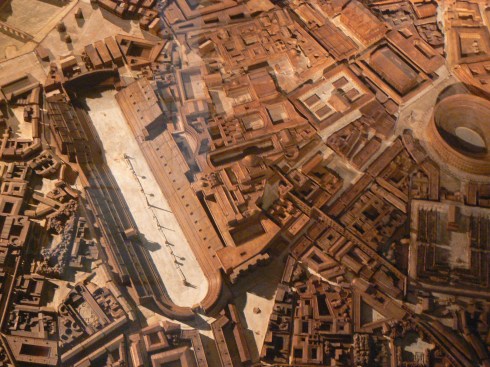

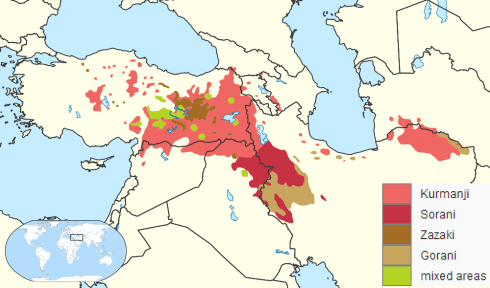
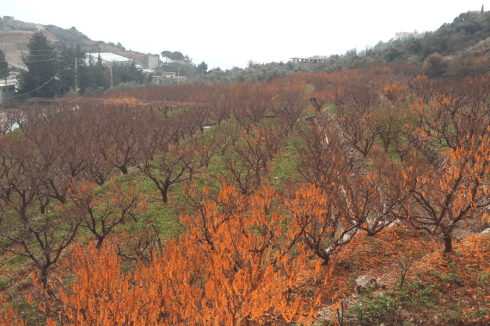 Ein Zebde peach orchards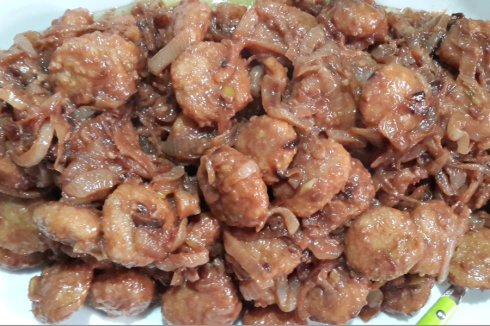
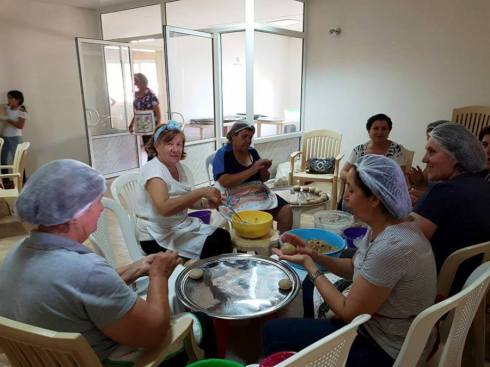
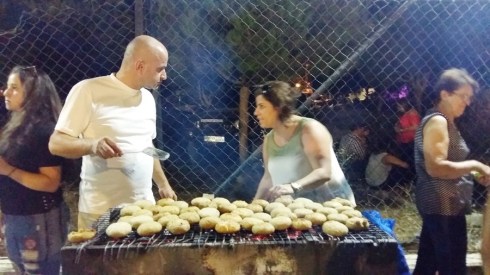
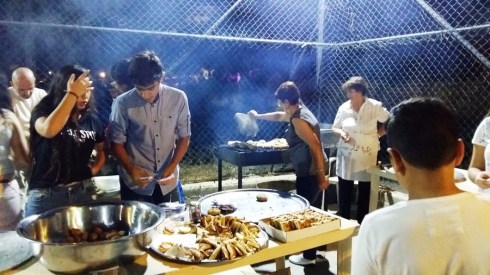
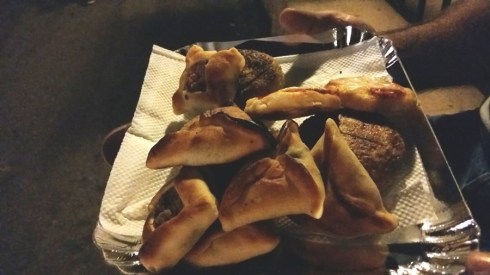
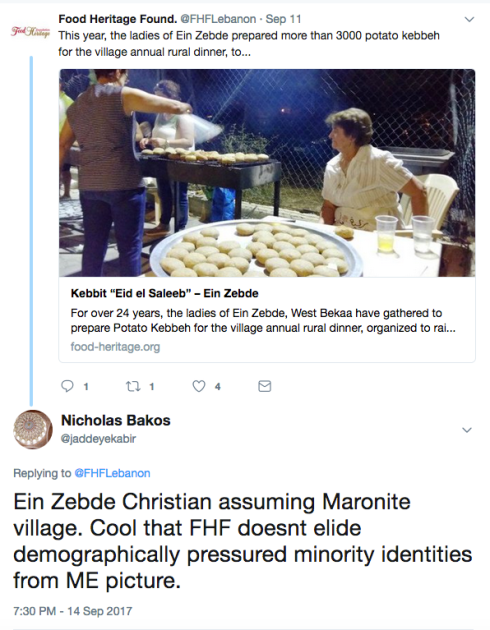
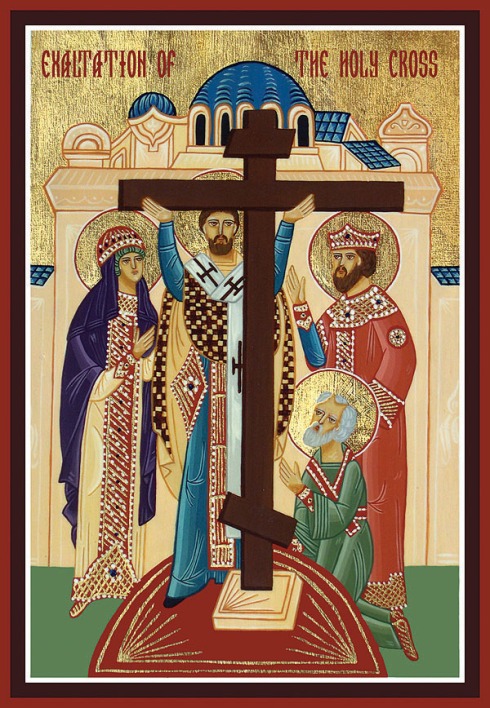
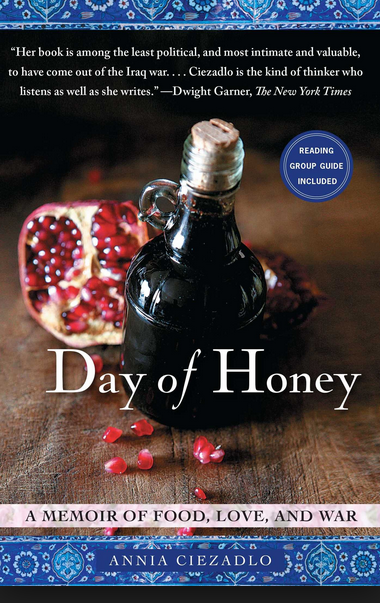
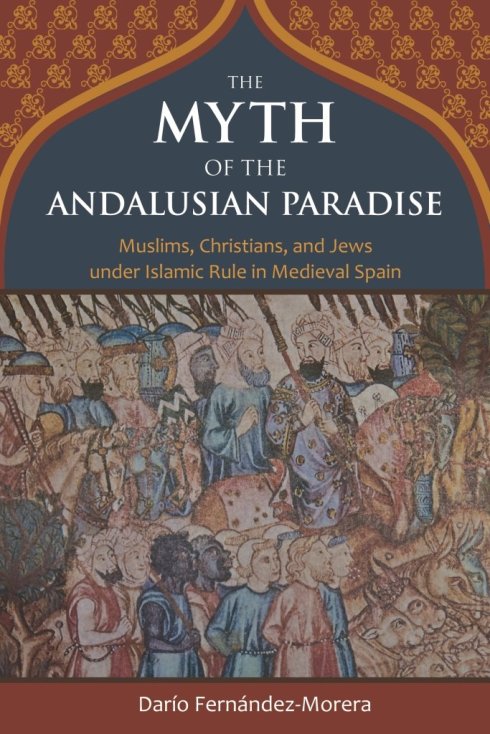
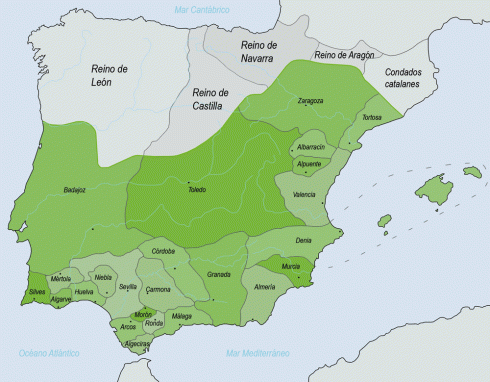 The taifa of the Iberian peninsula in 1031. (By 1248, when Seville fell to Christian siege, the only other major city left in Muslim hands was Granada.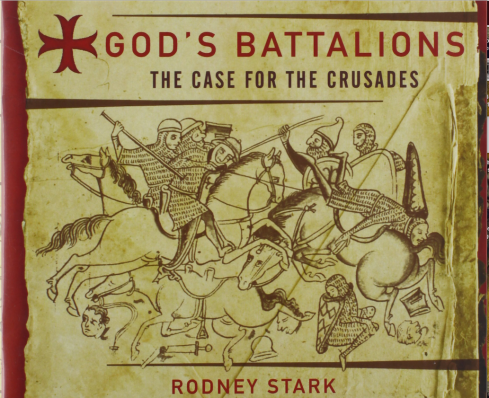
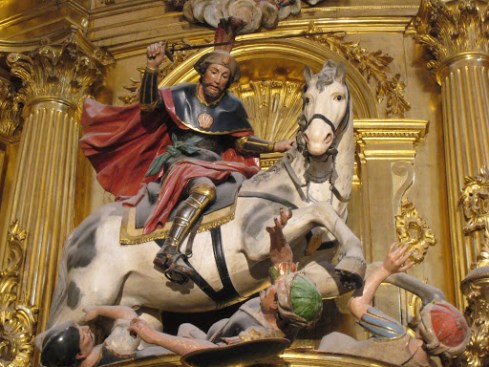
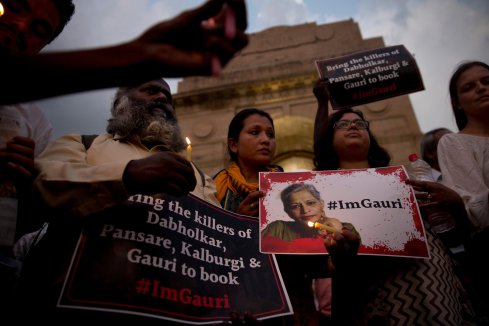

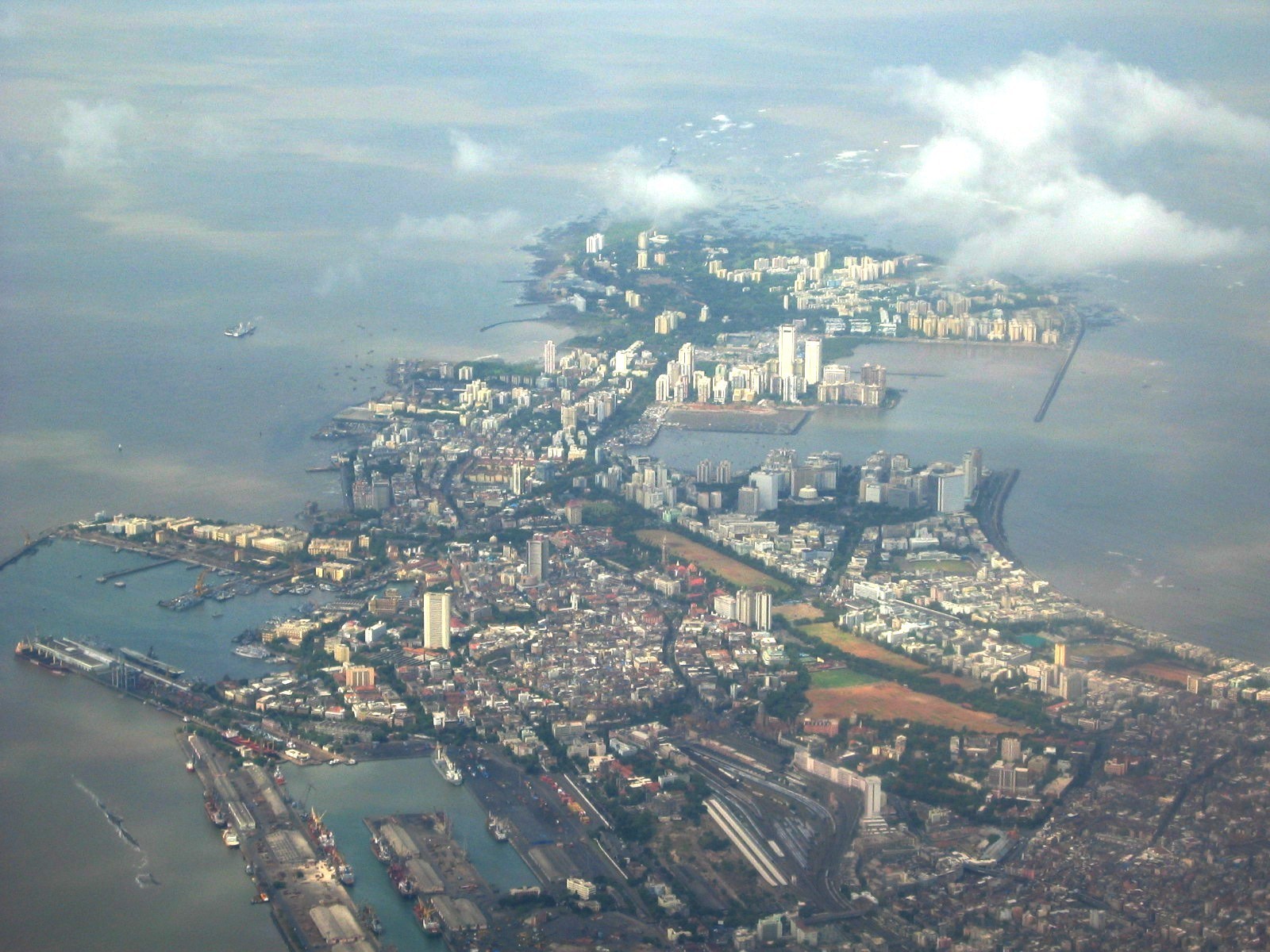
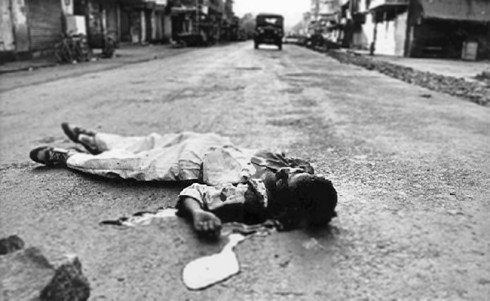

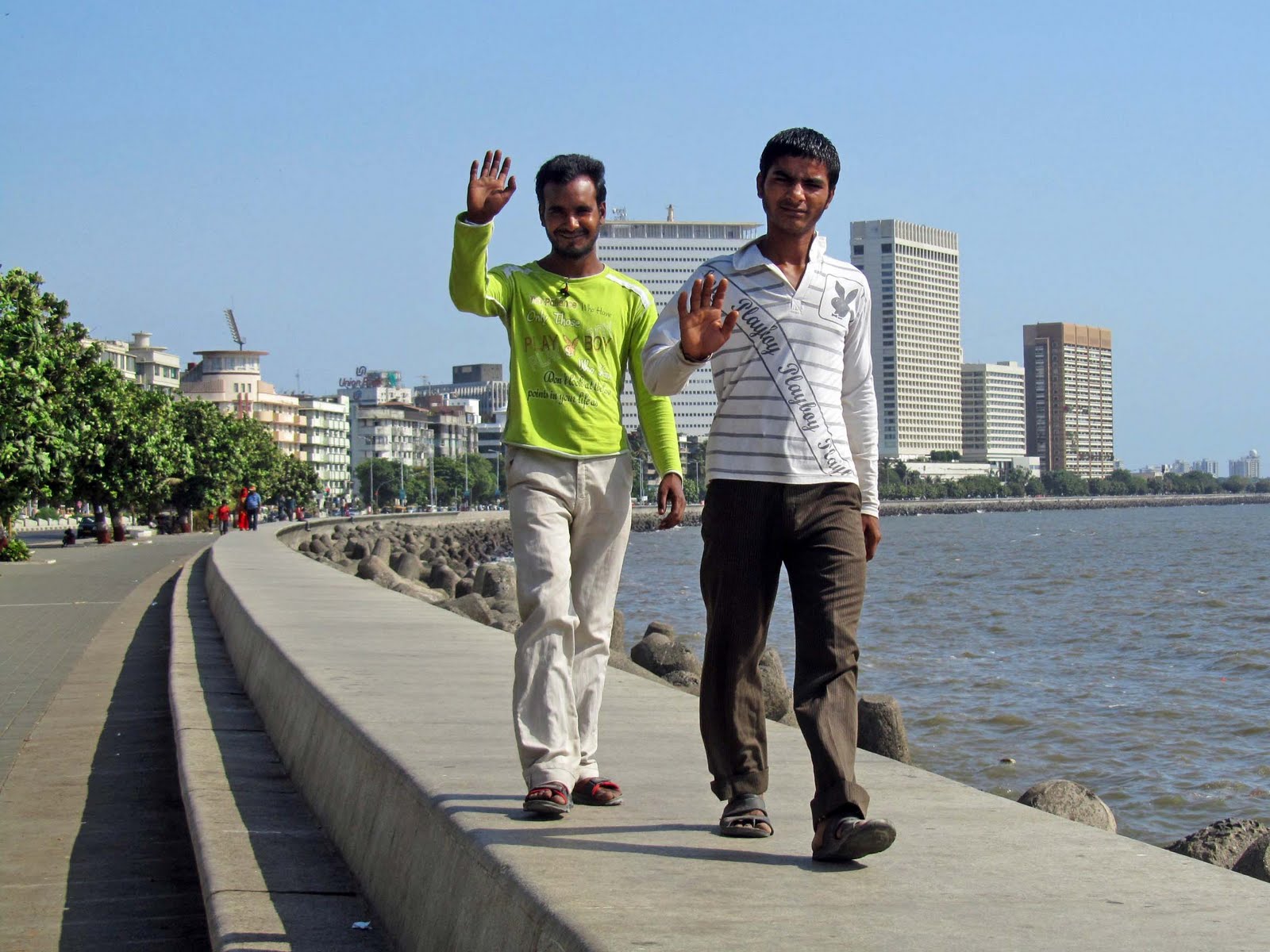
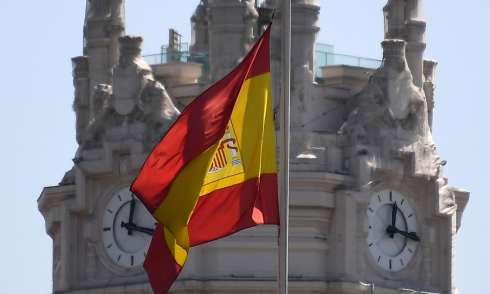 A Spanish flag at half-mast in front of Cibeles Palace in Madrid. Photograph: Gabriel Bouys/AFP/Getty
 The taifa of the Iberian peninsula in 1031. (By 1248, when Seville fell to Christian siege, the only other major city left in Muslim hands was Granada.
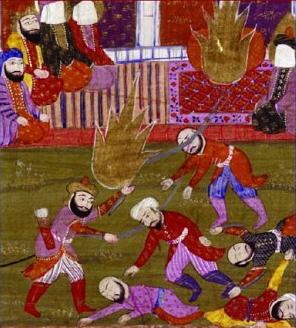 Detail from miniature painting The Prophet, Ali, and the Companions at the Massacre of the Prisoners of the Jewish Tribe of Beni Qurayzah, illustration of a 19th-century text by Muhammad Rafi Bazil. Manuscript now in the British Library.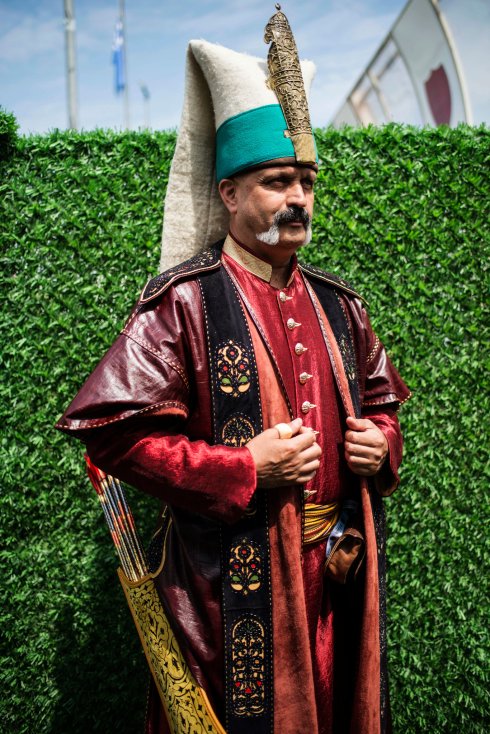

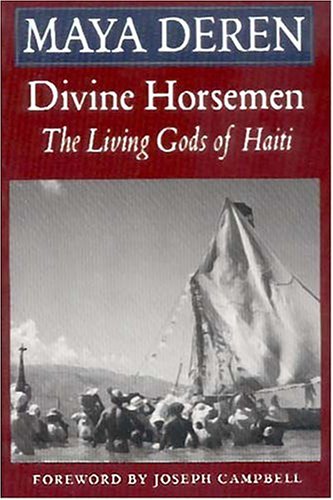
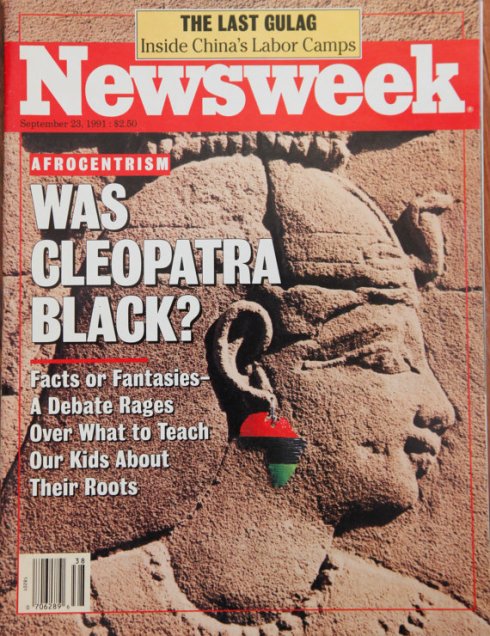
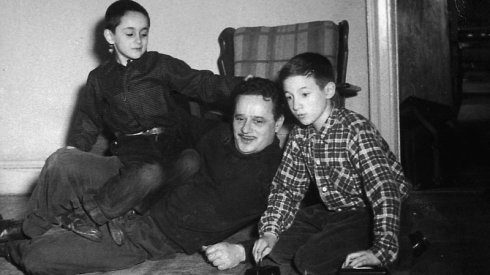 Abel Meeropol watches as his sons, Robert and Michael, play with a train set.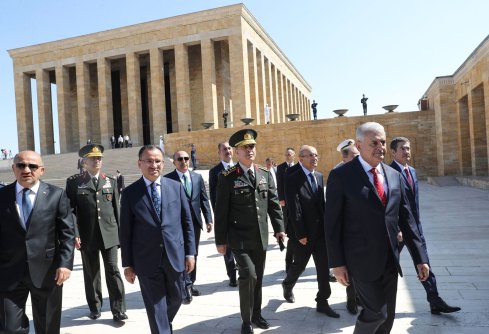
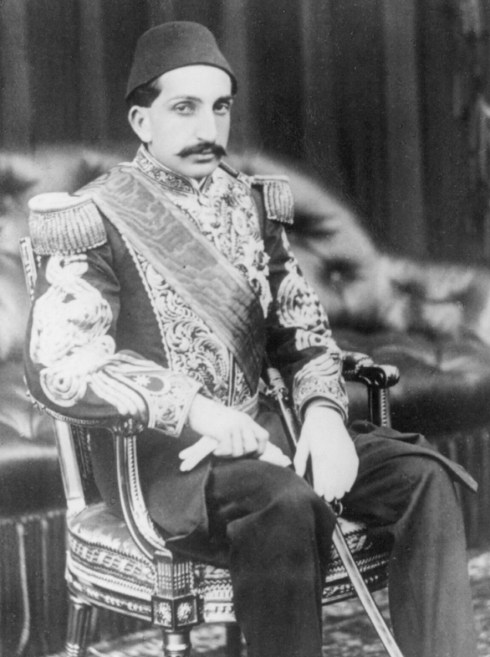
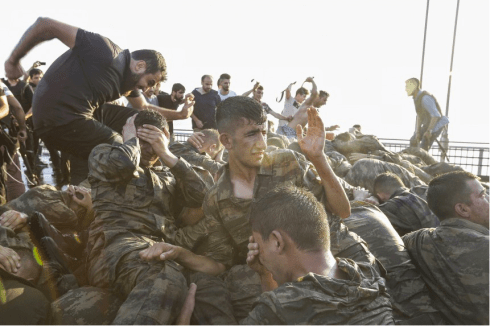 Turks beating up young conscripts on the Bosporus Bridge, defending their democratic right to elect a dictator who has abolished Turkish democracy for the most part and soon will have the power to go after whatever’s left…Turkish “unity” in action.
 Jadde: from Bosnia to Bengal
