Tag Archives: Istanbul

Michael Eric Dayson: “Facing this unadorned hate tears open wounds from atrocities that we have confronted throughout our history.”

14 Aug

In a truly disturbing op-ed piece in the TimesCharlottesville and the Bigotocracy“, Dayson makes the same point I made in Ireland — Gimme a break; I can’t believe this is even up for discussion“.

dyson-master768White nationalists and neo-Nazis demonstrated in Charlottesville, Va., on Saturday. Credit: Edu Bayer for The New York Times

“This bigotocracy overlooks fundamental facts about slavery in this country: that blacks were stolen from their African homeland to toil for no wages in American dirt. When black folk and others point that out, white bigots are aggrieved. They are especially offended when it is argued that slavery changed clothes during Reconstruction and got dressed up as freedom, only to keep menacing black folk as it did during Jim Crow. The bigotocracy is angry that slavery is seen as this nation’s original sin. And yet they remain depressingly and purposefully ignorant of what slavery was, how it happened, what it did to us, how it shaped race and the air and space between white and black folk, and the life and arc of white and black cultures.

“They [white supremacists] cling to a faded Southern aristocracy whose benefits — of alleged white superiority, and moral and intellectual supremacy — trickled down to ordinary whites. If they couldn’t drink from the cup of economic advantage that white elites tasted, at least they could sip what was left of a hateful ideology: at least they weren’t black. [my emphasis] The renowned scholar W.E.B. Du Bois called this alleged sense of superiority the psychic wages of whiteness. President Lyndon Baines Johnson once argued, “If you can convince the lowest white man he’s better than the best colored man, he won’t notice you’re picking his pocket. Hell, give him somebody to look down on, and he’ll empty his pockets for you.””

From my post:

But everybody has to be better than somebody, or else you’re nobody.  So, just like Catalans have to think they’re really Mare-Nostrum-Provençal Iberians (3 ***) and not part of reactionary Black Legend Spain; or Neo-Greeks have to think that they’re better than their Balkan neighbors (especially Albanian “Turks”) because they think they’re the descendants of those Greeks; or the largely lower-middle class, Low Church or Presbyterian or Methodist Brits who fled their socioeconomic status back home and went out to India in the nineteenth century in order to be somebody, had to destroy the modus vivendi that had existed there between Company white-folk and Indians, creating an apartheid and religiously intolerant social system that laid the groundwork for the unbelievable blood-letting of the Indian Rebellion of 1857; or, perhaps history’s greatest example, poor whites in the American South (many, ironically, of Northern Irish Protestant origin) that had to terrorize Black freedmen back into their “place” because the one thing they had over them in the old South’s socioeconomic order, that they weren’t slaves, had been snatched away (and one swift look at the contemporary American political scene shows clear as day indications that they’re, essentially, STILL angry at that demotion in status); or French Algerians couldn’t stomach the idea of living in an independent Algeria where they would be on equal footing with Arab or Berber Algerians.  So Protestant Ulstermen couldn’t tolerate being part of an independent state with these Catholic savages.”

But since we’re talking about the dangerous, delusional myths people need to believe, I might as well take this moment and take one tiny issue with one point in Dyson’s piece:

“This bigotocracy overlooks fundamental facts about slavery in this country: that blacks were stolen from their African homeland to toil for no wages in American dirt.”

People might not like me saying this, or at least think it’s the wrong time.  Oh well…  Of course African slaves were made “to toil for no wages in American dirt.”  But they were not “stolen” from their African homeland; they were bought from other Africans.

Am I blaming the victim?  No.  But if that’s what it seems like, like a lot of people think I’m anti-semitically blaming the victim if I say that the idea that there’s only one God and everybody else’s is false, and on top of it that one God loves you more than anybody else, is bound to get you kinna disliked by those around you sooner or later, then that’s cool.  (Another favorite idea of mine: if Christianity makes Jews so uncomfortable, they shouldn’t have invented it.)

I wrote my M.A. thesis in Latin American Studies on Cuba, particularly on abolition, and the complex interaction between the Cuban wars of independence from Spain, a vicious struggle that lasted three decades from 1868 to 1898 when the United States stepped in and annexed all of Spain’s remaining colonies, and the abolitionist struggle to end both the slave trade and slavery itself (the Spanish slave trade ended in 1868, and slavery itself wasn’t abolished, and then only gradually, until 1886).  In brief, and with clear echoes in the American South, a creole class in Cuba was ambivalent about independence because they were afraid of being over-run by the Black Cuban majority, while a bourgeois pro-independence class didn’t think Cuba could be a democratic republic while so many Cubans were enslaved.  In the end they did what most ex-slave societies did: free the salves and import indentured workers from the English-speaking Caribbean and immigrants from Galicia, marginalizing native Black Cubans, so that all groups together could be kept in a state of seasonal semi-employment which kept wages depressed and created enmity between the ethnic groups that should have felt some socioeconomic solidarity.  Let’s not forget that the “Danza de los millones” — “the Dance of the Millions” — when sugar generated unprecedented wealth for Cuban planters, surpassing anything the nineteenth-century slave economy could produce, and made Cuba one of the richest countries in Latin America, when the beautiful Havana we now see was largely constructed — happened in the 1910s and 20s, decades after abolition.

My thesis involved a heavy dose from my advisor of reading in West African history.  So any one who knows something about that history knows that almost none to absolutely none of the Africans brought to the Western Hemisphere during the slave trade — by some estimates 12 million human beings — were hunted down by slave-hunters Kunta-Kinte-style; it would have been logistically impossible to carry so many people across the Atlantic by that method.  African slaves were bought in huge numbers, in en masse cargo-loads by European slave traders, from West African kingdoms who had enslaved them in the course of warfare between those kingdoms.  There’s a legitimate argument to be made that the European slave trade made warfare between those kingdoms so profitable that conflict between West African states became endemic.  Doesn’t absolve anybody though, not Africans, not Yankee do-gooders, who didn’t need slaves anymore because they had already gotten rich off the trade (as that great song from the musical “1776” points out: “Hail Boston! Hail Charleston! Who stinketh the most?” — see below) and could afford to get moral on the rest of us, not Protestants or Catholics or any Christians, or Muslims for that matter.

Here’s some other un-fun truths:

* Black slavery in the Muslim world never and nowhere reached the scale that it did in the Christian Western Hemisphere, but that may simply and largely be because the agro-industrial infrastructure was not present, not because Islam was more enlightened on the idea of slavery generally.  East Africa supplied the Muslim eastern Mediterranean and Arabian peninsula with plentiful slaves for centuries.  I don’t remember when the Ottomans abolished slavery, but I think it wasn’t even during the Tanzimat, but at some point in the 1908 constitutional revolution, i.e. early twentieth century.  I’m always amused at “religion of peace” Islam apologists who try and make us understand how many passages there are in Muslim scripture that deal with the fair and “humane” way to conduct war, and massacre/execution or enslavement, and I wanna think: “gee, if there are so many passages that deal with the right or wrong way to conduct war, and massacre/execution or enslavement then those things must be mighty important to this religion of peace.”

NO monotheism is innocent; let’s get that through our heads once and for all.

* I hate to burst the bubble of Muhammad Ali or Malcolm X’s souls, or that of the wacked Nation of Islam, but Islam was not the religion of your African ancestors.  (They may not have been called Cassius Clay, but it’s for sure that they weren’t called Muhammad Ali either.)  Islam took a while to penetrate as far south as the coastal regions of West Africa.  And actually, your ancestors almost certainly were the still polytheist inhabitants of the coast who might have been sold to European slave-traders by the newly Muslim kingdoms of the Sahel (currently Boko Haram country), the belt between the Sahara and the coastal jungle/savanna.  If Afro-Americans anywhere in the Western Hemisphere are at all interested in the religion of their ancestors, they should look to Cuban Santería or Brazilian Candomblé or Haitian Voudon to re-establish a historical connection; when I was researching Santería in the 90s in Brooklyn, there was a real culture war between those Black Americans who were attracted to the Cuban religion of Yoruba origins — an amazingly relaxed, open-minded group, since polytheism is an open system, where you got to experience great music and dance, once you got past the practice’s defensive boundaries — and those Black Americans who were recent converts to Islam: puritanical pains-in-the-ass, like most converts, who had learned enough Arabic to call everybody else Kafirs, and who irritated the Senegalese and Malian immigrants in New York to no end.

And Black Southern Baptist or Pentecostalist  Christianity may have originally been the “slaveowner’s religion,” but its “getting the spirit” is a purely African phenomenon that has its emotional-devotional roots in the same parts of West Africa as Santería/Candomblé/Vodoun.  Read the second to last chapter of James Baldwin‘s Go Tell it on the Mountain, which takes place in 1930s (I think) Harlem and then the last chapter of Maya Deren‘s Divine Horsemen on Haitian Vodoun.  They mirror each other totally and both pieces still blow me away whenever I read them with the closest possible artistic representation of deity possession, the most impressive discursive capturing of a completely non-discursive, intangible experience, that I know of.
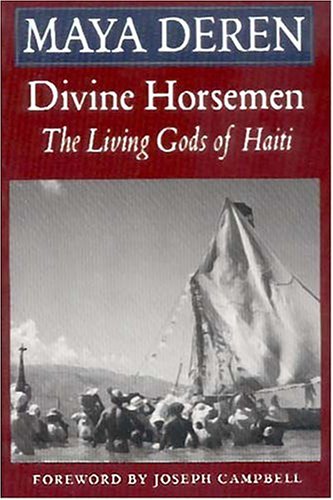
Divine Horsemen

* Another bubble to burst is the “Kwaanza-ism” bubble. No African-American before President Obama had any connection to East Africa, Kenya, or Swahili.  Another geographical term — Africa — turned into a completely artificial cultural construct, as if anything that happens on the African continent is somehow connected to African-Americans.  The BBC is currently running a series on “The History of Africa” — so modest those folks over there — that, as had become common-place but I thought we had moved on from (turns out we haven’t), lumps together Egypt, Libya, Tunisia, Algeria and Morocco into one “African” history instead of placing them in the history of the Greco-Roman-Christian-Arab-Muslim zone.  (Does anyone remember the height of this absurd argument: the Newsweek magazine cover with the picture of an Egyptian relief and the screaming caption: “Was Cleopatra Black?”  To Newsweek‘s credit, however, the article didn’t take its own title seriously and after going into an analysis of the African-American kulturkampf that gave rise to this question, ended simply with: “And Cleopatra?  She was Greek.”)

And does anybody still celebrate Kwaanza?

I always chuckle when people call Constantinople the city on two continents, as if the quarter-mile crossing of the Bosporus into “Asia” is some kind of massive, marked civilizational change, like the people in Kadiköy are Chinese or something because it’s in “Asia.”
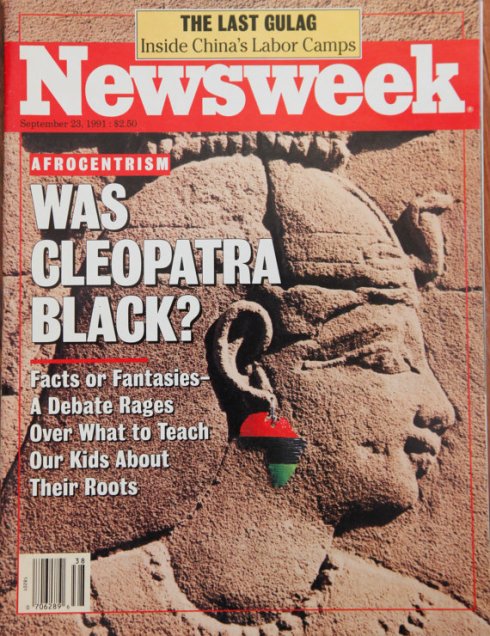
Newsweek Cleopatra

This was a real train-of-thought, free-association post — many think that everything I write is — so thanks for sticking with me.  Below are some videos selections based on my continued free association process:


“Southern trees bear strange fruit
Blood on the leaves and blood at the root
Black bodies swinging in the southern breeze
Strange fruit hanging from the poplar trees.

“Pastoral scene of the gallant south
The bulging eyes and the twisted mouth
Scent of magnolia, sweet and fresh
Then the sudden smell of burning flesh.

“Here is fruit for the crows to pluck
For the rain to gather, for the wind to suck
For the sun to rot, for the trees to drop
Here is a strange and bitter crop.”

“Strange Fruit” was written by Abel Meeropol, a real shayne Yid (beautiful Jew) if there ever was one.  Read the NPR story on him that I’ve linked to.  He also adopted the Rosenbergs‘ children, Robert and Michael, after that closetted scumbag Roy Cohn (a real self-hating Jew and queen if there ever was one) had their parents electrocuted.
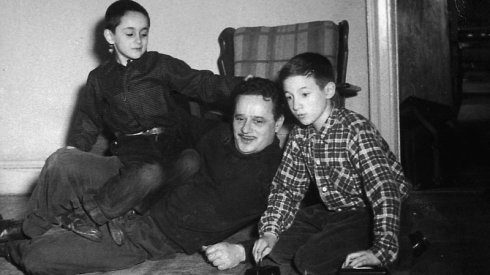
6-abel-meeropol-robert-michael-with-train-set-1954-_wide-3cb2d45bee8bab3d344570df91679295419dbb20-s800-c85Abel Meeropol watches as his sons, Robert and Michael, play with a train set. Courtesy of Robert and Michael Meeropol

And Maya Deren’s beautiful documentary footage of Haitian Vodoun:

See also Talking Heads’ David Byrne’s beautiful documentary, Ilé Aiyé on Bahian Candomblé.  It’s the best introductory “text” I know.  In reference to the dancing, drumming and singing, and animal sacrifice, food, alcohol and tobacco offerings that are meant to bring the god (or orisha in Yoruba) down into possession of his or her devotee, the narration includes the precious line: “They threw a party for the gods — and the gods came.”

And — on a lighter note — the great Celia Cruz below singing “Guantanamera” (you have to watch her move…wasn’t it great when women were allowed to have bodies like that? and if you have any idea what those silly kids who appear at the end are doing, please share) a song based on a poem of José Martí‘s, Cuba’s national poet and a man revered by Cubans of every color and political stripe anywhere.  In the end, Black Cubans played a significant part in the Cuban struggle, personified most in the person of Antonio MaceoAs Celia sings: “Freedom was a trophy won for us by the mambí [largely Black guerilla fighters], with the words of Martí, and the machete of Maceo.”  Yikes.  The Cuban Wars of Independence were truly brutal, often really fought with machetes, the symbol of Afro-Cubans’ cane-cutting bondage become an instrument of rebellion, but Spain’s imperial ego simply did not want to let go of “la siempre fiel” — “the always loyal” — and extremely profitable island.  1898, the year Spain had to give in, was a year that became a byword for disaster for Spaniards, and Cuba was the most lamented loss; there’s still a common expression in Spain: “Más se perdió en Cuba” — “There was more lost in Cuba” — when you want to say that “oh well, things aren’t so bad, not, at least, compared to the loss of Cuba.”  Ironically, Cuban independence was followed by a massive wave of migration to the island from Spain, largely from Galicia and Asturias, so in a weird way Cuba is the most connected to Spain of Latin American countries; a great, very unresearched musicological subject is the reciprocal exchange of musical influences from Cuba to southern Spain, especially for the gypsies of Seville and Cádiz, both port cities that were gateways to the Americas or “the Indies”, the flamenco genre “rumba” being just one indicator.

Celia was an initiated Santería priestess of the Yoruba male fertility deity Changó (you have to move a little in your seat every time you hear or say his name or you see lightning); her performances often contained dance moves associated with Changó (you have to move a little in your seat every time you hear or say his name); whether she was “mounted” by him at the time — which is the expression used to indicate deity possession, de allí Maya Deren’s reference to “horsemen” — is something only she can have known, though mostly devotees have no memory of their trance after they come out of it.  Most salsa singers since have been initiates — have to stay competitive and you only can if the gods are helping you — and the improv vocabulary and dance gestures of salsa performances are heavily derived from Yoruba Santería.   There’s one video of her singing “Quimbara” (below) where I think it’s really happening — the bending down and touching of the floor especially.

Here:

Finally, a NikoBakos memory.  Mambí was a chain of 24-hour Cuban restaurants, Mambí #1, Mambí #2 — I think there were five of them all over once heavily Cuban Washington Heights and Inwood — that used to provide me and friends with some early morning, post-salsa sustenance.  The food, like the neighborhoods, had become pretty Dominican by then, but they still made a mean Cuban sandwich.  All the Cuban restaurants I knew as a kid in New York are now gone, in Manhattan and Brooklyn replaced by Dominican plantain places, and in Queens, by one more mediocre Colombian bakery.  Schiller’s on Rivington Street still makes a good Cuban sandwich, but it’s $18.

Comment: nikobakos@gmail.com


Memo to: a certain generation of “progressive” Turks

4 Aug

From: NikoBakos

Re: the final and total castration of the Turkish military

Date: August 2017

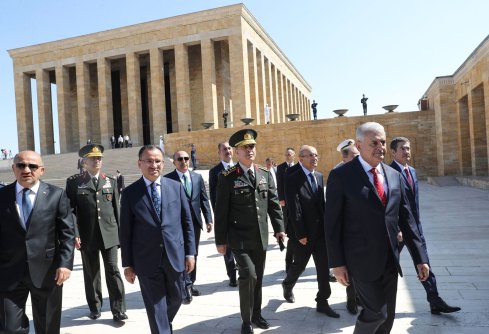
Ataturk Mausoleum Yildirim Chiefs of staffPrime Minister Binali Yildirim of Turkey, front right, and the chief of staff, Gen. Hulusi Akar, third from left, visit the Mustafa Kemal Ataturk Mausoleum before the Turkish Supreme Military Council meeting in Ankara on Wednesday. Credit Adem Altan/Agence France-Presse — Getty Images

ARE YOU HAPPY NOW???

I have two groups of friends in Constantinople:* one a group of mostly Alevi**, first-generation urbanites (from Dersim and Antiocheia); another of at least several urban generations, who are pure “White” Turks in every way.

A sub-category of this second group of friends (who are fast becoming ex-friends) are/were or considered themselves to be “leftists” (“I should cough” as one of the characters in Hester Street says).  These were always violently allergic to anything that had to do with the military, Turkish or otherwise.

Peaceniks, of course, our rift began when it proved completely in their interest to paint me as a super-American hawk during the Iraq war, even if I’m deeply un-American in my self-identification and was never a supporter of Bush’s adventure.  I simply did not know what to think about the idea of invading Iraq and toppling Saddam Hussein and took issue with their knee-jerk, anti-American attitude, with their facile certainty they knew what to think.  In the end I just decided that anybody who was automatically against the completely justified invasion of Afghanistan and the removal of the Taliban — and if that’s a tragically uncompleted project, that doesn’t mean the initial result or victory was not worthwhile…ASK ANY AFGHAN — was going to be a robot-thinker about any kind of American intervention or just about war of any kind, so I couldn’t be bothered.

Of course, these types DON’T KNOW ANY AFGHANS to ask, because they’re shameless hypocrites living in their pleasant, sheltered suburbs in C-Town, who know our Cyclades better then they know the rest of their own country — certainly better than I do — and wouldn’t dare head out to Afghanistan, even on a dare.  Why do they irritate me so much?  It’s simple.

If the original sin of the Right is selfishness, the original sin of the Left is self-righteousness, by which I mean the need to see one’s self as morally correct no matter what, even if this means a breezy indifference to the realpolitik or the reality of what’s really happening on the ground.***

Of course, they were steadfast in their belief that the Turkish military was an institution of bastardized Kemalism that was the greatest anti-democratic force in their society.  This was their justification for eventually rejecting their parents’ admittedly corrupt CHP as well, Turkey’s Kemalist Republican party.  And yet it’s ironic that the Turkish military’s “anti-democratic” orientation has repeatedly prevented the complete descent of that society into chaos.  One of these types has a whole sob story she used to recite to me about how, as a young girl in the 70s, she was terrified every day when her father left the house that he wouldn’t come home because of the terrible and constant terrorist violence that was then occurring on the streets of Constantinople.  But it was the military that put an end to that violence in 1980, like it was the military who got rid of Menderes, architect of the 1955 anti-Greek pogrom, in 1960.  And as soon as Erbakan started exceeding his limits (btw, he was the first who tried talking about limiting alcohol consumption and tables on the street in Pera and Galata), the military got rid of him too in 1997 — not exactly cause and effect there.

As a Greek, there’s obviously little love lost on my part for the Turkish military.  I just feel that if Turkey’s twentieth-century history, culminating in the Erdoğan phenomenon, has proven the country to be incapable of forming a democratic civil society that doesn’t spin out of control into violence, corruption and chaos, then you just don’t have the luxury of being anti-military.  Furthermore, from our perspective, Erdoğan’s pre- and post-“coup” military is a far more threatening force than it was previously.  Violations of Greek air space have increased exponentially under Erdoğan’s tenure, as has his, and formerly Davutoğlu’s, irresponsibly imperialist Neo-Ottoman language.  And just like it wasn’t a military junta that organized the pogrom of 1955, it wasn’t a military government that invaded Cyprus in 1974, ethnically cleansing and occupying 40% of the island to protect a Turkish minority that is only 18% of the island’s population.

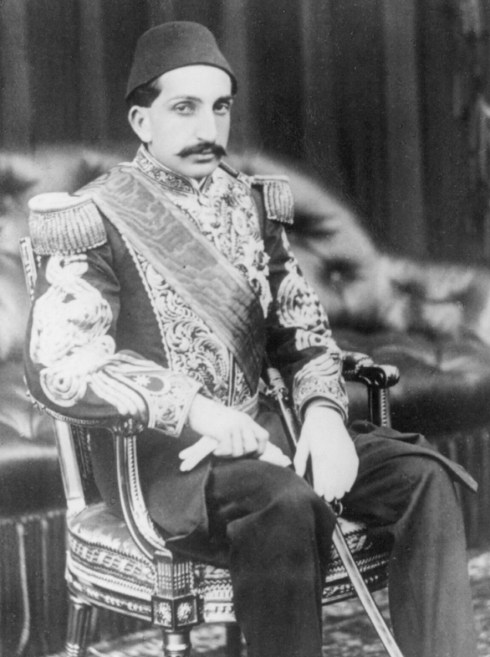
Lately there had been a weird shift in their attitudes though, as it has slowly sunk in that they had supported (“I voted for him!  My God!!”) the most un-democratic, anti-consitutional, religiously retrograde, paranoid, chip-on-the-shoulder lunatic to rule Turkey since Abdülhamid (photo below).  After the takeover and purging of the daily Zaman in March of 2016, I ran the idea past a few of them: “do you think it’d be a good idea for the military to step in? …they already have more unconstitutional dirt on him than on most Turkish heads of state.”  And even the Teşvikiye girl who had worried so much about her father, didn’t get apoplectic on me like she would’ve done in the past; she simply mumbled passively, in the static cadences of Turkish passivity: “I don’t even think they’re in a position to do anything at this point.”****

AbdülhamidAbdülhamid

Worse was one who said to me: “What Turkey needs now is unity.”  Well, your compatriots have actually shown a quite impressive amount of unity in the face of the Erdoğan challenge.  Every time he has engineered some sort of spectacular violence to terrify them over the past almost three years, they have unitedly come back, in elections and referenda and the mob-mobilization they have always been so good at, to give this “most un-democratic, anti-consitutional, religiously retrograde, paranoid, chip-on-the-shoulder lunatic to rule Turkey since Abdülhamid…” an even greater mandate on power than he had before: Daddy please save us!

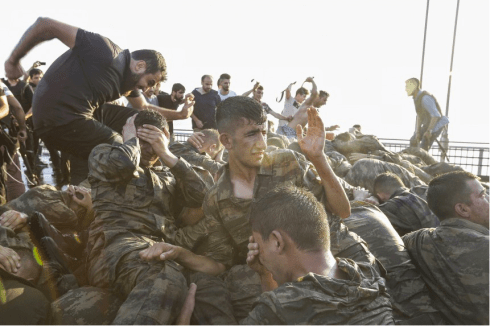
Infantile beyond belief.  Is that the “unity” you wanted?  There was great unity in the mob hysteria that this supposed coup was met with (no, I don’t believe it was Gülen; no, I don’t think it was the army, unless it was army that already knew it was going to be sacked; no, I don’t think he didn’t know; I’d probably refuse to believe that Erdoğan wasn’t the architect of the whole thing — see the New Yorker‘s great Dexter Fillins’ “Turkey’s Thirty-Year Coup”).  They displayed impressive unity lynching poor little Mehmetçiks just following orders on the Bosporus Bridge (scenes guaranteed to make the hair of Greeks and Armenians stand on end), impressive unity in the Nazi-style rallies the Great Leader has convened, impressive unity in heckling men from the army and journalists and writers being led into a show trial that can quite possibly end in their execution or certainly life sentence (see “Inside Erdoğan’s Prisons” in the Times) and with the kerchiefed teyzes screaming for blood outside the courthouse in Ankara — and I’m sure they’ll show impressive unity in supporting the reinstating of capital punishment if that goes up for a referendum soon.

Turkish thugs and soldiersTurks beating up young conscripts on the Bosporus Bridge, defending their democratic right to elect a dictator who has abolished Turkish democracy for the most part and soon will have the power to go after whatever’s left…Turkish “unity” in action.

IS THAT THE UNITY YOU WANTED?  The unity of Kristallnacht? (or the “Septembriana” — same difference.)  The unity of Nüremberg?  The unity that comes with thinking that you can enfranchise the newly rich, provincial pious, those with absolutely no democratic education — or education of any kind — and that they won’t turn on you like swine before which pearls have been cast?  (Plato said that the “demos” — the people — shouldn’t have the right to vote because they’ll always vote for the tyrant — τυραννόφρων; Dostoevsky’s Grand Inquisitor says precisely the same thing.)  Did you want the unity of the Italians and the Germans who respectively put Mussolini and Hitler in power with their vote?  Or the Americans who voted for Trump?  Or the Russians who voted and will again vote for Putin?

Tabrik migam, then.  You got it.

And this is the cherry on your birthday cake: Erdoğan replaces the military chiefs of staff with his own men.  Good luck ever getting rid of him now.  He’s now in a position of total control, with no challenges whatsoever.  You’re stuck for life.

*************************************************************************************

* The days when in the p.c. stupidity of the metapoliteuse we used to refer to Constantinople as “Istanbul” — I mean when speaking Greek…airport announcements and newspaper by-lines used “Ιστανμπούλ“…in Greek…are over.  I’ve now taken to calling it Constantinople in English as well, as Turks are free to call Salonica Selanik or Bulgarians and Macedonians Solun and I have no problem.  I’m not going to tell others what to call cities historically important to them; it actually makes me happy.  For more on this see my: Names: “Istanbul (not Constantinople)”…and Bombay! and keep an eye out for my “Boycott ‘Mumbai” campaign” post.  In general except an upswing in South Asian posts as we approach the seventy-year anniversary of Partition.

** My friends bear out the truth that Turkey’s Kurdish-Zaza Alevis and Syria and Lebanon’s Alawites are religiously the same branch of semi-Shia Islam.  The ones from Dersim have recognized that Syrian Alawites are also Alevi like them, even if that hasn’t made them Assad supporters; and the ones from Antiocheia (Antakya in Turkish or Hatay province in the logic of Turkish science fiction nationalist narrative) are just plain Alawite Arabs, who have understood that if there’s anything separating them from Syrian or Lebanese Alawites, it’s only the Turkification campaign they were subjected to when Turkey annexed that part of then-French-mandate Syria in the 1930s.  If papers like the Times feel the need to add the caveat that they’re different in every article they publish on the subject, it’s because they’re ignorant, the Turkish Press Office has made a fuss every time they don’t add that caveat, and it’s easy to think that people separated into difference by the ethnic nation state aren’t religiously brothers.  I’ve written extensively on this in a Twitter dialogue I had with a Turk who thought everybody should fight “lies and defamation” against their country when they appear in the media:

Syrian Alawites and Turkish Alevis: closer than I thought

Turkish Alevis and Syrian (or Lebanese…or Turkish?) Alawites — a Twitter exchange

Alevis and Alawites addendum: a “p.s.” from Teomete

More on Alevis and Alawites…or Alevis and Kurds…or Iraqi Kurds…or…Christian Kurds…or Assyrians…or…

Look out for Alevis in the current struggle in Turkey.  Whereas Kurds proper are not trusted by the political establishment or most Turks because they’re convinced they’ll never give up their separatist aspirations, Alevis, who suffered terribly under the Ottomans and the early republic and still do on some level, are still loyal to the Turkish Republic and Turkey itself.  This puts them in the position to become the secular backbone of all democratic impulses that still exist in that country, something like African-Americans in the United States were in the mid-twentieth century, since their form of Islam does not aspire to becoming the State itself, as all forms of conventional Sunni Islam do.  They were a disproportionate share of the casualties and deaths that occurred during the crackdown of the 2013 protests, not because they were targetted specifically, but simply because they were already a disproportionately large percentage of the protesters.

*** It may seem irrelevant, but this type always reminds of a passage in Chesterton’s Orthodoxy in which he trashes this kind of moral correctness by trashing the New Agers of his time:

“Only the other day I saw in an excellent weekly paper
of Puritan tone this remark, that Christianity when stripped of its
armour of dogma (as who should speak of a man stripped of his armour of
bones), turned out to be nothing but the Quaker doctrine of the Inner
Light. Now, if I were to say that Christianity came into the world
specially to destroy the doctrine of the Inner Light, that would be an
exaggeration. But it would be very much nearer to the truth. The last
Stoics, like Marcus Aurelius, were exactly the people who did believe in
the Inner Light. Their dignity, their weariness, their sad external care
for others, their incurable internal care for themselves, were all due
to the Inner Light, and existed only by that dismal illumination. Notice that Marcus Aurelius insists, as such introspective moralists always do,
upon small things done or undone; it is because he has not hate or love
enough to make a moral revolution. He gets up early in the morning, just
as our own aristocrats living the Simple Life get up early in the
morning; because such altruism is much easier than stopping the games of
the amphitheatre or giving the English people back their land. Marcus
Aurelius is the most intolerable of human types. He is an unselfish
egoist. An unselfish egoist is a man who has pride without the excuse of
passion. Of all conceivable forms of enlightenment the worst is what
these people call the Inner Light. Of all horrible religions the most
horrible is the worship of the god within. Any one who knows any body
knows how it would work; any one who knows any one from the Higher
Thought Centre knows how it does work. That Jones shall worship the god
within him turns out ultimately to mean that Jones shall worship Jones.
Let Jones worship the sun or moon, anything rather than the Inner Light;
let Jones worship cats or crocodiles, if he can find any in his street,
but not the god within. Christianity came into the world firstly in
order to assert with violence that a man had not only to look inwards,
but to look outwards, to behold with astonishment and enthusiasm a
divine company and a divine captain. The only fun of being a Christian
was that a man was not left alone with the Inner Light, but definitely
recognised an outer light, fair as the sun, clear as the moon, terrible
as an army with banners.”  [All bold emphases mine.]

**** “yanlış oldu” — See Loxandra‘s amazing “duck with bamya” chapter; I never tire of recommending it.

Comment: nikobakos@gmail.com

Turkey and Silence

6 Jan

istanbul-mourning

I’ve been silent for a year, more or less. And the reason is pretty simple: Turkey. It’s been hard to watch a country you feel (or should) so close to, are for better or worse geographically adjacent to, (mostly worse), and which is so key in every way to the subject matter and internal structure of this blog, implode in such spectacular fashion and not have something to say.

And yet I didn’t have anything to say that could do justice or offer any insights into what was happening. I look back at a blog entry from the end of 2015 about my arriving in C-Town on November 2nd, the day after Turks gave Erdoğan a parliamentary reward for inciting the unspeakable violence that had already occurred — and would soon start spiralling exponentially out of control — instead of punishing him for it, and note that I feel an internal tectonic shift towards the place and its people; a weird, kind of science-fiction-like creepiness and discomfort…City of Zombies.

But every time I’d try to say something, events would overgallop and trample me and I’d say nothing again. Instead of posting here, I started writing acerbic, aggressive-aggressive emails to small groups of friends – partly to get my bile out, partly to hurt some of them. I felt myself starting to fall back on ancestral nastiness: Greek clichés of Turks as inherently slow-geared: a kind of dumb manipulable mob, one who’ll sooner or later be steered by the powers-that-be that they revere so idiotically into finding a way to take out their society’s dysfunction on us.

It’s been nice to be in Jiannena since Christmas. (“Jianniotes’ Jianniotiko passion for their Jiannena is well-known…” states with unapologetic Jianniotiko pride the introduction to a really interesting book I’,ve stumbled across here about the little known late Roman and early Byzantine history of the city.*) It is an addictively pleasant town and on December 30th some friends of mine from Istanbul came to spend a few days with me here. We were glad to see each other. It had been a long time. The weather was chilly but bright and sunny. The raki bracing. And to show two Turkish friends around a city whose primary tourist sites are Ottoman, and its general ‘Ottomaness,’ is the kind of irony in such matters that I love.

So I think it might have been a kind of perverse blessing to be with them New Year’s morning after the Reina attack in Ortaköy. Here were two real people I love, in pain: not straw men to beat up or take out my frustrations on. And that made a difference. It slows down your thinking.  It doesn’t let you cut emotional or intellectual corners. I might actually have something to say soon.

Comment: nikobakos@gmail.com

*************************************************************************

* index-jp

Ιωάννινα: Ίδρυση – Χωροταξικός Ρόλος – Μορφή της Πρωτοβυζαντινής Πόλεως (Ioannina: Foundation, Functional Layout, Form of the Proto-Byzantine City); Βασίλης Αναστ. Χαρίσης, Αρχηιτέκτων (Vasiles Anast. Harises, Architect)

Serbian “Άξιον Εστί” — Достoйно eсть — In the Kyriotissa in C-town

15 Nov

Serbian theology students chant “Axion Esti” — “It is worthy..” — perhaps the Orthodox liturgy’s main chant to the Virgin — in the Panagia Kyriotissa (we think) now the Kalenderhane Camii, a functioning mosque, in İstanbul.  The Church Slavonic transliterated into Greek in the subtitles.

Hard to see who’s singing; is it really just a recording played over the video?  If not, and it’s real, man, it really proves Serbs have balls of steel.  Then again, the Turks, usually older guys who are the keepers of these churches/mosques in the old city, are usually pretty relaxed about this stuff.

But, there go a bunch of Serbian dudes for ya’.

Досто́йно есть, я́ко вои́стину блажи́ти тя Богоро́дице, присноблаже́нную и пренепоро́чную, и Ма́терь Бо́га на́шего. Честне́йшую херуви́м, и сла́внейшую вои́стину серафи́м, без истле́ния Бо́га Сло́ва ро́ждьшую, су́щую Богоро́дицу, Тя велича́ем.

Ἄξιόν ἐστιν ὡς ἀληθῶς,
μακαρίζειν σε τὴν Θεοτόκον,
τὴν ἀειμακάριστον καὶ παναμώμητον
καὶ μητέρα τοῦ Θεοῦ ἡμῶν.
Τὴν τιμιωτέραν τῶν Χερουβεὶμ
καὶ ἐνδοξοτέραν ἀσυγκρίτως τῶν Σεραφείμ,
τὴν ἀδιαφθόρως Θεὸν Λόγον τεκοῦσαν,
τὴν ὄντως Θεοτόκον,
σὲ μεγαλύνομεν.

(And the always miserable translation…)

It is truly right to bless thee, O Theotokos,
thou the ever blessed, and most pure, and the Mother of our God.
Thou, the more honorable than the cherubim,
and beyond compare more glorious than the seraphim,
who without corruption gavest birth to God the Word,
thou the true Theotokos, we magnify thee.

As I was once bitching about the attempted Westernization/harmonization of Greek ecclesiastic music, mostly in Greece and by the Autocephalous abomination known as the Church of Greece…

“But the more central a hymn was considered to a service’s meaning, the more likely it was to have been set, at some point, to a boring, semi-Western, “Mary-had-a-little-lamb” melody” [here  “…απορώ και εξίσταμαι.” ) … in order to encourage, you know, congregational participation along Protestant and Neo-Catholic lines, as if it were more spiritually edifying to sing badly in a group (we’re not Black, you know) than to listen to the technically demanding music of the Church — essentially a branch of the Perso-Ottoman classical tradition — performed by highly trained cantors.  Maybe I’ll remember that next time I’m at the opera.”

…I remembered that Axion Esti is probably one of those hymns that no Greek-American — or Greek, for that matter — churchgoer has ever heard except to that treacly nineteenth-century setting.  But last Sunday, at the Panagia in Pera, I heard the young Syrian cantors there belt out a version to an old Ottoman setting — in the best traditional Constantinopolitan/Patriarchal tradition — that blew me away.  I felt like I had never heard it before…this hymn I’ve heard at every liturgy I’ve attended in my entire life.

Comment:nikobakos@gmail.com

Photo: Turkish Schadenfreude at Istanbul Airport

1 Aug

TurkishSchadenfreude

Sorry for the poor quality of this photo, but I just had to post this.  An ad all over Istanbul’s airport: “Going to Greece.  Talk to us today for suggestions on how much to take.  Make sure you have enough Euros for your stay.”

At the height of the Greek economic crisis and in the middle of the most bitter negotiations between the Greek government and the European Union over the extortionist measures of the promised bailout, this appears in Turkish airports.  This is a pure, lying attempt at sabotage of Greek tourism.  The dreaded “capital controls” that limited Greeks to taking 60 Euros a day out of ATMs to prevent a run on closed banks never applied to foreigners; i.e., you weren’t going to put your Dutch bank card into a Greek ATM to withdraw money from an account in Rotterdam and be limited to just 60 Euros.  This was really shitty and beneath Turks’ dignity.  But the truth is that I can’t really understand what’s going on in that country psychologically, so I’ll chalk it up to what seems to be a temporary suspension there of all rational discourse.

I’ve just invested so much in defending them (yeah, yeah…think you don’t need my defending? think again…) that I hate when they embarrass me with this kind of nastiness.

Comment: nikobakos@gmail.com

The New St. Nicholas at WTC

8 Jan

Santiago Calatrava Rebuilds St. Nicholas at Ground Zero

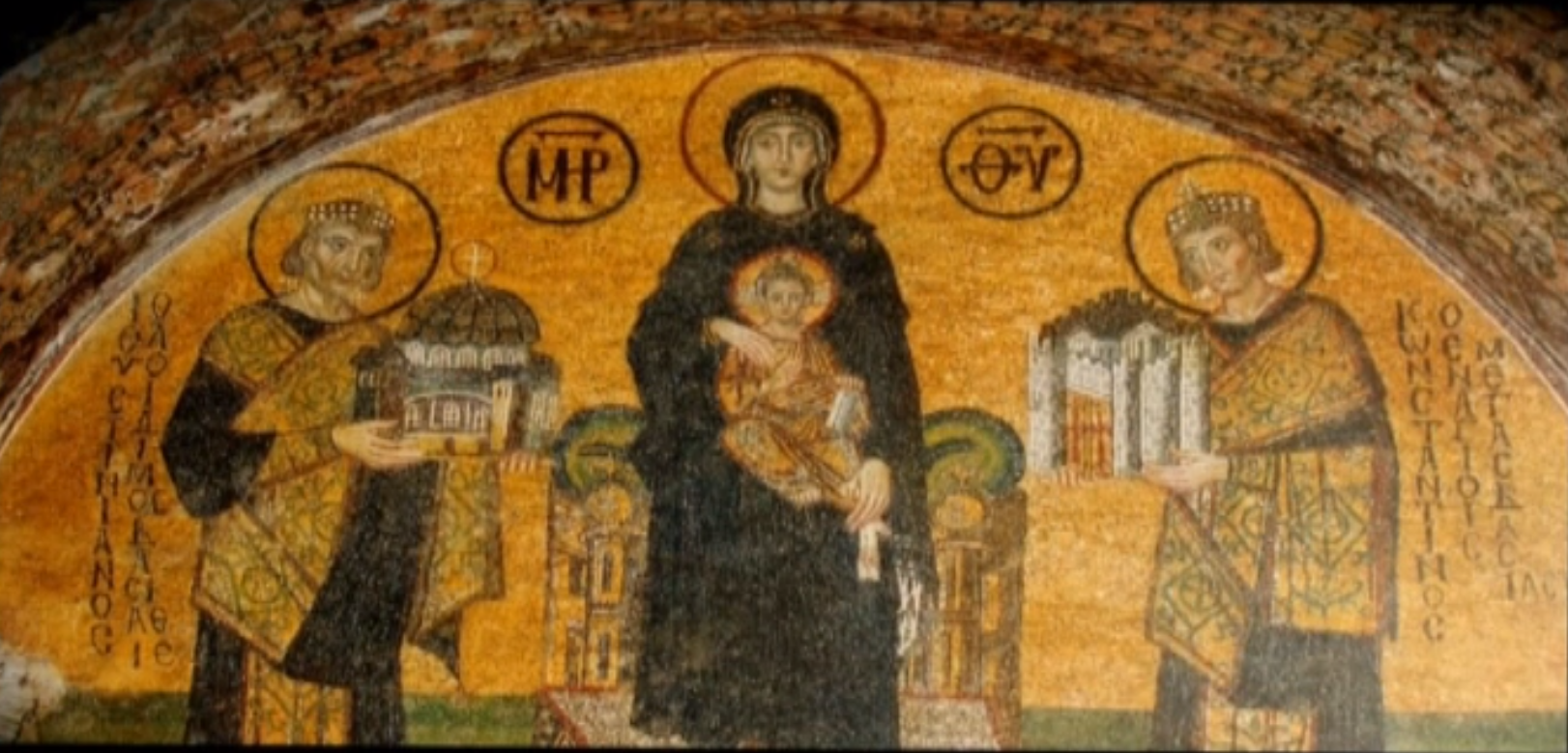
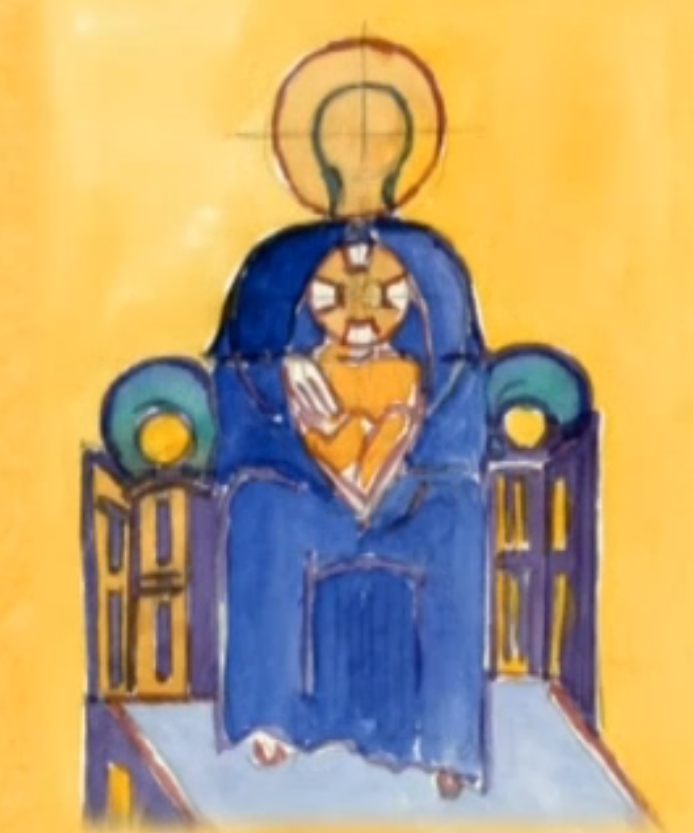
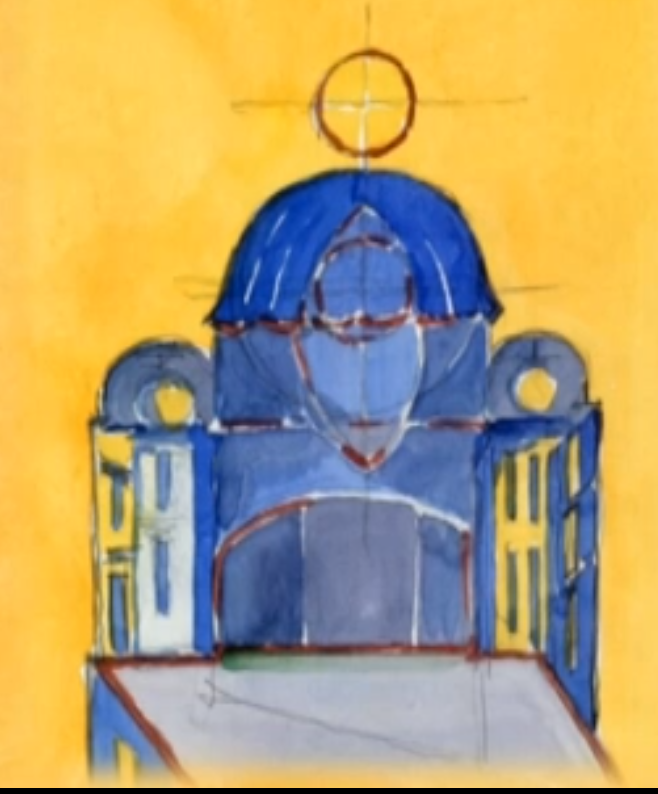
Watch fascinating BBC video on how Calatrava drew inspiration for his design from the mosaic Panayia over the southern entrance of Hagia Sophia in Constantinople, the Virgin herself transformed by his design into the dome of the new church.  (Click on all photos.)

Screen Shot 2015-01-08 at 1.40.32 PM

Screen Shot 2015-01-08 at 1.54.35 PMMosaïques de l'entrée sud-ouest de Sainte-Sophie (Istanbul, Turquie)

Screen Shot 2015-01-08 at 1.42.00 PM

Screen Shot 2015-01-08 at 1.42.45 PM

Screen Shot 2015-01-08 at 1.44.08 PM

Screen Shot 2015-01-08 at 1.44.30 PM

Screen Shot 2015-01-08 at 1.44.57 PM

Screen Shot 2015-01-08 at 1.45.48 PM

Screen Shot 2015-01-08 at 1.46.17 PM

Comment: nikobakos@gmail.com

The Classical Liberals: “On the Balkans, the Former Yugoslavia, and the Unity of Spaces”

4 Jan

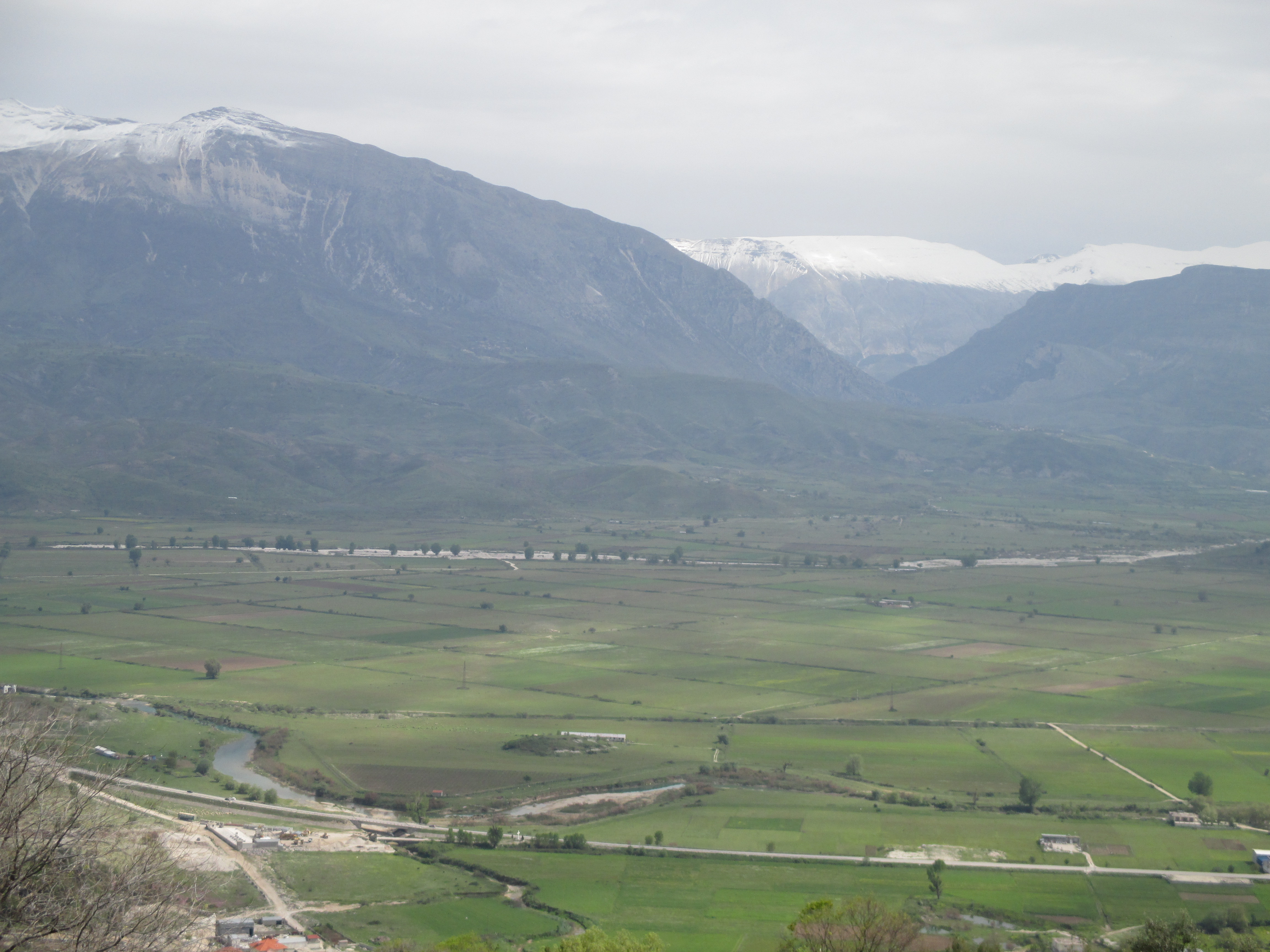
dropoliThe Valley of Dropoli, the pass up to the Pogoni plateau near Libochovo, and in the distance, the snowcapped peaks of Nemerčka, from the Monastery of the Taxiarches in my father’s village of Derviçani, Easter 2014 (click)

I’m honored by the fact that this really intelligent blog quotes extensively from the Jadde’s mission statement in a recent post: Jadde — Starting off — the Mission.

Check them out: The Classical Liberals: At least, most of the time  Smart, perceptive, interesting stuff.

The author of the post below and the person I suspect is largely behind the editing of the blog is one Eoin Power, not just a fellow Balkan-freak along the lines of me or Rebecca West, but also a fellow Epirote.  He demurs a bit — though not very convincingly — at being called an Epirote, because his lineage is multiple and complicated and the connection to Epiros is fairly distant historically.  But he’s from one of the most archetypically and ancient Epirotiko villages — where they still own their patriko — in one of the most archetypically Epirotiko regions of Epiros and he carries himself with the requisite Epirotiko dignity and soft-spokeness and if I, NikoBakos, have conferred the title on you, it’s ’cause you deserve it.

***************************************************************************************************************************************************************************

On the Balkans, the Former Yugoslavia, and the Unity of Spaces

The other day, as she is wont to do, my mother sent me a link to something on the Internet; this time it was to Nicholas Bakos’ blog, which you can find here. If you’re reading this blog, we’re probably friends in real life (thanks for reading!), and so it’s probably obvious why something like that would be of interest to the both of us. I have admittedly only skimmed sections of his posting so far, but in his introductory one, it was especially gratifying to read this:

This blog is about “our parts.”  It’s about that zone, from Bosnia to Bengal that, whatever its cultural complexity and variety, constitutes an undeniable unit for me.  Now, I understand how the reader in Bihać, other than the resident Muslim fundamentalists, would be perplexed by someone asserting his connection to Bengal.  I can also hear the offended screeching of the Neo-Greek in Athens, who, despite the experiences of the past few years, or the past two centuries, not only still feels he’s unproblematically a part of Europe, but still doesn’t understand why everyone else doesn’t see that he’s the gurgling fount of origin and center of Europe.

But set aside for one moment Freud’s “narcissism of petty differences,” if we have the generosity and strength to, and take this step by step.  Granted there’s a dividing line running through the Balkans between the meze-and-rakia culture and the beer-and-sausage culture (hats off to S.B. for that one), but I think there’s no controversy in treating them as a unit for most purposes; outsiders certainly have and almost without exception negatively.  And the Balkans, like it or not, include Greece.  And Greece, even more inextricably, means Turkey, the two being, as they are, ‘veined with one another,’ to paraphrase the beautiful words of Patricia Storace.  Heading south into the Levant and Egypt, we move into the Arab heartland that shares with us the same Greek, Roman-Byzantine, Ottoman experiences, and was always a part of the same cultural and commercial networks as the rest of us.  East out of Anatolia or up out of Mesopotamia I challenge anyone to tell me where the exact dividing line between the Turkic and Iranian worlds are, from the Caucasus, clear across the Iranian Plateau into Afghanistan and Central Asia.

Bakos suggests that for people of “those parts” displaced to another environment (e.g. grad school in the West), this kind of geographical unity came, at least in a social context, fairly naturally, so perhaps I shouldn’t be all that surprised and delighted at seeing it reconstituted in blog form. But in fact I think the basic unity of the geographical zone outlined here often gets lost in the way these places are understood by outsiders and, ironically enough, in no small part due to the vehement insistence from each of the zone’s component peoples that they could not possibly be compared with those uncultured idiots with whom they share a border.*

Explaining the rationale for delineating “his parts” the way he does, Bakos writes:

But to step into Buddhist Burma is somehow truly a leap for me, which maybe I would take if I knew more. And in the other direction, I stop in Bosnia only because for the moment I’d like to leave Croatia to Europe – mit schlag – if only out of respect for the, er, vehemence with which it has always insisted that it belongs there.  Yes, I guess this is Hodgson’s “Islamicate” world, since one unifying element is the experience of Islam in one form or another, but I think it’s most essential connections pre-date the advent of Islam.  I’ll also probably be accused, among other things, of Huntingtonian border drawing, but I think those borders were always meant to be heuristic in function and not as hard-drawn as his critics used to accuse him of, and that’s the case here as well.

Ultimately what unites us more singularly than anything else, and more than any other one part of the world, is that the Western idea of the ethnic nation-state took a hold of our imaginations – or crushed them – when we all still lived in complex, multi-ethnic states.  What binds us most tightly is the bloody stupidity of chilling words like Population Exchange, Partition, Ethnic Cleansing – the idea that political units cannot function till all their peoples are given a rigid identity first (a crucial reification process without which the operation can’t continue), then separated into little boxes like forks after Easter when you’ve had to use both sets – and the horrendous violence and destruction that idea caused, causes and may still do in “our parts” in the future.

Having not, at least north of the equator, yet made it further east than Istanbul, I am in no position to question Bakos’ perception of the fundamental apartness of Buddhist Burma. But the loose border he posits to the north and west is one I’ve crossed many times, and it’s one that is both deeply present and functionally invisible.**

At the very least it is present in people’s minds; I can vouch for the vehemence (to use Bakos’ word again) with which Slovenes and Croats will insist that their countries are European, and not Balkan. It’s also pretty visually observable – you could mistake Zagreb or Ljubljana for a city in Austria or Germany in a way you simply can’t for, say, Sarajevo or Belgrade. And on one frantic trip from Dubrovnik back to Ljubljana (the ferry which I’d intended to take from Dubrovnik to Ancona decided not to arrive from Split, leaving me nothing to do but beat a hasty retreat back north) you could, if you were looking for it, see an actual tangible difference in the way things were done in the world – bus tickets in Mostar and train tickets in Sarajevo had to be paid in cash and a conductor on the train north from Sarajevo let me pay in a mix of Croatian kuna, Bosnian marks,  and euros. In Zagreb I could pay with a credit card, the train station had working and appealing amenities, and you couldn’t smoke in the train. This is a terribly squishy thing to write, but it did feel more “European-y”.

On the other hand, if the relatively old Huntingtonian dividing line between formerly Orthodox and Ottoman lands to the south, and formerly Catholic Hapsburg lands to the north is visually (and, at least in terms of credit card viability in 2009, functionally) discernible, the comparatively recent unifying experience of Yugoslavia is also unavoidable. Here, too, the first signs are in architecture and appearance; Soviet-style architecture and the legacy of 1950s industrialization has left the same physical scars on cities from Nova Gorica to Skopje. But they run deeper than that – the protestations of linguistic nationalists notwithstanding, Slovene, Bosnian, Croatian, Serbian, Montenegrin, Macedonian (hell, even Bulgarian a bit) all exist along a spectrum of of mutual intelligibility; state apparatuses, all having those of the former Yugoslavia as their common predecessors, share similar characteristics. Indeed, to me as a foreigner, the similarities often seem more salient than the differences.

Just on the basis of whether or not there “is” a usefully differentiating border to be drawn where Croatia meets Bosnia, it seems you can argue fairly fruitfully either way, depending on whether your sympathies lie with a sort of longue duree emphasis on deep civilizational splits or a faith in the primacy of modern political experiences. But by Bakos’ own ultimate criteria, it seems a bit odd to leave the northernmost bits of the former Yugoslavia out of things (though there is a nice alliterative symmetry to covering “from Bosnia to Bengal”) . If you’re going on the basis of, “the bloody stupidity of chilling words like Population Exchange, Partition, Ethnic Cleansing,” surely things like Jasenovac or the Istrian exodus argue for the inclusion of all of the former Yugoslavia?

Of course, any exercise in boundary-izing is a bit arbitrary, and in this case there are good reasons to put one in between Croatia and Bosnia and not, say, in between Slovenia and Austria (two countries for which there also exist plenty of historical reasons to consider them as part of a unified space). So if all of this does anything, it is perhaps to show how much more liminal are most places than we or their inhabitants often care to admit; whether or not you see a border somewhere often depends as much on your level of zoom as anything else.

*Or at least their nationalist politicians – many average people (whatever that means) in Bosnia and Serbia, for example, will quickly stress to you the fundamental similarities between the two countries and their inhabitants
**People sometimes marvel at my overstuffed passport but really something like 40% of the stamps come from the Dobova and Dobrljin border posts.

**************************************************************************************************************************************************************************

Again, check these guys out; you won’t regret it: The Classical Liberals

Comment: nikobakos@gmail.com

From the Times: Pope, in Turkey, Issues Call to Protect Middle Eastern Christians

30 Nov

Yes, starting with Turkey itself.

Full article


“Might they open the doors of the wine shops And loosen their hold on our knotted lives? If shut to satisfy the ego of the puritan Take heart, for they will reopen to satisfy God.” — Hafez

3 Nov

WineryimageFrom Pulse News: Beer, wine flow in West Bank Christian hamlet”  by TIA GOLDENBERG | November 3, 2014

TAYBEH, West Bank (AP) — A tiny Christian enclave in the overwhelmingly Muslim West Bank has for years crafted the only Palestinian beer and brought thousands of visitors flocking to its annual beer fest. Now, it is adding wine to its list of libations, hoping a boutique winery will be another tourist draw and contribute to keeping the small village afloat.

While Christians around the Middle East have seen their numbers dwindle due to conflict and the lure of better economic opportunities abroad, Taybeh has remained an exclusively Christian village, the last in the West Bank.

The family behind the wine and beer says they are carrying out “peaceful resistance” by investing in their homeland and staying put.

“This is how we believe the state of Palestine can be built: by people like us to invest in the country and encourage other Palestinians to come and invest in their country,” said Nadim Khoury, who founded the brewery and winery.

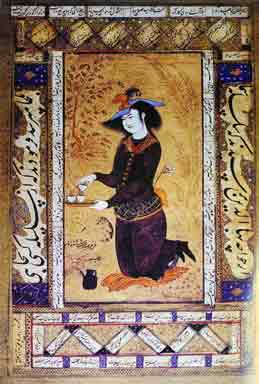
I’ve always been fascinated by the association, in so much Persian(ate) poetry, of alcohol with non-Muslims — and by extension, licentiousness, sexual desire, subversiveness, sin, etc.  There’s probably a dissertation out there somewhere that I should try looking for.  I thought about it a lot in my rant on the Gezi Park protests and the symbolic importance of Pera in the İstanbul imaginary that I wrote from Kabul last November.  In fact, it was pretty much the thesis of the piece:

“And here we run into our first paradox, or the origins of a chain of paradox: that this now central “heart” of Istanbul began as a space of marginality.  The Byzantines originally put some of their unwanted Catholics there: Galata’s mother city is actually Genoa.  In Ottoman times, Christians and Jews lived there and made wine and everybody else came there to drink it.  While not an exclusionary, extramural ghetto of any sort – to their credit the Ottomans didn’t often do that kind of thing – it was sort of the wrong side of the tracks: the Ottoman equivalent of the suburbs or the across-the-river Zoroastrian neighborhoods in Iran where Hafez and company went to drink the infidel’s wine and torment themselves with the beauty of the innkeeper’s son: the other side of town, the refuge of disbelief and transgression, of unorthodoxy and the unorthodox in every sense.  The alcohol…”

…….

If 2013’s protests then – at least Istanbul’s –were at their core about protecting aspects of the essential urbanity of Istanbul, and Greeks played such a large role in shaping that urbanity, shouldn’t that be acknowledged?  If Turkish society is playing out – again, at least in Istanbul – its most intense culture wars on a ghost blueprint of vanished minorities, then wouldn’t making that a more explicit part of the contest be immensely productive – all around.

See it all:Nobody really cares about Gezi Park: Greek thoughts on the protests of 2013


image007

Comment: nikobakos@gmail.com

Upon escaping from Greece…

7 Sep

cp-cavafy2

How do you go through the work of the poet whose opus consists of the sharpest and most accurate analysis of Modern Greek identity, and find the poem that displays perhaps the most razor-sharp understanding of all of them? I’ve always known that poet was Cavafy, but I wasn’t looking for that one poem or anything, when, just leafing through his stuff a few days before I left Greece this past July, I came upon one of my favorites, the following. Please have a look first:

Going Back Home from Greece (an unbelievably clumsy translation of the Greek title)

Well, we’re nearly there, Hermippos.
Day after tomorrow, it seems—that’s what the captain said.
At least we’re sailing our seas,
the waters of Cyprus, Syria, and Egypt,
the beloved waters of our home countries.
Why so silent? Ask your heart:
didn’t you too feel happier
the farther we got from Greece?
What’s the point of fooling ourselves?
That would hardly be properly Greek. 
 
It’s time we admitted the truth:
we are Greeks also—what else are we?—
but with Asiatic affections and feelings,
affections and feelings
sometimes alien to Hellenism. 
 
It isn’t right, Hermippos, for us philosophers
to be like some of our petty kings
(remember how we laughed at them
when they used to come to our lectures?)
who through their showy Hellenified exteriors,
Macedonian exteriors (naturally),
let a bit of Arabia peep out now and then,
a bit of Media they can’t keep back.
And to what laughable lengths the fools went
trying to cover it up! 
 
No, that’s not at all right for us.
For Greeks like us that kind of pettiness won’t do.
We must not be ashamed
of the Syrian and Egyptian blood in our veins;
we should really honor it, take pride in it.

— Translated by Edmund Keeley/Philip Sherrard

Επάνοδος από την Ελλάδα

Ώστε κοντεύουμε να φθάσουμ’, Έρμιππε.
Μεθαύριο, θαρρώ· έτσ’ είπε ο πλοίαρχος.
Τουλάχιστον στην θάλασσά μας πλέουμε·
νερά της Κύπρου, της Συρίας, και της Aιγύπτου,
αγαπημένα των πατρίδων μας νερά.
Γιατί έτσι σιωπηλός; Pώτησε την καρδιά σου,
όσο που απ’ την Ελλάδα μακρυνόμεθαν
δεν χαίροσουν και συ; Aξίζει να γελιούμαστε; —
αυτό δεν θα ’ταν βέβαια ελληνοπρεπές. Aς την παραδεχθούμε την αλήθεια πια·
είμεθα Έλληνες κ’ εμείς — τι άλλο είμεθα; —
αλλά με αγάπες και με συγκινήσεις της Aσίας,
αλλά με αγάπες και με συγκινήσεις
που κάποτε ξενίζουν τον Ελληνισμό. Δεν μας ταιριάζει, Έρμιππε, εμάς τους φιλοσόφους
να μοιάζουμε σαν κάτι μικροβασιλείς μας
(θυμάσαι πώς γελούσαμε με δαύτους
σαν επισκέπτονταν τα σπουδαστήριά μας)
που κάτω απ’ το εξωτερικό τους το επιδεικτικά
ελληνοποιημένο, και (τι λόγος!) μακεδονικό,
καμιά Aραβία ξεμυτίζει κάθε τόσο
καμιά Μηδία που δεν περιμαζεύεται,
και με τι κωμικά τεχνάσματα οι καημένοι
πασχίζουν να μη παρατηρηθεί. A όχι δεν ταιριάζουνε σ’ εμάς αυτά.
Σ’ Έλληνας σαν κ’ εμάς δεν κάνουν τέτοιες μικροπρέπειες.
Το αίμα της Συρίας και της Aιγύπτου
που ρέει μες στες φλέβες μας να μη ντραπούμε,
να το τιμήσουμε και να το καυχηθούμε.

What gives this poem such pride of place as an analysis of Greek identity? For me, it starts with the simple joy both passengers feel as they’re arriving home – not approaching Greece, but leaving it. “Upon Escaping from Greece” would be my choice for the title’s English translation, because it’s clearly an experience of suffocation that the two friends have experienced that has started to lighten up for them as they cruise east through the breezy waters of the Mediterranean.

Cavafy has become an object of a resurgent cult in Greece, partly due to last year’s 150-year celebration (he was born in 1863), that’s a kind of an “emperor’s-new-clothes” phenomenon for me; not because his new clothes aren’t real, but I feel that few Greeks actually know what it is they’re suppose to be liking so much. I much prefer people who just say up front that they don’t like him. He’s “childish” they say, in response to his prose-like, early modernist experiments. These are the people who like their poetry with a capital “P”; they want it to rhyme: “φεγγαράκι μου λαμπρό…” and they want it to have epic scale heroics and ‘the thousands dead under the axles’ and ‘the living giving their blood’ in the heroic deed of ‘making the sun turn,’ along with some myrtle and oleander and jasmine thrown in for Aegean effect. (What if you’re from Epiros and you don’t know from oleander and jasmine, just tsouknida and pournari?) Others only like a very emphatically stressed “some” of his poems: these are the ones turned off by his sexuality, but who feel they can’t say so openly in 2014 – or to me. (And the degree to which that whole part of his work, a good half, was ignored by the official festivities – they wanted only “Ithaka” or “Waiting for the Barbarians” or “The City” — was amazing.*) The Messenger for example, found a publisher for his paternal grandfather’s, my great-grand-uncle on my mother’s side, fascinating memoirs, which span the whole period from the late nineteenth century and the end of Ottoman rule to WWII. Except his grandfather met a Jewish guy who screwed him over when he was a young immigrant in New York in the 20s and he included the unfortunate phrase: “Hitler was right for doing what he did to them.”**  The publisher thought maybe that line should be cut. But the Messenger stuck to his cast-iron principles and insisted it be left as is, because it would be “censorship” to remove it.  Hardly an upholder of the most liberal sentiments on issues of that kind, I have a feeling that if the comment hadn’t been about Jews, he wouldn’t have minded the censorship so much. Just a few months earlier, for example, he hadn’t thought it was “censorship” to cut a slightly too homoerotic line from a Cavafy poem he read at his father’s funeral, for fear that our landsmen, our chorianoi, would be scandalized.

These elements and others: that Cavafy preferred the tragic dénouement to the epic climax; the unconsummated to the fulfilled; that he preferred the coded to the open and disclosed, and not out of choice; but learning to love what fate had made him, he learned to love the beauty of code – its poetry — the furtive touch over some cheap handkerchiefs; that he loved the ethnically and culturally and religiously mixed margins of Greek history and the poignancy of characters who had to straddle those margins and did not write a single poem about its Attic glory days (who are all these half-breed Egyptians and Parthians and Jews and other exotic anatolites he’s always making us read about anyway? Where’s Pericles and Aristotle?); that he understood life and humanity as fundamentally amoral, and morality as a convenient weapon to be used against the unfortunate few or often just a bad joke. All this did not do much to endear him to his contemporaries, along with the fact that he famously disliked Greece and especially Athens (the latter kind of unfair in my opinion: Athens at that time must’ve been at its most beautiful and charming), and the straight, homophobic white boys of the Generation of the ‘30s in particular, despite Seferis’ famous eulogy, had no time for him. The most vehement, Theotokas (unfortunately, one of my favorite Greek writers otherwise) scathingly declared Cavafy, in his Free Spirit, a “dead end” (a common trope, whether conscious or not: the gay man begets no issue and is thus fundamentally allied with death); that his modernism was an experiment that had been taken to its logical conclusion and that the Alexandrian was now a decadent (same difference), a point of departure for what Greek letters should move on from next and not a road open for them to continue down.

That right there is the grand and egregious error. Because Greek culture and identity – in a way that makes any sense to who we are today – simply didn’t exist until the Hellenistic (and then Roman/Byzantine) periods that Cavafy chose, almost exclusively, to write about in his historical poems. The conglomeration of Indo-European tribal units who all spoke dialects of similar languages and had started coalescing into larger city-state forms of political organization by the mid-first millennium B.C. have nothing to do with us. They may have started calling themselves “Hellenes,” but let’s not forget that the Iliad does not contain one, single, blessed mention of that holy word, and was compiled only a century-and-a- half or so before the Golden Periclean Age we’re so obsessed with.

It was because he was fascinated with the true origins of Greek identity, the cauldron of cultural mixture that Alexander created that later became condensed into a more distilled Greek-speaking, Orthodox idea, that Cavafy wrote about those periods so widely and studied them so deeply. And being from such deep aristocratic Constantinopolitan roots and an Alexandrian, how could he not have felt that basic idea on a gut level.

This is another reason the mention of the words “Macedonia” and “Alexander” makes my hair stand on end. The Macedonians (by which I mean Slav Macedonians) are ridiculous in their attempt to appropriate Alexander as a phenomenon of their own culture, though many observers have written about how this conscious policy of “antikvatsiya” (“antiquization”) on the Macedonian government’s part is, partly, a response to Greek intransigence on every other grounds. But you can see from how Greeks respond to Macedonian moves that Greeks don’t get Alexander either. Alexander is not a culminating point of Hellenic history, where the great hero brought Hellenic civilization to the “borders of India.” Alexander is not even a Greek herohe very early in his career quickly became déraciné, as Mary Renault keenly observed. Alexander is where Greek history starts. It’s all really the other way around. Alexander is what brought the East, and its incomparably greater and older civilizational achievements, to us. He drove us deep into contact with that wider world, cementing what had always been our bonds to those lands and those peoples he grew to love so much, and giving us as much in return, actually more, than what we gave them. He created the great creolized cultural space that a universal, cosmopolitan Greek identity was first born in and that later – when the name for “universal, cosmopolitan identity” changed, due to political circumstances, from “Greek” to “Roman,” – changed along with it, but which left the Helladic peninsula — or “the Hellenic” generally — behind permanently as a focus of any kind. Until the twentieth century.

Alexander Renault

Hermippos and his friend, Greeks going home to Antioch in Syria or Seleucia in Mesopotamia, can’t be Greek in Greece. It suffocates them. They don’t fit into that nonsense, antiquarian straightjacket. It’s “beneath” them, as Greeks, to reject the wider world that they’ve long been an intimate and inseparable part of. Greek means cosmopolitan to them and they can’t be Greeks without that quality. It would be the most provincial thing for them to do, to act like provincials who try to hide their “easterness”:

“…like some of our petty kings
(remember how we laughed at them
when they used to come to our lectures?)
who through their showy Hellenified exteriors,
Macedonian exteriors (naturally),
let a bit of Arabia peep out now and then,
a bit of Media they can’t keep back.
And to what laughable lengths the fools went
trying to cover it up!”

Eastern Mediterranean(click)

The nation-state is bound up inseparably with provincialness. And narrowed tribalism. And provincials hide. Not true Greek men. Cavafy’s “petty kings” are the Neo-Greek bourgeoisie, from the statelet’s origins down to our day, with their still immovable disdain for the East, who don their ancient fineries and try to make the world call them Hellenes and have no clue how ridiculous they’re being. Provincials dissimulate – not true Greek men — and that dissimulation has been the main thread of Neo-Greek culture since the late eighteenth century, so much so that all perspective has been lost. Hermippos and his buddy aren’t provincials. They’re Greek alright – from some of the richest, most sophisticated and Greekest cities in the world; but they understand the larger cultural context they’re a part of, and they’re too supremely secure in their Greekness to put down the Egypt and Syria that ‘flow in their veins.’ Greece tries to take that away from them. I imagine the Athens they had to go study at as a kind of tired old Cambridge, MA, still resting on its now dried-up laurels. But they’re too Greek to let Greece do that to them. Sorry to get repetitive. It’s an attempt to make the paradox – a wholly healthy and natural one – sink in.

Greece still tries to do that to you. And in the crisis mode it’s in today, it tries even harder because its sad inhabitants’ perspectives have become narrower and narrower to the point where they see nothing of the rest of the world and there’s simply very little language left you can share with them. “Η φτώχεια φέρνει γκρίνια,” the Greek says – “poverty makes for kvetching” — and though many people I know have faced the current crisis with the best kind of Greek dignity and humor in the face of adversity, too many others have lapsed back into ideological craziness, or just a frustrated lashing-out bitterness, or were always there but kept it hidden and now think that it’s more okay to express things openly; it’s hard to tell which.

One friend or relative has become a Golden Dawn apologist if not supporter: “What’s a young man who loves his country supposed to do?” I dunno; but half of Dostoevsky is about what to do with the unguided idealism of strong young men and phenomena like Golden Dawn wasn’t one of his answers; he strictly warned us against them, in fact. Another wants to take a DNA test to make sure he has no Albanian genes: actually believes such a thing exists – a chromosome for Albanian-ness and a test that will detect it. And this is one of those uncomfortable situations we’ve all been in where this is coming from the spouse of a good friend, so you have to keep your silence and you can’t just say: “That’s nice _______, Hitler and the Nazis were into that kind of thing too.” If I could I would’ve also asked if he wanted to see my DNA chart too, which is probably chock full of “Albanian-ness” and if he would then feel the need to maybe keep me away from his daughters. Another is still obsessing, as we go on twenty-five years since the break-up of Yugoslavia, on the “Macedonian issue.”*** And after hours of mind-bogglingly pointless conversation – “It is useless to attempt to reason a man out of a thing he was never reasoned into,” said Jonathan Swift — you take a step back and realize that that’s all that’s ever mattered to this guy. The hundreds of thousands dead produced by the Yugoslav disaster, the millions displaced, the destruction of the last part of the former Ottoman sphere where there was still some hope of survival for a multi-ethnic society, the greatest bloodletting in Europe since WWII, right on our doorstep…  He doesn’t give two shits, nor has he let one blessed thought or idea on that series of calamities occupy even one of his brain cells for a second. All he cares about is the “Macedonian Issue.” Twenty-five f*cking years later. And he doesn’t find such narcissism the least bit obscene.  “The world is burning, και το μ**νί της Χάιδως χτενίζεται.”  I won’t translate.

Whether or not they’re becoming more extreme or just showing their true colors more, it’s certain that I’ve become more radical – not in my ideological positions, which are what they always were – but in my inability to tolerate their stupidity and growing narrow-mindedness. I’m always ready to leave Greece when the time comes, but this time it had become truly unbearable. There were just too many people that it had become too uncomfortable to even be around. And stumbling on this half-forgotten Cavafy poem was no accident I feel.

And so I took that great big breath of relief that Hermippos and his friend took on the deck of their boat as the shores of Cyprus came into view when I myself left for Serbia back in July. I had to get out of this place – and disassociate myself from it and its inhabitants — if the fact that I’m Greek was going to continue to be to at all tolerable to me. I’ll always love arriving; with the new flight path south over the Attic midlands passing right over the town and beach — over the very apartment building — where I spent my childhood summers, I’ll always choke up a little at the sight of the brown hills of Attica. But when I’m ready to leave, I gotta go – and fast – and this year more urgently than any other.

And I can see myself spending more and more of my future time in “Greece” in Albania with my relatives – “deep” Greeks who don’t have the ball-and-chain of a nation-state tied around their ankles; in Istanbul – with smart young Greek and Turkish kids who are trying to do something intelligent and productive about our relationship; maybe in Cyprus – which Kosmas Polites called the last surviving remnant of his beloved lost Ionia and where I have friends to whom I owe long over-due visits; or just here in Queens — where every block and street corner and subway stop and church bears a piece of my Roman-ness.

Because Greece, man… Greece just cramps my Greekness.

Egypte, Alexandrie, le front de merAlexandria (click)

******************************************************************************************************************************************************************************************************************

* And the thing is, if you ignore his erotic poems, I find it hard to believe that most people can even understand, much less really appreciate, the rest — the historical poems.  Who understands the religious and cultural sociology of fourth-century Alexandria enough to have the proper context to apprehend all of “Myres: Alexandria, AD 340”?  Who the hell knows where Commagene is?  Or who Alexander Jannaios was?  Or what a handsome Jewish prince is doing with the name Aristovoulos?  Or why he was murdered and “those sluts Kypros and Salome” are now gloating in private?

** It’s amazing.  And disturbing.  Anti-semitism and the extent of its popularization and the accessibility of its language.  Not only can one accusation of unethicalness — and from a Greek at that! — be used to tar a whole people, but Jews are the only people with whom that one charge leads straight to the gas chambers so easily, in people’s minds and on people’s tongues.  Not “what a sleazebag.”  Or “what a nation of sleazebags.”  But straight to “Hitler was right…”

*** Yes.  Believe it or not.  The “Macedonian” “issue.”  More on that to come.

Comment: nikobakos@gmail.com