Balkans, Anatolia, Caucasus, Levant and other Middle East, Iran, Afghanistan, South Asia, occasional forays into southern Italy, Spain or eastern Europe, minorities, the nation-state and nationalism — and whatever other quirks or obsessions lurk inside my head.
Protesters are demanding the removal of Patriarch Theophilos III over his involvement in selling church land.
The controversial deal between the church and Ataret Cohanim was made in 2004 and came to light a year later [Al Jazeera]
Hundreds of Palestinians rallied on Saturday in occupied East Jerusalem against the selling of church property to Jewish settlers.
Protesters demanded the removal of Patriarch Theophilos III over his involvement in selling church land and called for an end to Greek dominance over their church.
They held up signs reading: “We demand the freedom of the Orthodox Church from Theophilos and from corruption” and “Church land belongs to the church and its congregants – not to Theophilos and his gang.”
Demonstrators also chanted: “Theophilos, you collaborator. Our land is not for sale” and “We want national unity, to free the Patriarchate.”
Signs read: ‘The Orthodox endowments are for the sect and not for Theophilos’ and ‘Our endowments are our past, future and present’ [Al Jazeera]
“The people are demanding unity, transparency, and not to Arabise the church, because the church is already Arab Palestinian,” Ayman Odeh, head of the Joint List in Israel’s parliament, said in a statement at the protest.
“In the 21st century, we are here are to ensure that this a national cause. We are here to say there are those who aim to transform the conflict from a national one to a religious one. This is a conflict between illegal occupation and between the people of Jerusalem – Christians and Muslims,” Odeh added.
“There is no excuse for the selling [of] any piece of land. This land is for our people. They succeed by dividing us, or bribing us. I ask you all to sit together to form unity and to pinpoint our demands and to foster unity to succeed in this just cause.”
The rally comes amid fears in the Palestinian Christian community that Israel is attempting to “weaken the Christian presence” in the country.
In a joint statement released this month, patriarchs and church leaders in Jerusalem expressed their concern over what they termed “breaches of the status quo that governs holy sites and ensures the rights and privileges of churches”.
The statement condemned a recent Israeli court ruling over the selling of two strategically located hotels near Jaffa Gate in the Old City and a large building in the Muslim Quarter to the Israeli Jewish settler group, Ateret Cohanim, which aims to expand the Jewish presence in the occupied city. The court approved the sale in early August, giving Ateret Cohanim rights over the property for a period of 99 years.
“The judgement in the ‘Jaffa Gate’ case … which we regard as unjust, as well as [a] proposed bill in the Knesset which is politically motivated that would restrict the rights of the Churches over our own property, are further assaults on the rights that the status quo has always guaranteed,” the statement noted.
The patriarchs and church leaders also vowed to support a high court appeal against the judgement and called on fellow church leaders around the world to stop further attempts to change the status quo.
The church has vowed to appeal the Israeli court’s decision [Al Jazeera]
The Greek Orthodox Church is the second-largest owner of land in the country. The controversial deal between the church and Ateret Cohanim was made in 2004 and came to light a year later.
Although the deal was initiated by Theophilos III’s predecessor, Irenaios, who was deposed from his position for his actions, activists and residents believe Theophilos III was responsible for concluding the deal with the settler organisation.
“The Patriarch will continue to use bribes. We will not allow these bribes to continue. This church is an Arab church and its administration should be Arab. The Patriarch must be an Arab – whether Palestinian or Jordanian. We will not accept anything else,” Alif al-Sabbagh, a member of the Arab Central Orthodox Council in Palestine and Jordan, told Al Jazeera at the protest.
One reader’s comment that delves deeper into the book’s subject matter, repeats some of my thoughts and questions, especially that Spanish Christianity developed its militance and triumphalism in almost a millenium of constant warfare “in a society organized for war” against what for me is arguably a militant and triumphalist religion primarily organized for war, etc.; emphases are mine:
In ‘Al-Andalus au Miroir du Multiculturalisme; Le Mythe de la Convivencia dans quelques Essais Nord-Américains Récents’, the Arabist Bruna Soravia has reflected about the total absence of references to recent studies in books and articles published in the USA about Muslim Spain, including the important advances in essential fields such as archaeology, numismatic or epigraphy, as well as the lack of any work published in Spanish, French or Portuguese in the bibliographies of these American authors. Outside the United States, nobody doubts that the essential investigations in this subject are published in those languages, but the multiculturalism apologists obviously scorn any advance that proceed from their Spanish or French colleagues; they have paradoxically converted in a epitome and paradigm of intellectual endogamy.
The myth of that paradise of peaceful coexistence and cultural enlightenment had its origin in the long shadow that Américo Castro left in the United States (always copied, rarely cited), something obvious due the repetitive use of the Spanish word ‘convivencia’. A term created by Castro that gives the false impression that it was actually used in Spain during the Middle Ages. Today, there is no specialist who takes seriously the ideas of Castro, a Spanish scholar specialized in medieval literature that wasn’t actually a historian and openly admitted his lack of interest in the scientific methodology.
Darío Fernández-Morena not only demonstrates a remarkable knowledge about the modern European investigations in this subject but also a great knowledge of the primary sources. This is a well-written book that destroys, one by one, almost all the myths about al-Andalus repeated by those who pretend to refute the ideas of Samuel Huntington and his followers just modifying the history in a declared desire to extract a pre-established moral.
‘The Myth of the Andalusian Paradise’ follows the path of Serafín Fanjul’s works and present some similarities with ‘Al-Andalus y la Cruz’ by Rafael Sánchez Saus, also published this year, although independently. Both books reach the same conclusions, something that is not strange as both have the virtue of proving something that any Spanish historian has learnt in the first year at the university. I would say Fernández-Morera has done a better work, and his book has a great importance because it is an opportunity for the English readers to get the historical information that use to be conveniently omitted by the mainstream publications.
Fernández-Morena wrote a courageous introduction citing ‘political incorrect’ but true facts, as the financial dependence of many Western historians to foundations controlled by the governments of some Arab countries, the millionaire donations to American and British universities from Saudi and Muslim sources, the censorship that exists in the Muslim academic world and the risk that any investigator has to be labeled as ‘islamophobic’ if his publications refute the idyllic narrative about the medieval Islamic world. As happened with the academic lynching of Sylvain Gouguenheim, after the publication of his excellent ‘Aristote au Mont Saint-Michel’ in 2008.
Just to summarize, during the High Middle Ages the Iberian Peninsula was the most militarized territory of all Europe and the Islamic world, where it was actually known as Dar Djihad, ‘the house (land) of the jihad’. The Christian kingdoms were involved in an almost constant war with the emirs and caliphs of Córdoba, that organized annual military expeditions to the north to get prisoners and looting; something that Roger Collins has defined as ‘an economy based in institutionalized banditry’ (‘Caliphs and Kings: Spain, 796-1031’). Just during the government of Al-Mansur (977-1002), the hajib of the caliph Hisham II (controlled by him as a puppet ruler), were organized 56 military raids, and only in the campaign towards Barcelona of 985, according to the Arab sources, 75,000 prisoners were made, mainly women sold in Córdoba as sexual slaves.
Maybe Fernánez-Morera should focus this chapter in the socio-economical and institutional implications of this state of constant war that created, using the words of James F. Powers and Elena Laurie, ‘a society organized for war’. The records in the Muslim and Christian textual sources about the great amount of severed heads are true anyway. The first thing any traveler saw when he visited Córdoba crossing the Roman bridge was hundreds of severed heads decorating the Azuda gates of the alcázar, the fortress of the caliph situated 100 meters from the great mosque. The textual sources even describe muezzins calling to oration over a mound of severed heads after the raid of Ubayd Allah to Bacelona in 811, or after the Battle of Uclés (1108).
Regarding the domestic policy, Christians and Jews of Al-Andalus lived into an authentic apartheid. The Dhimma implied the legal interiority of the ‘protected peoples’, their judicial defenseless against any Muslim, their fiscal exploitation and their constant humiliation; something that forced the conversions and the mass emigration of the Mozarabic population to the Northern Christian kingdoms. The Muslims become majority during the Umayyad caliphate (929-1031) and soon the mass killings began, as the slaughter of 4,000 Jews in Granada in 1066. During the period of North African domination, the conditions for the ‘peoples of the book’ were even worse and ended with the mass deportation of the Christians to the Magreb in 1126. Since the middle of the 12th century, there are no Christians or Jews in al-Andalus.
As Fernández-Morena pointed out, Andalusian society was a theocratic state (or ‘states’, during the Taifa period) dominated by the ulema of the Maliki school of jurisprudence, the most strict of all after the Hanbali (now used in Saudi Arabia), that controlled every aspect of the daily life. It’s really hard to understand why any historian with a basic knowledge of the primary sources can ignore these facts that have so many implications in all the aspects of the Andalusian society, politics, economy and culture, and instead prefers to focus his research in the ‘spirit’ of the poetry and literature created in (and for) a courtesan context.
Finally, another important myth that maybe Fernández-Morena should consider deeper is the transmission of the ancient knowledge through the Arabic translations, that supposedly were the foundations of the European Renaissance. Anyway, as I have said, this book is essential for any English reader who wants to know the reality of the Medieval Islamic Spain.
Just saw it on Amazon. Is it serious or “yellow” history? Obviously haven’t read it. If anyone has please share.
The comments/review quotes seem to be from fairly “serious” sources:
“Shows in meticulous detail . . . that intolerance, segregation, formal inequality, and brutality were the order of the day [in Islamic Spain].” —The New Criterion
“[Fernández-Morera] must be commended for daring to wade into this hazardous arena. He has come well-armed: his The Myth of the Andalusian Paradise has 95 pages of notes, and the lionisers of political correctness will not find it easy to penetrate chinks in his bibliographical armour of primary and secondary sources, many not published in English. In an exhilarating and unput-downable read, Fernández-Morera debunks the fashionable myth that Muslims, Christians, and Jews lived together (convivencia) under ‘tolerant’ Muslim rule. . . . World-class academics—hailing from Yale, Harvard, Chicago, Princeton, London, Oxford—look like fools in their apologetics for jihad.” —Standpoint
“Numerous books propagandize for Islam by calling Muslim rule in Spain during the Middle Ages a golden age of tolerance. Darío Fernández-Morera’s The Myth of the Andalusian Paradise: Muslims, Christians, and Jews Under Islamic Rule in Medieval Spain (ISI Books) cuts against PR for Islam by giving specific examples of rulers cutting off heads or applying burning candles to the faces of sexual slaves.” —World magazine, naming The Myth of the Andalusian Paradise a finalist for Book of the Year
“Often a work of historical revisionism is a dubious exercise in discovering trendy, hidden agendas with little bearing on the actual record of the past. The Myth of the Andalusian Paradise is decidedly not such a study and is instead a bracing remedy to a good deal of the academic pabulum that passes for scholarship on Jewish-Christian-Muslim relations.” —Middle East Quarterly
“A first-rate work of scholarship that demolishes the fabrication of the multiethnic, multiconfessional convivencia in Spain under Muslim rule. The book is also an exposé of the endemic problems of contemporary Western academe. . . . Space does not allow us to list all of the fables—some bizarre, others laughable, most of them infuriating—that Fernández-Morera dispatches with unassailable logic and ruthless efficiency.” —Chronicles
“I am in awe of The Myth of the Andalusian Paradise. . . . This book is an intellectual boxing match. The author shreds not just one opponent, but a series of intellectual bigots, prostitutes, and manipulators of the common man. . . . He uses research and objective facts to make his case. Nothing could be more transgressive in academia today.” —FrontPage Magazine
“The Myth of the Andalusian Paradise prompts readers to rethink their traditional notion of Islamic Spain. Fernández-Morera shows that it was not a harmonious locus of tolerance. Paying special attention to primary sources, he documents how Islamic Spain was in fact dominated by cultural repression and marginalization. The Myth of the Andalusian Paradise is essential reading. It will soon find its place on the shelves of premier academic institutions and in the syllabi of pioneering scholars.” —Antonio Carreño, W. Duncan McMillan Family Professor in the Humanities, Emeritus, Brown University
“I could not put this book down. The Myth of the Andalusian Paradise constitutes a watershed in scholarship. Throughan unbiased and open-minded reading of the primary sources, Fernández-Morera brilliantly debunks the myths that for so long have dominated Islamic historiography and conventional wisdom. We were waiting for this great breakthrough to come to light, and Fernández-Morera has done it. Bravo!” —Raphael Israeli, Professor Emeritus of Middle Eastern, Islamic, and Chinese History, Hebrew University of Jerusalem
“Fernández-Morera examines the underside of Islamic Spain, a civilization usually considered a model of dynamism and vigor. Through the study of primary sources, he questions the historiographic and intellectual view of the superiority of that civilization. This is an intelligent reinterpretation of a supposed paradise of convivencia.” —Julia Pavón Benito, Professor of Medieval Spanish History, University of Navarra
“Desperately, desperately needed as a counter to the mythology that pervades academia on this subject. This book sheds much-needed light on current debates about the relationship between the West and Islam. It displays rare good sense and a willingness to face truth that is all too often absent in discussions of this era.” —Paul F. Crawford, Professor of Ancient and Medieval History, California University of Pennsylvania
“A splendid book. This sober and hard-hitting reassessment demolishes the myths of religious tolerance and multiculturalism that have hopelessly romanticized the precarious coexistence and harsh realities of medieval Spain under Muslim rule. Well documented and persuasively argued, this book is must-reading as a window into the lessons of the past.” —Noël Valis, Professor, Department of Spanish and Portuguese, Yale University
“Fernández-Morera takes on the long-overdue topic of assessing medieval Muslim Spain’s reputation for ethnic pluralism, religious tolerance, and cultural secularism. Finding this view based on a ‘culture of forgetting,’ he documents the reign of strict sharia in Andalusia, with its attendant discrimination against non-Muslims and subjugation of women. So much for the charming fantasy of open-mindedness and mutual respect.” —Daniel Pipes, historian of Islam and publisher of the Middle East Quarterly
“Brilliant . . . A thorough and entertaining study, as masterful as it is pointed.” —Catholic Culture
“Reveals the awesome and awful truth camouflaged by many in the West who have written apologies for Muslim-ruled Andalusia . . . More than 90 pages of footnotes to contemporary sources in their original languages make his thesis unassailable.” —New English Review
About the Author:
Darío Fernández-Morera is Associate Professor in the Department of Spanish and Portuguese at Northwestern University. A former member of the National Council on the Humanities, he holds a BA from Stanford University, an MA from the University of Pennsylvania, and a PhD from Harvard University. He has published several books and many articles on cultural, literary, historical, and methodological issues in Spain, Latin America, and the United States.
OK…I’ve bitten off more than I can chew I think, so let me resort to bullet points. Some Al-Andalus and Crusades fun bubbles I’d like to pop:
* The happy Muslim Iberia of convivencia — co-existence — only lasted for at most two centuries, as long as the Umayyad Caliphate with its capital at Córdoba lasted. That caliphate was replaced by new and much more religiously orthodox and intolerant Berber kingdoms from North Africa under which Spain devolved into small Muslim emirates — the taifa — in which conditions for Spanish non-Muslims came to resemble those of dhimmi elsewhere in the Muslim world. (See also rayah: “…both in contemporaneous and in modern usage, it refers to non-Muslim subjects in particular, also called zimmi.” The “dh” sound of Arabic is usually replaced by a “z” sound in Irano-Turkic usage, as in Ramadhan and Ramazan.)
The taifa of the Iberian peninsula in 1031. (By 1248, when Seville fell to Christian siege, the only other major city left in Muslim hands was Granada.
It’s a cruddy, badly written and amateurish book (but, you know…”Out of the mouths of babes…” Psalms 8:2 and Matthew 21:16; you can’t expect an academically serious historian to write something like this, as he’d lose all funding and probably his job), but it asks a serious question: why have we in the modern West come to consider the Crusades the beginning of aggressive Western imperialism, a kind of proto-colonialism, and not, as Stark asks, a perfectly predictable response to the aggression of Islam/Arabs? I mean, sorry, it’s a question I’ve always been afraid to articulate: but who conquered two thirds of the Roman Christian world and the whole of the Sassanian world in less than a century to being with?
Next:
* That the Crusades have remained a traumatic memory seared in the collective consciousness of Arabs everywhere, that Syrian mothers still scare their children into obedience by telling them that Richard the Lionheart is coming to kidnap them, is an urban myth. Arabs didn’t remember the Crusades any more than we (Greeks) collectively remembered the Fourth Crusade that dealt the fatal blow to the Eastern Roman Empire (the Ottomans really just mopped up what was left). Arabs only “remembered” the “trauma” of the Crusades when the West and the above mentioned guilty Western intelligentsia “reminded” them
* On to another inconvenient truth that follows on the above: the Byzantines recovered fairly quickly from the loss of the Levant and Egypt to the Arabs in the 7th century, and in fact, may have emerged stronger as a more compact, ethnically and linguistically Greek polity. Then, under the early Comnenoi in the 12th century (Alexios, Ioannes and Manuel), they showed their resilience again as they reconsolidated their rule over the Balkans and, taking advantage of the crumbling of the Seljuks caused by the appearance of new Turks in Asia Minor, reconquered a large part of western Anatolia, despite facing renewed aggression from the Italian/Sicilian Normans to the West and from these newer Turkic states on the East; with the First Crusade’s help, they even recaptured Antioch and the surrounding region for a brief period. The Fourth Crusade’s conquest and sack of Constantinople in 1204, though, was an event it was impossible to recover from. Several Greek successor states that emerged then reunited into an empire under the leadership of the Palaeologoi out of Nicaea and retook Constantinople in 1261, but from then on this remnant Roman Empire was, despite a new cultural and artistic flourishing, a political and military sitting duck. Add to these facts that Levantine Christians and Armenians who ended up in the reconquered Crusader states — at the time of the Crusades the regions we’re talking about were, by some estimates, still almost 50% Christian — were subjected to violent reprisals by their newly returned Muslim overlords that diminished their numbers through flight and conversion and we come to the inevitable conclusion: in the long run, the greatest victims of the Crusades were eastern Christians.
* For Jews, whose horrific experiences with the Christian Westjust went from bad to worse over two millenia, culminating in the Holocaust, and for whom it seems to have been particularly tempting to see the historical lands of Islam as the “Goldene Medina” where Jews lived in peace and acceptance, it wouldn’t hurt to keep in mind that the biggest pogrom in mediaeval Europe in terms of numbers slain occurred in 1066 in Muslim Granada. This was when a Jew-cum-uppity-nigger, Joseph ha-Nagid, became too powerful as the vizier at the emir’s court in Granada — that city whose languid beauty and graciousness is the Fetish-in-the-Crown of pro-Moorish apologists. He was crucified and, by some estimates (many consider them discredited, but you have to ask why), 4,000 Jews were killed. I don’t know if crucifixion was supposed to have some kind of retaliatory significance given he was Jewish. But, according to Bernard Lewis, the Berber Muslim mob that carried out this pogrom were egged on by a poem of a certain Muslim, Abu Ishaq:
Bernard Lewis writes:
“Particularly instructive in this respect is an ancient anti-Semitic poem of Abu Ishaq, written in Granada in 1066. This poem, which is said to be instrumental in provoking the anti-Jewish outbreak of that year, contains these specific lines:
Do not consider it a breach of faith to kill them, the breach of faith would be to let them carry on.
They have violated our covenant with them, so how can you be held guilty against the violators?
How can they have any pact when we are obscure and they are prominent?
Now we are humble, beside them, as if we were wrong and they were right!
[my emphases]”
–
“My emphases” are obviously meant to highlight the zero-sum game that is monotheism and particularly Islam: “obscure/prominent” and “wrong/right”. No sense that there’s room for both or many as in polytheism or Hinduism (let’s not get into whether Hinduism is really polytheism right now). Just “right” and “wrong”. If you’re wrong you’ll be tolerated as long as you don’t get too big for your britches. And: “why am I obscure when they’re prominent?” sounds like the battle cry of curdled ressentiment we’ve heard from Sayyid Qutb to Mohammed Atta and his buddies and back to Abu Ishaq if not to the very beginnings and to Ishmael himself, the rejected illegitimate son of Abraham and of the slave Hagar.
Lewis adds though: “Diatribes such as Abu Ishaq’s and massacres such as that in Granada in 1066 are of rare occurrence in Islamic history.”
Well, ok then…
*Spanish Catholicism has been (Yes – “Nobody expects the Spanish Inquisition…”) for great periods of our common history, terrifying, especially for the Jews and Muslims the Arabs left behind in Spain and for the subjected-to-close-to-genocide inhabitants of the New World. I admit to having played around with Santiago imagery in the past, but the connotations became too hard to stomach (see this interesting article: “The Transference of ‘Reconquista’ Iconography to the New World: From Santiago Matamoros to Santiago Mataindios“). The Spanish Catholicism of the Reconquista and the Counter-Reformation is easily the most abominable form Christianity has ever taken — along with the Puritans, of course, and Luther and his Taliban, of course, and American Evangelists, of course, etc. etc. But, still, you have to ask: the legitimacy of force and conquest in the spreading of the faith; massacre or forced conversion as legitimate proselytizing methods, enslavement of the defeated enemy — where did Spanish Catholicism get those ideas from? They’re not in the Gospels. And forced conversion is not present in Judaism either, which — remember — is not interested in converting you, my little goy. Maybe — just maybe — after 800 years you start to resemble your enemy. Even the Spanish concept of limpieza de sangre — blood purity — that you have no Muslim or Jewish ancestors, probably unfeasible to impossible in Iberia — seems to mirror the chauvinism of early peninsular Arabs, and the apart-ness status they lived under in early Islam. Any ideas?
Santiago Matamoros
I’ve had quite some fun with the response to this; like I said, I should get Part II posted in a couple of days or so.
A Spanish flag at half-mast in front of Cibeles Palace in Madrid. Photograph: Gabriel Bouys/AFP/Getty
A lot of Greeks here have asked me “Why Spain?” When the 2004 attacks on the Madrid commuter trains which killed 192 people were carried out, Spain still had troops in Iraq, which then new Prime Minister José Luis Rodríguez Zapatero shamefully withdrew as soon as he could after defeating José María Alfredo Aznar López, who got Spain into Iraq in the first place. Involvement in Iraq had been unpopular with the Spanish electorate from the beginning, and pressure had already been mounting on Aznar to withdraw troops after seven Spanish intelligent agents were killed by Iraqi insurgents in November of 2003, but the Madrid bombings were planned by Al Qaeda to occur just three days before Spanish elections. I was not an Aznar man by any stretch of the imagination, but for Spaniards to cave in to Al Qaeda terror like that and elect a Prime Minister whose first act, essentially, was to withdraw the country’s troops from Iraq, was a show of collective cowardice from a people whose ballsiness I’ve always admired that seriously dismayed me. But since Spain is no longer a nation with troops in Muslim lands, what’s the problem.
Although most are thought to have been radicalised by the war in Syria, some jihadis find Spain a peculiarly atavistic target because of the country’s 700-year period of Moorish occupation. Islamic State was quick to look to the past and claim credit for the Barcelona attack, trumpeting: “Terror is filling the crusaders’ hearts in the Land of Andalusia.” [my emphasis]
See the New York Times’ video: “The Islamic State’s Claim to Spain”
OK…I’ve bitten off more than I can chew I think, so let me resort to bullet points. Some Al-Andalus and Crusades fun bubbles I’d like to pop:
* The happy Muslim Iberia of convivencia — co-existence — only lasted for at most two centuries, as long as the Umayyad Caliphate with its capital at Córdoba lasted. That caliphate was replaced by new and much more religiously orthodox and intolerant Berber kingdoms from North Africa under which Spain devolved into small Muslim emirates — the taifa — in which conditions for Spanish non-Muslims came to resemble those of dhimmi elsewhere in the Muslim world. (See also rayah: “…both in contemporaneous and in modern usage, it refers to non-Muslim subjects in particular, also called zimmi.” The “dh” sound of Arabic is usually replaced by a “z” sound in Irano-Turkic usage, as in Ramadhan and Ramazan.)
The taifa of the Iberian peninsula in 1031. (By 1248, when Seville fell to Christian siege, the only other major city left in Muslim hands was Granada.
It’s a cruddy, badly written and amateurish book (but, you know…”Out of the mouths of babes…” Psalms 8:2 and Matthew 21:16; you can’t expect an academically serious historian to write something like this, as he’d lose all funding and probably his job), but it asks a serious question: why have we in the modern West come to consider the Crusades the beginning of aggressive Western imperialism, a kind of proto-colonialism, and not, as Stark asks, a perfectly predictable response to the aggression of Islam/Arabs? I mean, sorry, it’s a question I’ve always been afraid to articulate: but who conquered two thirds of the Roman Christian world and the whole of the Sassanian world in less than a century to being with?
Next:
* That the Crusades have remained a traumatic memory seared in the collective consciousness of Arabs everywhere, that Syrian mothers still scare their children into obedience by telling them that Richard the Lionheart is coming to kidnap them, is an urban myth. Arabs didn’t remember the Crusades any more than we (Greeks) collectively remembered the Fourth Crusade that dealt the fatal blow to the Eastern Roman Empire (the Ottomans really just mopped up what was left). Arabs only “remembered” the “trauma” of the Crusades when the West and the above mentioned guilty Western intelligentsia “reminded” them
* On to another inconvenient truth that follows on the above: the Byzantines recovered fairly quickly from the loss of the Levant and Egypt to the Arabs in the 7th century, and in fact, may have emerged stronger as a more compact, ethnically and linguistically Greek polity. Then, under the early Comnenoi in the 12th century (Alexios, Ioannes and Manuel), they showed their resilience again as they reconsolidated their rule over the Balkans and, taking advantage of the crumbling of the Seljuks caused by the appearance of new Turks in Asia Minor, reconquered a large part of western Anatolia, despite facing renewed aggression from the Italian/Sicilian Normans to the West and from these newer Turkic states on the East; with the First Crusade’s help, they even recaptured Antioch and the surrounding region for a brief period. The Fourth Crusade’s conquest and sack of Constantinople in 1204, though, was an event it was impossible to recover from. Several Greek successor states that emerged then reunited into an empire under the leadership of the Palaeologoi out of Nicaea and retook Constantinople in 1261, but from then on this remnant Roman Empire was, despite a new cultural and artistic flourishing, a political and military sitting duck. Add to these facts that Levantine Christians and Armenians who ended up in the reconquered Crusader states — at the time of the Crusades the regions we’re talking about were, by some estimates, still almost 50% Christian — were subjected to violent reprisals by their newly returned Muslim overlords that diminished their numbers through flight and conversion and we come to the inevitable conclusion: in the long run, the greatest victims of the Crusades were eastern Christians.
* For Jews, whose horrific experiences with the Christian Westjust went from bad to worse over two millenia, culminating in the Holocaust, and for whom it seems to have been particularly tempting to see the historical lands of Islam as the “Goldene Medina” where Jews lived in peace and acceptance, it wouldn’t hurt to keep in mind that the biggest pogrom in mediaeval Europe in terms of numbers slain occurred in 1066 in Muslim Granada. This was when a Jew-cum-uppity-nigger, Joseph ha-Nagid, became too powerful as the vizier at the emir’s court in Granada — that city whose languid beauty and graciousness is the Fetish-in-the-Crown of pro-Moorish apologists. He was crucified and, by some estimates (many consider them discredited, but you have to ask why), 4,000 Jews were killed. I don’t know if crucifixion was supposed to have some kind of retaliatory significance given he was Jewish. But, according to Bernard Lewis, the Berber Muslim mob that carried out this pogrom were egged on by a poem of a certain Muslim, Abu Ishaq:
Bernard Lewis writes:
“Particularly instructive in this respect is an ancient anti-Semitic poem of Abu Ishaq, written in Granada in 1066. This poem, which is said to be instrumental in provoking the anti-Jewish outbreak of that year, contains these specific lines:
Do not consider it a breach of faith to kill them, the breach of faith would be to let them carry on.
They have violated our covenant with them, so how can you be held guilty against the violators?
How can they have any pact when we are obscure and they are prominent?
Now we are humble, beside them, as if we were wrong and they were right!
[my emphases]”
–
“My emphases” are obviously meant to highlight the zero-sum game that is monotheism and particularly Islam: “obscure/prominent” and “wrong/right”. No sense that there’s room for both or many as in polytheism or Hinduism (let’s not get into whether Hinduism is really polytheism right now). Just “right” and “wrong”. If you’re wrong you’ll be tolerated as long as you don’t get too big for your britches. And: “why am I obscure when they’re prominent?” sounds like the battle cry of curdled ressentiment we’ve heard from Sayyid Qutb to Mohammed Atta and his buddies and back to Abu Ishaq if not to the very beginnings and to Ishmael himself, the rejected illegitimate son of Abraham and of the slave Hagar.
Lewis adds though: “Diatribes such as Abu Ishaq’s and massacres such as that in Granada in 1066 are of rare occurrence in Islamic history.”
Detail from miniature painting The Prophet, Ali, and the Companions at the Massacre of the Prisoners of the Jewish Tribe of Beni Qurayzah, illustration of a 19th-century text by Muhammad Rafi Bazil. Manuscript now in the British Library.
(At least, as far a I know, no Western descendant of the Crusaders celebrates either the fall of Jerusalem or the 1204 Sack of Constantinople with this kind of clownishness:
“…the fifth annual Conquest Cup, an archery competition that celebrates the anniversary of the conquest of Constantinople in 1453.” [my link] the Times writes, oblivious to the fact that this celebration commemorates an event which to some might mean a history of death and enslavement. And they just cheerily put it in the sports section, when it’s as easy to find this offensive as it is to find a Confederate soldier or Robert E. Lee monument offensive. But imagine the Times just putting Southern Civil War battle reenacters in the sports section as a wacky, cool, exotic event; there’d be a screeching riot of anger they’d have to deal with that they would never forget. Let’s re-enact some slave auctioning too then. I mean, whatever, Turks can have their fun. I’m not going to turn into one of the jerks who kvetches until the Helmsley building takes down its Cross lighting display during Christmas. But then drop the religion-of-peace argument.)
* I am so sick of the clichéd accusation of “cherry-picking” so beloved by the insufferable Mehdi Hassan (see below) and his like, but let’s take the term as textually literal and see. If I took a basket and starting looking through Muslim scripture and history for legitimized violence and intolerance, I think I’d end up with a pretty hefty basket-load of cherries; c’est-à-dire, if something is “cherry-picked” it doesn’t mean that the cherries are actually light on the tree and we’ve picked the very few that there are this year, for whatever reason, or that they don’t taste like what we think they taste like. And let’s rethink the word “tolerant.” “To tolerate” is a word that in contexts other than Western liberals’ defense of Islam is offensive; it means, I’ll be merciful and compassionate, if you accept your second-class status. Needless to say — it pisses me off to have to add this caveat — the Old Testament is just as loaded, if not more, with cherries ripe for the picking, as is the New Testament aside from the Gospels and Acts; pain-in-the-assPaul’s re-Judaizing of the Gospels’ message with his moralism and legalism and chauvinistic zeal, is nasty and, worse, boring (like I said, always watch out for the convert), and the psychotic vengeance-poem of Revelations (Apocalypse in Greek) sends chills up my spine — and not chills of repentance, just disgust — whenever I’m exposed to it.
*Spanish Catholicism has been (Yes – “Nobody expects the Spanish Inquisition…”) for great periods of our common history, terrifying, especially for the Jews and Muslims the Arabs left behind in Spain and for the subjected-to-genocide inhabitants of the New World. I admit to having played around with Santiago imagery in the past, but the connotations became too hard to stomach (see this interesting article: “The Transference of ‘Reconquista’ Iconography to the New World: From Santiago Matamoros to Santiago Mataindios“). The Spanish Catholicism of the Reconquista and the Counter-Reformation is easily the most abominable form Christianity has ever taken — along with the Puritans, of course, and Luther and his Taliban, of course, and American Evangelists, of course, etc. etc. — but, still, you have to ask: the legitimacy of force and conquest in the spreading of the faith; massacre or forced conversion as legitimate proselytizing methods, enslavement of the defeated enemy — where did Spanish Catholicism get those ideas from? They’re not in the Gospels. And forced conversion is not present in Judaism either, which — remember — is not interested in converting you. Maybe — just maybe — after 800 years you start to resemble your enemy. Even the Spanish concept of limpieza de sangre — blood purity — that you have no Muslim or Jewish ancestors, probably unfeasible to impossible in Iberia — seems to mirror the chauvinism of early peninsular Arabs, and the apart-ness status they lived under in early Islam. Any ideas?
Santiago Matamoros
* And the insufferable Mehdi Hassan below. I loved him as host of Al Jazeera’s The Café. Then he appointed himself the ummah’s defender against the likes of Sam Harris or Richard Dawkins or Christopher Hitchens and became as annoying as hell. He seems to think that speaking a mile a minute in an Oxbridge accent with just enough working-class twang to suggest a Bradford boy done good will win him arguments…snide, cliché-ridden, “super-cherry-picking,” an accusation he likes to throw at others. Exhausting, but you have to admire his energy I guess. I don’t know if you’re the best “ambassador” of Islam, though, when you yourself have started to develop strange physical ticks in an attempt to monitor your own rage.
Comments, questions, answers, corrections, tirades, please send to:
White nationalists and neo-Nazis demonstrated in Charlottesville, Va., on Saturday.Credit: Edu Bayer for The New York Times
“This bigotocracy overlooks fundamental facts about slavery in this country: that blacks were stolen from their African homeland to toil for no wages in American dirt. When black folk and others point that out, white bigots are aggrieved. They are especially offended when it is argued that slavery changed clothes during Reconstruction and got dressed up as freedom, only to keep menacing black folk as it did during Jim Crow. The bigotocracy is angry that slavery is seen as this nation’s original sin. And yet they remain depressingly and purposefully ignorant of what slavery was, how it happened, what it did to us, how it shaped race and the air and space between white and black folk, and the life and arc of white and black cultures.
“They [white supremacists] cling to a faded Southern aristocracy whose benefits — of alleged white superiority, and moral and intellectual supremacy — trickled down to ordinary whites. If they couldn’t drink from the cup of economic advantage that white elites tasted, at least they could sip what was left of a hateful ideology: at least they weren’t black. [my emphasis] The renowned scholar W.E.B. Du Bois called this alleged sense of superiority the psychic wages of whiteness. President Lyndon Baines Johnson once argued, “If you can convince the lowest white man he’s better than the best colored man, he won’t notice you’re picking his pocket. Hell, give him somebody to look down on, and he’ll empty his pockets for you.””
“But everybody has to be better than somebody, or else you’re nobody. So, just like Catalans have to think they’re really Mare-Nostrum-Provençal Iberians (3 ***) and not part of reactionary Black Legend Spain; or Neo-Greeks have to think that they’re better than their Balkan neighbors (especially Albanian “Turks”) because they think they’re the descendants of those Greeks; or the largely lower-middle class, Low Church or Presbyterian or Methodist Brits who fled their socioeconomic status back home and went out to India in the nineteenth century in order to be somebody, had to destroy the modus vivendi that had existed there between Company white-folk and Indians, creating an apartheid and religiously intolerant social system that laid the groundwork for the unbelievable blood-letting of the Indian Rebellion of 1857; or, perhaps history’s greatest example, poor whites in the American South (many, ironically, of Northern Irish Protestant origin) that had to terrorize Black freedmen back into their “place” because the one thing they had over them in the old South’s socioeconomic order, that they weren’t slaves, had been snatched away (and one swift look at the contemporary American political scene shows clear as day indications that they’re, essentially, STILL angry at that demotion in status); or French Algerians couldn’t stomach the idea of living in an independent Algeria where they would be on equal footing with Arab or Berber Algerians. So Protestant Ulstermen couldn’t tolerate being part of an independent state with these Catholic savages.”
But since we’re talking about the dangerous, delusional myths people need to believe, I might as well take this moment and take one tiny issue with one point in Dyson’s piece:
“This bigotocracy overlooks fundamental facts about slavery in this country: that blacks were stolen from their African homeland to toil for no wages in American dirt.”
People might not like me saying this, or at least think it’s the wrong time. Oh well… Of course African slaves were made “to toil for no wages in American dirt.”But they were not “stolen” from their African homeland; they were bought from other Africans.
Am I blaming the victim? No. But if that’s what it seems like, like a lot of people think I’m anti-semitically blaming the victim if I say that the idea that there’s only one God and everybody else’s is false, and on top of it that one God loves you more than anybody else, is bound to get you kinna disliked by those around you sooner or later, then that’s cool. (Another favorite idea of mine: if Christianity makes Jews so uncomfortable, they shouldn’t have invented it.)
I wrote my M.A. thesis in Latin American Studies on Cuba, particularly on abolition, and the complex interaction between the Cuban wars of independence from Spain, a vicious struggle that lasted three decades from 1868 to 1898 when the United States stepped in and annexed all of Spain’s remaining colonies, and the abolitionist struggle to end both the slave trade and slavery itself (the Spanish slave trade ended in 1868, and slavery itself wasn’t abolished, and then only gradually, until 1886). In brief, and with clear echoes in the American South, a creole class in Cuba was ambivalent about independence because they were afraid of being over-run by the Black Cuban majority, while a bourgeois pro-independence class didn’t think Cuba could be a democratic republic while so many Cubans were enslaved. In the end they did what most ex-slave societies did: free the salves and import indentured workers from the English-speaking Caribbean and immigrants from Galicia, marginalizing native Black Cubans, so that all groups together could be kept in a state of seasonal semi-employment which kept wages depressed and created enmity between the ethnic groups that should have felt some socioeconomic solidarity. Let’s not forget that the “Danza de los millones” — “the Dance of the Millions” — when sugar generated unprecedented wealth for Cuban planters, surpassing anything the nineteenth-century slave economy could produce, and made Cuba one of the richest countries in Latin America, when the beautiful Havana we now see was largely constructed — happened in the 1910s and 20s, decades after abolition.
My thesis involved a heavy dose from my advisor of reading in West African history. So any one who knows something about that history knows that almost none to absolutely none of the Africans brought to the Western Hemisphere during the slave trade — by some estimates 12 million human beings — were hunted down by slave-hunters Kunta-Kinte-style; it would have been logistically impossible to carry so many people across the Atlantic by that method. African slaves were bought in huge numbers, in en masse cargo-loads by European slave traders, from West African kingdoms who had enslaved them in the course of warfare between those kingdoms. There’s a legitimate argument to be made that the European slave trade made warfare between those kingdoms so profitable that conflict between West African states became endemic. Doesn’t absolve anybody though, not Africans, not Yankee do-gooders, who didn’t need slaves anymore because they had already gotten rich off the trade (as that great song from the musical “1776” points out: “Hail Boston! Hail Charleston! Who stinketh the most?” — see below) and could afford to get moral on the rest of us, not Protestants or Catholics or any Christians, or Muslims for that matter.
Here’s some other un-fun truths:
* Black slavery in the Muslim world never and nowhere reached the scale that it did in the Christian Western Hemisphere, but that may simply and largely be because the agro-industrial infrastructure was not present, not because Islam was more enlightened on the idea of slavery generally. East Africa supplied the Muslim eastern Mediterranean and Arabian peninsula with plentiful slaves for centuries. I don’t remember when the Ottomans abolished slavery, but I think it wasn’t even during the Tanzimat, but at some point in the 1908 constitutional revolution, i.e. early twentieth century. I’m always amused at “religion of peace” Islam apologists who try and make us understand how many passages there are in Muslim scripture that deal with the fair and “humane” way to conduct war, and massacre/execution or enslavement, and I wanna think: “gee, if there are so many passages that deal with the right or wrong way to conduct war, and massacre/execution or enslavement then those things must be mighty important to this religion of peace.”
NO monotheism is innocent; let’s get that through our heads once and for all.
* I hate to burst the bubble of Muhammad Ali or Malcolm X’s souls, or that of the wacked Nation of Islam, but Islam was not the religion of your African ancestors. (They may not have been called Cassius Clay, but it’s for sure that they weren’t called Muhammad Ali either.) Islam took a while to penetrate as far south as the coastal regions of West Africa. And actually, your ancestors almost certainly were the still polytheist inhabitants of the coast who might have been sold to European slave-traders by the newly Muslim kingdoms of the Sahel (currently Boko Haram country), the belt between the Sahara and the coastal jungle/savanna. If Afro-Americans anywhere in the Western Hemisphere are at all interested in the religion of their ancestors, they should look to Cuban Santería or Brazilian Candomblé or Haitian Voudon to re-establish a historical connection; when I was researching Santería in the 90s in Brooklyn, there was a real culture war between those Black Americans who were attracted to the Cuban religion of Yoruba origins — an amazingly relaxed, open-minded group, since polytheism is an open system, where you got to experience great music and dance, once you got past the practice’s defensive boundaries — and those Black Americans who were recent converts to Islam: puritanical pains-in-the-ass, like most converts, who had learned enough Arabic to call everybody else Kafirs, and who irritated the Senegalese and Malian immigrants in New York to no end.
And Black Southern Baptist or Pentecostalist Christianity may have originally been the “slaveowner’s religion,” but its “getting the spirit” is a purely African phenomenon that has its emotional-devotional roots in the same parts of West Africa as Santería/Candomblé/Vodoun. Read the second to last chapter of James Baldwin‘s Go Tell it on the Mountain, which takes place in 1930s (I think) Harlem and then the last chapter of Maya Deren‘s Divine Horsemen on Haitian Vodoun. They mirror each other totally and both pieces still blow me away whenever I read them with the closest possible artistic representation of deity possession, the most impressive discursive capturing of a completely non-discursive, intangible experience, that I know of.
* Another bubble to burst is the “Kwaanza-ism” bubble. No African-American before President Obama had any connection to East Africa, Kenya, or Swahili. Another geographical term — Africa — turned into a completely artificial cultural construct, as if anything that happens on the African continent is somehow connected to African-Americans. The BBC is currently running a series on “The History of Africa” — so modest those folks over there — that, as had become common-place but I thought we had moved on from (turns out we haven’t), lumps together Egypt, Libya, Tunisia, Algeria and Morocco into one “African” history instead of placing them in the history of the Greco-Roman-Christian-Arab-Muslim zone. (Does anyone remember the height of this absurd argument: the Newsweek magazine cover with the picture of an Egyptian relief and the screaming caption: “Was Cleopatra Black?” To Newsweek‘s credit, however, the article didn’t take its own title seriously and after going into an analysis of the African-American kulturkampf that gave rise to this question, ended simply with: “And Cleopatra? She was Greek.”)
And does anybody still celebrate Kwaanza?
I always chuckle when people call Constantinople the city on two continents, as if the quarter-mile crossing of the Bosporus into “Asia” is some kind of massive, marked civilizational change, like the people in Kadiköy are Chinese or something because it’s in “Asia.”
This was a real train-of-thought, free-association post — many think that everything I write is — so thanks for sticking with me. Below are some videos selections based on my continued free association process:
“Southern trees bear strange fruit
Blood on the leaves and blood at the root
Black bodies swinging in the southern breeze
Strange fruit hanging from the poplar trees.
“Pastoral scene of the gallant south
The bulging eyes and the twisted mouth
Scent of magnolia, sweet and fresh
Then the sudden smell of burning flesh.
“Here is fruit for the crows to pluck
For the rain to gather, for the wind to suck
For the sun to rot, for the trees to drop
Here is a strange and bitter crop.”
“Strange Fruit” was written by Abel Meeropol, a real shayne Yid (beautiful Jew) if there ever was one. Read the NPR story on him that I’ve linked to. He also adopted the Rosenbergs‘ children, Robert and Michael, after that closetted scumbag Roy Cohn (a real self-hating Jew and queen if there ever was one) had their parents electrocuted.
Abel Meeropol watches as his sons, Robert and Michael, play with a train set. Courtesy of Robert and Michael Meeropol
And Maya Deren’s beautiful documentary footage of Haitian Vodoun:
See also Talking Heads’ David Byrne’s beautiful documentary, Ilé Aiyéon Bahian Candomblé. It’s the best introductory “text” I know. In reference to the dancing, drumming and singing, and animal sacrifice, food, alcohol and tobacco offerings that are meant to bring the god (or orisha in Yoruba) down into possession of his or her devotee, the narration includes the precious line: “They threw a party for the gods — and the gods came.”
And — on a lighter note — the great Celia Cruz below singing “Guantanamera” (you have to watch her move…wasn’t it great when women were allowed to have bodies like that? and if you have any idea what those silly kids who appear at the end are doing, please share) a song based on a poem of José Martí‘s, Cuba’s national poet and a man revered by Cubans of every color and political stripe anywhere. In the end, Black Cubans played a significant part in the Cuban struggle, personified most in the person of Antonio Maceo. As Celia sings: “Freedom was a trophy won for us by the mambí [largely Black guerilla fighters], with the words of Martí, and the machete of Maceo.” Yikes. The Cuban Wars of Independence were truly brutal, often really fought with machetes, the symbol of Afro-Cubans’ cane-cutting bondage become an instrument of rebellion, but Spain’s imperial ego simply did not want to let go of “la siempre fiel” — “the always loyal” — and extremely profitable island. 1898, the year Spain had to give in, was a year that became a byword for disaster for Spaniards, and Cuba was the most lamented loss; there’s still a common expression in Spain: “Más se perdió en Cuba” — “There was more lost in Cuba” — when you want to say that “oh well, things aren’t so bad, not, at least, compared to the loss of Cuba.” Ironically, Cuban independence was followed by a massive wave of migration to the island from Spain, largely from Galicia and Asturias, so in a weird way Cuba is the most connected to Spain of Latin American countries; a great, very unresearched musicological subject is the reciprocal exchange of musical influences from Cuba to southern Spain, especially for the gypsies of Seville and Cádiz, both port cities that were gateways to the Americas or “the Indies”, the flamenco genre “rumba” being just one indicator.
Celia was an initiated Santería priestess of the Yoruba male fertility deity Changó (you have to move a little in your seat every time you hear or say his name or you see lightning); her performances often contained dance moves associated with Changó (you have to move a little in your seat every time you hear or say his name); whether she was “mounted” by him at the time — which is the expression used to indicate deity possession, de allí Maya Deren’s reference to “horsemen” — is something only she can have known, though mostly devotees have no memory of their trance after they come out of it. Most salsa singers since have been initiates — have to stay competitive and you only can if the gods are helping you — and the improv vocabulary and dance gestures of salsa performances are heavily derived from Yoruba Santería. There’s one video of her singing “Quimbara” (below) where I think it’s really happening — the bending down and touching of the floor especially.
Here:
Finally, a NikoBakos memory. Mambí was a chain of 24-hour Cuban restaurants, Mambí #1, Mambí #2 — I think there were five of them all over once heavily Cuban Washington Heights and Inwood — that used to provide me and friends with some early morning, post-salsa sustenance. The food, like the neighborhoods, had become pretty Dominican by then, but they still made a mean Cuban sandwich.All the Cuban restaurants I knew as a kid in New York are now gone, in Manhattan and Brooklyn replaced by Dominican plantain places, and in Queens, by one more mediocre Colombian bakery. Schiller’s on Rivington Streetstill makes a good Cuban sandwich, but it’s $18.
I was once dragged by force into a corner by a Lebanese friend at a party in Cambridge and told to never ask anyone Lebanese their religious affiliation, I guess because I probably just had done. Of course, I still ask. Like I implied in my Turkish post a few days ago, pretend unity (that you’re a passionate Erdoğan supporter and I’m not, or if you’re Maronite and I’m third-generation Palestinian doesn’t mean that we can’t still be “unified”), can only become real unity if differences are acknowledged. (*1)
I’ve had not dissimilar experiences with Irish folks if I’ve ever tried to talk about religion orUlster or “the Troubles.” I once asked a guy at an Irish bar in Queens who was from Northern Ireland if he was Catholic, and I got a blank and frankly angry stare in response, and with so much alcohol and testosterone in the mix, realized quickly I should shut up and look the other way or change the topic. A female bartender who heard the one-sided exchange said to me softly: “not a good idea to ask people those things…” Ok.
Map of Northern Ireland with distribution of Protestants (red) and Catholics (green) according to age group, showing a clear demographic decline of Protestants.
I also hear Irish anger at what they think is an out of touch diaspora that funded continuing IRA violence when the Irish themselves on both sides were starting to get tired of the violence and the fences were starting to come down — though that’s slightly disingenuous — in the early days these diaspora funders were heroes — and, as a non-metropolitan Greek, immediately assuming that the “diaspora” is “out of touch” or stuck in a time warp is a seriously irritating train of thought; there’s lotsa ways we’re more in touch than you lot.
So I’m really setting myself up as an easy target since I’m not even Irish or Irish-American. But I feel I can’t be silent as the English decide the future of any part of Ireland again.
I know that the Brexit vote came as a shock to a lot of Americans, as we were forced to confront the fact that the English are not all that smart, and can be as jingoistic, xenophobic, ignorant and proudly “know-nothing” as Americans can be. And I say the English because Scotland and Northern Ireland voted against leaving the European Union — in Northern Ireland, particularly, in percentages that would indicate a large number of Protestants voted to stay as well — and they should now be free to decide their own fates free of London.
Sometimes I feel that my views on the ethnic nation-state and minorities come across as selective and sort of random to readers, so let me take this moment to clarify a bit. I am, of course, against the brutal assimilationist policies of the nation-state and a supporter of minority language and cultural rights. On the other hand, I’m also against a minority holding an entirely polity hostage because it refuses to conform with the conditions of living in a state where they don’t hold numerical superiority.
There’s a great and frustrating passage in Rebecca West‘s beautiful Black Lamb, Grey Falcon, where her Serbian (and half-Jewish) tour-guide is arguing with a Croatian intellectual in Zagreb; “but you are not loyal” says the Serb:
Croat: You treat us badly. How can we be loyal?
Serb: You’re treated badly because you’re not loyal.
Croat: How can we be loyal if we are treated badly?
Serb: If you were loyal, you wouldn’t be treated badly.
Croat: When you treat us better, we’ll be loyal.
Serb: As long as you’re not loyal you can’t expect to be treated better.
And on and on and on…
(Rebecca West, who along with disconcertingly smart and honest, was clearly a real babe as well — broke a lot of hearts and refused to forgive when hers was…cool. As Lauren Cooper would say: “Forgiving is for l-o-o-o-o-z-u-u-h-h-z-z!!!”)
Of course, we saw, during WWII, just after West’s second trip, and then again by the end of the last century, that Croatians had no intention of being loyal to Yugoslavia no matter how much bending-over-backwards to ‘treat them better’ Belgrade did.
Or take Catalans again, in a state where as a minority they are treated exceptionally well. Still, with full language and cultural rights, they feel Madrid is oppressing them and they want full independence, threatening to rip apart the fabric of a country that has made impressive democratic achievements over the past few decades. And those of you who bought the public relations crap about how “hip, cool and Mediterranean” Catalonia is, and who spend your tourist money in Barcelona and the Balearics have only contributed to the discriminatory tendencies of Catalan chauvinism and the worsening crisis of Catalan separatism. Try Galicia or the Basque Country if you want to see parts of Spain that are not part of the Castilian center, but where ethno-linguistic difference has made its peace with the Spanish state and society has agreed to co-existence. Or if they’re too rainy and un-Mediterranean for you, go to Córdoba and Granada (skip Seville, too Catholic and bull-obsessed), poorer parts of the country that need your money and where you can buy the public relations spin of Edward Said instead, who once outrageously made the claim that 60% of Spanish vocabulary is of Arabic origin, (or maybe the spin of Al Qaeda and ISIS) and wallow in Al-Andalus nostalgia.
Even more and very closer to home: my father’s Greek minority village of Derviçiani in southern Albania. My early-days romance with the village is kinna over and I feel free to express things that I’m angry at myself for not saying to the faces of people there earlier.
I’d love to ask: what the f*ck do you want exactly? They have Greek primary and secondary education; they have Greek churches (a Church about which few of them know anything or take seriously in any way, or have bothered to learn about in order to address the consequences of four decades of enforced atheism, but they have them); the Albanian Orthodox Church itself — meaning not just Greek minority churches, but the Church of Orthodox Albanians — in fact, is headed, run and staffed by Greeks, (extremely enlightened ones, I have to admit), the way the Arab Orthodox Churches of the Levant were for so many centuries; they have, I believe, two political parties that have members who sit in the Albanian parliament. If their villages are experiencing slow to rapid depopulation, it’s not the fault of Albanians or Tiranë; they were simply trapped — Greeks and Albanians together — in a Stalinist cage for fifty years and now are free to leave: the villages of Greek Epiros started hemorrhaging inhabitants soon after WWII, and neighboring Albanian villages, both Christian and Muslim, are also emptying of young people. Still, they’re hostile to neighboring Albanians; still, they want autonomy for “Northern Epiros,” which for some of them stretches half-way up to the middle of Albania (I don’t care if “the stones speak Greek all the way to Dyrracheio/Durrës” — The. People. Who. Live. There. Now. Don’t. And don’t want to be part of a Greek autonomous region. 2**); still, they make Muslim girls get baptized if they want to marry any of their precious boys, μη χέσω (thank God Albanians still wear their Islam kind of lightly or these poor girls would be in serious trouble) and will ostracize any Christian daughter or sister who falls in love with and marries a Muslim; still, they get offended, even a hip, British-educated nephew does, if you visit the pleasant, well-watered, historical Muslim village of Libohovo — Albanian Libohovë — across the valley and you come back and say it was very nice and that the young people there don’t seem much different than ours. Of course, this attitude is a self-fulfilling prophecy, as the conversation from Black Lamb… above indicates, so that when you put up the flag of Autonomous Northern Epiros 1914 on August 15th and the Albanian police has to come and take it down, then you’ll just end up on the bad side of the Albanian authorities and ordinary Albanians’ retaliatory instinct and the vicious cycle will just keep going.
A flag of the Youth of Derviçiani, which, just by wild and completely invented coincidence, happens to have been “founded” in 1914, the year there was a short-lived experiment in Northern Epiroteautonomy, which was squashed by Italian objections, because Italy considered Albania within its sphere of influence. Obviously not a sign of just the “youth” of the village — there was no Youth of Derviçani in 1914. And if there are still any doubts, the Palaelogan double-headed eagle lays them to rest.
(Really, is there anything as idiotic as a flag?)
But back to Ireland. I think Ulster Protestants caused enough “troubles” by acting — with the hypocritical support of England — like they were a besieged minority that couldn’t be part of the Irish Republic. So if a majority of Northern Irish voters chose to exit the Brexit, that’s a golden opportunity just dropped out of the heavens into our laps to correct an egregious historical wrong. The invasion and conquest of Ireland, its depopulation and the ripping to shreds of its society, culture and language did not start with the Potato Famine of the nineteenth century. It started with the Normans and the Plantagenets, and then the Tudors and the Stuarts and, finally, Cromwelland his Taliban, and it was a grueling, vicious, murderous process, as violent, or more, as any of Britain’s other colonial wars and right on Europe’s front door, and the Plantation of Ulster itself and the rest of Ireland was a conscious colonial policy of appropriating land and settling poor Protestant Scots and northern Englishmen in the country in order to “civilize” it and break Irish resistance to English hegemony.
If the above maps seem to indicate that a large number of Protestants left the Irish Republic in the twentieth century because they didn’t feel comfortable without the English crown’s protection, that’s unfortunate (it was not so unfortunate in cases where the Anglo-Irish elite felt they had to flee when their expropriated land was re-expropriated) but that can’t be a justification for the continued amputation of the country.
It’s a classic strategic move, though. Ulster Protestants are not a socioeconomic group comparable to the Anglo-Irish landowners; they were always as squire-ridden as their Catholic neighbors and are still pretty much on equal footing in that sense.
But everybody has to be better than somebody, or else you’re nobody. So, just like Catalans have to think they’re really Mare-Nostrum-Provençal Iberians (3 ***) and not part of reactionary Black Legend Spain; or Neo-Greeks have to think that they’re better than their Balkan neighbors (especially Albanian “Turks”) because they think they’re the descendants of those Greeks; or the largely lower-middle class, Low Church Anglican or Presbyterian or Methodist Brits who fled their socioeconomic status back home and went out to India in the nineteenth century in order to be somebody, had to destroy the socially laissez-faire modus vivendi that had existed there between Company white-folk and Indians, creating an apartheid and religiously intolerant, aggressively evangelizing, social system that laid the groundwork for the unbelievable blood-letting of the Indian Rebellion of 1857; or, perhaps history’s greatest example, poor whites in the American South(many, ironically, of Northern Irish Protestant origin) that had to terrorize Black freedmen back into their “place” because the one thing they had over them in the old South’s socioeconomic order, that they weren’t slaves, had been snatched away (and one swift look at the c-ontemporary American political scene shows clear as day indications that they’re, essentially, STILL angry at that demotion in status); or French Algerians couldn’t stomach the idea of living in an independent Algeria where they would be on equal footing with Arab or Berber Algerians. So Protestant Ulstermen couldn’t tolerate being part of an independent state with these Catholic savages.
A Bureau agent stands between armed groups of whites and Freedmen in this 1868 sketch from Harper’s Weekly.
Recent White supremacist rally at the University of Virginia in Charlottesville — thanks to @JuliusGoat: “Imagine if these people ever faced actual oppression.”
The colonial power — or just the colonized mind — then disingenuously but actively seeks to right these wrongs and protect the embattled minority. The results? A Lebanon torn apart by Maronite phobias and Palestinian victim-entitlement; the greatest threat to Spanish democracy since Franco; a Greece completely isolated from its nearest and closest — in every sense — neighbors; an India where British response to the Rebellion effectively disenfranchised Indian Muslims (4 ****) — Dalrymple shrewdly locates one of the beginnings of modern Islamic fundamentalism in that disenfranchisement and the Deobandi Islam it created 5 *****; the Ku Klux Clan and the murder of Emmett Till and Donald Trump; the vicious Algerian War of Independence, which resulted in French Algerians having to flee the country entirely to a France where they’re still a bulwark of reaction and racism, and the still bad blood between Algerian immigrants and natives in that country.
(I thought about adding Cyprus to that list, that’s going on forty-some years of division after the 1974 Turkish invasion, but didn’t, because Turkish Cypriots actually were an embattled minority, and Greek Cypriots have to do some moral self-searching about their terrorizing, or passively supporting the terrorizing, of their Turkish neighbors, before they blame either Turkey or the Greek junta for f*cking things up for them.)
I was against the Scottish independence referendum of a few years ago because I’m against separation and the putting up of borders generally. But then the apparently stoned British electorate went and separated itself from the rest of Europe, and if Scotland and Northern Ireland and Wales even, or Cornwall or the Isle of Manx or Jersey and Guernsey for that matter, want independence from England now, England will have only brought that down on its own head. If Northern Ireland votes to stay in the European Union then de facto reunion with the Republic will have occurred; I would just like de jure recognition of that facto too, so that there’s no more excuse for meddling in Irish affairs. Irishmen have done a lot of genuinely hard work confronting the demons of their own past in recent years; today’s Ireland is a democratic, pluralist, morally progressive society where the Catholic Church’s death-grip has been broken. That Ulster Protestants can’t live there in peace and security and without English protection is a ludicrous idea.
So let it happen, and if Ulstermen don’t like it — sorry to sound like a reactionary nativist — but they’re free to go back to Scotland where they came from. Or if they want they can come here and join their distant cousins in Kentucky and the Ozarks. I’m sure President Trump will consider them the “right” kind of immigrants.
1 * It’s a little reductive, but I think it’s not outrageously so to see the Lebanese Civil War as essentially, or initially, a conflict between Maronite demographic panic and paranoia (not entirely unjustified) and Palestinian entitlementof the oppressed (even more justified); every other group seems to then have had no choice but to choose sides. Then add Israel — which arguably started the whole problem — and Syria to the mix, και γάμησέ τα.
2 ** Of course, Northern Epirote Greeks’ δήθεν innocent desire for autonomy is completely disingenuous — though we’re supposed to think that Albanians are too stupid to get that — and is really just a prelude and first step to independence and union with Greece, though they’re a demographically fast-dwindling percentage of the population of the region they lay claim to. That’s not a deterrent, however; all you have to do is believe that all Orthodox Albanians are reeeeeeeally Greek and you’ve solved your demographic issue, since Muslim Albanians are just turncoat intruders in the region as far as Northern Epirotes are concerned.
The only obstacle that would then be left is to get Albanians to forget what happened to the Muslim Albanian Çams of western Greek Epiros (Albanian: Çamëria, Greek: ΤσαμουριάTsamouriá) during WWII, when they were subjected to massacre and expulsion in a campaign of ethnic cleansing by the Greek right-wing resistance and had to flee to Albania.
I still haven’t figured out how, as Muslims, they escaped the Greco-Turkish Population Exchange of the 1920s; it would’ve been a more merciful fate. I also haven’t figured out how the tsamiko, a dance of central and southern Greece, got its name. Or else, what clues to a forgotten past the fact that my grandmother’s maiden name was Çames provides; almost all our last names are Albanian — with the Greek male nominative -s ending added to them — as in Bako-s — but as far as I know there’s no clan in our villages whose last name is actually the name of an Albanian sub-ethnic group. See: (“Easter eggs: a grandmother and a grandfather“.
This kind of issue always reminds me of the Puerto Rican expression from a song of I dunno what period: “¿Y tu abuela donde está?” or “¿Y tu agüela, aonde ejtá?” “And where’s your grandmother?” i.e., before you get all high and mighty and Whitey on us, show us the Black grandmother you’ve got hidden in the kitchen.
3 *** This fetishizing of the Mediterranean as a region, a lost paradise of cosmopolitanism and healthy diets, drives me nuts. Everyone is suddenly “Mediterranean.” The big laugh, of course, is that Turks are Mediterranean. Then comes the less funny one about Croatians being Mediterranean, whereas Serbs are clearly not — Croats wanting to have it both ways, and be Mediterranean and Mitteleuropean at the same time — even if they’re from neolithic Herzegovina and about as neanderthal themselves as their Serbian and Muslim neanderthal neighbors; Istrians have sealed their Mediterranean-ness by buying every Italian restaurant in New York City’s boroughs, and of course the largely Italianate Dalmatian coast seals in most Europeans’ minds the idea of Croatia as a country on the f*cking M-E-D-I-T-E-R-R-A-N-E-A-N. Actually, the closest example to Croatians’ appropriation of a largely Venetian Adriatic is the Turkish appropriation of Greek Aegean imagery, in tourist and p.r. language, on both the Anatolian coast and in Imbros and Tenedos.
Just as nicely condescending is the saying from some-where in the Iberian periphery that “de Madrid no se ve el mar,” “you can’t see the sea from Madrid.” Supposedly a jab at Castillian casticismo, and inward-looking provincialness. No, you can’t see the sea. That’s why Castille is such a beautiful, high plateau, dry and bright and chilly and Romanesque and stunning in its emptiness and vastness.
A White Turk friend once dragged me to Sorrento on our trip to Naples and Campania, which I knew would be a mistake, because it would be and turned out to be a tourist-swamped, hellish Thomas Cook holiday trap because it was “on the sea.” (but one makes concessions to one’s travelling partner’s fantasies.) We cut out as soon as we could and headed to Ravello, up in the mountains away from the sea and she was blown away by how beautiful it was.
And what happens to Greeks like me? who are from a part of the Greek world that is clearly more Balkan in every way than it is Mediterranean? What do we have to do to join the club?
4 **** William Dalrymple is a great historical writer who does what professional academics can’t do because they’re so specialized that they can easily say: “Sorry, I don’t work on that period” when you ask them anything they don’t know. The breadth and depth of his knowledge on South Asia is truly amazing and he makes it all interesting and stimulating for the layman without dumbing it down. When I first started this blog I wrote to him asking to reproduce some of the passages on the British destruction of Mughal Delhi contained in his book, The Last Mughal, and he immediately and generously shot back with an email that said: “Go for it.” Thanks again.
“Following the crushing of the Uprising, and the uprooting and slaughter of the Delhi court, the Indian Muslims themselves also divided into two opposing paths: one, championed by the great Anglophile Sir Sayyid Ahmad Khan, looked to West, and believed that Indian Muslims could revive their fortunes only by embracing Western learning. With this in mind, Sir Sayyid founded his Aligarh Mohamedan Anglo-Oriental College (later Aligarh Muslim University) and tied to recreate Oxbridge in the plains of Hndustan.
“The other approach, taken by survivors of the old Madrasa i-Rahimiyya, was to reject the West in toto and to attempt to return to what they regarded as pure Islamic roots. For this reason, disillusioned pupils of the school of Shah Waliullah, such as Maulana Muhammad Qasim Nanautawi – who in 1857 had briefly established an independent Islamic state north of Meerut at Shamli, in the Doab – founded an influential but depressingly narrow-minded Wahhabi-like madrasa at Deoband, one-hundred miles north of the former Mughal capital. With their backs to the wall, they reacted against what the founders saw as the degenerate and rotten ways of the old Mughal elite. The Deoband madrasa therefore went back to Koranic basics and rigorously stripped out anything Hindu or European from the curriculum.*
*(It was by no means a total divide: religious education at Aligarh, for example, was in the hands of the Deobandis.)
“One hundred and forty years later, it was out of Deobandi madrasas in Pakistan and Afghanistan that the Taliban emerged to create the most retrograde Islamic regime in modern history, a regime that in turn provided the crucible from which emerged al-Qaeda, and the most radical and powerful fundamentalist Islamic counter-attack the modern West has yet encountered.”
See also his magisterial The Return of a Kingon nineteenth-century Afghanistan, which I have a few issues with, particularly his conclusions, but which was a couldn’t-put-it-down one for me.
Sorry; I couldn’t resist. I wrote a few posts about the observation of Tisha B’av (or Tishabuv) a few years ago during the Romney campaign, which I’m reposting below, and the initial date confusion here seemed to confirm my, upon rereading, slightly snarky take on the observance.
I know I offended the website Jewish London (see below) when I wrote those posts, the writer of which felt personally attacked. I certainly hope I haven’t offended the folks at Kehila Kedosha, the shul of the Jewish community of Jiannena, my mother’s hometown, to which I feel intimately connected (see an old Purim post, also below).
Sorry, but it’s pretty funny that Romney’s trip has made of Tisha B’Av such a central metaphor for contemporary Israeli politics and the problematics of Jewish conscience (see previous post). In old Ashkenazi humour — at least as I know it from Brooklyn — Tisha B’Av, Ti-shabuv in Yiddish pronunciation, is used ironically because it’s such an obscure holiday that no one ever knows when it is.
“When is he gonna finally paint the kitchen? Who knows? At Tishabuv…”
“If you’re waiting for the perfect girl to come along, you’ll be waiting till Tishabuv…”
“Sorry, but that largely misses the point. Tisha B’Av is less about steeling Jewish resolve against our enemies than fostering self-reflection about the Jewish misdeeds that allowed those enemies to prevail. The Talmud says that God allowed the Babylonians to destroy the First Temple because the Jews committed idolatry, bloodshed, and sexual sins. Similarly, the Romans are bit players in the Talmud’s intricate explanation of the chain of Jewish sins that led to the Second Temple being destroyed. Among those sins—none of which easily lends itself to a GOP stump speech—are “baseless hatred” among Jews and a concern for ritual stringency so obsessive that it trumps concern for human life.[my emphases]”
What other people, even if they lapse so often and so often tragically, are so honest and clear-eyed about their faults?
“it seems appropriate that he should visit on Tisha B’Av, a day when great calamities befell the Jewish people”
Oooooofffff… This is like teaching…when you’ve spent hours researching and preparing, and then another half hour conducting, a brilliantly detailed and structured, thrillingly executed lesson on participial phrases, only to have one student, while you’re catching your breath right after, ask a question that proves none of the class has understood shit the entire time you were lecturing.
My point was simply that there’s a genre of Ashkenazi jokes, among the many, based on “When is Tishabuv?” Beinart’s point, “Mitt Romney Misuses Judaism…” is that in the long tradition of Rabbinic and Talmudic learning, Tishabuv has been a time to reflect on why a certain tragedy has struck Jews and not just commemorate that tragedy in a victimized and ad nauseum form.
Yes, brother, “terrible calamities befell the Jewish people” on Tishabuv. The Second Temple, the One and Only House of God in the One and Only Holy City, was levelled. Jews were slaughtered in unbelievable numbers. In trying to figure out whether these events happened as part of the Roman response to the Jewish rebellion of 70 A.D. or that of 135 A.D. — which has never been clear to me — I learned that there’s a trend of Jewish mystical thought that fascinatingly believes all Jewish tragedies occurred, occur and will occur on Tishabuv: the selling of Joseph into slavery; Moses’ shattering of the first tablets at seeing the Jews revert to idolatry; the destruction of the First Temple and the Babylonian captivity; the destruction of the Second Temple; the first massacre of European Jews at the beginning of the Crusades; the issuing of the Edict of Expulsion from Spain in 1492; the day the first train left for Auschwitz – all become mystically assimilated into Tishabuv. That’s a tragic and moving idea. However, I do know that the Roman suppression of the revolt of 135 A.D. was so brutal in its massacre and expulsion of Jews that it’s easy to say that it officially marks the beginning of the Jewish Diaspora.
Tishabuv is also intimately related to Jewish messianic thought. The revolts themselves were partly inspired by messianic expectations. And the crushing of those hopes by the greatest cluster of disasters to befall Jews before the Holocaust made Rabbinic thought retreat into the sharpest of all cautions against any such expectations. This, I suspect, is what marked the final rupture between Christian Jews and the rest of Jewry. It’s not that Jews didn’t succumb to the temptation again. Kabbalism is a mystic desire to correct the world that is a barely concealed messianic impulse. And there was the great fever of messianic ecstasy that swept the Jewish world in the seventeenth century, when Sabbatai Zevi, a rabbi from Smyrna, started declaring himself the Messiah – one of the most fascinating and, in the end, sadly absurdist, episodes in Jewish history. Zevi, either a con artist or a psychotic, had raised Jewish expectations to such a frenzied pitch, that when he ended up converting to Islam and becoming a ward of the Sultan, it sent shockwaves of psychological distress, not only through Ottoman Jewry, but throughout the entire Jewish world; in fact, due to renewed persecution and massacres at the time in Eastern Europe, the effects on Ashkenazi Jewry may have been even greater than on Sephardim. The crisis sent the Eastern European Jewish universe careening into two different directions: on the one hand a trend that reemphasized Rabbinical textualism and that eventually responded to the Jewish Enlightenment, the Haskalah, the movement out of Germany that attempted to bring European Jewry into the modern world; and on the other, a retreat into the most introverted mysticism, out of which Hasidism, and an even greater immersion in Kabbalistic thought, grew. To some extent, this split is one that old New York Jews still codedly refer to, whether they know it or not, as “Litvaks” and “Galizianers” (explanation in subsequent post). See Michal Waszynski’s 1937 film version of S. Ansky’s Dybbuk. I think there’s no greater primary text of Jewish spiritual impulses and its conflicts.
Lili Liana as Lea, the bride who becomes possessed by the spirit of her wronged beloved on her wedding day to another man, in Waszynski’s 1937 Yiddish film, the Dybbuk. (click)
(Two interesting notes that I’d like to make here. One is that the Jewish revolts of the early first millennium were partially led by political groups whom we, today, wouldn’t hesitate to compare to, not only the first New England Puritans, but even the Taliban, and who engaged in certain tactics, like the surprise slaughter of masses of innocent civilians that we like to associate with Palestinian “terrorism” – or that of…errrr….Irgun, Haganah, the Stern Gang, Mssrs. Ben Gurion and Begin and all the rest. The other is that maybe the real basis of Tishabuv jokes is still unconsciously based in messianic expectations, the way older Greek women who, say, have missed a bus, will mumble: “Oy, now we’ll be waiting till the Second Coming.”)
But if “Jewish London” is to understand my point, he needs to better understand the transformation that Tishabuv has undergone in Israel since its founding, because I suspect that, not living among the most vibrant Diaspora communities in the world, Israel is his model. Obviously, Zionism didn’t need to worry about the Messiah, since it had solved the “Jewish Question,” as must be obvious to anyone who throws even a cursory glance at the Middle East today and sees the peace and happiness in which Jews there live can attest to, and no Messiahs need apply anymore. Tishabuv had been forgotten by the Jewish Diaspora, reduced to such an obscure holiday that it was the object of humour; I’ve lived most of my life in a city, and worked for a great part of it in an environment, where, believe me, it was impossible to not know that a great, or even just important, Jewish feast was being celebrated or was coming up, and Tishabuv wasn’t one of them. In Israel, however, the “secular” Jewish state raised Tishabuv to new, official status as a holiday-fast day. But not as a day of introspection; but as a day to remember, as “Jewish London” puts it, “a day when great calamities befell the Jewish people.” This is because “calamities” are Israel’s justification for being; it was Israel’s down-payment and it’s still how it pays its mortgage; it’s the currency in which it trades. And the ignorant Romney’s visit to the Western Wall with Netanyahu or whoever on that day, was just another slimy exchange in that same currency — and, in fact, a dishonour to centuries of Jewish suffering.
But back to the Diaspora, and a time when Judaism hadn’t locked itself into a barricaded nation-state. More than just self-reflection and introspection, the repeated, century-after-century dashing of Jewish hopes may have generated an even more important element in the Jewish psyche: doubt. The great Christopher Hitchens, quotes the equally great Rebecca West in his introduction of her book, Black Lamb and Grey Falcon, and her own ruminations about the origins of anti-Semitism:
“West reflects on the virus of anti-Semitism, shrewdly locating one of its causes in the fact that ‘many primitive peoples must receive their first intimation of the toxic quality of thought from Jews. They knew only the fortifying idea of religion; they see in Jews the effect of the tormenting and disintegrating ideas of skepticism.’”
That’s why on Easter night, the night of the Resurrection, I always remember to have one, only one, glass of wine that’s offered to the suspicion – the same one born out of the fact that Elijah never actually walks through that open door at Passover — that this whole idea is bullshit.
So what is Tishabuv for (when we know when it is)? Introspection, moral responsibility, skepticism, doubt and the saving beauty of being eternally able to convert suffering into humour and irony – these last may be the most important — a pretty whole summation of what Jews have given us, given me, at least.
When “Jewish London” can tell me what Israel has given us, he should let us know. These Days of Awe might be the perfect time to think about that.
Esther before Assuereus, Nicolas Poussin, circa 1640 (click)
For Purim this year I’m posting this poem by Greek Jewish poet Joseph Eliya, who was from my mother’s hometown of Jiannena in the northwestern Greek region of Epiros. (See the tab box on the right for the hundred references to Jiannena and Epiros on the Jadde).
The Jews of Jiannena were Greek-speaking Romaniotes, descendants of the Jewish communities of Greece, the Balkans and Asia Minor that existed since Hellenistic times and that held out culturally against the flood of Spanish-speaking Sephardim that found refuge in the Ottoman Empire after their expulsion from Spain in 1492. They were called Romaniotes because Romania (the kingdom of the Romans) was what the Byzantines called their polity and what we too – till the early twentieth century – also called ourselves: “Romans” – which it always aggravates me to have to explain. But it is one of the rich ironies of history that the only inhabitants of Greek lands that stayed faithful to their true name for themselves were Jews, while we sold our souls to the West for the promises and prestige we thought the re-excavated neologism “Hellene” would curry us from the Frangoi.
So Eliya’s native language was Greek, and though he wrote some of the most beautiful translations of Jewish Biblical texts into Modern Greek, particularly one of the Song of Songs and a series of love poems to Rebecca, in a rich, florid, archaic idiom, he also wrote homelier poems in a folksier Jianniotiko style like this one, “something like a letter to his mother” on the occasion of the feast of Purim.
For those who don’t know, Purim is the day that the Esther, the Queen Consort to the Persian King Ahasureus, and her uncle Mordechai, foiled the plans of the king’s evil minister Haman, to have the Jews of the kingdom massacred. It’s generally celebrated by listening to the book of Esther in synagogue, the Megilla, sending food and giving charity to the poor and dressing up in costume, an aspect of the celebration that may be an interborrowing due to the fact that it tends to fall around Christian Carnival.
Eliya was a poor schoolteacher who died at the young age of thirty, and I believe this poem was written when he was away from his beloved Jiannena, and his beloved mother, on a teaching post in the Macedonian city of Kolkush. It’s a sad, therefore — and very Epirotiko in that sense and in tone — poem, that’s in sharp contrast to the happiness of the holiday.
This poem also has an added emotional subtext for me. My mother’s best friend when she was in elementary school was a Jewish girl, Esther — Esther Cohen. “Astro” they called her, in the Epirotiko diminutive; “Tero” is also another form for the same name. And as a little girl from a peasant family recently moved to Jiannena from their village in the mountains just to the south, I could tell that her stories about her friendship with Astro were her first lessons in tolerance and difference, whether she would’ve called them that or not (we certainly wouldn’t in our day…I’ll leave them for another post). And she may have known it even less, but her friendship with Astro may have prepared her for life in New York in ways she was probably never conscious of. And what she may have been even less conscious of — though maybe I should give her some credit: I do know for sure that my mother’s stories of her friendship with Astro served as my first lessons in decency and openness to those different from you. Of that there’s no doubt. So this post is something like a letter to my mother too.
Always they ended in a kind of distracted silence, for she never knew what had happened to her friend during the war: “Τι νά’χει γίνει η Άστρω;” she would mumble. “What can have happened to Astro?” And what was strange was that she could’ve found out; there were surviving Jews in Jiannena that she knew and there were even Jewish Jianniotes in New York she could have asked. But it was like she didn’t want to know. Even odder, I’ve had several opportunities to find out as well; Kehila Kedosha Jiannena, the Jianniotiko shul in New York on Broome Street has records on the whole community. But it’s been almost as if I don’t want to know either.
Here is Eliya’s original Greek, with my free verse translation below.
Purim
(Something like a letter to my mother)
It’s Purim tonight! The thrill and joy of the great feast!
Light in our souls, and a smile on the lips of all.
And I, my orphaned mother, the refuse of exile*
Waste away in a chill joyless corner.
It’s Purim tonight! And the synagogues open their arms wide to the faithful children of my ancient people.
And they read again with wonder, from the white parchment, the triumphs of Mordechai and Esther through the ages.
It’s Purim tonight! Young and old gather at home, at hearth, to hear the Megilla’s** tale.
And I mother – with the burning lament of exile – tearily thumb through my Bible in a lonely corner.
Your son won’t be bringing you candles or flowers from shul*** tonight, mother. And if your crying is bitter, don’t lament too deeply. My Fate has been decided, and poverty — poverty, mammele**** – has no feel for sympathy.
*”Exile” here does not imply political banishment or anything of the sort. It’s the word “ξενητιά” as Eliya spells it, that’s so central to understanding the Greek and — it probably goes without saying — the Jewish soul, but is so devilishly difficult to translate precisely. It means absence — absence from the place where one should be, from one’s heart’s homeland. Through and because of emigration and poverty most often but not always; it’s often something one feels without having had to leave. The Turkish “kurbet” is the word closest in meaning that I know from another language.
**Not to be disrespectful, but the Megilla, the Book of Esther, is quite long, and is proverbial, in at least Ashkenazi humor, for being tedious and monotonous to listen to — but one bears it. It’s exactly the same as the Greek term “εξάψαλμος,” the Hexapsalm, a selection of six psalms that is always read at the beginning of Matins and I’m not sure if during other offices, and would be beautiful if correctly and carefully recited according to the rules of Orthodox recitation. Unfortunately, it’s usually read in an incomprehensible blur of mumbled boredom by the lector or cantor, which actually makes it even more tedious and irritating to sit through. It’s usually a good time to go out for a cigarette. I just always thought the similarity was funny. “Ωχ, τώρα θα’κούσουμε τον εξάψαλμο,” a Greek will say with dread when faced with a berating lecture or kvetch session or someone’s tiring complaint that’s so repetitive you just tune it out, just like a Jewish New Yorker will say: “I really can’t listen to his whole Megilla right now…”
***In the second verse, Eliya uses the Greek word for synagogues and I translated it as such. In this last verse, he uses a homier, Epirotiko form whose intimacy I felt was better conveyed by “shul.”
****And last but not least, we run into the painful translation issues that are generated by the fact that English is almost completely lacking in a system of diminutive terms of affection, especially compared with the highly elaborate diminutive terminologies of Slavic languages or Yiddish (or I assume Ladino) or even Greek. At no point in the poem does Eliya refer to his mother as “mother” but rather “my little mother” — “μανούλα’μ” — “manoula’m.” This is a term of affection used often by Greeks and especially Epirotes to refer to anyone, not just one’s mother, not even necessarily a female (Athenian idiots making fun will darken or double up the “l” to make it sound more northern and Slavic and hickish; for me it’s just more beautiful…); one will say to a young boy or even a friend: “Come here, manoula mou… What’s wrong, manoula mou?” Just like “mammele” is used in Yiddish. But I felt that using “mammele” throughout would have sounded too Yiddishy and cute, and so I saved it for that last, most intimate verse, and used mother elsewhere. After all, this is a poem that above all is an expression of the most Jewish kind of mother-son bond. But Yiddish and its many beauties is cursed now, by its sudden, dramatic extinction in Europe, and its shadow survival only in American entertainment, with the danger of always lapsing into a default comic tone. It’s sad. The translation from the Greek of the last line of the poem, for example: “poverty has no feel for sympathy…” would literally be: “…but poverty doesn’t know from sympathy.” But then I’d be writing Larry David dialogue.
FINALLY, I’d like to thank Marcia Haddad Ikonomopoulos for the scan of the Greek text of the poem. I’m in Athens now, away from my library and couldn’t find it anywhere online. I wrote to her and within five minutes she had written back to me with both “Purim” and “Esther,” another of Eliya’s poems about the biblical heroine. She suggested that “Esther” is a poem more appropriate to the happiness of Purim than the melancholy of “Purim.” Unfortunately, it’s written in a much more difficult, semi-biblical, archaic language that I didn’t have the time to translate. I promise her however, that as soon as I get a chance I will work on it and post it on the Jadde — out of gratitude to her helping me out for this, and out of gratitude to the one-woman pillar of the Kehila Kadosha Janina community that she is. I’d also like to thank the whole congregation there for always making me feel so welcome when I attend on Erev Simchas Torah; the rabbi and his stentorian voice, the three young men who lead prayer and are perhaps the community’s most precious resource — let’s see if I remember correctly: Seth, the rabbi’s son, and the brothers Andrew and Ethan, who though they’re from a Sephardic family from Berroia, devote their shabbes and yontif time to energizing this tiny community in need of outside help. The warmth of the community has always moved me and I’m grateful for both the odd need for Jewishness in my life and the link to my mother and her childhood that they unknowingly provide. Thank you.
A late 16th century copy of the Mediterranean by Ottoman cartographer and geographer Piri Reis from Kitab-ı Bahriye.
RAE, the Real Academia Española, (Royal Spanish Academy) the body of academics that sets the standard for correct Castillian with all the sadistic glee of Spanish pedantry, but which has significantly lightened up in recent decades, especially in regards to Latin American usage, has hired eight academics to guide its Judeo-Spanish or Ladino “branch.” The full article for Spanish-speakers is here.
Family separated for the first time after Israel rejects Muslim members
SOURCE: Govorkov Central Synagogue of Aleppo
By Sami Moubayed, Special to Gulf News
Beirut: The last Jewish family has left Aleppo, according to sources in northern Syria, ending a long and illustrious chapter in the diverse demographic and religious history of the city that is now torn by war due to almost five years of a vicious conflict.
Chances are that Aleppo Jewry will never return as the city remains at the crosshairs of an ongoing war between Syrian troops, Russian airplanes, and a large variety of rebels fighting on Syrian soil.
Armenian photographer Derounian’s 1914 photograph of a Jewish wedding party in Aleppo. The men, women and children are all dressed in European fashion, except for one Fez-wearing family member
The family was that of Mariam, a salt-and-peppered haired feeble 88-year old Jewish grandmother, born in Aleppo during a military uprising against French colonial rule in 1927. Childhood memories of foreigners running around her city with their light arms would have remained vividly imprinted in her mind — Frenchmen, Brits, Turks, Nazi Germans, Indians in the British Army. All of them passed through Aleppo at some point during her life in the city, either right after the First World War or throughout the Second.
More recently so have Chechens, Tajiks, Saudis, Jordanians, Iraqis, Moroccans, and a colourful assortment of European Islamist radicals who have all flocked to join Daesh.
As Daesh closed in on Aleppo earlier last summer, Mariam’s nerves collapsed. Fearing slaughter at the hands of Abu Bakr Al Baghdadi’s men, she nodded helplessly when her two daughters showed up saying that they must leave Halab — as the city is known in Arabic and Hebrew — immediately.
An Israeli-American tycoon named Moti Kahana stepped in with a mission to get the city’s last Jews out. Israel has in the past run secret operations to get Arab Jews it perceives to be in danger out of their countries.
A Central Synagogue of Aleppo. Picture taken pre-1940s
With very little luggage, Mariam sluggishly boarded a minibus provided by Kahana with her two daughters Gilda and Sarah, a single woman in her 40s, and all of her grandchildren. Present with them was Khalid, the Muslim husband of Gilda. All the women wore the Muslim headscarf — the hijab, to avoid arousing unnecessary attention at Islamist checkpoints. They waited for the guns to go silent at noon prayer then whizzed through the streets of Aleppo, driving through debris and dead bodies, crossing checkpoints manned by the Al Qaida-affiliated Al Nusra Front and Daesh. It took them 36-long hours to reach safety at a small apartment in Istanbul, where Moti Kahana was waiting for them.
Kahana was very proud of his feat — himself a loud opponent of the Syrian regime who posts online photos of himself carrying the green tricolour of the Syrian uprising. According to Kahana’s own account of the story, since no member of the Syrian Jewish family agreed to speak to the press, only Mariam and Sarah were allowed safe passage into Asqalan (Ashkelon), where they have now settled.
Gilda and her family were turned down because her husband was a Muslim and she had converted to Islam three years ago, in keeping with Israeli law that only allows naturalisation Jews. The Muslim members of the family were told to stay in Turkey but they refused, preferring to return to their war-torn country than live in refugee camps.
After a painful separation from her aging mother, Gilda returned to Aleppo with her Syrian passport, and now lives there in silence with her Muslim husband and children, refusing to ever comment about the entire ordeal. Moti Kahana was the person to break the story, saying: “I got the last Jewish woman out of Aleppo. I feel very emotional when I think about it.”
Coexistence lost
Just 15 years ago, there were approximately 200 Jews living in Syria, a small number compared to the country’s then-population of 23 million. The number dropped significantly over the past decades, once standing at 15,000 during the short-lived Syrian-Egyptian Union (1958-1961). In 2000-01, 150 Jews lived in Damascus while the rest were divided between Aleppo and Qamishli in north-eastern Syria.
According to the US annual International Religious Freedoms Report, the number of Jews inside Syria had dropped to no more than 80 by the year 2005. Last December, various sources put the number at approximately 50 Jews, mostly living in Hay Al Yahud (the Jewish Quarter) within the walled Old City of Damascus, side-by-side with Shiites.
The Jewish community of Aleppo was once a powerful and wealthy one, well-connected in overseas trade and deeply rooted in the city’s ancient history. As early as 1901 they established the Aleppo Jewish Community Synagogue in occupied Jerusalem and bankrolled Syrian Jewish migrants who fled to the Americas during the First World War.
Aleppo was considered the unofficial capital of Sephardic (eastern) Jews and according to popular lore the city’s Grand Synagogue was erected by one of the Biblical King David’s generals.
The community started to gradually to lose influence and leave Aleppo, either to Israel or to Brooklyn, New York after 1948, when their homes and synagogue were attacked by hoodlums during the first Palestine War.
One of its celebrated figures was Yom Tov Assis, an Aleppo-born reputed historian who now teaches at the Hebrew University in occupied Jerusalem and chairs its centre of Aleppine Jewry, an institute dedicated exclusively to studying the city’s Jewish community.
Sami Moubayed is a Syrian historian and former Carnegie scholar. He is also author of ‘Under the Black Flag: At the frontier of the New Jihad’.
Stuck between a f*ckin’ rock and a f*ckin’ hard place. Not much more different than most eastern Christians… For a good — what is it? — 1,435? 1,436? years now…
After annual difficulty accessing religious sites, Palestinians vow to pursue ‘other means’ if restrictions continue.
The traditional Washing of the Feet at the Church of the Holy Sepulchre in Jerusalem during Holy Week is a yearly Easter ritual [Reuters] – (click)
Jerusalem – Palestinian Christians said they would not tolerate a repetition of the Israeli restrictions to and violence which have in past years marred Holy Week festivities – culminating on Easter Sunday – and have vowed to pursue ‘other means’ if no marked changes are made.
Speaking to journalists on Tuesday, community leaders expressed concerns that Israeli restrictions will prevent them from celebrating Easter this week, beginning with the Good Friday procession in Jerusalem, where thousands flock to walk along Via Dolorosa – the path believed to have been walked by Jesus before his crucifixion.
“There is one major change this year, and this is April 1, which is the day Palestine officially becomes a member of the International Criminal Court,” said Bassem Khoury, an Orthodox Christian from Jerusalem, and former Palestinian minister of economy. “Denial of freedom of religion is…an issue we will pursue if we are denied [access to our holy sites].”
For almost a decade, the Easter celebrations have beenmarked with clashes between local Christians and Israeli troops, who regularly prevent worshippers from accessing the religious sites.
“Since 2005, Israel has closed the Old City of Jerusalem for us,” said Hind Khoury, former Palestinian minister of Jerusalem affairs. “We arrive to celebrate Palm Sunday and Holy Friday only to find the access doors closed and many Israeli military checkpoints along the way.”
This Friday, pilgrims and visitors will walk down the cobbled Via Dolorosa through the walled Old City, many bearing wooden crosses, to the Church of the Holy Sepulchre, where tradition has it Jesus was buried before rising again three days later.
Restrictions
This year, Easter festivities are coinciding with the Jewish holiday of Passover. Israeli authorities impose severe restrictions on Palestinians’ movement during that time, affecting both Muslim and Christians’ access to Jerusalem holy sites.
“Israeli authorities give some permits to Christians during religious holidays,” said Fr. Jamal Khader, the rector of the Latin Patriarchate Seminary, who described himself as one of the ‘lucky ones’ to have received permission to enter Jerusalem this Easter time.
“But at the same time, the access to the Church of the Holy Sepulchre is restricted and during Pesach [Passover] there are even more restrictions,” he said. “Permits are a means of control and this is a violation of our freedom of worship.”
Khader said that families from his parish often complain that permits are not given to the entire household, which often means having to drop plans to attend the Jerusalem festivities. Even those with permits cannot always take part in the processions because the Old City is “practically closed”, he said.
“Every year when we get here for the procession, we notice that the whole area is empty except for hundreds of soldiers and policemen,” he said. “This is a real problem for regular people; it dissuades them from participating.”
Dwindling numbers
Difficulties in reaching holy sites come at a time when Christian leaders concede that the community’s numbers are in decline. In 1944, there were some 30,000 Christians living in Jerusalem’s Old City, according to official figures. Today that number does not exceed 11,000.
Many Palestinian Christians have complained in the past that they were beaten, shoved and prevented by Israeli forces from entering the Old City during religious holidays. Israeli authorities said they were merely using ‘crowd-control measures’ because of the large number of visitors. This year, the Israeli tourism ministry said it is expecting about 13,000 over the period of Holy Week and Passover.
“We are not happy with the measures by [the Israeli municipality of Jerusalem],” said Archbishop Fouad Twal, the Latin patriarch. “We are afraid of a repetition of last year[‘s events]. Sometimes I wonder whether the [Israeli] policemen know why they are there – to help or to make our lives more difficult.”
Last year, the UN’s peace envoy to the Middle East at the time and other high-ranking diplomats were prevented from going through a barricade to the Church of the Holy Sepulchre for the ‘Holy Fire’ procession – a traditional ceremony that takes place a day before Orthodox Easter.Robert Serry said Israeli police forbade him and Italian, Norwegian and Dutch diplomats from getting to the church as he was being crushed by a waiting crowd at a barricade. They also ignored his requests to speak to a superior, he said.
At the time, Serry called their behaviour “unacceptable” and demanded in a statement that all parties “respect the right of religious freedom”. Israeli authorities denied Serry’s charges, saying he had displayed “a serious problem of judgment”.
Last year, Palestinian Christian communities turned to Israel’s supreme court, which agreed that Palestinians’ rights were being violated, and that checkpoints and other restrictions were hindering access to places of worship.
‘Unhindered access’
This year, they received official Israeli assurances of unhindered access to the church. “I’m not 100 percent optimistic that things will go fine even though we have assurances from Israeli security, even the president himself,” Bassem Khoury said.
But some Christians fear that it’s not only access to their holy sites that’s being lost in these festivities: participating in celebrations that extend beyond the religious. Ra’ed Sa’adeh, who owns and manages the Jerusalem Hotel, said he grew up in the Old City and took part in Holy Week celebrations yearly.
“Many of the activities have both religious and cultural [significance],” Sa’adeh said. “And as Christians, we are being deprived from exercising our culture. Now it’s impossible to be part of the popular celebrations, which are the natural cultural expression that people have been a part of for hundreds of years.”
Balkans, Anatolia, Caucasus, Levant and rest of ME, Iran, South Asia
Me, I'm Nicholas Bakos, a.k.a. "NikoBako." I'm Greek (Roman really, but when I say that in English some five people in the world today understand what I'm talking about, so I use "Greek" for shorthand). I'm from New York. I live all over the place these days. The rest should become obvious from the blog.


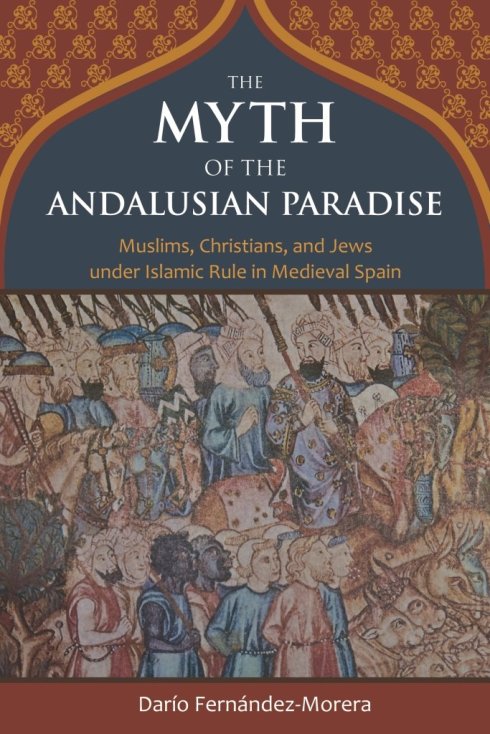
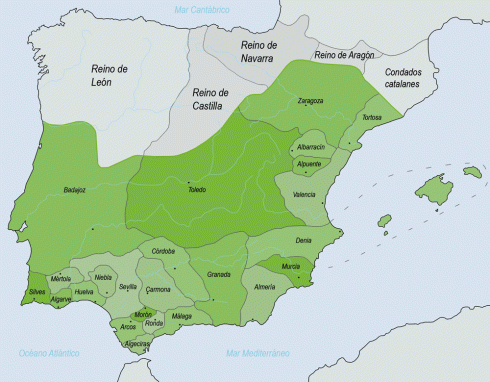 The taifa of the Iberian peninsula in 1031. (By 1248, when Seville fell to Christian siege, the only other major city left in Muslim hands was Granada.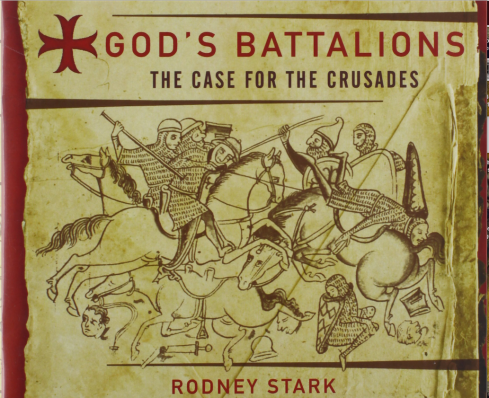
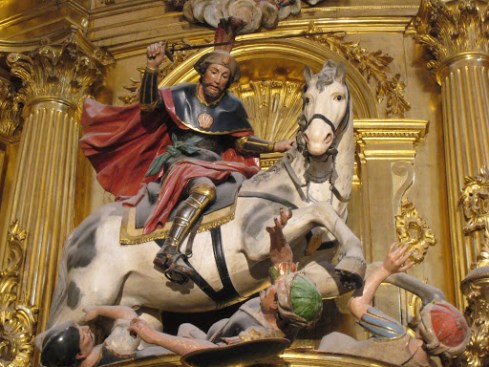
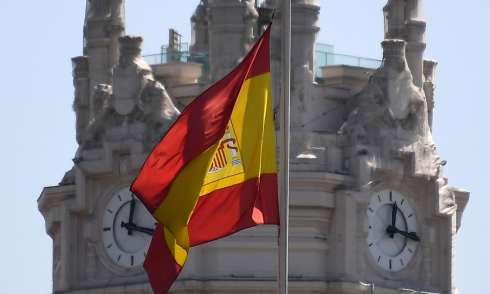 A Spanish flag at half-mast in front of Cibeles Palace in Madrid. Photograph: Gabriel Bouys/AFP/Getty
 The taifa of the Iberian peninsula in 1031. (By 1248, when Seville fell to Christian siege, the only other major city left in Muslim hands was Granada.
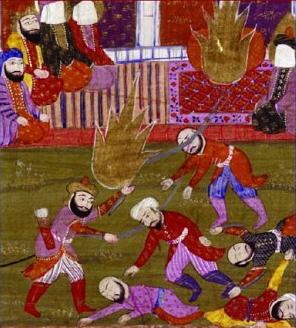 Detail from miniature painting The Prophet, Ali, and the Companions at the Massacre of the Prisoners of the Jewish Tribe of Beni Qurayzah, illustration of a 19th-century text by Muhammad Rafi Bazil. Manuscript now in the British Library.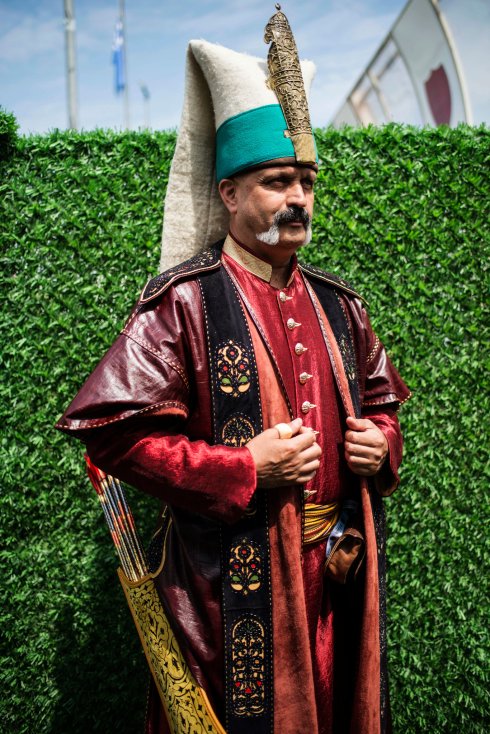

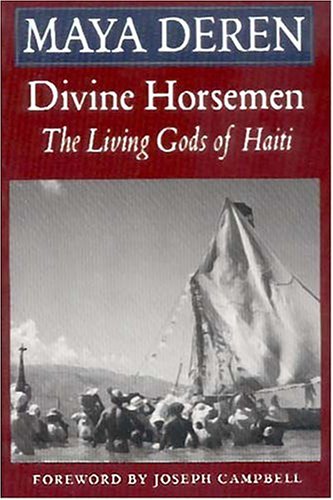
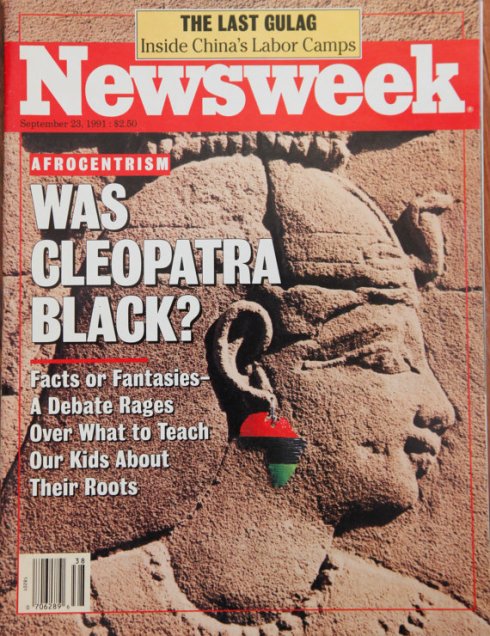
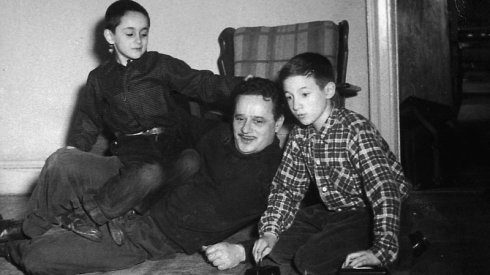 Abel Meeropol watches as his sons, Robert and Michael, play with a train set.
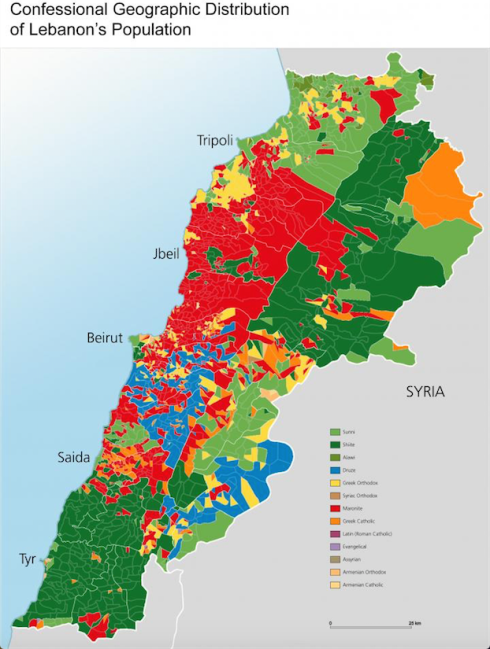
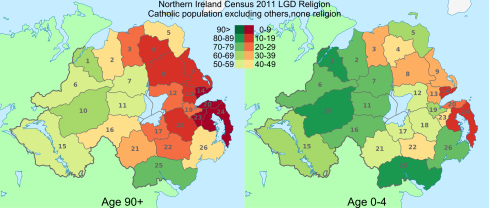 Map of Northern Ireland with distribution of Protestants (red) and Catholics (green) according to age group, showing a clear demographic decline of Protestants.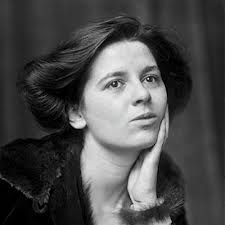
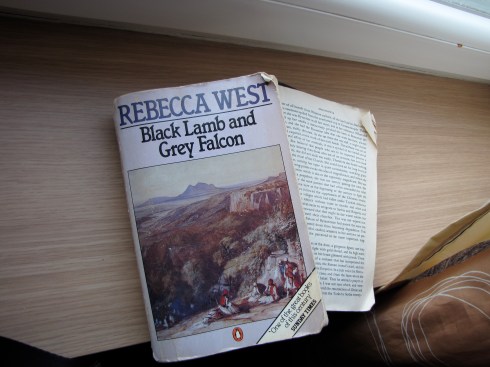
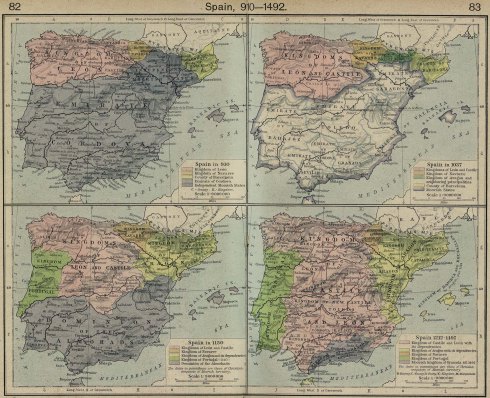
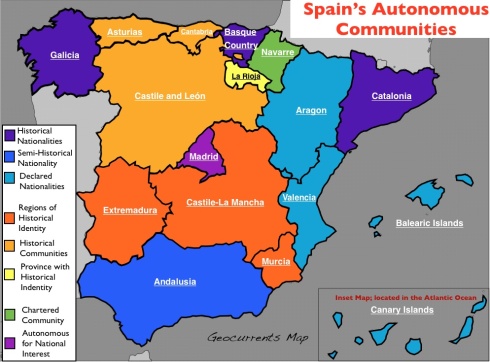
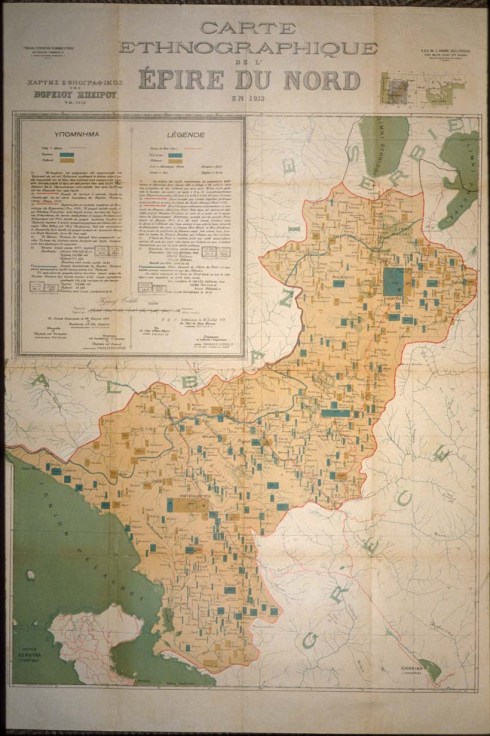
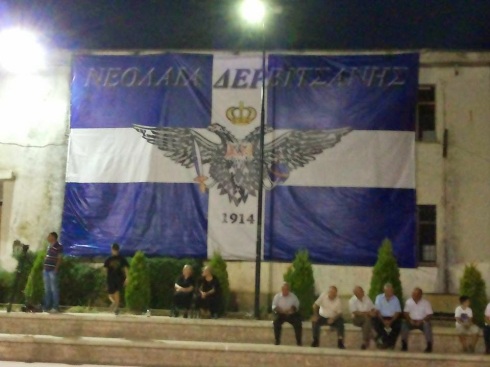
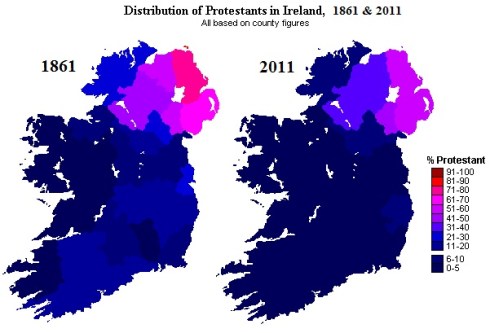
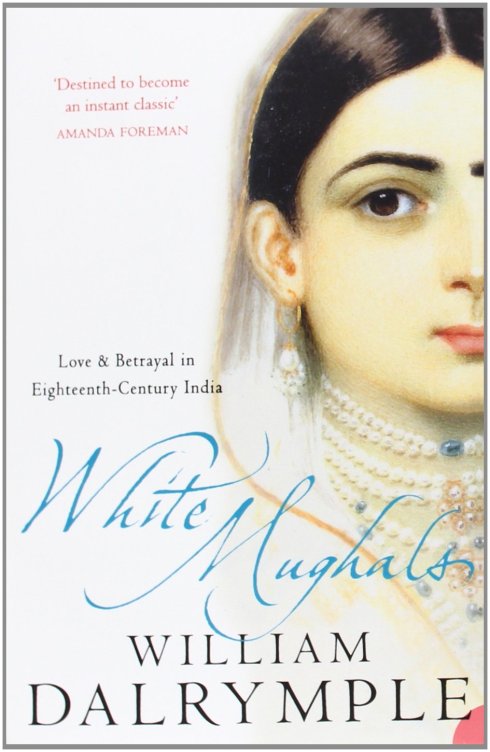
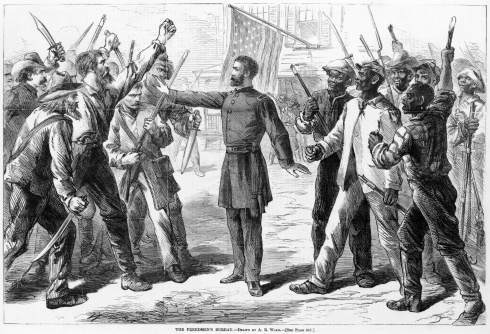 A Bureau agent stands between armed groups of whites and Freedmen in this 1868 sketch from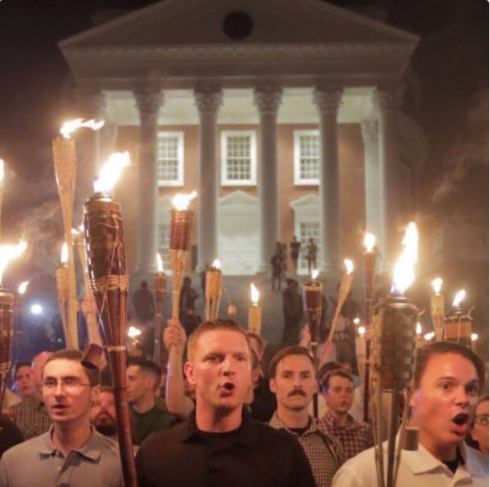
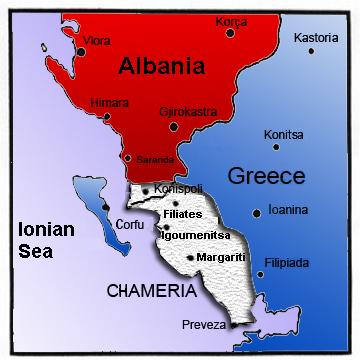
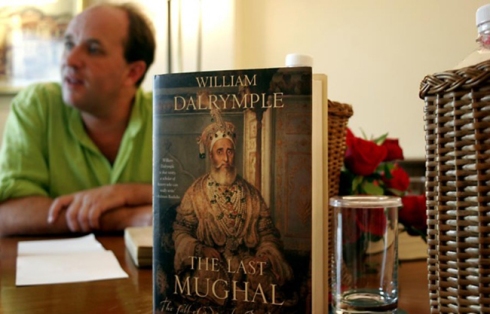
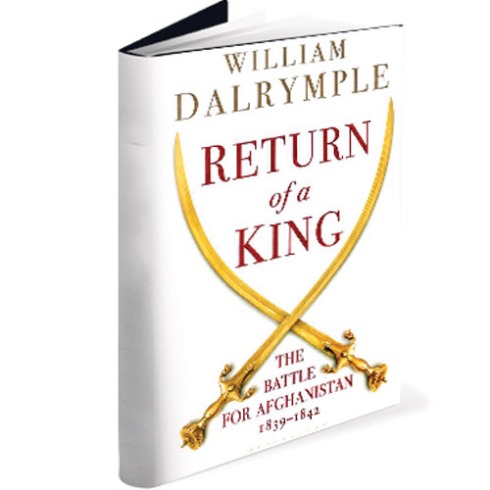
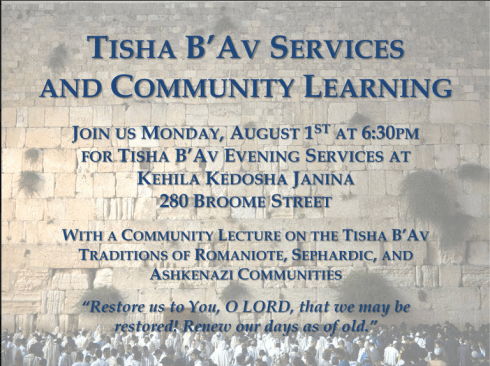
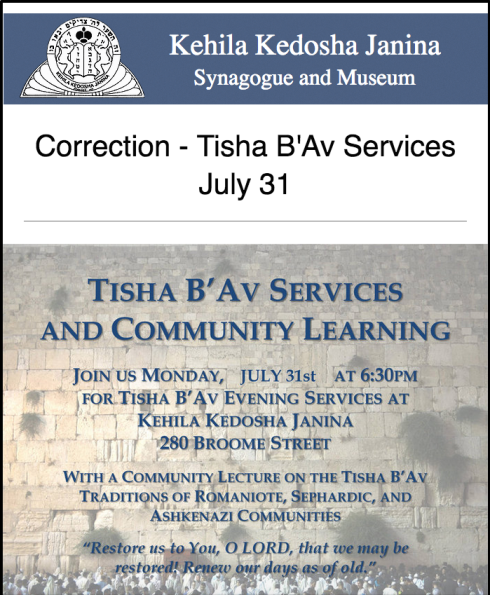


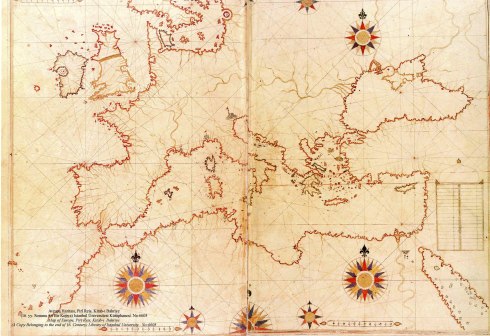


 Jadde: from Bosnia to Bengal