Tag Archives: Russia

Blogging of a hero of mine: Alexey Naval’niy

4 Jan

Navalny on Putin, Being Bugged and Revolution

Great Krugman on Putin

22 Dec

putin-russia-military-750a_4eeedb96f23edfb4cd42615d86323da2(click — if you can stand to…)

In today’s Times: Conquest Is for Losers: Putin, Neocons and the Great Illusion

Good for someone to remember these things — and say them straight up to.  Whether it’ll sink through Russian heads is not a call I can make.

“First, why did Mr. Putin do something so stupid? Second, why were so many influential people in the United States impressed by and envious of his stupidity?

“The answer to the first question is obvious if you think about Mr. Putin’s background. Remember, he’s an ex-K.G.B. man — which is to say, he spent his formative years as a professional thug. [My emphasis] Violence and threats of violence, supplemented with bribery and corruption, are what he knows. And for years he had no incentive to learn anything else: High oil prices made Russia rich, and like everyone who presides over a bubble, he surely convinced himself that he was responsible for his own success. At a guess, he didn’t realize until a few days ago that he has no idea how to function in the 21st century.”

And from me August 3rd: From the Times: Putin uses the Church…and the Church mostly lets him… ‘Позор…’  

“Does anybody remember that Putin was a KGB agent for decades — not just a cop, an agent of an instrument of mass state terror with perhaps no equal in history — and that part of his job was ruining the lives of anyone who engaged in the kind of religious pilgrimage these people are?  No.  It’s like that never happened.  And though my stomach turns when I see him on news footage solemnly standing with his candle at Easter, engaging in the non-stop crossing and bowing that Russians do in church, I’m also just stunned by his brazenness.  The word Позор (pa-zor’) in the heading of this post means “shame” but as I was trying to find somewhere to cut and paste it from I came across its etymology.  It originally meant “remarkable,” or someone or something remarkably “watchable,” from the root “zor” for vision.  And this is, in fact, the response Putin provokes: you simply stand there, staring and dumbfounded by his shamelessness.

“As for Russians themselves, sometimes I get so angry, not just at their acceptance of the political manipulation of an Orthodox Christianity that’s important to me, but at their general passiveness, gullibility, and willingness to play along with anything that promises even some tiny alleviation of their suffering, that I just want to think that they deserve their fate.”

Comment: nikobakos@gmail.com


“Scenes that Russians hoped had receded into the past reappeared on the streets.” — from Times

16 Dec

As in the case of Iran, just what exactly are the sanctions meant to accomplish? except make ordinary Russians, most of whom have already suffered enough in their lifetimes, suffer even more.  They’re not going to turn against Putin (and needless to say, he and his cronies aren’t suffering*), nor is he going to back down under these conditions.

See whole story: Russia’s Steep Rate Increase Fails to Stem Ruble’s Decline by Andrew Kramer.

Russia Screen Shot 2014-12-16 at 4.23.43 PMThe scene at an electronics shop in Moscow. Fearing inflation, Russians are reacting to the falling ruble by snapping up expensive items like appliances and laptops. Sergey Ponomarev for The New York Times.  (click)

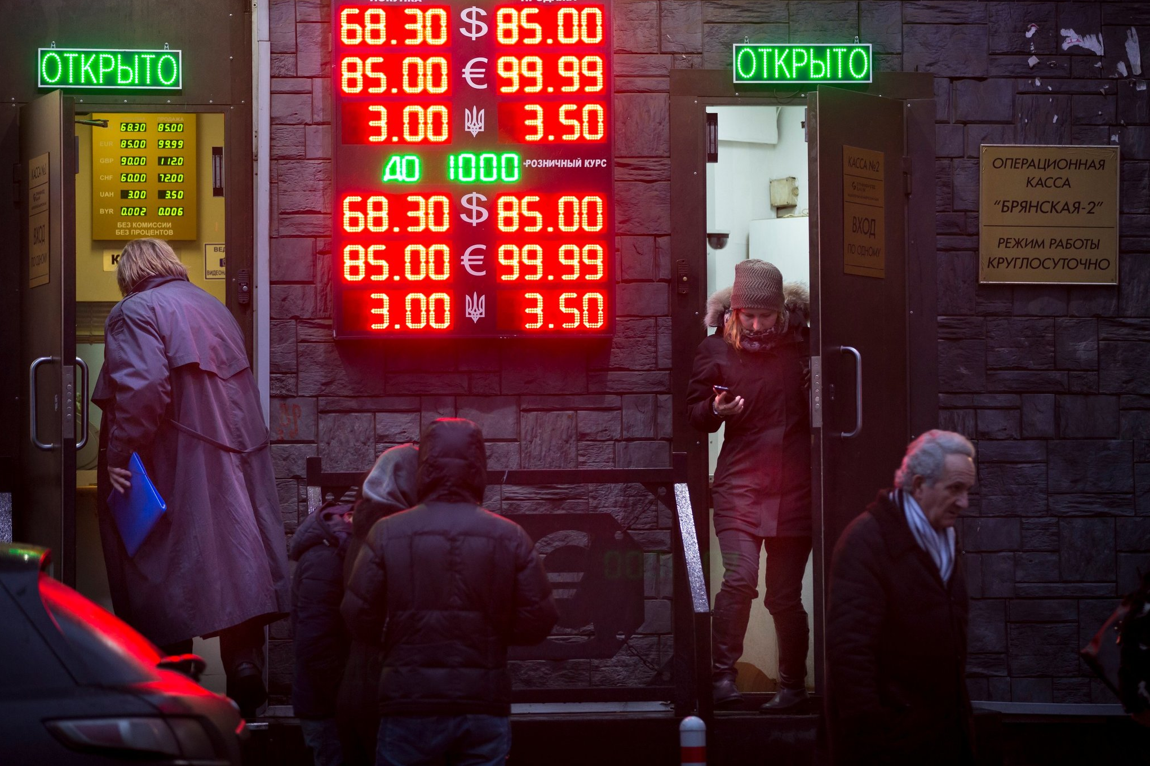
Russia Screen Shot 2014-12-16 at 4.27.49 PMOutside a currency exchange in Moscow on Tuesday. The ruble continued to slip in value despite the central bank’s decision to raise its short-term interest rate to 17 percent. Alexander Zemlianichenko/Associated Press. (click)

See also my :  The first two of my cents on Ukraine and Russia… from August 31st.

Comment: nikobakos@gmail.com

**************************************************************************************************************************************************************************

* Apparently, Putin made some crack when the EU announced restrictions on the export of foodstuffs to Russia, that: “Who needs their food?  We have Russian vodka and caviar!”  And then the joke immediately started going around: “Well, it’ll probably be moonshine and cabbage for most of us…”


Today’s my nameday

6 Dec

Saint_Nicholas_1550Russian icon of St. Nicholas the Wonder-worker (click)

Today’s the feast of St. Nicholas (on the Gregorian calendar — December 19th on the Julian Calendar, depending on what kind of Orthodox you are ethnically), the saint generally known in the East (and beautiful Bari, one of my favorite Italian cities) as the “Miracle-worker.”  But for me the coolest thing about St. Nick, and that’s the cause of his nauseating transformation into Santa Claus in the West, is that his miracles are deeply human and mundane and material, and actually just more good deeds than miracles: his most metaphysical, I guess, was his power to calm threatening seas; probably more to the point he prevents the execution of an accused criminal, following Christ’s example in opposing capital punishment or — my favorite — he quietly leaves three bags of gold, εν τω μέσω της νυχτώς, in the bedroom of three poor sisters who needed dowries to get married.  He didn’t preach or rail against the dowry system, like the moralist who thinks his ideological crusade is more important then the real needs of real people, who gets a hard-on from his preaching while others are truly suffering: for example, the schmucks who leave a hard-working waiter a card that says: “We don’t believe in tips; they’re exploitative, join our group at www…etc…” or like the assholes you hear in New York on the subway when a panhandler comes by and certain types go off on their “oh-I’ve-heard-that-story-before-get-a-job-you-probably-make-more-money-than-me” tirades, without thinking that if a man is reduced to begging, for whatever reason, he’s already been through hell enough and deserves your compassion.  A priest at my old parish in Whitestone, I remember years ago on this day, said in his sermon: “St. Nicholas is not one of our great theologian-intellectual saints, like the Cappadocians [though he apparently slapped someone at the First Oecumenical Council at Nicaea for saying something dumb about the Trinity…I think], or one of our warrior, defender-of-the-faith saints, like Demetrios or Mercourios or the Archangels.  More, he was a saint who always made sure that everyone under his pastorship had food to eat and a roof to sleep under.”  He was particularly venerated in the sea-faring islands of Greece, for obvious reasons (“Hagie Nikola, I implore you” sings the island girl with her sailor-man away, “carpet the seas with flowers…”) and is the patron saint of Russia.  In communist times the name still had some lingering Imperial/Romanov stigma attached to it and when I was there in the eighties, it seemed anachronistically charming to many Russians.  Now it seems there are significantly more young “Kolyas” and “Nikolays” everywhere.

Despite an almost erotic devotion to and obsession I’ve developed for St. Demetrios over the years — hard to resist a young Roman aristocrat in uniform with a pretty deep, homoerotic friendship as part of his martyrdom backstory — Nicholas is still my patron saint.  And he’s more than just important to me as saint himself, but because I love the Orthodox nameday tradition, which again varies from country to country.  Serbs have always observed a single clan nameday, the Slava, celebrating the saint on whose feast-day the family’s first ancestor supposedly converted to Christianity, a very ritualized and beautiful celebration and one of the many traditions that Serbs adhere to that makes them the Slavs that, more than any others, still have one foot in their pagan past; telling, also, to how important he is in the Orthodox world: the single largest group of Serbian clans celebrate St. Nicholas as their Slava patron.  Communism forced Russians to take their birthdays more seriously, and discouraged the celebration of the obviously religious nameday, but nineteenth-century Russian literature is full of nameday celebrations (Chekhov’s “Nameday Party,” and Tatyana’s nameday dance in Pushkin’s Onegin*), and as a semi-conscience remembrance of what the new Western-style celebration of birthdays replaced, the birthday-boy is to this day still called the “imeninets,” the “name-bearer.”

What I most love is that, among Greeks, your nameday is a day critical to your honor and reputation: it’s when you take friends out and treat them; it’s when people in small towns especially, but even some in Athens still, sit home in a house full of food and sweets and wait for everybody who has the right to — meaning every one they know essentially — and most likely will, drop by and wait for the the privilege of feeding them; most young Athenians today wait for an official invitation but massive group drop-ins are still common enough among the old-fashioned.  In smaller, provincial towns, when there was a death in the family, you used to have to put an ad in the paper saying: “Due to mourning, we won’t be accepting callers this St. Nicholas Day.”  In villages everybody just knew.  It’s a day when you make an artoklasia,  a “bread-breaking” offering and share sweetened and blessed loaves with your whole parish.  It’s a day when it’s your obligation to give and serve and prove your noblesse and not, as Western birthdays have become, a day when you sit around waiting for others to do for you or give you gifts.  Western, American, birthdays are only slightly less gross to me than the totally American ugliness of wedding and baby showers: “I’m getting married and/or I’m pregnant; so I’m having a party where you have to bring me things.”  And don’t even start me on bridal registries, where you tell people, not just that they have to bring you something, but what they have to bring you.

So: χρόνια μου πολλά…  And Многая Лета to other Nicholases everywhere.  Keep the tradition alive.

Comment: nikobakos@gmail.com

**************************************************************************************************************************************************************************

* Tatyana was not a popular name in Russia until Pushkin’s Onegin became the Bible and literary gold standard of modern Russian, and Russians took the deeply loved heroine into their hearts.  Only then did it become a widespread name and eventually, through her epic act of heroically soul-baring letter-writing probably, her nameday, January 12th or 25th — depending again on calendar — become the patron saint day of young students and scholars.

Scary Op-Ed piece from the Times

13 Oct

Imagine the unimaginable: Suppose an American supreme court chief justice asserts in an interview that “slavery in the United States, despite its extremes, was a principal bond that maintained the deep unity of the nation.” Now replace “slavery in the United States” with “serfdom in Russia,” and you have the exact quote from an article by the chairman of Russia’s Constitutional Court, Valery D. Zorkin, published on Sept. 30.

In legal terms, serfdom, an institution that bound peasants to the land, is considered to be a less-cruel form of bondage than slavery. In practice, however, Russian serfs were routinely bought and sold and regularly physically abused. The abolition of serfdom in 1861 paved the way for the Great Reforms aimed at modernizing the Russian empire and setting free 23 million people, or more than a third of Russia’s population.

Mr. Zorkin wrote his comments while discussing a newly proposed law that would make failure to register with the local police authorities at a place of one’s residence a criminal offense. He further suggested that Russia during the 1990s under the leadership of President Boris N. Yeltsin was similar to the period of the Great Reforms in the 1860s. Then as now the reforms produced political chaos and social disorder, requiring counterreforms and repression to restore stability.

But if Mr. Zorkin sounds like an unreconstructed 19th-century Russian landlord, he is not alone. On April 17, President Vladimir V. Putin, in his televised question-and-answer session with the public, emphasized the inner strength of the Russians, particularly their readiness for self-sacrifice, which he said distinguished his country from the West. He hastened to add that these qualities would soon come in handy. Mr. Putin further suggested that country’s great strength was its peoples’ “unique and very powerful genetic code,” and that Russians possessed greater souls and superior moral values than self-indulgent Westerners. His glorification of the Russian soul and spiritual values repeated a popular theme among Russian nationalists throughout the 19th century.

Enter Mr. Putin’s inner circle. Dmitri O. Rogozin, a deputy prime minister in charge of the military industry, is known for his hawkishness and his numerous pronouncements of Russia’s readiness to use nuclear weapons. In September, he reiterated his statement that, if attacked, Russia would respond with nuclear arms. In Mr. Rogozin’s words, they represent a perfect “weapon of retribution” intended to stop Western aggression against Russia. There have been several reports that Russian officials informally threatened their Ukrainian counterparts with nuclear weapons.

Russia also has its own, nonfictional, Dr. Strangelove. Dmitry Kiselev, the head of the news network Russia Today, is widely considered to reflect Kremlin views. In one of his programs early in the Ukrainian crisis, he told his audience that Russia was “the only country in the world capable of turning the United States into radioactive dust.” He illustrated his case with charts showing the trajectories of Russian missiles, adding that even if the United States was able to intercept these, the missiles from nuclear submarines would do the job.

If this sounds alarming, consider the boundless anti-Americanism of Mr. Putin’s close adviser, Sergei Glazyev. Just last month, Mr. Glazyev recapped a favorite theme: The United States has started a series of regional wars in preparation for World War III. Why? Because America is in decline and needs war in order to prevail in its competition with China, weaken the European Union and undermine Russia. Only then will it be able to control Eurasia.

The troubles in Ukraine, Mr. Glazyev argued, were a part of Washington’s strategy. In the past, Mr. Glazyev frequently called for bombing and a full-scale invasion of Ukraine, which he invariably referred to as the American-installed “fascist, Nazi junta.”

These and other pronouncements by the Russian president and his close advisers are increasingly stated in vague and mystical language, with references to the “Russian world.” The leader of the Russian Orthodox Church, Patriarch Kirill, explained during his regular TV program on Sept. 8 that the “Russian world” is a distinct civilization and that its unique spiritual and cultural values must be preserved. According to the patriarch, it includes Ukraine, Belarus and any non-Slavic peoples who share these values. He derided the concept of a melting pot, suggesting that it was a perfect example of the failure of contemporary Western civilization.

Such pronouncements may appear bizarre. Yet they cannot simply be dismissed as the ideas of the political fringe because they belong to the Kremlin’s inner circle. In a desperate attempt to preserve their power, Russia’s ruling class has concocted an ideological brew that borrows from every corner of the repressive and outdated world of Slavic nationalism, isolationism and anti-Westernism.

The German chancellor, Angela Merkel, was right when several months ago she described Mr. Putin as inhabiting his own mental universe. Worse, the worldview of Mr. Putin’s Russia leaves little room for compromise.

Michael Khodarkovsky, who grew up in the Soviet Union and is a professor of history at Loyola University in Chicago, is at work on a history of the Russian empire.

“…Russia’s ruling class has concocted an ideological brew that borrows from every corner of the repressive and outdated world of Slavic nationalism, isolationism and anti-Westernism.”  Yes, thank you.  So let’s keep pushing them into that corner, right?  This is what I argued against in The first two of my cents on Ukraine and Russia.”

Comment: nikobakos@gmail.com

Russia Is (Again) Persecuting the Crimean Tatars

1 Oct

From Carnegie Europe:

In March 2014, Russia marched into Crimea and illegally annexed the peninsula, which had previously been part of Ukraine. Since then, the Crimean Tatars, a Turkic ethnic group native to the peninsula, have been subject to intimidation, arrests, and expulsions. Such persecution is a symptom of a new wave of Russian nationalism that, if unchecked, could threaten other minorities.

It is estimated that 3,000 Tatars have already left Crimea this year, out of fear. It’s not the first time that the population, which first settled in Crimea during the fifteenth century, has had to endure such pressure. In May 1944, Stalin deported some 190,000 Tatars to Central Asia, allegedly for their collaboration with the Nazis. Soon after Stalin’s death in 1953, a Crimean Tatar movement was established with the aim of returning Tatars to their homeland.

After the collapse of the Soviet Union in 1991, tens of thousands of Tatars did return to Crimea. According to Ukraine’s 2001 national census, Crimea was home to 243,000 Tatars out of a population of around 2 million.

Crimea-Peninsula-Map(click)

Comment: nikobakos@gmail.com


Fixing the “mistake…” Joining Europe… Doesn’t this sound familiar?

16 Sep

“We are fixing the 350-year old mistake — Ukraine is Europe,” Arseniy Yatsenuk, the prime minister, told the Parliament, known as the Rada.

From a Times article today — Ukraine Moves to Strengthen Ties With Europe, and Bolster Truce — about the Ukrainian parliament passing “a series of laws…meant to cement the country’s Western orientation while strengthening its truce with pro-Russian separatists in the southeast.”

Being considered on the inside of the bounds of European civilization is not just what every civilized nation should aspire to, but being in a position external to Europe was always a “mistake” — a misconception, we really are and always were Europeans — and now we’re righting that misconception.  Nationalism is always creating new fictions that it passes off as the restoration of a pre-Fall condition.  And everybody buys it.

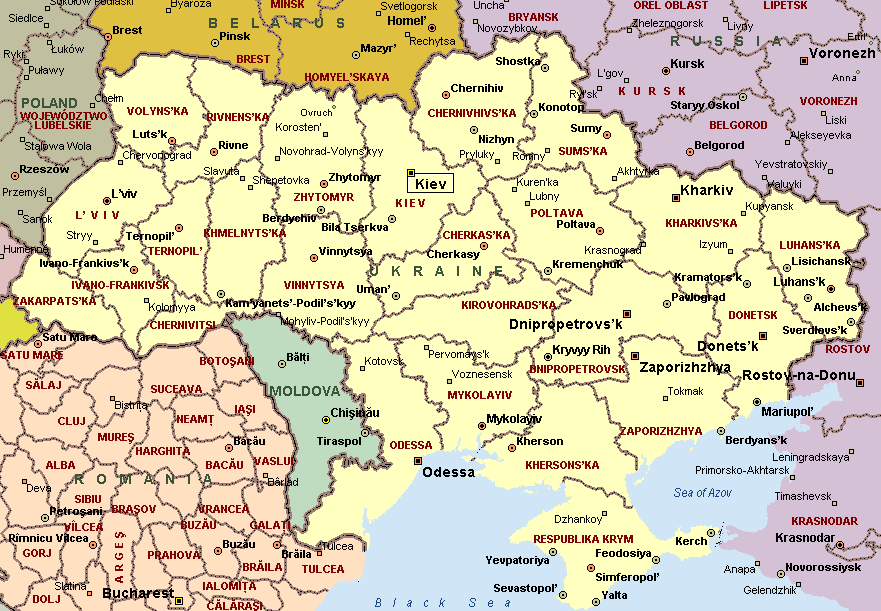
Go to Donetsk or Luhansk, go to Dnepropetrovsk…or Khar’kov or Poltava even, and tell me you feel like you’re in a place that even remotely resembles what you call or think of as Europe!

UkraineMap

(click)

Comment: nikobakos@gmail.com

Belgrade: Random notes from July 2014

7 Sep

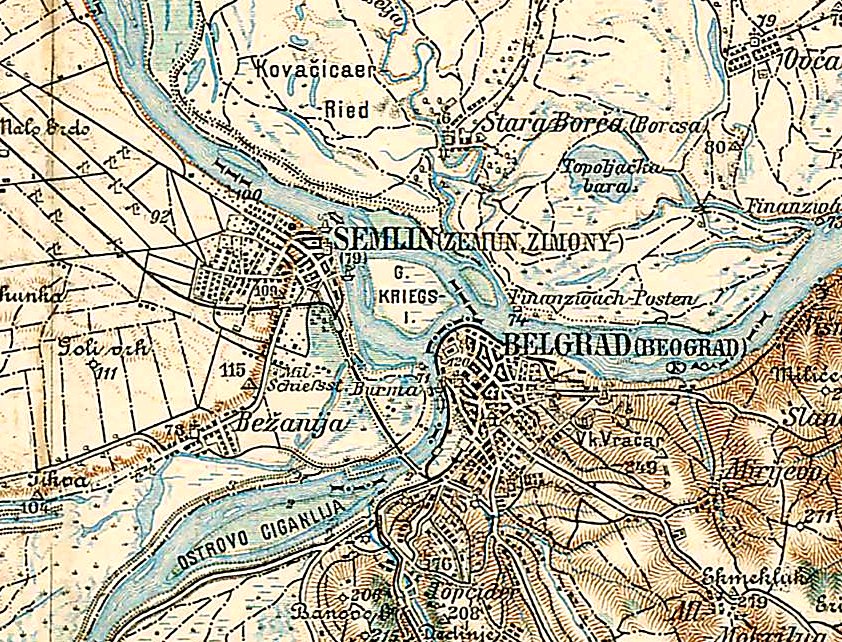
beograd-1910Belgrade 1905 (click)

*****************************************************************************************************************************************************************************************************************

“Post”-something. Not post-apocalyptic or Blade Runner-ish or all the nonsense that people used to write about the city in the nineties or after the war (when, maybe, I don’t know, it did feel like that), but definitely the sense that something is over and no one has any real idea of what this is now or what’s coming next. A certain optimism about the future though, which is probably just an inherent trait of its inhabitants, both leavened and sobered by the kind of biting black humor that’s not the only thing that reminds me of Russians.

******************************************************************************************************************************************************************************************************************

You’re already one foot out of, or may have already left the Balkans here. This was particularly striking to me after seeing so much of the southern Balkans just a month or so ago. Where I have come from, I mean, to compare to? Argyrocastro is an Ottoman jewel in stone; Ochrid a truly archontiko little city. The rest: Tirana, Podgorica, Tetovo, Skopje, the garish hideousness of Priština; were all obviously Ottoman wood-and-plaster hovels until the communist cement blocks went up.

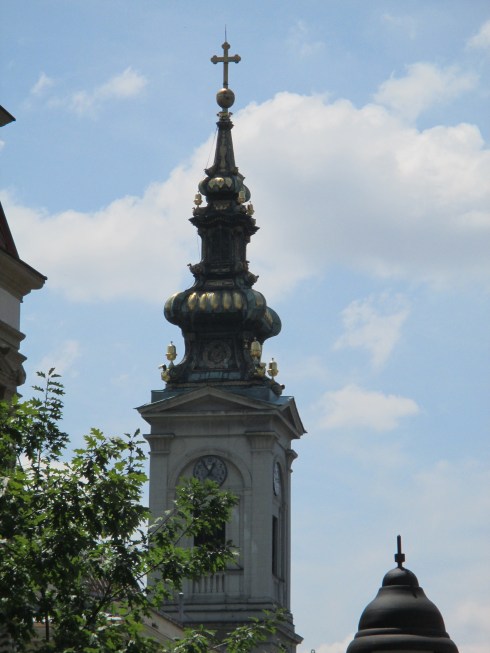
Here you’re in Mitteleuropa already, in a city in that never was — except for temporary occupations — but could’ve been, a handsome Hapsburg town. It’s most beautiful from the opposite shores of the rivers that hem it in all around, with the city high on the bluffs overlooking its entire region. It reminded me of Kiev a little in this sense, though a much more recent city in terms of basic architectural stock and without Kiev’s glut of spectacular Baroque churches; in fact, until the first Serbian uprisings of the early nineteenth century, the population was predominantly Muslim. (Actually there’s hardly any religious architecture of any quality or beauty at all. There’s the small, pretty Baroque cathedral of the city just outside the walls, in what was probably the suburb where Christians were allowed to live in Ottoman times and that’s about it. All the city’s other churches that I saw are these genuinely grotesque Neo-Serbo-Mediaeval monstrosities of Orthodox nationalism; the kind they’re building all over Greece now too.)

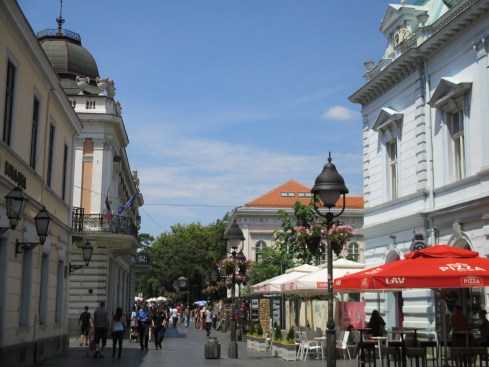
Knez Mihailova and Kralja Petra Streets — the main pedestrianized drags — and the Cathedral spire at bottom.  (Click on all)

IMG_0851

IMG_0857

IMG_0841

IMG_0849

IMG_0859

******************************************************************************************************************************************************************************************************************

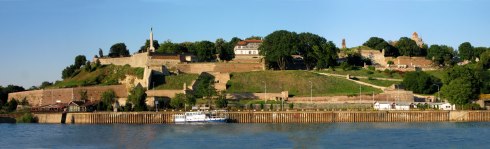
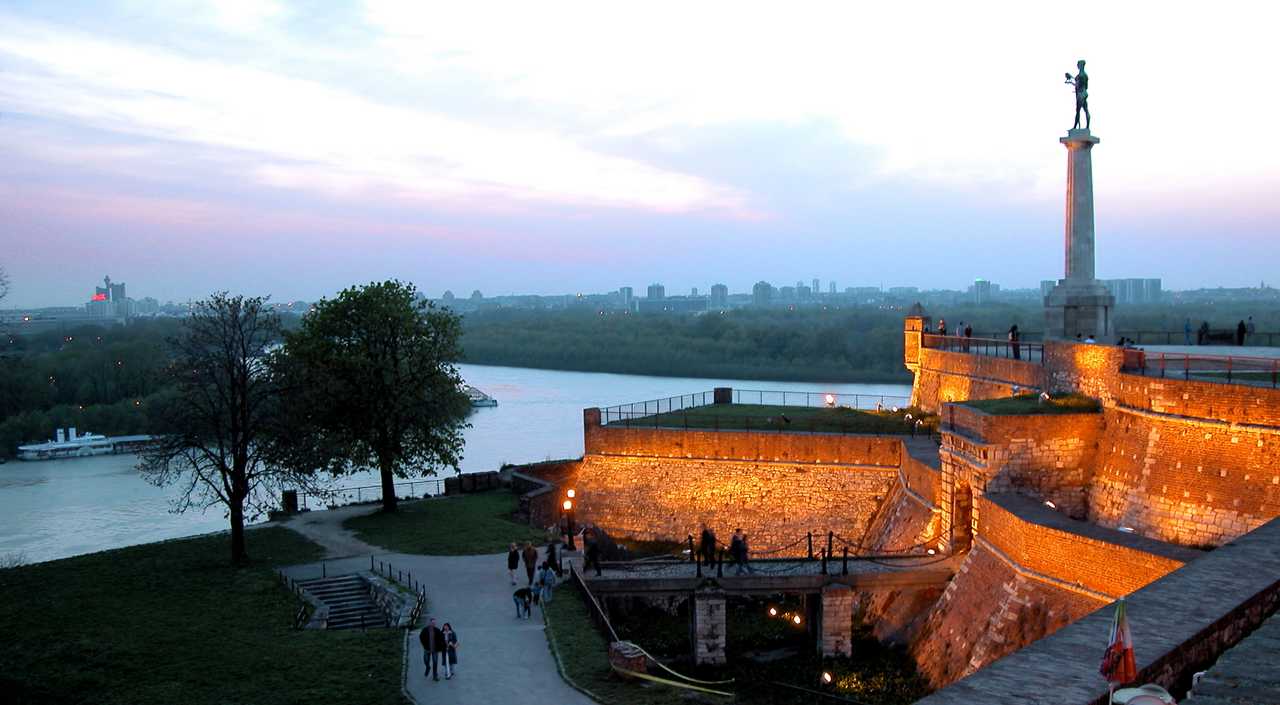
But you understand a great deal about Serbian history just by standing up on the peak of the Kalemegdan fortress, the sprawling castle that covers the highest, northernmost peak of the peninsula and you realize that you’re standing on the last, frontline hill of Balkan rock, where the Danube meets a whole huge complex of river networks from north and south and that the expanse of green mixed with suburb spreading out in front of you is the beginning of the vast Pannonian plain that stretches out to the Carpathians in one direction and eventually the northern European flatlands that flow all the way to the Baltic in the other. (See map at top.) Apparently and according to Misha Glenny, the Ottomans called Belgrade the “darul-al-jihad,” the House of War (though why this wouldn’t apply to so many other places, I don’t know) and you can see how easily defensible but also temptingly assailabale the site is; it’s the one place you have to control to continue your drive either north or south.
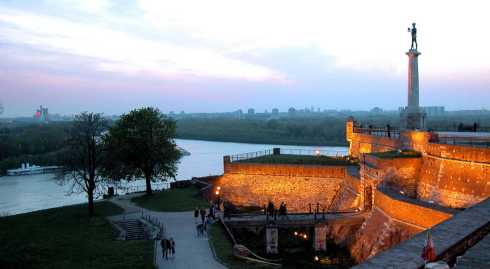
Belgrade-Kalemegdan-at-dawnThe Kalemegdan (click)

Kalemegdan from across Sava(click)

You also realize just how far north – when you think that Stefan Dušan’s empire stretched as far south as the Gulf of Corinth and he often held court east of Salonica at Serres – the center of gravity of the Serbian nation has shifted over the centuries, to lands so completely different, even ecologically, the flora and fauna, that it becomes easier to isolate a glorious mediaeval past in some mythic compartment in the nation’s head – the two sides of the Aegean, in our case, for example, were never so different – and that that can have all sorts of psychological consequences. I’m, of course, thinking of Kosovo mostly, but more on that later…
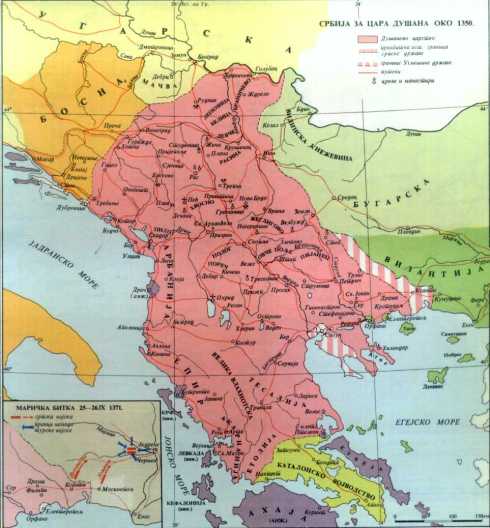
DusanTerritory_14cStefan Dušan’s empire at its height (click)

******************************************************************************************************************************************************************************************************************

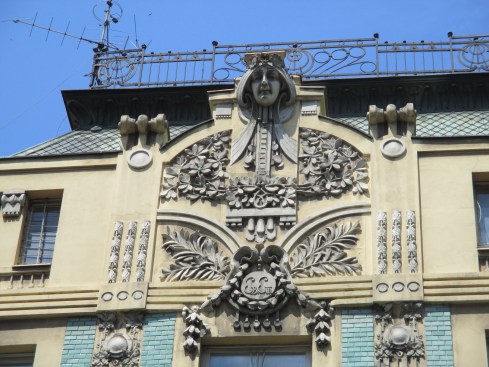
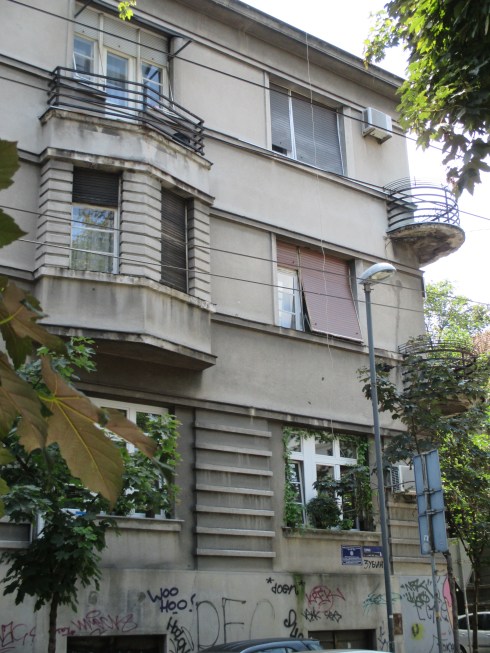
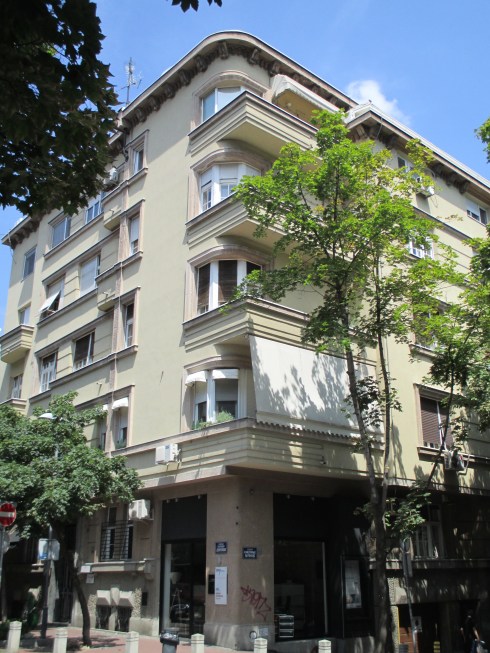
Lots of leafy attractive streets, at least in the neighborhoods that stretch immediately south and east of the Kalemegdan. Funky sidewalk cafes and bars. Only a couple of very late nineteenth-century neo-classical structures. Most of the city seems to be a twentieth-century creation: attractive Art Nouveau and Art Deco apartment houses; some later stuff that could kind of be described as late Bauhaus-y even, like some neighborhoods of Tel Aviv; more proof that Yugoslavia was far cooler than any other communist country and more reason to be pissed off that things ended they way they did. A certain shabbiness, that I thought only added to its charm, but that made me wonder what’s going on economically. There’s way too much high quality housing stock in potentially high quality neighborhoods sitting there looking empty and uncared for and under the right circumstances the whole place seems primed to launch into a massive gentrification and real estate boom. If I had any extra cash lying around I’d buy something now. In any event, for a city that’s been beaten up badly three times in less than a century – maybe not as bad the third time but in a manner just as morally reprehensible – it’s looking ok.

(Click on all)

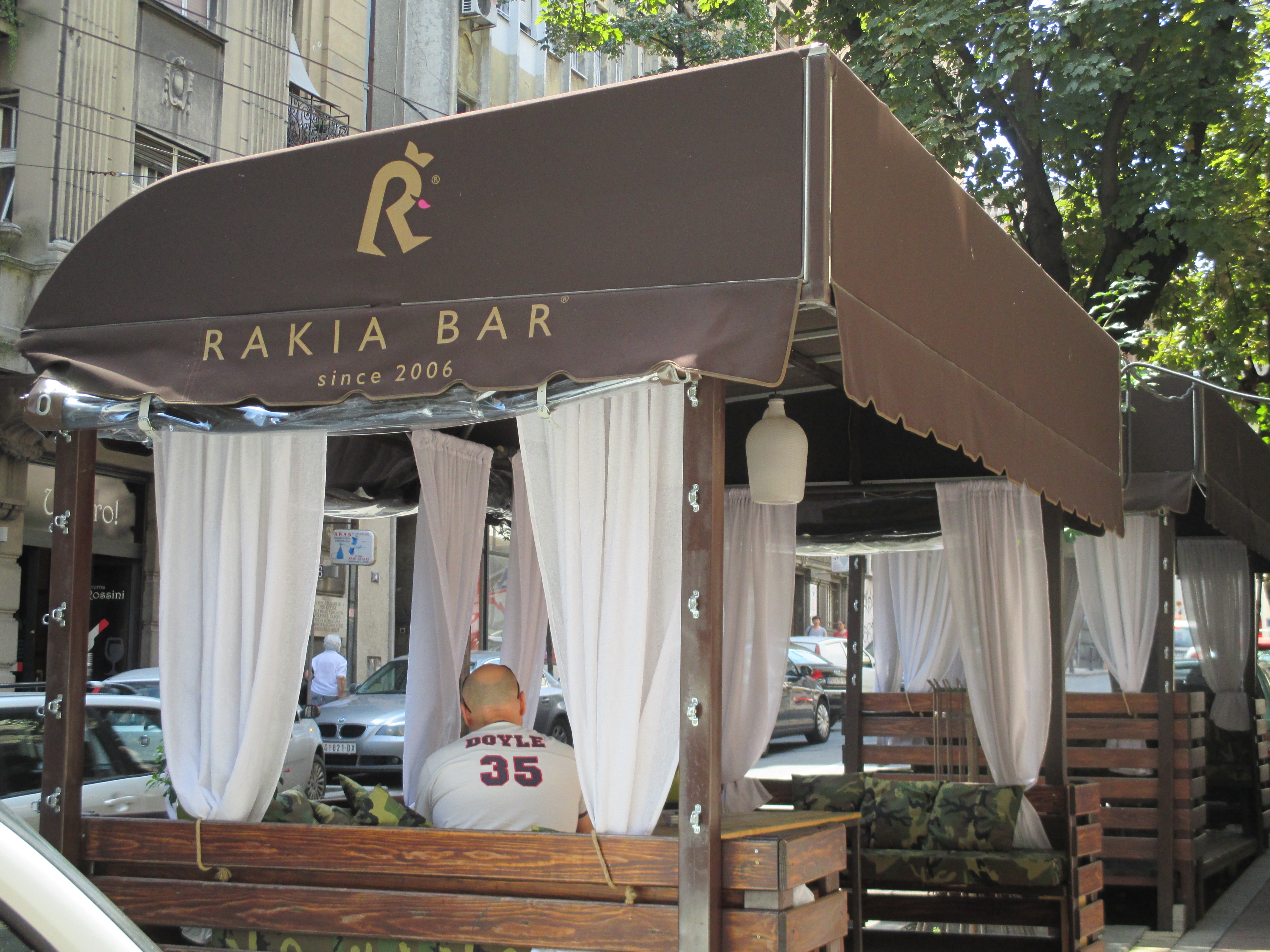
IMG_0828The Rakia Bar, my favorite spot in all of Belgrade, delicious rakia made from anything imaginable, quince was my favorite, lugged three bottles of it with me, supposedly to share with friends in New York, but they all got swilled down in Russia.  The Rakia Bar is the site of the famous: …rakia with M., and what’s with me and all the Djoković… post from July.  (I think whether you say ‘rakia” or rakija” is a regional dialect difference, with the palatization that the “j” represents more common in “south-western” dialects: — western Bosnian, Herzegovinan, Montenegrin. — but not sure.  I know that “river” is “reka” in some regions and “rjeka” in others.)

IMG_0822

IMG_0826

IMG_0825

IMG_0837

IMG_0840

IMG_0823

IMG_0824

IMG_0829

IMG_0830

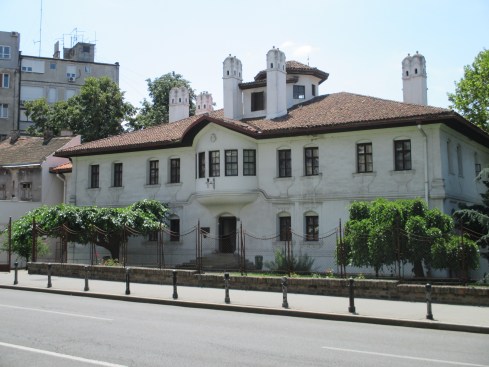
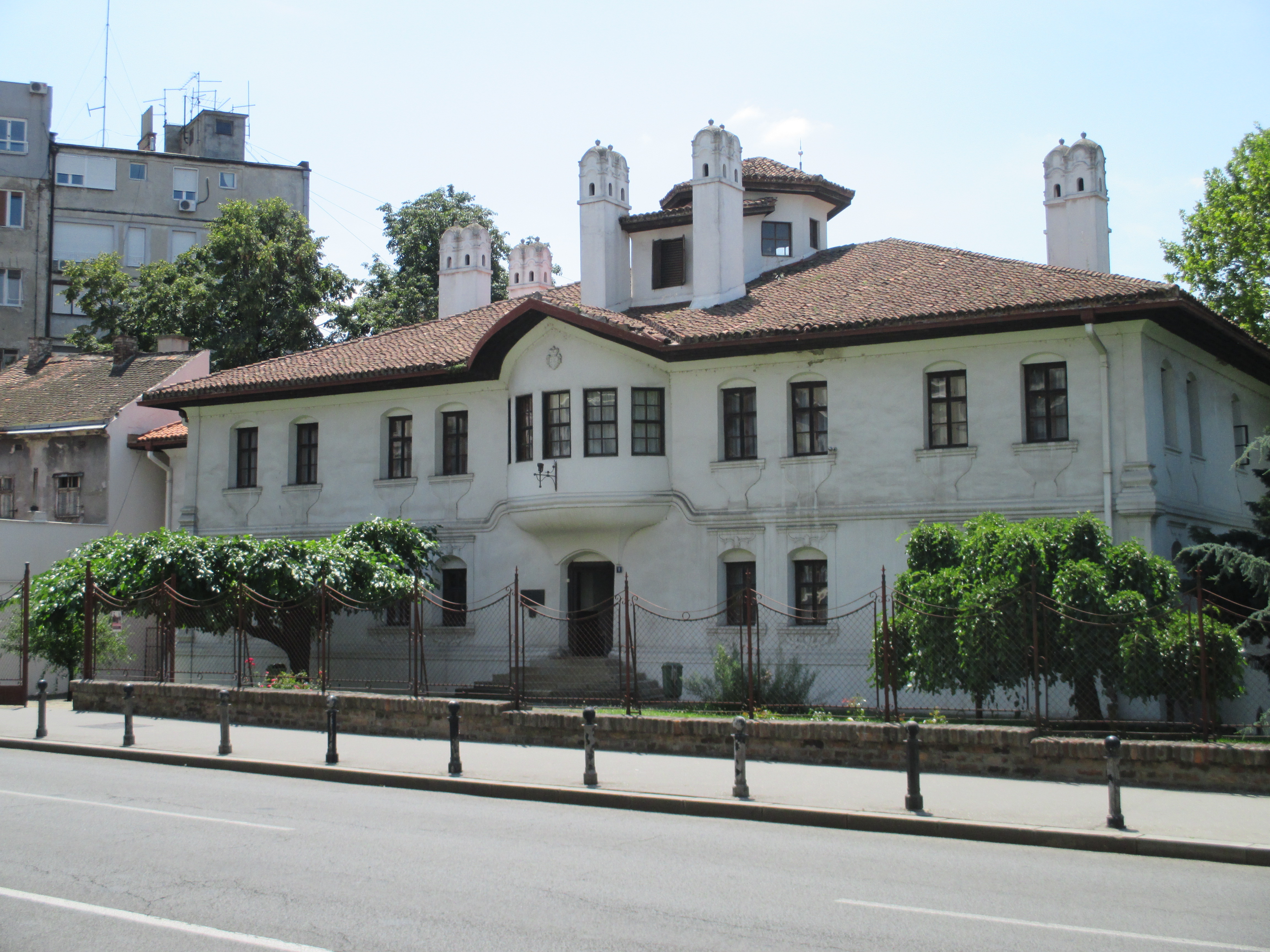
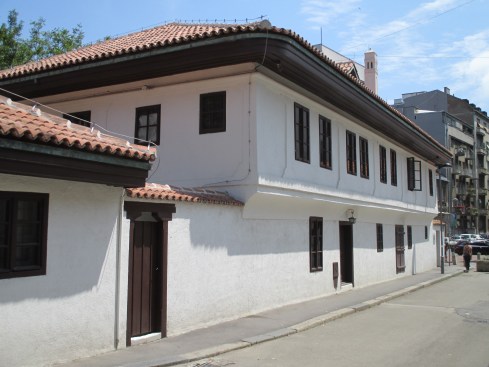
And some of the city’s few remaining Ottoman-era, or at least Ottoman-style, buildings.  The top being the residence of some saint or something — the bottom the royal residence of some Obrenović mistress I think.  Very uncharacteristically of me, I just wasn’t into too much historical research while there.  The city is just too much fun.
IMG_0836

IMG_0853

IMG_0854

******************************************************************************************************************************************************************************************************************

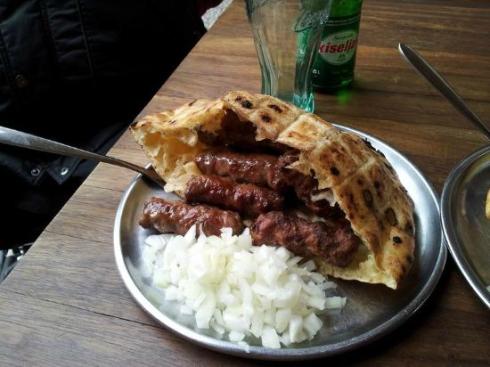
The food is great; predictable but always competent and consistently delicious. A bodybuilder’s paradise: every plate comes piled so high with a mountain of grilled protein that no normal-sized person can be expected to pack it away, but appetites here, in every sense, are big. A vegetarian’s nightmare: and if you persist in your adherence to that silly creed, expect to eat a lot of very good tomatoes – in the summer at least – with huge grated piles of a great cheese they have that’s somewhere in the middle of the spectrum between feta and brindza. If you’re a vegan…and/or have gluten issues too so you can’t eat the great bread either or even try the börek, then maybe arrange for sessions to be fed intravenously at a local hospital or just don’t come at all.

(Click on all)

cevapi

Cevapi 2hotel-italia

Dormitor-huge-mixed-grill

dscn2917

******************************************************************************************************************************************************************************************************************

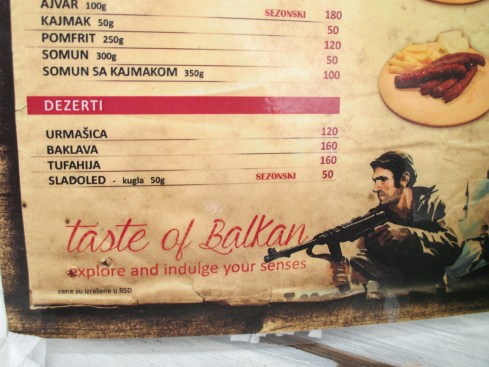
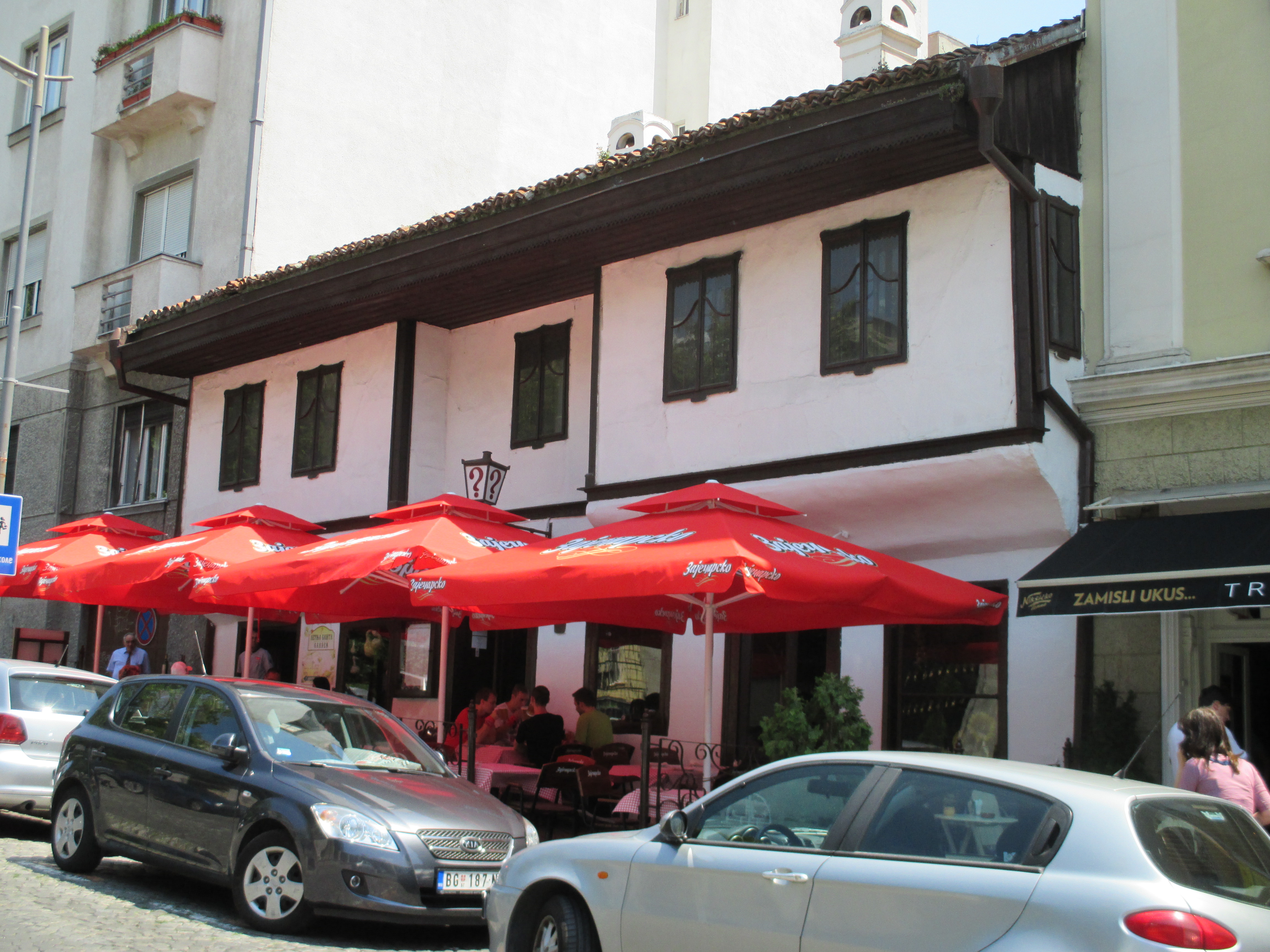
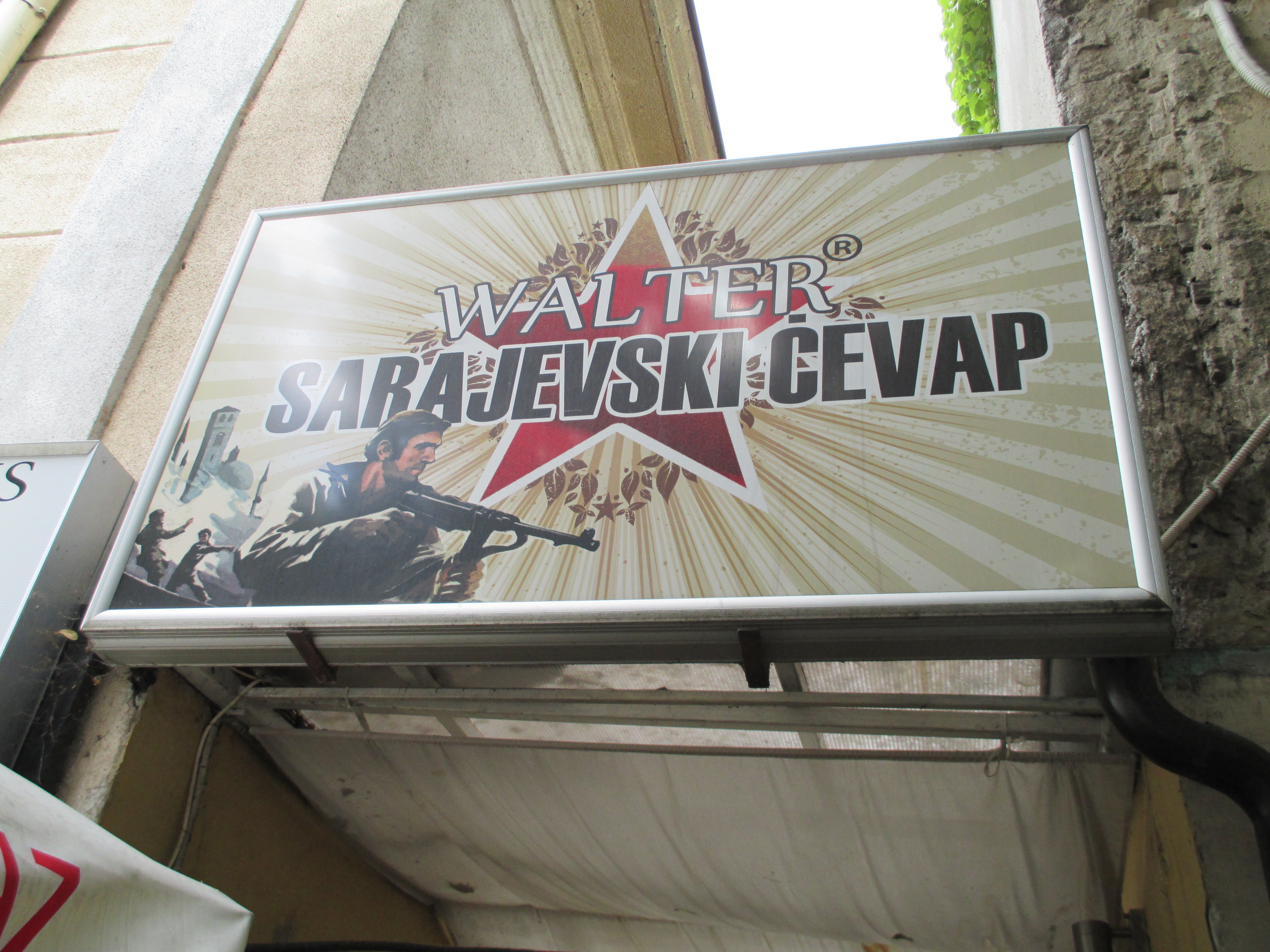
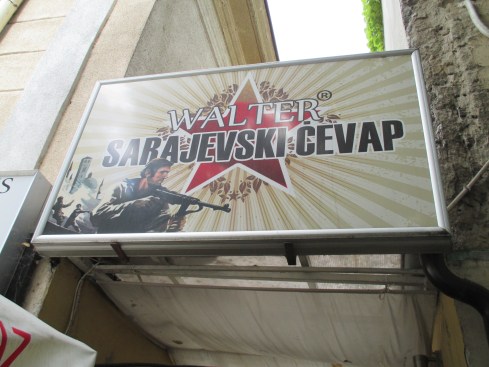
On the sign and menu of an otherwise sedate, old-fashioned feeling Bosnian restaurant with great ćevapi, the ubiquitous little köfte, a homey cellar place that feels like an old Moscow traktir or something… If anyone can explain the symbolic intention behind it, they get my Umberto Eco semiotics award for 2014.  Really, can anyone tell whether this is supposed to be a joke or not?

(Click on both)
IMG_0811

IMG_0816

******************************************************************************************************************************************************************************************************************

Much more in keeping with Serbs’ smart, cerebral, black humor: this t-shirt, marking the hundredth anniversary of the start of WWI, which I thought was priceless: “It’s a matter of Princip.” Fantastic…

(Click)

IMG_0845

******************************************************************************************************************************************************************************************************************

The language is – excuse my language – a total hard-on. I’ve already got my affinity for Slavic phonemes from my Russian days — though sometimes it seems they came out of the womb with me – and on top of it it’s tonal, too, with rising and falling stress and long and short vowels like classical Greek. The combination is magically sexy and something I could listen to for hours dumbly without understanding barely a word. It also makes it, unless you’ve dedicated some serious study to it phonetically, almost impossible to pronounce correctly. The street I lived on was called “Dobračina,” for example, in Dorćol (from the Turkish “dört yol” — “four roads.”)  And taking my cues from my Russian, which is really no great help since it has free stress and constantly surprises you also, I would say: “Do-bra-či-na.” But whenever it was repeated back to me it sounded like “Do-bra-či-na” or Do-bra-či-na” or even some combination of both, but never like what I had said; the lack of dynamic stress makes it sound like emphasis comes scattered in varying degrees of strength all over a word and not just on one syllable. Tempting to take it up. But I have to resist NikoBako tendencies to scatter my energies all over the place at once and never quite acquire full mastery of anything. Maybe later.

******************************************************************************************************************************************************************************************************************

The place’s greatest pleasure is its people. They have a quality that I’ve always struggled to express in English but is nearly impossible and makes me constantly have to resort to other languages. The somewhat dated Spanish “altanero” works – “alto” is your cue there – as does the more popular term still in use in Spain, the complex of traits referred to as “majo,” which I’ve tried to describe several times elsewhere (such as in this post: Un Verano en Nueva York).  “Αγέρωχη” works, the word Cavafy uses to describe Anna Comnene, which Keeley and others, I think, mistakenly translate as “arrogant” or “haughty,” but which for me means something like “breezily confident” and again could almost be a cognate for the Spanish “airoso.” But it’s a type of confidence that isn’t entirely about your ego, but one that obliges you to be open and generous and welcoming with others as well. The media and its pundits have fed us so much crap since the nineties about Serbs’ pathological and self-aggrandizing sense of their own heroism, that it’s impossible to even tell what’s true or not. But if they are that conscious of their heroic mantle, they certainly wear it lightly, like a people who have nothing to prove to you or really could give a shit about what you think of them. This means almost none of the tough guy, hyper-butchness we might be conditioned to expect. In fact, despite the borderline cockiness, women and men are almost always polite and unfailingly warm; sweet and tender even, like Russians when they get in their Russian moods. And with Serbs you don’t have to pry off the cast-iron mug first to get to the sweet part like you have to do with Russians.

******************************************************************************************************************************************************************************************************************

One great thing about Serbian women, aside from leggy and sexy and gorgeous and everything else you’ve heard: they’re real pals. This is going to sound totally sexist to some, but I didn’t mind the first time I was called sexist in my life and it certainly won’t be the last. They have this uncanny ability to hang out comfortably with guys. They’re not cloyingly clingy. They don’t demand attention through passive-aggressive silence or sulking and they speak freely but without forcing themselves into the center of the conversation. It’s not an attempt to ingratiate themselves with their man or his friends. It’s simply this extremely attractive capacity to go along with the rhythms and patterns of male camaraderie without sacrificing any of their femininity. Serbian men should consider themselves extremely lucky.

******************************************************************************************************************************************************************************************************************

And on a related and final note: it’s not a myth; it’s a fact that I’m sorry to report is true. One out of three people you pass on the street deserves a head-turn and a second looking-over; you simply can’t stop yourself. One out of…I dunno, I’m just stupidly throwing out numbers here…six or seven…or at least one person in every kompaniya/parea or “ekipa” let’s say, are simply knock-outs: tall, long-and-strong-limbed, great noses, good jaws and a higher percentage of crazy green-hazel eyes than I’ve seen in any other country. It’s dizzying. And they know it too and there’s no false humility about it either and of course that only concentrates the effect.

Sorry, only the one pic below, which isn’t even mine.  I’m still too shy to photograph people without having a press i.d. round my neck.

Anyway, there are places you go to and say: “That was nice…” and then they go into your travel archives.  And then there are places that you know, as you’re leaving, you’re not finished with.  Belgrade I’m not finished with.

Belgrade street scene(click)

Comment: nikobakos@gmail.com

The first two of my cents on Ukraine and Russia…

31 Aug

01UKRAINE1-master675

Alexander Demianchuk/Reuters (click)

See this story from the Times: Putin Urges Talks on Greater Autonomy for Eastern Ukraine,” which I’m pretty sure was his objective to begin with: force a crisis to get so bad and then negotiate for autonomy.  What repercussions that will have for Ukraine’s future or what patterns it’ll set for other areas (like the Baltic countries — Putin’s most vociferous critics — or Central Asia) of the former Soviet/Russian sphere that contain large Russian minorities has to be seen.

Belgravia Dispatch had an excellent and frighteningly prescient opinion piece on the escalating Ukrainian crisis back in March:  What To Do–And Not Do–About Ukraine — which, unfortunately, the whole world ignored and whose worse case scenarios have now come true, including the annexation of Crimea and what I think it is now safe to call a full-scale invasion of Ukraine by Russian forces and not just a rebel movement of local Russian separatists.

One important point from me, first and up front: the West can rush to get tough on Russia if it wants to; I can guarantee you that Russians are tougher.  This is a point that Gregory Djerejian on Belgravia makes and one that has certainly manifested itself in exactly the way he predicted.  We need to remember that this generation of Russians that has come of age since the momentous changes of the nineties are the first generation in that people’s history, perhaps, to not have been dragged to hell and back at least once in their lifetime.  They’re proud — rightfully, I feel — of their capacity for survival.  This isn’t an expression of support on my part for Putin’s cheap machismo: my loathing for him and his posturing, his whole persona and everything he represents — including the craven adulation of him that is Russians at their most infantile — is something I’ve written on endlessly.  It’s just stating a fact that the West should be aware of: they’re not going to be pushed around.  Think hard before you put them in a position where they have to prove that to you…because they will.  So treating Russia like a pariah will only play into Putin’s hand.  That’s, in fact, what has happened; the whole country has fallen in line behind him and anything like the РОССИЯ БЕЗ ПУТИНА — “Russia without Putin” — protests of two years ago would be considered, in a spontaneous act of socially unanimous censoring, pure treason these days with no one even daring to publicly air such opinions in the current heady climate of nationalist excitement.

The other point is one that Belgravia makes right off the top of his post with the following quotes:

Yet, Kievan Russia, like the golden days of childhood, was never dimmed in the memory of the Russian nation. In the pure fountain of her literary works anyone who wills can quench his religious thirst; in her venerable authors he can find his guide through the complexities of the modern world. Kievan Christianity has the same value for the Russian religious mind as Pushkin for the artistic sense: that of a standard, a golden measure, a royal way.”

–Georgy Fedotov

“The problem of the origin of the first Russian state, that of Kiev, is exceedingly complex and controversial.”

–Nicholas Riasanovksy

“Without Ukraine, Russia can remain an empire, but it cannot remain Russia.”

–Title of a recent article in Russkoye Obozreniye, a Russian periodical.

It’s like Scotland.

This was one of the first things you would’ve realized if you were on the ground in Russia this July and August like I was (but despite my suggestions to several industry friends and acquaintances, no Western journalists seemed to think that the “story” was not just in Donetsk or Luhansk, but in living rooms and at kitchen tables in Moscow and Petersburg and countless other places): that is that Russians simply don’t consider Ukraine a foreign country or foreign culture.  I’m not making a judgement call on whether that’s right or wrong or imperialist on their part or not; judging such sentiments “ethically” or putting them through the political-correctness grinder is pointless and counter-productive.  It’s just that their historical experiences have led Russians — and arguably, till a certain point, had led most of the people who now call themselves Ukrainians — to think that way: that they were both intimately and inseparably related, and there’s as much point in calling those feelings “wrong” as there would be in your therapist telling you that your neuroses are “wrong.”  And so Russians were/are, in fact, in shock that the rest of the world thinks it has no role to play in Ukraine or no vital interests in political developments there.  The reason that this doesn’t seem to register in Western consciousness is a result of the fact that the West is so immersed in thinking along an ethnicity-based nation-state model of discrete national units with clear, essentialized, historical trajectories, that it is incapable of seeing nationalism as a construct: flexible, malleable, unclear, even “made-up-as-you-go-along” if you will — so that Russians, and the new Ukrainian nationalists, can have radically opposing views on what their relationship is, without either of them being “wrong.”  As brilliant a historian as Timothy Snyder, author of the devastating Bloodlands: Europe between Hitler and Stalin is capable of writing in The New Republic this past May, in an article called: The Battle in Ukraine Means Everything  the following:

“Ukraine does of course have a history. The territory of today’s Ukraine can very easily be placed within every major epoch of the European past. Kiev’s history of east Slavic statehood begins in Kiev a millennium ago. Its encounter with Moscow came after centuries of rule from places like Vilnius and Warsaw, and the incorporation of Ukrainian lands into the Soviet Union came only after military and political struggles convinced the Bolsheviks themselves that Ukraine had to be treated as a distinct political unit. After Kiev was occupied a dozen times, the Red Army was victorious, and a Soviet Ukraine was established as part of the new Soviet Union in 1922.”

Snyder’s history — “of course” — with its suggestion of a straight, uninterrupted historical lineage of “Ukrainian-ness” from Kievan Rus’ to modern Ukraine is just patent bullsh*t, and is one that simply chooses, in the glossing-over-of-breaks-and-ruptures fashion and in the fabricating of false unities that nationalist narratives always engage in, to ignore several fundamental, historical realities: one, the fact that the Russian principalities that rose up in the northern forests of what we now consider the Russian heartland after Kiev’s demise at the hands of the Mongol-Tatars — Vladimir, Pskov, Novgorod and later Moscow and its unifying power — were more highly conscious of their political descent from early mediaeval Kiev and were, in fundamental ways, far more its true political and cultural and spiritual heirs than any “Ukrainian” polity could even try to claim to be until the twentieth century; two, that most of what is now Ukraine had already been part of Russia for more than two centuries before the Bolshevik revolution; and that, three, before that, the western quarter of it, maybe, was Polish and then Austrian, while much of the rest — through “every major epoch of the European past…” — was just a frontier no-man’s-land, a coming-and-going corridor for nomadic peoples either conquering or fleeing someone else.  (You can find a place for each and every corner of the world in “every major epoch of the European past” if you want to; that doesn’t mean it was central or even remotely important to that past.)  Also, thence, a crucial point: that Ukraine wasn’t so much conquered, but settled by Russia, while Snyder’s quote taken on its own makes it sound like an eternal Ukraine, populated by a people who had always thought of themselves as solidly and eternally Ukrainian, was just subjugated by the Soviet Union in the twenties.*  So it ignores all the ways that “Ukrainian-ness,” a term that did not even come into common usage until the late nineteenth and early twentieth centuries, was the product of a complex negotiation and mixture of different sub-identities converging from different directions in those fertile flatlands and has always, in that sense, been bound up in a million intricate ways with the history of its larger kin-nation to the north.  But we’re making the same mistake I believe we made in Yugoslavia: seeing the “nation” as something essential and essentialized, first and foremost; and secondly, assuming that the nationalism of the powerful player — in this case Russia, in the Yugoslav case, the Serbs — is pathological, inherently oppressive and dangerous, while ignoring the fact that the nationalism of the “little” — in these cases, Ukraine, and in Yugoslavia, that poor, powerless victim, Croatia — can not only be just as venomous and illiberal and murderous, but is often more so because it has a point to prove or a chip on its shoulder.  But the West is so in love with what by now should be the completely discredited Wilsonian idea of “self-determination” (while simultaneously supporting the “inviolability” of national borders**) that it fails to see that dark truth.  I’ll probably need to get into greater historical detail in another post in order to clarify a bit better.

(And now I’m ready for the barrage of accusations that all I ever do is knee-jerk defend my Orthodox brethren, but that’s cool — just par for the course.)

History, climate, geography have always conspired to isolate Russia.  And, in a sense, the pathos that drives Russian history and is the force behind her brilliant civilizational achievements (and, yes, her imperialism too), is  that of a constant, heroic struggle to break out of that isolation and find her place in the larger world.  Yacking on, like Snyder, about how Ukraine is somehow “essential” and central to the very idea of Europe, when, ironically, the very name Ukraine means “the edge” (from the same Indo-European cognate as the Greek “άκρη”…height or edge as in acropolis, or as Serbian “Krajina”).  The edge of what? of Russia/Poland…the EDGE of Europe…what an elevation of status Snyder grants to a proverbial Podunk, while treating Russia as dispensable or as a dangerous threat that needs to be hemmed around and contained — isolated again — is criminally unfair to Russians (if not to Putin and his cronies) and will end up backfiring on the West in ways it hasn’t even begun to anticipate.  Russia is not dispensable.  Nor is she to be ignored or patronized.  We think of her in those terms and the results will just get uglier and messier.

bloodlandsweb

**************************************************************************************************************************************************************************************************************

* There’s even a subtle subtext to the narrative of the Revolution and subsequent Civil War that Snyder gives us, which suggests some kind of identity between Ukrainian-ness and White Russian resistance to the Bolsheviks, when, in fact, I think that if the White Russian movement can be said to have had an ethnic or regional “base,” it was among the Russians of eastern Ukraine (the grandfathers of these very separatists of today? I wouldn’t know…) and the neighboring parts of southeastern Russia that stretch to the Caucasus.  The independent “frontiersman” mentality of the Russians of these areas, a sort of Russian Texas  — among its ethnic Cossack peoples especially — should not be underestimated and should not be disregarded as a possible element in the current conflict.  (See: And Quiet Flows the Don at Amazon and at Wiki.)

** The contradiction between the ideas of self-determination for peoples and the inviolability of borders — a contradiction that can’t be avoided if we keep thinking in terms of the EBNS (ethnicity-based nation-state) — has plagued do-gooder Western policies in all parts of the non-Western world from Wilson and Paris till Helsinki and still does.  And this despite the fact that its randomness and practical inapplicablity have been made so obviously clear on so many occasions: if Croatia can secede from Yugoslavia, why can’t Krajina Serbs secede from Croatia?  If Ukraine deserves — has an inalienable right — to be a country independent of Russia, then why doesn’t its overwhelmingly Russian eastern parts have an inalienable right to be independent of Ukraine?  Obviously it just comes down a particular bias of the West at a particular time

As for where it all started, Crimea, I hate to report to outraged Western observers that of all parts of Ukraine, Crimea was always the area with a practically non-existent Ukrainian element in its population.  Not that the March “referendum” was not a total farce.  But if any people have a right to Crimea and to feeling displaced and dispossessed it’s Crimean Tatars — not Ukrainians.  Hell, just to play Devil’s advocate…the millenia of Greek presence on the northern shores of the Black Sea, and the numerous Greek mercantile communities that existed in Crimea and around the Sea of Azov until the twentieth century (Chekhov attended a Greek elementary school in Taganrog), give even us a technically greater ethnic claim to Crimea than it does to Ukrainians.

In any event, I knew as far back as the early nineties, that sooner or later Russia would find a way to take Crimea back (Crimea was part of the Russian Soviet Republic until 1955) and am actually surprised it took so long.  The drang nach süden impulse that drove Russian imperial policy for hundreds of years — the equivalent of American “Manifest Destiny” — south into Ukraine and on to the Black Sea, with the ultimate objective of a re-Orthodoxed Constantinople and Russia as a Mediterranean and world super-power with access to India and the East, was not a desire for the rich soils of the Dnieper valley.  It was a need for access to warm weather ports.  Crimea thus became a crucial site for the base and deployment of Russian and then Soviet naval power and there was no way that it was just going to be handed over so casually.  Ask the United States to just hand over Camp Pendleton and Twenty-Nine Palms, the naval bases at Coronado and Loma Catalina, along with the whole San Diego metropolitan area, to Mexico.  Or just grant Hawaii its independence.  Or give it to Japan.  Or try, even, just to get the U.S. to close its base in Okinawa!  It’s the same thing.  Is this an apology for imperialism?  No.  It’s just a statement of a historical and political reality that can’t be ignored.  Or one that it’s necessarily the West’s business to “fix.”

Note: The Ukrainian national case or argument may have one key point that is rarely discussed and is surprising to me in that sense.  I’m not certain of it, but it may be that eastern Ukraine acquired its overwhelming Russian ethnic character because it was the region hardest hit and left most depopulated by Lenin and Stalin’s murderous collectivization disaster, and that many Russians were settled there afterwards when the region was turned into one of the industrial heartlands of the Soviet Union.  This is seriously guessing on my part and someone with greater knowledge should be sought out for a definitive answer.

A corollary to that is the hypocrisy of western Ukrainians, the most fanatical nationalists and quasi-Catholics, and perhaps the most extreme element on the Ukrainian political stage today (whom Putin uses, of course, to paint all Ukrainian nationalists as fascists and Nazi collaborators), who did not suffer any of the horrors of collectivization and famine because they were under Polish rule at the time — not always so benign either — and only became part of the Soviet Union in 1945.  Yet, they use those events as some of the main tools in their anti-Russian arsenal.  Furthermore, just as many Russians suffered during those violent socioeconomic processes and it’s a slightly cheap appropriation to call them a purely Ukrainian set of humanitarian disasters.

Comment: nikobakos@gmail.com

“Russians…they don’t trust…”

17 Jul

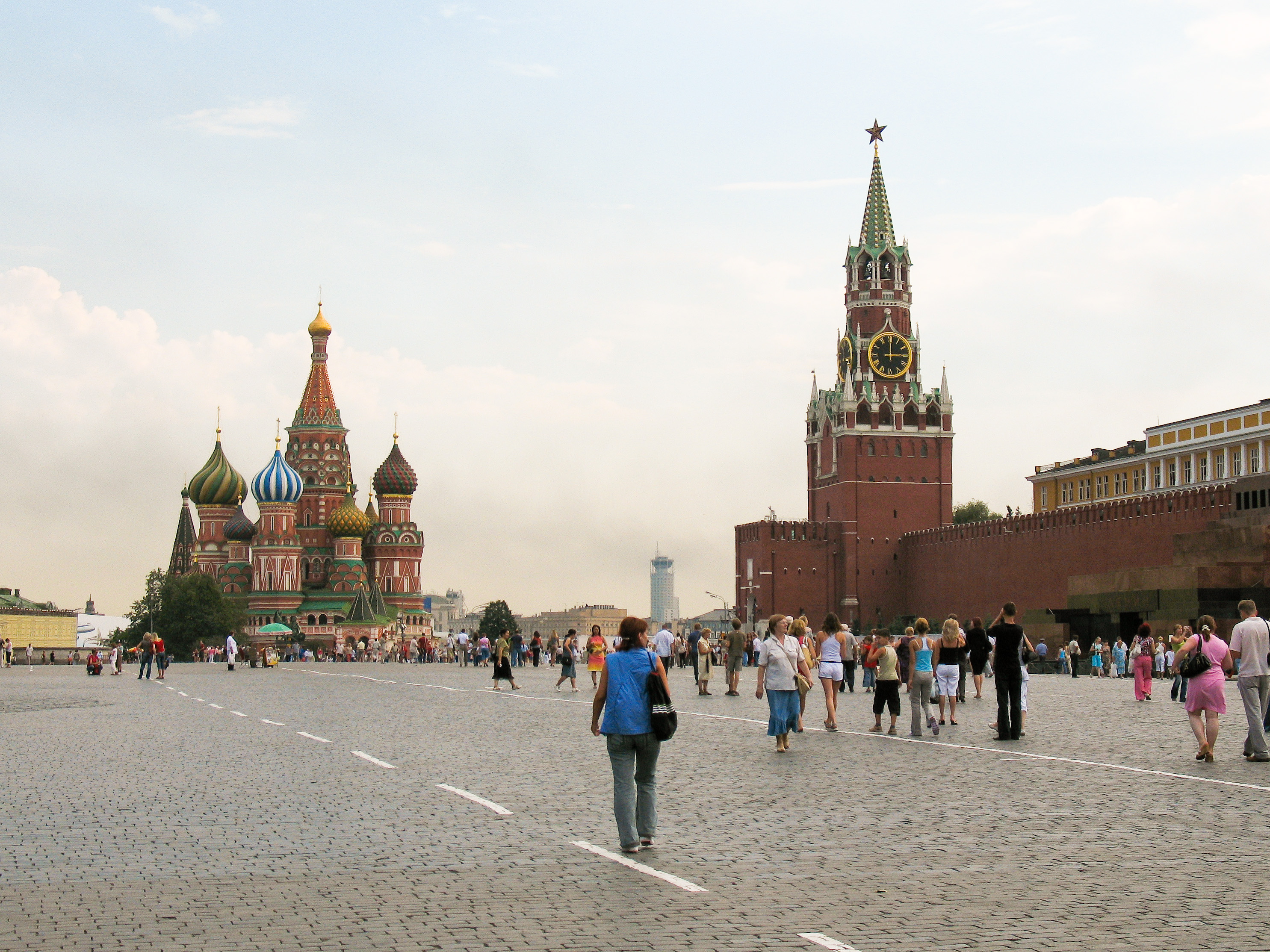
Russia-Wallpaper-Picture-Desktop

(click)

The pretty clerk behind the desk at the Air Serbia counter in Belgrade where I’m checking in for my flight to Moscow-St.Petersburg smiles when sees the obvious irritation on my face as she tells me that my stuff isn’t going direct, but that I’ll have to claim my baggage in Moscow and re-check-in again for the flight to St. Petersburg, probably get charged for my extra weight again — and at a different terminal in a user-friendly airport like Sheremetyevo.

“Russians,” she grins slyly but sweetly, “they don’t trust.”

Dude, when your own ever-loyal Serbs are talking about you like that, you probably have some issues you might want to address.

Serbia(click)

Comment: nikobakos@gmail.com