Balkans, Anatolia, Caucasus, Levant and other Middle East, Iran, Afghanistan, South Asia, occasional forays into southern Italy, Spain or eastern Europe, minorities, the nation-state and nationalism — and whatever other quirks or obsessions lurk inside my head.
But soon, I think, the European Union got wind, no pun intended, of what most of the Balkans had already known for years and a huge police operation moved in, burst into every family’s compound and burned everything they had growing to ashes – “even their basil,” said one cousin of mine from Derviçani with glee. And her glee was made even greater because Lezarates’ humiliation was augmented by the fact that the police operation had entered the village through the upper mahalladhes of Derviçani (see map above), and — don’t quote me, what the fuck do I know — but I’m pretty sure with info from Derviçiotes who had been doing business – of some sort – with them for quite some time.
1. Never clean your room. Your mom will do it. Unless you are a mom then you are to refuse any help if offered and complain how nobody in the house helps you.
2. When asked how you are doing answer as if your collocutor really wanted to know.
3. When asked how you are doing the correct answer is: terrible. Then move on to the details of your misery.
4. Be a slacker and be proud of it.
5. If you cannot be a slacker then indulge in work but never admit it. Even if you get all the highest grades or Nobel prize you are to deny that you ever in your life studied or worked hard.
6. Be late! Always and for everything.
7. Everyday spend at least two hours in the coffeeshop. You are not to work but smoke there.
8. Eat meat and lots of it. Treat vegies as decoration.
9. Be proud of rakija, but in the case of lockdown go and empty all the shelves of coca cola in the local store.
10. When a problem arises the most important thing is not to solve it but to show that you are not guilty. So, you are to argue who is to blame and why it is not you.
11. Be sloppy but creative: from grammar to domestic electrical installations. As long as it works somehow you are fine.
Finally, if the going gets tough you are to forget all previous 11 rules and go into death across Albania to win the impossible war.
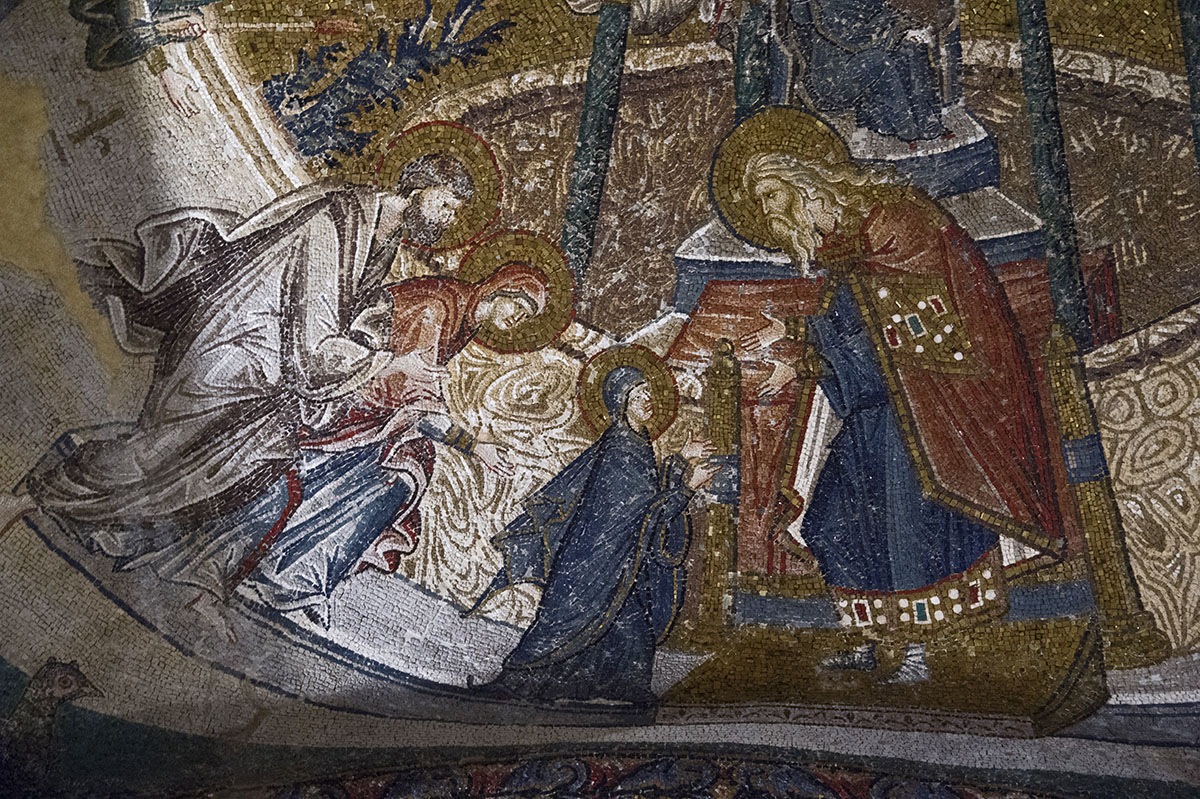
Today, November 21st is one of my favorite Orthodox holidays, the Presentation (Εἴσόδια/Воведение) of the Virgin to the Temple. God gives Joachim and Anna, who have not been able to have a child, the blessing of conceiving Mary. Riding on the old Jewish story of Sarah, Abraham’s wife, also not being able to conceive, until the angels visit Abraham and announce that Sarah, already 80 years old, will conceive the male child who then becomes Isaac(in a wonderful moment of irreverent Jewish humor, Sarah hears all this from the kitchen and laughs out loud), Anna herself names the Jewish matriarch in her prayers to God, asking him to perform the same miracle for her.
(Sadistically, God then later orders Abraham to sacrifice Isaac and Abraham obeys, but God then puts a ram in Isaac’s place at the last moment; don’t ask me to explain this one-more story of the monotheist God’s perversity and cruel power plays — listen to Benjamin Britten’s beautiful setting of the story below. *1)
When she’s three years old, Joachim and Anna take the toddler Mary to live in the Temple in Jerusalem, in order to thank God for the miracle of her birth or to keep her pure, since she’s such a holy baby, or until she starts to menstruate and thus turns of marrying age — it’s not very clear which it is (and let’s, again, ignore Semitic monotheism’s misogynist obsession with female purity.)
But they somewhat sadly leave her at the Temple, and as they walk away they turn and look, and the child Mary is not only not crying for the parents who have abandoned her here with all these long-bearded old men, but she’s dancing happily — “with her feet” — delighted to be living in the Lord’s house, and all the years she spends there an angel descends daily and feeds her “like a dove.”
Click and enjoy these here because if you go to the Church of the Chora in Istanbul today, these and many other beautiful mosaics and frescoes will be covered by the drapes of “the hysterics and puritans of monotheism.”
And a couple of Western images of the holiday (below), though it has largely fallen into obscurity today in the Catholic Church:
Giotto’s fresco of the event in the Scrovegni Chapel in Padua (above)
And Titian’s spectacular fresco (above) — along with details (below) — in the Gallerie dell’Accademia in Venice
The story of the Presentation of the Virgin is not found in any of the canonical gospels but only in the apocryphal Gospel of St. James, also known as the Infancy Gospel. This is probably why it’s been forgotten in the Catholic West; the Catholic Church, in its lame post-Vatican II attempts at modernization, deleted important saints from the Church calendar, like George and Catherine and Nicholas, because we have no scientific evidence of their miracles (hellloooo…do we have “scientific evidence” of the Incarnation or the Resurrection or any “scientific” proof of the doctrine of the Transubstantiation/Communion? Don’t get me started and let’s not go there…), they certainly were not going to give any credence to an apocryphal tall tale, even though, as the above masterpieces of Giotto and Titian testify, it was still an important enough Catholic holiday during the Renaissance.
Below is the Greek text in screen shots; sorry couldn’t find a cut-and-paste form of the passage with full Greek accent system and I always try to when I post something; you’ll have to click:
and English:
“When the child turned three, Joachim said, “Let’s call the pure women of the Hebrews. Let them take up lamps and light them so that the child will not turn back and her heart will never be led away from the temple of the Lord.” And they did these things until they went up to the temple of the Lord. And the priest welcomed her. Kissing her, he blessed her and said, “The Lord God has magnified your name for all generations; through you the Lord will reveal deliverance to the children of Israel in the last days.” And he set her down on the third step of the altar and the Lord God poured grace upon her. She danced triumphantly with her feet and every house in Israel loved her.”
And her parents went down, marveling at and praising and glorifying the Lord God because the child had not turned back to look at them. While Mary was in the temple of the Lord, she was fed like a dove and received food from the hand of an angel.” (emphases mine)
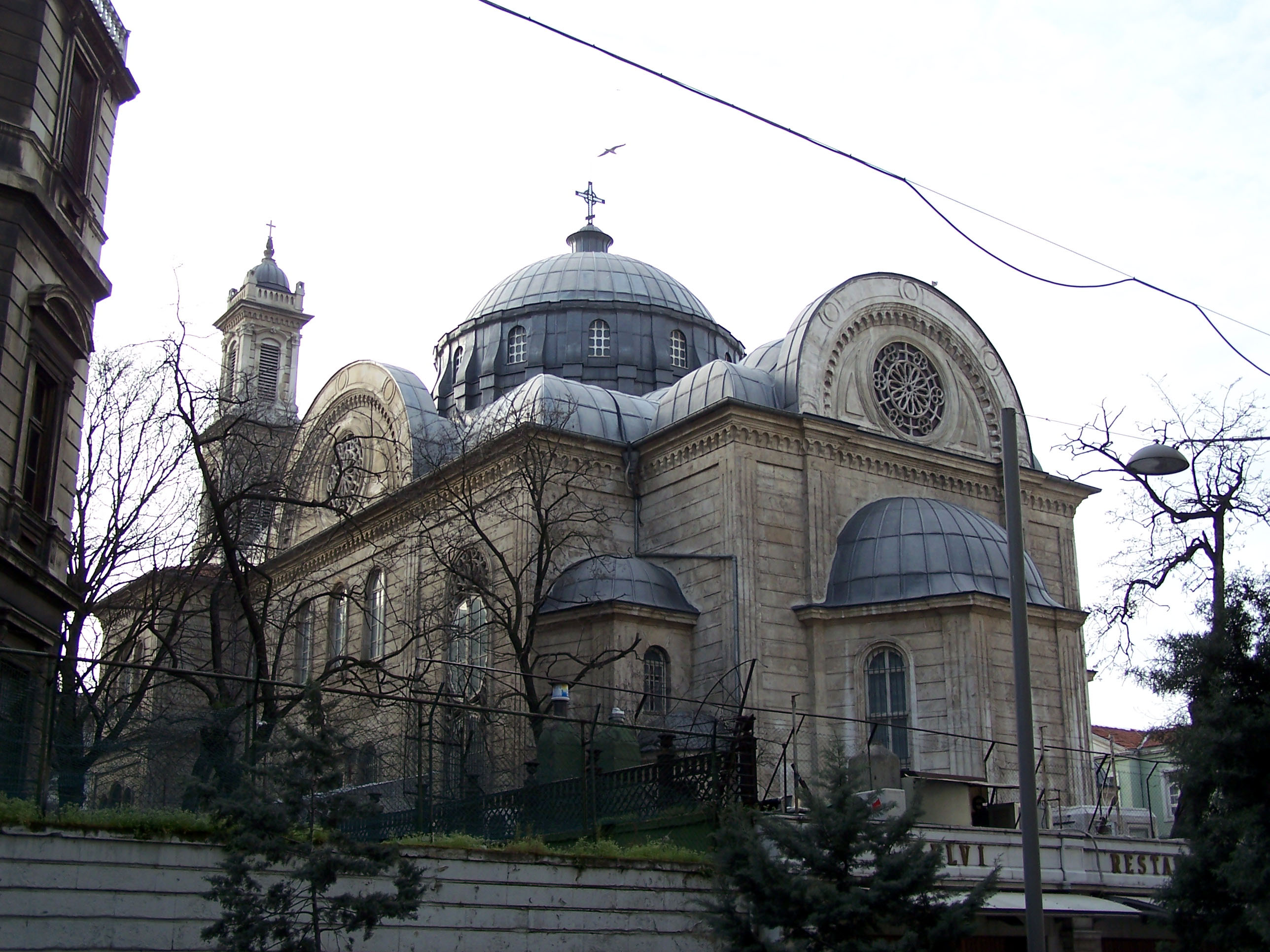
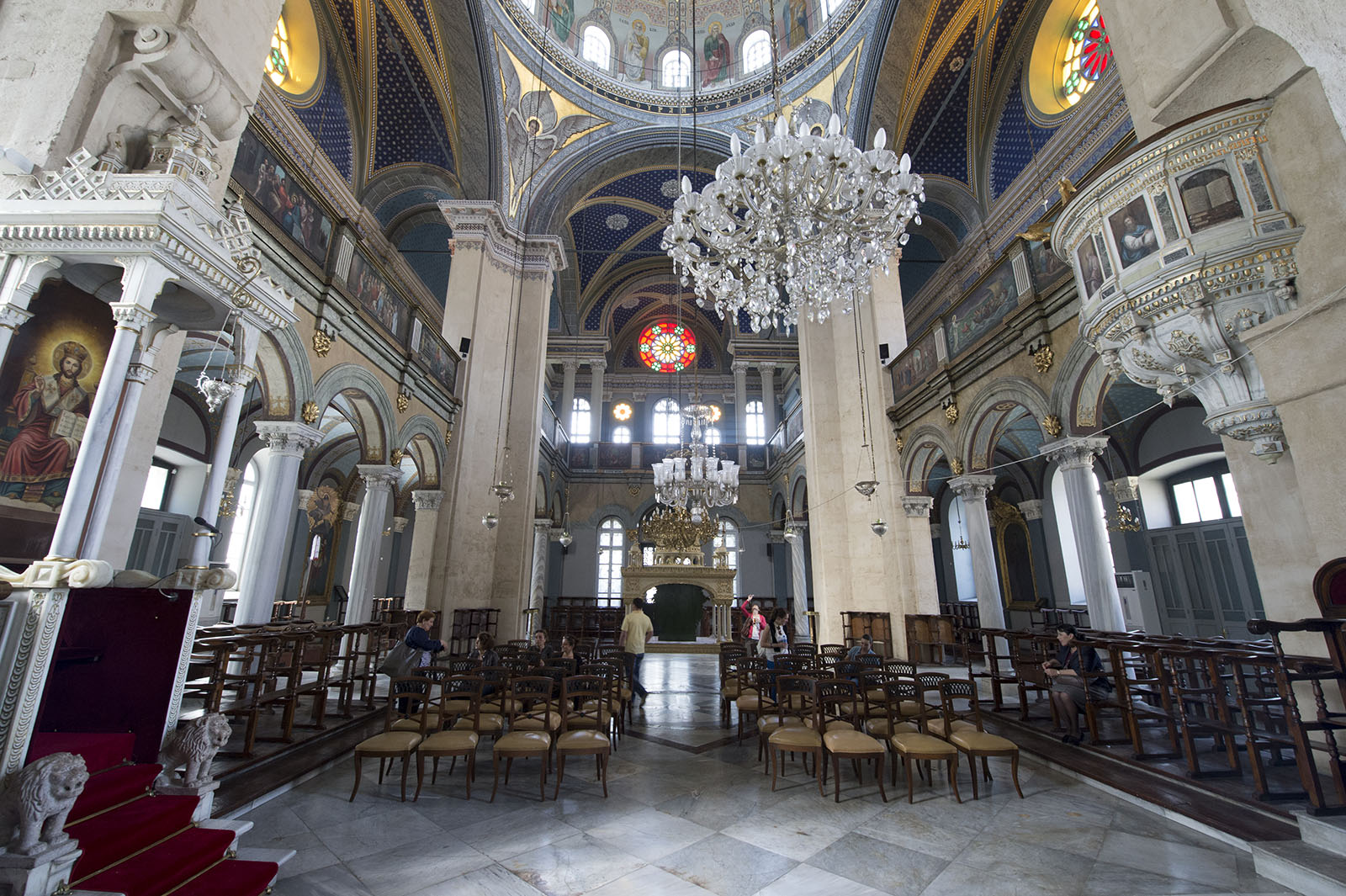
The church is a little hard to find, since it’s one of Istanbul’s pre-Tanzimat churches, meaning it was built before the 19th century reforms (1789) that lifted traditional restrictions on the building of non-Muslim places of worship; before the reforms churches had to have low, barn-like roofs because domes were not allowed, had to have high walls surrounding their premises, so that they were not conspicuous from the street, were prohibitted from having bell-towers (all church bell towers in Istanbul date from after the 1850s), and generally could not be higher or be more visible than any neighboring mosques (Wait…you mean, Islam isn’t the most tolerant religion in the world?).
View of Panagia Pera from above, hidden by surrounding buildings; western facade; and eastern facade with conspicuously later bell-tower. (below)
So, while the exterior was traditionally Ottoman in its plainness and modesty, the interior testifies to the fact that this Pera parish became Istanbul’s most extravagantly wealthy community beginning in the early 19th c. (pics below, from Iason Athanasiadis‘ “Τί χαμπέρια από την Πόλη;“)
Even more compelling about Pera’s Panagia is that it survived unscathed the Anti-Greek Pogrom of September 1955. Of course, the old ladies will tell you that that was a miracle…why almost all of the rest of Istanbul’s 90 plus churches were completely ransacked or totally destroyed is a question you’re tempted to ask. Did its enforced inconspicuousness save it? I dunno. Yes, it’s a little hard to find, but it’s only about 50 yards off Pera’s main drag and the rioters of this Menderes-government-organized orgy of destruction knew every single Greek business on the street and in the neighborhood and every single other Greek church throughout Istanbul… It’s hard to believe that they didn’t know of Pera’s second largest Greek church, after the Holy Trinity in Taksim, which was thoroughly gutted. Let’s just call it a nice surprise.
Hagia Triada (below), now restored:
The neighboring Zappeion, (above) once Istanbul’s most prestigious lycée for girls: “Surrounding buildings of the Aya Triada are still left black from the arson attack in 1955. The priests of the Church refuse to clean the surface so that the memory of the Istanbul riots will be remembered.”
More… Today, on the Julian (Old) Calendar still used by Russians, Serbs, Bulgarians and Macedonians, but not Romanians — I think — is November 8th the Feast of the Archangels, Michael and Gabriel. Always a thirteen-day difference, so you know.
It’s the Slava of the Đokovići. A Слава/Slava is…(from an old post):
“…Serbs are the only Orthodox Christians to not observe personal namedays.
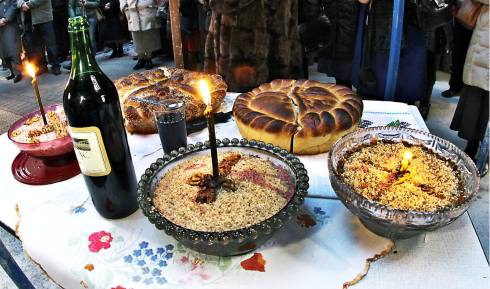
ὁ σῖτος, ὁ οἶνος καὶ τὸ ἔλεον τοῦ δούλου σου — the wheat, wine and oil of Thy servant
– Instead they observe the saint’s day on which their clan’s ancestors first converted to Christianity in a beautiful celebration called a slava, (the “glory”) and here — worth reading — which is essentially an offering and feast of remembrance, a ritual of ancestor-worship that proves that Serbs probably have more of one foot still in the pagan past than any other Slavic people…
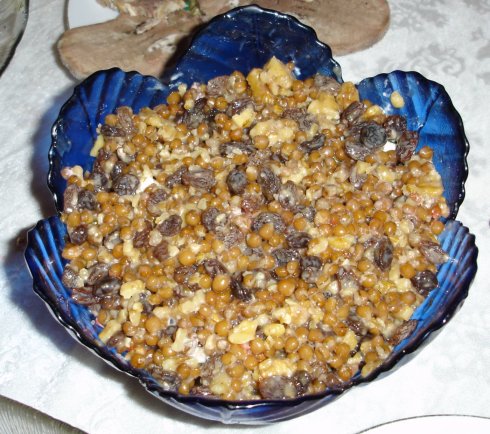
Many of their funerary customs are similar to ours — like the artos or artoklasia above and koljivo below — meaning they developed together spontaneously or they represent the influence of known Slavic sub-strata in the language, genes and culture of modern Greeks — and now that I said that I’ll have to go into a witness protection program.
Koljivo or Koliva just like Greeks make. Commemorating the dead with the seeds of life.
So my man, Novak Đoković tweeted a message on the occasion of his family’s Slava today:
You know, you can’t just throw together anything you feel like…like, I dunno, the Pennsylvania polka with polyphonic southern Albanian orchestration or background singers, and call it music. There’s a great Greek expression for what would result: “May God call that [whatever] …” music, in this case; то есть, only God can give this thing the existential status it’s claiming for itself.
Fusion happens organically. Egyptian pop has a çifteteli rhythm Greeks like, and slowly Greek pop develops a whole genre that is heavily Egyptian sounding. Klezmer musicians, especially Romanian and Moldavian ones, heard Greek Balkan tunes in Bucharest and Constanța and Istanbul and incorporated them into their repertoire. Serbs are attracted to Greek music, to its tone and melodies and especially to its affective nature, so lots of the new starogradska music (which literally means “old city” music, meaning popular, but urban, not folk, like Greek λαϊκά) develops a deep Greek vibe. Greeks loved Bollywood in the 50s, so a whole genre (one railed against by many, including Tsitsanes, which is why I can’t forgive him), of some really beautiful music, developed out of some plain rip-offs, and some imaginative reworking, of the Indian material that Greeks liked in their movies.
I’ll soon bring you examples of all of the above. My point is simply that these intermeldings happen organically and if they’re forced, consciously and stupidly, the product kinna sucks.
I’m sure the intentions of the Khoury Project — four Palestinian brothers from Jordan, with a last name that probably indicates Christian (“Khoury” means priest in Levantine Arabic) — are good…oh, Lord, please don’t let them be misunderstood. But the result is atrocious. It’s a little bit classical Um Kalsoum Arab suite, a little bit Balkan brass band or tamburaša, a little bit demek jazz improv’ — and it’s all made worse by the lust for speeeeeeeeeed our civilization suffers from, to cover up for lack of art, because form is sacrificed on the altar of cheap excitement, till form becomes illegible, rhythm becomes unfollowable, and melody disappears…and it all turns into a dog whistle that we can’t even hear.
Everything is like coked-up Bregović.
And what did that poor kanun do to this dude, that he’s banging away at it like it’s a heavy metal drum set, or like he’s hoping to snap a few of its strings?
Ok, there is one cool idea they’re working with, and that’s in the title: “RUMBA”. It’s not a ton of people who know that, but the musical and other cultural influences that Spain, especially Andalucía, sent to the Caribbean, were matched by the musical influences that the Caribbean, especially, of course, that heavenly font of music, Cuba, sent back to Spain. (You can probably trace the popular music of the whole twentieth-century world to either this one island of ten million people or the Mississippi Delta…or to the West Africa that both sprouted from.) Rumba, for example, is a flamenco genre, as is tango, though they don’t much look like their Latin American namesakes in their Andalusian gypsy forms (Morente gives us a moment of Cuban/Andalusian “rumba” dance moves at 6:56). But sevillanas and bulerías also have rhythmic structures and verbal phrasing and dance moves that have earlier Cuban antecedents.
The reason most people don’t know this is because there’s no more cliché-bound human than the modern tourist. And the academic tourist, who you think would have more outré interests to pursue when he travels, is often the worst of all. So as far as Spain goes, they’ll go to Barcelona, because it’s just such a “hip,” “cosmopolitan” Mediterranean (Christ, sometimes I hate that word) city, and skip the edgier, scruffy, by far more involving urban vibe of Madrid.* And if they’re under 35 they’ll go to Ibiza; over 35 will go to Mallorca. The MESA or other academic folk won’t go to either (if they want beach action they’ll come to one of our more remote Cyclades); rather, after Barcelona, they’ll do the Glories of Al-Andalus tour of Córdoba and Granada and then hightail it back home.
And you can’t get a full picture of flamenco in any of those places. Yes, there’s clearly a gypsy community in Granada that has created its own sound (including Estrella Morente and the whole Morente clan). But “gypsiness” and flamenco are to be truly appreciated in lower Andalusia, the flat river-delta of the Guadalquivir (the al-wādī l-kabīr in Arabic, the “great river”, like the kabir in this blogs’ name.) The great (or “kabir”) flamenco palos or genres, the great flamenco singers and guitarists, are almost all from the Gypsy barrios of Seville, Jerez, Cádiz, Sanlúcar, Puerto deSanta María, or the large village/towns of the region, like Osuna, Écija, Carmona, Utrera. This was not just the entry point for Spanish contact with its American colonies; it was the region that soon after the Reconquista came to be made up of large estates, latifundia, and a large rural proletariat that worked those estates and a large urban proletariat that lived in semi-employed poverty. Unfortunately, this was the pattern that Spain exported to not just its American colonies, but to southern Italy and Sicily during the centuries that it ruled those lands. What’s so fascinating about Naples and Palermo (like, of course, Seville) is that they were the first large, third-world cities of European modernity, overgrown, over-densely populated, surrounded by a countryside where land ownership was wildly unbalanced, cities of fabulous wealth and a dispossessed urban proletariat that still characterizes the modern and post-modern megalopolis — from Bombay to New York.
The Guadalquivir
Unfortunately or not, the pressure-cooker of urban poverty seems to be the petri dish of fantastic music: whether it’s Havana or Seville or Naples or New Orleans or New York and Chicago or Smyrna or Piraeus. We owe it to the creators of this music, and their suffering, to not mangle it the way the Khoury Project has done in this and in many other videos of theirs.
That’s why I’m bringing you more than just one of the original versions of the Cuban classics that Morente and the Khoury project butcher beyond recognition. Take the time to listen to both: the several original versions and the shameless interpretations the new fusion versions bring.
At 6:15, Morente sings the historic Cuban song “Songoro Cosongo”. This was a “son”, an Afro genre from eastern Cuba that, in the early twentieth century, became the more or less national dance (out of which the mambo and then salsa grew) replacing, even in polite society, the danzón. The lyrics are not original “Afro”; they’re Art-Afro, from the Black Cuban poet Nicolás Guillén — y de allí you get into all kinds of questions of authenticity that basically lead you nowhere. What’s important is that this first version was sung by the Septeto Nacional, which was the first group of Black musicians who were allowed to play in the Havana Tennis Club in the 1920s, marking the entry of Blacker music into the social mainstream of Cuban life (or maybe that was the Sexteto Habanero?). Here’s the original version. For Colombians, forget the baldosa please and watch the first part of the video and incorporate some movement into the dance; drop the screwdriver step.
And here’s Hector Lavoe’s 1970s big band sound, salsa version:
The other Cuban/PR classic that the Khoury Project and Morente make kokoretsi out of (at 7:10) is the piece known alternately as “Mandinga” or “Bilongo” or “La Negra Tomasa”.
Here’s a Cuban έντεχνο version from pianist Rubén González of the Buena Vista Social Club:
And here’s the truly breathtaking salsa version, again from the 70s, of Eddie Palmieri, with singer Ismael Quintana: “Kikidi-boom, Mandinga, Kikidi-boom Mandinga….”
Y aquí la tienen, la Negra Tomasa:
La Negra Tomasa, like Mamá Inés (“ay Mamá Inés, ay Mamá Inés, todo’ lo’ negro’ tomamo’ café.”) It’s amazing how powerfully Pan-American this archetype of the Black woman is: Mamá Inés, La Negra Tomasa, Aunt Jemima, the Black woman who, despite the misery and servitude of her existence, still feels and expresses genuine love for those she has to care for. Here’s the scene from Gone with the Wind where Hattie McDaniel gave the performance that garnered her the first Oscar to go to a Black woman:
Ok…
And back to Estrella Morente’s outta space performance. I don’t want to sound like one of the judges on #MyStyleRocksGR (though I’d like to have a drink with Stelio Koudounare — below)** but, Estrella, you’re a magnificent woman. But you’re also a modest Gypsy girl. Don’t wear a strapless dress that you’re constantly tugging up for fear it’ll fall off and reveal your ample bosom. It cramps your style, especially for a number as fast this “Rumba”.
(There’s something that’s so interesting about the semiotics of Gypsy and flamenco sexuality, a really interesting interaction between the revealing and openly erotic and the puritanical and covered up — that’s maybe a real remnant Indian cultural trait. We had a long-time Gypsy tenant, Mandy, who rented a commercial space in a building we owned in Manhattan for her Tarot-reading business; how they made the rent for a midtown Manhattan space offa Tarot readings is anyone’s guess. And whenever I dropped by at that time of the month, she was always dressed kind of like Lola Flores in this video below of commercial, movie, kitschy but beautiful copla-flamenco [look up “copla”; it’s a critical bridge between flamenco and other Spanish popular music]:
A tight top, but with straps — please — and an ankle-length skirt, tight around the hips and flaring out from the knees, like Gypsy women all over the world wear. The use of the skirt in flamenco dance, the flipping and turning around, the gathering up of its ample folds and ruffles and waving them back and forth or stuffing them between the legs, almost up into the crotch…all of those moves become especially powerful because revealing of the lower body seems so taboo. Not to mention the similarities between the prop manipulation of the long skirt in flamenco and that of the cape in the corrida, or bullfight.)
* There’s a wonderful expression in Spanish: “De Madrid no se ve el mar.” — “From Madrid you can’t see the sea” which condenses the whole personality of the city. Madrid is really nowhere. It doesn’t occupy a strategic position, like the older cities of old Castille. It’s not on an important navigable river. The weather sucks: the famous “nine months of winter and three months of hell” (“nueve meses deinvierno ytresdeinfierno”), though I love the cold, sunny weather of a Castillian winter (“colder than a Lutheran” says one character in the film version of Alatriste), and the food is perfect for the climate. It was simply built by royal fiat as a court and imperial capital in the early 16th century because there was an old, Moorish town there in the geographic center of Iberia, on the high, arid and underpopulated central plateau, or meseta, of Spain.
And yet this isolated city — from where “you can’t see the sea” — in the middle of nowhere became the sophisticated, highly cultured and rich capital of a massive empire. The contradiction is that it couldn’t ever really evade or deny its roots. Madrid remained and remains a deeply castizocity. “Casticismo” is a complicated term that means “pure”, “[Spanishly] authentic”, “native”, “conservative” and even a solid melding of all of those together won’t give you the precise sense of the word. Casticismo is what makes Spain Spain. I’m tempted to find Greek analogies and thought that it might beRomiosyne as in versus Hellenismos. But no…
When you’re in a bar somewhere in the center of Madrid in July, and there’s a cold, sweaty caña, or half-pint, of beer and an equally sweaty few slices of ham in front of you, when there’re dirty paper napkins or toothpicks (or there used to be; this custom has sort of fallen out of style) or peanut shells on the floor (the more garbage there was piled up on the floor, the more it signalled to potential customers that, “oh, this is a fun bar that people like…let’s drop in here”) and you’re packed in with super-friendly, inquisitive Spaniards speaking at a totally unnecessary decibel level…and it’s only 11:00 am — well, that’s the right time to get a feel for casticismo, even if it’s just a sensory feel that you can’t express discursively.
And that’s kind of the essence of Madrid, a liberal, tolerant, mad creative, open place that’s still closed and stubbornly archaic and even anarchic: even cañí (tacky) or hortero (red-necky, rough, kitschy, or vulgar). As opposed to the dizque sophisticated-acting, cosmopolitan but actually staid bourgeois air of Barcelona, Madrid is more a microcosm of Spain: one of the West’s and Europe’s most progressive, advanced in every way, societies, that’s simultaneously not part of the West or Europe at all, but a wild, limit-pushing land that is something totally itself, where the grappling between the “raw” and the “cooked” is as interesting and powerful as anywhere.
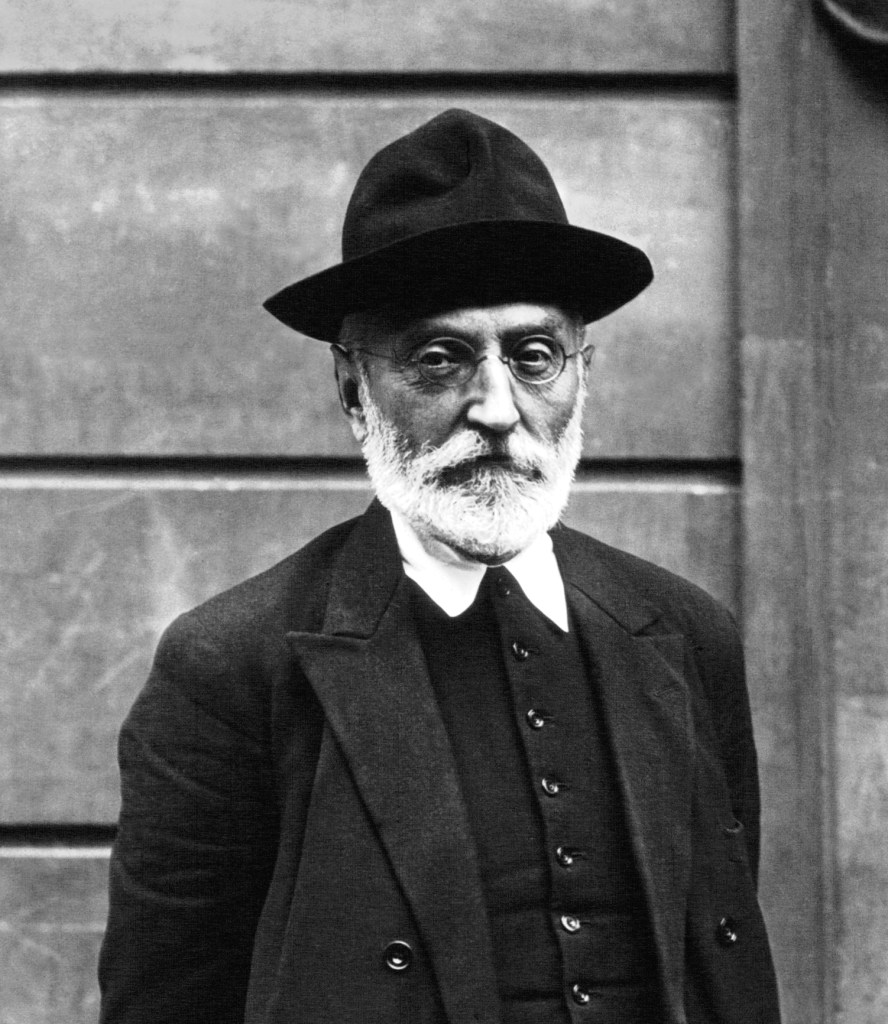
The go-to book on casticismo is by my saint-hero-philosopher Miguel de Unamuno who wrote it in the early 20th century, when the question of identity — especially after the disastrous Spanish-American War of 1898 when Spain lost its last colonies to the United States — and how Spain needed to generate some kind of new dialectic between its “deep” identity and the modernity it had to face was a red hot, controversial issue. As a Basque, he had a particular insider-and-outsider take on Spain and if you read Spanish or can find an English translation — which I’m not sure there is — it should be on your reading list before your next visit there.
Stelios Koudounares, Greek fashion designer and guest judge on #MyStyleRocksGR
I’ve never been even remotely interested in fashion. I mean, I like to know that what I’m wearing looks ok, but in terms of high-end, concept fashion that nobody really wears…nothing’s ever bored me more. So don’t ask why I’ve gotten hooked, and on a daily basis, to #MyStyleRocksGR. Yeah, I like Stelio, but it’s basically because the judges and contestants on the show are all having so much fun…and when it’s mean it’s because there’s some serious Greek shade being thrown around that, ultimately, no one takes seriously. Any way, I’m addicted.
Next: between occasional blogging and working on my translation of Polites’ Stou Hadjifrangou, I’ve also gotten addicted to reality show #BigBrotherGR. (Owning up: I was addicted to Jersey Shore too.) The other night I sat transfixed through three-and-a-half hours of the special live Friday night broadcast they do, because I was afraid that my favorite room-mate, Demetres Kehagias (Δημήτρης Κεχαγιάς)below, was going to get booted off the show.
I don’t like Kehagia just ’cause he’s good-looking. I like him ’cause he’s echt-Greek/Rhomios.He’s always grouchy and irritated about something and someone and getting into fights with everyone around him, talks a mile a minute in thick Athenian attitude and intonation… And then suddenly becomes all loving and caring and sweet in a way that makes everyone around melt. Luckily he survived.
Here he is in rare form against his nemesis room-mate, the woman with the fried peroxide hair, Anna Maria from Chania (that’s just what they were missing on this show, a Cretan woman of a certain age with fried, peroxide hair…) Check them out in this video below; the fun starts at around 2:17. Yes, the two guys in the black t-shirts are identical twin brothers (makes for all kindsa nuttiness), Zac (Ζαχαρίας) in the Marine t-shirt says and does absolutely nothing in any episode except look pretty, and the zaftig chick in the fuchsia top with the fan, splendidly named Aphrodite!!! is the loving Big Mama that me and apparently all Big Brother addicts in Greece — so say the polls — adore, and she spends lots of her time trying to de-escalate arguments like these. Enjoy. This is a perfect Greek kavga, the Turkish word we use for pointless, steam-letting, “let’s-have-some-fun” arguing. I’m not going to translate or tell you what it’s about….because it doesn’t matter!!!It’s not about anything! They’re just arguing!
I started watching ΣΚΑΪ (SKY) because it’s the of right-of-center channel that still maintains (despite these trashy shows I’m into) some sense of cultural and social standards out of all Greek TV stations. And also because a right-of-center good friend of mine got voted in as MP in Greek Parliament this year and he appears as the go-to expert on Greece’s international relations — especially at a tight time in Greek-Turkish relations like now — on ΣΚΑΪ‘s news broadcasts. But then I get back to work and leave the television on with no sound. Explains how I got hooked on these shows.
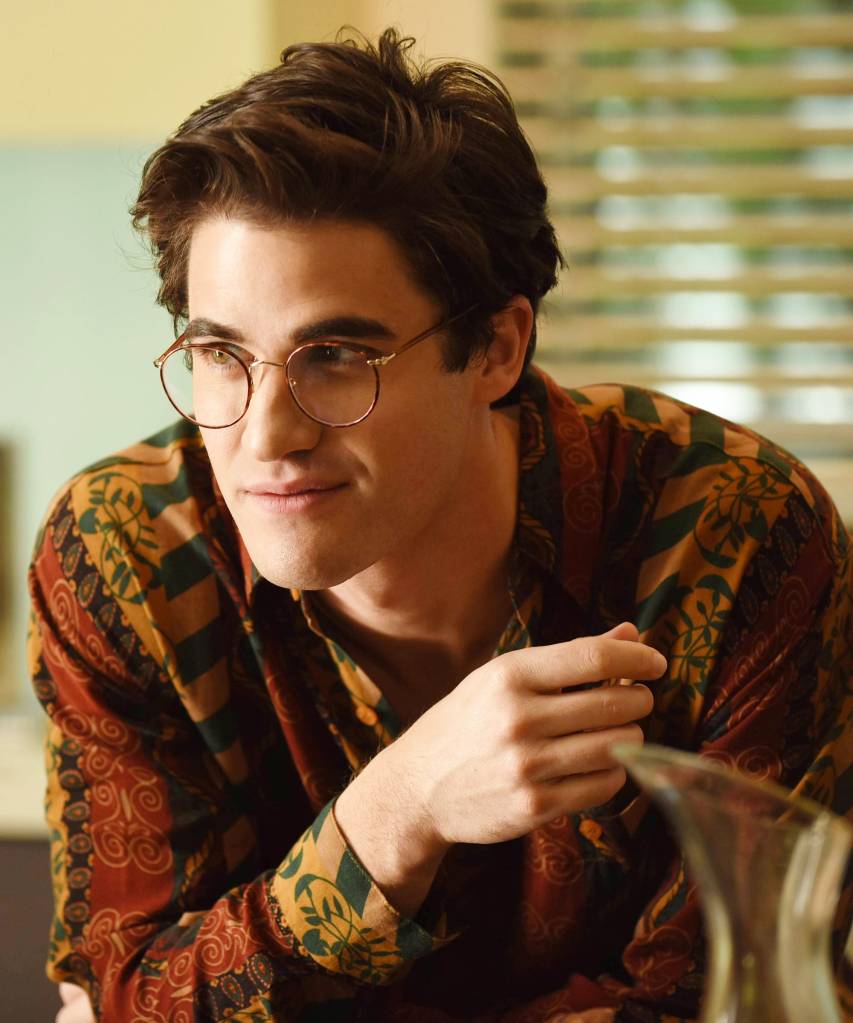
Addendum: they’ve also been broadcasting American Crime Story: The Assassination of Gianni Versace these past two weeks. It’s fascinating. Because it’s not about Versace almost at all. It’s about his tragically psychotic murderer, Andrew Cunanan. And it leaves you with the very disturbing sense that he wasn’t so distantly psychotic from the rest of us, that he just wanted what we all want; things just came together in a way that pushed him over the edge. It’s on Netflix; check it out.
Darren Kriss as Andrew Cunanan in The Assassination of Gianni Versace
Forgotten Bonds: Albanian armed guards protected medieval Serbian churches & monasteries in Kosovo during the last centuries of Ottoman rule. The commanders were hereditaryVojvodas, the guards permanently lived on the church grounds & were most likelyLaramans(Crypto-Orthodox).
Purpura begins his tweet with the words: “Forgotten Bonds”. I think it’s safe to assume that his intentions are to show how, in some indeterminate past, Albanian Muslims and Orthodox Serbs lived in harmony together in Kosovo and in such multicultural peace that it was Albanians who guarded the extensive and dazzling ecclesiastic art heritage of Kosovo Serbian Orthodoxy (instead of vandalizing it like they do now). But he concludes by saying that most of these guards were secretly Christian. And that of course belies the whole myth of “bonds” and tolerance and happiness and how “there is no compulsion in religion.”
Read about the Laramanson Wiki. It’s a fascinating page because it puts together a whole package of phenomena that all, to some extent, grew out of Ottoman defeat in the Great Austro-Turkish War at the end of the 17th century: the retaliatory violence against the still-Christian Albanian and Serbian population that lived in the western Balkans on the corridor where much of the fighting of the prolonged conflict had occurred; the flight of Serbs to the north; the Islamization of Albanian Catholic Ghegs who then settled in a depopulated Kosovo and the parts of southern Serbia that the Serbs had fled from*; the spread ofBektashism throughout the Albanian Balkans and how that form of Sufismmay have grown out of the crypto-Christianity of much of the population and even fromJanissaries(with whom the Bektashi order was widely associated) of Albanian extraction; and the spread of violent Islamization campaigns to the Orthodox, mixed Albanian-Greek population, of southern Albania later in the 18th and early 19th century.
A testament to this last phenomenon — the Islamization of southern Albania — is the obstinate Christianity of the region my father was from, the valley of Dropoli(shown above). There are several songs in the region’s folk repertoire that deal with the conversion pressures of the past, but one song that is heard at every festival or wedding and could be called the “national anthem” of the region, is “Deropolitissa” — “Woman of Dropoli.” Below are two versions; the first a capella in the weird, haunting polyphonic singing of the Albanian south (see here and here and here and especially here)**; and another with full musical accompaniment, so readers who are interested can get a sense of the region’s dance tradition as well (though in the second video the dress is not that of Dropoli for some reason). If you’re interested in Epirotiko music, listen for the “γύριζμα” or “the turn” — the improv’ elaborate clarinet playing — toward the end of the second video, 4:02; the clarinet is a Shiva-lingam, sacred fetish object of mad reverence in Epiros and southern Albania.
The lyrics are [“The singers are urging their fellow Christian, a girl from Dropull, not to imitate their example but keep her faith and pray for them in church.”]:
σύ (ντ)α πας στην εκκλησιά, με λαμπάδες με κεριά, και με μοσκοθυμιατά, για προσκύνα για τ’ εμάς, τι μας πλάκωσε η Τουρκιά, κι όλη η Αρβανιτιά, και μας σέρνουν στα Τζαμιά, και μας σφάζουν σαν τ’ αρνιά, σαν τ’ αρνιά την Πασχαλιά. σαν κατσίκια τ’ Αγιωργιού.
…and go to church with lamps and candles and with sweet-smelling incense pray for us too because Turkey has seized us, so has all of Arvanitia (Albania), to take us to the mosques, and slaughter us like lambs, like lambs at Easter, like goats on Saint George’s day.
Until the first part of nineteenth century women in Dropoli used to wear a tattooed cross on their forehead, the way many Egyptian Copts, both men and women, still wear on their wrists; there are photographs of Dropolitiko women with the tattoo but I haven’t been able to find them. Here’s a beautiful photo, though — looks like some time pre-WWII — of Dropolitisses in regional dress.
* Good to know something about the traumas of Serbian history before we rail against them and villainize them in a knee-jerk fashion. I think my best summary came from this post last year, Prečani-Serbs:
Prečani-Serbs: It’s doubtful that any Balkan peoples suffered more from the see-saw wars between the Ottomans and the Hapsburgs than the Serbs did. It’s easy to see why; Serbian lands are pretty much the highway for getting from the south Balkans to Vienna.It’s the easiest proof there is that war always had “collateral damage” and civilian casualties. The Ottomans launched rapid campaigns up through to Vienna in 1529 and 1683. Both times they failed to take the city and retreated. Thank the gods, because the idea of Turkish armies at the walls of Vienna is even more terrifying than the idea of Arab armies in the Loire valley at Tours just 70 kilometers from Paris in 732. But in 1683 they not only failed to conquer Vienna, the Hapsburgs chased the retreating Ottomans across the Danube and as far south as Kosovo. That could have meant Serbian liberation from the Ottomans 200 years before it actually happened.
But then the Austrians made the fateful decision to retreat. I don’t know why. Perhaps they felt overextended or thought they were getting too deep into imperial overreach. And of course this meant horrific retaliatory violence on the part of Turks and local Muslims against the southern Serbs who had welcomed the Austrians as liberators. And an epic exodus of the Serbs northwards, in what are called the Great Migrations of the Serbs, began. This resulted in a massive shift to the north of the Serbian nation’s center of gravity and, perhaps most fatefully, marks the beginning of the de-Serbianization of Kosovo, which was the spiritual heartland of the Serbs. And an influx of increasingly aggressive highland Albanians, now Islamicized and emboldened in their impunity as such, only accelerated the departure of Kosovo Serbs to the north.
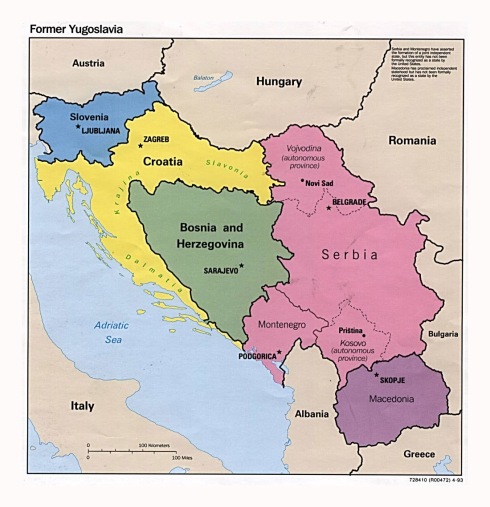
Conditions in northern but still Ottoman Serbia were better than in the south. But for many Serbs this was not enough. A great many crossed the Danube and settled in what is now the autonomous region of Vojvodina and the parts of Croatia called Slavonia and Krajina. Ironically, just as the Ottomans made Serbia prime recruiting countryfor their system of enslaving young boys to turn them into the most powerful unit in the Ottoman army, the Janissaries, the Austrians themselves also recognized that Serbs were, as always, good soldier material, and they invited Serbian fighters and their families into Austria’s border regions to protect the boundaries of the Hapsburg empire from possible Ottoman aggression.
So Prečani-Serbs, refers, very broadly, to those Serbs who went and settled in the borderlands of the Austrian empire; the term comes from “preko” or “over there” or “the other side”, across the Danube, Sava and Drina rivers, in other words, that were the borders between the Ottomans and Hapsburgs for centuries.
I don’t know whether Krajina Serbs from around Knin — shown in green in map below — are considered prečani or not, those from that part of Croatia that was largely Serbian until 1995, when it’s Serbian inhabitants were expelled with American help in what was the largest single act of ethnic cleansing in the Yugoslav wars, with some 200,000 Serbs expelled from their homes. Serbs are soldiers and poets, as I’ve quoted Rebecca West saying so many times; Croatians are lawyers; but with the detestable Milošević having abandoned Krajina Serbs (Venizelos-style), and with Americans arming, training them and watching their backs, Croats proved themselves to be formidable warriors indeed.
So, if one can put one’s biases aside, the poignant tragedy of this whole set of some 600-years of pain and trauma becomes clear. Bullied out of Kosovo over the centuries, Serbs move north, even so far north as to settle in Austria itself. Then, with no one’s help, they gather Serbs from Kosovo to the trans-Danube-Sava lands where they had settled over the centuries into one state. And less than 100 years later, they lose and are almost entirely expelled from both the Kosovo they had fled from and from the Krajina and Prečani lands they had fled to.
Good to know the whole stories sometimes.
** I’m pissed and disappointed at my χωριανοί, “landsmen”, who have totally abandoned this beautiful and UNESCO-protected form of singing. When I first went to Albania to see my father’s village for the first time in 1992, after the fall of its heinous Stalinist regime, and to meet relatives we only knew through the spotty correspondence that made it through the Albanian Communist καθίκια‘s censorship, a group of aunts and uncles of mine recorded two hours of traditional singing for me to take back to my father (my father put off visitting until much later, when he was very sick because I imagine he was afraid that it would be traumatic; of course, going back when he did in 2002, knowing it would be his one and last time was just as painful.)
Now, thirty years later, no one except a few very old men still sing; they’ve totally left the playing field of the region’s song to neighboring Albanian villages; just like only a few young girls still wear traditional dress as brides, just like they’ve built horrible concrete polykatoikies without even a nominal nod to the traditional architectural idiom… Dance and dance music they’ve maintained, though they’ve sped up the tempo a little (compared to the second video above for instance) and that would have irritated my dad, since the aesthetic ideal of dance in the region is slow, almost motion-less, restraint — reminds you of Japanese Nōh drama. I carry the torch for him and get “grouchy”, as my friend E. says, when things get a little too uppity-happy on the dance floor.
Balkans, Anatolia, Caucasus, Levant and rest of ME, Iran, South Asia
Me, I'm Nicholas Bakos, a.k.a. "NikoBako." I'm Greek (Roman really, but when I say that in English some five people in the world today understand what I'm talking about, so I use "Greek" for shorthand). I'm from New York. I live all over the place these days. The rest should become obvious from the blog.









 ὁ σῖτος, ὁ οἶνος καὶ τὸ ἔλεον τοῦ δούλου σου — the wheat, wine and oil of Thy servant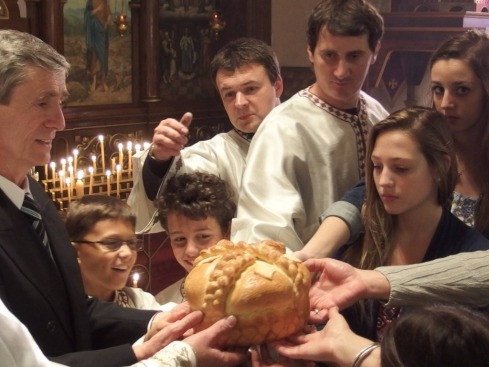







 It’s the easiest proof there is that war always had “collateral damage” and civilian casualties. The Ottomans launched rapid campaigns up through to Vienna in 1529 and 1683. Both times they failed to take the city and retreated. Thank the gods, because the idea of Turkish armies at the walls of Vienna is even more terrifying than the idea of Arab armies in the Loire valley at Tours just 70 kilometers from Paris in 732. But in 1683 they not only failed to conquer Vienna, the Hapsburgs chased the retreating Ottomans across the Danube and as far south as Kosovo. That could have meant Serbian liberation from the Ottomans 200 years before it actually happened.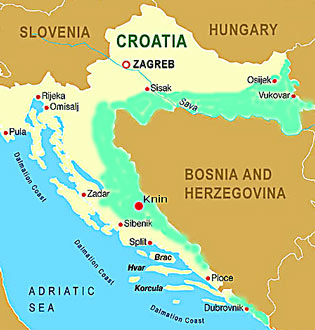

 Jadde: from Bosnia to Bengal