Balkans, Anatolia, Caucasus, Levant and other Middle East, Iran, Afghanistan, South Asia, occasional forays into southern Italy, Spain or eastern Europe, minorities, the nation-state and nationalism — and whatever other quirks or obsessions lurk inside my head.
“India’s Supreme Court has ruled that the controversial practice of instant triple talaq practised among some Muslims in the country is unconstitutional.”
Is this a victory for women’s rights? or a BJP assault on Indian Muslims’ right to their own legal/judicial system? You guys decide.
A Spanish flag at half-mast in front of Cibeles Palace in Madrid. Photograph: Gabriel Bouys/AFP/Getty
A lot of Greeks here have asked me “Why Spain?” When the 2004 attacks on the Madrid commuter trains which killed 192 people were carried out, Spain still had troops in Iraq, which then new Prime Minister José Luis Rodríguez Zapatero shamefully withdrew as soon as he could after defeating José María Alfredo Aznar López, who got Spain into Iraq in the first place. Involvement in Iraq had been unpopular with the Spanish electorate from the beginning, and pressure had already been mounting on Aznar to withdraw troops after seven Spanish intelligent agents were killed by Iraqi insurgents in November of 2003, but the Madrid bombings were planned by Al Qaeda to occur just three days before Spanish elections. I was not an Aznar man by any stretch of the imagination, but for Spaniards to cave in to Al Qaeda terror like that and elect a Prime Minister whose first act, essentially, was to withdraw the country’s troops from Iraq, was a show of collective cowardice from a people whose ballsiness I’ve always admired that seriously dismayed me. But since Spain is no longer a nation with troops in Muslim lands, what’s the problem.
Although most are thought to have been radicalised by the war in Syria, some jihadis find Spain a peculiarly atavistic target because of the country’s 700-year period of Moorish occupation. Islamic State was quick to look to the past and claim credit for the Barcelona attack, trumpeting: “Terror is filling the crusaders’ hearts in the Land of Andalusia.” [my emphasis]
See the New York Times’ video: “The Islamic State’s Claim to Spain”
OK…I’ve bitten off more than I can chew I think, so let me resort to bullet points. Some Al-Andalus and Crusades fun bubbles I’d like to pop:
* The happy Muslim Iberia of convivencia — co-existence — only lasted for at most two centuries, as long as the Umayyad Caliphate with its capital at Córdoba lasted. That caliphate was replaced by new and much more religiously orthodox and intolerant Berber kingdoms from North Africa under which Spain devolved into small Muslim emirates — the taifa — in which conditions for Spanish non-Muslims came to resemble those of dhimmi elsewhere in the Muslim world. (See also rayah: “…both in contemporaneous and in modern usage, it refers to non-Muslim subjects in particular, also called zimmi.” The “dh” sound of Arabic is usually replaced by a “z” sound in Irano-Turkic usage, as in Ramadhan and Ramazan.)
The taifa of the Iberian peninsula in 1031. (By 1248, when Seville fell to Christian siege, the only other major city left in Muslim hands was Granada.
It’s a cruddy, badly written and amateurish book (but, you know…”Out of the mouths of babes…” Psalms 8:2 and Matthew 21:16; you can’t expect an academically serious historian to write something like this, as he’d lose all funding and probably his job), but it asks a serious question: why have we in the modern West come to consider the Crusades the beginning of aggressive Western imperialism, a kind of proto-colonialism, and not, as Stark asks, a perfectly predictable response to the aggression of Islam/Arabs? I mean, sorry, it’s a question I’ve always been afraid to articulate: but who conquered two thirds of the Roman Christian world and the whole of the Sassanian world in less than a century to being with?
Next:
* That the Crusades have remained a traumatic memory seared in the collective consciousness of Arabs everywhere, that Syrian mothers still scare their children into obedience by telling them that Richard the Lionheart is coming to kidnap them, is an urban myth. Arabs didn’t remember the Crusades any more than we (Greeks) collectively remembered the Fourth Crusade that dealt the fatal blow to the Eastern Roman Empire (the Ottomans really just mopped up what was left). Arabs only “remembered” the “trauma” of the Crusades when the West and the above mentioned guilty Western intelligentsia “reminded” them
* On to another inconvenient truth that follows on the above: the Byzantines recovered fairly quickly from the loss of the Levant and Egypt to the Arabs in the 7th century, and in fact, may have emerged stronger as a more compact, ethnically and linguistically Greek polity. Then, under the early Comnenoi in the 12th century (Alexios, Ioannes and Manuel), they showed their resilience again as they reconsolidated their rule over the Balkans and, taking advantage of the crumbling of the Seljuks caused by the appearance of new Turks in Asia Minor, reconquered a large part of western Anatolia, despite facing renewed aggression from the Italian/Sicilian Normans to the West and from these newer Turkic states on the East; with the First Crusade’s help, they even recaptured Antioch and the surrounding region for a brief period. The Fourth Crusade’s conquest and sack of Constantinople in 1204, though, was an event it was impossible to recover from. Several Greek successor states that emerged then reunited into an empire under the leadership of the Palaeologoi out of Nicaea and retook Constantinople in 1261, but from then on this remnant Roman Empire was, despite a new cultural and artistic flourishing, a political and military sitting duck. Add to these facts that Levantine Christians and Armenians who ended up in the reconquered Crusader states — at the time of the Crusades the regions we’re talking about were, by some estimates, still almost 50% Christian — were subjected to violent reprisals by their newly returned Muslim overlords that diminished their numbers through flight and conversion and we come to the inevitable conclusion: in the long run, the greatest victims of the Crusades were eastern Christians.
* For Jews, whose horrific experiences with the Christian Westjust went from bad to worse over two millenia, culminating in the Holocaust, and for whom it seems to have been particularly tempting to see the historical lands of Islam as the “Goldene Medina” where Jews lived in peace and acceptance, it wouldn’t hurt to keep in mind that the biggest pogrom in mediaeval Europe in terms of numbers slain occurred in 1066 in Muslim Granada. This was when a Jew-cum-uppity-nigger, Joseph ha-Nagid, became too powerful as the vizier at the emir’s court in Granada — that city whose languid beauty and graciousness is the Fetish-in-the-Crown of pro-Moorish apologists. He was crucified and, by some estimates (many consider them discredited, but you have to ask why), 4,000 Jews were killed. I don’t know if crucifixion was supposed to have some kind of retaliatory significance given he was Jewish. But, according to Bernard Lewis, the Berber Muslim mob that carried out this pogrom were egged on by a poem of a certain Muslim, Abu Ishaq:
Bernard Lewis writes:
“Particularly instructive in this respect is an ancient anti-Semitic poem of Abu Ishaq, written in Granada in 1066. This poem, which is said to be instrumental in provoking the anti-Jewish outbreak of that year, contains these specific lines:
Do not consider it a breach of faith to kill them, the breach of faith would be to let them carry on.
They have violated our covenant with them, so how can you be held guilty against the violators?
How can they have any pact when we are obscure and they are prominent?
Now we are humble, beside them, as if we were wrong and they were right!
[my emphases]”
–
“My emphases” are obviously meant to highlight the zero-sum game that is monotheism and particularly Islam: “obscure/prominent” and “wrong/right”. No sense that there’s room for both or many as in polytheism or Hinduism (let’s not get into whether Hinduism is really polytheism right now). Just “right” and “wrong”. If you’re wrong you’ll be tolerated as long as you don’t get too big for your britches. And: “why am I obscure when they’re prominent?” sounds like the battle cry of curdled ressentiment we’ve heard from Sayyid Qutb to Mohammed Atta and his buddies and back to Abu Ishaq if not to the very beginnings and to Ishmael himself, the rejected illegitimate son of Abraham and of the slave Hagar.
Lewis adds though: “Diatribes such as Abu Ishaq’s and massacres such as that in Granada in 1066 are of rare occurrence in Islamic history.”
Detail from miniature painting The Prophet, Ali, and the Companions at the Massacre of the Prisoners of the Jewish Tribe of Beni Qurayzah, illustration of a 19th-century text by Muhammad Rafi Bazil. Manuscript now in the British Library.
(At least, as far a I know, no Western descendant of the Crusaders celebrates either the fall of Jerusalem or the 1204 Sack of Constantinople with this kind of clownishness:
“…the fifth annual Conquest Cup, an archery competition that celebrates the anniversary of the conquest of Constantinople in 1453.” [my link] the Times writes, oblivious to the fact that this celebration commemorates an event which to some might mean a history of death and enslavement. And they just cheerily put it in the sports section, when it’s as easy to find this offensive as it is to find a Confederate soldier or Robert E. Lee monument offensive. But imagine the Times just putting Southern Civil War battle reenacters in the sports section as a wacky, cool, exotic event; there’d be a screeching riot of anger they’d have to deal with that they would never forget. Let’s re-enact some slave auctioning too then. I mean, whatever, Turks can have their fun. I’m not going to turn into one of the jerks who kvetches until the Helmsley building takes down its Cross lighting display during Christmas. But then drop the religion-of-peace argument.)
* I am so sick of the clichéd accusation of “cherry-picking” so beloved by the insufferable Mehdi Hassan (see below) and his like, but let’s take the term as textually literal and see. If I took a basket and starting looking through Muslim scripture and history for legitimized violence and intolerance, I think I’d end up with a pretty hefty basket-load of cherries; c’est-à-dire, if something is “cherry-picked” it doesn’t mean that the cherries are actually light on the tree and we’ve picked the very few that there are this year, for whatever reason, or that they don’t taste like what we think they taste like. And let’s rethink the word “tolerant.” “To tolerate” is a word that in contexts other than Western liberals’ defense of Islam is offensive; it means, I’ll be merciful and compassionate, if you accept your second-class status. Needless to say — it pisses me off to have to add this caveat — the Old Testament is just as loaded, if not more, with cherries ripe for the picking, as is the New Testament aside from the Gospels and Acts; pain-in-the-assPaul’s re-Judaizing of the Gospels’ message with his moralism and legalism and chauvinistic zeal, is nasty and, worse, boring (like I said, always watch out for the convert), and the psychotic vengeance-poem of Revelations (Apocalypse in Greek) sends chills up my spine — and not chills of repentance, just disgust — whenever I’m exposed to it.
*Spanish Catholicism has been (Yes – “Nobody expects the Spanish Inquisition…”) for great periods of our common history, terrifying, especially for the Jews and Muslims the Arabs left behind in Spain and for the subjected-to-genocide inhabitants of the New World. I admit to having played around with Santiago imagery in the past, but the connotations became too hard to stomach (see this interesting article: “The Transference of ‘Reconquista’ Iconography to the New World: From Santiago Matamoros to Santiago Mataindios“). The Spanish Catholicism of the Reconquista and the Counter-Reformation is easily the most abominable form Christianity has ever taken — along with the Puritans, of course, and Luther and his Taliban, of course, and American Evangelists, of course, etc. etc. — but, still, you have to ask: the legitimacy of force and conquest in the spreading of the faith; massacre or forced conversion as legitimate proselytizing methods, enslavement of the defeated enemy — where did Spanish Catholicism get those ideas from? They’re not in the Gospels. And forced conversion is not present in Judaism either, which — remember — is not interested in converting you. Maybe — just maybe — after 800 years you start to resemble your enemy. Even the Spanish concept of limpieza de sangre — blood purity — that you have no Muslim or Jewish ancestors, probably unfeasible to impossible in Iberia — seems to mirror the chauvinism of early peninsular Arabs, and the apart-ness status they lived under in early Islam. Any ideas?
Santiago Matamoros
* And the insufferable Mehdi Hassan below. I loved him as host of Al Jazeera’s The Café. Then he appointed himself the ummah’s defender against the likes of Sam Harris or Richard Dawkins or Christopher Hitchens and became as annoying as hell. He seems to think that speaking a mile a minute in an Oxbridge accent with just enough working-class twang to suggest a Bradford boy done good will win him arguments…snide, cliché-ridden, “super-cherry-picking,” an accusation he likes to throw at others. Exhausting, but you have to admire his energy I guess. I don’t know if you’re the best “ambassador” of Islam, though, when you yourself have started to develop strange physical ticks in an attempt to monitor your own rage.
Comments, questions, answers, corrections, tirades, please send to:
That’s the title of a book by Antoine Leiris written when he lost his wife in the Bataclan attack in Paris.
No, sorry. You’ll have my hate and my rage. What you won’t have is my fear. And you won’t make me support asinine policies or animosity against ordinary, innocent Muslims (if only so that I don’t have to hear mega-jerkMehdi Hassan screaming ad angry nauseam: “All 1.6 biilion of us?! All 1.6 billion of us?! All 1.6 billion of us?!”)
–
But rage chanelled into intelligent action against these çoğlania, both in Europe and back in their homes, I’ll support fully. And I’m willing to give up a few things too. So far Spanish police have said the men who planned this attack had connections to a French terrorist cell. And as in the Paris attacks that were planned in Brussels, they take care to conduct their attacks in a neighboring country where they’re not under the police’s radar, so that the Barcelona and Cambrils attack were due to similar failure in information sharing.
–
Sorry to all Schengen idealists, but it’s ok with me to show my passport if I’m entering Spain from France or when I’m crossing any border. If these bums can’t take advantage of no border controls then more of their plans will be foiled earlier.
–
Good for King Felipe VI and Prime Minister Mariano Rajoy (not my man politically, but…) to have shown up in Barcelona immediately. And maybe Catalans will understand that whether or not they want to be part of Spain, for Al Qaeda and ISIS, they’re still a part of the Muslim irredenta territory of Al Andalus, since that’s terrorist raison de faire behind these actions, as ISIS clearly explained to us when it took responsibility for the Spanish attacks.
…the day that the Virgin Mary, a mortal woman, “fell alseep” — died.
Icon of the Dormition from one of the Churches of the Pecherskaya Lavra monastery complex in Kiev.
Marianism, which it would be absurd to argue doesn’t exist in the eastern Church (see “…απορώ και εξίσταμαι.”), has for many centuries been significantly more central to Catholicism than it has been to Orthodox beliefs. The Orthodox Church either couldn’t (under Muslim rule) or didn’t need to (Russia) engage the challenges of Protestantism or modernity like the Catholic Church did. That has led, in many Western eyes, to sterile ritualism and ossification. It has led, in my eyes, to the freedom to remain a Church, and not a panel member at the Ethics Roundtable that most of Western Christianity has devolved into.
Catholicism met the first of the above challenges with the Inquisition and some of the most spectacular art in the entire human experience. It met both challenges with a wave of renewed dogmatism.
In the case of the nineteenth century that meant dogmatism in the real sense of creating new dogmas (dogmas? dogmata?), all by itself, the way the Vatican has always done things. One of those was Papal Infallibility. And because, along with Phallus, Mother is perhaps the most exploitable symbol in the collective unconscious, the other two new dogmas were the Assumption of the Virgin and her Immaculate Conception. Together with the miracle-ization of several Mary appearance locations in Europe, the new upgrade of these previously popular but unofficially held Catholic beliefs were intended to, and successfully did, provoke a hysterical wave of Marianism in the nineteenth century that I imagine the Vatican thought would keep its straying flock close to home. (That’s why Concetta or Assunta or Fatima or Lourdes are more likely to be your grandmother’s or one of her friends’ names and not yours.) The outcome of never correcting the hysteria created by that whole shameless propaganda strategy has manifested itself lately in a completely insane movement to have Mary declared Co-Salvatrix, or some such nonsense, with Jesus, which would just be heresy pure and simple to anyone concerned which such things.
The Orthodox Church has always assumed some kind of assumption of Mary into heaven — see above, there she is, already in her Son’s arms, in what are both swaddling clothes and a shroud, His mother and child at the same time — but has rejected officializing the belief. It has vehemently rejected the entire idea of the Immaculate Conception, which refers to Mary’s conception, not Jesus’, as lots of people think. The basis for that is that both ideas come dangerously close to deifying her — the Immaculate Conception especially because it pre-destines and pre-sacralizes her. And that cancels out the essence of who Mary is: a brave and terrified Jewish girl who said “Yes” to God when He asked her to perform something unfathomable to any human mind, including her own.
So today is the day that girl died (there is no Greek or Slavic word for Assumption), which we commemorate happily because we know she’s in good hands (I know, that sounds a little glib…). It’s the most important of the Virgin’s holidays in the Orthodox Church, probably because it’s in the middle of the summer and has long been associated with village festivals and, these days, with vacation time. It’s a day when Athens is even emptier than it is at Easter, because practically the entire city is only one generation away from the villages they return to every year.
It’s also on the list-obsessed Catholic Church’s silly list of “Holy Days of Obligation,” which means you get a demerit if you didn’t go to church…because they just can’t let go of the idea that the way to “pack ’em in” is to obligate them.
Below are some photos of the exterior and unbelievably beautiful interior (I’ve never been so overwhelmed by the magnificence of an Orthodox Church in my life: “For this we know, that God dwells there among men…”) of the Cathedral of the Dormition in the Kremlin, Russia’s Westminster, where Tsars from Ivan the Terrible in 1547 till Nicholas II in 1896 were crowned. (click)
White nationalists and neo-Nazis demonstrated in Charlottesville, Va., on Saturday.Credit: Edu Bayer for The New York Times
“This bigotocracy overlooks fundamental facts about slavery in this country: that blacks were stolen from their African homeland to toil for no wages in American dirt. When black folk and others point that out, white bigots are aggrieved. They are especially offended when it is argued that slavery changed clothes during Reconstruction and got dressed up as freedom, only to keep menacing black folk as it did during Jim Crow. The bigotocracy is angry that slavery is seen as this nation’s original sin. And yet they remain depressingly and purposefully ignorant of what slavery was, how it happened, what it did to us, how it shaped race and the air and space between white and black folk, and the life and arc of white and black cultures.
“They [white supremacists] cling to a faded Southern aristocracy whose benefits — of alleged white superiority, and moral and intellectual supremacy — trickled down to ordinary whites. If they couldn’t drink from the cup of economic advantage that white elites tasted, at least they could sip what was left of a hateful ideology: at least they weren’t black. [my emphasis] The renowned scholar W.E.B. Du Bois called this alleged sense of superiority the psychic wages of whiteness. President Lyndon Baines Johnson once argued, “If you can convince the lowest white man he’s better than the best colored man, he won’t notice you’re picking his pocket. Hell, give him somebody to look down on, and he’ll empty his pockets for you.””
“But everybody has to be better than somebody, or else you’re nobody. So, just like Catalans have to think they’re really Mare-Nostrum-Provençal Iberians (3 ***) and not part of reactionary Black Legend Spain; or Neo-Greeks have to think that they’re better than their Balkan neighbors (especially Albanian “Turks”) because they think they’re the descendants of those Greeks; or the largely lower-middle class, Low Church or Presbyterian or Methodist Brits who fled their socioeconomic status back home and went out to India in the nineteenth century in order to be somebody, had to destroy the modus vivendi that had existed there between Company white-folk and Indians, creating an apartheid and religiously intolerant social system that laid the groundwork for the unbelievable blood-letting of the Indian Rebellion of 1857; or, perhaps history’s greatest example, poor whites in the American South (many, ironically, of Northern Irish Protestant origin) that had to terrorize Black freedmen back into their “place” because the one thing they had over them in the old South’s socioeconomic order, that they weren’t slaves, had been snatched away (and one swift look at the contemporary American political scene shows clear as day indications that they’re, essentially, STILL angry at that demotion in status); or French Algerians couldn’t stomach the idea of living in an independent Algeria where they would be on equal footing with Arab or Berber Algerians. So Protestant Ulstermen couldn’t tolerate being part of an independent state with these Catholic savages.”
But since we’re talking about the dangerous, delusional myths people need to believe, I might as well take this moment and take one tiny issue with one point in Dyson’s piece:
“This bigotocracy overlooks fundamental facts about slavery in this country: that blacks were stolen from their African homeland to toil for no wages in American dirt.”
People might not like me saying this, or at least think it’s the wrong time. Oh well… Of course African slaves were made “to toil for no wages in American dirt.”But they were not “stolen” from their African homeland; they were bought from other Africans.
Am I blaming the victim? No. But if that’s what it seems like, like a lot of people think I’m anti-semitically blaming the victim if I say that the idea that there’s only one God and everybody else’s is false, and on top of it that one God loves you more than anybody else, is bound to get you kinna disliked by those around you sooner or later, then that’s cool. (Another favorite idea of mine: if Christianity makes Jews so uncomfortable, they shouldn’t have invented it.)
I wrote my M.A. thesis in Latin American Studies on Cuba, particularly on abolition, and the complex interaction between the Cuban wars of independence from Spain, a vicious struggle that lasted three decades from 1868 to 1898 when the United States stepped in and annexed all of Spain’s remaining colonies, and the abolitionist struggle to end both the slave trade and slavery itself (the Spanish slave trade ended in 1868, and slavery itself wasn’t abolished, and then only gradually, until 1886). In brief, and with clear echoes in the American South, a creole class in Cuba was ambivalent about independence because they were afraid of being over-run by the Black Cuban majority, while a bourgeois pro-independence class didn’t think Cuba could be a democratic republic while so many Cubans were enslaved. In the end they did what most ex-slave societies did: free the salves and import indentured workers from the English-speaking Caribbean and immigrants from Galicia, marginalizing native Black Cubans, so that all groups together could be kept in a state of seasonal semi-employment which kept wages depressed and created enmity between the ethnic groups that should have felt some socioeconomic solidarity. Let’s not forget that the “Danza de los millones” — “the Dance of the Millions” — when sugar generated unprecedented wealth for Cuban planters, surpassing anything the nineteenth-century slave economy could produce, and made Cuba one of the richest countries in Latin America, when the beautiful Havana we now see was largely constructed — happened in the 1910s and 20s, decades after abolition.
My thesis involved a heavy dose from my advisor of reading in West African history. So any one who knows something about that history knows that almost none to absolutely none of the Africans brought to the Western Hemisphere during the slave trade — by some estimates 12 million human beings — were hunted down by slave-hunters Kunta-Kinte-style; it would have been logistically impossible to carry so many people across the Atlantic by that method. African slaves were bought in huge numbers, in en masse cargo-loads by European slave traders, from West African kingdoms who had enslaved them in the course of warfare between those kingdoms. There’s a legitimate argument to be made that the European slave trade made warfare between those kingdoms so profitable that conflict between West African states became endemic. Doesn’t absolve anybody though, not Africans, not Yankee do-gooders, who didn’t need slaves anymore because they had already gotten rich off the trade (as that great song from the musical “1776” points out: “Hail Boston! Hail Charleston! Who stinketh the most?” — see below) and could afford to get moral on the rest of us, not Protestants or Catholics or any Christians, or Muslims for that matter.
Here’s some other un-fun truths:
* Black slavery in the Muslim world never and nowhere reached the scale that it did in the Christian Western Hemisphere, but that may simply and largely be because the agro-industrial infrastructure was not present, not because Islam was more enlightened on the idea of slavery generally. East Africa supplied the Muslim eastern Mediterranean and Arabian peninsula with plentiful slaves for centuries. I don’t remember when the Ottomans abolished slavery, but I think it wasn’t even during the Tanzimat, but at some point in the 1908 constitutional revolution, i.e. early twentieth century. I’m always amused at “religion of peace” Islam apologists who try and make us understand how many passages there are in Muslim scripture that deal with the fair and “humane” way to conduct war, and massacre/execution or enslavement, and I wanna think: “gee, if there are so many passages that deal with the right or wrong way to conduct war, and massacre/execution or enslavement then those things must be mighty important to this religion of peace.”
NO monotheism is innocent; let’s get that through our heads once and for all.
* I hate to burst the bubble of Muhammad Ali or Malcolm X’s souls, or that of the wacked Nation of Islam, but Islam was not the religion of your African ancestors. (They may not have been called Cassius Clay, but it’s for sure that they weren’t called Muhammad Ali either.) Islam took a while to penetrate as far south as the coastal regions of West Africa. And actually, your ancestors almost certainly were the still polytheist inhabitants of the coast who might have been sold to European slave-traders by the newly Muslim kingdoms of the Sahel (currently Boko Haram country), the belt between the Sahara and the coastal jungle/savanna. If Afro-Americans anywhere in the Western Hemisphere are at all interested in the religion of their ancestors, they should look to Cuban Santería or Brazilian Candomblé or Haitian Voudon to re-establish a historical connection; when I was researching Santería in the 90s in Brooklyn, there was a real culture war between those Black Americans who were attracted to the Cuban religion of Yoruba origins — an amazingly relaxed, open-minded group, since polytheism is an open system, where you got to experience great music and dance, once you got past the practice’s defensive boundaries — and those Black Americans who were recent converts to Islam: puritanical pains-in-the-ass, like most converts, who had learned enough Arabic to call everybody else Kafirs, and who irritated the Senegalese and Malian immigrants in New York to no end.
And Black Southern Baptist or Pentecostalist Christianity may have originally been the “slaveowner’s religion,” but its “getting the spirit” is a purely African phenomenon that has its emotional-devotional roots in the same parts of West Africa as Santería/Candomblé/Vodoun. Read the second to last chapter of James Baldwin‘s Go Tell it on the Mountain, which takes place in 1930s (I think) Harlem and then the last chapter of Maya Deren‘s Divine Horsemen on Haitian Vodoun. They mirror each other totally and both pieces still blow me away whenever I read them with the closest possible artistic representation of deity possession, the most impressive discursive capturing of a completely non-discursive, intangible experience, that I know of.
* Another bubble to burst is the “Kwaanza-ism” bubble. No African-American before President Obama had any connection to East Africa, Kenya, or Swahili. Another geographical term — Africa — turned into a completely artificial cultural construct, as if anything that happens on the African continent is somehow connected to African-Americans. The BBC is currently running a series on “The History of Africa” — so modest those folks over there — that, as had become common-place but I thought we had moved on from (turns out we haven’t), lumps together Egypt, Libya, Tunisia, Algeria and Morocco into one “African” history instead of placing them in the history of the Greco-Roman-Christian-Arab-Muslim zone. (Does anyone remember the height of this absurd argument: the Newsweek magazine cover with the picture of an Egyptian relief and the screaming caption: “Was Cleopatra Black?” To Newsweek‘s credit, however, the article didn’t take its own title seriously and after going into an analysis of the African-American kulturkampf that gave rise to this question, ended simply with: “And Cleopatra? She was Greek.”)
And does anybody still celebrate Kwaanza?
I always chuckle when people call Constantinople the city on two continents, as if the quarter-mile crossing of the Bosporus into “Asia” is some kind of massive, marked civilizational change, like the people in Kadiköy are Chinese or something because it’s in “Asia.”
This was a real train-of-thought, free-association post — many think that everything I write is — so thanks for sticking with me. Below are some videos selections based on my continued free association process:
“Southern trees bear strange fruit
Blood on the leaves and blood at the root
Black bodies swinging in the southern breeze
Strange fruit hanging from the poplar trees.
“Pastoral scene of the gallant south
The bulging eyes and the twisted mouth
Scent of magnolia, sweet and fresh
Then the sudden smell of burning flesh.
“Here is fruit for the crows to pluck
For the rain to gather, for the wind to suck
For the sun to rot, for the trees to drop
Here is a strange and bitter crop.”
“Strange Fruit” was written by Abel Meeropol, a real shayne Yid (beautiful Jew) if there ever was one. Read the NPR story on him that I’ve linked to. He also adopted the Rosenbergs‘ children, Robert and Michael, after that closetted scumbag Roy Cohn (a real self-hating Jew and queen if there ever was one) had their parents electrocuted.
Abel Meeropol watches as his sons, Robert and Michael, play with a train set. Courtesy of Robert and Michael Meeropol
And Maya Deren’s beautiful documentary footage of Haitian Vodoun:
See also Talking Heads’ David Byrne’s beautiful documentary, Ilé Aiyéon Bahian Candomblé. It’s the best introductory “text” I know. In reference to the dancing, drumming and singing, and animal sacrifice, food, alcohol and tobacco offerings that are meant to bring the god (or orisha in Yoruba) down into possession of his or her devotee, the narration includes the precious line: “They threw a party for the gods — and the gods came.”
And — on a lighter note — the great Celia Cruz below singing “Guantanamera” (you have to watch her move…wasn’t it great when women were allowed to have bodies like that? and if you have any idea what those silly kids who appear at the end are doing, please share) a song based on a poem of José Martí‘s, Cuba’s national poet and a man revered by Cubans of every color and political stripe anywhere. In the end, Black Cubans played a significant part in the Cuban struggle, personified most in the person of Antonio Maceo. As Celia sings: “Freedom was a trophy won for us by the mambí [largely Black guerilla fighters], with the words of Martí, and the machete of Maceo.” Yikes. The Cuban Wars of Independence were truly brutal, often really fought with machetes, the symbol of Afro-Cubans’ cane-cutting bondage become an instrument of rebellion, but Spain’s imperial ego simply did not want to let go of “la siempre fiel” — “the always loyal” — and extremely profitable island. 1898, the year Spain had to give in, was a year that became a byword for disaster for Spaniards, and Cuba was the most lamented loss; there’s still a common expression in Spain: “Más se perdió en Cuba” — “There was more lost in Cuba” — when you want to say that “oh well, things aren’t so bad, not, at least, compared to the loss of Cuba.” Ironically, Cuban independence was followed by a massive wave of migration to the island from Spain, largely from Galicia and Asturias, so in a weird way Cuba is the most connected to Spain of Latin American countries; a great, very unresearched musicological subject is the reciprocal exchange of musical influences from Cuba to southern Spain, especially for the gypsies of Seville and Cádiz, both port cities that were gateways to the Americas or “the Indies”, the flamenco genre “rumba” being just one indicator.
Celia was an initiated Santería priestess of the Yoruba male fertility deity Changó (you have to move a little in your seat every time you hear or say his name or you see lightning); her performances often contained dance moves associated with Changó (you have to move a little in your seat every time you hear or say his name); whether she was “mounted” by him at the time — which is the expression used to indicate deity possession, de allí Maya Deren’s reference to “horsemen” — is something only she can have known, though mostly devotees have no memory of their trance after they come out of it. Most salsa singers since have been initiates — have to stay competitive and you only can if the gods are helping you — and the improv vocabulary and dance gestures of salsa performances are heavily derived from Yoruba Santería. There’s one video of her singing “Quimbara” (below) where I think it’s really happening — the bending down and touching of the floor especially.
Here:
Finally, a NikoBakos memory. Mambí was a chain of 24-hour Cuban restaurants, Mambí #1, Mambí #2 — I think there were five of them all over once heavily Cuban Washington Heights and Inwood — that used to provide me and friends with some early morning, post-salsa sustenance. The food, like the neighborhoods, had become pretty Dominican by then, but they still made a mean Cuban sandwich.All the Cuban restaurants I knew as a kid in New York are now gone, in Manhattan and Brooklyn replaced by Dominican plantain places, and in Queens, by one more mediocre Colombian bakery. Schiller’s on Rivington Streetstill makes a good Cuban sandwich, but it’s $18.
(Just going to lift this material in its entirety from The New York Times because it’s so beautiful and moving; it’s hard to find something of your own to say — NB)
–
AUGUST 14, 2017
August marks the 70th anniversary of the end of British colonial rule in India and the creation of the two independent countries of India and Pakistan, carved along religious and political lines. More than 10 million people were uprooted. We asked readers how they or their families were affected. These are some of their stories.
The author’s mother, Rashida Begum, and father, Malik Fazal Haq, in photos taken around 10 years before partition. CreditCourtesy of Tariq Malik
‘Was he calling out for me?’
In 1947 I was 10. We lived in comfort in Jammu and Kashmir state.
We lost everything at the time of the creation of Pakistan. Things can be replaced, not lives.
My father, an intellectual and educationalist, was murdered. Eight of us crossed into Pakistan dressed in summer clothes and nothing else. Winter came and we had nothing to wear and no roof over our heads. By the following summer my feet had outgrown my shoes and I had to walk barefoot on scorching earth. My feet sometimes still feel that hot surface.
Even today I get nightmares about my father’s murder. As a physician I wonder how the end came. Was he in pain, was he cold, was he thirsty, was he calling out for me?
— Tariq Malik
Suman and Anand Khorana. Credit Dr. A. B. Khorana
‘My father recalled hiding in a Muslim family’s house’
My father, Anand B. Khorana, was about 10 years old at the time of partition. His father was a civil engineer and the whole family (my grandparents, father and his five siblings) had recently moved into a new home they built as a mark of their “middle-class” status. The oldest child, a daughter, had recently become engaged. The family had lived for generations in the state of Punjab and could not conceive of living any place else. As my late father told it, everyone had heard rumblings about the state being divided into a Pakistani half and an Indian half, but few thought it would happen imminently.
At the stroke of midnight my entire family was displaced. Their land and home were deemed to be on the Pakistani side and in a few days it was pretty clear that a Hindu family, regardless of their prior status, was in danger. I don’t know all the details but, unlike most families who decided to emigrate immediately (many losing their lives on the trains in the process), my father’s family went into hiding for a few months. My father recalled hiding in a Muslim family’s house (a former employee of my grandfather’s).
Eventually, things calmed down and the family made the trek to India and resettled, initially in Delhi in refugee quarters. My grandfather was able to find a job similar to his prior one. All of their property, including the house they had recently built, was lost but the family was grateful to have made it out alive — unlike so many others. The only person believed lost was the eldest daughter’s fiancé but, a year later, she spotted him at a train station in Delhi. They married and had several children.
— Alok A. Khorana
The Ghosh family, c. 1972. The author is in her father’s arms. CreditCourtesy of Madhushree Ghosh
‘We carried the heavy utensils, because we thought copper was more valuable than silver’
My parents were young when they walked from what’s now Bangladesh to India. Baba called East Pakistan “home” until he died in 2004. His family, landowners in Dhaka, fled with their belongings; copper utensils, large bowls, plates. He used to say, “We never needed anything, so we didn’t know the value of money. We carried the heavy utensils, because we thought copper was more valuable than silver. We were children, what were we to do?”
When Baba’s bank job moved him to New Delhi, he spent days recreating his childhood vegetable garden. Cabbage, cauliflower, peas, spinach, okra, we had it all. He used to say, “Our pumpkins were bigger than the sun!” and I would believe him. Everything in Bangladesh, the place he left, was better. The roses were more fragrant, the eggplants more purple, the fish were fresher — Delhi could never compete.
Ma was 12 when her family fled Barisal for Kolkata. They sold everything, including Ma’s favorite school books. She mourned those books until she died, in 2008. But she was proud that she hadn’t marked any of them with a pen or pencil. “They were pristine,” she would say, “so Thakur da could sell them at a premium. That money helped us escape.”
— Madhushree Ghosh
The author’s father and mother, c. 1960. CreditCourtesy of Peter Jones Jr.
‘My siblings and I have been effectively stateless’
My father’s family was part of the British colonial administration. During partition my father was in Pakistan attending school while the rest of his family was in Pune, India. As hostilities erupted between Hindus and Muslims, my father was cut off from his family. He couldn’t get British citizenship because most of his papers were lost during the upheaval. So, in the ’50s, he made his way to the United Arab Emirates by ship and started a family there.
My siblings and I have been effectively stateless. Although we are familiar with Indian and Pakistani culture, we belonged to neither culture. We grew up in the Middle East, in Dubai, among other Asians but could not identify with them.
— S. Jones
The author’s father and mother in the late ’40s/early ’50s.Credit
‘He would never forgive himself if anything happened to her’
When partition was announced, my father, who worked for the British Indian Government, was posted in Bombay. He was advised that as a Muslim he would have better career opportunities in Pakistan. He was asked to report to offices in Rawalpindi as soon as possible. He left and my mother, Rosy, who was 20, and their six-month-old daughter stayed behind until he could arrange for their accommodation. Because of the chaos he could not come back to get them, so he asked my mother to take a train to Lahore. On the train a Sikh gentleman noticed my mother alone with an infant and asked her where she was going. When she told him Lahore, he was shocked and told her about the massacres that were taking place on trains going to Pakistan — my mother and father hadn’t known.
He said he was traveling to Amritsar (30 miles from Lahore) but would accompany her to Wagah, a border town between India and Pakistan, because he would never forgive himself if anything happened to her. He told my mother that if anyone asked, she was his daughter. He thought her name, Rosy, was fine since it was secular. But my sister’s name, Shahina, was distinctly Muslim, so if anyone asked her name was Nina.
He stayed with them until Wagah and walked with them to the Pakistani border, kissed them both on their foreheads and told them he wished he could take them all the way to Lahore, but he would not make it back alive.
My sister, who lives in Karachi, is still called Nina by everyone in the family. My mother insisted on that.
— Sohail Murad
The author’s father, left, grandfather and grandmother, a few years after partition. CreditCourtesy of Kanwal Prakash Singh
‘We prayed as we imagined the worst. Almighty God had other plans.’
On Sept. 7, a bespectacled Sikh man, much like my father, was killed in town and a rumor spread that he had come to set fire to the local mosque.
The next day dislocated families from surrounding villages who had taken shelter in schoolyards, grain markets and other vulnerable locations were attacked. I can still hear the cries of people shot or stabbed outside the Gurdwara and the gunfire that began around 4 p.m., as the last train left the Jaranwala Railway Station, in Pakistan, and continued into the evening.
That night women and children were sheltering in a room on the second floor of the Gurdwara with instructions on what to do if the militia broke through the doors and entered the temple. The thought still gives me chills. The temperature outside was in the 90s Fahrenheit, but inside the heat was oppressive. Some men stayed on the main floor or on the rooftop lookout, armed with sticks, swords, a pistol and one double-barreled gun. We were certain our end was imminent. We prayed as we imagined the worst.
Almighty God had other plans. For the next three days we holed-up in the Gurdwara. Our ranks swelled with the addition of the injured who were able to escape. We heard rumors that we would be attacked on Sept. 12, after Friday prayers. But there was a knock at the giant door of the temple around 10 a.m. and four Sikh military officers ordered us to leave in ten minutes and said they would escort us to the caravan of refugees that was passing. Everyone scrambled and ran with the clothes on their backs, relieved and hopeful to live another day or die with others traveling toward the new border and sanctuary of India.
— Kanwal Prakash “KP” Singh
‘I was probably the first member of my family to visit the home since 1947’
My father was a refugee and a migrant. As his child I have lived a peripatetic life, but have always been able to maintain connections with my family in Pakistan. I lived in Aligarh while I was researching my dissertation and visited the home where my father and my grandmother were born. I met the son of the family who had migrated from Lahore and received the home as refugee property (though he had been born later, in independent India). I was probably the first member of my family to visit the home since 1947 and met people who remembered my family, who were known for their love of rooftop kite flying. The family who lives there now sent homemade sweets for me to take to my Pakistani family.
— Amber Abbas
My parents with me in Calcutta at my Mundan ceremony, c. 1954.
‘He spent days carrying two Muslims from the East to the West’
My mother’s younger brother lived in Jammu and must have been a lad of 15 at the time of the partition. He was aware of the mass violence around him, but he did not take up arms and perpetuate the violence. He was a strong swimmer, and he spent days carrying two Muslims from the East to the West and then two Hindus from the West to the East on his shoulders — back and forth. My uncle’s story reminds me that people can stop the cycle of violence.
— Ripudaman Malhotra
The author’s father, left, and grandfather. CreditCourtesy of Ritesh Batra
‘It was not a national tragedy for him, but a very personal one’
My paternal grandfather and grandmother moved to Bombay during partition with their two little sons. I shared a room with my grandfather growing up and heard stories of how things were before and silences about what happened during. In his last year my grandfather would often weep about partition. It was not a national tragedy for him, but a very personal one.
My maternal grandfather moved to Lucknow in India at the height of the violence. They lost many cousins and relations, but the immediate family made it safely. He restarted an optical shop called Lahore Opticals, named after the city of his birth, and became successful. When Hindu-Muslim strife breaks out in India, the shop is invariably targeted. But my grandfather never changed the name. His shop is now run by my uncle and is still named after the city they fled, now in Pakistan.
I hate to throw the term “New Neo-Greek” at you readers who have just started to grasp what “Neo-Greek” means. I should have explained more explicitly earlier, but I think some of you sort of understand.
The “New Neo-Greek” is first and foremost the Greek of the Crisis. That should explain most of it. In an old post titled: “Un Verano en Nueva York” I wrote, about a conversation between me and one of my favorite waiters on earth at Bar Jamón in New York:
“So a Greek and a Spaniard get together,” the joke goes — and of course these days they compare notes on how fucked up their respective countries have become. I tell José that I think Spain is salvageable but that Greece seems in danger of just slipping off of the face of the earth at some point soon. He’s not so confident. He says people in Spain are “learning to be poor again,” getting used to a life with “un plato de alubias” — a plate of beans — a proverbial Spanish expression for just-bare-subsistence poverty. He’s probably around thirty and he says bluntly that his generation in Spain is destroyed; that they’re going to hit their late thirties and early forties without any job experience and that unless you’ve got family money, your only option is emigration, like “old-time Gallegos” we both say in sync. (Galicians in Spain are like Epirotes in Greece, the archetypically emigrating region, so much so that in much of Latin America all Spaniards used to be collectively referred to as “Gallegos.”)
My heart goes out to him and I respect his straight-eyed stoicism and I think he’ll be ok because he seems strong. As hard as I try, though, my heart doesn’t go out to Greeks of his generation nor do I respect them. I think they’re cry-babies who would be scared shitless – or worse, think it beneath them — to work in a bar in New York the way José does and that they deserve – richly — to relearn the cultural lessons of emigration and being poor again. Three decades of illusory prosperity created an unbearable type of human being in Greece, a nouveau-riche culture of entitled provincials, cold, petty snobs who are snobs the way only the truly provincial can be – and I’m talking about Athens more than the provinces…
I’m pained by the genuinely poor and the old and the sick and the heroin addicts who are suffering and dying in Greece…
But that urban, middle-to-upper-middle-class, twenty-five to forty-five-year-old demographic in Greece…they can just go back to washing dishes in Chicago again like our grandfathers did as far as I care. Let ‘em start from scratch; see what kind of culture they can come up with this time.
Well, I have to now admit that I was a little unfair. The “nouveau-riche culture of entitled provincials, cold, petty snobs who are snobs the way only the truly provincial can be…” still exists, of course, but they have been completely marginalized by a new awareness: of tradition, of “politesse,” of civilized behavior, and of a humanism that I’ll accept the charge of cliché for, but which suddenly seems to have become Greeks’ instinctive birthright again.
Greece has made me think about everything statistics don’t tell you. No European country has been as battered in recent years. No European country has responded with as much consistent humanity to the refugee crisis…
More than 200,000 refugees, mainly from Syria, have arrived in a Greece on the brink this year, almost half of them coming ashore in the island of Lesbos, which lies just six miles from Turkey. They have entered a country with a quarter of its population unemployed. They have found themselves in a state whose per-capita income has fallen by nearly 23 percent since the crisis began, with a tenuous banking system and unstable politics. Greece could serve as a textbook example of a nation with potential for violence against a massive influx of outsiders.
In general, the refugees have been well received. There have been clashes, including on Lesbos, but almost none of the miserable bigotry, petty calculation, schoolyard petulance and amnesiac small-mindedness emanating from European Union countries further north, particularly Hungary.
I might have put off explaining what the “New” Greek is like all at once then, and just kind of refer to it here and there in different posts, because I didn’t feel like there was any one thing that I could hold up as evidence. Then this #stopmindborderscampaign appeared and I thought I had to jump at the opportunity. I think maybe Greeks would have responded to the migration wave that came into the country in the last few years with decency even if the country weren’t in such a crisis, but it was the waking up from amnesia that Cohen refers too that played the greatest part; Greeks suddenly remembered that they were once one of the planet’s great emigrating peoples.
More at some other time. Watch all the campaign’s videos though (mercifully subtitled); they’re really moving and worth the time. Their motto is: “The greatest borders are the ones we build in our minds”
I was once dragged by force into a corner by a Lebanese friend at a party in Cambridge and told to never ask anyone Lebanese their religious affiliation, I guess because I probably just had done. Of course, I still ask. Like I implied in my Turkish post a few days ago, pretend unity (that you’re a passionate Erdoğan supporter and I’m not, or if you’re Maronite and I’m third-generation Palestinian doesn’t mean that we can’t still be “unified”), can only become real unity if differences are acknowledged. (*1)
I’ve had not dissimilar experiences with Irish folks if I’ve ever tried to talk about religion orUlster or “the Troubles.” I once asked a guy at an Irish bar in Queens who was from Northern Ireland if he was Catholic, and I got a blank and frankly angry stare in response, and with so much alcohol and testosterone in the mix, realized quickly I should shut up and look the other way or change the topic. A female bartender who heard the one-sided exchange said to me softly: “not a good idea to ask people those things…” Ok.
Map of Northern Ireland with distribution of Protestants (red) and Catholics (green) according to age group, showing a clear demographic decline of Protestants.
I also hear Irish anger at what they think is an out of touch diaspora that funded continuing IRA violence when the Irish themselves on both sides were starting to get tired of the violence and the fences were starting to come down — though that’s slightly disingenuous — in the early days these diaspora funders were heroes — and, as a non-metropolitan Greek, immediately assuming that the “diaspora” is “out of touch” or stuck in a time warp is a seriously irritating train of thought; there’s lotsa ways we’re more in touch than you lot.
So I’m really setting myself up as an easy target since I’m not even Irish or Irish-American. But I feel I can’t be silent as the English decide the future of any part of Ireland again.
I know that the Brexit vote came as a shock to a lot of Americans, as we were forced to confront the fact that the English are not all that smart, and can be as jingoistic, xenophobic, ignorant and proudly “know-nothing” as Americans can be. And I say the English because Scotland and Northern Ireland voted against leaving the European Union — in Northern Ireland, particularly, in percentages that would indicate a large number of Protestants voted to stay as well — and they should now be free to decide their own fates free of London.
Sometimes I feel that my views on the ethnic nation-state and minorities come across as selective and sort of random to readers, so let me take this moment to clarify a bit. I am, of course, against the brutal assimilationist policies of the nation-state and a supporter of minority language and cultural rights. On the other hand, I’m also against a minority holding an entirely polity hostage because it refuses to conform with the conditions of living in a state where they don’t hold numerical superiority.
There’s a great and frustrating passage in Rebecca West‘s beautiful Black Lamb, Grey Falcon, where her Serbian (and half-Jewish) tour-guide is arguing with a Croatian intellectual in Zagreb; “but you are not loyal” says the Serb:
Croat: You treat us badly. How can we be loyal?
Serb: You’re treated badly because you’re not loyal.
Croat: How can we be loyal if we are treated badly?
Serb: If you were loyal, you wouldn’t be treated badly.
Croat: When you treat us better, we’ll be loyal.
Serb: As long as you’re not loyal you can’t expect to be treated better.
And on and on and on…
(Rebecca West, who along with disconcertingly smart and honest, was clearly a real babe as well — broke a lot of hearts and refused to forgive when hers was…cool. As Lauren Cooper would say: “Forgiving is for l-o-o-o-o-z-u-u-h-h-z-z!!!”)
Of course, we saw, during WWII, just after West’s second trip, and then again by the end of the last century, that Croatians had no intention of being loyal to Yugoslavia no matter how much bending-over-backwards to ‘treat them better’ Belgrade did.
Or take Catalans again, in a state where as a minority they are treated exceptionally well. Still, with full language and cultural rights, they feel Madrid is oppressing them and they want full independence, threatening to rip apart the fabric of a country that has made impressive democratic achievements over the past few decades. And those of you who bought the public relations crap about how “hip, cool and Mediterranean” Catalonia is, and who spend your tourist money in Barcelona and the Balearics have only contributed to the discriminatory tendencies of Catalan chauvinism and the worsening crisis of Catalan separatism. Try Galicia or the Basque Country if you want to see parts of Spain that are not part of the Castilian center, but where ethno-linguistic difference has made its peace with the Spanish state and society has agreed to co-existence. Or if they’re too rainy and un-Mediterranean for you, go to Córdoba and Granada (skip Seville, too Catholic and bull-obsessed), poorer parts of the country that need your money and where you can buy the public relations spin of Edward Said instead, who once outrageously made the claim that 60% of Spanish vocabulary is of Arabic origin, (or maybe the spin of Al Qaeda and ISIS) and wallow in Al-Andalus nostalgia.
Even more and very closer to home: my father’s Greek minority village of Derviçiani in southern Albania. My early-days romance with the village is kinna over and I feel free to express things that I’m angry at myself for not saying to the faces of people there earlier.
I’d love to ask: what the f*ck do you want exactly? They have Greek primary and secondary education; they have Greek churches (a Church about which few of them know anything or take seriously in any way, or have bothered to learn about in order to address the consequences of four decades of enforced atheism, but they have them); the Albanian Orthodox Church itself — meaning not just Greek minority churches, but the Church of Orthodox Albanians — in fact, is headed, run and staffed by Greeks, (extremely enlightened ones, I have to admit), the way the Arab Orthodox Churches of the Levant were for so many centuries; they have, I believe, two political parties that have members who sit in the Albanian parliament. If their villages are experiencing slow to rapid depopulation, it’s not the fault of Albanians or Tiranë; they were simply trapped — Greeks and Albanians together — in a Stalinist cage for fifty years and now are free to leave: the villages of Greek Epiros started hemorrhaging inhabitants soon after WWII, and neighboring Albanian villages, both Christian and Muslim, are also emptying of young people. Still, they’re hostile to neighboring Albanians; still, they want autonomy for “Northern Epiros,” which for some of them stretches half-way up to the middle of Albania (I don’t care if “the stones speak Greek all the way to Dyrracheio/Durrës” — The. People. Who. Live. There. Now. Don’t. And don’t want to be part of a Greek autonomous region. 2**); still, they make Muslim girls get baptized if they want to marry any of their precious boys, μη χέσω (thank God Albanians still wear their Islam kind of lightly or these poor girls would be in serious trouble) and will ostracize any Christian daughter or sister who falls in love with and marries a Muslim; still, they get offended, even a hip, British-educated nephew does, if you visit the pleasant, well-watered, historical Muslim village of Libohovo — Albanian Libohovë — across the valley and you come back and say it was very nice and that the young people there don’t seem much different than ours. Of course, this attitude is a self-fulfilling prophecy, as the conversation from Black Lamb… above indicates, so that when you put up the flag of Autonomous Northern Epiros 1914 on August 15th and the Albanian police has to come and take it down, then you’ll just end up on the bad side of the Albanian authorities and ordinary Albanians’ retaliatory instinct and the vicious cycle will just keep going.
A flag of the Youth of Derviçiani, which, just by wild and completely invented coincidence, happens to have been “founded” in 1914, the year there was a short-lived experiment in Northern Epiroteautonomy, which was squashed by Italian objections, because Italy considered Albania within its sphere of influence. Obviously not a sign of just the “youth” of the village — there was no Youth of Derviçani in 1914. And if there are still any doubts, the Palaelogan double-headed eagle lays them to rest.
(Really, is there anything as idiotic as a flag?)
But back to Ireland. I think Ulster Protestants caused enough “troubles” by acting — with the hypocritical support of England — like they were a besieged minority that couldn’t be part of the Irish Republic. So if a majority of Northern Irish voters chose to exit the Brexit, that’s a golden opportunity just dropped out of the heavens into our laps to correct an egregious historical wrong. The invasion and conquest of Ireland, its depopulation and the ripping to shreds of its society, culture and language did not start with the Potato Famine of the nineteenth century. It started with the Normans and the Plantagenets, and then the Tudors and the Stuarts and, finally, Cromwelland his Taliban, and it was a grueling, vicious, murderous process, as violent, or more, as any of Britain’s other colonial wars and right on Europe’s front door, and the Plantation of Ulster itself and the rest of Ireland was a conscious colonial policy of appropriating land and settling poor Protestant Scots and northern Englishmen in the country in order to “civilize” it and break Irish resistance to English hegemony.
If the above maps seem to indicate that a large number of Protestants left the Irish Republic in the twentieth century because they didn’t feel comfortable without the English crown’s protection, that’s unfortunate (it was not so unfortunate in cases where the Anglo-Irish elite felt they had to flee when their expropriated land was re-expropriated) but that can’t be a justification for the continued amputation of the country.
It’s a classic strategic move, though. Ulster Protestants are not a socioeconomic group comparable to the Anglo-Irish landowners; they were always as squire-ridden as their Catholic neighbors and are still pretty much on equal footing in that sense.
But everybody has to be better than somebody, or else you’re nobody. So, just like Catalans have to think they’re really Mare-Nostrum-Provençal Iberians (3 ***) and not part of reactionary Black Legend Spain; or Neo-Greeks have to think that they’re better than their Balkan neighbors (especially Albanian “Turks”) because they think they’re the descendants of those Greeks; or the largely lower-middle class, Low Church Anglican or Presbyterian or Methodist Brits who fled their socioeconomic status back home and went out to India in the nineteenth century in order to be somebody, had to destroy the socially laissez-faire modus vivendi that had existed there between Company white-folk and Indians, creating an apartheid and religiously intolerant, aggressively evangelizing, social system that laid the groundwork for the unbelievable blood-letting of the Indian Rebellion of 1857; or, perhaps history’s greatest example, poor whites in the American South(many, ironically, of Northern Irish Protestant origin) that had to terrorize Black freedmen back into their “place” because the one thing they had over them in the old South’s socioeconomic order, that they weren’t slaves, had been snatched away (and one swift look at the c-ontemporary American political scene shows clear as day indications that they’re, essentially, STILL angry at that demotion in status); or French Algerians couldn’t stomach the idea of living in an independent Algeria where they would be on equal footing with Arab or Berber Algerians. So Protestant Ulstermen couldn’t tolerate being part of an independent state with these Catholic savages.
A Bureau agent stands between armed groups of whites and Freedmen in this 1868 sketch from Harper’s Weekly.
Recent White supremacist rally at the University of Virginia in Charlottesville — thanks to @JuliusGoat: “Imagine if these people ever faced actual oppression.”
The colonial power — or just the colonized mind — then disingenuously but actively seeks to right these wrongs and protect the embattled minority. The results? A Lebanon torn apart by Maronite phobias and Palestinian victim-entitlement; the greatest threat to Spanish democracy since Franco; a Greece completely isolated from its nearest and closest — in every sense — neighbors; an India where British response to the Rebellion effectively disenfranchised Indian Muslims (4 ****) — Dalrymple shrewdly locates one of the beginnings of modern Islamic fundamentalism in that disenfranchisement and the Deobandi Islam it created 5 *****; the Ku Klux Clan and the murder of Emmett Till and Donald Trump; the vicious Algerian War of Independence, which resulted in French Algerians having to flee the country entirely to a France where they’re still a bulwark of reaction and racism, and the still bad blood between Algerian immigrants and natives in that country.
(I thought about adding Cyprus to that list, that’s going on forty-some years of division after the 1974 Turkish invasion, but didn’t, because Turkish Cypriots actually were an embattled minority, and Greek Cypriots have to do some moral self-searching about their terrorizing, or passively supporting the terrorizing, of their Turkish neighbors, before they blame either Turkey or the Greek junta for f*cking things up for them.)
I was against the Scottish independence referendum of a few years ago because I’m against separation and the putting up of borders generally. But then the apparently stoned British electorate went and separated itself from the rest of Europe, and if Scotland and Northern Ireland and Wales even, or Cornwall or the Isle of Manx or Jersey and Guernsey for that matter, want independence from England now, England will have only brought that down on its own head. If Northern Ireland votes to stay in the European Union then de facto reunion with the Republic will have occurred; I would just like de jure recognition of that facto too, so that there’s no more excuse for meddling in Irish affairs. Irishmen have done a lot of genuinely hard work confronting the demons of their own past in recent years; today’s Ireland is a democratic, pluralist, morally progressive society where the Catholic Church’s death-grip has been broken. That Ulster Protestants can’t live there in peace and security and without English protection is a ludicrous idea.
So let it happen, and if Ulstermen don’t like it — sorry to sound like a reactionary nativist — but they’re free to go back to Scotland where they came from. Or if they want they can come here and join their distant cousins in Kentucky and the Ozarks. I’m sure President Trump will consider them the “right” kind of immigrants.
1 * It’s a little reductive, but I think it’s not outrageously so to see the Lebanese Civil War as essentially, or initially, a conflict between Maronite demographic panic and paranoia (not entirely unjustified) and Palestinian entitlementof the oppressed (even more justified); every other group seems to then have had no choice but to choose sides. Then add Israel — which arguably started the whole problem — and Syria to the mix, και γάμησέ τα.
2 ** Of course, Northern Epirote Greeks’ δήθεν innocent desire for autonomy is completely disingenuous — though we’re supposed to think that Albanians are too stupid to get that — and is really just a prelude and first step to independence and union with Greece, though they’re a demographically fast-dwindling percentage of the population of the region they lay claim to. That’s not a deterrent, however; all you have to do is believe that all Orthodox Albanians are reeeeeeeally Greek and you’ve solved your demographic issue, since Muslim Albanians are just turncoat intruders in the region as far as Northern Epirotes are concerned.
The only obstacle that would then be left is to get Albanians to forget what happened to the Muslim Albanian Çams of western Greek Epiros (Albanian: Çamëria, Greek: ΤσαμουριάTsamouriá) during WWII, when they were subjected to massacre and expulsion in a campaign of ethnic cleansing by the Greek right-wing resistance and had to flee to Albania.
I still haven’t figured out how, as Muslims, they escaped the Greco-Turkish Population Exchange of the 1920s; it would’ve been a more merciful fate. I also haven’t figured out how the tsamiko, a dance of central and southern Greece, got its name. Or else, what clues to a forgotten past the fact that my grandmother’s maiden name was Çames provides; almost all our last names are Albanian — with the Greek male nominative -s ending added to them — as in Bako-s — but as far as I know there’s no clan in our villages whose last name is actually the name of an Albanian sub-ethnic group. See: (“Easter eggs: a grandmother and a grandfather“.
This kind of issue always reminds me of the Puerto Rican expression from a song of I dunno what period: “¿Y tu abuela donde está?” or “¿Y tu agüela, aonde ejtá?” “And where’s your grandmother?” i.e., before you get all high and mighty and Whitey on us, show us the Black grandmother you’ve got hidden in the kitchen.
3 *** This fetishizing of the Mediterranean as a region, a lost paradise of cosmopolitanism and healthy diets, drives me nuts. Everyone is suddenly “Mediterranean.” The big laugh, of course, is that Turks are Mediterranean. Then comes the less funny one about Croatians being Mediterranean, whereas Serbs are clearly not — Croats wanting to have it both ways, and be Mediterranean and Mitteleuropean at the same time — even if they’re from neolithic Herzegovina and about as neanderthal themselves as their Serbian and Muslim neanderthal neighbors; Istrians have sealed their Mediterranean-ness by buying every Italian restaurant in New York City’s boroughs, and of course the largely Italianate Dalmatian coast seals in most Europeans’ minds the idea of Croatia as a country on the f*cking M-E-D-I-T-E-R-R-A-N-E-A-N. Actually, the closest example to Croatians’ appropriation of a largely Venetian Adriatic is the Turkish appropriation of Greek Aegean imagery, in tourist and p.r. language, on both the Anatolian coast and in Imbros and Tenedos.
Just as nicely condescending is the saying from some-where in the Iberian periphery that “de Madrid no se ve el mar,” “you can’t see the sea from Madrid.” Supposedly a jab at Castillian casticismo, and inward-looking provincialness. No, you can’t see the sea. That’s why Castille is such a beautiful, high plateau, dry and bright and chilly and Romanesque and stunning in its emptiness and vastness.
A White Turk friend once dragged me to Sorrento on our trip to Naples and Campania, which I knew would be a mistake, because it would be and turned out to be a tourist-swamped, hellish Thomas Cook holiday trap because it was “on the sea.” (but one makes concessions to one’s travelling partner’s fantasies.) We cut out as soon as we could and headed to Ravello, up in the mountains away from the sea and she was blown away by how beautiful it was.
And what happens to Greeks like me? who are from a part of the Greek world that is clearly more Balkan in every way than it is Mediterranean? What do we have to do to join the club?
4 **** William Dalrymple is a great historical writer who does what professional academics can’t do because they’re so specialized that they can easily say: “Sorry, I don’t work on that period” when you ask them anything they don’t know. The breadth and depth of his knowledge on South Asia is truly amazing and he makes it all interesting and stimulating for the layman without dumbing it down. When I first started this blog I wrote to him asking to reproduce some of the passages on the British destruction of Mughal Delhi contained in his book, The Last Mughal, and he immediately and generously shot back with an email that said: “Go for it.” Thanks again.
“Following the crushing of the Uprising, and the uprooting and slaughter of the Delhi court, the Indian Muslims themselves also divided into two opposing paths: one, championed by the great Anglophile Sir Sayyid Ahmad Khan, looked to West, and believed that Indian Muslims could revive their fortunes only by embracing Western learning. With this in mind, Sir Sayyid founded his Aligarh Mohamedan Anglo-Oriental College (later Aligarh Muslim University) and tied to recreate Oxbridge in the plains of Hndustan.
“The other approach, taken by survivors of the old Madrasa i-Rahimiyya, was to reject the West in toto and to attempt to return to what they regarded as pure Islamic roots. For this reason, disillusioned pupils of the school of Shah Waliullah, such as Maulana Muhammad Qasim Nanautawi – who in 1857 had briefly established an independent Islamic state north of Meerut at Shamli, in the Doab – founded an influential but depressingly narrow-minded Wahhabi-like madrasa at Deoband, one-hundred miles north of the former Mughal capital. With their backs to the wall, they reacted against what the founders saw as the degenerate and rotten ways of the old Mughal elite. The Deoband madrasa therefore went back to Koranic basics and rigorously stripped out anything Hindu or European from the curriculum.*
*(It was by no means a total divide: religious education at Aligarh, for example, was in the hands of the Deobandis.)
“One hundred and forty years later, it was out of Deobandi madrasas in Pakistan and Afghanistan that the Taliban emerged to create the most retrograde Islamic regime in modern history, a regime that in turn provided the crucible from which emerged al-Qaeda, and the most radical and powerful fundamentalist Islamic counter-attack the modern West has yet encountered.”
See also his magisterial The Return of a Kingon nineteenth-century Afghanistan, which I have a few issues with, particularly his conclusions, but which was a couldn’t-put-it-down one for me.
From her apparently once in a lifetime performance of “Howwa Sahih” in Rabat in 1968. She repeated the famous “Nazra” ( نظرا glance, look) section — or sang forty-seven different variations on the same theme the narration says — covering practically the entire range of modes of Arab classical music; these modes or “makam” function in the same manner, though they don’t correspond exactly, as the makam of Ottoman music, the dastgah of Persian music, the raga of Hindustani classical music, and the echoi of our Greek ecclesiastic music, also do not. She improvises on one line (for those whose French needs some practice): “A glance [nazra], which I thought was a greeting [ سلام – salam ], but it passed so furtively” — with endless improvised variations and breathtaking breath control, especially at point like 2:11, that send the audience into paroxysms of ecstatic frenzy. At one point their cheering makes it impossible for her to continue, but she accepts it with her famous shy smile. I’ve looked for something that might explain the almost theological poetic importance of the glance, nazra, in Arab and Persian mystical thought, but can’t find anything.
All this is lost, sadly, on those poor souls who don’t understand the monophonic, modal chromaticism of the East, and consider it simply “insufferable wailing.”
And some more, her famous “Enta Omry,” — “You are my life” — which many connoisseurs don’t consider her best number, but which is the tune that first turned me on to her. “Anything I saw before my eyes saw you was a life wasted; how can it be counted. No… No… You are my life, and its dawn begins with your light.” from a Paris concert of 1967.
Whoever published this second concert footage added this note from Wiki:
Um Kulthum had a contralto vocal range. She can sing as low as the 2nd octave, and has the ability to sing as high as 8th octave at her vocal peak. Her remarkable ability to produce 14,000 vibrations/second with her vocal cords,unparalleled vocal strength (no commercial mic for singing can withstand its strength forcing her to stand at 1-2meter radius away, her voice’s unique breathtaking beauty over convention made her the most incomparable voice of all times .
And an old post of mine on “El Atlal” (The Ruins), which Anthony Shadid refers to so poignantly in his last book, House of Stone:A Memoir of Home, Family, and a Lost Middle Easton Amazon, and the Times‘ review, with eleven comments which give you a better sense of the translation of the Arabic original, always a point of contention:
THIS post is for a friend here in Paris, with a French translation, of a legendary concert Oum Kalthoum gave in L’Olympia theater in November 1967, where she sang what’s arguably considered her masterpiece, El Atlal, Les Ruines.
This translation issue, especially with music and poetry… People become nuts. Read the comments below. And it’s always the sticklers for most “accuracy” that end up writing the garbled, horrible translations, but they’re kind of like glosses I guess and do help out. Look below, at the comments; I’ve posted it all from Music Layoonak; Arabic Song and Translations., an otherwise really cool resource.
Ne cherche pas, mon ame, a savoir qu’est devenu l’amour
C’etait une citadelle imaginaire qui s’est effondree
Abreuve-moi et trinquons a ses ruines
Conte en mon nom l’histoire
Maintenant que mes larmes ont coule
Racont comment cet amour s’est transforme en passe et pourquoi il m’est devenu un sujet de douleur
Je ne parviens pas a t’oublier
Toi qui m’avais seduite par tes discours si doux et raffines
Tendant ta main vers moi
Comme celle que l’on tend
Par dessus l’onde, a celui qui se noie
Et comme la lumiere que recherche un errant
Mais ou est donc passe cet eclat dans tes yeux
Mon amour, j’avais eu un jour la joie de visiter ton nid
Me voici aujourd’hui oiseau solitaire, roucoulant ma douleur
Tu es devenu suffisant comme un etre capricieux et gate
Tu pratiques l’injustice comme un puissant tyranique
Mon desir de toi me brule l’ame et le temps de ton absence n’est que braises cuisantes
Donne-moi ma liberte et brise mes chaines
Je t’ai tout donne; il ne me reste plus rien
Ah! tu m’avais saigne les poignets par tes chaines
pourquoi les garderai-je alors qu’elles n’ont plus d’effet sur moi
Pourquoi croire a des promesses que tu n’as pas tenues
Je n’accepte plus ta prison
Maintenant que le Monde est a moi
Il est loin mon bien-aime seduisant, tout de fierte, de majeste, et de pudeur
Si sur de lui, comme un roi de beaute et avide de gloire
Exhalant le charme, comme la brise des vallees, agreable a vivre comme les songes de la nuit
J’ai perdu a jamais ta douce compagnie dont le charme rayonnait de splendeur pour moi
Je n’etais qu’un amour a la derive, un papillon perdu qui s’etait approche de toi
Entre nous, la passion etait notre messager et l’ami qui avait fait deborder notre coupe
Y a-t-il jamais eu plus enivres d’amour que nous?
Nous nous etions entoures de tant d’espoir
Nous avions emprunte un chemin eclaire precedes que nous etions par la joie
Nous avons ri comme seuls deux enfants savent le faire et nous avons couru encore plus vite que notre ombre
C’est quand l’ivresse nous quitta que la lucidite revint et que nous nous sommes reveilles
Mai le reveil fut sans illusion
Finis les reves d’un monde imagine, voici venir la nuit, ma seule compagne
Et puis voici la lumiere qui annonce le jour et l’aube dont le ciel s’embrase
Voila la vie reelle, telle que nous la connaissons, avec ces amants qui reprennent chacun son chemin
Toi qui veilles en oubliant les promesses, et te reveilles en t’en souvenant
Sache que lorsqu’une blessure se referme, le souvenir en fait saigner une autre
Il faut apprendre a oublier
Il faut apprendre a effacer les souvenirs
Mon bien-aime, tout est fatalite
Ce n’est pas nous qui faisons notre malheur
Un jour peut-etre nos destins se croiseront, lorsque notre desir de nous rencontrer sera assez fort
S’il arrive alors qu’un de nous renie son amant et que notre rencontre soit celle de deux etrangers
Et si chacun de nous poursuit un chemin different, ne crois pas qu’il s’agira alors de notre choix mais plutot de celui du destin.
The Ruins
My heart, don’t ask where the love has gone
It was a citadel of my imagination that has collapsed
Pour me a drink and let us drink of its ruins
And tell the story on my behalf as long as the tears flow
Tell how that love became past news
And became another story of passion
I haven’t forgotten you
And you seduced me with a sweetly-calling and tender tongue
And a hand extending towards me like a hand stretched out through the waves to a drowning person
You seduced me with the saliva (of a kiss) that a night traveler thirsts for
But where is that light in your eyes?
My darling, I visited your nest one day as a bird of desire singing my pain
You’ve become self-important, spoiled and capricious
And you inflict harm like a powerful tyrant
And my longing for you cauterized my ribs (soul or insides)
And the waiting was like embers in my blood
Give me my freedom, release my hands
Indeed, I’ve given you yours and did not try to retain anything
Ah, your chains have bloodied my wrists
I haven’t kept then nor have they spared me
Why do I keep promises that you do not honor?
When will this captivity end, when the world is before us?
He is far away, my enchanting love
Full of pride, majesty and delicacy
Sure-footed walking like an angel with oppressive beauty and rapacious glory
Redolent of charm like the breeze of the hills
Pleasant to experience like the night’s dreams
I’ve lost forever the charm of your company that radiated brilliantly
I, wandering in love, a bewildered butterfly, approached you
And between us, desire was a messenger and drinking companion that presented the cup to us
Had love seen two as intoxicated as us?
So much hope we had built up around us
And we walked in the moonlit path, joy skipping along ahead of us
And we laughed like two children together
And we ran and raced our shadows
And we became aware after the euphoria and woke up
If only we did not awaken
Wakefulness ruined the dreams of slumber
The night came and the night became my only friend
And then the light was an omen of the sunrise and the dawn was towering over like a conflagration
And then the world was as we know it, with each lover in their own path
Oh sleepless one who slumbers and remembers the promise when you wake up
Know that if a wound begins to recover another wound crops up with the memory
So learn to forget and learn to erase it
My darling everything is fated
It is not by our hands that we make our misfortune
Perhaps one day our fates will cross when our desire to meet is strong enough
For if one friend denies the other and we meet as strangers
And if each of us follows his or her own way
Don’t say it was by our own will
But rather, the will of fate.
الأطلال
يا فؤادي لا تسل أين الهوى كان صرحا من خيال فهوى
اسقني واشرب على أطلاله واروعني طالما الدمع روى
كيف ذاك الحب أمسى خبرا وحديثا من أحاديث الهوى
لست أنساك وقد أغريتني بفم عذب المنادة رقيق ويد
تمد نحوي كيد من خلال الموج مدت لغريق وبريق يظمأ
الساري له أين في عينيك نياك البريق ياحبيبا زرت يوما
أيكه طائر الشوق أغنى ألمي لك إبطاء المذل المنعم وتجني
القادر المحتكم و حنيني لك يكوي أضلعي والتواني جمرات
في دمي أعطني حريتي أطلق يدي ا إنني أعطيتك ما استبقيت
شيئا آه من قيدك أدمى معصمي لم أبقيه وما أبقى عليا
ما احتفاظي بعهود لم تصنها وإلام الأسر والدنيا لد يا أين من
عيني حبيب ساحر فيه عز وجلال وحياء واثق الخطوة يمشي
ملكا ظالم الحسن شهي الكبرياء عبق السحر كأنفاس الربى
ساهم الطرف كأحلام المساء أين مني مجلس أنت به فتنتة تمت
سناء وسنى وأنا حب و قلب هائم وفراش حائر منك دنا ومن
الشوق رسول بيننا ونديم قدم الكاس لنا هل رأى الحب سكارى
مثلنا كم بنينا من خيال حولنا ومشينا في طريق مقمر تثب
الفرحة فبه قلبنا وضحكنا ضحك طفلين معا وعدونا فسبقنا ظلنا
وانتبهنا بعد ما زال الرحيق وأفقنا ليت أنا لانفبق يقظة
طاحت بأحلام الكرى وتولى الليل والليل صديق وإذا النور
نذير طالع وإذا الفجر مطال كالحريق وإذا الدنيا كما تعرفها
وإذ ا الأحباب كل فب طريق أيها الساهر تغفو تذكر العهد
وتصحو وإذا ما الأم جرح جد بالتذكار جرح فتعلم كيف
تنيى وتعلم كيف تمحو يا حبيبي كل شيء بقضاء ما بأيدينا
خلقنا تعساء ربما تجمعنا أقدارنا ذات يوم بعدما عز اللقاء فإذا
انكر خل خله وتلاقينا لقاء الغرباء ومضى كل إلى غايته لاتقل
شئنا فإن الحظ شاء
Thanks very much for the hard work, this web site in general is a fantastic project. I had some suggestions for emendations to the translation. “Water me and let me drink of its ruins” should be “Give me to drink (wine), and drink (imperative) to the ruins.” “And became a matter of the subject of pain” “it became another story of passion”
“and alight searching for a wanderer” = “[you seduced me with] the saliva (from a kiss, a very common image in Arabic poetry) that the night-traveler (another common image) thirsts for”“The moments were embers” should be “The procrastination (or dallying or something) was embers”“Why are they still there etc.)”
=
“I haven’t kept her/them (either the beloved or the chains i’m not sure) nor have they spared me.” Ie the meaning is of having lost absolutely everything.“Ive had it with this prison etc.” “How much more (ila ma) captivity, when the world is before us?”“Sure footed walking like a king” king should be “angel”breeze of valleys should be breeze of the hills.
What a great blog. Thank you ever so much for all your hard work. I am able to share our wonderful poetry with my non-Arab friends. Keep up the good work. Thanks again.
Great effort, however, unfortunately I have to rate the translation a little below the expectation – for good reasons.
1. the poem itself (original) differs – albeit slightly – from the lyrics as she sings them
2. Some punctuations are altered giving a completely different meaning to the original poem – hence, you lose the real meaning of the poem.I am happy to point those out or to even provide you with an alternative translation “with an explanation” if you would like.. Just let me know.
I have had this piece of music for a long time and am enchanted by it’s expressivity and gravity but as a non arabic speaker was always super curious as to what she was singing about that drove the masses so mad with adulation. Now I know, thank you very much….
I havent finished my comment….. I listened to the song when I was a kid as my father loved it. I can sing the song without understanding the meaning but the music can tell that the lyric has strong and deep meaning. Thanks a lot
Re: the final and total castration of the Turkish military
Date: August 2017
Prime Minister Binali Yildirim of Turkey, front right, and the chief of staff, Gen. Hulusi Akar, third from left, visit the Mustafa Kemal Ataturk Mausoleum before the Turkish Supreme Military Council meeting in Ankara on Wednesday.Credit Adem Altan/Agence France-Presse — Getty Images
ARE YOU HAPPY NOW???
I have two groups of friends in Constantinople:* one a group of mostly Alevi**, first-generation urbanites (from Dersim and Antiocheia); another of at least several urban generations, who are pure “White” Turks in every way.
A sub-category of this second group of friends (who are fast becoming ex-friends) are/were or considered themselves to be “leftists” (“I should cough” as one of the characters in Hester Streetsays). These were always violently allergic to anything that had to do with the military, Turkish or otherwise.
Peaceniks, of course, our rift began when it proved completely in their interest to paint me as a super-American hawk during the Iraq war, even if I’m deeply un-American in my self-identification and was never a supporter of Bush’s adventure. I simply did not know what to think about the idea of invading Iraq and toppling Saddam Hussein and took issue with their knee-jerk, anti-American attitude, with their facile certainty they knew what to think. In the end I just decided that anybody who was automatically against the completely justified invasion of Afghanistan and the removal of the Taliban — and if that’s a tragically uncompleted project, that doesn’t mean the initial result or victory was not worthwhile…ASK ANY AFGHAN — was going to be a robot-thinker about any kind of American intervention or just about war of any kind, so I couldn’t be bothered.
Of course, these types DON’T KNOW ANY AFGHANS to ask, because they’re shameless hypocrites living in their pleasant, sheltered suburbs in C-Town, who know our Cyclades better then they know the rest of their own country — certainly better than I do — and wouldn’t dare head out to Afghanistan, even on a dare. Why do they irritate me so much? It’s simple.
If the original sin of the Right is selfishness, the original sin of the Left is self-righteousness, by which I mean the need to see one’s self as morally correct no matter what, even if this means a breezy indifference to the realpolitik or the reality of what’s really happening on the ground.***
Of course, they were steadfast in their belief that the Turkish military was an institution of bastardized Kemalism that was the greatest anti-democratic force in their society. This was their justification for eventually rejecting their parents’ admittedly corrupt CHP as well, Turkey’s Kemalist Republican party. And yet it’s ironic that the Turkish military’s “anti-democratic” orientation has repeatedly prevented the complete descent of that society into chaos. One of these types has a whole sob story she used to recite to me about how, as a young girl in the 70s, she was terrified every day when her father left the house that he wouldn’t come home because of the terrible and constant terrorist violence that was then occurring on the streets of Constantinople. But it was the military that put an end to that violence in 1980, like it was the military who got rid of Menderes, architect of the 1955 anti-Greek pogrom, in 1960. And as soon as Erbakan started exceeding his limits (btw, he was the first who tried talking about limiting alcohol consumption and tables on the street in Pera and Galata), the military got rid of him too in 1997 — not exactly cause and effect there.
As a Greek, there’s obviously little love lost on my part for the Turkish military. I just feel that if Turkey’s twentieth-century history, culminating in the Erdoğan phenomenon, has proven the country to be incapable of forming a democratic civil society that doesn’t spin out of control into violence, corruption and chaos, then you just don’t have the luxury of being anti-military. Furthermore, from our perspective, Erdoğan’s pre- and post-“coup” military is a far more threatening force than it was previously. Violations of Greek air space have increased exponentially under Erdoğan’s tenure, as has his, and formerly Davutoğlu’s, irresponsibly imperialist Neo-Ottoman language. And just like it wasn’t a military junta that organized the pogrom of 1955, it wasn’t a military government that invaded Cyprus in 1974, ethnically cleansing and occupying 40% of the island to protect a Turkish minority that is only 18% of the island’s population.
Lately there had been a weird shift in their attitudes though, as it has slowly sunk in that they had supported (“I voted for him! My God!!”) the most un-democratic, anti-consitutional, religiously retrograde, paranoid, chip-on-the-shoulder lunatic to rule Turkey since Abdülhamid(photo below). After the takeover and purging of the daily Zaman in March of 2016, I ran the idea past a few of them: “do you think it’d be a good idea for the military to step in? …they already have more unconstitutional dirt on him than on most Turkish heads of state.” And even the Teşvikiye girl who had worried so much about her father, didn’t get apoplectic on me like she would’ve done in the past; she simply mumbled passively, in the static cadences of Turkish passivity: “I don’t even think they’re in a position to do anything at this point.”****
Worse was one who said to me: “What Turkey needs now is unity.” Well, your compatriots have actually shown a quite impressive amount of unity in the face of the Erdoğan challenge. Every time he has engineered some sort of spectacular violence to terrify them over the past almost three years, they have unitedly come back, in elections and referenda and the mob-mobilization they have always been so good at, to give this “most un-democratic, anti-consitutional, religiously retrograde, paranoid, chip-on-the-shoulder lunatic to rule Turkey since Abdülhamid…” an even greater mandate on power than he had before: Daddy please save us!
Infantile beyond belief. Is that the “unity” you wanted? There was great unity in the mob hysteria that this supposed coup was met with (no, I don’t believe it was Gülen; no, I don’t think it was the army, unless it was army that already knew it was going to be sacked; no, I don’t think he didn’t know; I’d probably refuse to believe that Erdoğan wasn’t the architect of the whole thing — see the New Yorker‘s great Dexter Fillins’ “Turkey’s Thirty-Year Coup”). They displayed impressive unity lynching poor little Mehmetçiks just following orders on the Bosporus Bridge (scenes guaranteed to make the hair of Greeks and Armenians stand on end), impressive unity in the Nazi-style rallies the Great Leader has convened, impressive unity in heckling men from the army and journalists and writers being led into a show trial that can quite possibly end in their execution or certainly life sentence (see “Inside Erdoğan’s Prisons” in the Times) and with the kerchiefed teyzes screaming for blood outside the courthouse in Ankara — and I’m sure they’ll show impressive unity in supporting the reinstating of capital punishment if that goes up for a referendum soon.
Turks beating up young conscripts on the Bosporus Bridge, defending their democratic right to elect a dictator who has abolished Turkish democracy for the most part and soon will have the power to go after whatever’s left…Turkish “unity” in action.
IS THAT THE UNITY YOU WANTED? The unity of Kristallnacht? (or the “Septembriana” — same difference.) The unity of Nüremberg? The unity that comes with thinking that you can enfranchise the newly rich, provincial pious, those with absolutely no democratic education — or education of any kind — and that they won’t turn on you like swine before which pearls have been cast? (Plato said that the “demos” — the people — shouldn’t have the right to vote because they’ll always vote for the tyrant — τυραννόφρων; Dostoevsky’s Grand Inquisitor says precisely the same thing.) Did you want the unity of the Italians and the Germans who respectively put Mussolini and Hitler in power with their vote? Or the Americans who voted for Trump? Or the Russians who voted and will again vote for Putin?
* The days when in the p.c. stupidity of the metapoliteuse we used to refer to Constantinople as “Istanbul” — I mean when speaking Greek…airport announcements and newspaper by-lines used “Ιστανμπούλ“…in Greek…are over. I’ve now taken to calling it Constantinople in English as well, as Turks are free to call Salonica Selanik or Bulgarians and Macedonians Solun and I have no problem. I’m not going to tell others what to call cities historically important to them; it actually makes me happy. For more on this see my: Names: “Istanbul (not Constantinople)”…and Bombay! and keep an eye out for my “Boycott ‘Mumbai” campaign” post. In general except an upswing in South Asian posts as we approach the seventy-year anniversary of Partition.
** My friends bear out the truth that Turkey’s Kurdish-Zaza Alevis and Syria and Lebanon’s Alawites are religiously the same branch of semi-Shia Islam. The ones from Dersim have recognized that Syrian Alawites are also Alevi like them, even if that hasn’t made them Assad supporters; and the ones from Antiocheia (Antakya in Turkish or Hatay province in the logic of Turkish science fiction nationalist narrative) are just plain Alawite Arabs, who have understood that if there’s anything separating them from Syrian or Lebanese Alawites, it’s only the Turkification campaign they were subjected to when Turkey annexed that part of then-French-mandate Syria in the 1930s. If papers like the Times feel the need to add the caveat that they’re different in every article they publish on the subject, it’s because they’re ignorant, the Turkish Press Office has made a fuss every time they don’t add that caveat, and it’s easy to think that people separated into difference by the ethnic nation state aren’t religiously brothers. I’ve written extensively on this in a Twitter dialogue I had with a Turk who thought everybody should fight “lies and defamation” against their country when they appear in the media:
Look out for Alevis in the current struggle in Turkey. Whereas Kurds proper are not trusted by the political establishment or most Turks because they’re convinced they’ll never give up their separatist aspirations, Alevis, who suffered terribly under the Ottomans and the early republic and still do on some level, are still loyal to the Turkish Republic and Turkey itself. This puts them in the position to become the secular backbone of all democratic impulses that still exist in that country, something like African-Americans in the United States were in the mid-twentieth century, since their form of Islam does not aspire to becoming the State itself, as all forms of conventional Sunni Islam do. They were a disproportionate share of the casualties and deaths that occurred during the crackdown of the 2013 protests, not because they were targetted specifically, but simply because they were already a disproportionately large percentage of the protesters.
*** It may seem irrelevant, but this type always reminds of a passage in Chesterton’sOrthodoxy in which he trashes this kind of moral correctness by trashing the New Agers of his time:
“Only the other day I saw in an excellent weekly paper of Puritan tone this remark, that Christianity when stripped of its armour of dogma (as who should speak of a man stripped of his armour of bones), turned out to be nothing but the Quaker doctrine of the Inner Light. Now, if I were to say that Christianity came into the world specially to destroy the doctrine of the Inner Light, that would be an exaggeration. But it would be very much nearer to the truth. The last Stoics, like Marcus Aurelius, were exactly the people who did believe in the Inner Light. Their dignity, their weariness, their sad external care for others, their incurable internal care for themselves, were all due to the Inner Light, and existed only by that dismal illumination. Notice that Marcus Aurelius insists, as such introspective moralists always do, upon small things done or undone; it is because he has not hate or love enough to make a moral revolution. He gets up early in the morning, just as our own aristocrats living the Simple Life get up early in the morning; because such altruism is much easier than stopping the games of the amphitheatre or giving the English people back their land. Marcus Aurelius is the most intolerable of human types. He is an unselfish egoist. An unselfish egoist is a man who has pride without the excuse of passion. Of all conceivable forms of enlightenment the worst is what these people call the Inner Light. Of all horrible religions the most horrible is the worship of the god within. Any one who knows any body knows how it would work; any one who knows any one from the Higher Thought Centre knows how it does work. That Jones shall worship the god within him turns out ultimately to mean that Jones shall worship Jones. Let Jones worship the sun or moon, anything rather than the Inner Light; let Jones worship cats or crocodiles, if he can find any in his street, but not the god within. Christianity came into the world firstly in order to assert with violence that a man had not only to look inwards, but to look outwards, to behold with astonishment and enthusiasm a divine company and a divine captain. The only fun of being a Christian was that a man was not left alone with the Inner Light, but definitely recognised an outer light, fair as the sun, clear as the moon, terrible as an army with banners.” [All bold emphases mine.]
**** “yanlışoldu” — See Loxandra‘s amazing “duck with bamya” chapter; I never tire of recommending it.
Balkans, Anatolia, Caucasus, Levant and rest of ME, Iran, South Asia
Me, I'm Nicholas Bakos, a.k.a. "NikoBako." I'm Greek (Roman really, but when I say that in English some five people in the world today understand what I'm talking about, so I use "Greek" for shorthand). I'm from New York. I live all over the place these days. The rest should become obvious from the blog.

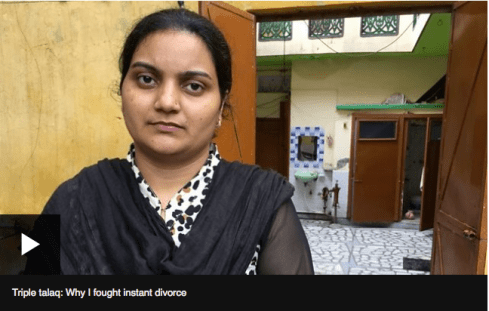
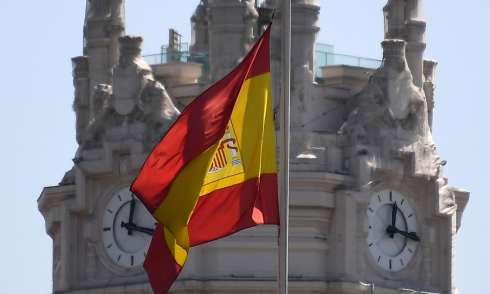 A Spanish flag at half-mast in front of Cibeles Palace in Madrid. Photograph: Gabriel Bouys/AFP/Getty
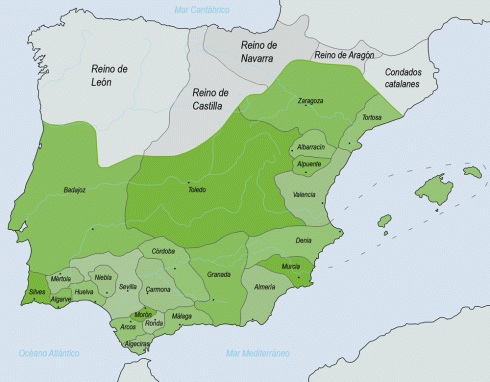 The taifa of the Iberian peninsula in 1031. (By 1248, when Seville fell to Christian siege, the only other major city left in Muslim hands was Granada.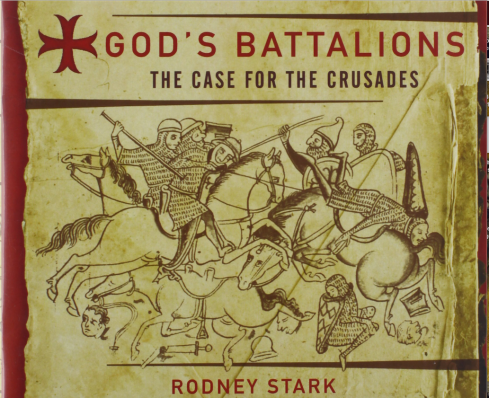
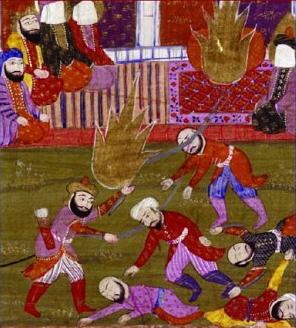 Detail from miniature painting The Prophet, Ali, and the Companions at the Massacre of the Prisoners of the Jewish Tribe of Beni Qurayzah, illustration of a 19th-century text by Muhammad Rafi Bazil. Manuscript now in the British Library.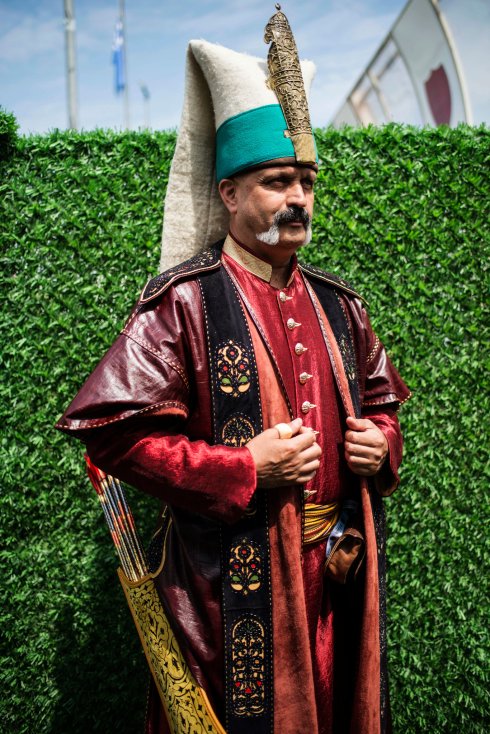
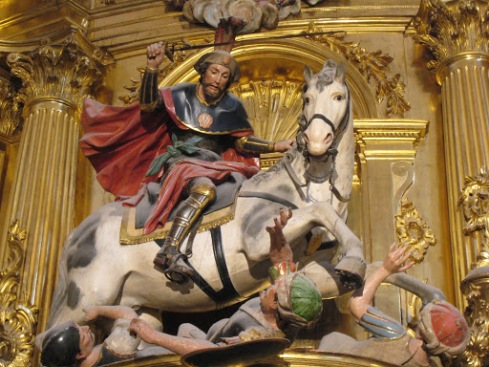


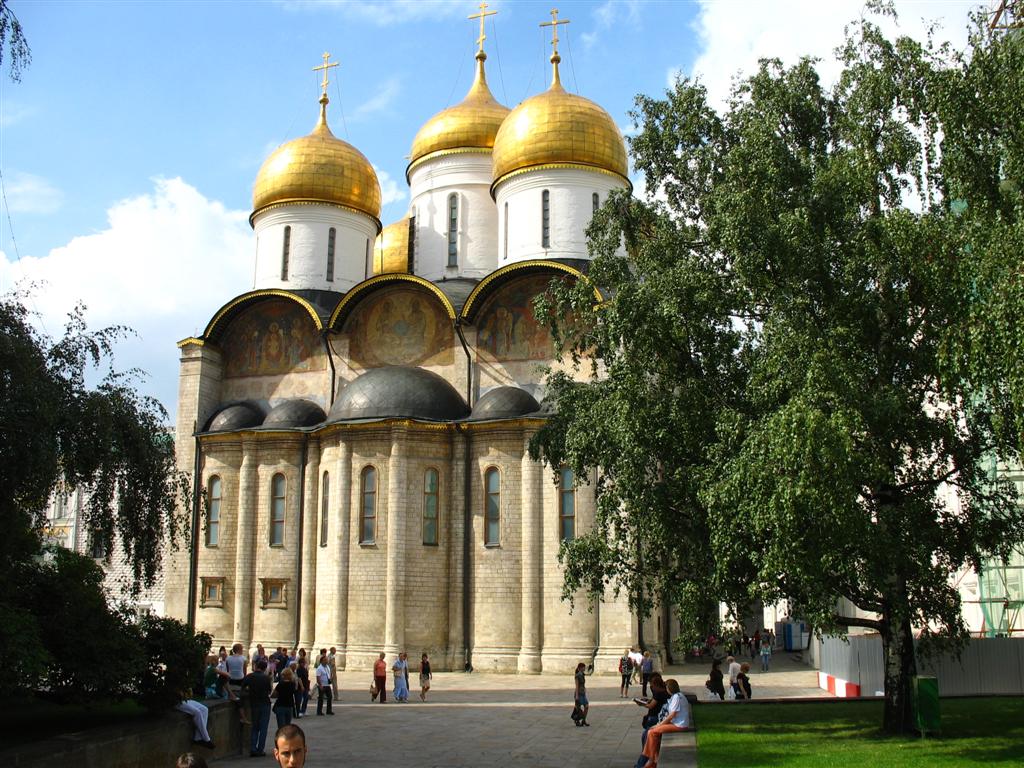
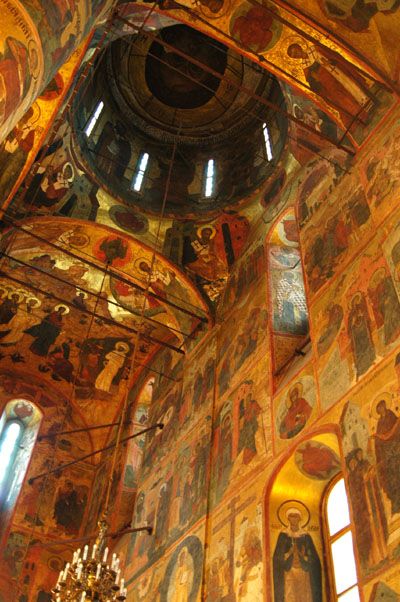
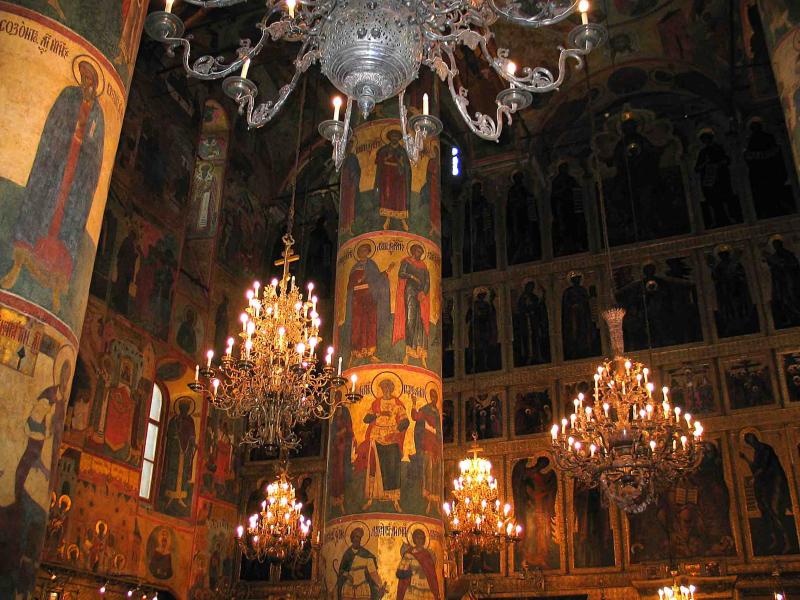


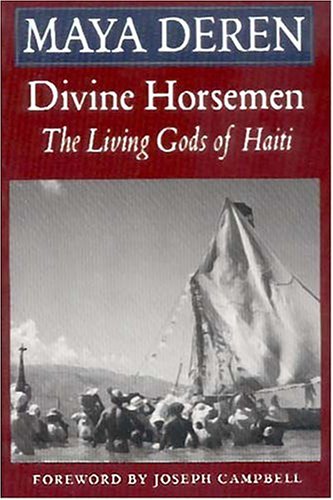
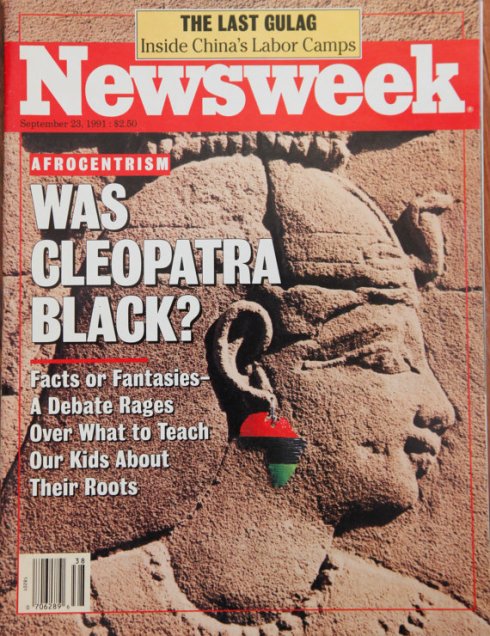
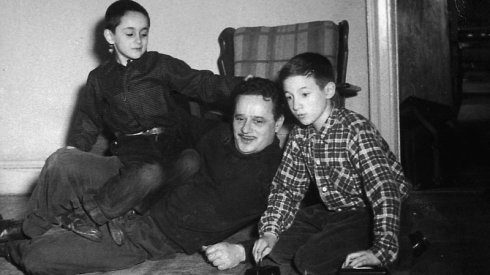 Abel Meeropol watches as his sons, Robert and Michael, play with a train set.



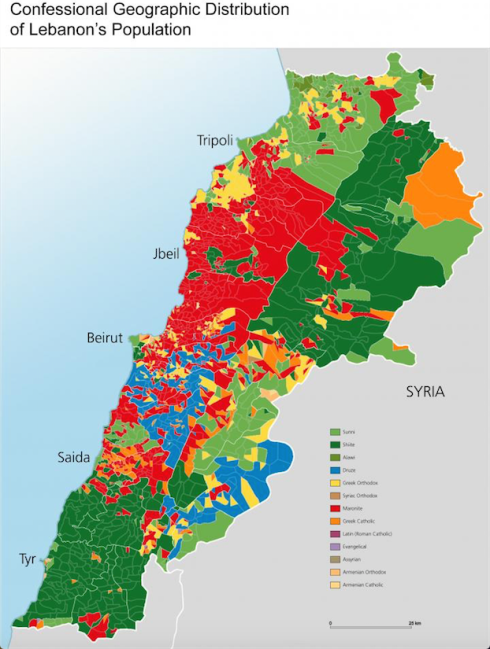
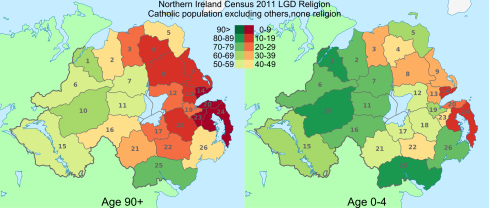 Map of Northern Ireland with distribution of Protestants (red) and Catholics (green) according to age group, showing a clear demographic decline of Protestants.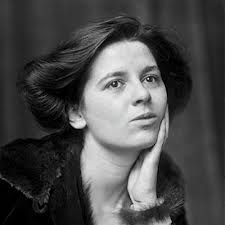
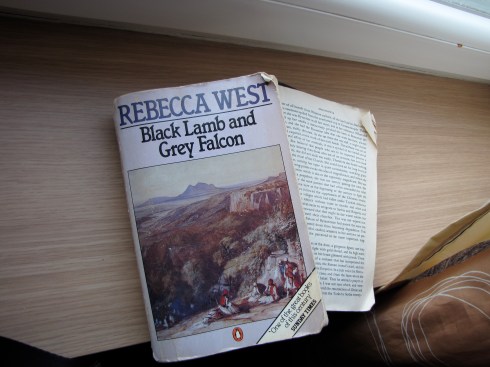
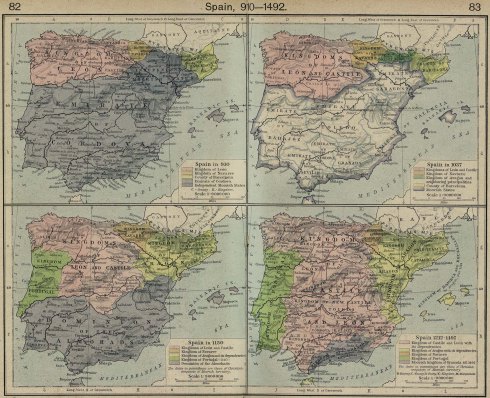
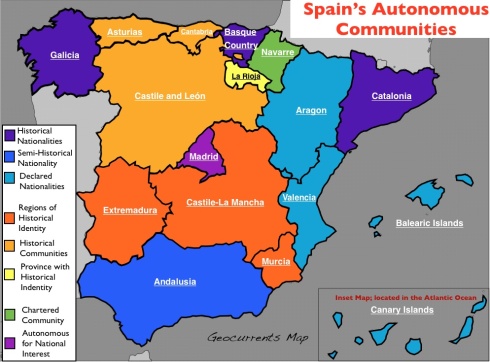
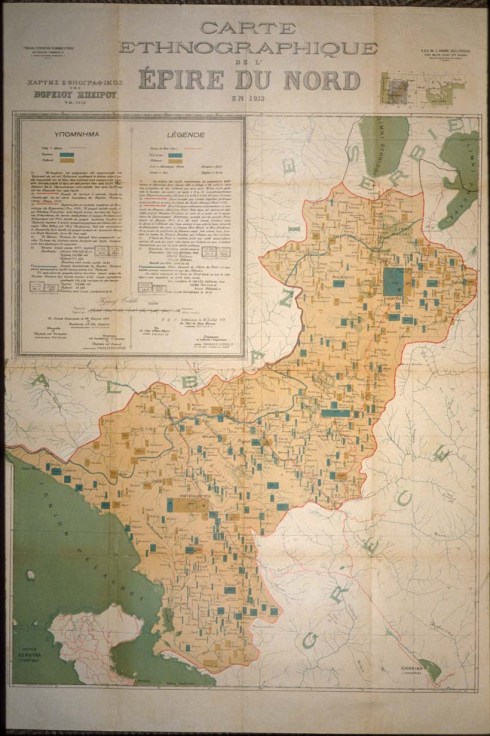
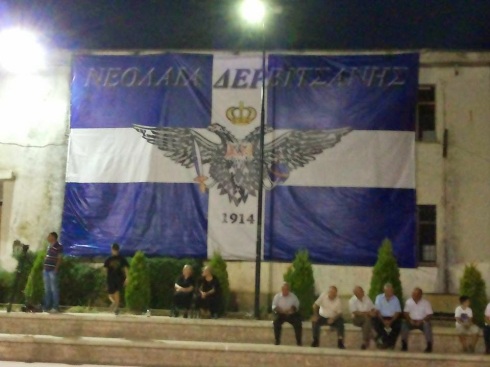
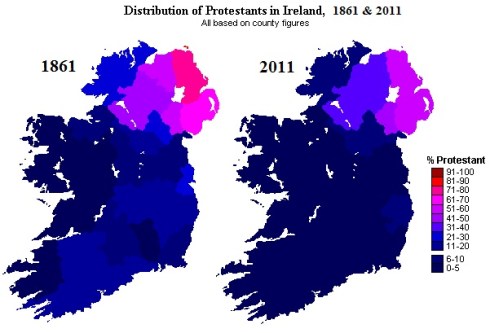
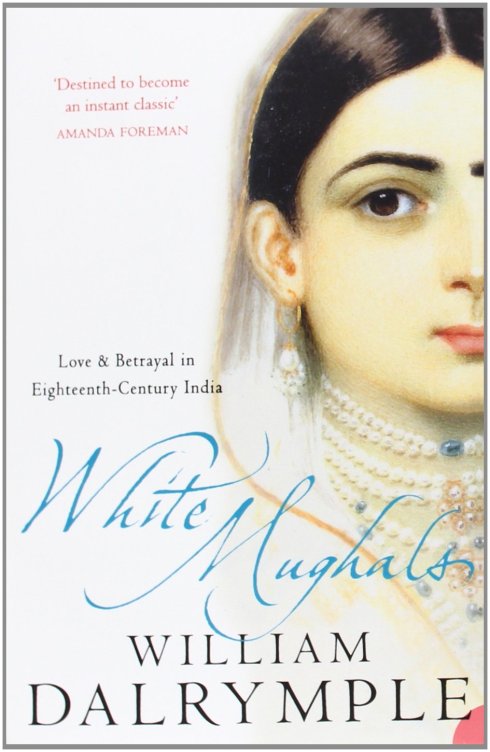
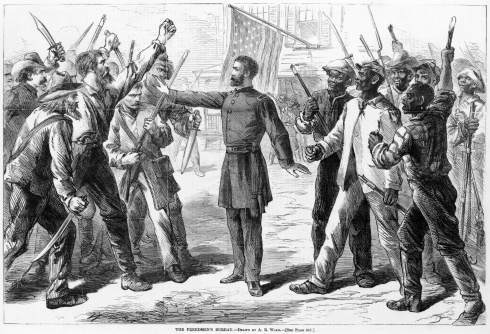 A Bureau agent stands between armed groups of whites and Freedmen in this 1868 sketch from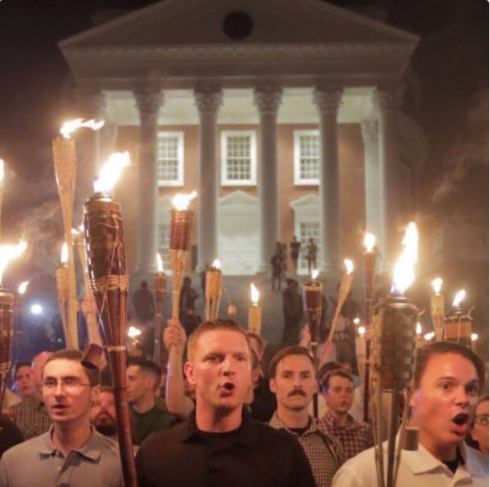
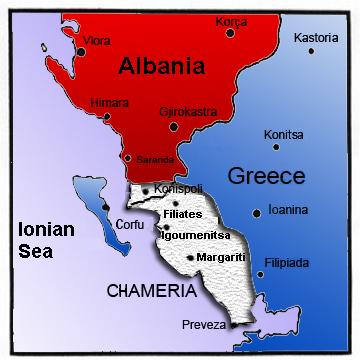
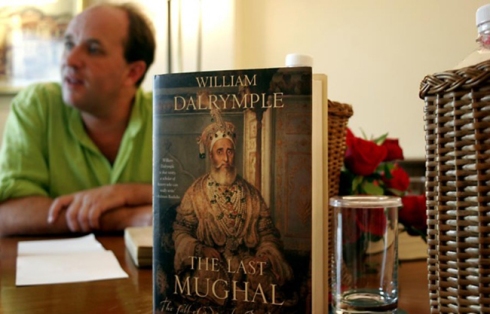
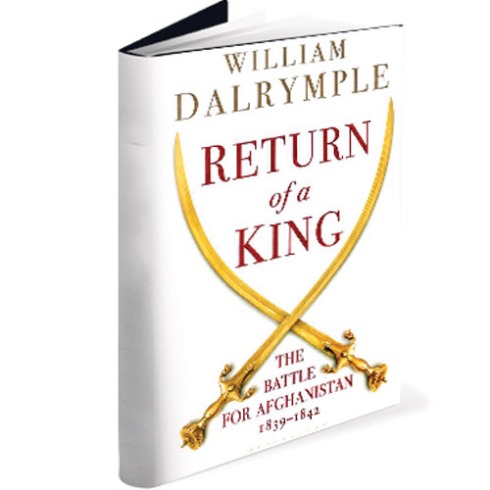


 Turks beating up young conscripts on the Bosporus Bridge, defending their democratic right to elect a dictator who has abolished Turkish democracy for the most part and soon will have the power to go after whatever’s left…Turkish “unity” in action.
 Jadde: from Bosnia to Bengal
AC said…
If one wants to know what classical Arabic music is about, there’s no better example than this song “Al-Atlaal”. Thanks
Jewaira said…
Fanus Ramadan said…
“and alight searching for a wanderer” = “[you seduced me with] the saliva (from a kiss, a very common image in Arabic poetry) that the night-traveler (another common image) thirsts for”“The moments were embers” should be “The procrastination (or dallying or something) was embers”“Why are they still there etc.)”
=
“I haven’t kept her/them (either the beloved or the chains i’m not sure) nor have they spared me.” Ie the meaning is of having lost absolutely everything.“Ive had it with this prison etc.” “How much more (ila ma) captivity, when the world is before us?”“Sure footed walking like a king” king should be “angel”breeze of valleys should be breeze of the hills.
Chris said…
Twosret said…
Op! said…
1. the poem itself (original) differs – albeit slightly – from the lyrics as she sings them
2. Some punctuations are altered giving a completely different meaning to the original poem – hence, you lose the real meaning of the poem.I am happy to point those out or to even provide you with an alternative translation “with an explanation” if you would like.. Just let me know.
Anonymous said…
barbender said…
umelbanat said…
Itje Chodidjah said…
Itje Chodidjah said…