Tag Archives: Egypt

Michael Eric Dayson: “Facing this unadorned hate tears open wounds from atrocities that we have confronted throughout our history.”

14 Aug

In a truly disturbing op-ed piece in the TimesCharlottesville and the Bigotocracy“, Dayson makes the same point I made in Ireland — Gimme a break; I can’t believe this is even up for discussion“.

dyson-master768White nationalists and neo-Nazis demonstrated in Charlottesville, Va., on Saturday. Credit: Edu Bayer for The New York Times

“This bigotocracy overlooks fundamental facts about slavery in this country: that blacks were stolen from their African homeland to toil for no wages in American dirt. When black folk and others point that out, white bigots are aggrieved. They are especially offended when it is argued that slavery changed clothes during Reconstruction and got dressed up as freedom, only to keep menacing black folk as it did during Jim Crow. The bigotocracy is angry that slavery is seen as this nation’s original sin. And yet they remain depressingly and purposefully ignorant of what slavery was, how it happened, what it did to us, how it shaped race and the air and space between white and black folk, and the life and arc of white and black cultures.

“They [white supremacists] cling to a faded Southern aristocracy whose benefits — of alleged white superiority, and moral and intellectual supremacy — trickled down to ordinary whites. If they couldn’t drink from the cup of economic advantage that white elites tasted, at least they could sip what was left of a hateful ideology: at least they weren’t black. [my emphasis] The renowned scholar W.E.B. Du Bois called this alleged sense of superiority the psychic wages of whiteness. President Lyndon Baines Johnson once argued, “If you can convince the lowest white man he’s better than the best colored man, he won’t notice you’re picking his pocket. Hell, give him somebody to look down on, and he’ll empty his pockets for you.””

From my post:

But everybody has to be better than somebody, or else you’re nobody.  So, just like Catalans have to think they’re really Mare-Nostrum-Provençal Iberians (3 ***) and not part of reactionary Black Legend Spain; or Neo-Greeks have to think that they’re better than their Balkan neighbors (especially Albanian “Turks”) because they think they’re the descendants of those Greeks; or the largely lower-middle class, Low Church or Presbyterian or Methodist Brits who fled their socioeconomic status back home and went out to India in the nineteenth century in order to be somebody, had to destroy the modus vivendi that had existed there between Company white-folk and Indians, creating an apartheid and religiously intolerant social system that laid the groundwork for the unbelievable blood-letting of the Indian Rebellion of 1857; or, perhaps history’s greatest example, poor whites in the American South (many, ironically, of Northern Irish Protestant origin) that had to terrorize Black freedmen back into their “place” because the one thing they had over them in the old South’s socioeconomic order, that they weren’t slaves, had been snatched away (and one swift look at the contemporary American political scene shows clear as day indications that they’re, essentially, STILL angry at that demotion in status); or French Algerians couldn’t stomach the idea of living in an independent Algeria where they would be on equal footing with Arab or Berber Algerians.  So Protestant Ulstermen couldn’t tolerate being part of an independent state with these Catholic savages.”

But since we’re talking about the dangerous, delusional myths people need to believe, I might as well take this moment and take one tiny issue with one point in Dyson’s piece:

“This bigotocracy overlooks fundamental facts about slavery in this country: that blacks were stolen from their African homeland to toil for no wages in American dirt.”

People might not like me saying this, or at least think it’s the wrong time.  Oh well…  Of course African slaves were made “to toil for no wages in American dirt.”  But they were not “stolen” from their African homeland; they were bought from other Africans.

Am I blaming the victim?  No.  But if that’s what it seems like, like a lot of people think I’m anti-semitically blaming the victim if I say that the idea that there’s only one God and everybody else’s is false, and on top of it that one God loves you more than anybody else, is bound to get you kinna disliked by those around you sooner or later, then that’s cool.  (Another favorite idea of mine: if Christianity makes Jews so uncomfortable, they shouldn’t have invented it.)

I wrote my M.A. thesis in Latin American Studies on Cuba, particularly on abolition, and the complex interaction between the Cuban wars of independence from Spain, a vicious struggle that lasted three decades from 1868 to 1898 when the United States stepped in and annexed all of Spain’s remaining colonies, and the abolitionist struggle to end both the slave trade and slavery itself (the Spanish slave trade ended in 1868, and slavery itself wasn’t abolished, and then only gradually, until 1886).  In brief, and with clear echoes in the American South, a creole class in Cuba was ambivalent about independence because they were afraid of being over-run by the Black Cuban majority, while a bourgeois pro-independence class didn’t think Cuba could be a democratic republic while so many Cubans were enslaved.  In the end they did what most ex-slave societies did: free the salves and import indentured workers from the English-speaking Caribbean and immigrants from Galicia, marginalizing native Black Cubans, so that all groups together could be kept in a state of seasonal semi-employment which kept wages depressed and created enmity between the ethnic groups that should have felt some socioeconomic solidarity.  Let’s not forget that the “Danza de los millones” — “the Dance of the Millions” — when sugar generated unprecedented wealth for Cuban planters, surpassing anything the nineteenth-century slave economy could produce, and made Cuba one of the richest countries in Latin America, when the beautiful Havana we now see was largely constructed — happened in the 1910s and 20s, decades after abolition.

My thesis involved a heavy dose from my advisor of reading in West African history.  So any one who knows something about that history knows that almost none to absolutely none of the Africans brought to the Western Hemisphere during the slave trade — by some estimates 12 million human beings — were hunted down by slave-hunters Kunta-Kinte-style; it would have been logistically impossible to carry so many people across the Atlantic by that method.  African slaves were bought in huge numbers, in en masse cargo-loads by European slave traders, from West African kingdoms who had enslaved them in the course of warfare between those kingdoms.  There’s a legitimate argument to be made that the European slave trade made warfare between those kingdoms so profitable that conflict between West African states became endemic.  Doesn’t absolve anybody though, not Africans, not Yankee do-gooders, who didn’t need slaves anymore because they had already gotten rich off the trade (as that great song from the musical “1776” points out: “Hail Boston! Hail Charleston! Who stinketh the most?” — see below) and could afford to get moral on the rest of us, not Protestants or Catholics or any Christians, or Muslims for that matter.

Here’s some other un-fun truths:

* Black slavery in the Muslim world never and nowhere reached the scale that it did in the Christian Western Hemisphere, but that may simply and largely be because the agro-industrial infrastructure was not present, not because Islam was more enlightened on the idea of slavery generally.  East Africa supplied the Muslim eastern Mediterranean and Arabian peninsula with plentiful slaves for centuries.  I don’t remember when the Ottomans abolished slavery, but I think it wasn’t even during the Tanzimat, but at some point in the 1908 constitutional revolution, i.e. early twentieth century.  I’m always amused at “religion of peace” Islam apologists who try and make us understand how many passages there are in Muslim scripture that deal with the fair and “humane” way to conduct war, and massacre/execution or enslavement, and I wanna think: “gee, if there are so many passages that deal with the right or wrong way to conduct war, and massacre/execution or enslavement then those things must be mighty important to this religion of peace.”

NO monotheism is innocent; let’s get that through our heads once and for all.

* I hate to burst the bubble of Muhammad Ali or Malcolm X’s souls, or that of the wacked Nation of Islam, but Islam was not the religion of your African ancestors.  (They may not have been called Cassius Clay, but it’s for sure that they weren’t called Muhammad Ali either.)  Islam took a while to penetrate as far south as the coastal regions of West Africa.  And actually, your ancestors almost certainly were the still polytheist inhabitants of the coast who might have been sold to European slave-traders by the newly Muslim kingdoms of the Sahel (currently Boko Haram country), the belt between the Sahara and the coastal jungle/savanna.  If Afro-Americans anywhere in the Western Hemisphere are at all interested in the religion of their ancestors, they should look to Cuban Santería or Brazilian Candomblé or Haitian Voudon to re-establish a historical connection; when I was researching Santería in the 90s in Brooklyn, there was a real culture war between those Black Americans who were attracted to the Cuban religion of Yoruba origins — an amazingly relaxed, open-minded group, since polytheism is an open system, where you got to experience great music and dance, once you got past the practice’s defensive boundaries — and those Black Americans who were recent converts to Islam: puritanical pains-in-the-ass, like most converts, who had learned enough Arabic to call everybody else Kafirs, and who irritated the Senegalese and Malian immigrants in New York to no end.

And Black Southern Baptist or Pentecostalist  Christianity may have originally been the “slaveowner’s religion,” but its “getting the spirit” is a purely African phenomenon that has its emotional-devotional roots in the same parts of West Africa as Santería/Candomblé/Vodoun.  Read the second to last chapter of James Baldwin‘s Go Tell it on the Mountain, which takes place in 1930s (I think) Harlem and then the last chapter of Maya Deren‘s Divine Horsemen on Haitian Vodoun.  They mirror each other totally and both pieces still blow me away whenever I read them with the closest possible artistic representation of deity possession, the most impressive discursive capturing of a completely non-discursive, intangible experience, that I know of.
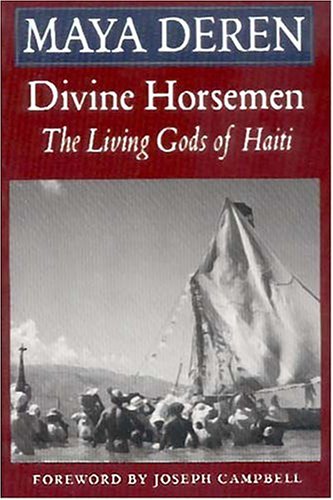
Divine Horsemen

* Another bubble to burst is the “Kwaanza-ism” bubble. No African-American before President Obama had any connection to East Africa, Kenya, or Swahili.  Another geographical term — Africa — turned into a completely artificial cultural construct, as if anything that happens on the African continent is somehow connected to African-Americans.  The BBC is currently running a series on “The History of Africa” — so modest those folks over there — that, as had become common-place but I thought we had moved on from (turns out we haven’t), lumps together Egypt, Libya, Tunisia, Algeria and Morocco into one “African” history instead of placing them in the history of the Greco-Roman-Christian-Arab-Muslim zone.  (Does anyone remember the height of this absurd argument: the Newsweek magazine cover with the picture of an Egyptian relief and the screaming caption: “Was Cleopatra Black?”  To Newsweek‘s credit, however, the article didn’t take its own title seriously and after going into an analysis of the African-American kulturkampf that gave rise to this question, ended simply with: “And Cleopatra?  She was Greek.”)

And does anybody still celebrate Kwaanza?

I always chuckle when people call Constantinople the city on two continents, as if the quarter-mile crossing of the Bosporus into “Asia” is some kind of massive, marked civilizational change, like the people in Kadiköy are Chinese or something because it’s in “Asia.”
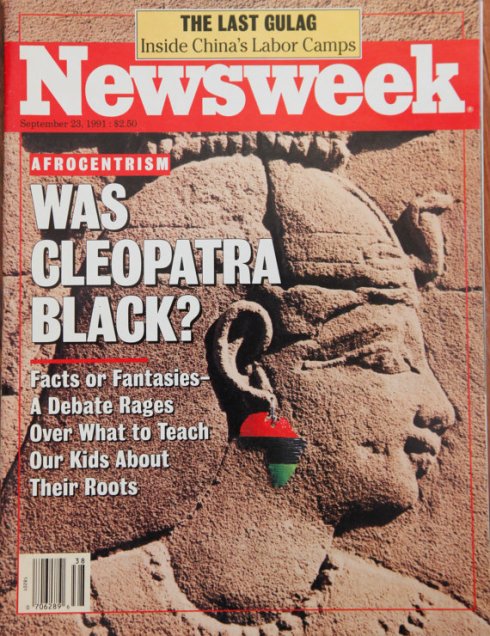
Newsweek Cleopatra

This was a real train-of-thought, free-association post — many think that everything I write is — so thanks for sticking with me.  Below are some videos selections based on my continued free association process:


“Southern trees bear strange fruit
Blood on the leaves and blood at the root
Black bodies swinging in the southern breeze
Strange fruit hanging from the poplar trees.

“Pastoral scene of the gallant south
The bulging eyes and the twisted mouth
Scent of magnolia, sweet and fresh
Then the sudden smell of burning flesh.

“Here is fruit for the crows to pluck
For the rain to gather, for the wind to suck
For the sun to rot, for the trees to drop
Here is a strange and bitter crop.”

“Strange Fruit” was written by Abel Meeropol, a real shayne Yid (beautiful Jew) if there ever was one.  Read the NPR story on him that I’ve linked to.  He also adopted the Rosenbergs‘ children, Robert and Michael, after that closetted scumbag Roy Cohn (a real self-hating Jew and queen if there ever was one) had their parents electrocuted.
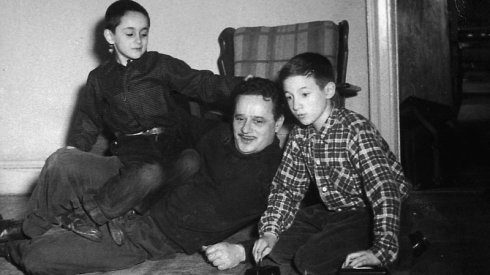
6-abel-meeropol-robert-michael-with-train-set-1954-_wide-3cb2d45bee8bab3d344570df91679295419dbb20-s800-c85Abel Meeropol watches as his sons, Robert and Michael, play with a train set. Courtesy of Robert and Michael Meeropol

And Maya Deren’s beautiful documentary footage of Haitian Vodoun:

See also Talking Heads’ David Byrne’s beautiful documentary, Ilé Aiyé on Bahian Candomblé.  It’s the best introductory “text” I know.  In reference to the dancing, drumming and singing, and animal sacrifice, food, alcohol and tobacco offerings that are meant to bring the god (or orisha in Yoruba) down into possession of his or her devotee, the narration includes the precious line: “They threw a party for the gods — and the gods came.”

And — on a lighter note — the great Celia Cruz below singing “Guantanamera” (you have to watch her move…wasn’t it great when women were allowed to have bodies like that? and if you have any idea what those silly kids who appear at the end are doing, please share) a song based on a poem of José Martí‘s, Cuba’s national poet and a man revered by Cubans of every color and political stripe anywhere.  In the end, Black Cubans played a significant part in the Cuban struggle, personified most in the person of Antonio MaceoAs Celia sings: “Freedom was a trophy won for us by the mambí [largely Black guerilla fighters], with the words of Martí, and the machete of Maceo.”  Yikes.  The Cuban Wars of Independence were truly brutal, often really fought with machetes, the symbol of Afro-Cubans’ cane-cutting bondage become an instrument of rebellion, but Spain’s imperial ego simply did not want to let go of “la siempre fiel” — “the always loyal” — and extremely profitable island.  1898, the year Spain had to give in, was a year that became a byword for disaster for Spaniards, and Cuba was the most lamented loss; there’s still a common expression in Spain: “Más se perdió en Cuba” — “There was more lost in Cuba” — when you want to say that “oh well, things aren’t so bad, not, at least, compared to the loss of Cuba.”  Ironically, Cuban independence was followed by a massive wave of migration to the island from Spain, largely from Galicia and Asturias, so in a weird way Cuba is the most connected to Spain of Latin American countries; a great, very unresearched musicological subject is the reciprocal exchange of musical influences from Cuba to southern Spain, especially for the gypsies of Seville and Cádiz, both port cities that were gateways to the Americas or “the Indies”, the flamenco genre “rumba” being just one indicator.

Celia was an initiated Santería priestess of the Yoruba male fertility deity Changó (you have to move a little in your seat every time you hear or say his name or you see lightning); her performances often contained dance moves associated with Changó (you have to move a little in your seat every time you hear or say his name); whether she was “mounted” by him at the time — which is the expression used to indicate deity possession, de allí Maya Deren’s reference to “horsemen” — is something only she can have known, though mostly devotees have no memory of their trance after they come out of it.  Most salsa singers since have been initiates — have to stay competitive and you only can if the gods are helping you — and the improv vocabulary and dance gestures of salsa performances are heavily derived from Yoruba Santería.   There’s one video of her singing “Quimbara” (below) where I think it’s really happening — the bending down and touching of the floor especially.

Here:

Finally, a NikoBakos memory.  Mambí was a chain of 24-hour Cuban restaurants, Mambí #1, Mambí #2 — I think there were five of them all over once heavily Cuban Washington Heights and Inwood — that used to provide me and friends with some early morning, post-salsa sustenance.  The food, like the neighborhoods, had become pretty Dominican by then, but they still made a mean Cuban sandwich.  All the Cuban restaurants I knew as a kid in New York are now gone, in Manhattan and Brooklyn replaced by Dominican plantain places, and in Queens, by one more mediocre Colombian bakery.  Schiller’s on Rivington Street still makes a good Cuban sandwich, but it’s $18.

Comment: nikobakos@gmail.com


Photo: Oum Kulthum in Paris, 1967 — and footage of three concerts

6 Aug

Um Kulthum in Paris 1967

And some amazing concert footage…

From her apparently once in a lifetime performance of “Howwa Sahih” in Rabat in 1968.  She repeated the famous “Nazra” ( نظرا glance, look) section — or sang forty-seven different variations on the same theme the narration says — covering practically the entire range of modes of Arab classical music; these modes or “makam” function in the same manner, though they don’t correspond exactly, as the makam of Ottoman music, the dastgah of Persian music, the raga of Hindustani classical music, and the echoi of our Greek ecclesiastic music, also do not.  She improvises on one line (for those whose French needs some practice): “A glance [nazra], which I thought was a greeting [ سلام  – salam ], but it passed so furtively” — with endless improvised variations and breathtaking breath control, especially at point like 2:11, that send the audience into paroxysms of ecstatic frenzy.  At one point their cheering makes it impossible for her to continue, but she accepts it with her famous shy smile.  I’ve looked for something that might explain the almost theological poetic importance of the glance, nazra, in Arab and Persian mystical thought, but can’t find anything.

All this is lost, sadly, on those poor souls who don’t understand the monophonic, modal chromaticism of the East, and consider it simply “insufferable wailing.”

And some more, her famous “Enta Omry,”  — “You are my life” — which many connoisseurs don’t consider her best number, but which is the tune that first turned me on to her.  “Anything I saw before my eyes saw you was a life wasted; how can it be counted.  No… No…  You are my life, and its dawn begins with your light.”  from a Paris concert of 1967.

Whoever published this second concert footage added this note from Wiki:

Um Kulthum had a contralto vocal range. She can sing as low as the 2nd octave, and has the ability to sing as high as 8th octave at her vocal peak. Her remarkable ability to produce 14,000 vibrations/second with her vocal cords,unparalleled vocal strength (no commercial mic for singing can withstand its strength forcing her to stand at 1-2meter radius away, her voice’s unique breathtaking beauty over convention made her the most incomparable voice of all times .

And an old post of mine on “El Atlal” (The Ruins), which Anthony Shadid refers to so poignantly in his last book, House of Stone: A Memoir of Home, Family, and a Lost Middle East  on Amazon, and the Times‘ review, with eleven comments  which give you a better sense of the translation of the Arabic original, always a point of contention:

For L. — Les Ruines

26 Feb

THIS post is for a friend here in Paris, with a French translation, of a legendary concert Oum Kalthoum gave in L’Olympia theater in November 1967, where she sang what’s arguably considered her masterpiece, El Atlal, Les Ruines.

This translation issue, especially with music and poetry…  People become nuts.  Read the comments below.  And it’s always the sticklers for most “accuracy” that end up writing the garbled, horrible translations, but they’re kind of like glosses I guess and do help out.  Look below, at the comments; I’ve posted it all from  Music Layoonak; Arabic Song and Translations., an otherwise really cool resource.

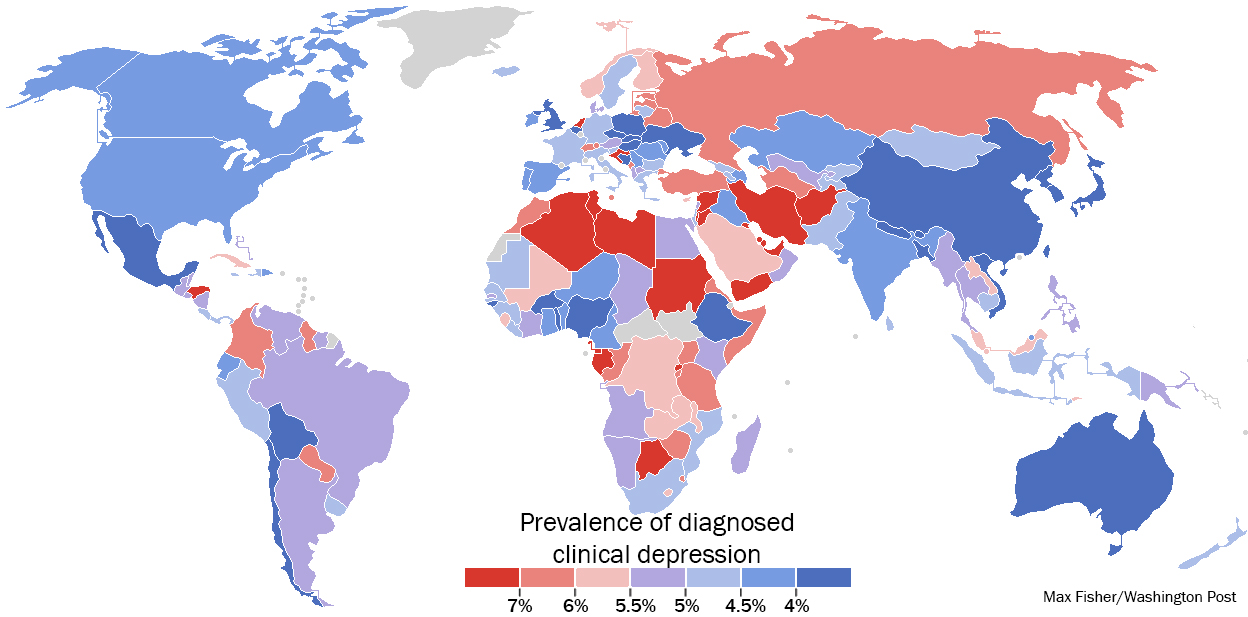
I’ve posted this song before in  “The most depressed country is Afghanistan, where more than one in five people suffer from the disorder.”  (November 13th).  But that only included English and Arabic translation.

Les Ruines

Ne cherche pas, mon ame, a savoir qu’est devenu l’amour
C’etait une citadelle imaginaire qui s’est effondree
Abreuve-moi et trinquons a ses ruines
Conte en mon nom l’histoire
Maintenant que mes larmes ont coule
Racont comment cet amour s’est transforme en passe et pourquoi il m’est devenu un sujet de douleur
Je ne parviens pas a t’oublier
Toi qui m’avais seduite par tes discours si doux et raffines
Tendant ta main vers moi
Comme celle que l’on tend
Par dessus l’onde, a celui qui se noie
Et comme la lumiere que recherche un errant
Mais ou est donc passe cet eclat dans tes yeux
Mon amour, j’avais eu un jour la joie de visiter ton nid
Me voici aujourd’hui oiseau solitaire, roucoulant ma douleur
Tu es devenu suffisant comme un etre capricieux et gate
Tu pratiques l’injustice comme un puissant tyranique
Mon desir de toi me brule l’ame et le temps de ton absence n’est que braises cuisantes

Donne-moi ma liberte et brise mes chaines
Je t’ai tout donne; il ne me reste plus rien
Ah! tu m’avais saigne les poignets par tes chaines
pourquoi les garderai-je alors qu’elles n’ont plus d’effet sur moi
Pourquoi croire a des promesses que tu n’as pas tenues
Je n’accepte plus ta prison
Maintenant que le Monde est a moi
Il est loin mon bien-aime seduisant, tout de fierte, de majeste, et de pudeur
Si sur de lui, comme un roi de beaute et avide de gloire
Exhalant le charme, comme la brise des vallees, agreable a vivre comme les songes de la nuit
J’ai perdu a jamais ta douce compagnie dont le charme rayonnait de splendeur pour moi
Je n’etais qu’un amour a la derive, un papillon perdu qui s’etait approche de toi
Entre nous, la passion etait notre messager et l’ami qui avait fait deborder notre coupe
Y a-t-il jamais eu plus enivres d’amour que nous?
Nous nous etions entoures de tant d’espoir
Nous avions emprunte un chemin eclaire precedes que nous etions par la joie
Nous avons ri comme seuls deux enfants savent le faire et nous avons couru encore plus vite que notre ombre
C’est quand l’ivresse nous quitta que la lucidite revint et que nous nous sommes reveilles
Mai le reveil fut sans illusion
Finis les reves d’un monde imagine, voici venir la nuit, ma seule compagne

Et puis voici la lumiere qui annonce le jour et l’aube dont le ciel s’embrase
Voila la vie reelle, telle que nous la connaissons, avec ces amants qui reprennent chacun son chemin
Toi qui veilles en oubliant les promesses, et te reveilles en t’en souvenant
Sache que lorsqu’une blessure se referme, le souvenir en fait saigner une autre
Il faut apprendre a oublier
Il faut apprendre a effacer les souvenirs
Mon bien-aime, tout est fatalite
Ce n’est pas nous qui faisons notre malheur

Un jour peut-etre nos destins se croiseront, lorsque notre desir de nous rencontrer sera assez fort
S’il arrive alors qu’un de nous renie son amant et que notre rencontre soit celle de deux etrangers
Et si chacun de nous poursuit un chemin different, ne crois pas qu’il s’agira alors de notre choix mais plutot de celui du destin.

The Ruins

My heart, don’t ask where the love has gone
It was a citadel of my imagination that has collapsed
Pour me a drink and let us drink of its ruins
And tell the story on my behalf as long as the tears flow
Tell how that love became past news
And became another story of passion
I haven’t forgotten you
And you seduced me with a sweetly-calling and tender tongue
And a hand extending towards me like a hand stretched out through the waves to a drowning person
You seduced me with the saliva (of a kiss) that a night traveler thirsts for
But where is that light in your eyes?
My darling, I visited your nest one day as a bird of desire singing my pain
You’ve become self-important, spoiled and capricious
And you inflict harm like a powerful tyrant
And my longing for you cauterized my ribs (soul or insides)
And the waiting was like embers in my blood
Give me my freedom, release my hands
Indeed, I’ve given you yours and did not try to retain anything
Ah, your chains have bloodied my wrists
I haven’t kept then nor have they spared me
Why do I keep promises that you do not honor?
When will this captivity end, when the world is before us?
He is far away, my enchanting love
Full of pride, majesty and delicacy
Sure-footed walking like an angel with oppressive beauty and rapacious glory
Redolent of charm like the breeze of the hills
Pleasant to experience like the night’s dreams
I’ve lost forever the charm of your company that radiated brilliantly
I, wandering in love, a bewildered butterfly, approached you
And between us, desire was a messenger and drinking companion that presented the cup to us
Had love seen two as intoxicated as us?
So much hope we had built up around us
And we walked in the moonlit path, joy skipping along ahead of us
And we laughed like two children together
And we ran and raced our shadows
And we became aware after the euphoria and woke up
If only we did not awaken
Wakefulness ruined the dreams of slumber
The night came and the night became my only friend
And then the light was an omen of the sunrise and the dawn was towering over like a conflagration
And then the world was as we know it, with each lover in their own path
Oh sleepless one who slumbers and remembers the promise when you wake up
Know that if a wound begins to recover another wound crops up with the memory
So learn to forget and learn to erase it
My darling everything is fated
It is not by our hands that we make our misfortune
Perhaps one day our fates will cross when our desire to meet is strong enough
For if one friend denies the other and we meet as strangers
And if each of us follows his or her own way
Don’t say it was by our own will
But rather, the will of fate.

الأطلال

يا فؤادي لا تسل أين الهوى كان صرحا من خيال فهوى
اسقني واشرب على أطلاله واروعني طالما الدمع روى
كيف ذاك الحب أمسى خبرا وحديثا من أحاديث الهوى
لست أنساك وقد أغريتني بفم عذب المنادة رقيق ويد
تمد نحوي كيد من خلال الموج مدت لغريق وبريق يظمأ
الساري له أين في عينيك نياك البريق ياحبيبا زرت يوما
أيكه طائر الشوق أغنى ألمي لك إبطاء المذل المنعم وتجني
القادر المحتكم و حنيني لك يكوي أضلعي والتواني جمرات
في دمي أعطني حريتي أطلق يدي ا إنني أعطيتك ما استبقيت
شيئا آه من قيدك أدمى معصمي لم أبقيه وما أبقى عليا
ما احتفاظي بعهود لم تصنها وإلام الأسر والدنيا لد يا أين من
عيني حبيب ساحر فيه عز وجلال وحياء واثق الخطوة يمشي
ملكا ظالم الحسن شهي الكبرياء عبق السحر كأنفاس الربى
ساهم الطرف كأحلام المساء أين مني مجلس أنت به فتنتة تمت
سناء وسنى وأنا حب و قلب هائم وفراش حائر منك دنا ومن
الشوق رسول بيننا ونديم قدم الكاس لنا هل رأى الحب سكارى
مثلنا كم بنينا من خيال حولنا ومشينا في طريق مقمر تثب
الفرحة فبه قلبنا وضحكنا ضحك طفلين معا وعدونا فسبقنا ظلنا
وانتبهنا بعد ما زال الرحيق وأفقنا ليت أنا لانفبق يقظة
طاحت بأحلام الكرى وتولى الليل والليل صديق وإذا النور
نذير طالع وإذا الفجر مطال كالحريق وإذا الدنيا كما تعرفها
وإذ ا الأحباب كل فب طريق أيها الساهر تغفو تذكر العهد
وتصحو وإذا ما الأم جرح جد بالتذكار جرح فتعلم كيف
تنيى وتعلم كيف تمحو يا حبيبي كل شيء بقضاء ما بأيدينا
خلقنا تعساء ربما تجمعنا أقدارنا ذات يوم بعدما عز اللقاء فإذا
انكر خل خله وتلاقينا لقاء الغرباء ومضى كل إلى غايته لاتقل
شئنا فإن الحظ شاء

Lyrics transcription from La7oon.com

11 comments:

AC said…

yes indeed!
If one wants to know what classical Arabic music is about, there’s no better example than this song “Al-Atlaal”. Thanks
January 9, 2008 at 1:48 AM

Jewaira said…

thank you for sharing these translations
March 19, 2008 at 10:04 AM

Fanus Ramadan said…

Thanks very much for the hard work, this web site in general is a fantastic project. I had some suggestions for emendations to the translation. “Water me and let me drink of its ruins” should be “Give me to drink (wine), and drink (imperative) to the ruins.” “And became a matter of the subject of pain” “it became another story of passion”
“and alight searching for a wanderer” = “[you seduced me with] the saliva (from a kiss, a very common image in Arabic poetry) that the night-traveler (another common image) thirsts for”“The moments were embers” should be “The procrastination (or dallying or something) was embers”“Why are they still there etc.)”
=
“I haven’t kept her/them (either the beloved or the chains i’m not sure) nor have they spared me.” Ie the meaning is of having lost absolutely everything.“Ive had it with this prison etc.” “How much more (ila ma) captivity, when the world is before us?”“Sure footed walking like a king” king should be “angel”breeze of valleys should be breeze of the hills.
December 6, 2009 at 8:17 AM

Chris said…

wow, so helpful. thanks a lot!
December 6, 2009 at 10:19 AM

Twosret said…

What a great blog. Thank you ever so much for all your hard work. I am able to share our wonderful poetry with my non-Arab friends. Keep up the good work. Thanks again.
February 2, 2010 at 7:58 PM

Op! said…

Great effort, however, unfortunately I have to rate the translation a little below the expectation – for good reasons.
1. the poem itself (original) differs – albeit slightly – from the lyrics as she sings them
2. Some punctuations are altered giving a completely different meaning to the original poem – hence, you lose the real meaning of the poem.I am happy to point those out or to even provide you with an alternative translation “with an explanation” if you would like.. Just let me know.
April 11, 2010 at 12:29 PM

Anonymous said…

its bird of longing, not bird of desire!
November 28, 2010 at 3:39 PM

barbender said…

I have had this piece of music for a long time and am enchanted by it’s expressivity and gravity but as a non arabic speaker was always super curious as to what she was singing about that drove the masses so mad with adulation. Now I know, thank you very much….
November 6, 2011 at 9:19 AM

umelbanat said…

Thanks you very much i was able to share this wonderful song with one of my non-Arab friends becaus eof your great work!!
December 19, 2011 at 5:58 PM

Itje Chodidjah said…

I have been waiting for this translation for more
January 6, 2012 at 8:21 PM

Itje Chodidjah said…

I havent finished my comment….. I listened to the song when I was a kid as my father loved it. I can sing the song without understanding the meaning but the music can tell that the lyric has strong and deep meaning. Thanks a lot
January 6, 2012 at 8:25 PM

Good old Lebanon

3 Nov

And then you think of the horrible price it’s always had to pay for its openness and cosmopolitanism…screen-shot-2014-10-30-at-3-16-29-pm

Comment: nikobakos@gmail.com

Upon escaping from Greece…

7 Sep

cp-cavafy2

How do you go through the work of the poet whose opus consists of the sharpest and most accurate analysis of Modern Greek identity, and find the poem that displays perhaps the most razor-sharp understanding of all of them? I’ve always known that poet was Cavafy, but I wasn’t looking for that one poem or anything, when, just leafing through his stuff a few days before I left Greece this past July, I came upon one of my favorites, the following. Please have a look first:

Going Back Home from Greece (an unbelievably clumsy translation of the Greek title)

Well, we’re nearly there, Hermippos.
Day after tomorrow, it seems—that’s what the captain said.
At least we’re sailing our seas,
the waters of Cyprus, Syria, and Egypt,
the beloved waters of our home countries.
Why so silent? Ask your heart:
didn’t you too feel happier
the farther we got from Greece?
What’s the point of fooling ourselves?
That would hardly be properly Greek. 
 
It’s time we admitted the truth:
we are Greeks also—what else are we?—
but with Asiatic affections and feelings,
affections and feelings
sometimes alien to Hellenism. 
 
It isn’t right, Hermippos, for us philosophers
to be like some of our petty kings
(remember how we laughed at them
when they used to come to our lectures?)
who through their showy Hellenified exteriors,
Macedonian exteriors (naturally),
let a bit of Arabia peep out now and then,
a bit of Media they can’t keep back.
And to what laughable lengths the fools went
trying to cover it up! 
 
No, that’s not at all right for us.
For Greeks like us that kind of pettiness won’t do.
We must not be ashamed
of the Syrian and Egyptian blood in our veins;
we should really honor it, take pride in it.

— Translated by Edmund Keeley/Philip Sherrard

Επάνοδος από την Ελλάδα

Ώστε κοντεύουμε να φθάσουμ’, Έρμιππε.
Μεθαύριο, θαρρώ· έτσ’ είπε ο πλοίαρχος.
Τουλάχιστον στην θάλασσά μας πλέουμε·
νερά της Κύπρου, της Συρίας, και της Aιγύπτου,
αγαπημένα των πατρίδων μας νερά.
Γιατί έτσι σιωπηλός; Pώτησε την καρδιά σου,
όσο που απ’ την Ελλάδα μακρυνόμεθαν
δεν χαίροσουν και συ; Aξίζει να γελιούμαστε; —
αυτό δεν θα ’ταν βέβαια ελληνοπρεπές. Aς την παραδεχθούμε την αλήθεια πια·
είμεθα Έλληνες κ’ εμείς — τι άλλο είμεθα; —
αλλά με αγάπες και με συγκινήσεις της Aσίας,
αλλά με αγάπες και με συγκινήσεις
που κάποτε ξενίζουν τον Ελληνισμό. Δεν μας ταιριάζει, Έρμιππε, εμάς τους φιλοσόφους
να μοιάζουμε σαν κάτι μικροβασιλείς μας
(θυμάσαι πώς γελούσαμε με δαύτους
σαν επισκέπτονταν τα σπουδαστήριά μας)
που κάτω απ’ το εξωτερικό τους το επιδεικτικά
ελληνοποιημένο, και (τι λόγος!) μακεδονικό,
καμιά Aραβία ξεμυτίζει κάθε τόσο
καμιά Μηδία που δεν περιμαζεύεται,
και με τι κωμικά τεχνάσματα οι καημένοι
πασχίζουν να μη παρατηρηθεί. A όχι δεν ταιριάζουνε σ’ εμάς αυτά.
Σ’ Έλληνας σαν κ’ εμάς δεν κάνουν τέτοιες μικροπρέπειες.
Το αίμα της Συρίας και της Aιγύπτου
που ρέει μες στες φλέβες μας να μη ντραπούμε,
να το τιμήσουμε και να το καυχηθούμε.

What gives this poem such pride of place as an analysis of Greek identity? For me, it starts with the simple joy both passengers feel as they’re arriving home – not approaching Greece, but leaving it. “Upon Escaping from Greece” would be my choice for the title’s English translation, because it’s clearly an experience of suffocation that the two friends have experienced that has started to lighten up for them as they cruise east through the breezy waters of the Mediterranean.
Cavafy has become an object of a resurgent cult in Greece, partly due to last year’s 150-year celebration (he was born in 1863), that’s a kind of an “emperor’s-new-clothes” phenomenon for me; not because his new clothes aren’t real, but I feel that few Greeks actually know what it is they’re suppose to be liking so much. I much prefer people who just say up front that they don’t like him. He’s “childish” they say, in response to his prose-like, early modernist experiments. These are the people who like their poetry with a capital “P”; they want it to rhyme: “φεγγαράκι μου λαμπρό…” and they want it to have epic scale heroics and ‘the thousands dead under the axles’ and ‘the living giving their blood’ in the heroic deed of ‘making the sun turn,’ along with some myrtle and oleander and jasmine thrown in for Aegean effect. (What if you’re from Epiros and you don’t know from oleander and jasmine, just tsouknida and pournari?) Others only like a very emphatically stressed “some” of his poems: these are the ones turned off by his sexuality, but who feel they can’t say so openly in 2014 – or to me. (And the degree to which that whole part of his work, a good half, was ignored by the official festivities – they wanted only “Ithaka” or “Waiting for the Barbarians” or “The City” — was amazing.*) The Messenger for example, found a publisher for his paternal grandfather’s, my great-grand-uncle on my mother’s side, fascinating memoirs, which span the whole period from the late nineteenth century and the end of Ottoman rule to WWII. Except his grandfather met a Jewish guy who screwed him over when he was a young immigrant in New York in the 20s and he included the unfortunate phrase: “Hitler was right for doing what he did to them.”**  The publisher thought maybe that line should be cut. But the Messenger stuck to his cast-iron principles and insisted it be left as is, because it would be “censorship” to remove it.  Hardly an upholder of the most liberal sentiments on issues of that kind, I have a feeling that if the comment hadn’t been about Jews, he wouldn’t have minded the censorship so much. Just a few months earlier, for example, he hadn’t thought it was “censorship” to cut a slightly too homoerotic line from a Cavafy poem he read at his father’s funeral, for fear that our landsmen, our chorianoi, would be scandalized.
These elements and others: that Cavafy preferred the tragic dénouement to the epic climax; the unconsummated to the fulfilled; that he preferred the coded to the open and disclosed, and not out of choice; but learning to love what fate had made him, he learned to love the beauty of code – its poetry — the furtive touch over some cheap handkerchiefs; that he loved the ethnically and culturally and religiously mixed margins of Greek history and the poignancy of characters who had to straddle those margins and did not write a single poem about its Attic glory days (who are all these half-breed Egyptians and Parthians and Jews and other exotic anatolites he’s always making us read about anyway? Where’s Pericles and Aristotle?); that he understood life and humanity as fundamentally amoral, and morality as a convenient weapon to be used against the unfortunate few or often just a bad joke. All this did not do much to endear him to his contemporaries, along with the fact that he famously disliked Greece and especially Athens (the latter kind of unfair in my opinion: Athens at that time must’ve been at its most beautiful and charming), and the straight, homophobic white boys of the Generation of the ‘30s in particular, despite Seferis’ famous eulogy, had no time for him. The most vehement, Theotokas (unfortunately, one of my favorite Greek writers otherwise) scathingly declared Cavafy, in his Free Spirit, a “dead end” (a common trope, whether conscious or not: the gay man begets no issue and is thus fundamentally allied with death); that his modernism was an experiment that had been taken to its logical conclusion and that the Alexandrian was now a decadent (same difference), a point of departure for what Greek letters should move on from next and not a road open for them to continue down.

That right there is the grand and egregious error. Because Greek culture and identity – in a way that makes any sense to who we are today – simply didn’t exist until the Hellenistic (and then Roman/Byzantine) periods that Cavafy chose, almost exclusively, to write about in his historical poems. The conglomeration of Indo-European tribal units who all spoke dialects of similar languages and had started coalescing into larger city-state forms of political organization by the mid-first millennium B.C. have nothing to do with us. They may have started calling themselves “Hellenes,” but let’s not forget that the Iliad does not contain one, single, blessed mention of that holy word, and was compiled only a century-and-a- half or so before the Golden Periclean Age we’re so obsessed with.

It was because he was fascinated with the true origins of Greek identity, the cauldron of cultural mixture that Alexander created that later became condensed into a more distilled Greek-speaking, Orthodox idea, that Cavafy wrote about those periods so widely and studied them so deeply. And being from such deep aristocratic Constantinopolitan roots and an Alexandrian, how could he not have felt that basic idea on a gut level.

This is another reason the mention of the words “Macedonia” and “Alexander” makes my hair stand on end. The Macedonians (by which I mean Slav Macedonians) are ridiculous in their attempt to appropriate Alexander as a phenomenon of their own culture, though many observers have written about how this conscious policy of “antikvatsiya” (“antiquization”) on the Macedonian government’s part is, partly, a response to Greek intransigence on every other grounds. But you can see from how Greeks respond to Macedonian moves that Greeks don’t get Alexander either. Alexander is not a culminating point of Hellenic history, where the great hero brought Hellenic civilization to the “borders of India.” Alexander is not even a Greek herohe very early in his career quickly became déraciné, as Mary Renault keenly observed. Alexander is where Greek history starts. It’s all really the other way around. Alexander is what brought the East, and its incomparably greater and older civilizational achievements, to us. He drove us deep into contact with that wider world, cementing what had always been our bonds to those lands and those peoples he grew to love so much, and giving us as much in return, actually more, than what we gave them. He created the great creolized cultural space that a universal, cosmopolitan Greek identity was first born in and that later – when the name for “universal, cosmopolitan identity” changed, due to political circumstances, from “Greek” to “Roman,” – changed along with it, but which left the Helladic peninsula — or “the Hellenic” generally — behind permanently as a focus of any kind. Until the twentieth century.

Alexander Renault

Hermippos and his friend, Greeks going home to Antioch in Syria or Seleucia in Mesopotamia, can’t be Greek in Greece. It suffocates them. They don’t fit into that nonsense, antiquarian straightjacket. It’s “beneath” them, as Greeks, to reject the wider world that they’ve long been an intimate and inseparable part of. Greek means cosmopolitan to them and they can’t be Greeks without that quality. It would be the most provincial thing for them to do, to act like provincials who try to hide their “easterness”:

“…like some of our petty kings
(remember how we laughed at them
when they used to come to our lectures?)
who through their showy Hellenified exteriors,
Macedonian exteriors (naturally),
let a bit of Arabia peep out now and then,
a bit of Media they can’t keep back.
And to what laughable lengths the fools went
trying to cover it up!”

Eastern Mediterranean(click)

The nation-state is bound up inseparably with provincialness. And narrowed tribalism. And provincials hide. Not true Greek men. Cavafy’s “petty kings” are the Neo-Greek bourgeoisie, from the statelet’s origins down to our day, with their still immovable disdain for the East, who don their ancient fineries and try to make the world call them Hellenes and have no clue how ridiculous they’re being. Provincials dissimulate – not true Greek men — and that dissimulation has been the main thread of Neo-Greek culture since the late eighteenth century, so much so that all perspective has been lost. Hermippos and his buddy aren’t provincials. They’re Greek alright – from some of the richest, most sophisticated and Greekest cities in the world; but they understand the larger cultural context they’re a part of, and they’re too supremely secure in their Greekness to put down the Egypt and Syria that ‘flow in their veins.’ Greece tries to take that away from them. I imagine the Athens they had to go study at as a kind of tired old Cambridge, MA, still resting on its now dried-up laurels. But they’re too Greek to let Greece do that to them. Sorry to get repetitive. It’s an attempt to make the paradox – a wholly healthy and natural one – sink in.

Greece still tries to do that to you. And in the crisis mode it’s in today, it tries even harder because its sad inhabitants’ perspectives have become narrower and narrower to the point where they see nothing of the rest of the world and there’s simply very little language left you can share with them. “Η φτώχεια φέρνει γκρίνια,” the Greek says – “poverty makes for kvetching” — and though many people I know have faced the current crisis with the best kind of Greek dignity and humor in the face of adversity, too many others have lapsed back into ideological craziness, or just a frustrated lashing-out bitterness, or were always there but kept it hidden and now think that it’s more okay to express things openly; it’s hard to tell which.

One friend or relative has become a Golden Dawn apologist if not supporter: “What’s a young man who loves his country supposed to do?” I dunno; but half of Dostoevsky is about what to do with the unguided idealism of strong young men and phenomena like Golden Dawn wasn’t one of his answers; he strictly warned us against them, in fact. Another wants to take a DNA test to make sure he has no Albanian genes: actually believes such a thing exists – a chromosome for Albanian-ness and a test that will detect it. And this is one of those uncomfortable situations we’ve all been in where this is coming from the spouse of a good friend, so you have to keep your silence and you can’t just say: “That’s nice _______, Hitler and the Nazis were into that kind of thing too.” If I could I would’ve also asked if he wanted to see my DNA chart too, which is probably chock full of “Albanian-ness” and if he would then feel the need to maybe keep me away from his daughters. Another is still obsessing, as we go on twenty-five years since the break-up of Yugoslavia, on the “Macedonian issue.”*** And after hours of mind-bogglingly pointless conversation – “It is useless to attempt to reason a man out of a thing he was never reasoned into,” said Jonathan Swift — you take a step back and realize that that’s all that’s ever mattered to this guy. The hundreds of thousands dead produced by the Yugoslav disaster, the millions displaced, the destruction of the last part of the former Ottoman sphere where there was still some hope of survival for a multi-ethnic society, the greatest bloodletting in Europe since WWII, right on our doorstep…  He doesn’t give two shits, nor has he let one blessed thought or idea on that series of calamities occupy even one of his brain cells for a second. All he cares about is the “Macedonian Issue.” Twenty-five f*cking years later. And he doesn’t find such narcissism the least bit obscene.  “The world is burning, και το μ**νί της Χάιδως χτενίζεται.”  I won’t translate.

Whether or not they’re becoming more extreme or just showing their true colors more, it’s certain that I’ve become more radical – not in my ideological positions, which are what they always were – but in my inability to tolerate their stupidity and growing narrow-mindedness. I’m always ready to leave Greece when the time comes, but this time it had become truly unbearable. There were just too many people that it had become too uncomfortable to even be around. And stumbling on this half-forgotten Cavafy poem was no accident I feel.

And so I took that great big breath of relief that Hermippos and his friend took on the deck of their boat as the shores of Cyprus came into view when I myself left for Serbia back in July. I had to get out of this place – and disassociate myself from it and its inhabitants — if the fact that I’m Greek was going to continue to be to at all tolerable to me. I’ll always love arriving; with the new flight path south over the Attic midlands passing right over the town and beach — over the very apartment building — where I spent my childhood summers, I’ll always choke up a little at the sight of the brown hills of Attica. But when I’m ready to leave, I gotta go – and fast – and this year more urgently than any other.

And I can see myself spending more and more of my future time in “Greece” in Albania with my relatives – “deep” Greeks who don’t have the ball-and-chain of a nation-state tied around their ankles; in Istanbul – with smart young Greek and Turkish kids who are trying to do something intelligent and productive about our relationship; maybe in Cyprus – which Kosmas Polites called the last surviving remnant of his beloved lost Ionia and where I have friends to whom I owe long over-due visits; or just here in Queens — where every block and street corner and subway stop and church bears a piece of my Roman-ness.

Because Greece, man… Greece just cramps my Greekness.

Egypte, Alexandrie, le front de merAlexandria (click)

******************************************************************************************************************************************************************************************************************

* And the thing is, if you ignore his erotic poems, I find it hard to believe that most people can even understand, much less really appreciate, the rest — the historical poems.  Who understands the religious and cultural sociology of fourth-century Alexandria enough to have the proper context to apprehend all of “Myres: Alexandria, AD 340”?  Who the hell knows where Commagene is?  Or who Alexander Jannaios was?  Or what a handsome Jewish prince is doing with the name Aristovoulos?  Or why he was murdered and “those sluts Kypros and Salome” are now gloating in private?

** It’s amazing.  And disturbing.  Anti-semitism and the extent of its popularization and the accessibility of its language.  Not only can one accusation of unethicalness — and from a Greek at that! — be used to tar a whole people, but Jews are the only people with whom that one charge leads straight to the gas chambers so easily, in people’s minds and on people’s tongues.  Not “what a sleazebag.”  Or “what a nation of sleazebags.”  But straight to “Hitler was right…”

*** Yes.  Believe it or not.  The “Macedonian” “issue.”  More on that to come.

Comment: nikobakos@gmail.com

Jesus, guys, I thought my readership was a little bit more literate than this.

12 Jun

CavafyC.P. Cavafy

Where do the lines: Οι άνθρωποι αυτοί ήσαν μια κάποια λύσις.” “Those people were a solution of some kind. come from?!?!  That came at the end of my “‘Magnificent Turks’ and the origins of this blog” post?!?!

They’re from Cavafy (above), from his poem “Περιμένοντας τους Bαρβάρους” or “Waiting for the Barbarians.”  Please…  Let’s get our faces out of the screens every now and then and sit down with a book of poetry.

Τραγικό...


Here are the full texts of Keeley’s English translation  and the original Greek below:


Waiting for the Barbarians

What are we waiting for, assembled in the forum?
 
            The barbarians are due here today.
Why isn’t anything happening in the senate?
Why do the senators sit there without legislating?
           
            Because the barbarians are coming today.
            What laws can the senators make now?
            Once the barbarians are here, they’ll do the legislating.
 
Why did our emperor get up so early,
and why is he sitting at the city’s main gate
on his throne, in state, wearing the crown?
 
            Because the barbarians are coming today
            and the emperor is waiting to receive their leader.
            He has even prepared a scroll to give them,
            replete with titles, with imposing names.
 
Why have our two consuls and praetors come out today
wearing their embroidered, their scarlet togas?
Why have they put on bracelets with so many amethysts,
and rings sparkling with magnificent emeralds?
Why are they carrying elegant canes
beautifully worked in silver and gold?
 
            Because the barbarians are coming today
            and things like that dazzle the barbarians.
 
Why don’t our distinguished orators come forward as usual
to make their speeches, say what they have to say?
 
            Because the barbarians are coming today
            and they’re bored by rhetoric and public speaking.

Why this sudden restlessness, this confusion?
(How serious people’s faces have become.)
Why are the streets and squares emptying so rapidly,
everyone going home so lost in thought?
 
            Because night has fallen and the barbarians have not come.
            And some who have just returned from the border say
            there are no barbarians any longer.
 
And now, what’s going to happen to us without barbarians?
They were, those people, a kind of solution.

Translated by Edmund Keeley/Philip Sherrard 

Περιμένοντας τους Bαρβάρους

— Τι περιμένουμε στην αγορά συναθροισμένοι;

        Είναι οι βάρβαροι να φθάσουν σήμερα.

— Γιατί μέσα στην Σύγκλητο μια τέτοια απραξία;
  Τι κάθοντ’ οι Συγκλητικοί και δεν νομοθετούνε;

        Γιατί οι βάρβαροι θα φθάσουν σήμερα.
        Τι νόμους πια θα κάμουν οι Συγκλητικοί;
        Οι βάρβαροι σαν έλθουν θα νομοθετήσουν.

—Γιατί ο αυτοκράτωρ μας τόσο πρωί σηκώθη,
 και κάθεται στης πόλεως την πιο μεγάλη πύλη
 στον θρόνο επάνω, επίσημος, φορώντας την κορώνα;

        Γιατί οι βάρβαροι θα φθάσουν σήμερα.
        Κι ο αυτοκράτωρ περιμένει να δεχθεί
        τον αρχηγό τους. Μάλιστα ετοίμασε
        για να τον δώσει μια περγαμηνή. Εκεί
        τον έγραψε τίτλους πολλούς κι ονόματα.

— Γιατί οι δυο μας ύπατοι κ’ οι πραίτορες εβγήκαν
 σήμερα με τες κόκκινες, τες κεντημένες τόγες·
 γιατί βραχιόλια φόρεσαν με τόσους αμεθύστους,
 και δαχτυλίδια με λαμπρά, γυαλιστερά σμαράγδια·
 γιατί να πιάσουν σήμερα πολύτιμα μπαστούνια
 μ’ ασήμια και μαλάματα έκτακτα σκαλιγμένα;

        Γιατί οι βάρβαροι θα φθάσουν σήμερα·
        και τέτοια πράγματα θαμπώνουν τους βαρβάρους.

—Γιατί κ’ οι άξιοι ρήτορες δεν έρχονται σαν πάντα
 να βγάλουνε τους λόγους τους, να πούνε τα δικά τους;

        Γιατί οι βάρβαροι θα φθάσουν σήμερα·
        κι αυτοί βαρυούντ’ ευφράδειες και δημηγορίες.

— Γιατί ν’ αρχίσει μονομιάς αυτή η ανησυχία
 κ’ η σύγχυσις. (Τα πρόσωπα τι σοβαρά που εγίναν).
 Γιατί αδειάζουν γρήγορα οι δρόμοι κ’ η πλατέες,
 κι όλοι γυρνούν στα σπίτια τους πολύ συλλογισμένοι;

        Γιατί ενύχτωσε κ’ οι βάρβαροι δεν ήλθαν.
        Και μερικοί έφθασαν απ’ τα σύνορα,
        και είπανε πως βάρβαροι πια δεν υπάρχουν.

                               __

 Και τώρα τι θα γένουμε χωρίς βαρβάρους.
 Οι άνθρωποι αυτοί ήσαν μια κάποια λύσις.


Comment: nikobakos@gmail.com

The adventures of me and my nephew Vangeli in C-town

2 Jun

IMG_0779

(click)

This is my nephew Vangeli from Tirana, who came and spent an extended weekend with me in Istanbul last week, eating a simit in the Staurodromi.  When I started this blog I said to myself I wasn’t going to include personal names.  When you represent something ideologically problematic for me, you’ll usually be described by a repeated sociological profile: “the Athenian thirty-something” or you’ll get a moniker all your own; in any event, if you read regularly, you’ll know who you are.  But the warmth of certain experiences I had with my family in my village this past spring has made me want to “call their names,” both because these are people I learned to love a great deal in a very short amount of time and to do them the honor, even if these experiences are not that interesting for the objective reader.  It’s obvious that it’s for them.

Vangeli is my second cousin Calliope’s eldest son. (See Easter Eggs… because, believe me, you don’t want me to run through all the lineages each time and I can’t do it either.)  When I first went to Derviçani in 1992, after Albania had safely opened up for good, Calliope was already living in Jiannena and we met there first, so we could get to know each other before going into Albania together.  When we arrived in the village for the first time, hers was the face I was constantly looking for as a reference point among the throngs of relatives who were constantly surrounding me.  It was her and my cousin Panto, Pantele, who is still my official bodyguard everywhere I go in the village, telling me who’s who since I can’t keep track, taking me everywhere I want to go, counting the tsipoura (raki) I have at every visit, so they don’t add up to too many in one afternoon, etc.  His mother, my Kako Poly (Polyxene), is a saintly woman who made great sacrifices caring for my grandmother in her final years under conditions of great material deprivation for all.  In video we have of my grandmother, taken by complete fluke by a cousin of my mother’s who went to Albania in 1988, a year before my grandmother died, as part of a Greek commercial exchange delegation — these groups were always taken to Derviçani as it was the showcase Greek minority village in communist times — my grandmother says: Να, αυτή είναι η Πόλυ, μ’έχει επάνω της… — “Here, this is Poly, she (lit.) carries me.”

IMG_0050This is Calliope, with her two sons Vasili (left) and Vangeli (right) on Easter night in church (click).  She’s an extraordinary and extraordinarily loveable woman: a great housewife, a competent businesswoman, funny, generous, always smiling, as flirtatious and open as a teenage girl — she’s one of my great relative-loves.  Here she is below at the Monastery on Easter Monday, having just deposited a huge piece of lamb shoulder — no, actually, a lamb shoulder — on a paper towel in front of me, cold and glistening with shiny white fat like some Homeric offering.  My father always loved cold lamb, and would never let my mother reheat it, because it reminded him of the Easter dance at the Monastery.  This is a typical pose to catch her in below, because her innate generosity is always giving something to someone.  (Click)

IMG_0119I hadn’t met Vangeli before, and if I had he would’ve been a baby.  But in church that night, when we were introduced, he said to me, in his classic Aries way — breezy and confident: “Actually, I don’t know you, but Christos Aneste!”  And my Aries replied: “I don’t know you either, but Alethos Aneste!” and I knew right then we’d hit it off.  We talked the next day at the dance; I invested some of the best days of this trip visiting them in Tirana on my way back from Montenegro, and of all the people who said they would come to Istanbul to see me while I was here, I knew he was the only one who would actually do it.  We locked horns on titles or terms of address for a while; I am literally twice his age, fifty and twenty-five, but we hang out like cousins and that’s what he used to call me, whereas I want to be called “uncle.”  He wasn’t having it.  (I have a similar problem with some nephews in New York on my mother’s side.)  For a while we agreed on “şoku,” which is “buddy” in Albanian but also meant “comrade” in communist times, so that didn’t last very long, nor did the Russian “tovarishch” which means the same thing.  Finally, when he got to Istanbul, he heard some guy addressing another as “abi” — big brother, technically, but often just “mate” — which they use in Albanian as well, so it’s been “abi” since then and that pretty much describes how we relate to each other. 

I’m an only child.  Calliope is like the big sister I never had and it’d be hard to imagine a more loving one.  But my parents also had a first son that died when he was a baby, so, even more deeply, I’ve always felt literally haunted by a living presence and desperate absence at once, and by an entirely metaphysical need for a being that I feel is out there to incarnate itself again as an older brother.  But being an older brother to someone else is just as gratifying, especially to a kid like Vangeli.

Because he’s good at his role and he did me super-proud here.  He studied computer engineering in Birmingham and speaks flawless English, dresses impeccably, works for a company that sends him to Italy on a regular basis, so he speaks some passable Italian as well.  (Some fashion-victim friend of mine from New York saw him dancing in the second video here and wrote to ask me who the funky kid with the curly hair and the Prada glasses was — she had recognized the Prada frames from five-thousand miles away…)  We went out for a classic Istanbul fish-and-rakı dinner at a really good place in Cankurtaran in the old city; he immediately recognized that this was not just any meal, but that he was in the presence of a certain ritual to be respected, like Japanese kaiseki, and he acted accordingly.  He was put off by the anise in the rakı at first — we drink ours unflavoured in Epiros — but then realized that Turkish rakı is not the cough-syrup by-product that Greek ouzo is and enjoyed it thoroughly.  He had no negative preconceptions of Turks and Turkey and he never, never — not once — tried to insert one of those slimey negative innuendos about Turkey into the conversation that almost every Greek tries to do when he’s with Turks.  He just listened to the two female friends we went out with, asked questions, tried to learn, gave his opinion, talked to them about Albania and Argyrocastro and Tirana and our families and Britain and anything else you could imagine, and charmed the skirts off of both of them.

He wanted to see everything.  I hate going into the old city.  I find it depressing, crowded.  I love the mosques, but the Byzantine monuments discourage and sadden and, sometimes, anger me, and I prefer to not be confronted with the interface between the two and just stay here in Pera, expelled from the walls in my gavuriko varoşi.  Also, getting there is alright, but getting back means trudging up and down and then up and down again some incredibly pedestrian-unfriendly streets and intersections and underpasses, unless you take some sleazy Sultan Ahmet cabdriver whose meter suddenly races to 100 lira by the time you get from Hagia Sophia to Pera.*  But for Vangeli I went.  And we saw everything there was to see.  We even stumbled upon the Rüstem Paşa mosque, which if you ever asked me to find, I never could.  We sat in the Süleymaniye for an hour and he listened to me talk about why I like sitting in mosques and watching Muslim prayer — Istanbul was the first time he had been inside one — and find them so calming and peaceful.

Rustem pasa tiles

Suleymaniyeimg_redirect.phpThe tiles of Rüstem Paşa above and the interior of the Süleymaniye (click)

We covered every inch of Topkapı, where I hadn’t been in years and where I was re-dazzled by that Ottoman sense of elegance and comfort that Rebecca West speaks of so often.  He was interested in the oddest things.  His favorite palace was Beylerbeyi, as it is mine, but he was fascinated by the story of the French empress Eugénie, born Eugenia de Montijo of the highest Andalusian aristocracy, who extended her state visit there for so long that it began to turn into a diplomatic scandal in Europe: he wanted to know how beautiful she was; he wanted to know whether Abdülaziz was such a stud that he was actually shagging her and how Napoléon III could have been such a nebech that he didn’t come grab her by the hair and drag her back to Paris.  “Άμ,’ ήθελες γυναίκα Ισπανίδα…” he decided, after much pondering — “that’s what you get for wanting  a Spanish wife.”  And an Andalusian one at that.  But once you’ve seen Beylerberyi, where she was put up on her visit, which is like a gigantic Turco-Venetian palazzo opening up onto the fresh, cool waters of the Bosphorus and not some smelly canal, you realize that once anchored there, leaving would be hard even if you weren’t getting any from the Sultan.

Beylerbeyi Palace (click)

beylerbeyi_palace_by_shidikujThe Empress Eugénie of France, née Eugenia de Montijo of Granada; the Jackie Kennedy fashion plate of mid-nineteenth century Europe and considered one of the most beautiful women in the world at the time (click), subject of the copla by Rafael de León and Manuel Quiroga, made famous in Concha Piquer’s incomparable rendition.

Eugénie;_keizerin_der_Fransen_(2)

The last day I was exhausted but he wanted to go look around Turkish supermarkets for yufka to compare the quality and price to what his family’s company makes; this is my Uncle Vangeli’s business; they make yufka and tel kadayif and sell it throughout Albania.  The name of the company is Demetra, like the ancient goddess of agriculture and cereals.  We went to a couple of Carrefour and he wasn’t impressed.  We went to some small bakalika and they didn’t have any at all.  And, very cutely, he made the assumption, in those hushed tones of respect that the Ottoman culinary tradition still carries with it in the Balkans, especially in the western Balkans from Epiros to Bosnia, where börek is an institution and a strong regional identity marker: “They probably open up [that’s the term we use] their own phyllo at home still.”  I didn’t want to pop his bubble.  Then he wanted to go to Dolmabahçe too — the energy of youth — but it was already too late in the day.  As compensation we went to dinner at the Çırağan, the hotel that’s now in the palace most similar to Beylerbeyi.

What I most admire about Vangeli is that he’s smart, sophisticated, has a C.V. that could take him anywhere in the world that he might want, but he wants to stay in Tirana, not just because he wants to help the family business, but because he actually wants to stay in Albania and build a program design business of his own, in the country he grew up in and lived his entire life in, and that that doesn’t get all mixed up with dumb ethnicity issues.  I didn’t ask him; he probably doesn’t “love” Albania any more than I “love” the United States.  He probably doesn’t have an answer.  But where he lives — what state he lives in, in particular — doesn’t have any bearing on who he is.  Like me.  He’s Vangjel Stavro; he’s a computer engineer; he’s Greek and he lives in Albania.  Period.  He may be the New Balkans.  In fact, soon all of the Balkans might be the New Balkans except for us, who will still be left blinkered, frozen like a deer in the headlights, wondering why the “Europe thang” didn’t go as we planned.

There are a couple of inside jokes to the photo at top where’s he’s eating a simit at the Staurodromi.**  One is that we both felt like hell that morning, which is why I’m not in the picture, not that I like being in pictures anyway.  Two nights before we had had that splendid fish dinner in the old city and had put down a fair amount of rakı, but it was with food — basically, after a few rounds of great meze, this beautiful lithrini (lüfer):

Fish20140522_214540(click)

But the night before the simit photo, I had wanted to take him to the bar on the rooftop of the Marmara Pera hotel, so he could see the places we had visited in the old city that day from across the water at night and illuminated, and then we were planning to go hear some Greek guys who play rebetika at a very cool, shabby old meyhane near Taksim.  But we spent too much time at the Marmara and by the time we got to the rebetiko place all the food was gone and all that was left were stragalia/leblebi.  Now I don’t know exactly how leblebi are made — I think they’re dry-roasted chickpeas — but I detest them as much as I love cooked chickpeas/rebythia/nohut.  Something happens to the dense, almost meaty, velvety texture of chickpeas when they’re made into leblebi that produces something that tastes like a highly compacted nugget of sand, or like taking a teaspoon of raw flour and popping it into your mouth.  I think the only reason they’re considered a drinking snack is because you’ll choke on them if you don’t have anything to wash them down with.  Vangeli hates stragalia too, but I tried to encourage him: “Come on man, this is the exclusive diet of the Great Father; this is how he defeated Turkey’s enemies and brought his country glory, with a pocket full of leblebi and a flask of rakı!”

Lebpic1340611232r779452Leblebi

So we ate as many as we could, starving as we were, and had way too much to drink in too short a time on top of it.  We then went outside when the performance was over, and suffering from the drunk munchies on which rests the drunkard’s philosophy that if you pile more crap into your stomach on top of too much booze it’ll make you feel better, we had two plates each of chicken-and-pilav from the street vendors (one of the most delicious things you can possibly eat in Istanbul — Turks are magicians with rice), and then on my corner we found Orhan, my favorite Kurdish midye kid, and I think closed down his shop that night as well; we must have had about twenty mussels each.  So we were not very happy the next morning.

The second insider joke is actually one me and Vangeli share with Epirotes down the centuries.  Legend has it that Epirotissa mothers would slap their sons on top of the heads to flatten them from the moment they were born and say: “Και σιμιτζής στην Πόλη” — “And may you become a simit vendor in the City” and that this explains the idiosyncratic beer-can shaped heads that a lot of Albanians and Epirotes have, like some of my chorianoi:
IMG_0148or a guy as seriously Kosovar-looking as Novak Djoković:

DjokBearCanBnhbw7ZCYAAgVoE.jpg_largeor me:

nikostautoteta23

The point is that the flat top would make it easier to balance a tray of simit on your head.  Of course the joke is based on false modesty, because Epirotes did not come to Istanbul, or go to Roumania, or Odessa, or Alexandria, or the United States or anywhere else in the world to become simitçides.  They went to make money and, some of them, fabulous amounts of it.  This is why you can be driving through Epiros, through empty, lunar karst limestone landscapes where you wonder if you could even herd goats, much less sheep, much less plant anything edible, and then suddenly come upon villages with massive two or three-story stone mansions, and equally impressive churches and schools.  And this is why Epirotes contributed so greatly to the Greek Enlightenment, to the creation of the Greek state’s institutions and educational establishments, and generally had an exceptionally high standard of living and literacy — even for womenfor rural Greece, until the whole exclusively male emigration structure collapsed and was followed by a massive exodus to the cities after WWII.  Like certain islands of the Aegean or the Saronic, it was the very barrenness and lack of resources that the land could not provide that drove the movement, ingenuity and creativity of traditional Epirote culture and that allowed them to make such lives for themselves at home (at least for their families, because they themselves were gone most of the time) and make such important contributions to the wider Greek world.***  Of course, it was also the institution of emigration that led to the endemic, marrow-deep sadness of the culture as well.

Traditional Epirotiko village architecture from various parts of the region, obviously not the communities of poverty-stricken hillbillies, built with money made abroad by emigrants; the final picture at he very bottom is the front gate to my mother’s patriko, the house where she was born.  Her family made their money through three generations of baking businesses in Bucharest. (click)

000116

papingo

1704170417041704_12

Papingodsc_0416

PapingoIMG_4952

Monodendri-Hotel-22

Tsepelovo59399932

Giotopoulos gateunnamed

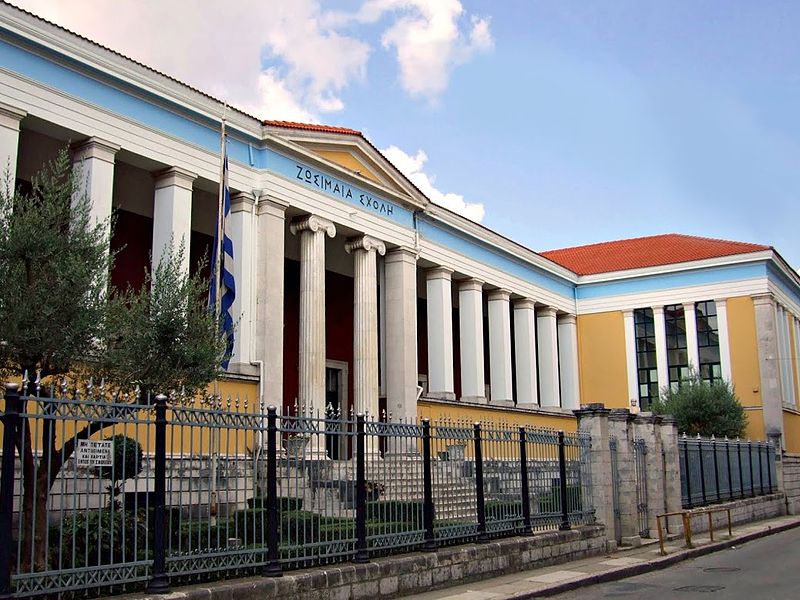
And below — in order — the Zografeion and Zappeion Lycées in Istanbul, the Zappeion exhibition hall and gardens in Athens, the National Polytechnic School in Athens, the Zosimaia in Jiannena, and the Zografeion college of Kestorati, all just a few of the institutions funded and built completely by Epirotes (click).

5694293094_8d58ab27da_z

zappeion

OLYMPUS DIGITAL CAMERA

polytechneioPatision_Complex

ZosimaiaΓυμνάσιο_Ιωαννίνων_3

ZographeionCol

I have a friend in Greece who’s from a part of Greek Macedonia that, before the refugee tents went up there in the 1920s, was inhabited exclusively by mosquitoes.  We were good friends but we had more than our share of tensions because he was an insufferable kind of arrogant Eurocrat that Greece used to produce at the time and had some supposedly hot-shot job with one of the sleazier Russian-type Greek communications moguls to appear in the nineties — μιλάμε principles yok.  And for some reason, he had this implacably neurotic competitive impulse that he would always unleash on me any time I spoke about Epiros, especially if it was with any amount of pride.  “It eez the poooorest proveens in Euuurope…Galicia in Spain and Epiros…are the pooorest proveeenses in Europe…” he would say to me constantly, like a Brussels parrot.  And after WWII, the practice of leaving families behind and going off to work abroad and returning only occasionally became untenable, and most of Epiros did become tragically depopulated.  But it was poor because it was depopulated and the only permanent inhabitants of many communities were pensioners, not because it was a region that traditionally suffered from desperate poverty.****  The hot-shot job and the whole Euro-thing has collapsed since then, along with the whole balloon in which it existed, of course, and he’s a significantly humbler person today.  But it was just so infuriatingly ignorant and anistoreto on his part to see Epiros as some Greek Appalachia and his motivations for harping on that distorted image escape me to this day.

Anyway, that morning I wanted to buy five or six simitia and pile them on Vangeli’s head as a reference to this simitçi tradition, but I could see he wasn’t having it, so I didn’t even try.  He insisted it was the anise in the rakı that made him sick and has sworn that from now on it’s only “real” raki for him — straight and Albanian — with no sissy Politiko flavorings to eff him up.

*************************************************************************************************************************************************************************************************************

* Turks are among the most honest people I have ever come across in all my travels, and not because of modern efficiency like in Europe, but out of traditional philotimo or honor.  I’ve had a Turk from a Taksim pilav stand recognize me as I walked by, and come up to me to give me one lira change he owed me because three days earlier I had eaten there and he was short.  I’ve had to fight with a Turkish simitçi because he wouldn’t sell me a simit because it was late in the day and they were stale, begging him, eventually giving up because he simply refused — the famous Turkish “yok”; when you hear it give up immediately.  I’ve had Turks — this happened to me in Afghanistan once too — run down the street after me to give me a Bic pen I had forgotten on their restaurant table.  But something happens to a Turkish cabdriver when he’s in the Sultanahmet area and he becomes the biggest sleazebag in the world.  I think that now that tourists have discovered the Beyoğlu side of the city and generally prefer to stay there, there’s greater tourist traffic between Pera and the important monuments of the old city, and these jerks take advantage of it.  But be tough with them; simply refuse to pay more than 20 or 25 lira — no matter what his rigged meter says — and walk away and tell them you’ll call the police if they don’t like it and, being cowards, like most frauds and liars, they’ll immediately back down.

The route from Şişhane or the Galata Tower, across the Galata bridge to Hagia Sophia has to be — and always has been — one of the most important pedestrian traffic axes in the city.  And instead, both Karaköy and Eminönü — the two districts and “squares” that face each other across the Horn and are like the two ventricles of the historic heart-like link of the City — are hideous, dirty, badly designed nightmares to walk through.  Instead of worrying about Taksim so much, Erdoğan might want to put some effort into redesigning this essential, central binder of the two Istanbuls.  But that would be a massive project that would involve levelling almost everything that’s been built there in the past forty years and starting with a clean slate.  Plus, you don’t want to give him too many ideas because he’s perfectly capable of building something as ridiculous as a ski-lift from Şişhane to the Hippodrome to assist tourists in their sight-seeing.

** The Staurodromi is one of the nicest spaces in Pera.  The gates of Galatasaray are beautiful, the other corners have their original turn-of-the-century buildings intact and there’s one modern, kind of semi-Brutalist building in travertine that I really like, that houses a bank and a bookstore and that you can see in the picture above behind Vangeli and in this one below.  The only thing that mars the whole space is this ugly sculpture:

Uranium piles

Does anybody know what it’s supposed to be?  Missiles of some kind?  I don’t know what enriched uranium piles look like, but during Fukushima and every time someone talks about Iran or North Korea and uranium piles, my imagination immediately conjures up this horrible sculpture.

*** This was all part of what I can only generally call the “Great Mobilization” of the Greek world that began in the early eighteenth century.  The confluence of factors that caused this are so intricate that they’re hard to summarize: the primary spark was perhaps the massive wealth accumulated by the Phanariotes — Greek aristocratic families in Constantinople prominent at the Patriarchate and, by extension, at the Porte — who had used their influence in imperial circles to turn most of what is now Romania (Moldavia and Wallachia) into their own autonomous Greek kingdoms, which they sucked dry, and how that wealth was poured into Greek institutions and trickled down into Greek hands generally; the concurrent spread of Greek educational and commercial networks in the Balkans and Eastern Europe and later in the Near East, in the rapidly modernizing economy of post-Mehmet Ali Egypt especially; the way the so-called Greek Enlightenment worked through both these kinds of networks.  The increased mobility that the nineteenth century made possible; most people, for example, don’t know this, but the Greeks of the Anatolian Aegean coast and the Marmara were almost exclusively migrants from the islands and mainland Greece — and even later the Kingdom of Greece itself, Greece basically having been an economic basket-case since the get-go — that started settling there in large numbers in the later eighteenth century and not, as we romantically like to believe, descendants of Byyzantine Hellenism; the only remnants of Byzantine Hellenism in Asia Minor were the Greeks of Pontus and Cappadocia, of course, and small pockets near Konya and Kula and Isparta and that lake region, all of whom, except for Pontioi, were Turkish-speaking until some of the men started learning Greek in the nineteenth century.  (In isolated areas of Cappadocia, a dialect of obvious Greek origin had also survived into the nineteenth century but was already dying out by then, and was so heavily Turkish in vocabulary and had even developed extensive agglutinative structures like Turkish that it’s almost impossible to call it Greek, any more than you can call Vlach Roumanian.)  Then there were the colonialist economic incursions into the Ottoman Empire and its reduction to a European debt-slave (much like “Memoranda” Greece today) that together with the privileges for Christians that the Great Powers forced the Ottomans to grant, created a space for growing Greek and Armenian prosperity from which Muslims (and Jews, for that matter) were excluded, and that produced exclusively Christian micro-economies within the Empire in which Greek rural migrants could find work and prosper.  All this had an enormous effect on Greek life everywhere.  You can see it in the village architecture of certain regions of the Greek world.  And you can see it in traditional dress of Greek rural women.

My father’s villages in the valley of Dropoli are situated in one of the few extensive, arable parts of Epiros, the fields you see in the pictures taken from atop the village itself (click):

IMG_0075

Paradoxically, it was this theoretical asset that kept our villages relatively poor until the mid-nineteenth century, because these fields were all çiftlikia of Muslim landowners (“fiefs” I guess; don’t ask me to explain Ottoman land tenure to you, or tell you the difference betweeen a çiftlik or a timar or anything else, because every time I try and read about it I fall asleep and don’t remember anything I’ve read when I wake up) and we were essentially sharecroppers for them.  Only with the exponential growth of emigration in the nineteenth century did any kind of considerable prosperity come to our villages and many were even able to buy their village lands from the increasingly impoverished ağadhes themselves.  Like I said, this was markedly obvious in the changes in female costume and the complete switch of male dress to frangika, Western clothes; traditional male outfit of the region would have looked something like this, the characteristic white felt pants called poutouria (this photo is from southern Serbia actually, but was the nearest approximation I could find) and not the fustanella kilts that folklore groups in the village like to use today indiscriminately and inaccurately:

Poutouria220px-Teslacirca1880(2)

While, with the women, in extremely old photos from Derviçani, you can see that almost all the articles of the costume were home-made by the women themselves, with growing wealth you see the gradual addition of articles of clothing that had to be made by professionals.  My grandmother’s outfit here, for example, especially the vest and apron:

Family…obviously had to be made by a professional sirmakeşi — an embroiderer of gold thread — in Jiannena or Argyrocastro, and the dress of some particularly wealthy villages, like those of Lunxhi, behind the mountains to the left across the valley in the photo (Albanian-speaking Christians with whom we intermarried extensively and still do, the homeland of Zappas and Zographos, the benefactors mentioned above) had, by the end of the nineteenth century, simply become regional variations of Ottoman urban dress, like in this photo, which the museum of Kozani (why it ended up in Kozani?) felt it had to put its water stamp on, like someone was going to sell the design to YSL or something:

VI2M8774.TIF

**** Despite my friend’s condescension, regional funding initiatives for these “poorest provinces in Europe” have greatly expanded the university in Jiannena and developed an extensive and prestigious medical research center there, an information technologies industrial park, renovated (sometimes over-renovated) large parts of the old Ottoman city and created a general climate of growth and prosperity seemingly unaffected by the problems of the Greek economy.  Epiros has become a little bit like a Greek Bavaria or the French south-west: a traditional, somewhat backwards area that made the leap over the ugly stages of modernization to post-modern comfort and prosperity.  Half-ruined villages have been renovated, largely through the skills of Albanian craftsmen, who still were trained in the traditional building skills necessary to preserve the region’s distinctive architecture.  There’s good traditional and contemporary food in Jiannena and in some of the newly developed tourist towns.  There’s skiing in the winter; there’s hiking and mountain-climbing in the summer and gorgeous beaches only an hour-and-a-half away from each other on the new highways.  And it’s generally agreed that Jiannena is one of the most pleasantly liveable of Greek provincial cities and Epiros one of Greece’s most beautiful and pleasantly liveable provinces.

Comment: nikobakos@gmail.com

My Circassians

25 May

AdygeaReaders might remember I’ve had a long-term interest in Circassians since high school.  Of all the peoples collectively known in Turkey as muhacir, the Ottoman Muslims who took refuge in the Anatolian heartland of the Empire as it shrank, probably none had a more torturously, circuitous odyssey to ultimate safety in Turkey than the Circassians.  Here’s a selection about them from a post I wrote in February about why I was boycotting the Sochi Olympics; it wasn’t just for Putin and his filthy, murderous personage, but because the games were being held on land an admirable and honorable people had fought long and hard to keep and had been brutally thrown out of by Imperial Russia:

“And then there are the Circassians.  I became obsessed with Circassians in high school because I had to know who these people were, so physically beautiful apparently, that they held the entire Near East in thrall for centuries.  Circassians were the first reason I ever went into the New York Public Library, because the library at Stuyvesant didn’t have anything on them.  This is also around the time, as a nerdy sixteen-year-old, that I started developing the totally adolescent, romantic fascination I still suffer from, for honor-obsessed, heavily-armed highlanders — Montenegrins, northern Albanians, Pashtuns — who don’t easily let themselves get pushed around by outsiders.   It fed a lonely teenager’s fantasies of empowerment then.  Now, I couldn’t tell you.  Probably still.

“The Circassians lived in a huge swath of plain, foothill and high mountain country in the northern Caucasus.  Most of the sites of the this month’s games are being held on formerly Circassian territory.  This is a map of their general distribution in the eighteenth century, right before Russian expansion southwards began:

Circassia_in_1750

(click)

“For more than a century they fought a brutal tooth-and-nail war against the Russians and their Cossacks.  When they finally capitulated in 1864 it was in Sochi.  The majority, which would not agree to an oath of loyalty to Russia were deported, in what was probably the first campaign of ethnic cleansing of such dimensions in modern history.  For months, the beach at Sochi was a Dunkerque-like humanitarian disaster zone, with tens of thousands of shelterless, starving and diseased Circassians waiting for Ottoman ships to take them to safety in Anatolia or the still-Turkish Balkans or dying on the spot.

Expulsion_map_of_the_Circassians_in_19th_century“It certainly represented the largest civilian death toll of any war up to its time and today, ninety percent of people of Circassian descent live outside their original homeland, mostly Turkey, but also Syria, Jordan and Lebanon.”

(To read the whole post: Ignoring Sochi.“)

And as with Native Americans in North America, as their government was massacring and expelling them, Russian poets and writers like Lermontov, Pushkin and Tolstoy were romanticizing them, sympathizing with them and entering in a love affair with all the peoples of the Caucasus that literary Russia still has not recovered from.  Someone, everywhere, at all times, has a heart and a soul — for whatever good it does.

I had assumed muhacir is constructed from the Arabic “mu = doer of something” plus the roots ‘h’ + ‘j’ + ‘j’ (?) which almost sounds more like “pilgrim” –  as in “Hajj.”  But “mu” turns out to be a passive participle marker of someone who is made to do something, in this case not as in “Hajj, pilgrimage, but  ‘h’ + ‘j’ + ‘r’ as in “Hejira?” which would mean “fleer,” as in those who fled with Muhammad to Medina from Mecca in 622.  That would make more sense than traveller, which would be the “mu-sa-fir” recognizable to any Greeks as an old-fashioned word for “guest,” except to those Neo-Greeks that are so Post-Ottoman that they’re Post-Culture-of-Any-Kind and most certainly Post-Hospitality.  The Muslims that left India after Partition in 1947 to go to the land of Islamic Purity are also known as muhajir in South Asia.  I say that the Circassians’ route was particularly circuitous because many of them were first settled by the Ottoman government in the Balkans — especially Bulgaria and Kosovo (where there’s still a tiny community), where they were used to demographically offset the Christian population and because their warrior reputation would come in handy against Christian rebellions and Russian invasions.  (Though there is one wild episode of the Greco-Turkish War where a band of Circassian çeteler [çetes] in western Anatolia actually aided the invading Greek army.  Go figure.  Any-thing is possible in our part of the world.)  Needless to say with the coming of independence for the nations of the Balkans, they were uprooted again to Anatolia and other parts of the still Ottoman Arab world.

This year is the 150-year anniversary of the final, catastrophic expulsion from their Caucasian homeland and local Circassians (“Çerkes” in Turkish) have been holding demonstrations in front of the Russian Consulate down here on the Jadde (I wouldn’t even lower myself to asking for Putin’s ear) and then closer here to my place in front of Galatasarary.  (Click)

IMG_0777IMG_0775But I was kind of disappointed because I couldn’t get any really good pictures except some like these above.  Then I get on the ferry from Beşiktaş to go to Kadiköy with my cousin, Vangeli, to feed him at the spectacular Çiya restaurant there and visit Beylerbeyi, my favorite Ottoman palace, and by blogger-photographer’s luck right across from me is sitting this handsome Circassian kid from central casting (click):

IMG_0780 He was surprised I knew that his t-shirt said “Адыгэ” – “Adyghe,” which is what Circasians call themselves, written in the Cyrillic script they now use.  I asked him if he spoke the language and he said no, but some other Circassians I found the next day in Pera said that due to a concerted effort on the Turkey-wide community’s part — language classes, theater workshops, radio programs — more Circassians in Turkey of this kid’s age speak more of at least a little bit of the language than their parents do and that interest is increasing.  Insha’allah.  Cool.  So if you don’t respect these people for their legendary beauty, their ferocious warrior rep, the fact that they managed to stave off the forces of Imperial Russia for two centuries, that as the Mamluk military elite they effectively ran Egypt for five-hundred years till Mehmet Ali the Albanian massacred them in a totally, shitty, un-Albanian, pabesiko (“pa” = no + BESA), dishonorable, ambush — see  (“BESA: A Code of Honour,“) — then just admire them for sticking together as a cohesive and living identity after being scattered across the world for a century and a half now.

The suffering of Circassians and all the other Muslim peoples of the Caucasus are laid out in a bit of an uneven but heartfelt and informative book by Oliver Bullough called Let Our Fame Be Great: Journeys Among the Defiant People of the Caucasus — here’s his website too (check out some interesting pics): Oliver Bullough: Let Our Fame Be Great.

lofbg-usa-cover-300wUnfortunately, I don’t know if there’s a Turkish translation (or Arabic: Jordan, where Circassians still make up the King’s Royal Guard, Syria and, some extent Israel, is where most Circassians outside of Turkey now live) for young Circassians today to read.

Another book that I do know there’s a Turkish translation of, and is probably the only monograph to deal with the step by step expulsion and ethnic cleansing of Ottoman Muslims through the nineteenth and and early twentieth centuries, but tracing roots of the process back to even the century before is Justin McCarthy’s Death and Exile: The Ethnic Cleansing of Ottoman Muslims, 1821-1922Not polemic, not propagandistic, just the facts and figures that speak for themselves.  It should be required reading for every Christian in the former Ottoman sphere.  It’s not exclusively about the Circassian tragedy but there is, as you can imagine, a great deal of material on their experiences.

51qnwpuNCVL._SY344_BO1,204,203,200_Turkish-speaking Circassians should definitely check this book out that’s available everywhere in İstanbul; they’ll learn a lot.  I really hope they get a chance to.  Share this post with friends if you found it interesting.  Feel free to write me with any comments.  And keep the memory alive!.  NB

55696-olum-ve-surgun-death-and-exile-justin-mccarthy

Comment: nikobakos@gmail.com

For L. — Les Ruines

26 Feb

THIS post is for a friend here in Paris, with a French translation, of a legendary concert Oum Kalthoum gave in L’Olympia theater in November 1967, where she sang what’s arguably considered her masterpiece, El Atlal, Les Ruines.

This translation issue, especially with music and poetry…  People become nuts.  Read the comments below.  And it’s always the sticklers for most “accuracy” that end up writing the garbled, horrible translations, but they’re kind of like glosses I guess and do help out.  Look below, if you want to bother, at the bickering; I’ve posted it all from  Music Layoonak; Arabic Song and Translations., an otherwise really cool resource. 

I’ve posted this song before in  “The most depressed country is Afghanistan, where more than one in five people suffer from the disorder.”  (November 13th).  But that only included English and Arabic translation.

Les Ruines

Ne cherche pas, mon ame, a savoir qu’est devenu l’amour
C’etait une citadelle imaginaire qui s’est effondree
Abreuve-moi et trinquons a ses ruines
Conte en mon nom l’histoire
Maintenant que mes larmes ont coule
Racont comment cet amour s’est transforme en passe et pourquoi il m’est devenu un sujet de douleur
Je ne parviens pas a t’oublier
Toi qui m’avais seduite par tes discours si doux et raffines
Tendant ta main vers moi
Comme celle que l’on tend
Par dessus l’onde, a celui qui se noie
Et comme la lumiere que recherche un errant
Mais ou est donc passe cet eclat dans tes yeux
Mon amour, j’avais eu un jour la joie de visiter ton nid
Me voici aujourd’hui oiseau solitaire, roucoulant ma douleur
Tu es devenu suffisant comme un etre capricieux et gate
Tu pratiques l’injustice comme un puissant tyranique
Mon desir de toi me brule l’ame et le temps de ton absence n’est que braises cuisantes

Donne-moi ma liberte et brise mes chaines
Je t’ai tout donne; il ne me reste plus rien
Ah! tu m’avais saigne les poignets par tes chaines
pourquoi les garderai-je alors qu’elles n’ont plus d’effet sur moi
Pourquoi croire a des promesses que tu n’as pas tenues
Je n’accepte plus ta prison
Maintenant que le Monde est a moi
Il est loin mon bien-aime seduisant, tout de fierte, de majeste, et de pudeur
Si sur de lui, comme un roi de beaute et avide de gloire
Exhalant le charme, comme la brise des vallees, agreable a vivre comme les songes de la nuit
J’ai perdu a jamais ta douce compagnie dont le charme rayonnait de splendeur pour moi
Je n’etais qu’un amour a la derive, un papillon perdu qui s’etait approche de toi
Entre nous, la passion etait notre messager et l’ami qui avait fait deborder notre coupe
Y a-t-il jamais eu plus enivres d’amour que nous?
Nous nous etions entoures de tant d’espoir
Nous avions emprunte un chemin eclaire precedes que nous etions par la joie
Nous avons ri comme seuls deux enfants savent le faire et nous avons couru encore plus vite que notre ombre
C’est quand l’ivresse nous quitta que la lucidite revint et que nous nous sommes reveilles
Mai le reveil fut sans illusion
Finis les reves d’un monde imagine, voici venir la nuit, ma seule compagne

Et puis voici la lumiere qui annonce le jour et l’aube dont le ciel s’embrase
Voila la vie reelle, telle que nous la connaissons, avec ces amants qui reprennent chacun son chemin
Toi qui veilles en oubliant les promesses, et te reveilles en t’en souvenant
Sache que lorsqu’une blessure se referme, le souvenir en fait saigner une autre
Il faut apprendre a oublier
Il faut apprendre a effacer les souvenirs
Mon bien-aime, tout est fatalite
Ce n’est pas nous qui faisons notre malheur

Un jour peut-etre nos destins se croiseront, lorsque notre desir de nous rencontrer sera assez fort
S’il arrive alors qu’un de nous renie son amant et que notre rencontre soit celle de deux etrangers
Et si chacun de nous poursuit un chemin different, ne crois pas qu’il s’agira alors de notre choix mais plutot de celui du destin.

The Ruins

My heart, don’t ask where the love has gone
It was a citadel of my imagination that has collapsed
Pour me a drink and let us drink of its ruins
And tell the story on my behalf as long as the tears flow
Tell how that love became past news
And became another story of passion
I haven’t forgotten you
And you seduced me with a sweetly-calling and tender tongue
And a hand extending towards me like a hand stretched out through the waves to a drowning person
You seduced me with the saliva (of a kiss) that a night traveler thirsts for
But where is that light in your eyes?
My darling, I visited your nest one day as a bird of desire singing my pain
You’ve become self-important, spoiled and capricious
And you inflict harm like a powerful tyrant
And my longing for you cauterized my ribs (soul or insides)
And the waiting was like embers in my blood
Give me my freedom, release my hands
Indeed, I’ve given you yours and did not try to retain anything
Ah, your chains have bloodied my wrists
I haven’t kept then nor have they spared me
Why do I keep promises that you do not honor?
When will this captivity end, when the world is before us?
He is far away, my enchanting love
Full of pride, majesty and delicacy
Sure-footed walking like an angel with oppressive beauty and rapacious glory
Redolent of charm like the breeze of the hills
Pleasant to experience like the night’s dreams
I’ve lost forever the charm of your company that radiated brilliantly
I, wandering in love, a bewildered butterfly, approached you
And between us, desire was a messenger and drinking companion that presented the cup to us
Had love seen two as intoxicated as us?
So much hope we had built up around us
And we walked in the moonlit path, joy skipping along ahead of us
And we laughed like two children together
And we ran and raced our shadows
And we became aware after the euphoria and woke up
If only we did not awaken
Wakefulness ruined the dreams of slumber
The night came and the night became my only friend
And then the light was an omen of the sunrise and the dawn was towering over like a conflagration
And then the world was as we know it, with each lover in their own path
Oh sleepless one who slumbers and remembers the promise when you wake up
Know that if a wound begins to recover another wound crops up with the memory
So learn to forget and learn to erase it
My darling everything is fated
It is not by our hands that we make our misfortune
Perhaps one day our fates will cross when our desire to meet is strong enough
For if one friend denies the other and we meet as strangers
And if each of us follows his or her own way
Don’t say it was by our own will
But rather, the will of fate.

الأطلال

يا فؤادي لا تسل أين الهوى كان صرحا من خيال فهوى
اسقني واشرب على أطلاله واروعني طالما الدمع روى
كيف ذاك الحب أمسى خبرا وحديثا من أحاديث الهوى
لست أنساك وقد أغريتني بفم عذب المنادة رقيق ويد
تمد نحوي كيد من خلال الموج مدت لغريق وبريق يظمأ
الساري له أين في عينيك نياك البريق ياحبيبا زرت يوما
أيكه طائر الشوق أغنى ألمي لك إبطاء المذل المنعم وتجني
القادر المحتكم و حنيني لك يكوي أضلعي والتواني جمرات
في دمي أعطني حريتي أطلق يدي ا إنني أعطيتك ما استبقيت
شيئا آه من قيدك أدمى معصمي لم أبقيه وما أبقى عليا
ما احتفاظي بعهود لم تصنها وإلام الأسر والدنيا لد يا أين من
عيني حبيب ساحر فيه عز وجلال وحياء واثق الخطوة يمشي
ملكا ظالم الحسن شهي الكبرياء عبق السحر كأنفاس الربى
ساهم الطرف كأحلام المساء أين مني مجلس أنت به فتنتة تمت
سناء وسنى وأنا حب و قلب هائم وفراش حائر منك دنا ومن
الشوق رسول بيننا ونديم قدم الكاس لنا هل رأى الحب سكارى
مثلنا كم بنينا من خيال حولنا ومشينا في طريق مقمر تثب
الفرحة فبه قلبنا وضحكنا ضحك طفلين معا وعدونا فسبقنا ظلنا
وانتبهنا بعد ما زال الرحيق وأفقنا ليت أنا لانفبق يقظة
طاحت بأحلام الكرى وتولى الليل والليل صديق وإذا النور
نذير طالع وإذا الفجر مطال كالحريق وإذا الدنيا كما تعرفها
وإذ ا الأحباب كل فب طريق أيها الساهر تغفو تذكر العهد
وتصحو وإذا ما الأم جرح جد بالتذكار جرح فتعلم كيف
تنيى وتعلم كيف تمحو يا حبيبي كل شيء بقضاء ما بأيدينا
خلقنا تعساء ربما تجمعنا أقدارنا ذات يوم بعدما عز اللقاء فإذا
انكر خل خله وتلاقينا لقاء الغرباء ومضى كل إلى غايته لاتقل
شئنا فإن الحظ شاء

Lyrics transcription from La7oon.com

11 comments:

AC said…

yes indeed!
If one wants to know what classical Arabic music is about, there’s no better example than this song “Al-Atlaal”. Thanks
January 9, 2008 at 1:48 AM

Jewaira said…

thank you for sharing these translations
March 19, 2008 at 10:04 AM

Fanus Ramadan said…

Thanks very much for the hard work, this web site in general is a fantastic project. I had some suggestions for emendations to the translation. “Water me and let me drink of its ruins” should be “Give me to drink (wine), and drink (imperative) to the ruins.” “And became a matter of the subject of pain” “it became another story of passion”
“and alight searching for a wanderer” = “[you seduced me with] the saliva (from a kiss, a very common image in Arabic poetry) that the night-traveler (another common image) thirsts for”“The moments were embers” should be “The procrastination (or dallying or something) was embers”“Why are they still there etc.)”
=
“I haven’t kept her/them (either the beloved or the chains i’m not sure) nor have they spared me.” Ie the meaning is of having lost absolutely everything.“Ive had it with this prison etc.” “How much more (ila ma) captivity, when the world is before us?”“Sure footed walking like a king” king should be “angel”breeze of valleys should be breeze of the hills.

December 6, 2009 at 8:17 AM

Chris said…

wow, so helpful. thanks a lot!
December 6, 2009 at 10:19 AM

Twosret said…

What a great blog. Thank you ever so much for all your hard work. I am able to share our wonderful poetry with my non-Arab friends. Keep up the good work. Thanks again.
February 2, 2010 at 7:58 PM

Op! said…

Great effort, however, unfortunately I have to rate the translation a little below the expectation – for good reasons.
1. the poem itself (original) differs – albeit slightly – from the lyrics as she sings them
2. Some punctuations are altered giving a completely different meaning to the original poem – hence, you lose the real meaning of the poem.I am happy to point those out or to even provide you with an alternative translation “with an explanation” if you would like.. Just let me know.
April 11, 2010 at 12:29 PM

Anonymous said…

its bird of longing, not bird of desire!
November 28, 2010 at 3:39 PM

barbender said…

I have had this piece of music for a long time and am enchanted by it’s expressivity and gravity but as a non arabic speaker was always super curious as to what she was singing about that drove the masses so mad with adulation. Now I know, thank you very much….
November 6, 2011 at 9:19 AM

umelbanat said…

Thanks you very much i was able to share this wonderful song with one of my non-Arab friends becaus eof your great work!!
December 19, 2011 at 5:58 PM

Itje Chodidjah said…

I have been waiting for this translation for more
January 6, 2012 at 8:21 PM

Itje Chodidjah said…

I havent finished my comment….. I listened to the song when I was a kid as my father loved it. I can sing the song without understanding the meaning but the music can tell that the lyric has strong and deep meaning. Thanks a lot
January 6, 2012 at 8:25 PM

“Syria Is Not A Country” — Andrew Sullivan lets fly another one of his kotsanes and then rushes to cover his tuches

27 Jan

Sykes-Picot

He got enough flak for the post (read through all the ctd.’s too — very interesting) and I feel kind of bad giving him more after so many months, but it’s been in the back of my mind since the fall and the argument is so irritating that I had to put in my own two cents.

It seems that every Sullivan-type pundit rushed out in 2001, or more probably 2003 when they were making their Iraq predictions, and bought some book about the Paris Peace Conference: “Paris 1919” “The Peace to End All Peace” — it’s an entire genre in itself.  And there they found out about some magic secret, like in a Dan Brown novel, called the Sykes Picot line, that supposedly explains everything about the Middle East’s dysfunction, and like a little kid who realizes he’s said something that the adults have found smart or funny, they go around repeating it ad nauseum: “Sykes-Picot Line”…”Sykes Picot Line” … “this guy Sykes and this guy Picot”…”The Sykes Picot Line…”  Listen to Sullivan’s own pedantic tone:

“Syria as we now know it was created by one Brit, Mark Sykes, and one Frenchman, Francois Georges-Picot in 1920. Originally, it included a chunk of Iraq (another non-country), but when oil was discovered there (in Mosul), the Brits wanted and got it. With that detail alone, you can see how valid the idea is of a Syrian “nation” is.”

The whole point is that most of the nations of the present Middle East are artificial, colonial creations — arbitrary lines drawn on a map –and that explains everything.  First, these lines are not arbitrary.  Whatever you might want to say about Sykes or Picot, or Churchill or Lloyd George or Clemenceau — that they were gross imperialists (which is not even redundant really but simply a tautology: “The King is a gross monarchist…”) or anything else, they weren’t ignorant or anistoretoi.*  The units they put together corresponded, as so many of Sullivan’s readers point out to him, with regions with long, historically recognized identities.  Where you look at a map of the Middle East and do see straight artificially drawn lines, they were drawn through places where nobody lives.  Otherwise, within every one of those lines, there has always existed a shifting, changing, re- or de-centralizing identity, but one with clear continuities nonetheless.

(*Anistoretoi – ανιστόρητοι – is a Greek word that I like very much, because it literally means “un-historied” — historically ignorant, obviously, but there’s something about “un-historied” that just seems to me like a sharper condemnation of inexcusable lack of knowledge — no? — so you’ll see it on this blog here and there.)

Thankfully, no one says this about Egypt, because it so obviously has a longer continuous history of unified consciousness than even China.  But what Sullivan, so damn pompous — or just so gay and so Magdalen — dismisses as the “non-country” of Iraq, the flatlands of the Tigris and the Euphrates basin, even when semi-splintered into northern, central, and southern parts, as Iraq seems to be doing now, was always seen as a unit: certainly geographically but even culturally.  The two regions the Greeks called Libya and Cyrene may correspond to a west-east division that is still apparent in modern Libya (Tripoli and Benghazi), but their union is not necessarily artificial or inherently problematic.  The headland to the west of Libya we call Tunisia was the first region called Africa by the Romans, where their ancient enemy Carthage had once stood.  And the region where the northwestern section of the Fertile Crescent bends over and meets the Mediterranean has been called Syria since the Greeks and was probably seen as a recognized cultural entity far before them.  The mountainous Mediterranean littoral of this Syria — what’s now Palestine and Lebanon and maybe a new Alawite state waiting to be born — was always a space slightly apart and more heterogeneous, but Syria nonetheless.  (The arid plateau across the Jordan, inhabited by the Moabites and Edomites and Nabataeans and all those other peoples the Israelites are always defeating in the Old Testament because God loves them more, was also a region of a recognized coherence of sorts not just made up by the Brits when they decided to call it Trans-Jordan.)  Syria was the birthplace of Christianity as an organized religion.  Syria was the Romans-Byzantines’ richest and most sophisticated eastern province.  Syria was the prize catch for the Crusaders; the real studs among them who could, got themselves a piece of booty there, not the “Holy Land.”  When Zainab bears her lament to the people of Shaam (Syria or the Levant) in Agha Shahid Ali’s beautiful poem she cries out: “Hear me Syria…” addressing the people of the seat of Umayyad power in Damascus — the one in Syria — that had massacred her sacred family.  Sykes and Picot didn’t make this stuff up.

What Sullivan wants to say, and what’s truly problematic about his assertion, is that Syria is not a country because it’s not ethnically or confessionally homogeneous, and dismissing it as a state for those reasons is a far more eurocentric, and anistoreto, an idea than he may know.  Because if those are our standards for nation-hood, there are very few countries in the world.  By those standards, if Syria is not a country, then England and France aren’t countries either.  Because a polity called the Kingdom of England, or the Kingdom of France — both of which one could argue were “artificially” created by the powers that be of the time — had existed for far longer than Englishmen and Frenchmen have.  And the process by which a unified national consciousness was created to match these pre-existing political units — England or France — was a long and complex one and one that followed the particular course it did only in Western Europe and trying to force it onto the peoples of states in other parts of the world is impossible and extremely dangerous.  Forget what Sullivan thinks is the Machiavelian divide-and-rule politics of the colonizers that pitted ethnic groups in Syria and Iraq against each other; these colonizers were probably never as devilishly smart as we like to imagine them.  What Sullivan finds inconceivable is that one can be a Latakian Alawite or a Sunni from Homs or an Aleppo Christian or a northeastern Kurd and still function as a citizen of a legitimate country called Syria; that these groups have always had boundaries that fluctuated or were permeable; and, that though relations between them historically were better at some moments than others, they were brought together in this place called Syria by organic historic processes and not corraled together there by outsiders.  And by believing that it’s inconceivable they can all function as citizens of this place, he’s actually participating in the creation of a discourse that pits these groups against each other in a manner far more fatal than the supposed manipulations of the British or French.  He’s creating a poetics of sectarianism, pure and simple.  One only has to look at how reinforcing ethnic differences, often with the naive supposition that satisfying each group’s demands will lead to peace, only exacerbated the tragedy — the tragedies — of Yugoslavia in the 90s to see where thinking like Sullivan’s leads.

To his credit, Sullivan gives the Ottomans credit for maintaining a semblance of peace and stability in the region for several centuries.  But the Ottomans had molded, over the centuries, a complex and flexible system of negotiated corporatism and autonomy that recognized the different groups of their empire and yet that held them together in one unit successfully until modern nationalism started making that impossible.  What Sullivan is doing with blowhard statements like the above is just continuing that process: making it impossible for the peoples of the region that have to live together to do so peacefully and productively.

Finally, as a somewhat tangential but important aside, I’d really be interested in finding out why Sullivan doesn’t think that India is “not a country.”

And, folks, what is going on in Syria?  I’ve been in France for a month and my French isn’t good enough to follow the news and the American stuff on-line seems to have less and less coverage.  Has some sort of stalemate been reached?  Is some kind of compromise being forged?  Are people just tired?  Anyone want to enlighten me?

“The most depressed country is Afghanistan, where more than one in five people suffer from the disorder.”

13 Nov

From Washington Post:  “The Middle East and North Africa suffer the world’s highest depression rates, according to a new study by researchers at Australia’s University of Queensland — and it’s costing people in the region years off their lives.”

Aside from the real conditions that might explain this — real conditions — there are some really big questions though on what depression means to people.  Is ‘sadness’ or Freudian ‘melancholy’ a recognized cultural trait in these regions, a way of seeing life, even an aesthetic sensibility and not at all a debilitating force? perhaps even an empowering one? Because then we’re talking about an entirely different set of issues that I think this study may have missed.

depression-rates

An American will always tell you his life is going great, no?  Meanwhile, we have Oum Kalthoum.  And if you want to find a suite like her stunning “El Atlal” a marker of depression, you’ve got the whole culture/s wrong.  And I did not use the word “empowerment” above lightly; when you’ve seen how the public reacts in footage like this, or at a South Asian or Afghan poetry session, or even in the ritualized grieving at a funeral in Epiros, you’ll see that the participants are not ‘debilitated’ or ‘depressed’ in the least by the  emotional mood that’s generated — quite the opposite.

(Note: again, as with all this music, this is a suite, with a musical narrative structure essential to appreciating it; not a 2:30 CD track.  When you have the time, give it a chance as a whole piece. And she was such a brilliant performer…  Here’s a go-to site for translation of Arab music: Arabic Music Translation)

“Al Atlal” by the way, makes a beautiful ‘appearance’ in Anthony Shadid’s moving House of Stone: A Memoir of Home, Family, and a Lost Middle East.)

Here are the lyrics in English and Arabic:

The Ruins

My heart, don’t ask where the love has gone
It was a citadel of my imagination that has collapsed
Pour me a drink and let us drink of its ruins
And tell the story on my behalf as long as the tears flow
Tell how that love became past news
And became another story of passion
I haven’t forgotten you
And you seduced me with a sweetly-calling and tender tongue
And a hand extending towards me like a hand stretched out through the waves to a drowning person
You seduced me with the saliva (of a kiss) that a night traveler thirsts for
But where is that light in your eyes?
My darling, I visited your nest one day as a bird of desire singing my pain
You’ve become self-important, spoiled and capricious
And you inflict harm like a powerful tyrant
And my longing for you cauterized my ribs (soul or insides)
And the waiting was like embers in my blood
Give me my freedom, release my hands
Indeed, I’ve given you yours and did not try to retain anything
Ah, your chains have bloodied my wrists
I haven’t kept then nor have they spared me
Why do I keep promises that you do not honor?
When will this captivity end, when the world is before us?
He is far away, my enchanting love
Full of pride, majesty and delicacy
Sure-footed walking like an angel with oppressive beauty and rapacious glory
Redolent of charm like the breeze of the hills
Pleasant to experience like the night’s dreams
I’ve lost forever the charm of your company that radiated brilliantly
I, wandering in love, a bewildered butterfly, approached you
And between us, desire was a messenger and drinking companion that presented the cup to us
Had love seen two as intoxicated as us?
So much hope we had built up around us
And we walked in the moonlit path, joy skipping along ahead of us
And we laughed like two children together
And we ran and raced our shadows
And we became aware after the euphoria and woke up
If only we did not awaken
Wakefulness ruined the dreams of slumber
The night came and the night became my only friend
And then the light was an omen of the sunrise and the dawn was towering over like a conflagration
And then the world was as we know it, with each lover in their own path
Oh sleepless one who slumbers and remembers the promise when you wake up
Know that if a wound begins to recover another wound crops up with the memory
So learn to forget and learn to erase it
My darling everything is fated
It is not by our hands that we make our misfortune
Perhaps one day our fates will cross when our desire to meet is strong enough
For if one friend denies the other and we meet as strangers
And if each of us follows his or her own way
Don’t say it was by our own will
But rather, the will of fate.

Al Atlal (الأطلال)

شعر: إبراهيم ناجي غناء: أم كلثوم ألحان: رياض السنباطي
يا فؤادي لا تسل أين الهوى كان صرحاً من خيالٍ فهوى
اسقني واشرب على أطلاله وأروي عني طالما الدمع روى
كيف ذاك الحب أمسى خبراً وحديثاً من أحاديث الجوى

لست أنساك وقد أغريتني بفم عذب المناداة رقيق
ويدٍ تمتد نحوي كيدٍ من خلال الموج مدت لغريق
وبريق يظمأ الساري له أين في عينيك ذياك البريق

يا حبيباً زرت يوماً أيكه طائر الشوق أغني ألمي
لك إبطاء المذل المنعم وتجلي القادر المحتكم
وحنيني لك يكوي أضلعي والثواني جمرات في دمي

أعطني حريتي أطلق يديا إنني أعطيت ما استبقيت شيئا
آه من قيدك معصمي لم أبقيه فما أبقى عليا
ما احتفاظي بعهود لم تصنها وإلام الأسر والدنيا لديا

أين من عيني حبيبي ساحر فيه عزُ وجلال وحياء
واثق الخطوة يمشي ملكاً ظالم الحسن شجي الكبرياء
عبق السحر كأنفاس الربا تائه الطرف كأحلام المساء
أين مني مجلسٌ أنت به فتنة…. س…وس..
ها أنا حب وقلب هائمٌ وفراشٌ حائرٌ….من كذا….

ومن الشوق رسولٌ بيننا ونديمٌ قدم الكاس لنا
هل رأى الحب سكارى مثلنا كم بنينا من خيالٍ حولنا
ومشينا في طريقٍ مقمرٍ تجد الفرحة فيه قبلنا
وضحكنا ضحك طفلين معاً وعدونا فسبقنا ظلنا

وانتبهنا بعدما زال الرحيل وأفقنا ليت أنا لا نفيق
يقظة طاحت بأحلام الكرى وتولى الليل والليل صديق
وإذا النور نذير طالع وإذا الفجر مطلٌ كالحريق
وإذا الدنيا كما نعرفها وإذا الأحباب كلٌ في طريق

أيها الساهر تغفو تذكر العهد وتصحو
وإذا ما التئم جرح جد بالتذكار جرح
فتعلم كيف تنسى وتعلم كيف تمحو

يا حبيبي كل شيء بقضاء ما بأيدينا خلقنا ضعفاء
ربما تجمعنا أقدارنا ذات يوم بعدما عز اللقاء
فإذا أنكر خلٌ خله وتلاقينا لقاء الغرباء
ومضى كلٌ إلى غايته لا تقل شئنا فإن الحظ شاء
فإن الحظ شاء فإن الحق شاء