Tag Archives: New York

“Magnificent Turks” and the origins of this blog

11 Jun

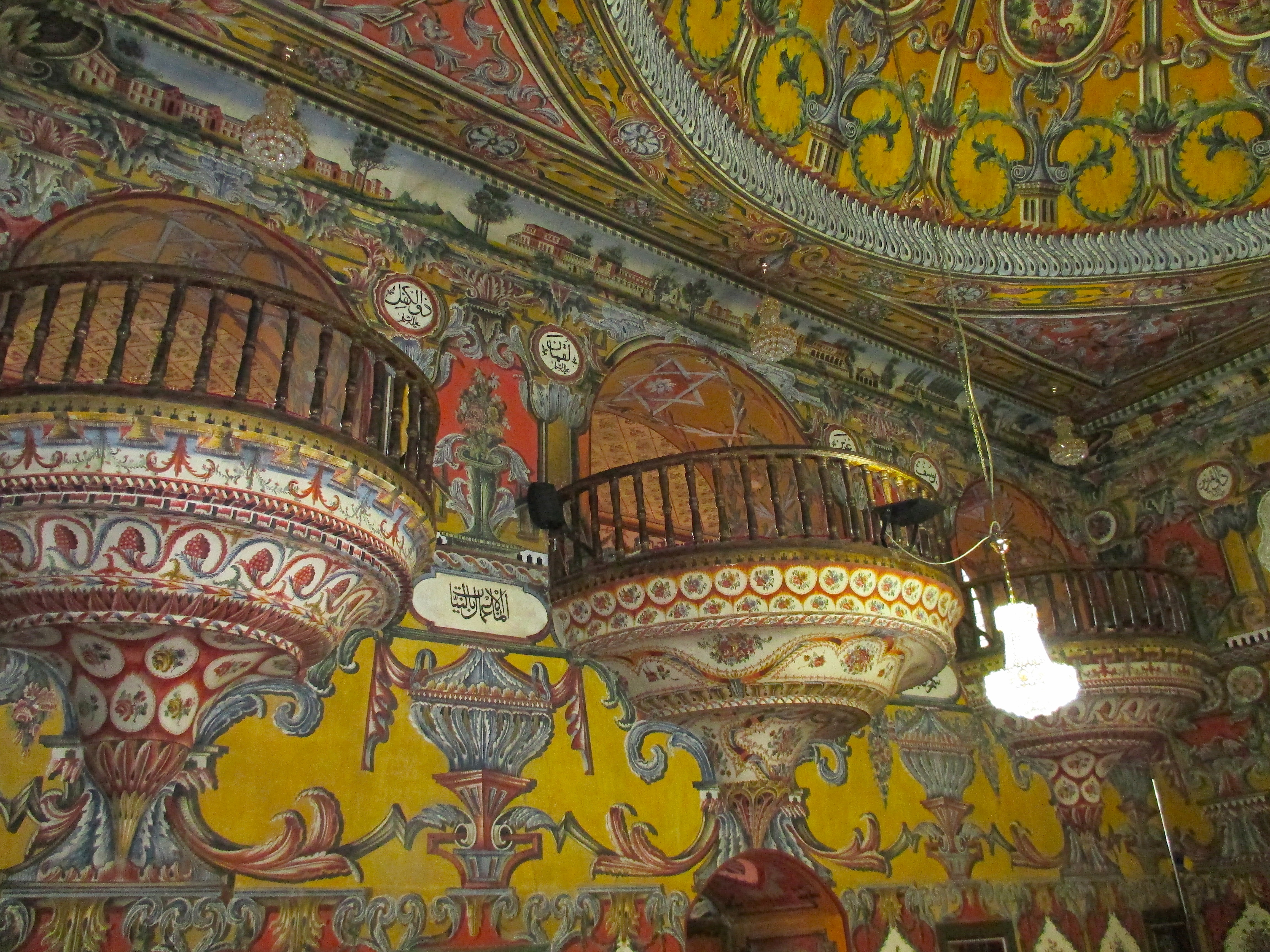
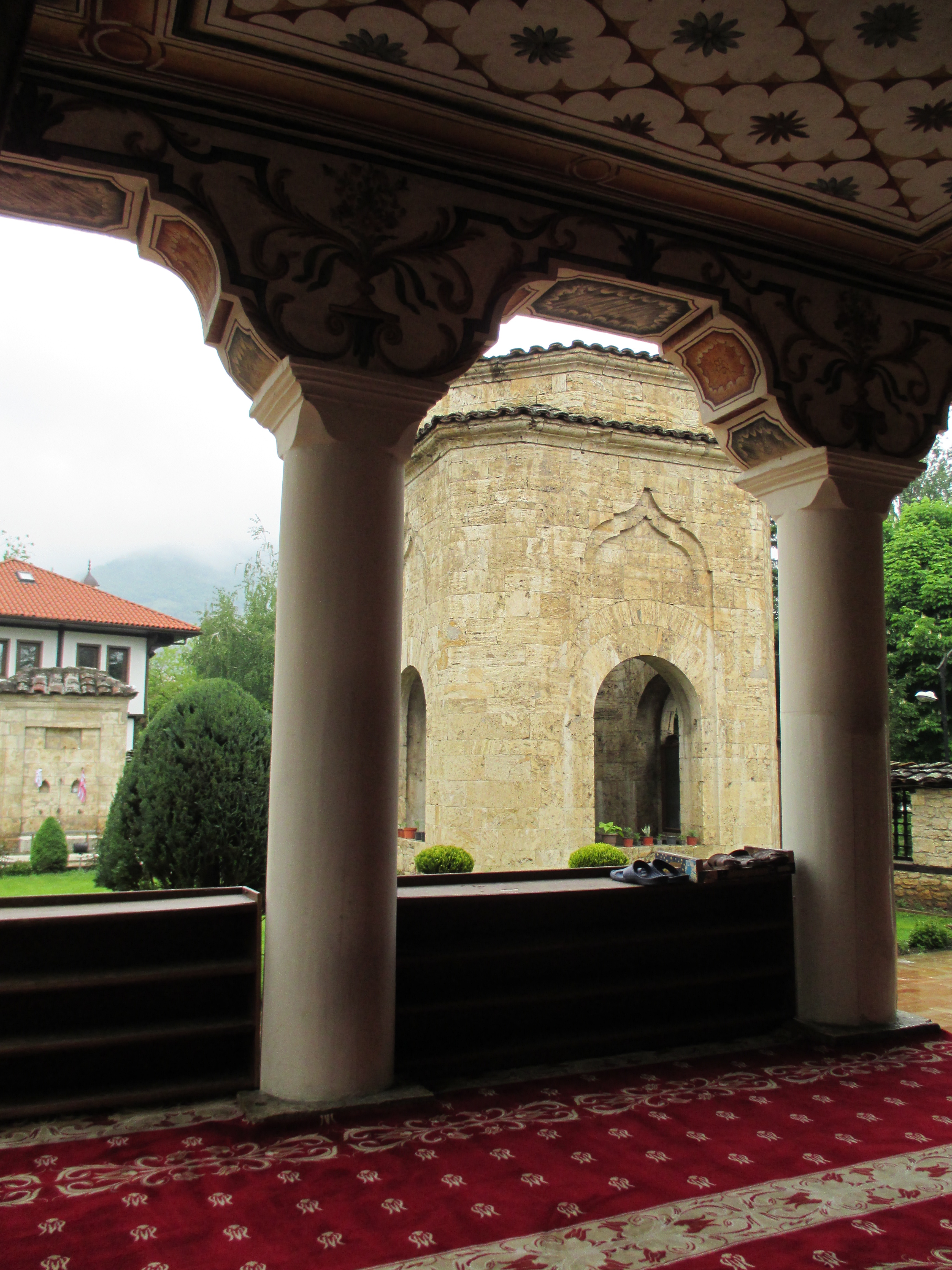
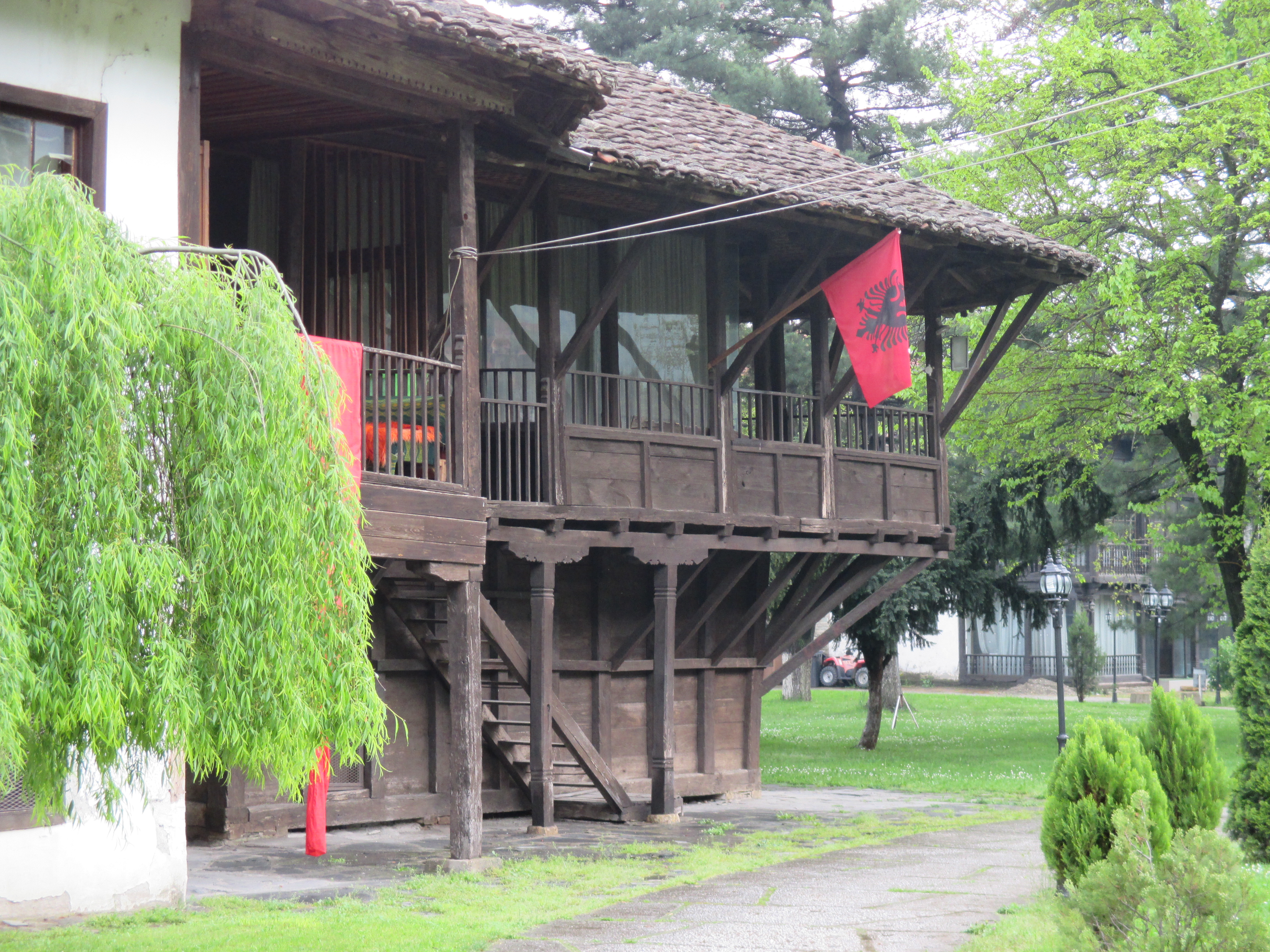
OLYMPUS DIGITAL CAMERA(The photo above and all photos in the main body of this post, are of the Šarena Džamija in Macedonian, or Alaca Cami in Turkish, which means “The Decorated Mosque,” an eighteenth-century masterpiece of Ottoman Folk Baroque in Tetovo, Macedonia.  The photos interspersed between the footnotes are of the Bektaşi Harabati Baba Teke on the outskirts of Tetovo — two of the loveliest places I visitted on this trip.  Click on all.)

From Rebecca West’s Black Lamb, Grey Falcon:

“It is impossible to have visited Sarajevo or Manastir or Bitolj or even Skopje, without learning that the Turks were in a real sense magnificent, that there was much of that in them which brings a man off his four feet into erectness, that they knew well that running waters, the shade of trees, a white minaret the more in a town, brocade and fine manners, have a usefulness greater than use, even to the most soldierly of men.”

Yes, again…  West is prompted to make this comment in I can’t remember what city in Macedonia because the book is huge. Always super-astute, she identifies something really profound about Turks: essentially, what’s known in classical Japanese aesthetics as “bushi-no-nasaké” – “the tenderness of the warrior.” I don’t think that needs to be explained any further. Afghans have this quality, and the autobiography of Babur, the founder of the Mughal dynasty, his Baburnama, where he talks about the blood and fear of war with true horror in one passage and the sweetness of his beloved Kabul’s melons, its ice-cold waters and the handsomeness of its young men in the immediately following, is probably the most striking literary example of this aesthetic strength outside of anything written in Japanese I would imagine. (Complicated: the fact that it’s a quality most highly present in strongly homoerotic environments or cultures.) I remember sending West’s passage to one of my best friends in Istanbul when I read it and she wrote back and said: “I wish there were even a trace of that sensibility left here.” And I think she was being a little unfair and also suffered from the near-sightedness we all do when we’re immersed in an environment and really can’t see it objectively. To begin with, at least as far as C-town is concerned, it’s hard to build a city for fifteen million in fifteen years and maintain any kind of sensibility at all, so something has inevitably been lost in the dizzying pace of progress in contemporary Turkey. But it isn’t hard to see if you just look a little: a sensuality, an alertness to beauty and material comfort of all kinds, despite some overdone glitz, that comes at you from nowhere often – of course from Turkish women, some of the world’s most impressive for me, but even from the most macho (and some of the world’s most impressive) guys, which is when it’s really beautiful and almost disconcertingly lovely: an aesthete’s attention to detail; a sudden, completely unsolicited, solicitous gesture of smiling generosity; a strange soft politeness and sensitivity, which the sound of the language, especially in the City’s accent, only adds to… A “tenderness.” That of a complete man. Which is what the Japanese meant.

But my reasons for posting it now have nothing to do with my friend or with Turks really. I had been looking for an opportunity to post this passage at some point because it’s essentially the seed of this blog. I thought maybe on some anniversary in April, but Easter posts always get in the way then. What gave me the impetus to post it now is finding the beautiful “Painted Mosque” in Tetovo in Macedonia and the Bektashi Harabati Tekke on the outskirts of the same city, because both structures or compounds are the purest embodiment of the observation West had made of Turks some eighty years before.

IMG_0256

Why did the Jadde grow out of this particular quote? I’ll start from the beginning.

Four, five, maybe even six years ago – I think it was 2008 – a group of Turkish historians of Ottoman art and architecture completed a massive and what sounds like a seriously respect-worthy encyclopaedia of all the Ottoman monuments of the Balkans. I heard about this from Greece, however, in an email from a fairly out-there nationalist who has since grown exponentially deranged, that went out to friends, and friends of friends, and acquaintances, and acquaintances of acquaintances, with the pompous subject line: “The Falsification of History!” No explanation of why the work of serious Turkish scholars was false or a process of falsification. No explanation at all; and, really, I can’t even remember what the tirade in the rest of the email went on about. I wrote back (“Reply all”) and said: “Good for them. Why don’t we do it too?” And then I remembered the above passage about “Turkish magnificence” that West had written while in Macedonia and I sent that out right after.

MosqueTetovo

The response blew my mind. Dostoevsky said that hysteria was God’s gift to women. But watch certain kinds of sports fans or listen to a certain kind of nationalist and you’ll see that maybe it’s the y-chromosome which carries this gift of the Lord’s. Or maybe Samuel Johnson was wrong in calling “patriotism the last refuge of scoundrels” and should have dubbed it the “last refuge of hysterics.” I was called a traitor. I was called an idiot. One person wrote to tell me that he might agree with some of what I said (I hadn’t really said anything – Rebecca West had) but that I was so aggressive that he wasn’t going to stoop to my level. One guy wrote me an email most of which sounded like it was lifted out of the literature and billboards of Samaras’ (now Prime Minister) simultaneous Macedonia/Elgin Marbles campaign that made an international rezili of us in the nineties when he was Foreign Minister (*1), telling me to “read some history” and “that if you don’t know your history you’re nobody; you’re pathetic my friend — you and your ‘magnificent Turks.’” Now, when a Neo-Greek tells me that I don’t know my history, the hair on the back of my neck stands on end, because even when they come out of the country’s best schools (”…oy, I should cough…” as a certain old Jewish lady I knew liked to say), like this guy has, the “history” they know – or choose to know — are just the national mythologies. I actually really felt sorry for him to be honest, not even insulted, because, like I said, this was a circle of friends of friends and there was a good chance that he would eventually get to know more about me some day and then he would feel r-e-a-l-l-y dumb for doubting either my historical knowledge or my sense of cultural consciousness. I hear he’s a nice guy. He later apologized for calling me “pathetic” but insisted that we still disagreed completely – “diagonally” was the term he used in Greek. I didn’t bother to ask what it was we still disagreed about exactly. And I also won’t tell you who most of these people are professionally because it’ll send chills down your spine.

There were no explanations coming anyway. What was “false” about this project? Were these academics impostors or clowns? Why was I “pathetic?” What was it that I didn’t know supposedly? What was the “diagonal” disagreement about? that the Ottoman was a civilization? What? Explain. Just like I never got an explanation for why my Genocide post was “enraging”…. εξοργιστικό…. other than that it takes away someone’s claim to victim status, nothing was clarified here either, except that one shouldn’t stand anybody saying anything positive about Turks.

IMG_0263

Eventually an attempt at explanation (talk about “pathetic”) came from the original sender, who we’ll call “The Messenger” from now on. “Of course, I support the preservation of art” – he wrote: the classic, vapid introductory caveat of every ideologue; Hitler loved art too; that’s why he bombed the shit out of Piraeus but didn’t touch Athens – “but I can’t tolerate the turning of every little stone into an Ottoman ‘monument.’” Had he seen this encyclopaedic project first-hand? Did he know that any of the entries were just “little stones?” I doubt it. But then came the real point, the following completely strained and muddled analogy: “And when it comes down to it, the preservation of the art of the burglar must take second place to the art of the owners of the home that was burglarized.”

Got it, right? The burglars are the Turks. Understood? Even if we overlook the fact that the primary genetic material of modern Turks is made up of the converted and Turkified peoples that already inhabited the Balkans and Anatolia (2**) — they’re us and we’re them essentially, on some deep level there’s no “they” there; does that not create even the tiniest bit of empathy and identification? — the Turks, and Islam, have been in the Balkan peninsula for six centuries. They’ve been in Anatolia for nine. But for the Messenger, they’re still burglars. They first appeared on the record in the history of southwestern Asia as military slaves, I think, in when? the 7th century? If we count Turkic peoples like the Bulgars, Cumans and Pechenegs, they’ve even been in the Balkans since the 6th century. When do they get their green card?

So this is the essential irrationality of these people’s thought pattern and it’s what makes their arguments descend into crazed incoherence so dramatically fast. They’re not angry at a policy or an act or a group, really, or even a politician or another nation even. They’re angry at gigantic, abstract historical phenomena: the spread of Islam; the westward movement of nomadic tribes from East Asia in the first millennium – shit like that. Which are phenomena that, admittedly, we may have been on the uncomfortable receiving edge of, and — you know what? — yes, cause me occasional sorrow too: the loss was great. (Though we maybe were given much through these processes, also, if you’re willing to see.) But, “ὅτε γέγονα ἀνήρ, κατήργηκα τὰ τοῦ νηπίου” – “when I became a man I put away childish ways” (that’s Paul, I Corinthians, 13:11, since none of these types will know where the quote is from or even if it’s from the Bible very likely) and started looking for ways to handle that sorrow more productively instead of angry — which I had never felt — ranting — which I had never done anyway. But when you listen to these guys you get the distinct impression that you’re watching someone whipping air, or digging a hole in the water as the Greek has it. Because you’re listening to the rant of someone stuck on what he thinks is the losing side of history, and who insists on continuing to act like a loser – and thereby remaining one — by whining and hating. And if you confront them too intensely, they just get nasty because they hit a wall almost immediately; they have nowhere to go rhetorically. I was in a comfortable living room in Athens last month, having drinks and a perfectly civilized – I thought, at least — conversation and listening, I think, to Hadjidakis or even Chet Baker. And I said, for some reason – I can’t remember the context: “Obviously the single largest ethnic group, if not the majority, of the population of Greek Macedonia were Slav-speakers until the beginning of the 20th century, until they were chased out or massacred or exchanged and the considerable remnant terrorized into being afraid of speaking their language or even of openly being who they were.” And I immediately got a traditional warm Balkan reply from this τάχα sophisticated Athenian and Kollegiopaido: “Bre haydi, go fuck yourself, malaka!” Not because this person doesn’t know that what I said was true, but because I had dared to say it so bluntly. And instead of getting up and leaving, or staying and breaking some teeth for being spoken to that way, I was silent. “We were persecuted and thrown out of so many places too!” And then you realize you’re talking to someone who has descended to the level of a fourth-grader and that it would be child abuse to continue.

So rather than waste too much more time in exchanges or situations like that, I finally got my act together a couple of years later and started this blog. I wasn’t going to continue writing or responding to these people individually: narrow-minded and locked in their ideological boxes and — most irritatingly — profoundly provincial and ignorant of certain things and yet simultaneously convinced of their status as the crème de la crème of their segment of Athenian society. (They’re big fish in a little pond and when they get thrown into the ocean they don’t even realize it.)  I was just going to put my ideas out there and anybody who wanted to could do what they felt about them.
IMG_0259

There are two basic components on which these individuals’ thought worlds rest and are designed and constructed. One is their complete lack of empathy, or even the capacity for the slightest identification, with those different from them. I understand not everyone can be from New York, where you’re not only confronted – in the flesh – with the entire rest of the world from the moment you’re conscious of your environment, but confronted as well with the stories of loss and tragedy and deprivation or just frustration and lack of opportunity –again, in the flesh – that brought both you and all these others together here in this city. And you don’t have to be as peculiarly sensitive to these issues as I am. But unless you have an anvil for a head, or no heart at all, it’s impossible to be a New Yorker and not recognize that, though your story may be distinct, it can’t be privileged in as facile a manner as it can when you’re home locked up in your little mono-cultural society. (3***)

And the “in the flesh” part is what’s crucial. People like the Messenger, or Mr. “Pathetic,” feel an instinctive, knee-jerk negativity towards Turks – or anybody else — because….

they’ve never LIVED them, or VISCERALLY lived ANY kind of DIFFERENCE, at ALL, in ANY  REAL way. (4****)

I’ve already written extensively about how the young people of my village, with one-fifth the education of these cosseted bureaucrats (much less a kid like my nephew Vangeli), are more cosmopolitan and open about the world because they’ve lived bi-cultural existences in Albania since their first breath, even if it’s with people they may not particularly like. If anything, the kids of Derviçani would silently ignore The Messenger and his preachings. And if The Messenger dared to get angry and nasty and foul-mouthed with them because his prophecies weren’t being heeded, as he always does with everyone who doesn’t fall at his feet when he speaks, he would be roughly escorted out of the café or bar they would happen to be in, in New York Irish pub style, by a couple of big Derviçiotika djovoria (5*****) — believe me, they’re good stand-ins for Irish pub bouncers, take a good look at some of them in my photos — and quite possibly at knife point just to make sure the message got through. They don’t take kindly, as I don’t, to being told what to feel or think by Athenian amateur “intellectuals” or what they more frequently refer to as “butterboys.” But there are even more dramatic examples I know, intimately, of people having lived amidst ethnic conflict from birth and then — as per Paul in Corinthians – having grown up.

My father grew up in that same village under much worse conditions: conditions of almost constant, chronic – and fatal — communal violence between his communities and the surrounding Muslim villages. During periods of extreme tension, for months or years at a time, a man didn’t leave his village’s boundaries without a rifle visibly slung over his shoulder and cartridge belt across his chest and the women never left at all. And this is the 1920s and 30s we’re talking about, not the eighteenth century. My father could easily have interpreted everything he and his family suffered then, and later under Albanian communism ( see: Easter Eggs…) as something inflicted on him by Albanians or Muslims. But he never did. One of his best friends in New York was a man I used to call Kyr’ Meto (Mehmet), not only an Albanian Muslim but a Çam, in fact, from the Albanian tribal group that were driven out of Greece and massacred by our righteous, right-wing resistance during WWII. They would tease each other, even, in a kind of morbid tragic-comic way of dealing with their shared painful past. My father always greeted Turkish or Albanian Muslim or any Muslim friend in my house with almost more warmth than he did others, as if slightly overcompensating with them were a balm for the pain or the fear of the past — or as if he felt the backwardsness of the old hatreds and they were now more a source of embarrassment than anything else — and with a genuine amused affection and nostalgia and interest in interaction with them, visitors from what was now a lost world. I remember him tearing up once (only on the side and with me, of course, not in front of anyone else) because a Turkish friend of mine had baked a spinach börek for him. They may have been the enemy once; but even as the enemy, they were real people to him, that on some perverse level he “missed,” and now the “enemy” part didn’t even count any more.

IMG_0251

My godfather was from a much more privileged, cosmopolitan environment.  His family was from a village near Isparta in western Anatolia. But the son of an Ottoman military doctor (which probably would make him a traitor in The Messenger’s eyes), he grew up in Konya and Aleppo and Beirut and finally Smyrna, where he lived a charmed life – the son of a rich Greek doctor in 1910s Smyrna and a promising violin student at the city’s conservatory. All this came to a nightmarish end with his father and brother-in-law hanged from the balcony of his house, the inferno and horrors of the Smyrna waterfront and refugee destitution in Athens. Yet it was the politicians who “never really hurt for the land and its people” — the Greek politicians — and had brought such total, scorched-earth disaster down upon their heads that he would constantly curse. Not Turks. He would kill for any opportunity to speak Turkish. He practically swallowed whole a Turkish friend of mine once, whom I had brought to meet him in Greece (admittedly a very beautiful one – the one who had made the börek for my father) and she in turn was dazzled by his strange, now slightly warped Ottoman Turkish. As conservative an old man as he was, he was, in fact, so old that he was still pre-nationalist in many ways and had no patience for what he felt was the ridiculousness of Greek nationalism. He would often say to Greeks – (slightly in a spirit of provocation and infected with that condescension that certain old Anatolian refugees or Polites – or even Cypriots today — feel for what they consider the backwards, ignorant inhabitants of the Greek state: “We taught them how to dress; we taught them how to conduct business; we taught them how to eat; we taught them how to wash themselves…”) – that he wasn’t sure whether he should consider himself a Greek at all, but maybe should just call himself a Turkish Christian. There were no smiles all around when he’d say things like that, but he got a kind of malicious, gleeful satisfaction from it.

Reflex hatred, despite their experiences, was just not part of their composition, like it is for The Messenger and his ilk. And needless to say, they would both have found it laughable that someone had freaked out — και τάχα μωρφομένα παιδιά — because eighty years ago a middle-aged English woman had written that Turks had good taste.
IMG_0253

The second, and I’m not sure I would call it a basic building block but it’s certainly a primary characteristic of these people, is related to what Benedict Anderson once wrote in his groundbreaking Imagined Communities: Reflections on the Origin and Spread of Nationalism (6******), and that is that (I’m paraphrasing here): “The nation-state pretends to be the guardian of your culture and traditions whereas, in reality, it’s the enemy of the old ways.” I’ve always thought this the key to the strange contentlessness of nation-state nationalism. All these people who wrote me — the Messenger and his crowd — are, as is usual in these cases, from the more déracinées middling-bourgeois classes of their society and, other than a certain requisite amount of feta that gets put away in each household, there’s a certain indifference to and ignorance of any form of Greek tradition or life at all, and there exists only that same locally inflected form of post-bourgeois, consumer lifestyle that one finds among this class everywhere in the world, including both the tragic and comic consequences of their somehow thinking that their lifestyle puts them on a par with comparable classes in Paris or London or New York.

This was the class of young Athenians who mocked us relentlessly as Greek-American teenagers in the 70s, because we both knew and liked the dances and musical traditions of our parents’ regions and because we both knew and enjoyed the light Greek popular music of the time, which was, in fact, in its Golden Age during that period. I think we forget the degree to which Greek music of any sorts had come very close to dying out completely among these social strata until the rebetiko revival, which started in the 1980’s — and just refuses to die — because rebetiko was a tradition that was perfect material for middle-class white-boy appropriation (like jazz, the blues, and later rap and hip-hop in the United States): it provided all the discourse and attitude of subversiveness and marginality without any of its risky realities. Later, when by the nineties, the little girls of this class could be found dancing çiftetelia on the tops of bars in Mykonos (badly, of course; the thread had been cut by then and there was no regrafting the branch back onto the trunk of tradition), it was hard for me/us to contain our laughter or control the reactions of our stomachs.

Then there’s their complete indifference to the Church. And I’m not talking spiritually; I could give a shit about them spiritually or about the state of my or their or anybody else’s souls. Or religiously, a word whose meaning I don’t even understand.  I’m talking about the Church as a cultural institution, of which one cannot remain so profoundly ignorant and consider himself Greek. Period. That’s an unalterable, non-negotiable secular article of faith for me.  Sometimes I don’t like it either; but whether we like it or not, this institution: its philosophy, art, architecture, music, poetry and theater, were what the Greek world poured the by far greatest parts of its cultural energies into for close to two millenia. I know it’s a difficult leap to make from that; Holy Mother Russia for example, had the time and luxury and power to remain deeply Orthodox and yet take from the Western world the forms and genres she needed to make them her own and create the dazzlingly rich literary and musical culture she did for herself. I wish we had had a Dante or a Chaucer or a Boccaccio or a Lermontov or Pushkin to set us on the road to a modern literary culture, but we didn’t; we had to wait till the Generation of the 30s to produce anything even resembling a coherent modern prose and poetry tradition. We had to make the jump from the essentially mediaeval mind-set of late Ottoman Hellenism directly to modernity and in trying to make it were tripped up, on top of it, by the Classicism forced down our throats by the West.  As a result, the average member of The Messenger’s class is profoundly ignorant of any aspect of Church tradition, but will, in ways which make you cringe in embarrassment, take great pride in pointing out to Americans that the columns on a Greek Revival home in Princeton, New Jersey, for example, are “Greek” columns of the “Ionian order,” like the father in “My Big Fat Greek Wedding.”  The Messenger himself spent this past Holy Week sending out YouTube videos of Greek Air Force flight formations as a form of holiday greetings. I responded that I didn’t know what these could possibly have to do with this time of the year and asked why he was sending them to me and he got angry and sarcastically replied: “Ok, I’ll only send you ecclesiastic hymns from now on.” This is obviously a sarcastic reference to my supposed “religiosity” – which he probably considers a combination of passé Greek diaspora churchiness with a healthy dose of American “Jesus-Loves-Me” thrown in. I wrote back that I had never posted a single ecclesiastic hymn on my blog and that whenever I did post on a particular religious holiday it was to place it in a wider context of the myriad connections it usually has to other civilizations more than anything else. In fact, almost all the religious music on my blog is Black American Gospel or R&B. And if The Messenger or Mr. “Pathetic” or any of their buddies do know any ecclesiastic hymns, other than the first bar of “Christos Aneste,” which they’ve heard on those three and only three minutes, when, at midnight on Easter, they even set foot near a church, they’re welcome to send them to me.

IMG_0257

I talk earlier about certain historic processes, great losses of ours, causing me sorrow too. And, in response I’ve spent the greater part of my adult emotional and intellectual energies trying to build some sort of rickety bridge to those lost places – even if the only thing I have to show for it is this amateurish blog — and to the peoples with whom we lived in those spaces and with whom, over these spaces, literal and symbolic, we slaughtered each other in such staggering numbers for so numbingly long a time. But The Messenger and Mr. “Pathetic” don’t give a flying shit. A lost Byzantine world or even the lost world of Anatolian Hellenism mean nothing to them, other that just a reason for Turk-hatred and nothing else –read on if you can.

Because THERE…is that deeper indifference that stuns me often; and that’s not just an indifference to a certain body of cultural tradition, but to the bearers, the people themselves, of those traditions. This, again, is the natural outcome of being obsessed with the state of the State, while being almost completely indifferent to the cultural content – which is its people — of the State. The Messenger is obsessed with what’s good for the State, but is almost completely stumped if you ask him what his vision is for the Hellenism that this State is supposed to contain and defend.  I remember a characteristic attack of hysteria on his part in which he was screeching: “And I don’t give a shit about Anatolian Hellenism or Politikes Kouzines or Loxandres!!! (7*******) I care about what’s good for Greece!!!”   And this was always clear: that, taking this particular case, if the completely moronic plan for the 1919 invasion of Anatolia had worked, it would’ve been good; if not, as it wasn’t, then fuck the lot of them; bring them all to Greece and start again. The Fatherland is what counts. These are exactly the thought processes of Venizelos himself, without a doubt one of the slimiest dressings-up of two-penny Cretan machismo into a frangiko tuxedo that ever left its trail of slug-juice across the international stage: “Let’s try this insane idea and if it brings me greater glory and only then Greece, ok.  (I mean, damn, I even had to suck off Lloyd George in Paris to support me on it.)  If not, we’ll figure something else out, like up-rooting one-third of the Greek world – the most dynamic and productive part — from their aeons-old ancestral hearths and destroying forever the civilization and culture they had built in those places.”  “In place of that civilization,” which is not reconstructable in another place – places, lands, cities, forgive the New-Agey tone, have an energy, an identity, that don’t allow you to just put them together again somewhere else – “I’ll have myself a homogeneous and distinctly more governable Greece,” thinks the Great Cretan Father “and I’ll deal with the Jews of Salonica my way (politically disenfranchising them and allowing a series of vicious pogroms against them which would release the frustrated energies of the Anatolian refugees I was responsible for creating); I’ll conduct some completely gratuitous political purges and brutal Third-World-style monkey trials and executions so that I can blame the failed vainglory of my plan on the Monarchists, thereby perpetuating into the late twentieth century the polarization of Greek politics that I’ve been the primary creator of…those pesky Slavs in Macedonia will probably have to be taken care of by another generation… But I’ve certainly done my part in bringing myse…errr…the Fatherland peace and glory and order and progress and – just watch and see — they’ll even name a big airport and a big ole boulevard in Belgrade after me when I’m gone.” And there is a big ole boulevard in Belgrade named after the Cretan manga, which is quite apposite actually, because stirring up dangerous passions and delusions among his people and then abandoning them to ruin does make Venizelos very close to a Greek Milošević; they might want to think of a Milošević Boulevard in Athens too, or a Karadžić Avenue, just in honor of the spirit of Greco-Serbian friendship. And if you wanna go beyond Greek-Serbian palishness and broaden things up ideologically, a Tudjman Street would not be such a bad idea either.

Likewise The Messenger. All during the nineties, after the terrors of communism had passed the inhabitants of my father’s villages spent years of anxiety caused by a new fear: that the Albanian government would take advantage of the general chaos in the Balkans at the time and expel them from their villages into Greece – one fear replaced by a new anxiety. Only after 1997, when the Albanian state collapsed on all imaginable levels, and then things slowly stabilized, did this new fear subside, partly because the Albanian military itself had collapsed as well and all its weaponry, down to tanks, were completely looted from one day to the next. This flood of weapons is what caused the radical escalation of the Albanian KLA’s (Kosovo Liberation Army) violence in Kosovo, but in a land where a man’s rifle was “better than his wife” as an Albanian song puts it, it may have been the reason for the final coming of some sort of stability, for reasons that would make an NRA member’s heart sing: if there were any ideas about expelling Greeks from their villages, the knowledge that they, like almost everyone else in the country, now had a couple of Kalashnikovs along with their old hunting rifles buried under their houses’ floorboards definitely put a halt to any such radical plans.

But even despite this second wave of terror my people experienced, The Messenger stands at my side, about ten kilometers from Derviçani, where my ancestors held on tooth and nail to their land, their religion, their language, for centuries – as every other people have the right to — looks out over the valley of Dropoli and thinks out loud: “These borders could have been drawn to better advantage for us. All that was necessary would’ve been a few key population exchanges…”

He. They. Simply. Just. Don’t. Care. They care abut the Fatherland (or in The Messenger’s case, calling it the Vaterland at this point might be more apposite) and that it comes out on top. What it does to the civilization it’s supposed to defend, what the content of that civilization even is, what it does to the souls of its inhabitants, don’t matter. Das Vaterland über Alles. Nation-States, sadly, as in the analogy I made at the top of this post, are a whole lot like professional athletic teams. “Why do you love this team? It’s from my city. And? Your city has two or three of these same teams; why do you love this one? Everybody in my neighborhood does.  So?  Because my father did. And? Well, just because…ok… χέσε με τώρα… Fuck off now…what are these questions about anyway?”  You ask for meaning — like in the living room where I was told to go fuck myself — from something meaningless, and ultimately, the only response you’ll get is rage. The rage of the mute.

Again, I said I wasn’t going to tell you who these people are professionally, but those who know me already know and the rest can probably take a not so wild guess. Let’s just say, as I must have made obvious, that they consider themselves the defenders of the Fatherland’s interests abroad. So for them to have something to defend, the Fatherland must have some enemies — or just not very cooperative neighbors — because if not, what would they be defending? Nothing. And then they’d just be living the life of a glorified bureaucrat. And where’s the glamour in that?

Or as the poet said: “Οι άνθρωποι αυτοί ήσαν μια κάποια λύσις.” “Those people were a solution of some kind.”

The Staurodromi, Pera, June 2014

IMG_0250

 *************************************************************************************************************************************************************************************************************

1 * In the nineties, Antones Samaras, now Prime Minister, was Foreign Minister and he put all of his energies into preventing the recognition of Macedonia as an independent state by that name, and forcing the issue of the return of the Elgin Marbles to Greece; this is when plans for the new museum of the Acropolis were set in motion, which I just won’t go into, despite the fact that I admit it’s an impressive building. It has a hall of models of the Elgin marbles, that’s waiting there, for the return of the real ones, like Miss Havisham and her moldy wedding cake, spitefully waiting with her clocks stopped in her the fading beige wedding dress, for the bridegroom who, believe me guys, the Brits are never going to let come. And good for them and rightly so.

We never had a defensible point about Macedonians’ use of the name Macedonia for themselves. We may have had a point about Macedonians appropriating the completely Greek cultural phenomenon of Alexander the Great as their own – despite the cosmopolitan he, Alexander, later, clearly became, when he recognized the beauty and superiority of the cultures of the East he had conquered (but of course, we ignore that part of his story). Where we may have really had a point is that all this indicated irredentist intentions on the part of the new Macedonian state, on lands which may have been ethnically Slav-Macedonian until recently but now were clearly not. But we didn’t emphasize that or put it at the forefront of our argument.  Instead, as if it were still 1810 and some crazy Philhellene Wittelsbach were king of Bavaria, we tried to play the “The Ancients” card with the rest of the world. Instead of taking the lead, at a time of horrendous instability and bloodletting in the Balkans, and attempting to be arbiters of some kind of peace, as the most stable state in the region at the time (can you imagine?) we “donned our ancient fineries” as the Xarhakos song from Rebetiko has it, which only left the rest of the world, as Misha Glenny says: “confused and bored.”

This imbecilic persistence in the idea that claiming Greek antiquity as our own is going to gain us prestige and preferential political treatment from the West is beyond just neurotic; it’s pathological.  And yet no Neo-Greek can seem to understand how pathetic and comical it seems from an outsider’s perspective.
IMG_0270

2 ** A lot of Turks don’t like this argument either, because they think you’re calling them gavur tohumu or something. Official early Turkish Republican historiography had Turks arriving, as they now are, and gloriously conquering Anatolia and the Balkans, though there was never any explanation as to why Turks here – especially the Great Father himself – didn’t look anything like the Turks who lived in the places where they had come from (though the answer could probably be found if you got deep into Sun People/Sun Language theory and historiography, which, if you’d you’d like to do, be my guest).  Of course, nobody really believes this any more; when you have Bosnian restaurants and Kosovar Albanian fraternal organizations, or Circassian youth groups, you have a society that’s admitted that it comes from diverse sources in a manner much more mature than that of Greece – and that that’s no shame. But I can understand Turks getting defensive about it; Greeks have started saying this about Turks a lot lately and mostly it’s in a negative spirit, as a way to delegitimize them as some sort of mongrel race, or the: “See, Sinan was really Greek” argument. But it’s an odd and very stupid argument for Greeks to make, since we, as a former “absorbing,” Imperial people ourselves, are also a very complicated ‘mongrel’ mix, as the huge variety of our own physiognomies proves: “See, Basil I was really Armenian, and the Comnenoi were really Vlachs,” for example.  But there’s no talking logic to things as rootedly irrational as racism and nationalism.

3 *** I wrote once in an old post about Greek racism, when Golden Dawn violence was at its height, that:

“I’m from a city where you stop being a stranger the second you arrive, maybe, as many say, because nobody can really be bothered to give you a second thought.  “We may not be very nice, or smile, or say ‘Good Morning’,” wrote Pete Hamill, “but there’s always room.”  But I don’t believe that New York is tolerant just because everybody’s too busy to be intolerant.  I believe there’s a sadness behind New York cynicism and irony and supposed “world-weary stoicism” that few people really understand, but if you feel the city in your gut and it’s not just a cool glamour-spot for you, then you know.  You can hear it in people’s voices, in the accent, in their body language and facial expressions, and in the kindness and blunt bursts of warmth you’ll suddenly get from where you least expect it.  It’s the sorrow of exile — and the wisdom it forces on you.  He may not know a word of whatever it was his great-grandparents spoke or seen even a picture of the land they came from, but every New Yorker carries a bit of that sense of loss in him and an innate knowledge of what drove him and his away and brought them here: the destitution of Ireland, the grinding poverty of Sicily, the fear of just being Jewish in Russia, the terror of being Black in Georgia, the violence of Colombia…  You think it’s romantic; it’s not.  (In fact, there’s lots of research out there now suggesting that repeated external experience can and does become codified as genetic information that is then transmitted from one generation to the other.)  Every New Yorker just knows it’s the human condition.  So when the next stranger comes along, he nods, says hi, and goes about his business.  Maybe takes a curious interest in where the new guy is from and learns a little something about the world; maybe helps him out if he can.  Of course, it’s now a cliché to say that New York isn’t America; but it’s just as true that it couldn’t exist in any other country.

“How Greeks forgot the “sorrow of exile” is beyond me.”

IMG_0274

4 **** You feel this innate inability to experience the Other in the gut in this entire class of Athenians or urban Greeks generally, because the complex they’re burdened with, like the middle-classes of all semi-developed countries,  is that they’re always looking for petit bourgeois status points in everything they do and the rest falls outside their blinkers. They’ve been everywhere and have seen everything it seems, but have felt nothing. The great test for me, of course, is New York. Now, if you don’t understand that the great glory of New York is the dialectic between its glamorous, high-fashion, high-finance, high-cool end, and its popular, working–class, thriving immigrant metropolis end – neither of the two poles on their own, but the incredibly fecund dialectic between the two — then you’ve understood nothing about New York and might as well, as Nasredddin Hoca says, “go home.” And it’s so obvious that the great majority of Neo-Greeks who visit are so completely interested in just one end of that polarity that they’re not even worth considering as people who have truly appreciated the city. Colombian and Mexican friends who live here and have visitors come tell me the same thing: “They only wanna see what’s cool, so they can talk about it when they get home.” In other words, middle-class white boys from underdeveloped countries are all the same. It’s always the odd German or the curious French or Japanese couple — or two Turks once on 74th Street! — who have taken the subway out to Jackson Heights or Flushing and are prowling around for good Mexican or Indian or Chinese food or just the feeling of coming out of a subway stop and being in a completely different country. Neo-Greeks visitors, in fact, are so clueless about New York City, that they don’t even see that New Yorkers themselves now consider Astoria one of the city’s hippest neighborhoods, and instead they’re embarrassed by its old-fashioned immigrant Greekness; they can usually be found in a tourist trap neighborhood like Greene or Mercer Streets somewhere…looking for shoes.

As for The Messenger, he has a job that many would kill for, that posts him in various interesting cities around the world. Maybe not Paris or London or New York or Berlin, but cities and countries interesting enough that most of us would jump at the opportunity to go work there for a while. He hates all of them. Within two weeks of arriving he’s come up with his own elaborate, and always scarily racist anthropology of the country: why the city is boring and disgusting; why the food is disgusting; why the people are inherently, genetically morons and fools. He lives in each for up to two years at a time and hasn’t made a single friend in any of them. They’re all too boorish for him.

His criterion for loving a city is that he can get köfte and french fries at four in the morning. The only city worth living in for him is Athens. Now Athens is not an immediately loveable city by any means. It’s an acquired, and not easily acquired, taste and I for one happen to genuinely love it. But it’s the ugliest city on the European continent that doesn’t have war or a megalomaniacal communist dictator to blame for its hideousness and, as I’ve said before: “It probably takes first place among Europe’s cities in imagining itself as far more sophisticated than it truly is.” I love it…but can we get a reality check here, please?

IMG_0530

IMG_0531

5 ***** These low stone walls here (shown above), boundary markers between individual properties, are called “djovoria” in Dropoli, the region where my father’s village is; I’ve never heard the term used in other parts of Epiros. The men of Derviçani are also known as “djovoria” or “a Derviçiotiko djovori.” The meaning of this moniker is probably clear. It implies thickness and strength and stubborn immobility, a dude who’s probably not too bright, but who, like a genetically gifted wrestler or judoka, has a low center of gravity that’s hard to knock down and take to the mat. “Άντρα άπ’τη Δερβιτσιάνη, κοπέλα από τη Γοραντζή, γαϊδούρι άπ’το Τεριαχάτι κι άπ’το Λεζαράτ’ σκυλί.” “A man from Derviçani, a girl from Gorandji (the neighboring village which is considered not only far more elegant and sophisticated than Derviçani, but also to have the prettiest girls in the region), a donkey from Teriahati (because it’s inhabitants were considered docile and somewhat dumb) and a dog from Lezarati (long story: this is the neighboring village and competitor in the ongoing, still violent feud…because they’re considered turncoats, having converted to Islam in recent memory, which in these parts means the eighteenth century). And this is a saying that’s not from Derviçani, but from the other villages of the region. In fact, almost all the other villages of Dropoli consider themselves culturally superior to the brutish brawlers of Derviçani, but because it’s the biggest and northernmost Greek village, they’re considered the frontline, dumb grunt infantrymen of Christian Dropoli, and are granted grudging admiration for that – if nothing else.

6 ****** Types like “Mr. “Pathetic” are always telling you to read history, yet outside of standard Greek sources, they have read nothing…by which I mean nothing. They know none of the literature of modern nationalism, like Anderson or Hobsbawm  or or Gellner or Ignatieff; they’ve never read any of the writers on Balkan nationalism in particular, Glenny or Judah or Todorova. And they haven’t even read the works of scholars that have dealt with Modern Greek nationalism almost exclusively in their work, like Michael Herzfeld or Anastasia Karakasidou, a Greek anthropologist who studied in the United States and who was physically threatened and practically had to go into hiding after her dissertation was published in the late 1980s, because it dealt with the continued presence of Slav-speakers in Greek Macedonia; even the informants in her research who had told her they still speak Bulgarian better than Greek came out and officially denied her and the information they had given.

What’s the history I’m supposed to know again, Mr. “Pathetic”?  Let me know.

And what have you read lately?  Tell me.  Nα μαθαίνω κι εγώ…  

(Those scholars’ names are linked to their Amazon pages btw; don’t be scared…try…there’s nothing to be afraid of…)

The Messenger, of course, reads nothing but military history.

IMG_0275

7 ******* Politike Kouzina I’ve never seen, but it’s a film that I’ll admit sounds like the kind of sappy, faux-nostalgia, Greek-Turkish “brotherhood” corniness that makes me ill.  Maria Iordanidou’s novel Loxandra, however, is a masterpiece.  It’s often — and very  mistakenly — taken lightly because it’s a glimpse of life in late nineteenth-century Constantinople as seen through the eyes of a middle-aged Greek housewife, whose primary daily preoccupation is whether she should buy small mussels for lunch and fry them or big mussels and stuff them, or whether the eggplants in market are of the right fleshiness to make a decent hünkar beğendi yet. Yet through her daily preoccupations, deeply intelligent observations are made about nationalism, about ethnicity, about co-existence and inter-ethnic relations and about the compromises we make – often in the face of terrifying violence – to go on, not only living with others, but to continue seeing them as human. Together with Polites’ Stou Hadjifrangou, and to some extent, Theotokas’ Leones, it’s far smarter on all those counts than anything by Benezes or Sotiriou or any other book of the “Anatolian martyr” genre that usually fills about one-third of the average Greek bookstore. And in the best Greek Constantinopolitan tradition, huge sections of it are hilariously funny as well.

Of course, since it has no bearing on the good of the State, The Messenger doesn’t give a damn about any of this, or everything that was lost in the destruction of that world.  He’s angry at the destruction because his animosity can feed off of it.  But what it was that was actually destroyed, he is completely indifferent to.

Κι’αυτά.  Bu kadar, as they say.

IMG_0267

Comment: nikobakos@gmail.com

Athens = homogeneity? = racist? = just boring…?

19 May

OLYMPUS DIGITAL CAMERAHere she is, the gigantic poured-grey-cement Balkan village of five million people: who all think alike, look alike, act alike, talk alike and can’t agree on anything.  Απολαύστε την.  (Double-click to take in all the rich architectural detail.)

Sorry, I was just thinking to myself about what parts of my Balkan trip I needed to post next; people who kindly gave me interviews or let me photograph them and how I have to get on it…  And, how I’ve been wasting my time engaged in a running war with everyone in Athens to prove basic things like the fact that Albanians are a tall, extremely attractive people.  People in mono-cultural societies say the most deafeningly racist crap — you can’t imagine.  If one more person smirked at me when I said: “You know, Tirane is actually kind of a nice city…” things would’ve ended badly.  If it weren’t so offensive, it’d be fun to hear ignorance trumpetted with such certainty.  But it is.  Good timing to head to Istanbul.  Where I can’t understand the racist crap people are probably saying.

And I thought to myself, what? is it going on twenty-five years now that Athenians have been freaking out about immigration?  And it doesn’t seem to have crossed the brain of even the most intelligent or open-minded Athenian’s to make that an asset for the city and not a “scary” liability.  Where is this immigrant Athens?  In all these years, malaka, not one person has said to me: “Yo, Niko, there’s apparently this great Pakistani place in Patissia; you wanna go check it out?”  Everyone knows I’m into South Asia.  “Wanna go to the laike (market) on Saturday in Kypsele and see the stuff the Afghans sell?”

Or, all these tens of thousands of single, alone and lonely Albanian men…  There must me some woman somewhere they hire to make them börek or baklavadhes for bayramia and namedays and things.  Like the Mexican women who make tamales for parties in New York.  Where is she?  Where are they?  In New York she’d have a full front-page spread on the “Metro” or the “Food and Wine” sections of the Times and she’d be taking orders from Upper East Side ladies by now and have her own thriving business.

All the cement-cave-dwellers have had sushi though — without exception mediocre and psychotically over-priced…

Provincials, vlachadera, isolationists…μικροαστά, petit bourgeois συχαşιάρεδες…

Taco stand on Roosevelt Avenue in Corona, Queens, about five blocks from where I grew up, where for three to five dollars you can have a full meal of some of the freshest, most complex tastes of any of the world’s cuisines.  I know Athenians who have been coming to New York for years and who I haven’t been able to convince to try one of these places even once.taco-cart-99th-and-roosevelt

Actually, what I’d really love to do is bring a Kurdish kid home to New York with me from Istanbul with a big tepsi of stuffed mussels and watch him become a millionaire.  I don’t know where I’d set him up first though: Astoria? Sunnyside? or straight to Manhattan? or Long Beach or somewhere?  Or get him a booth at the Italian summer festival circuit…

Midye1625x833xtlbsptyp.jpg.pagespeed.ic.sQpGbKsyQV

Midye2Smstuffedmussel0001

Comment: nikobakos@gmail.com

It’s Purim tonight! — something like a letter to my mother…

15 Mar

Nicolas_Poussin_E_before_Assuerus_c.1640Esther before Assuereus, Nicolas Poussin, circa 1640 (click)

For Purim this year I’m posting this poem by Greek Jewish poet Joseph Eliya, who was from my mother’s hometown of Jiannena in the northwestern Greek region of Epiros.  (See the tab box on the right for the hundred references to Jiannena and Epiros on the Jadde).

The Jews of Jiannena were Greek-speaking Romaniotes, descendants of the Jewish communities of Greece, the Balkans and Asia Minor that existed since Hellenistic times and that held out culturally against the flood of Spanish-speaking Sephardim that found refuge in the Ottoman Empire after their expulsion from Spain in 1492.  They were called Romaniotes because Romania (the kingdom of the Romans) was what the Byzantines called their polity and what we too – till the early twentieth century – also called ourselves: “Romans” – which it always aggravates me to have to explain.  But it is one of the rich ironies of history that the only inhabitants of Greek lands that stayed faithful to their true name for themselves were Jews, while we sold our souls to the West for the promises and prestige we thought the re-excavated neologism “Hellene” would curry us from the Frangoi.
So Eliya’s native language was Greek, and though he wrote some of the most beautiful translations of Jewish Biblical texts into Modern Greek, particularly one of the Song of Songs and a series of love poems to Rebecca, in a rich, florid, archaic idiom, he also wrote homelier poems in a folksier Jianniotiko style like this one, “something like a letter to his mother” on the occasion of the feast of Purim.

For those who don’t know, Purim is the day that Esther, the Queen Consort to the Persian King Ahasureus, and her uncle Mordechai, foiled the plans of the king’s evil minister Haman, to have the Jews of the kingdom massacred.  It’s generally celebrated by listening to the book of Esther in synagogue, the Megilla, sending food and giving charity to the poor and dressing up in costume, an aspect of the celebration that may be an interborrowing due to the fact that it tends to fall around Christian Carnival.

Eliya was a poor schoolteacher who died at the young age of thirty, and I believe this poem was written when he was away from his beloved Jiannena, and his beloved mother, on a teaching post in the Macedonian city of Kolkush.  It’s a sad, therefore — and very Epirotiko in that sense and in tone — poem, that’s in sharp contrast to the happiness of the holiday.

This poem also has an added emotional subtext for me.  My mother’s best friend when she was in elementary school was a Jewish girl, Esther — Esther Cohen.  “Astro” they called her, in the Epirotiko diminutive; “Tero” is also another form for the same name.   And as a little girl from a peasant family recently moved to Jiannena from their village in the mountains just to the south, I could tell that her stories about her friendship with Astro were her first lessons in tolerance and difference, whether she would’ve called them that or not (we certainly wouldn’t in our day…I’ll leave them for another post).  And she may have known it even less, but her friendship with Astro may have prepared her for life in New York in ways she was probably never conscious of.  And what she may have been even less conscious of — though maybe I should give her some credit: I do know for sure that my mother’s stories of her friendship with Astro served as my first lessons in decency and openness to those different from you.  Of that there’s no doubt.  So this post is something like a letter to my mother too.

Always they ended in a kind of distracted silence, for she never knew what had happened to her friend during the war: “Τι νά’χει γίνει η Άστρω;” she would mumble.  “What can have happened to Astro?”  And what was strange was that she could’ve found out; there were surviving Jews in Jiannena that she knew and there were even Jewish Jianniotes in New York she could have asked.  But it was like she didn’t want to know.  Even odder, I’ve had several opportunities to find out as well; Kehila Kedosha Jiannena, the Jianniotiko shul in New York on Broome Street has records on the whole community.  But it’s been almost as if I don’t want to know either.

Here is Eliya’s original Greek, with my free verse translation below.

Purim

Purim

(Something like a letter to my mother)

It’s Purim tonight!  The thrill and joy of the great feast!

Light in our souls, and a smile on the lips of all.

And I, my orphaned mother, the refuse of exile*

Waste away in a chill joyless corner.

It’s Purim tonight!  And the synagogues open their arms wide to the faithful children of my ancient people.

And they read again with wonder, from the white parchment, the triumphs of Mordechai and Esther through the ages.

It’s Purim tonight!  Young and old gather at home, at hearth, to hear the Megilla’s** tale.

And I mother – with the burning lament of exile – tearily thumb through my Bible in a lonely corner.

Your son won’t be bringing you candles or flowers from shul*** tonight, mother.  And if your crying is bitter, don’t lament too deeply.  My Fate has been decided, and poverty — poverty, mammele**** – has no feel for sympathy.

**********************************************************************************************************************************************************************************************

Notes on my translation:

*”Exile” here does not imply political banishment or anything of the sort.  It’s the word “ξενητιά” as Eliya spells it, that’s so central to understanding the Greek and — it probably goes without saying — the Jewish soul, but is so devilishly difficult to translate precisely.  It means absence — absence from the place where one should be, from one’s heart’s homeland.  Through and because of emigration and poverty most often but not always; it’s often something one feels without having had to leave.  The Turkish “kurbet” is the word closest in meaning that I know from another language.

**Not to be disrespectful, but the Megilla, the Book of Esther, is quite long, and is proverbial, in at least Ashkenazi humor, for being tedious and monotonous to listen to — but one bears it.  It’s exactly the same as the Greek term “εξάψαλμος,” the Hexapsalm, a selection of six psalms that is always read at the beginning of Matins and I’m not sure if during other offices, and would be beautiful if correctly and carefully recited according to the rules of Orthodox recitation.  Unfortunately, it’s usually read in an incomprehensible blur of mumbled boredom by the lector or cantor, which actually makes it even more tedious and irritating to sit through.  It’s usually a good time to go out for a cigarette.  I just always thought the similarity was funny.  “Ωχ, τώρα θα’κούσουμε τον εξάψαλμο,” a Greek will say with dread when faced with a berating lecture or kvetch session or someone’s tiring complaint that’s so repetitive you just tune it out, just like a Jewish New Yorker will say: “I really can’t listen to his whole Megilla right now…”

***In the second verse, Eliya uses the Greek word for synagogues and I translated it as such.  In this last verse, he uses a homier, Epirotiko form whose intimacy I felt was better conveyed by “shul.”

****And last but not least, we run into the painful translation issues that are generated by the fact that English is almost completely lacking in a system of diminutive terms of affection, especially compared with the highly elaborate diminutive terminologies of Slavic languages or Yiddish (or I assume Ladino) or even Greek.  At no point in the poem does Eliya refer to his mother as “mother” but rather “my little mother” — “μανούλα’μ” — “manoula’m.”  This is a term of affection used often by Greeks and especially Epirotes to refer to anyone, not just one’s mother, not even necessarily a female (Athenian idiots making fun will darken or double up the “l” to make it sound more northern and Slavic and hickish; for me it’s just more beautiful…); one will say to a young boy or even a friend: “Come here, manoula mou… What’s wrong, manoula mou?”  Just like “mammele” is used in Yiddish.  But I felt that using “mammele” throughout would have sounded too Yiddishy and cute, and so I saved it for that last, most intimate verse, and used mother elsewhere.  After all, this is a poem that above all is an expression of the most Jewish kind of mother-son bond.  But Yiddish and its many beauties is cursed now, by its sudden, dramatic extinction in Europe, and its shadow survival only in American entertainment, with the danger of always lapsing into a default comic tone.  It’s sad.  The translation from the Greek of the last line of the poem, for example: “poverty has no feel for sympathy…” would literally be: “…but poverty doesn’t know from sympathy.”  But then I’d be writing Larry David dialogue.

**********************************************************************************************************************************************************************************************

FINALLY, I’d like to thank Marcia Haddad Ikonomopoulos for the scan of the Greek text of the poem.  I’m in Athens now, away from my library and couldn’t find it anywhere online.  I wrote to her and within five minutes she had written back to me with both “Purim” and “Esther,” another of Eliya’s poems about the biblical heroine.  She suggested that “Esther” is a poem more appropriate to the happiness of Purim than the melancholy of “Purim.”  Unfortunately, it’s written in a much more difficult, semi-biblical, archaic language that I didn’t have the time to translate.  I promise her however, that as soon as I get a chance I will work on it and post it on the Jadde — out of gratitude to her helping me out for this, and out of gratitude to the one-woman pillar of the Kehila Kadosha Janina community that she is.  I’d also like to thank the whole congregation there for always making me feel so welcome when I attend on Erev Simchas Torah; the rabbi and his stentorian voice, the three young men who lead prayer and are perhaps the community’s most precious resource — let’s see if I remember correctly: Seth, the rabbi’s son, and the brothers Andrew and Ethan, who though they’re from a Sephardic family from Berroia, devote their shabbes and yontif time to energizing this tiny community in need of outside help.  The warmth of the community has always moved me and I’m grateful for both the odd need for Jewishness in my life and the link to my mother and her childhood that they unknowingly provide.  Thank you.

Comment: nikobakos@gmail.com

fog_in_my_hometown

Jiannena


“The Nasty Bits”

28 Feb

I guess I’ve already missed the end of pre-Lenten meat-eating by a week, but I thought, as my last day in Paris coincides with the last day of Apokries, I’d take the opportunity to volley a few more visual missiles at my Vegan-Anti-Offal enemies’ positions.

These are from my new favorite place in the city.  One very cool development in France lately has been the proliferation of almost Spanish-style tapas bars, where you can try lots of different dishes instead of having to sit through the traditional three-piece suite.  I hope that will always be available in all its ritualized confidence, but this meze phenomenon is a welcome break.  And except for the absence of ankle-deep garbage on the floor, this place is as chaotic as any place in Spain and makes me mindful of the French’s own anarchic impulses.  You only get half the things you ask for; you have to scream for them over a counter that’s packed three-people deep; the check is always wrong; people are eating out of your plates and vice-versa, but the flavors there are nothing short of miraculous.

My favorites:

kidneys

The kidneys in a quick onion and vinegar sautee

Boudin

Their boudin, (coagulated pig’s blood — just a reminder…) which they don’t put into a casing but make into a loaf, kind of like a Penn-Dutch scrapple if the analogy isn’t too weird, served with a very hot green pepper and roasted apples

IMG00408-20140227-1657

A soft-fried egg dish swimming in butter and buttery croutons that’s made with some mushroom that has all the foot-like smell of truffle but none of its subtlety; they wouldn’t tell me what it’s called: “Il n’y en a pas là-bas…”  (I think) “You don’t have them over there…” was all I managed to get from them, irrespective of where “over there” was.

Pig's ears

The pig’s ears, slimy and gummy on the outside with the cartilage-crunch core, sauteed in a Basque-like red pepper combo

butter

The most delicious cheesey, slightly sour butter on earth, always sitting on the counter sweating, with bits of other people’s food always stuck in it (“eeeeewww…” a definite “C” rating from Bloomberg) and served with bread that’s leagues beyond the Poilaine stuff that’s everywhere and is so not great that I’m beginning to think is a gigantic hoax.

Finally, the pig cheeks — yep, hog maw — (see: “Hog maw, cornbread and chitterlin” ) braised in lentils:

pig cheeks

…which really reminded me of how much great food, especially great French food is based on the slow, laborious breaking down of animal collagens, something I tried to capture in this second pic a little better (forgive the quality — yes, yes, I’ll buy an IPhone; click on these for a better view in the meantime); it’s the secret to the perfect texture of good mageiritsa too, though everyone thinks it’s the augolemono.

pig cheeks 2

Why such conspicuous animus to the anti-offalers?  επειδή μου σπαν’ τα νεύρα….  Because they irritate me.  And I wouldn’t be so irritated by just their bad taste and limited palates and squeamish, plasticked alienation from the realities and depth of good food, if they would just shut up about it: it’s what in one of this blog’s first posts — “Chitterlings…and mageiritsa” — (the Jadde started just before Easter 2011) I call their “anthropology tes poutsas” that drives me mad: the rationalization that poverty made people eat this food and that now we’re beyond that.  (See also:  “What I managed to put away in a day-and-a-half in Paris and some thoughts on the “crise;” or, “…the brevity of time and the immediacy of pleasure.” )  Believe me; none of the people who eat here are poor.  It’s not in an impoverished southern village: they don’t exist anymore, are either depopulated or bought up by ex-pat Brits; it’s not in a dying northern industrial city; it’s not in a destitute banlieue.  It’s dead in the center of chic-as-you-can-get St. Germain (there’s an argument to be made that this food’s appeal is about reverse snobbery — an argument I’ll listen to), right down the road from the Odeon and around the bend from the Luxembourg.  If you even hover around the edges of New York foodie-dom you’ve heard about this place, but, sorry, as a matter of blog policy, I don’t give out names.  You’ll have to dig up its delights yourself.

The rest of you can have the salmon.

Comment: nikobakos@gmail.com

Occitan and “endangered languages”

25 Jan

Romance_20c_en

(click)

If people here talk about the Albigensian Crusade like it happened last week, the more regionally nationalist talk about La Vergonha (the shaming) like it happened yesterday.  La Vergonha refers to the systematic process of imposing French on the Occitan-speaking peoples of the south (number 7 and 8 on the map and if you want to include Catalan in the same family, which many linguists do, number 6 too) when education became compulsory in the nineteenth century.  Reduced to a rural language (which has always come described in nationalist literature as “an unwritten dialect or patois”) after the Albigensian Crusade destroyed its high literary culture, the process involved not only the teaching of French but the systematic punishing of the speaking of Occitan, even outside of school, of the children of the region, and the conditioning of adults to feel embarrassed to speak it publicly as well.  The statistics are truly astounding — and sad: “In 1860, before schooling was made compulsory, native Occitan speakers represented more than 39%of the whole French population, as opposed to 52% of francophones proper; their share of the population declined to 26-36% in the 1920s,and then dropped to less than 7% by 1993.”  Despite strong pressure to do so, the French government still refuses to grant it official status as one of the nation’s official languages and frankly, with only 7% of the population actually fluent in it, why would they?  And this is France, the state that created hyper-centralized statism.  How Occitan nationalists think they’re going to obtain the recognition they want is beyond me.

SpeakFrenchBeClean

(click)

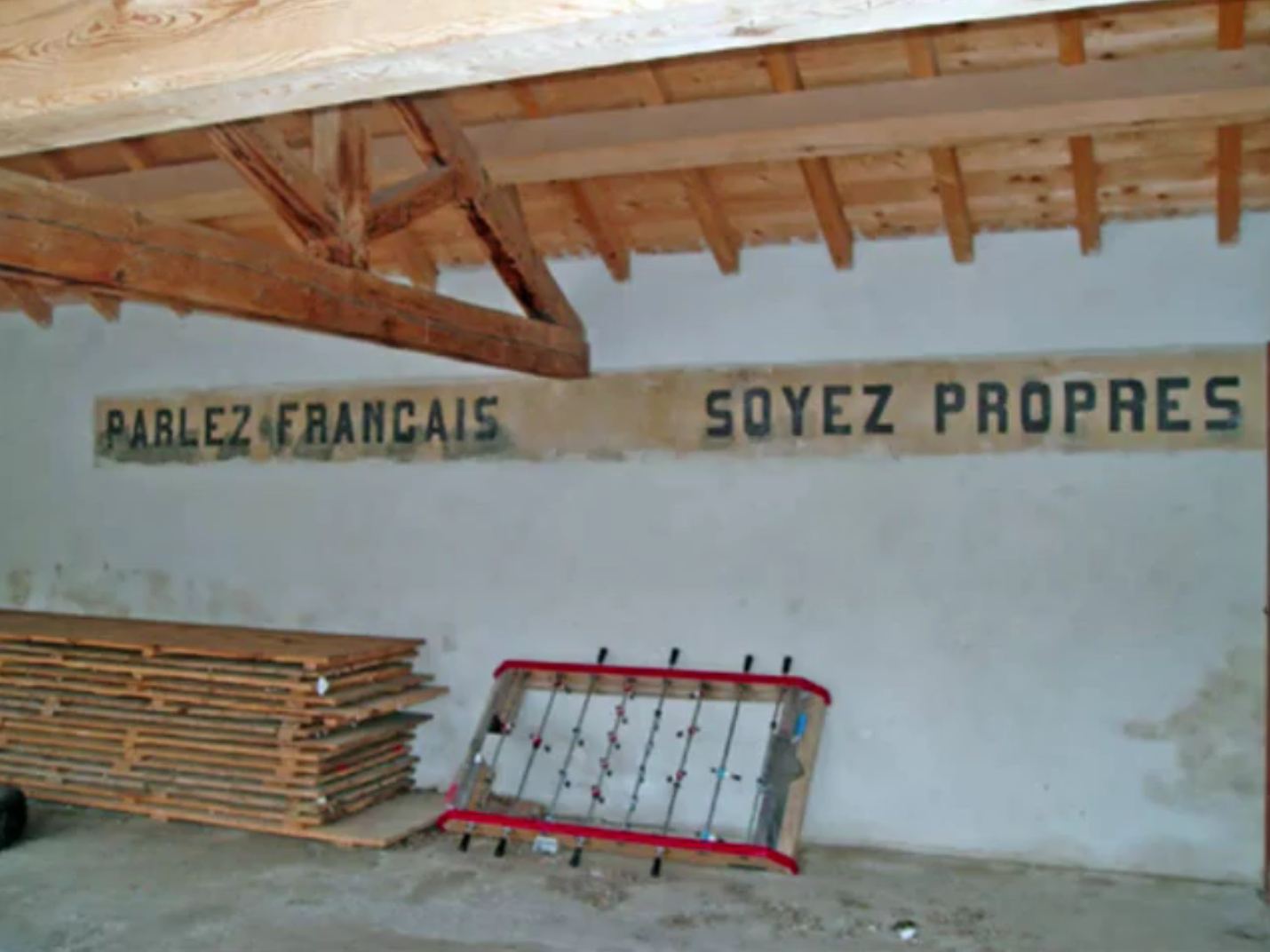
This happened during the formation of every modern nation-state.  A Greek Istanbullu of a certain age might find the sign above, from a French classroom, disturbingly familiar: “Citoyen, parle francais!”  In Greece, only one linguistic minority really bore the brunt of such oppressive language suppression: the Macedonian speakers of the northwest.  No Greek government would’ve ever dared trying to forbid the speaking of Turkish in the northeast; though actually calling yourself Turkish can still theoretically get you into certain kinds of trouble.*  The Albanian speakers of south and central Greece were really not a problem; not only was the language clearly dying out of its own by the early twentieth century, but Peloponesian Albanians were already Greeker than the Greeks in their ethnic consciousness and had proven it by essentially fighting our war of independence for us; it seems that, historically, you give Albanians — Christian or Muslim — an incentive to go to war and they’ll become more zealous crusaders of your cause than you are yourself.**  As for Vlachs, they were always chameleons, everywhere in the Balkans, mostly keeping their Vlachness to themselves and intelligent enough to let how they really felt remain a mystery to those around them; I recently came across a description of Vlachs as “the perfect Balkan citizens, because they are able to preserve their culture without resorting to war or politics, violence or dishonesty.”  (They’re the little mustard-coloured dots spread out over northern Greece and southern Albania and Macedonia in the map above.)

But are they preserving their culture?  That’s the question I get stuck on, no matter how much an enemy of forced nation-state homogenization I am.  Or more specifically, how much is something like Occitan language-nationalism sincere and how much is post-modern micro-identities coming alive for some reason I’m not able to explain really?  Is it just dilettantism?  You hear a lot about Occitan here in Toulouse, the dialect of which, in fact, is the basis for the language’s standard; what you don’t hear is any Occitan.  I live around the corner from an Occitan cultural center here in the Carmes quarter of the city and they have classes for kids and I hear them singing sometimes or reciting things.  And whenever I see their parents out front waiting for them and the kids are let out all anyone is speaking is French.  I don’t mind the EU spending money on bilingual signs — here, in Galicia, in Brittany, wherever — but those expressions of recognition actually seem more petty than anything else and some even seem disrespectful, almost a mockery: announcements in the Toulouse subway system are bilingual, for example.  Great.  So now the young descendants of the troubadours can proudly say: “Watch the closing doors.  The next stop is Esquirol” in the Occitan of their ancestors.

Occitan_and_French_language_signs_in_Toulouse

Bilingual street sign in Toulouse

Or even in Greece.  For the life of me I can’t imagine what “Arvanitika” organizations in Greece do: when nobody speaks the language, and they call themselves “Arvanites” and not “Albanoi” which would imply Albania, which is where their ancestors came from and that would be taboo.  Do they try to revive the language?  Not that I know of.  Do they do anything that the Albanian-speaking communities of Italy do?  Do they go on trips to Albania to get to know the land of their ancestors?  Of course not.  Do they set up aid organizations for recent Albanian immigrants to Greece in a spirit of fraternal support?  Even less.  They’re much more likely to have put them to work in their fields in Boeotia picking tomatoes for slave wages, or were until the new Albanians wised up.  Or Vlachs.  It seems that every year the number of Vlach cultural organizations and fraternal associations increases in inverse proportion to the number of true, living native speakers of the language that are still around.  The material or music and dance culture of Vlachs is not noticeably different than that of their neighbors; if they’re not learning Vlach, what are they doing?  Pane ekdromes?  They could do that as regular Greeks too.

There are more dangerous and toxic manifestations of that kind of localized-identity nationalism as well, most noticeably the Basques.  Less than 25% of the people who claim that they are Basques ethnically in Spain can actually speak the language at all — at all.  I once caught a hysterical comedy skit on Spanish television where a man in San Sebastian was trying to pull off a bank robbery in Basque — on principle.  And it wasn’t working because the teller couldn’t understand him.  Then the neighboring teller chimes in about the robber’s grammar and that it’s incorrect according to the teacher at the night-school Basque classes she goes to and the other customers on line start arguing with him and the tellers about noun declensions and whether his use of the subjunctive is correct or not.  And the robber starts to scream, frustrated: “I’m in Donostia (San Sebastian in Basque) goddammit!  Not Burgos!  And I can’t even hold up a bank in my own language!”  Finally, the cops arrive and instead of apprehending him, they get caught up in the one-upmanship of the group of barely Basque-speaking Basques’ grammar arguments and the robber, frustrated, makes his escape.  It was hilarious and it was on YouTube for a while but I haven’t been able to find it again.  But that’s not all a joke.  People killed each other in the hundreds for decades for a an identity with only the most fragile of real footing and a language that none of them spoke; and in post-Franco Spain, one of the most liberal, progressive on social issues nations in Europe, where you’re free to learn any language you want and maintain any kind of culture you like.  So, at the risk of sounding glib, make the effort to  learn the language first — BE a Basque first —  before you start killing people.

I guess I’m a supporter of American style laissez-faire policies culturally and linguistically.  No language should be prohibited; but none should necessarily receive state support either, especially for a language that actually has very little chance of survival.  Reviving it, maintaining it, disseminating it is the community’s choice; if they can do it, halali.  But a language or culture that’s strong enough or rich enough to survive will not need support of any kind, almost by definition.  In multilingual situations where practical problems are presented, like with the immense number of Spanish-speakers in the United States, I think it’s fair for the state to step in and offer services that facilitate bureaucratic operations.  But nothing more than that.

What’s irritating is the ethnicity-based nation state’s inability to believe that people can be successfully, functionally bilingual.  People have been so for centuries, especially in our part of the world, where, especially in the cities, being monolingual was the exception rather than the rule, and almost as much so in rural communities, at least among men who had more dealings with the outside world or had emmigrating experiences.  Puerto Ricans, both in New York and on the island, are going on their fourth generation of being successfully bilingual.  I understand that with the spread of literacy and compulsory schooling some kind of standard had to be established, but that standard doesn’t have to be the same for every community.  And ultimately, it’s not proper or efficient social functioning that the nation-state is looking for in imposing language uniformity (New York bureaucracies, where five or six or a dozen or more different languages are regularly used in the daily functioning of one office are much more efficient than, say, Greek bureaucracy); it’s ideological uniformity.  The fear is not that you won’t be able to function in the national language; the fear is that if you speak another one as your first language it’ll serve as a conduit for anti-national ideas.

And that’s what the Vergonha was all about.


Comment: nikobakos@gmail.com


**********************************************************************************************************************************************************************************************

* “The Greek government refers to the Turkish community as Greek Muslims or Hellenic Muslims, and does not recognise a Turkish minority in Western Thrace.[14] Greek courts have also outlawed the use of the word ‘Turkish’ to describe the Turkish community.[19][20] In 1988, the Greek High Court affirmed a 1986 decision of the Court of Appeals of Thrace in which the Union of Turkish Associations of Western Thrace was ordered closed. The court held that the use of the word ‘Turkish’ referred to citizens of Turkey, and could not be used to describe citizens of Greece; the use of the word ‘Turkish’ to describe ‘Greek Muslims’ was held to endanger public order.[20] Greece continued this stance in the beginning 21st century when Greek courts ruled to dissolve or prohibit formation of Turkish associations.[19][21][22]”

**More on Albanians in Greece in an upcoming post.

Toulouse: “Who ever lov’d who lov’d not at first sight?”

20 Jan

Toulouse Old_brick_wall

“Who ever lov’d who lov’d not at first sight?”  Those who know that line know it’s Shakespeare from “As You Like It” – but actually it’s Shakespeare quoting Marlowe, a little homage to his more accomplished contemporary; interesting, particularly, because in my opinion Marlowe was a keener analyst of desire than Shakespeare, though I have only instinct and no textual support to back that up.  The important thing is that it’s true.  There’s now even science to support it; in “Narcissism Guides Mate Selection,” published in Evolutionary Psychology 2 (2004) Liliana Alvarez and Klaus Jaffe (?) write:

“Research has shown two bases for love at first sight. The first is that the attractiveness of a person can be very quickly determined, with the average time in one study being 0.13 seconds. The second is that the first few minutes of a relationship have shown to be predictive of the relationship’s future success, more so than what two people have in common or whether they like each other.”

And so it was with me and Toulouse.  My first morning here I walked out onto the street at dawn, as the sun started coating the walls of the slightly pinkish brick that the whole city is built with and that was it.  I think it actually took 0.9 seconds in my case.  But I was finished.  It was all over.  I was lost, tumbling into that so familiar abyss.  I had never fallen for a city so hard and so fast in my entire life.

Why?  Well, “you can’t really say why you love somebody,” Stella says in Streetcar… but you try anyway, only because the temptations of let-me-count-the-ways and the attempt to grasp the ungraspable are so powerful.

To start with the most banal and obvious, it’s beautiful.  Not a stunner, a Paris or a Florence or a Venice, but even more loveable because it’s not so perfect.  Who wants every city to be Paris anyway?  The medieval quarters are amazingly well-preserved and in the nineteenth-century neighborhoods it’s interesting to see the classic Haussmanian idiom of French cities translated into the local brick.  But that’s not really it.

There’s the immediacy and availability of pleasure in all forms, somehow even slightly more than in the rest of France.  Here, I’m reminded of Istanbul actually, because I think Turks might also have that same keen sense of “the brevity of time and the immediacy of pleasure” as the French do and even in Istanbul’s current hali, you feel, like in France, that you’re in the presence of a very ancient tradition of the production and consumption of luxury.  New York tempts you at every turn as well, except New York makes you struggle so much to reach the promised gratification that it in the end it feels as if you’ve had it pulled through your nose, as the Greek expression has it. 

The food: though these things are eaten all over the country, this is the home turf of foie gras and pork belly and duck confit and restaurants that proudly assure their customers that their french fries are made in goose fat, the way McDonald’s promises you there are no trans-fats in anything.  The wines are thick and rough and tannic and delicious; the only place where there’s no need to worry about ordering: whatever house red comes by the carafe is always perfect.  The streets are filled with always-full bars and cafes and the disconcerting sound of talking, of discussion, I mean of people really conversing.  Then it’s a university town, so it’s full of beautiful young people trying to fix all of their above oral fixations: talking and drinking and smoking and making out in public all over the place just like they should be.  And it’s not just the young; that magical ability the French have to make it seem like they have more available leisure time than people in any other industrialized country is even more visible here than in Paris, to the point where even someone as anti-work as me sometimes wants to ask: “Does anybody here work?”  And it’s not Italy, where everything is so homebound — all so tied to mamma’s apron strings — that most life happens domestically and out of view.  Here, more like Spain, it’s out on the street, even in January; it’s public, like in the natural polis.  It makes all the difference.  You can feel people needing interaction hungrily, like Greece in better days, craving the stimulation of others.

(This is a characteristic of the French everywhere — this love, this need for language and the exchange of ideas, sometimes what seems like nothing but a deep gratifying pleasure taken in the sheer enunciating.  It’s why — if you don’t speak any French at all and have no clue what people are talking about — every conversation you hear seems to have this tone of desperate urgency about it.  That the French are rude or cold or unfriendly is patent bull-shit; they are absolutely none of those things — quite the opposite; but if interaction or closeness is sometimes a little difficult to achieve if your French isn’t at least very good, it’s the importance of language again that explains it.  Sorry — I think they feel — but life is too short and there’s too much to talk about for me to help you with your halting French right now.)

And then there’s St. Sernin, the spectacular Romanesque basilica named after the patron saint of the city, which has become a major obsession of mine and in which I’m finding myself unable to keep from spending at least an hour every day.  This may not be the most beautiful church in Europe but it’s certainly the most beautiful Romanesque church in Europe, and for me, therefore, the most beautiful, since I have what’s almost – no, what’s clearly — a powerful erotic attraction to the style.  Knowing the renovation history of European ecclesiastic architecture, its interior is almost suspiciously austere, so I’m pretty sure it was re-Romanesqued or de-Baroqued, or however you want to see it, at some point.  This happened a lot in the nineteenth century, when Romanticism made the mediaeval more attractive to people than anything that had to do with the seventeenth or eighteenth centuries: it generally involved stripping later decorative accretions from older churches and restoring their “purity.”  Especially in southern Italy one finds this having been done fairly often, with mixed results: some before and after images I’ve seen of Sicily’s Byzantine churches seem successful; with the famous convent church of song and legend, Santa Chiara in Naples, they didn’t have a choice, since the Baroque church had been bombed by the Allies into a burnt shell and they rebuilt according to the original Gothic plan; others, like the practically made-up design of that silly Moorish cathedral in Amalfi, are clearly failures.  But whatever distractions they removed from St. Sernin I’m all for: nothing should impede the soaring, muscled athleticism of this structure and the space it embraces so powerfully.  It has to be seen — and felt, like flesh — to be believed.

St. Sernin is god-like; the building itself overwhelming the idea of whatever deity is supposed to be honored there.  The city’s other churches are more human and all quirky in the extreme.  There’s the Jacobins, named after some father monastery dedicated to St. Jacques and not those Jacobins; but still kind of jarring — like Our Lady of the Bolsheviks or something.  Only in France.  This church is described as having two naves, but only has one nave really, with a towering row of palm-like columns running right down the dead center (?) like the rope at a Hasidic wedding, so that the view of the apse and altar are obstructed from almost everywhere, so much so that mass is said at an altar set up against one of the side walls because if you’re further than even ten feet from the real altar you can only see it by peeking from around these, granted, beautiful columns.  Then there’s the city’s cathedral church, St. Etienne.  This was begun as an unusually low-arced and unusually wide Romanesque church, but that idea was apparently scrapped as not grand enough, so they continued the rest of the church in a higher Gothic style.  The thing is it wasn’t continued on the same axis.  So you enter the older Romanesque part, which now almost feels like an exonarthex in an Orthodox church, then the building’s axis makes a left turn, for about 50 feet, then a sharp right, then continues down the central nave.  Later they pasted a Renaissance — but it being France, still slightly Gothicky — belfry onto the northwest corner of the façade, and at some point a shorter little clock tower in front of that, so that, as disconcerting as the interior is, the exterior looks like it was put together from leftover pieces of different Lego sets.  And yet it works.  Works the way that French girl in the bar can put on an orange sweater and purple scarf and make it work.  And, like her, St. Etienne is quite elegant and well-loved by all, in fact.  And almost every other church in the city is that kind of pastiche; they must’ve been some art historian, early post-modernist’s wet dream back in the eighties.

“History is a personal emotion for you” a good friend once told me, and all these buildings are obvious signs of a weighty, turbulent past.  Is that why I fall in love? Because someone has a complicated past?  What we used to call “baggage”?  You don’t have to be too long immersed in Toulouse’s diffuse and slightly transgressive air of sexiness (a national poll apparently voted the local accent the hottest in France), or venture too far out into the surrounding countryside, which even in the dead of winter looks so lush and cultivatable that you half expect figs and quinces or roasted partridges from somewhere to fall into your lap, to believe that what we recognize as Europe’s first love poetry and, in fact, the West’s entire concept of Romantic love, as perverse and ridiculous as it seems to the rest of the world (and is: “Wait, you mean you’re supposed to not get what you want?”  Yep. “And just pine and suffer forever?” Uh huh…)  all come from this little corner of southwestern France.*  In fact, so much of what’s considered quintessentially mediaeval in the popular mind took some consummate form in this region.  And that includes the fact that so many of the skylofrangoi Crusaders that effed us over in 1204 came from around here.  But that no longer matters, you see.  Because while the Pope’s apology for the sack of Constantinople in 2004 left me cold, Toulouse and love have taught me to forgive.

That brings us to the crusade which brought an end to all that love and poetry.  If they think you know no history, which the French automatically assume about anyone who speaks American English, people here will talk to you about the Albigensian Crusade like it happened last week.  The ostensible purpose of this “crusade” was to eliminate a group of heretics that were probably never such a large percentage of the population of southern France; I think a popular Dan-Brown-type interest in “alternative” Christianities has perhaps exaggerated the importance of the Cathars, who were actually weirder than any mediaeval Mormons one could imagine.  But it was the perfect excuse, with the blessing if not egging on of the Always and Eternally Holy See, for the kingdom of France and its northern dependents, to go on a conquering rampage throughout the independent duchies and counties of the south, decimating and depopulating whole swaths of the most urbanized, prosperous and sophisticated part of Europe and ending, as well, Europe’s first vernacular literature by destroying the court culture that supported it and reducing its language, Occitan or Provencal, to a despised folk dialect.  This strikes all the chords in my personality that are peculiarly sensitive to the marginalized, the subjected, the memory abandoned, the tradition vanished, the lost, the forgotten — “all those things you know and tell me of, things that are long dead,” as the lyrics of a favorite Greek song testify.

(It’s why I love the Italian South as well.  And it would maybe be why I’d love the American South too, if there weren’t so much else so ugly about it.)

So does that explain it?  I don’t know.  Who did you fall in love with Stella?  Obviously someone completely in love with himself.  That’s a powerful draw, isn’t it?  Self-confidence.  Probably goes for France as a whole.  We think they’re all that because they’re so obviously convinced of it themselves, and that’s fine with me: “Great souls are always loyally submissive,” Carlyle said, “reverent to what is over them: only small mean souls are otherwise.”  But even for France, I have never come across a city or a population so cocksure confident of their specialness than Toulouse and the Toulousains.  Remember, we’re not far from D’Artagnan’s hometown here, and actually, if there’s any truth in the exaggerated cliché that Toulouse is a little bit of Spain in France (when it’s really Barcelona that delusionally thinks it’s a little bit of France in Spain), it’s that people’s comportment here has a definite element of swaggering, almost Spanish majeza** to it; and add that to the already elaborate culture of French flirtiness and you get a heady mix for sure.  And it’s the only city in France where rugby is more wildly popular than soccer and that tells you something too.  St. Sernin, come to think of it, is built like a rugby player.

So is that it?  I dunno.  A mix of all that?  Self-confidence bordering on the sweetest kind of arrogance?  Sophistication with a definite rough edge?  A behind the scenes complexity you don’t see all of, not at first at least, if ever?  Something quirky and slightly off: “There is no excellent beauty that hath not some strangeness in the proportion” as another Brit said?  I don’t know.  And probably don’t really care.  I just know how it feels.  And for those of you who have made it this far, sorry, I have no images of the Beloved to share — just the bricks.  He’s all mine.

For G., Toulouse, January 2014

Comment: nikobakos@gmail.com

**********************************************************************************************************************************************************************************************

* The most powerful, searing contemporary treatment of Romantic or Courtly love in all its cancerous beauty is Kaija Saariaho’s 2002 opera, L’amour de loin (Love from Afar) with a libretto by Lebanese writer Amin Maalouf.  It’s based on the real, historical figure of Jaufre Rudel, a 12th century Aquitanian prince and poet who fell in love with a Toulousainne princess married to the Count of the Crusader state of Tripoli in Syria (makes Maalouf’s collaboration even more interesting) without having ever seen her.  The music and poetry are beautiful and the opera’s psychological insights are razor-sharp — disturbingly so.  The end leaves you in pieces on the floor — me at least.  You’ll never come closer to the soul of Majnun in the desert than this.

It’s a shame only one aria is in Occitan; it would’ve been a real coup and homage if the whole libretto were.  Get the DVD; Dawn Upshaw has to be seen and not just heard.

**Majeza,n., or majo, adj.: you can read the whole post where the meaning of this word appears previously: “Un Verano en Nueva York”, but if not, here’s the quote from it:

Majeza is a very Spanish term that encompasses such a complex of qualities that it’s difficult to explain, especially in English, which is tragically lacking in a comparable term, as its speakers (aside from the Irish) are in most of its qualities.  It means openness and frankness and humour and swagger; it means being hospitable without being in anyway servile; it means being able to put away copious amounts of wine and pig meat; being friendly and spirited and generous while always maintaining a kind of stylish dignity and flair; it partakes of some of the qualities of Greek and Turkish leventeia in that sense; in fact, it’s a word with a certain undoubtable Balkanness about it.  Soon after the term appeared in, I think, the late eighteenth-century, working-class barrios of Madrid, it almost immediately became associated during the Napoleonic Wars with the city’s street kids, who terrified the French with their suicidal bravery, so it probably originally implied a quickness to pull a knife too and no squeamishness about seeing a little bit of your own blood shed as well.  That doesn’t apply anymore, though the ferocity into which demonstrations in Madrid have descended these days makes you think twice about that; I’m proud of the angry tenacity of the Spanish protests; don’t know what they’ll accomplish but it’s good to know Spaniards can still be scary; that anger has become such a stigmatized, pathologized emotion in our civilization (“You know…I think you have a lot of anger…”) is partly what’s let banks and governments get away with what they have over the past few decades and generally has brought us to the civilizational crisis we find ourselves in.  No, it’s not the other way around.  In any event, courage is still certainly an implied element of being majo.  There’s a great, chapter-long analysis of majeza in Timothy Mitchell’s Blood Sport: A Social History of Spanish Bullfighting, if you’re interested and can get your hands on it.”

New Yorkers Plaster ‘Racist’ Stickers Over Islamophobic Subway Ads

28 Sep

From Thinkprogress.org:

By Ben Armbruster on Sep 25, 2012 at 9:15 am

After the anti-American protests erupted in the Middle East earlier this month, Pam Geller’s American Freedom Defense Initiative (AFDI) decided to re-up its anti-Muslim ad campaign in New York’s subway system. The ad, borrowing from an Ayn Rand quote, is meant to imply that Muslims are savages.

New York City transit authorities did not want to display the ads but a federal court said refusing the ads would violate AFDI’s First Amendment rights. But now that the ads are up, New Yorkers are taking matters into their own hands, writing “RACIST” and “HATE SPEECH” over the ads in certain subway stations […]

AFDI is trying to run a similar campaign in the Washington DC Metro but authorities there have so far been successful at blocking the campaign “out of a concern for public safety.” (HT: Mondoweiss)

Even Fox News, who has promoted Geller in the past, called her group’s ads “inflammatory” and “anti-Muslim.”


Comment: nikobakos@gmail.com

27 Sep


Comment: nikobakos@gmail.com

Eid on Steinway Street, Astoria, 1433 (2012)

22 Aug

The few blocks of Steinway Street just south of the Grand Central in Astoria have become the center drag for Queens’ Egygptian and other Arab community in the past two decades or so.  Steinway is lined, literally one next to the other, with narghile (hooka, shishsa) shops, clubs, pastry shops and coffeehouses, largely Egyptian-owned, some Lebanese, some Yemeni.  What I hadn’t realized till a couple of years ago is that those blocks of Steinway Street were a major hang out for South Asian kids from around the neighbourhood and from all over Queens.  At least the first night of Eid.  I asked more than a few of these kids why they didn’t go to Jackson Height, the densest and most varied of Queens’ South Asian neighborhoods, on a night like this, and all of them said: “There’s nothing there at night!”  It really got me thinking about why this sort of cafe culture would exist in the Muslim world’s Mediterranean countries and not in South Asia.  There’s the tea-house in Central Asia, but there seems to be nothing in lowland Pakistan, India or Bangladesh that’s comparable.  Or is there and I don’t know about it?  Any ideas?

In any event on Eid (as soon they as they can escape their families?) these kids swamp and totally overwhelm Steinway with color and beauty.  It’s really an amazing sight.

(Click — and for textile, ornament and beautiful face detailsdouble-click on ALL photos; they’re big files.)

The gorgeous silk kurta, the traditional sequinned (double-click) shoes and the jeans in between (above).  Can anybody tell me what the beautiful article of clothing his friend is wearing is called?

Hennaed hands.

Only one of these guys was unsuccessful in suppressing the giggles.

My funky glasses and my yaar: “Eid Mubarak!”

And a beautiful friend and guest of the above two.  It’s New York, right?  They musta had a piss taking her shopping.

And some Egyptians…   The best Adana-like kebab in the city (above), what’s called lyulya kebab in Russia and Central Asia.  I don’t know what Arabs call it.  Too bad for the plastic, germophobic gloves; I can guarantee you, from experience, that an evening’s accumulation of grease and sweat off his palms makes it taste so much better.

And (below) an Egyptian couple who now happily have nothing more to say to each other.  Is there a way to fast-forward a marriage to that point?

The photo below turned out to be badly focussed– very unfortunately — because this guy was easily the king of the Steinway St. runway that night in a white satin, red-and-gold sequinned sherwani and red, gold-threaded dupatta.  I said to him: “That’s what you wear for Eid, buddy?  What are you gonna wear for your wedding?”  He smiled and said: “I’m married…”

Then there’s these guys below, who are cool enough to just show up in their tats.

“Askeri” — soldier

And a more hardcore tattoo below (though, actually, just “askeri” is probably more Spartanly hardcore).  It had something in transliterated Urdu or Punjabi underneath the lion but things were too frantic for me to get it down.

And scarfing with his friends.

Below, a real knock-out.  Full holiday dress-kit for Bangladeshi women usually means a sari and not fancy salwar-kameez like for Indo-Pako-Muslim or Sikh women.  But you can’t really draw hard lines like that ’cause you never know; it’s India and this is New York.  (“India” is meant here historically, as the whole subcontinent guys, ok?  Don’t bow up on me please.)

A kiss away from the folks.

Down Steinway.

One particularly heartening part of going out on this shoot…

Muslims in America have been the object of illegal surveillance and harassment, infiltration of their communities, unfair detention, vandalism and just plain annoying and irritating disrespect and meddling for a long time now.  I’ve been on the secondary receiving end of the anger and suspicion that’s all caused — though hardly a victim of it — under a variety of circumstances, some unpleasant, some funny.

Now, for a variety of physical, age, accent and attitude reasons I guess I could pass for a New York cop.  I also wear my cross on an employee i.d., dogtag-type chain and that probably doesn’t help.  Nobody in Afghanistan, expat or Afghan, believed I wasn’t a contractor without lengthy explanation and convincing on my part and that’s really not a perception you want to be the object of when in Afghanistan.  When I came back, the passport guy at JFK saw my Afghan visa and said: “Contractor?” and I said “NO! ENGLISH TEACHER!”  I was once thrown out of a mosque in Elmhurst (off-prayer time) by the custodian and his broom, one of those old Peshawari guys with the orange beards, yelling: “Go out! Go out!”  And an exchange with two Afghan butchers who I had gone to for my lamb one Easter because I was having halal-observant friends over was completely friendly and animated till I started throwing around some of my recently learned Farsi.  That was followed by a complete silence through which they kept busily hacking away without even looking at me.  And when two Pashtun guys with meat cleavers make it clear they don’t want to talk to you, it’s best to shut up.  They didn’t even speak the price to me at the end; just physically showed me the receipt.  I payed, took my animal and slunk out.

But I only put two and two together when I went into another halal butcher in Jackson Heights to get some chickens for something I was going to make for a party we were having with my students, many of them also halal-observant.  I walked in; said “Salaam,” even did my little “adab” forehead gesture and everybody just stared at me.  Then a very energetic, smiling young Pakistani guy came out of the back and with arms wide-open says: “Officer, what I can give you?!”  After a “what-do-I-say” second, I told him what I needed.  “Ok, officer!”  He started skinning and chopping at the chickens.  “So, barbecue time, officer?”  It was right before Memorial Day.  I said, “No, I’m actually gonna make a korma with that chicken; that’s why I’m asking you to take the skin off…”  “Wow, nice.”  Silence.  “You know, I’m not a cop.”  “Ok, officer, no problem,” smilingly.  “I have students who only eat halal meat, we’re having a party….” I continue trying to explain.  “Ohhhhh, that’s very nice, officer, you’re good guy.”  “And I’m learning Farsi because…”  Then I just gave up; put my arm up on the counter, leaning up against the glass, just watching him — him with the chickens, as he kept grinning and occasionally mumbling to himself: “Ok, officer…yeaaaaaaaa, chicken….no problem, officer…ok, officer…”  He was getting to the last of the chickens and he looked up at me and we stared at one another for a moment, full eye contact, like three feet away from each other…and we both fell into a giggling fit.

I never did figure out whether he believed me, didn’t believe me, was pulling my leg and shittin’ with me the whole time — I don’t know.  They all replied “Khuda Hafez” to mine as I left.  I did my little forehead gesture.  The older men returned it.  Who knows.  I don’t know.  Once on the street I thought to myself: “Can they really think that any American ‘inteligence’ organization — FBI, NYPD — can be that stupid that they think they’re going to teach a big white guy some half-assed words of Farsi-Urdu, and send him in to….” and then said, yeah, they have every reason to think they can be “that stupid” because they probably are.

Back to Steinway Street.  The night we went on this shoot I was doing my introductory spiel to every group of kids we would walk up to: “These are just for a blog I write…I’ll take them down if you don’t like them..” and, to several more hesitant looking groups of guys: “…I’m not a cop or anything,” to which they replied, to the man, and in stereo: “I wouldn’t give a shit if you were.”

Aferin!  That’s the spirit, brothers.  Stay strong and keep it up.

Thanks to all of you guys for your smiling, cooperative, welcoming participation in this little project.  I can’t express my appreciation enough.  All the best to you, your friends and your families.

And for the rest of us, trapped in the aesthetics of nineteenth-century, false bourgeois humility and, now, its descendant, the fake hipness of charcoal and black, PLEASE keep wearing those clothes, and be enormously proud of them.

Many, many thanks to Johana Ramirez, who took the photos and accompanied me on this adventure.

Again, if you want any of these taken down, you know where to find me.  Any of those who didn’t make it, sorry; it was only a matter of space.  I’m putting up a Flickr page as soon as I can where all the photos taken that night will be posted, so you’ll be able to find them there.

And again, thank you.  Peace.

Nick Bakos

Comment: nikobakos@gmail.com

Eid Mubarak, Iyi Bayramlar, Bajram Baracula

19 Aug

Bahadur Shah Zafar, last of the Mughal Emperors (see “Destruction of Delhi’) in Eid procession, 1843 (please click)

Today is the first day of Eid al Fitr, (usually called Bayram in Turkey and the Balkans) the three-day feast that marks the end of Ramazan.

Below is a photo of Bayram Namazi in the Blue or Sultan Ahmet mosque in Istanbul (thanks to Aykut for that; I couldn’t tell which mosque was) the morning prayer which is the official beginning of the holiday. (click)

And an impressive video of Eid Namaz at the Jama Masjid in Delhi, which we almost lost.  See the Destruction of Delhi series from Dalrymple’s The Last Mughal here, here and here.

In Bosnia (click)

In Afghanistan

In Syria

In Pakistan, where women have their hands henna-ed for the celebration (I’m assuming Indian Muslims too?)

In New York


Comment: nikobakos@gmail.com