Tag Archives: Serbia

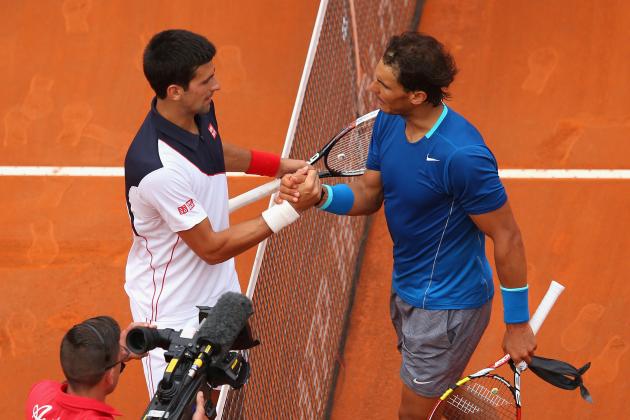
My man ain’t got ninety-nine problems…just Nadal

12 Dec

hi-res-0c731edbd10be95df90d5dc75b0df971_crop_northJulian Finney/Getty Images (click)

From DNAIndia:“‘I have a problem, his name is Rafael Nadal,’ says Novak Djokovic on elusive French Open title.”

Dunno about Rafa, but a Serb — part Kosovar Serb — saying that about me would make me very nervous.

Comment: nikobakos@gmail.com

Today’s my nameday

6 Dec

Saint_Nicholas_1550Russian icon of St. Nicholas the Wonder-worker (click)

Today’s the feast of St. Nicholas (on the Gregorian calendar — December 19th on the Julian Calendar, depending on what kind of Orthodox you are ethnically), the saint generally known in the East (and beautiful Bari, one of my favorite Italian cities) as the “Miracle-worker.”  But for me the coolest thing about St. Nick, and that’s the cause of his nauseating transformation into Santa Claus in the West, is that his miracles are deeply human and mundane and material, and actually just more good deeds than miracles: his most metaphysical, I guess, was his power to calm threatening seas; probably more to the point he prevents the execution of an accused criminal, following Christ’s example in opposing capital punishment or — my favorite — he quietly leaves three bags of gold, εν τω μέσω της νυχτώς, in the bedroom of three poor sisters who needed dowries to get married.  He didn’t preach or rail against the dowry system, like the moralist who thinks his ideological crusade is more important then the real needs of real people, who gets a hard-on from his preaching while others are truly suffering: for example, the schmucks who leave a hard-working waiter a card that says: “We don’t believe in tips; they’re exploitative, join our group at www…etc…” or like the assholes you hear in New York on the subway when a panhandler comes by and certain types go off on their “oh-I’ve-heard-that-story-before-get-a-job-you-probably-make-more-money-than-me” tirades, without thinking that if a man is reduced to begging, for whatever reason, he’s already been through hell enough and deserves your compassion.  A priest at my old parish in Whitestone, I remember years ago on this day, said in his sermon: “St. Nicholas is not one of our great theologian-intellectual saints, like the Cappadocians [though he apparently slapped someone at the First Oecumenical Council at Nicaea for saying something dumb about the Trinity…I think], or one of our warrior, defender-of-the-faith saints, like Demetrios or Mercourios or the Archangels.  More, he was a saint who always made sure that everyone under his pastorship had food to eat and a roof to sleep under.”  He was particularly venerated in the sea-faring islands of Greece, for obvious reasons (“Hagie Nikola, I implore you” sings the island girl with her sailor-man away, “carpet the seas with flowers…”) and is the patron saint of Russia.  In communist times the name still had some lingering Imperial/Romanov stigma attached to it and when I was there in the eighties, it seemed anachronistically charming to many Russians.  Now it seems there are significantly more young “Kolyas” and “Nikolays” everywhere.

Despite an almost erotic devotion to and obsession I’ve developed for St. Demetrios over the years — hard to resist a young Roman aristocrat in uniform with a pretty deep, homoerotic friendship as part of his martyrdom backstory — Nicholas is still my patron saint.  And he’s more than just important to me as saint himself, but because I love the Orthodox nameday tradition, which again varies from country to country.  Serbs have always observed a single clan nameday, the Slava, celebrating the saint on whose feast-day the family’s first ancestor supposedly converted to Christianity, a very ritualized and beautiful celebration and one of the many traditions that Serbs adhere to that makes them the Slavs that, more than any others, still have one foot in their pagan past; telling, also, to how important he is in the Orthodox world: the single largest group of Serbian clans celebrate St. Nicholas as their Slava patron.  Communism forced Russians to take their birthdays more seriously, and discouraged the celebration of the obviously religious nameday, but nineteenth-century Russian literature is full of nameday celebrations (Chekhov’s “Nameday Party,” and Tatyana’s nameday dance in Pushkin’s Onegin*), and as a semi-conscience remembrance of what the new Western-style celebration of birthdays replaced, the birthday-boy is to this day still called the “imeninets,” the “name-bearer.”

What I most love is that, among Greeks, your nameday is a day critical to your honor and reputation: it’s when you take friends out and treat them; it’s when people in small towns especially, but even some in Athens still, sit home in a house full of food and sweets and wait for everybody who has the right to — meaning every one they know essentially — and most likely will, drop by and wait for the the privilege of feeding them; most young Athenians today wait for an official invitation but massive group drop-ins are still common enough among the old-fashioned.  In smaller, provincial towns, when there was a death in the family, you used to have to put an ad in the paper saying: “Due to mourning, we won’t be accepting callers this St. Nicholas Day.”  In villages everybody just knew.  It’s a day when you make an artoklasia,  a “bread-breaking” offering and share sweetened and blessed loaves with your whole parish.  It’s a day when it’s your obligation to give and serve and prove your noblesse and not, as Western birthdays have become, a day when you sit around waiting for others to do for you or give you gifts.  Western, American, birthdays are only slightly less gross to me than the totally American ugliness of wedding and baby showers: “I’m getting married and/or I’m pregnant; so I’m having a party where you have to bring me things.”  And don’t even start me on bridal registries, where you tell people, not just that they have to bring you something, but what they have to bring you.

So: χρόνια μου πολλά…  And Многая Лета to other Nicholases everywhere.  Keep the tradition alive.

Comment: nikobakos@gmail.com

**************************************************************************************************************************************************************************

* Tatyana was not a popular name in Russia until Pushkin’s Onegin became the Bible and literary gold standard of modern Russian, and Russians took the deeply loved heroine into their hearts.  Only then did it become a widespread name and eventually, through her epic act of heroically soul-baring letter-writing probably, her nameday, January 12th or 25th — depending again on calendar — become the patron saint day of young students and scholars.

Djoković king of the court: “…a chilling and simple declaration of intent.”

20 Nov

From the Guardian:

1 Novak Djoković

2014 Won 61 Lost 8 Titles 7 Prize money $14,250,527

There is no sensible argument about who is the best player still standing at the end of 2014. Advocates of Rafael Nadal have to acknowledge the dominance of Novak Djoković, below, at least until the Spaniard returns to full fitness, while Roger Federer, sitting just behind the Serb in the rankings after a rousing surge at the end of the season, is now also struggling with a back problem. In the jungle of modern tennis Djoković is not only the best but the strongest. He declared on Sunday, “Right now I’m at my pinnacle in the career. I physically feel very fit. I’m very motivated to keep on playing on a very high level.” That is a chilling and simple declaration of intent. [my emphases]

Serbia's Novak Djokovic has shown that he is top dog when it comes to survival of the fittest.

Comment: nikobakos@gmail.com

Some more Nadal-bashing: “Whatever it is, it begins to grate.” And Nole rules.

6 Oct

See October 4th’s “Did Rafa Nadal’s whining set him up for Beijing Open collapse?” YES!

Angry-Rafa-rafael-nadal-16483173-1024-1365

And the full story from the always spot-on Bleacher Report:

Rafael Nadal, the tennis king of idiosyncrasies, might be adding another ritual to his routine: whining. 

In case you haven’t heard, Nadal hated the tennis balls used at the China Open in Beijing. He thinks those things are freak’n dangerous. 

He told the Associated Press (via Tennis.com), “This week we are playing with one ball. Next week we are playing with a different ball,” he said. “That’s dangerous for the shoulder, dangerous for the elbow.”

Oh, Rafa, Rafa, Rafa. What now?

Sometimes it seems the Spaniard is always complaining about something.  

Nadal certainly wasn’t the only player to raise questions about the balls. Andy Murray complained too. It’s just that Nadal’s beef with the balls lands on a growing list of grievances.

You see, this week, it was the balls. Every year he grumbles about the number of hard-court tournaments and the impact it has on his knees.

In November 2013, Nadal complained about the ATP finals being played on indoor hard courts. He told Tennis.com, “During these nine years the Masters Cup was on indoor, a surface that was not the best for me … I understand, but I think this is unfair.”

You think Roger Federer wishes a few French Opens could be played on grass? But every year, the same thing…clay. That’s just wrong. 

Oh, Rafa, Rafa, Rafa.

Sometimes he acts like the world is against him. Like last year, at the French Open. That’s when he slammed the French for their scheduling and called it  “unfair.”

Nadal thinks many things are unfair. 

Two years ago, he was unhappy about the blue clay in Madrid. He and Novak Djokovic threatened to skip the tournament the next year if the blue clay came back. It didn’t. 

There’s nothing wrong with a professional athlete speaking his mind. However, instead of appearing outspoken, Nadal comes across as a whiner. 

He avoids bombastic outbursts like those from Richard Sherman. Yet, there’s something about the way in which Nadal states his case. It rubs folks the wrong way.

Perhaps it’s the tone of his voice, which sometimes barely rises above a mumble? Maybe it’s his shoulder shrugging demeanor in press conference?

Whatever it is, it’s beginning to grate. Like finger nails run across a chalk board, Nadal’s constant complaining irks. 

It’s unfortunate too because otherwise, Nadal is considered humble. He’s gracious in defeat and has been an excellent ambassador for the sport. Just this week, he carried roses out to Li Na at her retirement celebration in Beijing. He was one of the few ATP players to make an appearance. 

But oh Rafa, Rafa, Rafa. Complaining about the balls?

What used to be mere fodder for Rafa haters has spilled over into editorials and tweets.  A recent headline by USA Today asked: “Did Rafa Nadal’s whining set him up for Beijing Open collapse?”

After Nadal went on and on about the experimental blue clay in Madrid, veteran tennis writer Peter Bodo devoted an entire column for Tennis Magazine to questioning Nadal’s persistent whining. Bodo wrote (via NBC Sports):

Most of you are familiar with his dissatisfactions: The engorged calendar, the ranking system (he lobbied to have it transformed into one that was based on 24 months or results, rather than 12), his seemingly never quite right knees, the blue clay. . . Rafa isn’t the only player to complain about such things, but none of his peers at the top of the game seems to have quite as many issues, or appear to take them so personally (to the point where he quit the ATP player council, seemingly because his fellow pros just didn’t understand).

Whether or not the whiner label is justified, the fact that it’s coming up more often speaks to the prevalence of the perception.

Nadal’s talent and accomplishments have already earned him a future spot in the Hall of Fame and probably a few pages in the record books. That’s why the whining seems beneath him. 

Oh Rafa, Rafa, Rafa. It’s OK to remain conscientious and opinionated. Just pick your battles better, or else earn a new nickname: “Rafaree.” 


Meanwhile, more Bleacher Report on Djoković’s insanely beautiful final match at China Open, Novak Djokovic’s Late-Season Form Will Lead to 4th World Tour Finals Trophy:

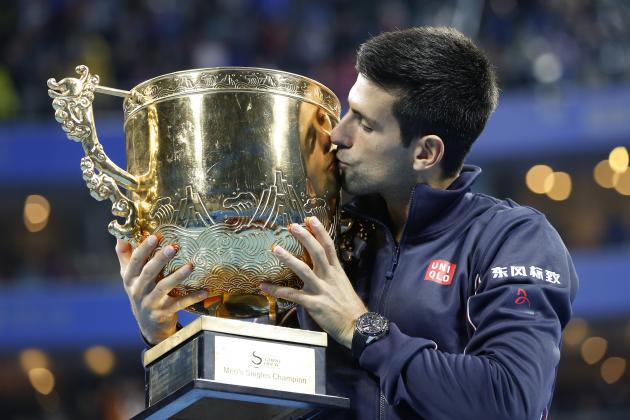
Novak Djokovic played arguably the greatest final of his phenomenal career at the China Open on Sunday, beating Tomas Berdych 6-0, 6-2, and his excellent late-season form will lead him to a third consecutive and fourth overall ATP World Tour Finals win in London.

The Joker’s domination on Sunday was absolute. In just over an hour, the Serb sprinted to a 6-0, 5-0 lead against a bewildered opponent. Everything was working. He was exceptional in the return game, almost perfect from the baseline and played with just enough aggression without pushing things over the top.

Berdych was lost for words after the match, via the ATP World Tour’s official website:

“I met somebody in the final who I’ve never seen before. I was just swept off the court. I just said to my coach now that I probably played over 700 matches in my career…But I have never, ever experienced anything like that.”

hi-res-7177ad13c3b93cd38692d28ebf961885_crop_northVincent Thian/Associated Press

Comment: nikobakos@gmail.com

Hmm…interesting etymological observation

14 Sep

The common Indo-European root between “άκρη” in Greek — “akre” — and krai/kraj in Slavic languages…?

From my post, Turkish Alevis and Syrian (or Lebanese…or Turkish?) Alawites — a Twitter exchange:

The “akrites” were the Byzantine border warlords who defended the Empire’s southern frontier — the άκρη or “edge” [akre] — which as I mentioned here is what the word “krai” or “kraj” in Ukraine means, or in Serbo-Croatian Krajina — but were half-Arab culturally and every other way themselves.  The most famous is the ballad of “Digenes Akritas” who was born of a Greek father and Arab mother.   

war_map

The Krajina region of Croatia (in green…roughly…it didn’t include Dubrovnik) where the Hapsburgs settled large numbers of Serbs starting in the 17th century, to guard their “kraj” — their frontier — against the Ottomans.  With Krajina Serbs the bearers of this tradition of armed frontiersmen, this was arguably the tinder-box region of Serbian minority Croatia where the whole war began.

Comment: nikobakos@gmail.com

2014 FIBA Basketball World Cup Final

14 Sep

Started watching.  It turned into a gringo gloat-fest.  So I muted it and just watch the depressing numbers.

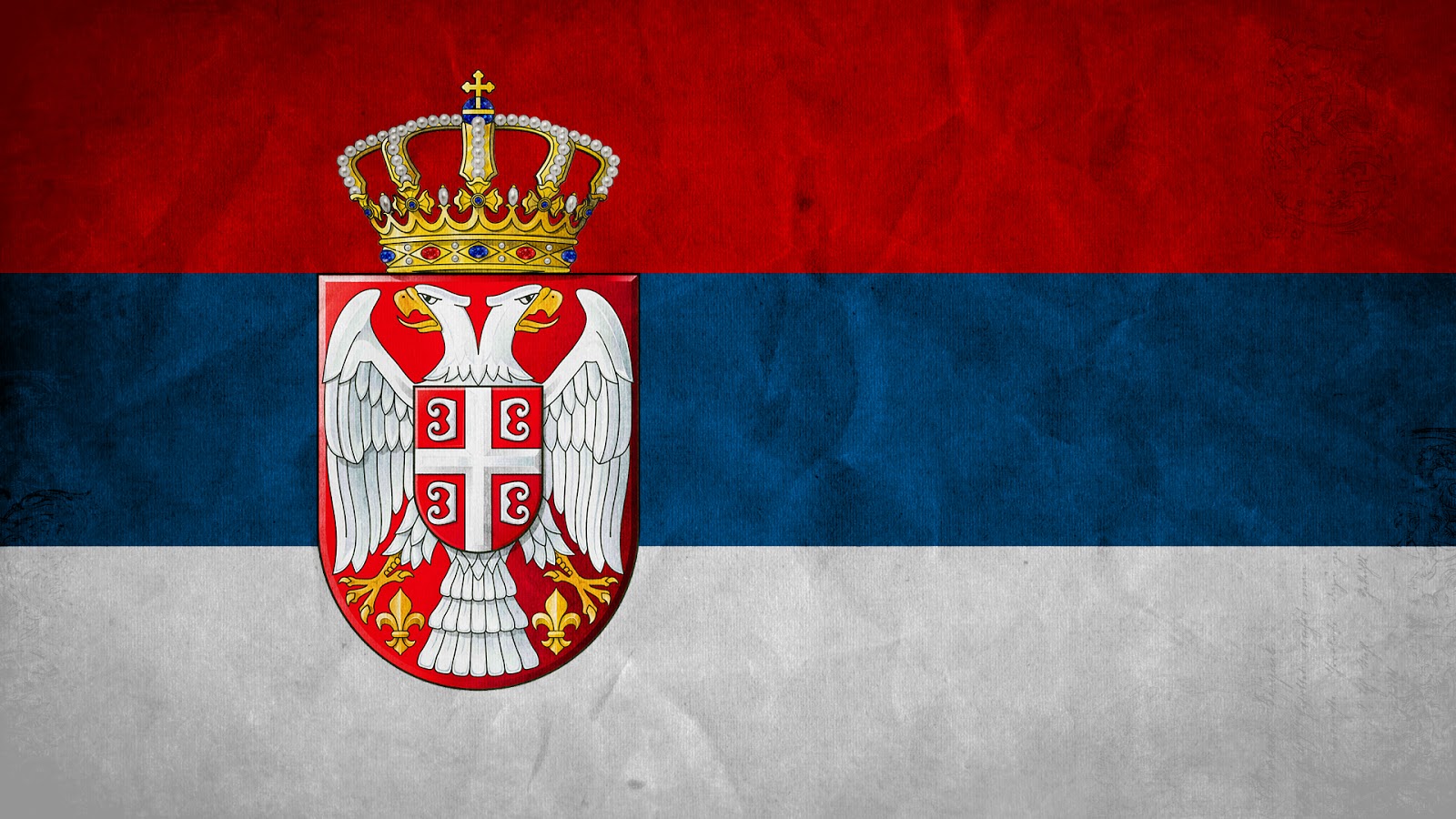
serbian-flag-zastava-srbije

AmericanFlag

P.S. Just a thought: I can’t stand soccer for a whole panoply of reasons, mostly cultural and sociological and political, but also because it so often seems a boringly low-scoring game to me.  Do I find basketball kind of tedious — despite its beauty — because it’s too high-scoring?  Bounce-bounce-bounce-score.  Bounce-bounce-bounce-score?

Upon escaping from Greece…

7 Sep

cp-cavafy2

How do you go through the work of the poet whose opus consists of the sharpest and most accurate analysis of Modern Greek identity, and find the poem that displays perhaps the most razor-sharp understanding of all of them? I’ve always known that poet was Cavafy, but I wasn’t looking for that one poem or anything, when, just leafing through his stuff a few days before I left Greece this past July, I came upon one of my favorites, the following. Please have a look first:

Going Back Home from Greece (an unbelievably clumsy translation of the Greek title)

Well, we’re nearly there, Hermippos.
Day after tomorrow, it seems—that’s what the captain said.
At least we’re sailing our seas,
the waters of Cyprus, Syria, and Egypt,
the beloved waters of our home countries.
Why so silent? Ask your heart:
didn’t you too feel happier
the farther we got from Greece?
What’s the point of fooling ourselves?
That would hardly be properly Greek. 
 
It’s time we admitted the truth:
we are Greeks also—what else are we?—
but with Asiatic affections and feelings,
affections and feelings
sometimes alien to Hellenism. 
 
It isn’t right, Hermippos, for us philosophers
to be like some of our petty kings
(remember how we laughed at them
when they used to come to our lectures?)
who through their showy Hellenified exteriors,
Macedonian exteriors (naturally),
let a bit of Arabia peep out now and then,
a bit of Media they can’t keep back.
And to what laughable lengths the fools went
trying to cover it up! 
 
No, that’s not at all right for us.
For Greeks like us that kind of pettiness won’t do.
We must not be ashamed
of the Syrian and Egyptian blood in our veins;
we should really honor it, take pride in it.

— Translated by Edmund Keeley/Philip Sherrard

Επάνοδος από την Ελλάδα

Ώστε κοντεύουμε να φθάσουμ’, Έρμιππε.
Μεθαύριο, θαρρώ· έτσ’ είπε ο πλοίαρχος.
Τουλάχιστον στην θάλασσά μας πλέουμε·
νερά της Κύπρου, της Συρίας, και της Aιγύπτου,
αγαπημένα των πατρίδων μας νερά.
Γιατί έτσι σιωπηλός; Pώτησε την καρδιά σου,
όσο που απ’ την Ελλάδα μακρυνόμεθαν
δεν χαίροσουν και συ; Aξίζει να γελιούμαστε; —
αυτό δεν θα ’ταν βέβαια ελληνοπρεπές. Aς την παραδεχθούμε την αλήθεια πια·
είμεθα Έλληνες κ’ εμείς — τι άλλο είμεθα; —
αλλά με αγάπες και με συγκινήσεις της Aσίας,
αλλά με αγάπες και με συγκινήσεις
που κάποτε ξενίζουν τον Ελληνισμό. Δεν μας ταιριάζει, Έρμιππε, εμάς τους φιλοσόφους
να μοιάζουμε σαν κάτι μικροβασιλείς μας
(θυμάσαι πώς γελούσαμε με δαύτους
σαν επισκέπτονταν τα σπουδαστήριά μας)
που κάτω απ’ το εξωτερικό τους το επιδεικτικά
ελληνοποιημένο, και (τι λόγος!) μακεδονικό,
καμιά Aραβία ξεμυτίζει κάθε τόσο
καμιά Μηδία που δεν περιμαζεύεται,
και με τι κωμικά τεχνάσματα οι καημένοι
πασχίζουν να μη παρατηρηθεί. A όχι δεν ταιριάζουνε σ’ εμάς αυτά.
Σ’ Έλληνας σαν κ’ εμάς δεν κάνουν τέτοιες μικροπρέπειες.
Το αίμα της Συρίας και της Aιγύπτου
που ρέει μες στες φλέβες μας να μη ντραπούμε,
να το τιμήσουμε και να το καυχηθούμε.

What gives this poem such pride of place as an analysis of Greek identity? For me, it starts with the simple joy both passengers feel as they’re arriving home – not approaching Greece, but leaving it. “Upon Escaping from Greece” would be my choice for the title’s English translation, because it’s clearly an experience of suffocation that the two friends have experienced that has started to lighten up for them as they cruise east through the breezy waters of the Mediterranean.

Cavafy has become an object of a resurgent cult in Greece, partly due to last year’s 150-year celebration (he was born in 1863), that’s a kind of an “emperor’s-new-clothes” phenomenon for me; not because his new clothes aren’t real, but I feel that few Greeks actually know what it is they’re suppose to be liking so much. I much prefer people who just say up front that they don’t like him. He’s “childish” they say, in response to his prose-like, early modernist experiments. These are the people who like their poetry with a capital “P”; they want it to rhyme: “φεγγαράκι μου λαμπρό…” and they want it to have epic scale heroics and ‘the thousands dead under the axles’ and ‘the living giving their blood’ in the heroic deed of ‘making the sun turn,’ along with some myrtle and oleander and jasmine thrown in for Aegean effect. (What if you’re from Epiros and you don’t know from oleander and jasmine, just tsouknida and pournari?) Others only like a very emphatically stressed “some” of his poems: these are the ones turned off by his sexuality, but who feel they can’t say so openly in 2014 – or to me. (And the degree to which that whole part of his work, a good half, was ignored by the official festivities – they wanted only “Ithaka” or “Waiting for the Barbarians” or “The City” — was amazing.*) The Messenger for example, found a publisher for his paternal grandfather’s, my great-grand-uncle on my mother’s side, fascinating memoirs, which span the whole period from the late nineteenth century and the end of Ottoman rule to WWII. Except his grandfather met a Jewish guy who screwed him over when he was a young immigrant in New York in the 20s and he included the unfortunate phrase: “Hitler was right for doing what he did to them.”**  The publisher thought maybe that line should be cut. But the Messenger stuck to his cast-iron principles and insisted it be left as is, because it would be “censorship” to remove it.  Hardly an upholder of the most liberal sentiments on issues of that kind, I have a feeling that if the comment hadn’t been about Jews, he wouldn’t have minded the censorship so much. Just a few months earlier, for example, he hadn’t thought it was “censorship” to cut a slightly too homoerotic line from a Cavafy poem he read at his father’s funeral, for fear that our landsmen, our chorianoi, would be scandalized.

These elements and others: that Cavafy preferred the tragic dénouement to the epic climax; the unconsummated to the fulfilled; that he preferred the coded to the open and disclosed, and not out of choice; but learning to love what fate had made him, he learned to love the beauty of code – its poetry — the furtive touch over some cheap handkerchiefs; that he loved the ethnically and culturally and religiously mixed margins of Greek history and the poignancy of characters who had to straddle those margins and did not write a single poem about its Attic glory days (who are all these half-breed Egyptians and Parthians and Jews and other exotic anatolites he’s always making us read about anyway? Where’s Pericles and Aristotle?); that he understood life and humanity as fundamentally amoral, and morality as a convenient weapon to be used against the unfortunate few or often just a bad joke. All this did not do much to endear him to his contemporaries, along with the fact that he famously disliked Greece and especially Athens (the latter kind of unfair in my opinion: Athens at that time must’ve been at its most beautiful and charming), and the straight, homophobic white boys of the Generation of the ‘30s in particular, despite Seferis’ famous eulogy, had no time for him. The most vehement, Theotokas (unfortunately, one of my favorite Greek writers otherwise) scathingly declared Cavafy, in his Free Spirit, a “dead end” (a common trope, whether conscious or not: the gay man begets no issue and is thus fundamentally allied with death); that his modernism was an experiment that had been taken to its logical conclusion and that the Alexandrian was now a decadent (same difference), a point of departure for what Greek letters should move on from next and not a road open for them to continue down.

That right there is the grand and egregious error. Because Greek culture and identity – in a way that makes any sense to who we are today – simply didn’t exist until the Hellenistic (and then Roman/Byzantine) periods that Cavafy chose, almost exclusively, to write about in his historical poems. The conglomeration of Indo-European tribal units who all spoke dialects of similar languages and had started coalescing into larger city-state forms of political organization by the mid-first millennium B.C. have nothing to do with us. They may have started calling themselves “Hellenes,” but let’s not forget that the Iliad does not contain one, single, blessed mention of that holy word, and was compiled only a century-and-a- half or so before the Golden Periclean Age we’re so obsessed with.

It was because he was fascinated with the true origins of Greek identity, the cauldron of cultural mixture that Alexander created that later became condensed into a more distilled Greek-speaking, Orthodox idea, that Cavafy wrote about those periods so widely and studied them so deeply. And being from such deep aristocratic Constantinopolitan roots and an Alexandrian, how could he not have felt that basic idea on a gut level.

This is another reason the mention of the words “Macedonia” and “Alexander” makes my hair stand on end. The Macedonians (by which I mean Slav Macedonians) are ridiculous in their attempt to appropriate Alexander as a phenomenon of their own culture, though many observers have written about how this conscious policy of “antikvatsiya” (“antiquization”) on the Macedonian government’s part is, partly, a response to Greek intransigence on every other grounds. But you can see from how Greeks respond to Macedonian moves that Greeks don’t get Alexander either. Alexander is not a culminating point of Hellenic history, where the great hero brought Hellenic civilization to the “borders of India.” Alexander is not even a Greek herohe very early in his career quickly became déraciné, as Mary Renault keenly observed. Alexander is where Greek history starts. It’s all really the other way around. Alexander is what brought the East, and its incomparably greater and older civilizational achievements, to us. He drove us deep into contact with that wider world, cementing what had always been our bonds to those lands and those peoples he grew to love so much, and giving us as much in return, actually more, than what we gave them. He created the great creolized cultural space that a universal, cosmopolitan Greek identity was first born in and that later – when the name for “universal, cosmopolitan identity” changed, due to political circumstances, from “Greek” to “Roman,” – changed along with it, but which left the Helladic peninsula — or “the Hellenic” generally — behind permanently as a focus of any kind. Until the twentieth century.

Alexander Renault

Hermippos and his friend, Greeks going home to Antioch in Syria or Seleucia in Mesopotamia, can’t be Greek in Greece. It suffocates them. They don’t fit into that nonsense, antiquarian straightjacket. It’s “beneath” them, as Greeks, to reject the wider world that they’ve long been an intimate and inseparable part of. Greek means cosmopolitan to them and they can’t be Greeks without that quality. It would be the most provincial thing for them to do, to act like provincials who try to hide their “easterness”:

“…like some of our petty kings
(remember how we laughed at them
when they used to come to our lectures?)
who through their showy Hellenified exteriors,
Macedonian exteriors (naturally),
let a bit of Arabia peep out now and then,
a bit of Media they can’t keep back.
And to what laughable lengths the fools went
trying to cover it up!”

Eastern Mediterranean(click)

The nation-state is bound up inseparably with provincialness. And narrowed tribalism. And provincials hide. Not true Greek men. Cavafy’s “petty kings” are the Neo-Greek bourgeoisie, from the statelet’s origins down to our day, with their still immovable disdain for the East, who don their ancient fineries and try to make the world call them Hellenes and have no clue how ridiculous they’re being. Provincials dissimulate – not true Greek men — and that dissimulation has been the main thread of Neo-Greek culture since the late eighteenth century, so much so that all perspective has been lost. Hermippos and his buddy aren’t provincials. They’re Greek alright – from some of the richest, most sophisticated and Greekest cities in the world; but they understand the larger cultural context they’re a part of, and they’re too supremely secure in their Greekness to put down the Egypt and Syria that ‘flow in their veins.’ Greece tries to take that away from them. I imagine the Athens they had to go study at as a kind of tired old Cambridge, MA, still resting on its now dried-up laurels. But they’re too Greek to let Greece do that to them. Sorry to get repetitive. It’s an attempt to make the paradox – a wholly healthy and natural one – sink in.

Greece still tries to do that to you. And in the crisis mode it’s in today, it tries even harder because its sad inhabitants’ perspectives have become narrower and narrower to the point where they see nothing of the rest of the world and there’s simply very little language left you can share with them. “Η φτώχεια φέρνει γκρίνια,” the Greek says – “poverty makes for kvetching” — and though many people I know have faced the current crisis with the best kind of Greek dignity and humor in the face of adversity, too many others have lapsed back into ideological craziness, or just a frustrated lashing-out bitterness, or were always there but kept it hidden and now think that it’s more okay to express things openly; it’s hard to tell which.

One friend or relative has become a Golden Dawn apologist if not supporter: “What’s a young man who loves his country supposed to do?” I dunno; but half of Dostoevsky is about what to do with the unguided idealism of strong young men and phenomena like Golden Dawn wasn’t one of his answers; he strictly warned us against them, in fact. Another wants to take a DNA test to make sure he has no Albanian genes: actually believes such a thing exists – a chromosome for Albanian-ness and a test that will detect it. And this is one of those uncomfortable situations we’ve all been in where this is coming from the spouse of a good friend, so you have to keep your silence and you can’t just say: “That’s nice _______, Hitler and the Nazis were into that kind of thing too.” If I could I would’ve also asked if he wanted to see my DNA chart too, which is probably chock full of “Albanian-ness” and if he would then feel the need to maybe keep me away from his daughters. Another is still obsessing, as we go on twenty-five years since the break-up of Yugoslavia, on the “Macedonian issue.”*** And after hours of mind-bogglingly pointless conversation – “It is useless to attempt to reason a man out of a thing he was never reasoned into,” said Jonathan Swift — you take a step back and realize that that’s all that’s ever mattered to this guy. The hundreds of thousands dead produced by the Yugoslav disaster, the millions displaced, the destruction of the last part of the former Ottoman sphere where there was still some hope of survival for a multi-ethnic society, the greatest bloodletting in Europe since WWII, right on our doorstep…  He doesn’t give two shits, nor has he let one blessed thought or idea on that series of calamities occupy even one of his brain cells for a second. All he cares about is the “Macedonian Issue.” Twenty-five f*cking years later. And he doesn’t find such narcissism the least bit obscene.  “The world is burning, και το μ**νί της Χάιδως χτενίζεται.”  I won’t translate.

Whether or not they’re becoming more extreme or just showing their true colors more, it’s certain that I’ve become more radical – not in my ideological positions, which are what they always were – but in my inability to tolerate their stupidity and growing narrow-mindedness. I’m always ready to leave Greece when the time comes, but this time it had become truly unbearable. There were just too many people that it had become too uncomfortable to even be around. And stumbling on this half-forgotten Cavafy poem was no accident I feel.

And so I took that great big breath of relief that Hermippos and his friend took on the deck of their boat as the shores of Cyprus came into view when I myself left for Serbia back in July. I had to get out of this place – and disassociate myself from it and its inhabitants — if the fact that I’m Greek was going to continue to be to at all tolerable to me. I’ll always love arriving; with the new flight path south over the Attic midlands passing right over the town and beach — over the very apartment building — where I spent my childhood summers, I’ll always choke up a little at the sight of the brown hills of Attica. But when I’m ready to leave, I gotta go – and fast – and this year more urgently than any other.

And I can see myself spending more and more of my future time in “Greece” in Albania with my relatives – “deep” Greeks who don’t have the ball-and-chain of a nation-state tied around their ankles; in Istanbul – with smart young Greek and Turkish kids who are trying to do something intelligent and productive about our relationship; maybe in Cyprus – which Kosmas Polites called the last surviving remnant of his beloved lost Ionia and where I have friends to whom I owe long over-due visits; or just here in Queens — where every block and street corner and subway stop and church bears a piece of my Roman-ness.

Because Greece, man… Greece just cramps my Greekness.

Egypte, Alexandrie, le front de merAlexandria (click)

******************************************************************************************************************************************************************************************************************

* And the thing is, if you ignore his erotic poems, I find it hard to believe that most people can even understand, much less really appreciate, the rest — the historical poems.  Who understands the religious and cultural sociology of fourth-century Alexandria enough to have the proper context to apprehend all of “Myres: Alexandria, AD 340”?  Who the hell knows where Commagene is?  Or who Alexander Jannaios was?  Or what a handsome Jewish prince is doing with the name Aristovoulos?  Or why he was murdered and “those sluts Kypros and Salome” are now gloating in private?

** It’s amazing.  And disturbing.  Anti-semitism and the extent of its popularization and the accessibility of its language.  Not only can one accusation of unethicalness — and from a Greek at that! — be used to tar a whole people, but Jews are the only people with whom that one charge leads straight to the gas chambers so easily, in people’s minds and on people’s tongues.  Not “what a sleazebag.”  Or “what a nation of sleazebags.”  But straight to “Hitler was right…”

*** Yes.  Believe it or not.  The “Macedonian” “issue.”  More on that to come.

Comment: nikobakos@gmail.com

Belgrade: Random notes from July 2014

7 Sep

beograd-1910Belgrade 1905 (click)

*****************************************************************************************************************************************************************************************************************

“Post”-something. Not post-apocalyptic or Blade Runner-ish or all the nonsense that people used to write about the city in the nineties or after the war (when, maybe, I don’t know, it did feel like that), but definitely the sense that something is over and no one has any real idea of what this is now or what’s coming next. A certain optimism about the future though, which is probably just an inherent trait of its inhabitants, both leavened and sobered by the kind of biting black humor that’s not the only thing that reminds me of Russians.

******************************************************************************************************************************************************************************************************************

You’re already one foot out of, or may have already left the Balkans here. This was particularly striking to me after seeing so much of the southern Balkans just a month or so ago. Where I have come from, I mean, to compare to? Argyrocastro is an Ottoman jewel in stone; Ochrid a truly archontiko little city. The rest: Tirana, Podgorica, Tetovo, Skopje, the garish hideousness of Priština; were all obviously Ottoman wood-and-plaster hovels until the communist cement blocks went up.

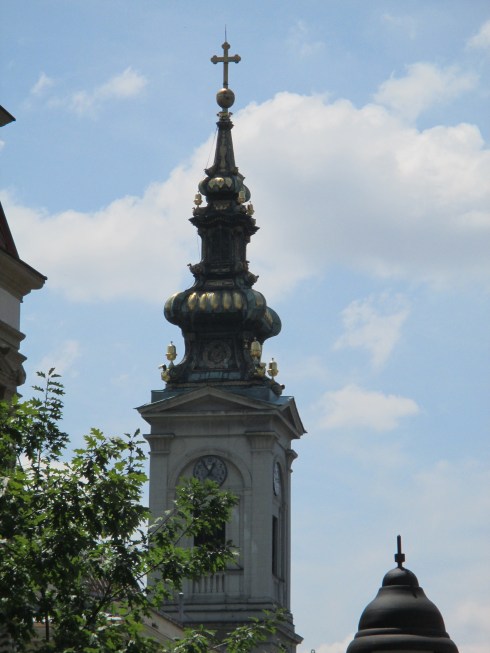
Here you’re in Mitteleuropa already, in a city in that never was — except for temporary occupations — but could’ve been, a handsome Hapsburg town. It’s most beautiful from the opposite shores of the rivers that hem it in all around, with the city high on the bluffs overlooking its entire region. It reminded me of Kiev a little in this sense, though a much more recent city in terms of basic architectural stock and without Kiev’s glut of spectacular Baroque churches; in fact, until the first Serbian uprisings of the early nineteenth century, the population was predominantly Muslim. (Actually there’s hardly any religious architecture of any quality or beauty at all. There’s the small, pretty Baroque cathedral of the city just outside the walls, in what was probably the suburb where Christians were allowed to live in Ottoman times and that’s about it. All the city’s other churches that I saw are these genuinely grotesque Neo-Serbo-Mediaeval monstrosities of Orthodox nationalism; the kind they’re building all over Greece now too.)

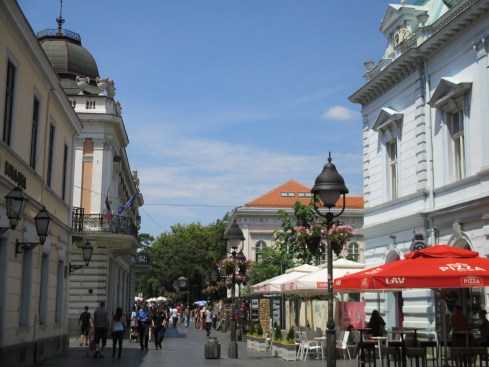
Knez Mihailova and Kralja Petra Streets — the main pedestrianized drags — and the Cathedral spire at bottom.  (Click on all)

IMG_0851

IMG_0857

IMG_0841

IMG_0849

IMG_0859

******************************************************************************************************************************************************************************************************************

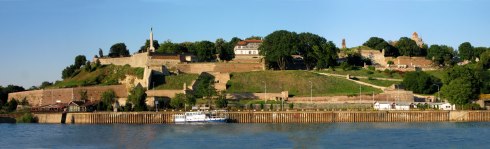
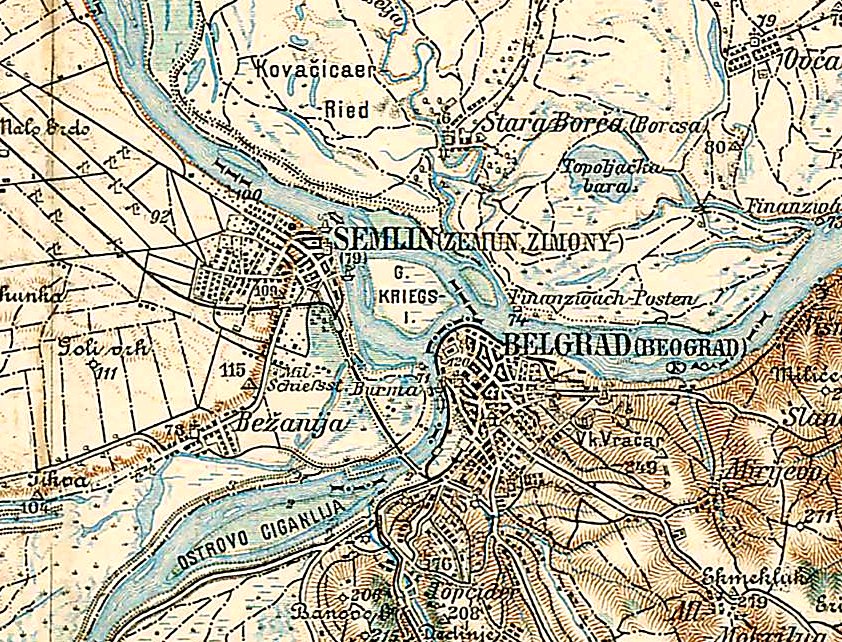
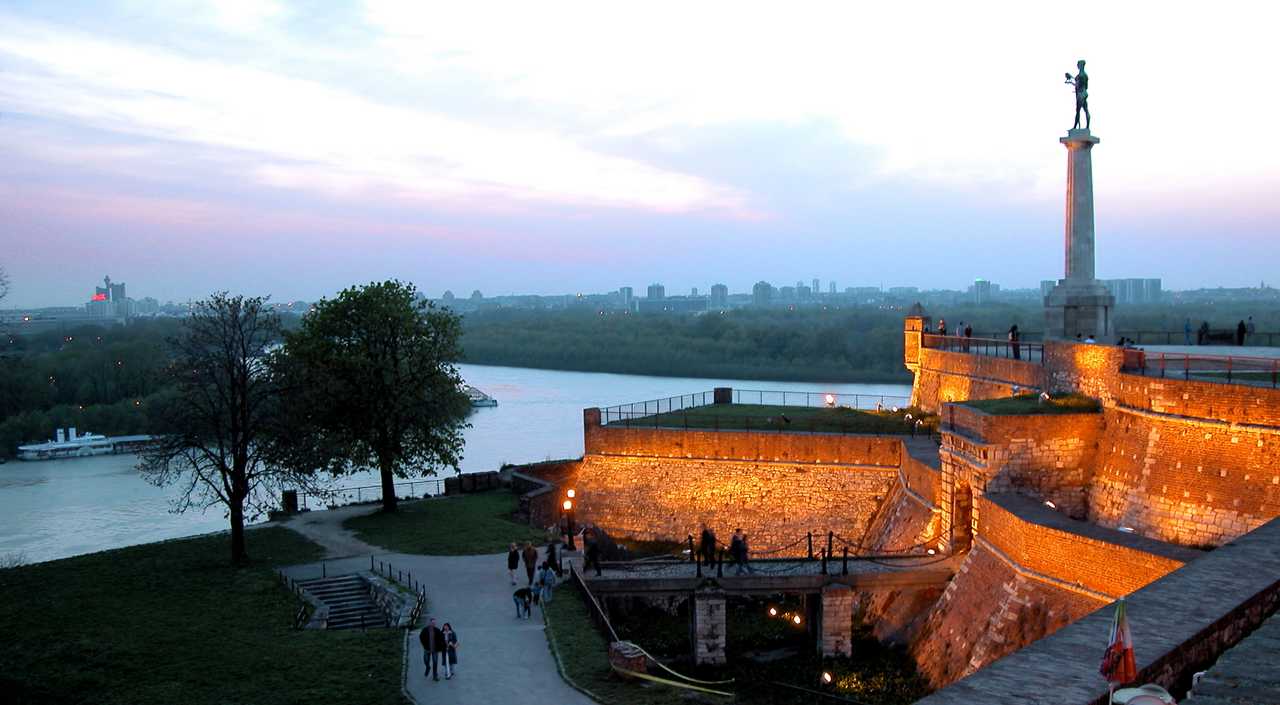
But you understand a great deal about Serbian history just by standing up on the peak of the Kalemegdan fortress, the sprawling castle that covers the highest, northernmost peak of the peninsula and you realize that you’re standing on the last, frontline hill of Balkan rock, where the Danube meets a whole huge complex of river networks from north and south and that the expanse of green mixed with suburb spreading out in front of you is the beginning of the vast Pannonian plain that stretches out to the Carpathians in one direction and eventually the northern European flatlands that flow all the way to the Baltic in the other. (See map at top.) Apparently and according to Misha Glenny, the Ottomans called Belgrade the “darul-al-jihad,” the House of War (though why this wouldn’t apply to so many other places, I don’t know) and you can see how easily defensible but also temptingly assailabale the site is; it’s the one place you have to control to continue your drive either north or south.
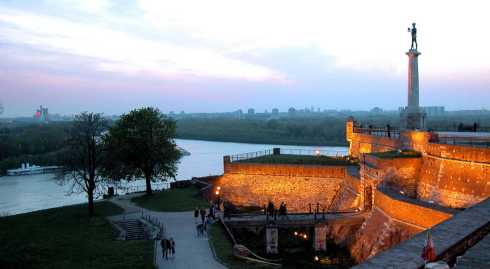
Belgrade-Kalemegdan-at-dawnThe Kalemegdan (click)

Kalemegdan from across Sava(click)

You also realize just how far north – when you think that Stefan Dušan’s empire stretched as far south as the Gulf of Corinth and he often held court east of Salonica at Serres – the center of gravity of the Serbian nation has shifted over the centuries, to lands so completely different, even ecologically, the flora and fauna, that it becomes easier to isolate a glorious mediaeval past in some mythic compartment in the nation’s head – the two sides of the Aegean, in our case, for example, were never so different – and that that can have all sorts of psychological consequences. I’m, of course, thinking of Kosovo mostly, but more on that later…
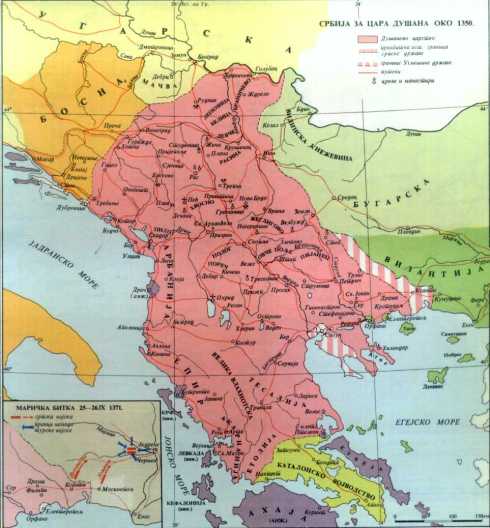
DusanTerritory_14cStefan Dušan’s empire at its height (click)

******************************************************************************************************************************************************************************************************************

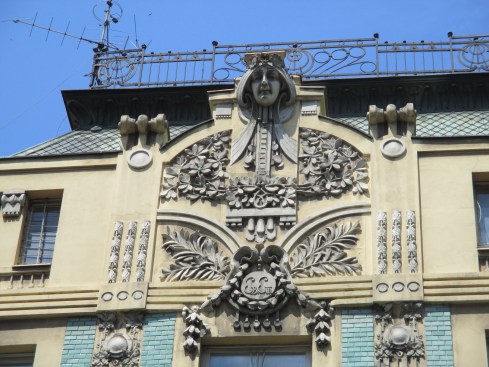
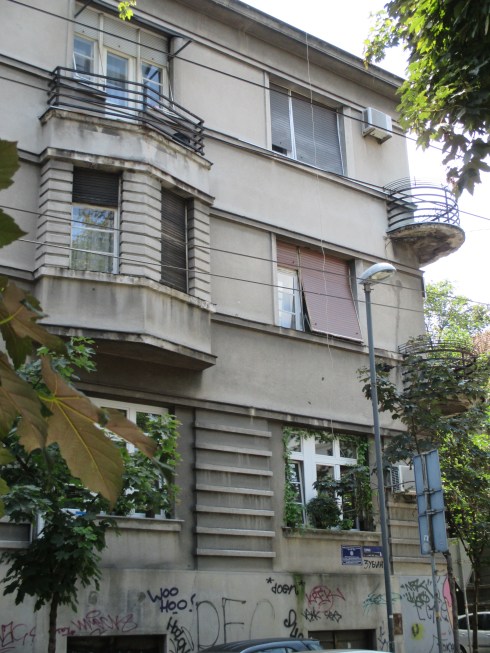
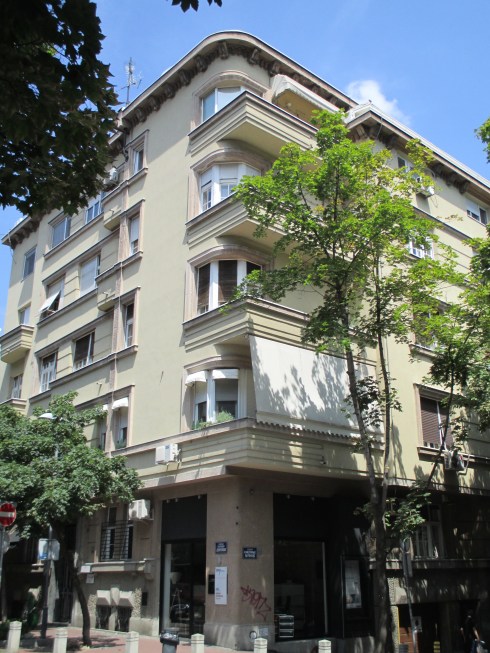
Lots of leafy attractive streets, at least in the neighborhoods that stretch immediately south and east of the Kalemegdan. Funky sidewalk cafes and bars. Only a couple of very late nineteenth-century neo-classical structures. Most of the city seems to be a twentieth-century creation: attractive Art Nouveau and Art Deco apartment houses; some later stuff that could kind of be described as late Bauhaus-y even, like some neighborhoods of Tel Aviv; more proof that Yugoslavia was far cooler than any other communist country and more reason to be pissed off that things ended they way they did. A certain shabbiness, that I thought only added to its charm, but that made me wonder what’s going on economically. There’s way too much high quality housing stock in potentially high quality neighborhoods sitting there looking empty and uncared for and under the right circumstances the whole place seems primed to launch into a massive gentrification and real estate boom. If I had any extra cash lying around I’d buy something now. In any event, for a city that’s been beaten up badly three times in less than a century – maybe not as bad the third time but in a manner just as morally reprehensible – it’s looking ok.

(Click on all)

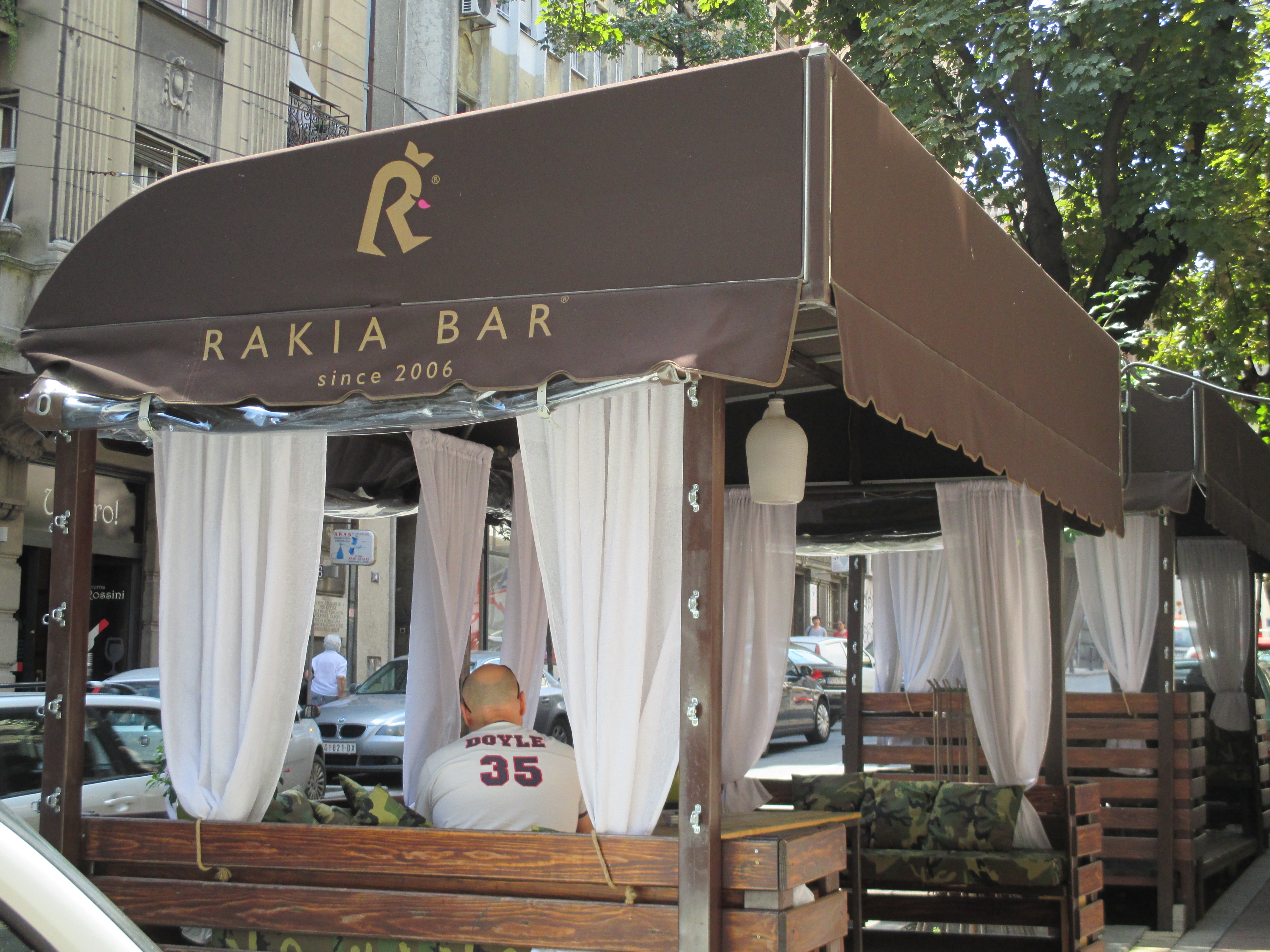
IMG_0828The Rakia Bar, my favorite spot in all of Belgrade, delicious rakia made from anything imaginable, quince was my favorite, lugged three bottles of it with me, supposedly to share with friends in New York, but they all got swilled down in Russia.  The Rakia Bar is the site of the famous: …rakia with M., and what’s with me and all the Djoković… post from July.  (I think whether you say ‘rakia” or rakija” is a regional dialect difference, with the palatization that the “j” represents more common in “south-western” dialects: — western Bosnian, Herzegovinan, Montenegrin. — but not sure.  I know that “river” is “reka” in some regions and “rjeka” in others.)

IMG_0822

IMG_0826

IMG_0825

IMG_0837

IMG_0840

IMG_0823

IMG_0824

IMG_0829

IMG_0830

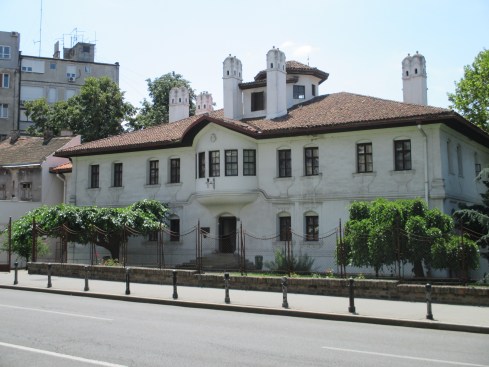
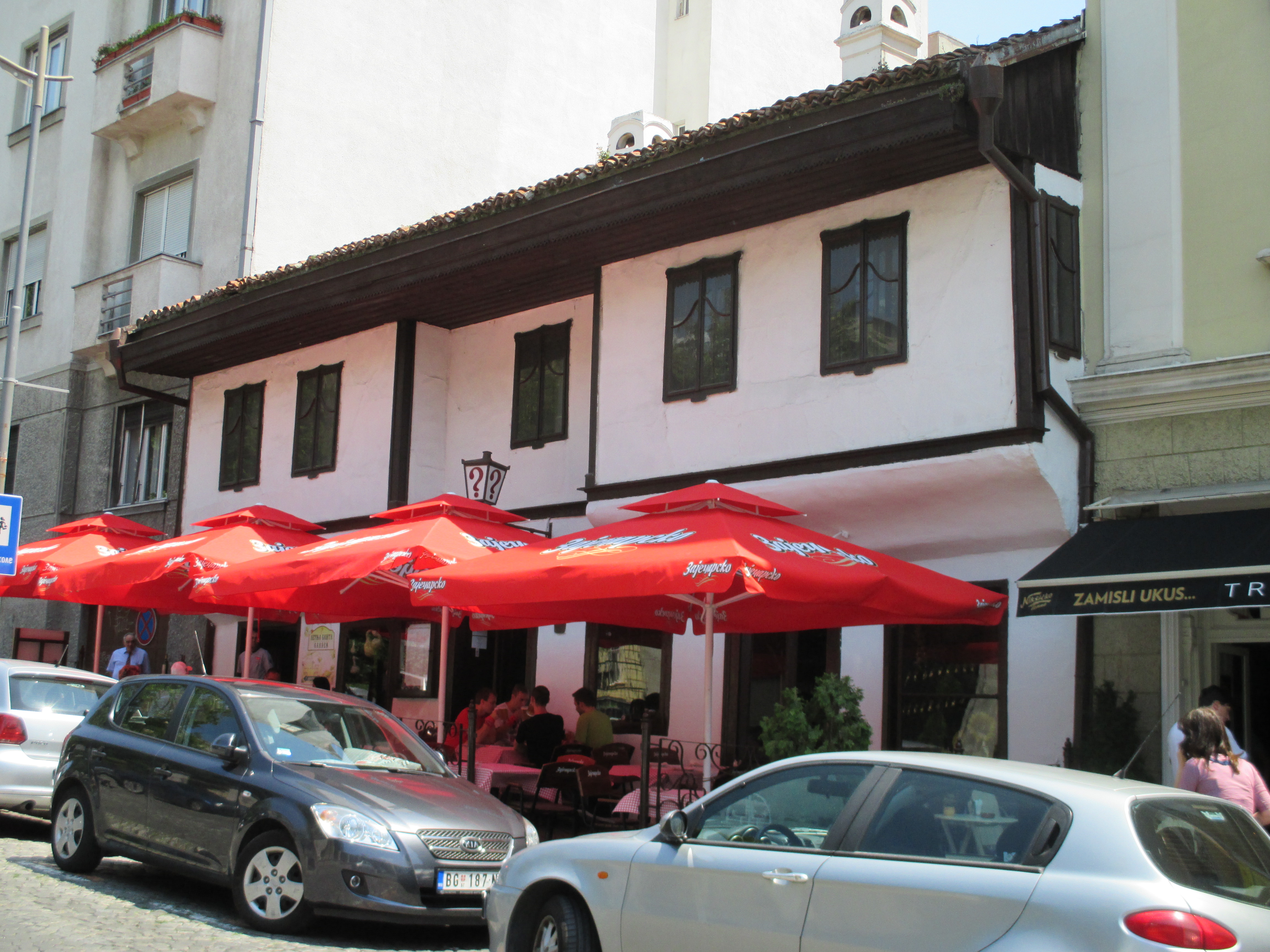
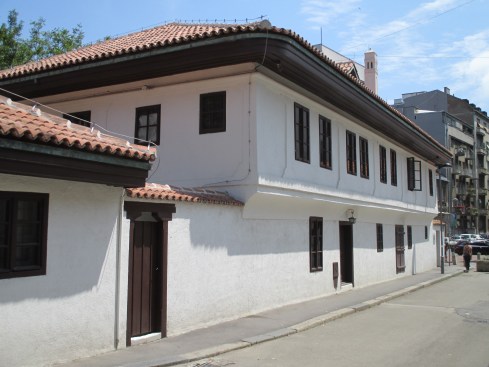
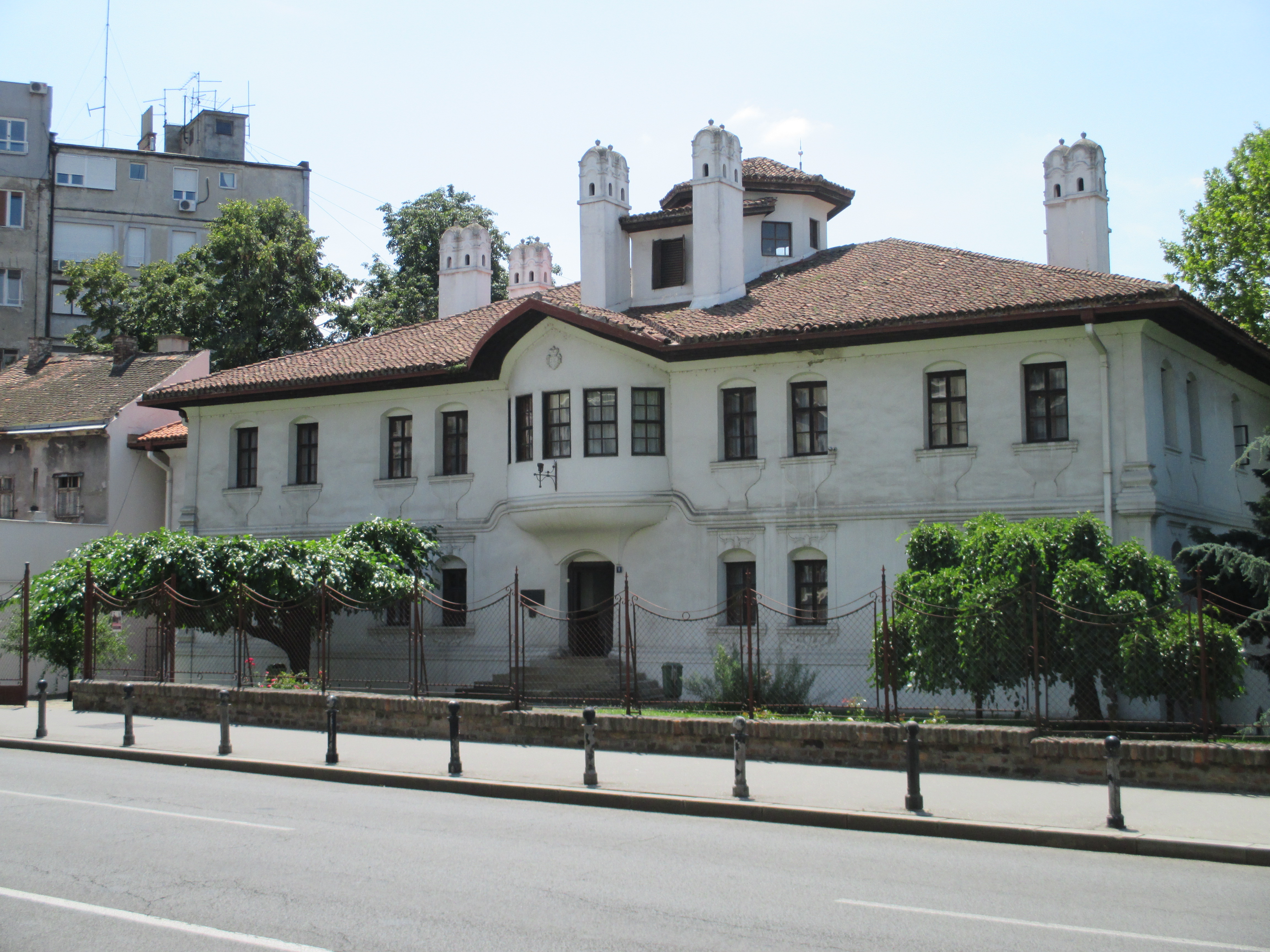
And some of the city’s few remaining Ottoman-era, or at least Ottoman-style, buildings.  The top being the residence of some saint or something — the bottom the royal residence of some Obrenović mistress I think.  Very uncharacteristically of me, I just wasn’t into too much historical research while there.  The city is just too much fun.
IMG_0836

IMG_0853

IMG_0854

******************************************************************************************************************************************************************************************************************

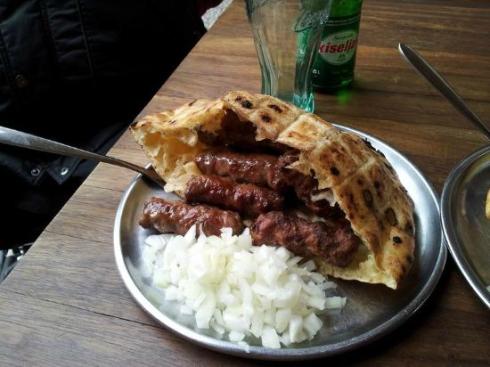
The food is great; predictable but always competent and consistently delicious. A bodybuilder’s paradise: every plate comes piled so high with a mountain of grilled protein that no normal-sized person can be expected to pack it away, but appetites here, in every sense, are big. A vegetarian’s nightmare: and if you persist in your adherence to that silly creed, expect to eat a lot of very good tomatoes – in the summer at least – with huge grated piles of a great cheese they have that’s somewhere in the middle of the spectrum between feta and brindza. If you’re a vegan…and/or have gluten issues too so you can’t eat the great bread either or even try the börek, then maybe arrange for sessions to be fed intravenously at a local hospital or just don’t come at all.

(Click on all)

cevapi

Cevapi 2hotel-italia

Dormitor-huge-mixed-grill

dscn2917

******************************************************************************************************************************************************************************************************************

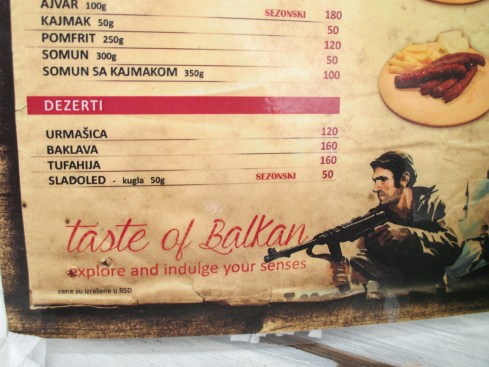
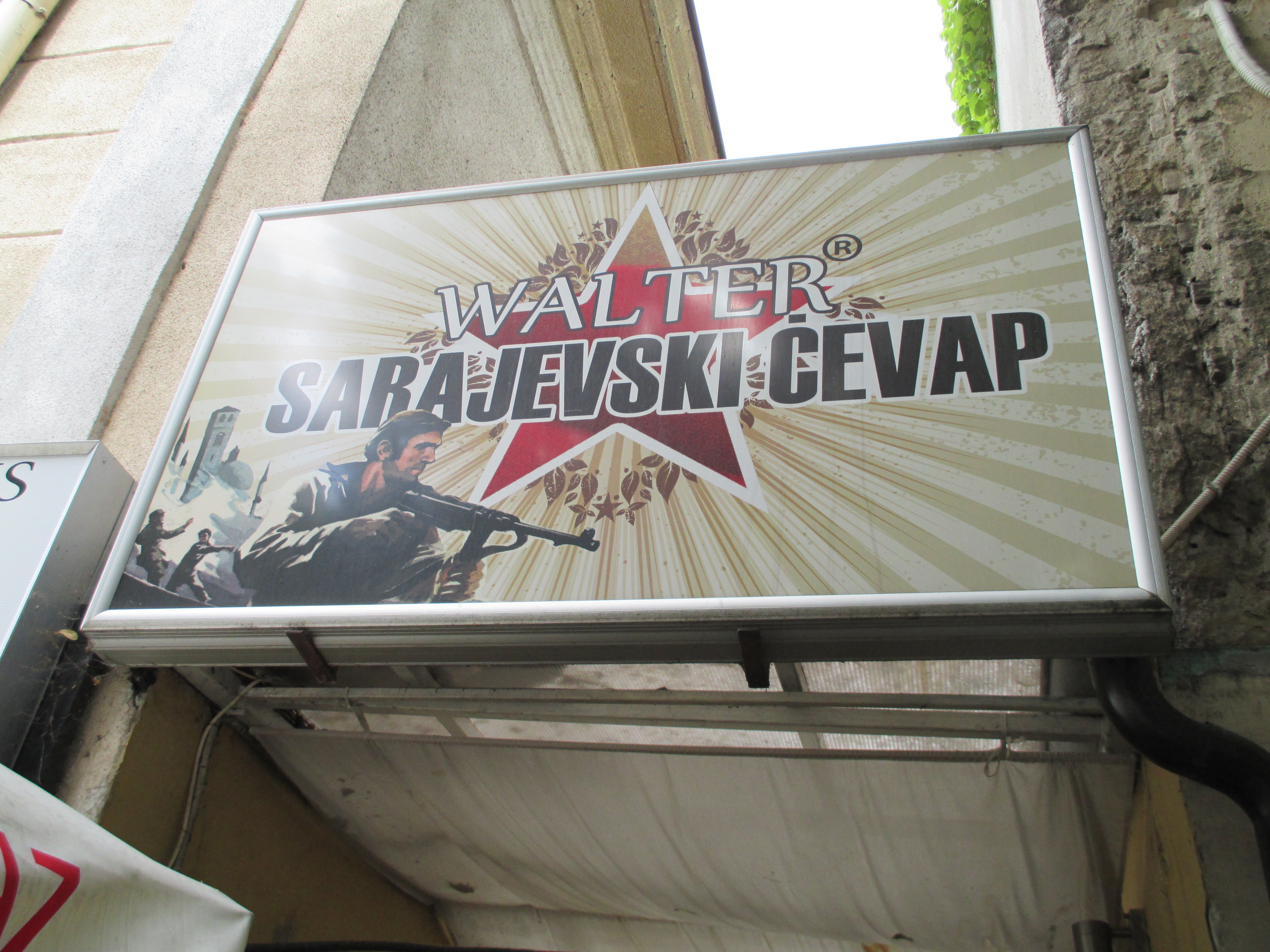
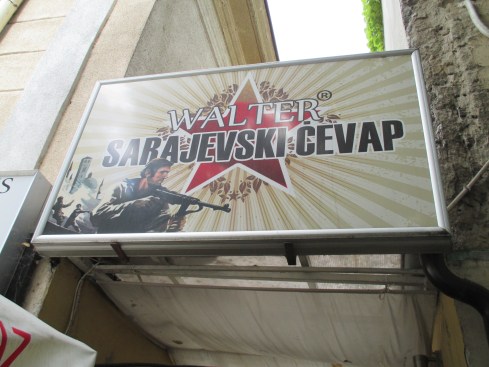
On the sign and menu of an otherwise sedate, old-fashioned feeling Bosnian restaurant with great ćevapi, the ubiquitous little köfte, a homey cellar place that feels like an old Moscow traktir or something… If anyone can explain the symbolic intention behind it, they get my Umberto Eco semiotics award for 2014.  Really, can anyone tell whether this is supposed to be a joke or not?

(Click on both)
IMG_0811

IMG_0816

******************************************************************************************************************************************************************************************************************

Much more in keeping with Serbs’ smart, cerebral, black humor: this t-shirt, marking the hundredth anniversary of the start of WWI, which I thought was priceless: “It’s a matter of Princip.” Fantastic…

(Click)

IMG_0845

******************************************************************************************************************************************************************************************************************

The language is – excuse my language – a total hard-on. I’ve already got my affinity for Slavic phonemes from my Russian days — though sometimes it seems they came out of the womb with me – and on top of it it’s tonal, too, with rising and falling stress and long and short vowels like classical Greek. The combination is magically sexy and something I could listen to for hours dumbly without understanding barely a word. It also makes it, unless you’ve dedicated some serious study to it phonetically, almost impossible to pronounce correctly. The street I lived on was called “Dobračina,” for example, in Dorćol (from the Turkish “dört yol” — “four roads.”)  And taking my cues from my Russian, which is really no great help since it has free stress and constantly surprises you also, I would say: “Do-bra-či-na.” But whenever it was repeated back to me it sounded like “Do-bra-či-na” or Do-bra-či-na” or even some combination of both, but never like what I had said; the lack of dynamic stress makes it sound like emphasis comes scattered in varying degrees of strength all over a word and not just on one syllable. Tempting to take it up. But I have to resist NikoBako tendencies to scatter my energies all over the place at once and never quite acquire full mastery of anything. Maybe later.

******************************************************************************************************************************************************************************************************************

The place’s greatest pleasure is its people. They have a quality that I’ve always struggled to express in English but is nearly impossible and makes me constantly have to resort to other languages. The somewhat dated Spanish “altanero” works – “alto” is your cue there – as does the more popular term still in use in Spain, the complex of traits referred to as “majo,” which I’ve tried to describe several times elsewhere (such as in this post: Un Verano en Nueva York).  “Αγέρωχη” works, the word Cavafy uses to describe Anna Comnene, which Keeley and others, I think, mistakenly translate as “arrogant” or “haughty,” but which for me means something like “breezily confident” and again could almost be a cognate for the Spanish “airoso.” But it’s a type of confidence that isn’t entirely about your ego, but one that obliges you to be open and generous and welcoming with others as well. The media and its pundits have fed us so much crap since the nineties about Serbs’ pathological and self-aggrandizing sense of their own heroism, that it’s impossible to even tell what’s true or not. But if they are that conscious of their heroic mantle, they certainly wear it lightly, like a people who have nothing to prove to you or really could give a shit about what you think of them. This means almost none of the tough guy, hyper-butchness we might be conditioned to expect. In fact, despite the borderline cockiness, women and men are almost always polite and unfailingly warm; sweet and tender even, like Russians when they get in their Russian moods. And with Serbs you don’t have to pry off the cast-iron mug first to get to the sweet part like you have to do with Russians.

******************************************************************************************************************************************************************************************************************

One great thing about Serbian women, aside from leggy and sexy and gorgeous and everything else you’ve heard: they’re real pals. This is going to sound totally sexist to some, but I didn’t mind the first time I was called sexist in my life and it certainly won’t be the last. They have this uncanny ability to hang out comfortably with guys. They’re not cloyingly clingy. They don’t demand attention through passive-aggressive silence or sulking and they speak freely but without forcing themselves into the center of the conversation. It’s not an attempt to ingratiate themselves with their man or his friends. It’s simply this extremely attractive capacity to go along with the rhythms and patterns of male camaraderie without sacrificing any of their femininity. Serbian men should consider themselves extremely lucky.

******************************************************************************************************************************************************************************************************************

And on a related and final note: it’s not a myth; it’s a fact that I’m sorry to report is true. One out of three people you pass on the street deserves a head-turn and a second looking-over; you simply can’t stop yourself. One out of…I dunno, I’m just stupidly throwing out numbers here…six or seven…or at least one person in every kompaniya/parea or “ekipa” let’s say, are simply knock-outs: tall, long-and-strong-limbed, great noses, good jaws and a higher percentage of crazy green-hazel eyes than I’ve seen in any other country. It’s dizzying. And they know it too and there’s no false humility about it either and of course that only concentrates the effect.

Sorry, only the one pic below, which isn’t even mine.  I’m still too shy to photograph people without having a press i.d. round my neck.

Anyway, there are places you go to and say: “That was nice…” and then they go into your travel archives.  And then there are places that you know, as you’re leaving, you’re not finished with.  Belgrade I’m not finished with.

Belgrade street scene(click)

Comment: nikobakos@gmail.com

And much respect for the Big Croat…

6 Sep

…who — I think it’s accurate to say — satisfyingly creamed the pretentiously heir-presumptuous Federer in straight sets.  (I love that his trainer has no last name.  He’s just “Goran” — another big bearded Croat.)

I would’ve given ANYTHING for a Djoković — Čilić Final, but I can make do with this.

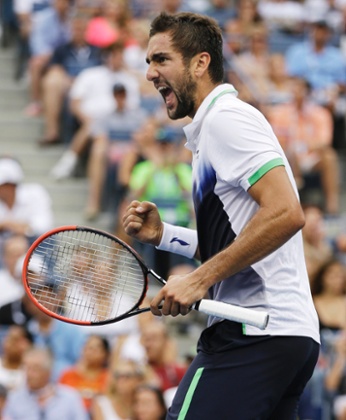
Marin CilicMarin Čilić — “Well might he roar.” Photograph: Darron Cummings/AP

Guardian‘s live blog of both matches – whole day: US Open 2014: Marin Cilic beats Roger Federer – as it happened

Tennis Aegon Championships(click)

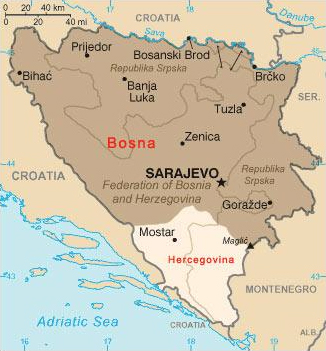
And some interesting side things you learn from the most unexpected places, like American TV tennis coverage: Čilić, it turns out, is from Medjugorje in Herzegovina, the Croatian Lourdes, capital of a Catholic-Virgin-apparition national cult, in the most virulently nationalist part of Croatian-held BH.*  (Not a reflection on Marin, of course, who’s actually best buds with Nole; one reason I wanted to see them go at it in the final would’ve been the pleasure of watching how quick “best buds” flies out the window when two Alphas are forced to go for the jugular.)  Always interesting how these cults always have an unerring way of appearing in just those regions, and just when you need them.  And a sad indication, also, of how we’ve written off Bosnia-Herzegovina as a viable entity: CBS’ US Open blurb-profile of Čilić listed his birthplace as “Medjugorje, Croatia.”

Medjugorje is famous as the site of some of the most vicious Ustaše massacres of Serbs during WWII and of subsequent vicious massacres of Franciscan monks and priests by Serbian partisans.  Of course, the Virgin only decided to appear at Medjugorje in 1981 — just one uncanny year after Tito‘s death — when Croatian nationalist sentiments and separatist grumblings had already gathered unstoppable speed and volume, and Yugoslavia was immediately — almost upon cue with Tito’s departure — starting to show signs of coming apart at the seams.

See whole Wiki page: Medjugorje

marin‑cilic-2012-01(click)

******************************************************************************************************************************************************************************************************************

Bosna_regija_update

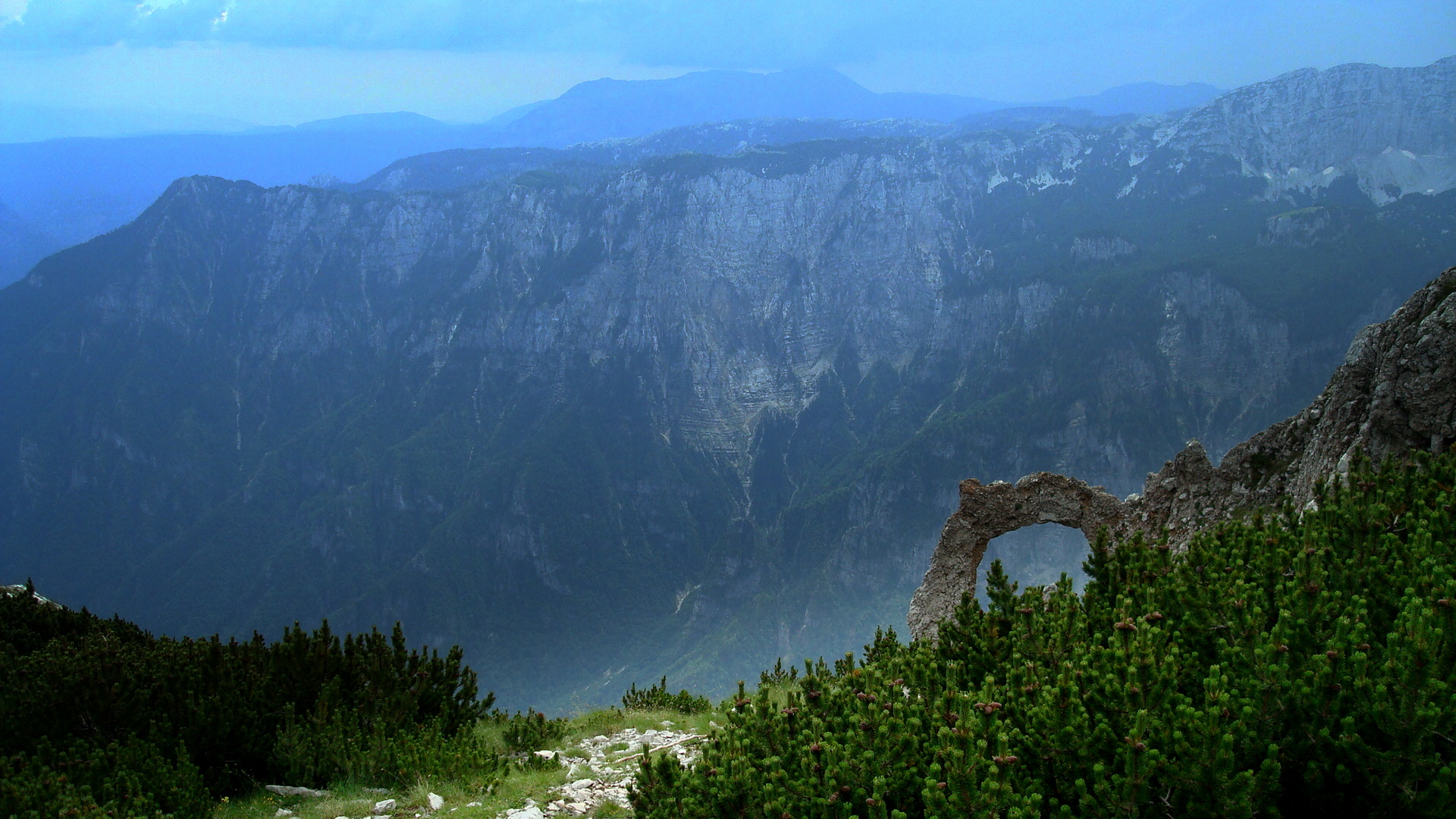
*Desperately poor traditionally, rocky, marginal Herzegovina, the barren plateau just a short steep inland climb from the idyllic, Italianate Dalmatian coast, is one part of the Balkans for which the Serbo-Croatian word vukojebina was coined — “wolf-fuck” — and is not just famous for producing rabid Croatian nationalists, but rabid Serbian and rabid Bosnian and — I think a tiny section that considers itself Montenegrin — rabid Montenegrin nationalists too.  These are not the Croats that Rebecca West could throw her hateful lawyer epithet at.  And don’t let the stunning beauty (below) of any part of ex-Yugoland fool you.

Hajdučka_Vrata“Hajdučka vrata” (the “Bandit’s Den” or “Κλέφτικο Λημέρι”) on Mt. Čvrsnica in Herzegovina (click)
 

Comment: nikobakos@gmail.com

Djoković at his worst…

6 Sep

368d4e2a-509b-40a6-af0b-56c9241a6773-460x364Photograph: Stan Honda/AFP/Getty Images

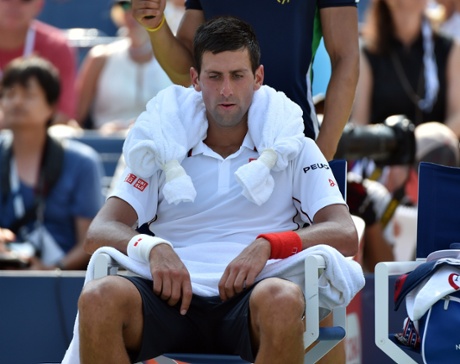
Moody, distracted, irritable, unable to come back from even the tiniest initial set-back, seemingly pissed off that it’s hot — like it’s a personal conspiracy against him — pissed off that #11 seed can be winning against him; till he decides he’s just too exhausted to even try and throws it in like a little child who doesn’t want to play anymore.

I don’t know why so much tennis is played in the most vicious heat imaginable either — July in London, New York in September, Melbourne in January — but deal with it.  It’s not like the gods have set up an invisible parasol for your opponent.  And, he’s not that much younger than you.

Then you got the announcers: “Having to be away from pregnant wife Jelena must be taking its toll on Novak too…”  Spare me the heterosentimentality, please.  (Or maybe they’re right: cherchez la femme…she’ll drain you dry every time…)  I adore this dude, but when he just gives up, he just gives up and it’s a real let-down for fans.  You’re getting too old for this sh*t Nole; the pissy defeatism is unacceptable; it’s not cute anymore.

Now I’m in a position where I have to root for a Croat…

The Guardian — like I’ve said before, best coverage of anyone — hasn’t posted yet, but see their Twitter in the meantime.

Woops… here they go.

P.S. Decent, polite and humble at press conference after, though…

Comment: nikobakos@gmail.com