Tag Archives: Turkey

Ireland — Gimme a break; I can’t believe this is even up for discussion

13 Aug

26 plus 6 equals 1

Check out the Times article from a few days ago: “On Irish Border, Worries That ‘Brexit’ Will Undo a Hard-Won Peace“.

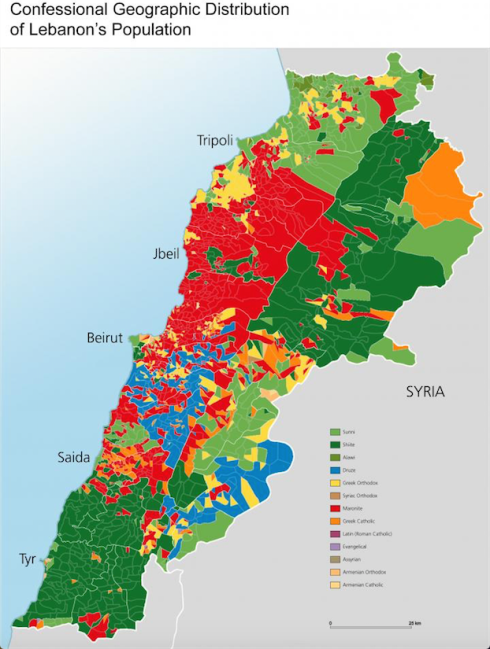
I was once dragged by force into a corner by a Lebanese friend at a party in Cambridge and told to never ask anyone Lebanese their religious affiliation, I guess because I probably just had done.  Of course, I still ask. Like I implied in my Turkish post a few days ago, pretend unity (that you’re a passionate Erdoğan supporter and I’m not, or if you’re Maronite and I’m third-generation Palestinian doesn’t mean that we can’t still be “unified”), can only become real unity if differences are acknowledged. (*1)
Screen Shot 2017-08-13 at 3.46.29 PM

I’ve had not dissimilar experiences with Irish folks if I’ve ever tried to talk about religion or Ulster or “the Troubles.”  I once asked a guy at an Irish bar in Queens who was from Northern Ireland if he was Catholic, and I got a blank and frankly angry stare in response, and with so much alcohol and testosterone in the mix, realized quickly I should shut up and look the other way or change the topic.  A female bartender who heard the one-sided exchange said to me softly: “not a good idea to ask people those things…”  Ok.
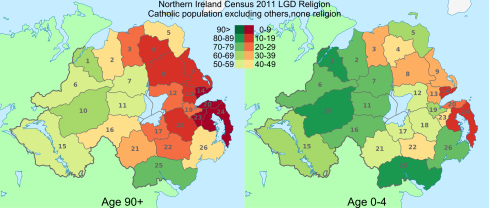
pPJAwhu n ireland religionMap of Northern Ireland with distribution of Protestants (red) and Catholics (green) according to age group, showing a clear demographic decline of Protestants.

I also hear Irish anger at what they think is an out of touch diaspora that funded continuing IRA violence when the Irish themselves on both sides were starting to get tired of the violence and the fences were starting to come down — though that’s slightly disingenuous — in the early days these diaspora funders were heroes — and, as a non-metropolitan Greek, immediately assuming that the “diaspora” is “out of touch” or stuck in a time warp is a seriously irritating train of thought; there’s lotsa ways we’re more in touch than you lot.

So I’m really setting myself up as an easy target since I’m not even Irish or Irish-American.  But I feel I can’t be silent as the English decide the future of any part of Ireland again.

I know that the Brexit vote came as a shock to a lot of Americans, as we were forced to confront the fact that the English are not all that smart, and can be as jingoistic, xenophobic, ignorant and proudly “know-nothing” as Americans can be.  And I say the English because Scotland and Northern Ireland voted against leaving the European Union — in Northern Ireland, particularly, in percentages that would indicate a large number of Protestants voted to stay as well — and they should now be free to decide their own fates free of London.

Sometimes I feel that my views on the ethnic nation-state and minorities come across as selective and sort of random to readers, so let me take this moment to clarify a bit.  I am, of course, against the brutal assimilationist policies of the nation-state and a supporter of minority language and cultural rights.  On the other hand, I’m also against a minority holding an entirely polity hostage because it refuses to conform with the conditions of living in a state where they don’t hold numerical superiority.

There’s a great and frustrating passage in Rebecca West‘s beautiful Black Lamb, Grey Falcon, where her Serbian (and half-Jewish) tour-guide is arguing with a Croatian intellectual in Zagreb; “but you are not loyal” says the Serb:

Croat: You treat us badly.  How can we be loyal?

Serb:  You’re treated badly because you’re not loyal.

Croat:  How can we be loyal if we are treated badly?

Serb:  If you were loyal, you wouldn’t be treated badly.

Croat:  When you treat us better, we’ll be loyal.

Serb:  As long as you’re not loyal you can’t expect to be treated better.

And on and on and on…
Rebecca-West

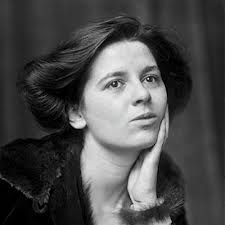
(Rebecca West, who along with disconcertingly smart and honest, was clearly a real babe as well — broke a lot of hearts and refused to forgive when hers was…cool.  As Lauren Cooper would say: “Forgiving is for l-o-o-o-o-z-u-u-h-h-z-z!!!”)

Of course, we saw, during WWII, just after West’s second trip, and then again by the end of the last century, that Croatians had no intention of being loyal to Yugoslavia no matter how much bending-over-backwards to ‘treat them better’ Belgrade did.
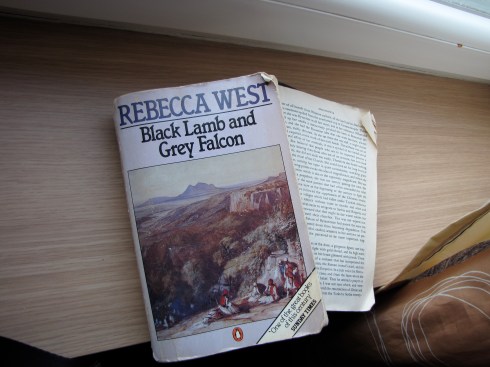
img_0973 BLGF worn

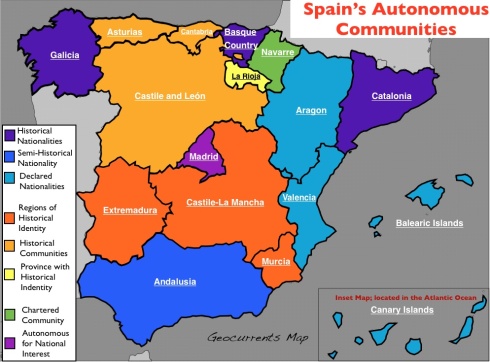
Or take Catalans again, in a state where as a minority they are treated exceptionally well.  Still, with full language and cultural rights, they feel Madrid is oppressing them and they want full independence, threatening to rip apart the fabric of a country that has made impressive democratic achievements over the past few decades.  And those of you who bought the public relations crap about how “hip, cool and Mediterranean” Catalonia is, and who spend your tourist money in Barcelona and the Balearics have only contributed to the discriminatory tendencies of Catalan chauvinism and the worsening crisis of Catalan separatism.  Try Galicia or the Basque Country if you want to see parts of Spain that are not part of the Castilian center, but where ethno-linguistic difference has made its peace with the Spanish state and society has agreed to co-existence.  Or if they’re too rainy and un-Mediterranean for you, go to Córdoba and Granada (skip Seville, too Catholic and bull-obsessed), poorer parts of the country that need your money and where you can buy the public relations spin of Edward Said instead, who once outrageously made the claim that 60% of Spanish vocabulary is of Arabic origin, (or maybe the spin of Al Qaeda and ISIS) and wallow in Al-Andalus nostalgia.
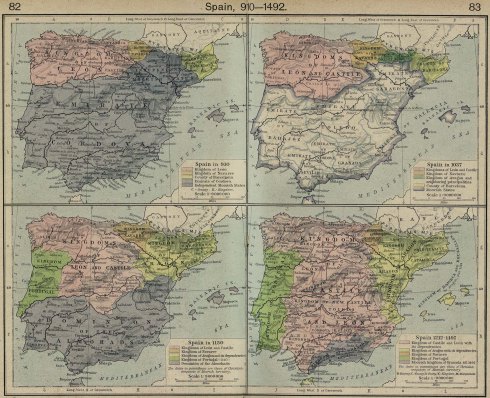
spain_910_1492

Spain4 autonomous regions

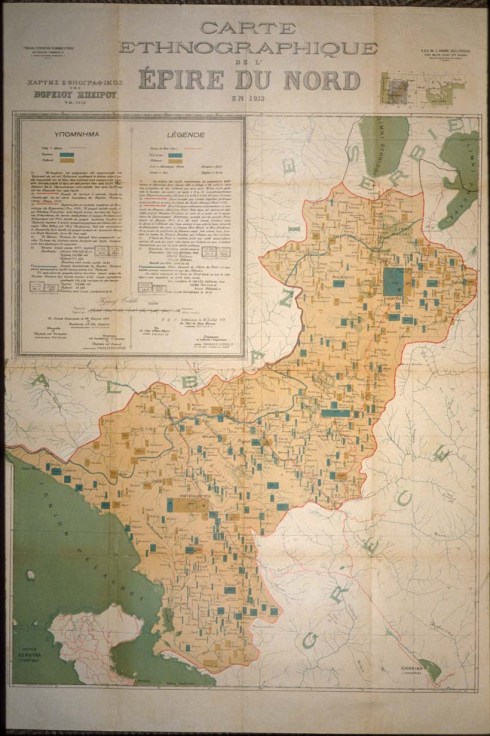
Even more and very closer to home: my father’s Greek minority village of Derviçiani in southern Albania.  My early-days romance with the village is kinna over and I feel free to express things that I’m angry at myself for not saying to the faces of people there earlier.
EpireDuNOrd1913

I’d love to ask: what the f*ck do you want exactly?  They have Greek primary and secondary education; they have Greek churches (a Church about which few of them know anything or take seriously in any way, or have bothered to learn about in order to address the consequences of four decades of enforced atheism, but they have them); the Albanian Orthodox Church itself — meaning not just Greek minority churches, but the Church of Orthodox Albanians — in fact, is headed, run and staffed by Greeks, (extremely enlightened ones, I have to admit), the way the Arab Orthodox Churches of the Levant were for so many centuries; they have, I believe, two political parties that have members who sit in the Albanian parliament.  If their villages are experiencing slow to rapid depopulation, it’s not the fault of Albanians or Tiranë; they were simply trapped — Greeks and Albanians together — in a Stalinist cage for fifty years and now are free to leave: the villages of Greek Epiros started hemorrhaging inhabitants soon after WWII, and neighboring Albanian villages, both Christian and Muslim, are also emptying of young people.  Still, they’re hostile to neighboring Albanians; still, they want autonomy for “Northern Epiros,” which for some of them stretches half-way up to the middle of Albania (I don’t care if “the stones speak Greek all the way to Dyrracheio/Durrës” — The. People. Who. Live. There. Now. Don’t. And don’t want to be part of a Greek autonomous region. 2**); still, they make Muslim girls get baptized if they want to marry any of their precious boys, μη χέσω (thank God Albanians still wear their Islam kind of lightly or these poor girls would be in serious trouble) and will ostracize any Christian daughter or sister who falls in love with and marries a Muslim; still, they get offended, even a hip, British-educated nephew does, if you visit the pleasant, well-watered, historical Muslim village of Libohovo — Albanian Libohovë — across the valley and you come back and say it was very nice and that the young people there don’t seem much different than ours.  Of course, this attitude is a self-fulfilling prophecy, as the conversation from Black Lamb… above indicates, so that when you put up the flag of Autonomous Northern Epiros 1914 on August 15th and the Albanian police has to come and take it down, then you’ll just end up on the bad side of the Albanian authorities and ordinary Albanians’ retaliatory instinct and the vicious cycle will just keep going.
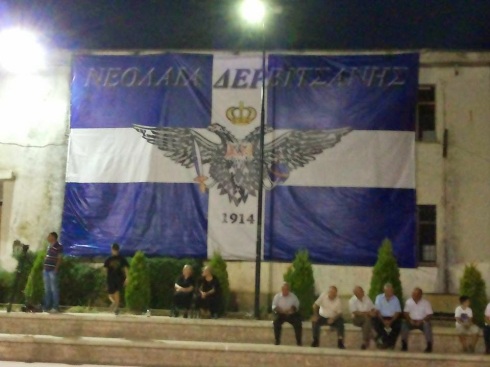
neolaia derbitsanis flagA flag of the Youth of Derviçiani, which, just by wild and completely invented coincidence, happens to have been “founded” in 1914, the year there was a short-lived experiment in Northern Epirote autonomy, which was squashed by Italian objections, because Italy considered Albania within its sphere of influence.  Obviously not a sign of just the “youth” of the village — there was no Youth of Derviçani in 1914.  And if there are still any doubts, the Palaelogan double-headed eagle lays them to rest.

(Really, is there anything as idiotic as a flag?)

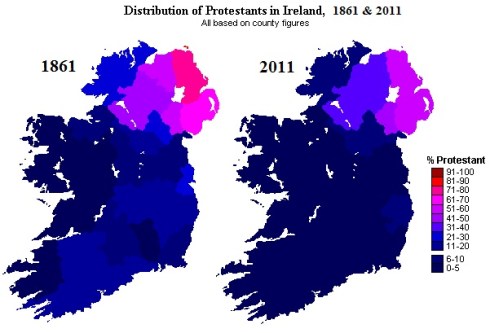
But back to Ireland.  I think Ulster Protestants caused enough “troubles” by acting — with the hypocritical support of England — like they were a besieged minority that couldn’t be part of the Irish Republic.  So if a majority of Northern Irish voters chose to exit the Brexit, that’s a golden opportunity just dropped out of the heavens into our laps to correct an egregious historical wrong.  The invasion and conquest of Ireland, its depopulation and the ripping to shreds of its society, culture and language did not start with the Potato Famine of the nineteenth century.  It started with the Normans and the Plantagenets, and then the Tudors and the Stuarts and, finally, Cromwell and his Taliban, and it was a grueling, vicious, murderous process, as violent, or more, as any of Britain’s other colonial wars and right on Europe’s front door, and the Plantation of Ulster itself and the rest of Ireland was a conscious colonial policy of appropriating land and settling poor Protestant Scots and northern Englishmen in the country in order to “civilize” it and break Irish resistance to English hegemony.
Ireland_Protestants_1861-2011

If the above maps seem to indicate that a large number of Protestants left the Irish Republic in the twentieth century because they didn’t feel comfortable without the English crown’s protection, that’s unfortunate (it was not so unfortunate in cases where the Anglo-Irish elite felt they had to flee when their expropriated land was re-expropriated) but that can’t be a justification for the continued amputation of the country.

It’s a classic strategic move, though.  Ulster Protestants are not a socioeconomic group comparable to the Anglo-Irish landowners; they were always as squire-ridden as their Catholic neighbors and are still pretty much on equal footing in that sense.

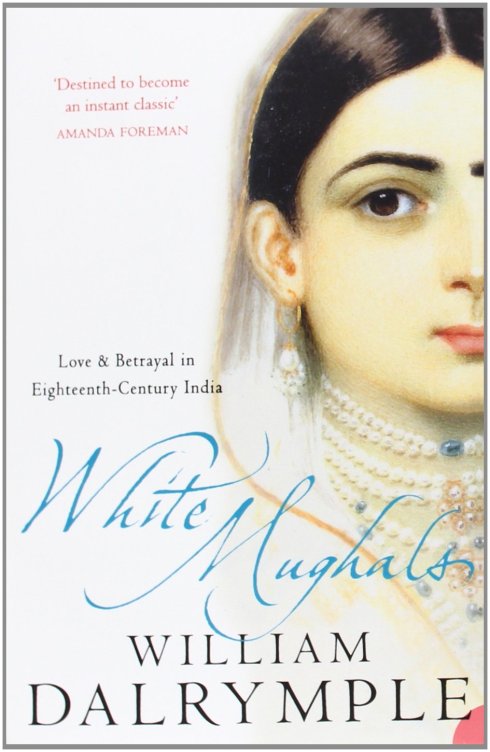
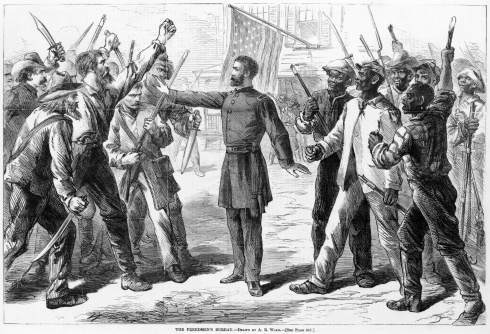
But everybody has to be better than somebody, or else you’re nobody.  So, just like Catalans have to think they’re really Mare-Nostrum-Provençal Iberians (3 ***) and not part of reactionary Black Legend Spain; or Neo-Greeks have to think that they’re better than their Balkan neighbors (especially Albanian “Turks”) because they think they’re the descendants of those Greeks; or the largely lower-middle class, Low Church Anglican or Presbyterian or Methodist Brits who fled their socioeconomic status back home and went out to India in the nineteenth century in order to be somebody, had to destroy the socially laissez-faire modus vivendi that had existed there between Company white-folk and Indians, creating an apartheid and religiously intolerant, aggressively evangelizing, social system that laid the groundwork for the unbelievable blood-letting of the Indian Rebellion of 1857; or, perhaps history’s greatest example, poor whites in the American South (many, ironically, of Northern Irish Protestant origin) that had to terrorize Black freedmen back into their “place” because the one thing they had over them in the old South’s socioeconomic order, that they weren’t slaves, had been snatched away (and one swift look at the c-ontemporary American political scene shows clear as day indications that they’re, essentially, STILL angry at that demotion in status); or French Algerians couldn’t stomach the idea of living in an independent Algeria where they would be on equal footing with Arab or Berber Algerians.  So Protestant Ulstermen couldn’t tolerate being part of an independent state with these Catholic savages.
White Mughals Dalrymple

Freedman_bureau_harpers_cartoonA Bureau agent stands between armed groups of whites and Freedmen in this 1868 sketch from Harper’s Weekly.
Screen Shot 2017-08-13 at 6.56.34 PM

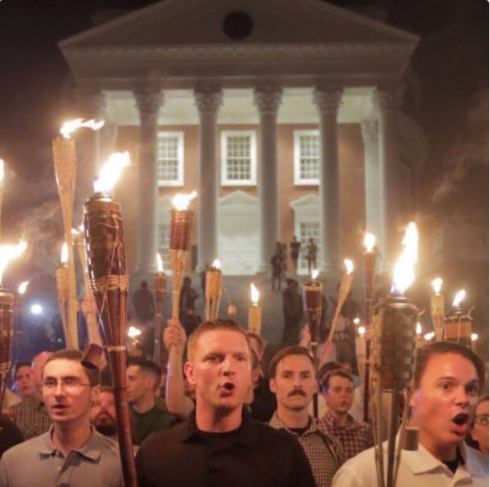
Recent White supremacist rally at the University of Virginia in Charlottesville — thanks to @JuliusGoat: “Imagine if these people ever faced actual oppression.”

The colonial power — or just the colonized mind — then disingenuously but actively seeks to right these wrongs and protect the embattled minority.  The results?  A Lebanon torn apart by Maronite phobias and Palestinian victim-entitlement; the greatest threat to Spanish democracy since Franco; a Greece completely isolated from its nearest and closest — in every sense — neighbors; an India where British response to the Rebellion effectively disenfranchised Indian Muslims (4 ****) — Dalrymple shrewdly locates one of the beginnings of modern Islamic fundamentalism in that disenfranchisement and the Deobandi Islam it created 5 *****; the Ku Klux Clan and the murder of Emmett Till and Donald Trump; the vicious Algerian War of Independence, which resulted in French Algerians having to flee the country entirely to a France where they’re still a bulwark of reaction and racism, and the still bad blood between Algerian immigrants and natives in that country.

(I thought about adding Cyprus to that list, that’s going on forty-some years of division after the 1974 Turkish invasion, but didn’t, because Turkish Cypriots actually were an embattled minority, and Greek Cypriots have to do some moral self-searching about their terrorizing, or passively supporting the terrorizing, of their Turkish neighbors, before they blame either Turkey or the Greek junta for f*cking things up for them.)

I was against the Scottish independence referendum of a few years ago because I’m against separation and the putting up of borders generally.  But then the apparently stoned British electorate went and separated itself from the rest of Europe, and if Scotland and Northern Ireland and Wales even, or Cornwall or the Isle of Manx or Jersey and Guernsey for that matter, want independence from England now, England will have only brought that down on its own head.  If Northern Ireland votes to stay in the European Union then de facto reunion with the Republic will have occurred; I would just like de jure recognition of that facto too, so that there’s no more excuse for meddling in Irish affairs.  Irishmen have done a lot of genuinely hard work confronting the demons of their own past in recent years; today’s Ireland is a democratic, pluralist, morally progressive society where the Catholic Church’s death-grip has been broken.  That Ulster Protestants can’t live there in peace and security and without English protection is a ludicrous idea.

So let it happen, and if Ulstermen don’t like it — sorry to sound like a reactionary nativist — but they’re free to go back to Scotland where they came from.  Or if they want they can come here and join their distant cousins in Kentucky and the Ozarks.  I’m sure President Trump will consider them the “right” kind of immigrants.

Comment: nikobakos@gmail.com

*********************************************************************************

1 * It’s a little reductive, but I think it’s not outrageously so to see the Lebanese Civil War as essentially, or initially,  a conflict between Maronite demographic panic and paranoia (not entirely unjustified) and Palestinian entitlement of the oppressed (even more justified); every other group seems to then have had no choice but to choose sides.  Then add Israel — which arguably started the whole problem — and Syria to the mix, και γάμησέ τα.

2 ** Of course, Northern Epirote Greeks’ δήθεν innocent desire for autonomy is completely disingenuous — though we’re supposed to think that Albanians are too stupid to get that — and is really just a prelude and first step to independence and union with Greece, though they’re a demographically fast-dwindling percentage of the population of the region they lay claim to.  That’s not a deterrent, however; all you have to do is believe that all Orthodox Albanians are reeeeeeeally Greek and you’ve solved your demographic issue, since Muslim Albanians are just turncoat intruders in the region as far as Northern Epirotes are concerned.

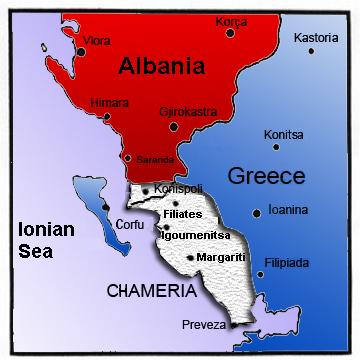
The only obstacle that would then be left is to get Albanians to forget what happened to the Muslim Albanian Çams of western Greek Epiros (Albanian: Çamëria, Greek: Τσαμουριά Tsamouriá) during WWII, when they were subjected to massacre and expulsion in a campaign of ethnic cleansing by the Greek right-wing resistance and had to flee to Albania.
Chameria_map2

I still haven’t figured out how, as Muslims, they escaped the Greco-Turkish Population Exchange of the 1920s; it would’ve been a more merciful fate.  I also haven’t figured out how the tsamiko, a dance of central and southern Greece, got its name.  Or else, what clues to a forgotten past the fact that my grandmother’s maiden name was Çames provides; almost all our last names are Albanian — with the Greek male nominative -s ending added to them — as in Bako-s — but as far as I know there’s no clan in our villages whose last name is actually the name of an Albanian sub-ethnic group.  See: (Easter eggs: a grandmother and a grandfather“.

Scratch a Greek and find an Albanian, I guess…  Or a Vlach…  Or a Slav of some sort…  (See: Albanians in Greece and the “documentary that shocked Greece” from SKAI)

This kind of issue always reminds me of the Puerto Rican expression from a song of I dunno what period: ¿Y tu abuela donde está?” or ¿Y tu agüela, aonde ejtá?“And where’s your grandmother?” i.e., before you get all high and mighty and Whitey on us, show us the Black grandmother you’ve got hidden in the kitchen.

3 *** This fetishizing of the Mediterranean as a region, a lost paradise of cosmopolitanism and healthy diets, drives me nuts.  Everyone is suddenly “Mediterranean.”  The big laugh, of course, is that Turks are Mediterranean.  Then comes the less funny one about Croatians being Mediterranean, whereas Serbs are clearly not — Croats wanting to have it both ways, and be Mediterranean and Mitteleuropean at the same time — even if they’re from neolithic Herzegovina and about as neanderthal themselves as their Serbian and Muslim neanderthal neighbors; Istrians have sealed their Mediterranean-ness by buying every Italian restaurant in New York City’s boroughs, and of course the largely Italianate Dalmatian coast seals in most Europeans’ minds the idea of Croatia as a country on the f*cking M-E-D-I-T-E-R-R-A-N-E-A-N.  Actually, the closest example to Croatians’ appropriation of a largely Venetian Adriatic is the Turkish appropriation of Greek Aegean imagery, in tourist and p.r. language, on both the Anatolian coast and in Imbros and Tenedos.

Just as nicely condescending is the saying from some-where in the Iberian periphery that “de Madrid no se ve el mar,” “you can’t see the sea from Madrid.”  Supposedly a jab at Castillian casticismo, and inward-looking provincialness.  No, you can’t see the sea.  That’s why Castille is such a beautiful, high plateau, dry and bright and chilly and Romanesque and stunning in its emptiness and vastness.

A White Turk friend once dragged me to Sorrento on our trip to Naples and Campania, which I knew would be a mistake, because it would be and turned out to be a tourist-swamped, hellish Thomas Cook holiday trap because it was “on the sea.”  (but one makes concessions to one’s travelling partner’s fantasies.)  We cut out as soon as we could and headed to Ravello, up in the mountains away from the sea and she was blown away by how beautiful it was.

And what happens to Greeks like me? who are from a part of the Greek world that is clearly more Balkan in every way than it is Mediterranean?  What do we have to do to join the club?

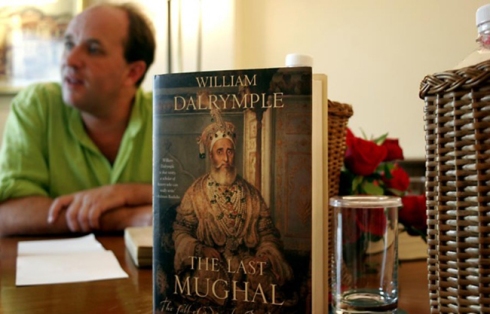
4 **** William Dalrymple is a great historical writer who does what professional academics can’t do because they’re so specialized that they can easily say: “Sorry, I don’t work on that period” when you ask them anything they don’t know.  The breadth and depth of his knowledge on South Asia is truly amazing and he makes it all interesting and stimulating for the layman without dumbing it down.  When I first started this blog I wrote to him asking to reproduce some of the passages on the British destruction of Mughal Delhi contained in his book, The Last Mughal, and he immediately and generously shot back with an email that said: “Go for it.”  Thanks again.

So check out those posts here and here and here .  Better yet, buy the book.

5  ***** Worth reproducing here in whole:

“Following the crushing of the Uprising, and the uprooting and slaughter of the Delhi court, the Indian Muslims themselves also divided into two opposing paths: one, championed by the great Anglophile Sir Sayyid Ahmad Khan, looked to West, and believed that Indian Muslims could revive their fortunes only by embracing Western learning.  With this in mind, Sir Sayyid founded his Aligarh Mohamedan Anglo-Oriental College (later Aligarh Muslim University) and tied to recreate Oxbridge in the plains of Hndustan.

“The other approach, taken by survivors of the old Madrasa i-Rahimiyya, was to reject the West in toto and to attempt to return to what they regarded as pure Islamic roots.  For this reason, disillusioned pupils of the school of Shah Waliullah, such as Maulana Muhammad Qasim Nanautawi – who in 1857 had briefly established an independent Islamic state north of Meerut at Shamli, in the Doab – founded an influential but depressingly narrow-minded Wahhabi-like madrasa at Deoband, one-hundred miles north of the former Mughal capital.  With their backs to the wall, they reacted against what the founders saw as the degenerate and rotten ways of the old Mughal elite.  The Deoband madrasa therefore went back to Koranic basics and rigorously stripped out anything Hindu or European from the curriculum.*

*(It was by no means a total divide: religious education at Aligarh, for example, was in the hands of the Deobandis.)

“One hundred and forty years later, it was out of Deobandi madrasas in Pakistan and Afghanistan that the Taliban emerged to create the most retrograde Islamic regime in modern history, a regime that in turn provided the crucible from which emerged al-Qaeda, and the most radical and powerful fundamentalist Islamic counter-attack the modern West has yet encountered.”
the-last-mughal

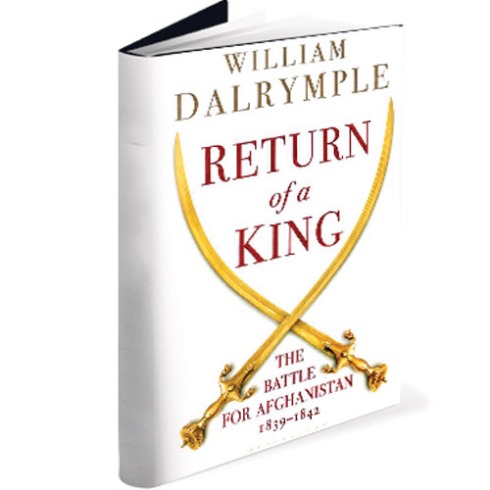
See also his magisterial The Return of a King on nineteenth-century Afghanistan, which I have a few issues with, particularly his conclusions, but which was a couldn’t-put-it-down one for me.
Dalrymple return

Comment: nikobakos@gmail.com

Memo to: a certain generation of “progressive” Turks

4 Aug

From: NikoBakos

Re: the final and total castration of the Turkish military

Date: August 2017

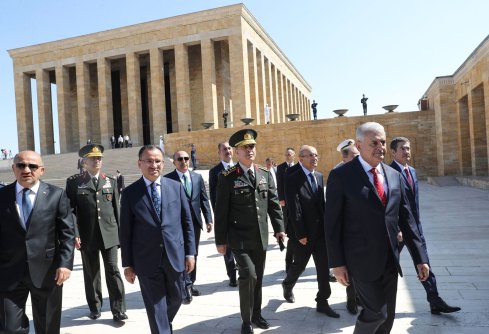
Ataturk Mausoleum Yildirim Chiefs of staffPrime Minister Binali Yildirim of Turkey, front right, and the chief of staff, Gen. Hulusi Akar, third from left, visit the Mustafa Kemal Ataturk Mausoleum before the Turkish Supreme Military Council meeting in Ankara on Wednesday. Credit Adem Altan/Agence France-Presse — Getty Images

ARE YOU HAPPY NOW???

I have two groups of friends in Constantinople:* one a group of mostly Alevi**, first-generation urbanites (from Dersim and Antiocheia); another of at least several urban generations, who are pure “White” Turks in every way.

A sub-category of this second group of friends (who are fast becoming ex-friends) are/were or considered themselves to be “leftists” (“I should cough” as one of the characters in Hester Street says).  These were always violently allergic to anything that had to do with the military, Turkish or otherwise.

Peaceniks, of course, our rift began when it proved completely in their interest to paint me as a super-American hawk during the Iraq war, even if I’m deeply un-American in my self-identification and was never a supporter of Bush’s adventure.  I simply did not know what to think about the idea of invading Iraq and toppling Saddam Hussein and took issue with their knee-jerk, anti-American attitude, with their facile certainty they knew what to think.  In the end I just decided that anybody who was automatically against the completely justified invasion of Afghanistan and the removal of the Taliban — and if that’s a tragically uncompleted project, that doesn’t mean the initial result or victory was not worthwhile…ASK ANY AFGHAN — was going to be a robot-thinker about any kind of American intervention or just about war of any kind, so I couldn’t be bothered.

Of course, these types DON’T KNOW ANY AFGHANS to ask, because they’re shameless hypocrites living in their pleasant, sheltered suburbs in C-Town, who know our Cyclades better then they know the rest of their own country — certainly better than I do — and wouldn’t dare head out to Afghanistan, even on a dare.  Why do they irritate me so much?  It’s simple.

If the original sin of the Right is selfishness, the original sin of the Left is self-righteousness, by which I mean the need to see one’s self as morally correct no matter what, even if this means a breezy indifference to the realpolitik or the reality of what’s really happening on the ground.***

Of course, they were steadfast in their belief that the Turkish military was an institution of bastardized Kemalism that was the greatest anti-democratic force in their society.  This was their justification for eventually rejecting their parents’ admittedly corrupt CHP as well, Turkey’s Kemalist Republican party.  And yet it’s ironic that the Turkish military’s “anti-democratic” orientation has repeatedly prevented the complete descent of that society into chaos.  One of these types has a whole sob story she used to recite to me about how, as a young girl in the 70s, she was terrified every day when her father left the house that he wouldn’t come home because of the terrible and constant terrorist violence that was then occurring on the streets of Constantinople.  But it was the military that put an end to that violence in 1980, like it was the military who got rid of Menderes, architect of the 1955 anti-Greek pogrom, in 1960.  And as soon as Erbakan started exceeding his limits (btw, he was the first who tried talking about limiting alcohol consumption and tables on the street in Pera and Galata), the military got rid of him too in 1997 — not exactly cause and effect there.

As a Greek, there’s obviously little love lost on my part for the Turkish military.  I just feel that if Turkey’s twentieth-century history, culminating in the Erdoğan phenomenon, has proven the country to be incapable of forming a democratic civil society that doesn’t spin out of control into violence, corruption and chaos, then you just don’t have the luxury of being anti-military.  Furthermore, from our perspective, Erdoğan’s pre- and post-“coup” military is a far more threatening force than it was previously.  Violations of Greek air space have increased exponentially under Erdoğan’s tenure, as has his, and formerly Davutoğlu’s, irresponsibly imperialist Neo-Ottoman language.  And just like it wasn’t a military junta that organized the pogrom of 1955, it wasn’t a military government that invaded Cyprus in 1974, ethnically cleansing and occupying 40% of the island to protect a Turkish minority that is only 18% of the island’s population.

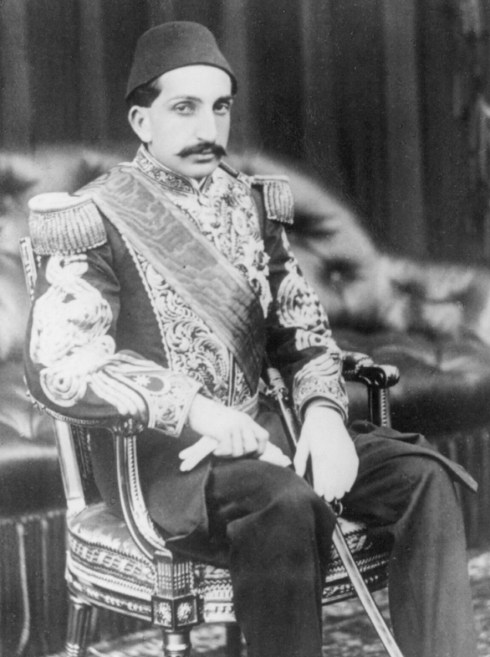
Lately there had been a weird shift in their attitudes though, as it has slowly sunk in that they had supported (“I voted for him!  My God!!”) the most un-democratic, anti-consitutional, religiously retrograde, paranoid, chip-on-the-shoulder lunatic to rule Turkey since Abdülhamid (photo below).  After the takeover and purging of the daily Zaman in March of 2016, I ran the idea past a few of them: “do you think it’d be a good idea for the military to step in? …they already have more unconstitutional dirt on him than on most Turkish heads of state.”  And even the Teşvikiye girl who had worried so much about her father, didn’t get apoplectic on me like she would’ve done in the past; she simply mumbled passively, in the static cadences of Turkish passivity: “I don’t even think they’re in a position to do anything at this point.”****

AbdülhamidAbdülhamid

Worse was one who said to me: “What Turkey needs now is unity.”  Well, your compatriots have actually shown a quite impressive amount of unity in the face of the Erdoğan challenge.  Every time he has engineered some sort of spectacular violence to terrify them over the past almost three years, they have unitedly come back, in elections and referenda and the mob-mobilization they have always been so good at, to give this “most un-democratic, anti-consitutional, religiously retrograde, paranoid, chip-on-the-shoulder lunatic to rule Turkey since Abdülhamid…” an even greater mandate on power than he had before: Daddy please save us!

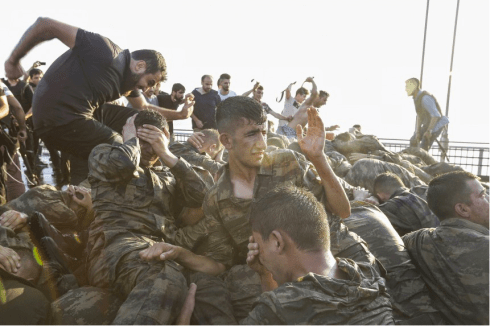
Infantile beyond belief.  Is that the “unity” you wanted?  There was great unity in the mob hysteria that this supposed coup was met with (no, I don’t believe it was Gülen; no, I don’t think it was the army, unless it was army that already knew it was going to be sacked; no, I don’t think he didn’t know; I’d probably refuse to believe that Erdoğan wasn’t the architect of the whole thing — see the New Yorker‘s great Dexter Fillins’ “Turkey’s Thirty-Year Coup”).  They displayed impressive unity lynching poor little Mehmetçiks just following orders on the Bosporus Bridge (scenes guaranteed to make the hair of Greeks and Armenians stand on end), impressive unity in the Nazi-style rallies the Great Leader has convened, impressive unity in heckling men from the army and journalists and writers being led into a show trial that can quite possibly end in their execution or certainly life sentence (see “Inside Erdoğan’s Prisons” in the Times) and with the kerchiefed teyzes screaming for blood outside the courthouse in Ankara — and I’m sure they’ll show impressive unity in supporting the reinstating of capital punishment if that goes up for a referendum soon.

Turkish thugs and soldiersTurks beating up young conscripts on the Bosporus Bridge, defending their democratic right to elect a dictator who has abolished Turkish democracy for the most part and soon will have the power to go after whatever’s left…Turkish “unity” in action.

IS THAT THE UNITY YOU WANTED?  The unity of Kristallnacht? (or the “Septembriana” — same difference.)  The unity of Nüremberg?  The unity that comes with thinking that you can enfranchise the newly rich, provincial pious, those with absolutely no democratic education — or education of any kind — and that they won’t turn on you like swine before which pearls have been cast?  (Plato said that the “demos” — the people — shouldn’t have the right to vote because they’ll always vote for the tyrant — τυραννόφρων; Dostoevsky’s Grand Inquisitor says precisely the same thing.)  Did you want the unity of the Italians and the Germans who respectively put Mussolini and Hitler in power with their vote?  Or the Americans who voted for Trump?  Or the Russians who voted and will again vote for Putin?

Tabrik migam, then.  You got it.

And this is the cherry on your birthday cake: Erdoğan replaces the military chiefs of staff with his own men.  Good luck ever getting rid of him now.  He’s now in a position of total control, with no challenges whatsoever.  You’re stuck for life.

*************************************************************************************

* The days when in the p.c. stupidity of the metapoliteuse we used to refer to Constantinople as “Istanbul” — I mean when speaking Greek…airport announcements and newspaper by-lines used “Ιστανμπούλ“…in Greek…are over.  I’ve now taken to calling it Constantinople in English as well, as Turks are free to call Salonica Selanik or Bulgarians and Macedonians Solun and I have no problem.  I’m not going to tell others what to call cities historically important to them; it actually makes me happy.  For more on this see my: Names: “Istanbul (not Constantinople)”…and Bombay! and keep an eye out for my “Boycott ‘Mumbai” campaign” post.  In general except an upswing in South Asian posts as we approach the seventy-year anniversary of Partition.

** My friends bear out the truth that Turkey’s Kurdish-Zaza Alevis and Syria and Lebanon’s Alawites are religiously the same branch of semi-Shia Islam.  The ones from Dersim have recognized that Syrian Alawites are also Alevi like them, even if that hasn’t made them Assad supporters; and the ones from Antiocheia (Antakya in Turkish or Hatay province in the logic of Turkish science fiction nationalist narrative) are just plain Alawite Arabs, who have understood that if there’s anything separating them from Syrian or Lebanese Alawites, it’s only the Turkification campaign they were subjected to when Turkey annexed that part of then-French-mandate Syria in the 1930s.  If papers like the Times feel the need to add the caveat that they’re different in every article they publish on the subject, it’s because they’re ignorant, the Turkish Press Office has made a fuss every time they don’t add that caveat, and it’s easy to think that people separated into difference by the ethnic nation state aren’t religiously brothers.  I’ve written extensively on this in a Twitter dialogue I had with a Turk who thought everybody should fight “lies and defamation” against their country when they appear in the media:

Syrian Alawites and Turkish Alevis: closer than I thought

Turkish Alevis and Syrian (or Lebanese…or Turkish?) Alawites — a Twitter exchange

Alevis and Alawites addendum: a “p.s.” from Teomete

More on Alevis and Alawites…or Alevis and Kurds…or Iraqi Kurds…or…Christian Kurds…or Assyrians…or…

Look out for Alevis in the current struggle in Turkey.  Whereas Kurds proper are not trusted by the political establishment or most Turks because they’re convinced they’ll never give up their separatist aspirations, Alevis, who suffered terribly under the Ottomans and the early republic and still do on some level, are still loyal to the Turkish Republic and Turkey itself.  This puts them in the position to become the secular backbone of all democratic impulses that still exist in that country, something like African-Americans in the United States were in the mid-twentieth century, since their form of Islam does not aspire to becoming the State itself, as all forms of conventional Sunni Islam do.  They were a disproportionate share of the casualties and deaths that occurred during the crackdown of the 2013 protests, not because they were targetted specifically, but simply because they were already a disproportionately large percentage of the protesters.

*** It may seem irrelevant, but this type always reminds of a passage in Chesterton’s Orthodoxy in which he trashes this kind of moral correctness by trashing the New Agers of his time:

“Only the other day I saw in an excellent weekly paper
of Puritan tone this remark, that Christianity when stripped of its
armour of dogma (as who should speak of a man stripped of his armour of
bones), turned out to be nothing but the Quaker doctrine of the Inner
Light. Now, if I were to say that Christianity came into the world
specially to destroy the doctrine of the Inner Light, that would be an
exaggeration. But it would be very much nearer to the truth. The last
Stoics, like Marcus Aurelius, were exactly the people who did believe in
the Inner Light. Their dignity, their weariness, their sad external care
for others, their incurable internal care for themselves, were all due
to the Inner Light, and existed only by that dismal illumination. Notice that Marcus Aurelius insists, as such introspective moralists always do,
upon small things done or undone; it is because he has not hate or love
enough to make a moral revolution. He gets up early in the morning, just
as our own aristocrats living the Simple Life get up early in the
morning; because such altruism is much easier than stopping the games of
the amphitheatre or giving the English people back their land. Marcus
Aurelius is the most intolerable of human types. He is an unselfish
egoist. An unselfish egoist is a man who has pride without the excuse of
passion. Of all conceivable forms of enlightenment the worst is what
these people call the Inner Light. Of all horrible religions the most
horrible is the worship of the god within. Any one who knows any body
knows how it would work; any one who knows any one from the Higher
Thought Centre knows how it does work. That Jones shall worship the god
within him turns out ultimately to mean that Jones shall worship Jones.
Let Jones worship the sun or moon, anything rather than the Inner Light;
let Jones worship cats or crocodiles, if he can find any in his street,
but not the god within. Christianity came into the world firstly in
order to assert with violence that a man had not only to look inwards,
but to look outwards, to behold with astonishment and enthusiasm a
divine company and a divine captain. The only fun of being a Christian
was that a man was not left alone with the Inner Light, but definitely
recognised an outer light, fair as the sun, clear as the moon, terrible
as an army with banners.”  [All bold emphases mine.]

**** “yanlış oldu” — See Loxandra‘s amazing “duck with bamya” chapter; I never tire of recommending it.

Comment: nikobakos@gmail.com

Turkey and Silence

6 Jan

istanbul-mourning

I’ve been silent for a year, more or less. And the reason is pretty simple: Turkey. It’s been hard to watch a country you feel (or should) so close to, are for better or worse geographically adjacent to, (mostly worse), and which is so key in every way to the subject matter and internal structure of this blog, implode in such spectacular fashion and not have something to say.

And yet I didn’t have anything to say that could do justice or offer any insights into what was happening. I look back at a blog entry from the end of 2015 about my arriving in C-Town on November 2nd, the day after Turks gave Erdoğan a parliamentary reward for inciting the unspeakable violence that had already occurred — and would soon start spiralling exponentially out of control — instead of punishing him for it, and note that I feel an internal tectonic shift towards the place and its people; a weird, kind of science-fiction-like creepiness and discomfort…City of Zombies.

But every time I’d try to say something, events would overgallop and trample me and I’d say nothing again. Instead of posting here, I started writing acerbic, aggressive-aggressive emails to small groups of friends – partly to get my bile out, partly to hurt some of them. I felt myself starting to fall back on ancestral nastiness: Greek clichés of Turks as inherently slow-geared: a kind of dumb manipulable mob, one who’ll sooner or later be steered by the powers-that-be that they revere so idiotically into finding a way to take out their society’s dysfunction on us.

It’s been nice to be in Jiannena since Christmas. (“Jianniotes’ Jianniotiko passion for their Jiannena is well-known…” states with unapologetic Jianniotiko pride the introduction to a really interesting book I’,ve stumbled across here about the little known late Roman and early Byzantine history of the city.*) It is an addictively pleasant town and on December 30th some friends of mine from Istanbul came to spend a few days with me here. We were glad to see each other. It had been a long time. The weather was chilly but bright and sunny. The raki bracing. And to show two Turkish friends around a city whose primary tourist sites are Ottoman, and its general ‘Ottomaness,’ is the kind of irony in such matters that I love.

So I think it might have been a kind of perverse blessing to be with them New Year’s morning after the Reina attack in Ortaköy. Here were two real people I love, in pain: not straw men to beat up or take out my frustrations on. And that made a difference. It slows down your thinking.  It doesn’t let you cut emotional or intellectual corners. I might actually have something to say soon.

Comment: nikobakos@gmail.com

*************************************************************************

* index-jp

Ιωάννινα: Ίδρυση – Χωροταξικός Ρόλος – Μορφή της Πρωτοβυζαντινής Πόλεως (Ioannina: Foundation, Functional Layout, Form of the Proto-Byzantine City); Βασίλης Αναστ. Χαρίσης, Αρχηιτέκτων (Vasiles Anast. Harises, Architect)

From Al Jazeera: “Turkish police find factory making fake lifejackets in Izmir.” Nice…

8 Jan

4664

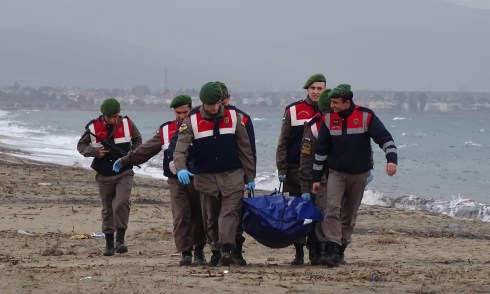
Officers carry the body of a refugee that washed up on the shore in Izmir, Turkey. Photograph: Depo/Rex

Turkish police have uncovered a factory producing fake lifejackets, shining a light on a booming cottage industry that has emerged as a byproduct of the refugee crisis and heightened the risks for those hoping to reach Europe by sea.

Police allegedly seized 1,263 lifejackets filled with non-buoyant materials from an illegal workshop in Izmir that employed two Syrian children, according to Agence France-Presse and Dogan news agencies.

The raid came in the same week that the bodies of more than 30 people washed up on Turkish beaches, having drowned in their attempt to reach Greece. Some of the dead were pictured wearing lifejackets, leading to suspicions that they may have been fake.

Whole article.

Comment: nikobakos@gmail.com

From the Guardian: Turkey could cut off Islamic State’s supply lines. So why doesn’t it? David Graeber

19 Nov

Turkey — or rather, Turks — could do a lot of things.  Why they don’t is a psychological issue, perhaps, more than anything else.  My take on the infuriating mood in post-elections Istanbul will come soon.  Meanwhile, great article from the Guardian, which, as usual, is not afraid to shove uncomfortable questions — and accusations — in our faces.

2835

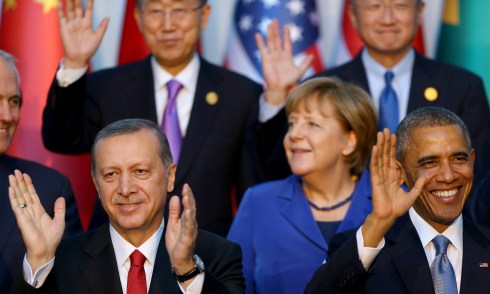
G20 leaders with Recep Tayyip Erdoğan in Antalaya on 15 November. ‘It may seem outrageous to suggest that a Nato member would in any way support an organisation that murders western citizens in cold blood.’ Photograph: Anadolu Agency/Getty Images

Some quotes:

“In the wake of the murderous attacks in Paris, we can expect western heads of state to do what they always do in such circumstances: declare total and unremitting war on those who brought it about. They don’t actually mean it. They’ve had the means to uproot and destroy Islamic State within their hands for over a year now. They’ve simply refused to make use of it. In fact, as the world watched leaders making statements of implacable resolve at the G20 summit in Antalaya, these same leaders are hobnobbing with Turkey’s president Recep Tayyip Erdoğan, a man whose tacit political, economic, and even military support contributed to Isis’s ability to perpetrate the atrocities in Paris, not to mention an endless stream of atrocities inside the Middle East….”

“How has Erdoğan got away with this? Mainly by claiming those fighting Isis are “terrorists” themselves. It is true that the PKK did fight a sometimes ugly guerilla war with Turkey in the 1990s, which resulted in it being placed on the international terror list. For the last 10 years, however, it has completely shifted strategy, renouncing separatism and adopting a strict policy of never harming civilians. The PKK was responsible for rescuing thousands of Yazidi civilians threatened with genocide by Isis in 2014, and its sister organisation, the YPG, of protecting Christian communities in Syria as well. Their strategy focuses on pursuing peace talks with the government, while encouraging local democratic autonomy in Kurdish areas under the aegis of the HDP, originally a nationalist political party, which has reinvented itself as a voice of a pan-Turkish democratic left…

4000.jpg

‘Bloody terrorist bombings inside Turkey seemed to target civilian activists associated with the HDP. Victims have repeatedly reported police preventing ambulances evacuating the wounded, or even opening fire on survivors with tear gas .’ Photograph: Murat Bay/AFP/Getty

“…In June, HDP success at the polls denied Erdoğan his parliamentary majority. Erdoğan’s response was ingenious. He called for new elections, declared he was “going to war” with Isis, made one token symbolic attack on them and then proceeded to unleash the full force of his military against PKK forces in Turkey and Iraq, while denouncing the HDP as “terrorist supporters” for their association with them.

There followed a series of increasingly bloody terrorist bombings inside Turkey – in the cities of Diyarbakir, Suruc, and, finally, Ankara – attacks attributed to Isis but which, for some mysterious reason, only ever seemed to target civilian activists associated with the HDP….”

“The exact relationship between Erdoğan’s government and Isis may be subject to debate; but of some things we can be relatively certain. Had Turkey placed the same kind of absolute blockade on Isis territories as they did on Kurdish-held parts of Syria, let alone shown the same sort of “benign neglect” towards the PKK and YPG that they have been offering to Isis, that blood-stained “caliphate” would long since have collapsed – and arguably, the Paris attacks may never have happened. And if Turkey were to do the same today, Isis would probably collapse in a matter of months. Yet, has a single western leader called on Erdoğan to do this? [my emphases]

The next time you hear one of those politicians declaring the need to crack down on civil liberties or immigrant rights because of the need for absolute “war” against terrorism bear all this in mind. Their resolve is exactly as “absolute” as it is politically convenient. Turkey, after all, is a “strategic ally”. So after their declaration, they are likely to head off to share a friendly cup of tea with the very man who makes it possible for Isis to continue to exist.”

Comment: nikobakos@gmail.com


Photo: Sarajevo gastra and börek…or Börek I

24 Aug

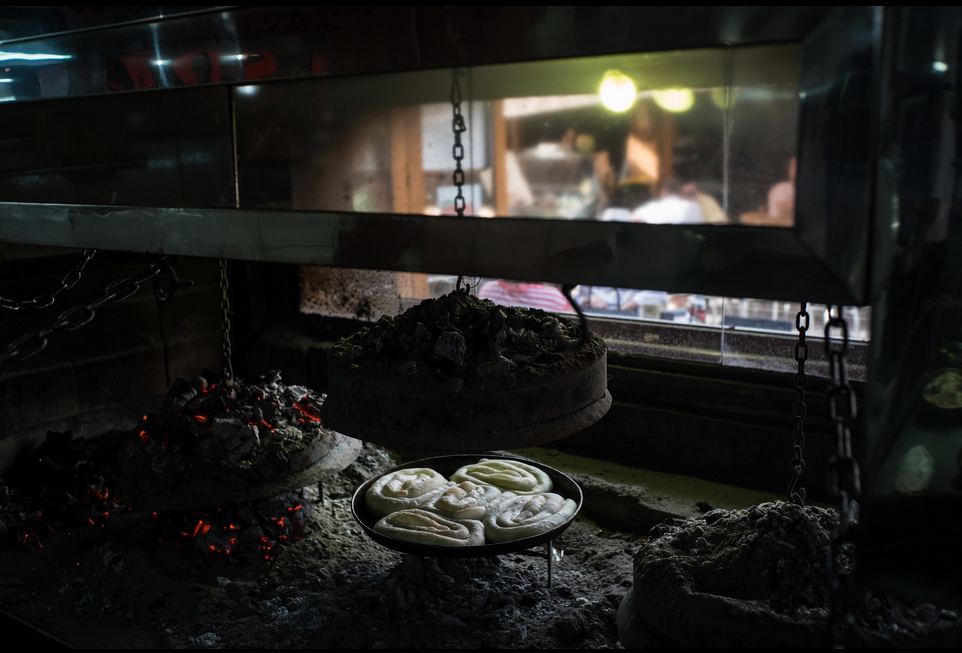
Börek gastra Sarajevo

(click)

These are börek in Sarajevo being baked in a gastra, a strange piece of High Ottoman technology that is still used in much of northern Greece, especially Epiros and the rest of the Balkans, particularly the western parts: Albania, Montenegro (where uniquely in the Serb-speaking world, they call börek pitta like in Greek), Kosovo and southern Serbia — regions, interestingly enough, where börek is a particularly strong regional identity marker and the object of a powerful cult of affection and snobbery.  Every and each börek in these parts is subjected to intense scrutiny; is there too much filling (major demerit points because you’re obviously trying to make up for the poor quality of your phyllo/yufka); is each layer fine enough, but able to both absorb serious quantities of butter and not get soggy, like a good croissant or a good paratha.  Finally, that you use real — and good — butter, which makes almost all commercially sold varieties not worth trying, since using good butter on a commercial scale would make a börek that is prohibitively expensive, and especially in a country of culinary philistines like Greece, store-bought versions are almost inedible, as is most product in Turkey these days too, Turkish street food having suffered a marked decline in quality even as the tourist literature on the country continues to rave about it.  But I have had good börek in Macedonia, in Mavrovo, and in Montenegro, in Žabljak, where the hotel made us a great cheese and a great cabbage one for a hike we went on.  And in a high-end restaurant in Jiannena too; but next to me was an Albanian woman, who first smelled it, pricked at it with her fork, counting the layers of pastry, and then after a few minutes of just staring at it, pushed it away in disgust.  Like I said, it’s an object of great snobbery.  And forget Old Greece.  It’s a standard rule of thumb that the further away in place and time a region of Greece is from the Ottoman experience, the exponentially worse the food gets.  No one south of Larissa can bake a pitta to save their lives, or make a decent plate of pilav for that matter.  Epiros is probably the only place you can still get a nice buttery mound of pilav — like the kind Turks make — with good yogurt.  Southern Greeks seem allergic to rice, and have friggin’ potatoes with almost every meal.  Maybe It’s a Bavarian thing — I dunno.

some really good borek

Reaaally good stuff, in Mavrovo, Macedonia (click)  (See post: Macedonia: Mavrovo, Dimitri and the Two Falcons)

But everything baked tastes better in a gastra, the same root as the word for “womb” in Greek (or “gastritis”): rice and lamb, even zeytinyağlı vegetable dishes.  It’s just incredibly tedious — and dangerous if you don’t know what you’re doing — to use.  It’s a cast-iron dome, suspended with a very complicated chain mechanism over a stone platform.  You first lift the dome and light your charcoal fire underneath it on the stone platform.  When the fire has been reduced to hot embers, and the cast-iron dome has also gotten nice and hot, you brush the embers aside, position your tepsi of food, lower the hot cast-iron dome, and then pile the still glowing embers on top of the dome.  Usually when they’ve cooled down completely the dish is done.  The picture above shows gastras at all steps in the process.

I dunno really.  Does it make that much of a difference?  Everything is better when it tastes slightly smokey or when a little bit of ash has fallen into it — like Turkish coffee made in hot ashes.  But it’s a ton of work and really impractical.  If, for example, the embers go out completely and you raise the dome and the food isn’t done yet, you have to start the whole process from the beginning.  Arthur Schwatrz, in his ever-best cookbook on Neapolitan food, Naples at Table: Cooking in Campania — which, like most good cookbooks these days, is as fantastic a source of history, anthropology and ethnography as it is of good recipes — says that a lot of foods legendary for how long you had to cook them for them to be the “real” article, like a Neapolitan ragù (pronounce with a double “r” and a “g” that sounds like a light Greek “gamma” – “γ”) that should take at least half a day to simmer or no self-respecting Neapolitan would eat it, were never really cooked that long.  Rather, they were cooked on wood fires and braziers, which were constantly going out, had to be relit, while the sauce cooled off and took time to reheat, etc.  Of course, for certain sauces and stews, and the fatty, sinewy cuts of meat we like in “our parts,” this kind of cooking is ideal.  And not just the slow, long heat, but the cooling off and reheating especially.

Naples at Table

Ottoman mangal

(click)

It’s like that other piece of Ottoman high-tech (I don’t mean to make fun, but it wasn’t exactly their strong suit), the mangal home-heater or charcoal brazier. (above)  You’d pile charcoal into it; leave it out in the street until the carbon monoxide burned off, then cover the embers with the lid and bring the whole incredibly dangerous, glowing — and often very large — brass behemoth inside to warm the house, or one hermetically sealed room really.  Then, as my mother used to describe it, you’d get under the blankets or flokates, facing the mangal, so your face would turn all red and sweaty while your back was freezing, and hope you had fallen asleep before it started cooling off or that you had generated enough body heat under the blankets to last till morning.  There were countless stories about families being found dead in the morning, because in the rush to bring this silly contraption into the freezing house, the carbon monoxide often hadn’t burnt off entirely and people would die from poisoning in their sleep.  I can only imagine that their use was required because it was probably tricky to build chimneys in mostly wooden Ottoman urban housing — my mother only remembered them from Jiannena; in her village where the house was stone, there were regular stone fireplaces where you could keep adding wood because the chimney would let the smoke and gas escape — and I’m sure that many of the massive fires that consumed whole mahallades of Ottoman cities over the centuries and killed thousands on certain occasions, were probably caused by one accidentally knocked over mangal somewhere.

And whole neighborhoods would burn down and then be rebuilt in wood again, something I comment on in another post — Macedonia: Sveti Jovan Bigorski“:

This is a kind of Ottoman tradition: build in wood, suffer repeated fires like the kind that wiped out whole districts of Istanbul throughout its history and killed tens of thousands.  Then rebuild in wood again.  It’s not known who said that the definition of neurosis is repeating the same action over and over and expecting a different result, but it also might be the definition of stupidity.  Only after a fire destroyed two thirds of Pera in 1870 in just six hours did people in those predominantly Christian and Jewish areas start building in masonry, which is why those neighborhoods are architecturally far older today than those of the now ugly two-thousand-year-old city on the original peninsula, where there is almost no old domestic architecture left (except, again, in former minority neighborhoods, for some reason, like Fanari or Balata or Samatya).

More on the symbolics of börek and the break-up of Yugoslavia in the next post.

Comment: nikobakos@gmail.com

Photo: Turkish Schadenfreude at Istanbul Airport

1 Aug

TurkishSchadenfreude

Sorry for the poor quality of this photo, but I just had to post this.  An ad all over Istanbul’s airport: “Going to Greece.  Talk to us today for suggestions on how much to take.  Make sure you have enough Euros for your stay.”

At the height of the Greek economic crisis and in the middle of the most bitter negotiations between the Greek government and the European Union over the extortionist measures of the promised bailout, this appears in Turkish airports.  This is a pure, lying attempt at sabotage of Greek tourism.  The dreaded “capital controls” that limited Greeks to taking 60 Euros a day out of ATMs to prevent a run on closed banks never applied to foreigners; i.e., you weren’t going to put your Dutch bank card into a Greek ATM to withdraw money from an account in Rotterdam and be limited to just 60 Euros.  This was really shitty and beneath Turks’ dignity.  But the truth is that I can’t really understand what’s going on in that country psychologically, so I’ll chalk it up to what seems to be a temporary suspension there of all rational discourse.

I’ve just invested so much in defending them (yeah, yeah…think you don’t need my defending? think again…) that I hate when they embarrass me with this kind of nastiness.

Comment: nikobakos@gmail.com

“Atatürk in the Nazi Imagination” by Stefan Ihrig

30 Mar

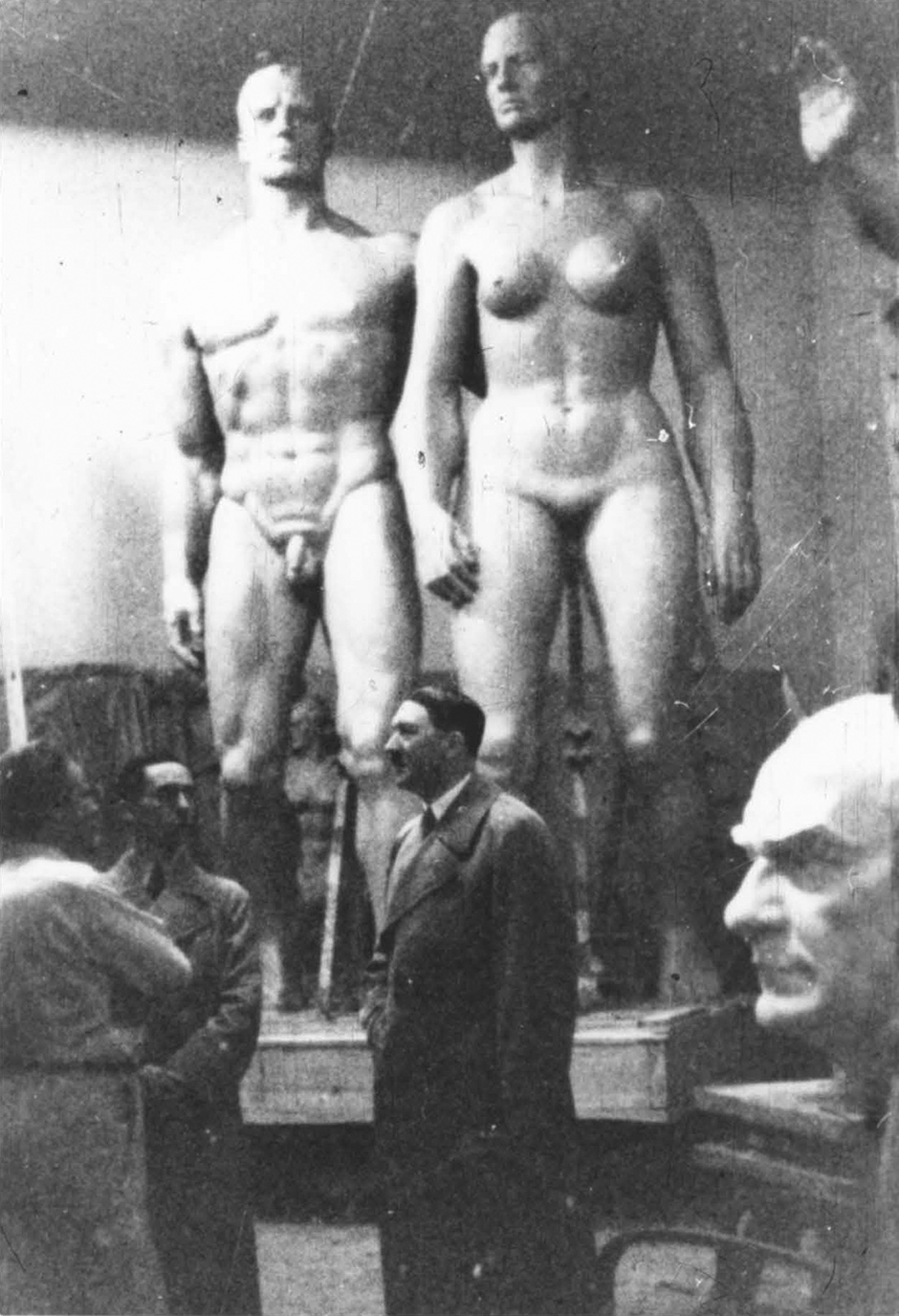
Adolf Hitler in the workshop of the sculptor Josef Thorak, with Thorak’s bust of Atatürk behind him, Munich, February 1937Adolf Hitler in the workshop of the sculptor Josef Thorak, with Thorak’s bust of Atatürk behind him, Munich, February 1937 (click)

From The New York Review of Book.  See whole article: Hitler & the Muslims by Steve Coll in April 2, 2015 volume.

Money quote (at least for our purposes):

“The aim of Atatürk in the Nazi Imagination is to document that the founder of modern Turkey deserves to be remembered as a figure equal to Mussolini in Hitler’s early political imagination. Mustafa Kemal Pasha, later glorified as Atatürk, had a record of military action that included cleansing what Hitler believed to be the inherently sapping multiethnicity of the expired Ottoman Empire.

“Indeed, in Ihrig’s account, apart from Atatürk’s personal inspiration, the organized mass killing of Armenians by Turks during World War I—the events now recognized as the Armenian Genocide—explicitly influenced Hitler’s thinking about the extermination of Jews as early as the 1920s. Ihrig quotes a multipart essay published in Heimatland, an influential Nazi periodical, by Hans Tröbst, who had fought with the Kemalists during what Turks knew as the War of Independence:

‘The bloodsuckers and parasites on the Turkish national body were Greeks and Armenians. They had to be eradicated and rendered harmless; otherwise the whole struggle for freedom would have been put in jeopardy. Gentle measures—that history has always shown—will not do in such cases…. Almost all of those of foreign background in the area of combat had to die; their number is not put too low with 500,000. [emphasis in original]’

“In incipient Nazi historiography, Ihrig writes, “the ‘fact’ that the New Turkey was a real and pure völkisch state, because no more Greeks or Armenians were left in Anatolia, was stressed time and again, in hundreds of articles, texts, and speeches.” Of course, the Nazi Holocaust was constructed in its own setting, from its own sources; one should not overemphasize the Armenian precedent, and Ihrig does not. Yet here is a documented example from the early industrialization of ethnic murder in which one campaign of genocide influenced another.

And a key point:

“Politically, Atatürk’s success offered a model of how to overcome the humiliation and prostration imposed on World War I’s losers at Versailles. Atatürk not only seized power through bold action in the name of the Turkish nation, he also forced European capitals to renegotiate the terms of the treaty they had imposed…”

Comment: nikobakos@gmail.com

Varoufakis, a dead Greek cosmopolitanism, and a Greece that now has nothing else

8 Feb

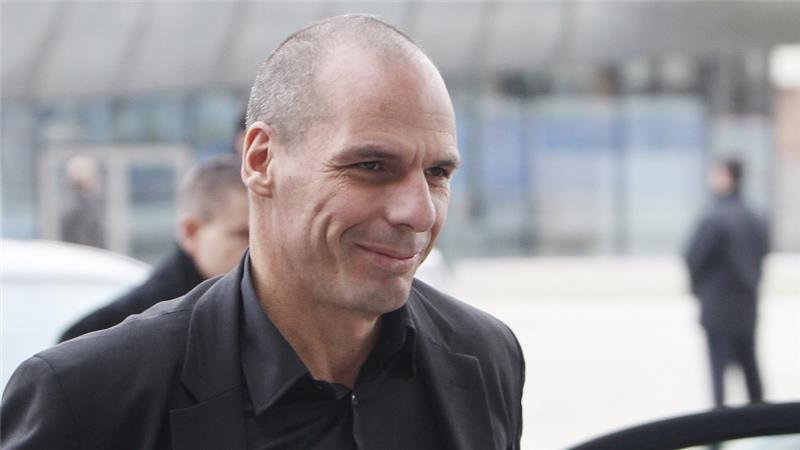
bdec44f200d445ceb018834ba071fe73_18(click)

From Al Jazeera by Iason Athanasiadis: The Greek Varometer: The irreverent, shaven-headed, motorbike-riding academic’s arrival is viewed in messianic terms.

I’m posting this for completely tangential reasons.  Because as I’ve said before, I’m not in the least capable of any political economic analyses, and, though I’m instinctively and emotionally happy about SYRIZA‘s victory, I really can’t tell how things are going to turn out.

(This Guardian article paints things as pretty dire, though of course that might just be more bullying and threat masked as “inevitability”: Tsipras favours Greek jobless over creditors in defiant policy speech:

The British chancellor, George Osborne, admitted the UK had already embarked on contingency plans in preparation for a Greek exit from the single currency. “This standoff between Greece and the eurozone is increasing the risks every day,” he told the BBC’s Andrew Marr show on Sunday, adding that Athens’ departure from the bloc would not only send European financial markets into a tailspin, but cause “real ructions” in the UK.

Earlier, Alan Greenspan, the former head of the US Federal Reserve, said it was only a matter of time before the country left the eurozone. He said it was difficult to see why anyone would be willing to lend Greece more money and that without additional loans, the country would be forced to default and leave the euro.

“It’s just a matter of time before everyone recognises that parting is the best strategy,” he told BBC Radio 4’s The World This Weekend. “It is not a decision where they are going to come to an agreement. All the cards are being held by the members of the eurozone.”

Greenspan also conceded that a Greek exit might trigger a meltdown in global financial markets: “I don’t think we have a choice.”)

But that’s not what was most interesting to me in Athansiadis’ article.  What was most interesting — and most gratifying, though it confirms a sad truth about the Greek statelet — is that Athansiadis chooses to portray Varoufakis as a product of a giant Greek Diaspora that the twentieth century, and twentieth-century nationalism, destroyed:

“He [Varoufakis] is also a kind of Greek largely eclipsed from the international stage since the 1960s; polyglot, adventurous, and hailing from a lively and vibrant Greek diaspora before it solidified into small-minded communities nurturing a parochial definition of Hellenism fossilised sometime circa 1950. Varoufakis’ father was born and grew up in Cairo’s fabled Greek community, directs a major Greek metallurgical interest, and maintains an interest in Hellenistic civilisation on the Mediterranean seaboard.”

and

“Varoufakis seems to hail from another Hellenism, the one defeated at the end of the 19th century when politics and circumstance conspired to ensure that the Hellas that entered the 20th century was narrowly defined by national borders, rather than the spread-out Greek-speaking cosmopolitanisms of North Africa, the Levant and Anatolia.

“Always a protectorate of the West, modern Greece was trapped by small-minded nationalisms (including its vendetta with post-Ottoman Turkey), resulting in the homogeneous and small-minded parochialisms from which the Golden Dawn impulse springs today.”

[my bold emphases in all of above]

Yes, thanks, Iasona…  For stating so clearly what the essential thesis of this blog is: that Hellenism was, and is, doomed in many ways since it contracted into an EBSN (ethnicity-based nation-state).  The sad truth is that the economic and cultural loci of the Greek world were always outside the Helladic peninsula (see my: Upon escaping from Greece… from this past September and myriad other posts) from early Classical times until the 1960s.  The modern Greek kingdom/state was always an economic basket-case from its beginnings and dependent on the Greek diaspora for its economic existence and, in fact, its cultural wealth and vibrancy as well.  There has rarely been a time that modern Greece was not teetering on the brink of insolvency or bankruptcy and the credit-backed 80s and 90s were simply smoke-and-mirrors that obscured that reality.

The reality is that Greece itself has nothing.  And never did.  “Φτώχεια, καλή καρδιά”…and mostly γκρίνια…*(1)  Its dying agriculture doesn’t and never did produce anything that its Mediterranean or even Balkan neighbors don’t produce in greater quantity and often better quality.  (Even my mother used to buy Bulgarian feta when I was a kid.**[2])  Its industry was always rudimentary and not particularly competitive — certainly not for export — and has practically disappeared.  If Greece ever had the potential of becoming a regionally important service center economy, like Singapore or Hong Kong or, closer to home, Lebanon before its civil war, that potential has never been realized — except in Cyprus to a certain degree — for a whole panoply of reasons that I think I’m not qualified to get into.  And whereas the great Greek financial magnates and industrialists and merchants of Alexandria and Odessa and Constantinople and Smyrna and Bucharest and Constanța and Iași in the nineteenth century liberally poured their wealth into building the institutions of the new state,***(3) the Greek families that today control our one potentially and traditionally great economic resource, commercial shipping, largely choose to keep their wealth off-shore.

I’m sorry to say that I can’t see what could possibly change this picture.  More tourism?  Neither reforms of the the Troika or the SYRIZA type will change fundamental material realities.  I’m afraid that Hellenism only flourishes when it’s part of a larger regional political economic network and I’m not sure that Europe is that network.  But then who?  A Turkey we always choose to respond to with hostility****(4) — to which it obligingly reciprocates?  Or the Balkans, which we denigrate, while Turkey is busy building commercial and economic and cultural ties with Balkan Muslims in Bosnia and Kosovo?*****(5)  Or the total basket-case countries of the Arab world?  Or Russia in its current pariah-state condition?

And yet those were the parts of the world where the most dynamic communities of Greeks always existed.  Modern nationalism destroyed them.  And not just Greek nationalism, of course.  But Turkish and Egyptian nationalism and that of everyone else in the region.  Every one in their own box.

I’m just afraid that that contraction cost us more than it did anyone else. 

And I don’t see how it can be reversed.

Med19304(click)

**************************************************************************************************************************************************************************

*(1) The lyrics from a famous Xarkakos song: “Poverty, a good heart, and lots of kvetching…”  Here’s the great Bithikotses’ recording of it.

**(2) And being from a village and region with a largely pastoral economy, she knew her feta; but the Bulgarian product tasted more like the hard, fattier, well-brined cheese she was used to, as compared to the cream-cheese mush Greece used to export in those days.  Granted, the quality has improved greatly since then.  As has that of Greek wines.  Especially the whites.  Build an economy on that.

At some point in the late nineteenth century, the economy of the Greek kingdom was deeply dependent on one thing: black (often called “Zante”) currants.  Forget Cuba and sugar or the Gulf states and oil.  This was a mono-crop dependency that rested wholly on prayers that Brits would continue to use copious amounts of these currants in their plum puddings at Christmas and not find another source for them.  When they did, or when demand for them stopped for whatever reason, the Greek economy collapsed.

***(3) One of the most obnoxious traits of the Neo-Greek middle-class is their denigrating, mocking, condescending attitude toward what constitutes the Diaspora of today, mainly Greek-Americans and Greek-Australians.  The dynamics of cultural assimilation in both countries and in the modern world generally will assure that New York or Melbourne will never become a Greek Constantinople or Alexandria, of course.  But that Neo-Greeks choose to look at their compatriots that left the country in the twentieth century, not as tragic victims of the country’s material limitations and war-time chaos, nor as an incredibly dynamic and enterprising group of Greeks who left for foreign shores and “spun gold out of thin air” there, in Patrick Leigh Fermor‘s famous words, but as rubes and hicks to be made fun of, while they sat home on their asses waiting for a growing welfare state to feed them, is just one of the most infuriating manifestations of Neo-Greeks’ blinkered worldview.  Snobs in a way that only the truly provincial can be — which I always say.  Much more to say about that.

****(4) Of course, there is the phenomenon of the so-called “Neo-Polites,” the considerable number of young Greeks who, for economic, or intellectual, or historic, or cultural, or sentimental reasons, have recently started to migrate “back” to İstanbul — though the extent to which we can call this a reconstituting of Constantinopolitan Greek life is pretty questionable.  It’s much more likely that a Roman life of sorts in İstanbul will ultimately be given a new lease by the Syrian Christians who have moved to the City in large numbers in the past decades.  Also much more to say about all that.

*****(5) Now, many Greeks in Albania, who are strikingly uninterested in Greece, have started to extend commercial and manufacturing networks into the rest of the country from the small pocket of territory they inhabit in the south; I have close relatives who, out of nothing, have built a phyllo/yufka manufacturing company, based in my father’s village of Derviçani, that sells throughout Albania and is looking how to expand into neighboring countries as well.  How far that will go is also to be seen.

Comment: nikobakos@gmail.com


The Classical Liberals: “On the Balkans, the Former Yugoslavia, and the Unity of Spaces”

4 Jan

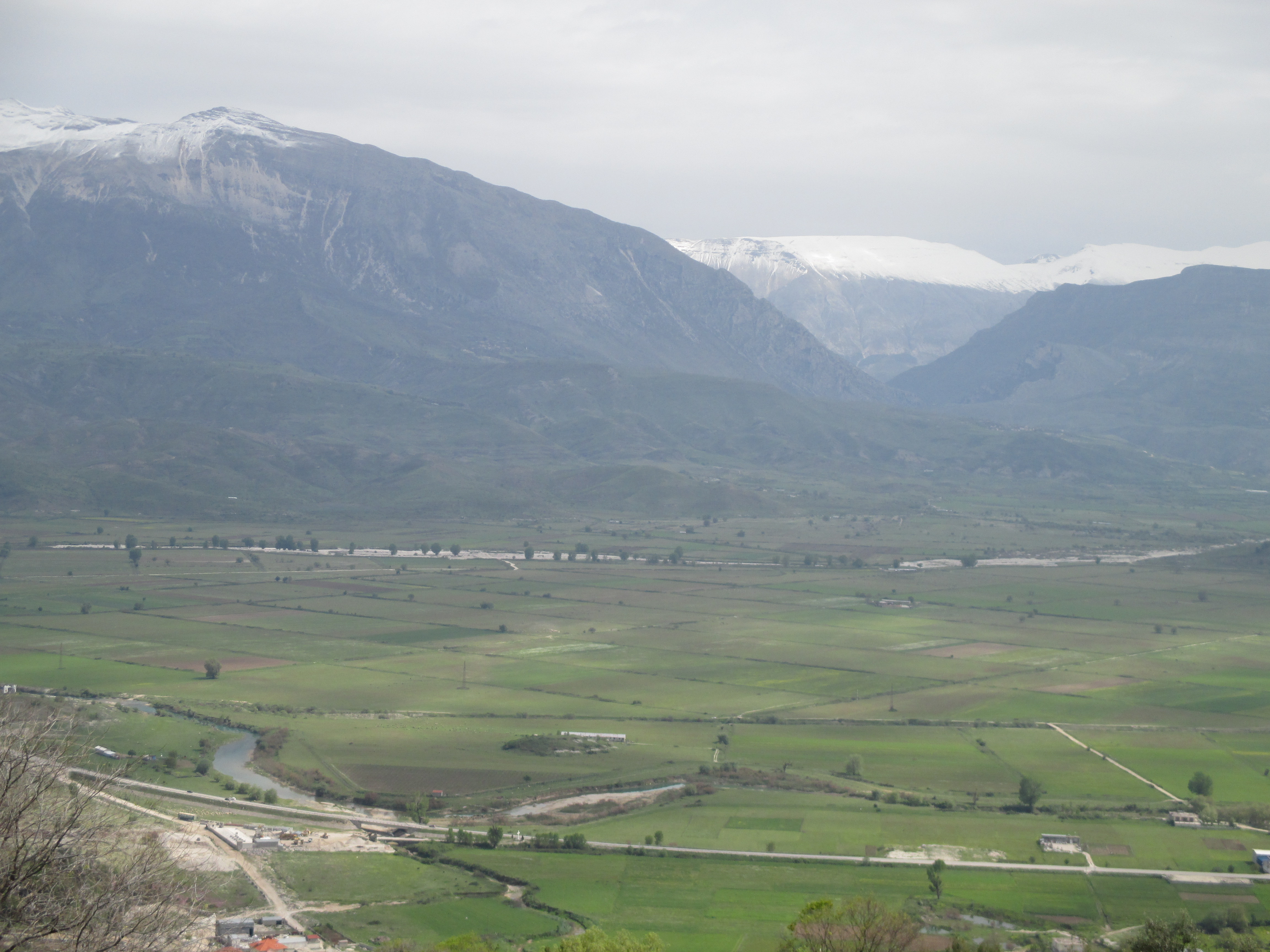
dropoliThe Valley of Dropoli, the pass up to the Pogoni plateau near Libochovo, and in the distance, the snowcapped peaks of Nemerčka, from the Monastery of the Taxiarches in my father’s village of Derviçani, Easter 2014 (click)

I’m honored by the fact that this really intelligent blog quotes extensively from the Jadde’s mission statement in a recent post: Jadde — Starting off — the Mission.

Check them out: The Classical Liberals: At least, most of the time  Smart, perceptive, interesting stuff.

The author of the post below and the person I suspect is largely behind the editing of the blog is one Eoin Power, not just a fellow Balkan-freak along the lines of me or Rebecca West, but also a fellow Epirote.  He demurs a bit — though not very convincingly — at being called an Epirote, because his lineage is multiple and complicated and the connection to Epiros is fairly distant historically.  But he’s from one of the most archetypically and ancient Epirotiko villages — where they still own their patriko — in one of the most archetypically Epirotiko regions of Epiros and he carries himself with the requisite Epirotiko dignity and soft-spokeness and if I, NikoBakos, have conferred the title on you, it’s ’cause you deserve it.

***************************************************************************************************************************************************************************

On the Balkans, the Former Yugoslavia, and the Unity of Spaces

The other day, as she is wont to do, my mother sent me a link to something on the Internet; this time it was to Nicholas Bakos’ blog, which you can find here. If you’re reading this blog, we’re probably friends in real life (thanks for reading!), and so it’s probably obvious why something like that would be of interest to the both of us. I have admittedly only skimmed sections of his posting so far, but in his introductory one, it was especially gratifying to read this:

This blog is about “our parts.”  It’s about that zone, from Bosnia to Bengal that, whatever its cultural complexity and variety, constitutes an undeniable unit for me.  Now, I understand how the reader in Bihać, other than the resident Muslim fundamentalists, would be perplexed by someone asserting his connection to Bengal.  I can also hear the offended screeching of the Neo-Greek in Athens, who, despite the experiences of the past few years, or the past two centuries, not only still feels he’s unproblematically a part of Europe, but still doesn’t understand why everyone else doesn’t see that he’s the gurgling fount of origin and center of Europe.

But set aside for one moment Freud’s “narcissism of petty differences,” if we have the generosity and strength to, and take this step by step.  Granted there’s a dividing line running through the Balkans between the meze-and-rakia culture and the beer-and-sausage culture (hats off to S.B. for that one), but I think there’s no controversy in treating them as a unit for most purposes; outsiders certainly have and almost without exception negatively.  And the Balkans, like it or not, include Greece.  And Greece, even more inextricably, means Turkey, the two being, as they are, ‘veined with one another,’ to paraphrase the beautiful words of Patricia Storace.  Heading south into the Levant and Egypt, we move into the Arab heartland that shares with us the same Greek, Roman-Byzantine, Ottoman experiences, and was always a part of the same cultural and commercial networks as the rest of us.  East out of Anatolia or up out of Mesopotamia I challenge anyone to tell me where the exact dividing line between the Turkic and Iranian worlds are, from the Caucasus, clear across the Iranian Plateau into Afghanistan and Central Asia.

Bakos suggests that for people of “those parts” displaced to another environment (e.g. grad school in the West), this kind of geographical unity came, at least in a social context, fairly naturally, so perhaps I shouldn’t be all that surprised and delighted at seeing it reconstituted in blog form. But in fact I think the basic unity of the geographical zone outlined here often gets lost in the way these places are understood by outsiders and, ironically enough, in no small part due to the vehement insistence from each of the zone’s component peoples that they could not possibly be compared with those uncultured idiots with whom they share a border.*

Explaining the rationale for delineating “his parts” the way he does, Bakos writes:

But to step into Buddhist Burma is somehow truly a leap for me, which maybe I would take if I knew more. And in the other direction, I stop in Bosnia only because for the moment I’d like to leave Croatia to Europe – mit schlag – if only out of respect for the, er, vehemence with which it has always insisted that it belongs there.  Yes, I guess this is Hodgson’s “Islamicate” world, since one unifying element is the experience of Islam in one form or another, but I think it’s most essential connections pre-date the advent of Islam.  I’ll also probably be accused, among other things, of Huntingtonian border drawing, but I think those borders were always meant to be heuristic in function and not as hard-drawn as his critics used to accuse him of, and that’s the case here as well.

Ultimately what unites us more singularly than anything else, and more than any other one part of the world, is that the Western idea of the ethnic nation-state took a hold of our imaginations – or crushed them – when we all still lived in complex, multi-ethnic states.  What binds us most tightly is the bloody stupidity of chilling words like Population Exchange, Partition, Ethnic Cleansing – the idea that political units cannot function till all their peoples are given a rigid identity first (a crucial reification process without which the operation can’t continue), then separated into little boxes like forks after Easter when you’ve had to use both sets – and the horrendous violence and destruction that idea caused, causes and may still do in “our parts” in the future.

Having not, at least north of the equator, yet made it further east than Istanbul, I am in no position to question Bakos’ perception of the fundamental apartness of Buddhist Burma. But the loose border he posits to the north and west is one I’ve crossed many times, and it’s one that is both deeply present and functionally invisible.**

At the very least it is present in people’s minds; I can vouch for the vehemence (to use Bakos’ word again) with which Slovenes and Croats will insist that their countries are European, and not Balkan. It’s also pretty visually observable – you could mistake Zagreb or Ljubljana for a city in Austria or Germany in a way you simply can’t for, say, Sarajevo or Belgrade. And on one frantic trip from Dubrovnik back to Ljubljana (the ferry which I’d intended to take from Dubrovnik to Ancona decided not to arrive from Split, leaving me nothing to do but beat a hasty retreat back north) you could, if you were looking for it, see an actual tangible difference in the way things were done in the world – bus tickets in Mostar and train tickets in Sarajevo had to be paid in cash and a conductor on the train north from Sarajevo let me pay in a mix of Croatian kuna, Bosnian marks,  and euros. In Zagreb I could pay with a credit card, the train station had working and appealing amenities, and you couldn’t smoke in the train. This is a terribly squishy thing to write, but it did feel more “European-y”.

On the other hand, if the relatively old Huntingtonian dividing line between formerly Orthodox and Ottoman lands to the south, and formerly Catholic Hapsburg lands to the north is visually (and, at least in terms of credit card viability in 2009, functionally) discernible, the comparatively recent unifying experience of Yugoslavia is also unavoidable. Here, too, the first signs are in architecture and appearance; Soviet-style architecture and the legacy of 1950s industrialization has left the same physical scars on cities from Nova Gorica to Skopje. But they run deeper than that – the protestations of linguistic nationalists notwithstanding, Slovene, Bosnian, Croatian, Serbian, Montenegrin, Macedonian (hell, even Bulgarian a bit) all exist along a spectrum of of mutual intelligibility; state apparatuses, all having those of the former Yugoslavia as their common predecessors, share similar characteristics. Indeed, to me as a foreigner, the similarities often seem more salient than the differences.

Just on the basis of whether or not there “is” a usefully differentiating border to be drawn where Croatia meets Bosnia, it seems you can argue fairly fruitfully either way, depending on whether your sympathies lie with a sort of longue duree emphasis on deep civilizational splits or a faith in the primacy of modern political experiences. But by Bakos’ own ultimate criteria, it seems a bit odd to leave the northernmost bits of the former Yugoslavia out of things (though there is a nice alliterative symmetry to covering “from Bosnia to Bengal”) . If you’re going on the basis of, “the bloody stupidity of chilling words like Population Exchange, Partition, Ethnic Cleansing,” surely things like Jasenovac or the Istrian exodus argue for the inclusion of all of the former Yugoslavia?

Of course, any exercise in boundary-izing is a bit arbitrary, and in this case there are good reasons to put one in between Croatia and Bosnia and not, say, in between Slovenia and Austria (two countries for which there also exist plenty of historical reasons to consider them as part of a unified space). So if all of this does anything, it is perhaps to show how much more liminal are most places than we or their inhabitants often care to admit; whether or not you see a border somewhere often depends as much on your level of zoom as anything else.

*Or at least their nationalist politicians – many average people (whatever that means) in Bosnia and Serbia, for example, will quickly stress to you the fundamental similarities between the two countries and their inhabitants
**People sometimes marvel at my overstuffed passport but really something like 40% of the stamps come from the Dobova and Dobrljin border posts.

**************************************************************************************************************************************************************************

Again, check these guys out; you won’t regret it: The Classical Liberals

Comment: nikobakos@gmail.com