
They’re onto me…

Ooopppsss… Sorry, I meant:

They’re onto me…
Ooopppsss… Sorry, I meant:
“Your evisceration of Cyclades was so effin funny i read it to my bf out loud and we were dying omg sadly accurate too.”
But… :(
A friend wrote me, in response to the same post, that MP Taverna, Michael Psilakis excellent place, across the street from Cyclades, has closed. While Cyclades “lives and reigns” as one says in Greek. WTF? Go figure. Maybe we live in a time when one Yelp idiot can ruin a man’s carefully conceived and run business. I dunno…
(Koumbare, I’ve been away from New York for almost three years. How am I not suffocating?)
He’s got another place in Irvington, Westchester where maybe he can make more money than offa the millenials — half of whom are vegans anyway — of Astoria. It’s worth the trip and I stand behind my word.

I not only love Maryanne Williamson, I took the slightly pretentious step of having the editorial board of the Jadde (me) endorse her for President. I wrote:
“…she [Williamson] gave a talk on the Triangle Factory Fire, Frances Perkins, Roosevelt,* the New Deal and how twentieth-century American prosperity, creativity, strength, and relative social justice were all born out of those individuals and phenomena that moved me to tears.“
Well, it wasn’t Maryanne Williamson; it was Elizabeth Warren, who I’m also a great fan of. Williamson has mentioned it on a couple of occasions, but not in a coherent passage the way Warren has several times, once in front of the arch in Washington Square Park, just two blocks from where the fire happened.
The Triangle Shirtwaist Factory fire, on March 25th, 1911, occupies a weirdly vivid niche in my psyche. More than other New Yorkers? I dunno; I can only speak for myself. The sheer horror — girls in their teens having to choose between being burned alive and a jump to certain death — should be more than enough. And it always felt creepy to have class in what’s now NYU’s Brown building on the same floors where the factory was. Then, I didn’t hear anyone mention it at the time, but the parallels to 9/11 — innocent people trapped by death on both sides — made both events reciprocally more disturbing. It even raised the question of the daring and innovation that makes New York New York. Were both events punishment for some kind of hubris: building things too tall to escape from if you need to? I don’t really believe that there’s some cosmic force that actually punishes for that, but your mind wanders, in more archaic spaces…
Then the event chimes in, in a more than initially obvious way, with my deep intellectual and emotional engagement with Judaism. The victims were obviously not all Jews. And the women garment workers that had gone on strike less than two years before the fire to demand better working conditions were also not all Jewish. But the harshness and persecutions of life in Eastern Europe, the progressive impulses Jews had collectively developed in response to that harshness and injustice, the dislocation of immigration, and an America — but especially a New York — that was a receptive vehicle for that whole psychological complex, made them disproportionately important in the movement and the whole series of events.
The proposal for a general strike for all garment workers in 1909 at the main hall of Cooper Union was made by a frail, twenty-three-year-old seamstress, Clara Lemlich — in Yiddish**, and a response from the crowd was a little slow in coming because it first had to be translated into Italian and English. They were koritsakia, malaka; most had just come; they hadn’t even learned English yet. There’s a women’s organization — I dunno who — that goes around the East Village and Lower East Side on March 25th and writes the names of the victims in chalk on the sidewalks in front of the houses where they lived: on the same block, next door to each other some of them. The neighborhood must’ve felt its heart ripped out.
But when the response to Lemlich’s proposal was delivered, it was a resounding “YES!”. And Jews need to remember and be proud of the fact that they’ve been over-represented ever since in every progressive movement that made America — but especially New York — what it became in the 20th century.
It gets a little more intense. Because March 25th, the day of the fire, is also the day when another brave young Jewish girl exercised her God-given free will and said “yes” to God and changed the course of history and human civilization. And that also weirds me out. I might be sounding like a little child here: but why didn’t she do anything to help them? The Mother? The archetype of Christian compassion? On that day that celebrates her own courage?

And more. March 25, 1944 was the day the Germans rounded up the Jews of my mother’s hometown, Jiannena, including her best friend, Esther Cohen, and sent them on the road to certain death at Auschwitz. And no, there were no righteous Gentiles to help, just Greek police collaborators. And just the German psychopaths, who diverted men and resources from the eastern front that had collapsed already the previous year, just to make sure and clean up the lands they already knew they had lost of any Jews. It’s incomprehensible. Oh, and they made sure they took detailed archival photos of the operations at the same time. Ψυχοπαθείς… *** And if I were sure they were totally cured…
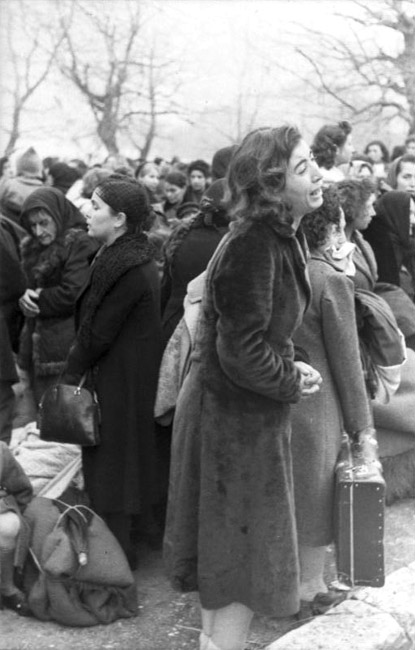 A woman weeps during the deportation of the Jews of Ioannina on March 25, 1944.
We’re entering a kinda Jungian territory of synchronicity here, but maybe I made this big gaffe on Rosh Hashanah for a reason. Let my endorsement of Williamson extend to Warren too, oh, and, of course, Bernie Sanders, who was probably at that Cooper Union meeting. Because this first day of 5780 is as good as any to declare the three of them vehicles of Tikkun and use that inspiration to do what we can to get Haman out of the White House and bring the republic back to righteousness.
Sorry again… :)
–
comment: nikobakos@gmail.com
–
**************************************************************************************
* These were αριστοκράτες — the Roosevelts, Carnegie, Vanderbilt, the Kennedys, the Rockefellers, however sleazy their origins and the origins of their wealth — true aristocrats — which is a word that I think Williamson uses in a slightly warped and unuseful way. People who understood that their station implied obligation and not just privilege. One of our emperors — unfortunately I can’t remember who; it wasn’t Basil I but it may have been one of the other Macedonians or the Comnenoi, said, and I’m paraphrasing: “Σήμερον ουκ εβασίλευσα διότι ουκ ευεργέτησα.” “Today I did not reign because I did nothing of benefit.” “ευεργέτησα” is a many-layered but not tricky word. It means “to benefact”. “I didn’t deserve to be called basileus today because I did nothing: to benefit my people, to glorify God, to strengthen my City or my State.” These people — the Roosevelts, Perkins — knew they had duties too. And the not always morally spotless “benefactor” millionaires of the 19th and 20th century Greek diaspora knew they had duties too. Not only to make more money for themselves but to help build and cement the institutions of the new state. Not like the sleazy, ship-owning mafia of Greece today. Which not a single Greek politician has the balls to put forth policy that would tax them.
** This is just one thing that makes Yiddish, along with Neapolitan and Caribbean Spanish, one of New York’s three sacred languages.
*** Jiannena has, however, become a very hip, progressive and (always) lovely university town. And last year, it voted in the first Jewish mayor in Greek history; out of about 30 Jews that are left from a pre-war 5,000 — one is now mayor of Jiannena. More on the city’s transformation, and the continuity with its past as a prosperous center of the Greek Enlightenment, in another post.
P.S. It was Frances Perkins, who Warren speaks of and the woman who, as the first female cabinet member in American history, Roosevelt’s Secretary of Labor, put the whole causal string together. She said: “The New Deal began on March 25th, 1911, the day the Triangle Factory burned.”
And P.P.S. Let’s not forget that today those factories are in Malaysia and Honduras.
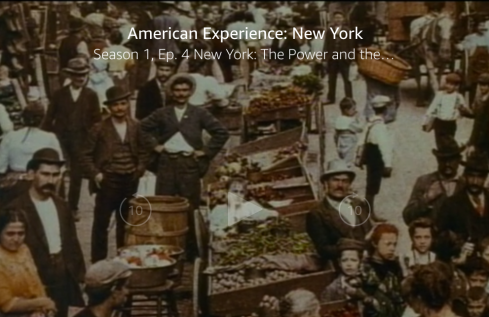
And P.P.P.S. “Volume Four of Ric Burns’ monumental New York: A Documentary Film is probably the most stirring visual treatment of all of the above. Get your hands on it if you get a chance. Amazon’s got in on Prime.”
–
comment: nikobakos@gmail.com
–
“My definition of a cosmopolitan is someone who can tease anyone in a culturally specific way. This post embodies it and I love it! Continue to bring the subtle analysis and snark, please. I’m so happy for it.
I’m sorta annoyed that Moda has blown up – there goes my daydream of finding my family’s old houses and running away to try to replicate my Philly neighborhood in istanbul. :/
And let’s not forget these three really talented women essentially gave up a booming career to testify to the truth during the Bush II administration and the Iraq War. They did the right thing — what’s more American than that?
…its wealth, its imagery, its Passion, its fecundity, its risks, its losses, its heart… And a cry against Trump the Neanderthal, who’s made it a “φωνή βοώντος εν τη ερήμω“…where “In Ramah was there a voice heard, lamentation and weeping and great mourning…”
–
comment: nikobakos@gmail.com
–
Ok!
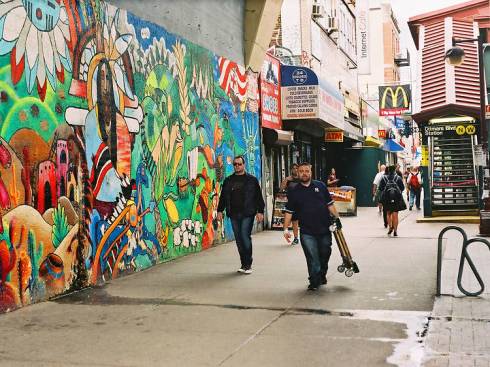
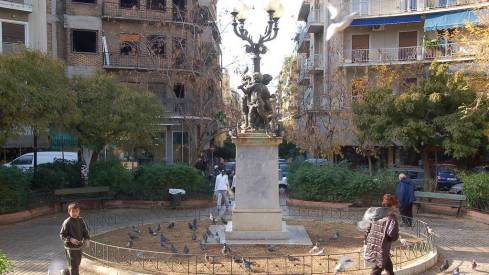
Time Out has come out with the fifty coolest neighborhoods in the world, and two — arguably three — of them are Greek; one in Athens, Kypsele, and another in the capital of the Greek diaspora, New York: Astoria. (Yeah, Melbourne…ok…chill). Now there are only what, 14 or 15 million of us in the whole world, and we corner 8th and 16th outta 50. Not just not bad, but figures that make it clear there’s a connection between Greek-ness and urbanity — even Greek villages are really just tiny Greek cities — the polis and everything political life implies, that runs deep.
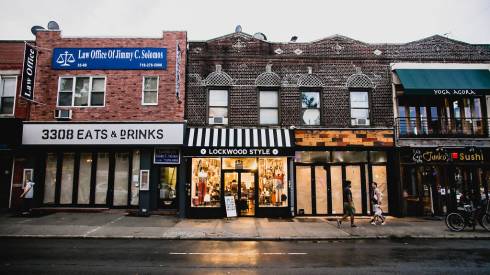
 Astoria
 Kypsele
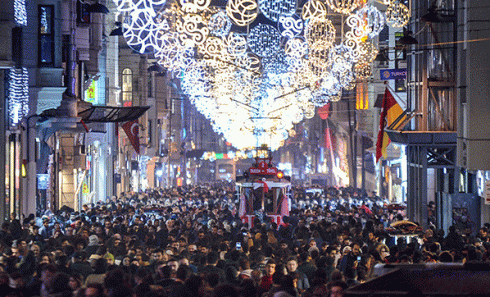
What if you have no Greeks (or worse, no Jews). Well, brother Turk, take a walk, or a nerve-wracking tourist shove, down what you’ve turned your “İstiklâl” into: its new garish, overlit, Gap-outlet, Gulfie, Saudi hideousness… And weep. That we left.
Oh, and what’s arguably the “third” Greek neighborhood… Ok, I scrolled down the list, nervously expecting to find Pera (Beyoğlu) there, the formerly, largely Greek mahalla — the formerly Greek, Jewish and Armenian heart of the City actually — because Turkey’s American public relations firms deserve every dollar they get from the Turkey accounts and they manage to shove a fictitious Turkish tolerant multiculturalism in our face whenever they get the chance, and Pera has, for about the past 15 years, taken pride of place in this masquerade of Istanbul hipness and Turkish cosmopolitanism — quite an accomplishment since the Midnight Express days. (Too bad Turkey itself reverts back to Midnight a little bit more every day.) And Pera wasn’t there, not on the list!
The old Grande Rue — Pera
And… Well, and…a few years back I wrote a post here called: “Nobody really cares about Gezi Park: Greek thoughts on the protests of 2013“. And perhaps the biggest stinger in the article was:
“All – I thought a lot about whether I should use “almost all” in this sentence and decided against it –because all the hippest, funkiest, most attractive, gentrified neighborhoods in the historic parts of İstanbul are neighborhoods that were significantly, if not largely, minority-inhabited until well into the twentieth century: not just Pera and Galata, but Cihangir and Tarlabaşı, and Kurtuluş — of course — and up and down the western shores of the Bosphorus and much of its eastern towns too, and central Kadiköy and Moda and the Islands. (And if serious gentrifying ever begins in the old city it’ll be in Samatya and Kumkapı and Fener and Balat; I wouldn’t put any big money into Çarşamba just yet.)”
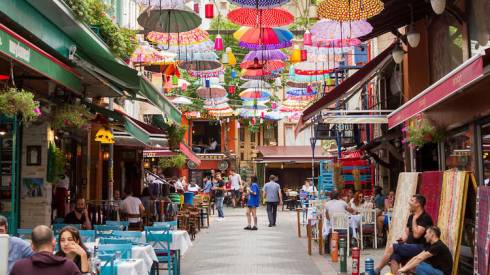
And so, happily, I didn’t find Pera being prostituted again by Turkey as a symbol of a multiculturalism that the Turkish Republic eradicated, exterminated, expelled and that no longer exists. But I scrolled a bit further down…and there was Kadiköy and Moda, #42, also, until well into the 60s, heavily Greek and Armenian. More sweet justification!
(I’ll take Egyptians on for the empty, dingy Alexandria they got stuck with after our good-bye party in another post.)
 Kadiköy
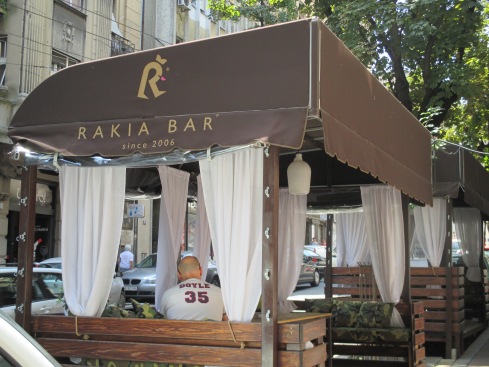
Finally, came the sweetest of all, my beloved Dorćol in my beloved Belgrade. 50th on the list of 50. You have to be pretty attuned to the Serbian soul to know what coming in 50th out of 50 means. It doesn’t mean being last. It means: “You think we’re cool? Who asked you?”
 The Rakia Bar in Dorćol
Plus, Belgrade comes in in way first place over all of these cities in one important way: the guys. No joke.
Some restaurant notes:
Don’t go to Çiya in Kadiköy. Unfortunately, the food is spectacular, and I’m a sadist for posting this picture:
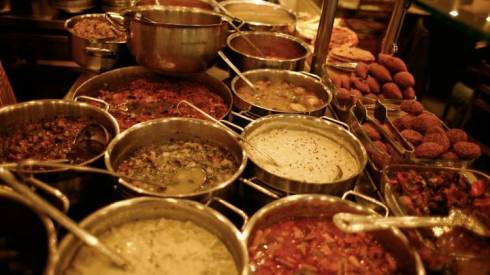 But the unfortunate part is that Çiya is owned by a sociological type: the newly comfortable, if not rich, provincial, pious middle-class; that’s the AKP’s and Erdoğan‘s political power base. What that means on the ground is that your great food is prepared by puritans who won’t serve you alcohol, so you can’t have a leisurely rakı or beer dinner, but have to scarf it all down and leave, paying with dough that might indirectly end up in the AK’s coffers or ballot boxes. The same goes with the otherwise excellent Hayvore in Pera. Amazing Black Sea dishes but no booze. Go ahead if you want. You can go to Saudi too if you want. I refuse to. Even if I didn’t want to drink: just on principle. And they — Hayvore — make one of my absolute favorite dishes which I can’t find anywhere else: an anchovy pilav. But I’ll live without. Or make it myself.
.
And then, a little less geopolitically charged, there’s the completely baffling phenomenon of Cyclades in Astoria. I can’t argue with the fish. And if fish is their mission statement then fine, because it’s always fresh and expertly cooked — even if the owners are Albanian and hadn’t seen the sea till they were sixteen. But you do want to eat something along with the fish and everything else is awful. The cacık and eggplant salad is made inedible by that crazed Greek overuse of raw garlic, so that all you have is the bitterness of the bulb and not even the taste or aroma. The zucchini and eggplant are fried in old oil. The raw oil served for greens or salad is horrible — cheap, and I’m not even sure it’s 100% olive. And in a Greek fish meal, where almost everything is dressed with raw oil, it really needs to be the best quality or everything else is shot. The bread — and one thing we do well, γαμώτομου, is bread — is nasty and old. This place reminds me of food in tourist traps in the old days before the foodie revolution in Greece in the 00s.
And they commit one incomprehensible abomination. They serve oven-baked potatoes — with lemon, fine… But. With. The. Fish. These are potatoes, that according to the taxonomy and order of Greek food, if such a primitive cuisine can be said to have such order, are baked in the oven with meat in a composite dish or casserole. It’s a sin of commission to serve them with fish, with which they haven’t even been cooked, unless you’re going for plaki which means tomatoes and a whole different palate. And they taste as if they’ve been soaked overnight in lemon. And I dunno, but the yellow color is so suspiciously bright that it looks like yellow dye #2. Investigate them; I’m sure I’m right. And, of course, everything comes garnished with piles of more lemon wedges, to satisfy that deep Greek urge to obliterate the taste of everything else on the table.
And people — Manhattan people — come out to Queens and wait, for over an hour, malaka, to get a table at this Soviet cafeteria (the lighting is awful; the music is deafening). They’ll often go cross the street to wait to be called, to get a drink at Michael Psilakis‘ MP Taverna, where the food is phenomenal. It’s only slightly reinterpreted Greek — it’s deeply faithful to the roots but Psilakis — I dunno — freshens things, and combines traditional ingredients in ways that make you wonder why no one else had ever tried this. It’s generally full and has a great and friendly bar that looks out on the bustle of Ditmars Boulevard. But it should be a destination spot and it’s not. And Cyclades is. It makes me think that white people will eat bad food if they think it gives them woke and authenticity street cred. And convince themselves it’s good.
He dicho.
–
comment: nikobakos@gmail.com
–
…and this from a woman already exceptionally smart and articulate. As I said in my Tweets after Pelosi dropped the bomb this week, it’s rare that I feel American at all, much less proud to be so. But Williamson is smart and brave. She’s easy to mock as a New Age flake-head while she’s actually a highly knowledgeable Jungian, and she has a tight grip on how American government works, on the economic history of the United States and its broader history in general; she gave a talk on the Triangle Factory Fire, Frances Perkins, Roosevelt, the New Deal and how twentieth-century American prosperity, creativity, strength, and relative social justice were all born out of those individuals and phenomena that moved me to tears. And she has the courage to say that love and morality should be society’s guiding principles. She’s not going to win, at least not this time, but only in America would someone like her even be given the chance.
And, aquí entre nos, maybe I’m not so proud that she’s American, but really that she’s Jewish. Like so many of the Triangle girls were, and so many of the brave young women were who had protested in vain on behalf of workers like them in the years leading up to the 1911 tragedy. But progress and perhaps history demand their sacrifices I guess.
Volume Four of Ric Burns’ monumental New York: A Documentary Film is probably the most stirring visual treatment of all of the above. Get your hands on it if you get a chance. Amazon’s got it on Prime.
–
comment: nikobakos@gmail.com
–
…the frowning face of the young Abul Hasan, who would become Jahangir’s favourite painter, painted by Daulat. From the Gulshan Album, 1600

Also from Gulshan Album, Prince Selim:

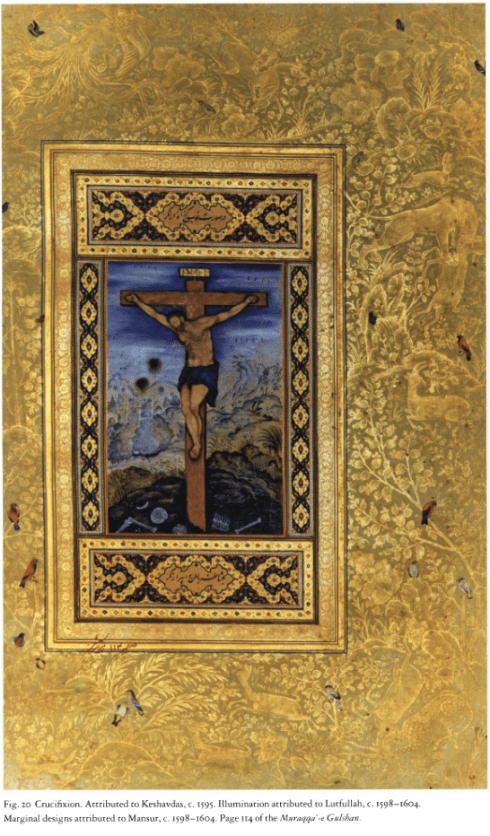
And the illustrations in the Gulshan Album of the interest in Christianity wide-spread in Jahangir’s court:

–
comment: nikobakos@gmail.com
–
I don’t know who India’s equivalent of Oprah is, but I’m sure this has been featured: the healthful effects of Navratri fasting rules.
Few things are more irritating (“might make you grouchy” my friend E. says) than traditional dietary practices of depth, subtle abstraction, intelligent symbolism and transcendence being given new, healthy, “life-style” meaning. Being retroactively rationalized, in short, into meaningless utilitarianism.
That Jews and Muslims don’t eat pig meat because “pigs are dirty” is probably the most ancient one. Because they’re not. Pigs actually have high self-hygeine practices compared to other domestic mammals and that’s generally attributed to their relatively high intelligence compared to other mammals. (I’m always tempted to think it’s just that pig meat tastes so good — like shellfish and wine — and banning its voluptuousness was just one of those random rules that monotheism needs to build its puritan edifice and get its rocks off*). The chicken whose steroid-bloated, skinless, grilled pec you’re eating lives in far filthier conditions and even in free range eats worms and its own feaces. Then there are the vegans who think that their diet and a Hindu’s vegetarianism come from the same impulse and have the same objective. If that were the case Indian vegetarian wouldn’t be so wildly delicious and vegan food so unswallowable. Or the male soy-dieter, wreaking havoc on his endocrinal system and flooding his body with estrogen, because Zen must have something to teach us about health. It does, just not that.
And then are those occasions when it’s spring and you explain to someone the guidelines for Orthodox, Lenten fasting (Because they’re guidelines, suggestions, not rules like in Catholicism.) “Oh,” inevitably comes the response, “that must have started as a wise way to cleanse your system for spring — and you must lose so much weight.” No. You don’t. You end up eating a ton of cheap carbs and sugars on the halva and lagana diet and on Easter you’re ten pounds fatter than you were at Carnival when you were gorging on fat and animal protein.
So “Jai Ganesh Deva”! Eat Navratri foods if you want and offer the right prasad. Pray that Sri Ganesh, in his wisdom, prevents any anti-Muslim violence — something a little more important than your anti-oxidant consumption — and skip the diet part.

* Don’t wear wool and cotton blends. “Thou shalt not round the corners of thy head.” “Thou shalt not seethe a kid in its mother’s milk.”
Huh? Not just the randomness of the injunction, but the obscurity of the language… What are these rules even dictating exactly? What are the corners of my head? Last time I looked my head was round already. Is it just the mother’s milk? Then why is all milk prohibited? And on that one weird line we construct a whole dietary culture and an entire constitution of domestic order that must be an insane expense of energy to maintain…
Off topic? Yeah, well…
–
comment: nikobakos@gmail.com
–

 Jadde: from Bosnia to Bengal