Balkans, Anatolia, Caucasus, Levant and other Middle East, Iran, Afghanistan, South Asia, occasional forays into southern Italy, Spain or eastern Europe, minorities, the nation-state and nationalism — and whatever other quirks or obsessions lurk inside my head.
One of today’s Reuters’ titles: “Turkey urges U.S. to review visa suspension as lira, stocks tumble“ is a very deeply unintentional funny. Is he dyslexic? Am I? I’ve read it correctly, yes? The UNITED STATES is suspending visas to TURKS? The TURKISH lira and TURKISH stocks are tumbling? Right?
There’s been a ton of repetitive commentary again recently — including from me — about how Kurdish, let’s say, “pro-activeness,” in Iraq and Syria, what Kurds think is their right since they played such a key role in kicking ISIS ass, is a menace to Turkey because Turks are still traumatized by the 1920 Treaty of Sèvres that called for the remaining Ottoman Empire (Anatolia essentially) to be partitioned between the winners of WWI (and the hangers-on and cheerleaders like us), with the Straits and Constantinople internationalized (meaning British), so that Turks would have been left with a rump central Turkey and, I think, a minimal outlet to the Black Sea along the coastal stretch around Sinope.
All of that was changed by Atatürk’s declaration of a Turkish Republic at Sebasteia and the subsequent disastrous defeat of the invading Greek army. The Turkish War of Independence (please, Greeks, gimme a break and let me call it that for now) was an impressive accomplishment, and if it ended badly for the Greeks who lived there, as we remember every autumn when we recite the Megilla of Smyrna, that’s our fault and especially the fault of Venizelos who, being Cretan, found pallikaristiko demagoguery and dangerous, careerist magandalık irresistible. So impressive was Kemal’s accomplishment, in fact, that all the parties involved in Sèvres then got together at Lausanne in 1923 and decided Turkey should get whatever it wants. Suddenly, the clouds of three centuries of depressing imperial contraction, and massacre and expulsion of Muslims from the Caucasus, the northern Black Sea, the Balkans and Crete were lifted (ditch the Arabs south and call it a country seemed to be the Turkish consensus for whatever was left) and the Turkish Republic went on its merry way. Sèvres and Sèvrophobia was gone.
What Turkey suffers from now, and has for most of the twentieth century since the events we’re talking about, is a Lausanne-inspired sense of entitlement that is simply breathtaking in its cluelessness. It’s the kind that leaves you staring at some Turks, silenced and dumbfounded, and unable to tell whether what they just said to you is elegantly, sweepingly aristocratic or just passively asinine. Lausanne was first; add Kemal’s personality cult (I’m not sure that history ever threw together two bigger narcissists than him and Venizelos; they should’ve been lovers), then, what was always a silenced Ottomanness came out of the closet, allied as it always has been with the seminal triumphalist narrative of Islam itself…and you get Erdoğan!
Now he wants the U.S. to review its Turkey policies? Who is this man? Scolding the whole fucking world like we’re a bunch of children. Let him scold his children — meaning Turks — first, and then maybe we can take it from there. If I were a German diplomat in Turkey and had been summoned to His Sublime Presence for the nth time in one year to be chastised for something mocking someone in Germany had said about Him, and told “to do” something about it, I would have found it hard to control my laughter. As an outsider, I find it delightful enough that of all peoples on the planet, Turks and Germansgot involved in a multi-episode drama on the nature of irony and parody. But to have him demand shit from all sides…
No, you’re not a “mouse that roared” arkadaşım, ok? Yes, “all of Luxembourg is like one town in Turkey” (wow…ne büyük bir onur). Turkey’s a big, scary, powerful country with a big, scary, powerful military, and lots of “soft” cultural and economic power in its region too. But you’re in a schoolyard with some much bigger cats. Soon all of them — the United States, Russia, the European Union, Israel and even some who already openly can’t stand your guts — like Iran — are gonna come to the conclusion that you’re more trouble than you’re worth. Even Germany is no longer so guilt-ridden as to be polite to you. And I don’t say any of this as a Greek, because I don’t think that when they all get to that exasperated point and temporarily turn to Greece, that Greeks are going to be anything other than the chick you were drunk enough to take home for a one-nighter — Kurds are going to be the rebound girlfriend, though I can’t say right now for how long — but things have been moving rapidly in a direction where the big boys are not going to want to play with you anymore, and they’re going to let you know in a way that won’t be pretty.
Though, as with all bullies, as soon as Erdoğan’s tough-guy bluff-policy on anything is called, he backs down.
“I hate, more than anybody, to look like I’m catering to Erdoğan’s peeves, but an Iraqi Kurdish referendum on independence just at this time is a provocation for him that may turn out to be disastrous. Erdoğan is already massing troops on Turkey’s southern borders, and though I doubt he’ll have the balls to invade what’s pretty much an American satellite, Iraqi Kurdistan, I don’t put it beyond him to send troops into the Idlib region in Syria — maybe even hold a “referendum” and annex it like the Turkish Republic did to the neighboring region of Antiocheia in the 1930s.”
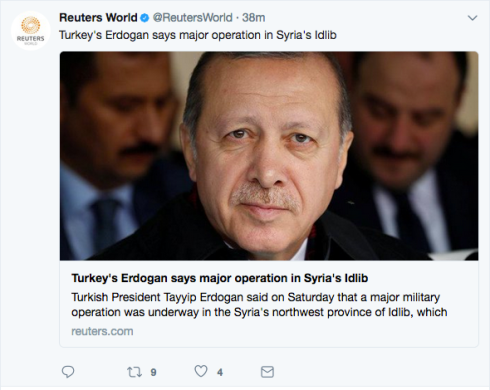
Well, the man’s deranged mind functions like clockwork. Reuters announced a few hours ago that Turkish army operations in Idlib have already begun:
ANKARA (Reuters) – Turkish President Tayyip Erdogan said on Saturday that a major military operation was underway in the Syria’s northwest province of Idlib, which Free Syrian Army rebel groups earlier said they were preparing to enter with Turkish backing.
“There is a serious operation in Syria’s Idlib today, and this will continue,” Erdogan told members of his AK Party in a speech.
Much of Idlib is currently controlled by an jihadist-led alliance of fighters. “We will never allow a terror corridor along our borders in Syria,” Erdogan said. “We will continue to take other initiatives after the Idlib operation.”
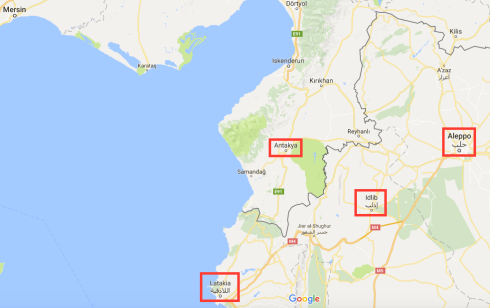
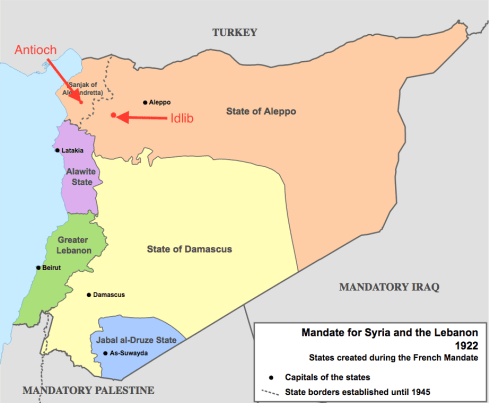
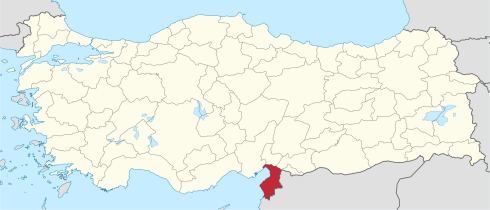
The reason this is so dangerous a move is that it’s so blindingly easy for Erdoğan to justify it. In case you’ve ever wondered why the Greco-Syrian city of Antioch, Αντιόχεια, one of the three great urban centers of Greco-Roman Christianity, is today in Turkey and not Syria, it’s because in 1939, the Turkish Republic strong-armed the French Mandate of Syria (I don’t know how) into holding a plebiscite in the Sanjak of Alexandretta (see map below) in order to determine its future incorporation into the Turkish state. And as with all such votes — like Putin’s elections, Puigdemont’s referendum — the response was overwhelmingly approving. We’re supposed to believe that 90% of the population of this region, the hinterland of Antiocheia (Antakya), where a majority of the population were, and still are, Arab Alawites/Alevis(see second to last map at bottom) who already had a little-sister, special relationship with France like Maronites did in Lebanon, followed by Turco-Kurdish Alevis and a sizeable Arab Christian community (most of which has now long moved to İstanbul), had — even after almost twenty years of watching the vicious war the Turkish Republic had been waging against Kurds, the crazed massacres of Alevis in Turkey, and the Republic’s systematic campaign to either expel or forcibly assimilate its Christian population — voted in their delighted majority to become part of Turkey.
An independent Iraqi Kurdish state, with neighboring Syrian areas already under YPG, would only need Idlib (only 100 kilometres from Turkish Antiocheia) to connect it to the strongly Assadite, Alawite region ofLaodicaea (Latakya) and give a something-like-a-Kurdish state access to the Mediterranean; it would certainly end Erdoğan’s dream of a Sunni-run Syria. I don’t even know what to think or what predictions to make. Hopefully Russia will say no. Hopefully the U.S. and the EU will too and go for serious sanctions, by which I mean not bullshit sanctions, but the cutting off of military aid completely. Erdoğan deserves a serious back-hander — not just German pissiness — from some-one, for eff’s sake, and I can’t think of a better one than to have the Turkish army, deprived of its fancy American toys, “eat its face”, as we say in Greek, against Kurdish peshmerga in northern Syria.
Hatay, where the name comes from — Hittites, I think – Hittites who came from the Sun, I think — and how there’s been a Turkic presence in the region for forty centuries (were there even homo sapiens forty centuries ago? …hmmm…maybe that’s the point) are all contained in the sacred texts of Turkish nationalism. Like I’ve said many times before, nationalism is always funny (if it weren’t at the cost of so much blood) but Turkish nationalism is hysterical, Star Trek as a SNL skit. Check it out if you’re bored at work some afternoon: Sun Language Theory.
More maps:
The Sanjak of Alexandretta — Antioch — “Hatay” province — little red corner of Syrian Mediterranean, that Turkey bullied out of French hands in 1939.
Distribution of Alawites/Alevis in Turkey (Antiocheia), Syria and Lebanon, indicating, clearly, regions of ALAWITE MAJORITY.
And Idlib governate below.
See “Alawite”, “Alevis” and then “Kurds” tags from other Jadde posts for more on this.
…fuels imaginary grievances and rejects solidarity. It divides and discriminates. And it defies the essence of democracy: respect for diversity. Complex identities are a key feature of modern society. [my emphasis] Spain is no exception.”
A brilliant op-ed piece from the Times today by Mario Vargas LLosa, among others, that exposes all the petty narcissism and destructiveness of the orgy of separatist movements that Europe has seen come to the fore in the past few decades: “A Threat to Spanish Democracy .”
Other money quotes:
“In their attempt to undermine the workings of the constitutional government, Catalan separatists have displayed a remarkable indifference to historical truth. Catalonia was never an independent state. It was never subjected to conquest. And it is not the victim of an authoritarian regime. As a part of the crown of Aragon and later in its own right, Catalonia contributed decisively to making Spain what it has been for over three centuries: an impressive attempt to reconcile unity and diversity — a pioneering effort to integrate different cultures, languages and traditions into a single viable political community.
“Compared with the crises occasioned by the collapse of dictatorships in many European states, Spain’s transition to democracy, following the 1975 death of Francisco Franco, was exemplary, resulting in a democratic constitution granting broad powers to Spain’s autonomous regions. Yet Catalan separatists have glossed over the positive aspects of the transition.”
and:
“But the advent of democracy brought official recognition to Spain’s distinctive cultures, and set the foundations for the autonomy the Catalans enjoy today. Catalonia has its own official language, its own government, its own police force. Catalans endorsed the Constitution overwhelmingly: 90 percent of them voted yes in the referendum of Dec. 6, 1978. The millions of tourists who flock to Barcelona every year, drawn by the beguiling blend of Gothic and Gaudí, attest to the vigor of Catalonia’s culture. The claim that Catalonia’s personality is being stifled and its freedoms oppressed is simply untrue.”
The piece pretty much says it all: the bogus democraticness of separatist rights and the supposed right to self-determination completely debunked as nothing more than “little” nationalisms, which as Vassily Grossman points out in this post “…the nationalism of little nations,” can be just as dangerous and certainly as small-minded as that of “bigger” nationalisms. Ditto this op-ed for Abkhazia, South Ossetia, Ukraine (both sides), for Belgium, Scotland and, of course, for the most nightmarish manifestation of these tendencies in our time, the tragic break-up of Yugoslavia. And that’s without even going as far back as the Partition of India, or the Greco-Turkish Population Exchange of the 1920s.
“Complex identities are a key feature of modern society.” No, no and no… Complex identities are not just a key feature of modern society, but humanity period, a feature of pre-modern society since the beginning of time. The roughly two centuries of modernity or “the modern,” which we can probably date from the French Revolution on, is the only period in history when the ethnicity-based nation-state and its brutal, levelling, anti-humanist attempt to “de-complicate” human identity held sway as the predominant form of sociopolitical organization. It’s just a blip on the screen of history and will soon come to be seen as such. Multiple cultural identities and stable state political organization can co-exist easily. Thinking otherwise is an idea whose burial is long overdue.
So, what irritates me most about separatist movements like that of the Catalans is that they’re really retrograde ideologies disguised as liberation movements. Since the Barcelona Olympics of 1992, when the autonomous Catalan government had the impudence, I remember, to plaster New York City subway cars with ads that read “Catalonia is a country in Spain,” (???) Catalans have been engaged in a massive public relations campaign to project an image of sophistication, liberalism, bogus hipness, and artistic innovation (including culinary — if you can actually call the molecular nonsense Ferran Adrià put out food…) all meant to be juxtaposed against a clichéd, “Black Legend” stereotype of Spain — under whose repression Catalonia suffers — that’s just plain racist. Catalan nationalism rests mostly on the laurels of its Republican-ness and struggle against the forces of Spanish reaction in the 1930s — Hemmingway and Orwell’s “Homage.” But the attitude of today’s average Catalan nationalist more resembles that of the average member of Italy’s Northern League, a far-right if not quite fascist but certainly racist bunch of jerks: the same smug sense of superiority towards their co-citizens and the same petit bourgeois self-righteousness about how their wealth and resources get sucked up by the parasitic rest of the country.
There is no convincing evidence that Catalan society is any more liberal or open or sophisticated than the rest of Spain. See González Iñárritu‘s film “Biutiful” (if you can bear to watch it; I couldn’t make it though a second viewing…but it’s the perfect antidote to Woody Allen’s nauseating “Vicky, Cristina, Barcelona”), for how much better Catalonia treats its immigrants, for example, including those from poorer parts of Spain, than any other part of Europe, or do some reading up on the discrimination Castillian-speakers in Catalonia suffer. Catalan independence is not a liberal or liberatory idea; it’s exclusionary and elitist to the core. The problem is that most of the world falls for the discourses of these movements –the way the West did with Croatia in the 90s — because they’re so good at playing victim.
The finger-flipping at the impressive democratic achievements of Spanish society since 1975 is particularly galling.
Bad translation. “Pодные”…”rodnye” means intimate, familiar, related; by extension born-beloved, dear one, cared for, same root in Russian as parents, birth, homeland, Christmas…wouldn’t be surprised if it has the same Indo-European roots as “root”.
Vitaly Mansky‘s documentary is being screened this coming weekend and the next at the Museum of the Moving Image in Astoria, Queens. (See schedule. It’s two train stops into Queens, guys. Then you can have a nice dinner for half of what you pay in Manhttan at a good friend and koumbaro‘s place: Mar’s.)
“In this follow-up to his award-winning documentary Under the Sun, filmmaker Vitaly Mansky examines Ukrainian society amidst the 2014 national election, a period rife with political chaos and growing uncertainty over national identity and integration. As both a Russian citizen and native Ukrainian, Mansky deftly underscores personal and political complexities as he visits with relatives living in Lvov, Odessa, the Crimean peninsula, and the Donbass region, and in the process discovers a wide and disorienting spectrum of outlooks and affiliations, including his own sense of ongoing exile and unease. Close Relations is at once an intimate family portrait and a graceful journalistic endeavor, a movie of the intense present that illuminates a place caught between a troubled past and an anxious future.”
Watch the trailer below.
Lots of moving, “disorienting” footage. Also, lots of humor, which reminds us that so much of a certain ironic, sardonic take on the world — a viewpoint “from a certain angle”, as E.M. Forster said of Cavafy — that we in the United States think is particularly Jewish, is really just a trait common to all eastern Europe, even Greece, or perhaps just a trait common to the powerless everywhere:
“Crimea was a pity, but the Donbass…they can have it.” *
But I think the most important moment in terms of geopolitics comes at 1:15:
“So Ukraine decided to join NATO. Isn’t that its own business?”
“Nyyyyyet!”
…comes the reply without a moment’s hesitation.
“Nyet” with its palatized “n” and final “t” is one of humanity’s great no-words. Like “yok” in Turkish, it literally means “there isn’t” or “Il n’y a pas”. But while “yok” has a kind of know-nothing passivity about it, “nyet” is an active “Halt! No way you’re going further down this road. There’s no access.” **
That moment in Mansky’s doc is why, despite widespread support for a Putin I find repulsive, I can’t get as angry at Russians as I get at Trump Americans and Türk-doğans; because Russians aren’t stupid. They’re not as smart as they used to be in the old days, при коммунизме, when everybody knew not to believe any-thing. They now believe all kinds of nonsense. And they went and got religion on me too, which is one of my life’s greatest watch-what-you-wish-fors. But they’re still pretty intelligent about the world.
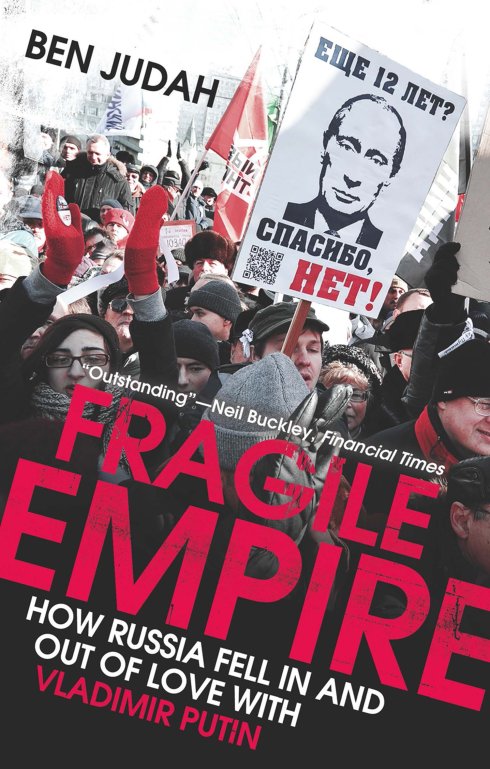
I can’t get inside Putin’s head, like Ben Judah convincingly does in what’s still the best book on the Путинщина, the “Putin-ness” or the “Putin thang.” Judah’s thesis is that Putin is really just a nebech apparatchik who others put in his place and who now — having trampled over so many people on his way up — is terrified of stepping down and that the macho persona he so tiringly projects masks mega insecurity. It almost makes you feel sorry for him.
But this relative of Mansky’s and her coldly realpolitik “nyet” tell you why he has so many Russians’ support. Because it means: nyet, you can’t tell me that the U.S. and NATO suddenly developed a major crush on Estonia and Georgia; nyet, you can’t suddenly tell me you’re interested in Ukraine too, because this was already starting to feel like a corporate raid on all the old girlfriends who dumped me, but Ukraine, especially, is like hitting on my sister; nyet, you can’t moan and groan about how we’re violating a basic credo of the European Union by changing borders, when neither Russia or Ukraine are part of the European Union and you wouldn’t even have considered Ukraine — with its resources, access to the Black Sea and huge Russian population — a candidate if it weren’t a way to totally encircle Russia; and, nyet, you can’t tell us that you’re not still treating us with a Cold War mentality that you inherited from an Anglo tradition of Great Game power struggle that doesn’t apply anymore and is now completely counter-productive.
At least talk some truth and maybe we can get somewhere. And then I’ll reconsider breaking up with Putin.
In the meantime, we can try to think of everyone as “close relations.”
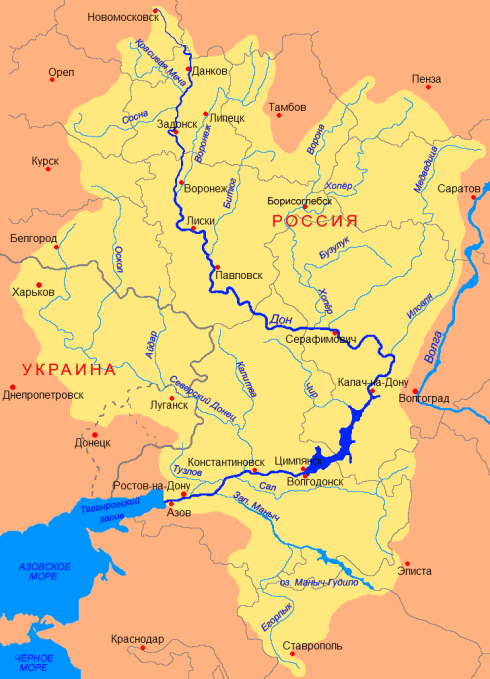
************************************************************************************* * The Donbass, the river Don basin is part of southeast Russia and the Russian-speaking parts of eastern Ukraine where the current conflict is centered. From “The first two of my cents on Ukraine and Russia“:
“Also, thence, a crucial point: that Ukraine wasn’t so much conquered, but settled by Russia…
“The independent “frontiersmen” mentality of the Russians of these areas, a sort of Russian Texas — among its ethnic Cossack peoples especially — should not be underestimated and should not be disregarded as a possible element in the current conflict. (See: And Quiet Flows the Don at Amazon and at Wiki.)”
“Новая Россия,” (Novaya Rossiya), New Russia, is not a Putinism. It’s a name for these lands that goes back to Catherine the Great and the first serious subduing of Cossack rebelliousness and settling of Russians in the region in the 18th century. It was part of the Russian empire’s most fertile grain-producing regions and then the scene of crazy industrialization under the Bolsheviks; maybe it was once a sort of “Russian Texas” but now it’s more like a sort of Russian Rust-Belt. Hence, the “they can have it” comment. The Soviet Army, decapitated by Stalin’s purges of its most talented and experienced, and ill-prepared and ill-equipped, only made the Nazi sweep through Ukraine grind to a halt once the Germans had made it this far east and after hundreds of thousands of Russian men had already been sent to a meaningless death and the Nazis had swept the old lands of the Pale clean of Jews through massive massacring and mass executions which were an integral part of the military strategy of the eastern front; many military historians believe that if the Nazi invasion of the Soviet Union hadn’t been slowed by German troops stopping every other community to round up and shoot its Jews (a method/process that killed more Jews than the gas chambers did), they might have been successful in beating the coming of winter and more successful in their campaign long-term. The region then became the scene of brutal attrition warfare, culminating in the siege of Stalingrad (now reverted back to its original name, Волгоград / Volgograd on map below). This left the region seriously trashed and so huge numbers of Russian workers were settled there post-WWII, Russianizing the Ukrainian far east even further and setting the stage for today’s conflict.
Map of the Don Basin. The grey line shows the border between Russia (РОССИЯ) and Ukraine (УКРАИНА) and the broken grey lines in Ukrainian east indicate the Lugansk (Луганск) and Donetsk (Донетск)
** “У меня денег нет” (“U menya deneg nyet”) in Russian is the same structure as the Turkish “Benim param yok” — “I don’t have any money.” Though Russian has a verb for “to have” like other Slavic languages, these structures both mean, literally: “By me there’s no money” or “My money isn’t there/isn’t by me.” Wondering whether it’s a construction Russian acquired through contact with Tatar. There is apparently a phenomenon where languages effect each other and transmit certain properties between them, though there’s no large bilingual population to bring them together and though they’re not genetically related, at least not closely. The absence of an infinitive, for example, in modern Greek, Albanian, Bulgarian and Romanian/Vlach, though each are from different Indo-European families and more closely related languages have an infinitive, is one good example. Also, Yiddish “by mir” (as in “By mir bist du shayn”) which is like the Russian по-моему (“according to me”) — for me, in my opinion. Though German uses “bei mir” also to mean same thing.
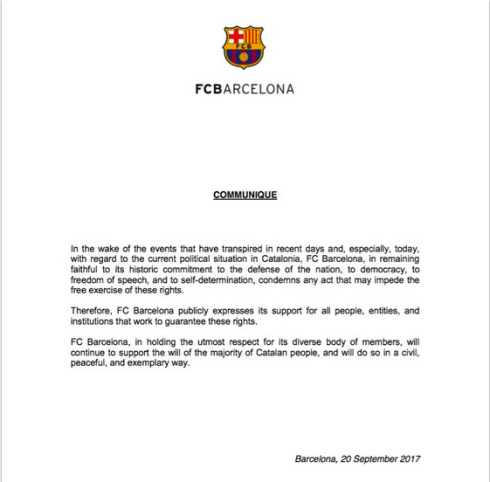
The most thuggish, corrupt sport on the planet chimes in on Catalan independence. Bloody everybody’s got an opinion.
Apparently there were rallies for a Basque referendum all over the Vascongadas in recent weeks as well, and soon the pendejito of Spanish regionalism, Galicia, will want independence too.
Is there anyone out there who knows of any studies of how European Union ideology and policy have supported regionalism and separatism in the past decades? That a German “go-ahead” on Slovenian and Croatian independence lit the fuse on the Yugoslav bomb has, I think, become a commonly accepted view in recent years, even for the most anti-Serb-minded Westerners. But is it the EU’s promise of support — meaning funds — what feeds these movements? i.e., is the idea: “If I have a direct line to Brussels then I don’t need Belgrade or London or Madrid” at the root of most of it? That would mean that Catalans are really not separatists but a form of closet centrists (which certainly proved true of Croatia); that they think they don’t need a tie to this parasitic peripheral center — Madrid — when they themselves can be parasites on a more central center, Brussels. Any thoughts?
And Brussels, of course, is not doing what it should be doing: telling Catalans that if they want out of the borders of a EU country then they’re out of the EU entirely, which is also the secret message that the West refused to send to Croatia in the 80s, sending it on its merry path with the consequences we all know of.
Something for all you enablers of Catalan delusions of grandeur who supported them with your tourist dollars over the past couple of decades to think about.
See Ryan Heath’s “Josep Borrell warns of Catalan ‘domino effect’“ in Politico (“The veteran Spanish Socialist politician — himself a Catalan — says that the independence argument is based on a myth.”)
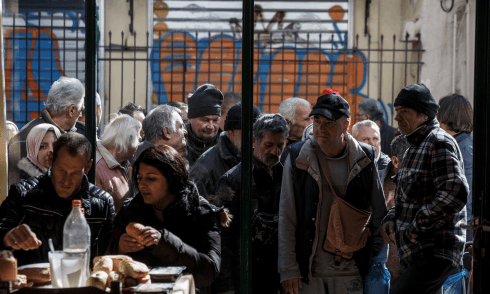
Greek people queue to enter a soup kitchen run by the Orthodox church in Athens. Photograph: Alkis Konstantinidis/Reuters
There’s an expression in Greek: “Πουλάει τρέλα” — He’s selling craziness, literally, which is used when it seems like someone is acting like they don’t get it, or don’t understand, or didn’t see, or didn’t notice, in order to escape some kind of responsibility :
“Sorry officer, I didn’t realize how fast I was going. Oh, is that the speed limit here?”
“Oh, is the rent due? Is it the first of the month already?”
“300 Euros per month for Greek workers and 150 for pensioners seem like perfect living wages to me.”
Last week, Prime Minister Alexis Tsipras, to some the architect of Greece’s whole mess — a little unfair — or just an adolescent false messiah making crazy promises, announced that the Greek government bonds had gone on the market again, supposedly a vote of confidence from the financial community. “The worst is behind us.”
And the entire Greek people, across the entire political spectrum, did a collective double-take and mumbled: “Huh?” No people on earth have become as cynical about their politicians as Greeks have, and the government’s cheap optimism has been taken, not just as “selling craziness” by most, but as an added slap in the face, especially since most feel that news about bonds “coming out” in the markets is just preparing the ground for a fourth package of added austerity measures on the part of the European Union and its institutional partners (known collectively here, in a kind of scarily Orwellian, Big Brother language, as “the Institutions.”)
“For the poorest of the poor Syriza has been good,” said Mourtidou. “But it has not done what the vast majority hoped and that is very dangerous. Tsipras had a calming effect when he came along. There isn’t another Tsipras to promise us the world and now I fear the earth could be trembling under our feet. The next choice could be the far right.[My emphases].
It is a common concern. Greeks have responded to loss with fortitude and resilience but a mood of uncertainty prevails. Amid the rage and disappointment many worry the power of loss could assume other more menacing forms.
“Uncertainty is the new normality,” psychology professor Fotini Tsalikoglou noted. “It could manifest itself in apathy, violence, more uncertainty, we just don’t know.”
Sorry for the poor quality of this photo, but I just had to post this. An ad all over Istanbul’s airport: “Going to Greece. Talk to us today for suggestions on how much to take. Make sure you have enough Euros for your stay.”
At the height of the Greek economic crisis and in the middle of the most bitter negotiations between the Greek government and the European Union over the extortionist measures of the promised bailout, this appears in Turkish airports. This is a pure, lying attempt at sabotage of Greek tourism. The dreaded “capital controls” that limited Greeks to taking 60 Euros a day out of ATMs to prevent a run on closed banks never applied to foreigners; i.e., you weren’t going to put your Dutch bank card into a Greek ATM to withdraw money from an account in Rotterdam and be limited to just 60 Euros. This was really shitty and beneath Turks’ dignity. But the truth is that I can’t really understand what’s going on in that country psychologically, so I’ll chalk it up to what seems to be a temporary suspension there of all rational discourse.
I’ve just invested so much in defending them (yeah, yeah…think you don’t need my defending? think again…) that I hate when they embarrass me with this kind of nastiness.
Iswear to God those were the first words — the two most totemic in the Greek language — that instinctively leapt out of my mouth when a very loved cousin of mine in Athens answered her mobile today.
The Resurrection fresco in the church of the Chora in Constantinople (click)
I don’t know what will happen. Tomorrow, me…and Greeks all over the world will wake up sober — or hungover — and have to figure out how this thing is actually going to work.
But one thing all of us need to understand is the power of language and discourse. By “discourse” I mean the idea and interpretations that people give and ascribe to the phenomena in the world around them; that discourse is “poetic” and a process of “poiesis”— not poetic like Byron or Baudelaire — but poetic in the original Greek sense of “making” or “creating.” What that means is that DISCOURSE: what people say about things, how people talk about and interpret reality, the opinions and analyses of that reality, are not an either accurate or inaccurate view of that reality but a code and a language that create that reality. This is simple stuff. Intro to Deconstruction. Foucault 101. And nowhere is it truer than in the “game of chicken” played in the arena of political economics.
So, like I said in “GREEK ELECTIONS,” if a critical mass believes a hypothesis is true — or just possible — then it becomes true; then actions and gestures on the ground, and praxeis in the “real,” physical world will create that reality, poetically. And if we continue to bolster — worse, think we deserve — the Troika’s Neo-Liberal discourse of exploitation, then it will continue. If we support a discourse, if we believe that an alternative to that reality is possible, then it will emerge. It only took some workers in a Gdańsk shipyard to say: “I’m not gonna pretend that I believe this shit anymore”; it only took a heroic Gorbachev to say: “This isn’t working”, for the most horrific political economic system that has ever been inflicted on humanity, and that seemed as eternal and as immoveable as Everest, to come crashing down like a house of cards from one day to the next.
This will work, if we let it. They’ll feed us a language of fear, which if we swallow, will ruin us. If we simply keep in mind: “That’s what you think — and want us to think — but we won’t,” change will come.
ALSO, we, as ROMANS, should be immensely proud that so many other left-leaning, anti-austerity parties from the rest of the European periphery: Spain, Portugal — and even from Prussia itself and other parts of Merkelstan — came to be part of these elections. If it gives them only a tiny drop of optimism, if it makes them feel like: “Yes, we can say ‘No!’ too”, it will be a by far greater gift to them than anything else we supposedly gave the West in the past.
…an accidental consequence if we’re not careful and we irresponsibly let Tsipras blindly lead us into this trap….when SHAKING UP EUROPE IS PRECISELY THE POINT!!!
Giannis Papanikos/AP (Click)
by Barbie Latza Nadeau — for THE DAILY BEAST
ELECTIONS 01.24.15 Greece’s Alexis Tsipras: The Man Who Could Break Europe Sunday’s elections in Greece could bring to power a party that’s pitting the debt-ridden south of Europe against the rich north. Can its leader’s charisma carry the day?
In 2012, when Alexis Tsipras last ran to be prime minister of Greece, his compatriots were quite literally killing themselves in public squares because of the tough austerity measures that had strangled the country’s economy.
Tsipras, just 37 years old at the time, personable, extremely telegenic, took a page from his playbook as a student activist to rabble-rouse for a better life. Tsipras’s office was adorned with a poster of Ernesto “Che” Guevera. (His youngest son is named Ernesto.) And he rarely wore a necktie—especially when he tooled around Athens on his German BMW motorcycle.
His alternative-left Syriza party, he said, was the ticket out of the hell that Greece had become. “We have never been in such a bad place,” he told The Daily Beast back then. “Greeks are on their knees and leaving the country en masse. This is not an acceptable future for a European state.”
Back then, Tsipras promised to guide Greece to a better future, which he proposed would be one without the single European currency and thus outside what’s called the Eurozone.
In the end, Tsipras lost the election, which was played out in two rounds after no clear winner emerged from the first poll. But the fact that Syriza won 27 percent of the vote meant that more than a quarter of Greeks thought his plan had legs, and that worried mightily the powers that be Berlin and Brussels.
Leaders from the rich states in the northern tier launched an anti-Syriza campaign that hurt the untested young leader among those who worried that leaving the euro would be disastrous. “If Syriza comes first, Europe should be very afraid: my expectation is that we would have chaos,” Kevin Featherstone, head of the Hellenic Observatory at the London School of Economics told The Guardian at the time. “There would be huge instability and uncertainty on international financial markets and frenzy with a government that is a loose coalition and lacking clarity of purpose being forced to make decisions.”
Tsipras, who is back on the ballot on Sunday, has changed a lot since that last electoral run. Back then his partner was pregnant with little Ernesto. Now Tsipras spends more time carting his two kids around in the family sedan than joyriding on his beloved bike. He still isn’t photographed much in a tie, but his approach is far more tempered and moderate. This time he is running on a promise not to leave the eurozone. (He now calls his 2012 campaign promise a “paranoid plan.”) And this time, he might just win because many of the negative projections have come true and things in Greece have gotten worse. More than 200,000 Greeks have left the country in the last five years, and austerity has forced many businesses to shutter up or go off the radar. Greece’s black market economy is now estimated to account for nearly half of the country’s GDP.
More than 200,000 Greeks have left the country in the last five years, and austerity has forced many businesses to shutter up or go off the radar.
There are also signs that Europeans in other countries who once fought to keep the eurozone intact at any cost now feel they could get along pretty well without Greece. After all, it has a population of only 11 million in a European Union of 500 million and it represents only about 1.4 percent of the union’s GDP.
In early January, Germany’s Der Spiegel weekly quoted a source close to German Chancellor Angela Merkel saying that Berlin was “open” to a Greek exit, or Grexit, as the potential departure move is known.
Under pressure, Merkel was forced to backtrack, insisting unconvincingly that she wanted Greece to stay. “I as German chancellor, and also the German government, have always pursued a policy of Greece staying in the euro zone,” she said at a joint press conference with British prime minister David Cameron.
This time around, Tsipras has promised the Greeks that Europe needs them and has no choice but to renegotiate Greece’s bailout debt conditions. And Greeks like what they hear. Days before the vote, he widened his lead by nearly 7 points ahead of current prime minister Antonis Samaras’ New Democracy party, according to the last poll conducted by Greek SKAI television.
Last time, Tsipras came out swinging against Europe and its currency. This time he is picking his fights, and trying to build alliances across the southern tier of the continent.
Tsipras argues that in order to stay in the eurozone, Greece’s ruling party has negotiated a foolhardy payment schedule for its $378 million bailout debt that makes it impossible for the country to grow. The current repayment plan is 175 percent of the gross domestic product, and Tsipras wants a better deal, starting with his demand that Europe should simply erase most of the Greek debt.
“Hope is coming,” he says, repeating the Syriza campaign mantra. “Five years of destruction and fear have led nowhere. Enough is enough.”
The lessons the young leader has learned since the last elections are apparent. He has traded what amounted to fear-mongering in his last electoral campaign for consensus building, starting with a promise to some of his former naysayer European leaders. Many of Europe’s struggling countries have launched their own versions of alternative leftist Syriza parties and Tsipras had made the rounds to Italy, Spain and Portugal in recent months.
In 2012, Tsipras gave wide ranging interviews to most people who cared enough to ask. This time around, he is writing op-eds in Europe’s largest newspapers to garner support not only for voting Greeks who have moved abroad, but to get Europe’s other austerity-suffering countries to back the debt reshuffling proposal with the idea that such a precedent could help them, too.
Writing in the Spanish daily El Pais, Tsipras tries to assure Spain that Greece can lead the way for all of Europe’s struggling economies. “From the darkness of austerity and of authoritarianism, into the light of democracy, of solidarity and of sustainable development,” he writes. “For this reason, Greece is only the beginning. Within this year, Spain’s turn is coming. The change begins from the South. The defeat of the political sponsors of austerity, foreclosures, of insecurity and fear, of corruption and the scandals has its launching point in our countries.”
Tsipras changed his message slightly in a hard hitting op-ed in the Financial Times a few days later, in which he says Europe must end austerity so as not to let “fear” kill democracy. “We have a duty to negotiate openly, honestly and as equals with our European partners. There is no sense in each side brandishing its weapons,” he writes. “Unless the forces of progress and democracy change Europe, it will be Marine Le Pen and her far-right allies that change it for us.”
On January 14, Tsipras fielded questions with the hashtag #asktsipras in what turned out to be an ingenious town hall debate that garnered 32,000 tweets in the first few hours after it launched. He accused the ruling class of “creating a breeding ground for scandals” and touched on everything from tax reform to foreign policy. He tweeted, “We will not take part in NATO with a bowed head. We will not support military interventions. We will defend international legality.”
Tsipras has come a long way in just a few years, but not all of Europe is optimistic about a Tsipras-led Greece. In an interview ahead of the World Economic Forum in Davos, Switzerland, Christine Lagarde, head of the International Monetary Fund, which owns a lot of the Greek debt, quashed Tsipras’s debt renegotiation promise and said there is very little wiggle room when it comes to renegotiating debt. “A debt is a debt and it is a contract,” she told The Irish Times. “Defaulting, restructuring, changing the terms has consequences on the signature and the confidence in the signature.”
Speaking to RTLZ television ahead of the Davos meetings, Dutch finance minister Jeroen Dijsselbloem, who heads the influential Eurogroup of European ministers agreed. “There’s no political support to write off Greek debt,” he said.
And in Germany, there was that Der Spiegel report that the German government would rather have a Greek-free euro than open the way for a trend that would be costly to the richer nations. “The German government considers a euro zone exit [by Greece] to be almost inevitable if opposition leader Alexis Tsipras leads the government after the election and abandons budgetary discipline and does not repay the country’s debts,” the magazine reported.
Even at home in Greece, not everyone predicts that Tsipras will walk away with a clear mandate to run the country. Alexis Papachelas, executive editor of Greece’s Ekathimerini newspaper, cautions that the likely scenario of a second vote, like what happened in 2012 when the first ballot failed to produce a winner, could spell even bigger disaster for the country.
“Whichever party wins Sunday’s elections will be faced with a mountain of obligations. Tax revenues have plummeted and banks are under enormous pressure. Some inside Syriza like to believe they have a solution to every problem: Foreign lenders will give Greece ample time, the [European Central Bank] will provide unlimited liquidity to Greek banks …,” he says. “Or so they think. For if you attempt to cross-check the information you will find very little in the form of a convincing answer. It’s like they are divorced from reality.”
Tsipras’s response is typically stirring: “The struggle of our peoples for change is the struggle of common sense versus ideological fanaticism,” he says. “It is the struggle of dignity versus servitude,” he says.
But at the end of the day, somebody’s got to pay the bills.
No. At the end of the day, one of the two forces at play here will blink…
Balkans, Anatolia, Caucasus, Levant and rest of ME, Iran, South Asia
Me, I'm Nicholas Bakos, a.k.a. "NikoBako." I'm Greek (Roman really, but when I say that in English some five people in the world today understand what I'm talking about, so I use "Greek" for shorthand). I'm from New York. I live all over the place these days. The rest should become obvious from the blog.


 The Sanjak of Alexandretta — Antioch — “Hatay” province — little red corner of Syrian Mediterranean, that Turkey bullied out of French hands in 1939.
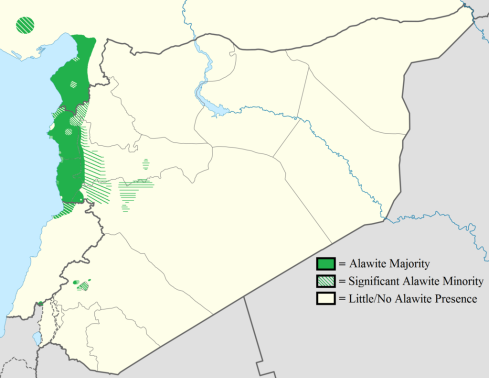 Distribution of Alawites/Alevis in Turkey (Antiocheia), Syria and Lebanon, indicating, clearly, regions of ALAWITE MAJORITY.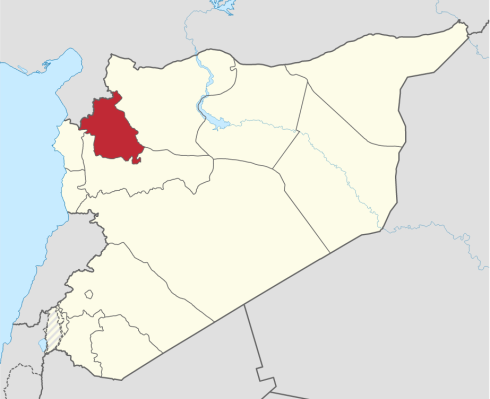
 Other money quotes:
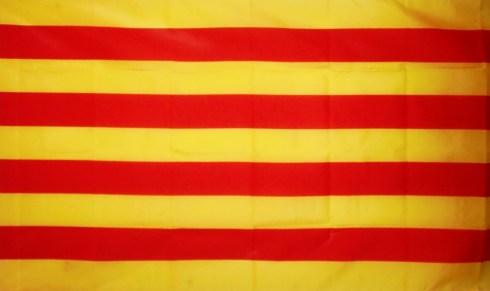 –
–

 Greek people queue to enter a soup kitchen run by the Orthodox church in Athens. Photograph: Alkis Konstantinidis/Reuters


 Jadde: from Bosnia to Bengal