Tag Archives: Germany

Spain and Catalan domino effect and Barca: has the European Union encouraged orgy of separatism and regionalism?

21 Sep

Screen Shot 2017-09-21 at 1.28.07 PM

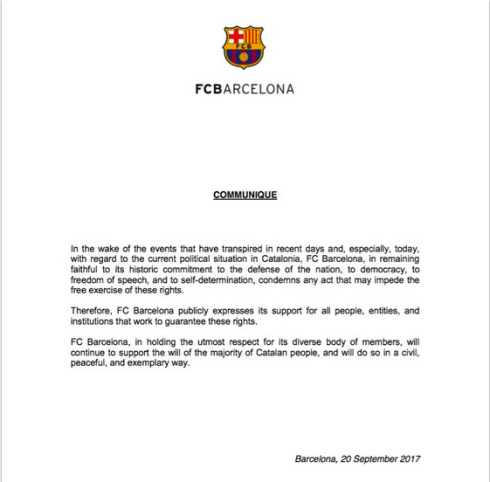
The most thuggish, corrupt sport on the planet chimes in on Catalan independence.  Bloody everybody’s got an opinion.

Apparently there were rallies for a Basque referendum all over the Vascongadas in recent weeks as well, and soon the pendejito of Spanish regionalism, Galicia, will want independence too.

Is there anyone out there who knows of any studies of how European Union ideology and policy have supported regionalism and separatism in the past decades?  That a German “go-ahead” on Slovenian and Croatian independence lit the fuse on the Yugoslav bomb has, I think, become a commonly accepted view in recent years, even for the most anti-Serb-minded Westerners.  But is it the EU’s promise of support — meaning funds — what feeds these movements?  i.e., is the idea: “If I have a direct line to Brussels then I don’t need Belgrade or London or Madrid” at the root of most of it?  That would mean that Catalans are really not separatists but a form of closet centrists (which certainly proved true of Croatia); that they think they don’t need a tie to this parasitic peripheral center — Madrid — when they themselves can be parasites on a more central center, Brussels.  Any thoughts?

And Brussels, of course, is not doing what it should be doing: telling Catalans that if they want out of the borders of a EU country then they’re out of the EU entirely, which is also the secret message that the West refused to send to Croatia in the 80s, sending it on its merry path with the consequences we all know of.

Something for all you enablers of Catalan delusions of grandeur who supported them with your tourist dollars over the past couple of decades to think about.

See Ryan Heath’s Josep Borrell warns of Catalan ‘domino effect’ in Politico (“The veteran Spanish Socialist politician — himself a Catalan — says that the independence argument is based on a myth.”)

Screen Shot 2017-09-21 at 2.27.09 PM

Comment: nikobakos@gmail.com


#stopmindborders — the New Neo-Greek recovers his conscience

13 Aug

I hate to throw the term “New Neo-Greek” at you readers who have just started to grasp what “Neo-Greek” means.  I should have explained more explicitly earlier, but I think some of you sort of understand.

The “New Neo-Greek” is first and foremost the Greek of the Crisis.  That should explain most of it.  In an old post titled: “Un Verano en Nueva York”  I wrote, about a conversation between me and one of my favorite waiters on earth at Bar Jamón in New York:

“So a Greek and a Spaniard get together,” the joke goes — and of course these days they compare notes on how fucked up their respective countries have become.  I tell José that I think Spain is salvageable but that Greece seems in danger of just slipping off of the face of the earth at some point soon.  He’s not so confident.  He says people in Spain are “learning to be poor again,” getting used to a life with “un plato de alubias” — a plate of beans — a proverbial Spanish expression for just-bare-subsistence poverty.  He’s probably around thirty and he says bluntly that his generation in Spain is destroyed; that they’re going to hit their late thirties and early forties without any job experience and that unless you’ve got family money, your only option is emigration, like “old-time Gallegos” we both say in sync.  (Galicians in Spain are like Epirotes in Greece, the archetypically emigrating region, so much so that in much of Latin America all Spaniards used to be collectively referred to as “Gallegos.”)

My heart goes out to him and I respect his straight-eyed stoicism and I think he’ll be ok because he seems strong.  As hard as I try, though, my heart doesn’t go out to Greeks of his generation nor do I respect them.  I think they’re cry-babies who would be scared shitless – or worse, think it beneath them — to work in a bar in New York the way José does and that they deserve – richly — to relearn the cultural lessons of emigration and being poor again.  Three decades of illusory prosperity created an unbearable type of human being in Greece, a nouveau-riche culture of entitled provincials, cold, petty snobs who are snobs the way only the truly provincial can be – and I’m talking about Athens more than the provinces…

I’m pained by the genuinely poor and the old and the sick and the heroin addicts who are suffering and dying in Greece…

But that urban, middle-to-upper-middle-class, twenty-five to forty-five-year-old demographic in Greece…they can just go back to washing dishes in Chicago again like our grandfathers did as far as I care.  Let ‘em start from scratch; see what kind of culture they can come up with this time.

Well, I have to now admit that I was a little unfair.  The “nouveau-riche culture of entitled provincials, cold, petty snobs who are snobs the way only the truly provincial can be…” still exists, of course, but they have been completely marginalized by a new awareness: of tradition, of “politesse,” of civilized behavior, and of a humanism that I’ll accept the charge of cliché for, but which suddenly seems to have become Greeks’ instinctive birthright again.

As far back as 2015, Roger Cohen wrote in the Times:

Greece has made me think about everything statistics don’t tell you. No European country has been as battered in recent years. No European country has responded with as much consistent humanity to the refugee crisis…

More than 200,000 refugees, mainly from Syria, have arrived in a Greece on the brink this year, almost half of them coming ashore in the island of Lesbos, which lies just six miles from Turkey. They have entered a country with a quarter of its population unemployed. They have found themselves in a state whose per-capita income has fallen by nearly 23 percent since the crisis began, with a tenuous banking system and unstable politics. Greece could serve as a textbook example of a nation with potential for violence against a massive influx of outsiders.

In general, the refugees have been well received. There have been clashes, including on Lesbos, but almost none of the miserable bigotry, petty calculation, schoolyard petulance and amnesiac small-mindedness emanating from European Union countries further north, particularly Hungary.

I might have put off explaining what the “New” Greek is like all at once then, and just kind of refer to it here and there in different posts, because I didn’t feel like there was any one thing that I could hold up as evidence.  Then this #stopmindborders campaign appeared and I thought I had to jump at the opportunity.  I think maybe Greeks would have responded to the migration wave that came into the country in the last few years with decency even if the country weren’t in such a crisis, but it was the waking up from amnesia that Cohen refers too that played the greatest part; Greeks suddenly remembered that they were once one of the planet’s great emigrating peoples.

More at some other time.  Watch all the campaign’s videos though (mercifully subtitled); they’re really moving and worth the time.  Their motto is: “The greatest borders are the ones we build in our minds”

Comment: nikobakos@gmail.com

Börek II — or Burek and the end of Yugoslavia

26 Aug

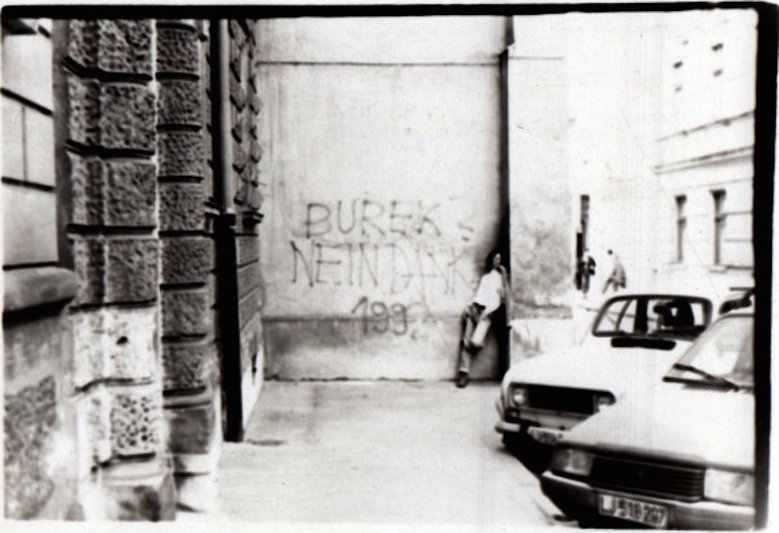
Börek Nein Danke

(click)

This is a piece of graffiti that appeared in the Slovenian capital city of Ljubljana in 1992, at the beginning of the worst period in the Yugoslav wars and after Slovenia had become independent. “Burek [‘börek’ in Turkish, pronounced exactly like an umlauted German ‘ö’]? Nein Danke.” Burek? Nein Danke. “Burek? No Thank You.” What a silly slogan, ja? How innocuous. What could it possibly mean? Who cares? And how can NikoBako maintain the bizarre proposition that a piece of graffiti in a rather pretentious black-and-white photograph is an important piece, in its ugly, dangerous racism, of the break-up of Yugoslavia.

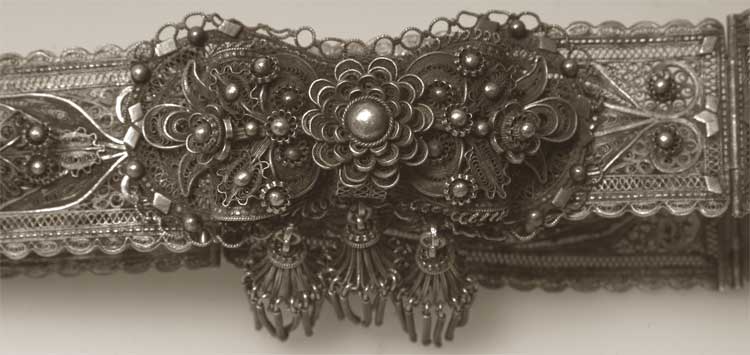
Back up then. There are certain — usually material — aspects or elements of Ottoman life in the Balkans, which, even for Christians in the region, despite the centuries of unfortunate hate and reciprocal bloodletting (and no, I don’t think pretending that wasn’t true or that “it wasn’t that bad” is the key to improving relations between us all now; I think the truth is the key), remain objects of a strange nostalgia and affection. They linger on — even if unconsciously, or even as they’re simultaneously an object of self-deprecating humour or considered homely backwardness – as evidence that Ottoman life had a certain refinement and elegance that these societies have now lost. You sense this often intangible and not explicitly acknowledged feeling in many ways. Folks from my father’s village, Derviçani, for example, now go to Prizren in Kosovo to order certain articles of the village’s bridal costume because they can no longer find the craftsmen to make them in Jiannena or Argyrocastro, and they’re conscious of going to a traditional center of Ottoman luxury goods manufacture. You feel it in what’s now the self-conscious or almost apologetic serving of traditional candied fruits or lokum to guests. Or still calling it Turkish coffee. Or in Jiannena when I was a kid, when people still had low divans along the walls of the kitchen where they were much more comfortable than in their “a la franca” sitting rooms. 1* Perhaps the sharpest comparison is the way the word “Mughlai” in India still carries implications of the most sophisticated achievements of classical North Indian…Muslim…culture, even to the most rabid BJP nationalist. 2**
49614968

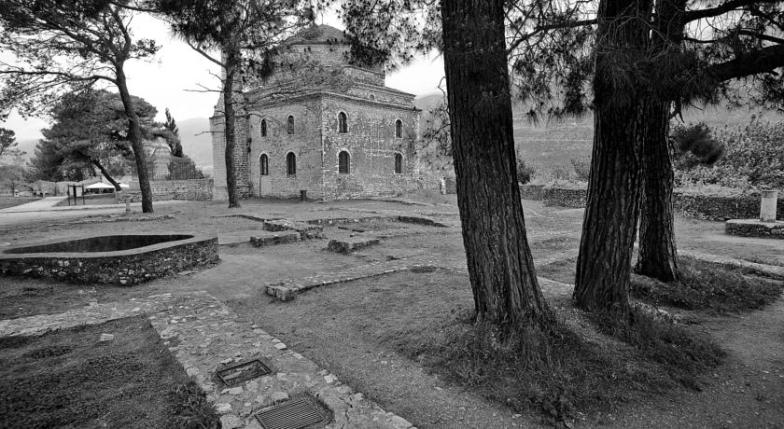
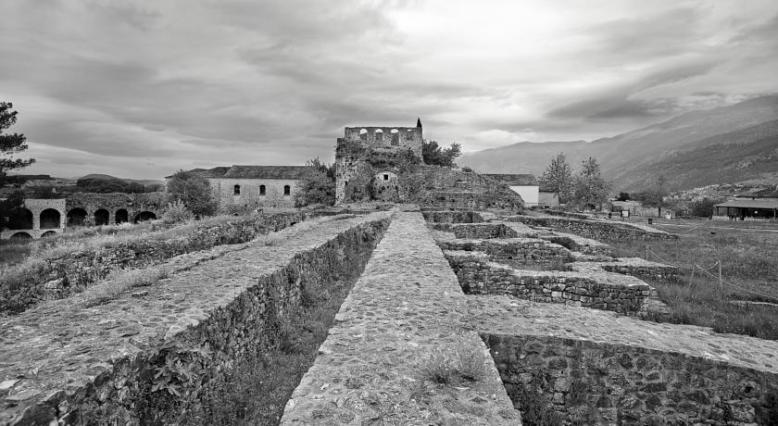
There are some places where this tendency is stronger than in others. Sarajevo and Bosnia are obvious; they still have large Muslim populations though and, after the 90s, Muslim majorities. But Jiannena – which I’ll call Yanya in Turkish for the purposes of this post, the capital city of Epiros and one often compared to Sarajevo: “a tiny Alpine Istanbul” – is also one such place. Readers will have heard me call it the Greek city most “in touch with its Ottoman side…” on several occasions. You can see why when you visit or if you know a bit of the other’s past: or maybe have some of that empathy for the other that’s more important than knowledge.
49611950

About half Greek-speaking Turks before the Population Exchange, Yanya was a city the Ottomans loved dearly and whose loss grieved them more than that of most places in the Balkans. It’s misty and melancholy and romantic. It has giant plane trees and had running waters and abundant springs in all its neighbourhoods, along with a blue-green lake surrounded by mountains snow-capped for a good five or so months of the year. It experienced a period of great prosperity in the eighteenth and especially nineteenth century, when it was not only a rich Ottoman commercial city but also a center of Greek education: “Yanya, first in arms, gold and letters…” – and, especially under the despotic yet in certain ways weirdly progressive Ali Paşa, was the site of a court independent enough to conduct foreign policy practically free of the Porte and fabulous enough to attract the likes of Pouqueville and Byron, the latter who never tired of commenting on the beauty of the boys and girls Ali had gathered among his courtiers, as Ali himself commented profusely on Byron’s own. All the tradition of luxury goods associated with the time and the city: jewelry, silver and brassware, brocade and gold-thread-embroidered velvet, sweets and pastries – and börek – still survive, but are mostly crap today, even the börek for which the city used to be particularly famous, and your best luck with the other stuff is in the city’s numberless antique shops.
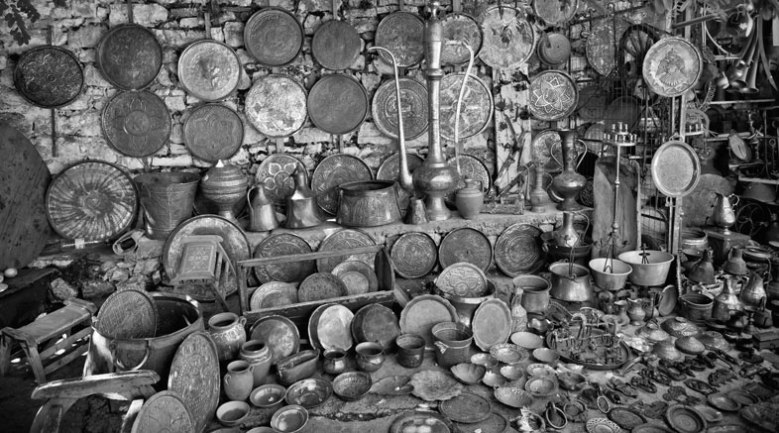
ioannina-epirus-greece-the-antiqe-market-hip

identical to yiayia's belt

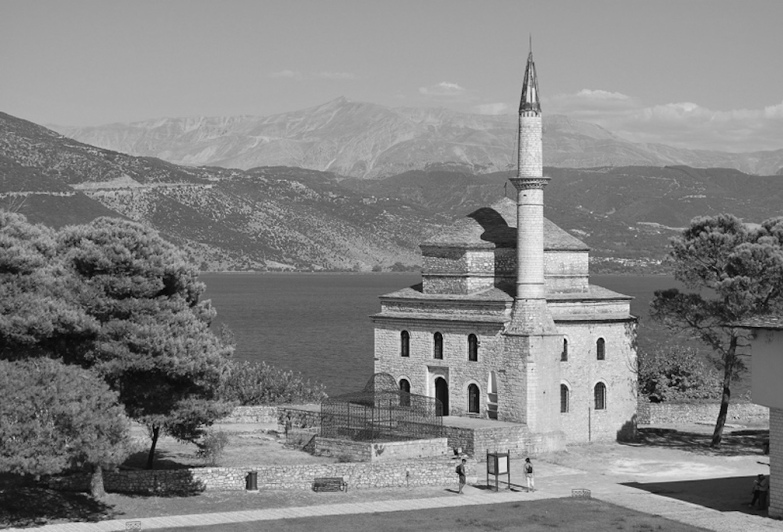
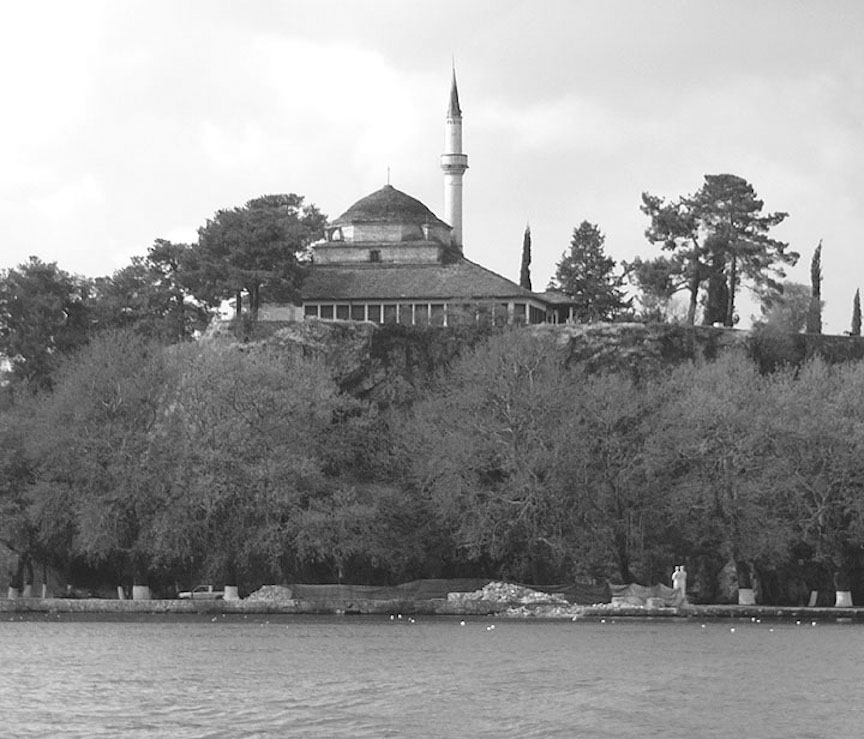
It also, unusually, and which I like to ascribe to Yanyalıs’ good taste and gentlenesss, has preserved four of its mosques, the two most beautiful in good condition even, and on the most prominent point of the city’s skyline.  It would be nice if they were opened to prayer for what must be a sizable contingent of Muslim Albanian immigrants now living there — who are practically invisible because they usually hide behind assumed Christian names — but that’s not going to happen in a hundred years, not even in Yanya.  Maybe after that…we’ll have all grown up a little.
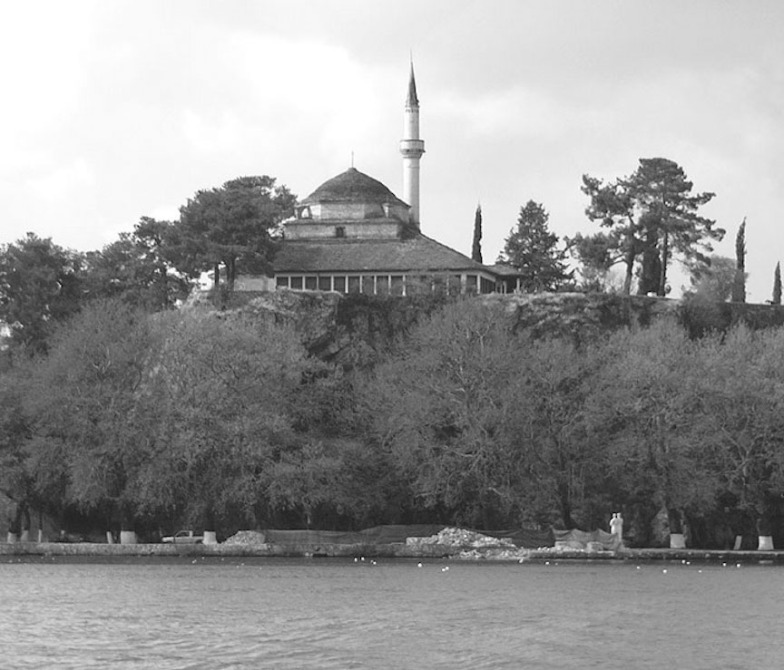
ioannina165

janina

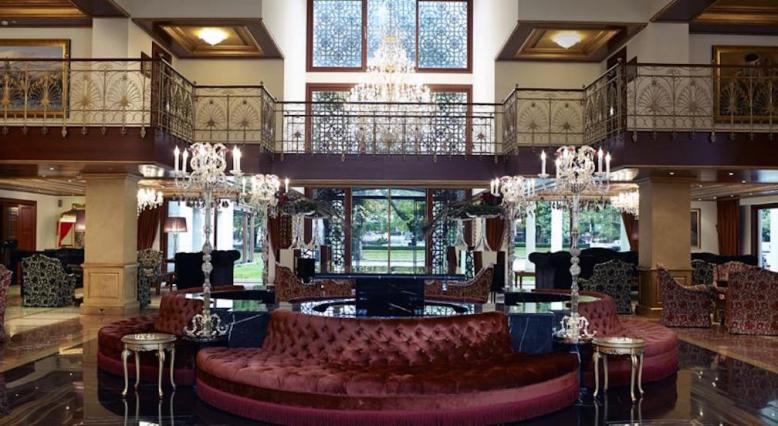
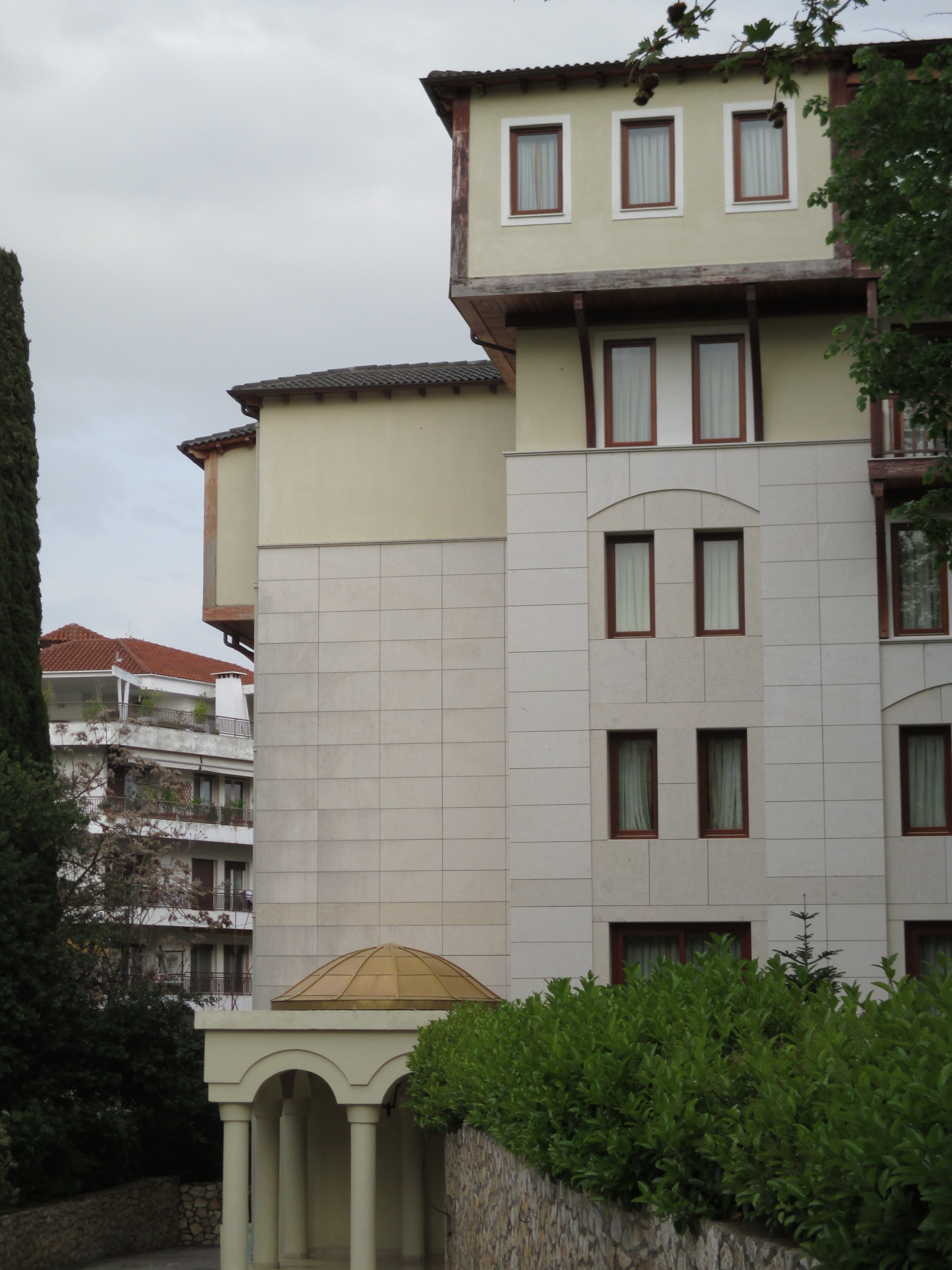
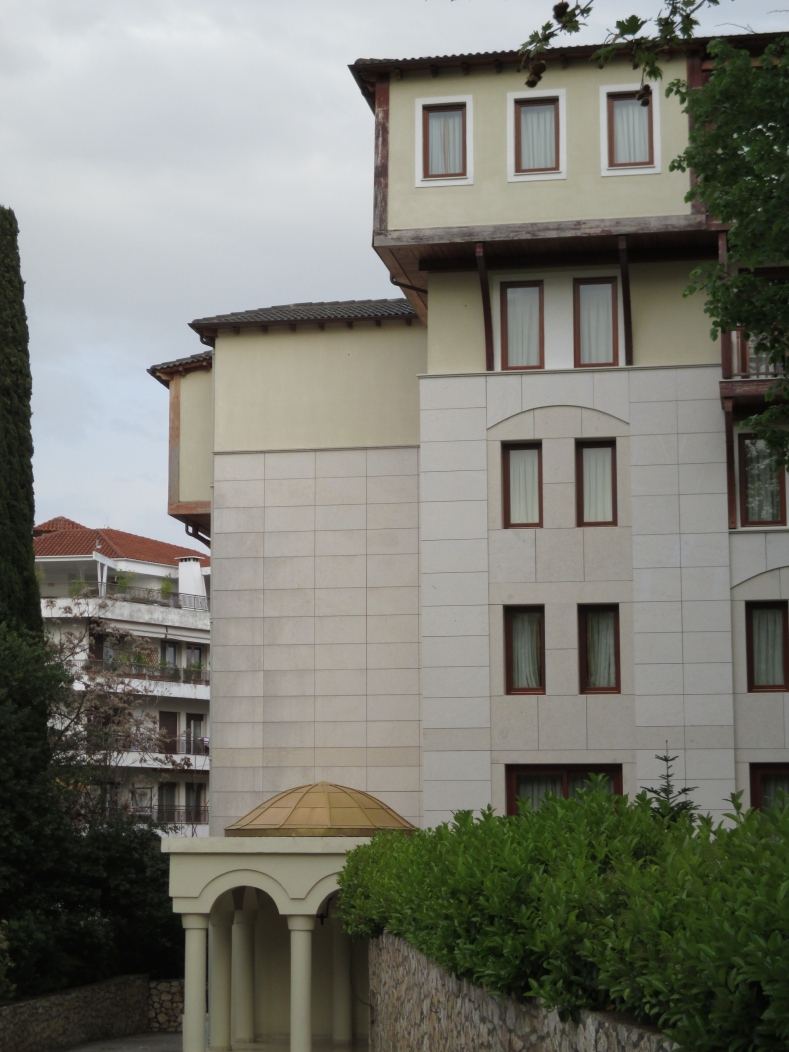
And, alone perhaps among Greek cities, only in Yanya can one open a super-luxury hotel that looks like this, with an interior décor that I’d describe as Dolmabahçe-Lite, call it the Gran Serail, and get away with it. 3***
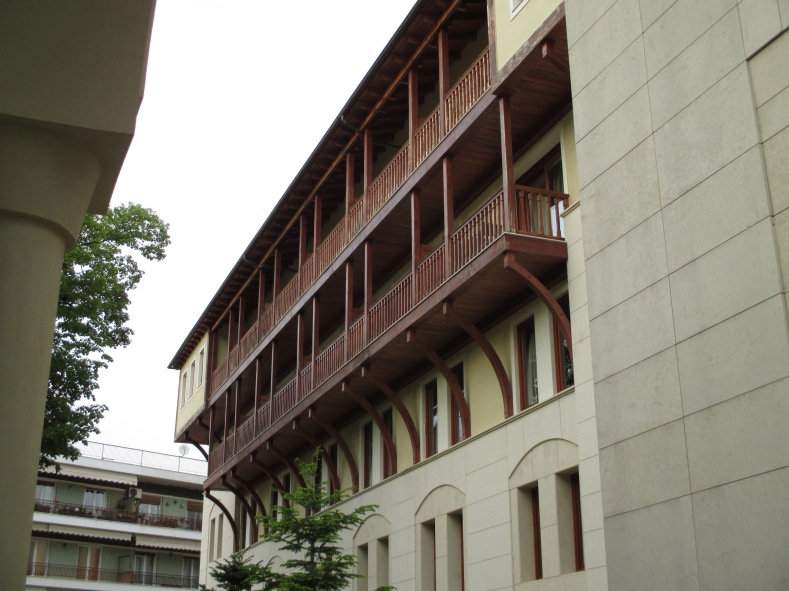
IMG_0213

IMG_0215

44471198

Digression Bakos. What’s the point? What does this have to do with Yugoslavia? I’m not digressing. I’m giving a prelude. “People don’t have the patience for this kind of length on internet posts.” I don’t post. I write, however scatterbrainedly. And not for scanners of posts. For readers. However few have the patience.

So. Croatians don’t eat börek. The prelude should have been enough for me not to have to write anything else and for the reader to be able to intuit the rest. But for those who can’t…

The graffiti on the wall in the photo at top is dated 1992, but I think it had appeared as a slogan as early as the late 80s when Slovenes and Croats started airing their completely imaginary grievances against Serbian domination of Yugoslavia and making secessionary noises. What it meant is that we, Hapsburg South Slavs, were never part of the Ottoman Empire and therefore never were subject to the barbaric and development-stunting influences of said Empire that Serbs and whoever those others that live south of them were, and therefore have the right to be free of the intolerable yoke of Serbdom. We don’t eat burek. Not only do we not eat burek, but you offer it to us and we’ll refuse in German – “Nein Danke” – just to prove how much a part of the civilized Teutonic world of Mitteleuropa we are. 4*** (I think it was Kundera who wrote about the geographical ballooning of “Central Europe” after the fall of communism, till “Eastern Europe” finally came to mean only Russia itself. ‘Cause as we now see, even Ukraine is part of Central Europe.)

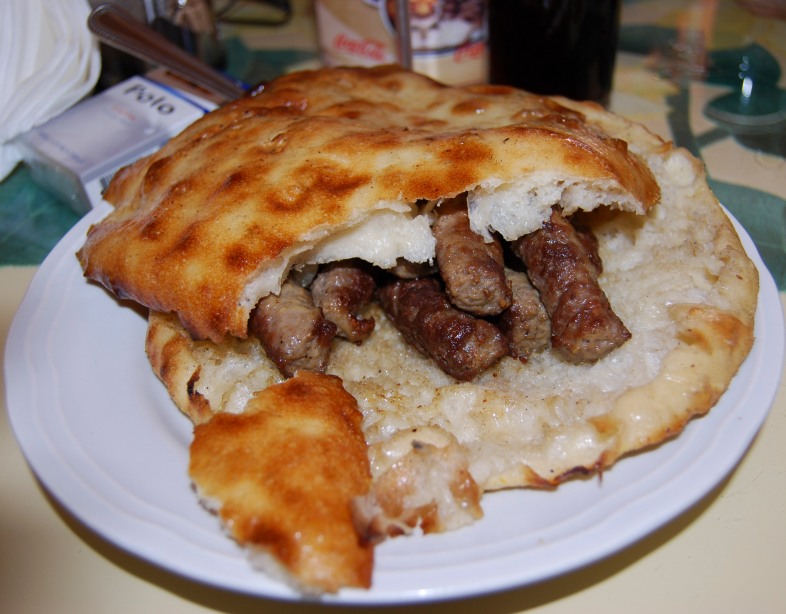
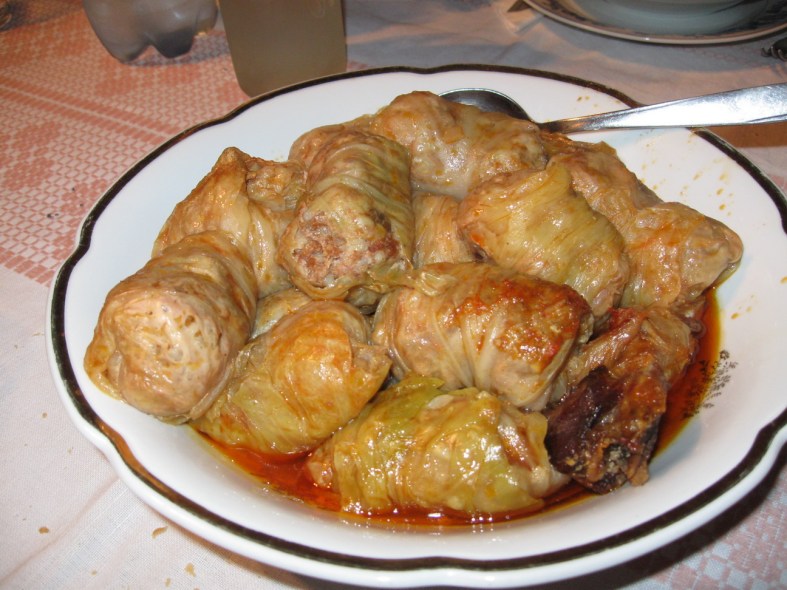
Why this yummy pastry dish was singled out as a sign of Ottoman backwardness and not, say, ćevapi or sarma, I can’t say.
Cevapi54

Ćevapi — köfte, essentially — (above) and sarma (stuffed cabbage) below.
sarma raspakovana

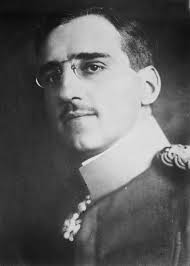
And when I talk about Hapsburg South Slavs I’m obviously talking about Croats, because, let’s face it, who cares about Slovenes? And there may be very few, if any, compelling historical or cultural reasons of interest to care about Croatians either, except, that as most readers must know by now, I consider them the people most singularly responsible for the Yugoslav tragedy. And this post is my chance to come clear about why I feel that way. There may be lots of interpretations of what the “Illyrianist” intellectuals of Vienna and Novi Sad and Zagreb had in mind when they started spouting theories of South Slav unity in the nineteenth century; countless theories about how Yugoslavia or the original Kingdom of the Serbs, Croats and Slovenes was formed; many analyses of what happened in Paris in 1919 and what kind of negotiations led to the Corfu Declaration; and reams of revisionist stuff written about exactly what Croatia wanted out of this union. But, for me, one basic fact is clear: that Croatians were always part of Yugoslavia in bad faith; that they wanted something out of the Serb efforts and Serbian blood that was decisive in defeating Austria in WWI, but that that something was independence, or greater autonomy within an Austria that they probably never expected to be dismembered the way it was – anything but what they felt was being subjected to Belgrade. And that became immediately clear upon the formation of the state when they – being, as Dame Rebecca calls them, good “lawyers” – began sabotaging the normal functioning of the Yugoslav government in any way they could, no matter how more democratic the Serbs tried to make an admittedly not perfect democracy, no matter how many concessions of autonomy Belgrade made to them. If there were any doubt as to the above, even when Radić and his Croatian People’s Peasant Party had turned the Skupština into a dysfunctional mirror image of today’s American Congress, even when a Macedonian IMRO activist working in tandem with Croatian fascists assassinated Serb King Aleksandr in Marseille in 1934, it was subsequently made brutally clear by the vicious death-spree Croatian, Nazi-collaborating fascism unleashed on Serbs during WWII, a true attempt at ethnic cleansing that dwarfs anything the Serbs may have done during the 90s — which is dwarfed again by what Croatians themselves did in the 90s again: the most heinous Nazi regime, “more royalist than the king,” as the French say — more Nazi than the Nazis — to appear in Eastern Europe during WWII.  And they have not been even remotely, adequately,  held to account by the world for any for any of the above; all this ignored, even as the West maintains a long list of mea-culpas it expects Serbs to keep reciting forever.
Alexander

King Aleksandr of Yugoslavia (click)

And so, when they got their chance in the 90s, with the backing of a newly united, muscle-flexing Germany, Croatians abruptly and unilaterally and illegally declared their long-wished for (but never fought-for) independence. And so did Slovenia; but again, who cares about Slovenia? It was a prosperous northern republic that may have held the same Northern-League- or-Catalan-type resentments against a parasitic south that was draining its wealth, but it was ethnically homogeneous and its departure left no resentful, or rightfully fearful, minorities behind. But Croatia knew, when it declared its independence – as did, I’m sure, their German buddies – that they were pulling a string out of a much more complex tapestry. And did it anyway. And we all saw the results. 5*****

So when a Croat says “Nein Danke” to an offer of burek, without even the slightest concern about his past reputation and avoiding any German associations, it is for me a chillingly racist and concise summation of Saidian Orientalism, a slogan that sums up not only the whole ugliness of the tragic, and tragically unnecessary, break-up of Yugoslavia, but the mind-set of all peoples afflicted with a sense of their being inadequately Western, and the venom that sense of inadequacy spreads to everything and everyone it comes in contact with. I’ve written in a previous post about Catalan nationalism:

All of us on the periphery, and yes you can include Spain, struggle to define ourselves and maintain an identity against the enormous centripetal power of the center.  So when one of us — Catalans, Croatians, Neo-Greeks — latches onto something — usually some totally imaginary construct — that they think puts them a notch above their neighbors on the periphery and will get them a privileged relationship to the center, I find it pandering and irritating and in many cases, “racist pure and simple.”  It’s a kind of Uncle-Tom-ism that damages the rest of us: damages our chances to define ourselves independent of the center, and damages a healthy, balanced understanding of ourselves, culturally and historically and ideologically and spiritually.  I find it sickening.

(see also: “Catalonia: ‘Nationalism effaces the individual…'” )

We’re signifying animals. And our tiniest decisions — perhaps our tiniest most of all – the symbolic value we attribute to the smallest detail of our lives, often bear the greatest meaning: of love; of the sacred; of a sense of the transcendent in the physical; of our self-worth as humans and what worth and value we ascribe to others; of hate and loathing and vicious revulsion. Nothing is an innocently ironic piece of graffiti – irony especially is never innocent, precisely because it pretends to be so.

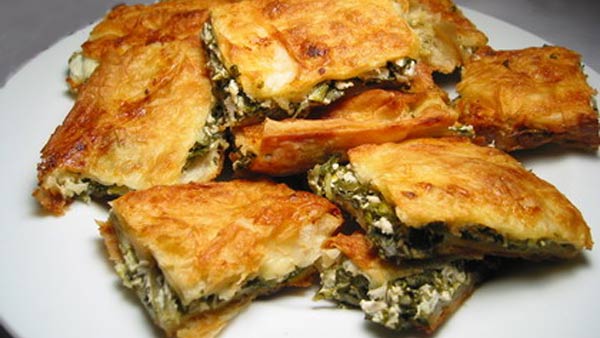
And so I find anti-börekism offensive. Because a piece of my Theia Vantho or my Theia Arete’s börek is like a Proustian madeleine for me. Because I’m not embarrassed by it because it may be of Turkish origin. Because I think such embarrassment is dangerous – often murderously so, even. And because I think of eating börek — as I do of eating rice baked with my side of lamb and good yoghurt as opposed to the abysmally soggy, over-lemoned potatoes Old Greeks eat – as an act of culinary patriotism. 6****** And a recognition that my Ottoman habits, culinary and otherwise, are as much a part of my cultural make-up as my Byzantine or even Classical heritage are. Because just like Yugoslavia, you can’t snip out one segment of the woop and warf and expect the whole weave to hold together.
spinach-burek

******************************************************************************************************************************************************************

*1  One thing judo taught me — or rather what I learned from how long it took me, when I started, to learn to sit on my knees and flat feet — is how orthopedically horrible for our bodies upright, Western chairs and tables and couches are.  (By couch here I don’t mean the sink-in American TV couch, which you sink into until you’re too fat to get out of — that’s another kind of damage.)  Knee and lower back problems at earlier ages are far more prevalent in the Western world precisely because of these contraptions that artificially support and distort our body weight in destructive ways.  I remember older aunts in Epiros, in both Jiannena and the village, being able to sit on a low divan on the floor and pull their legs up under their hips with complete ease — women in their eighties and nineties and often portly at that — because their bodies had learned to sit on the floor or low cushions all their long and very mobile lives; they looked like they didn’t know what to do with themselves when you put them in a chair.  I’m reminded of them when I see Indian women their age at mandirs, sitting cross-legged, or with legs tucked under as described, through hours-long rituals, rising to prostrate themselves and then going down again, and then finally just getting up at the end with no pain and no numbness and no oyyy-ings.

**2  The two masterpieces of this point: the celebration of the sophistication and sensuality of the Ottoman sensibility and a trashing of Neo-Greek aesthetics — and by extension, philisitinism, racism and Western delusions — are Elias Petropoulos’ two books: Ο Τουρκικός Καφές εν Ελλάδι“Turkish Coffee in Greece,” and Tο Άγιο Χασισάκι “My Holy Hash.”  Part tongue-in-cheek, part deadly serious, both books are both hilarious and devastating.

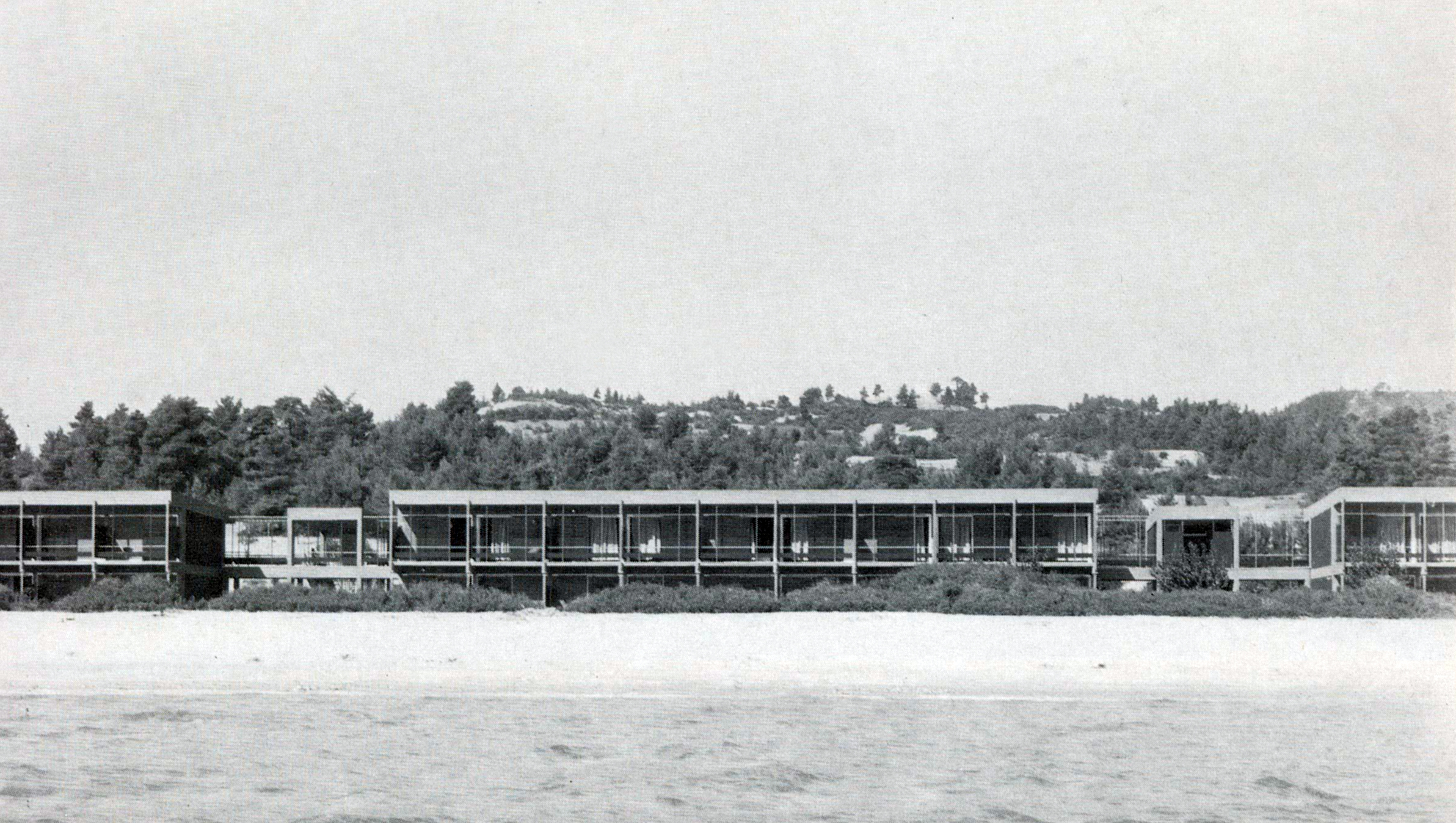
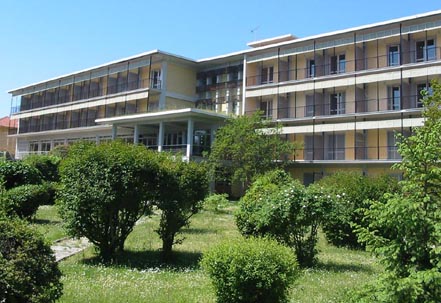
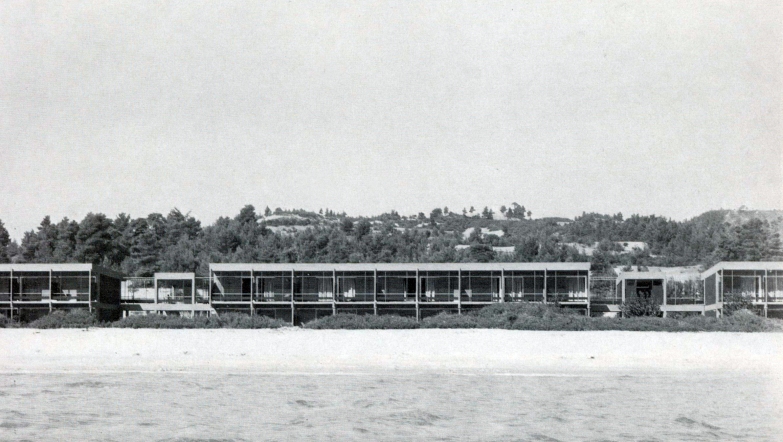
***3  Unfortunately, to build this palace of Neo-Ottoman kitsch that would make Davutoğlu proud, one of Greece’s classic old Xenia hotels, masterpieces of post-war Greek Modernism and most designed by architect Aris Konstantinidis, was torn down, and most of these hotels have suffered similar fates throughout the country, as the nationally run State Tourist Organization was forced to sell off its assets by the privatization forced on Greece then and to this day.
Xenia Jiannena

The Jiannena Xenia, above, built in the old wooded grove of Guraba, just above the center of town, and, below, perhaps Konstantinidis’ masterpiece, the Xenia at Paliouri in Chalkidike. (click)
Eot-paliouri-1962-2

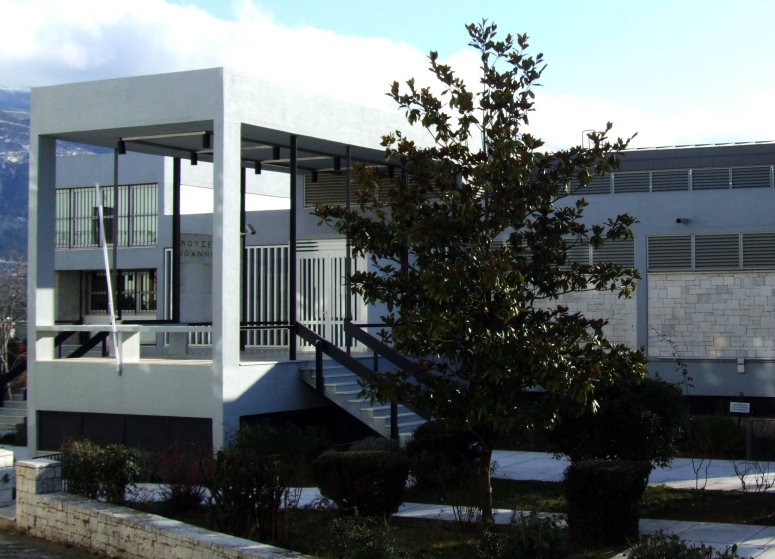
Fortunately, Jiannena preserves one of Konstantinidis’ other masterpieces, its archaeological museum, below. (click)
100_6975_-_Kons.Ioan1

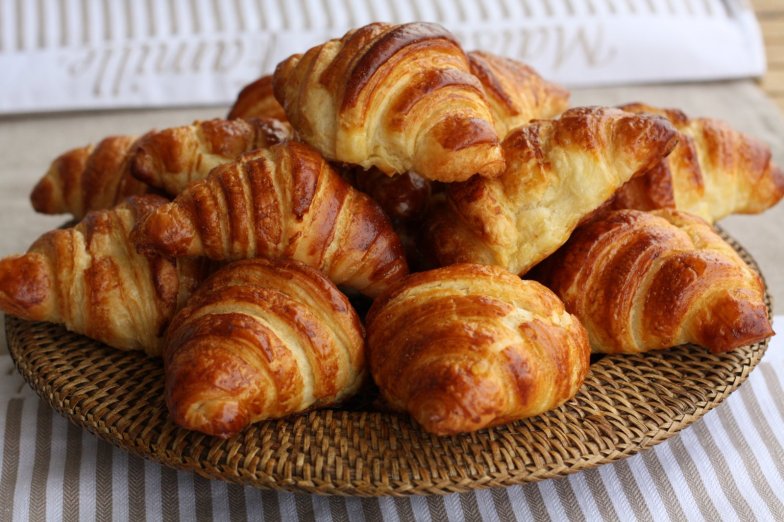
****4  Ironically, the strudel that Croats and Slovenes imagine themselves eating in their Viennese wet dreams is probably a descendant of börek; and take it a step further: let’s not forget that croissants and all danish-type puff pastry items are known generically as viennoiserie in French.  So the ancestor of some of the highest creations of Parisian/French/European baking arts is something that a Slovene says “nein danke” to in order to prove how European he is.  Talk about the farcicalness of “nesting orientalisms.”
croissant

*****5  Of course, in every case, this assumption-cum-accusation, about the parasitic South draining the North of its resources, is patent bullshit.  Southern Italy, the southern Republics of Yugoslavia, Castille, Galicia, Andalusia, and the southern tier of the European Union today, may get disproportionately more in the allotment of certain bureaucratic funds compared to the tangible wealth they produce.  But they also provide the North, in every single one of these cases, with resources, labor and markets on which that North gets rich to a far more disproportionate degree and stunts the South’s growth in the process.  So haydi kai…

It’s become a common-place — and not inaccurate — observation that the catastrophic economic pressure Germany is today exercising on the nations of Southern Europe for the sake of making some sick moral point is the fourth time it’s wrecked Europe in less than a centurythe third time being when it decided, immediately upon reunification, to show the continent it was a political player again by practically single-handedly instigating the destruction of Yugoslavia.

******6
patattes

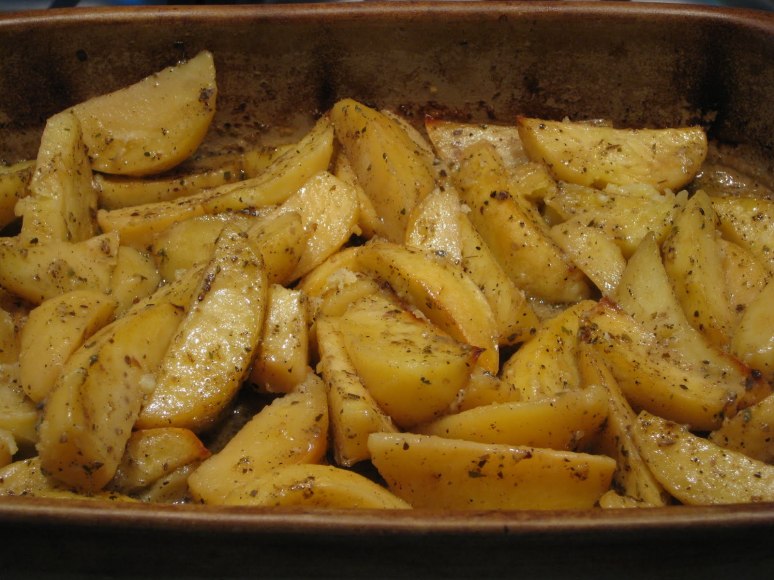
Over-oreganoed and over-lemoned — like much of Greek food — and overdone, over-salted and over-oiled, perhaps the only thing more repulsive than the soggy potatoes Old Greeks bake with lamb or chicken (though one horrible restaurant — which New Yorkers are for some reason crazy about: I mean like “take-the-N-train-out-to-Astoria-and-wait-for-a-table-for-an-hour” crazy — criminally serves them with grilled fish) is the serving of stewed meat with french fries.  You’ve hit the rock bottom of Neo-Greek cuisine when you’ve had a dry, stringy “reddened” veal or lamb dish accompanied by what would otherwise be good, often hand-cut french fries, sitting limply on the side and sadly drowning in the red oil.

Comment: nikobakos@gmail.com

“Atatürk in the Nazi Imagination” by Stefan Ihrig

30 Mar

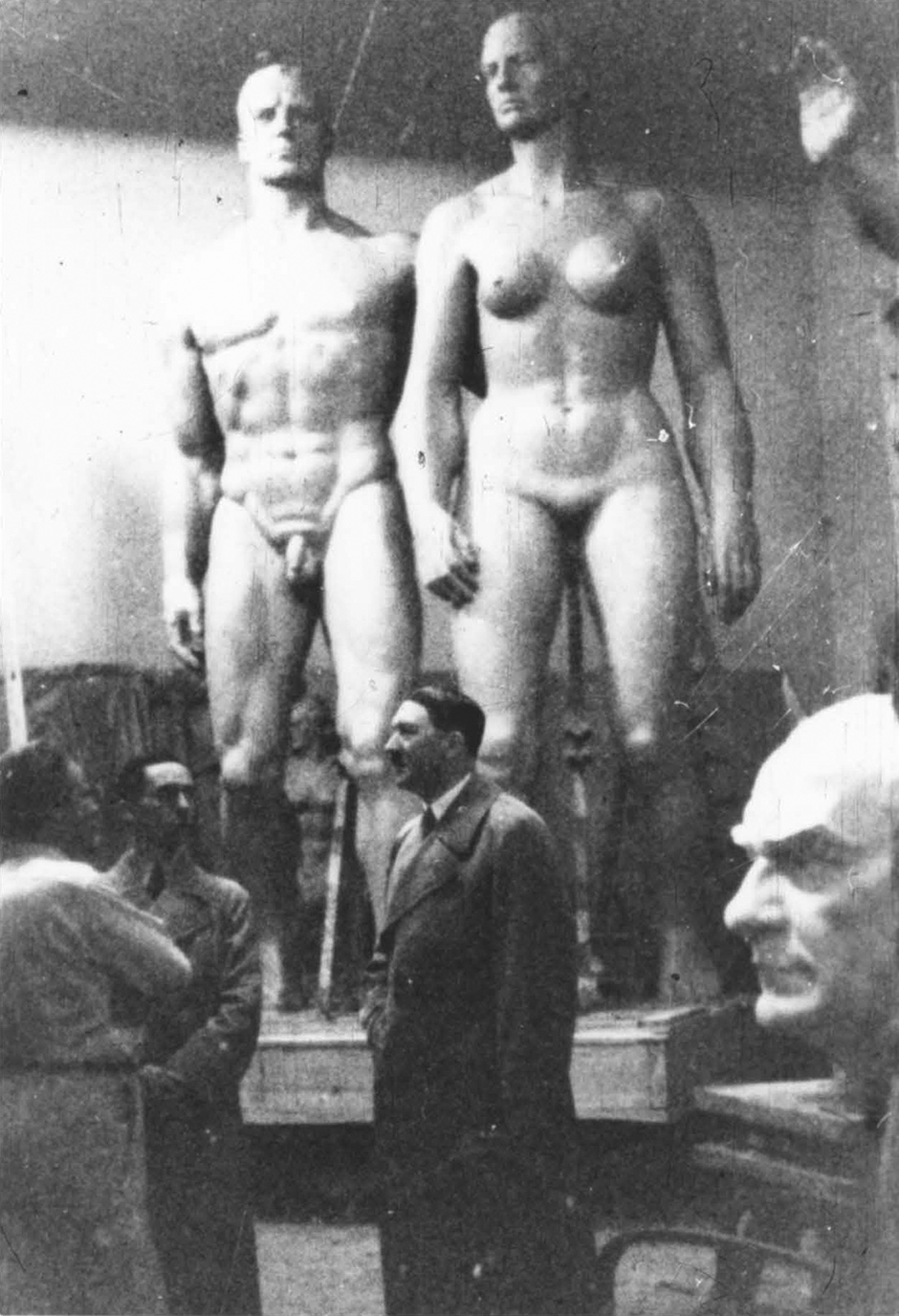
Adolf Hitler in the workshop of the sculptor Josef Thorak, with Thorak’s bust of Atatürk behind him, Munich, February 1937Adolf Hitler in the workshop of the sculptor Josef Thorak, with Thorak’s bust of Atatürk behind him, Munich, February 1937 (click)

From The New York Review of Book.  See whole article: Hitler & the Muslims by Steve Coll in April 2, 2015 volume.

Money quote (at least for our purposes):

“The aim of Atatürk in the Nazi Imagination is to document that the founder of modern Turkey deserves to be remembered as a figure equal to Mussolini in Hitler’s early political imagination. Mustafa Kemal Pasha, later glorified as Atatürk, had a record of military action that included cleansing what Hitler believed to be the inherently sapping multiethnicity of the expired Ottoman Empire.

“Indeed, in Ihrig’s account, apart from Atatürk’s personal inspiration, the organized mass killing of Armenians by Turks during World War I—the events now recognized as the Armenian Genocide—explicitly influenced Hitler’s thinking about the extermination of Jews as early as the 1920s. Ihrig quotes a multipart essay published in Heimatland, an influential Nazi periodical, by Hans Tröbst, who had fought with the Kemalists during what Turks knew as the War of Independence:

‘The bloodsuckers and parasites on the Turkish national body were Greeks and Armenians. They had to be eradicated and rendered harmless; otherwise the whole struggle for freedom would have been put in jeopardy. Gentle measures—that history has always shown—will not do in such cases…. Almost all of those of foreign background in the area of combat had to die; their number is not put too low with 500,000. [emphasis in original]’

“In incipient Nazi historiography, Ihrig writes, “the ‘fact’ that the New Turkey was a real and pure völkisch state, because no more Greeks or Armenians were left in Anatolia, was stressed time and again, in hundreds of articles, texts, and speeches.” Of course, the Nazi Holocaust was constructed in its own setting, from its own sources; one should not overemphasize the Armenian precedent, and Ihrig does not. Yet here is a documented example from the early industrialization of ethnic murder in which one campaign of genocide influenced another.

And a key point:

“Politically, Atatürk’s success offered a model of how to overcome the humiliation and prostration imposed on World War I’s losers at Versailles. Atatürk not only seized power through bold action in the name of the Turkish nation, he also forced European capitals to renegotiate the terms of the treaty they had imposed…”

Comment: nikobakos@gmail.com

“Χριστός Ανέστη” — Christ Has Risen — and I’m so damn PROUD…

25 Jan

I swear to God those were the first words — the two most totemic in the Greek language — that instinctively leapt out of my mouth when a very loved cousin of mine in Athens answered her mobile today.

Anastasis_fresco_(Chora_Church)The Resurrection fresco in the church of the Chora in Constantinople (click)

I don’t know what will happen.  Tomorrow, me…and Greeks all over the world will wake up sober — or hungover — and have to figure out how this thing is actually going to work.

But one thing all of us need to understand is the power of language and discourse.  By “discourse” I mean the idea and interpretations that people give and ascribe to the phenomena in the world around them; that discourse is “poetic” and a process of “poiesis”— not poetic like Byron or Baudelaire — but poetic in the original Greek sense of “making” or “creating.”  What that means is that DISCOURSE: what people say about things, how people talk about and interpret reality, the opinions and analyses of that reality, are not an either accurate or inaccurate view of that reality but a code and a language that create that reality.  This is simple stuff.  Intro to Deconstruction.  Foucault 101.  And nowhere is it truer than in the “game of chicken” played in the arena of political economics.

So, like I said in GREEK ELECTIONS,” if a critical mass believes a hypothesis is true — or just possible — then it becomes true; then actions and gestures on the ground, and praxeis in the “real,” physical world will create that reality, poetically.  And if we continue to bolster — worse, think we deserve — the Troika’s Neo-Liberal discourse of exploitation, then it will continue.  If we support a discourse, if we believe that an alternative to that reality is possible, then it will emerge.  It only took some workers in a Gdańsk shipyard to say: “I’m not gonna pretend that I believe this shit anymore”; it only took a heroic Gorbachev to say: “This isn’t working”, for the most horrific political economic system that has ever been inflicted on humanity, and that seemed as eternal and as immoveable as Everest, to come crashing down like a house of cards from one day to the next.

This will work, if we let it.  They’ll feed us a language of fear, which if we swallow, will ruin us.  If we simply keep in mind: “That’s what you think — and want us to think — but we won’t,” change will come.

ALSO, we, as ROMANS, should be immensely proud that so many other left-leaning, anti-austerity parties from the rest of the European periphery: Spain, Portugal — and even from Prussia itself and other parts of Merkelstan — came to be part of these elections.  If it gives them only a tiny drop of optimism, if it makes them feel like: “Yes, we can say ‘No!’ too”, it will be a by far greater gift to them than anything else we supposedly gave the West in the past.

YESSSSSSSSSSSS!!!!!!!!!!!!!!!!!!!!

greece_2243418c

Comment: nikobakos@gmail.com


The Classical Liberals: “On the Balkans, the Former Yugoslavia, and the Unity of Spaces”

4 Jan

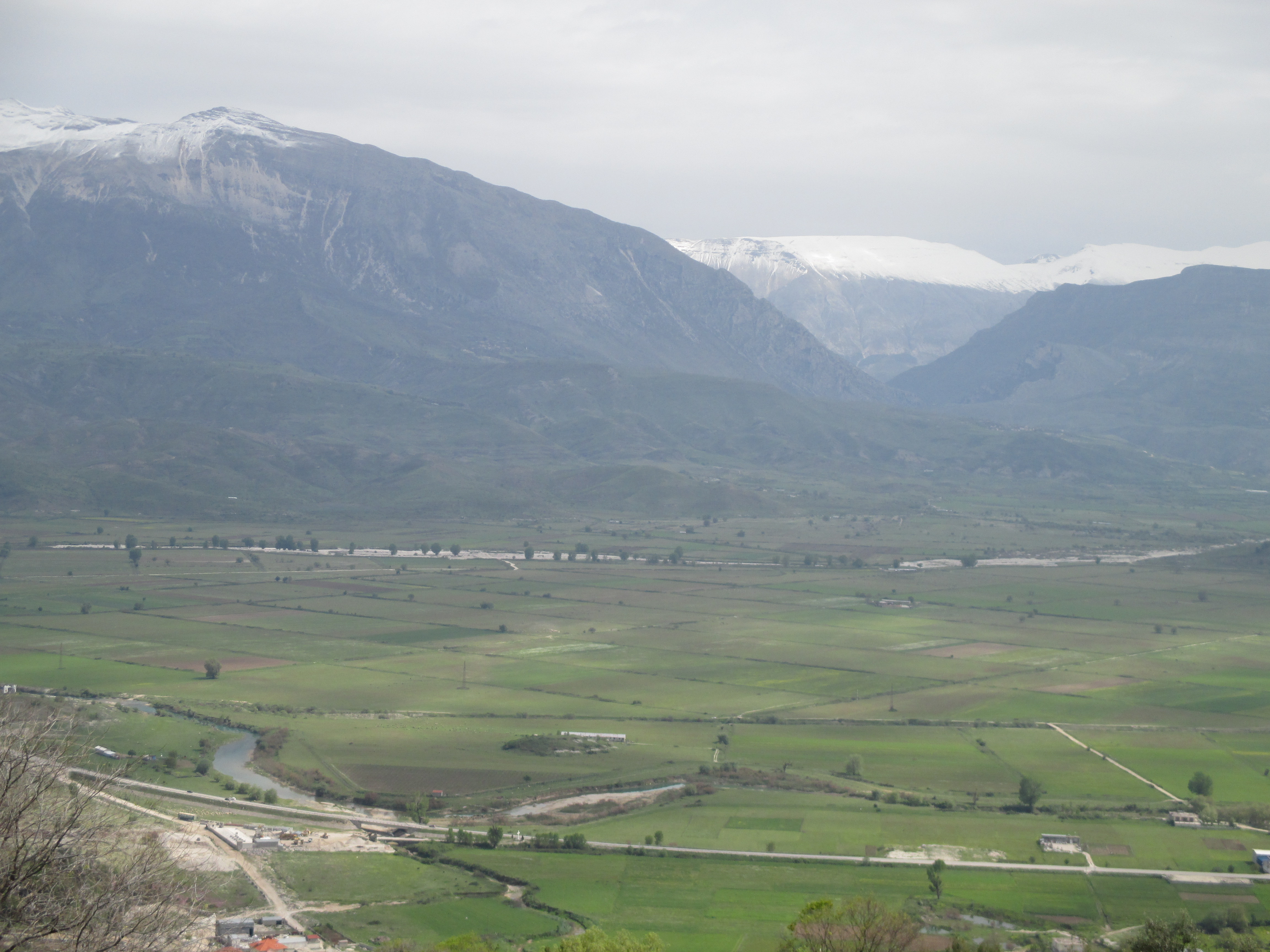
dropoliThe Valley of Dropoli, the pass up to the Pogoni plateau near Libochovo, and in the distance, the snowcapped peaks of Nemerčka, from the Monastery of the Taxiarches in my father’s village of Derviçani, Easter 2014 (click)

I’m honored by the fact that this really intelligent blog quotes extensively from the Jadde’s mission statement in a recent post: Jadde — Starting off — the Mission.

Check them out: The Classical Liberals: At least, most of the time  Smart, perceptive, interesting stuff.

The author of the post below and the person I suspect is largely behind the editing of the blog is one Eoin Power, not just a fellow Balkan-freak along the lines of me or Rebecca West, but also a fellow Epirote.  He demurs a bit — though not very convincingly — at being called an Epirote, because his lineage is multiple and complicated and the connection to Epiros is fairly distant historically.  But he’s from one of the most archetypically and ancient Epirotiko villages — where they still own their patriko — in one of the most archetypically Epirotiko regions of Epiros and he carries himself with the requisite Epirotiko dignity and soft-spokeness and if I, NikoBakos, have conferred the title on you, it’s ’cause you deserve it.

***************************************************************************************************************************************************************************

On the Balkans, the Former Yugoslavia, and the Unity of Spaces

The other day, as she is wont to do, my mother sent me a link to something on the Internet; this time it was to Nicholas Bakos’ blog, which you can find here. If you’re reading this blog, we’re probably friends in real life (thanks for reading!), and so it’s probably obvious why something like that would be of interest to the both of us. I have admittedly only skimmed sections of his posting so far, but in his introductory one, it was especially gratifying to read this:

This blog is about “our parts.”  It’s about that zone, from Bosnia to Bengal that, whatever its cultural complexity and variety, constitutes an undeniable unit for me.  Now, I understand how the reader in Bihać, other than the resident Muslim fundamentalists, would be perplexed by someone asserting his connection to Bengal.  I can also hear the offended screeching of the Neo-Greek in Athens, who, despite the experiences of the past few years, or the past two centuries, not only still feels he’s unproblematically a part of Europe, but still doesn’t understand why everyone else doesn’t see that he’s the gurgling fount of origin and center of Europe.

But set aside for one moment Freud’s “narcissism of petty differences,” if we have the generosity and strength to, and take this step by step.  Granted there’s a dividing line running through the Balkans between the meze-and-rakia culture and the beer-and-sausage culture (hats off to S.B. for that one), but I think there’s no controversy in treating them as a unit for most purposes; outsiders certainly have and almost without exception negatively.  And the Balkans, like it or not, include Greece.  And Greece, even more inextricably, means Turkey, the two being, as they are, ‘veined with one another,’ to paraphrase the beautiful words of Patricia Storace.  Heading south into the Levant and Egypt, we move into the Arab heartland that shares with us the same Greek, Roman-Byzantine, Ottoman experiences, and was always a part of the same cultural and commercial networks as the rest of us.  East out of Anatolia or up out of Mesopotamia I challenge anyone to tell me where the exact dividing line between the Turkic and Iranian worlds are, from the Caucasus, clear across the Iranian Plateau into Afghanistan and Central Asia.

Bakos suggests that for people of “those parts” displaced to another environment (e.g. grad school in the West), this kind of geographical unity came, at least in a social context, fairly naturally, so perhaps I shouldn’t be all that surprised and delighted at seeing it reconstituted in blog form. But in fact I think the basic unity of the geographical zone outlined here often gets lost in the way these places are understood by outsiders and, ironically enough, in no small part due to the vehement insistence from each of the zone’s component peoples that they could not possibly be compared with those uncultured idiots with whom they share a border.*

Explaining the rationale for delineating “his parts” the way he does, Bakos writes:

But to step into Buddhist Burma is somehow truly a leap for me, which maybe I would take if I knew more. And in the other direction, I stop in Bosnia only because for the moment I’d like to leave Croatia to Europe – mit schlag – if only out of respect for the, er, vehemence with which it has always insisted that it belongs there.  Yes, I guess this is Hodgson’s “Islamicate” world, since one unifying element is the experience of Islam in one form or another, but I think it’s most essential connections pre-date the advent of Islam.  I’ll also probably be accused, among other things, of Huntingtonian border drawing, but I think those borders were always meant to be heuristic in function and not as hard-drawn as his critics used to accuse him of, and that’s the case here as well.

Ultimately what unites us more singularly than anything else, and more than any other one part of the world, is that the Western idea of the ethnic nation-state took a hold of our imaginations – or crushed them – when we all still lived in complex, multi-ethnic states.  What binds us most tightly is the bloody stupidity of chilling words like Population Exchange, Partition, Ethnic Cleansing – the idea that political units cannot function till all their peoples are given a rigid identity first (a crucial reification process without which the operation can’t continue), then separated into little boxes like forks after Easter when you’ve had to use both sets – and the horrendous violence and destruction that idea caused, causes and may still do in “our parts” in the future.

Having not, at least north of the equator, yet made it further east than Istanbul, I am in no position to question Bakos’ perception of the fundamental apartness of Buddhist Burma. But the loose border he posits to the north and west is one I’ve crossed many times, and it’s one that is both deeply present and functionally invisible.**

At the very least it is present in people’s minds; I can vouch for the vehemence (to use Bakos’ word again) with which Slovenes and Croats will insist that their countries are European, and not Balkan. It’s also pretty visually observable – you could mistake Zagreb or Ljubljana for a city in Austria or Germany in a way you simply can’t for, say, Sarajevo or Belgrade. And on one frantic trip from Dubrovnik back to Ljubljana (the ferry which I’d intended to take from Dubrovnik to Ancona decided not to arrive from Split, leaving me nothing to do but beat a hasty retreat back north) you could, if you were looking for it, see an actual tangible difference in the way things were done in the world – bus tickets in Mostar and train tickets in Sarajevo had to be paid in cash and a conductor on the train north from Sarajevo let me pay in a mix of Croatian kuna, Bosnian marks,  and euros. In Zagreb I could pay with a credit card, the train station had working and appealing amenities, and you couldn’t smoke in the train. This is a terribly squishy thing to write, but it did feel more “European-y”.

On the other hand, if the relatively old Huntingtonian dividing line between formerly Orthodox and Ottoman lands to the south, and formerly Catholic Hapsburg lands to the north is visually (and, at least in terms of credit card viability in 2009, functionally) discernible, the comparatively recent unifying experience of Yugoslavia is also unavoidable. Here, too, the first signs are in architecture and appearance; Soviet-style architecture and the legacy of 1950s industrialization has left the same physical scars on cities from Nova Gorica to Skopje. But they run deeper than that – the protestations of linguistic nationalists notwithstanding, Slovene, Bosnian, Croatian, Serbian, Montenegrin, Macedonian (hell, even Bulgarian a bit) all exist along a spectrum of of mutual intelligibility; state apparatuses, all having those of the former Yugoslavia as their common predecessors, share similar characteristics. Indeed, to me as a foreigner, the similarities often seem more salient than the differences.

Just on the basis of whether or not there “is” a usefully differentiating border to be drawn where Croatia meets Bosnia, it seems you can argue fairly fruitfully either way, depending on whether your sympathies lie with a sort of longue duree emphasis on deep civilizational splits or a faith in the primacy of modern political experiences. But by Bakos’ own ultimate criteria, it seems a bit odd to leave the northernmost bits of the former Yugoslavia out of things (though there is a nice alliterative symmetry to covering “from Bosnia to Bengal”) . If you’re going on the basis of, “the bloody stupidity of chilling words like Population Exchange, Partition, Ethnic Cleansing,” surely things like Jasenovac or the Istrian exodus argue for the inclusion of all of the former Yugoslavia?

Of course, any exercise in boundary-izing is a bit arbitrary, and in this case there are good reasons to put one in between Croatia and Bosnia and not, say, in between Slovenia and Austria (two countries for which there also exist plenty of historical reasons to consider them as part of a unified space). So if all of this does anything, it is perhaps to show how much more liminal are most places than we or their inhabitants often care to admit; whether or not you see a border somewhere often depends as much on your level of zoom as anything else.

*Or at least their nationalist politicians – many average people (whatever that means) in Bosnia and Serbia, for example, will quickly stress to you the fundamental similarities between the two countries and their inhabitants
**People sometimes marvel at my overstuffed passport but really something like 40% of the stamps come from the Dobova and Dobrljin border posts.

**************************************************************************************************************************************************************************

Again, check these guys out; you won’t regret it: The Classical Liberals

Comment: nikobakos@gmail.com

“The Graves Are Walking”: Was the Great Potato Famine a genocide?” (And, let’s rethink “genocide” in general)

20 Aug

“A new book argues that free-market ideology, not murderous intent, killed Ireland’s millions.”  See Salon‘s entire review of the book here.

Some quotes:

“Citing an Irish nationalist author who accused Britain’s Assistant Treasury Secretary Charles Trevelyan of infecting Irish children with a special “typhus poison” in a government laboratory, he writes that the man “should have stuck to the truth. It was incriminating enough.” The story Kelly tells in “The Graves are Walking” is indeed damning, a shameful, bloody blot — and far from the only one — on the history of the British Empire. But calling it a genocide, however satisfying that pitch of moral condemnation may be, only acts to obscure the chilling contemporary relevance of Ireland’s 19th-century agony.”  [my emphasis]

Exactly.  Even if there was “no murderous intent,” it was still criminal.

“Kelly, like most historians, places the brunt of the responsibility for this fiasco on the shoulders of Trevelyan. As the policy leader of the famine response program, Trevelyan was not a Mengele-style mad scientist but a civil servant known for his “unbending moral rectitude and personal intensity.” Unfortunately for the Irish, the faith he embraced was a fusion of Moralism, “an evangelical sect that preached a passionate gospel of self-help” and the laissez-faire economics of Adam Smith and Edmund Burke. At several key points in the evolution of the catastrophe, when strategic intervention might have fended off thousands of deaths, Trevelyan refused, maintaining that there was no greater evil than interfering with market forces. When a subordinate protested, he would send him a copy of Burke’s “Thoughts and Details on Scarcity.”” [my emphases]

See my older post Maybe Germans ARE Scary, my commentary on a borderline Nazi opinion piece that appeared in the New York Times“German Austerity’s Lutheran Core”, in which I argue that Protestantism-s (except for Anglicanism, which grew out of very different historical circumstances and forms of “protest”) aren’t really religions at all but moralist codes, on which capitalism depended for its growth, and for which, whatever transcendent entity their adherents may believe in, serves only as divine confirmation of their righteousness.  It was the aggressive evangelical fervor that swept Methodist, Presbyterian and “low church” Britain in the mid-Victorian age that was perhaps the primary cause of the Indian Rebellion only a decade after the Irish catastrophe (see William Dalrymple’s brilliant The Last Mughal: The Fall of a Dynasty: Delhi, 1857).

“These strategies amount to the 19th-century version of what Naomi Klein has dubbed the “Shock Doctrine”: an attempt to force economic reforms on a population reeling in the aftermath of a disaster.”

Like Germany and southern Europe today?  (Read Klein’s great book: The Shock Doctrine: The Rise of Disaster Capitalism)

“Both sides were ignorant and shortsighted, confident in their stereotypical notion of the irresponsible, fanciful and lazy “Irish character” but oblivious to all the ways that rural subsistence economies cannot be expected to start functioning like England’s more developed agricultural one overnight.”

The classic accusation of laziness in these situations (like against Greeks, who, it turns out — when they had employment — worked more hours than the population of any EU country) is just infuriating.  People don’t work when they don’t have an incentive to, when the technological and political and class restrictions imposed on them limit them to anything more than subsistence or, in the Irish case, even rob them of the means of subsistence.  That the Irish are lazy, man…  To know what work-horses, and I mean that only with great respect and admiration, these Irish kids are, who are coming to New York again in the wake of the Euro-crisis and to even think “lazy”…

Yes, well, not England’s finest hour — though it’s a nation and a people I respect and feel a curiously personal pride in.  And yes, Ireland is outside the borders of the “Jadde” world.  But I love the Irish so much that they’ll keep appearing from time to time and, actually, they’re as much objects of Western imperialism as we are.

But really I’m posting this piece because I think it’s past time that we, in the “Jadde” world, begin some serious discussion on the use of the term “genocide.”  I think it’s getting thrown around much too loosely lately, and that not only disrespects the victims of true genocides, it pariah-fies and unfairly singles out certain groups for vilification (Turks, Serbs) and creates simplistic analyses of complex historical events that then become conventional wisdom, all in ways that makes deeper dialogue between our peoples impossible.  So, we need to talk about it and what “it” really is.


Comment: nikobakos@gmail.com