

The Greek side is technically correct in my opinion, but I’m not even going to dignify the issue by going into it. The two rocks have a name as well — in both Greek and Turkish — but I won’t dignify the rocks with actual names.
Τα παιδία παίζει.
The Greek side is technically correct in my opinion, but I’m not even going to dignify the issue by going into it. The two rocks have a name as well — in both Greek and Turkish — but I won’t dignify the rocks with actual names.
Τα παιδία παίζει.
Καθίκια… He probably got better grades than your kid; was that the problem? Several statistical sources find children of immigrants in Greece outperform children of natives on both secondary and university levels.

Unknown assailants have attacked the home of the family of the 11-year-old Afghan boy who had not been allowed by his school in the Athens suburb of Dafni to carry the Greek flag during the October 28 parade.
According to police, the assailants threw stones at the boy’s home at dawn on Friday
Amir, a refugee and a fifth-year primary school pupil, had been selected to carry the Greek flag during the parade to commemorate the 1940 anniversary of Greece’s refusal to ally with the Axis powers in World War II, known as “Ochi Day.”
He was picked by lot under new rules introduced by the leftist-led government earlier this year that scrapped selection on the basis of academic performance
However, he was not allowed to carry the flag and eventually paraded holding the school’s sign.
Earlier story: “Probe as refugee pupil denied flag role“
God knows what else this kid has been through. Who deserves to have this memory, as innocuous as it might seem, seared into their minds?
Two people before have asked me what “kathiki” (kαθίκι) means in Greek when I used it in some other post.
I think it literally means “potty” — like “Shit already or get off the…” Except in Greek it’s an insult without any of the cute childlike or Victorian connotations of potty. “Scumbag” is the closest English term I can think of, in terms of power it packs as an insult and with similar hues of both indifferent cruelty and absolute moral vapidity.
Now you know — for when it turns up next.
–
Comment: nikobakos@gmail.com
–
Succinct, summarizing conversation, Varoufakis discusses his most recent book, The Adults in the Room: https://www.pscp.tv/w/1yoJMMnkkoRJQ





These are photos of a jubilance that one imagines accompanied the Emancipation Proclamation or sees in images of the Liberation of Paris or of the Greek flag being raised over the Acropolis in 1944 or of V-J Day or the Fall of the Berlin Wall.
Instead, they’re photos of a sociopathic hysteria: of a people with one of the highest living standards in the world, with their language and culture (a word I’ve come to hate) fully un-threatened, living in a region with the absolutely highest level of autonomy than perhaps any region of any other state in Europe, or even the world, cumming in the streets because of an absolutely meaningless independence they think they’ve won in an increasingly interdependent world. Meanwhile their “leaders” are having their moules frites in Brussels.
Really, they scare me. The affect is so off, the affect level so incommensurate to the stimulus, that it suggests the haunting spectre that even people in one of the most liberal, progressive of human societies can be convinced they’re victims of something. And like the convert, beware the victim.
There’s a name to that spectre and the victim narrative that is now haunting not only Catalonia and Spain and Europe and American democracy, but the entire world: identity politics. As Mark Lilla has already said — please read the piece — the main problem with identity politics is that they don’t do politics: “Mark Lilla’s “The Once and Future Liberal: After Identity Politics”“. It’s nonsense. It’s a waste of all of our time, something even more precious than our energy and our resources and brain cells. It’s a lame Fifth Avenue parade that’s supposed to actually express the soul of a particular segment of human civilization. It’s an adolescent acting out of culture in a Mardi Gras costume in a deadly serious arena of politics that can quickly get dangerous. And cultures that deserve to survive, will, by definition, do so on their own and don’t need constant “Pride” parades and manifestos and events and pointless — and dangerous — referenda. (It’s bad enough to give the demos something complicated to think about; giving them an easy yes-no question is potentially fatal to any polity.)
Andrew Sullivan did a really good job in his “I Used to Be a Human Being” for New York magazine last year, describing how being hooked up to a screen and keyboard all our lives makes our brains oatmeal, and how blogging all the years he did for his Daily Dish started to have physical health consequences for him, physical consequences that he could only deal with through treatment of his mind and soul.
I’m not in danger of that — usually. One, I’m too lazy. Two, I don’t “cover” running stories like Sullivan used to do on his Dish, in what really was a border-line manic-obsessive fashion. Rather, I jump here and there, back and forth, with now and then ruminations that are all kind of “evergreens”, to use journalist sprache.
But as the child of a family that suffered terribly as an ethnic minority under a Stalinist regime, as a member of an ethnic group that was once spread all over the eastern Mediterranean and was then locked up in the pigsty of a nation-state, as an ethnic-American who always felt the world outside his window was sort of a foreign country, I’m acutely sensitive to issues of pluralism and how they should be negotiated and they strike incredibly powerful chords in me. And they’ve made me a defender of minority rights but an even more intense critic of self-determination. It’s not pluralist for every two-bit tribe of Balko-somethings to have their own country; you’re destroying pluralism that way — and the “way” always involves violence of some sort. WHICH IS WHY I STILL GET SO FREAKED OUT ABOUT YUGOSLAVIA.
That’s also why a story like Catalonia can consume me for weeks if I let it. And this post was actually meant to declare that I will not myself be writing or quoting or even linking to anything that has to do with the issue — at least until something substantive happens — which may be tomorrow… I still have some identity politics/multi-culti-bashing pieces knocking around inside my head, but they’ll be dealing with other parts of the world.
Because Catalonia — which infuriates me — and Spain — which I love — are two players that can completely eat me alive if I let them. For other gold-and-red semiotics, see my “Bodegas“.
–
Comment: nikobakos@gmail.com
–
“He’d leave and I’d die, he’d return and kill me.”
“Έφευγε και πέθαινα, ερχόταν και με σκότωνε.”

–
Comment: nikobakos@gmail.com
–
From: Ioannis Tz @tzoumio
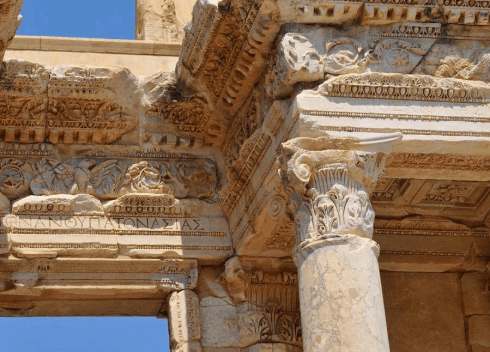
Not reposting this picture to make some sort of historic-cultural point. But just because its eye for the architectural angle and ensemble is sharp and because it’s beautiful.
–
Comment: nikobakos@gmail.com
–
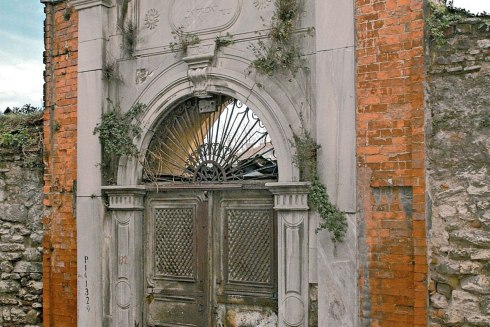 İştipol synagogue in Istanbul
When I first came across this idea of that Spain was granting Sephardic Jews Spanish citizenship I was mildly condescending, thinking that it was the most pointless kind of Western guilt for the past and that maybe Europe had better things to think about.
Then a friend sent me this article about the shrinking Jewish community of Istanbul from “Young Turkish Jews trickling away from shrinking community“ from the Times of Israel:
Turkey’s economic boom in the first decade of the 21st century has slowed, and its currency has lost 20 percent of its value against the dollar in the past year alone.
As tuition prices in Turkey’s increasingly competitive universities have skyrocketed in recent years, the quality of education lags behind schools in western Europe, the United States and Canada.
Like many middle-class Turks, Turkish Jews have contributed of the country’s brain drain.
“There’s no doubt anti-Semitism is a motivating factor,” said Louis Fishman, an assistant professor at Brooklyn College who has split his time in the last decade between New York, Istanbul and Tel Aviv. “But there are other groups [in the Jewish community] that are leaving because they’re part of the middle class, they can go to school in the US and get a job abroad.”
T., a 30-something resident of Istanbul who, like other Turkish Jews, preferred to speak anonymously for fear of backlash, works in a multinational company, which he said offers many Turks a means of emigrating with financial security.
“Almost all my friends think about what to do next,” said T., especially after the 2010 and 2014 anti-Israel uproar in Turkey. “Even though we are staying here, everyone is thinking of their next move.” He said that in the past five years he’s noticed a marked rise in Jewish emigration from Turkey.
Another indicator of the anxiety pervading the community is the number of Turkish Jews who have jumped at the opportunity to acquire Spanish citizenship. The vast majority of Turkey’s Jews are descendants of Spanish exiles who were welcomed into the Ottoman Empire.
Earlier this year the Spanish government announced its intention of extending citizenship to descendants of Sephardic Jews expelled in 1492. Shortly thereafter 5,000 Turkish Jews — roughly a third of the community — applied for dual citizenship, potentially opening the doors to life in Europe, according to a recent Financial Times report. [my emphasis]
I don’t know why this idea — that Spanish citizenship would open the doors to life or work anywhere in the European Union — completely skipped my mind; it’s the reason that I got my Greek citizenship (along with a little bit of a more personal tug, granted…) Maybe it’s because all discussion of the issue was focused on the Israelis that would be granted citizenship and I totally forgot about the only real Jewish community in the Muslim world (aside from Iran) that still exists.
Still, the article gives you enough to worry about in terms of minority life in Turkey: the people who wouldn’t go on record for the writer is just one. And, I wonder if having dual citizenship is actually allowed in Turkey and if you’re not setting yourself up for trouble. In 1964, Turkey expelled all Greeks who held both Greek and Turkish citizenship from Istanbul, in such an over-night fashion that it effectively meant confiscation of their property as well. Next time you’ve found the perfect Airbnb space in Pera or Tarlabaşı, ask the owner if he knows anything about the building’s history.
Below is my first post on “Spanish right of return” and below that a 1964 article from The New York Times article on the Greek expulsions.
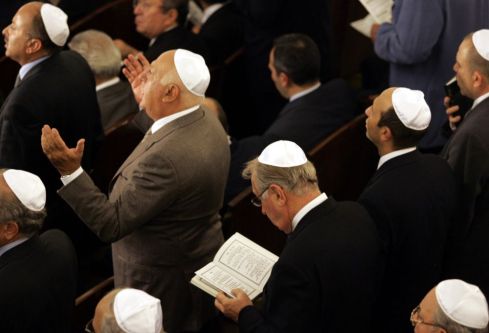 Members of Turkey’s Jewish community pray at Neve Shalom Synagogue in Istanbul on October 11, 2004, during a ceremony to mark the official reopening of the synagogue (AP/Murad Sezer)
**************************************************************************************
Boy, that’s a wild idea…
And I can’t help but think it’s EU-ish political correctness taken to the point of silliness. Don’t you folks have a few other things to think about right now?
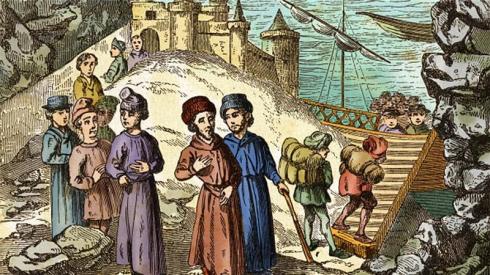
“Why make a fuss about Spain’s ostensible effort to atone for bad behaviour, even if it’s about 524 years too late?” asks this Al Jazeera article about the Spanish offer, as it also examines some of the other complexities, ironies and…hypocrisies…behind the whole notion:
“To be sure, atonement in itself is far from fuss-worthy. Goodness knows this world could use more apologies, reparations, and truth-telling – and in fact, 1492 is not a bad place to start.
“That year happens to be rather synonymous with the decimation of indigenous populations in the Americas in the aftermath of a certain nautical expedition, authorised by the very same Ferdinand and Isabella who expelled the Jews from Spain.
“This is not to say, then, that the repercussions of centuries-old injustice aren’t alive and well; it’s merely to point out the ironies of an international panorama in which Mossad officials are granted additional homelands in Spain while Palestinians languish in refugee camps for nearly seven decades.”
And just another thought: it could hypothetically mean a minor flood of Sephardic Jews from Argentina, say, or other Latin American countries, looking for better economic possibilities. But in Spain? At this particular moment? I think the days of heavy Latin American emigration to Spain have been put on hold for a while.
**************************************************************************************
ISTANBUL, Turkey, Aug. 8 —Harassment and deportation of Greek nationals in Istanbul in retaliation for Turkish setbacks on Cyprus was declared today “an open policy” of the Government.
Unless a solution to the strife between Greek and Turkish Cypriotes is found soon, the Greeks here fear that their community, once numerous and prosperous, will be dispersed before winter.
“The pressure on the Istanbul Greeks will be gradual,” said a spokesman for the Foreign Ministry in Ankara.
Tactic Held Ineffective
Sources close to Premier Ismet Inonu said the Government believed “pressure on Greek nationals” was the only way left to Turkey to force Athens and the Greek‐dominated Cypriote Government to accept a satisfactory compromise.
Istanbul’s Greeks have many Turkish friends who believe the new tactic will prove as ineffective as it is harsh. The consensus among the Greeks themselves is that Turkey is using Cyprus as “an excuse to do what they have long wanted to do—get us out.”
This week 58 more Greeks were added to nearly 1,000 who had been deported on short notice since March.
New lists are expected within a few days, and the 9,000 remaining Greek nationals are sure their days here are numbered. Turkey has canceled, effective Sept. 15, a 1930 agreement under which Greeks have been privileged to live here.
There is fear now in the hearts of 60,000 Turks of Greek descent, They, too, complain of harassment, “tax persecution” and ostracism, although Premier Inonu has declared repeatedly that these minority nationals will not be discriminated against.
In the business districts of Istanbul, many Greek‐owned shops may be seen under padlock. They were closed on Government order or because the owners were summarily ordered from the country. Wives and other dependents are in many cases left destitute.
Many Born in Turkey
Every morning large numbers of Greeks crowd into the arcaded foyer of the Greek Consulate to ask help and advice. Some accept an emergency dole provided by the consulate; others are well dressed. Some are old and frail.
Most of those deported so far were born in Turkey, according to the consulate, and many had never been to Greece. They have no particular place in Greece to go, and they say they have no idea what to do when they get there.
Greeks scan the Istanbul newspapers for published lists, fearing they will find their names. When they do, they go to the police to be fingerprinted, photographed and asked to sign deportation statements. They are given a week to leave the country, and police escorts see that they make the deadline.
Asset Sales Difficult
Families of deportees protest that it is impossible to sell businesses or personal property in so short a time. “Few want to buy from us, and no one wants to pay a fair price,” one victim said. A deportee may take with him only his clothing, 200 Turkish lira (about $22) and his transportation ticket.
At first the Government denied that these deportations had anything to do with the dispute over Cyprus. AU the deportees were charged with “activities harmful to the Turkish state.”
The Greeks have found wry humor in this claim. According to a source close to the consulate, the deportation lists have included the names of six persons long dead.
There have been 121 deportees more than 70 years old and 20 over the age of 80.
Many charges have been raised against the Greek aliens: smuggling money out of the country, for example, or evading taxes and military duty. The Turkish authorities say the Greeks have invested their wealth abroad and that this has damaged the Turkish economy.
Wealth Put at $200 Million
Turkish estimates of Greek wealth here have gone as high as $500 million. But recently this figure has been reduced to $200 million. Greeks say the Turks “reduced their inflated estimates when they realized that someday they might have to settle for properties taken from us.”
They blame Turkey for not having offered better investment opportunities.
In addition to abrogating the 1930 agreement on residence, trade and shipping privileges, Ankara has suspended a 1955 agreement granting unrestricted travel facilities to nationals of both countries. A number of Greeks caught outside Turkey when this suspension took effect are reported to be unable to return.
More seriously, Ankara recently decided to enforce strictly a long‐overlooked law barring Greek nationals from 30 professions and occupations. They cannot, for example, be doctors, nurses, architects, shoemakers, tailors, plumbers, cabaret singers, ironsmiths, cooks or tourist guides.
This article can be viewed in its original form. Please send questions and feedback to archive_feedback@nytimes.com
**************************************************************************************
–
Comment: nikobakos@gmail.com
One of today’s Reuters’ titles: “Turkey urges U.S. to review visa suspension as lira, stocks tumble“ is a very deeply unintentional funny. Is he dyslexic? Am I? I’ve read it correctly, yes? The UNITED STATES is suspending visas to TURKS? The TURKISH lira and TURKISH stocks are tumbling? Right?
There’s been a ton of repetitive commentary again recently — including from me — about how Kurdish, let’s say, “pro-activeness,” in Iraq and Syria, what Kurds think is their right since they played such a key role in kicking ISIS ass, is a menace to Turkey because Turks are still traumatized by the 1920 Treaty of Sèvres that called for the remaining Ottoman Empire (Anatolia essentially) to be partitioned between the winners of WWI (and the hangers-on and cheerleaders like us), with the Straits and Constantinople internationalized (meaning British), so that Turks would have been left with a rump central Turkey and, I think, a minimal outlet to the Black Sea along the coastal stretch around Sinope.
All of that was changed by Atatürk’s declaration of a Turkish Republic at Sebasteia and the subsequent disastrous defeat of the invading Greek army. The Turkish War of Independence (please, Greeks, gimme a break and let me call it that for now) was an impressive accomplishment, and if it ended badly for the Greeks who lived there, as we remember every autumn when we recite the Megilla of Smyrna, that’s our fault and especially the fault of Venizelos who, being Cretan, found pallikaristiko demagoguery and dangerous, careerist magandalık irresistible. So impressive was Kemal’s accomplishment, in fact, that all the parties involved in Sèvres then got together at Lausanne in 1923 and decided Turkey should get whatever it wants. Suddenly, the clouds of three centuries of depressing imperial contraction, and massacre and expulsion of Muslims from the Caucasus, the northern Black Sea, the Balkans and Crete were lifted (ditch the Arabs south and call it a country seemed to be the Turkish consensus for whatever was left) and the Turkish Republic went on its merry way. Sèvres and Sèvrophobia was gone.
What Turkey suffers from now, and has for most of the twentieth century since the events we’re talking about, is a Lausanne-inspired sense of entitlement that is simply breathtaking in its cluelessness. It’s the kind that leaves you staring at some Turks, silenced and dumbfounded, and unable to tell whether what they just said to you is elegantly, sweepingly aristocratic or just passively asinine. Lausanne was first; add Kemal’s personality cult (I’m not sure that history ever threw together two bigger narcissists than him and Venizelos; they should’ve been lovers), then, what was always a silenced Ottomanness came out of the closet, allied as it always has been with the seminal triumphalist narrative of Islam itself…and you get Erdoğan!

Now he wants the U.S. to review its Turkey policies? Who is this man? Scolding the whole fucking world like we’re a bunch of children. Let him scold his children — meaning Turks — first, and then maybe we can take it from there. If I were a German diplomat in Turkey and had been summoned to His Sublime Presence for the nth time in one year to be chastised for something mocking someone in Germany had said about Him, and told “to do” something about it, I would have found it hard to control my laughter. As an outsider, I find it delightful enough that of all peoples on the planet, Turks and Germans got involved in a multi-episode drama on the nature of irony and parody. But to have him demand shit from all sides…
No, you’re not a “mouse that roared” arkadaşım, ok? Yes, “all of Luxembourg is like one town in Turkey” (wow…ne büyük bir onur). Turkey’s a big, scary, powerful country with a big, scary, powerful military, and lots of “soft” cultural and economic power in its region too. But you’re in a schoolyard with some much bigger cats. Soon all of them — the United States, Russia, the European Union, Israel and even some who already openly can’t stand your guts — like Iran — are gonna come to the conclusion that you’re more trouble than you’re worth. Even Germany is no longer so guilt-ridden as to be polite to you. And I don’t say any of this as a Greek, because I don’t think that when they all get to that exasperated point and temporarily turn to Greece, that Greeks are going to be anything other than the chick you were drunk enough to take home for a one-nighter — Kurds are going to be the rebound girlfriend, though I can’t say right now for how long — but things have been moving rapidly in a direction where the big boys are not going to want to play with you anymore, and they’re going to let you know in a way that won’t be pretty.
Though, as with all bullies, as soon as Erdoğan’s tough-guy bluff-policy on anything is called, he backs down.
–
Comment: nikobakos@gmail.com
–
Bad translation. “Pодные”…”rodnye” means intimate, familiar, related; by extension born-beloved, dear one, cared for, same root in Russian as parents, birth, homeland, Christmas…wouldn’t be surprised if it has the same Indo-European roots as “root”.
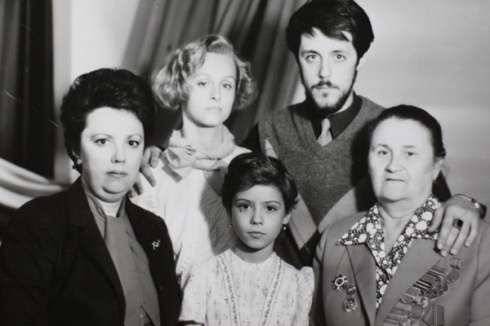
Vitaly Mansky‘s documentary is being screened this coming weekend and the next at the Museum of the Moving Image in Astoria, Queens. (See schedule. It’s two train stops into Queens, guys. Then you can have a nice dinner for half of what you pay in Manhttan at a good friend and koumbaro‘s place: Mar’s.)
“In this follow-up to his award-winning documentary Under the Sun, filmmaker Vitaly Mansky examines Ukrainian society amidst the 2014 national election, a period rife with political chaos and growing uncertainty over national identity and integration. As both a Russian citizen and native Ukrainian, Mansky deftly underscores personal and political complexities as he visits with relatives living in Lvov, Odessa, the Crimean peninsula, and the Donbass region, and in the process discovers a wide and disorienting spectrum of outlooks and affiliations, including his own sense of ongoing exile and unease. Close Relations is at once an intimate family portrait and a graceful journalistic endeavor, a movie of the intense present that illuminates a place caught between a troubled past and an anxious future.”
Watch the trailer below.
Lots of moving, “disorienting” footage. Also, lots of humor, which reminds us that so much of a certain ironic, sardonic take on the world — a viewpoint “from a certain angle”, as E.M. Forster said of Cavafy — that we in the United States think is particularly Jewish, is really just a trait common to all eastern Europe, even Greece, or perhaps just a trait common to the powerless everywhere:
“Crimea was a pity, but the Donbass…they can have it.” *
But I think the most important moment in terms of geopolitics comes at 1:15:
“So Ukraine decided to join NATO. Isn’t that its own business?”
“Nyyyyyet!”
…comes the reply without a moment’s hesitation.
“Nyet” with its palatized “n” and final “t” is one of humanity’s great no-words. Like “yok” in Turkish, it literally means “there isn’t” or “Il n’y a pas”. But while “yok” has a kind of know-nothing passivity about it, “nyet” is an active “Halt! No way you’re going further down this road. There’s no access.” **
That moment in Mansky’s doc is why, despite widespread support for a Putin I find repulsive, I can’t get as angry at Russians as I get at Trump Americans and Türk-doğans; because Russians aren’t stupid. They’re not as smart as they used to be in the old days, при коммунизме, when everybody knew not to believe any-thing. They now believe all kinds of nonsense. And they went and got religion on me too, which is one of my life’s greatest watch-what-you-wish-fors. But they’re still pretty intelligent about the world.
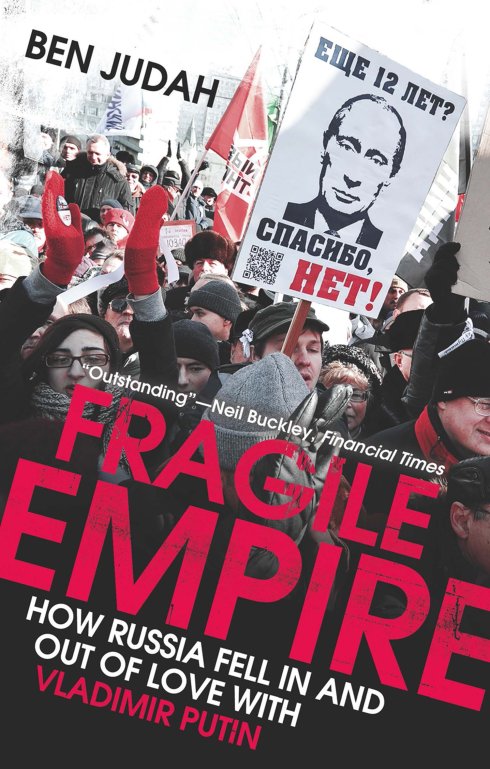
I can’t get inside Putin’s head, like Ben Judah convincingly does in what’s still the best book on the Путинщина, the “Putin-ness” or the “Putin thang.” Judah’s thesis is that Putin is really just a nebech apparatchik who others put in his place and who now — having trampled over so many people on his way up — is terrified of stepping down and that the macho persona he so tiringly projects masks mega insecurity. It almost makes you feel sorry for him.
But this relative of Mansky’s and her coldly realpolitik “nyet” tell you why he has so many Russians’ support. Because it means: nyet, you can’t tell me that the U.S. and NATO suddenly developed a major crush on Estonia and Georgia; nyet, you can’t suddenly tell me you’re interested in Ukraine too, because this was already starting to feel like a corporate raid on all the old girlfriends who dumped me, but Ukraine, especially, is like hitting on my sister; nyet, you can’t moan and groan about how we’re violating a basic credo of the European Union by changing borders, when neither Russia or Ukraine are part of the European Union and you wouldn’t even have considered Ukraine — with its resources, access to the Black Sea and huge Russian population — a candidate if it weren’t a way to totally encircle Russia; and, nyet, you can’t tell us that you’re not still treating us with a Cold War mentality that you inherited from an Anglo tradition of Great Game power struggle that doesn’t apply anymore and is now completely counter-productive.
At least talk some truth and maybe we can get somewhere. And then I’ll reconsider breaking up with Putin.
In the meantime, we can try to think of everyone as “close relations.”
For more on these issues see: “The first two of my cents on Ukraine and Russia…“ from a couple of years ago, and more on the imperative to engage Russia in “Syria, Russia, ISIS and what to do about everything“.
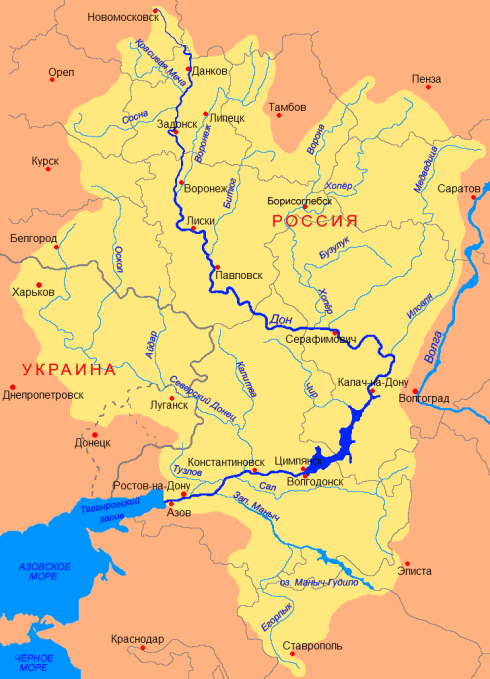
************************************************************************************* * The Donbass, the river Don basin is part of southeast Russia and the Russian-speaking parts of eastern Ukraine where the current conflict is centered. From “The first two of my cents on Ukraine and Russia“:
“Also, thence, a crucial point: that Ukraine wasn’t so much conquered, but settled by Russia…
“The independent “frontiersmen” mentality of the Russians of these areas, a sort of Russian Texas — among its ethnic Cossack peoples especially — should not be underestimated and should not be disregarded as a possible element in the current conflict. (See: And Quiet Flows the Don at Amazon and at Wiki.)”
“Новая Россия,” (Novaya Rossiya), New Russia, is not a Putinism. It’s a name for these lands that goes back to Catherine the Great and the first serious subduing of Cossack rebelliousness and settling of Russians in the region in the 18th century. It was part of the Russian empire’s most fertile grain-producing regions and then the scene of crazy industrialization under the Bolsheviks; maybe it was once a sort of “Russian Texas” but now it’s more like a sort of Russian Rust-Belt. Hence, the “they can have it” comment. The Soviet Army, decapitated by Stalin’s purges of its most talented and experienced, and ill-prepared and ill-equipped, only made the Nazi sweep through Ukraine grind to a halt once the Germans had made it this far east and after hundreds of thousands of Russian men had already been sent to a meaningless death and the Nazis had swept the old lands of the Pale clean of Jews through massive massacring and mass executions which were an integral part of the military strategy of the eastern front; many military historians believe that if the Nazi invasion of the Soviet Union hadn’t been slowed by German troops stopping every other community to round up and shoot its Jews (a method/process that killed more Jews than the gas chambers did), they might have been successful in beating the coming of winter and more successful in their campaign long-term. The region then became the scene of brutal attrition warfare, culminating in the siege of Stalingrad (now reverted back to its original name, Волгоград / Volgograd on map below). This left the region seriously trashed and so huge numbers of Russian workers were settled there post-WWII, Russianizing the Ukrainian far east even further and setting the stage for today’s conflict.
Map of the Don Basin. The grey line shows the border between Russia (РОССИЯ) and Ukraine (УКРАИНА) and the broken grey lines in Ukrainian east indicate the Lugansk (Луганск) and Donetsk (Донетск)
** “У меня денег нет” (“U menya deneg nyet”) in Russian is the same structure as the Turkish “Benim param yok” — “I don’t have any money.” Though Russian has a verb for “to have” like other Slavic languages, these structures both mean, literally: “By me there’s no money” or “My money isn’t there/isn’t by me.” Wondering whether it’s a construction Russian acquired through contact with Tatar. There is apparently a phenomenon where languages effect each other and transmit certain properties between them, though there’s no large bilingual population to bring them together and though they’re not genetically related, at least not closely. The absence of an infinitive, for example, in modern Greek, Albanian, Bulgarian and Romanian/Vlach, though each are from different Indo-European families and more closely related languages have an infinitive, is one good example. Also, Yiddish “by mir” (as in “By mir bist du shayn”) which is like the Russian по-моему (“according to me”) — for me, in my opinion. Though German uses “bei mir” also to mean same thing.
–
Comment: nikobakos@gmail.com
–
 Riz Ahmed is the first man of Asian descent to win an acting Emmy Getty Images
Suketu Mehta’ conclusions in “This Land is Their Land” (see: “Suketu Mehta in Foreign Policy addendum, whole text“) echo some of my points on immigration in Greece, Britain, U.S. and everywhere (see: “It’s immigration, “stupid”: the United States’ best-kept secret…streams of thought on a hot Sunday afternoon“).
Me:
“It’s when immigrant/migrants/refugees are leaving that you should worry.
“My often-stated opinion that the West has both the resources and the historical obligation to take in every-body that needs and wants to come still holds. That the European Union’s migration agreement with Turkey marked people fleeing a country in the condition of Afghanistan’s as “economic migrants” was a scandal. But when you’ve got a problem with Poles — whit-er, better-educated, harder-working, more Christian, cuter, better-mannered and less binge-drinking than you — then you really do have a problem…
“America’s best-kept secret, despite what trailer trash Donald Trump and his crew tell you, is that immigrants are a self-selecting group of already highly motivated people who are connected and aware enough to have heard that things are better where you are. And they’re not coming to take that from you; they’re coming to improve it. They’re the A-list crew that crashes your party because they’ve heard your parties are the ones to crash and in the process makes them even more of the hottest ticket in town. It’s a self-fufilling, auto-re-perpetuating process.
“New York, in other words.”
…
“Olympian Zeus, king of the gods, will tear your head off if you’re unwelcoming to the stranger — or worse, for a Greek, make you ugly — so you better watch out. He comes in disguise to test you. Like the angels to Abraham.”
…
“So…wooops…there they are. Here they come! They’ve arrived. And they’ve instantly made Greece a more interesting place. And interesting is strong. And strength is freedom.”
And Mehta:
“Countries that accept immigrants, like Canada, are doing better than countries that don’t, like Japan. But whether Trump or May or Orban likes it or not, immigrants will keep coming, to pursue happiness and a better life for their children. To the people who voted for them: Do not fear the newcomers. Many are young and will pay the pensions for the elderly, who are living longer than ever before. They will bring energy with them, for no one has more enterprise than someone who has left their distant home to make the difficult journey here, whether they’ve come legally or not. And given basic opportunities, they will be better behaved than the youth in the lands they move to, because immigrants in most countries have lower crime rates than the native-born. They will create jobs. They will cook and dance and write in new and exciting ways. They will make their new countries richer, in all senses of the word. The immigrant armada that is coming to your shores is actually a rescue fleet.” [My emphases]
Was that one of the subtexts or even the skeletal structure of “The Night of…”, the brilliant mini-series and incredible ethnographic essay on New York from HBO for which Ahmed won his Emmy: good, criminally uninclined, son of hard-working Pakistani immigrant parents from Jackson Heights, with “…a shining shining future
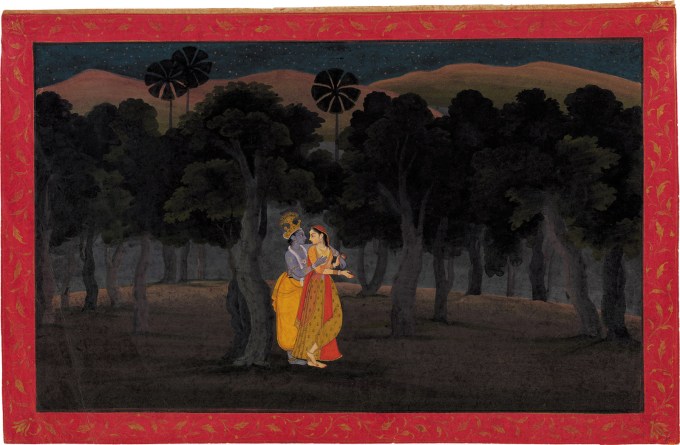
Sadda bright si“ (see full video at bottom), gets led to his doom by decadent white girl? or is he a good Muslim boy led astray by Hindu seductress disguised as lawyer who then screws herself in the process? (I have to admit that the sexual scratch-marks on the back of Ahmed’s character, Naz, that come to light in one courtroom scene put me in mind of the Gita Govinda.) Or more misogynist than that even: that women — period. — are trouble?
Some of the frustrating contradictions of identity politics in the Washington Post‘s “Riz Ahmed makes history as the first South Asian man to win an Emmy acting award“. If Riz Ahmed wants to not be type-cast as a Muslim or South Asian man every time he gets a role, but to eventually just play a character called “Dave”, then he’s going to need his fans’ help and have them not get apoplectically happy because he’s the first “Asian” (whatever that means) to win an Emmy, but because he’s a great actor who won an Emmy.
In the meantime, tabrik.
–
Comment: nikobakos@gmail.com
–

 Jadde: from Bosnia to Bengal