Balkans, Anatolia, Caucasus, Levant and other Middle East, Iran, Afghanistan, South Asia, occasional forays into southern Italy, Spain or eastern Europe, minorities, the nation-state and nationalism — and whatever other quirks or obsessions lurk inside my head.
Bad translation. “Pодные”…”rodnye” means intimate, familiar, related; by extension born-beloved, dear one, cared for, same root in Russian as parents, birth, homeland, Christmas…wouldn’t be surprised if it has the same Indo-European roots as “root”.
Vitaly Mansky‘s documentary is being screened this coming weekend and the next at the Museum of the Moving Image in Astoria, Queens. (See schedule. It’s two train stops into Queens, guys. Then you can have a nice dinner for half of what you pay in Manhttan at a good friend and koumbaro‘s place: Mar’s.)
“In this follow-up to his award-winning documentary Under the Sun, filmmaker Vitaly Mansky examines Ukrainian society amidst the 2014 national election, a period rife with political chaos and growing uncertainty over national identity and integration. As both a Russian citizen and native Ukrainian, Mansky deftly underscores personal and political complexities as he visits with relatives living in Lvov, Odessa, the Crimean peninsula, and the Donbass region, and in the process discovers a wide and disorienting spectrum of outlooks and affiliations, including his own sense of ongoing exile and unease. Close Relations is at once an intimate family portrait and a graceful journalistic endeavor, a movie of the intense present that illuminates a place caught between a troubled past and an anxious future.”
Watch the trailer below.
Lots of moving, “disorienting” footage. Also, lots of humor, which reminds us that so much of a certain ironic, sardonic take on the world — a viewpoint “from a certain angle”, as E.M. Forster said of Cavafy — that we in the United States think is particularly Jewish, is really just a trait common to all eastern Europe, even Greece, or perhaps just a trait common to the powerless everywhere:
“Crimea was a pity, but the Donbass…they can have it.” *
But I think the most important moment in terms of geopolitics comes at 1:15:
“So Ukraine decided to join NATO. Isn’t that its own business?”
“Nyyyyyet!”
…comes the reply without a moment’s hesitation.
“Nyet” with its palatized “n” and final “t” is one of humanity’s great no-words. Like “yok” in Turkish, it literally means “there isn’t” or “Il n’y a pas”. But while “yok” has a kind of know-nothing passivity about it, “nyet” is an active “Halt! No way you’re going further down this road. There’s no access.” **
That moment in Mansky’s doc is why, despite widespread support for a Putin I find repulsive, I can’t get as angry at Russians as I get at Trump Americans and Türk-doğans; because Russians aren’t stupid. They’re not as smart as they used to be in the old days, при коммунизме, when everybody knew not to believe any-thing. They now believe all kinds of nonsense. And they went and got religion on me too, which is one of my life’s greatest watch-what-you-wish-fors. But they’re still pretty intelligent about the world.
I can’t get inside Putin’s head, like Ben Judah convincingly does in what’s still the best book on the Путинщина, the “Putin-ness” or the “Putin thang.” Judah’s thesis is that Putin is really just a nebech apparatchik who others put in his place and who now — having trampled over so many people on his way up — is terrified of stepping down and that the macho persona he so tiringly projects masks mega insecurity. It almost makes you feel sorry for him.
But this relative of Mansky’s and her coldly realpolitik “nyet” tell you why he has so many Russians’ support. Because it means: nyet, you can’t tell me that the U.S. and NATO suddenly developed a major crush on Estonia and Georgia; nyet, you can’t suddenly tell me you’re interested in Ukraine too, because this was already starting to feel like a corporate raid on all the old girlfriends who dumped me, but Ukraine, especially, is like hitting on my sister; nyet, you can’t moan and groan about how we’re violating a basic credo of the European Union by changing borders, when neither Russia or Ukraine are part of the European Union and you wouldn’t even have considered Ukraine — with its resources, access to the Black Sea and huge Russian population — a candidate if it weren’t a way to totally encircle Russia; and, nyet, you can’t tell us that you’re not still treating us with a Cold War mentality that you inherited from an Anglo tradition of Great Game power struggle that doesn’t apply anymore and is now completely counter-productive.
At least talk some truth and maybe we can get somewhere. And then I’ll reconsider breaking up with Putin.
In the meantime, we can try to think of everyone as “close relations.”
************************************************************************************* * The Donbass, the river Don basin is part of southeast Russia and the Russian-speaking parts of eastern Ukraine where the current conflict is centered. From “The first two of my cents on Ukraine and Russia“:
“Also, thence, a crucial point: that Ukraine wasn’t so much conquered, but settled by Russia…
“The independent “frontiersmen” mentality of the Russians of these areas, a sort of Russian Texas — among its ethnic Cossack peoples especially — should not be underestimated and should not be disregarded as a possible element in the current conflict. (See: And Quiet Flows the Don at Amazon and at Wiki.)”
“Новая Россия,” (Novaya Rossiya), New Russia, is not a Putinism. It’s a name for these lands that goes back to Catherine the Great and the first serious subduing of Cossack rebelliousness and settling of Russians in the region in the 18th century. It was part of the Russian empire’s most fertile grain-producing regions and then the scene of crazy industrialization under the Bolsheviks; maybe it was once a sort of “Russian Texas” but now it’s more like a sort of Russian Rust-Belt. Hence, the “they can have it” comment. The Soviet Army, decapitated by Stalin’s purges of its most talented and experienced, and ill-prepared and ill-equipped, only made the Nazi sweep through Ukraine grind to a halt once the Germans had made it this far east and after hundreds of thousands of Russian men had already been sent to a meaningless death and the Nazis had swept the old lands of the Pale clean of Jews through massive massacring and mass executions which were an integral part of the military strategy of the eastern front; many military historians believe that if the Nazi invasion of the Soviet Union hadn’t been slowed by German troops stopping every other community to round up and shoot its Jews (a method/process that killed more Jews than the gas chambers did), they might have been successful in beating the coming of winter and more successful in their campaign long-term. The region then became the scene of brutal attrition warfare, culminating in the siege of Stalingrad (now reverted back to its original name, Волгоград / Volgograd on map below). This left the region seriously trashed and so huge numbers of Russian workers were settled there post-WWII, Russianizing the Ukrainian far east even further and setting the stage for today’s conflict.
Map of the Don Basin. The grey line shows the border between Russia (РОССИЯ) and Ukraine (УКРАИНА) and the broken grey lines in Ukrainian east indicate the Lugansk (Луганск) and Donetsk (Донетск)
** “У меня денег нет” (“U menya deneg nyet”) in Russian is the same structure as the Turkish “Benim param yok” — “I don’t have any money.” Though Russian has a verb for “to have” like other Slavic languages, these structures both mean, literally: “By me there’s no money” or “My money isn’t there/isn’t by me.” Wondering whether it’s a construction Russian acquired through contact with Tatar. There is apparently a phenomenon where languages effect each other and transmit certain properties between them, though there’s no large bilingual population to bring them together and though they’re not genetically related, at least not closely. The absence of an infinitive, for example, in modern Greek, Albanian, Bulgarian and Romanian/Vlach, though each are from different Indo-European families and more closely related languages have an infinitive, is one good example. Also, Yiddish “by mir” (as in “By mir bist du shayn”) which is like the Russian по-моему (“according to me”) — for me, in my opinion. Though German uses “bei mir” also to mean same thing.
We ALL know — many of you detest me for it — that I’m the last person to come to if you want sympathy for Arab/Muslim dysfunction and inability to face modernity being blamed on “colonialism” and taken out on the rest of humanity. But the Brits’ track record is so awful, as I say in “Is England ready for fresh Irish blood on its hands?“, and this might, in certain ways, have been the worst of all.
Protesters are demanding the removal of Patriarch Theophilos III over his involvement in selling church land.
The controversial deal between the church and Ataret Cohanim was made in 2004 and came to light a year later [Al Jazeera]
Hundreds of Palestinians rallied on Saturday in occupied East Jerusalem against the selling of church property to Jewish settlers.
Protesters demanded the removal of Patriarch Theophilos III over his involvement in selling church land and called for an end to Greek dominance over their church.
They held up signs reading: “We demand the freedom of the Orthodox Church from Theophilos and from corruption” and “Church land belongs to the church and its congregants – not to Theophilos and his gang.”
Demonstrators also chanted: “Theophilos, you collaborator. Our land is not for sale” and “We want national unity, to free the Patriarchate.”
Signs read: ‘The Orthodox endowments are for the sect and not for Theophilos’ and ‘Our endowments are our past, future and present’ [Al Jazeera]
“The people are demanding unity, transparency, and not to Arabise the church, because the church is already Arab Palestinian,” Ayman Odeh, head of the Joint List in Israel’s parliament, said in a statement at the protest.
“In the 21st century, we are here are to ensure that this a national cause. We are here to say there are those who aim to transform the conflict from a national one to a religious one. This is a conflict between illegal occupation and between the people of Jerusalem – Christians and Muslims,” Odeh added.
“There is no excuse for the selling [of] any piece of land. This land is for our people. They succeed by dividing us, or bribing us. I ask you all to sit together to form unity and to pinpoint our demands and to foster unity to succeed in this just cause.”
The rally comes amid fears in the Palestinian Christian community that Israel is attempting to “weaken the Christian presence” in the country.
In a joint statement released this month, patriarchs and church leaders in Jerusalem expressed their concern over what they termed “breaches of the status quo that governs holy sites and ensures the rights and privileges of churches”.
The statement condemned a recent Israeli court ruling over the selling of two strategically located hotels near Jaffa Gate in the Old City and a large building in the Muslim Quarter to the Israeli Jewish settler group, Ateret Cohanim, which aims to expand the Jewish presence in the occupied city. The court approved the sale in early August, giving Ateret Cohanim rights over the property for a period of 99 years.
“The judgement in the ‘Jaffa Gate’ case … which we regard as unjust, as well as [a] proposed bill in the Knesset which is politically motivated that would restrict the rights of the Churches over our own property, are further assaults on the rights that the status quo has always guaranteed,” the statement noted.
The patriarchs and church leaders also vowed to support a high court appeal against the judgement and called on fellow church leaders around the world to stop further attempts to change the status quo.
The church has vowed to appeal the Israeli court’s decision [Al Jazeera]
The Greek Orthodox Church is the second-largest owner of land in the country. The controversial deal between the church and Ateret Cohanim was made in 2004 and came to light a year later.
Although the deal was initiated by Theophilos III’s predecessor, Irenaios, who was deposed from his position for his actions, activists and residents believe Theophilos III was responsible for concluding the deal with the settler organisation.
“The Patriarch will continue to use bribes. We will not allow these bribes to continue. This church is an Arab church and its administration should be Arab. The Patriarch must be an Arab – whether Palestinian or Jordanian. We will not accept anything else,” Alif al-Sabbagh, a member of the Arab Central Orthodox Council in Palestine and Jordan, told Al Jazeera at the protest.
I was once dragged by force into a corner by a Lebanese friend at a party in Cambridge and told to never ask anyone Lebanese their religious affiliation, I guess because I probably just had done. Of course, I still ask. Like I implied in my Turkish post a few days ago, pretend unity (that you’re a passionate Erdoğan supporter and I’m not, or if you’re Maronite and I’m third-generation Palestinian doesn’t mean that we can’t still be “unified”), can only become real unity if differences are acknowledged. (*1)
I’ve had not dissimilar experiences with Irish folks if I’ve ever tried to talk about religion orUlster or “the Troubles.” I once asked a guy at an Irish bar in Queens who was from Northern Ireland if he was Catholic, and I got a blank and frankly angry stare in response, and with so much alcohol and testosterone in the mix, realized quickly I should shut up and look the other way or change the topic. A female bartender who heard the one-sided exchange said to me softly: “not a good idea to ask people those things…” Ok.
Map of Northern Ireland with distribution of Protestants (red) and Catholics (green) according to age group, showing a clear demographic decline of Protestants.
I also hear Irish anger at what they think is an out of touch diaspora that funded continuing IRA violence when the Irish themselves on both sides were starting to get tired of the violence and the fences were starting to come down — though that’s slightly disingenuous — in the early days these diaspora funders were heroes — and, as a non-metropolitan Greek, immediately assuming that the “diaspora” is “out of touch” or stuck in a time warp is a seriously irritating train of thought; there’s lotsa ways we’re more in touch than you lot.
So I’m really setting myself up as an easy target since I’m not even Irish or Irish-American. But I feel I can’t be silent as the English decide the future of any part of Ireland again.
I know that the Brexit vote came as a shock to a lot of Americans, as we were forced to confront the fact that the English are not all that smart, and can be as jingoistic, xenophobic, ignorant and proudly “know-nothing” as Americans can be. And I say the English because Scotland and Northern Ireland voted against leaving the European Union — in Northern Ireland, particularly, in percentages that would indicate a large number of Protestants voted to stay as well — and they should now be free to decide their own fates free of London.
Sometimes I feel that my views on the ethnic nation-state and minorities come across as selective and sort of random to readers, so let me take this moment to clarify a bit. I am, of course, against the brutal assimilationist policies of the nation-state and a supporter of minority language and cultural rights. On the other hand, I’m also against a minority holding an entirely polity hostage because it refuses to conform with the conditions of living in a state where they don’t hold numerical superiority.
There’s a great and frustrating passage in Rebecca West‘s beautiful Black Lamb, Grey Falcon, where her Serbian (and half-Jewish) tour-guide is arguing with a Croatian intellectual in Zagreb; “but you are not loyal” says the Serb:
Croat: You treat us badly. How can we be loyal?
Serb: You’re treated badly because you’re not loyal.
Croat: How can we be loyal if we are treated badly?
Serb: If you were loyal, you wouldn’t be treated badly.
Croat: When you treat us better, we’ll be loyal.
Serb: As long as you’re not loyal you can’t expect to be treated better.
And on and on and on…
(Rebecca West, who along with disconcertingly smart and honest, was clearly a real babe as well — broke a lot of hearts and refused to forgive when hers was…cool. As Lauren Cooper would say: “Forgiving is for l-o-o-o-o-z-u-u-h-h-z-z!!!”)
Of course, we saw, during WWII, just after West’s second trip, and then again by the end of the last century, that Croatians had no intention of being loyal to Yugoslavia no matter how much bending-over-backwards to ‘treat them better’ Belgrade did.
Or take Catalans again, in a state where as a minority they are treated exceptionally well. Still, with full language and cultural rights, they feel Madrid is oppressing them and they want full independence, threatening to rip apart the fabric of a country that has made impressive democratic achievements over the past few decades. And those of you who bought the public relations crap about how “hip, cool and Mediterranean” Catalonia is, and who spend your tourist money in Barcelona and the Balearics have only contributed to the discriminatory tendencies of Catalan chauvinism and the worsening crisis of Catalan separatism. Try Galicia or the Basque Country if you want to see parts of Spain that are not part of the Castilian center, but where ethno-linguistic difference has made its peace with the Spanish state and society has agreed to co-existence. Or if they’re too rainy and un-Mediterranean for you, go to Córdoba and Granada (skip Seville, too Catholic and bull-obsessed), poorer parts of the country that need your money and where you can buy the public relations spin of Edward Said instead, who once outrageously made the claim that 60% of Spanish vocabulary is of Arabic origin, (or maybe the spin of Al Qaeda and ISIS) and wallow in Al-Andalus nostalgia.
Even more and very closer to home: my father’s Greek minority village of Derviçiani in southern Albania. My early-days romance with the village is kinna over and I feel free to express things that I’m angry at myself for not saying to the faces of people there earlier.
I’d love to ask: what the f*ck do you want exactly? They have Greek primary and secondary education; they have Greek churches (a Church about which few of them know anything or take seriously in any way, or have bothered to learn about in order to address the consequences of four decades of enforced atheism, but they have them); the Albanian Orthodox Church itself — meaning not just Greek minority churches, but the Church of Orthodox Albanians — in fact, is headed, run and staffed by Greeks, (extremely enlightened ones, I have to admit), the way the Arab Orthodox Churches of the Levant were for so many centuries; they have, I believe, two political parties that have members who sit in the Albanian parliament. If their villages are experiencing slow to rapid depopulation, it’s not the fault of Albanians or Tiranë; they were simply trapped — Greeks and Albanians together — in a Stalinist cage for fifty years and now are free to leave: the villages of Greek Epiros started hemorrhaging inhabitants soon after WWII, and neighboring Albanian villages, both Christian and Muslim, are also emptying of young people. Still, they’re hostile to neighboring Albanians; still, they want autonomy for “Northern Epiros,” which for some of them stretches half-way up to the middle of Albania (I don’t care if “the stones speak Greek all the way to Dyrracheio/Durrës” — The. People. Who. Live. There. Now. Don’t. And don’t want to be part of a Greek autonomous region. 2**); still, they make Muslim girls get baptized if they want to marry any of their precious boys, μη χέσω (thank God Albanians still wear their Islam kind of lightly or these poor girls would be in serious trouble) and will ostracize any Christian daughter or sister who falls in love with and marries a Muslim; still, they get offended, even a hip, British-educated nephew does, if you visit the pleasant, well-watered, historical Muslim village of Libohovo — Albanian Libohovë — across the valley and you come back and say it was very nice and that the young people there don’t seem much different than ours. Of course, this attitude is a self-fulfilling prophecy, as the conversation from Black Lamb… above indicates, so that when you put up the flag of Autonomous Northern Epiros 1914 on August 15th and the Albanian police has to come and take it down, then you’ll just end up on the bad side of the Albanian authorities and ordinary Albanians’ retaliatory instinct and the vicious cycle will just keep going.
A flag of the Youth of Derviçiani, which, just by wild and completely invented coincidence, happens to have been “founded” in 1914, the year there was a short-lived experiment in Northern Epiroteautonomy, which was squashed by Italian objections, because Italy considered Albania within its sphere of influence. Obviously not a sign of just the “youth” of the village — there was no Youth of Derviçani in 1914. And if there are still any doubts, the Palaelogan double-headed eagle lays them to rest.
(Really, is there anything as idiotic as a flag?)
But back to Ireland. I think Ulster Protestants caused enough “troubles” by acting — with the hypocritical support of England — like they were a besieged minority that couldn’t be part of the Irish Republic. So if a majority of Northern Irish voters chose to exit the Brexit, that’s a golden opportunity just dropped out of the heavens into our laps to correct an egregious historical wrong. The invasion and conquest of Ireland, its depopulation and the ripping to shreds of its society, culture and language did not start with the Potato Famine of the nineteenth century. It started with the Normans and the Plantagenets, and then the Tudors and the Stuarts and, finally, Cromwelland his Taliban, and it was a grueling, vicious, murderous process, as violent, or more, as any of Britain’s other colonial wars and right on Europe’s front door, and the Plantation of Ulster itself and the rest of Ireland was a conscious colonial policy of appropriating land and settling poor Protestant Scots and northern Englishmen in the country in order to “civilize” it and break Irish resistance to English hegemony.
If the above maps seem to indicate that a large number of Protestants left the Irish Republic in the twentieth century because they didn’t feel comfortable without the English crown’s protection, that’s unfortunate (it was not so unfortunate in cases where the Anglo-Irish elite felt they had to flee when their expropriated land was re-expropriated) but that can’t be a justification for the continued amputation of the country.
It’s a classic strategic move, though. Ulster Protestants are not a socioeconomic group comparable to the Anglo-Irish landowners; they were always as squire-ridden as their Catholic neighbors and are still pretty much on equal footing in that sense.
But everybody has to be better than somebody, or else you’re nobody. So, just like Catalans have to think they’re really Mare-Nostrum-Provençal Iberians (3 ***) and not part of reactionary Black Legend Spain; or Neo-Greeks have to think that they’re better than their Balkan neighbors (especially Albanian “Turks”) because they think they’re the descendants of those Greeks; or the largely lower-middle class, Low Church Anglican or Presbyterian or Methodist Brits who fled their socioeconomic status back home and went out to India in the nineteenth century in order to be somebody, had to destroy the socially laissez-faire modus vivendi that had existed there between Company white-folk and Indians, creating an apartheid and religiously intolerant, aggressively evangelizing, social system that laid the groundwork for the unbelievable blood-letting of the Indian Rebellion of 1857; or, perhaps history’s greatest example, poor whites in the American South(many, ironically, of Northern Irish Protestant origin) that had to terrorize Black freedmen back into their “place” because the one thing they had over them in the old South’s socioeconomic order, that they weren’t slaves, had been snatched away (and one swift look at the c-ontemporary American political scene shows clear as day indications that they’re, essentially, STILL angry at that demotion in status); or French Algerians couldn’t stomach the idea of living in an independent Algeria where they would be on equal footing with Arab or Berber Algerians. So Protestant Ulstermen couldn’t tolerate being part of an independent state with these Catholic savages.
A Bureau agent stands between armed groups of whites and Freedmen in this 1868 sketch from Harper’s Weekly.
Recent White supremacist rally at the University of Virginia in Charlottesville — thanks to @JuliusGoat: “Imagine if these people ever faced actual oppression.”
The colonial power — or just the colonized mind — then disingenuously but actively seeks to right these wrongs and protect the embattled minority. The results? A Lebanon torn apart by Maronite phobias and Palestinian victim-entitlement; the greatest threat to Spanish democracy since Franco; a Greece completely isolated from its nearest and closest — in every sense — neighbors; an India where British response to the Rebellion effectively disenfranchised Indian Muslims (4 ****) — Dalrymple shrewdly locates one of the beginnings of modern Islamic fundamentalism in that disenfranchisement and the Deobandi Islam it created 5 *****; the Ku Klux Clan and the murder of Emmett Till and Donald Trump; the vicious Algerian War of Independence, which resulted in French Algerians having to flee the country entirely to a France where they’re still a bulwark of reaction and racism, and the still bad blood between Algerian immigrants and natives in that country.
(I thought about adding Cyprus to that list, that’s going on forty-some years of division after the 1974 Turkish invasion, but didn’t, because Turkish Cypriots actually were an embattled minority, and Greek Cypriots have to do some moral self-searching about their terrorizing, or passively supporting the terrorizing, of their Turkish neighbors, before they blame either Turkey or the Greek junta for f*cking things up for them.)
I was against the Scottish independence referendum of a few years ago because I’m against separation and the putting up of borders generally. But then the apparently stoned British electorate went and separated itself from the rest of Europe, and if Scotland and Northern Ireland and Wales even, or Cornwall or the Isle of Manx or Jersey and Guernsey for that matter, want independence from England now, England will have only brought that down on its own head. If Northern Ireland votes to stay in the European Union then de facto reunion with the Republic will have occurred; I would just like de jure recognition of that facto too, so that there’s no more excuse for meddling in Irish affairs. Irishmen have done a lot of genuinely hard work confronting the demons of their own past in recent years; today’s Ireland is a democratic, pluralist, morally progressive society where the Catholic Church’s death-grip has been broken. That Ulster Protestants can’t live there in peace and security and without English protection is a ludicrous idea.
So let it happen, and if Ulstermen don’t like it — sorry to sound like a reactionary nativist — but they’re free to go back to Scotland where they came from. Or if they want they can come here and join their distant cousins in Kentucky and the Ozarks. I’m sure President Trump will consider them the “right” kind of immigrants.
1 * It’s a little reductive, but I think it’s not outrageously so to see the Lebanese Civil War as essentially, or initially, a conflict between Maronite demographic panic and paranoia (not entirely unjustified) and Palestinian entitlementof the oppressed (even more justified); every other group seems to then have had no choice but to choose sides. Then add Israel — which arguably started the whole problem — and Syria to the mix, και γάμησέ τα.
2 ** Of course, Northern Epirote Greeks’ δήθεν innocent desire for autonomy is completely disingenuous — though we’re supposed to think that Albanians are too stupid to get that — and is really just a prelude and first step to independence and union with Greece, though they’re a demographically fast-dwindling percentage of the population of the region they lay claim to. That’s not a deterrent, however; all you have to do is believe that all Orthodox Albanians are reeeeeeeally Greek and you’ve solved your demographic issue, since Muslim Albanians are just turncoat intruders in the region as far as Northern Epirotes are concerned.
The only obstacle that would then be left is to get Albanians to forget what happened to the Muslim Albanian Çams of western Greek Epiros (Albanian: Çamëria, Greek: ΤσαμουριάTsamouriá) during WWII, when they were subjected to massacre and expulsion in a campaign of ethnic cleansing by the Greek right-wing resistance and had to flee to Albania.
I still haven’t figured out how, as Muslims, they escaped the Greco-Turkish Population Exchange of the 1920s; it would’ve been a more merciful fate. I also haven’t figured out how the tsamiko, a dance of central and southern Greece, got its name. Or else, what clues to a forgotten past the fact that my grandmother’s maiden name was Çames provides; almost all our last names are Albanian — with the Greek male nominative -s ending added to them — as in Bako-s — but as far as I know there’s no clan in our villages whose last name is actually the name of an Albanian sub-ethnic group. See: (“Easter eggs: a grandmother and a grandfather“.
This kind of issue always reminds me of the Puerto Rican expression from a song of I dunno what period: “¿Y tu abuela donde está?” or “¿Y tu agüela, aonde ejtá?” “And where’s your grandmother?” i.e., before you get all high and mighty and Whitey on us, show us the Black grandmother you’ve got hidden in the kitchen.
3 *** This fetishizing of the Mediterranean as a region, a lost paradise of cosmopolitanism and healthy diets, drives me nuts. Everyone is suddenly “Mediterranean.” The big laugh, of course, is that Turks are Mediterranean. Then comes the less funny one about Croatians being Mediterranean, whereas Serbs are clearly not — Croats wanting to have it both ways, and be Mediterranean and Mitteleuropean at the same time — even if they’re from neolithic Herzegovina and about as neanderthal themselves as their Serbian and Muslim neanderthal neighbors; Istrians have sealed their Mediterranean-ness by buying every Italian restaurant in New York City’s boroughs, and of course the largely Italianate Dalmatian coast seals in most Europeans’ minds the idea of Croatia as a country on the f*cking M-E-D-I-T-E-R-R-A-N-E-A-N. Actually, the closest example to Croatians’ appropriation of a largely Venetian Adriatic is the Turkish appropriation of Greek Aegean imagery, in tourist and p.r. language, on both the Anatolian coast and in Imbros and Tenedos.
Just as nicely condescending is the saying from some-where in the Iberian periphery that “de Madrid no se ve el mar,” “you can’t see the sea from Madrid.” Supposedly a jab at Castillian casticismo, and inward-looking provincialness. No, you can’t see the sea. That’s why Castille is such a beautiful, high plateau, dry and bright and chilly and Romanesque and stunning in its emptiness and vastness.
A White Turk friend once dragged me to Sorrento on our trip to Naples and Campania, which I knew would be a mistake, because it would be and turned out to be a tourist-swamped, hellish Thomas Cook holiday trap because it was “on the sea.” (but one makes concessions to one’s travelling partner’s fantasies.) We cut out as soon as we could and headed to Ravello, up in the mountains away from the sea and she was blown away by how beautiful it was.
And what happens to Greeks like me? who are from a part of the Greek world that is clearly more Balkan in every way than it is Mediterranean? What do we have to do to join the club?
4 **** William Dalrymple is a great historical writer who does what professional academics can’t do because they’re so specialized that they can easily say: “Sorry, I don’t work on that period” when you ask them anything they don’t know. The breadth and depth of his knowledge on South Asia is truly amazing and he makes it all interesting and stimulating for the layman without dumbing it down. When I first started this blog I wrote to him asking to reproduce some of the passages on the British destruction of Mughal Delhi contained in his book, The Last Mughal, and he immediately and generously shot back with an email that said: “Go for it.” Thanks again.
“Following the crushing of the Uprising, and the uprooting and slaughter of the Delhi court, the Indian Muslims themselves also divided into two opposing paths: one, championed by the great Anglophile Sir Sayyid Ahmad Khan, looked to West, and believed that Indian Muslims could revive their fortunes only by embracing Western learning. With this in mind, Sir Sayyid founded his Aligarh Mohamedan Anglo-Oriental College (later Aligarh Muslim University) and tied to recreate Oxbridge in the plains of Hndustan.
“The other approach, taken by survivors of the old Madrasa i-Rahimiyya, was to reject the West in toto and to attempt to return to what they regarded as pure Islamic roots. For this reason, disillusioned pupils of the school of Shah Waliullah, such as Maulana Muhammad Qasim Nanautawi – who in 1857 had briefly established an independent Islamic state north of Meerut at Shamli, in the Doab – founded an influential but depressingly narrow-minded Wahhabi-like madrasa at Deoband, one-hundred miles north of the former Mughal capital. With their backs to the wall, they reacted against what the founders saw as the degenerate and rotten ways of the old Mughal elite. The Deoband madrasa therefore went back to Koranic basics and rigorously stripped out anything Hindu or European from the curriculum.*
*(It was by no means a total divide: religious education at Aligarh, for example, was in the hands of the Deobandis.)
“One hundred and forty years later, it was out of Deobandi madrasas in Pakistan and Afghanistan that the Taliban emerged to create the most retrograde Islamic regime in modern history, a regime that in turn provided the crucible from which emerged al-Qaeda, and the most radical and powerful fundamentalist Islamic counter-attack the modern West has yet encountered.”
See also his magisterial The Return of a Kingon nineteenth-century Afghanistan, which I have a few issues with, particularly his conclusions, but which was a couldn’t-put-it-down one for me.
Sorry; I couldn’t resist. I wrote a few posts about the observation of Tisha B’av (or Tishabuv) a few years ago during the Romney campaign, which I’m reposting below, and the initial date confusion here seemed to confirm my, upon rereading, slightly snarky take on the observance.
I know I offended the website Jewish London (see below) when I wrote those posts, the writer of which felt personally attacked. I certainly hope I haven’t offended the folks at Kehila Kedosha, the shul of the Jewish community of Jiannena, my mother’s hometown, to which I feel intimately connected (see an old Purim post, also below).
Sorry, but it’s pretty funny that Romney’s trip has made of Tisha B’Av such a central metaphor for contemporary Israeli politics and the problematics of Jewish conscience (see previous post). In old Ashkenazi humour — at least as I know it from Brooklyn — Tisha B’Av, Ti-shabuv in Yiddish pronunciation, is used ironically because it’s such an obscure holiday that no one ever knows when it is.
“When is he gonna finally paint the kitchen? Who knows? At Tishabuv…”
“If you’re waiting for the perfect girl to come along, you’ll be waiting till Tishabuv…”
“Sorry, but that largely misses the point. Tisha B’Av is less about steeling Jewish resolve against our enemies than fostering self-reflection about the Jewish misdeeds that allowed those enemies to prevail. The Talmud says that God allowed the Babylonians to destroy the First Temple because the Jews committed idolatry, bloodshed, and sexual sins. Similarly, the Romans are bit players in the Talmud’s intricate explanation of the chain of Jewish sins that led to the Second Temple being destroyed. Among those sins—none of which easily lends itself to a GOP stump speech—are “baseless hatred” among Jews and a concern for ritual stringency so obsessive that it trumps concern for human life.[my emphases]”
What other people, even if they lapse so often and so often tragically, are so honest and clear-eyed about their faults?
“it seems appropriate that he should visit on Tisha B’Av, a day when great calamities befell the Jewish people”
Oooooofffff… This is like teaching…when you’ve spent hours researching and preparing, and then another half hour conducting, a brilliantly detailed and structured, thrillingly executed lesson on participial phrases, only to have one student, while you’re catching your breath right after, ask a question that proves none of the class has understood shit the entire time you were lecturing.
My point was simply that there’s a genre of Ashkenazi jokes, among the many, based on “When is Tishabuv?” Beinart’s point, “Mitt Romney Misuses Judaism…” is that in the long tradition of Rabbinic and Talmudic learning, Tishabuv has been a time to reflect on why a certain tragedy has struck Jews and not just commemorate that tragedy in a victimized and ad nauseum form.
Yes, brother, “terrible calamities befell the Jewish people” on Tishabuv. The Second Temple, the One and Only House of God in the One and Only Holy City, was levelled. Jews were slaughtered in unbelievable numbers. In trying to figure out whether these events happened as part of the Roman response to the Jewish rebellion of 70 A.D. or that of 135 A.D. — which has never been clear to me — I learned that there’s a trend of Jewish mystical thought that fascinatingly believes all Jewish tragedies occurred, occur and will occur on Tishabuv: the selling of Joseph into slavery; Moses’ shattering of the first tablets at seeing the Jews revert to idolatry; the destruction of the First Temple and the Babylonian captivity; the destruction of the Second Temple; the first massacre of European Jews at the beginning of the Crusades; the issuing of the Edict of Expulsion from Spain in 1492; the day the first train left for Auschwitz – all become mystically assimilated into Tishabuv. That’s a tragic and moving idea. However, I do know that the Roman suppression of the revolt of 135 A.D. was so brutal in its massacre and expulsion of Jews that it’s easy to say that it officially marks the beginning of the Jewish Diaspora.
Tishabuv is also intimately related to Jewish messianic thought. The revolts themselves were partly inspired by messianic expectations. And the crushing of those hopes by the greatest cluster of disasters to befall Jews before the Holocaust made Rabbinic thought retreat into the sharpest of all cautions against any such expectations. This, I suspect, is what marked the final rupture between Christian Jews and the rest of Jewry. It’s not that Jews didn’t succumb to the temptation again. Kabbalism is a mystic desire to correct the world that is a barely concealed messianic impulse. And there was the great fever of messianic ecstasy that swept the Jewish world in the seventeenth century, when Sabbatai Zevi, a rabbi from Smyrna, started declaring himself the Messiah – one of the most fascinating and, in the end, sadly absurdist, episodes in Jewish history. Zevi, either a con artist or a psychotic, had raised Jewish expectations to such a frenzied pitch, that when he ended up converting to Islam and becoming a ward of the Sultan, it sent shockwaves of psychological distress, not only through Ottoman Jewry, but throughout the entire Jewish world; in fact, due to renewed persecution and massacres at the time in Eastern Europe, the effects on Ashkenazi Jewry may have been even greater than on Sephardim. The crisis sent the Eastern European Jewish universe careening into two different directions: on the one hand a trend that reemphasized Rabbinical textualism and that eventually responded to the Jewish Enlightenment, the Haskalah, the movement out of Germany that attempted to bring European Jewry into the modern world; and on the other, a retreat into the most introverted mysticism, out of which Hasidism, and an even greater immersion in Kabbalistic thought, grew. To some extent, this split is one that old New York Jews still codedly refer to, whether they know it or not, as “Litvaks” and “Galizianers” (explanation in subsequent post). See Michal Waszynski’s 1937 film version of S. Ansky’s Dybbuk. I think there’s no greater primary text of Jewish spiritual impulses and its conflicts.
Lili Liana as Lea, the bride who becomes possessed by the spirit of her wronged beloved on her wedding day to another man, in Waszynski’s 1937 Yiddish film, the Dybbuk. (click)
(Two interesting notes that I’d like to make here. One is that the Jewish revolts of the early first millennium were partially led by political groups whom we, today, wouldn’t hesitate to compare to, not only the first New England Puritans, but even the Taliban, and who engaged in certain tactics, like the surprise slaughter of masses of innocent civilians that we like to associate with Palestinian “terrorism” – or that of…errrr….Irgun, Haganah, the Stern Gang, Mssrs. Ben Gurion and Begin and all the rest. The other is that maybe the real basis of Tishabuv jokes is still unconsciously based in messianic expectations, the way older Greek women who, say, have missed a bus, will mumble: “Oy, now we’ll be waiting till the Second Coming.”)
But if “Jewish London” is to understand my point, he needs to better understand the transformation that Tishabuv has undergone in Israel since its founding, because I suspect that, not living among the most vibrant Diaspora communities in the world, Israel is his model. Obviously, Zionism didn’t need to worry about the Messiah, since it had solved the “Jewish Question,” as must be obvious to anyone who throws even a cursory glance at the Middle East today and sees the peace and happiness in which Jews there live can attest to, and no Messiahs need apply anymore. Tishabuv had been forgotten by the Jewish Diaspora, reduced to such an obscure holiday that it was the object of humour; I’ve lived most of my life in a city, and worked for a great part of it in an environment, where, believe me, it was impossible to not know that a great, or even just important, Jewish feast was being celebrated or was coming up, and Tishabuv wasn’t one of them. In Israel, however, the “secular” Jewish state raised Tishabuv to new, official status as a holiday-fast day. But not as a day of introspection; but as a day to remember, as “Jewish London” puts it, “a day when great calamities befell the Jewish people.” This is because “calamities” are Israel’s justification for being; it was Israel’s down-payment and it’s still how it pays its mortgage; it’s the currency in which it trades. And the ignorant Romney’s visit to the Western Wall with Netanyahu or whoever on that day, was just another slimy exchange in that same currency — and, in fact, a dishonour to centuries of Jewish suffering.
But back to the Diaspora, and a time when Judaism hadn’t locked itself into a barricaded nation-state. More than just self-reflection and introspection, the repeated, century-after-century dashing of Jewish hopes may have generated an even more important element in the Jewish psyche: doubt. The great Christopher Hitchens, quotes the equally great Rebecca West in his introduction of her book, Black Lamb and Grey Falcon, and her own ruminations about the origins of anti-Semitism:
“West reflects on the virus of anti-Semitism, shrewdly locating one of its causes in the fact that ‘many primitive peoples must receive their first intimation of the toxic quality of thought from Jews. They knew only the fortifying idea of religion; they see in Jews the effect of the tormenting and disintegrating ideas of skepticism.’”
That’s why on Easter night, the night of the Resurrection, I always remember to have one, only one, glass of wine that’s offered to the suspicion – the same one born out of the fact that Elijah never actually walks through that open door at Passover — that this whole idea is bullshit.
So what is Tishabuv for (when we know when it is)? Introspection, moral responsibility, skepticism, doubt and the saving beauty of being eternally able to convert suffering into humour and irony – these last may be the most important — a pretty whole summation of what Jews have given us, given me, at least.
When “Jewish London” can tell me what Israel has given us, he should let us know. These Days of Awe might be the perfect time to think about that.
Esther before Assuereus, Nicolas Poussin, circa 1640 (click)
For Purim this year I’m posting this poem by Greek Jewish poet Joseph Eliya, who was from my mother’s hometown of Jiannena in the northwestern Greek region of Epiros. (See the tab box on the right for the hundred references to Jiannena and Epiros on the Jadde).
The Jews of Jiannena were Greek-speaking Romaniotes, descendants of the Jewish communities of Greece, the Balkans and Asia Minor that existed since Hellenistic times and that held out culturally against the flood of Spanish-speaking Sephardim that found refuge in the Ottoman Empire after their expulsion from Spain in 1492. They were called Romaniotes because Romania (the kingdom of the Romans) was what the Byzantines called their polity and what we too – till the early twentieth century – also called ourselves: “Romans” – which it always aggravates me to have to explain. But it is one of the rich ironies of history that the only inhabitants of Greek lands that stayed faithful to their true name for themselves were Jews, while we sold our souls to the West for the promises and prestige we thought the re-excavated neologism “Hellene” would curry us from the Frangoi.
So Eliya’s native language was Greek, and though he wrote some of the most beautiful translations of Jewish Biblical texts into Modern Greek, particularly one of the Song of Songs and a series of love poems to Rebecca, in a rich, florid, archaic idiom, he also wrote homelier poems in a folksier Jianniotiko style like this one, “something like a letter to his mother” on the occasion of the feast of Purim.
For those who don’t know, Purim is the day that the Esther, the Queen Consort to the Persian King Ahasureus, and her uncle Mordechai, foiled the plans of the king’s evil minister Haman, to have the Jews of the kingdom massacred. It’s generally celebrated by listening to the book of Esther in synagogue, the Megilla, sending food and giving charity to the poor and dressing up in costume, an aspect of the celebration that may be an interborrowing due to the fact that it tends to fall around Christian Carnival.
Eliya was a poor schoolteacher who died at the young age of thirty, and I believe this poem was written when he was away from his beloved Jiannena, and his beloved mother, on a teaching post in the Macedonian city of Kolkush. It’s a sad, therefore — and very Epirotiko in that sense and in tone — poem, that’s in sharp contrast to the happiness of the holiday.
This poem also has an added emotional subtext for me. My mother’s best friend when she was in elementary school was a Jewish girl, Esther — Esther Cohen. “Astro” they called her, in the Epirotiko diminutive; “Tero” is also another form for the same name. And as a little girl from a peasant family recently moved to Jiannena from their village in the mountains just to the south, I could tell that her stories about her friendship with Astro were her first lessons in tolerance and difference, whether she would’ve called them that or not (we certainly wouldn’t in our day…I’ll leave them for another post). And she may have known it even less, but her friendship with Astro may have prepared her for life in New York in ways she was probably never conscious of. And what she may have been even less conscious of — though maybe I should give her some credit: I do know for sure that my mother’s stories of her friendship with Astro served as my first lessons in decency and openness to those different from you. Of that there’s no doubt. So this post is something like a letter to my mother too.
Always they ended in a kind of distracted silence, for she never knew what had happened to her friend during the war: “Τι νά’χει γίνει η Άστρω;” she would mumble. “What can have happened to Astro?” And what was strange was that she could’ve found out; there were surviving Jews in Jiannena that she knew and there were even Jewish Jianniotes in New York she could have asked. But it was like she didn’t want to know. Even odder, I’ve had several opportunities to find out as well; Kehila Kedosha Jiannena, the Jianniotiko shul in New York on Broome Street has records on the whole community. But it’s been almost as if I don’t want to know either.
Here is Eliya’s original Greek, with my free verse translation below.
Purim
(Something like a letter to my mother)
It’s Purim tonight! The thrill and joy of the great feast!
Light in our souls, and a smile on the lips of all.
And I, my orphaned mother, the refuse of exile*
Waste away in a chill joyless corner.
It’s Purim tonight! And the synagogues open their arms wide to the faithful children of my ancient people.
And they read again with wonder, from the white parchment, the triumphs of Mordechai and Esther through the ages.
It’s Purim tonight! Young and old gather at home, at hearth, to hear the Megilla’s** tale.
And I mother – with the burning lament of exile – tearily thumb through my Bible in a lonely corner.
Your son won’t be bringing you candles or flowers from shul*** tonight, mother. And if your crying is bitter, don’t lament too deeply. My Fate has been decided, and poverty — poverty, mammele**** – has no feel for sympathy.
*”Exile” here does not imply political banishment or anything of the sort. It’s the word “ξενητιά” as Eliya spells it, that’s so central to understanding the Greek and — it probably goes without saying — the Jewish soul, but is so devilishly difficult to translate precisely. It means absence — absence from the place where one should be, from one’s heart’s homeland. Through and because of emigration and poverty most often but not always; it’s often something one feels without having had to leave. The Turkish “kurbet” is the word closest in meaning that I know from another language.
**Not to be disrespectful, but the Megilla, the Book of Esther, is quite long, and is proverbial, in at least Ashkenazi humor, for being tedious and monotonous to listen to — but one bears it. It’s exactly the same as the Greek term “εξάψαλμος,” the Hexapsalm, a selection of six psalms that is always read at the beginning of Matins and I’m not sure if during other offices, and would be beautiful if correctly and carefully recited according to the rules of Orthodox recitation. Unfortunately, it’s usually read in an incomprehensible blur of mumbled boredom by the lector or cantor, which actually makes it even more tedious and irritating to sit through. It’s usually a good time to go out for a cigarette. I just always thought the similarity was funny. “Ωχ, τώρα θα’κούσουμε τον εξάψαλμο,” a Greek will say with dread when faced with a berating lecture or kvetch session or someone’s tiring complaint that’s so repetitive you just tune it out, just like a Jewish New Yorker will say: “I really can’t listen to his whole Megilla right now…”
***In the second verse, Eliya uses the Greek word for synagogues and I translated it as such. In this last verse, he uses a homier, Epirotiko form whose intimacy I felt was better conveyed by “shul.”
****And last but not least, we run into the painful translation issues that are generated by the fact that English is almost completely lacking in a system of diminutive terms of affection, especially compared with the highly elaborate diminutive terminologies of Slavic languages or Yiddish (or I assume Ladino) or even Greek. At no point in the poem does Eliya refer to his mother as “mother” but rather “my little mother” — “μανούλα’μ” — “manoula’m.” This is a term of affection used often by Greeks and especially Epirotes to refer to anyone, not just one’s mother, not even necessarily a female (Athenian idiots making fun will darken or double up the “l” to make it sound more northern and Slavic and hickish; for me it’s just more beautiful…); one will say to a young boy or even a friend: “Come here, manoula mou… What’s wrong, manoula mou?” Just like “mammele” is used in Yiddish. But I felt that using “mammele” throughout would have sounded too Yiddishy and cute, and so I saved it for that last, most intimate verse, and used mother elsewhere. After all, this is a poem that above all is an expression of the most Jewish kind of mother-son bond. But Yiddish and its many beauties is cursed now, by its sudden, dramatic extinction in Europe, and its shadow survival only in American entertainment, with the danger of always lapsing into a default comic tone. It’s sad. The translation from the Greek of the last line of the poem, for example: “poverty has no feel for sympathy…” would literally be: “…but poverty doesn’t know from sympathy.” But then I’d be writing Larry David dialogue.
FINALLY, I’d like to thank Marcia Haddad Ikonomopoulos for the scan of the Greek text of the poem. I’m in Athens now, away from my library and couldn’t find it anywhere online. I wrote to her and within five minutes she had written back to me with both “Purim” and “Esther,” another of Eliya’s poems about the biblical heroine. She suggested that “Esther” is a poem more appropriate to the happiness of Purim than the melancholy of “Purim.” Unfortunately, it’s written in a much more difficult, semi-biblical, archaic language that I didn’t have the time to translate. I promise her however, that as soon as I get a chance I will work on it and post it on the Jadde — out of gratitude to her helping me out for this, and out of gratitude to the one-woman pillar of the Kehila Kadosha Janina community that she is. I’d also like to thank the whole congregation there for always making me feel so welcome when I attend on Erev Simchas Torah; the rabbi and his stentorian voice, the three young men who lead prayer and are perhaps the community’s most precious resource — let’s see if I remember correctly: Seth, the rabbi’s son, and the brothers Andrew and Ethan, who though they’re from a Sephardic family from Berroia, devote their shabbes and yontif time to energizing this tiny community in need of outside help. The warmth of the community has always moved me and I’m grateful for both the odd need for Jewishness in my life and the link to my mother and her childhood that they unknowingly provide. Thank you.
I’m going to have to write this post in bullet points of varying length, that I guess reflect the tragic fragmentation of my subject matter in some way, because putting it all together into a coherent “opinion piece” is as hard as finding coherent policy to deal with the problem itself has been. I was against talking about Syria in the beginning of its crisis as if it were an inherently fragmented and “artificial” colonial creation, as it had become the fashion to speak of most of the Levant at some point or another. I particularly objected to Andrew Sullivan’s obnoxious “Syria [or Iraq] is not a country” declarations. But since then, that’s become the reality – an insistent enough discourse makes itself a reality — so it seems to be more useful to take on all the regions, factors and players involved one at a time…and if I can bring them together usefully at the end, I will.
Russia and Assad: It’s obvious that Russia is pursuing its own agenda in Syria, but frankly — isn’t everyone? — so that’s no great cogent or original observation, and to be very frank, shouldn’t play into our response to either Assad or Putin, given the point to which things have reached at this point, because the degree to which you or I can stomach either Assad or Putin is not the point. The point is that right now I can see no great tragedy in an Assad-run — for how long can be decided later, with Russia (see below) — Russian semi-protectorate that would run from the Latakya Alawite coast down the Hama-Homs-Damascus-Dar’a, corridor, that would provide security and stability for even the region’s originally anti-Assad Sunni population, and even attract Sunnis from the rest of the country who could make their way there: such – I would think – is the ethical questionability of the various Sunni groups (aside from just ISIS I mean) into whose hands the original uprising has fallen and the degree of their war-weary victims’ terror; and — because I think it’s important to declare your subjective affinities before you can honestly put forth your hopefully objective suggestions or propositions – I hope such an entity would also provide a safe haven for part of what’s left of Syrian Christianity as well. (Yes, MESA girls, you’ve caught me again.) It would also be a good idea if we learned a little bit about the Assads and the Alawite past in the region (as it would be equally good for us to know something of Turkish/Kurdish Alevis as well), not to exonerate Assad for anything, but so that we know what we’re talking about before we start unproductively babbling about villains just sprouted out of the earth – like we did in Lebanon in the past about the Gemayels and Maronites or the Jumblatts and Druzes or southern Shiites and Hezbollah. This is homework one would like to assign to the Levant and the Middle East’s Sunni majority as well: a request that it examine its moral conscience, if such a thing exists, and its treatment of minorities in the past, but I understand that that’s probably a tall order that we can’t wait for them to comply with in order to bring some relief to the current hellishness. Assad remaining on as President of at least part of Syria is an ugly proposition. But more resistance is a luxury for Western intellectuals at this point.
So let Russia go for what it wants for now; it’s in most everyone’s interest and let’s try to turn it to everyone’s advantage instead of attacking her for every move she makes. ENGAGE RUSSIA. I beg everyone. A plea I will make later as well and repeatedly.
The Shiite crescent or triangle: This is the very real alliance of Bashar al-Assad, Hezbollah in Lebanon, a largely Shiite entity that’s essentially what’s left of Iraq, and Iran. It’s not a product of Israel’s paranoid imagination, but only Israel thinks it has any real reason to be worried about it and therefore Israel should be promptly ignored on every point and aspect of those worries.
Bashar al-Assad
Neither Iraq nor the Iraqi army are functioning entities, so we can temporarily remove them from our discussion. I think I’ve addressed the moral “problematicness” of Assad: that there can be no solution in Syria till he’s gone, though, is a moralistic pose and not a truly moral position — sadly, one even Obama is fond of striking — and is an excuse for doing nothing and a recipe for letting the current holocaust continue. As for Hezbollah: whatever we think of its origins or the nature of its religiosity or its political ideology, it’s a highly professional organization with a highly professional, well-trained and hardened army, and the only Arab or other force that has put Israel in its place twice – took a little longer the first time but was pretty snap the second – and has pretty much served as an Akritai line that has kept it there since and, whatever its political tactics are (I honestly can’t say), it seems to me to be the one force that has kept Lebanon relatively stable (yes, as had Syria) for the past twenty years or so.
Of course, it does this with the massive organizational and material help of Iran. Which brings us to…
Iran: Get over Iran. It became a comforting cliché, with which the Middle Eastern Studies academic left aunanized itself for several decades: that the imperialist West had aborted every modern attempt at a democratic, civil society in the Muslim world and that that was therefore responsible for the rise of political Islam. Tell me which countries we’re talking about and who the leaders were who were going to lead them to this heavenly, secular modernity? The even more militaristic and fascist and statist successors of Kemal in Turkey? Look how that’s turning out and it’s still incomparably the best of the batch and, ok, there’s still hope recent setbacks can be reversed. Who else? Nasser and Egypt? Arafat or current Palestinian leadership? The Ba’athist successors of the Hashemites in Iraq? Maybe in Jordan? Ben Bella and Algeria? Bourguiba even and Tunisia? The Saudis? Jinnah’s successors, further east, or even Jinnah himself? Maybe the Afghan royal family? Who?
The only country in the Muslim world that in my humble opinion seemed to have had many of the prerequisites for a secular, civil society, perhaps a constitutional, truly assembly-based government, and a leader with an appropriately intellectual, bourgeois background and education — and accompanying democratic inclinations — was Iran and Mohammad Mosaddegh. And the Anglo-Americans destroyed that experiment. And yet Iran still seems to be the country, which despite the powerful institutional obstacles, has, on a popular level at least, the temperamental prodiagrafes for the development of such society and is poll-wise the most pro-American in the region. What is the rationale behind continuing to villainize and sanction and isolate? Ok, maybe not “what is the rationale?” But I’m simply calling for the acceptance of the fact that allowing Iran to open up to the world would inevitably – no, don’t give me Russia or China as examples – lead to an internal opening up as well, and both Iranians and the rest of the world have only to gain, when, and not if, that happens. Let it happen faster. As fast as you can.
Mohammad Mosaddegh
Turkey: There probably isn’t a country that, though never “officially” colonized, is a better object lesson in how to endure the machinations, infiltrations, exploitation, hypocrisies and pousties of Western manipulation – from the 18th century to this day – and how to then flip them to your advantage like a bad-ass judokathan Turkey. In dismembering the Ottoman Empire, all the Great Powers did their best to make the process of our separating from our neighbours into independent nations as long and complicated and bloody as they possibly could. When after WWI, they realized the Turks weren’t going let them split even a remnant Anatolia into six or seven parts and give those away too…suddenly…Turkey…could…do…NO…wrong…and still can’t. It’s fabled “privileged geographical position,” which no Western power was able to grab for itself, allows it to do anything it wants: supress all and any pressures for democratic change; conduct a vicious decades-long civil war against – I dunno, can it still be called a minority when it’s one-fifth of your population – its Kurds; violently harass its supposedly Lausanne-protected Greek community till they all leave en masse, while invading Cyprus to protect its Turkish minority there…and on and on and on. And now that President-to-be-for-at-least-a-decade-I-figure Erdoğan has sat on the throne Turks themselves put him on, the anti-democratization process: the societal and governmental Islamization; the assassinations and imprisonments, the suppression of journalistic rights and other democratic voices; the bullying of neighbours and throwing around of irresponsible, expansionist language; the destruction of a painfully wrought peace process that Turkish Kurds showed remarkable maturity in struggling towards, and the unleashing of the formidable, American-backed and supplied power of the Turkish military on them once again; the probable aiding and abetting of the animals of ISIS in various ways, plus the shooting down of a Russian air force jet out of pure pissing-contest impulses; not to mention the ever greater and egomaniacal vandalizing of one of humanity’s greatest and most ancient cities – all continue.And the world breathes not a word. Obama did not even address the downing of the Russian jet: all I saw him do is rudely turn around in his chair at some banquet at the Paris Climate Change Conference and off-handedly say to some journalist: “Well, a nation has the right to defend its air space.” The next day six Turkish fighter jets flew almost two-thirds the way across the Aegean into northeastern Greek airspace , and we didn’t say a word and wouldn’t have had our call taken even if we had tried, since it happens on a practically monthly basis. NATO allies, you see…
The Kurds: “I have a dream,” as they say, for Kurds: that they will recognize the fact that Iraqi Kurdistan with a capital at Erbil is already a de facto independent state and not complicate things in the neighbourhood by please resisting the urge to declare de jure independence.
Kurdish-inhabited regions of the Middle East and Caucasus, according to tribal break-down.
This centrally located political entity can serve as the hub of a wheel of still-to-be-worked-for, autonomous, Kurdish regions encircling it, and by not insisting on independence and union, they will be able to put more resources and energy into developing what they have and not fighting to defend it forever. I don’t know; maybe the future of the world will involve the devolving of nation-states into affiliated groups of semi-autonomous units with perhaps overlapping or varying degrees of jurisdiction – Holy Roman Empire style – and the Kurds may be the first to experience this as a people and benefit from it: that is, to see diaspora (if that word really applies to a non-migrating group), or political “multiplicity,” as a finger in every pie and not as separation, and be able to reap the advantages of that. Plus, again, as vehemently secular-minded, it will hopefully remain what it has already become: another safe space for the remnants of Syro-Mesopotamian Christianity.
The Christian village of Maluula in Syria
Saudi Arabia and the rest of them down there: I admit that for a very long time I didn’t get this one. The fear of Russian power and the resentment of the Iranian Revolution, the obvious reasons for catering to an obnoxious Israel’s every whim and demand and the kid-glove coddling of Turkey all make some sense, though my ultimate point here will be that they no longer do. But the Saudis…no clue. Did any-one need their oil in particular? Wasn’t the United States itself already energy self-sufficient? Why? That the West always does what it does because Jews control Washington and everyone wants Saudi oil seemed to me to be the political theories of Athenian taxi-drivers.
Yet I was just speaking to someone from the ministry of energy here in Greece the other night and it turns out that compared to that of other oil-producing nations, Saudi oil (and I guess other Gulf State oil as well?) is unusually high in quality, demanding minimal refining and easy drilling as well, since its gigantic reserves are all close to the surface. The price of oil can plunge to rock bottom and they will still have monstrous amounts of a desirable product with which they can undersell any other country in the world and that will keep them filthy rich into the foreseeable future. And capable of funding jihadism everywhere. Including the spiritual “inner struggle” kind.
So we’ve ended up here, with a nice neat circle drawn around ISIS territory because that is our major problem and that’s the entity we’re looking to eradicate plain and simple. And it can’t be done without a profound shift in how we – I don’t how we want to define “we:” the West, the civilized world, how about just humanity? – treat and engage each and every one of the players involved in the above scenario. Because while our objective is to destroy ISIS, almost all the above policies are based on either almost irrationally selfish and small-minded views, or even more so, on a Cold War logic that simply no longer applies, and that will do little to impede the danger ISIS presents, in almost anyway you take at it or from wherever you look at it.
First and foremost and again: let Russia in. ENGAGE RUSSIA. We all have everything to gain and nothing to lose if we stop treating Russia like a pariah nation. Russian power is not a threat and can instead prove massively useful to the world if we bring Russia into the fold instead of trying to desperately keep her out of everywhere and even foolishly try and fence her in. It may be a little more complicated than a simplistic “more flies with honey” theory but whatever it is we choose to describe as Russian aggression, Russia sees as defensive and that may not be an irrational response from a powerful nation that sees itself treated as an amoral being that is constantly excluded from all the West’s major moves.
And I’m talking about radical engagement: not just lifting sanctions and trade blocks and visa requirements. I’m talking about making Russia a part of the European family of nations, as laughably dysfunctional as that family may be looking right now. Why are Montenegro or Georgia on the list of candidates for NATO membership — Montenegro probably as some sleazy old promise offered to it if it seceded from Serbia; and Georgia, one of the oldest polities in the Russians’ sphere of influence (for better or worse and partly of its own initiative at the start) and with a complicated love-hate relationship between them – while Russia itself is not? Too big to absorb. Well, yes, but my point is to stop thinking of her as an entity to control and absorb and start thinking of her as a political and especially military power that’s just too enormous to not have as an ally in the current struggle we’re engaged in.
ISIS (and Turkey to some degree) ticked off the Russians bad and they have already done more to weaken the “caliphate” in the past few weeks than all other Western actions combined. Is it escalating the conflict? There is no escalating this conflict: when your enemy is sworn to escalate it to the maximum, and there’s no reason to think they’re bluffing, you’re already there. Yes, there’s reason to fear that Russia – which uses Powell-Doctrine-type “overwhelming force” more than the United States ever has – will go too far and turn central Syria and Raqqa into a Chechnya and Grozny, but the best way to limit those kinds of excesses are to enter into some coordinated action with Russia and not just allow her to act alone. Because we’re going to need Russia when the air campaign needs to stop, when at some point it will. And that’s when I predict that Russia will also be willing to send in men on the ground and I don’t mean just a few special operations groups. While they’re certainly not eager to send their young men off to die in another Afghanistan or Chechnya, this has already – again, for better or worse – become a sort of Holy War for Russians and they will be far less squeamish about sending in troops than any other European society or even the United States at this point. And working with them on such an operation will not only increase its efficacy but limit the risks and excesses.
In the end bringing Russia in from the outside will also change it from the inside; as the nation itself feels less like it has to be on the constant defensive, then so will the Russian government adopt a more open and progressive attitude to its own internal political life. This is what we saw happening in Turkey in the early 2000s when European Union accession was still a negotiable reality; much of what Turkey and Erdoğan have turned into since are a result of those cards being taken off the table. Do it for everyone then, for us and for them. Engage Russia; it’s a win-win proposition.
As for the rest…
I’m sorry to say this, since being or acting or thinking positively about Turkey and Greco-Turkish relations has been one of my intellectual and emotional priorities for most of my adult life. But something when I got to Istanbul the day after the elections this November felt like a massive internal, tectonic shift for me — like something had snapped. Slap just half the sanctions and forms of isolation we’ve imposed on Russia and Iran on Turkey instead and let’s see how quickly Erdoğan’s tough guy stance lasts. And cut off military aid completely. As long as its going to a state that buys ISIS oil (which is the least we know of in terms of aiding them), as long as its being used, again, to terrorize its own Kurdish population into submission – cut it off completely. I would say take some of that aid and channel it into civil funding and assistance to Demirtaş and his HDP(Kurdish People’s Democratic Party), but that would probably be illegal, make them an even more vulnerable target and generally backfire. I would say do the same for Alevis in Turkey, whose agenda overlaps with both Kurdish and generally those of all democratic impulses there, but that would backfire even more horribly, since Alevis are a much, much more vulnerable target. (See: “Turkish Alevis and Syrian (or Lebanese…or Turkish?) Alawites — a Twitter exchange“)
Demographic distribution of Alevis in Turkey
And distribution of Alawites in the Levant, which, aside from Syria, clearly shows major concentrations in Turkish Antakya and also northern Lebanon.
The Kurds: Give the Kurds EVERYTHING they need. They’re creating a society, both in Iraqi Kurdistan and in the internal socio-political life of Turkish Kurds that is nothing short of revolutionary in its civic-mindedness, democratic tendencies and secular steadfastness. Yes, nothing’s perfect there either but it’s by far the best we have. And the loose confederation of Kurdish regions that I spoke of earlier may have perhaps an even more strategically valuable position to offer the rest of the world than Turkey does. Beg Turkish Kurds to swear to abide by ceasefire terms despite all provocations by the Turkish state; insist that Iraqi Kurdistan not declare independence. And then give them everything they need, even if it means billions in aid. Because, along with the Russians, they’re the ones who’ll probably have to do even more of the ground fighting when the airstrikes campaign reaches its inevitable limits – and starts harming civilians, which it unfortunately already has — even though they now insist that they’re not spilling any more of their own blood for anything outside of Kurdish-inhabited regions.
The rest will – if it hasn’t already – cause the reader to accuse me of fomenting a Middle East wide Sunni-Shia war, with my sympathies, both personal and ideological, firmly Shiite and that I’m proposing Russia and the West join in on the Shia side. Perhaps it is. Slap down Erdoğan (for whom this is certainly a Sunni-Shia struggle) and keep doing so till his ego is under control or he becomes a lame duck political force. Hard, but not impossible, if Turks start to see the real price they have to pay for so stupidly supporting him.Ignore Israel for now and let the Saudis (for whom this is also certainly a Sunni-Shia Struggle) stew in their own juices and cut off oil purchases if they try anything more radical. And as part of the inevitable opening of Iran and the inevitable growth of its role on the world stage, let it, Hezbollah, the, yes, despicable Assad and the, yes, still dubiously motivated but driven and highly motivated Russians all go to work on ISIS, Da’esh, whatever, and its ridiculous, vicious “caliphate.”
Sound risky? Yes, I know it does. It is. Got a better idea?
Stuck between a f*ckin’ rock and a f*ckin’ hard place. Not much more different than most eastern Christians… For a good — what is it? — 1,435? 1,436? years now…
After annual difficulty accessing religious sites, Palestinians vow to pursue ‘other means’ if restrictions continue.
The traditional Washing of the Feet at the Church of the Holy Sepulchre in Jerusalem during Holy Week is a yearly Easter ritual [Reuters] – (click)
Jerusalem – Palestinian Christians said they would not tolerate a repetition of the Israeli restrictions to and violence which have in past years marred Holy Week festivities – culminating on Easter Sunday – and have vowed to pursue ‘other means’ if no marked changes are made.
Speaking to journalists on Tuesday, community leaders expressed concerns that Israeli restrictions will prevent them from celebrating Easter this week, beginning with the Good Friday procession in Jerusalem, where thousands flock to walk along Via Dolorosa – the path believed to have been walked by Jesus before his crucifixion.
“There is one major change this year, and this is April 1, which is the day Palestine officially becomes a member of the International Criminal Court,” said Bassem Khoury, an Orthodox Christian from Jerusalem, and former Palestinian minister of economy. “Denial of freedom of religion is…an issue we will pursue if we are denied [access to our holy sites].”
For almost a decade, the Easter celebrations have beenmarked with clashes between local Christians and Israeli troops, who regularly prevent worshippers from accessing the religious sites.
“Since 2005, Israel has closed the Old City of Jerusalem for us,” said Hind Khoury, former Palestinian minister of Jerusalem affairs. “We arrive to celebrate Palm Sunday and Holy Friday only to find the access doors closed and many Israeli military checkpoints along the way.”
This Friday, pilgrims and visitors will walk down the cobbled Via Dolorosa through the walled Old City, many bearing wooden crosses, to the Church of the Holy Sepulchre, where tradition has it Jesus was buried before rising again three days later.
Restrictions
This year, Easter festivities are coinciding with the Jewish holiday of Passover. Israeli authorities impose severe restrictions on Palestinians’ movement during that time, affecting both Muslim and Christians’ access to Jerusalem holy sites.
“Israeli authorities give some permits to Christians during religious holidays,” said Fr. Jamal Khader, the rector of the Latin Patriarchate Seminary, who described himself as one of the ‘lucky ones’ to have received permission to enter Jerusalem this Easter time.
“But at the same time, the access to the Church of the Holy Sepulchre is restricted and during Pesach [Passover] there are even more restrictions,” he said. “Permits are a means of control and this is a violation of our freedom of worship.”
Khader said that families from his parish often complain that permits are not given to the entire household, which often means having to drop plans to attend the Jerusalem festivities. Even those with permits cannot always take part in the processions because the Old City is “practically closed”, he said.
“Every year when we get here for the procession, we notice that the whole area is empty except for hundreds of soldiers and policemen,” he said. “This is a real problem for regular people; it dissuades them from participating.”
Dwindling numbers
Difficulties in reaching holy sites come at a time when Christian leaders concede that the community’s numbers are in decline. In 1944, there were some 30,000 Christians living in Jerusalem’s Old City, according to official figures. Today that number does not exceed 11,000.
Many Palestinian Christians have complained in the past that they were beaten, shoved and prevented by Israeli forces from entering the Old City during religious holidays. Israeli authorities said they were merely using ‘crowd-control measures’ because of the large number of visitors. This year, the Israeli tourism ministry said it is expecting about 13,000 over the period of Holy Week and Passover.
“We are not happy with the measures by [the Israeli municipality of Jerusalem],” said Archbishop Fouad Twal, the Latin patriarch. “We are afraid of a repetition of last year[‘s events]. Sometimes I wonder whether the [Israeli] policemen know why they are there – to help or to make our lives more difficult.”
Last year, the UN’s peace envoy to the Middle East at the time and other high-ranking diplomats were prevented from going through a barricade to the Church of the Holy Sepulchre for the ‘Holy Fire’ procession – a traditional ceremony that takes place a day before Orthodox Easter.Robert Serry said Israeli police forbade him and Italian, Norwegian and Dutch diplomats from getting to the church as he was being crushed by a waiting crowd at a barricade. They also ignored his requests to speak to a superior, he said.
At the time, Serry called their behaviour “unacceptable” and demanded in a statement that all parties “respect the right of religious freedom”. Israeli authorities denied Serry’s charges, saying he had displayed “a serious problem of judgment”.
Last year, Palestinian Christian communities turned to Israel’s supreme court, which agreed that Palestinians’ rights were being violated, and that checkpoints and other restrictions were hindering access to places of worship.
‘Unhindered access’
This year, they received official Israeli assurances of unhindered access to the church. “I’m not 100 percent optimistic that things will go fine even though we have assurances from Israeli security, even the president himself,” Bassem Khoury said.
But some Christians fear that it’s not only access to their holy sites that’s being lost in these festivities: participating in celebrations that extend beyond the religious. Ra’ed Sa’adeh, who owns and manages the Jerusalem Hotel, said he grew up in the Old City and took part in Holy Week celebrations yearly.
“Many of the activities have both religious and cultural [significance],” Sa’adeh said. “And as Christians, we are being deprived from exercising our culture. Now it’s impossible to be part of the popular celebrations, which are the natural cultural expression that people have been a part of for hundreds of years.”
“What makes this year’s Passover Seders unlike any others is that a majority of American Jews have been forced to face the fact that Palestinians today are asking Jews what Moses asked Pharaoh: “Let my people go.” The Israeli elections, and subsequent support for Prime Minister Netanyahu’s open racism and obstinate refusal to help create a Palestinian state, is not playing well with many younger Jews, and they will be challenging their elders to rethink their blind support for Israeli policies.”
Labor leader Isaac Herzog and Hatnua leader Tzipi Livni (click)
from Al Jazeera:
Two Israeli parties unite against Netanyahu
Last updated: 11 December 2014
Opposition Labour party and HaTnuah join forces in bid to unseat PM Benjamin Netenyahu in March snap election.
“Israel’s Labour party leader has joined forces with the former justice minister in a bid to unseat Prime Minister Benjamin Netanyahu in the country’s snap election in March.
Opposition Labour party leader Isaac Hertzog and centrist Tzipi Livni of the HaTnuah party on Wednesday announced their alliance at a televised news conference featuring the slogan “Together We Win”.
“When we receive the mandate… I shall serve as prime minister for the first two years and Tzipi Livni will serve as prime minister for the second half” of the four-year term, Hertzog said.
“Today the Zionist centre has risen against the parties of the extreme right,” said Livni, formerly Israel’s chief negotiator with the Palestinians, who was fired from government last week by Netanyahu, who accused her of working against his right-leaning coalition from within.
The joint list of candidates is expected to run on a platform emphasising the peace process with the Palestinians and greater economic equality.
Opinion polls give the Herzog-Livni alliance about 24 seats in the 120-seat parliament which is slightly more than their current total.
That is two or three more seats than polls give Netanyahu’s free-market, settler-friendly Likud.
Likud ‘extremists’
Livni began her political career in Likud before following the late Ariel Sharon when he founded the Kadima party, then setting up her own HaTnuah before the last election.
She said that today’s Likud has been taken over by the far-right.
“The extremists… are turning our country into an isolated state, closed and alienated from its own citizens.”
Likud said the new alliance, if it took power, would make sweeping concessions in talks with Palestinian leader Mahmoud Abbas.
“There is no doubt what he could expect from such a radical left-wing government; dangerous concessions in Jerusalem and throughout our homeland,” Likud said in a statement.
Netanyahu fired Livni and Finance Minister Yair Lapid, head of the centrist Yesh Atid party, before calling an early election, which parliament set for March 17.
Livni said that HaTnuah and Labour would field a joint list of candidates and that she expected unnamed other parties to enter the alliance.
The same tactic was used in the 2013 election when Likud and Foreign Minister Avigdor Lieberman’s Israel Beitenu ran on a joint ticket, taking 31 seats.”
Balkans, Anatolia, Caucasus, Levant and rest of ME, Iran, South Asia
Me, I'm Nicholas Bakos, a.k.a. "NikoBako." I'm Greek (Roman really, but when I say that in English some five people in the world today understand what I'm talking about, so I use "Greek" for shorthand). I'm from New York. I live all over the place these days. The rest should become obvious from the blog.

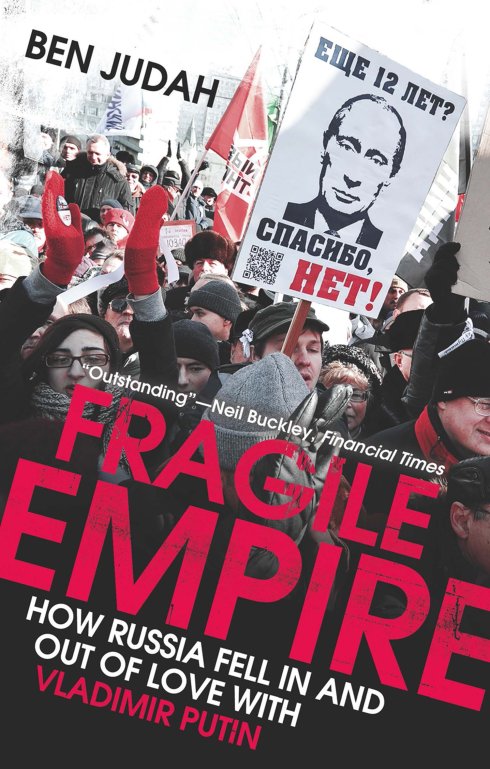
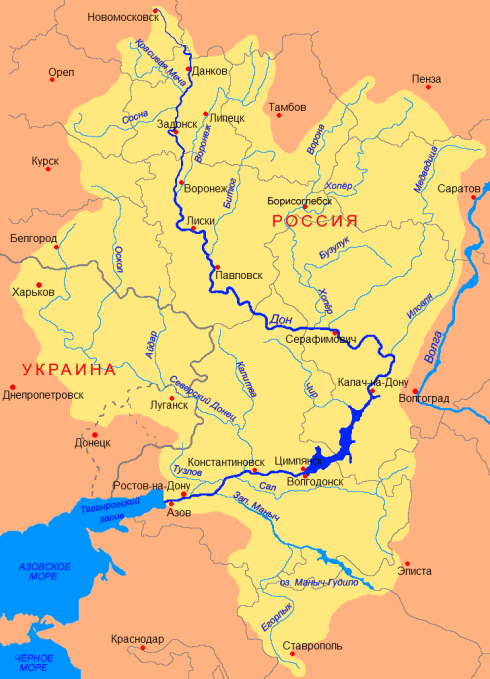


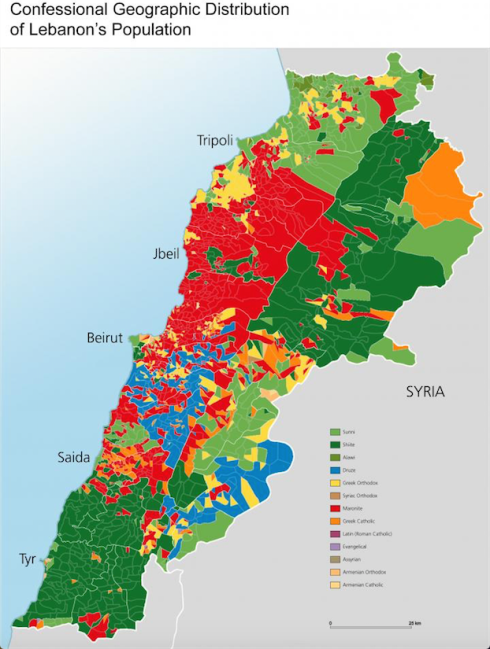
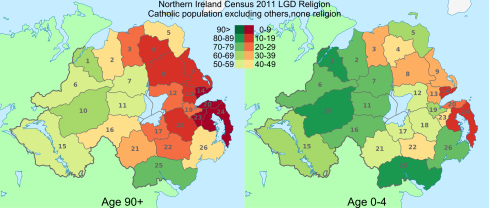 Map of Northern Ireland with distribution of Protestants (red) and Catholics (green) according to age group, showing a clear demographic decline of Protestants.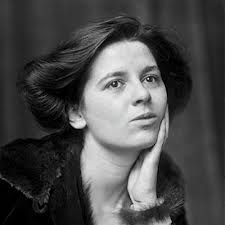
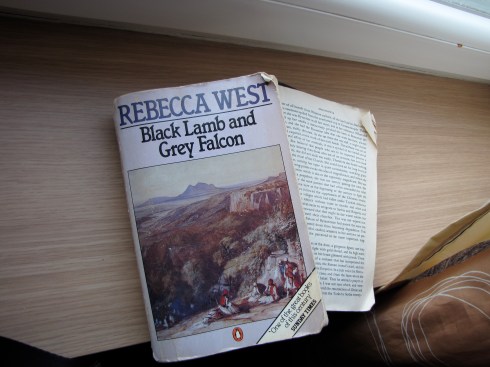
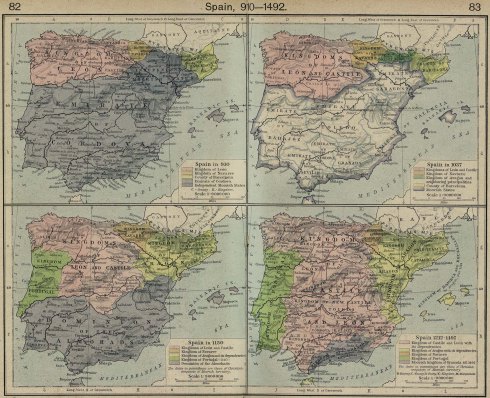
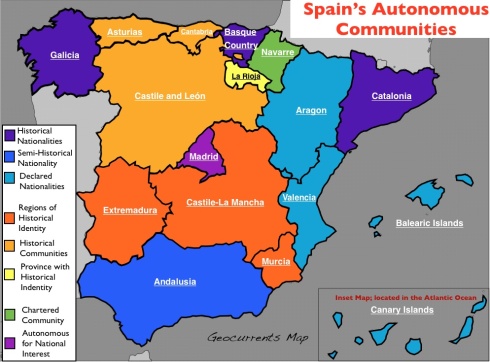
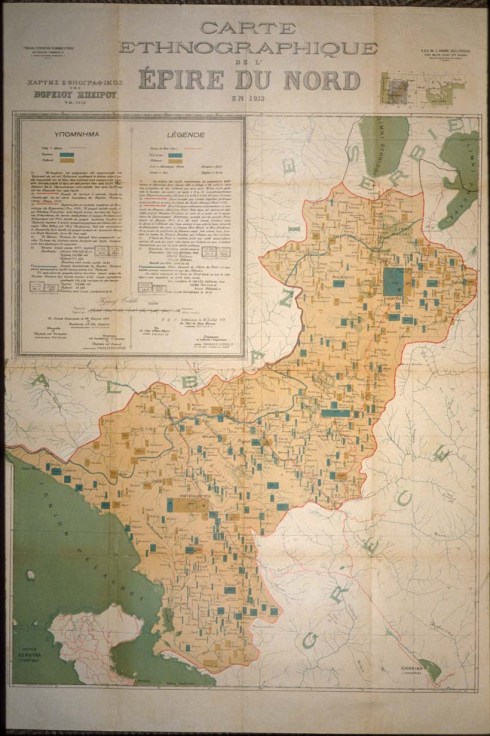
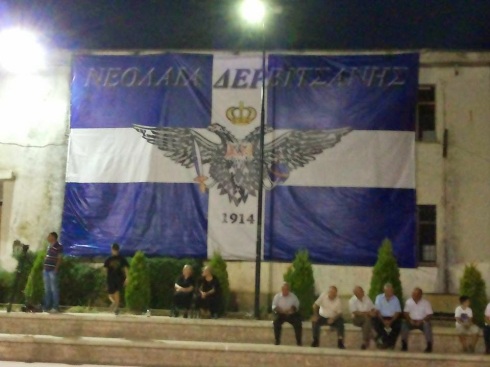
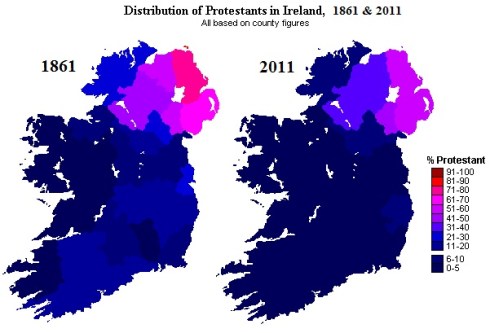
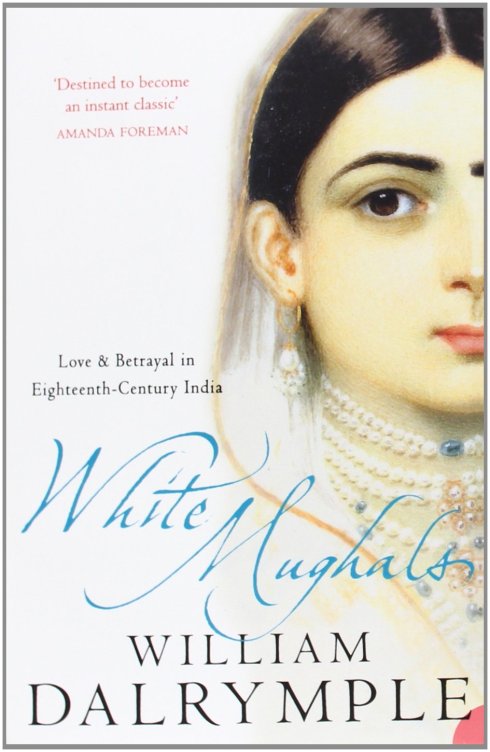
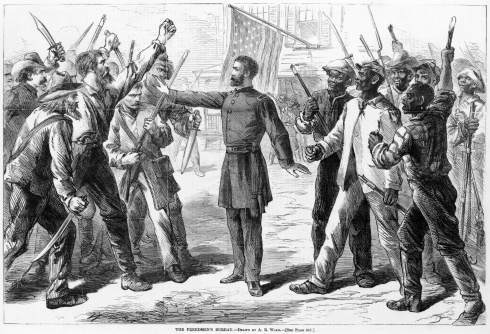 A Bureau agent stands between armed groups of whites and Freedmen in this 1868 sketch from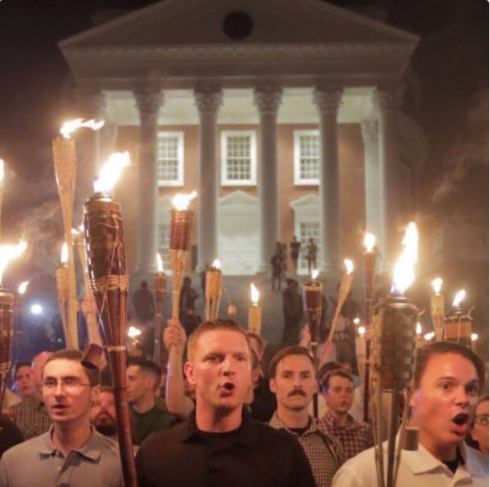
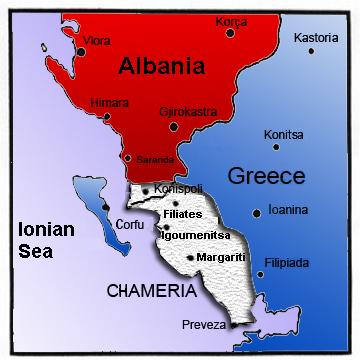
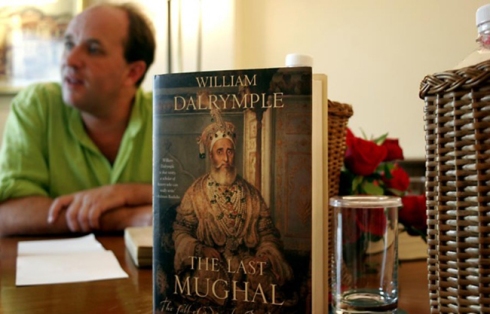
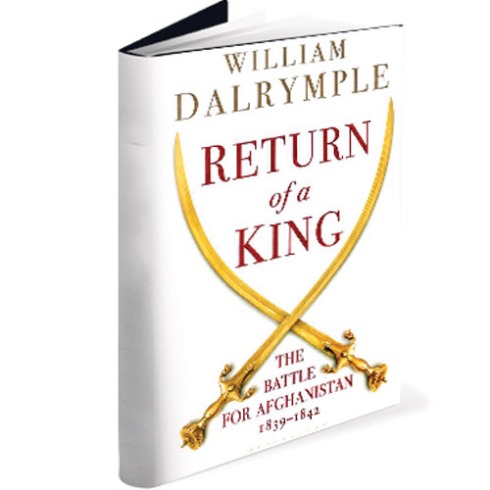
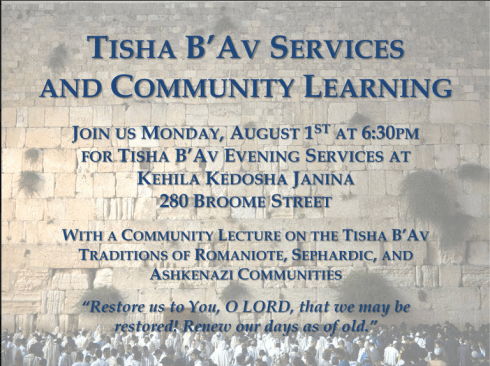
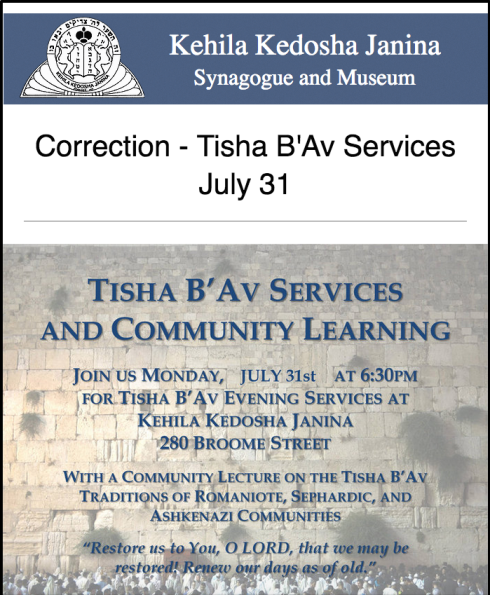


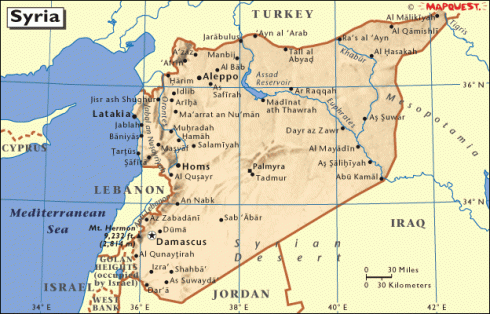
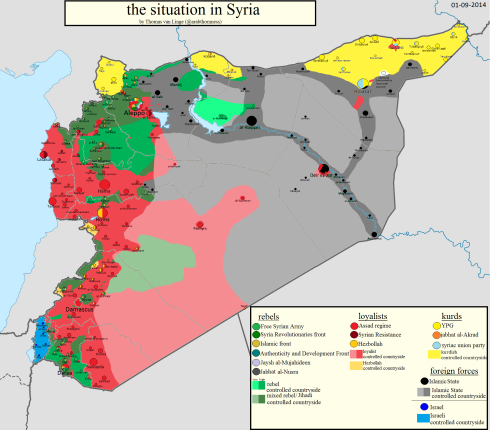
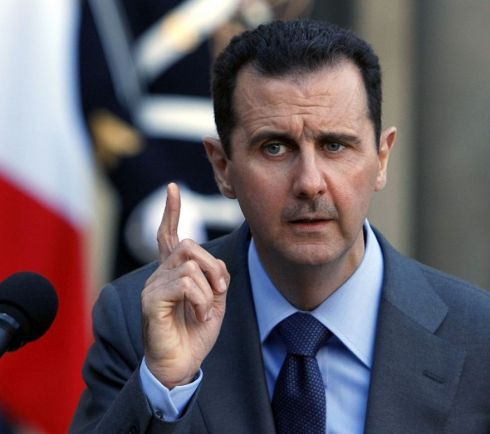
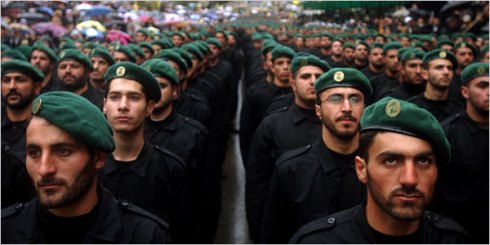
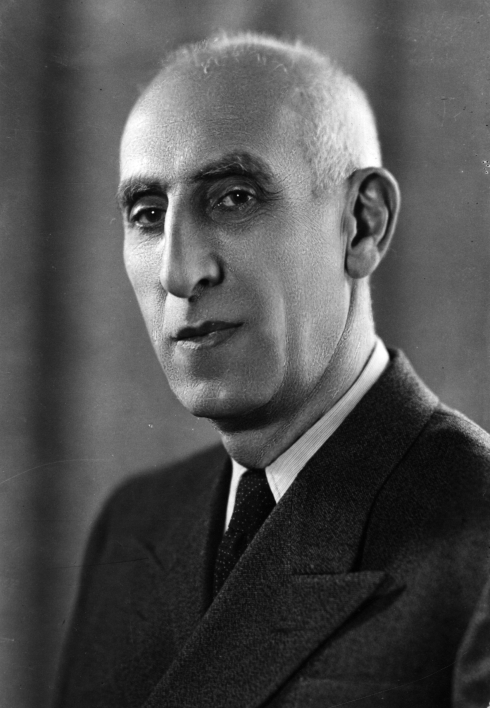
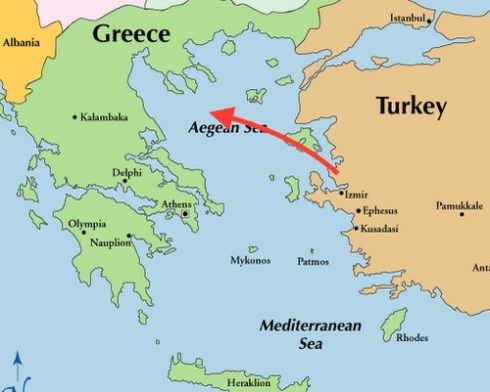
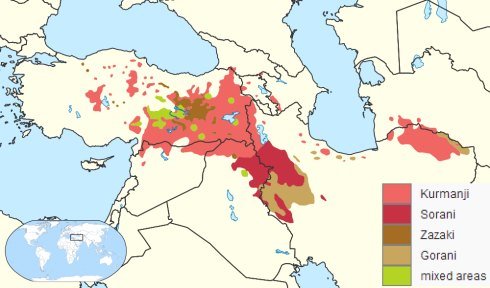
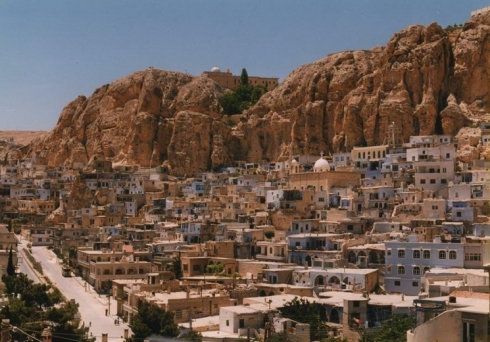
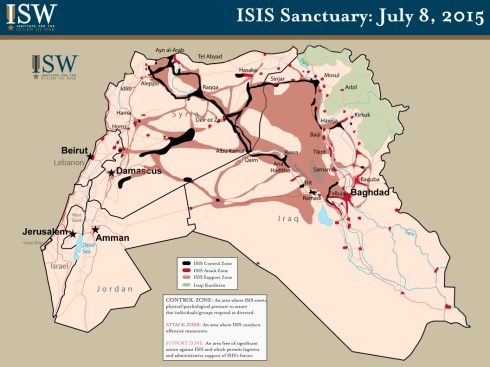
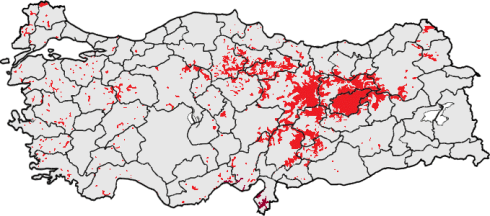
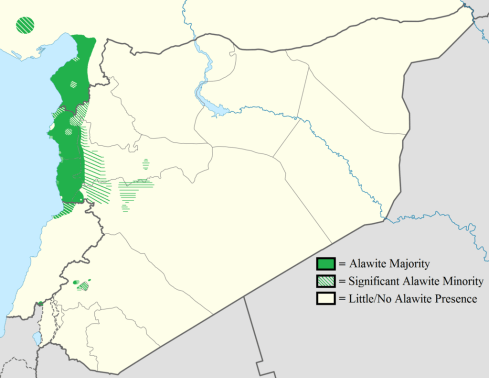






 Jadde: from Bosnia to Bengal